

Hepatotoxicity associated with statins
The DOI matches its Crossref record; 44 of the 44 references it cites were found in a registry or an index.
Abstract
Treatment with statins is known all over the world. They are generally considered safe at therapeutic doses. Nevertheless, clinical trials are not enough to assess their scarce adverse effects such as idiosyncratic drug induced liver injury (DILI). Due to some conditions, such as concomitant usage (drug-drug interaction using an identical metabolising enzyme) and genetic polymorphisms, there is an increasing concern about their safety. Hepatotoxicity and rhabdomyolysis have begun to appear in published studies. Most of investigations have focused on both these adverse effects and mechanisms of drug induced toxicity. The present review has attempted to compile almost all of the existing studies on the hepatotoxicity of statins but not rhabdomyolysis. The aim of our study is to provide an overview of the studies on the statin-associated hepatotoxicity and to discuss the published studies. The researchers are of the opinion that the research on this topic is incomplete but extremely necessary.
Overview
The claims and statistics of this paper haven’t been checked yet.
Free: it reads the open-access text and checks the first 5 claims that cite a source we can check. Create a free account to check every claim.
Integrity signals
Registry
Cites
Statistics
Figures
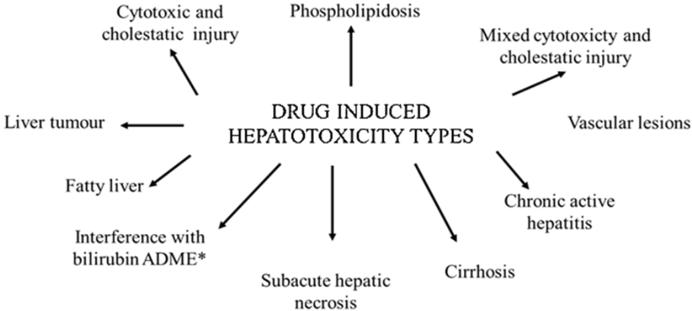
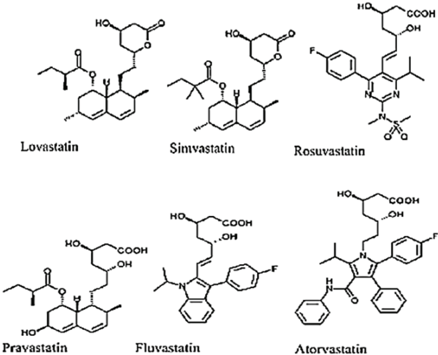
Verification
Claims the paper makes
The claims and statistics of this paper haven’t been checked yet.
Free: it reads the open-access text and checks the first 5 claims that cite a source we can check. Create a free account to check every claim.
Claims other papers make about this one
Each is checked against this paper’s own text: does it say what the citing paper says it does?
In the citing paper
“The overall incidence rate for statin-induced acute liver failure (ALF) has been reported to be between 1 and 2 per 100,000 person-years.2,5”
From Atorvastatin-Induced Liver Injury With Concurrent Rhabdomyolysis After a Positive Rechallenge (2025) · cites this paper as [5]
Self-check
Percentages, sums and reported differences re-computed from the paper’s own numbers.
The self-check needs the paper’s full text.
Citations
Cites
Ostapowicz, G., Fontana, R. J., Schiødt, F. V., Larson, A., Davern, T. J., Han, S. H. B., McCashland, T. M., Shakil, A. O., Hay, J. E., Hynan, L., et al. (2002) · Annals of Internal Medicine · doi:10.7326/0003-4819-137-12-200212170-00007 · Cited by 2,227
Early indicators of prognosis in fulminant hepatic failure
O'Grady, J. G., Alexander, G. J. M., Hayllar, K. M., & Williams, R. (1989) · Gastroenterology · doi:10.1016/0016-5085(89)90081-4 · Cited by 2,085
Statin Adverse Effects: A Review of the Literature and Evidence for a Mitochondrial Mechanism
Golomb, B. A., & Evans, M. A. (2008) · American Journal of Cardiovascular Drugs · doi:10.2165/0129784-200808060-00004 · Cited by 677
Outcome and prognostic markers in severe drug‐induced liver disease†
Björnsson, E., & Olsson, R. (2005) · Hepatology · doi:10.1002/hep.20800 · Cited by 524
Bradford, R. H. (1991) · Archives of Internal Medicine · doi:10.1001/archinte.1991.00400010067008 · Cited by 372
Isoniazid-Associated Hepatitis in 114 Patients
Black, M., Mitchell, J. R., Zimmerman, H. J., Ishak, K. G., & Epler, G. R. (1975) · Gastroenterology · doi:10.1016/s0016-5085(19)32568-5 · Cited by 370
Leise, M. D., Poterucha, J. J., & Talwalkar, J. A. (2014) · Mayo Clinic Proceedings · doi:10.1016/j.mayocp.2013.09.016 · Cited by 356
Risk Factors for Idiosyncratic Drug-Induced Liver Injury
Chalasani, N., & Björnsson, E. (2010) · Gastroenterology · doi:10.1053/j.gastro.2010.04.001 · Cited by 347 · cited 1×
“Simvastatin is metabolised primarily by CYP3A4, when it is used concomitantly with amiodarone, which is an inhibitor of CYP3A4 enzyme; and interaction between these two drugs (simvastatin and amiodarone) increases hepatotoxicity (42).”
BackgroundHepatotoxicity associated with statins: Reports of idiosyncratic liver injury post-marketing
Björnsson, E., Jacobsen, E. I., & Kalaitzakis, E. (2012) · Journal of Hepatology · doi:10.1016/j.jhep.2011.07.023 · Cited by 321
An Assessment of Statin Safety by Hepatologists
Cohen, D. E., Anania, F. A., & Chalasani, N. (2006) · The American Journal of Cardiology · doi:10.1016/j.amjcard.2005.12.014 · Cited by 269
Statins and hepatotoxicity: Focus on patients with fatty liver†
Chalasani, N. (2005) · Hepatology · doi:10.1002/hep.20671 · Cited by 265
Spectrum of statin hepatotoxicity: Experience of the drug-induced liver injury network
Russo, M. W., Hoofnagle, J. H., Gu, J., Fontana, R. J., Barnhart, H., Kleiner, D. E., Chalasani, N., & Bonkovsky, H. L. (2014) · Hepatology · doi:10.1002/hep.27157 · Cited by 222
Statins and Liver Toxicity: A Meta‐Analysis
de Denus, S., Spinler, S. A., Miller, K., & Peterson, A. M. (2004) · Pharmacotherapy: The Journal of Human Pharmacology and Drug Therapy · doi:10.1592/phco.24.6.584.34738 · Cited by 220
Tolman, K. G. (2002) · The American Journal of Cardiology · doi:10.1016/s0002-9149(02)02355-x · Cited by 214
Bakke, O. M., Manocchia, M., de Abajo, F., Kaitin, K. I., & Lasagna, L. (1995) · Clinical Pharmacology & Therapeutics · doi:10.1016/0009-9236(95)90078-0 · Cited by 208
Zimmerman, H. J. (2000) · Clinics in Liver Disease · doi:10.1016/s1089-3261(05)70097-0 · Cited by 186
Idiosyncratic drug-induced liver injury: an overview
Hussaini, S. H., & Farrington, E. A. (2007) · Expert Opinion on Drug Safety · doi:10.1517/14740338.6.6.673 · Cited by 183 · cited 1×
“Statins rarely cause significant liver injury whereas antiretroviral therapy is associated with hepatotoxicity in 10 % of treated patients (55).”
BackgroundLipid-lowering agents that cause drug-induced hepatotoxicity.
Bhardwaj, S. S., & Chalasani, N. (2007) · Clinics in Liver Disease · doi:10.1016/j.cld.2007.06.010 · Cited by 173 · cited 1×
“in guinea pigs caused necrosis in hepatic cells (21).”
BackgroundClassification, Etiology, and Considerations of Outcome in Acute Liver Failure
Williams, R. (1996) · Seminars in Liver Disease · doi:10.1055/s-2007-1007247 · Cited by 172
Fulminant hepatic failure: Summary of a workshop*1
HOOFNAGLE, J. (1995) · Hepatology · doi:10.1016/0270-9139(95)90434-4 · Cited by 171
Drug-Induced Liver Injury Associated with Statins
Russo, M., Scobey, M., & Bonkovsky, H. (2009) · Seminars in Liver Disease · doi:10.1055/s-0029-1240010 · Cited by 168
Drug-induced liver injury: an overview over the most critical compounds
Bjornsson, E. S. (2015) · Archives of Toxicology · doi:10.1007/s00204-015-1456-2 · Cited by 166
The causes of obvious jaundice in South West Wales: perceptions versus reality
Whitehead, M. W. (2001) · Gut · doi:10.1136/gut.48.3.409 · Cited by 154
FRIIS, H., & ANDREASEN, P. B. (1992) · Journal of Internal Medicine · doi:10.1111/j.1365-2796.1992.tb00562.x · Cited by 150
Kirchheiner, J. (2003) · Clinical Pharmacology & Therapeutics · doi:10.1016/s0009-9236(03)00121-8 · Cited by 125
Apoptotic injury in cultured human hepatocytes induced by HMG-CoA reductase inhibitors
Kubota, T., Fujisaki, K., Itoh, Y., Yano, T., Sendo, T., & Oishi, R. (2004) · Biochemical Pharmacology · doi:10.1016/j.bcp.2004.02.037 · Cited by 100
FITCHETT, D. H., Hegele, R. A., & Verma, S. (2015) · Circulation · doi:10.1161/circulationaha.114.013189 · Cited by 97
Charles, E. C., Olson, K. L., Sandhoff, B. G., McClure, D. L., & Merenich, J. A. (2005) · The American Journal of Medicine · doi:10.1016/j.amjmed.2005.02.008 · Cited by 88
Raschi, E., Poluzzi, E., Koci, A., Salvo, F., Pariente, A., Biselli, M., Moretti, U., Moore, N., & De Ponti, F. (2015) · British Journal of Clinical Pharmacology · doi:10.1111/bcp.12611 · Cited by 82
Statins in oncological research: From experimental studies to clinical practice
Kubatka, P., Kružliak, P., Rotrekl, V., Jelínková, Š., & Mladosievičová, B. (2014) · Critical Reviews in Oncology/Hematology · doi:10.1016/j.critrevonc.2014.08.002 · Cited by 68
Mechanisms of the Statins Cytotoxicity in Freshly Isolated Rat Hepatocytes
Abdoli, N., Heidari, R., Azarmi, Y., & Eghbal, M. A. (2013) · Journal of Biochemical and Molecular Toxicology · doi:10.1002/jbt.21485 · Cited by 65
Drug-Induced Liver Injury: Pattern Recognition and Future Directions
Haque, T., Sasatomi, E., & Hayashi, P. H. (2016) · Gut and Liver · doi:10.5009/gnl15114 · Cited by 63
Severe Jaundice in Sweden in the New Millennium: Causes, Investigations, Treatment and Prognosis
Björnsson, E., Ismael, S., Nejdet, S., & Kilander, A. (2003) · Scandinavian Journal of Gastroenterology · doi:10.1080/00365520310000492 · Cited by 58
Rosuvastatin-associated hepatitis with autoimmune features
Wolters, L. M. M., & Van Buuren, H. R. (2005) · European Journal of Gastroenterology & Hepatology · doi:10.1097/00042737-200505000-00019 · Cited by 57
High-content screening of drug-induced mitochondrial impairment in hepatic cells: effects of statins
Tolosa, L., Carmona, A. L., Castell, J. V., Gómez‐Lechón, M. J., & Donato, M. T. (2014) · Archives of Toxicology · doi:10.1007/s00204-014-1334-3 · Cited by 55
Chang, C., Chang, Y., Lee, Y., Liu, Y., Chuang, L., & Lin, J. (2015) · Journal of Gastroenterology and Hepatology · doi:10.1111/jgh.12657 · Cited by 40
Meta-analysis of studies using statins as a reducer for primary liver cancer risk
Zhong, G., Liu, Y., Ye, Y., Hao, F., Wang, K., & Gong, J. (2016) · Scientific Reports · doi:10.1038/srep26256 · Cited by 38
Bjørneboe, M., Iversen, O. H., & Olsen, S. (1967) · Acta Medica Scandinavica · doi:10.1111/j.0954-6820.1967.tb10873.x · Cited by 36
Abdoli, N., Azarmi, Y., & Eghbal, M. A. (2014) · Europe PMC (PubMed Central) · doi:10.5681/apb.2014.036 · Cited by 23
Statins: Hepatic Disease and Hepatotoxicity Risk
Cueto-Galán, R., Valdivielso, P., Lucena, M. I., García-Arias, C., Andrade, R. J., & González‐Santos, P. (2008) · The Open Gastroenterology Journal · doi:10.2174/1874259900802010018 · Cited by 10
Wang, L. Y., Huang, Y., Perng, C., Huang, B., & Lin, H. (2016) · British Journal of Clinical Pharmacology · doi:10.1111/bcp.13009 · Cited by 7
Drug Induced Hepatotoxicity: A Comprehensive Review
(2009) · The Internet Journal of Pharmacology · doi:10.5580/2b8
Getting more people on statins
Roberts, W. C. (2002) · The American Journal of Cardiology · doi:10.1016/s0002-9149(02)02590-0
Cytochrome P450 3A pharmacogenetics: the road that needs traveled
Flockhart, D. A., & Rae, J. M. (2003) · The Pharmacogenomics Journal · doi:10.1038/sj.tpj.6500144
Research works printed but not linked: 9
- Malchow-Møller A, Matzen P, Bjerregaard B, Hilden J, Holst-Christensen J, Staehr JT, Altman L, Thomsen C, Juhl E. Causes and characteristics of 500 consecutive causes of jaundice. Scand J Gastroenterol 1981;16:1-6. PMID: 7233075
- Zimmerman HJ. Drug-induced liver disease. In: Sciff ER, Sorrell MF, Maddrey WC, editors. Sciff′s diseases of the liver. 8 th edition. Philadelphia: Lippincott-Raven Publishers; 1999. p. 973-1064.
- Pillans PI. Drug associated hepatic reactions in New Zealand: 21-years' experience. N Z Med J 1996;109:315-9. PMID: 8816722
- Thapar M, Russo MW, Bonkovsky HL. Statins and liver injury. Gastroenterol Hepatol 2013;9:605-6. PMCID: PMC3983981
- Ciba M, Ak M, Karahalil B. Alpha-glutathione-s-transferase can be a biomarker for both drug-related toxicity as well as individual susceptibility. Minerva Psichiatr 2016;57:62-71.
- Licata A, Minissale MG, Calvaruso V, Craxì A. A focus on epidemiology of drug-induced liver injury: analysis of a prospective cohort. Eur Rev Med Pharmacol Sci 2017;21(Suppl 1):112-21. PMID: 28379588
- Perdices EV, Medina-Cáliz I, Hernando S, Ortega A, Martín- Ocaña F, Navarro JM, Peláez G, Castiella A, Hallal H, Romero-Gómez M, González-Jiménez A, Robles-Díaz M, Lucena MI, Andrade RJ. Hepatotoxicity associated with statin use: analysis of the cases included in the Spanish Hepatotoxicity Registry. Rev Esp Enferm Dig 2014;106:246- 54. PMID: 25075655
- 53. Younoszai Z, Li Z, Stepanova M, Erario M, Cable R, Younossi ZM. Statin use is not associated with liver related mortality. Ann Hepatol 2014;13:84-90. doi: 10.1007/s11274- 015-1903-5 · doi:10.1007/s11274-
- 54. Rangnekar AS, Fontana RJ. An update on drug induced liver injury. Minerva Gastroenterol Dietol 2011;57:213-29. PMID: 21587150
Cited by
Atorvastatin-Induced Liver Injury With Concurrent Rhabdomyolysis After a Positive Rechallenge
Singh, H., Khalaf, A., Kunkle, B. F., Gholami, S., Lewis, J. H., & Rangnekar, A. S. (2025) · ACG Case Reports Journal · doi:10.14309/crj.0000000000001570 · Cited by 3
Metadata
- Authors
- Karahalil, B., Hare, E., Koç, G., Uslu, İ., Şentürk, K., & Özkan, Y.
- Affiliations
- Toxicology Department, Faculty of Pharmacy, Gazi University Ankara, Ankara , Turkey
- Venue
- Archives of Industrial Hygiene and Toxicology
- Publisher
- Walter de Gruyter GmbH
- Published
- 2017-12-20
- Volume
- 68
- Issue
- 4
- Pages
- 254-260
- ISSN
- 0004-1254
- Cited by
- 41
- References
- 44
- Language
- en
About these checks
Registry, retraction, Cites and statistics results are computed, not judged, with one exception: a printed reference that no index lists is read once by a model before it counts as a citation error. Claims are extracted by a model and kept only when their quote appears verbatim in the text; each cited source is then checked, with a model’s help, for whether it says what the claim relies on. Those verdicts can be wrong — read the claim’s quote and the cited source before relying on one.
Statistics and arithmetic are recomputed, not judged.
Confidence bands are shown only for fields calibrated on our annotated test set. None is calibrated yet, so no band is shown.
What counts as a claim ›How we measure confidence ›How we check this ›
Are you an author, or do you see a problem with this page? Request a review
Data sources
Bibliographic data: Semantic Scholar, OpenAlex, Crossref.
Contains information from the Semantic Scholar Academic Graph Datasets, made available under the ODC Attribution License (ODC-BY 1.0).
Semantic Scholar’s data is described in: Kinney, R., et al. (2023). The Semantic Scholar Open Data Platform. arXiv:2301.10140.
