

Polymer modulators in silicon photonics: review and projections
Open accessThe DOI matches its Crossref record; 115 of the 116 references it cites were found in a registry or an index.
Abstract
Optical modulators are vital for many applications, including telecommunication, data communication, optical computing, and microwave photonic links. A compact modulator with low voltage drive requirement, low power, high speed, and compatibility with CMOS foundry process is highly desirable. Current modulator technologies in Si suffer from trade‐offs that constrain their power, performance (speed, drive voltage), and area. The introduction of additional materials to the silicon platform for efficient phase shift promises alternatives to relax those trade‐offs. Si‐organic‐hybrid (SOH) devices demonstrate large modulation bandwidth leveraging the electro‐optic (EO) effect and smaller drive voltage or footprint owing to a strong EO coefficient. In this study, we review various SOH modulators and describe their path towards integration to silicon, including their challenges associated with aging and temperature. We also briefly discuss other high‐performance modulators such as plasmonic‐organic‐hybrid (POH), photonic‐crystal‐assisted SOH, and LiNbO 3 .
Overview
The claims and statistics of this paper haven’t been checked yet.
Free: it reads the open-access text and checks the first 5 claims that cite a source we can check. Create a free account to check every claim.
Integrity signals
Registry
Cites
Statistics
Figures
Verification
Claims the paper makes
The claims and statistics of this paper haven’t been checked yet.
Free: it reads the open-access text and checks the first 5 claims that cite a source we can check. Create a free account to check every claim.
Claims other papers make about this one
Each is checked against this paper’s own text: does it say what the citing paper says it does?
The source backs part of the claim, not all of it — or backs it for a different population, condition or comparison.
In the citing paper
“All modulators suffer from a tradeoff between FoMefficiency and E/O BW49–51.”
From Roadmapping the next generation of silicon photonics (2024) · cites this paper as [49]
Experimental — accuracy not yet measuredThe cited source says what the claim attributes to it.
In the citing paper
“Note that a large Pockels coefficient in the device is important, which requires a good overlap of the electric modulation field and the propagating optical mode49,72.”
From Roadmapping the next generation of silicon photonics (2024) · cites this paper as [49]
Self-check
Percentages, sums and reported differences re-computed from the paper’s own numbers.
The self-check needs the paper’s full text.
Citations
Cites
Integrated lithium niobate electro-optic modulators operating at CMOS-compatible voltages
Wang, C., Zhang, M., Chen, X., Bertrand, M., Shams-Ansari, A., Chandrasekhar, S., Winzer, P., & Lončar, M. (2018) · Nature · doi:10.1038/s41586-018-0551-y · Cited by 2,593
Reed, G. T., Mashanovich, G., Gardes, F. Y., & Thomson, D. J. (2010) · Nature Photonics · doi:10.1038/nphoton.2010.179 · Cited by 2,470 · cited 1×
“When an electric field is applied, both the real ( Δ n ) and the imaginary ( Δ 𝛼 ) part of the refractive index are changed, leading to both electrorefraction and electroabsorption effects, respectively [21].”
Photonics for artificial intelligence and neuromorphic computing
Shastri, B. J., Tait, A. N., Ferreira de Lima, T., Pernice, W. H. P., Bhaskaran, H., Wright, C. D., & Prucnal, P. R. (2021) · Nature Photonics · doi:10.1038/s41566-020-00754-y · Cited by 1,756
Self-citationIntegrated photonics on thin-film lithium niobate
Zhu, D., Shao, L., Yu, M., Cheng, R., Desiatov, B., Xin, C. J., Hu, Y., Holzgrafe, J., Ghosh, S., Shams-Ansari, A., et al. (2021) · Advances in Optics and Photonics · doi:10.1364/aop.411024 · Cited by 1,516 · cited 1×
“However, their modulation efficiency remains low, and the issue of lithium contamination in a CMOS foundry process must be resolved [28].”
He, M., Xu, M., Ren, Y., Jian, J., Ruan, Z., Xu, Y., Gao, S., Sun, S., Wen, X., Zhou, L., et al. (2019) · Nature Photonics · doi:10.1038/s41566-019-0378-6 · Cited by 1,204
All-optical high-speed signal processing with silicon–organic hybrid slot waveguides
Koos, C., Vorreau, P., Vallaitis, T., Dumon, P., Bogaerts, W., Baets, R., Esembeson, B., Biaggio, I., Michinobu, T., Diederich, F., et al. (2009) · Nature Photonics · doi:10.1038/nphoton.2009.25 · Cited by 914
High-speed plasmonic phase modulators
Melikyan, A., Alloatti, L., Muslija, A., Hillerkuss, D., Schindler, P. C., Li, J., Palmer, R., Korn, D., Muehlbrandt, S., Van Thourhout, D., et al. (2014) · Nature Photonics · doi:10.1038/nphoton.2014.9 · Cited by 660 · cited 1×
“Finally, the most noteworthy example is a plasmonic-based structure, i.e., a plasmonic-organic-hybrid (POH) [41, 80, 81].”
Nanophotonic lithium niobate electro-optic modulators
Wang, C., Zhang, M., Stern, B., Lipson, M., & Lončar, M. (2018) · Optics Express · doi:10.1364/oe.26.001547 · Cited by 652
The potential and global outlook of integrated photonics for quantum technologies
Pelucchi, E., Fagas, G., Aharonovich, I., Englund, D., Figueroa, E., Gong, Q., Hannes, H., Liu, J., Lu, C.-Y., Matsuda, N., et al. (2021) · Nature Reviews Physics · doi:10.1038/s42254-021-00398-z · Cited by 533 · cited 1×
“Modulators play a key role in various photonic integrated circuits (PICs) for versatile applications, including data transmission [1–3], quantum computing [4, 5], optical computing [6–11], and sensing [12].”
Demonstration of 110 GHz electro-optic polymer modulators
Chen, D., Fetterman, H. R., Chen, A., Steier, W. H., Dalton, L. R., Wang, W., & Shi, Y. (1997) · Applied Physics Letters · doi:10.1063/1.119162 · Cited by 477 · cited 1×
“Thus, a low dielectric constant dispersion and a small velocity mismatch can lead to large BW for EOP modulators, exceeding 100 GHz [41, 50, 51].”
Novel gel polymer electrolyte for high-performance lithium–sulfur batteries
Liu, M., Zhou, D., He, Y.-B., Fu, Y., Qin, X., Miao, C., Du, H., Li, B., Yang, Q.-H., Lin, Z., et al. (2016) · Nano Energy · doi:10.1016/j.nanoen.2016.02.008 · Cited by 465
Low V_pp, ultralow-energy, compact, high-speed silicon electro-optic modulator
Dong, P., Liao, S., Feng, D., Liang, H., Zheng, D., Shafiiha, R., Kung, C.-C., Qian, W., Li, G., Zheng, X., et al. (2009) · Optics Express · doi:10.1364/oe.17.022484 · Cited by 456
Hybrid polymer/sol–gel waveguide modulators with exceptionally large electro–optic coefficients
Enami, Y., Derose, C. T., Mathine, D., Loychik, C., Greenlee, C., Norwood, R. A., Kim, T. D., Luo, J., Tian, Y., Jen, A. K.-Y., et al. (2007) · Nature Photonics · doi:10.1038/nphoton.2007.25 · Cited by 355
100 GHz silicon–organic hybrid modulator
Alloatti, L., Palmer, R., Diebold, S., Pahl, K. P., Chen, B., Dinu, R., Fournier, M., Fedeli, J.-M., Zwick, T., Freude, W., et al. (2014) · Light: Science & Applications · doi:10.1038/lsa.2014.54 · Cited by 341
Weigel, P. O., Zhao, J., Fang, K., Al-Rubaye, H., Trotter, D., Hood, D., Mudrick, J., Dallo, C., Pomerene, A. T., Starbuck, A. L., et al. (2018) · Optics Express · doi:10.1364/oe.26.023728 · Cited by 338 · cited 7×
“EOP modulators, with BW exceeding 100 GHz, promise an attractive path towards 800 Gb/s and 1.6 Tb/s operations.”
InfluentialSilicon Photonic Modulator Neuron
Tait, A. N., Ferreira de Lima, T., Nahmias, M. A., Miller, H. B., Peng, H.-T., Shastri, B. J., & Prucnal, P. R. (2019) · Physical Review Applied · doi:10.1103/physrevapplied.11.064043 · Cited by 331
Self-citation500 GHz plasmonic Mach-Zehnder modulator enabling sub-THz microwave photonics
Burla, M., Hoessbacher, C., Heni, W., Haffner, C., Fedoryshyn, Y., Werner, D., Watanabe, T., Massler, H., Elder, D. L., Dalton, L. R., et al. (2019) · APL Photonics · doi:10.1063/1.5086868 · Cited by 324 · cited 8×
“Thus, a low dielectric constant dispersion and a small velocity mismatch can lead to large BW for EOP modulators, exceeding 100 GHz [41, 50, 51].”
InfluentialHigh-speed plasmonic modulator in a single metal layer
Ayata, M., Fedoryshyn, Y., Heni, W., Baeuerle, B., Josten, A., Zahner, M., Koch, U., Salamin, Y., Hoessbacher, C., Haffner, C., et al. (2017) · Science · doi:10.1126/science.aan5953 · Cited by 307 · cited 2×
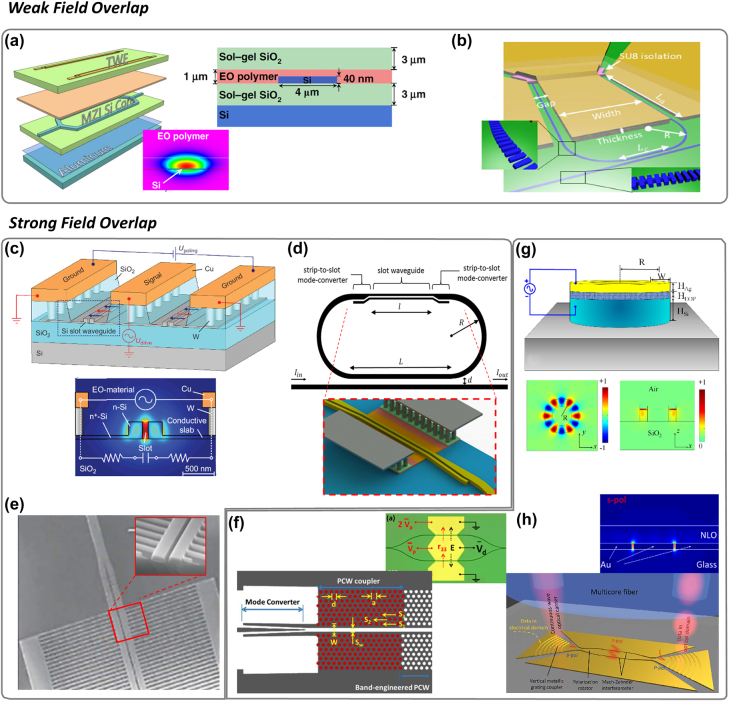
“Figure adapted with permission from [58], AIP (e); [57], SPIE (d); [40]; Science (h).”
Brosi, J.-M., Koos, C., Andreani, L. C., Waldow, M., Leuthold, J., & Freude, W. (2008) · Optics Express · doi:10.1364/oe.16.004177 · Cited by 295 · cited 2×
“EOP modulators with complicated manufacturing: (f) Photonic crystal (PC)-assisted slot-waveguides featuring enhanced modal field and wider slot width which can alleviate incomplete poling issues [59].”
High contrast 40Gbit/s optical modulation in silicon
Thomson, D. J., Gardes, F. Y., Hu, Y., Mashanovich, G., Fournier, M., Grosse, P., Fedeli, J.-M., & Reed, G. T. (2011) · Optics Express · doi:10.1364/oe.19.011507 · Cited by 287
Femtojoule electro-optic modulation using a silicon–organic hybrid device
Koeber, S., Palmer, R., Lauermann, M., Heni, W., Elder, D. L., Korn, D., Woessner, M., Alloatti, L., Koenig, S., Schindler, P. C., et al. (2015) · Light: Science & Applications · doi:10.1038/lsa.2015.28 · Cited by 259
Thin film lithium niobate electro-optic modulator with terahertz operating bandwidth
Mercante, A. J., Shi, S., Yao, P., Xie, L., Weikle, R. M., & Prather, D. W. (2018) · Optics Express · doi:10.1364/oe.26.014810 · Cited by 250 · cited 1×
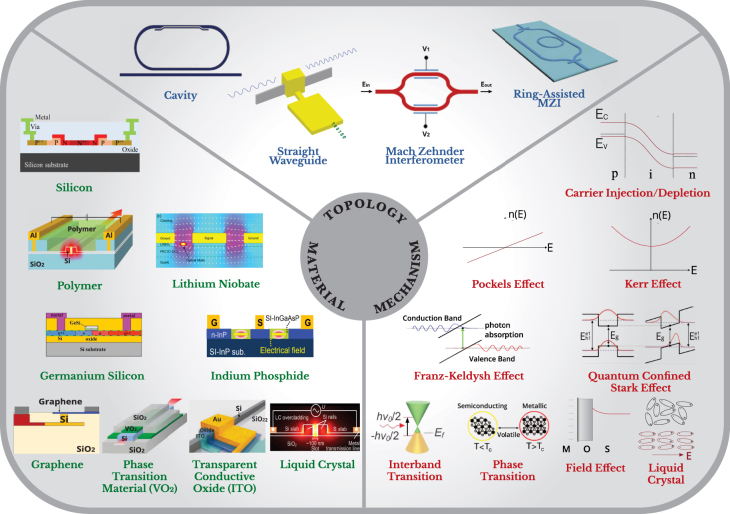
“Figure reproduced with permission from Optica ([14] [ITO]; [15] [VO2]; [16] [InP]; [17] [GeSi]; [18] [Silicon]; [19] [Lithium Niobate]; [20] [Liquid Crystal]).”
Heterogeneously Integrated InP\/Silicon Photonics: Fabricating Fully Functional Transceivers
Jones, R., Doussiere, P., Driscoll, J. B., Lin, W., Yu, H., Akulova, Y., Komljenovic, T., & Bowers, J. E. (2019) · IEEE Nanotechnology Magazine · doi:10.1109/mnano.2019.2891369 · Cited by 236 · cited 1×
“Indium phosphide (InP) is another material that has already been commercialized in a CMOS SOI foundry through a heterogeneous integration approach using plasma-assisted direct bonding of III/V to Si for lasers [25].”
Nonlinear polymer-clad silicon slot waveguide modulator with a half wave voltage of 0.25V
Baehr-Jones, T., Penkov, B., Huang, J., Sullivan, P., Davies, J., Takayesu, J., Luo, J., Kim, T.-D., Dalton, L., Jen, A., et al. (2008) · Applied Physics Letters · doi:10.1063/1.2909656 · Cited by 213
Horizontal single and multiple slot waveguides: optical transmission at λ = 1550 nm
Sun, R., Dong, P., Feng, N.-N., Hong, C.-Y., Michel, J., Lipson, M., & Kimerling, L. (2007) · Optics Express · doi:10.1364/oe.15.017967 · Cited by 209 · cited 1×
“These include EOP modulators with horizontal slot waveguides fabricated using chemical vapor deposition (CVD) [73–75] and all-polymeric waveguides [76, 77].”
Ultra-high electro-optic activity demonstrated in a silicon-organic hybrid modulator
Kieninger, C., Kutuvantavida, Y., Elder, D. L., Wolf, S., Zwickel, H., Blaicher, M., Kemal, J. N., Lauermann, M., Randel, S., Freude, W., et al. (2018) · Optica · doi:10.1364/optica.5.000739 · Cited by 203 · cited 1×
“Therefore, excellent modulation efficiencies have been demonstrated in the slotted EOP modulators: for instance 0.32 V mm in [60].”
InfluentialFully embedded board-level guided-wave optoelectronic interconnects
Chen, R. T., Lin, L., Choi, C., Liu, Y. J., Bihari, B., Wu, L., Tang, S., Wickman, R., Picor, B., Hibb-Brenner, M. K., et al. (2000) · Proceedings of the IEEE · doi:10.1109/5.867692 · Cited by 202 · cited 1×
“EOP modulators can be used in applications from tele-communication and data communication [83, 105–108] to optical interconnects [49, 109] and RF sensing [110, 111].”
Recent advances in polymer electro-optic modulators
Liu, J., Xu, G., Liu, F., Kityk, I., Liu, X., & Zhen, Z. (2015) · RSC Advances · doi:10.1039/c4ra13250e · Cited by 192 · cited 1×
“EOP modulators can be used in applications from tele-communication and data communication [83, 105–108] to optical interconnects [49, 109] and RF sensing [110, 111].”
Ultralow drive voltage silicon traveling-wave modulator
Baehr-Jones, T., Ding, R., Liu, Y., Ayazi, A., Pinguet, T., Harris, N. C., Streshinsky, M., Lee, P., Zhang, Y., Lim, A. E.-J., et al. (2012) · Optics Express · doi:10.1364/oe.20.012014 · Cited by 186
Lu, G.-W., Hong, J., Qiu, F., Spring, A. M., Kashino, T., Oshima, J., Ozawa, M.-A., Nawata, H., & Yokoyama, S. (2020) · Nature Communications · doi:10.1038/s41467-020-18005-7 · Cited by 174
Plasmonic IQ modulators with attojoule per bit electrical energy consumption
Heni, W., Fedoryshyn, Y., Baeuerle, B., Josten, A., Hoessbacher, C. B., Messner, A., Haffner, C., Watanabe, T., Salamin, Y., Koch, U., et al. (2019) · Nature Communications · doi:10.1038/s41467-019-09724-7 · Cited by 168 · cited 1×
“Finally, the most noteworthy example is a plasmonic-based structure, i.e., a plasmonic-organic-hybrid (POH) [41, 80, 81].”
ITO-based electro-absorption modulator for photonic neural activation function
Amin, R., George, J. K., Sun, S., Ferreira de Lima, T., Tait, A. N., Khurgin, J. B., Miscuglio, M., Shastri, B. J., Prucnal, P. R., El-Ghazawi, T., et al. (2019) · APL Materials · doi:10.1063/1.5109039 · Cited by 165 · cited 1×
“Modulators play a key role in various photonic integrated circuits (PICs) for versatile applications, including data transmission [1–3], quantum computing [4, 5], optical computing [6–11], and sensing [12].”
Self-citationSilicon-Organic Hybrid Electro-Optical Devices
Leuthold, J., Koos, C., Freude, W., Alloatti, L., Palmer, R., Korn, D., Pfeifle, J., Lauermann, M., Dinu, R., Wehrli, S., et al. (2013) · IEEE Journal of Selected Topics in Quantum Electronics · doi:10.1109/jstqe.2013.2271846 · Cited by 159 · cited 1×
“proposed in [70] to maximize the field enhancement and”
Xu, H., Liu, F., Elder, D. L., Johnson, L. E., de Coene, Y., Clays, K., Robinson, B. H., & Dalton, L. R. (2020) · Chemistry of Materials · doi:10.1021/acs.chemmater.9b03725 · Cited by 150
Palmer, R., Freude, W., Leuthold, J., Koos, C., Koeber, S., Elder, D. L., Woessner, M., Heni, W., Korn, D., Lauermann, M., et al. (2014) · Journal of Lightwave Technology · doi:10.1109/jlt.2014.2321498 · Cited by 148 · cited 1×
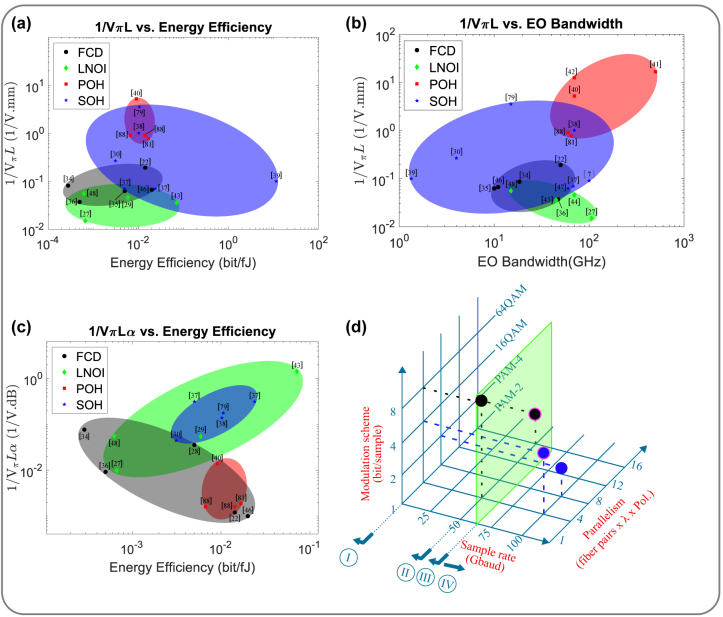
“The efficiency of a given modulator (also called detuning factor) at a specific wavelength λ is given by VπL = λ∕2Sp, where Vπ is the required voltage to introduce a π phase shift, and L is the RF electrode length [30].”
Ding, R., Baehr-Jones, T., Liu, Y., Bojko, R., Witzens, J., Huang, S., Luo, J., Benight, S., Sullivan, P., Fedeli, J.-M., et al. (2010) · Optics Express · doi:10.1364/oe.18.015618 · Cited by 145
Sub-wavelength GHz-fast broadband ITO Mach–Zehnder modulator on silicon photonics
Amin, R., Maiti, R., Gui, Y., Suer, C., Miscuglio, M., Heidari, E., Chen, R. T., Dalir, H., & Sorger, V. J. (2020) · Optica · doi:10.1364/optica.389437 · Cited by 138
Neuromorphic photonics with electro-absorption modulators
George, J. K., Mehrabian, A., Amin, R., Meng, J., de Lima, T. F., Tait, A. N., Shastri, B. J., El-Ghazawi, T., Prucnal, P. R., & Sorger, V. J. (2019) · Optics Express · doi:10.1364/oe.27.005181 · Cited by 131
Self-citationTowards a millivolt optical modulator with nano-slot waveguides
Hochberg, M., Baehr-Jones, T., Wang, G., Huang, J., Sullivan, P., Dalton, L., & Scherer, A. (2007) · Optics Express · doi:10.1364/oe.15.008401 · Cited by 130 · cited 1×
“Improvement in modulation efficiency up to an order of magnitude is theoretically shown in [72].”
Silicon-polymer hybrid slot waveguide ring-resonator modulator
Gould, M., Baehr-Jones, T., Ding, R., Huang, S., Luo, J., Jen, A. K.-Y., Fedeli, J.-M., Fournier, M., & Hochberg, M. (2011) · Optics Express · doi:10.1364/oe.19.003952 · Cited by 127 · cited 1×
“Stronger field overlap can be utilized in a fully slotted MRM structure [65–67].”
Wang, X., Lin, C.-Y., Chakravarty, S., Luo, J., Jen, A. K.-Y., & Chen, R. T. (2011) · Optics Letters · doi:10.1364/ol.36.000882 · Cited by 121 · cited 1×
“To facilitate infiltration into small slots, the oxide underneath the slot can be over-etched [63].”
Lin, C.-Y., Wang, X., Chakravarty, S., Lee, B. S., Lai, W.-C., Luo, J., Jen, A. K. ‐., & Chen, R. T. (2010) · Applied Physics Letters · doi:10.1063/1.3486225 · Cited by 115 · cited 2×
“D photonic crystal (PC) can be used to assist the slot waveguide and maximize Γ [62, 67, 78, 79].”
InfluentialZhang, X., Chung, C.-J., Hosseini, A., Subbaraman, H., Luo, J., Jen, A. K. ‐., Nelson, R. L., Lee, C. Y.-C., & Chen, R. T. (2015) · Journal of Lightwave Technology · doi:10.1109/jlt.2015.2471853 · Cited by 111 · cited 1×
“can be used to assist the slot waveguide and maximize Γ [62, 67, 78, 79].”
Silicon-Organic Hybrid (SOH) Mach-Zehnder Modulators for 100 Gbit/s on-off Keying
Wolf, S., Zwickel, H., Hartmann, W., Lauermann, M., Kutuvantavida, Y., Kieninger, C., Altenhain, L., Schmid, R., Luo, J., Jen, A. K.-Y., et al. (2018) · Scientific Reports · doi:10.1038/s41598-017-19061-8 · Cited by 111
Zhang, X., Hosseini, A., Chakravarty, S., Luo, J., Jen, A. K. ‐., & Chen, R. T. (2013) · Optics Letters · doi:10.1364/ol.38.004931 · Cited by 108
Zhang, X., Hosseini, A., Lin, X., Subbaraman, H., & Chen, R. T. (2013) · IEEE Journal of Selected Topics in Quantum Electronics · doi:10.1109/jstqe.2013.2268386 · Cited by 107 · cited 2×
“EOP modulators can be used in applications from telecommunication and data communication [83, 105–108] to optical interconnects [49, 109] and RF sensing [110, 111].”
Low-Loss Silicon Strip-to-Slot Mode Converters
Palmer, R., Alloatti, L., Korn, D., Heni, W., Schindler, P. C., Bolten, J., Karl, M., Waldow, M., Wahlbrink, T., Freude, W., et al. (2013) · IEEE Photonics Journal · doi:10.1109/jphot.2013.2239283 · Cited by 100 · cited 1×
“But recently, a converter featuring a logarithmic design has demonstrated a loss of just 0.02 ( ± 0.02) dB [61], shown in Figure 3d. Slot widths as low as 75 nm have been reported [62].”
InfluentialElder, D. L., Haffner, C., Heni, W., Fedoryshyn, Y., Garrett, K. E., Johnson, L. E., Campbell, R. A., Avila, J. D., Robinson, B. H., Leuthold, J., et al. (2017) · Chemistry of Materials · doi:10.1021/acs.chemmater.7b02020 · Cited by 98
Ummethala, S., Kemal, J. N., Alam, A. S., Lauermann, M., Kuzmin, A., Kutuvantavida, Y., Nandam, S. H., Hahn, L., Elder, D. L., Dalton, L. R., et al. (2021) · Optica · doi:10.1364/optica.411161 · Cited by 94 · cited 1×
“, BaTiO3) slotlines to build a capacitively coupled SOH structure [104], whose BW is not limited by the RC time constant of the slot.”
Scaling up silicon photonic-based accelerators: Challenges and opportunities
Al-Qadasi, M. A., Chrostowski, L., Shastri, B. J., & Shekhar, S. (2022) · APL Photonics · doi:10.1063/5.0070992 · Cited by 94 · cited 4×
“Si photonic (SiP)- based PICs are now commercially produced in millions in CMOS Si-on-insulator (SOI) foundries [13].”
InfluentialSelf-citationElectro-optic modulation in slotted resonant photonic crystal heterostructures
Wülbern, J. H., Hampe, J., Petrov, A., Eich, M., Luo, J., Jen, A. K.-Y., Di Falco, A., Krauss, T. F., & Bruns, J. (2009) · Applied Physics Letters · doi:10.1063/1.3156033 · Cited by 92 · cited 1×
“D photonic crystal (PC) can be used to assist the slot waveguide and maximize Γ [62, 67, 78, 79].”
Silicon-organic hybrid phase shifter based on a slot waveguide with a liquid-crystal cladding
Pfeifle, J., Alloatti, L., Freude, W., Leuthold, J., & Koos, C. (2012) · Optics Express · doi:10.1364/oe.20.015359 · Cited by 89 · cited 2×
“This in turn has created an upper limit of approximately 50 GHz to the BW [22] that 2 ]; [16] [InP]; [17] [GeSi]; [18] [Silicon]; [19] [Lithium Niobate]; [20] [Liquid Crystal]). can be achieved from a Si modulator with reasonable IL, limited by photon lifetime and RC time constant.”
Huang, S., Kim, T., Luo, J., Hau, S. K., Shi, Z., Zhou, X., Yip, H., & Jen, A. K. ‐. (2010) · Applied Physics Letters · doi:10.1063/1.3453659 · Cited by 83
Xu, H., Elder, D. L., Johnson, L. E., Heni, W., de Coene, Y., De Leo, E., Destraz, M., Meier, N., Vander Ghinst, W., Hammond, S. R., et al. (2022) · Materials Horizons · doi:10.1039/d1mh01206a · Cited by 80 · cited 2×
“In [82], r 33 as high as ∼ 1100 pm/V and a poling efficiency of ∼ 11.6 nm 2 /V 2 has been reported.”
InfluentialHigh-electric-field poling of nonlinear optical polymers
Blum, R., Sprave, M., Sablotny, J., & Eich, M. (1998) · Journal of the Optical Society of America B · doi:10.1364/josab.15.000318 · Cited by 78 · cited 1×
“The relationship between the electrical conduction phenomena and the high-electric-field poling of a chainpolymer has been investigated in [96].”
Witzens, J., Baehr-Jones, T., & Hochberg, M. (2010) · Optics Express · doi:10.1364/oe.18.016902 · Cited by 76 · cited 1×
“where n is the EOPmaterial refractive index inside slot, r33 is the electro-optic (EO) tensor coefficient of the material, Γ is the field overlap integral between electrical and optical fields [31], and d is the separation between the two electrodes throughwhich themodulating signal is applied.”
Plasmonic-organic hybrid (POH) modulators for OOK and BPSK signaling at 40 Gbit/s
Melikyan, A., Koehnle, K., Lauermann, M., Palmer, R., Koeber, S., Muehlbrandt, S., Schindler, P. C., Elder, D. L., Wolf, S., Heni, W., et al. (2015) · Optics Express · doi:10.1364/oe.23.009938 · Cited by 75
High dynamic range electric field sensor for electromagnetic pulse detection
Lin, C.-Y., Wang, A. X., Lee, B. S., Zhang, X., & Chen, R. T. (2011) · Optics Express · doi:10.1364/oe.19.017372 · Cited by 70 · cited 1×
“EOP modulators can be used in applications from telecommunication and data communication [83, 105–108] to optical interconnects [49, 109] and RF sensing [110, 111].”
Recent progress in electro-optic polymer for ultra-fast communication
Ullah, F., Deng, N., & Qiu, F. (2021) · PhotoniX · doi:10.1186/s43074-021-00036-y · Cited by 69
Digitally Controlled Phase Shifter Using an SOI Slot Waveguide With Liquid Crystal Infiltration
Xing, Y., Ako, T., George, J. P., Korn, D., Yu, H., Verheyen, P., Pantouvaki, M., Lepage, G., Absil, P., Ruocco, A., et al. (2015) · IEEE Photonics Technology Letters · doi:10.1109/lpt.2015.2416438 · Cited by 68
Low-power silicon-organic hybrid (SOH) modulators for advanced modulation formats
Lauermann, M., Palmer, R., Koeber, S., Schindler, P. C., Korn, D., Wahlbrink, T., Bolten, J., Waldow, M., Elder, D. L., Dalton, L. R., et al. (2014) · Optics Express · doi:10.1364/oe.22.029927 · Cited by 68
Coherent modulation up to 100 GBd 16QAM using silicon-organic hybrid (SOH) devices
Wolf, S., Zwickel, H., Kieninger, C., Lauermann, M., Hartmann, W., Kutuvantavida, Y., Freude, W., Randel, S., & Koos, C. (2018) · Optics Express · doi:10.1364/oe.26.000220 · Cited by 64
Hybrid-Waveguide Ring Resonator for Biochemical Sensing
Steglich, P. C., Villringer, C., Pulwer, S., Heinrich, F., Bauer, J. J., Dietzel, B., Mai, C., Mai, A., Casalboni, M., & Schrader, S. K. (2017) · IEEE Sensors Journal · doi:10.1109/jsen.2017.2710318 · Cited by 62 · cited 1×
“A partially slotted MRM has been proposed to sacrifice some of the detuning efficiency for the sake of smaller bending loss [68, 69], as illustrated in Figure 3d.”
Jouane, Y., Chang, Y. C., Zhang, D., Luo, J., Jen, A. K. ‐., & Enami, Y. (2014) · Optics Express · doi:10.1364/oe.22.027725 · Cited by 61 · cited 1×
“They should be prohibited by adding an additional layer of charge barrier such as bisbenzcyclobutene (BCB), high-κ dielectric metal oxide such as TiO2 [97, 98] or Al2O3 [99], HfO2 [82] or poly-methyl-siloxane layer [100] between the polymer and the electrode.”
Coherent modulation up to 100 GBd 16QAM using silicon-organic hybrid (SOH) devices
Wolf, S., Zwickel, H., Kieninger, C., Lauermann, M., Hartmann, W., Kutuvantavida, Y., Freude, W., Randel, S., & Koos, C. G. (2018) · Repository KITopen (Karlsruhe Institute of Technology) · doi:10.5445/ir/1000079240 · Cited by 59
Elder, D. L., & Dalton, L. R. (2022) · Industrial & Engineering Chemistry Research · doi:10.1021/acs.iecr.1c03836 · Cited by 57 · cited 3×
“Since polymer modulators are typically limited in BW due totheRCeffect,alower V 𝜋 L canleadtosmallerdevicesand even larger BW. Improvement in the design of the device and the EOP material loss can further reduce the IL [83].”
Design and fabrication of segmented, slotted waveguides for electro-optic modulation
Wang, G., Baehr-Jones, T. W., Hochberg, M. J., & Scherer, A. (2007) · Applied Physics Letters · doi:10.1063/1.2793618 · Cited by 51 · cited 1×
“Another alternative is a finger-based structure (fin-based or segmented-based), as shown in Figure 3e [58].”
Fully suspended slot waveguide platform
Zhou, W. Y., Cheng, Z., Wu, X., Sun, X., & Tsang, H. K. (2018) · Journal of Applied Physics · doi:10.1063/1.5017780 · Cited by 50 · cited 1×
“Various versions of this topology have also been proposed, including a fully suspended, Bragg-assisted slotted waveguide [71].”
A 128 Gb/s PAM4 Silicon Microring Modulator
Sun, J., Sakib, M., Driscoll, J., Kumar, R., Jayatilleka, H., Chetrit, Y., & Rong, H. (2018) · Optical Fiber Communication Conference Postdeadline Papers · doi:10.1364/ofc.2018.th4a.7 · Cited by 48 · cited 1×
“This in turn has created an upper limit of approximately 50 GHz to the BW [22] that”
Takayesu, J., Hochberg, M. J., Baehr-Jones, T. W., Chan, E. Y., Wang, G., Sullivan, P. A., Liao, Y., Davies, J. A., Dalton, L. R., Scherer, A., et al. (2009) · Journal of Lightwave Technology · doi:10.1109/jlt.2008.927776 · Cited by 47
Optical power handling properties of polymeric nonlinear optical waveguides
Mortazavi, M. A., Yoon, H. N., & Teng, C. C. (1993) · Journal of Applied Physics · doi:10.1063/1.354317 · Cited by 46 · cited 1×
“Finally, long-term operation of SOH modulators must be demonstrated without hermetically sealed packages or lower-cost packaging must be developed for hermeticity [116].”
High electric field conduction mechanisms in electrode poling of electro-optic polymers
Sprave, M., Blum, R., & Eich, M. (1996) · Applied Physics Letters · doi:10.1063/1.117744 · Cited by 46 · cited 1×
“They should be prohibited by adding an additional layer of charge barrier such as bisbenzcyclobutene (BCB), high-𝜅 dielectric metal oxide such as TiO 2 [97, 98] or Al 2 O 3 [99], HfO 2 [82] or poly-methyl-siloxane layer [100] between the polymer and the electrode.”
Li, M., Huang, S., Zhou, X., Zang, Y., Wu, J., Cui, Z., Luo, J., & Jen, A. K. ‐. (2015) · Journal of Materials Chemistry C · doi:10.1039/c5tc01049g · Cited by 45 · cited 1×
“In [84], authors have achieved very high n(3)EOPr33 by studying various combinations of donor and acceptor molecules to improve poling efficiency and thermal stability.”
Lou, F., Daoxin Dai, A., Thylen, L., & Wosinski, L. (2013) · Optics Express · doi:10.1364/oe.21.020041 · Cited by 45 · cited 3×
“Since EOP MZMs can be made significantly smaller, they can be driven as lumped element devices, permitting large BW [41, 50, 52].”
A Dual-Polarization Silicon-Photonic Coherent Transmitter Supporting 552 Gb/s/wavelength
Ahmed, A. H., Moznine, A. E., Lim, D., Ma, Y., Rylyakov, A., & Shekhar, S. (2020) · IEEE Journal of Solid-State Circuits · doi:10.1109/jssc.2020.2988399 · Cited by 45 · cited 1×
“Putting more lanes in parallel, either in wavelength, fiber or polarization, also increases the aggregate data rate [53].”
Self-citationSilicon-Photonics Microring Links for Datacenters—Challenges and Opportunities
Ahmed, A. H., Sharkia, A., Casper, B., Mirabbasi, S., & Shekhar, S. (2016) · IEEE Journal of Selected Topics in Quantum Electronics · doi:10.1109/jstqe.2016.2582345 · Cited by 44
Self-citation50Gb/s C-band GeSi Waveguide Electro-Absorption Modulator
Srinivasan, S. A., Verheyen, P., Loo, R., Wolf, I. D., Pantouvaki, M., Lepage, G., Balakrishnan, S., Vanherle, W., Absil, P. P., & Campenhout, J. V. (2016) · Optical Fiber Communication Conference · doi:10.1364/ofc.2016.tu3d.7 · Cited by 43 · cited 1×
“effect [23] or the quantum confined start effect [24] in”
Low voltage 25Gbps silicon Mach-Zehnder modulator in the O-band
Pérez‐Galacho, D., Baudot, C., Hirtzlin, T., Messaoudène, S., Vulliet, N., Crozat, P., Bœuf, F., Vivien, L., & Marris‐Morini, D. (2017) · Optics Express · doi:10.1364/oe.25.011217 · Cited by 42
Shibuya, K., Atsumi, Y., Yoshida, T., Sakakibara, Y., Mori, M., & Sawa, A. (2019) · Optics Express · doi:10.1364/oe.27.004147 · Cited by 42
Pan, Z., Xu, X., Chung, C., Dalir, H., Yan, H., Chen, K., Wang, Y., Jia, B., & Chen, R. T. (2018) · Laser & Photonics Review · doi:10.1002/lpor.201700300 · Cited by 40 · cited 1×
“One way to improve the field overlap (and hence lower the V 𝜋 L ) is to use subwavelength grating (SWG)-assisted or Bragg-assisted waveguides [56], as depicted in Figure 3b.”
A silicon‐organic hybrid platform for quantum microwave-to-optical transduction
Witmer, J. D., McKenna, T. P., Arrangoiz-Arriola, P., Van Laer, R., Alex Wollack, E., Lin, F., Jen, A. K.-Y., Luo, J., & Safavi-Naeini, A. H. (2020) · Quantum Science and Technology · doi:10.1088/2058-9565/ab7eed · Cited by 40 · cited 2×
“As a rule of thumb, Γ is typically 10 × higher in slotted EOPs compared to their non-slotted counter-parts depending on the slot size [4].”
Novel Ring Resonator Combining Strong Field Confinement With High Optical Quality Factor
Steglich, P. C., Mai, C., Stolarek, D., Lischke, S., Kupijai, S., Villringer, C., Pulwer, S., Heinrich, F., Bauer, J. J., Meister, S., et al. (2015) · IEEE Photonics Technology Letters · doi:10.1109/lpt.2015.2456133 · Cited by 39
EO polymer modulators reliability study
Jin, D., Chen, H., Barklund, A., Mallari, J., Yu, G., Miller, E., & Dinu, R. (2010) · SPIE Proceedings · doi:10.1117/12.837418 · Cited by 39 · cited 1×
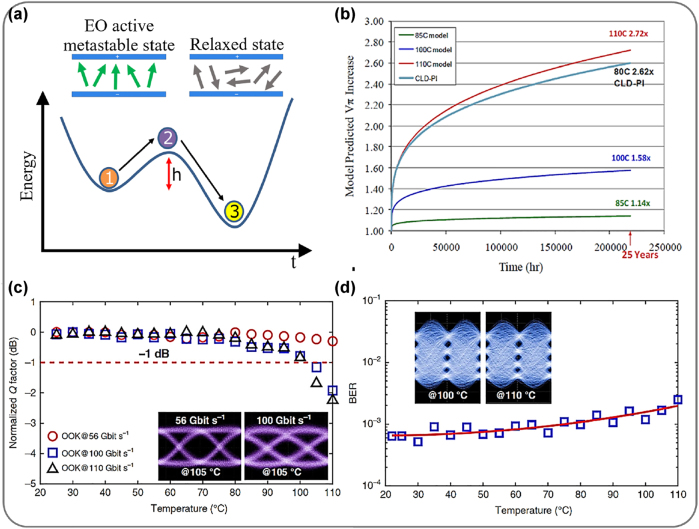
“Figure 5b shows the model-predicted V 𝜋 increase over time at various operating temperatures for an EOP modulator described in [112], suggesting 25 years of reliable operation at 85 o C. Researchers in [113] demonstrate the operation of EOP coated MZM modulators with thermophysical stable polymers…”
Electro-optic polymer ring resonator modulators [Invited]
Qiu, F., & Han, Y. (2021) · Chinese Optics Letters · doi:10.3788/col202119.041301 · Cited by 38
Electro-Optic Organic Crystal Silicon High-Speed Modulator
Korn, D., Jazbinsek, M., Palmer, R., Baier, M., Alloatti, L., Yu, H., Bogaerts, W., Lepage, G., Verheyen, P., Absil, P., et al. (2014) · IEEE Photonics Journal · doi:10.1109/jphot.2014.2314113 · Cited by 37
Silicon-Based Hybrid Integrated Photonic Chip for K ${}_{u}$ band Electromagnetic Wave Sensing
Chung, C.-J., Xu, X., Pan, Z., Mokhtari‐Koushyar, F., Wang, R., Yan, H., Subbaraman, H., & Chen, R. T. (2017) · Journal of Lightwave Technology · doi:10.1109/jlt.2017.2784382 · Cited by 36 · cited 1×
“EOP modulators can be used in applications from telecommunication and data communication [83, 105–108] to optical interconnects [49, 109] and RF sensing [110, 111].”
Polymer enabled 100Gbaud connectivity for datacom applications
Katopodis, V., Groumas, P., Zhang, Z., Dinu, R., Miller, E., Konczykowska, A., Dupuy, J.-Y., Beretta, A., Dedè, A., Choi, J. H., et al. (2015) · Optics Communications · doi:10.1016/j.optcom.2015.07.064 · Cited by 34
Ahmed, A. H., Lim, D., Elmoznine, A., Ma, Y., Huynh, T., Williams, C., Vera, L., Liu, Y., Shi, R., Streshinsky, M., et al. (2019) · 2019 IEEE International Solid- State Circuits Conference - (ISSCC) · doi:10.1109/isscc.2019.8662318 · Cited by 30 · cited 1×
“Modulators play a key role in various photonic integrated circuits (PICs) for versatile applications, including data transmission [1–3], quantum computing [4, 5], optical computing [6–11], and sensing [12].”
Self-citationSteglich, P. C., Mai, C., Villringer, C., Dietzel, B., Bondarenko, S. G., Ksianzou, V., Villasmunta, F., Zesch, C., Pulwer, S., Bürger, M., et al. (2021) · Journal of Physics Photonics · doi:10.1088/2515-7647/abd7cf · Cited by 30
Hiraki, T., Aihara, T., Fujii, T., Takeda, K., Maeda, Y., Kakitsuka, T., Tsuchizawa, T., & Matsuo, S. (2021) · Optics Express · doi:10.1364/oe.411483 · Cited by 27 · cited 1×
“Hence, efforts have been made recently to integrate membrane InP-based devices on a SiP platform to improve modulator efficiency [26].”
High performance nanophotonic circuits based on partially buried horizontal slot waveguides
Xiong, C., Pernice, W. H. P., Li, M., & Tang, H. X. (2010) · Optics Express · doi:10.1364/oe.18.020690 · Cited by 24
Prescod, A. J., Dingel, B. B., Madamopoulos, N., & Madabhushi, R. (2010) · IEEE Photonics Technology Letters · doi:10.1109/lpt.2010.2053842 · Cited by 24 · cited 1×
“A combination of both topologies, called a ring-assisted MZM, where one or multiple ring resonators are placed in the adjacent arm(s) of an MZM, has been proposed as well [29].”
Partially slotted silicon ring resonator covered with electro-optical polymer
Steglich, P. C., Mai, C., Stolarek, D., Lischke, S., Kupijai, S., Villringer, C., Pulwer, S., Heinrich, F., Bauer, J. J., Meister, S., et al. (2016) · Proceedings of SPIE, the International Society for Optical Engineering/Proceedings of SPIE · doi:10.1117/12.2217725 · Cited by 22 · cited 10×
“(d) Partially slotted waveguide utilized in a race-track MRM featuring a compact strip-to-slot mode converter, high modulation efficiency and quality factor compared to fully slotted MRM [57] (e) Segmented slot waveguides benefit from simpler (i.”
InfluentialAll-organic electro-optic waveguide modulator comprising SU-8 and nonlinear optical polymer
Nitišs, E., Tokmakovs, A., Pudžs, K., Busenbergs, J., & Rutkis, M. A. (2017) · Optics Express · doi:10.1364/oe.25.031036 · Cited by 22 · cited 1×
“[73–75] and all-polymeric waveguides [76, 77].”
60Gb/s waveguide-coupled O-band GeSi quantum-confined Stark effect electro-absorption modulator
Srinivasan, S. A., Porret, C., Balakrishnan, S., Ban, Y., Loo, R., Verheyen, P., Van Campenhout, J., & Pantouvaki, M. (2021) · Optical Fiber Communication Conference (OFC) 2021 · doi:10.1364/ofc.2021.tu1d.3 · Cited by 22 · cited 2×
“Since [24] is a recent demonstration, Ge”
Liu, J., Zhou, G., Du, J., Shen, W., Zhou, L., & He, Z. (2021) · Photonics Research · doi:10.1364/prj.442699 · Cited by 21 · cited 1×
“This in turn has created an upper limit of approximately 50 GHz to the BW [22] that 2 ]; [16] [InP]; [17] [GeSi]; [18] [Silicon]; [19] [Lithium Niobate]; [20] [Liquid Crystal]). can be achieved from a Si modulator with reasonable IL, limited by photon lifetime and RC time constant.”
Electrically packaged silicon-organic hybrid (SOH) I/Q-modulator for 64 GBd operation
Zwickel, H., Kemal, J. N., Kieninger, C., Kutuvantavida, Y., Rittershofer, J., Lauermann, M., Freude, W., Randel, S., & Koos, C. G. (2018) · Optics Express · doi:10.1364/oe.26.034580 · Cited by 18
Steglich, P. C., Mai, C., Pęczek, A., Korndorfer, F., Villringer, C., Dietzel, B., & Mai, A. (2018) · Technical digest - International Electron Devices Meeting/Technical digest · doi:10.1109/iedm.2018.8614691 · Cited by 18 · cited 1×
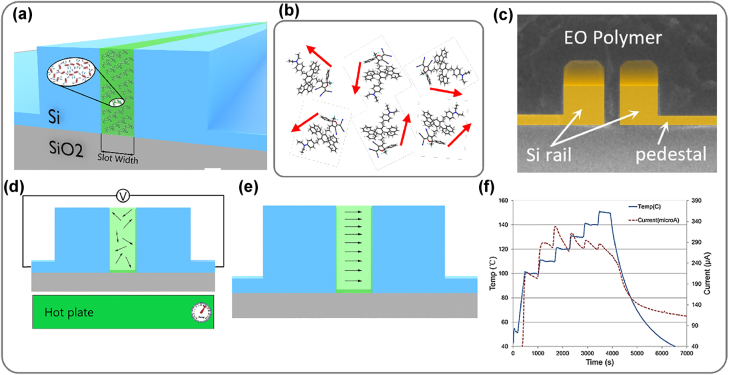
“The RF electric field is applied to the two rails [39, 64] using a partially etched slab layer (alsocalledpedestal).”
A silicon photonic evanescent-field sensor architecture using a fixed-wavelength laser
Chrostowski, L., Leanne, D., Matthew, M., Connor, M., Luan, E., Al-Qadasi, M., Avineet, R., Mojaver, H. R., Lyall, E., Gervais, A., et al. (2021) · Optical Interconnects XXI · doi:10.1117/12.2579095 · Cited by 18 · cited 1×
“Modulators play a key role in various photonic integrated circuits (PICs) for versatile applications, including data transmission [1–3], quantum computing [4, 5], optical computing [6–11], and sensing [12].”
Self-citationSilicon Photonics: A brief tutorial
Shekhar, S. (2021) · IEEE Solid-State Circuits Magazine · doi:10.1109/mssc.2021.3088966 · Cited by 18 · cited 1×
“Si photonic (SiP)based PICs are now commercially produced in millions in CMOS Si-on-insulator (SOI) foundries [13].”
Self-citationA 100 Gbaud On-off-Keying Silicon-Polymer Hybrid Modulator Operating at up to 110°C
Sato, H., Mao, J., Bannaron, A., Kamiya, T., Lu, G.-W., & Yokoyama, S. (2021) · IEEE Photonics Technology Letters · doi:10.1109/lpt.2021.3126945 · Cited by 17 · cited 1×
“…V 𝜋 increase over time at various operating temperatures for an EOP modulator described in [112], suggesting 25 years of reliable operation at 85 o C. Researchers in [113] demonstrate the operation of EOP coated MZM modulators with thermophysical stable polymers which can withstand up to 110 o C.”
Hammond, S. R., O’Malley, K. M., Xu, H., Elder, D. L., & Johnson, L. E. (2022) · Organic Photonic Materials and Devices · doi:10.1117/12.2622099 · Cited by 17 · cited 2×
“A recent study [114] suggests that moderate barriers against water vapor transmission may prove adequate without the need for full hermetic enclosures.”
Graphene electrodes for electric poling of electro-optic polymer films
Wang, W., Wu, J., Chen, K., Huang, Q., Luo, J., & Chiang, K. S. (2020) · Optics Letters · doi:10.1364/ol.390656 · Cited by 15 · cited 1×
“A graphene electrode is also proposed in [102] but the complexity of adding graphene makes this technique challenging.”
Taghavi, I., Dehghannasiri, R., Fan, T., Tofini, A., Moradinejad, H., Efterkhar, A. A., Shekhar, S., Chrostowski, L., Jaeger, N. A. F., & Adibi, A. (2022) · Optics Express · doi:10.1364/oe.460830 · Cited by 14 · cited 4×
“(c) False-colored SEM image of the slot indicating almost-perfect infiltration of SEO125 polymer [97].”
InfluentialSelf-citation40GHz Zero Chirp Single-ended EO Polymer Modulators with Low Half-wave Voltage
Yu, G., Mallari, J., Shen, H., Miller, E., Wei, C., Shofman, V., Jin, D., Chen, B., Chen, H., & Dinu, R. (2011) · doi:10.1364/cleo_si.2011.ctun5 · Cited by 13 · cited 1×
“EOPmodulators are also capable of zero-chirp operation even when driven with single-ended drivers [55].”
Electrically packaged silicon-organic hybrid (SOH) I/Q-modulator for 64 GBd operation
Zwickel, H., Kemal, J. N., Kieninger, C., Kutuvantavida, Y., Rittershofer, J., Lauermann, M., Freude, W., Randel, S., & Koos, C. G. (2018) · Repository KITopen (Karlsruhe Institute of Technology) · doi:10.5445/ir/1000089282 · Cited by 13
Design and Optimization of Horizontal Slot Microdisk Sensors
Eom, S. C., & Shin, J. H. (2013) · IEEE Photonics Technology Letters · doi:10.1109/lpt.2013.2276421 · Cited by 11 · cited 1×
“These include EOP modulators with horizontal slot waveguides fabricated using chemical vapor deposition (CVD) [73–75] and all-polymeric waveguides [76, 77].”
Schulz, K. M., Prorok, S., Jalas, D., Marder, S. R., Luo, J., Jen, A. K. ‐., Zierold, R., Nielsch, K., & Eich, M. (2015) · Optical Materials Express · doi:10.1364/ome.5.001653 · Cited by 11 · cited 2×
“Almost perfect infiltration for narrow slots has been reported in [97, 99].”
Plasmonic Mach-Zehnder Modulator with >70 GHz Electrical Bandwidth Demonstrating 90 Gbit/s 4-ASK
Heni, W., Melikyan, A., Haffner, C., Fedoryshyn, Y. M., Baeuerle, B., Josten, A., Niegemann, J., Hillerkuss, D., Kohl, M., Elder, D. L., et al. (2015) · Optical Fiber Communication Conference · doi:10.1364/ofc.2015.tu2a.2 · Cited by 10
Planar n-SI-n heterostructure athermal InP (110) optical modulator
Ogiso, Y., Nakanishi, Y., Kanazawa, S., Yamada, E., Tanobe, H., Arai, M., Shibata, Y., & Kohtoku, M. (2014) · Optics Express · doi:10.1364/oe.22.025776 · Cited by 9 · cited 1×
“Figure reproduced with permission from Optica ([14] [ITO]; [15] [VO2]; [16] [InP]; [17] [GeSi]; [18] [Silicon]; [19] [Lithium Niobate]; [20] [Liquid Crystal]).”
Silicon-organic hybrid devices
Alloatti, L., Korn, D., Pfeifle, J., Palmer, R., Koeber, S., Baier, M., Schmogrow, R., Diebold, S., Pahl, P., Zwick, T., et al. (2013) · Proceedings of SPIE, the International Society for Optical Engineering/Proceedings of SPIE · doi:10.1117/12.2005866 · Cited by 8
High Temperature Resistant 112 Gbit/s PAM4 Modulator Based on Electro-Optic Polymer Modulator
Yokoyama, S., Lu, G.-W., Miura, H., Qiu, F., & Spring, A. M. (2018) · European Conference on Optical Communication · doi:10.1109/ecoc.2018.8535460 · Cited by 6
Poling study of electro-optic polymers in silicon slot waveguides
Szep, A. A., Chen, A., Shi, S., Lin, Z., & Abeysinghe, D. C. (2011) · Proceedings of SPIE, the International Society for Optical Engineering/Proceedings of SPIE · doi:10.1117/12.880978 · Cited by 5 · cited 1×
“Surface passivation using high-𝜅 dielectric metal oxide can further improve infiltration (by making hydrophilic sidewalls) [97] and decrease pedestal resistance [103], thereby improving speed.”
Silicon slot waveguide ring resonator: From single resonance to envelope index sensing
Zhang, W., Serna, S., Roux, X. L., Vivien, L., & Cassan, É. (2016) · International Conference on Photonics in Switching · Cited by 3
GeSi modulator based on two-mode interference
Li, Y., & Cheng, B. (2014) · Applied Optics · doi:10.1364/ao.53.000221 · Cited by 1 · cited 1×
“Figure reproduced with permission from Optica ([14] [ITO]; [15] [VO2]; [16] [InP]; [17] [GeSi]; [18] [Silicon]; [19] [Lithium Niobate]; [20] [Liquid Crystal]).”
Research works printed but not linked: 3
- Nikogosyan D. N. Nonlinear Optical Crystals: A Complete Survey New York, NY Springer Science & Business Media 2006
- Lebby M. Polymer modulators with >50ghz performance for power consumption reduction at 400, 800, and 1600 gbaud aggregated datarates ECOS Market Focus SPIE 2019
- Liu K. Scaling for speed: the impact of polymer pics on optical roadmaps Photonic Integration Conference 2018
Cited by
Roadmapping the next generation of silicon photonics
Shekhar, S., Bogaerts, W., Chrostowski, L., Bowers, J. E., Hochberg, M., Soref, R., & Shastri, B. J. (2024) · Nature Communications · doi:10.1038/s41467-024-44750-0 · Cited by 878
“All modulators su ↵ er from a tradeo ↵ between FoM e � ciency and E/O BW [49–51].”
BackgroundSelf-citationRoadmap to neuromorphic computing with emerging technologies
Mehonić, A., Ielmini, D., Roy, K., Mutlu, O., Kvatinsky, S., Serrano‐Gotarredona, T., Linares-Barranco, B., Spiga, S., Savel'ev, S. E., Balanov, A. G., et al. (2024) · APL Materials · doi:10.1063/5.0179424 · Cited by 201
Silicon photonics for the visible and near-infrared spectrum
Poon, J. K. S., Gövdeli, A., Sharma, A., Mu, X., Chen, F., Xue, T., & Liu, T. (2024) · Advances in Optics and Photonics · doi:10.1364/aop.501846 · Cited by 121
Fedotova, A. N., Carletti, L., Zilli, A., Setzpfandt, F., Staude, I., Toma, A., Finazzi, M., Angelis, C. D., Pertsch, T., Neshev, D. N., et al. (2022) · ACS Photonics · doi:10.1021/acsphotonics.2c00835 · Cited by 110
Roadmap on Neuromorphic PhotonicsPreprint
Brunner, D., Shastri, B. J., Al-Qadasi, M., Ballani, H., Barbay, S., Biasi, S., Bienstman, P., Bilodeau, S., Bogaerts, W., Böhm, F., et al. (2025) · arXiv (Cornell University) · doi:10.48550/arxiv.2501.07917 · Cited by 63
Self-citation
Metadata
- Authors
- Taghavi, I., Moridsadat, M., Tofini, A., Raza, S., Jaeger, N. A. F., Chrostowski, L., Shastri, B. J., & Shekhar, S.
- Affiliations
- University of British Columbia (CA)
- Queen's University (CA)
- Corresponding author
- Taghavi, Iman
- ORCID
- Venue
- Nanophotonics
- Publisher
- Wiley
- Published
- 2022-07-15
- Volume
- 11
- Issue
- 17
- Pages
- 3855-3871
- ISSN
- 2192-8606 (ISSN-L)
- 2192-8614
- PMC
- PMC11502111
- OpenAlex
- W4285589045
- Cited by
- 78
- References
- 116
- Citations by year
- 2026: 20 · 2025: 24 · 2024: 22 · 2023: 9 · 2022: 3
- FWCI
- 0.95
- Type
- journal article
- Language
- en
- Open access
- gold
- doi.org
- Licence
- cc-by
- creativecommons.org/licenses/by/4.0/ (vor)
- doi.wiley.com/10.1002/tdm_license_1.1 (tdm)
- Locations
- Nanophotonics (publishedVersion, cc-by)
- PubMed Central (publishedVersion, cc-by)
- PubMed (publishedVersion)
- DOAJ (DOAJ: Directory of Open Access Journals) (submittedVersion, cc-by-sa)
- Funders
- Natural Sciences and Engineering Research Council of Canada
- Topics
- Physical Sciences › Engineering › Electrical and Electronic Engineering › Photonic and Optical Devices
- Physical Sciences › Physics and Astronomy › Atomic and Molecular Physics, and Optics › Photorefractive and Nonlinear Optics
- Physical Sciences › Physics and Astronomy › Atomic and Molecular Physics, and Optics › Plasmonic and Surface Plasmon Research
- Keywords
- silicon photonics, electro-optic effect, optical phase shifter, low driving voltage, modulation bandwidth, device aging, temperature dependence, lithium niobate modulator
About these checks
Registry, retraction, Cites and statistics results are computed, not judged, with one exception: a printed reference that no index lists is read once by a model before it counts as a citation error. Claims are extracted by a model and kept only when their quote appears verbatim in the text; each cited source is then checked, with a model’s help, for whether it says what the claim relies on. Those verdicts can be wrong — read the claim’s quote and the cited source before relying on one.
Statistics and arithmetic are recomputed, not judged.
Confidence bands are shown only for fields calibrated on our annotated test set. None is calibrated yet, so no band is shown.
What counts as a claim ›How we measure confidence ›How we check this ›
Are you an author, or do you see a problem with this page? Request a review
Data sources
Bibliographic data: Semantic Scholar, OpenAlex, Crossref.
Contains information from the Semantic Scholar Academic Graph Datasets, made available under the ODC Attribution License (ODC-BY 1.0).
Semantic Scholar’s data is described in: Kinney, R., et al. (2023). The Semantic Scholar Open Data Platform. arXiv:2301.10140.
