

The DOI matches its Crossref record; 55 of the 56 references it cites were found in a registry or an index.
Gut Vagal Afferents Differentially Modulate Innate Anxiety and Learned Fear
Open accessAbstract
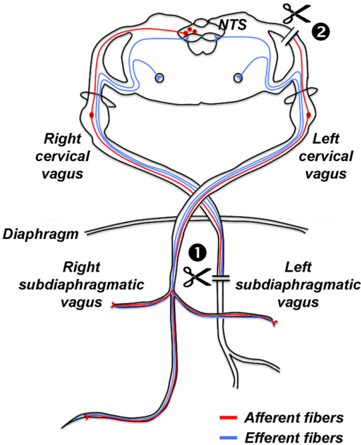
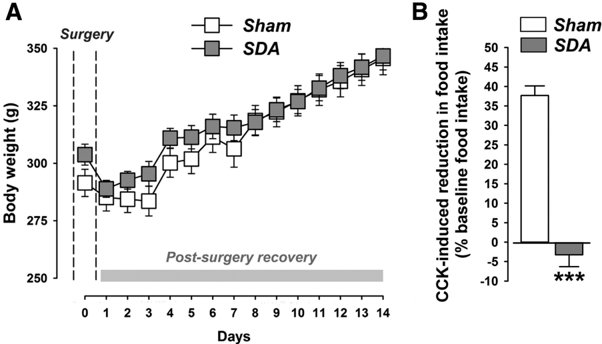
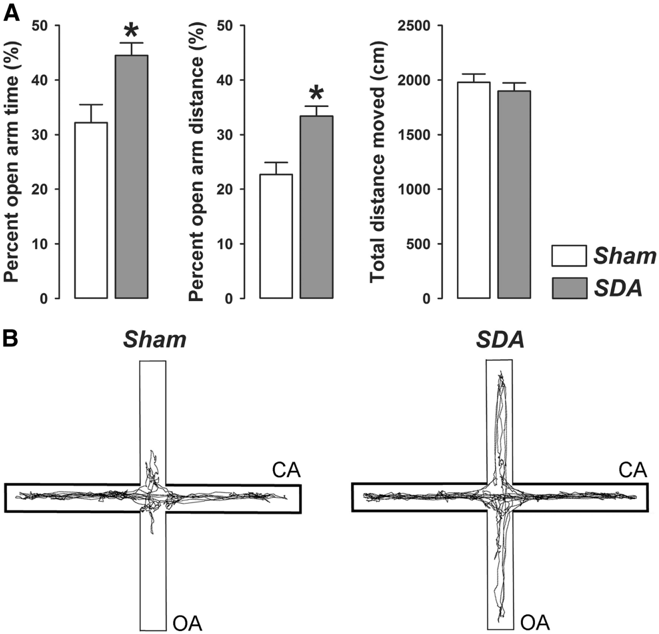
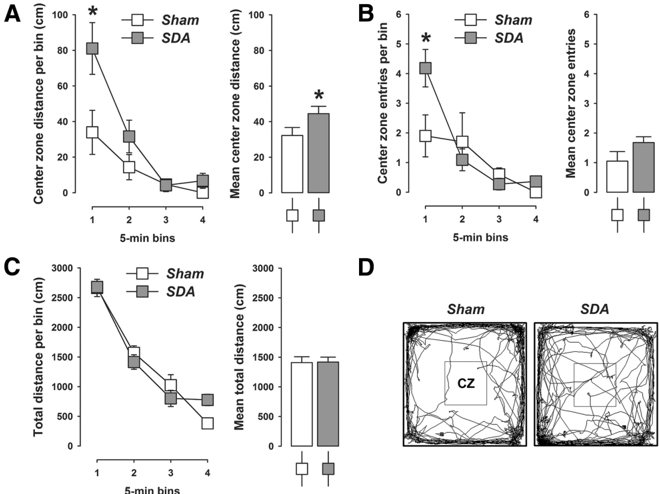
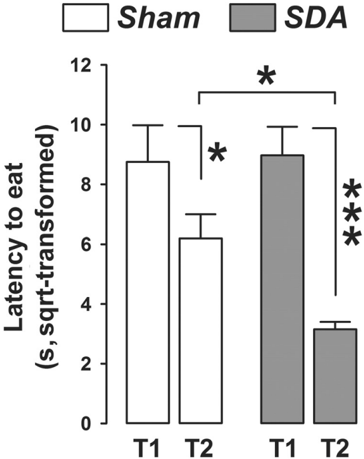
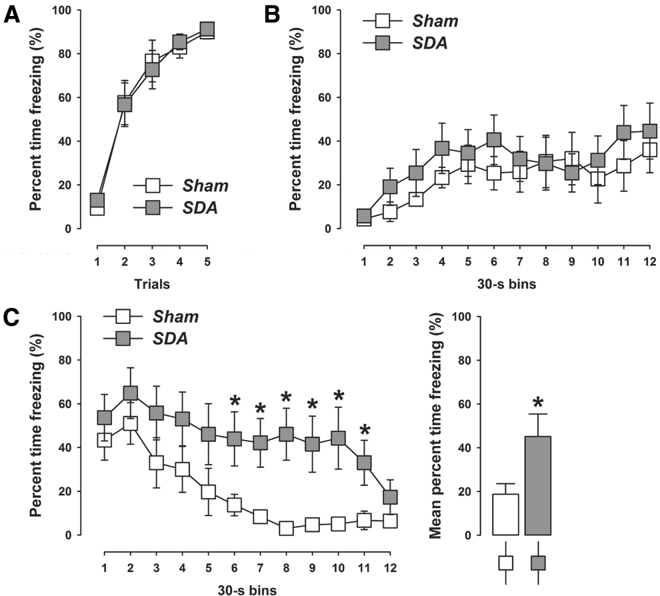
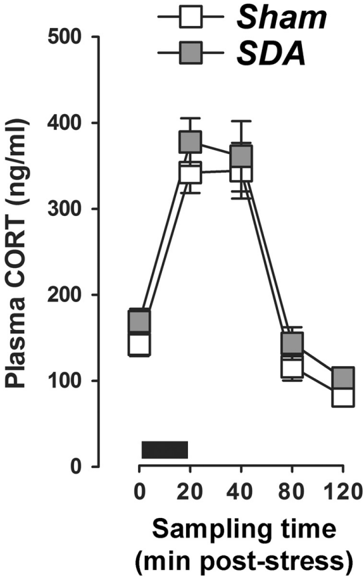
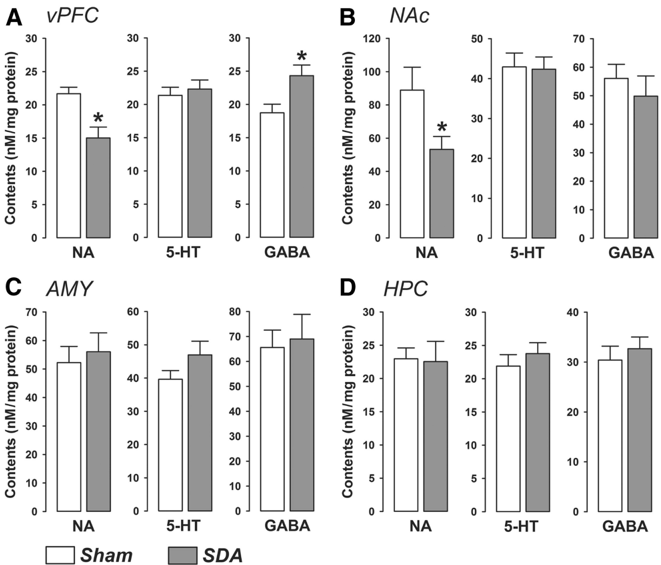
Vagal afferents are an important neuronal component of the gut–brain axis allowing bottom-up information flow from the viscera to the CNS. In addition to its role in ingestive behavior, vagal afferent signaling has been implicated modulating mood and affect, including distinct forms of anxiety and fear. Here, we used a rat model of subdiaphragmatic vagal deafferentation (SDA), the most complete and selective vagal deafferentation method existing to date, to study the consequences of complete disconnection of abdominal vagal afferents on innate anxiety, conditioned fear, and neurochemical parameters in the limbic system. We found that compared with Sham controls, SDA rats consistently displayed reduced innate anxiety-like behavior in three procedures commonly used in preclinical rodent models of anxiety, namely the elevated plus maze test, open field test, and food neophobia test. On the other hand, SDA rats exhibited increased expression of auditory-cued fear conditioning, which specifically emerged as attenuated extinction of conditioned fear during the tone re-exposure test. The behavioral manifestations in SDA rats were associated with region-dependent changes in noradrenaline and GABA levels in key areas of the limbic system, but not with functional alterations in the hypothalamus-pituitary-adrenal grand stress. Our study demonstrates that innate anxiety and learned fear are both subjected to visceral modulation through abdominal vagal afferents, possibly via changing limbic neurotransmitter systems. These data add further weight to theories emphasizing an important role of afferent visceral signals in the regulation of emotional behavior.
Overview
The claims and statistics of this paper haven’t been checked yet.
Run the check — free, no account needed. It reads the open-access text and checks the sources it cites.
Integrity signals
Registry
Cites
Statistics
Figures
Verification
Claims the paper makes
The claims and statistics of this paper haven’t been checked yet.
Run the check — free, no account needed. It reads the open-access text and checks the sources it cites.
Claims other papers make about this one
Each is checked against this paper’s own text: does it say what the citing paper says it does?
The cited source says what the claim attributes to it.
In the citing paper
“Recently, it has been shown that gut vagal afferents also influence anxiety and learned fear (Klarer et al. 2014).”
From Motion sickness: more than nausea and vomiting (2014) · cites this paper as Klarer et al. 2014
The cited source says what the claim attributes to it.
In the citing paper
“In addition, subdiaphragmatic vagal deafferentation (Vazquez et al., 2016) a method that eliminates abdominal vagal afferents, but keeps most efferents intact (Norgren and Smith, 1994) highlights the involvement of vagal afferents in anxiety-like (elevated plus maze, open-field test, food neophobia) and fear-related behavior (auditory-cued fear conditioning) (Klarer et al.,”
From The Microbiota-Gut-Brain Axis (2019) · cites this paper as Klarer et al., 2014
Self-check
Percentages, sums and reported differences re-computed from the paper’s own numbers.
The self-check needs the paper’s full text.
Citations
Cites
The Rat Brain in Stereotaxic Coordinates
Paxinos, G., & Watson, C. (1983) · Elsevier eBooks · doi:10.1016/c2009-0-63235-9 · Cited by 28,585
Mind-altering microorganisms: the impact of the gut microbiota on brain and behaviour
Cryan, J. F., & Dinan, T. G. (2012) · Nature Reviews Neuroscience · doi:10.1038/nrn3346 · Cited by 4,572
AChE-stained horizontal sections of the rat brain in stereotaxic coordinates
Paxinos, G., WATSON, C. R. R., & Emson, P. C. (1980) · Journal of Neuroscience Methods · doi:10.1016/0165-0270(80)90021-7 · Cited by 4,514
Bravo, J. A., Forsythe, P., Chew, M. V., Escaravage, E., Savignac, H. M., Dinan, T. G., Bienenstock, J., & Cryan, J. F. (2011) · Proceedings of the National Academy of Sciences · doi:10.1073/pnas.1102999108 · Cited by 3,888
Normal gut microbiota modulates brain development and behavior
Heijtz, R. D., Wang, S., Anuar, F., Qian, Y., Björkholm, B., Samuelsson, A., Hibberd, M. L., Forssberg, H., & Pettersson, S. (2011) · Proceedings of the National Academy of Sciences · doi:10.1073/pnas.1010529108 · Cited by 3,228
Contributions of the Amygdala to Emotion Processing: From Animal Models to Human Behavior
Phelps, E. A., & LeDoux, J. E. (2005) · Neuron · doi:10.1016/j.neuron.2005.09.025 · Cited by 3,203 · cited 1×
“First, while the AMY and HPC play prominent roles in the acquisition and expression of auditory-cued and contextual fear responses, respectively (Phelps and LeDoux, 2005; Maren et al., 2013), the vPFC strongly regulates the extinction of conditioned fear (SotresBayon et al., 2006).”
BackgroundThe somatic marker hypothesis and the possible functions of the prefrontal cortex
Damasio, A. R. (1996) · Philosophical Transactions of the Royal Society of London. Series B: Biological Sciences · doi:10.1098/rstb.1996.0125 · Cited by 2,847 · cited 1×
“Such feelings are typically conceptualized as somatic signals that influence de- cision making and behavioral responses without explicit awareness of the provoking cues (Damasio, 1996; Kahneman and Klein, 2009; Mayer, 2011).”
BackgroundConditions for intuitive expertise: A failure to disagree.
Kahneman, D., & Klein, G. (2009) · American Psychologist · doi:10.1037/a0016755 · Cited by 2,443
The Neurocircuitry of Fear, Stress, and Anxiety Disorders
Shin, L. M., & Liberzon, I. (2010) · Neuropsychopharmacology · doi:10.1038/npp.2009.83 · Cited by 2,083 · cited 2×
“Based on the behavioral changes identified in SDA rats, we predicted neurochemical abnormalities in key areas of the limbic system (Bannerman et al., 2004; Sotres-Bayon et al., 2006; Shin and Liberzon, 2010; Maren et al., 2013).”
BackgroundGut feelings: the emerging biology of gut-brain communication
Mayer, E. A. (2011) · Nature Reviews Neuroscience · doi:10.1038/nrn3071 · Cited by 1,726
Cited by
Sorted by citations
Items 101–159 of 159
Davey, S., Bell, E. M., Halberstadt, J. B., & Collings, S. C. (2020) · Trials · doi:10.1186/s13063-020-04479-9 · Cited by 8
Vagal nerve stimulation dynamically alters anxiety-like behavior in rats
Butler, A. G., Bassi, J. K., Connelly, A. A., Melo, M., Allen, A. M., & McDougall, S. J. (2025) · Brain stimulation · doi:10.1016/j.brs.2025.01.018 · Cited by 8
From Physiology to Psychiatry: Key Role of Vagal Interoceptive Pathways in Emotional Control
Krieger, J.-P., & Skibicka, K. P. (2025) · Biological Psychiatry · doi:10.1016/j.biopsych.2025.04.012 · Cited by 12
Kritik an der Polyvagaltheorie
Liem, T., & Neuhuber, W. (2021) · DO - Deutsche Zeitschrift für Osteopathie · doi:10.1055/a-1345-6051 · Cited by 7
Rioux, C. (2020) · Springer eBooks · doi:10.1007/978-3-030-14504-0_159 · Cited by 7
ENVOLVIMENTO DA FLORA INTESTINAL NA MODULAÇÃO DE DOENÇAS PSIQUIÁTRICAS
Lach, G., Morais, L. H., Costa, A. P., & Hoeller, A. A. (2017) · VITTALLE - Revista de Ciências da Saúde · doi:10.14295/vittalle.v29i1.6413 · Cited by 12
Yu, C.-C., Li, M., Shen, F., Gao, S., Wang, J., He, C., Wang, L., Wu, Y., & Du, Y. (2025) · Chinese Medicine · doi:10.1186/s13020-025-01230-x · Cited by 7
Pasqualette, L. B. B. B., Fidalgo, T. K. D. S., Freitas‐Fernandes, L. B., Souza, G. G. L., Imbiriba, L. A., Lobo, L. A., Volchan, E., Domingues, R. M. C. P., Valente, A. P., & Miranda, K. R. (2024) · Metabolites · doi:10.3390/metabo14080450 · Cited by 5
Mohammad, S. I., Hammood, Y. M., Vasudevan, A., Uthirapathy, S., Ballal, S., Sabarivani, A., Mishra, S., Nathiya, D., Al‐qaim, Z. H., & KADHIM, A. J. (2025) · Molecular Neurobiology · doi:10.1007/s12035-025-05447-7 · Cited by 6
Filaretova, L. P., Bagaeva, T. R., Morozova, O., & Zelena, D. (2014) · Endocrine Regulations · doi:10.4149/endo_2014_04_163 · Cited by 5
Keller, B. N., Snyder, A. E., Coker, C. R., Aguilar, E. A., O’Brien, M. K., Bingaman, S. S., Arnold, A. C., Hajnal, A., & Silberman, Y. (2021) · doi:10.1101/2021.06.03.446790 · Cited by 4
Chen, K., Guo, X., Hang, Z., Wang, G., Zhang, Y., Tang, Z., Huang, B., Li, X., & Zhang, D. (2025) · Nature Communications · doi:10.1038/s41467-025-66112-0 · Cited by 5
Examining the Effects of 4He Exposure on the Gut-Brain Axis
Jones, C. B., Peiffer, L. B., Davis, C. M., & Sfanos, K. S. (2021) · Radiation Research · doi:10.1667/rade-20-00285.1 · Cited by 4
Sensory Processing and Systems Science: There is More than Meets the EyePreprint
Janecka, I. P. (2015) · SSRN Electronic Journal · Cited by 4
Ren, J., Lian, X.-Y., Ye, W.-Q., Wen, Y., Lu, C., & Cao, X. (2025) · Frontiers in Neuroscience · doi:10.3389/fnins.2025.1599818 · Cited by 3
Gomes, F. D. O., Santos, L. C., & Welter, Á. (2020) · Singular Saúde e Biológicas · doi:10.33911/singularsb.v1i1.83 · Cited by 3
Edwards, C. M., Guerrero, I. E., Dolezel, T., Zheng, H., & Rinaman, L. (2022) · Neuroendocrinology · doi:10.1159/000528828 · Cited by 3
Kim, Y. J., Lee, G. J., Shim, S. W., Kim, D., & Oh, S. B. (2023) · Experimental Neurobiology · doi:10.5607/en23002 · Cited by 3
Enteric nervous system, gut-brain connection and related neurodevelopmental disorders
Alim, E., Gülekon, N., Atalar, K., & Bahçelioğlu, M. (2020) · Anatomy (International Journal of Experimental and Clinical Anatomy) · doi:10.2399/ana.20.008 · Cited by 3
Psychosomatische Osteopathie bei Trauma am Beispiel der bifokalen Integration
Liem, T., & Neuhuber, W. (2020) · Osteopathische Medizin · doi:10.1016/s1615-9071(20)30116-7 · Cited by 3
The effects of transcutaneous vagus nerve stimulation on conditioned fear extinction in humansPreprint
Burger, A. M., Verkuil, B., Diest, I. V., van der Does, W. A. J., Thayer, J. F., & BROSSCHOT, J. F. (2017) · doi:10.31234/osf.io/8jsu9 · Cited by 3
The “brain-gut” mechanism of postherpetic neuralgia: a mini-review
Zhang, P., Zhang, C., Zheng, B., Liu, Y., Zhang, D., & Xiao, H. (2025) · Frontiers in Neurology · doi:10.3389/fneur.2025.1535136 · Cited by 3
Vagal nerve TRPV3 regulates sedative-mediated appeasement
Wang, P., Zhu, J., Lu, X., Chen, C., Gao, B., Tao, W., Xia, K., Song, Y., Shi, Q., Gai, H., et al. (2026) · Proceedings of the National Academy of Sciences · doi:10.1073/pnas.2525757123 · Cited by 2
Serendipity and spontaneity – Critical components in 40 years of academia
Langhans, W. (2019) · Physiology & Behavior · doi:10.1016/j.physbeh.2019.02.011 · Cited by 2
Self-citationThe Gut Microbiome and the Central Nervous System (CNS)
Vijay, A., Ahmad, F., Sudesh, R., & Balakrishnan, A. (2024) · Springer eBooks · doi:10.1007/978-981-99-8803-7_3 · Cited by 2
Liang, J., Xiong, Z., Lei, Q., Jiang, Z., Wei, J., Ouyang, F., Chen, Y., & Zeng, J. (2024) · Experimental Neurology · doi:10.1016/j.expneurol.2024.114970 · Cited by 2
Stevens, S. K., Williams, D. P., Hanif, M., Jovanović, T., Thayer, J. F., Norrholm, S. D., & Zalta, A. K. (2025) · Psychosomatic Medicine · doi:10.1097/psy.0000000000001421 · Cited by 2
Neural Secretions and Regulation of Gut Functions
Welcome, M. O. (2018) · Springer eBooks · doi:10.1007/978-3-319-91056-7_9 · Cited by 3
Wood, C. P., Avalos, B., Alvarez, C., & DiPatrizio, N. V. (2023) · Cannabis and Cannabinoid Research · doi:10.1089/can.2023.0150 · Cited by 2
Understanding in vivo modelling of depression
Bannach‐Brown, A. (2019) · ERA · Cited by 1
Edwards, C. M., Guerrero, I. E., Dolezel, T., Zheng, H., & Rinaman, L. (2022) · bioRxiv (Cold Spring Harbor Laboratory) · doi:10.1101/2022.02.11.480168 · Cited by 2
Influence of gut microbiota on chronic pain syndrome
Bofanova, N. S., & Khanfar, Y. A. (2023) · Russian Journal of Pain · doi:10.17116/pain20232102150 · Cited by 1
Selective pressure on a saccharin intake phenotype and its correlates: a replication study
Dess, N. K., Chapman, C. D., & Jacobi, P. M. (2023) · Chemical Senses · doi:10.1093/chemse/bjad021 · Cited by 1
Tanida, M., Iwasaki, Y., Okamoto, Y., Kuda, Y., Tsumoto, K., Jinno, H., & Kurata, Y. (2025) · American Journal of Physiology-Regulatory, Integrative and Comparative Physiology · doi:10.1152/ajpregu.00126.2025 · Cited by 1
Mentales und energiespeicherndes Gedächtnis
Straub, R. H. (2019) · Springer eBooks · doi:10.1007/978-3-662-59131-4_8 · Cited by 1
Managing Maternal Fatigue During Childbirth: A Systematic Review
Chaisitsanguan, K., Kongvattananon, P., & Hawthrone, D. (2022) · Current Women s Health Reviews · doi:10.2174/1573404819666220804163125 · Cited by 1
Behavioral Consequences of a Rumbling Tummy: Fasting Alters Emotional State via the Vagus Nerve
Noble, E. E. (2022) · Biological Psychiatry · doi:10.1016/j.biopsych.2022.08.006 · Cited by 1
Edwards, C. M., Guerrero, I. E., Thompson, D., Dolezel, T., & Rinaman, L. (2024) · Journal of Neuroscience Research · doi:10.1002/jnr.25390 · Cited by 1
Kobrzycka, A. T., Stankiewicz, A. M., Gościk, J., Góra, M., Burzyńska, B., Iwanicka‐Nowicka, R., Pierzchała, K., & Wieczorek, M. (2022) · Frontiers in Behavioral Neuroscience · doi:10.3389/fnbeh.2022.869526 · Cited by 1
Lyte, M. (2015) · eCommons (Cornell University)
The Second Brain and Possible Interactions with the Heart
Sollazzo, R., & Sanges, M. (2016) · Springer eBooks · doi:10.1007/978-3-319-33214-7_4
Burger, A. M., Verkuil, B., Fenlon, H., Thijs, L., Cools, L., Miller, H. C., Vervliet, B., & Diest, I. V. (2017) · doi:10.31234/osf.io/z658d
Lefas, I. (2018) · Dialogues in Clinical Neuroscience & Mental Health · doi:10.26386/obrela.v1i2.48
Hitting the right nerve: effects of transcutaneous vagus nerve stimulation on symptoms of anxiety
Burger, A. M. (2019) · Leiden Repository (Leiden University)
Gut microbiota and its impact on neuropsychiatric disorders
Wójcik, M., Dąbrowska, J., Bator, D., & Milanowska, J. (2020) · Journal of Education Health and Sport · doi:10.12775/jehs.2020.10.08.032
(2021) · Odile Jacob eBooks · doi:10.3917/oj.becch.2021.01.0239
Influence of Interoceptive Signals on Neuronal Circuit Computations
Sasaki, T. (2023) · The Brain & Neural Networks · doi:10.3902/jnns.30.142
Edwards, C. M., Guerrero, I. E., Thompson, D., Dolezel, T., & Rinaman, L. (2024) · bioRxiv (Cold Spring Harbor Laboratory) · doi:10.1101/2024.04.09.588717
Krieger, J.-P., & Meyer, U. (2024) · Royal Society of Chemistry eBooks · doi:10.1039/9781837672059-00057
Self-citationDias, O. F. M., Valle, N. M. E., Oliveira, F. A., Alves, A. H., Mamani, J. B., Rego, G. N. A., da Silva, K. F., Galanciak, M. C. S., Munoz, J. M., Cintra, L., et al. (2025) · Einstein (São Paulo) · doi:10.31744/einstein_journal/2025ao1614
The Future of Midwifery Rests with Our Students: Can You Meet the Challenge?
Kitson-Reynolds, E., & Naish, M. (2025) · Springer eBooks · doi:10.1007/978-3-032-04281-1_4
Sampsell, L. J., Snyder, J., Evans, A., Horvath, N., McMenimon, I. N., Nyland, J. E., Browning, K. N., Hajnal, A., & Silberman, Y. (2026) · Hormones and Behavior · doi:10.1016/j.yhbeh.2026.105889
Yüksel, Ç., McCoy, E., Watford, L., Muranaka, M., Sen, M., Lax, H., Bobowski, L., Daffre, C., Bostian, C. M., Oliver, K. I., et al. (2026) · bioRxiv (Cold Spring Harbor Laboratory) · doi:10.64898/2026.02.02.703359
Mild concussion impairs extinction of avoidance and alters respective brain circuits in male rats
Martínez‐Guzmán, O., Cáceres‐Chacón, M., Rivera‐López, M., Hernández-Busot, G., Forty-Díaz, J., Haddock-Martínez, H. G., & Sierra-Mercado, D. (2026) · Experimental Neurology · doi:10.1016/j.expneurol.2026.115734
Gut-to-brain interoceptive pathways in emotion-related behaviors
Otsuki, T., Ichiki, T., & Terunuma, M. (2026) · Frontiers in Systems Neuroscience · doi:10.3389/fnsys.2026.1855213
Paraventricular thalamic neurons respond to vagus nerve activation and modulate anxious behavior
Xie, Z., Yamakawa, M., Kayama, T., Sasaki, T., & Kuga, N. (2026) · Frontiers in Neural Circuits · doi:10.3389/fncir.2026.1865790
Metadata
- Authors
- Klarer, M., Arnold, M., Günther, L., Winter, C., Langhans, W., & Meyer, U.
- Affiliations
- ETH Zurich (CH)
- University Hospital Carl Gustav Carus (DE)
- Venue
- The Journal of Neuroscience
- Publisher
- Society for Neuroscience
- Published
- 2014-05-21
- Volume
- 34
- Issue
- 21
- Pages
- 7067-7076
- ISSN
- 0270-6474 (ISSN-L)
- 1529-2401
- PMC
- PMC6608191
- OpenAlex
- W2028119064
- Cited by
- 159
- References
- 56
- Citations by year
- 2026: 6 · 2025: 15 · 2024: 18 · 2023: 11 · 2022: 14 · 2021: 12 · 2020: 17 · 2019: 16 · 2018: 12 · 2017: 12 · 2016: 16 · 2015: 7 · 2014: 3
- FWCI
- 6.60
- Type
- journal article
- Language
- en
- Open access
- hybrid
- doi.org
- Licence
- Locations
- Journal of Neuroscience (publishedVersion, cc-by-nc-sa)
- PubMed Central (publishedVersion)
- PubMed (publishedVersion)
- Repository for Publications and Research Data (ETH Zurich) (publishedVersion, cc-by-nc-sa)
- ETH Zürich Research Collection
- Funders
- European Commission (259679)
- Eidgenössische Technische Hochschule Zürich (ETH-25_13-2, 25_13-2)
- Topics
- Life Sciences › Neuroscience › Neurology › Vagus Nerve Stimulation Research
- Life Sciences › Neuroscience › Cognitive Neuroscience › Memory and Neural Mechanisms
- Health Sciences › Medicine › Gastroenterology › Gastrointestinal motility and disorders
- Keywords
- vagal afferents, gut-brain axis, learned fear, fear extinction, norepinephrine, GABA, limbic system, hypothalamic-pituitary-adrenal axis, emotional behavior, food neophobia
- MeSH terms
- Animals, Anxiety, Conditioning, Classical, Eating, Exploratory Behavior, Extinction, Psychological, Fear, Functional Laterality, Male, Sincalide, Vagus Nerve, Rats, Sprague-Dawley, Neurotransmitter Agents, Maze Learning, Gastrointestinal Tract, Rats
About these checks
Registry, retraction, Cites and statistics results are computed, not judged, with one exception: a printed reference that no index lists is read once by a model before it counts as a citation error. Claims are extracted by a model and kept only when their quote appears verbatim in the text; each cited source is then checked, with a model’s help, for whether it says what the claim relies on. Those verdicts can be wrong — read the claim’s quote and the cited source before relying on one.
Statistics and arithmetic are recomputed, not judged.
Confidence bands are shown only for fields calibrated on our annotated test set. None is calibrated yet, so no band is shown.
What counts as a claim ›How we measure confidence ›How we check this ›
Are you an author, or do you see a problem with this page? Request a review
