

The DOI matches its Crossref record; 55 of the 56 references it cites were found in a registry or an index.
Gut Vagal Afferents Differentially Modulate Innate Anxiety and Learned Fear
Open accessAbstract
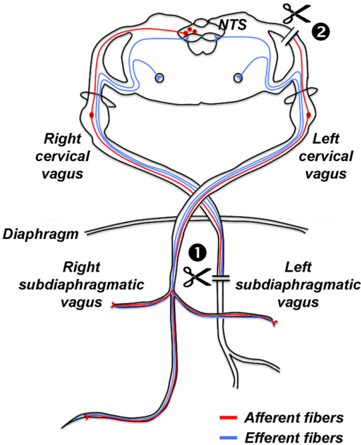
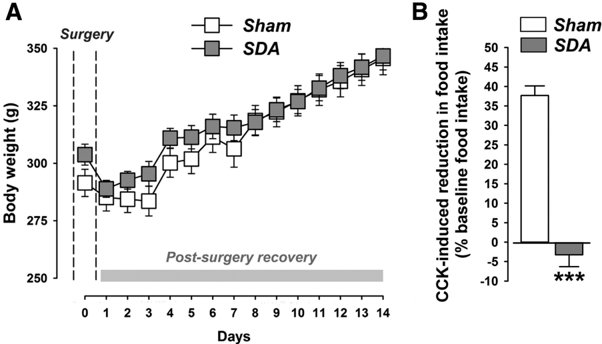
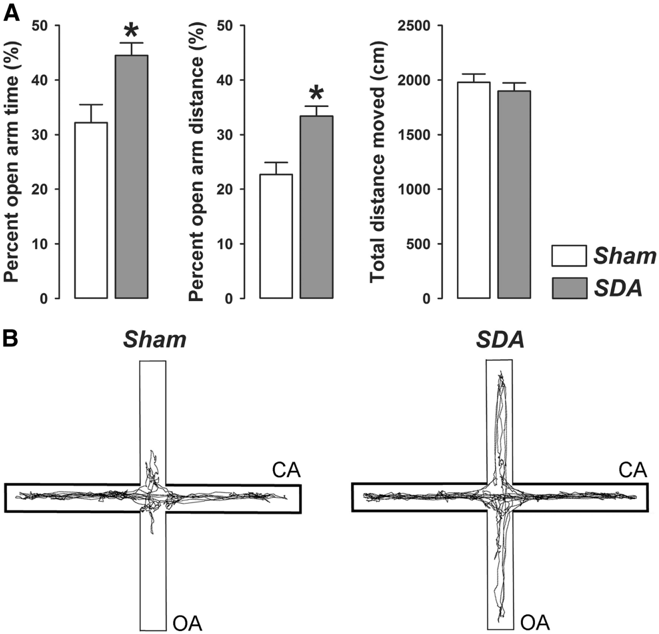
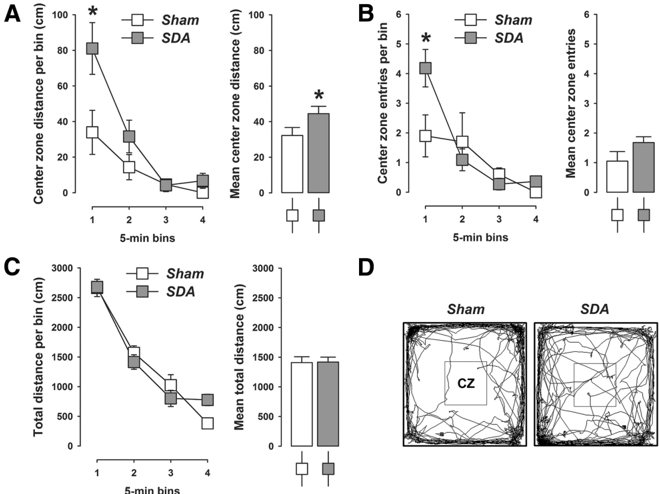
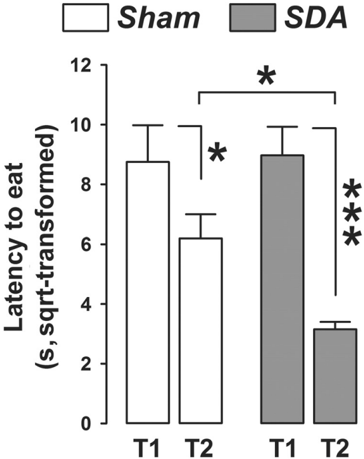
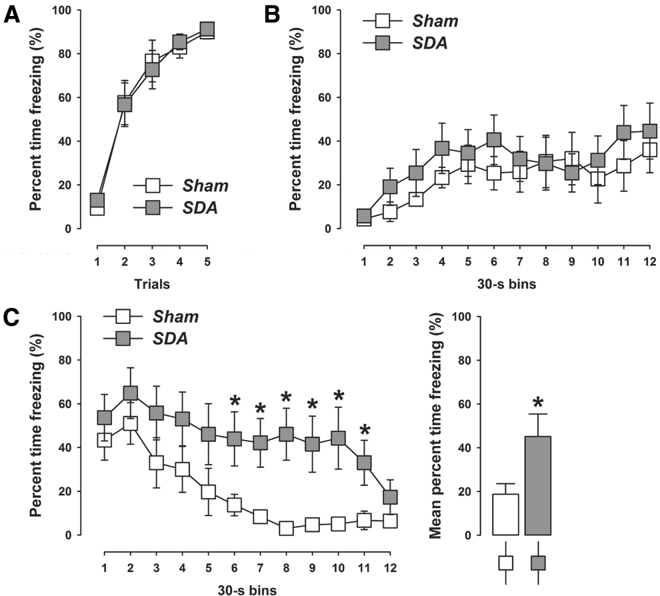
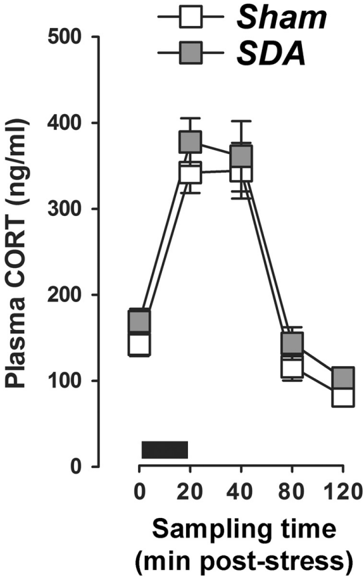
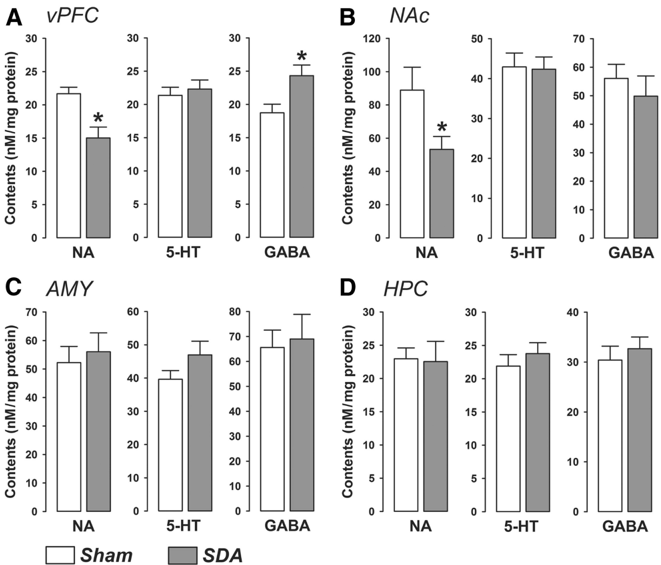
Vagal afferents are an important neuronal component of the gut–brain axis allowing bottom-up information flow from the viscera to the CNS. In addition to its role in ingestive behavior, vagal afferent signaling has been implicated modulating mood and affect, including distinct forms of anxiety and fear. Here, we used a rat model of subdiaphragmatic vagal deafferentation (SDA), the most complete and selective vagal deafferentation method existing to date, to study the consequences of complete disconnection of abdominal vagal afferents on innate anxiety, conditioned fear, and neurochemical parameters in the limbic system. We found that compared with Sham controls, SDA rats consistently displayed reduced innate anxiety-like behavior in three procedures commonly used in preclinical rodent models of anxiety, namely the elevated plus maze test, open field test, and food neophobia test. On the other hand, SDA rats exhibited increased expression of auditory-cued fear conditioning, which specifically emerged as attenuated extinction of conditioned fear during the tone re-exposure test. The behavioral manifestations in SDA rats were associated with region-dependent changes in noradrenaline and GABA levels in key areas of the limbic system, but not with functional alterations in the hypothalamus-pituitary-adrenal grand stress. Our study demonstrates that innate anxiety and learned fear are both subjected to visceral modulation through abdominal vagal afferents, possibly via changing limbic neurotransmitter systems. These data add further weight to theories emphasizing an important role of afferent visceral signals in the regulation of emotional behavior.
Overview
The claims and statistics of this paper haven’t been checked yet.
Run the check — free, no account needed. It reads the open-access text and checks the sources it cites.
Integrity signals
Registry
Cites
Statistics
Figures
Verification
Claims the paper makes
The claims and statistics of this paper haven’t been checked yet.
Run the check — free, no account needed. It reads the open-access text and checks the sources it cites.
Claims other papers make about this one
Each is checked against this paper’s own text: does it say what the citing paper says it does?
The cited source says what the claim attributes to it.
In the citing paper
“Recently, it has been shown that gut vagal afferents also influence anxiety and learned fear (Klarer et al. 2014).”
From Motion sickness: more than nausea and vomiting (2014) · cites this paper as Klarer et al. 2014
The cited source says what the claim attributes to it.
In the citing paper
“In addition, subdiaphragmatic vagal deafferentation (Vazquez et al., 2016) a method that eliminates abdominal vagal afferents, but keeps most efferents intact (Norgren and Smith, 1994) highlights the involvement of vagal afferents in anxiety-like (elevated plus maze, open-field test, food neophobia) and fear-related behavior (auditory-cued fear conditioning) (Klarer et al.,”
From The Microbiota-Gut-Brain Axis (2019) · cites this paper as Klarer et al., 2014
Self-check
Percentages, sums and reported differences re-computed from the paper’s own numbers.
The self-check needs the paper’s full text.
Citations
Cites
The Rat Brain in Stereotaxic Coordinates
Paxinos, G., & Watson, C. (1983) · Elsevier eBooks · doi:10.1016/c2009-0-63235-9 · Cited by 28,585
Mind-altering microorganisms: the impact of the gut microbiota on brain and behaviour
Cryan, J. F., & Dinan, T. G. (2012) · Nature Reviews Neuroscience · doi:10.1038/nrn3346 · Cited by 4,572
AChE-stained horizontal sections of the rat brain in stereotaxic coordinates
Paxinos, G., WATSON, C. R. R., & Emson, P. C. (1980) · Journal of Neuroscience Methods · doi:10.1016/0165-0270(80)90021-7 · Cited by 4,514
Bravo, J. A., Forsythe, P., Chew, M. V., Escaravage, E., Savignac, H. M., Dinan, T. G., Bienenstock, J., & Cryan, J. F. (2011) · Proceedings of the National Academy of Sciences · doi:10.1073/pnas.1102999108 · Cited by 3,888
Normal gut microbiota modulates brain development and behavior
Heijtz, R. D., Wang, S., Anuar, F., Qian, Y., Björkholm, B., Samuelsson, A., Hibberd, M. L., Forssberg, H., & Pettersson, S. (2011) · Proceedings of the National Academy of Sciences · doi:10.1073/pnas.1010529108 · Cited by 3,228
Contributions of the Amygdala to Emotion Processing: From Animal Models to Human Behavior
Phelps, E. A., & LeDoux, J. E. (2005) · Neuron · doi:10.1016/j.neuron.2005.09.025 · Cited by 3,203 · cited 1×
“First, while the AMY and HPC play prominent roles in the acquisition and expression of auditory-cued and contextual fear responses, respectively (Phelps and LeDoux, 2005; Maren et al., 2013), the vPFC strongly regulates the extinction of conditioned fear (SotresBayon et al., 2006).”
BackgroundThe somatic marker hypothesis and the possible functions of the prefrontal cortex
Damasio, A. R. (1996) · Philosophical Transactions of the Royal Society of London. Series B: Biological Sciences · doi:10.1098/rstb.1996.0125 · Cited by 2,847 · cited 1×
“Such feelings are typically conceptualized as somatic signals that influence de- cision making and behavioral responses without explicit awareness of the provoking cues (Damasio, 1996; Kahneman and Klein, 2009; Mayer, 2011).”
BackgroundConditions for intuitive expertise: A failure to disagree.
Kahneman, D., & Klein, G. (2009) · American Psychologist · doi:10.1037/a0016755 · Cited by 2,443
The Neurocircuitry of Fear, Stress, and Anxiety Disorders
Shin, L. M., & Liberzon, I. (2010) · Neuropsychopharmacology · doi:10.1038/npp.2009.83 · Cited by 2,083 · cited 2×
“Based on the behavioral changes identified in SDA rats, we predicted neurochemical abnormalities in key areas of the limbic system (Bannerman et al., 2004; Sotres-Bayon et al., 2006; Shin and Liberzon, 2010; Maren et al., 2013).”
BackgroundGut feelings: the emerging biology of gut-brain communication
Mayer, E. A. (2011) · Nature Reviews Neuroscience · doi:10.1038/nrn3071 · Cited by 1,726
The contextual brain: implications for fear conditioning, extinction and psychopathology
Maren, S., Phan, K. L., & Liberzon, I. (2013) · Nature Reviews Neuroscience · doi:10.1038/nrn3492 · Cited by 1,547
Regional dissociations within the hippocampus-memory and anxiety
Bannerman, D. M., Rawlins, J. N. P., McHugh, S. B., Deacon, R. M. J., Yee, B. K., Bast, T., Zhang, W.-N., Pothuizen, H. H. J., & Feldon, J. (2004) · Neuroscience & Biobehavioral Reviews · doi:10.1016/j.neubiorev.2004.03.004 · Cited by 1,462
A two-dimensional neuropsychology of defense: fear/anxiety and defensive distance
McNaughton, N., & Corr, P. J. (2004) · Neuroscience & Biobehavioral Reviews · doi:10.1016/j.neubiorev.2004.03.005 · Cited by 1,308
Functional and chemical anatomy of the afferent vagal system
Berthoud, H.-R., & Neuhuber, W. L. (2000) · Autonomic Neuroscience · doi:10.1016/s1566-0702(00)00215-0 · Cited by 1,280
The ascent of mouse: advances in modelling human depression and anxiety
Cryan, J. F., & Holmes, A. (2005) · Nature Reviews Drug Discovery · doi:10.1038/nrd1825 · Cited by 1,198
Sierra-Mercado, D., Padilla-Coreano, N., & Quirk, G. J. (2011) · Neuropsychopharmacology · doi:10.1038/npp.2010.184 · Cited by 1,190
Visceral influences on brain and behavior
Critchley, H. D., & Harrison, N. A. (2013) · Neuron · doi:10.1016/j.neuron.2013.02.008 · Cited by 1,177 · cited 1×
“One of the key neuronal elements of the gut– brain axis is the vagus nerve, whose afferent fibers are crucial for conveying visceral information to the brain (Berthoud and Neuhuber, 2000; Critchley and Harrison, 2013).”
BackgroundCrouching as an index of fear.
Blanchard, R. J., & Blanchard, D. C. (1969) · Journal of Comparative and Physiological Psychology · doi:10.1037/h0026779 · Cited by 1,077
Bercik, P., Park, A. J., Sinclair, D., Khoshdel, A., Lu, J., Huang, X., Deng, Y., Blennerhassett, P. A., Fahnestock, M., Moine, D., et al. (2011) · Neurogastroenterology & Motility · doi:10.1111/j.1365-2982.2011.01796.x · Cited by 1,018
Molecular mechanisms of fear learning and memory
Johansen, J. P., Cain, C. K., Ostroff, L. E., & LeDoux, J. E. (2011) · Cell · doi:10.1016/j.cell.2011.10.009 · Cited by 1,012
Measuring normal and pathological anxiety-like behaviour in mice: a review
Belzung, C., & Griebel, G. (2001) · Behavioural Brain Research · doi:10.1016/s0166-4328(01)00291-1 · Cited by 912
Morgan, M. A., & LeDoux, J. E. (1995) · Behavioral Neuroscience · doi:10.1037/0735-7044.109.4.681 · Cited by 717
Groves, D. A., & Brown, V. J. (2005) · Neuroscience & Biobehavioral Reviews · doi:10.1016/j.neubiorev.2005.01.004 · Cited by 677
Enhanced recognition memory following vagus nerve stimulation in human subjects
Clark, K., Naritoku, D., Smith, D. C., Browning, R., & Jensen, R. A. (1999) · Nature Neuroscience · doi:10.1038/4600 · Cited by 575
Role of brain norepinephrine in the behavioral response to stress
Morilak, D. A., Barrera, G., Echevarria, D. J., Garcia, A. S., Hernandez, A., Ma, S., & Petre, C. O. (2005) · Progress in Neuro-Psychopharmacology and Biological Psychiatry · doi:10.1016/j.pnpbp.2005.08.007 · Cited by 570
McNaughton, N., & Gray, J. A. (2000) · Journal of Affective Disorders · doi:10.1016/s0165-0327(00)00344-x · Cited by 553
Neural Mechanisms of Stress Resilience and Vulnerability
Franklin, T. B., Saab, B. J., & Mansuy, I. M. (2012) · Neuron · doi:10.1016/j.neuron.2012.08.016 · Cited by 500
Mouse defensive behaviors: pharmacological and behavioral assays for anxiety and panic
Blanchard, D. (2001) · Neuroscience & Biobehavioral Reviews · doi:10.1016/s0149-7634(01)00009-4 · Cited by 461
Factors controlling measures of anxiety and responses to novelty in the mouse
File, S. E. (2001) · Behavioural Brain Research · doi:10.1016/s0166-4328(01)00292-3 · Cited by 437
Sotres-Bayon, F., Cain, C. K., & LeDoux, J. E. (2006) · Biological Psychiatry · doi:10.1016/j.biopsych.2005.10.012 · Cited by 433
Forsythe, P., Sudo, N., Dinan, T., Taylor, V. H., & Bienenstock, J. (2010) · Brain, Behavior, and Immunity · doi:10.1016/j.bbi.2009.05.058 · Cited by 429
A pilot study of vagus nerve stimulation (VNS) for treatment-resistant anxiety disorders
George, M. S., Ward, H. E., Ninan, P. T., Pollack, M., Nahas, Z., Anderson, B., Kose, S., Howland, R. H., Goodman, W. K., & Ballenger, J. C. (2008) · Brain Stimulation · doi:10.1016/j.brs.2008.02.001 · Cited by 251
Winter, C., Djodari-Irani, A., Sohr, R., Morgenstern, R., Feldon, J., Juckel, G., & Meyer, U. (2009) · The International Journal of Neuropsychopharmacology · doi:10.1017/s1461145708009206 · Cited by 242
Self-citationArnold, M., Mura, A., Langhans, W., & Geary, N. (2006) · Journal of Neuroscience · doi:10.1523/jneurosci.2606-06.2006 · Cited by 233
Self-citationDelayed Recall of Fear Extinction in Rats With Lesions of Ventral Medial Prefrontal CortexPreprint
Lebrón‐Milad, K., Milad, M. R., & Quirk, G. J. (2004) · Learning & Memory · doi:10.1101/lm.78604 · Cited by 208
Clark, K. B., Smith, D. C., Hassert, D. L., Browning, R. A., Naritoku, D. K., & Jensen, R. A. (1998) · Neurobiology of Learning and Memory · doi:10.1006/nlme.1998.3863 · Cited by 207
Manta, S., El Mansari, M., Debonnel, G., & Blier, P. (2013) · International Journal of Neuropsychopharmacology · doi:10.1017/s1461145712000387 · Cited by 192
Bast, T., Zhang, W., & Feldon, J. (2003) · Hippocampus · doi:10.1002/hipo.10115 · Cited by 164
Peña, D. F., Engineer, N. D., & McIntyre, C. K. (2012) · Biological Psychiatry · doi:10.1016/j.biopsych.2012.10.021 · Cited by 147
Morgan, M. A., & LeDoux, J. E. (1999) · Neurobiology of Learning and Memory · doi:10.1006/nlme.1999.3907 · Cited by 123
Macrı̀, S., Chiarotti, F., & Würbel, H. (2008) · Behavioural Brain Research · doi:10.1016/j.bbr.2008.03.031 · Cited by 118
The Satiety Effect of Cholecystokinin Recent Progress and Current Problemsa
Smith, G. P., & Gibbs, J. (1985) · Annals of the New York Academy of Sciences · doi:10.1111/j.1749-6632.1985.tb29936.x · Cited by 95
A method for selective section of vagal afferent or efferent axons in the rat
Norgren, R., & Smith, G. P. (1994) · American Journal of Physiology-Regulatory, Integrative and Comparative Physiology · doi:10.1152/ajpregu.1994.267.4.r1136 · Cited by 90
Agorastos, A., Boel, J. A., Heppner, P. S., Hager, T., Moeller-Bertram, T., Haji, U., Motazedi, A., Yanagi, M. A., Baker, D. G., & Stiedl, O. (2013) · Stress · doi:10.3109/10253890.2012.751369 · Cited by 88
Specific postoperative syndromes after total and selective vagotomies in the rat
Kraly, F. S., Jerome, C., & Smith, G. P. (1986) · Appetite · doi:10.1016/s0195-6663(86)80038-1 · Cited by 82
Labouesse, M. A., Weber‐Stadlbauer, U., Weber, E., Arnold, M., Langhans, W., & Pacheco‐López, G. (2012) · Journal of Neuroendocrinology · doi:10.1111/j.1365-2826.2012.02364.x · Cited by 71
Self-citationPorter, M. H., Hrupka, B. J., Langhans, W., & Schwartz, G. J. (1998) · American Journal of Physiology-Regulatory, Integrative and Comparative Physiology · doi:10.1152/ajpregu.1998.275.2.r384 · Cited by 71
Self-citationThe Effects of Vagus Nerve Stimulation on Decision-Making
Martin, C. O., Denburg, N. L., Tranel, D., Granner, M. A., & Bechara, A. (2004) · Cortex · doi:10.1016/s0010-9452(08)70156-4 · Cited by 62
Schwendener, S., Meyer, U., & Feldon, J. (2008) · Journal of Neurodevelopmental Disorders · doi:10.1007/s11689-008-9000-9 · Cited by 62
Self-citationAdvances in Brain Stimulation for Depression
Wani, A., Treviño, K., Marnell, P., & Husain, M. M. (2013) · Annals of Clinical Psychiatry · doi:10.1177/104012371302500308 · Cited by 42
King, S. O., & Williams, C. L. (2009) · Learning & Memory · doi:10.1101/lm.1513109 · Cited by 42
Social isolation produces anxiety-like behaviors and changes PSD-95 levels in the forebrain
Zhang, Y., Zu, X., Luo, W., Yang, H., Luo, G., Zhang, M., & Tang, S. (2012) · Neuroscience Letters · doi:10.1016/j.neulet.2012.02.043 · Cited by 35
Morawska, M. M., & Fendt, M. (2012) · Journal of Experimental Biology · doi:10.1242/jeb.068213 · Cited by 24
Kerfoot, E. C., & Williams, C. L. (2011) · Learning & Memory · doi:10.1101/lm.2108911 · Cited by 24
The satiety effect of cholecystokinin-33
Melville, L. D., Smith, G. P., & Gibbs, J. (1992) · Appetite · doi:10.1016/0195-6663(92)90107-h · Cited by 10
Cited by
Sorted by citations
Cryan, J. F., O'Riordan, K. J., Cowan, C. S. M., Sandhu, K. V., Bastiaanssen, T. F. S., Boehme, M., Codagnone, M. G., Cussotto, S., Fulling, C., Golubeva, A. V., et al. (2019) · Physiological Reviews · doi:10.1152/physrev.00018.2018 · Cited by 5,286
Izquierdo, I., Furini, C. R. G., & Myskiw, J. C. (2016) · Physiological Reviews · doi:10.1152/physrev.00018.2015 · Cited by 453
The neuroendocrinology of the microbiota-gut-brain axis: a behavioural perspective
Cussotto, S., Sandhu, K. V., Dinan, T. G., & Cryan, J. F. (2018) · Frontiers in Neuroendocrinology · doi:10.1016/j.yfrne.2018.04.002 · Cited by 326
“was associated with region-dependent changes in noradrenaline and ɣ-aminobutyric acid (GABA) levels in key areas of the limbic system, but not with functional alterations in the HPA axis (Klarer et al., 2014).”
BackgroundMotion sickness: more than nausea and vomiting
Lackner, J. R. (2014) · Experimental Brain Research · doi:10.1007/s00221-014-4008-8 · Cited by 314
“Recently, it has been shown that gut vagal afferents also influence anxiety and learned fear (Klarer et al. 2014).”
BackgroundSherwin, E., Sandhu, K. V., Dinan, T. G., & Cryan, J. F. (2016) · CNS Drugs · doi:10.1007/s40263-016-0370-3 · Cited by 309
Metadata
- Authors
- Klarer, M., Arnold, M., Günther, L., Winter, C., Langhans, W., & Meyer, U.
- Affiliations
- ETH Zurich (CH)
- University Hospital Carl Gustav Carus (DE)
- Venue
- The Journal of Neuroscience
- Publisher
- Society for Neuroscience
- Published
- 2014-05-21
- Volume
- 34
- Issue
- 21
- Pages
- 7067-7076
- ISSN
- 0270-6474 (ISSN-L)
- 1529-2401
- PMC
- PMC6608191
- OpenAlex
- W2028119064
- Cited by
- 159
- References
- 56
- Citations by year
- 2026: 6 · 2025: 15 · 2024: 18 · 2023: 11 · 2022: 14 · 2021: 12 · 2020: 17 · 2019: 16 · 2018: 12 · 2017: 12 · 2016: 16 · 2015: 7 · 2014: 3
- FWCI
- 6.60
- Type
- journal article
- Language
- en
- Open access
- hybrid
- doi.org
- Licence
- Locations
- Journal of Neuroscience (publishedVersion, cc-by-nc-sa)
- PubMed Central (publishedVersion)
- PubMed (publishedVersion)
- Repository for Publications and Research Data (ETH Zurich) (publishedVersion, cc-by-nc-sa)
- ETH Zürich Research Collection
- Funders
- European Commission (259679)
- Eidgenössische Technische Hochschule Zürich (ETH-25_13-2, 25_13-2)
- Topics
- Life Sciences › Neuroscience › Neurology › Vagus Nerve Stimulation Research
- Life Sciences › Neuroscience › Cognitive Neuroscience › Memory and Neural Mechanisms
- Health Sciences › Medicine › Gastroenterology › Gastrointestinal motility and disorders
- Keywords
- vagal afferents, gut-brain axis, learned fear, fear extinction, norepinephrine, GABA, limbic system, hypothalamic-pituitary-adrenal axis, emotional behavior, food neophobia
- MeSH terms
- Animals, Anxiety, Conditioning, Classical, Eating, Exploratory Behavior, Extinction, Psychological, Fear, Functional Laterality, Male, Sincalide, Vagus Nerve, Rats, Sprague-Dawley, Neurotransmitter Agents, Maze Learning, Gastrointestinal Tract, Rats
About these checks
Registry, retraction, Cites and statistics results are computed, not judged, with one exception: a printed reference that no index lists is read once by a model before it counts as a citation error. Claims are extracted by a model and kept only when their quote appears verbatim in the text; each cited source is then checked, with a model’s help, for whether it says what the claim relies on. Those verdicts can be wrong — read the claim’s quote and the cited source before relying on one.
Statistics and arithmetic are recomputed, not judged.
Confidence bands are shown only for fields calibrated on our annotated test set. None is calibrated yet, so no band is shown.
What counts as a claim ›How we measure confidence ›How we check this ›
Are you an author, or do you see a problem with this page? Request a review
