

Alzheimer Amyloid Protein Precursor in the Rat Hippocampus: Transport and Processing through the Perforant Path
Open accessThe DOI matches its Crossref record; 55 of the 55 references it cites were found in a registry or an index; 1 of the 47 sources its claims cite were checked for support.
Abstract
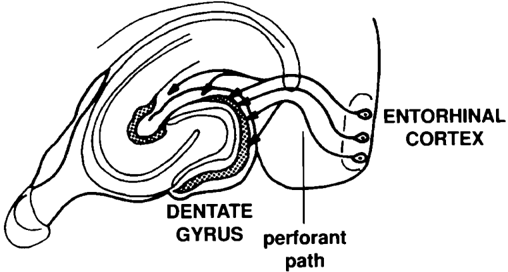
Amyloid deposition is a neuropathological hallmark of Alzheimer’s disease. The principal component of amyloid deposits is β amyloid peptide (Aβ), a peptide derived by proteolytic processing of the amyloid precursor protein (APP). APP is axonally transported by the fast anterograde component. Several studies have indicated that Aβ deposits occur in proximity to neuritic and synaptic profiles. Taken together, these latter observations have suggested that APP, axonally transported to nerve terminals, may be processed to Aβ at those sites. To examine the fate of APP in the CNS, we injected [35 S]methionine into the rat entorhinal cortex and examined the trafficking and processing of de novo synthesized APP in the perforant pathway and at presynaptic sites in the hippocampal formation. We report that both full-length and processed APP accumulate at presynaptic terminals of entorhinal neurons. Finally, we demonstrate that at these synaptic sites, C-terminal fragments of APP containing the entire Aβ domain accumulate, suggesting that these species may represent the penultimate precursors of synaptic Aβ.
Overview
CoChat Summary
TL;DR
In rats, APP synthesized in entorhinal cortex is transported via the perforant path to presynaptic terminals in the hippocampal formation and dentate gyrus, where full-length, soluble, and C-terminal APP fragments accumulate. C-terminal fragments containing the entire Aβ domain accumulate at synaptic sites, suggesting they may be penultimate precursors of synaptic Aβ.
Key findings
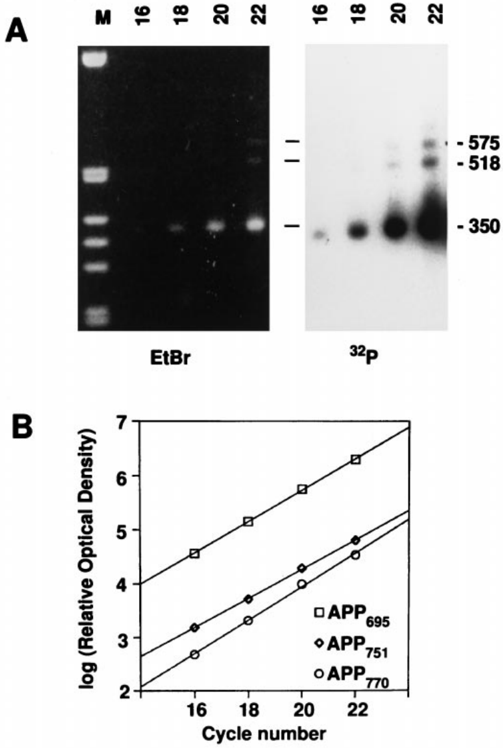
- APP695 mRNA is the principal APP transcript in entorhinal cortex, expressed at ~30-fold the levels of transcripts encoding KPI-containing APP751 and APP770 isoforms (RT-PCR products of 350, 518, and 575 bp; linear amplification over 16–22 cycles).
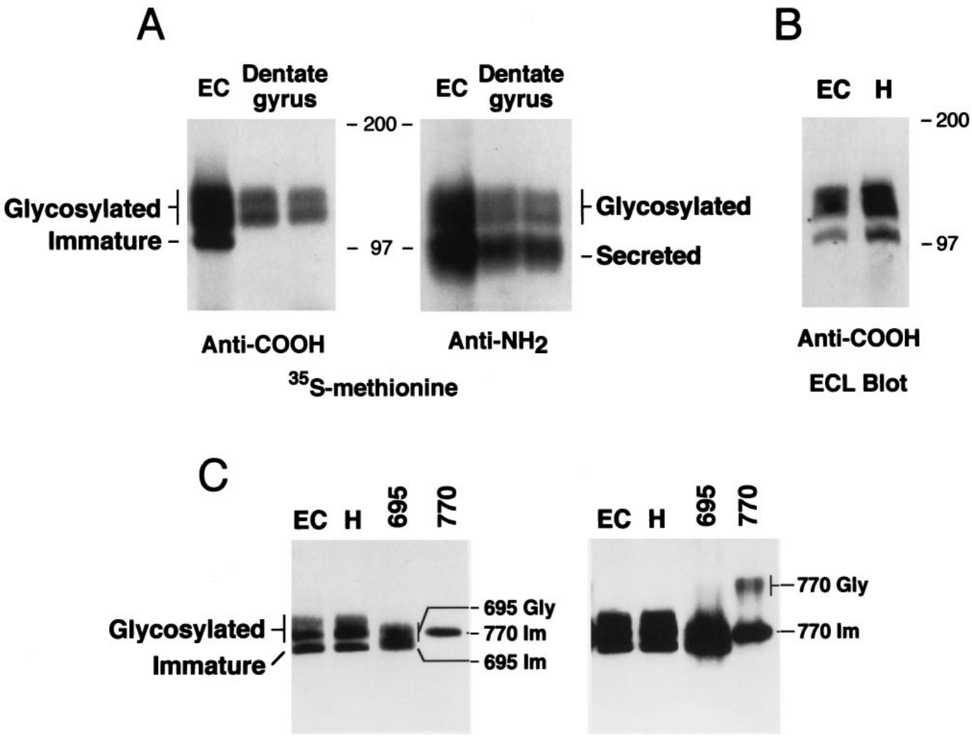
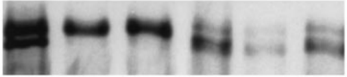
- After [35S]methionine injection into entorhinal cortex and 6 hr transport, full-length fully glycosylated APP and C-terminal-truncated soluble APP were detected in the hippocampal formation and dentate gyrus; immature ER APP was absent from dentate gyrus, indicating bona fide axonal transport.
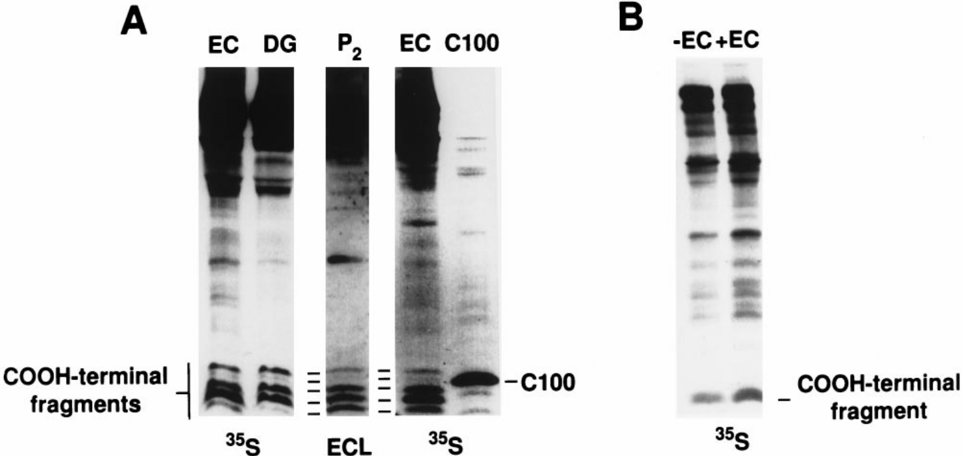
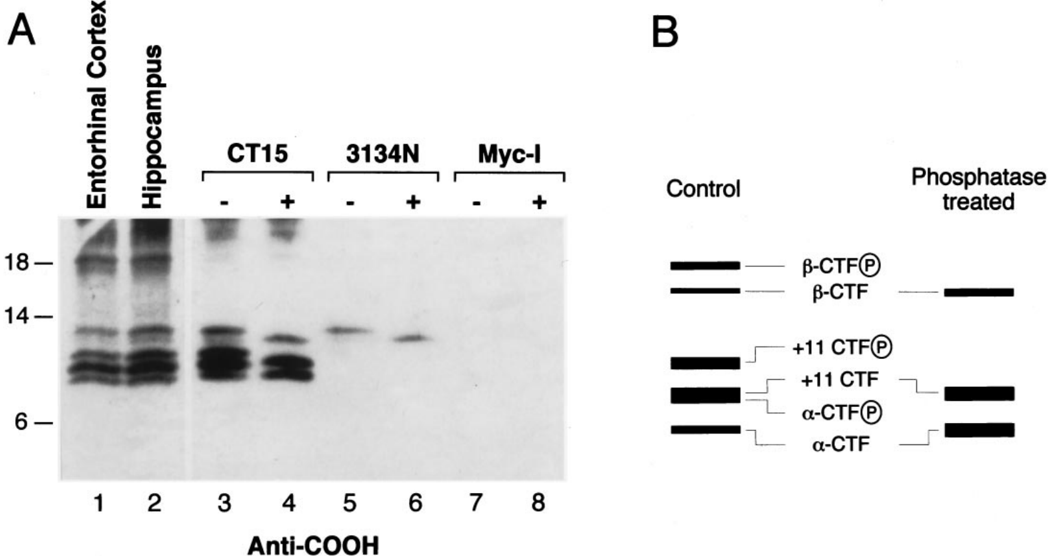
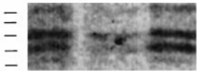
- Five CT15-immunoprecipitable C-terminal fragments of ~9–14 kDa were found in entorhinal cortex and hippocampus and in crude synaptosomal fractions; two slowest species had mobility same as or higher than C100, and phosphatase/3134N analyses suggested the largest ~12 kDa species is a phosphorylated form of an ~11 kDa CTF containing the entire Aβ domain.
- Radiolabeled Aβ was not detected in this perforant path paradigm even after injections of ~3 mCi [35S]methionine; the paper notes mouse brain Aβ accumulates to only ~2–3 pmol per gram wet weight (Duff et al., 1996) and states the reason for failure to detect it is not known.
Methods
- In vivo radiolabeling: 0.5 µl [35S]methionine (1 mCi/µl) was injected into rat entorhinal cortex; transport proceeded for 6 hr, then entorhinal cortex, hippocampal formation, and dentate gyrus were dissected.
- RT-PCR from entorhinal cortex RNA used primers bracketing the KPI domain, yielding 350, 518, and 575 bp products for APP695, APP751, and APP770; reactions were analyzed at 16, 18, 20, and 22 cycles.
- APP-related proteins were immunoprecipitated with RGP3 (APP residues 45–62) or CT15 (C-terminal 15 residues), fractionated by SDS-PAGE, and visualized by autoradiography; CTF phosphorylation was assessed with CT15 or 3134N (Aβ residues 5–12), phosphatase treatment, and Western blotting.
Limitations
- Stated: the paper cannot distinguish whether truncated APP is within presynaptic terminals or associated with the extracellular space; it is also not clear whether cleaved APP products are generated at the nerve terminal and/or whether cleavage occurs before or during transport.
- Stated: the failure to detect radiolabeled Aβ leaves unresolved whether this reflects high turnover or inefficient production of Aβ peptides in the rodent CNS.
- Stated/evident: injury-induced KPI APP isoforms were considered; the paper argues against upregulation, but notes inherent ambiguity in KPI antibody assays because of abundant APLP2 and unavailable distinguishing antibodies.
Model-written summary. Check it against the paper before relying on it.
Integrity signals
Registry
Cites
Statistics
Figures
Verification
Claims the paper makes
1 Valid · 0 Not valid · 33 Not checked · 56 Own results and interpretations
Every source the paper cites for this claim was checked and supports it.
In the paper
“These CTFs are remarkably similar to the CTFs observed in primary cultures of embryonic rat neurons transiently expressing human APP (Simons et al., 1996).”
§ Alzheimer Amyloid Protein Precursor in the Rat Hippocampus: Transport and Processing through the Perforant Path > DISCUSSION
What the sources say
- Supportedcites Simons et al., 1996 matched to “Amyloidogenic processing of the human amyloid precursor protein in primary cultures of rat hippocampal neurons.” (1996) source
The MATERIALS AND METHODS section states that 'Hippocampal neuron cultures were prepared from 1-d-old fetal rats as described by Goslin and Banker (1991)' and that human APP695 was expressed via recombinant Semliki Forest virus (a transient expression system), matching 'primary cultures of embryonic rat neurons transiently expressing human APP'. The Results section (Fig. 6) reports the CTFs observed in that system: 'four C-terminal fragments appeared between 8 and 12 kDa', with the DISCUSSION noting 'in neurons, however, we find high amounts of PA4-containing C-terminal fragments'. The 'remarkably similar' comparison itself is the citing authors' own judgement and is not attributed to this source; the cited work is correctly identified as the study reporting those CTFs in embryonic rat neurons expressing human APP. (LLM, conf=0.88)
plainstates an association- Asserted: passes — The authors put it forward as true.
- Checkable: passes — It can be checked against evidence.
- Load-bearing: unclear — It is unclear whether the paper’s conclusions depend on it.
- Based: passes — The paper gives a reason why it holds.
- Supported
A result the paper reports from its own data — it cites no other source for it, so there is none to check. The quote shows it is in the paper.
In the paper
“In the dentate gyrus, an APP species of ϳ105 kDa was observed that was reactive with anti-N-terminal antibodies but not with anti-C-terminal antibodies.”
§ Alzheimer Amyloid Protein Precursor in the Rat Hippocampus: Transport and Processing through the Perforant Path > DISCUSSION
plain- Asserted: passes — The authors put it forward as true.
- Checkable: passes — It can be checked against evidence.
- Load-bearing: passes — The paper’s conclusions depend on it.
- Based: passes — The paper gives a reason why it holds.
None of the sources cited for this claim have been checked yet.
In the paper
“Moreover, the apparent molecular weight of APP751/770 expressed as a consequence of nerve cell injury is ϳ145-150 kDa (Sisodia et al., 1993), species that are not detected by Western blotting or radiolabeling.”
§ Alzheimer Amyloid Protein Precursor in the Rat Hippocampus: Transport and Processing through the Perforant Path > DISCUSSION
plain- Asserted: passes — The authors put it forward as true.
- Checkable: passes — It can be checked against evidence.
- Load-bearing: passes — The paper’s conclusions depend on it.
- Based: passes — The paper gives a reason why it holds.
A result the paper reports from its own data — it cites no other source for it, so there is none to check. The quote shows it is in the paper.
In the paper
“In all brain areas examined, we also observed five low molecular weight APP-related species that were immunoreactive with anti-C-terminal antibodies.”
- Also stated in: § DISCUSSION · plain
“Five C-terminal fragments were identified in the entorhinal cortex and in the hippocampus by immunoprecipitation of 35 S-labeled protein.”
§ Alzheimer Amyloid Protein Precursor in the Rat Hippocampus: Transport and Processing through the Perforant Path > DISCUSSION
plain- Asserted: passes — The authors put it forward as true.
- Checkable: passes — It can be checked against evidence.
- Load-bearing: passes — The paper’s conclusions depend on it.
- Based: passes — The paper gives a reason why it holds.
- Also stated in: § DISCUSSION · plain
A result the paper reports from its own data — it cites no other source for it, so there is none to check. The quote shows it is in the paper.
In the paper
“Our demonstration that the steady-state pattern of APP in rat brain is indistinguishable from the pattern obtained after radiolabeling argues against upregulation of novel APP isoforms as a consequence of damage induced by the injection.”
§ Alzheimer Amyloid Protein Precursor in the Rat Hippocampus: Transport and Processing through the Perforant Path > DISCUSSION
boosted- Asserted: passes — The authors put it forward as true.
- Checkable: passes — It can be checked against evidence.
- Load-bearing: passes — The paper’s conclusions depend on it.
- Based: passes — The paper gives a reason why it holds.
51 more claims
Create a free account to see all 90 claims and to verify the 35 references still open.
- It may state two separate claims as one. 18
- Probably not a substantial claim. 21
Claims other papers make about this one
Each is checked against this paper’s own text: does it say what the citing paper says it does?
The source backs part of the claim, not all of it — or backs it for a different population, condition or comparison.
In the citing paper
“Our characterization of a novel role for EHD proteins in BACE1 sorting and axonal transport is highly relevant to physiological Aβ production”
From A Function for EHD Family Proteins in Unidirectional Retrograde Dendritic Transport of BACE1 and Alzheimer’s Disease Aβ Production (2013) · cites this paper as Buxbaum et al., 1998
Experimental — accuracy not yet measuredThe source backs part of the claim, not all of it — or backs it for a different population, condition or comparison.
In the citing paper
“APP and its derivatives, as well as components of the APP-processing enzymes β-secretase and γ-secretase, have been detected in axons and dendrites by biochemical, immunostaining and electron-microscopy studies31–37.”
From Amyloid beta from axons and dendrites reduces local spine number and plasticity (2010) · cites this paper as [32]
Experimental — accuracy not yet measuredThe cited source says what the claim attributes to it.
In the citing paper
“membrane-tethered APP derivatives accumulate at terminal fields in the CNS (Buxbaum et al., 1998).”
From Axonal Transport, Amyloid Precursor Protein, Kinesin-1, and the Processing Apparatus: Revisited (2005) · cites this paper as Buxbaum et al., 1998
In the citing paper
“and that APP undergoes fast axonal transport (Koo et al., 1990;Sisodia et al., 1993;Buxbaum et al., 1998;Lyckman et al., 1998;Kaether et al., 2000;Szodorai et al., 2009).”
From Differential Release of β-Amyloid from Dendrite- Versus Axon-Targeted APP (2014) · cites this paper as Buxbaum et al., 1998
In the citing paper
“Indeed, APP undergoes BACE1-mediated cleavage during anterograde axonal transport, and Aβ can be generated and released at or near presynaptic sites in vivo[19,23-27].”
From Axonal BACE1 dynamics and targeting in hippocampal neurons: a role for Rab11 GTPase (2014) · cites this paper as [23]
2 more claims about this paper
Create a free account to see every claim other papers make about this one.
Self-check
Percentages, sums and reported differences re-computed from the paper’s own numbers.
Each contradiction between two passages listed here was confirmed by an independent check.
Rated minor: it would not touch a result — a value no result rests on, a p-value that stays on the same side of the significance level, or a conflict that is clerical, resolved elsewhere in the paper, or outside its own findings.
In the paper
§ Alzheimer Amyloid Protein Precursor in the Rat Hippocampus: Transport and Processing through the Perforant Path > , right).
“the levels of the slowest migrating CTFs of ϳ9.5 and ϳ8.5 kDa appear to be enhanced after phosphatase treatment.”
§ Alzheimer Amyloid Protein Precursor in the Rat Hippocampus: Transport and Processing through the Perforant Path > , right).
“only the largest of the APP CTFs of ϳ12 and ϳ11 kDa are detected by 3134N; the largest of these two fragments exhibits accelerated migration after phosphatase treatment”
Rated minor: it would not touch a result — a value no result rests on, a p-value that stays on the same side of the significance level, or a conflict that is clerical, resolved elsewhere in the paper, or outside its own findings.
In the paper
§ Alzheimer Amyloid Protein Precursor in the Rat Hippocampus: Transport and Processing through the Perforant Path > APP is transported in the perforant pathway
“the ϳ100 kDa polypeptide detected uniquely in the entorhinal cortex represents fulllength, endoplasmic reticulum (ER) forms of APP-695 that are incompletely glycosylated.”
§ Alzheimer Amyloid Protein Precursor in the Rat Hippocampus: Transport and Processing through the Perforant Path > DISCUSSION
“In the entorhinal cortex, a species of ϳ110 kDa was reactive with anti-C-terminal antibodies, and this species was absent in the dentate gyrus.This APP species corresponds to APP that has not been fully glycosylated (immature APP).”
Citations
Cites
Glenner, G. G., & Wong, C. W. (1984) · Biochemical and Biophysical Research Communications · doi:10.1016/s0006-291x(84)80190-4 · Cited by 5,404
The precursor of Alzheimer's disease amyloid A4 protein resembles a cell-surface receptor
Kang, J., Lemaire, H.-G., Unterbeck, A., Salbaum, J. M., Masters, C. L., Grzeschik, K.-H., Multhaup, G., Beyreuther, K., & Müller-Hill, B. (1987) · Nature · doi:10.1038/325733a0 · Cited by 4,619 · cited 2×
“APP isoforms are encoded by several alternatively spliced transcripts (Kang et al., 1987; Kitaguchi et al., 1988; Ponte et al., 1988; Tanzi et al., 1988; Golde et al., 1990; König et al., 1992).”
BackgroundDeficiency of presenilin-1 inhibits the normal cleavage of amyloid precursor protein
De Strooper, B., Saftig, P., Craessaerts, K., Vanderstichele, H., Guhde, G., Annaert, W., Von Figura, K., & Van Leuven, F. (1998) · Nature · doi:10.1038/34910 · Cited by 1,818
Isolation and quantification of soluble Alzheimer's β-peptide from biological fluids
Seubert, P., Vigo-Pelfrey, C., Esch, F., Lee, M., Dovey, H., Davis, D., Sinha, S., Schiossmacher, M., Whaley, J., Swindlehurst, C., et al. (1992) · Nature · doi:10.1038/359325a0 · Cited by 1,731 · cited 3×
“The demonstration that Ab-related peptides with the same N terminals as the CTFs documented here are present in conditioned medium of cultured cells (Seubert et al., 1992; Naslund et al., 1994; Simons et al., 1996; Wang et al., 1996; Xu et al., 1998) strongly reinforces the view that the CTFs are…”
BackgroundMethodResultIncreased amyloid-β42(43) in brains of mice expressing mutant presenilin 1
Duff, K., Eckman, C., Zehr, C., Yu, X., Prada, C.-M., Perez-tur, J., Hutton, M., Buee, L., Harigaya, Y., Yager, D., et al. (1996) · Nature · doi:10.1038/383710a0 · Cited by 1,465 · cited 1×
“In view of recent sandwich ELISA measurements of Ab in mouse brain that reveal that these peptides accumulate to only ;2–3 pmol per gram of wet weight of tissue (Duff et al., 1996), it is not particularly surprising that our efforts to detect biosynthetically labeled Ab have been unsuccessful.”
BackgroundArnold, S. E., Hyman, B. T., Flory, J., Damasio, A. R., & Van Hoesen, G. W. (1991) · Cerebral Cortex · doi:10.1093/cercor/1.1.103 · Cited by 1,380 · cited 1×
“It is of interest to note that the entorhinal cortex is one of the most severely affected areas in Alzheimer’s disease, with intraneuronal neurofibrillary changes occurring in this region at the earliest stages of the disease (Arnold et al., 1991; Braak and Braak, 1994; Price et al., 1996).”
BackgroundIdentification, biogenesis, and localization of precursors of Alzheimer's disease A4 amyloid protein
Weidemann, A., König, G., Bunke, D., Fischer, P., Salbaum, J. M., Masters, C. L., & Beyreuther, K. (1989) · Cell · doi:10.1016/0092-8674(89)90177-3 · Cited by 1,239 · cited 3×
“APP is subject to endoproteolytic cleavage within the Ab sequence by “a-secretase,” a process that results in secretion of a large, C-terminal-truncated derivative (APPs) into the extracellular space (Weidemann et al., 1989; for review, see Selkoe, 1996).”
BackgroundTanzi, R. E., McClatchey, A. I., Lamperti, E. D., Villa-Komaroff, L., Gusella, J. F., & Neve, R. L. (1988) · Nature · doi:10.1038/331528a0 · Cited by 1,096 · cited 4×
“…PNS lead to upregulated expression of KPIcontaining APP isoforms; the principal cells in which KPI APP isoforms are induced are astrocytes or microglia (Tanzi et al., 1988; Tanaka et al., 1989; Johnson et al., 1990; Abe et al., 1991; Scott et al., 1991; Banati et al., 1993; Iverfeldt et al., 1993).”
BackgroundInfluentialNovel precursor of Alzheimer's disease amyloid protein shows protease inhibitory activity
Kitaguchi, N., Takahashi, Y., Tokushima, Y., Shiojiri, S., & Ito, H. (1988) · Nature · doi:10.1038/331530a0 · Cited by 1,086
A new A4 amyloid mRNA contains a domain homologous to serine proteinase inhibitors
Ponte, P., DeWhitt, P. G., Schilling, J., Miller, J., Hsu, D., Greenberg, B., Davis, K., Wallace, W., Lieberburg, I., Fuller, F., et al. (1988) · Nature · doi:10.1038/331525a0 · Cited by 1,052 · cited 2×
“For immunoprecipitations, we used antibody RGP3, specific for N-terminal residues 45–62 (anti-NH2) of APP (Perry et al., 1988; Sisodia et al., 1993), and antibody CT15, specific for the C-terminal residues 681–695 of APP-695 (anti-COOH) (Sisodia et al., 1993; Zheng et al., 1995; von Koch et al.,…”
BackgroundMethod
Research works printed but not linked: 1
- Price DL, Kawas CH, Sisodia SS (1996) Aging of the brain and dementia of the Alzheimer's type. In: Principles of neural science (Kandel ER, Schwartz JH, Jessell TM, eds). New York: Elsevier.
Cited by
Items 201–293 of 293
Kim, J., Rah, J., Fraser, S. P., Chang, K.-A., Djamgoz, M. B. A., & Suh, Y. (2002) · Journal of Biological Chemistry · doi:10.1074/jbc.m108326200 · Cited by 14
Wong, P. C., Cai, H., Borcheit, D. R., & Price, D. L. (2001) · Journal of Molecular Neuroscience · doi:10.1385/jmn:17:2:233 · Cited by 14
“In the terminal fields of this pathway, soluble C-terminally truncated APP and amyloidogenic C-terminal fragments have been identified (Buxbaum et al., 1998b).”
BackgroundSelf-citationAmyloid Pathology in the Central Auditory Pathway of 5XFAD Mice Appears First in Auditory Cortex
Weible, A. P., & Wehr, M. (2022) · Journal of Alzheimer s Disease · doi:10.3233/jad-220538 · Cited by 13
“A (cid:2) 42 is also present in axons [33, 37–40].”
Many faces and functions of GSKIP: a temporospatial regulation view
Wu, N.-S., Lin, Y., Ma, I. C., Ko, H.-J., & Hong, Y. (2022) · Cellular Signalling · doi:10.1016/j.cellsig.2022.110391 · Cited by 13
Sakuma, K., Nakao, R., Yamasa, Y., & Yasuhara, M. (2006) · Biochimica et Biophysica Acta (BBA) - General Subjects · doi:10.1016/j.bbagen.2006.02.006 · Cited by 12
Neurobiology of Alzheimer’s Disease
Wong, P. C., Savonenko, A. V., Li, T., & Price, D. L. (2012) · Elsevier eBooks · doi:10.1016/b978-0-12-374947-5.00046-8 · Cited by 12
Self-citationYi, C., Goh, K. Y., Wong, L., Ramanujan, A., Tanaka, K., Sajikumar, S., & Ibáñez, C. F. (2021) · The EMBO Journal · doi:10.15252/embj.2021109067 · Cited by 12
Advanced Neuroimaging Methods Towards Characterization of Early Stages of Alzheimer’s Disease
Sepulcre, J., & Masdeu, J. C. (2015) · Methods in molecular biology · doi:10.1007/978-1-4939-2627-5_31 · Cited by 11
Elmatboly, A. M., Sherif, A., Deeb, D. A., Benmelouka, A. Y., Bin-Jumah, M. N., Aleya, L., & Abdel‐Daim, M. M. (2020) · Environmental Science and Pollution Research · doi:10.1007/s11356-020-07914-1 · Cited by 11
“Three molecules including ADAM-10, ADAM-17, and ADAM-9 have been recognized as possessing alpha-secretases activity (Buxbaum et al. 1998; Koike et al. 1999).”
BackgroundPar3 regulates polarized convergence between APP and BACE1 in hippocampal neurons
Sun, M., Huang, C., Wang, H., & Zhang, H. (2019) · Neurobiology of Aging · doi:10.1016/j.neurobiolaging.2019.01.023 · Cited by 10
“In addition, Aβ generation is known to be polarized with axonal presynaptic terminals being the preferred site (Buggia-Prevot et al., 2013; Buxbaum et al., 1998; DeBoer et al., 2014; Lazarov et al., 2002; Lyckman et al., 1998; Niederst et al., 2015; Yu et al., 2018).”
BackgroundQuantification of Amyloid Precursor Protein and Tau for the Study of Axonal Traffic Pathways
Goldsbury, C. S., Thies, E., Konzack, S., & Mandelkow, E. (2007) · Journal of Neuroscience · doi:10.1523/jneurosci.5024-06.2007 · Cited by 10
“Tau transport (Mercken et al., 1995) is much slower than that of APP (Buxbaum et al., 1998; Kaether et al., 2000), but nevertheless, “slow axonal transport” could still be mediated by molecular motors such as kinesin (Baas and Buster, 2004).”
InfluentialMontgomery, K. S., Edwards, G. A., Levites, Y., Kumar, A., Myers, C. E., Gluck, M. A., Setlow, B., & Bizon, J. L. (2015) · Hippocampus · doi:10.1002/hipo.22535 · Cited by 10
“Although the extent of such synaptic dysfunction in mouse models of amyloidosis has been debated, the bulk of the evidence suggests that Ab overproduction degrades synaptic integrity, particularly in the hippocampus (Masliah et al., 1994; Buxbaum et al., 1998; Wong et al., 1999; Sze et al., 2000).”
BackgroundAging of the Brain and Alzheimer’s Disease
Price, D. L., Savonenko, A. V., Albert, M., Troncoso, J. C., & Wong, P. C. (2009) · Elsevier eBooks · doi:10.1016/b978-008045046-9.00539-8 · Cited by 10
Self-citationAlpár, A., Naumann, N., Ueberham, U., Arendt, T., & Gärtner, U. (2009) · Journal of Neuroscience Research · doi:10.1002/jnr.22008 · Cited by 8
Pourbadie, H. G., Naderi, N., Mirzapourdelavar, H., Hosseinzadeh, M., Mehranfard, N., Khodagholi, F., Janahmadi, M., & Motamedi, F. (2016) · European Journal of Pharmacology · doi:10.1016/j.ejphar.2016.11.032 · Cited by 8
The hippocampus as a latent diffusion engine for memory, perception and cognitive dysfunction
Jones, D. T., & Breakspear, M. J. (2026) · Brain · doi:10.1093/brain/awag325 · Cited by 5
Xu, Z., Huang, H., Chen, Y., Gao, Y.-Y., Xu, J., Marshall, C., Cai, Z., & Xiao, M. (2016) · Journal of Alzheimer s Disease · doi:10.3233/jad-150634 · Cited by 5
“This was consistent with previous studies reporting that amyloid plaques-related A (cid:2) PP in the hippocampus are synthesized at distal sites and axonally transported to synaptic terminals via the perforant pathway [24, 25].”
López‐Font, I., Boix, C. P., Zetterberg, H., Blennow, K., & Sáez‐Valero, J. (2017) · Journal of Alzheimer s Disease · doi:10.3233/jad-161275 · Cited by 6
Innervation of senile plaques: A link between amyloid and neurofibrillary pathology?
Delatour, B., Blanchard, V., Pradier, L., & Duyckaerts, C. J. (2003) · CRC Press eBooks · doi:10.3109/9780203492857-2 · Cited by 5
Aging-Related Memory Disorders—Alzheimer’s Disease
Sweatt, J. D. (2010) · Elsevier eBooks · doi:10.1016/b978-0-12-374951-2.00012-3 · Cited by 5
Impact of Beta Amyloid on Excitatory Synaptic Transmission and Plasticity
Malinow, R., Hsieh, H. V., & Wei, W. (2008) · Springer eBooks · doi:10.1007/978-3-540-76330-7_5 · Cited by 4
“Previous studies have suggested that APP is transported and released at presynaptic sites (Buxbaum et al. 1998; Lazarov et al. 2002).”
APP Biology, Processing and Function
Thinakaran, G., & Koo, E. H. (2007) · Springer eBooks · doi:10.1007/978-0-387-35135-3_2 · Cited by 4
“As discussed below, in neurons APP is trafficked anterogradely along peripheral and central axons, and proteolytically processed during transit (Koo et al., 1990; Buxbaum et al., 1998).”
BackgroundSelf-citationPrice, D. L., Borchelt, D., & Wong, P. C. (2005) · Elsevier eBooks · doi:10.1016/b978-012738903-5/50028-x · Cited by 3
Self-citationAlpár, A., Ueberham, U., Lendvai, D., Naumann, N., Rohn, S., Gáti, G., Arendt, T., & Gärtner, U. (2011) · International Journal of Developmental Neuroscience · doi:10.1016/j.ijdevneu.2011.01.001 · Cited by 3
“…discussed A beta fragment are essen- tial neuronal and synaptic proteins (Koudinov and Berezov, 2004), they are evidently neuroprotective (De Strooper et al., 1999) and neurotrophic (i.e. synapse formation) (Sisodia et al., 1993; Moya et al., 1994; Buxbaum et al., 1988; Koudinov and Berezov, 2004).”
BackgroundAging-Related Memory Disorders
Sweatt, J. D. (2003) · Elsevier eBooks · doi:10.1016/b978-012678957-7/50013-x · Cited by 3
Xiong, H., Zhang, J., Zheng, Y., Liu, J., & Fox, H. S. (2021) · Research Square · doi:10.21203/rs.3.rs-143613/v1 · Cited by 3
Panegyres, P. K., & Atkins, E. (2011) · Neuroscience & Medicine · doi:10.4236/nm.2011.23033 · Cited by 2
Investigation of secreted amyloid precursor protein-α binding partners
McKenzie-Nickson, S. (2012) · Otago University Research Archive (University of Otago) · Cited by 2
Bjorkli, C., Ebbesen, N. C., Julian, J. B., Witter, M. P., Sandvig, A., & Sandvig, I. (2022) · bioRxiv (Cold Spring Harbor Laboratory) · doi:10.1101/2022.07.05.498797 · Cited by 2
“anterogradely via perforant path projections from superficial layers of EC to DG in rats [54], resulting in high levels of soluble Aβ peptides and plaque deposits in DG [55].”
BackgroundLaiterä, T. (2016) · UEF eRepo (University of Eastern Finland) · Cited by 2
Characterizing Amyloid Pathogenic Spread in Alzheimer’s Disease Through A Network Diffusion Model
Xu, F. H., Duong-Tran, D., Huang, H., Saykin, A. J., Thompson, P. M., Davatzikos, C. A., Zhao, Y., & Shen, L. (2025) · ACM International Conference on Bioinformatics, Computational Biology, and Health Informatics (ACM-BCB) · doi:10.1145/3765612.3767223 · Cited by 1
“…spread has been found in transgenic mice models, where initial seed injections of amyloid are observed to spread from the seed to interconnected brain regions, and disrupting such connections via lesioning has demonstrated a decrease in amyloid burden in postsynaptic regions [7, 17, 24, 32, 44].”
Alzheimer Disease: Protein Misfolding, Model Systems, and Experimental Therapeutics
Price, D. L., Savonenko, A. V., Li, T., Lee, M. K., & Wong, P. C. (2010) · Wiley eBooks · doi:10.1002/9780470572702.ch12 · Cited by 1
Self-citationAlzheimer’s Disease and Mechanism-Based Attempts to Enhance Cognition
Draffin, J. E., Knafo, S., & Heneka, M. T. (2015) · Elsevier eBooks · doi:10.1016/b978-0-12-417042-1.00009-7 · Cited by 1
Alzheimer-Associated Pathology in the Extracellular Space
Braak, H., & Tredici, K. D. (2014) · Advances in anatomy, embryology and cell biology · doi:10.1007/978-3-319-12679-1_8 · Cited by 1
Alzheimer’s Disease and the Sleep–Wake Cycle
Bero, A. W., & Tsai, L. (2016) · Elsevier eBooks · doi:10.1016/b978-0-12-802851-3.00010-3 · Cited by 1
Live-Cell Imaging Reveals Tau Isoforms Imbalance Disrupts Traffic of APP Vesicles in Human Neurons
Hung, C. (2017) · Journal of Neuroscience · doi:10.1523/jneurosci.3688-16.2017 · Cited by 1
“A significant proportion of full-length APP and its C-terminal cleavage products accumulated at presynaptic terminals (Buxbaum et al., 1998).”
BackgroundThe Value of Transgenic Models for the Study of Neurodegenerative Diseases
Price, D. L., Wong, P. C., Markowska, A. L., Thinakaran, G., Lee, M. K., Martin, L. J., Rothstein, J. D., Sisodia, S. S., & Borchelt, D. (2001) · Research and perspectives in Alzheimer's disease · doi:10.1007/978-3-662-04399-8_5 · Cited by 1
Self-citationJiang, R., Chi, X.-D., Jing, Y., Wang, B., & Li, S. (2023) · Aging · doi:10.18632/aging.204605 · Cited by 1
Gandy, S., Silva, O. A. B. D. C. E., Silva, E. D. C. E., Suzuki, T., Ehrlich, M. E., & Small, S. A. (2009) · Research and perspectives in Alzheimer's disease · doi:10.1007/978-3-540-87941-1_1 · Cited by 1
“... of Aβ. One explanation for this unexpected result is that the substrate may be limiting in post-TGN compartments, and therefore increased levels of BACE are unableto raiseAβgeneration.Thisnotionagreeswiththeproposalmentionedabove that regulated shedding acts at the TGN to divert APP molecules toward the plasma mem…”
BackgroundProteolytic processing of the Alzheimer APP protein family during neuronal differentiation
Holback, S. (2009) · DiVA (Stockholm University) · Cited by 1
Sánchez‐Mejías, E. (2015) · Repositorio Institucional de la Universidad de Málaga (University of Málaga) · Cited by 2
Pathogenesis and Mechanism of Cerebral Amyloidosis in APP Transgenic Mice
Jucker, M., Calhoun, M. E., Phinney, A. L., Stalder, M., Bondolfi, L., Winkler, D. T., Herzig, M. C., Pfeifer, M., Boncristiano, S., Tolnay, M., et al. (2001) · Research and perspectives in Alzheimer's disease · doi:10.1007/978-3-662-04399-8_6 · Cited by 1
The Role of APC/C-Cdh1 in Alzheimer's disease
Fuchsberger, T. (2016) · Repository of Digital Objects for Teaching Research and Culture (University of Valencia) · Cited by 1
Aguinaldo, G. T. (2006) · Digital Scholarship - UNLV (University of Nevada Reno) · doi:10.25669/jx96-eywx · Cited by 1
Gene-Modulated Network Diffusion for Improved Modeling of Amyloid- β Spread in Alzheimer’s DiseasePreprint
Xu, F., Duong-Tran, D., Huang, H., Saykin, A. J., Thompson, P. M., Davatzikos, C. A., Zhao, Y., Shen, L., & Initiative, T. F. L. D. N. (2026) · bioRxiv (Cold Spring Harbor Laboratory) · doi:10.64898/2026.05.04.722725 · Cited by 1
“Evidence for transsynaptic spread has been found in transgenic mice models, where initial seed injections of amyloid are observed to spread from the seed to interconnected brain regions [20]–[24].”
Schieb, H. (2011) · DuEPublico (University of Duisburg-Essen)
Cuál es el mejor modelo de estudio de la enfermedad de Azheimer
Aranda-Abreu, G. E., Hernández‐Aguilar, M. E., & García, L. I. (2010) · eNeurobiología · Cited by 1
PrP catabolites as determinants of TSE susceptibility
Love, C. (2011) · OpenGrey (Institut de l'Information Scientifique et Technique)
Mechanisms of Brain Region-Specific Amyloid-beta Deposition
Bero, A. W. (2011) · Open Scholarship Institutional Repository (Washington University in St. Louis) · doi:10.7936/k7cj8bh2
“Consistent with findings showing that APP is axonally transported from entorhinal cortex to hippocampus via the perforant pathway (Buxbaum et al., 1998), and that perforant pathway lesions reduce hippocampal Aβ plaque deposition in APP transgenic mice (Lazarov et al., 2002; Sheng et al., 2002),…”
BackgroundFlavonoids as Modulators of Amyloid Precursor Protein Metabolism and Alzheimer Disease Pathology
Rezai-Zadeh, K. P. (2008) · Digital Commons - University of South Florida (University of South Florida)
Hvoslef‐Eide, M. (2012) · ORCA Online Research @Cardiff (Cardiff University)
Endosomes élargis et cholestérol : De la trisomie 21 à la maladie d'Alzheimer
Cossec, J. (2009) · OpenGrey (Institut de l'Information Scientifique et Technique)
β-secretase: Physiological Role and Target Validation
Laird, F. M., Farah, M. H., Lee, H., Savonenko, A. V., Price, D. L., & Wong, P. C. (2007) · Springer eBooks · doi:10.1007/978-0-387-35135-3_4
Self-citationChang, S. (2011) · Technischen Universität Darmstadt · doi:10.26083/tuprints-00002810
Presenilin-1 Function in the Adult Brain
Shen, J. (2002) · Advances in behavioral biology · doi:10.1007/978-0-306-47593-1_19
Funktionelle Charakterisierung von BACE, einer für die Alzheimer Krankheit relevanten Protease
Capell, A. (2005) · edoc Publication server (Humboldt University of Berlin) · doi:10.18452/15321
Collin, R. W. J. (2006) · Radboud Repository (Radboud University)
Namjoshi, D. (2015) · cIRcle (University of British Columbia) · doi:10.14288/1.0167688
Localization of amyloid precursor protein processing and secretion in neurons
Niederst, E. A. (2011) · eScholarship (California Digital Library)
Price, D. L., Savonenko, A. V., Li, T., & Wong, P. C. (2012) · Cambridge University Press eBooks · doi:10.1017/cbo9780511980053.009
Self-citationToneff, T., HOOK, V. Y. H., Hook, G., & Reisine, T. (2005) · Oxidative stress and disease · doi:10.1201/9781420026559.ch19
Hochentwickelte Aminopyrazol-Hybride gegen pathologische Prozesse der Alzheimer-Krankheit
Hellmert, M. (2015) · DuEPublico (University of Duisburg-Essen)
Mechanisms of Memory Deficits in Mouse Models of Alzheimer's Disease
Yiu, A. P. (2012) · TSpace (University of Toronto)
α- and β-secretase in Alzheimer's disease: Identity and physiological substrates
Kuhn, P. (2012) · DZNE Pub
Intracellularly selected recombinant antibodies targeting β Amyloid Oligomers
Meli, G. (2007) · SDL
The role of APP and its homologous proteins in synaptic function and plasticity
Kilian, B. S. (2008) · Digitale Bibliothek Braunschweig (Verbundzentrale Göttingen (VZG)) · doi:10.24355/dbbs.084-200906220200-9
Amyloid precursor protein and axonal transport
Rodrigues, E. M. (2010) · eScholarship (California Digital Library)
Studies on the use of glycosaminoglycans for the treatment of Alzheimer's Disease
Cui, H. (2012) · UTAS Research Repository · doi:10.25959/23206211
Assessment of Epigenetic profile in Alzheimer's disease
Agbemenyah, H. Y. (2012) · eDiss (Georg-August-Universität Göttingen) · doi:10.53846/goediss-3213
(2007) · Elsevier eBooks · doi:10.1016/b978-012373657-4/50008-8
Regulation of the amyloid precursor protein (APP) gene promoter by hypoxia
Bielecki, A. A. (2006) · Carleton University's Institutional Repository (MacOdrum Library, Carleton University) · doi:10.22215/etd/2006-10172
Nollet, M., Ba, W., Soto, B. A., Yin, C., Lignos, L., Jović, K., Wong, S., Vyssotski, A. L., Yustos, R., Franks, N. P., et al. (2025) · bioRxiv (Cold Spring Harbor Laboratory) · doi:10.1101/2025.07.09.663930
A Comprehensive Investigation on the Role of Bioactives on DYRK1A to Avert Alzheimer’s Disease
Sharma, M., Mazumder, R., Padhi, S., & Shivangi, K. (2025) · Journal of Natural Remedies · doi:10.18311/jnr/2025/49903
Modulation der Genexpression und des neuronalen Zelltods durch das Amyloid-Vorläufer-Protein (APP)
Copanaki, E. (2007) · Gutenberg Open Science · doi:10.25358/openscience-1689
Jiang, R., Wu, X.-F., Wang, B., Guan, R.-X., Lv, L.-M., Li, A.-P., Lei, L., Ma, Y., Li, N., Li, Q.-F., et al. (2020) · Figshare · doi:10.6084/m9.figshare.12195525
Roach, J. D. (2007) · Digital Scholarship - UNLV (University of Nevada Reno) · doi:10.25669/7dvn-jvul
Jiang, R., Wu, X., Wang, B., Guan, R.-X., Lv, L.-M., Li, A.-P., Lei, L., Ma, Y., Li, N., Li, Q.-F., et al. (2020) · Figshare · doi:10.6084/m9.figshare.12195534
Kolinergisen hermovälityksen ja amyloidi beeta peptidin merkitys Alzheimerin taudin synnyssä
Liu, L. (2003) · UEF eRepo (University of Eastern Finland)
Welikovitch, L. A. (2021) · eScholarship@McGill (McGill) · doi:10.82308/19189
Schieb, H. (2011) · DuEPublico (University of Duisburg-Essen)
Holtmann, L. M. (2021) · BearWorks (Missouri State University)
Mirfakhar, F. S. (2023) · Portuguese National Funding Agency for Science, Research and Technology (RCAAP Project by FCT)
Pathological or preventative? Amyloid-β as an effector of innate immunity
Adesunloro, O. O., Tuckey, A. N., Audia, J. P., & Shea, A. E. (2026) · Infection and Immunity · doi:10.1128/iai.00085-26
“APP is a type I transmembrane glycoprotein that is highly expressed in neurons, and Aβ is most widely recognized as a product of neuronal APP processing within the CNS (16, 55, 56).”
Zahra, A. (2023) · Universiti Putra Malaysia Institutional Repository (Universiti Putra Malaysia)
Nollet, M., Ba, W., Soto, B. A., Yin, C., Lignos, L., Jović, K., Wong, S., Vyssotski, A. L., Yustos, R., Franks, N. P., et al. (2026) · eLife · doi:10.7554/elife.112390
Nollet, M., Ba, W., Soto, B. A., Yin, C., Lignos, L., Jović, K., Wong, S., Vyssotski, A. L., Yustos, R., Franks, N. P., et al. (2026) · eLife · doi:10.7554/elife.112390.1
Loss of Newborn Neuron Function Promotes Aβ Accumulation in an Alzheimer’s Disease Mouse Model
Tamura, R., Kawabata, R., Lei, C., Li, H., Hayashi, D., Seki, M., Suzuki, Y., & Hisatsune, T. (2026) · Aging and Disease · doi:10.14336/ad.2026.0713
Impairment of hippocampal long-term potentiation by Alzheimer amyloid ?-peptides
Chen, Q.-S., Kagan, B. L., Hirakura, Y., & Xie, C.-W. (2000) · Journal of Neuroscience Research · doi:10.1002/(sici)1097-4547(20000401)60:1<65::aid-jnr7>3.0.co;2-q
Metadata
- Authors
- Buxbaum, J. D., Thinakaran, G., Koliatsos, V., O’Callahan, J., Slunt, H. H., Price, D. L., & Sisodia, S. S.
- Affiliations
- Icahn School of Medicine at Mount Sinai (US)
- Johns Hopkins University (US)
- National Institute for Occupational Safety and Health (US)
- University of Chicago (US)
- Corresponding author
- Sisodia, Sangram S.
- Venue
- The Journal of Neuroscience
- Publisher
- Society for Neuroscience
- Published
- 1998-12-01
- Volume
- 18
- Issue
- 23
- Pages
- 9629-9637
- ISSN
- 0270-6474 (ISSN-L)
- 1529-2401
- PMC
- PMC6793291
- OpenAlex
- W2108649886
- Cited by
- 293
- References
- 53
- Citations by year
- 2026: 7 · 2025: 3 · 2023: 7 · 2022: 4 · 2021: 6 · 2020: 8 · 2019: 6 · 2018: 5 · 2017: 12 · 2016: 7 · 2015: 14 · 2014: 8 · 2013: 9 · 2012: 20
- FWCI
- 2.00
- Type
- journal article
- Language
- en
- Open access
- hybrid
- doi.org
- Licence
- Locations
- Journal of Neuroscience (publishedVersion, cc-by-nc-sa)
- PubMed (publishedVersion)
- PubMed Central (publishedVersion)
- Funders
- American Health Assistance Foundation
- National Institutes of Health
- National Institute on Aging (AG 14996, P50AG005146)
- National Institute of Neurological Disorders and Stroke (NS-20471)
- Topics
- Life Sciences › Neuroscience › Cellular and Molecular Neuroscience › Alzheimer's disease research and treatments
- Life Sciences › Neuroscience › Cellular and Molecular Neuroscience › Neuroscience and Neuropharmacology Research
- Life Sciences › Neuroscience › Neurology › Neuroinflammation and Neurodegeneration Mechanisms
- Keywords
- amyloid precursor protein, amyloid-beta, Alzheimer's disease, perforant path, hippocampus, entorhinal cortex, axonal transport, presynaptic terminals, APP processing, APP C-terminal fragments
- MeSH terms
- Animals, Axonal Transport, Methionine, Neurons, RNA, Messenger, Sulfur Radioisotopes, Blotting, Western, Amyloid beta-Peptides, Presynaptic Terminals, Dentate Gyrus, COS Cells, Perforant Pathway, Rats
About these checks
Registry, retraction, Cites and statistics results are computed, not judged, with one exception: a printed reference that no index lists is read once by a model before it counts as a citation error. Claims are extracted by a model and kept only when their quote appears verbatim in the text; each cited source is then checked, with a model’s help, for whether it says what the claim relies on. Those verdicts can be wrong — read the claim’s quote and the cited source before relying on one.
A language model drew the claims from the paper on 2026-11-19, under version 3 of the claim definition (model deepseek-v4.1-flash, prompt extract-v3).
A second model labelled each claim on 2026-11-19 (model jev-1.13-20260917, definition revision gold-guideline-v0.2).
Cited sources are checked with a language model’s help (qwen3.8-omni-flash).
Statistics and arithmetic are recomputed, not judged.
Confidence bands are shown only for fields calibrated on our annotated test set. None is calibrated yet, so no band is shown.
What counts as a claim ›How we measure confidence ›How we check this ›
Are you an author, or do you see a problem with this page? Request a review
Data sources
Bibliographic data: Semantic Scholar, OpenAlex, Crossref.
Contains information from the Semantic Scholar Academic Graph Datasets, made available under the ODC Attribution License (ODC-BY 1.0).
Semantic Scholar’s data is described in: Kinney, R., et al. (2023). The Semantic Scholar Open Data Platform. arXiv:2301.10140.
