

The DOI matches its Crossref record; 53 of the 55 references it cites were found in a registry or an index.
Microglial PD-1 stimulation by astrocytic PD-L1 suppresses neuroinflammation and Alzheimer’s disease pathology
Open accessAbstract
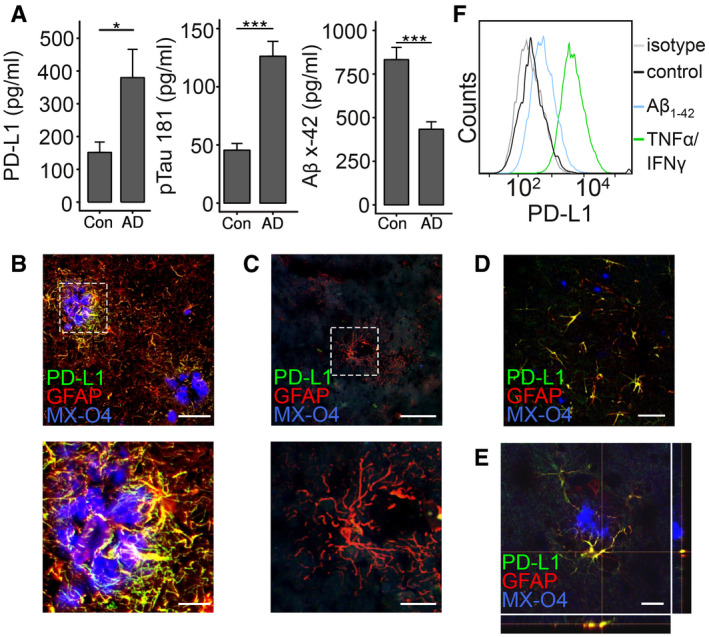
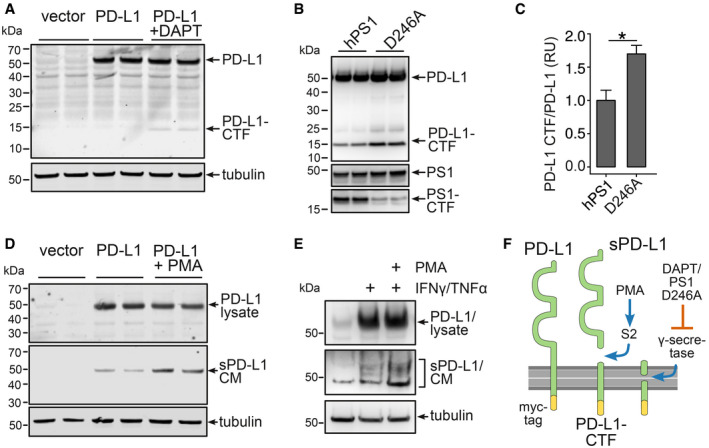
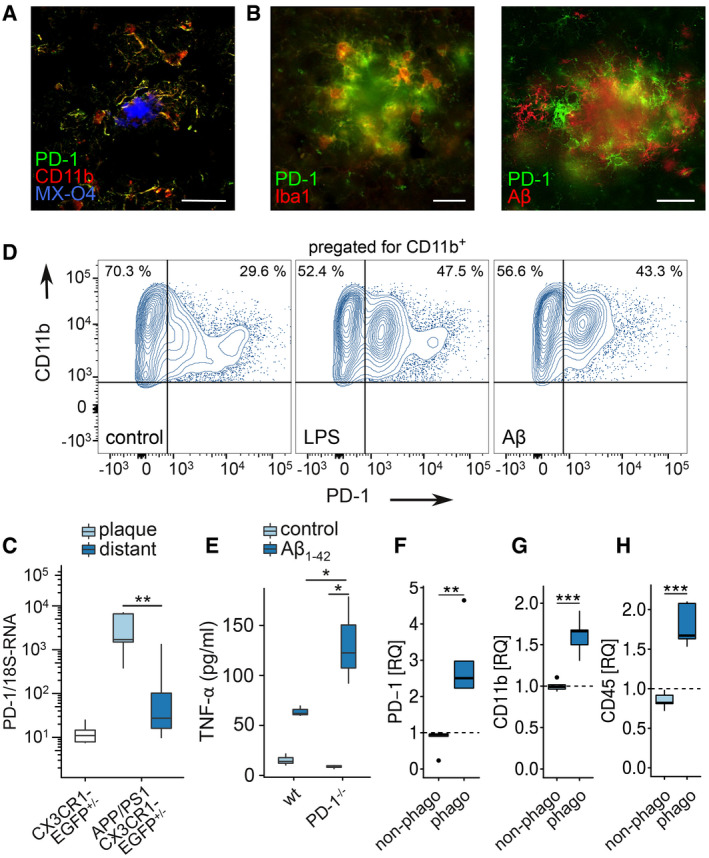
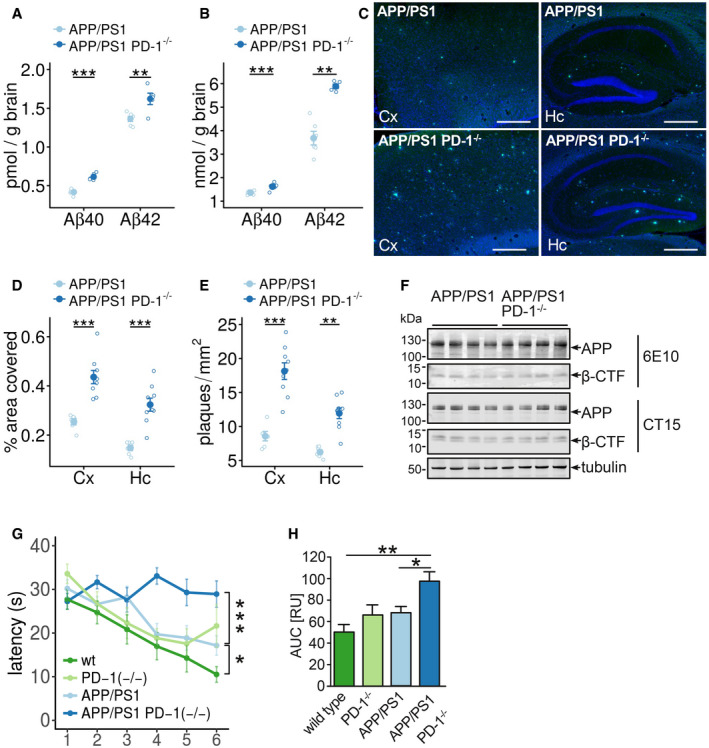
Chronic neuroinflammation is a pathogenic component of Alzheimer’s disease (AD) that may limit the ability of the brain to clear amyloid deposits and cellular debris. Tight control of the immune system is therefore key to sustain the ability of the brain to repair itself during homeostasis and disease. The immune‐cell checkpoint receptor/ligand pair PD‐1/PD‐L1, known for their inhibitory immune function, is expressed also in the brain. Here, we report upregulated expression of PD‐L1 and PD‐1 in astrocytes and microglia, respectively, surrounding amyloid plaques in AD patients and in the APP/PS1 AD mouse model. We observed juxtamembrane shedding of PD‐L1 from astrocytes, which may mediate ectodomain signaling to PD‐1‐expressing microglia. Deletion of microglial PD‐1 evoked an inflammatory response and compromised amyloid‐β peptide (Aβ) uptake. APP/PS1 mice deficient for PD‐1 exhibited increased deposition of Aβ, reduced microglial Aβ uptake, and decreased expression of the Aβ receptor CD36 on microglia. Therefore, ineffective immune regulation by the PD‐1/PD‐L1 axis contributes to Aβ plaque deposition during chronic neuroinflammation in AD. Neuroinflammation, a hallmark of Alzheimer’s disease (AD), is involved in beta‐amyloid peptide (Aβ) plaque deposition and clearance. Here, the PD‐1/PD‐L1 axis is found as an important pathway for regulating the immune system in the brain, sustaining microglial Aβ uptake and reducing chronic neuroinflammation. The immune‐checkpoint receptor/ligand pair PD‐1/PD‐L1 sustains phagocytic function of microglia to prevent Aβ plaque deposition in APP/PS mouse models and patient tissues.
Overview
The claims and statistics of this paper haven’t been checked yet.
Run the check — free, no account needed. It reads the open-access text and checks the sources it cites.
Integrity signals
Registry
Cites
Statistics
Figures
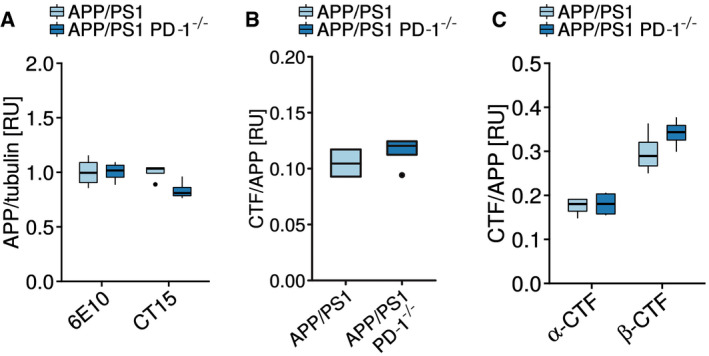
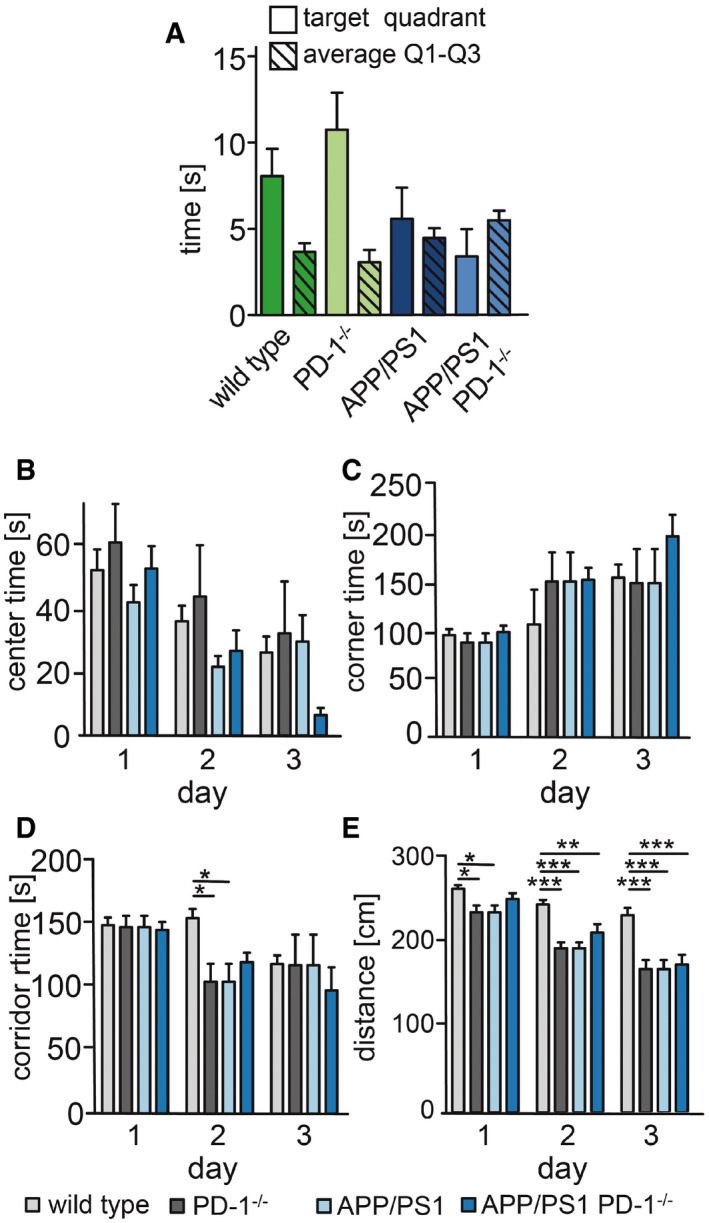
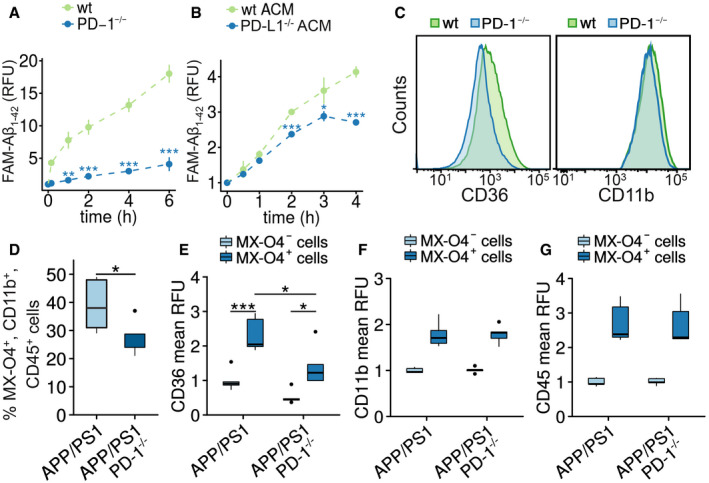
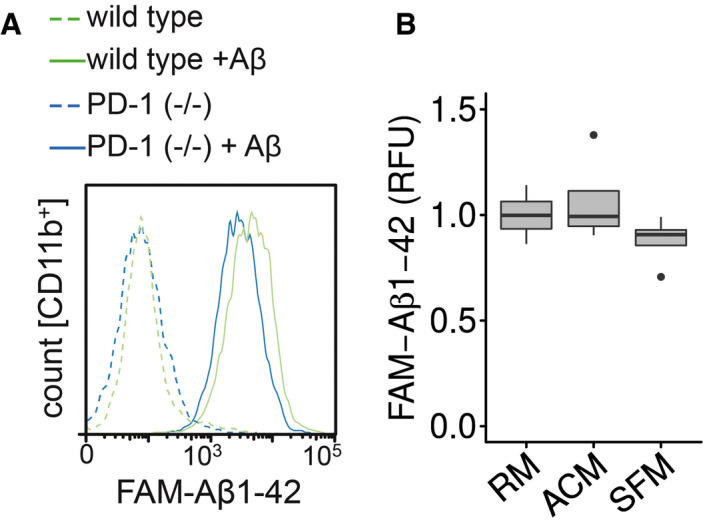
Verification
Claims the paper makes
The claims and statistics of this paper haven’t been checked yet.
Run the check — free, no account needed. It reads the open-access text and checks the sources it cites.
Claims other papers make about this one
Each is checked against this paper’s own text: does it say what the citing paper says it does?
The source backs part of the claim, not all of it — or backs it for a different population, condition or comparison.
In the citing paper
“A majority of AD risk genes identified through genome-wide association studies are highly expressed in microglia, the brain’s innate immune cells, suggesting a key role in microglial dysfunction (Kummer et al., 2021; Penney et al., 2020; Teipel et al., 2022).”
From A novel molecular class that recruits HDAC/MECP2 complexes to PU.1 motifs reduces neuroinflammation (2023) · cites this paper as Kummer et al., 2021
Experimental — accuracy not yet measured
Self-check
Percentages, sums and reported differences re-computed from the paper’s own numbers.
The self-check needs the paper’s full text.
Citations
Cites
clusterProfiler: an R Package for Comparing Biological Themes Among Gene Clusters
Yu, G., Wang, L.-G., Han, Y., & He, Q.-Y. (2012) · OMICS: A Journal of Integrative Biology · doi:10.1089/omi.2011.0118 · Cited by 36,259
PD-1 and PD-L1 Immune Checkpoint Blockade to Treat Breast Cancer
Hartkopf, A. D., Taran, F., Wallwiener, M., Walter, C. B., Krämer, B., Grischke, E., & Brucker, S. Y. (2016) · Breast Care · doi:10.1159/000453569 · Cited by 30,989
Differential expression analysis for sequence count data
Anders, S., & Huber, W. (2010) · Genome Biology · doi:10.1186/gb-2010-11-10-r106 · Cited by 15,581
Adverse Renal Effects of Immune Checkpoint Inhibitors: A Narrative Review
Wanchoo, R., Karam, S., Uppal, N. N., Barta, V. S., Deray, G., Devoe, C., Launay‐Vacher, V., Jhaveri, K. D., & on behalf of Cancer and Kidney International Network Workgroup on Immune Checkpoint Inhibitors (2017) · American Journal of Nephrology · doi:10.1159/000455014 · Cited by 15,320
Polazzi, E., Mengoni, I., Caprini, M., Peña‐Altamira, E., Kurtys, E., & Monti, B. (2012) · Neurosignals · doi:10.1159/000337115 · Cited by 9,023
Bindea, G., Mlecnik, B., Hackl, H., Charoentong, P., Tosolini, M., Kirilovsky, A., Fridman, W.-H., Pagès, F., Trajanoski, Z., & Galon, J. (2009) · Bioinformatics · doi:10.1093/bioinformatics/btp101 · Cited by 6,280
Neuroinflammation in Alzheimer's disease
Heneka, M. T., Carson, M. J., Khoury, J. E., Landreth, G. E., Brosseron, F., Feinstein, D. L., Jacobs, A. H., Wyss-Coray, T., Vitorica, J., Ransohoff, R. M., et al. (2015) · The Lancet Neurology · doi:10.1016/s1474-4422(15)70016-5 · Cited by 6,226
Self-citationMorris water maze: procedures for assessing spatial and related forms of learning and memory
Vorhees, C. V., & Williams, M. T. (2006) · Nature Protocols · doi:10.1038/nprot.2006.116 · Cited by 4,629
Maere, S., Heymans, K., & Kuiper, M. T. R. (2005) · Computer applications in the biosciences · doi:10.1093/bioinformatics/bti551 · Cited by 4,163
Wherry, E. J. (2011) · Nature Immunology · doi:10.1038/ni.2035 · Cited by 4,062 · cited 1×
“This anergy phenomenon has been observed in T cells and can be overcome by disrupting PD-L1/PD-1 interaction (Tsushima et al , 2007; Wherry, 2011).”
Cited by
Sorted by citations
An exhausted-like microglial population accumulates in aged and APOE4 genotype Alzheimer’s brains
Millet, A., Ledo, J. H., & Tavazoie, S. F. (2024) · Immunity · doi:10.1016/j.immuni.2023.12.001 · Cited by 132
PD-L1: From cancer immunotherapy to therapeutic implications in multiple disorders
Lee, D., Cho, M., Kim, E., Seo, Y., & Cha, J. (2024) · Molecular Therapy · doi:10.1016/j.ymthe.2024.09.026 · Cited by 125
Inflammasome assembly in neurodegenerative diseases
Singh, J., Habean, M. L., & Panicker, N. (2023) · Trends in Neurosciences · doi:10.1016/j.tins.2023.07.009 · Cited by 83
Linnerbauer, M., Beyer, T., Nirschl, L., Farrenkopf, D., Lößlein, L., Vandrey, O., Peter, A., Tsaktanis, T., Kébir, H., Laplaud, D. A., et al. (2023) · Nature Communications · doi:10.1038/s41467-023-40982-8 · Cited by 83
PD-1/PD-L Axis in Neuroinflammation: New Insights
Manenti, S., Orrico, M., Masciocchi, S., Mandelli, A., Finardi, A., & Furlan, R. (2022) · Frontiers in Neurology · doi:10.3389/fneur.2022.877936 · Cited by 67
Salminen, A. (2024) · Journal of Molecular Medicine · doi:10.1007/s00109-024-02444-6 · Cited by 61
Chandra, S., Di Meco, A., Dodiya, H. B., Popovic, J., Cuddy, L. K., Weigle, I. Q., Zhang, X., Sadleir, K., Sisodia, S. S., & Vassar, R. (2023) · Molecular Neurodegeneration · doi:10.1186/s13024-023-00635-2 · Cited by 58
Kumari, S., Dhapola, R., Sharma, P., Singh, S. K., & HariKrishnaReddy, D. (2023) · Ageing Research Reviews · doi:10.1016/j.arr.2023.102098 · Cited by 58
Targetability of the neurovascular unit in inflammatory diseases of the central nervous system
Smith, B. C., Tinkey, R. A., Shaw, B. C., & Williams, J. L. (2022) · Immunological Reviews · doi:10.1111/imr.13121 · Cited by 57
Adaptive immune changes associate with clinical progression of Alzheimer’s disease
van Olst, L., Kamermans, A., Halters, S., van der Pol, S. M. A., Rodríguez, E., Verberk, I. M. W., Verberk, S. G. S., Wessels, D. W. R., Rodriguez-Mogeda, C., Verhoeff, J., et al. (2024) · Molecular Neurodegeneration · doi:10.1186/s13024-024-00726-8 · Cited by 61
Labib, D., Wang, Z., Prakash, P. S., Zimmer, M., Smith, M. D., Frazel, P. W., Barbar, L., Sapar, M. L., Calabresi, P. A., Peng, J., et al. (2022) · Frontiers in Molecular Neuroscience · doi:10.3389/fnmol.2022.870085 · Cited by 45
Sarazin, M., Lagarde, J., Haddad, I., de Souza, L. C., Bellier, B., Potier, M., Bottlaender, M., & Dorothée, G. (2024) · Nature Aging · doi:10.1038/s43587-024-00630-2 · Cited by 42
INPP5D modulates TREM2 loss-of-function phenotypes in a β-amyloidosis mouse model
Iguchi, A., Takatori, S., Kimura, S., Muneto, H., Wang, K., Etani, H., Ito, G., Sato, H., Hori, Y., Sasaki, J., et al. (2023) · iScience · doi:10.1016/j.isci.2023.106375 · Cited by 37
Evans, J. A., Mendonca, P., & Soliman, K. F. A. (2023) · Brain Sciences · doi:10.3390/brainsci13081144 · Cited by 39
Microglia–T cell conversations in brain cancer progression
Mirzaei, R., & Yong, V. W. (2022) · Trends in Molecular Medicine · doi:10.1016/j.molmed.2022.08.006 · Cited by 35
Immune modulation to treat Alzheimer’s disease
Duggan, M. R., Morgan, D., Price, B. R., Rajbanshi, B., Martín‐Peña, A., Tansey, M. G., & Walker, K. A. (2025) · Molecular Neurodegeneration · doi:10.1186/s13024-025-00828-x · Cited by 44
Vinnakota, J. M., Adams, R. C., Athanassopoulos, D., Schmidt, D., Biavasco, F., Zähringer, A., Erny, D., Schwabenland, M., Langenbach, M., Wenger, V., et al. (2024) · Science Translational Medicine · doi:10.1126/scitranslmed.adj9672 · Cited by 35
A novel molecular class that recruits HDAC/MECP2 complexes to PU.1 motifs reduces neuroinflammation
Ralvenius, W. T., Mungenast, A. E., Woolf, H., Huston, M. M., Gillingham, T. Z., Godin, S. K., Penney, J., Cam, H. P., Gao, F., Fernandez, C. G., et al. (2023) · Journal of Experimental Medicine · doi:10.1084/jem.20222105 · Cited by 29
“A majority of AD risk genes identified through genome-wide association studies are highly expressed in microglia, the brain ’ s innate immune cells, suggesting a key role in microglial dysfunction (Kummer et al., 2021; Penney et al., 2020; Teipel et al., 2022).”
Glial polarization in neurological diseases: Molecular mechanisms and therapeutic opportunities
Liu, Y., Wu, L., Peng, W., & Mao, X. (2024) · Ageing Research Reviews · doi:10.1016/j.arr.2024.102638 · Cited by 32
Smith, B. C., Tinkey, R. A., Brock, O. D., Mariam, A., Habean, M. L., Dutta, R., & Williams, J. L. (2023) · Journal of Neuroinflammation · doi:10.1186/s12974-023-02917-4 · Cited by 27
Immune dysfunction in Alzheimer disease
Butovsky, O., Rosenzweig, N., Kleemann, K. L., Jorfi, M., Kuchroo, V. K., Tanzi, R. E., & Weiner, H. L. (2025) · Nature reviews. Neuroscience · doi:10.1038/s41583-025-00997-0 · Cited by 41
Wang, K., Yang, R., Li, J., Wang, H., Wan, L., & He, J. (2025) · Frontiers in Pharmacology · doi:10.3389/fphar.2025.1591438 · Cited by 27
Hepatic acetyl-CoA metabolism modulates neuroinflammation and depression susceptibility via acetate
Cao, Y., Zhao, Y., Deng, T., Zhou, Q., Hu, G., Hu, Z., Jiang, Y.-Y., Yang, X., Wang, F., Wu, P.-F., et al. (2025) · Cell Metabolism · doi:10.1016/j.cmet.2025.08.010 · Cited by 24
Immune regulation in neurovascular units after traumatic brain injury
Wang, Z., & Chen, G. (2023) · Neurobiology of Disease · doi:10.1016/j.nbd.2023.106060 · Cited by 24
Mladinich, M. C., Himmler, G. E., Conde, J. N., Gorbunova, E. E., Schutt, W. R., Sarkar, S., Tsirka, S.-A. E., Kim, H. K., & Mackow, E. R. (2024) · Journal of Virology · doi:10.1128/jvi.00560-24 · Cited by 22
Gopalakrishna, P. K., Nassir, C. M. N. C. M., Anandan, S., Hussan, F., Dandala, K. C. R., Sura, S., Jagadeesan, S., Moklas, M. A. M., Vishnumukkala, T., & Hein, Z. M. (2026) · Cellular and Molecular Neurobiology · doi:10.1007/s10571-026-01671-4 · Cited by 23
Ghareghani, M., & Rivest, S. (2023) · International Journal of Molecular Sciences · doi:10.3390/ijms241310905 · Cited by 20
PD-1/PD-L1 axis is involved in the interaction between microglial polarization and glioma
Wang, X., Guo, W., Chen, Y.-F., Hong, C., Ji, J., Zhang, X.-Y., Dong, Y., & Sun, X. (2024) · International Immunopharmacology · doi:10.1016/j.intimp.2024.112074 · Cited by 18
Immune checkpoint inhibition perturbs neuro-immune homeostasis and impairs cognitive function
Ifejeokwu, O. V., Do, A. H., El-Khatib, S. M., Ho, N., Zavala, A., Othy, S., & Acharya, M. M. (2025) · Journal of Experimental & Clinical Cancer Research · doi:10.1186/s13046-025-03442-3 · Cited by 21
The role of inhibitory immune checkpoint receptors in the pathogenesis of Alzheimer’s disease
Salminen, A. (2024) · Journal of Molecular Medicine · doi:10.1007/s00109-024-02504-x · Cited by 16
Pan, A. L., Audrain, M., Sakakibara, E., Joshi, R., Zhu, X., Wang, Q., Wang, M., Beckmann, N. D., Schadt, E. E., Gandy, S., et al. (2022) · Cells · doi:10.3390/cells11233880 · Cited by 16
Chronological versus immunological aging: Immune rejuvenation to arrest cognitive decline
Basurco, L., Abellanas, M. A., Purnapatre, M., Antonello, P., & Schwartz, M. (2024) · Neuron · doi:10.1016/j.neuron.2024.12.004 · Cited by 17
Lin, S., Zhan, Y., Wang, R., & Pei, J. (2025) · Frontiers in Immunology · doi:10.3389/fimmu.2025.1616899 · Cited by 21
Chen, Y., & Colonna, M. (2022) · Current Opinion in Immunology · doi:10.1016/j.coi.2022.102233 · Cited by 14
Zou, Y., Wang, C., Li, H., Zhong, M., Lin, J., Hu, Y., Chen, Z., & Gan, C. (2024) · Frontiers in Pharmacology · doi:10.3389/fphar.2024.1500105 · Cited by 13
Cheng, Y., Chen, B., Bian, G., Ding, Y., & Chen, L.-W. (2022) · Molecular Neurobiology · doi:10.1007/s12035-022-02758-x · Cited by 13
Zheng, Y., Zhang, Q., Zhou, X., Yao, L., Zhu, Q., & Fu, Z. (2023) · Scientific Reports · doi:10.1038/s41598-023-49206-x · Cited by 12
PD-1 immunology in the kidneys: a growing relationship
Chen, R., Lin, Q., Tang, H., Dai, X., Jiang, L., Cui, N., & Li, X. (2024) · Frontiers in Immunology · doi:10.3389/fimmu.2024.1458209 · Cited by 13
Contextualizing the Role of Osteopontin in the Inflammatory Responses of Alzheimer’s Disease
Lalwani, R. C., Volmar, C., Wahlestedt, C., Webster, K. A., & Shehadeh, L. A. (2023) · Biomedicines · doi:10.3390/biomedicines11123232 · Cited by 13
Emerging functions and therapeutic targets of IL‐38 in central nervous system diseases
Gao, Y., Cai, L., Wu, Y., Jiang, M., Zhang, Y., Ren, W., Song, Y., Li, L., Lei, Z., Wu, Y., et al. (2024) · CNS Neuroscience & Therapeutics · doi:10.1111/cns.14550 · Cited by 11
PD-L1/PD-1 pathway: a potential neuroimmune target for pain relief
Deng, D., Zhang, T., Ma, L., Zhao, W., Huang, S., Wang, K., Shu, S., & Chen, X. (2024) · Cell & Bioscience · doi:10.1186/s13578-024-01227-3 · Cited by 10
Wang, K., Er, J., Zhang, Y., Song, C., Yu, Y., Gao, R., Xu, H., Dong, X., Yuan, L., Liu, Q., et al. (2024) · CNS Neuroscience & Therapeutics · doi:10.1111/cns.14893 · Cited by 10
Interrogation of human microglial phagocytosis by CRISPR genome editing
Chang, J. C.-Y., Wang, C., & Lin, S. (2023) · Frontiers in Immunology · doi:10.3389/fimmu.2023.1169725 · Cited by 9
Gruol, D. L., Calderon, D., Huitrón‐Reséndiz, S., Cates‐Gatto, C., & Roberts, A. J. (2023) · Cells · doi:10.3390/cells12182306 · Cited by 10
Chen, Z., Li, W., Meng, B., Xu, C., Huang, Y., Li, G., Wen, Z., Liu, J., & Mao, Z. (2024) · iScience · doi:10.1016/j.isci.2024.110243 · Cited by 10
Wei, Q., Li, J., Zhao, C., Su, M., Na, L., Wu, Z. B., Liu, F., Cui, L., Hu, W., & Zhao, Y. (2024) · CNS Neuroscience & Therapeutics · doi:10.1111/cns.14811 · Cited by 8
The role of the hypothalamus in the development of cancer cachexia
Stagikas, D., Simos, Y. V., Lakkas, L. S., Filis, P., Peschos, D., & Tsamis, K. I. (2025) · Physiology & Behavior · doi:10.1016/j.physbeh.2025.114909 · Cited by 10
Recent advances in Alzheimer’s disease pathogenesis and therapeutics from an immune perspective
Nguyen, T.-D., Dang, L. N., Jang, J., & Park, S. (2023) · Journal of Pharmaceutical Investigation · doi:10.1007/s40005-023-00631-0 · Cited by 9
PD-1 Attenuates Neuropathic Pain by Ameliorating NLRP3 Inflammasome-Mediated Microglia Pyroptosis
Deng, D., Ma, L., Shen, J., Huang, L., Zhang, T., Yang, X., Huang, S., Zhao, W., Zhou, Y., Fan, S., et al. (2025) · Molecular Neurobiology · doi:10.1007/s12035-025-05225-5 · Cited by 7
Zuo, Z., Xiao, Z., Zhang, L., Deng, S., He, X., Mu, Y., Wang, P., Feng, Y., Wang, Z., Li, S., et al. (2025) · Biomaterials · doi:10.1016/j.biomaterials.2025.123574 · Cited by 7
Gopukumar, S. T., Dwivedi, D., Gowri, K., Karpakavalli, M., Nair, C., Singh, D., & Das, U. (2025) · Medicine in Drug Discovery · doi:10.1016/j.medidd.2025.100237 · Cited by 11
N6-methyladenosine participates in mouse hippocampus neurodegeneration via PD-1/PD-L1 pathway
Hu, W., Xie, H., Zeng, Y., Pei, P., Zhan, X., Wang, S., & Wang, Z. (2023) · Frontiers in Neuroscience · doi:10.3389/fnins.2023.1145092 · Cited by 7
The role of the gut microbiome in the regulation of astrocytes in Alzheimer's disease
Chandra, S., & Vassar, R. J. (2024) · Neurotherapeutics · doi:10.1016/j.neurot.2024.e00425 · Cited by 7
The immune landscape of high-grade brain tumor after treatment with immune checkpoint blockade
Park, J. H., Kang, I., & Lee, H. K. (2022) · Frontiers in Immunology · doi:10.3389/fimmu.2022.1044544 · Cited by 7
Deciphering T Cell Dynamics in Alzheimer's Disease Pathogenesis: Insights and Implications
Yang, Q., Qiu, Y., Ni, J., Li, H., & Qing, H. (2025) · Current Neuropharmacology · doi:10.2174/011570159x350611250303044527 · Cited by 7
Moadab, A., Khorramdelazad, H., Javar, M. T. A., Rostami‐Nejad, M., Mirzaie, S., Hatami, S., Mahdavi, N., Ghaffari, S., & Yazdian, F. A. (2025) · Journal of Neuroimmune Pharmacology · doi:10.1007/s11481-025-10206-5 · Cited by 8
Zou, Y., Jiang, J., Li, Y., Ding, X., Tong, Q., Shi, Y., Xiao, L., & Chen, L. (2025) · Advanced Science · doi:10.1002/advs.202400747 · Cited by 6
Missorting of plasma miRNAs in aging and Alzheimer's disease
Čarná, M., Novotný, J., Dragišić, N., Slavík, H., Sheardová, K., Geda, Y. E., Vyhnálek, M., Laczó, J., Hort, J., Mao, Z., et al. (2023) · Journal of Neurochemistry · doi:10.1111/jnc.15801 · Cited by 7
Morioka, N., Nakamura, Y., Hisaoka‐Nakashima, K., & Nakata, Y. (2024) · Biochemical Pharmacology · doi:10.1016/j.bcp.2024.116058 · Cited by 6
Foley, K. E., Weekman, E. M., Krick, K. E., Johnson, S. N., Sudduth, T. L., & Wilcock, D. M. (2024) · Journal of Neuroscience · doi:10.1523/jneurosci.1456-24.2024 · Cited by 6
Cheng, F., Yan, B., Gao, H., Liao, P., Zhang, W., Jia, Z., Chen, F., & Lei, P. (2025) · International Journal of Surgery · doi:10.1097/js9.0000000000002954 · Cited by 5
Yoon, J.-Y., Ha, H., Lee, H. W., Kim, S.-Y., Yu, Y. M., & Chun, H. (2025) · Molecular Psychiatry · doi:10.1038/s41380-025-03413-2 · Cited by 6
Panda, S. P., Reddy, P. H., Gorla, U. S., & Prasanth, D. (2022) · Molecular Biology Reports · doi:10.1007/s11033-022-08113-6 · Cited by 5
Distinct forebrain regions define a dichotomous astrocytic profile in multiple system atrophy
Schneider, Y., Gauer, C., Andert, M., Hoffmann, A., Riemenschneider, M. J., Krebs, W., Chalmers, N., Lötzsch, C., Naumann, U. J., Xiang, W., et al. (2024) · Acta Neuropathologica Communications · doi:10.1186/s40478-023-01699-3 · Cited by 7
Zeng, X., Fan, L., Qin, Q., Zheng, D., Wang, H., Li, M., Jiang, Y., Wang, H., Liu, H., Liang, S., et al. (2024) · Brain Behavior and Immunity · doi:10.1016/j.bbi.2024.08.042 · Cited by 5
The many connections of UFMylation with Alzheimer’s disease: a comprehensive review
Yan, T., Clarkson, B. D. S., Lou, Z., Springer, W., & Fiesel, F. C. (2025) · Molecular Neurodegeneration · doi:10.1186/s13024-025-00855-8 · Cited by 4
Wang, J.-P., An, C.-C., Wang, Z.-N., Wei, Z.-J., & Dai, Y. (2026) · Frontiers in Oncology · doi:10.3389/fonc.2025.1752562 · Cited by 4
Sarkar, A., Nagappa, M., Dey, S., Mondal, S., Babu, G. S., Choudhury, S. P., Akhil, P., & Debnath, M. (2023) · Journal of the Peripheral Nervous System · doi:10.1111/jns.12605 · Cited by 4
Neuroimmune Dysfunction in Alzheimer’s Disease and Other Forms of Dementia
Yamane, T., Yoshioka, T., & Shimo, Y. (2024) · Chemical and Pharmaceutical Bulletin · doi:10.1248/cpb.c23-00464 · Cited by 4
Han, S., Cho, S.-A., Choi, W., Eilbeck, K. L., Coon, H. H., Nho, K. T., & Lee, Y. (2025) · BMC Genomics · doi:10.1186/s12864-025-11362-x · Cited by 6
Fan, L., Liu, H., Li, S., Li, L., Zhang, Z., Liu, P., Yang, H., Xia, S., Cao, X., Wang, C., et al. (2025) · Neuroscience Bulletin · doi:10.1007/s12264-025-01507-z · Cited by 3
Mehrabadi, S. (2024) · Current Aging Science · doi:10.2174/0118746098342537241121042621 · Cited by 3
Wu, J., Zhang, C., Cao, Q., Xuan, W., Huai, X., Zhou, J., & Tian, J. (2025) · Frontiers in Aging Neuroscience · doi:10.3389/fnagi.2025.1570428 · Cited by 2
Jiang, A., Shi, D., Que, X., Lin, Z., Chen, Y., Huang, Y., Liu, C., Wen, Y., Zhang, S., & Huang, W. (2025) · Frontiers in Molecular Biosciences · doi:10.3389/fmolb.2025.1585761 · Cited by 2
Neuroinflammation and neurodegeneration trigger a specific splice form of ribosomal protein S24
Magadi, S. S., Jonson, M., Lucena, P. B., Caliandro, M. F., Almeida, B., Bilalli, L., Budinger, D., Tsoi, A., Ntzouni, M. P., Maqdissi, J. A., et al. (2026) · Brain · doi:10.1093/brain/awag166 · Cited by 5
Fu, H., Yang, J., & Zhang, M. Y. (2026) · Frontiers in Aging Neuroscience · doi:10.3389/fnagi.2026.1838306 · Cited by 2
Wang, Q.-Q., Sun, Q.-Q., Guo, Y.-S., Yin, S., & Zhou, J. (2026) · Translational Neurodegeneration · doi:10.1186/s40035-026-00571-3 · Cited by 2
Ma, L., Low, Y. L., Zhuo, Y., Chu, C., Wang, Y., Fowler, C. J., Tan, E. C. K., Masters, C. L., Jin, L., & Pan, Y. (2024) · Scientific Reports · doi:10.1038/s41598-024-54875-3 · Cited by 3
Xu, Z., Wang, Y., Jiang, C., Wang, Z., Cheng, Y., & Fan, M. (2024) · Molecular Pain · doi:10.1177/17448069241252384 · Cited by 2
Jian, C., Xia, J., Wang, N., Li, Y., Shi, L., Ding, Q., Yan, Y., He, J., Tian, H. M., & Gao, W. (2025) · European Journal of Pharmacology · doi:10.1016/j.ejphar.2025.177843 · Cited by 2
Advance of immune checkpoint inhibitors in CNS disease
Sun, J., Shao, X., Wang, X., & Liu, F. (2023) · Human Brain · doi:10.37819/hb.3.1785 · Cited by 2
Park, T., Chang, L., Chung, S. W., Lee, S., Bae, S., Condello, C., Kim, Y. H., Lee, J., Kim, H.-J., Kwon, H.-K., et al. (2024) · bioRxiv (Cold Spring Harbor Laboratory) · doi:10.1101/2024.09.13.612389 · Cited by 2
Rodríguez, A., Yang, C., Gan, W., Karlinsey, K. S., Zhou, B., Rich, S. S., Taylor, K. D., Guo, X., Rotter, J. I., Johnson, W. C., et al. (2025) · medRxiv · doi:10.1101/2025.01.08.25320225 · Cited by 2
Magadi, S. S., Jonson, M., Maqdissi, J. A., Kaczmarczyk, L., Zijlstra, J., Perkins, M., Paul, G., Hallbeck, M., Ingelsson, M., Watts, J. C., et al. (2025) · bioRxiv (Cold Spring Harbor Laboratory) · doi:10.1101/2025.03.28.645676 · Cited by 2
Liu, Z., Zhao, Z., Xie, H., Lu, N., Liu, J., & Jiao, Q. (2024) · Frontiers in Immunology · doi:10.3389/fimmu.2024.1295309 · Cited by 1
Avila‐Gutierrez, K., Sauvage, M.-A. C.-D., Depret, N., Oudart, M., Thompson, R., Alvear‐Perez, R., Poulot-Becq-Giraudon, Y., Kozlowski, E., Monnet, H., Mailly, P., et al. (2026) · Neurobiology of Disease · doi:10.1016/j.nbd.2026.107528 · Cited by 1
Luo, L., Yu, M., Li, X., Bi, Y., Duan, P., Meng, Y., Jin, Z., Feng, W., Li, L., Xing, Y., et al. (2026) · Neurochemical Research · doi:10.1007/s11064-026-04724-8 · Cited by 1
Li, E., Zhang, P., & Feng, W. (2026) · Frontiers in Immunology · doi:10.3389/fimmu.2026.1783786 · Cited by 1
Li, J., Liao, Z., Zhang, K., Liu, Y., Xu, H., Cao, D., Yang, J., Han, J., Zeng, L., Shen, Z., et al. (2026) · Journal of Neuroscience · doi:10.1523/jneurosci.0586-26.2026 · Cited by 1
Kumar, N., Mir, P. A., Bhutia, G. T., Chaudhary, P., Kaur, G., Alam, Q., Pawar, S. D., & Gupta, S. K. (2026) · Molecular Neurobiology · doi:10.1007/s12035-026-05983-w · Cited by 1
Localized PD-1 CAR T therapy reprograms neuroinflammation
Shalita, R., Yehuda, M. B., Gur, C., Frid, Y., McGrath, S., Suhler, R., Bolokan, L., Eisenberg, V., Sharet-Eshed, R., Shlomi-Loubaton, S., et al. (2026) · Cell · doi:10.1016/j.cell.2026.06.036 · Cited by 1
Neuron-derived exosomes trigger a PD-L1-mediated broad suppression of T cells in Parkinson’s diseasePreprint
Chen, Z., Xu, C., Li, G., Wen, Z., Liu, J., & Mao, Z. (2022) · Research Square · doi:10.21203/rs.3.rs-2109216/v1 · Cited by 1
Kamińska, M., Dudzinska, N. A. M., Klapper, A., Geißler, S., Taudte, N., Greiser, S., Potempa, J., Cynis, H., & Mydel, P. M. (2025) · bioRxiv (Cold Spring Harbor Laboratory) · doi:10.1101/2025.06.06.658266 · Cited by 1
Neuroprotective and detrimental effects of astrocytes on amyloid plaque formation
Gan, H.-R. (2023) · Journal of Student Research · doi:10.47611/jsrhs.v12i1.4295
Muley, V. Y. (2023) · Frontiers in Neuroscience · doi:10.3389/fnins.2023.1342890
Mladinich, M. C., Himmler, G. E., Conde, J. N., Gorbunova, E. E., Schutt, W. R., Sarkar, S., Tsirka, S. E., Kim, H. K., & Mackow, E. R. (2023) · bioRxiv (Cold Spring Harbor Laboratory) · doi:10.1101/2023.12.18.572230
PD-1/PD-L1 Inhibitors for Alzheimer’s Pathology: A Literature ReviewPreprint
HUANG, S. F., Long, Y., Lau, K., & Nagpal, B. (2024) · doi:10.31234/osf.io/hf9y3
Su, Z., Wang, J., Lai, Q., Wang, Z., Liu, P., Tang, Z., Yu, H., Chen, Y., Ma, X., & Hou, L. (2025) · bioRxiv (Cold Spring Harbor Laboratory) · doi:10.1101/2025.07.26.666839 · Cited by 1
Lee, P.-Y., Chiu, C. C., Kuo, P., Huang, C., Tsai, S., Kuo, C., & Chen, W.-Y. (2025) · Annals of General Psychiatry · doi:10.1186/s12991-025-00591-9
Metadata
- Authors
- Kummer, M. P., Ising, C., Kummer, C., Sarlus, H., Griep, A., Vieira‐Saecker, A., Schwartz, S., Halle, A., Brückner, M., Händler, K., Schultze, J. L., Beyer, M., Latz, E., & Heneka, M. T.
- Affiliations
- University of Bonn (DE)
- German Center for Neurodegenerative Diseases (DE)
- Center of Advanced European Studies and Research (DE)
- Corresponding author
- Kummer, Markus P
- Heneka, Michael T
- ORCID
- Venue
- The EMBO Journal
- Published
- 2021-11-26
- Volume
- 40
- Issue
- 24
- Pages
- e108662-e108662
- ISSN
- 0261-4189 (ISSN-L)
- 1460-2075
- PMC
- PMC8672180
- OpenAlex
- W3215791278
- Cited by
- 127
- References
- 55
- Citations by year
- 2026: 22 · 2025: 28 · 2024: 42 · 2023: 24 · 2022: 10 · 2021: 1
- FWCI
- 9.38
- Type
- journal article
- Language
- en
- Open access
- hybrid
- doi.org
- Licence
- Locations
- The EMBO Journal (publishedVersion, cc-by-nc-nd)
- PubMed Central (publishedVersion, cc-by-nc-nd)
- PubMed (publishedVersion)
- Open Repository and Bibliography (University of Luxembourg) (submittedVersion, other-oa)
- DZNE Pub (submittedVersion, other-oa)
- Funders
- European Union Seventh Framework Program (INMIND)
- Deutsche Forschungsgemeinschaft (KFO177, IS 299/3‐1, EXC2151‐390873048)
- Topics
- Life Sciences › Neuroscience › Neurology › Neuroinflammation and Neurodegeneration Mechanisms
- Life Sciences › Neuroscience › Cellular and Molecular Neuroscience › Alzheimer's disease research and treatments
- Life Sciences › Immunology and Microbiology › Immunology › Phagocytosis and Immune Regulation
- Keywords
- Alzheimer's disease, neuroinflammation, PD-1/PD-L1 axis, microglia, astrocytes, amyloid plaques, amyloid-beta uptake, CD36, APP/PS1 mice, immune checkpoint, phagocytosis, amyloid-beta clearance, ectodomain shedding
- MeSH terms
- Aged, Aged, 80 and over, Alzheimer Disease, Animals, Astrocytes, Disease Models, Animal, Female, HeLa Cells, Humans, Male, Mice, Transgenic, Middle Aged, Up-Regulation, Case-Control Studies, Amyloid beta-Protein Precursor, Gene Deletion, Microglia, CD36 Antigens, Mice, HEK293 Cells, B7-H1 Antigen, Programmed Cell Death 1 Receptor
About these checks
Registry, retraction, Cites and statistics results are computed, not judged, with one exception: a printed reference that no index lists is read once by a model before it counts as a citation error. Claims are extracted by a model and kept only when their quote appears verbatim in the text; each cited source is then checked, with a model’s help, for whether it says what the claim relies on. Those verdicts can be wrong — read the claim’s quote and the cited source before relying on one.
Statistics and arithmetic are recomputed, not judged.
Confidence bands are shown only for fields calibrated on our annotated test set. None is calibrated yet, so no band is shown.
What counts as a claim ›How we measure confidence ›How we check this ›
Are you an author, or do you see a problem with this page? Request a review
