

Dual melanocortin‐4 receptor and GLP‐1 receptor agonism amplifies metabolic benefits in diet‐induced obese mice
Open accessThe DOI matches its Crossref record; 37 of the 37 references it cites were found in a registry or an index.
Abstract
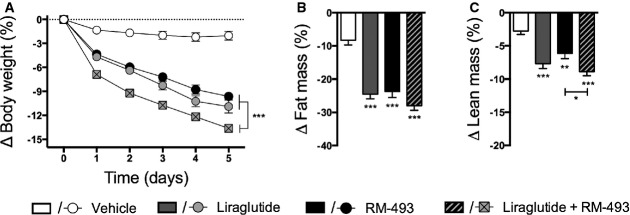
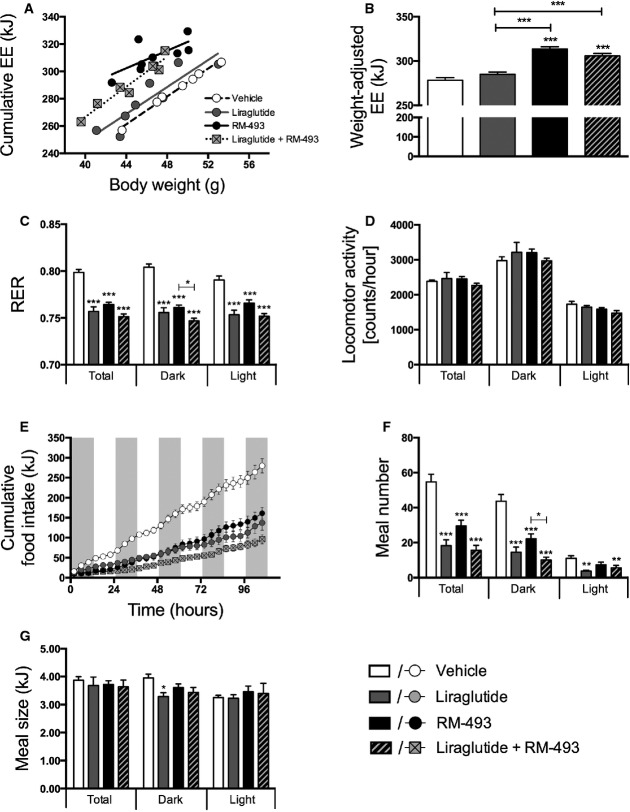
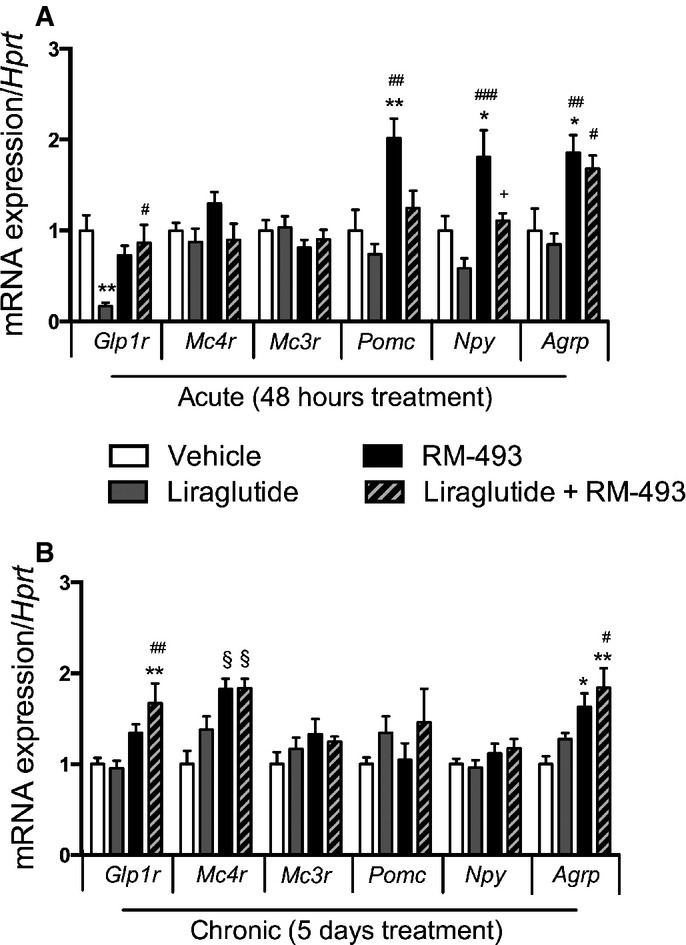
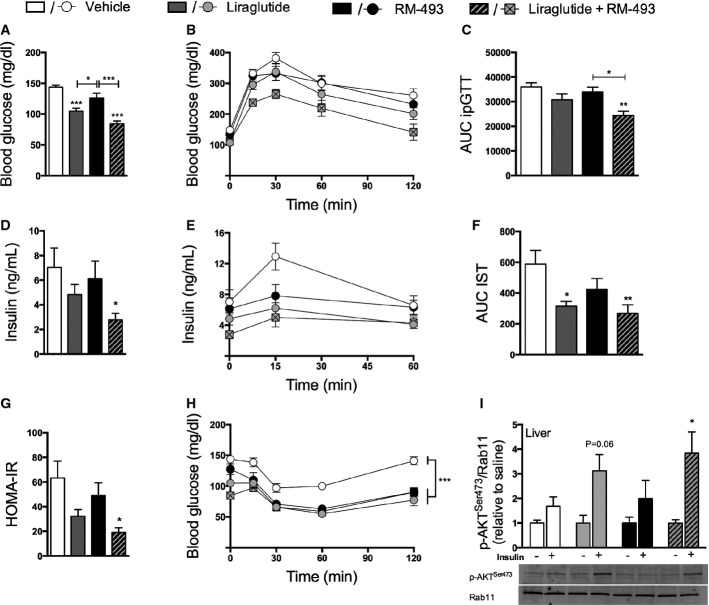
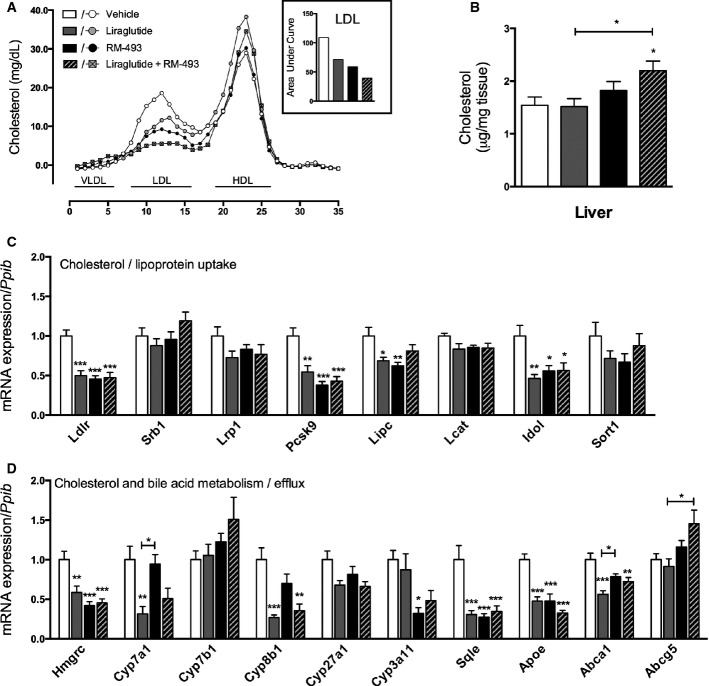
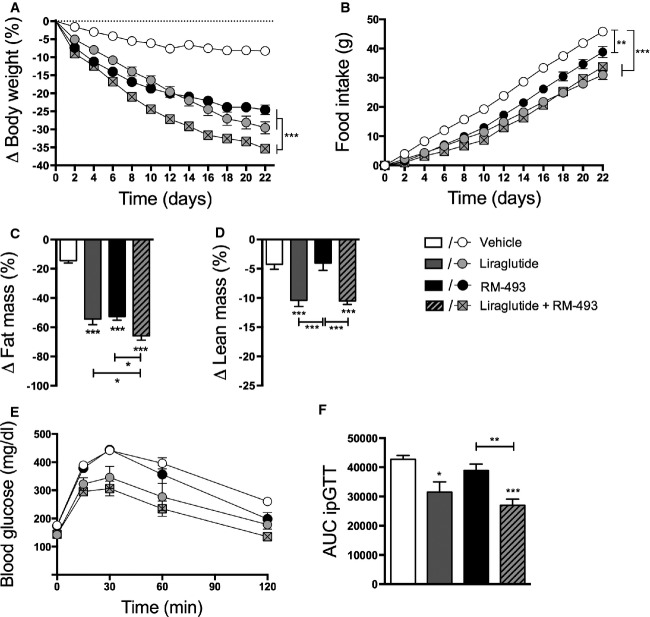
We assessed the efficacy of simultaneous agonism at the glucagon‐like peptide‐1 receptor (GLP‐1R) and the melanocortin‐4 receptor (MC4R) for the treatment of obesity and diabetes in rodents. Diet‐induced obese (DIO) mice were chronically treated with either the long‐acting GLP‐1R agonist liraglutide, the MC4R agonist RM‐493 or a combination of RM‐493 and liraglutide. Co‐treatment of DIO mice with RM‐493 and liraglutide improves body weight loss and enhances glycemic control and cholesterol metabolism beyond what can be achieved with either mono‐therapy. The superior metabolic efficacy of this combination therapy is attributed to the anorectic and glycemic actions of both drugs, along with the ability of RM‐493 to increase energy expenditure. Interestingly, compared to mice treated with liraglutide alone, hypothalamic Glp‐1r expression was higher in mice treated with the combination therapy after both acute and chronic treatment. Further, RM‐493 enhanced hypothalamic Mc4r expression. Hence, co‐dosing with MC4R and GLP‐1R agonists increases expression of each receptor, indicative of minimized receptor desensitization. Together, these findings suggest potential opportunities for employing combination treatments that comprise parallel MC4R and GLP‐1R agonism for the treatment of obesity and diabetes.
Overview
The claims and statistics of this paper haven’t been checked yet.
Free: it reads the open-access text and checks the first 5 claims that cite a source we can check. Create a free account to check every claim.
Integrity signals
Registry
Cites
Statistics
Figures
Verification
Claims the paper makes
The claims and statistics of this paper haven’t been checked yet.
Free: it reads the open-access text and checks the first 5 claims that cite a source we can check. Create a free account to check every claim.
Claims other papers make about this one
Each is checked against this paper’s own text: does it say what the citing paper says it does?
The source backs part of the claim, not all of it — or backs it for a different population, condition or comparison.
In the citing paper
“GLP-1 receptor agonists predominantly target non-MC4R-dependent neural pathways in mice19”
From Tirzepatide leads to weight reduction in people with obesity due to MC4R deficiency (2025) · cites this paper as [19]
Experimental — accuracy not yet measured
Self-check
Percentages, sums and reported differences re-computed from the paper’s own numbers.
The self-check needs the paper’s full text.
Citations
Cites
A SIMPLE METHOD FOR THE ISOLATION AND PURIFICATION OF TOTAL LIPIDES FROM ANIMAL TISSUES
Folch, J., Lees, M., & Stanley, G. H. S. (1957) · Journal of Biological Chemistry · doi:10.1016/s0021-9258(18)64849-5 · Cited by 65,189 · cited 1×
“Hepatic lipids were extracted as described previously (Folch et al , 1957), and cholesterol content was quantified using a commercially available kit (Thermo Scientific, Middletown, VA).”
Kopelman, P. G. (2000) · Nature · doi:10.1038/35007508 · Cited by 4,795 · cited 1×
“The etiology of metabolic disease is complex, with diverse pathophysiological mechanisms, emphasizing the challenges inherent in the development of medicinal options for the disorder (Kopelman, 2000; Scheen & Van Gaal, 2014).”
Drucker, D. J., & Nauck, M. A. (2006) · The Lancet · doi:10.1016/s0140-6736(06)69705-5 · Cited by 3,896 · cited 1×
“Glucagon-like peptide-1 receptor (GLP-1R) agonists represent the best-in-class pharmacotherapies for treating type 2 diabetes (Drucker & Nauck, 2006).”
Targeted disruption of the melanocortin-4 receptor results in obesity in mice
Huszar, D., Lynch, C. A., Fairchild-Huntress, V., Dunmore, J. H., Fang, Q., Berkemeier, L. R., Gu, W., Kesterson, R. A., Boston, B. A., Cone, R. D., et al. (1997) · Cell · doi:10.1016/s0092-8674(00)81865-6 · Cited by 3,030 · cited 1×
“These observations and the finding that a plethora of MC4R loss-of-function variants predispose to human obesity have made the MC4R an attractive target for the development of novel, anti-obesity pharmacotherapies (Huszar et al , 1997; Yeo et al , 1998; Farooqi et al , 2003).”
Health and economic burden of the projected obesity trends in the USA and the UK
Wang, Y. C., McPherson, K., Marsh, T., Gortmaker, S. L., & Brown, M. (2011) · The Lancet · doi:10.1016/s0140-6736(11)60814-3 · Cited by 2,692
Clinical Spectrum of Obesity and Mutations in the Melanocortin 4 Receptor Gene
Farooqi, I. S., Keogh, J. M., Yeo, G. S. H., Lank, E. J., Cheetham, T., & O'Rahilly, S. (2003) · New England Journal of Medicine · doi:10.1056/nejmoa022050 · Cited by 1,778
GLP-1 receptor agonists for individualized treatment of type 2 diabetes mellitus
Meier, J. J. (2012) · Nature Reviews Endocrinology · doi:10.1038/nrendo.2012.140 · Cited by 1,311
Astrup, A., Rössner, S., Van Gaal, L., Rissanen, A., Niskanen, L., Al Hakim, M., Madsen, J., Rasmussen, M. F., & Lean, M. E. (2009) · The Lancet · doi:10.1016/s0140-6736(09)61375-1 · Cited by 1,163 · cited 1×
“Emerging evidence supports that GLP-1R agonism can lower body weight in obese subjects (Astrup et al , 2009; Madsbad, 2014), corroborating rodent studies.”
A frameshift mutation in MC4R associated with dominantly inherited human obesity
Yeo, G. S. H., Farooqi, I. S., Aminian, S., Halsall, D. J., Stanhope, R. G., & O'Rahilly, S. (1998) · Nature Genetics · doi:10.1038/2404 · Cited by 1,159
Divergence of Melanocortin Pathways in the Control of Food Intake and Energy Expenditure
Balthasar, N., Dalgaard, L. T., Lee, C. E., Yu, J., Funahashi, H., Williams, T., Ferreira, M., Tang, V., McGovern, R. A., Kenny, C. D., et al. (2005) · Cell · doi:10.1016/j.cell.2005.08.035 · Cited by 1,120
Cited by
Glucagon-like peptide 1 (GLP-1)
Müller, T. D., Finan, B., Bloom, S. R., D'Alessio, D., Drucker, D. J., Flatt, P. R., Fritsche, A., Gribble, F., Grill, H. J., Habener, J. F., et al. (2019) · Molecular Metabolism · doi:10.1016/j.molmet.2019.09.010 · Cited by 1,868
“Several studies in mice [465,467,685,774] and humans [783e787] have failed to detect changes in energy expenditure following chronic or acute peripheral treatment with different GLP-1R agonists.”
BackgroundSelf-citationAnti-obesity drug discovery: advances and challenges
Müller, T. D., Blüher, M., Tschöp, M. H., & DiMarchi, R. D. (2022) · Nature Reviews Drug Discovery · doi:10.1038/s41573-021-00337-8 · Cited by 1,021
Self-citationThe Hunger Genes: Pathways to Obesity
van der Klaauw, A. A., & Farooqi, I. S. (2015) · Cell · doi:10.1016/j.cell.2015.03.008 · Cited by 393
“to be directed at highly specific targets and may consist of combinations of compounds that target different mechanisms, as illustrated by recent studies demonstrating the efficacy of dual melanocortin-4 receptor and GLP-1 receptor agonism (Clemmensen et al., 2015).”
Progress and challenges in anti-obesity pharmacotherapy
Bessesen, D. H., & Van Gaal, L. F. (2018) · The Lancet Diabetes & Endocrinology · doi:10.1016/s2213-8587(17)30236-x · Cited by 347
Gut-Brain Cross-Talk in Metabolic Control
Clemmensen, C., Müller, T. D., Woods, S. C., Berthoud, H.-R., Seeley, R. J., & Tschöp, M. H. (2017) · Cell · doi:10.1016/j.cell.2017.01.025 · Cited by 297
“…anorectic and thermogenic pathways is a superior medicinal strategy, dual MC4R and GLP-1R agonism administered to HFD-induced obese mice caused a greater improvement in reversing obesity and dyslipidemia as well as restoring glycemic control relative to each mono-agonist (Clemmensen et al., 2015).”
BackgroundSelf-citationGlucagon-like peptide-1 receptor co-agonists for treating metabolic disease.
Baggio, L. L., & Drucker, D. J. (2021) · Molecular Metabolism · doi:10.1016/j.molmet.2020.101090 · Cited by 299
“Numerous additional GLP-1 co-administration strategies have demonstrated benefits in animals, including neurotensin-GLP-1 combinations for obesity and NASH [130], melanocortin-4 and GLP-1R co-administration for obesity and diabetes [131], and unimolecular combinations of a proprotein convertase subtilisin/kexin type 9…”
BackgroundThe melanocortin pathway and control of appetite-progress and therapeutic implications
Baldini, G., & Phelan, K. D. (2019) · Journal of Endocrinology · doi:10.1530/joe-18-0596 · Cited by 272
The melanocortin pathway and energy homeostasis: From discovery to obesity therapy
Yeo, G. S. H., Chao, D. H. M., Siegert, A.-M., Koerperich, Z. M., Ericson, M. D., Simonds, S. E., Larson, C. M., Luquet, S., Clarke, I., Sharma, S., et al. (2021) · Molecular Metabolism · doi:10.1016/j.molmet.2021.101206 · Cited by 242
“Interestingly, in rodent experiments, the GLP-1R agonist liraglutide and setmelanotide were shown to have additive effects on glycaemic control, weight loss, and cholesterol metabolism, indicating their independent metabolic effects [164].”
BackgroundAnti-obesity therapy: from rainbow pills to polyagonists
Müller, T. D., Clemmensen, C., Finan, B., DiMarchi, R. D., & Tschöp, M. H. (2018) · Pharmacological Reviews · doi:10.1124/pr.117.014803 · Cited by 199
“Other preclinically evaluated GLP-1 – based combination therapies include the salmon calcitonin with exendin-4 (Bello et al., 2010), GLP-1 with PYY (Neary et al., 2005), exenatide with CCK (Trevaskis et al., 2015), and liraglutide with an melanocortin 4 receptor agonist (setmelanotide, RM-493) (Clemmensen et al., 2015…”
BackgroundSelf-citationObesity: Current and potential pharmacotherapeutics and targets
Narayanaswami, V., & Dwoskin, L. P. (2017) · Pharmacology & Therapeutics · doi:10.1016/j.pharmthera.2016.10.015 · Cited by 186
“RM-493 and Liraglutide Efficacy of adjunctive RM-493 and liraglutide treatment was evaluated in an animal model of DIO (Clemmensen et al., 2015).”
InfluentialGhrelin regulation of glucose metabolism
Poher, A.-L., Tschöp, M. H., & Müller, T. D. (2018) · Peptides · doi:10.1016/j.peptides.2017.12.015 · Cited by 186
Self-citationTherapeutic Potential of Targeting the Ghrelin Pathway
Colldén, G., Tschöp, M., & Müller, T. (2017) · International Journal of Molecular Sciences · doi:10.3390/ijms18040798 · Cited by 150
Self-citationAssessing mouse behaviour throughout the light/dark cycle using automated in-cage analysis tools
Bains, R. S., Wells, S. E., Sillito, R. R., Armstrong, J. D., Cater, H. L., Banks, G. T., & Nolan, P. M. (2017) · Journal of Neuroscience Methods · doi:10.1016/j.jneumeth.2017.04.014 · Cited by 174
Liraglutide and obesity: a review of the data so far
Ladenheim, E. (2015) · Drug Design, Development and Therapy · doi:10.2147/dddt.s58459 · Cited by 146
Latest approaches for the treatment of obesity
Jackson, V. M., Breen, D. M., Fortin, J.-P., Liou, A., Kuzmiski, J. B., Loomis, A. K., Rives, M.-L., Shah, B., & Carpino, P. A. (2015) · Expert Opinion on Drug Discovery · doi:10.1517/17460441.2015.1044966 · Cited by 132
“Interestingly, an increase in mRNA expression for MC4R and GLP-1R was observed with the MC4R agonist/GLP-1R agonist combination in a 5-day chronic study, in contrast to MC4R agonist or GLP-1R agonist treatment alone [144].”
Emerging hormonal-based combination pharmacotherapies for the treatment of metabolic diseases
Clemmensen, C., Finan, B., Müller, T. D., DiMarchi, R. D., Tschöp, M. H., & Hofmann, S. M. (2018) · Nature Reviews Endocrinology · doi:10.1038/s41574-018-0118-x · Cited by 134
Self-citationTan, Q., Orsso, C. E., Deehan, E. C., Triador, L., Field, C. J., Tun, H. M., Han, J. C., Müller, T. D., & Haqq, A. M. (2019) · Obesity Reviews · doi:10.1111/obr.12992 · Cited by 105
Self-citationShpakov, A. O., Derkach, K. V., & Berstein, L. M. (2015) · Future Science OA · doi:10.4155/fso.15.23 · Cited by 100
GLP-1 receptor agonists in diabetic kidney disease: current evidence and future directions
Yu, J. H., Park, S. Y., Lee, D. Y., Kim, N. H., & Seo, J. A. (2022) · Kidney Research and Clinical Practice · doi:10.23876/j.krcp.22.001 · Cited by 104
Finan, B., Clemmensen, C., & Müller, T. D. (2015) · Molecular and Cellular Endocrinology · doi:10.1016/j.mce.2015.07.003 · Cited by 81
Self-citationInduction of thermogenic adipocytes: molecular targets and thermogenic small molecules
Song, N.-J., Chang, S., Li, D. Y., Villanueva, C. J., & Park, K. W. (2017) · Experimental & Molecular Medicine · doi:10.1038/emm.2017.70 · Cited by 85
Targeting the central melanocortin system for the treatment of metabolic disorders
Sweeney, P., Gimenez, L. E., Hernández, C. C., & Cone, R. D. (2023) · Nature Reviews Endocrinology · doi:10.1038/s41574-023-00855-y · Cited by 78
Whole-brain activation signatures of weight-lowering drugs
Hansen, H. H., Perens, J., Roostalu, U., Skytte, J. L., Salinas, C. G., Barkholt, P., Thorbek, D. D., Rigbolt, K. T. G., Vrang, N., Jelsing, J., et al. (2021) · Molecular Metabolism · doi:10.1016/j.molmet.2021.101171 · Cited by 66
Neuronal Control of Brown Fat Activity
Kooijman, S., van den Heuvel, J. K., & Rensen, P. C. N. (2015) · Trends in Endocrinology and Metabolism · doi:10.1016/j.tem.2015.09.008 · Cited by 72
Peptide‐based multi‐agonists: a new paradigm in metabolic pharmacology
Brandt, S. J., Müller, T. D., DiMarchi, R. D., Tschöp, M. H., & Stemmer, K. (2018) · Journal of Internal Medicine · doi:10.1111/joim.12837 · Cited by 65
Self-citationNaylor, J., Suckow, A. T., Seth, A., Baker, D. J., Sermadiras, I., Ravn, P., Howes, R., Li, J., Snaith, M. R., Coghlan, M. P., et al. (2016) · Biochemical Journal · doi:10.1042/bcj20160476 · Cited by 60
Metabolic syndrome and extensive adipose tissue inflammation in morbidly obese Göttingen minipigs
Renner, S., Blutke, A., Dobenecker, B., Dhom, G., Müller, T. D., Finan, B., Clemmensen, C., Bernau, M., Novak, I., Rathkolb, B., et al. (2018) · Molecular Metabolism · doi:10.1016/j.molmet.2018.06.015 · Cited by 56
“Therefore, we have established a DIO model in Göttingen minipigs (GM) to complement a well-characterized DIO mouse model [22,23].”
MethodSelf-citationNeurotransmitters in Type 2 Diabetes and the Control of Systemic and Central Energy Balance
Al-Sayyar, A., Hammad, M. M., Williams, M. R., Al‐Onaizi, M., Abubaker, J. A., & Alzaïd, F. (2023) · Metabolites · doi:10.3390/metabo13030384 · Cited by 49
POMC Neurons Dysfunction in Diet-induced Metabolic Disease: Hallmark or Mechanism of Disease?
Quarta, C., Fioramonti, X., & Cota, D. (2019) · Neuroscience · doi:10.1016/j.neuroscience.2019.09.031 · Cited by 43
Neuropeptides in Obesity and Metabolic Disease
van der Klaauw, A. A. (2018) · Clinical Chemistry · doi:10.1373/clinchem.2017.281568 · Cited by 50
Magel2‐null mice are hyper‐responsive to setmelanotide, a melanocortin 4 receptor agonist
Bischof, J. M., der Ploeg, L. H. T. V., Colmers, W. F., & Wevrick, R. (2016) · British Journal of Pharmacology · doi:10.1111/bph.13540 · Cited by 42
“Five-day administration of setmelanotide in DIO mice increased resting energy expenditure and increased the utilization of fat as fuel (Kumar et al., 2009; Clemmensen et al., 2015).”
BackgroundInfluentialGastrointestinal hormones and their role in obesity
Choudhury, S. M., Tan, T. M., & Bloom, S. R. (2016) · Current Opinion in Endocrinology, Diabetes & Obesity · doi:10.1097/med.0000000000000216 · Cited by 35
Bariatric surgery – time to replace with GLP-1?
Webb, D.-L., Abrahamsson, N., Sundbom, M., & Hellström, P. M. (2017) · Scandinavian Journal of Gastroenterology · doi:10.1080/00365521.2017.1293154 · Cited by 35
“Recent studies are moving in this direction [60].”
BackgroundOliveira, V., Kwitek, A. E., Sigmund, C. D., Morselli, L. L., & Grobe, J. L. (2021) · Hypertension · doi:10.1161/hypertensionaha.120.14513 · Cited by 31
Melanocortin Pathways: Suppressed and Stimulated Melanocortin-4 Receptor (MC4R)
Hainer, V., Hainerová, I. A., Kunešová, M., Braunerová, R. T., Zamrazilová, H., & Bendlová, B. (2020) · Physiological Research · doi:10.33549/physiolres.934512 · Cited by 30
The central melanocortin system as a treatment target for obesity and diabetes: A brief overview
Goit, R. K., Taylor, A. W., & Lo, A. (2022) · European Journal of Pharmacology · doi:10.1016/j.ejphar.2022.174956 · Cited by 24
Jacobsen, J. M., Petersen, N., Torz, L., Gerstenberg, M. K., Pedersen, K., Østergaard, S., Wulff, B. S., Andersen, B., Raun, K., Christoffersen, B. Ø., et al. (2024) · Cell Reports · doi:10.1016/j.celrep.2024.114501 · Cited by 24
“50 53 We confirmed setmelanotide’s modest weight loss in DIO mice at 22°C 52 and found similar low efficacy at 30°C.”
Neuroendocrine Peptides of the Gut and Their Role in the Regulation of Food Intake
Schalla, M. A., Taché, Y., & Stengel, A. (2021) · Comprehensive physiology · doi:10.1002/cphy.c200007 · Cited by 30
Tirzepatide leads to weight reduction in people with obesity due to MC4R deficiency
Bhatnagar, P., Ahmad, N. N., Li, X., Coghlan, M., Kaplan, L. M., & Farooqi, I. S. (2025) · Nature Medicine · doi:10.1038/s41591-025-03913-2 · Cited by 20
“GLP-1 receptor agonists predominantly target non-MC4R-dependent neural pathways in mice 19 , and there is evidence from a small clinical study with liraglutide 20 that they may be effective in people with MC4R deficiency.”
The renin–angiotensin system in the arcuate nucleus controls resting metabolic rate
Deng, G., & Grobe, J. L. (2018) · Current Opinion in Nephrology & Hypertension · doi:10.1097/mnh.0000000000000477 · Cited by 20
Lensing, C. J., Adank, D. N., Wilber, S. L., Freeman, K. T., Schnell, S. M., Speth, R. C., Zarth, A. T., & Haskell‐Luevano, C. (2017) · ACS Chemical Neuroscience · doi:10.1021/acschemneuro.6b00399 · Cited by 20
A Gut-Intrinsic Melanocortin Signaling Complex Augments L-Cell Secretion in Humans
Sun, E. W. L., Iepsen, E. W., Pezos, N., Lumsden, A. L., Martin, A. M., Schober, G., Isaacs, N. J., Rayner, C. K., Nguyen, N. Q., de Fontgalland, D., et al. (2021) · Gastroenterology · doi:10.1053/j.gastro.2021.04.014 · Cited by 19
In search of an ideal drug for safer treatment of obesity: The false promise of pseudoephedrine
Munafò, A., Frara, S., Perico, N., Mauro, R. D., Cortinovis, M., Burgaletto, C., Cantarella, G., Remuzzi, G., Giustina, A., & Bernardini, R. (2021) · Reviews in Endocrine and Metabolic Disorders · doi:10.1007/s11154-021-09658-w · Cited by 20
Poly-Agonist Pharmacotherapies for Metabolic Diseases: Hopes and New Challenges
Allard, C., Cota, D., & Quarta, C. (2023) · Drugs · doi:10.1007/s40265-023-01982-6 · Cited by 17
“Examples include the use of GLP-1 agonists in combination with salmon calcitonin [190], peptide YY [191], cholecystokinin [192, 193], GIP [194], insulin [195], glucagon [143], amylin [196] or a melanocortin 4 receptor agonist [197].”
Metabolic Precision Medicines: Curing POMC Deficiency
Müller, T. D., Tschöp, M. H., & O’Rahilly, S. (2016) · Cell Metabolism · doi:10.1016/j.cmet.2016.07.006 · Cited by 17
“Recent pre-clinical studies reported that MCR4 agonists can amplify GLP-1induced weight loss in diet-induced obese mice, so novel combinatorial approaches may have therapeutic promise (Clemmensen et al., 2015; Tschöp et al., 2016).”
BackgroundSelf-citationMitchell, E. J., Brett, R. R., Armstrong, J. D., Sillito, R. R., & Pratt, J. A. (2020) · Journal of Psychopharmacology · doi:10.1177/0269881120920455 · Cited by 16
“…technologies are available for the automated tracking of locomotor activity, circadian rhythmicity, social interactions and feeding behaviour (Clemmensen et al., 2015; de Visser et al., 2006; Freund et al., 2013; Galsworthy et al., 2005; Morretti et al., 2005; Robinson and Riedel, 2014;…”
BackgroundInfluentialMC4R biased signalling and the conformational basis of biological function selections
Liu, Z., & Hruby, V. J. (2022) · Journal of Cellular and Molecular Medicine · doi:10.1111/jcmm.17441 · Cited by 17
Petersen, J., Merrild, C., Lund, J., Holm, S., & Clemmensen, C. (2024) · Molecular Metabolism · doi:10.1016/j.molmet.2024.102027 · Cited by 13
Self-citationDahir, N. S., Gui, Y., Wu, Y., Sweeney, P., Rouault, A. A. J., Williams, S. Y., Gimenez, L. E., Sawyer, T. K., Joy, S. T., Mapp, A. K., et al. (2024) · Journal of Clinical Investigation · doi:10.1172/jci178250 · Cited by 19
“The effect was not observed in female mice (Figure 3D), although the estrous cycle, an important determinant of daily food intake and leptin levels (29, 30), was not synchronized in this study.”
BackgroundResultQamar, S., Mallik, R., & Makaronidis, J. (2024) · touchREVIEWS in Endocrinology · doi:10.17925/ee.2024.20.2.9 · Cited by 17
Thornton, P., Reader, V., Digby, Z., Doedens, J. R., Lindsay, N. A., Clarke, N. P., & Watt, A. P. (2025) · Obesity · doi:10.1002/oby.24305 · Cited by 15
Deletion of the Feeding-Induced Hepatokine TSK Ameliorates the Melanocortin Obesity Syndrome
Wang, Q., Zhang, P., Çakır, I., Mi, L., Cone, R. D., & Lin, J. D. (2021) · Diabetes · doi:10.2337/db21-0161 · Cited by 15
Koike, M., Saito, H., Kohno, G., Takubo, M., Watanabe, K., & Ishihara, H. (2021) · International Journal of Molecular Sciences · doi:10.3390/ijms222111463 · Cited by 12
“As previously reported in DIO mice treated with SGLT2i [21,22] or GLP-1RA [23,24], total cholesterol rather than TG was reduced by ipragliflozin and liraglutide, both alone and in combination.”
BackgroundNeural circuits of eating behaviour: Opportunities for therapeutic development
Clifton, P. G. (2017) · Journal of Psychopharmacology · doi:10.1177/0269881117738629 · Cited by 15
“RM-493 (setmelanotide) is one such a compound that has been shown to shown to reduce food intake in rodents, and to have a synergistic effect with liraglutide in this regard (Clemmensen et al., 2015).”
BackgroundKaineder, K., Birngruber, T., Rauter, G., Obermüller, B., Eichler, J., Münzker, J., Al-Zoughbi, W., Mautner, S., Torekov, S. S., Hartmann, B., et al. (2017) · International Journal of Obesity · doi:10.1038/ijo.2017.98 · Cited by 15
Fortin, S. M., Chen, J., & Hayes, M. R. (2020) · Physiology & Behavior · doi:10.1016/j.physbeh.2020.112870 · Cited by 10
Su, X., Hao, S., Li, W., Li, X., Mo, Z., Li, Y., Xiao, L., Wang, W., & Wang, F. (2022) · Journal of Functional Foods · doi:10.1016/j.jff.2022.105394 · Cited by 12
Do anti-obesity medical treatments have a direct effect on adipose tissue?
Vergès, B. L. (2024) · Annales d Endocrinologie · doi:10.1016/j.ando.2024.05.021 · Cited by 10
Spiers, J. G., Chen, H. C., Steyn, F. J., Lavidis, N. A., Woodruff, T. M., & Lee, J. D. (2017) · Stress · doi:10.1080/10253890.2016.1276898 · Cited by 10
“In addition to these tests, high-throughput automated systems, such as the TSE PhenoMaster have been developed to examine continuous undisturbed home-cage activity of rodents including locomotion and calorimetry (Clemmensen et al., 2015; Greenman et al., 2013).”
MethodGut Peptide Agonism in the Treatment of Obesity and Diabetes
Grandl, G., Novikoff, A., DiMarchi, R. D., Tschöp, M. H., & Müller, T. D. (2019) · Comprehensive physiology · doi:10.1002/cphy.c180044 · Cited by 11
“…the amylin analog pramlintide (55, 324, 367, 368, 372), coadministration of leptin with exendin-4 or FGF21 (259), liraglutide with setmelanotide (64), the combination of a GLP-1/glucagon dual agonist with leptin (63), exendin-4 with salmon calcitonin (64), GLP-1 with PYY (275), and exenatide…”
Self-citationNew hormone treatment for obesity caused by POMC-deficiency
Low, M. J. (2016) · Nature Reviews Endocrinology · doi:10.1038/nrendo.2016.156 · Cited by 8
The management of hypothalamic obesity in craniopharyngioma
Dimitri, P. (2025) · Best Practice & Research Clinical Endocrinology & Metabolism · doi:10.1016/j.beem.2025.102018 · Cited by 6
Accurate locomotor activity profiles of group-housed mice derived from home cage monitoring data
Sun, R., Gaerz, M.-C., Oeing, C. U., Mai, K., & Brachs, S. (2024) · Frontiers in Neuroscience · doi:10.3389/fnins.2024.1456307 · Cited by 6
Bench to bedside in appetite research: Lost in translation?
Rodgers, R. J. (2016) · Neuroscience & Biobehavioral Reviews · doi:10.1016/j.neubiorev.2016.08.026 · Cited by 6
RetractedShpakov, A. O., & Derkach, K. V. (2017) · Neuroscience and Behavioral Physiology · doi:10.1007/s11055-017-0426-y · Cited by 6
Genetic evidence informs the direction of therapeutic modulation in drug development
Chen, R. K., Duffy, Á., Park, J. K., Stein, D. F., Schlessinger, A., Itan, Y., Glicksberg, B. S., Tinker, R. J., Jordan, D. M., Rocheleau, G., et al. (2025) · npj Drug Discovery. · doi:10.1038/s44386-025-00027-0 · Cited by 5
“…directlyorindirectlybypreclinicalevidence(TableS8),suchas CFH activation/replacement for retinal disorders 27 , MC4R activation for type 2 diabetes 28 , TERT activation/replacement for interstitial lung disease 29 , LRP3 inhibition for erythematous conditions 30 , and KIT inhibition for…”
Rivera, A., Framnes‐DeBoer, S. N., & Arble, D. M. (2024) · Respiratory Physiology & Neurobiology · doi:10.1016/j.resp.2024.104370 · Cited by 6
“While several rodent and clinical studies indicate that setmelanotide increases energy expenditure (Chen et al., 2015; Bischof et al., 2016; Clemmensen et al., 2015), we were unable to assess energy expenditure in the present study.”
Dahir, N. S., Gui, Y., Wu, Y., Sweeney, P. R., Williams, S. Y., Gimenez, L. E., Sawyer, T. K., Joy, S. T., Mapp, A. K., & Cone, R. D. (2023) · bioRxiv (Cold Spring Harbor Laboratory) · doi:10.1101/2023.12.05.570114 · Cited by 4
Ashlaw, E. F., Elfers, C., Chichura, K. S., Miranda, I. C., McGivney, A., Chepurny, O. G., Holz, G. G., Mullins, G., den Hartigh, L. J., Liu, Y., et al. (2025) · Metabolism · doi:10.1016/j.metabol.2025.156414 · Cited by 5
“…has been examined with coadministration of SMT and the GLP-1R agonist liraglutide (LIRA) in diet-induced obese (DIO) mice, where co-therapy was shown to yield improved benefits on weight loss, as well as glucose and cholesterol metabolism, when compared to the corresponding mono-therapies [36].”
InfluentialPrindle, C. R., Bennett, T. L., Rajewski, B. H., Kelley, K. J., Impastato, A. C., Potterfield, R., Marks, D. L., & Delev, J. Y. (2026) · Frontiers in Endocrinology · doi:10.3389/fendo.2026.1797586 · Cited by 3
“In comparison, administration of liraglutide (a GLP-1R agonist) resulted in a 29.6% weight loss from baseline, but when combined with setmelanotide this increased to 35.4% (84).”
InfluentialBredum, S. K., Jacobsen, J. M., Cirera, S., & Christoffersen, B. Ø. (2025) · Laboratory Animal Research · doi:10.1186/s42826-024-00233-3 · Cited by 2
“10% and decreases in RER in diet-induced obese mice [36].”
Seiler, J. L., Impastato, A. C., Zhang, E., Kelley, K. J., Bennett, T. L., Studnitzer, B., Prindle, C. R., Rajewski, B. H., Badeau, B. A., Jiang, X., et al. (2026) · Nature Communications · doi:10.1038/s41467-026-73372-x · Cited by 5
“This effect is consistent with prior treatments of other melanocortin agonists in combination with GLP-1 drugs in both nonclinical and clinical settings 47,48 .”
Mechanisms of glucagon-like-peptide 1 in the brain beyond metabolic effects
Kim, K. S., Park, J. S., & Choi, H. J. (2025) · Annals of Pediatric Endocrinology & Metabolism · doi:10.6065/apem.2448320.160 · Cited by 3
“Other studies have shown that GLP-1RA with melanocortin-4-receptor (MC4R) has a synergetic effect on body weight decrease [87,88].”
Brain POMC Neurons: Comparative Aspects of Anatomy, Peptide Processing and Function
Carr, J. A. (2025) · General and Comparative Endocrinology · doi:10.1016/j.ygcen.2025.114849 · Cited by 1
Les traitements médicamenteux de l’obésité
Rives‐Lange, C., Boudaoud, A. A., Czernichow, S., & Carette, C. (2017) · Acta Endoscopica · doi:10.1007/s10190-017-0636-3 · Cited by 1
Wunderlich, M., Miller, M., Ritter, B., Gleut, R. L., Marchi, H., Majzoub‐Altweck, M., Knerr, P. J., Douros, J. D., Müller, T. D., & Brielmeier, M. (2024) · Molecular Metabolism · doi:10.1016/j.molmet.2024.101992 · Cited by 1
“Both of these drugs have been shown in previous studies to profoundly improve body weight and glucose control in C57BL/6J DIO mice [52 e 54].”
ResultSelf-citationNew advances and novel approaches in obesity pharmacotherapy
Vaamonde, J. G., Frühbeck, G., & Salvador, J. (2018) · Current Opinion in Endocrine and Metabolic Research · doi:10.1016/j.coemr.2018.08.003 · Cited by 1
Ingestive Peptides – An Emerging Tool for Diagnostics and Therapeutics: A Review
(2021) · International Journal of Veterinary Science · doi:10.47278/journal.ijvs/2021.052 · Cited by 1
Kooijman, A., van den Heuvel, J. K., & Rensen, P. C. N. (2015)
Shpakov, A. O. (2018) · InTech eBooks · doi:10.5772/intechopen.73661
“much more effectively as compared to monotherapy [38].”
BackgroundFarr, S. (2017) · TSpace (University of Toronto)
Setmelanotide – from genes to targeted therapy in some rare forms of obesity
Frączkowski, D. (2021) · Farmacja Polska · doi:10.32383/farmpol/141552 · Cited by 3
Tirzepatide drives weight loss in people with obesity due to MC4R deficiency
(2025) · Nature Medicine · doi:10.1038/s41591-025-03915-0
Rationale of renewed efforts in developing MC4R modulators to treat metabolic disorders
Feng, W., Zhou, Q., & Wang, M. (2026) · Acta Pharmaceutica Sinica B · doi:10.1016/j.apsb.2026.06.035
“Through these distributed circuits, MC4R works as an integrative switch that translates peripheral metabolic cues, such as leptin, insulin, ghrelin, GLP-1, and gastrointestinal satiety signals into coherent behavioral and autonomic responses 30,31 .”
Lee, C.-M., Kim, J.-Y., Shim, J.-H., & Cho, G.-W. (2026) · Hormone and Metabolic Research · doi:10.1055/a-2928-5204
Novel Anti-Obesity Drugs: Pharmacokinetics, Pharmacodynamics, and Precision Dosing
Badawoud, A. M., Zaafar, D. K., AlRasheed, H. A., Aldossary, K. M., Alsharif, A. A., & Alsaleh, N. A. (2026) · Current Pharmacology Reports · doi:10.1007/s40495-026-00482-x
“Genetic and microbiome-related determinants remain under investigation [ 45, 46 ].”
Chen, Z., Zhou, Y., Li, G., MUTHANNA, A., d’Arqom, A., Tham, C. L., Ho, Y.-C., & Lee, M. T. (2026) · Journal of Diabetes & Metabolic Disorders · doi:10.1007/s40200-026-02110-3
“In addition, animal studies suggest that setmelanotide combined with GLP-1 agonists can synergistically improve glu - cose and lipid metabolism, which may promote multi-target combination therapy in the future [96, 97].”
Metadata
- Authors
- Clemmensen, C., Finan, B., Fischer, K., Tom, R. Z., Legutko, B., Sehrer, L., Heine, D., Grassl, N., Meyer, C. W., Henderson, B., Hofmann, S. M., Tschöp, M. H., Van der Ploeg, L. H., & Müller, T. D.
- Affiliations
- Helmholtz Munich (DE)
- Rhythm (United states) (US)
- Corresponding author
- Müller, Timo D
- ORCID
- Venue
- EMBO Molecular Medicine
- Published
- 2015-02-04
- Volume
- 7
- Issue
- 3
- Pages
- 288-298
- ISSN
- 1757-4676 (ISSN-L)
- 1757-4684
- PMC
- PMC4364946
- OpenAlex
- W2128463942
- Cited by
- 89
- References
- 36
- Citations by year
- 2026: 6 · 2025: 9 · 2024: 8 · 2023: 4 · 2022: 4 · 2021: 12 · 2020: 5 · 2019: 5 · 2018: 8 · 2017: 13 · 2016: 7 · 2015: 8
- FWCI
- 6.62
- Type
- journal article
- Language
- en
- Open access
- gold
- doi.org
- Licence
- cc-by
- creativecommons.org/licenses/by/4.0/ (tdm)
- creativecommons.org/licenses/by/4.0/ (vor)
- Locations
- EMBO Molecular Medicine (publishedVersion, cc-by)
- Europe PMC (PubMed Central) (publishedVersion, cc-by)
- PubMed Central (publishedVersion, cc-by)
- PubMed (publishedVersion)
- DOAJ (DOAJ: Directory of Open Access Journals) (submittedVersion)
- mediaTUM – the media and publications repository of the Technical University Munich (Technical University Munich) (submittedVersion)
- Site cant be reached (submittedVersion, cc-by)
- PuSH - Publication Server of Helmholtz Zentrum München (submittedVersion, cc-by)
- Funders
- Deutsche Forschungsgemeinschaft (DFG TS226/1‐1)
- Alfred Benzon Foundation
- Rhythm
- Topics
- Life Sciences › Neuroscience › Endocrine and Autonomic Systems › Regulation of Appetite and Obesity
- Health Sciences › Medicine › Endocrinology, Diabetes and Metabolism › Diabetes Treatment and Management
- Health Sciences › Medicine › Pharmacology (medical) › Pharmacology and Obesity Treatment
- Keywords
- melanocortin-4 receptor, GLP-1 receptor, combination therapy, liraglutide, diet-induced obesity, obesity, type 2 diabetes, glycemic control, cholesterol metabolism, energy expenditure, receptor desensitization, weight loss
- MeSH terms
- Glucagon-Like Peptide-1 Receptor, Liraglutide, alpha-MSH, Animals, Diabetes Mellitus, Drug Synergism, Drug Therapy, Combination, Hypoglycemic Agents, Mice, Obese, Obesity, Treatment Outcome, Receptors, Glucagon, Receptor, Melanocortin, Type 4, Glucagon-Like Peptide 1
About these checks
Registry, retraction, Cites and statistics results are computed, not judged, with one exception: a printed reference that no index lists is read once by a model before it counts as a citation error. Claims are extracted by a model and kept only when their quote appears verbatim in the text; each cited source is then checked, with a model’s help, for whether it says what the claim relies on. Those verdicts can be wrong — read the claim’s quote and the cited source before relying on one.
Statistics and arithmetic are recomputed, not judged.
Confidence bands are shown only for fields calibrated on our annotated test set. None is calibrated yet, so no band is shown.
What counts as a claim ›How we measure confidence ›How we check this ›
Are you an author, or do you see a problem with this page? Request a review
Data sources
Bibliographic data: Semantic Scholar, OpenAlex, Crossref.
Contains information from the Semantic Scholar Academic Graph Datasets, made available under the ODC Attribution License (ODC-BY 1.0).
Semantic Scholar’s data is described in: Kinney, R., et al. (2023). The Semantic Scholar Open Data Platform. arXiv:2301.10140.
