

Genetically engineered mouse models in oncology research and cancer medicine
Open accessThe DOI matches its Crossref record; 167 of the 168 references it cites were found in a registry or an index.
Abstract
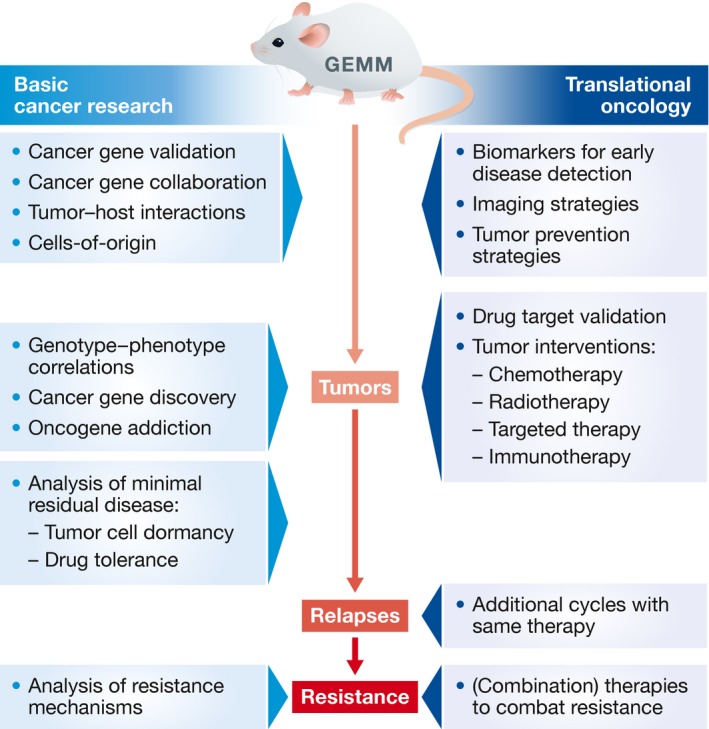
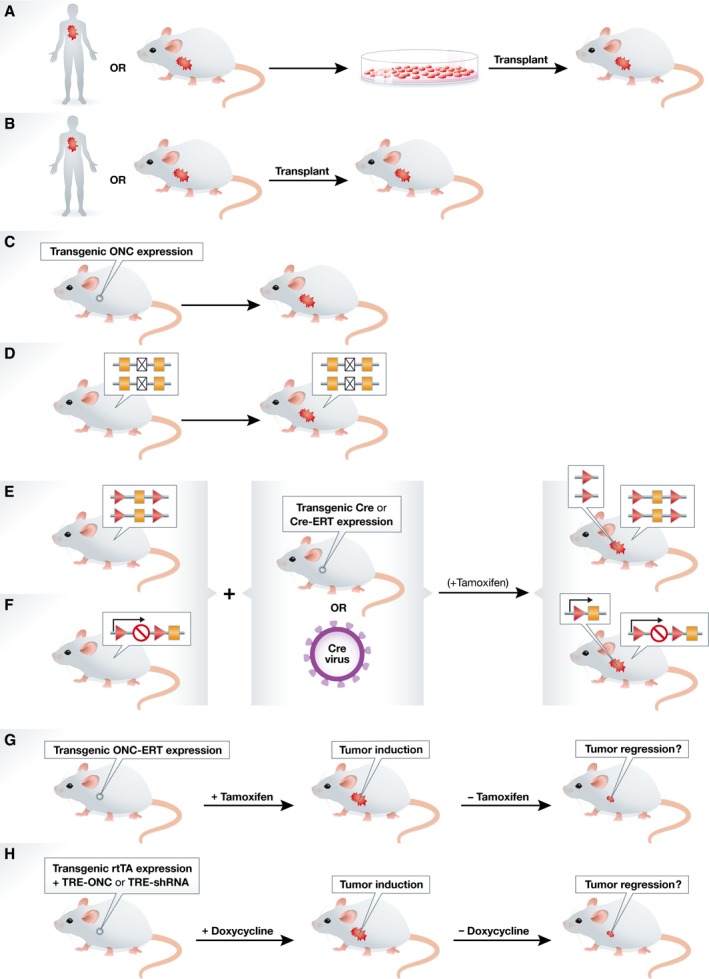
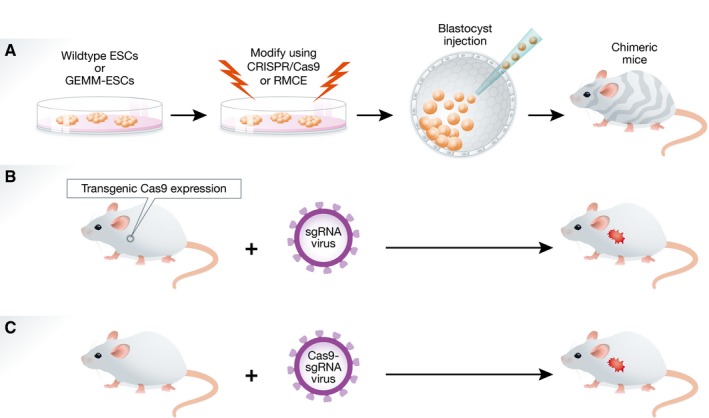
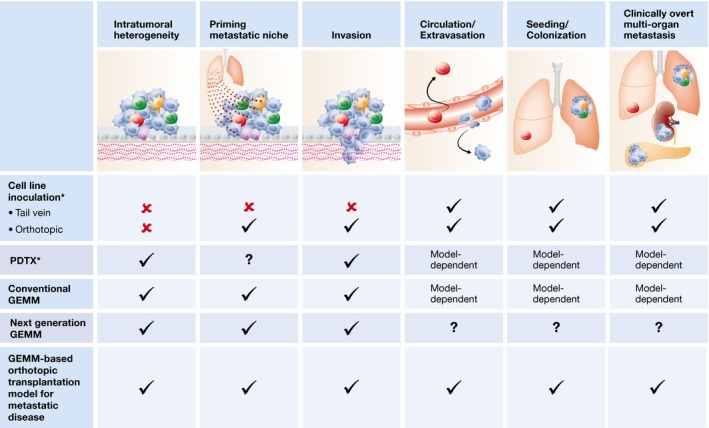
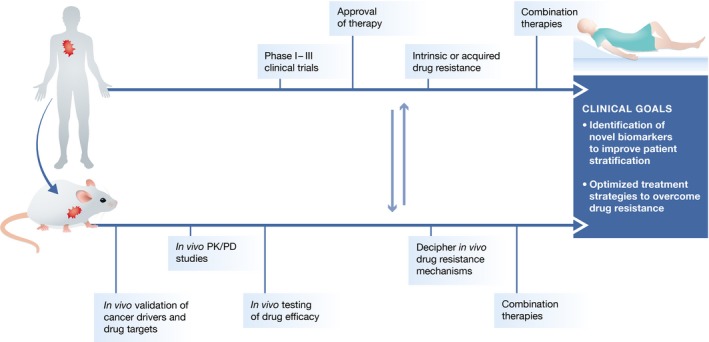
Genetically engineered mouse models (GEMMs) have contributed significantly to the field of cancer research. In contrast to cancer cell inoculation models, GEMMs develop de novo tumors in a natural immune‐proficient microenvironment. Tumors arising in advanced GEMMs closely mimic the histopathological and molecular features of their human counterparts, display genetic heterogeneity, and are able to spontaneously progress toward metastatic disease. As such, GEMMs are generally superior to cancer cell inoculation models, which show no or limited heterogeneity and are often metastatic from the start. Given that GEMMs capture both tumor cell‐intrinsic and cell‐extrinsic factors that drive de novo tumor initiation and progression toward metastatic disease, these models are indispensable for preclinical research. GEMMs have successfully been used to validate candidate cancer genes and drug targets, assess therapy efficacy, dissect the impact of the tumor microenvironment, and evaluate mechanisms of drug resistance. In vivo validation of candidate cancer genes and therapeutic targets is further accelerated by recent advances in genetic engineering that enable fast‐track generation and fine‐tuning of GEMMs to more closely resemble human patients. In addition, aligning preclinical tumor intervention studies in advanced GEMMs with clinical studies in patients is expected to accelerate the development of novel therapeutic strategies and their translation into the clinic.
Overview
The claims and statistics of this paper haven’t been checked yet.
Free: it reads the open-access text and checks the first 5 claims that cite a source we can check. Create a free account to check every claim.
Integrity signals
Registry
Cites
Statistics
Figures
Verification
Claims the paper makes
The claims and statistics of this paper haven’t been checked yet.
Free: it reads the open-access text and checks the first 5 claims that cite a source we can check. Create a free account to check every claim.
Claims other papers make about this one
Each is checked against this paper’s own text: does it say what the citing paper says it does?
The source backs part of the claim, not all of it — or backs it for a different population, condition or comparison.
In the citing paper
“As a tumor will be cultivated in vivo within these animals, it is also able to better mimic the molecular and histopathological features of cancer [40,41].”
From Microfluidic modelling of the tumor microenvironment for anti-cancer drug development (2019) · cites this paper as [40]
Experimental — accuracy not yet measuredIn the citing paper
“GEMMs are powerful tools for studying the pathogenesis of cancer and examining the systemic effects of vitamin C in vivo113.”
From Targeting cancer vulnerabilities with high-dose vitamin C (2019) · cites this paper as [113]
Self-check
Percentages, sums and reported differences re-computed from the paper’s own numbers.
The self-check needs the paper’s full text.
Citations
Cites
PD-1 and PD-L1 Immune Checkpoint Blockade to Treat Breast Cancer
Hartkopf, A. D., Taran, F.-A., Wallwiener, M., Walter, C. B., Krämer, B., Grischke, E.-M., & Brucker, S. Y. (2016) · Breast Care · doi:10.1159/000453569 · Cited by 30,845
Multiplex Genome Engineering Using CRISPR/Cas Systems
Cong, L., Ran, F. A., Cox, D., Lin, S., Barretto, R., Habib, N., Hsu, P. D., Wu, X., Jiang, W., Marraffini, L. A., et al. (2013) · Science · doi:10.1126/science.1231143 · Cited by 15,339 · cited 2×
“These approaches have now been outperformed by the development of CRISPR/Cas9 systems for genome editing (Cong et al , 2013), which have revolutionized biological research over the past 3 years and are considered the biggest game changer since PCR.”
Adverse Renal Effects of Immune Checkpoint Inhibitors: A Narrative Review
Wanchoo, R., Karam, S., Uppal, N. N., Barta, V. S., Deray, G., Devoe, C., Launay-Vacher, V., Jhaveri, K. D., & on behalf of Cancer and Kidney International Network Workgroup on Immune Checkpoint Inhibitors (2017) · American Journal of Nephrology · doi:10.1159/000455014 · Cited by 15,256
Improved Survival with Ipilimumab in Patients with Metastatic Melanoma
Hodi, F. S., O'Day, S. J., McDermott, D. F., Weber, R. W., Sosman, J. A., Haanen, J. B., Gonzalez, R., Robert, C., Schadendorf, D., Hassel, J. C., et al. (2010) · New England Journal of Medicine · doi:10.1056/nejmoa1003466 · Cited by 15,155 · cited 1×
“…in patients with advanced melanoma and lung cancer confirm the remarkable potential of immune checkpoint blockade, including anti-CTLA-4 and anti-PD-1, to enhance effective anti-tumor immunity and to improve survival in a proportion of the patients (Hodi et al , 2010; Topalian et al , 2012, 1).”
Safety, activity, and immune correlates of anti–PD-1 antibody in cancer
Topalian, S. L., Hodi, F. S., Brahmer, J. R., Gettinger, S. N., Smith, D. C., McDermott, D. F., Powderly, J. D., Carvajal, R. D., Sosman, J. A., Atkins, M. B., et al. (2012) · New England Journal of Medicine · doi:10.1056/nejmoa1200690 · Cited by 12,628 · cited 1×
“…in patients with advanced melanoma and lung cancer confirm the remarkable potential of immune checkpoint blockade, including anti-CTLA-4 and anti-PD-1, to enhance effective anti-tumor immunity and to improve survival in a proportion of the patients (Hodi et al , 2010; Topalian et al , 2012, 1).”
Microenvironmental regulation of tumor progression and metastasis
Quail, D. F., & Joyce, J. A. (2013) · Nature Medicine · doi:10.1038/nm.3394 · Cited by 7,994 · cited 1×
“The metastatic cascade is a complex multi-step process managed by a constant crosstalk between cancer cells and their microenvironment (Quail & Joyce, 2013; McAllister & Weinberg, 2014).”
The future of immune checkpoint therapy
Sharma, P., & Allison, J. P. (2015) · Science · doi:10.1126/science.aaa8172 · Cited by 4,878 · cited 1×
“However, even though durable responses are observed in some cases, a large proportion of cancer patients does not show clinical benefit (Sharma & Allison, 2015).”
In Vivo Activation of the p53 Pathway by Small-Molecule Antagonists of MDM2
Vassilev, L. T., Vu, B. T., Graves, B., Carvajal, D., Podlaski, F., Filipovic, Z., Kong, N., Kammlott, U., Lukacs, C., Klein, C., et al. (2004) · Science · doi:10.1126/science.1092472 · Cited by 4,661 · cited 3×
“Genetic studies in GEMMs with reversible inactivation of p53 have shown that restoration of p53 leads to rapid regression of established tumors (Martins et al , 2006; Ventura et al , 2007; Xue et al , 2007), providing strong rationale for designing anti-cancer drugs that restore p53 function by inhibiting MDM2 (Vassil…”
Kalluri, R., & Zeisberg, M. (2006) · Nature Reviews Cancer · doi:10.1038/nrc1877 · Cited by 4,538 · cited 1×
“Moreover, fibroblasts are a source of various soluble mediators including matrix metalloproteinases (MMPs), which enable ECM turnover, reinforcing their crucial role in maintaining ECM homeostasis (Kalluri & Zeisberg, 2006).”
Tumor-Associated Macrophages: From Mechanisms to Therapy
Noy, R., & Pollard, J. W. (2014) · Immunity · doi:10.1016/j.immuni.2014.06.010 · Cited by 4,089 · cited 1×
“Since then the tumor-promoting roles of inflammation-induced tumor-associated macrophages (TAMs) (Lin et al , 2001; Noy & Pollard, 2014) and neutrophils (Jamieson et al , 2012; Bald et al , 2014; Coffelt et al , 2015, 2016; Wculek & Malanchi, 2015) have been described in several studies.”
Cited by
Top 10 Challenges in Cancer Immunotherapy
Hegde, P. S., & Chen, D. S. (2020) · Immunity · doi:10.1016/j.immuni.2019.12.011 · Cited by 2,238
Consensus guidelines for the definition, detection and interpretation of immunogenic cell death
Galluzzi, L., Vitale, I., Warren, S., Adjemian, S., Agostinis, P., Martinez, A. B., Chan, T. A., Coukos, G., Demaria, S., Deutsch, E., et al. (2020) · Journal for ImmunoTherapy of Cancer · doi:10.1136/jitc-2019-000337 · Cited by 1,119
Intratumor Heterogeneity: The Rosetta Stone of Therapy Resistance
Marusyk, A., Janiszewska, M., & Polyak, K. (2020) · Cancer Cell · doi:10.1016/j.ccell.2020.03.007 · Cited by 1,009
“However, next-generation GEMM are designed to more accurately mimic human cancers, including ITH (Kersten et al., 2017).”
MethodGenetics and biology of prostate cancer
Wang, G., Zhao, D., Spring, D. J., & DePinho, R. A. (2018) · Genes & Development · doi:10.1101/gad.315739.118 · Cited by 750
“Also, in vivo RNAi technology, particularly inducible shRNA expression in transgenic mice, enables time- and tissuespecific control of silencing of gene expression and affords an alternative gene inactivation approach to identify novel genes involved in tumor suppression or therapy resistance (Kersten et al. 2017).”
BackgroundCancer-Cell-Intrinsic Mechanisms Shaping the Tumor Immune Landscape
Wellenstein, M. D., & de Visser, K. E. (2018) · Immunity · doi:10.1016/j.immuni.2018.03.004 · Cited by 589
“For these reasons, mechanistic studies in relevant GEMMs that mimic the development, heterogeneity and progression of human tumors in an immune-proficient setting are key to understand how cancer cell-intrinsic properties can dictate the tumor immune landscape (Kersten et al., 2017).”
Background
Metadata
- Authors
- Kersten, K., de Visser, K. E., van Miltenburg, M. H., & Jonkers, J.
- Affiliations
- The Netherlands Cancer Institute (NL)
- Corresponding author
- Jonkers, Jos
- Venue
- EMBO Molecular Medicine
- Published
- 2016-12-27
- Volume
- 9
- Issue
- 2
- Pages
- 137-153
- ISSN
- 1757-4676 (ISSN-L)
- 1757-4684
- PMC
- PMC5286388
- OpenAlex
- W2563661701
- Semantic Scholar
- 157896602a8b1e213e59d905c681094819be5e34
- Cited by
- 502
- References
- 168
- Citations by year
- 2026: 53 · 2025: 47 · 2024: 52 · 2023: 69 · 2022: 75 · 2021: 61 · 2020: 59 · 2019: 39 · 2018: 32 · 2017: 13 · 2016: 2
- FWCI
- 2.88
- Type
- journal article
- Language
- en
- Open access
- gold
- doi.org
- Licence
- other-oa
- creativecommons.org/licenses/by/4.0/ (tdm)
- creativecommons.org/licenses/by/4.0/ (vor)
- Locations
- EMBO Molecular Medicine (publishedVersion, other-oa)
- PubMed Central (publishedVersion, cc-by)
- PubMed (publishedVersion)
- DOAJ (DOAJ: Directory of Open Access Journals) (submittedVersion)
- Funders
- Dutch Cancer Society (5220, 6532, 7048, 7589, 7835, 7877)
- Nederlandse Organisatie voor Wetenschappelijk Onderzoek (93512009, 91814643, National Roadmap grant for Large‐scale Research Facilities)
- Worldwide Cancer Research (14‐0288)
- European Union Seventh Framework Program (260791, 312325, MCA‐ITN 317445)
- European Research Council (319661, 615300)
- Beug Foundation for Metastasis Research
- EMBO Young Investigator
- Topics
- Health Sciences › Medicine › Oncology › Cancer Cells and Metastasis
- Life Sciences › Biochemistry, Genetics and Molecular Biology › Cancer Research › Cancer Genomics and Diagnostics
- Health Sciences › Medicine › Oncology › Cancer-related Molecular Pathways
- Keywords
- genetically engineered mouse models, cancer research, tumor microenvironment, metastasis, preclinical cancer models, drug target validation, drug resistance, tumor heterogeneity, translational oncology
- MeSH terms
- Animals, Disease Models, Animal, Humans, Medical Oncology, Neoplasms, Animals, Genetically Modified, Mice
About these checks
Registry, retraction, Cites and statistics results are computed, not judged, with one exception: a printed reference that no index lists is read once by a model before it counts as a citation error. Claims are extracted by a model and kept only when their quote appears verbatim in the text; each cited source is then checked, with a model’s help, for whether it says what the claim relies on. Those verdicts can be wrong — read the claim’s quote and the cited source before relying on one.
Statistics and arithmetic are recomputed, not judged.
Confidence bands are shown only for fields calibrated on our annotated test set. None is calibrated yet, so no band is shown.
What counts as a claim ›How we measure confidence ›How we check this ›
Are you an author, or do you see a problem with this page? Request a review
Data sources
Bibliographic data: Semantic Scholar, OpenAlex, Crossref.
Contains information from the Semantic Scholar Academic Graph Datasets, made available under the ODC Attribution License (ODC-BY 1.0).
Semantic Scholar’s data is described in: Kinney, R., et al. (2023). The Semantic Scholar Open Data Platform. arXiv:2301.10140.
