

The DOI matches its Crossref record; 114 of the 114 references it cites were found in a registry or an index.
Bilateral inferior petrosal sinus sampling
Open accessAbstract
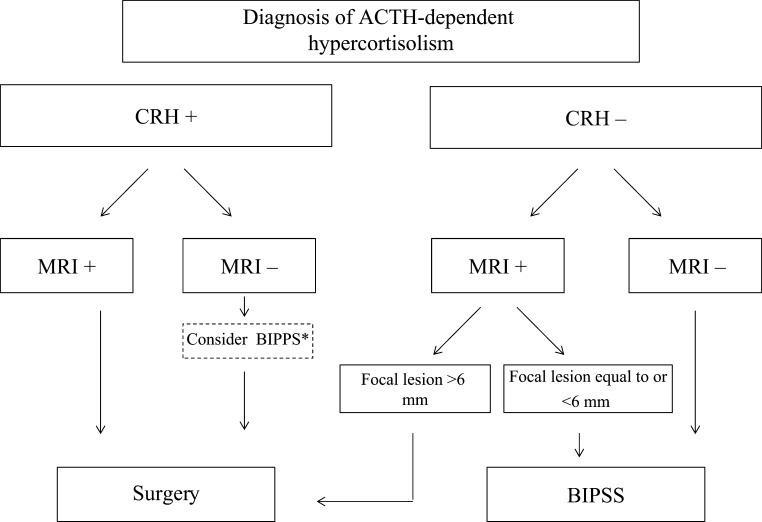
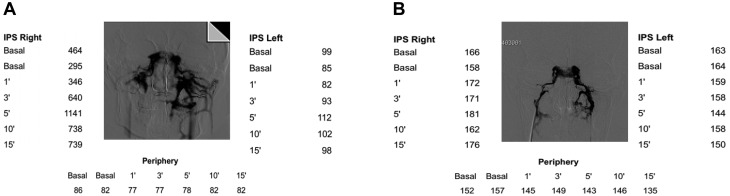
Simultaneous bilateral inferior petrosal sinus sampling (BIPSS) plays a crucial role in the diagnostic work-up of Cushing’s syndrome. It is the most accurate procedure in the differential diagnosis of hypercortisolism of pituitary or ectopic origin, as compared with clinical, biochemical and imaging analyses, with a sensitivity and specificity of 88–100% and 67–100%, respectively. In the setting of hypercortisolemia, ACTH levels obtained from venous drainage of the pituitary are expected to be higher than the levels of peripheral blood, thus suggesting pituitary ACTH excess as the cause of hypercortisolism. Direct stimulation of the pituitary corticotroph with corticotrophin-releasing hormone enhances the sensitivity of the procedure. The procedure must be undertaken in the presence of hypercortisolemia, which suppresses both the basal and stimulated secretory activity of normal corticotrophic cells: ACTH measured in the sinus is, therefore, the result of the secretory activity of the tumor tissue. The poor accuracy in lateralization of BIPSS (positive predictive value of 50–70%) makes interpetrosal ACTH gradient alone not sufficient for the localization of the tumor. An accurate exploration of the gland is recommended if a tumor is not found in the predicted area. Despite the fact that BIPSS is an invasive procedure, the occurrence of adverse events is extremely rare, particularly if it is performed by experienced operators in referral centres.
Overview
The claims and statistics of this paper haven’t been checked yet.
Run the check — free, no account needed. It reads the open-access text and checks the sources it cites.
Integrity signals
Registry
Cites
Statistics
Figures
Verification
Claims the paper makes
The claims and statistics of this paper haven’t been checked yet.
Run the check — free, no account needed. It reads the open-access text and checks the sources it cites.
Claims other papers make about this one
Each is checked against this paper’s own text: does it say what the citing paper says it does?
The cited source says what the claim attributes to it.
In the citing paper
“Sensitivity can be increased by obtaining ACTH levels under CRH stimulation (1, 76, 78).”
From Approach to the Patient: Diagnosis of Cushing Syndrome (2022) · cites this paper as [78]
Self-check
Percentages, sums and reported differences re-computed from the paper’s own numbers.
The self-check needs the paper’s full text.
Citations
Cites
Diagnosis and complications of Cushing’s syndrome: a consensus statement
Arnaldi, G., Angeli, A., Atkinson, A. B., Bertagna, X., Cavagnini, F., Chrousos, G. P., Fava, G. A., Findling, J. W., Gaillard, R. C., Grossman, A. B., et al. (2003) · The Journal of Clinical Endocrinology & Metabolism · doi:10.1210/jc.2003-030871 · Cited by 1,362
Oldfield, E. H., Doppman, J. L., Nieman, L. K., Chrousos, G. P., Miller, D. L., Katz, D. A., Cutler, G. B., & Loriaux, D. L. (1991) · New England Journal of Medicine · doi:10.1056/nejm199109263251301 · Cited by 855
Ilias, Ι., Torpy, D. J., Pacák, K., Mullen, N., WESLEY, R. A., & Nieman, L. K. (2005) · The Journal of Clinical Endocrinology & Metabolism · doi:10.1210/jc.2004-2527 · Cited by 714
Cushing's syndrome in children and adolescents. Presentation, diagnosis, and therapy.
Magiakou, M. A., Mastorakos, G., Oldfield, E. H., Gomez, M. T., Doppman, J. L., Cutler, G. B., Nieman, L. K., & Chrousos, G. P. (1994) · New England Journal of Medicine · doi:10.1056/nejm199409083311002 · Cited by 430
Cushing's syndrome: a review of diagnostic tests.
Crapo, L. (1979) · Metabolism · doi:10.1016/0026-0495(79)90097-0 · Cited by 393
The Diagnosis and Differential Diagnosis of Cushing's Syndrome and Pseudo-Cushing's States
Newell-Price, J. D. C. (1998) · Endocrine Reviews · doi:10.1210/er.19.5.647 · Cited by 360
Oldfield, E., Chrousos, G., Schulte, H. M., Schaaf, M., Pe, M., Ag, K., Cutler, G. B., Loriaux, D. L., & Doppman, J. (1985) · New England Journal of Medicine · doi:10.1056/nejm198501103120207 · Cited by 313
The Cushing Syndrome: An Update on Diagnostic Tests
Kaye, T. B., & Crapo, L. M. (1990) · Annals of Internal Medicine · doi:10.7326/0003-4819-76-3-112-6-434 · Cited by 302
Howlett, T. A., Drury, P., Perry, L., Doniach, I., REES, L. H., & BESSER, G. M. (1986) · Clinical Endocrinology · doi:10.1111/j.1365-2265.1986.tb01667.x · Cited by 299
Cushing’s Syndrome: important issues in diagnosis and management
Findling, J. W., & Raff, H. (2006) · The Journal of Clinical Endocrinology & Metabolism · doi:10.1210/jc.2006-0997 · Cited by 294
Research works printed but not linked: 6
- [12]Hermus AR Pieters GF Pesman GJ Smals AG Benraad TJ Kloppenborg PW. The corticotropin-releasing-hormone test vs. the high-dose dexamethasone test in the differential diagnosis of Cushing’s syndrome. Lancet 1986 2 540– 544. (10.1016/s0140-6736(86)90113-3) 2875282 · DOI
- [38]Schulte HM Allolio B Gunther RW Benker G Winkelmann W Hollmann JP Windeck R Reinwein D. Simultaneous bilateral catheterization of the inferior petrosal sinus in Cushing’s syndrome. ACTH determination for the diagnosis and location of the side of a hypophyseal microadenoma before and after administration of corticotropin-releasing hormone. Deutsche Medizinische Wochenschrift 1987 112 1767– 1771. (10.1055/s-2008-1068326) 2824162 · DOI
- [88]Shi X Sun Q Bian L Zhao W Shen J Wang W Ning G Assessment of bilateral inferior petrosal sinus sampling in the diagnosis and surgical treatment of the ACTH-dependent Cushing’s syndrome: a comparison with other tests. Neuro Endocrinology Letters 2011 32 865– 873. 22286783
- [95]Colao A Merola B Tripodi FS Di Sarno A Esposito V Marzullo P La Tessa G Spaziante R Lombardi G. Simultaneous and bilateral inferior petrosal sinus sampling for the diagnosis of Cushing’s syndrome: comparison of multihormonal assay, baseline multiple sampling and ACTH-releasing hormone test. Hormone Research 1993 40 209– 16. (10.1159/000183797) 8112722 · DOI
- [115]Teramoto A Nemoto S Takakura K Sasaki Y Machida T. Selective venous sampling directly from cavernous sinus in Cushing’s syndrome. Journal of Clinical Endocrinology and Metabolism 1993 76 637– 641. (10.1210/jc.76.3.637) 8383143 · DOI
- [119]Doppman JL Nieman LK Chang R Yanovski J Cutler GB Jr Chrousos GP Oldfield EH. Selective venous sampling from the cavernous sinuses is not a more reliable technique than sampling from the inferior petrosal sinuses in Cushing’s disease. Journal of Clinical Endocrinology and Metabolism 1995 80 2485– 2489. (10.1210/jc.80.8.2485) 7629247 · DOI
Cited by
Sorted by citations
Approach to the Patient: Diagnosis of Cushing Syndrome
Savas, M., Mehta, S., Agrawal, N., van Rossum, E. F. C., & Feelders, R. A. (2022) · The Journal of Clinical Endocrinology & Metabolism · doi:10.1210/clinem/dgac492 · Cited by 91
“Sensitivity can be increased by obtaining ACTH levels under CRH stimulation (1, 76, 78).”
BackgroundDiagnostic tests for Cushing’s syndrome differ from published guidelines: data from ERCUSYN
Valassi, E., Franz, H., Brue, T., Feelders, R. A., Netea-Maier, R., Tsagarakis, S., Webb, S. M., Yaneva, M., Reincke, M., Droste, M., et al. (2017) · European Journal of Endocrinology · doi:10.1530/eje-16-0967 · Cited by 58
Perlman, J. E., Johnston, P. C., Hui, F., Mulligan, G., Weil, R. J., Recinos, P. F., Yogi-Morren, D., Salvatori, R., Mukherjee, D., Gallia, G., et al. (2021) · The Journal of Clinical Endocrinology & Metabolism · doi:10.1210/clinem/dgab012 · Cited by 50
Varlamov, E., Hinojosa-Amaya, J. M., Stack, M., & Fleseriu, M. (2019) · Pituitary · doi:10.1007/s11102-019-00972-w · Cited by 48
Bilateral inferior petrosal sinus sampling: experience in 327 patients
Deipolyi, A. R., Bailin, A., Hirsch, J. A., Walker, T. G., & Öklü, R. (2016) · Journal of NeuroInterventional Surgery · doi:10.1136/neurintsurg-2015-012164 · Cited by 53
Hypercortisolemia Recurrence in Cushing’s disease; a diagnostic challenge
Hinojosa-Amaya, J. M., Varlamov, E. V., McCartney, S., & Fleseriu, M. (2019) · Frontiers in Endocrinology · doi:10.3389/fendo.2019.00740 · Cited by 45
Deipolyi, A., Alexander, B. H., Rho, J., Hirsch, J., & Oklu, R. (2014) · Journal of NeuroInterventional Surgery · doi:10.1136/neurintsurg-2014-011262 · Cited by 33
Adrenal cortical hyperplasia: diagnostic workup, subtypes, imaging features and mimics
Agrons, M. M., Jensen, C. T., Habra, M. A., Menias, C. O., Shaaban, A. M., Wagner‐Bartak, N. A., Roman-Colon, A. M., & Elsayes, K. M. (2017) · British Journal of Radiology · doi:10.1259/bjr.20170330 · Cited by 40
Law, M., Wang, R., Liu, C.-S. J., Shiroishi, M., Carmichael, J., Mack, W., Weiss, M., Wang, D. J. J., Toga, A., & Zada, G. (2018) · Journal of Neurosurgery · doi:10.3171/2017.9.jns171969 · Cited by 31
Inferior petrosal sinus sampling in Cushing’s syndrome: usefulness and pitfalls
Vassiliadi, D. A., Mourelatos, P., Kratimenos, T., & Tsagarakis, S. (2021) · Endocrine · doi:10.1007/s12020-021-02764-4 · Cited by 31
Joanna, P.-T., Przybylik‐Mazurek, E., Rzepka, E., Pach, D., Sowa‐Staszczak, A., Gilis‐Januszewska, A., & Hubalewska–Dydejczyk, A. (2020) · PLoS ONE · doi:10.1371/journal.pone.0242679 · Cited by 39
“The gold standard in the diagnosis of EAS is BIPSS and confirmation of EAS requires positive staining for ACTH or CRH in tumor cells [4, 10, 20, 54, 58].”
BackgroundDouble pituitary adenomas in a large surgical series
Zieliński, G., Sajjad, E., Maksymowicz, M., Pękul, M., & Koziarski, A. (2019) · Pituitary · doi:10.1007/s11102-019-00996-2 · Cited by 28
Circulating Plasma microRNA to Differentiate Cushing's Disease From Ectopic ACTH Syndrome
Belaya, Z. E., Магомедовна, Х. П., Nonn, L., Nikitin, A. G., Solodovnikov, A. G., Sitkin, I. I., Grigoriev, A. Y., Pikunov, M., Лапшина, А. М., Rozhinskaya, L. Y., et al. (2020) · Frontiers in Endocrinology · doi:10.3389/fendo.2020.00331 · Cited by 33
“However, the BIPSS procedure is invasive, costly and has certain contraindications and potential complications (7).”
BackgroundParaneoplastic Cushing syndrome, case-series and review of the literature
Deldycke, A., Haenebalcke, C., & Taes, Y. (2018) · Acta Clinica Belgica · doi:10.1080/17843286.2017.1373927 · Cited by 24
Two types of ectopic Cushing syndrome or a continuum? Review
Castro, M. A., & Marazuela, M. (2018) · Pituitary · doi:10.1007/s11102-018-0894-2 · Cited by 31
Machado, M. C., Fragoso, M. C. B. V., Moreira, A. C., Boguszewski, C. L., Vieira Neto, L., Naves, L. A., Vilar, L., Araújo, L. A. D., Czepielewski, M. A., Gadelha, M. R., et al. (2016) · Archives of Endocrinology and Metabolism · doi:10.1590/2359-3997000000174 · Cited by 21
Losa, M., Allora, A., Panni, P., Righi, C., & Mortini, P. (2019) · Journal of Endocrinological Investigation · doi:10.1007/s40618-019-1006-5 · Cited by 20
Clinical Guidelines for the Diagnosis and Treatment of Cushing's Disease in Korea
Hur, K. Y., Kim, J. H., Kim, B.-J., Kim, M., Lee, E. J., & Kim, S.-W. (2015) · Endocrinology and Metabolism · doi:10.3803/enm.2015.30.1.7 · Cited by 23
Second-Line Tests in the Diagnosis of Adrenocorticotropic Hormone-Dependent Hypercortisolism
Pinelli, S., Barbot, M., Scaroni, C. M., & Ceccato, F. (2021) · Annals of Laboratory Medicine · doi:10.3343/alm.2021.41.6.521 · Cited by 23
“verse effects, including deep venous thrombosis, pulmonary embolism, and brain injury, are rare [6, 41].”
BackgroundFerrante, E., Barbot, M., Serban, A., Ceccato, F., Carosi, G., Lizzul, L., Sala, E., Daniele, A., Indirli, R., Cuman, M., et al. (2021) · Journal of Endocrinological Investigation · doi:10.1007/s40618-021-01695-1 · Cited by 18
Bujko, M., Kober, P., Boresowicz, J., Rusetska, N., Żeber‐Lubecka, N., Paziewska, A., Pękul, M., Zieliński, G., Styk, A., Kunicki, J., et al. (2021) · Journal of Clinical Medicine · doi:10.3390/jcm10030375 · Cited by 20
“Bilateral inferior petrosal sinus sampling was used as a routine investigation tool in any patient with proven ACTH-dependent Cushing’s syndrome and negative or equivocal MRI findings (intrasellar lesion ≤ 6 mm) [21]).”
MethodThe definition of remission and recurrence of Cushing’s disease
Hinojosa‐Amaya, J. M., & Ramos, D. C. (2021) · Best Practice & Research Clinical Endocrinology & Metabolism · doi:10.1016/j.beem.2021.101485 · Cited by 27
Pereira, C. A., Ferreira, L., Amaral, C., Alves, V., Xavier, J., Ribeiro, I., & Cardoso, H. (2019) · Experimental and clinical endocrinology & diabetes · doi:10.1055/a-0981-5973 · Cited by 16
Factors Affecting Dexamethasone Suppression Test Results
Berlińska, A., Świątkowska-Stodulska, R., & Sworczak, K. (2019) · Experimental and clinical endocrinology & diabetes · doi:10.1055/a-1017-3217 · Cited by 14
“[16] Zampetti B, Grossrubatscher E, Dalino Ciaramella P et al.”
BackgroundDesmopressin test in the diagnosis and follow-up of cyclical Cushing's disease.
Leal-Cerro, A., Martín-Rodríguez, J. F., Ibáñez-Costa, A., Madrazo-Atutxa, A., Venegas-Moreno, E., León-Justel, A., García-Hernández, N., Luque, R., Castaño, J., Cano, D., et al. (2014) · Endocrinologia y Nutricion · doi:10.1016/j.endonu.2013.04.017 · Cited by 13
“DDAVP elicits marked ACTH and cortisol responses in the majority of CS patients with pituitary tumors, but generally not in healthy subjects, pseudo-Cushing’s, adrenal and ectopic Cushing’s patients, thus allowing the diagnosis and localization of the lesion with a sensitivity and specificity similar to that achieved…”
ResultCase report of a bilateral adrenal myelolipoma associated with Cushing disease
Park, S. Y., Kwak, M., Kim, H. J., Park, H., Suh, K., Yoo, M., Jin, S.-Y., Yun, S., & Byun, D. (2017) · Medicine · doi:10.1097/md.0000000000009455 · Cited by 12
Turan, H., Çatlı, G., Kardelen, A. D., Böber, E., Akıncı, A., Çetinkaya, S. Ç., Demirbaş, Ö., Er, E., Evliyaoğlu, S. O., Dündar, B. N., et al. (2021) · Journal of Clinical Research in Pediatric Endocrinology · doi:10.4274/jcrpe.galenos.2021.2021.0152 · Cited by 12
Qiao, J., Li, J., Zhang, W., Wang, C., Li, J., Jiang, S., Tan, H., Chen, Y., Liu, H., Cai, B., et al. (2021) · Endocrine Journal · doi:10.1507/endocrj.ej20-0837 · Cited by 16
“BIPSS, an invasive examination, is costly and time-consuming, requires a dedicated neurora‐ diological team, and may also lead to some complica‐ tions [9].”
BackgroundTan, H.-W., Chen, D.-W., Yu, Y.-R., Yu, K., He, W.-M., Cai, B., Jiang, S., Tang, Y., Tong, N.-W., & An, Z. (2020) · BMC Endocrine Disorders · doi:10.1186/s12902-020-00590-9 · Cited by 10
Secretory tumors of the pituitary gland: a clinical biochemistry perspective
Gounden, V., Rampursat, Y., & Jialal, I. (2018) · Clinical Chemistry and Laboratory Medicine (CCLM) · doi:10.1515/cclm-2018-0552 · Cited by 14
“Technique with regards to catheterization and anatomical variants with regards to pituitary venous drainage may also affect performance of test and the testing should be undertaken in centers with expertise in this area [90].”
BackgroundSun, H., Yedinak, C., Ozpinar, A., Anderson, J. C., Dogan, A., Delashaw, J., & Fleseriu, M. (2015) · Journal of Neurological Surgery—Part B · doi:10.1055/s-0034-1543970 · Cited by 10
de Almeida, T. S., Rodrigues, T. D. C., Costenaro, F., Scaffaro, L. A., Farenzena, M., Gastaldo, F., & Czepielewski, M. A. (2023) · Frontiers in Endocrinology · doi:10.3389/fendo.2023.1224001 · Cited by 12
Attri, B., Goyal, A., Kalaivani, M., Kandasamy, D., Gupta, Y., Agarwal, S., Shamim, S. A., Damle, N., Dhingra, A., Jyotsna, V. P., et al. (2023) · Endocrine · doi:10.1007/s12020-022-03298-z · Cited by 13
“A central to peripheral ACTH ratio >2 in the basal state and >3 in the stimulated state was considered suggestive of a pituitary source [20].”
BackgroundMethodPasternak-Pietrzak, K., Moszczyńska, E., Jurkiewicz, E., & Szalecki, M. (2020) · Endokrynologia Polska · doi:10.5603/ep.a2019.0040 · Cited by 11
“In contrast to this result, four other analyses of smaller groups [30, 69, 75, 76]: 41, 27, 11, and 17 children, stated that ACTH sampling gives a better prediction of the site of the microadenoma than that by pituitary MR imaging.”
BackgroundResultYokoyama, K., Matsuki, M., Isozaki, T., Ito, K., Imokawa, T., Ozawa, A., Kimura, K., Tsuchiya, J., & Tateishi, U. (2025) · Japanese Journal of Radiology · doi:10.1007/s11604-025-01732-6 · Cited by 8
“If the MRI results are inconclusive, bilateral inferior petrosal sinus sampling (BIPSS) confirms the pituitary source of ACTH, with high sensitivity and specificity for ACTH-dependent CD [43–45].”
Shi, X.-L., Du, T.-T., Zhu, D., Ma, D.-L., Dong, K., Peng, X., Huang, J., Lei, T., Yu, X., Chen, J., et al. (2021) · Endocrine · doi:10.1007/s12020-021-02891-y · Cited by 7
Adrenocortical carcinoma masquerading as Cushing's disease
Jarial, K. D., Walia, R., Kumar, S., & Bhansali, A. (2017) · BMJ Case Reports · doi:10.1136/bcr-2016-217519 · Cited by 7
The Human Hypothalamus: Anatomy, Dysfunction and Disease Management
Uwaifo, G. (2021) · doi:10.1007/978-3-030-62187-2 · Cited by 7
“Intracranial germinomas occur most frequently in the pineal and suprasellar region but can also have a primary intrasellar origin [65, 66].”
BackgroundMäkinen, V.-N., Madsen, S. H., Riis-Vestergaard, M. J., Bjerre, M., Pedersen, S. B., Asa, S. L., Rolighed, L., Jørgensen, J. O. L., & Ørnstrup, M. J. (2023) · Endocrinology Diabetes and Metabolism Case Reports · doi:10.1530/edm-23-0057 · Cited by 6
Pediatric Interventional Neuroradiology: Opportunities and Challenges
Jerele, C., Lovrič, D., & Kuhelj, D. (2023) · Children · doi:10.3390/children10040715 · Cited by 6
Slagboom, T. N. A., Stenvers, D., van de Giessen, E. M., Roosendaal, S., de Win, M. D., Bot, J., Aronica, E., Post, R., Hoogmoed, J., Drent, M., et al. (2023) · Journal of Clinical Medicine · doi:10.3390/jcm12082919 · Cited by 6
Tamrazi, A., Sundaresan, S., Gulati, A., Tan, F. J., Wadhwa, V., Bartlett, B. R., & Diaz, L. A. (2023) · Frontiers in Oncology · doi:10.3389/fonc.2023.916196 · Cited by 8
Ekanem, U., Olewnik, Ł., Porzionato, A., Macchi, V., Iwanaga, J., Loukas, M., Dumont, A., Caro, R. D., & Tubbs, R. (2022) · Anatomy & Cell Biology · doi:10.5115/acb.22.023 · Cited by 6
“formation of the inferior petrosal sinus [3-8].”
Ishida, A., Asakuno, K., Shiramizu, H., Yoshimoto, H., Nakase, K., Kato, M., Hirayama, M., Sato, H., Matsuo, S., Miki, N., et al. (2021) · Endocrine journal · doi:10.1507/endocrj.ej21-0156 · Cited by 6
Does concomitant prolactin measurement ıncrease the accuracy of ınferior petrosal sinus sampling?
Apaydin, T., Yasar, M., Baltacioglu, F., Haklar, G., & Gogas Yavuz, D. (2022) · Neuroradiology · doi:10.1007/s00234-021-02886-6 · Cited by 6
“Cavernous sampling has been reported to have greater sensitivity and specificity for the lateralization of adenomas compared with IPSS, and the accuracy to localize the adenoma has been reported to range between 82 and 91% [22, 32, 33].”
BackgroundMethodInfluentialDecaestecker, K., Wijtvliet, V., Coremans, P., & Doninck, N. V. (2019) · Endocrinology, Diabetes & Metabolism Case Reports · doi:10.1530/edm-19-0093 · Cited by 6
Jarial, K., Bhansali, A., Mukherjee, K., Pal, R., Gupta, V., Sharma, A., Vasishta, R., Sukumar, S., Sachdeva, N., & Walia, R. (2019) · Indian journal of endocrinology and metabolism · doi:10.4103/ijem.ijem_486_18 · Cited by 6
“Some studies have shown improved accuracy of prolactin-adjusted ACTH ratios for tumor localization during BIPSS.”
BackgroundInfluentialValizadeh, M., Abiri, B., Hosseinpanah, F., & Grossman, A. B. (2024) · Journal of Internal Medicine · doi:10.1111/joim.13789 · Cited by 9
“:P ratios) in patients with confirmed CD are reported in the range of 3%– 19% [69, 110, 111].”
BackgroundNiedra, H., Pečulis, R., Konrāde, I., Balcere, I., Romanovs, M., Steina, L., Stukēns, J., Sokolovska, J., Kloviņš, J., & Rovīte, V. (2022) · Frontiers in Endocrinology · doi:10.3389/fendo.2022.748152 · Cited by 6
Moszczyńska, E., Marczak, E., Szalecki, M., Kądziołka, K., Roszkowski, M., & Zagata-Lesnicka, P. (2021) · Frontiers in Endocrinology · doi:10.3389/fendo.2021.650967 · Cited by 8
“7% and 37% on imaging, usually <5 mm (5, 12, 16, 18, 28).”
BackgroundKumar, A., Kanwar, J., Bharti, N., Agrawal, V., Bhatia, E., & Yadav, S. (2020) · Endocrine Practice · doi:10.1016/j.eprac.2020.12.011 · Cited by 5
Cyclic Cushing's Disease in the Prepubertal Period—A Case Report and Review of Literature
Wędrychowicz, A., Hull, B., Kalicka-Kasperczyk, A., Zieliński, G., & Starzyk, J. (2019) · Frontiers in Endocrinology · doi:10.3389/fendo.2019.00701 · Cited by 7
“Although we did not perform bilateral inferior petrosal sinus sampling, this procedure can be more sensitive than pituitary imaging in localization of microadenomas and has been associated with improved cure rate by transsphenoidal selective adenomectomy (31).”
BackgroundManagement of Patients with Pseudo-Endocrine Disorders: A Case-Based Pocket Guide
Mcdermott, M. (2019) · doi:10.1007/978-3-030-22720-3 · Cited by 5
Tabuzo, M. M. B., Hernandez, M. A. L. U., Chua, A. E., Maningat, P., Chiu, H., & Jamora, R. D. (2024) · Medical Science · doi:10.3390/medsci12010016 · Cited by 4
“…procedure in the evaluation of hypercortisolism of pituitary or ectopic origin, relative to clinical, biochemical, and imaging analyses, with a sensitivity and specificity of 88–100% and 67–100%, respectively [41]; however, there is no available report of it being conducted in the Philippines.”
BackgroundThe effect of morphological variability of Dorello's canal on surgical procedures - a review.
Maślankal, K., Zielinska, N., Tubbs, R., Haładaj, R., Konschake, M., Niemiec, M., & Olewnik, Ł. (2022) · Annals of Anatomy · doi:10.1016/j.aanat.2022.151939 · Cited by 4
Malygina, A. A., Belaya, Z. E., Nikitin, A. G., Koshkin, P. A., Sitkin, I. I., Лапшина, А. М., Магомедовна, Х. П., Lutsenko, A. S., Аршалуйсовна, Т. Д., & Mel'nichenko, G. A. (2021) · Problems of Endocrinology · doi:10.14341/probl12817 · Cited by 4
Fernández, L. G., Ramos, R. J. A., Montenegro, A. M. R., Torrecilla, N. B., González, M. M., Moreno, D. M., Goñi, J. A., Weber, B., Guerra, A. L., Ishishi, Y. L. O., et al. (2021) · Endocrinología Diabetes y Nutrición · doi:10.1016/j.endinu.2020.10.013 · Cited by 4
Peterson, K. A., Burnette, C. D., Fargen, K., Brown, P., West, J., Tatter, S., & Wolfe, S. (2020) · Journal of Neurosurgery · doi:10.3171/2019.11.jns192374 · Cited by 4
Ghidoni, F., Madoglio, A., Chiloiro, S., di Bergamo, L. T., Vezzoli, M., Serioli, S., Cosentino, G., Saraceno, G., Lupi, I., Urbani, C., et al. (2026) · Neurosurgical review · doi:10.1007/s10143-026-04168-2 · Cited by 3
“Although conventional thresholds of ≥ 2.0 basally and ≥ 3.0 post-stimulation are widely referenced [55], multiple reports [56, 57] document center-level variability and support lower basal cut-offs to enhance sensitivity in appropriately selected patients.”
InfluentialSun, H., Wu, C., Hu, B., & Xiao, Y. (2023) · Frontiers in Endocrinology · doi:10.3389/fendo.2023.1238573 · Cited by 3
“Bilateral inferior petrosal sinus sampling (BIPSS) is a highly effective procedure for diagnosing pituitary sources of ACTH in CD (22, 23).”
BackgroundArdakani, M. A. T., Rabizadeh, S., Yadegar, A., Mohammadi, F., Reyhan, S. K., Qahremani, R., Ghanaati, H., Esteghamati, A., & Nakhjavani, M. (2023) · BMC Endocrine Disorders · doi:10.1186/s12902-023-01495-z · Cited by 3
“Due to its lower cost, availability, and comparable diagnostic accuracy, using DDAVP instead of CRH for BIPSS is an alternative [17, 18].”
BackgroundPediatric Interventional Neuroradiology
Requejo, F., Teplisky, D., Dutra, M., Mouratian, D. M., Kikano, R., Nguyen, T. N., & Abdalkader, M. (2023) · Seminars in neurology · doi:10.1055/s-0043-1771511 · Cited by 3
Bilateral inferior petrosal sinus sampling: Procedural data from a German single-center study
Augustin, A. M., Detomas, M., Hartung, V., Thurner, A., Tröger, V., Deutschbein, T., & Kickuth, R. (2022) · RöFo - Fortschritte auf dem Gebiet der Röntgenstrahlen und der bildgebenden Verfahren · doi:10.1055/a-2083-9942 · Cited by 3
“Reasons for this may be related to both technical causes as well as anatomical variants of the venous drainage pattern [16, 23].”
BackgroundChen, W., Chen, L., Pei, L., Zeng, R., Wu, L., Wang, C., Li, Y., Xiao, H., & Cao, X. (2022) · Neuroendocrinology · doi:10.1159/000526167 · Cited by 3
Bestepe, N., Ozdemir, D., Polat, B., Topaloğlu, O., Algın, O., Bal, E., Ersoy, R., & Çakır, B. (2021) · Clinical neurology and neurosurgery (Dutch-Flemish ed. Print) · doi:10.1016/j.clineuro.2021.106724 · Cited by 3
Incidentally detected sellar spine in a patient with Cushing’s syndrome: a case report
Lee, H.-J., Lee, Y., Baek, B., Yoon, W., & Kim, S. K. (2020) · Journal of International Medical Research · doi:10.1177/0300060520940159 · Cited by 3
“This is a highly accurate, minimally invasive procedure used to diagnose the pituitary source of ACTH oversecretion.(2,3) Sellar spine, a rare anatomical variant, is a bony spur extending anteriorly from the dorsum sellae.”
MethodHormone Excess Syndromes of the Hypothalamic-Pituitary Axis
Agrawal, N., Kim, H. H., Wright, K. E., & Mehta, S. (2020) · Contemporary Endocrinology · doi:10.1007/978-3-030-62187-2_10 · Cited by 2
Functional pituitary adenoma imaging
Hesse, L., & Haberbosch, L. (2026) · Reviews in Endocrine & Metabolic Disorders · doi:10.1007/s11154-026-10063-4 · Cited by 2
“In addition, it is not sufficiently reliable to lateralise tumour within the pituitary gland [5], with correct lateralization rates between 50—70% [30].”
Siddiq, F., Brooks, H., Demirtaş, E., Bhatti, I. A., Kasab, S. A., de Havenon, A., Novakovic, R., Mansour, O., Kenmuir, C., Hassan, A., et al. (2026) · Stroke · doi:10.1161/svin.125.002309 · Cited by 2
Clinical management of ectopic Cushing Syndrome in neuroendocrine neoplasms: a national survey
Laffi, A., Prinzi, A., di Dato, C., Feola, T., Medici, M., Colao, A., Faggiano, A., & Lania, A. (2025) · Frontiers in Endocrinology · doi:10.3389/fendo.2025.1690837 · Cited by 2
Changing face of Cushing’s disease over three decades in pituitary center
Muradov, İ., Şahin, S., Uysal, S., Sulu, C., Gunebakan, P., Tunc, A., Kocaman, B. B., Soltanova, L., Gazioğlu, N., Tanrıöver, N., et al. (2025) · Journal of Endocrinological Investigation · doi:10.1007/s40618-025-02702-5 · Cited by 3
Shivnani, P., Kasliwal, R., Goyal, G., Sharma, J., Balani, U., Gupta, P., Sharma, B. S., Yadav, D., Mishra, V., & Sharma, S. K. (2024) · Indian journal of endocrinology and metabolism · doi:10.4103/ijem.ijem_60_24 · Cited by 2
“[10] Pituitary MRI with gadolinium enhancement is the cornerstone of investigations in ACTH-dependent CS given the frequency of CD.”
InfluentialAbdominal pain in a patient with epistaxis, telangiectasias, and arteriovenous malformations
Damara, F., Alnahhal, K. I., Dehaini, H., Botek, G., Saati, A. A., Chaudhury, P., & Kirksey, L. (2024) · Cleveland Clinic journal of medicine · doi:10.3949/ccjm.91a.24042 · Cited by 2
Parro, I. M., Ortiz-Sánchez, D., Moreno, R. G. G., Gómez-Rioja, R., Martínez, R. F., & Álvarez-Escolá, C. (2022) · Advances in laboratory medicine · doi:10.1515/almed-2022-0088 · Cited by 2
“A higher ratio in one of the sinuses at any of the four time points confirms CD [3].”
BackgroundResultInfluentialPintado, M., Montiglia, P., Langleib, M., Sanchez, F., Varela, F., Lima, R., Vaz, M., & Pineyro, M. (2021) · doi:10.29193/rmu.37.2.10 · Cited by 2
“Clin Endocrinol (Oxf) 1996; 45(2):147-56.”
BackgroundInfluentialDing, L., Wang, B.-P., Chen, T.-T., Li, P., Guo, W., Fan, Y.-X., Fang, F., Cui, J., Dong, Z.-L., He, Q., et al. (2021) · Pituitary · doi:10.1007/s11102-021-01126-7 · Cited by 2
Hypothalamic–Pituitary–Adrenal Cortex Axis
Wilkinson, M., & Imran, S. A. (2018) · Cambridge University Press eBooks · doi:10.1017/9781108149938.006 · Cited by 3
Haq, K., Hannouneh, Z. A., Cervantes, C. E., & Hanouneh, M. (2024) · Cleveland Clinic Journal of Medicine · doi:10.3949/ccjm.91a.24002 · Cited by 1
“18 If the presence of a functional pituitary adenoma is confi rmed on IPSS, the patient should be referred to neurosurgery for adenoma resection.”
InfluentialGupta, S., Gandhi, A., Purohit, N., Sharma, A., Jain, S., & Srivastava, T. (2026) · Neurology India · doi:10.4103/neurol-india.neurol-india-d-25-00836 · Cited by 1
Crooke Cell Adenoma: Is Its Aggressiveness Overestimated? Evidence From a Single‐Centre Experience
Muradov, I., Şahin, S., Akpinar, S., Tunc, A., Kocaman, B. B., Soltanova, L., Saricoban, C. T., Çomunoğlu, N., Tanriover, N., Gazioğlu, N., et al. (2026) · Clinical Endocrinology · doi:10.1111/cen.70121 · Cited by 1
“All patients with pituitary adenomas smaller than 6 mm or with normal MRI findings underwent IPSS to differentiate central from ectopic sources of ACTH secretion [17].”
Sprenkeler, V. E., van Herwaarden, A. V., van de Ven, A. C., Kusters, B., Jenniskens, S., Netea-Maier, R., & de Laat, J. M. (2025) · Journal of neuroendocrinology · doi:10.1111/jne.70066 · Cited by 1
“9,16,17 To mitigate these limitations, prolactin measurements have been proposed to enhance IPSS outcomes.”
Белая, Ж. Е., Голоунина, О. О., Ситкин, И. И., Рожинская, Л. Я., Дегтярев, М. В., Трухина, Д. А., Бондаренко, Е. В., Лапшина, А. М., Мамедова, Е. О., Пржиялковская, Е. Г., et al. (2024) · Problemy Endokrinologii · doi:10.14341/probl13299 · Cited by 1
“В целом чувстви-тельность и специфичность процедуры колеблются от 88 до 100% и от 67 до 100% соответственно [24].”
Attri, B., Goyal, A., Kalaivani, M., Kandasamy, D., Gupta, Y., Agarwal, S., Shamim, S. A., Damle, N., Sharma, M. C., Jyotsna, V. P., et al. (2023) · Hormone and Metabolic Research · doi:10.1055/a-2236-0864 · Cited by 1
“Thus, the differential diagnosis into CD and EAS in this study was not based on the results of BIPSS or peripheral CRH stimulation tests, which lack 100 % accuracy [4, 5, 9].”
InfluentialÜnsal, Y. A., Gül, Ö. Ö., Ateş, C., Aydemir, E., Cander, S., Ersoy, C., Özpar, R., Hakyemez, B., & Ertürk, E. (2022) · The Neuroradiology Journal · doi:10.1177/19714009221126016 · Cited by 1
“7% in the literature.(22,23) Some factors are associated with a lower accuracy rate in lateralization-like anomalous petrosal sinus anatomy and catheter positioning.”
BackgroundFernández, L. G., Ramos, R. J. A., Montenegro, A. M. R., Torrecilla, N. B., González, M. M., Moreno, D. M., Goñi, J. A., Weber, B., Guerra, A. L., Ishishi, Y. L. O., et al. (2021) · Endocrinología Diabetes y Nutrición · doi:10.1016/j.endien.2021.10.006 · Cited by 1
Possible pitfalls in the workup of ectopic ACTH secretion illustrated by four rare cases
Boers, J., Oldenburg-Ligtenberg, P. C., Stades, A. M. E., & van Treijen, M. J. C. (2019) · BMJ Case Reports · doi:10.1136/bcr-2019-231067 · Cited by 2
IPSS does not impact management in Cushing's Disease when a pituitary tumor is visible on MRI
Lundholm, M. D., Pantalone, K., Rao, P. P. R., Hamrahian, A., Kshettry, V., Recinos, P., & Yogi-Morren, D. (2025) · Endocrine and Metabolic Science · doi:10.1016/j.endmts.2025.100257 · Cited by 1
Morphological imaging including imaging anatomy
Bender, B., & Honegger, J. (2021) · doi:10.1016/b978-0-12-819949-7.00034-2 · Cited by 1
Waki, R., Ishida, A., Matsuoka, G., Takano, K., Fukuhara, N., Takeshita, A., Oki, Y., & Yamada, S. (2026) · Pituitary · doi:10.1007/s11102-026-01741-2
“In such non-localizing cases, bilateral simultaneous inferior petrosal sinus sampling (BIPSS) is widely regarded as the reference standard for etiologic differentiation [ 8].”
Tumeurs sécrétantes et hyperfonctionnements surrénaliens
Meziane, Y., Othmani, W., Kabas, R., Bomba, B., Ngom, K., Morland, D., & Hoeffel, C. (2026) · EMC - Radiologie et imagerie médicale - Génito-urinaire - Gynéco-obstétricale - Mammaire · doi:10.1016/s1879-8543(25)61407-8
Lee, J.-D., Fukuoka, H., Park, S., Hong, A., Kim, J. H., Chin, S. O., Baek, H., Lim, D.-J., Kageyama, K., Nishiyama, M., et al. (2026) · Endocrine journal · doi:10.1507/endocrj.ej25-0492
“…ACTH levels in blood col‐ lected from the bilateral IPSS and a peripheral vein before and after stimulation with either desmopressin or CRH. Desmopressin (administered 10-μg intravenously [IV] over 15 seconds) is an alternative to CRH (100-μg IV), with studies showing comparable efficacy [65].”
Lee, J., Fukuoka, H., Park, S. S., Hong, A. R., Kim, J. H., Chin, S. O., Baek, H.-S., Lim, D., Kageyama, K., Nishiyama, M., et al. (2026) · Endocrinology and Metabolism · doi:10.3803/enm.2025.2707
“…ACTH levels in blood collected from the bilateral IPSS and a peripheral vein before and after stimulation with either desmopressin or CRH. Desmopressin (administered 10-µg intravenously [IV] over 15 seconds) is an alternative to CRH (100-µg IV), with studies showing comparable efficacy [65].”
Ultrasound-Guided Retrograde Internal Jugular Venous Puncture in Neurointerventional Procedures
Suhail, J., Bharathy, S., Garg, S., Haridass, S., & Keshava, S. (2025) · Neurointervention · doi:10.5469/neuroint.2025.00745
“18 We were able to cannulate petrosal sinuses in all the patients (n”
Páez-Granda, D., Baquero, S., Vega, J. L. S., & Estévez, G. (2025) · Cureus · doi:10.7759/cureus.96167
Valizadeh, M., Seifi, Z., & Abiri, B. (2025) · Endocrine · doi:10.1007/s12020-025-04452-z · Cited by 1
“False positives (elevated IPS: P ratios) are extremely uncommon [21].”
Khor, X., Majeed, W., & Syed, A. (2024) · Canadian Medical Association Journal · doi:10.1503/cmaj.240341
Subcentimeter Corticotroph Adenoma: an Evaluation of Diagnostic Elements
Lai, Y., Thambiah, S., Mokhtar, N., & Samsudin, I. (2023) · LAB MEDICINE AND RESEARCH IN PATHOLOGY · doi:10.47836/mjmhs.19.s16.10
Espinosa-Cárdenas, E., García-Sáenz, M. R., Espinosa-de-los-Monteros, A. L., & Sosa, E. (2023) · Archives of Medical Research · doi:10.1016/j.arcmed.2023.102882
Relevance of inferior petrosal sinus sampling in the diagnosis of Cushing’s syndrome: a case report
García, C. J., Sirera, P. S., Quesada, M. E. T., Bueno, V. G., & Guerra, R. A. (2022) · Advances in Laboratory Medicine / Avances en Medicina de Laboratorio · doi:10.1515/almed-2022-0104
“IPSS is a safe test with a high sensitivity and specificity for differential diagnosis that is also useful for the location of pituitary lesions and shows good tolerance [10].”
BackgroundGarcía, C. J., Sirera, P. S., Quesada, M. E. T., Bueno, V. G., & Guerra, R. A. (2022) · Advances in Laboratory Medicine / Avances en Medicina de Laboratorio · doi:10.1515/almed-2022-0081
“Ofrece una elevada sensibilidad y especificidad para su distinción, puede ser de utilidad en la localización de lesiones hipofisarias, y presenta seguridad y tolerancia para el paciente [10].”
Background
Metadata
- Authors
- Zampetti, B., Grossrubatscher, E., Dalino Ciaramella, P., Boccardi, E., & Loli, P.
- Affiliations
- Azienda Socio Sanitaria Territoriale Grande Ospedale Metropolitano Niguarda (IT)
- 1Department of EndocrinologyOspedale Niguarda, Milano, Italy
- Corresponding author
- Zampetti, Benedetta
- Loli, Paola
- Venue
- Endocrine Connections
- Publisher
- Bioscientifica
- Published
- 2016-07
- Volume
- 5
- Issue
- 4
- Pages
- R12-R25
- ISSN
- 2049-3614 (ISSN-L)
- PMC
- PMC5002953
- OpenAlex
- W2474530751
- Cited by
- 130
- References
- 140
- Citations by year
- 2026: 10 · 2025: 11 · 2024: 9 · 2023: 18 · 2022: 12 · 2021: 20 · 2020: 11 · 2019: 14 · 2018: 4 · 2017: 7 · 2016: 4
- FWCI
- 1.42
- Type
- journal article
- Language
- en
- Open access
- gold
- doi.org
- Licence
- Locations
- Endocrine Connections (publishedVersion, cc-by-nc)
- PubMed Central (publishedVersion, cc-by-nc)
- PubMed (publishedVersion)
- DOAJ (DOAJ: Directory of Open Access Journals) (submittedVersion, cc-by-sa)
- Topics
- Health Sciences › Medicine › Endocrinology, Diabetes and Metabolism › Pituitary Gland Disorders and Treatments
- Health Sciences › Medicine › Surgery › Adrenal and Paraganglionic Tumors
- Health Sciences › Medicine › Endocrinology, Diabetes and Metabolism › Adrenal Hormones and Disorders
- Keywords
- bilateral inferior petrosal sinus sampling, Cushing's syndrome, hypercortisolism, ACTH, Cushing's disease, ectopic ACTH syndrome, tumor localization, diagnostic accuracy, adverse events
About these checks
Registry, retraction, Cites and statistics results are computed, not judged, with one exception: a printed reference that no index lists is read once by a model before it counts as a citation error. Claims are extracted by a model and kept only when their quote appears verbatim in the text; each cited source is then checked, with a model’s help, for whether it says what the claim relies on. Those verdicts can be wrong — read the claim’s quote and the cited source before relying on one.
Statistics and arithmetic are recomputed, not judged.
Confidence bands are shown only for fields calibrated on our annotated test set. None is calibrated yet, so no band is shown.
What counts as a claim ›How we measure confidence ›How we check this ›
Are you an author, or do you see a problem with this page? Request a review
