

The DOI matches its Crossref record; 7 of the 7 references it cites were found in a registry or an index.
An Integrative Intervention Group Counseling Program for Adolescents’ Shyness: Combining Positive and Pathological Interventions (Dual-Factor Model)
Abstract
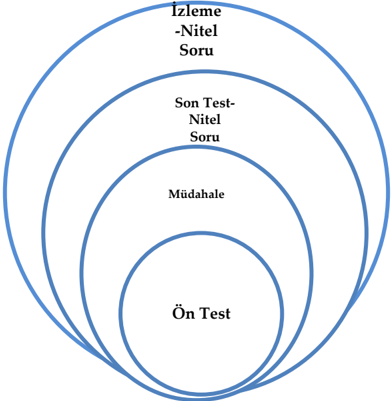
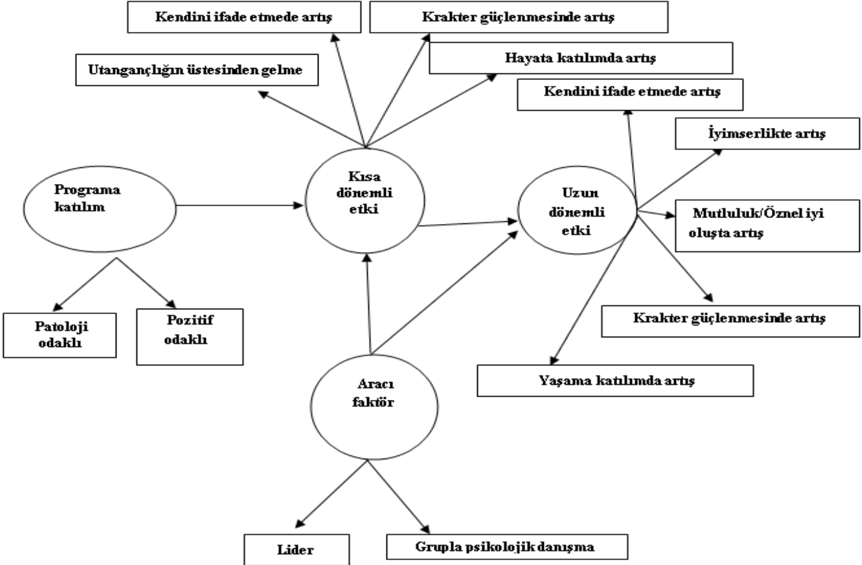
Bu çalışma, bütünleştirici grupla psikolojik danışma müdahale programının utangaçlık üzerindeki etkililiğini incelemektedir. Çalışma, 14-16 yaş aralığında bulunan orta öğretim öğrencileriyle gerçekleştirilmiştir. Çalışma nicel ve nitel yöntemin bir arada kullanıldığı iç-içe karma yöntemler deseninde yürütülmüş olup utangaçlığa müdahale programı 90’ar dakikalık toplam 11 oturumu kapsamaktadır. Programın etkililiğini ölçmek amacıyla Utangaçlık Ölçeği kullanılmış, bunun yanı sıra program nitel açıdan da değerlendirilmiştir. Verilerin analizinde tekrarlı ölçümlerde varyans analizi (ANOVA) ve Mann Whitney U Testinden yararlanılmıştır. Çalışma bulgularına göre ergenler sadece utangaçlığın üstesinden gelmekle kalmayıp aynı zamanda kendilik algısında ve yaşama katılım alanlarında olumlu değişimler de elde etmişlerdir. Çalışma, ergenlerin utangaçlıklarına müdahalede geliştirilen programın etkili olduğunu göstermektedir.
Overview
The claims and statistics of this paper haven’t been checked yet.
Run the check — free, no account needed. It reads the open-access text and checks the sources it cites.
Integrity signals
Registry
Cites
Statistics
Figures
Verification
Claims the paper makes
The claims and statistics of this paper haven’t been checked yet.
Run the check — free, no account needed. It reads the open-access text and checks the sources it cites.
Claims other papers make about this one
Each is checked against this paper’s own text: does it say what the citing paper says it does?
In the citing paper
“Similar participant-reported improvements in self-expression, coping, optimism, and well-being have been observed in follow-up studies of adolescent interventions (Eryılmaz & Altınsoy, 2021) and in qualitative evaluations of interventions addressing anxiety-related experiences (Shkel et al., 2023).”
From The Use of Outsider Witness Practice in Narrative Therapy in Group Counseling: A Mixed Method Study (2026) · cites this paper as Eryılmaz & Altınsoy, 2021
Self-check
Percentages, sums and reported differences re-computed from the paper’s own numbers.
The self-check needs the paper’s full text.
Citations
Cites
Fredrickson, B. L. (2001) · American Psychologist · doi:10.1037//0003-066x.56.3.218 · Cited by 18,025
Sin, N. L., & Lyubomirsky, S. (2009) · Journal of Clinical Psychology · doi:10.1002/jclp.20593 · Cited by 2,955
Looking beyond psychopathology: The dual-factor model of mental health in youth
Suldo, S. M., & Shaffer, E. J. (2008) · School Psychology Review · doi:10.1080/02796015.2008.12087908 · Cited by 997
Spence, S. H., Donovan, C., & Brechman‐Toussaint, M. (2000) · Journal of Child Psychology and Psychiatry · doi:10.1111/1469-7610.00659 · Cited by 527
A dual-factor model of mental health: Toward a more comprehensive understanding of youth functioning
Antaramian, S. P., Huebner, E. S., Hills, K. J., & Valois, R. F. (2010) · American Journal of Orthopsychiatry · doi:10.1111/j.1939-0025.2010.01049.x · Cited by 405
Layous, K., Chancellor, J., Lyubomirsky, S., Wang, L., & Doraiswamy, P. M. (2011) · The Journal of Alternative and Complementary Medicine · doi:10.1089/acm.2011.0139 · Cited by 148
The effectiveness of a peer-helping programme that increases subjective well-being
Eryılmaz, A. (2017) · British Journal of Guidance & Counselling · doi:10.1080/03069885.2015.1057473 · Cited by 8
Self-citation
Research works printed but not linked: 62
- Akın-Little, K. A. ve Little, S. G. (2004). A preventative model of school consultation: Incorporating perspectives from positive psychology. Psychology in the Schools, 41(1), 155-162.
- Albano, A. M. ve Barlow, D. H. (1996). Breaking the vicious cycle: Cognitive-behavioral group treatment for socially anxious youth. E. D. Hibbs ve P. S. Jensen (Ed.), Psychosocial treatments for child and adolescent disorders: Empirically based strategies for clinical practice içinde (s. 43-62). Washington, DC: American Psychological Association.
- W. H. Jones, J. M. Cheek ve S. R. Briggs (Ed.), Shyness: Perspectiues on research and treatment içinde (s. 343-355). New York: Plenum.
- Asendorpf, J. B. (2000). Shyness and adaptation to the social world of university. W. R. Crozier (Ed.), Shyness: Development, consolidation, and change içinde (s. 103-120). New York: Routledge.
- Balcı, S. ve Kalkan, M. (2001). Üniversite öğrencilerinin sosyal beceri düzeylerinin utangaçlık düzeyleri ile ilişkisi. Ondokuz Mayıs Üniversitesi Eğitim Fakültesi Dergisi, 13(1), 5-16. http://dergipark.ulakbim.gov.tr/omuefd/article/view/5000118127 adresinden erişildi.
- Beidel, D. C., Turner, S. M. ve Morris, T. L. (2000). Behavioral treatment of childhood social phobia. Journal of Consulting and Clinical Psychology, 68(6), 1072-1080.
- Bell, B. J. (2006). Wilderness orientation: Exploring the relationship between college preorientation programs and social support. Journal of Experiential Education, 29(2), 145-167.
- Bowker, J. C., Santo, J. B. ve Adams, R. E. (2019). A dynamic examination of the associations between shyness, psychological difficulties, and stressful life events during early adolescence. Journal of Abnormal Child Psychology, 47(7), 1183-1195.
- Buss, D. M. (2000). The evolution of happiness. American Psychologist, 55(1), 15-23.
- Chafouleas, S. M. ve Bray, M. A. (2004). Introducing positive psychology: Finding a place within school psychology. Psychology in the Schools, 41(1), 1-5.
- Cheek, J. M. ve Buss, A. H. (1981). Shyness and sociability. Journal of Personality and Social Psychology, 41(2), 330-339.
- Cheek, J. M. ve Watson, A. K. (1989). The definition of shyness: Psychological imperialism or construct validity?. Journal of Social Behavior and Personality, 4(1), 85-95.
- Crozier, W. R. (2000). Shyness and social relationships: Continuity and change. W. R. Crozier (Ed.), Shyness: Development, consolidation, and change içinde (s. 1-21). New York: Routledge.
- Crozier, W. R. (2001). Understanding shyness. New York: Palgrave.
- D'Souza, L., Urs, G. B. ve Jayaraju, R. (2008). Relationship between shyness and guidance needs among adolescents. Journal of the Indian Academy of Applied Psychology, 34(2), 317-322.
- Eklund, K., Dowdy, E., Jones, C. ve Furlong, M. (2010). Applicability of the dual-factor model of mental health for college students. Journal of College Student Psychotherapy, 25(1), 79-92.
- Eryılmaz, A. (2018b). Effectiveness of the multi-dimensional ındividual counseling ıntervention model to common psychological problems for non-clinical sample. Online Journal of Counseling & Education, 7(1), 1-20.
- Fordyce, M. W. (1983). A program to increase happiness: Further studies. Journal of Counseling Psychology, 30(4), 483-498.
- Greco, L. A. ve Morris, T. L. (2001). Treating childhood shyness and related behavior: Empirically evaluated approaches to promote positive social interactions. Clinical Child and Family Psychology Review, 4(4), 299-318.
- Grol, M., Koster, E. H., Bruyneel, L. ve De Raedt, R. (2014). Effects of positive mood on attention broadening for self-related information. Psychological Research, 78(4), 566-573.
- Güngör, A. (2001). Utangaçlık ölçeğinin geliştirilmesi geçerlik ve güvenirlik çalışmaları. Türk Psikolojik Danışma ve Rehberlik Dergisi, 2(15), 17-22.
- Hamer, R. J. ve Bruch, M. A. (1994). The role of shyness and private self-consciousness in identity development. Journal of Research in Personality, 28(4), 436-452.
- Hartup, W. W. (1996). The company they keep: Friendships and their developmental significance. Child Development, 67(1), 1-13.
- Hazel, J. S., Schumaker, J. B., Sherman, J. A. ve Sheldon, J. (1982). Applications of a group training program in social skills and problem solving to learning disabled and nonlearning disabled youth. Learning Disabilities Quarterly, 5(4), 398-408.
- Hefferon, K. ve Boniwell, I. (2010). Positive psychology. NewYork: McGraw Hill.
- Henderson, L., Gilbert, P. ve Zimbardo, P. G. (2014). Shyness, social anxiety, and social phobia. S. G. Hofmann ve P. M. DiBartolo (Ed.), Social anxiety içinde (s. 95-115). New York: Guilford Press.
- Henriksen, R. E. ve Murberg, T. A. (2009). Shyness as a risk-factor for somatic complaints among Norwegian adolescents. School Psychology International, 30(2), 148-162.
- Jupp, J. J. ve Griffiths, M. D. (1990). Self-concept changes in shy, socially isolated adolescents following social skills training emphasising role-plays. Australian Psychologist, 25(2), 165-177.
- Kağnıcı, Y. (2012). Grubun planlanması ve oluşturulması. A. Demir ve S. Koydemir (Eds.), Grupla psikolojik danışma içinde (s. 164-177). Ankara: Pegem Yayınları.
- Kahveci, Ö. ve Aydınözü, D. (2015). Utangaçlık düzeyi düşük ve yüksek olan sosyal bilgiler öğretmen adaylarının utangaçlık ile ilgili görüşleri. Kastamonu Eğitim Dergisi, 24(3), 1437-1452.
- Kelly, L. ve Keaten, J. (1992). A teat of the effectiveness of the reticence program at the Pennsylvania State University. Communication Education, 41(4), 361-374.
- Keven-Akliman, Ç. ve Eryılmaz, A. (2017). The effectiveness of a body ımage group counselling program on adolescent girls in high school. International Journal of Psychology and Educational Studies, 4(2), 10-23.
- Keyes, C. L. M. (2003). Complete mental health: An agenda for the 21st century. C. L. M. Keyes ve J. Haidt (Ed.), Flourishing: Positive psychology and the life well-lived içinde (s. 293-312). Washington, DC: American Psychological Association.
- Koydemir, S. (2012). Grubun doğası ve yapısı. A. Demir ve S. Koydemir (Ed.), Grupla psikolojik danışma içinde (s. 2-23). Ankara: Pegem Yayınları.
- Lawrence, B. ve Bennett, S. (1992). Shyness and education: The relationship between shyness, social class and personality variables in adolescents. British Journal of Educational Psychology, 62(2), 257- 263.
- Lowenstein, L. (1983). Treatment of extreme shyness by implosive, counselling, and conditioning approaches. Association of Educational Psychologists, 6(2), 64-69.
- Lyubomirsky, S. (2008). The how of happiness: A scientific approach to getting the life you want. New York: Penguin.
- Martin, V. ve Thomas, M. C. (2000). A model psychoeducation group for shy college students. Journal for Specialists in Group Work, 25(1), 79-88.
- Metin-Aslan, Ö. (2020). Shyness and peer interactions in non-social play behaviours among Turkish and American preschool-aged children. Early Child Development and Care, 190(8), 1157-1173.
- Mounts, N. S., Valentiner, D. P., Anderson, K. L. ve Boswell, M. K. (2006). Shyness, sociability, and parental support for the college transition: Relation to adolescents' adjustment. Journal of Youth and Adolescence, 35(1), 68-77.
- Murberg, T. A. (2009). Shyness predicts depressive symptoms among adolescents a prospective study. School Psychology International, 30(5), 507-519.
- Myers, D. G. ve Diener, E. (1995). Who is happy?. Psychological Science, 6(1), 10-19.
- Olivares-Olivares, P. J., Ortiz-González, P. F. ve Olivares, J. (2019). Role of social skills training in adolescents with social anxiety disorder. International Journal of Clinical and Health Psychology, 19(1), 41-48.
- Page, R. M. (1989). Shyness as a risk factor for adolescent substance use. Journal of School Health, 59(10), 432-435.
- Peseschkian, N. (2012). Positive psychotherapy: Theory and practice of a new method. Berlin: Springer Science & Business Media.
- Pilkonis, P. A. (1977). The behavioral consequences of shyness. Journal of Personality, 45(4), 596-611.
- Reschly, D. J. ve Ysseldyke, J. E. (1999). Paradigm shift: The past is not the future. T. Gutkin ve C. Reynolds (Ed.), The handbook of school psychology içinde (3. bs., s. 3-20). New York: Wiley.
- Saradha, I. (2020). A study to assess the effectiveness of self-instructional module on knowledge regarding social phobia among adolescents in selected higher secondary schools at Puducherry. TNNMC Journal of Mental Health Nursing, 8(2), 25-30.
- Sarason, I. G., Sarason, B. R. ve Pierce, G. R. (1990). Social support, personality, and performance. Journal of Applied Sport Psychology, 2(2), 117-127.
- Seligman, M. E. P. (2002). Authentic happiness. New York: Free Press.
- Seligman, M. E. P. ve Csikszentmihalyi, M. (2010). Positive psychology: An introduction. Flow and the foundations of positive psychology içinde (s. 279-298). Dordrecht: Springer.
- Siu-Kau, C. (1995). Life events, classroom environment, achievement expectation, and depression among early adolescents'. Social Behavior and Personality: An International Journal, 23(1), 83-92.
- Spence, G. B. ve Grant, A. M. (2007). Professional and peer life coaching and the enhancement of goal striving and well-being: An exploratory study. The Journal of Positive Psychology, 2(3), 185-194.
- Suldo, S. M., Thalji-Raitano, A., Kiefer, S. M. ve Ferron, J. M. (2016). Conceptualizing high school students' mental health through a dual-factor model. School Psychology Review, 45(4), 434-457.
- Şahin, E. E. ve Gizir, C. A. (2014). Üniversite öğrencilerinde utangaçlık: Benlik saygısı ve kişilerarası yetkinlik değişkenlerinin rolü. Türk Psikolojik Danışma ve Rehberlik Dergisi, 5(41), 78-88.
- Taylor, S. (1996). Meta-analysis of cognitive-behavioral treatments for social phobia. Journal of Behavior Therapy and Experimental Psychiatry, 27(1), 1-9.
- Tkach, C. ve Lyubomirsky, S. (2006). How do people pursue happiness? Relating personality, happiness increasing strategies, and well-being. Journal of Happiness Studies, 7(2), 183-225.
- Triandis, H. C. (1994). Theoretical and methodological approaches to the study of collectivism and individualism. U. Kim, H. C. Triandis, C. Kagitcibasi, S.-C. Choi ve G. Yoon (Ed.), Individualism and collectivism. Theory, method, and applications içinde (s. 41-51). Thousand Oaks, CA: Sage.
- Xu, Y., Zhang, L. ve Hee, P. (2014). Parenting practices and shyness in Chinese children. Parenting across cultures içinde (s. 13-24). Dordrecht: Springer.
- Ystgaard, M. (1997). Life stress, social support and psychological distress in late adolescence. Social Psychiatry and Psychiatric Epidemiology, 32(5), 277-283.
- Zhang, L. ve Eggum-Wilkens, N. D. (2018). Correlates of shyness and unsociability during early adolescence in urban and rural China. The Journal of Early Adolescence, 38(3), 408-421.
- Zimbardo, P. G. (1977). Shyness: What it is, what to do about it. Reading, MA: Addison-Wesley.
Cited by
Sorted by citations
The Use of Outsider Witness Practice in Narrative Therapy in Group Counseling: A Mixed Method Study
Kurtuluş, E., & Düşünceli, B. (2026) · Türk Psikolojik Danışma ve Rehberlik Dergisi · doi:10.17066/tpdrd.1950394
Metadata
- Authors
- Eryılmaz, A., & Altınsoy, F.
- Venue
- Education and Science
- Publisher
- Turkish Education Association
- Published
- 2021-03-08
- Volume
- 46
- Issue
- 206
- Pages
- 441-457
- ISSN
- 1300-1337
- Cited by
- 2
- References
- 7
About these checks
Registry, retraction, Cites and statistics results are computed, not judged, with one exception: a printed reference that no index lists is read once by a model before it counts as a citation error. Claims are extracted by a model and kept only when their quote appears verbatim in the text; each cited source is then checked, with a model’s help, for whether it says what the claim relies on. Those verdicts can be wrong — read the claim’s quote and the cited source before relying on one.
Statistics and arithmetic are recomputed, not judged.
Confidence bands are shown only for fields calibrated on our annotated test set. None is calibrated yet, so no band is shown.
What counts as a claim ›How we measure confidence ›How we check this ›
Are you an author, or do you see a problem with this page? Request a review
How to cite
Cite CoChat for the checks on this page, and the paper for its own findings.
- This page
- CoChat. (2026). Citation check: An Integrative Intervention Group Counseling Program for Adolescents’ Shyness: Combining Positive and Pathological Interventions (Dual-Factor Model). https://app.cochat.ai/papers/10.15390/eb.2021.8226
- The paper
- Eryılmaz, A., & Altınsoy, F. (2021). An Integrative Intervention Group Counseling Program for Adolescents’ Shyness: Combining Positive and Pathological Interventions (Dual-Factor Model). Education and Science. https://doi.org/10.15390/eb.2021.8226
