

Crystalline materials for quantum computing: Semiconductor heterostructures and topological insulators exemplars
Open accessThe DOI matches its Crossref record; 107 of the 107 references it cites were found in a registry or an index.
Abstract
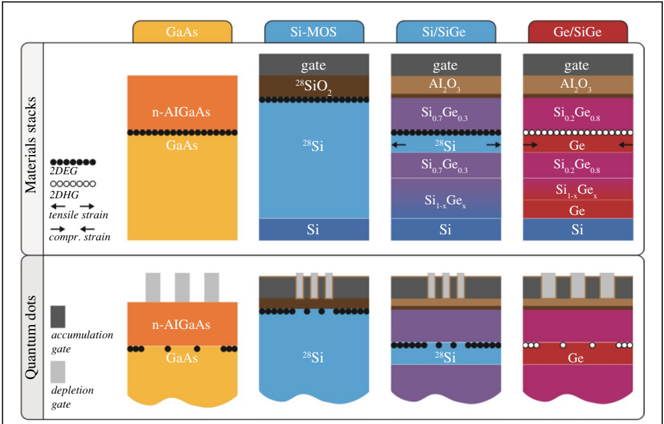
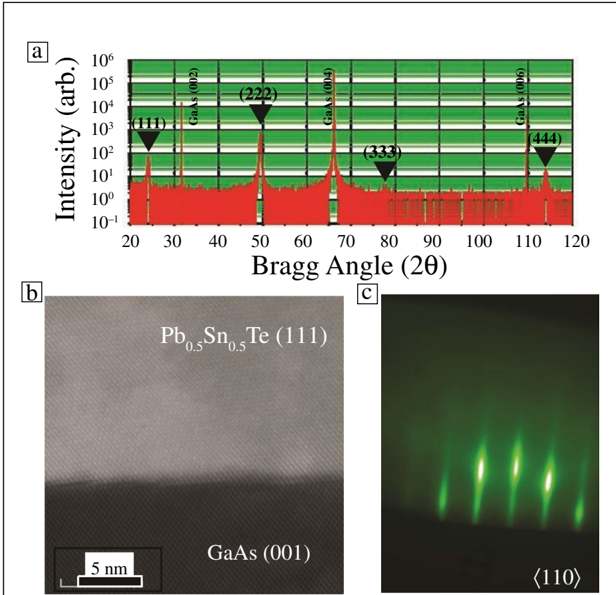
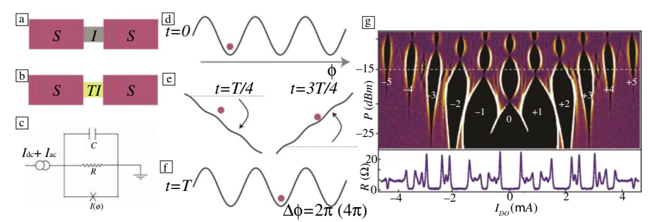
High-purity crystalline solid-state materials play an essential role in various technologies for quantum information processing, from qubits based on spins to topological states. New and improved crystalline materials emerge each year and continue to drive new results in experimental quantum science. This article summarizes the opportunities for a selected class of crystalline materials for qubit technologies based on spins and topological states and the challenges associated with their fabrication. We start by describing semiconductor heterostructures for spin qubits in gate-defined quantum dots and benchmark GaAs, Si, and Ge, the three platforms that demonstrated two-qubit logic. We then examine novel topologically nontrivial materials and structures that might be incorporated into superconducting devices to create topological qubits. We review topological insulator thin films and move onto topological crystalline materials, such as PbSnTe, and its integration with Josephson junctions. We discuss advances in novel and specialized fabrication and characterization techniques to enable these. We conclude by identifying the most promising directions where advances in these material systems will enable progress in qubit technology.
Overview
The claims and statistics of this paper haven’t been checked yet.
Free: it reads the open-access text and checks the first 5 claims that cite a source we can check. Create a free account to check every claim.
Integrity signals
Registry
Cites
Statistics
Figures




Verification
Claims the paper makes
The claims and statistics of this paper haven’t been checked yet.
Free: it reads the open-access text and checks the first 5 claims that cite a source we can check. Create a free account to check every claim.
Claims other papers make about this one
Each is checked against this paper’s own text: does it say what the citing paper says it does?
The source backs part of the claim, not all of it — or backs it for a different population, condition or comparison.
In the citing paper
“Spin qubits hosted in epitaxial group IV heterostructures offer reduced disorder27–29 but are less straightforward to integrate in an industry process owing to the 300-mm SiGe epitaxy, which comes with reduced thermal budget and increased valley-splitting challenges30 compared with Si-MOS.”
From Probing single electrons across 300-mm spin qubit wafers (2024) · cites this paper as [28]
Experimental — accuracy not yet measured
Self-check
Percentages, sums and reported differences re-computed from the paper’s own numbers.
The self-check needs the paper’s full text.
Citations
Cites
Quantum computation with quantum dots
Loss, D., & DiVincenzo, D. P. (1998) · Physical Review A · doi:10.1103/physreva.57.120 · Cited by 6,840
Introduction to Superconductivity
Tinkham, M., & Emery, V. (1996) · Physics Today · doi:10.1063/1.2807811 · Cited by 6,601
Weyl and Dirac semimetals in three-dimensional solids
Armitage, N. P., Mele, E. J., & Vishwanath, A. (2018) · Reviews of Modern Physics · doi:10.1103/revmodphys.90.015001 · Cited by 4,528
Coherent Manipulation of Coupled Electron Spins in Semiconductor Quantum Dots
Petta, J. R., Johnson, A. C., Taylor, J. M., Laird, E. A., Yacoby, A., Lukin, M. D., Marcus, C. M., Hanson, M. P., & Gossard, A. C. (2005) · Science · doi:10.1126/science.1116955 · Cited by 3,183
Spins in few-electron quantum dots
Hanson, R., Kouwenhoven, L. P., Petta, J. R., Tarucha, S., & Vandersypen, L. M. K. (2007) · Reviews of Modern Physics · doi:10.1103/revmodphys.79.1217 · Cited by 2,665
Colloquium : Topological band theory
Bansil, A., Lin, H., & Das, T. (2016) · Reviews of Modern Physics · doi:10.1103/revmodphys.88.021004 · Cited by 1,587
Zwanenburg, F. A., Dzurak, A. S., Morello, A., Simmons, M. Y., Hollenberg, L. C. L., Klimeck, G., Rogge, S., Coppersmith, S. N., & Eriksson, M. A. (2013) · Reviews of Modern Physics · doi:10.1103/revmodphys.85.961 · Cited by 1,210
Coherent Control of a Single Electron Spin with Electric Fields
Nowack, K. C., Koppens, F. H. L., Nazarov, Y. V., & Vandersypen, L. M. K. (2007) · Science · doi:10.1126/science.1148092 · Cited by 1,001
A two-qubit logic gate in silicon
Veldhorst, M., Yang, C. H., Hwang, J. C. C., Huang, W., Dehollain, J. P., Muhonen, J. T., Simmons, S., Laucht, A., Hudson, F. E., Itoh, K. M., et al. (2015) · Nature · doi:10.1038/nature15263 · Cited by 919
A quantum-dot spin qubit with coherence limited by charge noise and fidelity higher than 99.9%
Yoneda, J., Takeda, K., Otsuka, T., Nakajima, T., Delbecq, M. R., Allison, G., Honda, T., Kodera, T., Oda, S., Hoshi, Y., et al. (2018) · Nature Nanotechnology · doi:10.1038/s41565-017-0014-x · Cited by 900
Research works printed but not linked: 1
- M. Tinkham, Introduction to Superconductivity. Dover Books on Physics, 2nd ed. (Dover Publications, Mineola, NY, 2004), vol.
Cited by
Probing single electrons across 300-mm spin qubit wafers
Neyens, S., Zietz, O. K., Watson, T. F., Luthi, F., Nethwewala, A., George, H. C., Henry, E., Islam, M., Wagner, A. J., Borjans, F., et al. (2024) · Nature · doi:10.1038/s41586-024-07275-6 · Cited by 178
Roadmap on topological photonics
Price, H. M., Chong, Y. D., Khanikaev, A. B., Schomerus, H., Maczewsky, L. J., Kremer, M., Heinrich, M., Szameit, A., Zilberberg, O., Yang, Y., et al. (2022) · Journal of Physics Photonics · doi:10.1088/2515-7647/ac4ee4 · Cited by 210
Advances and opportunities in materials science for scalable quantum computing
Lordi, V., & Nichol, J. M. (2021) · MRS Bulletin · doi:10.1557/s43577-021-00133-0 · Cited by 87
Exploring quantum materials and applications: a review
Goyal, R. K., Maharaj, S., Kumar, P., & Chandrasekhar, M. (2025) · Journal of Materials Science Materials in Engineering · doi:10.1186/s40712-024-00202-7 · Cited by 69
“An impressive paper by Scappucci et al. in 2021 (Scap-pucci et al. 2021) shows the significance of high-purity crystalline solid-state materials in advancing quantum information processing, particularly in qubit technologies reliant on spins and topological states.”
Low disorder and high valley splitting in silicon
Esposti, D. D., Stehouwer, L. E. A., Gül, Ö., Samkharadze, N., Déprez, C., Meyer, M., Meijer, I. N., Tryputen, L., Karwal, S., Botifoll, M., et al. (2024) · npj Quantum Information · doi:10.1038/s41534-024-00826-9 · Cited by 72
“For spin qubits in gate-defined silicon quantum dots[2], there are currently three material-science driven requirements being pursued[3].”
BackgroundSelf-citation
Metadata
- Authors
- Scappucci, G., Taylor, P. J., Williams, J. R., Ginley, T., & Law, S.
- Affiliations
- QuTech (NL)
- DEVCOM Army Research Laboratory (US)
- University of Maryland, College Park (US)
- National Institute of Standards and Technology (US)
- University of Delaware (US)
- Corresponding author
- Scappucci, G.
- Venue
- MRS Bulletin
- Published
- 2021-07
- Volume
- 46
- Issue
- 7
- Pages
- 596-606
- ISSN
- 0883-7694 (ISSN-L)
- 1938-1425
- OpenAlex
- W3192036988
- Cited by
- 38
- References
- 105
- Citations by year
- 2026: 6 · 2025: 8 · 2024: 12 · 2023: 6 · 2022: 4 · 2021: 2
- FWCI
- 2.62
- Type
- journal article
- Language
- en
- Open access
- hybrid
- doi.org
- Licence
- cc-by
- creativecommons.org/licenses/by/4.0 (tdm)
- creativecommons.org/licenses/by/4.0 (vor, 33 d)
- Locations
- MRS Bulletin (publishedVersion, cc-by)
- OSTI OAI (U.S. Department of Energy Office of Scientific and Technical Information) (submittedVersion)
- Funders
- U. S. Department of Energy (DE-SC0017801)
- National Science Foundation (DMR-1743913)
- Physics Frontier Center (PHY-1430094)
- Army Research Office (W911NF-18-2-0075)
- Netherlands Organization for Scientific Research
- Topics
- Physical Sciences › Physics and Astronomy › Condensed Matter Physics › Quantum and electron transport phenomena
- Physical Sciences › Physics and Astronomy › Condensed Matter Physics › Topological Materials and Phenomena
- Physical Sciences › Physics and Astronomy › Atomic and Molecular Physics, and Optics › Semiconductor Quantum Structures and Devices
- Keywords
- quantum computing, spin qubits, semiconductor heterostructures, quantum dots, topological insulators, topological qubits, superconducting devices, topological crystalline insulators, lead tin telluride, Josephson junctions, GaAs, silicon, germanium, thin films, crystalline materials
About these checks
Registry, retraction, Cites and statistics results are computed, not judged, with one exception: a printed reference that no index lists is read once by a model before it counts as a citation error. Claims are extracted by a model and kept only when their quote appears verbatim in the text; each cited source is then checked, with a model’s help, for whether it says what the claim relies on. Those verdicts can be wrong — read the claim’s quote and the cited source before relying on one.
Statistics and arithmetic are recomputed, not judged.
Confidence bands are shown only for fields calibrated on our annotated test set. None is calibrated yet, so no band is shown.
What counts as a claim ›How we measure confidence ›How we check this ›
Are you an author, or do you see a problem with this page? Request a review
How to cite
Cite CoChat for the checks on this page, and the paper for its own findings.
- This page
- CoChat. (2026). Citation check: Crystalline materials for quantum computing: Semiconductor heterostructures and topological insulators exemplars. https://app.cochat.ai/papers/10.1557/s43577-021-00147-8
- The paper
- Scappucci, G., Taylor, P. J., Williams, J. R., Ginley, T., & Law, S. (2021). Crystalline materials for quantum computing: Semiconductor heterostructures and topological insulators exemplars. MRS Bulletin. https://doi.org/10.1557/s43577-021-00147-8
Data sources
Bibliographic data: Semantic Scholar, OpenAlex, Crossref.
Contains information from the Semantic Scholar Academic Graph Datasets, made available under the ODC Attribution License (ODC-BY 1.0).
Semantic Scholar’s data is described in: Kinney, R., et al. (2023). The Semantic Scholar Open Data Platform. arXiv:2301.10140.
