

Prevalence and characteristics of autism spectrum disorder among children aged 4 years - early autism and developmental disabilities monitoring network, seven sites, United States, 2010, 2012, and 2014
Open accessThe DOI matches its Crossref record; 45 of the 47 references it cites were found in a registry or an index.
Abstract
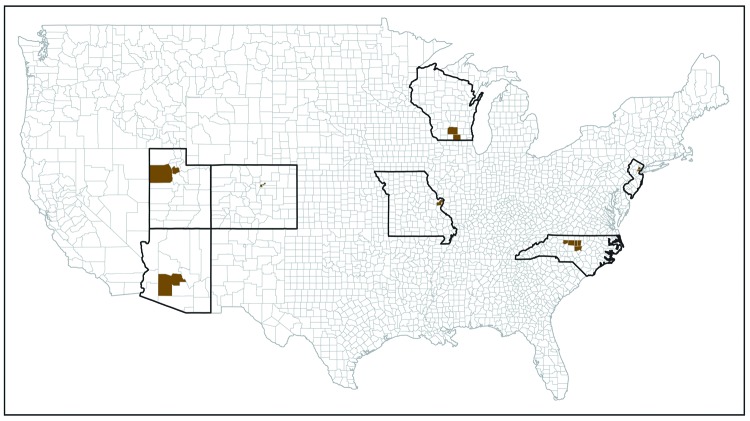
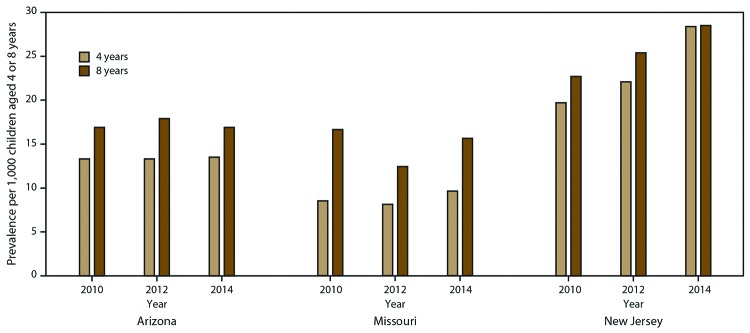
PROBLEM/CONDITION: Autism spectrum disorder (ASD) is estimated to affect up to 3% of children in the United States. Public health surveillance for ASD among children aged 4 years provides information about trends in prevalence, characteristics of children with ASD, and progress made toward decreasing the age of identification of ASD so that evidence-based interventions can begin as early as possible. PERIOD COVERED: 2010, 2012, and 2014. DESCRIPTION OF SYSTEM: The Early Autism and Developmental Disabilities Monitoring (Early ADDM) Network is an active surveillance system that provides biennial estimates of the prevalence and characteristics of ASD among children aged 4 years whose parents or guardians lived within designated sites. During surveillance years 2010, 2012, or 2014, data were collected in seven sites: Arizona, Colorado, Missouri, New Jersey, North Carolina, Utah, and Wisconsin. The Early ADDM Network is a subset of the broader ADDM Network (which included 13 total sites over the same period) that has been conducting ASD surveillance among children aged 8 years since 2000. Each Early ADDM site covers a smaller geographic area than the broader ADDM Network. Early ADDM ASD surveillance is conducted in two phases using the same methods and project staff members as the ADDM Network. The first phase consists of reviewing and abstracting data from children's records, including comprehensive evaluations performed by community professionals. Sources for these evaluations include general pediatric health clinics and specialized programs for children with developmental disabilities. In addition, special education records (for children aged ≥3 years) were reviewed for Arizona, Colorado, New Jersey, North Carolina, and Utah, and early intervention records (for children aged 0 to <3 years) were reviewed for New Jersey, North Carolina, Utah, and Wisconsin; in Wisconsin, early intervention records were reviewed for 2014 only. The second phase involves a review of the abstracted evaluations by trained clinicians using a standardized case definition and method. A child is considered to meet the surveillance case definition for ASD if one or more comprehensive evaluations of that child completed by a qualified professional describes behaviors consistent with the Diagnostic and Statistical Manual of Mental Disorders, 4th Edition, Text Revision (DSM-IV-TR) diagnostic criteria for any of the following conditions: autistic disorder, pervasive developmental disorder-not otherwise specified (PDD-NOS, including atypical autism), or Asperger disorder (2010, 2012, and 2014). For 2014 only, prevalence estimates based on surveillance case definitions according to DSM-IV-TR and the Diagnostic and Statistical Manual of Mental Disorders, Fifth Edition (DSM-5) were compared. This report provides estimates of overall ASD prevalence and prevalence by sex and race/ethnicity; characteristics of children aged 4 years with ASD, including age at first developmental evaluation, age at ASD diagnosis, and cognitive function; and trends in ASD prevalence and characteristics among Early ADDM sites with data for all 3 surveillance years (2010, 2012, and 2014), including comparisons with children aged 8 years living in the same geographic area. Analyses of time trends in ASD prevalence are restricted to the three sites that contributed data for all 3 surveillance years with consistent data sources (Arizona, Missouri, and New Jersey). RESULTS: The overall ASD prevalence was 13.4 per 1,000 children aged 4 years in 2010, 15.3 in 2012, and 17.0 in 2014 for Early ADDM sites with data for the specific years. ASD prevalence was determined using a surveillance case definition based on DSM-IV-TR. Within each surveillance year, ASD prevalence among children aged 4 years varied across surveillance sites and was lowest each year for Missouri (8.5, 8.1, and 9.6 per 1,000, for 2010, 2012, and 2014, respectively) and highest each year for New Jersey (19.7, 22.1, and 28.4 per 1,000, for the same years, respectively). Aggregated prevalence estimates were higher for sites that reviewed education and health care records than for sites that reviewed only health care records. Among all participating sites and years, ASD prevalence among children aged 4 years was consistently higher among boys than girls; prevalence ratios ranged from 2.6 (Arizona and Wisconsin in 2010) to 5.2 boys per one girl (Colorado in 2014). In 2010, ASD prevalence was higher among non-Hispanic white children than among Hispanic children in Arizona and non-Hispanic black children in Missouri; no other differences were observed by race/ethnicity. Among four sites with ≥60% data on cognitive test scores (Arizona, New Jersey, North Carolina, and Utah), the frequency of co-occurring intellectual disabilities was significantly higher among children aged 4 years than among those aged 8 years for each site in each surveillance year except Arizona in 2010. The percentage of children with ASD who had
Overview
The claims and statistics of this paper haven’t been checked yet.
Free: it reads the open-access text and checks the first 5 claims that cite a source we can check. Create a free account to check every claim.
Integrity signals
Registry
Cites
Statistics
Figures
Verification
Claims the paper makes
The claims and statistics of this paper haven’t been checked yet.
Free: it reads the open-access text and checks the first 5 claims that cite a source we can check. Create a free account to check every claim.
Claims other papers make about this one
Each is checked against this paper’s own text: does it say what the citing paper says it does?
The source backs part of the claim, not all of it — or backs it for a different population, condition or comparison.
In the citing paper
“Children with co-occurring intellectual disability are more likely to be identified earlier than children without intellectual disability, as indicated by an earlier median age at identification among this group (11) as well as the consistently higher proportion of children with intellectual disability at age 4 years (8,13) than at age 8 years (9,11,17).”
From Early Identification of Autism Spectrum Disorder Among Children Aged 4 Years — Autism and Developmental Disabilities Monitoring Network, 11 Sites, United States, 2018 (2021) · cites this paper as [13]
Experimental — accuracy not yet measuredThe source backs part of the claim, not all of it — or backs it for a different population, condition or comparison.
In the citing paper
“Racial disparities reflected in autism prevalence have been monitored in the United States over time and the pattern of change suggests a “catch up” in diagnosis in minorities who were initially underdiagnosed (Christensen et al., 2019; Maenner, 2020).”
From Global prevalence of autism: A systematic review update (2022) · cites this paper as Christensen et al., 2019
Experimental — accuracy not yet measuredThe source backs part of the claim, not all of it — or backs it for a different population, condition or comparison.
In the citing paper
“As approximately 45% of children with ASD experience co-occurring intellectual disability, it will be important that future studies adapt anxiety interventions for this population [7].”
From DINOSAUR: an integrated cognitive-behavioral treatment for anxiety in young children with ASD (2021) · cites this paper as [7]
Experimental — accuracy not yet measuredThe cited source says what the claim attributes to it.
In the citing paper
“The 2018 estimate for children aged 4 years was lower than the 23.0 per 1,000 ASD prevalence among children aged 8 years (11), a finding consistent with previous reports (8,13).”
The cited source says what the claim attributes to it.
In the citing paper
“The 2019 survey (Christensen et al., 2019) found a threefold variation of rate by site, where Missouri had the lowest rates (85, 81, and 96 per 10,000 for 2010, 2012, and 2014, respectively) and the highest were in New Jersey (197, 221, and 284 per 10,000, for the same years, respectively).”
From Global prevalence of autism: A systematic review update (2022) · cites this paper as Christensen et al., 2019
7 more claims about this paper
Create a free account to see every claim other papers make about this one.
Self-check
Percentages, sums and reported differences re-computed from the paper’s own numbers.
The self-check needs the paper’s full text.
Citations
Cites
2 retracted
Christensen, D. L., Baio, J., Braun, K. V. N., Bilder, D., Charles, J., Constantino, J. N., Daniels, J., Durkin, M. S., Fitzgerald, R. T., Kurzius-Spencer, M., et al. (2016) · MMWR. Surveillance Summaries · doi:10.15585/mmwr.ss6503a1 · Cited by 1,964
Self-citationRetractedChristensen, D. L., Braun, K. V. N., Baio, J., Bilder, D., Charles, J., Constantino, J. N., Daniels, J., Durkin, M. S., Fitzgerald, R. T., Kurzius-Spencer, M., et al. (2018) · MMWR. Surveillance Summaries · doi:10.15585/mmwr.ss6513a1 · Cited by 587
Self-citationRetractedDiagnostic and Statistical Manual of Mental Disorders
American Psychiatric Association (2013) · doi:10.1176/appi.books.9780890425596 · Cited by 116,369
Baio, J., Wiggins, L., Christensen, D. L., Maenner, M. J., Daniels, J., Warren, Z., Kurzius-Spencer, M., Zahorodny, W., Robinson, C., Rosenberg, et al. (2018) · MMWR. Surveillance Summaries · doi:10.15585/mmwr.ss6706a1 · Cited by 6,078 · cited 1×
“8 years in 2014 (13), compared with 14.”
Self-citationMaenner, M. J., Shaw, K. A., Baio, J., EdS1, Washington, A., Patrick, M., DiRienzo, M., Christensen, D. L., Wiggins, L. D., Pettygrove, S., et al. (2020) · MMWR. Surveillance Summaries · doi:10.15585/mmwr.ss6904a1 · Cited by 3,780
Self-citationDawson, G., Rogers, S., Munson, J., Smith, M., Winter, J., Greenson, J., Donaldson, A., & Varley, J. (2010) · Pediatrics · doi:10.1542/peds.2009-0958 · Cited by 2,835
Identification and Evaluation of Children With Autism Spectrum Disorders
Johnson, C. P., Myers, S. M., & and the Council on Children With Disabilities (2007) · Pediatrics · doi:10.1542/peds.2007-2361 · Cited by 2,011
Cited by
Items 101–200 of 362
Issabakhsh, M., Meza, R., Li, Y., Yuan, Z., Sánchez‐Romero, L. M., & Levy, D. T. (2022) · Tobacco Control · doi:10.1136/tobaccocontrol-2022-057298 · Cited by 27
Methylphenidate in Autism Spectrum Disorder: A Long-Term Follow Up Naturalistic Study
Ventura, P., de Giambattista, C., Spagnoletta, L., Trerotoli, P., Cavone, M., Gioia, A. D., & Margari, L. (2020) · Journal of Clinical Medicine · doi:10.3390/jcm9082566 · Cited by 28
Ayatollahi, A., Bagheri, S., Ashraf‐Ganjouei, A., Moradi, K., Mohammadi, M.-R., & Akhondzadeh, S. (2020) · Clinical Neuropharmacology · doi:10.1097/wnf.0000000000000405 · Cited by 26
Souter, E. A., Chen, Y.-C., Zell, V., Lallai, V., Steinkellner, T., Conrad, W. S., Wisden, W., Harris, K. D., Fowler, C. D., & Hnasko, T. S. (2021) · eNeuro · doi:10.1523/eneuro.0481-21.2021 · Cited by 29
Freire, J. M. D. S., & Nogueira, G. S. (2023) · Revista Foco · doi:10.54751/revistafoco.v16n3-009 · Cited by 51
Potential of Salivary Biomarkers in Autism Research: A Systematic Review
Janšáková, K., Kyselicová, K., Ostatníková, D., & Repiská, G. (2021) · International Journal of Molecular Sciences · doi:10.3390/ijms221910873 · Cited by 29
“The current prevalence of ASD observed by the Early Autism and Developmental Disabilities Monitoring (Early ADDM) Network in the United States during the surveillance years 2010, 2012, and 2014 is estimated at 3% [11].”
Gaiato, M. H. B., Zotesso, M. C., Silveira, R. D. R., & Ferreira, L. (2022) · Revista Eletrônica Acervo Saúde · doi:10.25248/reas.e10919.2022 · Cited by 31
Faraji, R., Ganji, Z., Zamanpour, S. A., Nikparast, F., Akbari‐Lalimi, H., & Zare, H. (2023) · Psychiatry Research Neuroimaging · doi:10.1016/j.pscychresns.2023.111711 · Cited by 25
Intellectual disability and autism prevalence in Western Australia: impact of the NDIS
Bourke, J., Sanders, R., Jones, J., Ranjan, M., Wong, K., & Leonard, H. (2024) · Frontiers in Psychiatry · doi:10.3389/fpsyt.2024.1359505 · Cited by 28
Association Between Exposure of Children to General Anesthesia and Autism Spectrum Disorder
Laporta, M. L., Šprung, J., Fejedelem, C. A., Henning, D. T., Weaver, A. L., Hanson, A. C., Schroeder, D. R., Myers, S. M., Voigt, R. G., Weingarten, T. N., et al. (2021) · Journal of Autism and Developmental Disorders · doi:10.1007/s10803-021-05305-0 · Cited by 25
Liber, A. C., Xue, Z., Cahn, Z., Drope, J. M., & Stokłosa, M. (2020) · Tobacco Control · doi:10.1136/tobaccocontrol-2020-055932 · Cited by 25
Sleep problems in children with autism spectrum disorder and typical development
Inthikoot, N., & Chonchaiya, W. (2020) · Pediatrics International · doi:10.1111/ped.14496 · Cited by 27
Latif, F., Patel, S. J., Badolato, G. M., McKinley, K. W., Chan-Salcedo, C., Bannerman, R., Schultz, T. R., Newton, J., Schott, M., Tyson, C., et al. (2020) · Hospital Pediatrics · doi:10.1542/hpeds.2020-0039 · Cited by 24
Jiang, S., Xiao, L., Sun, Y., He, M., Gao, C., Zhu, C., Chang, H., Ding, J., Li, W., Wang, Y., et al. (2022) · Molecular Medicine Reports · doi:10.3892/mmr.2022.12670 · Cited by 23
Ventura, P., de Giambattista, C., Trerotoli, P., Cavone, M., Di Gioia, A., & Margari, L. (2022) · Journal of Clinical Medicine · doi:10.3390/jcm11102922 · Cited by 22
Maigoro, A. Y., & Lee, S. (2021) · Nutrients · doi:10.3390/nu13020688 · Cited by 23
Nakhaee, S., Amirabadizadeh, A., Farnia, V., Azadi, N. A., Mansouri, B., & Radmehr, F. (2022) · Biological Trace Element Research · doi:10.1007/s12011-022-03265-9 · Cited by 23
Research Mapping of Trauma Experiences in Autism Spectrum Disorders: A Bibliometric Analysis
González, O. H., Fresno, A., Spencer, R., Mínguez, R. T., Fernández, D. G., & Sepúlveda-Opazo, F. (2023) · Healthcare · doi:10.3390/healthcare11091267 · Cited by 24
Horecka-Lewitowicz, A., Adamczyk-Gruszka, O., Kozieł, D., Lim, H., Lewitowicz, W., & Lewitowicz, P. (2024) · International Journal of Molecular Sciences · doi:10.3390/ijms252011283 · Cited by 26
“ASD prevalence has been measured by special education and administrative records [2–5].”
BackgroundMethodInfluentialÖzşahin, İ., Mustapha, M. T., Albarwary, S. A., Şanlıdağ, B., Ozsahin, D. U., & Butler, T. (2021) · Journal of Comparative Effectiveness Research · doi:10.2217/cer-2020-0162 · Cited by 22
Bertelli, M. O., Salvador‐Carulla, L., Münir, K., Scattoni, M. L., Azeem, M. W., & Javed, A. (2020) · World Psychiatry · doi:10.1002/wps.20727 · Cited by 23
Self-reported and Documented Substance Use Among Adolescents in the Pediatric Hospital
Masonbrink, A. R., Hunt, J. A., Bhandal, A., Randell, K. A., Mermelstein, S. J., Wells, S. R., & Miller, M. K. (2021) · PEDIATRICS · doi:10.1542/peds.2020-031468 · Cited by 20
Reduced engagement of visual attention in children with autism spectrum disorder
McLaughlin, C. S., Grosman, H. E., Guillory, S. B., Isenstein, E. L., Wilkinson, E., Trelles, M. D. P., Halpern, D. B., Siper, P. M., Kolevzon, A., Buxbaum, J. D., et al. (2021) · Autism · doi:10.1177/13623613211010072 · Cited by 21
Recent advancement in interventions for autism spectrum disorder: A review
Kalra, R., Gupta, M., & Sharma, P. (2023) · Journal of Neurorestoratology · doi:10.1016/j.jnrt.2023.100068 · Cited by 26
Ayub, R., Ansarullah, S. I., Samdani, F., Akhtar, A., Afzal, M. F., & Ahmed, S. M. (2024) · Journal of King Saud University - Science · doi:10.1016/j.jksus.2024.103468 · Cited by 22
Krieger, I., Erez, G., Weinstein, O., Cohen, A. D., & Bitan, D. T. (2021) · Journal of Autism and Developmental Disorders · doi:10.1007/s10803-021-05187-2 · Cited by 20
Crucitti, J., Hyde, C. E., Enticott, P. G., & Stokes, M. A. (2022) · Journal of Integrative Neuroscience · doi:10.31083/j.jin2102057 · Cited by 23
Jiang, S., He, M., Xiao, L., Sun, Y., Ding, J., Li, W., Guo, B., Wang, L., Wang, Y., Gao, C., et al. (2022) · Frontiers in Psychiatry · doi:10.3389/fpsyt.2022.835993 · Cited by 21
Wang, S.-H., Zhang, H., Zou, Y.-Y., Cheng, S., Zou, X., & Chen, K.-Y. (2022) · World Journal of Pediatrics · doi:10.1007/s12519-022-00555-z · Cited by 22
Mid‐childhood autism sibling recurrence in infants with a family history of autism
Bazelmans, T., Arthur, R., Pasco, G., Shephard, E., Milosavljevic, B., Ali, J. B., Pickles, A. R., Johnson, M. H., Jones, E. J. H., Charman, T., et al. (2024) · Autism Research · doi:10.1002/aur.3182 · Cited by 20
“” Population prevalence estimates are higher at 8 than 4 years (Christensen et al., 2019) and some children are diagnosed after 6 years despite having undergone earlier developmental evaluations (Davidovitch et al., 2015).”
Rein, B. A., Yan, Z., & Wang, Z. (2019) · Genes Brain & Behavior · doi:10.1111/gbb.12610 · Cited by 21
Torrico, B., Antón-Galindo, E., Fernàndez‐Castillo, N., Francàs, E. R., Ghorbani, S., Pineda-Cirera, L., Hervas, A., Rueda, I., Moreno, E., Fullerton, J. M., et al. (2020) · Journal of Clinical Medicine · doi:10.3390/jcm9061851 · Cited by 19
Zhang, L., Zhang, W., Xu, H.-Y., & Liu, K. (2021) · BMJ Open · doi:10.1136/bmjopen-2020-044385 · Cited by 19
Rockett, I. R. H., Caine, E. D., Connery, H. S., & Nolte, K. B. (2020) · Injury Prevention · doi:10.1136/injuryprev-2020-043830 · Cited by 21
Moro, J. D. S., Rodrigues, T. D., Kammer, P. V., de Camargo, A. R., & Bolan, M. (2022) · Journal of Autism and Developmental Disorders · doi:10.1007/s10803-022-05820-8 · Cited by 24
“Note that most patients were boys, corroborating the prevalence data of autistic children being higher in males (Christensen et al., 2016; Baio et al., 2018; Christensen et al., 2019 ).”
Chromatin Remodeling in the Brain-a NuRDevelopmental Odyssey
Larrigan, S., Shah, S. J., Fernandes, J. A. L., & Mattar, P. A. (2021) · International Journal of Molecular Sciences · doi:10.3390/ijms22094768 · Cited by 19
Budenz, A., Gaber, J., Crankshaw, E., Malterud, A. S., Peterson, E. B., Wagner, D. E., & Sanders, E. C. (2022) · Tobacco Control · doi:10.1136/tc-2022-057451 · Cited by 17
Vanheer, L. N., & Kafsack, B. F. C. (2021) · ACS Infectious Diseases · doi:10.1021/acsinfecdis.0c00853 · Cited by 18
Godel, M., Andrews, D. S., Amaral, D. G., Ozonoff, S. J., Young, G. S., Lee, J. K., Nordahl, C. W., & Schaer, M. (2021) · Frontiers in Neuroscience · doi:10.3389/fnins.2021.669194 · Cited by 17
“ASD affects 1 in 54 individuals with an increasing prevalence over the past decades (Weintraub, 2011; Maenner et al., 2020).”
BackgroundLenart, A., & Pasternak, J. (2021) · Journal of Autism and Developmental Disorders · doi:10.1007/s10803-021-05142-1 · Cited by 21
Aspra, Q., Cabrera‐Mendoza, B., Morales-Marín, M. E., Márquez, C., Chicalote, C., Ballesteros, A. M., Aguilar, M., Castro, X., Cotero, A. G. G., Balboa-Verduzco, A. M., et al. (2022) · Children · doi:10.3390/children9040462 · Cited by 19
Gravely, S. M. L., Meng, G., Hammond, D. G., Reid, J. L., Seo, Y. S., Hyland, A. J., Cummings, K. M., Rivard, C., Fong, G. T., & Kasza, K. A. (2022) · Tobacco Control · doi:10.1136/tobaccocontrol-2022-057445 · Cited by 19
Intersection between Autism, Autism Spectrum Disorder (ASD), and Immigration: A Scoping Review
Puerto, M. S. C., & Vázquez, M. S. (2024) · Rehabilitation and Sports Medicine · doi:10.56294/ri202477 · Cited by 20
Feng, S., Huang, H., Wang, N., Wei, Y., Liu, Y., & Qin, D. (2021) · Frontiers in Behavioral Neuroscience · doi:10.3389/fnbeh.2021.673372 · Cited by 19
Avlund, S. H., Thomsen, P. H., Schendel, D., Jørgensen, M., & Clausen, L. (2020) · Journal of Autism and Developmental Disorders · doi:10.1007/s10803-020-04555-8 · Cited by 17
Folate receptor alpha autoantibodies in children with autism spectrum disorder
Phunsawat, P., Chiangjong, W., Chutipongtanate, S., Dumrongwongsiri, O., Thommachot, P., Butdawong, W., & Chuthapisith, J. (2022) · Biomarkers · doi:10.1080/1354750x.2022.2125579 · Cited by 17
Eldeeb, S. Y., Ludwig, N. N., Wieckowski, A. T., Dieckhaus, M. F. S., Algur, Y., Ryan, V., Dufek, S., Stahmer, A. C., & Robins, D. L. (2023) · Autism · doi:10.1177/13623613231154728 · Cited by 16
Zhang, L., Xu, Y., Sun, S., Liang, C., Li, W., Li, H., Zhang, X., Pang, D., Li, M., Li, H., et al. (2023) · Brain Behavior and Immunity · doi:10.1016/j.bbi.2023.03.029 · Cited by 16
“The incidence is around 1–3% globally and is showing a continued increasing trend (Arinda et al., 2021; Christensen et al., 2018; Christensen et al., 2019; Gentil-Gutiérrez et al., 2021; Málaga et al., 2019; Rahaman et al., 2021; Sabbagh et al., 2021).”
BackgroundThe Role of Thioredoxin System in Shank3 Mouse Model of Autism
Bazbaz, W., Kartawy, M., Hamoudi, W., Ojha, S. K., Khaliulin, I., & Amal, H. (2024) · Journal of Molecular Neuroscience · doi:10.1007/s12031-024-02270-y · Cited by 14
“Current prevalence estimates suggest that 1–3% of children are affected with this disorder (Christensen et al. 2019).”
BackgroundBateman, A., Kim, Y. J., Guaracao, A. I., Mason, J. L., Klos, R. F., & Warshauer, D. M. (2019) · Journal of Clinical Microbiology · doi:10.1128/jcm.01415-19 · Cited by 14
Primo, P. G., Weber, C., de la Paz, M. P., Fellinger, J., Dirmhirn, A., & Holzinger, D. (2020) · Brain Sciences · doi:10.3390/brainsci10070448 · Cited by 15
Pellecchia, M., Ingersoll, B. R., Marcus, S. C., Rump, K. M., Xie, M., Newman, J., Zeigler, L., Crabbe, S. R., Straiton, D., Chávez, E. C., et al. (2023) · Journal of Early Intervention · doi:10.1177/10538151231217462 · Cited by 13
Zhao, Y., Lu, F., Ding, R., Zhu, D., Zhang, R., Sun, S., He, P., & Zheng, X. (2024) · Autism · doi:10.1177/13623613241290388 · Cited by 15
“…States, the Centers for Disease Control and Prevention’s (CDC) Autism and Developmental Disabilities Monitoring (ADDM) Network reported that the overall ASD prevalence among 4-year-old children reached 2.15% in 2020, with a 60% increase from 2010 (Christensen et al., 2019; Shaw et al., 2023).”
InfluentialGibbs, V., Cai, R. Y., Love, A. M. A., Edwards, C., & Ansari, M. A. (2024) · Autism in Adulthood · doi:10.1089/aut.2024.0272 · Cited by 13
“21,22 Despite these statistics, their inclusion in autism research remains disproportionately low.”
Li, X., Fan, L., Wu, H., Chen, K., Yu, X., Che, C., Cai, Z., Niu, X., Cao, A., & Ma, X. (2025) · Engineering Applications of Artificial Intelligence · doi:10.1016/j.engappai.2025.110430 · Cited by 13
Chen, D., Jia, T., Zhang, Y., Cao, M., Loth, E., Lo, C. Z., Cheng, W., Liu, Z., Gong, W., Sahakian, B. J., et al. (2021) · Frontiers in Human Neuroscience · doi:10.3389/fnhum.2021.657857 · Cited by 15
Islam, M. S., Kanak, F., Iqbal, M. A., Islam, K. F., Al-Mamun, A., & Uddin, M. S. (2018) · Biomedical & Pharmacology Journal · doi:10.13005/bpj/1422 · Cited by 13
Fan, X.-Z., Duan, Y.-W., Yi, L., & He, H. (2020) · Research in Autism · doi:10.1016/j.rasd.2020.101646 · Cited by 14
Smoking cessation among US adults: use of e-cigarettes, including JUUL, and NRT use
Patel, M. R., Cuccia, A. F., Zhou, Y., Kierstead, E. C., Briggs, J., & Schillo, B. (2020) · Tobacco Control · doi:10.1136/tobaccocontrol-2020-056013 · Cited by 13
Timing and Intertemporal Choice Behavior in the Valproic Acid Rat Model of Autism Spectrum Disorder
DeCoteau, W. E., & Fox, A. E. (2021) · Journal of Autism and Developmental Disorders · doi:10.1007/s10803-021-05129-y · Cited by 14
da Silva, J. C. F., Dwivedi, A., Moser, K. A., Sissoko, M. S., Epstein, J. E., Healy, S. A., Lyke, K. E., Mordmüller, B. G., Kremsner, P. G., Duffy, P. E., et al. (2022) · Nature Communications · doi:10.1038/s41467-022-30882-8 · Cited by 13
Characterizing microRNA editing and mutation sites in Autism Spectrum Disorder
Wu, X., Yang, H., Lin, H., Suo, A., Wu, S., Xie, W., Zhou, N., Guo, S., Ding, H., Zhou, G., et al. (2023) · Frontiers in Molecular Neuroscience · doi:10.3389/fnmol.2022.1105278 · Cited by 14
Shimomura, H., Hasunuma, H., Tokunaga, S., Taniguchi, Y., Taniguchi, N., Fujino, T., Utsunomiya, T., Tanaka, Y., Tokuda, N., Okuda, M., et al. (2022) · Children · doi:10.3390/children9010090 · Cited by 13
The Changes of Amygdala Transcriptome in Autism Rat Model After Arginine Vasopressin Treatment
Zhou, B., Zheng, X., Chen, Y., Yan, X., Peng, J., Liu, Y., Zhang, Y., Tang, L., & Wen, M. (2022) · Frontiers in Neuroscience · doi:10.3389/fnins.2022.838942 · Cited by 12
Alder, M. L., Johnson, C. R., Zauszniewski, J. A., Malow, B. A., Burant, C. J., & Scahill, L. D. (2022) · Journal of Autism and Developmental Disorders · doi:10.1007/s10803-022-05661-5 · Cited by 12
Lew‐Koralewicz, A. (2022) · International Journal of Environmental Research and Public Health · doi:10.3390/ijerph19159468 · Cited by 12
The contribution of epidemiology to the understanding of neurodevelopmental disabilities
Paneth, N. (2023) · Developmental Medicine & Child Neurology · doi:10.1111/dmcn.15633 · Cited by 13
Ganz, O., Hrywna, M., Schroth, K. R. J., & Delnevo, C. D. (2021) · Tobacco Control · doi:10.1136/tobaccocontrol-2020-056145 · Cited by 12
What overturningRoe v. Wademeans for the United States
Compton, S. D., & Greer, S. L. (2022) · BMJ · doi:10.1136/bmj.o1255 · Cited by 12
Işik‐Uslu, A. E., & Çetin, Z. (2024) · Journal of Pediatric Nursing · doi:10.1016/j.pedn.2024.01.007 · Cited by 13
Comparing autism phenotypes in children born extremely preterm and born at term
Joseph, R. M., Lai, E. R., Bishop, S. L., Yi, J., Bauman, M. L., Frazier, J. A., Junior, H. P. D. O. S., Douglas, L. M., Kuban, K., Fry, R. C., et al. (2023) · Autism Research · doi:10.1002/aur.2885 · Cited by 12
“Prevalence of ASD in the extremely preterm population is several times greater than the 1%– 2% ASD prevalence within the general population (Christensen et al., 2019; Crump et al., 2021), and ASD prevalence increases as gestational age decreases among preterm children (Crump et al., 2021;…”
BackgroundPavicic, M., Walker, A. M., Sullivan, K. A., Lagergren, J. H., Cliff, A. M., Romero, J., Streich, J., Garvin, M. R., Workgroup, M. S. E., Program, T. M. V., et al. (2023) · Frontiers in Psychiatry · doi:10.3389/fpsyt.2023.1178633 · Cited by 12
Levante, A., Petrocchi, S., Massagli, A., Filograna, M. R., Giorgi, S. D., & Lecciso, F. (2020) · Brain Sciences · doi:10.3390/brainsci10020108 · Cited by 11
Johnson, K. L. (2020) · Folia Phoniatrica et Logopaedica · doi:10.1159/000509836 · Cited by 12
Luu, J., Jellett, R., Yaari, M., Gilbert, M., & Barbaro, J. (2020) · Frontiers in Neurology · doi:10.3389/fneur.2020.597505 · Cited by 11
Male factor infertility: Initial workup and diagnosis in primary care
Witherspoon, L., & Flannigan, R. K. (2021) · Canadian Family Physician · doi:10.46747/cfp.6704248 · Cited by 10
Bold, K. W., Krishnan‐Sarin, S., O’Malley, S. S., & Morean, M. E. (2022) · Tobacco Control · doi:10.1136/tobaccocontrol-2022-057458 · Cited by 10
Chen-Sankey, J. C., Unger, J. B., Bernat, E. M., Niederdeppe, J., Bansal‐Travers, M., & Choi, K. (2021) · Tobacco Control · doi:10.1136/tobaccocontrol-2021-056667 · Cited by 10
Islam, T. S., Eckel, S. P., Liu, F., Barrington‐Trimis, J. L., Harlow, A. F., Benowitz, N. L., Leventhal, A. M., McConnell, R., & Cho, J. (2023) · Tobacco Control · doi:10.1136/tc-2022-057542 · Cited by 11
Quan, L., Zhao, Y., Yi, J., Shi, X., Zhong, Y.-J., & Liu, L. (2021) · Metabolic Brain Disease · doi:10.1007/s11011-020-00668-2 · Cited by 10
DINOSAUR: an integrated cognitive-behavioral treatment for anxiety in young children with ASD
Keefer, A., & Vasa, R. A. (2021) · Journal of Neurodevelopmental Disorders · doi:10.1186/s11689-021-09396-9 · Cited by 9
Nishikura, N., Hino, K., Kimura, T., Uchimura, Y., Hino, S., Nakao, M., Maruo, Y., & Udagawa, J. (2019) · Journal of Nutrition · doi:10.1093/jn/nxz237 · Cited by 10
Sleep's role in memory consolidation: What can we learn from atypical development?
Luongo, A., Lukowski, A. F., Protho, T., Vorce, H. V., Pisani, L., & Edgin, J. O. (2020) · Advances in child development and behavior · doi:10.1016/bs.acdb.2020.08.001 · Cited by 9
Conjoint Developmental Trajectories of Adolescent E-cigarette and Combustible Cigarette Use
Audrain-McGovern, J. E., Rodriguez, D., Pianin, S., & Testa, S. M. (2021) · PEDIATRICS · doi:10.1542/peds.2021-051828 · Cited by 9
Kütük, M. Ö., Tufan, A. E., Kılıçaslan, F., Vural, P., Gökçen, C., Güney, S. A., Kütük, B., Özyurt, G., İnal, N., Mutluer, T., et al. (2023) · Heliyon · doi:10.1016/j.heliyon.2023.e20766 · Cited by 12
Inclusion of individuals with low IQ in drug development for autism spectrum disorder
Farmer, C., & Thurm, A. E. (2021) · European Neuropsychopharmacology · doi:10.1016/j.euroneuro.2021.04.017 · Cited by 10
Saposnik, F., & Huber, J. F. (2020) · JMIR Pediatrics and Parenting · doi:10.2196/20913 · Cited by 12
Transcriptomic Evidence Reveals the Dysfunctional Mechanism of Synaptic Plasticity Control in ASD
Kong, C., Bing, Z., Yang, L., Huang, Z., Wang, W.-X., & Grebogi, C. (2024) · Genes · doi:10.3390/genes16010011 · Cited by 8
Nukeshtayeva, K., Bolatova, Z., GALAYEVA, A., Shintayeva, N. U., & Zhanalina, G. (2025) · Frontiers in Psychiatry · doi:10.3389/fpsyt.2025.1520460 · Cited by 9
Objective and perceived measures of tobacco marketing are uniquely associated with cigar use
Kowitt, S. D., Finan, L. J., & Lipperman‐Kreda, S. (2021) · Tobacco Control · doi:10.1136/tobaccocontrol-2021-056601 · Cited by 8
Epidemiological Surveys of ASD: Current Findings and New Directions
Fombonne, E. J., MacFarlane, H., Salem, A. C., & Zuckerman, K. E. (2022) · Autism and child psychopathology series · doi:10.1007/978-3-030-88538-0_6 · Cited by 12
Steed, R. R., Bakian, A. V., Smith, K. R., Wan, N., Brewer, S., Medina, R., & VanDerslice, J. A. (2022) · International Journal of Health Geographics · doi:10.1186/s12942-022-00313-4 · Cited by 8
Alshamrani, A. A., Alwetaid, M. Y., Al‐Hamamah, M. A., Attia, M. S. M., Ahmad, S. F., Algonaiah, M. A., Nadeem, A., Ansari, M. A., Bakheet, S. A., & Attia, S. M. (2023) · Toxics · doi:10.3390/toxics11070636 · Cited by 9
The time is ripe for the renaissance of autism treatments: evidence from clinical practitioners
Torres, E. B., Twerski, G., Varkey, H., Rai, R., El‐Sayed, M. M., Katz, M. T., & Tarlowe, J. (2023) · Frontiers in Integrative Neuroscience · doi:10.3389/fnint.2023.1229110 · Cited by 8
Changes in price, income and e-cigarette affordability for young people in the USA from 2015 to 2021
Diaz, M. C., Braganza, K., Minter, T., Hair, E. C., & Tauras, J. A. (2024) · Tobacco Control · doi:10.1136/tc-2024-058619 · Cited by 7
Kılıçaslan, F., Öz, Ö., & Mutlu, M. B. (2024) · International Journal of Developmental Neuroscience · doi:10.1002/jdn.10397 · Cited by 8
Evaluation Of The Autism Knowledge in Parents of the Children Aged Under 6 Years
Karavuş, M., & Altaş, Z. M. (2021) · The Journal of Turkish Family Physician · doi:10.15511/tjtfp.21.00012 · Cited by 9
“Iranian family caregivers of autistic children: the experience of stigma”
Poorkhorshidi, N., Anboohi, S. Z., Jamile, M., & Majd, H. A. (2022) · Advances in Autism · doi:10.1108/aia-08-2021-0037 · Cited by 9
Kim, J.-S., Yi, E.-H. G., Macy, R. J., Rizo, C. F., & Wretman, C. J. (2022) · Partner Abuse · doi:10.1891/pa-2021-0038 · Cited by 7
Autism: genetics, environmental stressors, maternal immune activation, and the male bias in autism
Otaru, S., & Lawrence, D. A. (2022) · Exploration of Neuroprotective Therapy · doi:10.37349/ent.2022.00025 · Cited by 9
Metadata
- Authors
- Christensen, D. L., Maenner, M. J., Bilder, D., Constantino, J. N., Daniels, J., Durkin, M. S., Fitzgerald, R. T., Kurzius-Spencer, M., Pettygrove, S. D., Robinson, C., Shenouda, J., White, T., Zahorodny, W., Pazol, K., & Dietz, P.
- Affiliations
- National Center on Birth Defects and Developmental Disabilities (US)
- University of Utah (US)
- Washington University in St. Louis (US)
- University of North Carolina at Chapel Hill (US)
- University of Wisconsin–Madison (US)
- University of Arizona, Tucson
- University of Arizona (US)
- University of Colorado Anschutz (US)
- Rutgers New Jersey Medical School (US)
- Colorado Department of Public Health and Environment (US)
- ORCID
- Venue
- MMWR. Surveillance Summaries
- Published
- 2019-04-12
- Volume
- 68
- Issue
- 2
- Pages
- 1-19
- ISSN
- 1545-8636 (ISSN-L)
- 1546-0738
- PMC
- PMC6476327
- OpenAlex
- W2938148958
- Cited by
- 344
- References
- 47
- Citations by year
- 2026: 19 · 2025: 25 · 2024: 42 · 2023: 41 · 2022: 55 · 2021: 81 · 2020: 64 · 2019: 15
- FWCI
- 31.25
- Type
- journal article
- Language
- en
- Open access
- diamond
- doi.org
- Licence
- public-domain
- Locations
- MMWR Surveillance Summaries (publishedVersion, public-domain)
- PubMed Central (publishedVersion, cc-by)
- PubMed (publishedVersion)
- UA Campus Repository (The University of Arizona) (acceptedVersion, public-domain)
- Funders
- National Institute of Environmental Health Sciences (P30ES010126)
- Topics
- Life Sciences › Neuroscience › Cognitive Neuroscience › Autism Spectrum Disorder Research
- Health Sciences › Medicine › Psychiatry and Mental health › Child Nutrition and Feeding Issues
- Social Sciences › Psychology › Clinical Psychology › Family and Disability Support Research
- Keywords
- autism spectrum disorder, prevalence, ASD subtypes, pervasive developmental disorders, DSM-IV-TR, developmental disabilities
- MeSH terms
- Autism Spectrum Disorder, Child, Preschool, Female, Humans, Male, United States, Prevalence, Public Health Surveillance
About these checks
Registry, retraction, Cites and statistics results are computed, not judged, with one exception: a printed reference that no index lists is read once by a model before it counts as a citation error. Claims are extracted by a model and kept only when their quote appears verbatim in the text; each cited source is then checked, with a model’s help, for whether it says what the claim relies on. Those verdicts can be wrong — read the claim’s quote and the cited source before relying on one.
Statistics and arithmetic are recomputed, not judged.
Confidence bands are shown only for fields calibrated on our annotated test set. None is calibrated yet, so no band is shown.
What counts as a claim ›How we measure confidence ›How we check this ›
Are you an author, or do you see a problem with this page? Request a review
Data sources
Bibliographic data: Semantic Scholar, OpenAlex, Crossref.
Contains information from the Semantic Scholar Academic Graph Datasets, made available under the ODC Attribution License (ODC-BY 1.0).
Semantic Scholar’s data is described in: Kinney, R., et al. (2023). The Semantic Scholar Open Data Platform. arXiv:2301.10140.
