

Prevalence and characteristics of autism spectrum disorder among children aged 4 years - early autism and developmental disabilities monitoring network, seven sites, United States, 2010, 2012, and 2014
Open accessThe DOI matches its Crossref record; 45 of the 47 references it cites were found in a registry or an index.
Abstract
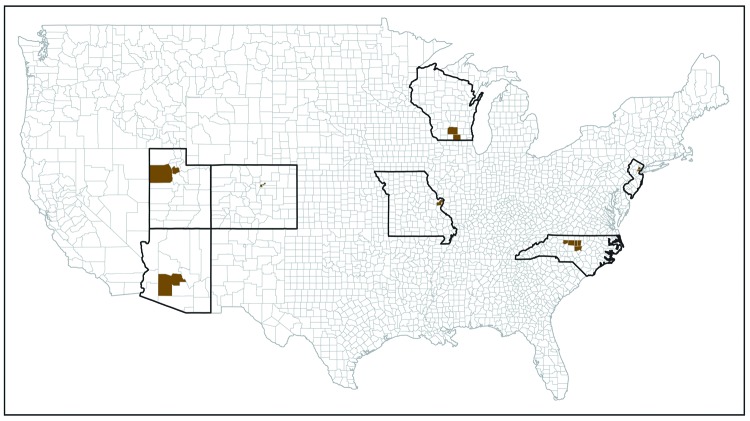
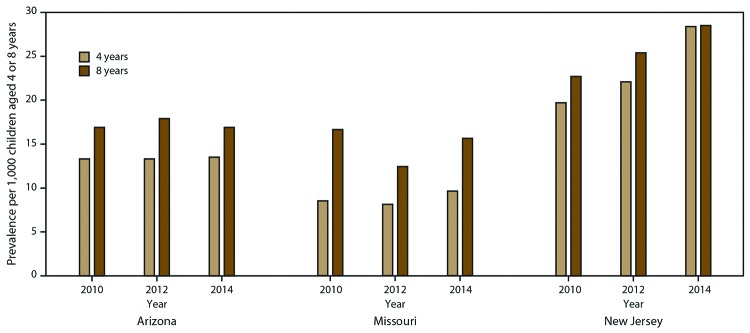
PROBLEM/CONDITION: Autism spectrum disorder (ASD) is estimated to affect up to 3% of children in the United States. Public health surveillance for ASD among children aged 4 years provides information about trends in prevalence, characteristics of children with ASD, and progress made toward decreasing the age of identification of ASD so that evidence-based interventions can begin as early as possible. PERIOD COVERED: 2010, 2012, and 2014. DESCRIPTION OF SYSTEM: The Early Autism and Developmental Disabilities Monitoring (Early ADDM) Network is an active surveillance system that provides biennial estimates of the prevalence and characteristics of ASD among children aged 4 years whose parents or guardians lived within designated sites. During surveillance years 2010, 2012, or 2014, data were collected in seven sites: Arizona, Colorado, Missouri, New Jersey, North Carolina, Utah, and Wisconsin. The Early ADDM Network is a subset of the broader ADDM Network (which included 13 total sites over the same period) that has been conducting ASD surveillance among children aged 8 years since 2000. Each Early ADDM site covers a smaller geographic area than the broader ADDM Network. Early ADDM ASD surveillance is conducted in two phases using the same methods and project staff members as the ADDM Network. The first phase consists of reviewing and abstracting data from children's records, including comprehensive evaluations performed by community professionals. Sources for these evaluations include general pediatric health clinics and specialized programs for children with developmental disabilities. In addition, special education records (for children aged ≥3 years) were reviewed for Arizona, Colorado, New Jersey, North Carolina, and Utah, and early intervention records (for children aged 0 to <3 years) were reviewed for New Jersey, North Carolina, Utah, and Wisconsin; in Wisconsin, early intervention records were reviewed for 2014 only. The second phase involves a review of the abstracted evaluations by trained clinicians using a standardized case definition and method. A child is considered to meet the surveillance case definition for ASD if one or more comprehensive evaluations of that child completed by a qualified professional describes behaviors consistent with the Diagnostic and Statistical Manual of Mental Disorders, 4th Edition, Text Revision (DSM-IV-TR) diagnostic criteria for any of the following conditions: autistic disorder, pervasive developmental disorder-not otherwise specified (PDD-NOS, including atypical autism), or Asperger disorder (2010, 2012, and 2014). For 2014 only, prevalence estimates based on surveillance case definitions according to DSM-IV-TR and the Diagnostic and Statistical Manual of Mental Disorders, Fifth Edition (DSM-5) were compared. This report provides estimates of overall ASD prevalence and prevalence by sex and race/ethnicity; characteristics of children aged 4 years with ASD, including age at first developmental evaluation, age at ASD diagnosis, and cognitive function; and trends in ASD prevalence and characteristics among Early ADDM sites with data for all 3 surveillance years (2010, 2012, and 2014), including comparisons with children aged 8 years living in the same geographic area. Analyses of time trends in ASD prevalence are restricted to the three sites that contributed data for all 3 surveillance years with consistent data sources (Arizona, Missouri, and New Jersey). RESULTS: The overall ASD prevalence was 13.4 per 1,000 children aged 4 years in 2010, 15.3 in 2012, and 17.0 in 2014 for Early ADDM sites with data for the specific years. ASD prevalence was determined using a surveillance case definition based on DSM-IV-TR. Within each surveillance year, ASD prevalence among children aged 4 years varied across surveillance sites and was lowest each year for Missouri (8.5, 8.1, and 9.6 per 1,000, for 2010, 2012, and 2014, respectively) and highest each year for New Jersey (19.7, 22.1, and 28.4 per 1,000, for the same years, respectively). Aggregated prevalence estimates were higher for sites that reviewed education and health care records than for sites that reviewed only health care records. Among all participating sites and years, ASD prevalence among children aged 4 years was consistently higher among boys than girls; prevalence ratios ranged from 2.6 (Arizona and Wisconsin in 2010) to 5.2 boys per one girl (Colorado in 2014). In 2010, ASD prevalence was higher among non-Hispanic white children than among Hispanic children in Arizona and non-Hispanic black children in Missouri; no other differences were observed by race/ethnicity. Among four sites with ≥60% data on cognitive test scores (Arizona, New Jersey, North Carolina, and Utah), the frequency of co-occurring intellectual disabilities was significantly higher among children aged 4 years than among those aged 8 years for each site in each surveillance year except Arizona in 2010. The percentage of children with ASD who had
Overview
The claims and statistics of this paper haven’t been checked yet.
Free: it reads the open-access text and checks the first 5 claims that cite a source we can check. Create a free account to check every claim.
Integrity signals
Registry
Cites
Statistics
Figures
Verification
Claims the paper makes
The claims and statistics of this paper haven’t been checked yet.
Free: it reads the open-access text and checks the first 5 claims that cite a source we can check. Create a free account to check every claim.
Claims other papers make about this one
Each is checked against this paper’s own text: does it say what the citing paper says it does?
The source backs part of the claim, not all of it — or backs it for a different population, condition or comparison.
In the citing paper
“Children with co-occurring intellectual disability are more likely to be identified earlier than children without intellectual disability, as indicated by an earlier median age at identification among this group (11) as well as the consistently higher proportion of children with intellectual disability at age 4 years (8,13) than at age 8 years (9,11,17).”
From Early Identification of Autism Spectrum Disorder Among Children Aged 4 Years — Autism and Developmental Disabilities Monitoring Network, 11 Sites, United States, 2018 (2021) · cites this paper as [13]
Experimental — accuracy not yet measuredThe source backs part of the claim, not all of it — or backs it for a different population, condition or comparison.
In the citing paper
“Racial disparities reflected in autism prevalence have been monitored in the United States over time and the pattern of change suggests a “catch up” in diagnosis in minorities who were initially underdiagnosed (Christensen et al., 2019; Maenner, 2020).”
From Global prevalence of autism: A systematic review update (2022) · cites this paper as Christensen et al., 2019
Experimental — accuracy not yet measuredThe source backs part of the claim, not all of it — or backs it for a different population, condition or comparison.
In the citing paper
“As approximately 45% of children with ASD experience co-occurring intellectual disability, it will be important that future studies adapt anxiety interventions for this population [7].”
From DINOSAUR: an integrated cognitive-behavioral treatment for anxiety in young children with ASD (2021) · cites this paper as [7]
Experimental — accuracy not yet measuredThe cited source says what the claim attributes to it.
In the citing paper
“The 2018 estimate for children aged 4 years was lower than the 23.0 per 1,000 ASD prevalence among children aged 8 years (11), a finding consistent with previous reports (8,13).”
The cited source says what the claim attributes to it.
In the citing paper
“The 2019 survey (Christensen et al., 2019) found a threefold variation of rate by site, where Missouri had the lowest rates (85, 81, and 96 per 10,000 for 2010, 2012, and 2014, respectively) and the highest were in New Jersey (197, 221, and 284 per 10,000, for the same years, respectively).”
From Global prevalence of autism: A systematic review update (2022) · cites this paper as Christensen et al., 2019
7 more claims about this paper
Create a free account to see every claim other papers make about this one.
Self-check
Percentages, sums and reported differences re-computed from the paper’s own numbers.
The self-check needs the paper’s full text.
Citations
Cites
2 retracted
Christensen, D. L., Baio, J., Braun, K. V. N., Bilder, D., Charles, J., Constantino, J. N., Daniels, J., Durkin, M. S., Fitzgerald, R. T., Kurzius-Spencer, M., et al. (2016) · MMWR. Surveillance Summaries · doi:10.15585/mmwr.ss6503a1 · Cited by 1,964
Self-citationRetractedChristensen, D. L., Braun, K. V. N., Baio, J., Bilder, D., Charles, J., Constantino, J. N., Daniels, J., Durkin, M. S., Fitzgerald, R. T., Kurzius-Spencer, M., et al. (2018) · MMWR. Surveillance Summaries · doi:10.15585/mmwr.ss6513a1 · Cited by 587
Self-citationRetractedDiagnostic and Statistical Manual of Mental Disorders
American Psychiatric Association (2013) · doi:10.1176/appi.books.9780890425596 · Cited by 116,369
Baio, J., Wiggins, L., Christensen, D. L., Maenner, M. J., Daniels, J., Warren, Z., Kurzius-Spencer, M., Zahorodny, W., Robinson, C., Rosenberg, et al. (2018) · MMWR. Surveillance Summaries · doi:10.15585/mmwr.ss6706a1 · Cited by 6,078 · cited 1×
“8 years in 2014 (13), compared with 14.”
Self-citationMaenner, M. J., Shaw, K. A., Baio, J., EdS1, Washington, A., Patrick, M., DiRienzo, M., Christensen, D. L., Wiggins, L. D., Pettygrove, S., et al. (2020) · MMWR. Surveillance Summaries · doi:10.15585/mmwr.ss6904a1 · Cited by 3,780
Self-citationDawson, G., Rogers, S., Munson, J., Smith, M., Winter, J., Greenson, J., Donaldson, A., & Varley, J. (2010) · Pediatrics · doi:10.1542/peds.2009-0958 · Cited by 2,835
Identification and Evaluation of Children With Autism Spectrum Disorders
Johnson, C. P., Myers, S. M., & and the Council on Children With Disabilities (2007) · Pediatrics · doi:10.1542/peds.2007-2361 · Cited by 2,011
Cited by
Items 201–300 of 362
Li, L., Wang, A. T., Fang, Q., & Moosbrugger, M. E. (2023) · JMIR Research Protocols · doi:10.2196/40383 · Cited by 9
Sharma, R. H., Rodberg, D., & Struik, L. C. (2023) · BMJ Open · doi:10.1136/bmjopen-2022-070906 · Cited by 7
Phetphum, C., Chomson, S., Wangwonsin, A., Prajongjeep, A., & Keeratisiroj, O. (2023) · BMJ Open · doi:10.1136/bmjopen-2023-072411 · Cited by 7
Autism Spectrum Disorder: Techniques for dental radiographic examinations.
Dailey, J. C., & Brooks, J. K. (2019) · PubMed · Cited by 13
Shamsudin, I. D., Brown, T., Yu, M., & Lentin, P. (2021) · Advances in Autism · doi:10.1108/aia-05-2020-0032 · Cited by 10
de Oliveira, I. D. B., Bittencourt, I. G. D. S., Alves, R. F. D. S., Bulhões, T. M. P., & Lúcio, I. M. L. (2025) · Aquichan · doi:10.5294/aqui.2025.25.1.8 · Cited by 6
Edwards, C., Cai, R. Y., Love, A. M. A., White, L. M., Harris, K., Brooker, K., Kendall, E. A., & Gibbs, V. (2025) · Advances in Autism · doi:10.1108/aia-06-2025-0053 · Cited by 6
Autism Spectrum Disorder (ASD): A Nursing Imperative
Sampayan, E. L., Pavuthakursar, K. D., & Bhagavathy, M. G. (2023) · International Journal of Science and Healthcare Research · doi:10.52403/ijshr.20230124 · Cited by 6
Zubizarreta, S. C.-P., Mosquera, M. L., Tubío-Fungueiriño, M., Alemany-Navarro, M., Hull, L., Carracedo, Á., Gándara-Gafo, B., & Fernández‐Prieto, M. (2025) · Autism in Adulthood · doi:10.1089/aut.2024.0003 · Cited by 7
The Cheyenne River Sioux Tribe resists JUUL’s targeted exploitation
O’Leary, R., Zelikoff, J. T., Meltzer, G., Hemmerich, N., & Erdei, E. (2021) · Tobacco Control · doi:10.1136/tobaccocontrol-2021-056813 · Cited by 6
Grot, M., Białek-Dratwa, A., Krupa-Kotara, K. H., Grajek, M. K., Nigowski, M., Szczepańska, E., & Kowalski, O. (2024) · Pediatria Polska · doi:10.5114/polp.2024.135986 · Cited by 6
Keeping Rural Infants Alive: Combatting Structural Inequities
Kozhimannil, K. B. (2020) · PEDIATRICS · doi:10.1542/peds.2020-025486 · Cited by 7
Xia, S., & Xu, H. (2022) · Neuroscience Bulletin · doi:10.1007/s12264-022-00824-x · Cited by 6
Iyanna, N., Yolton, K. A., LeMasters, G. K., Lanphear, B. P., Cecil, K. M., Schwartz, J. D., Brokamp, C., Rasnick, E., Xu, Y. Y., MacDougall, M. C., et al. (2023) · International Journal of Hygiene and Environmental Health · doi:10.1016/j.ijheh.2023.114172 · Cited by 6
Kütük, M. Ö., Tufan, A. E., Kılıçaslan, F., Aksu, G. G., Çelik, F., Altıntaş, E., Gökçen, C., Karadağ, M., Yektaş, Ç., Mutluer, T., et al. (2021) · Journal of Autism and Developmental Disorders · doi:10.1007/s10803-021-04914-z · Cited by 6
Chihuri, S., Blanchard, A., DiGuiseppi, C. G., & Li, G. (2024) · Journal of Autism and Developmental Disorders · doi:10.1007/s10803-023-06091-7 · Cited by 5
“Christensen et al., 2019 found a threefold variation of ASD rate by site, where Missouri (Midwestern region) had the lowest rates in 2010, 2012, and 2014 and New Jersey (Northeastern region) had the highest rates (Christensen et al., 2019).”
Lau, D., Tybor, D. J., Perrin, E. C., & Sakai, C. (2021) · Journal of Developmental & Behavioral Pediatrics · doi:10.1097/dbp.0000000000001047 · Cited by 6
Autism spectrum disorder: evaluation of community-based screening program
Sezerol, M. A., & Davun, S. (2024) · TURKISH JOURNAL OF MEDICAL SCIENCES · doi:10.55730/1300-0144.5822 · Cited by 6
“Consistent with previous evidence, recent studies continue to report an increase in measured prevalence over time for certain subgroups at the country level [15, 16].”
Sex Differences in Sleep and Physical Activity Patterns in Autism Spectrum Disorder
Bricout, V., Covain, S., Paterno, J., & Guinot, M. (2024) · Clocks & Sleep · doi:10.3390/clockssleep6040049 · Cited by 5
Hernández‐Arteaga, E., Candia, J. A. C., Pluma-Romo, R., Solís-Meza, M. I., Villafuerte-Vega, M. N., & Guevara, F. A. (2025) · Neuroglia · doi:10.3390/neuroglia6020018 · Cited by 6
Daharlı, E., YILMAZ, S., & Koşan, Z. (2025) · Journal of Psychosocial Rehabilitation and Mental Health · doi:10.1007/s40737-025-00475-x · Cited by 6
Protecting Youth From Tobacco Around the Globe: Evidence to Practice
Ahluwalia, I. B., Wilson, K. M., & Gorzkowski, J. (2020) · PEDIATRICS · doi:10.1542/peds.2020-1585 · Cited by 5
Cui, K., Li, L., Li, K., Xiao, W., & Wang, Q. (2024) · NeuroToxicology · doi:10.1016/j.neuro.2024.07.012 · Cited by 5
Nygren, G., Gillberg, C., & Carlsson, E. (2025) · Frontiers in Pediatrics · doi:10.3389/fped.2025.1501650 · Cited by 5
Long, D., Yang, T., Chen, J., Zhang, J., Dai, Y., Chen, L., Jia, F., Wu, L., Hao, Y., Li, L., et al. (2025) · Child and Adolescent Psychiatry and Mental Health · doi:10.1186/s13034-025-00858-9 · Cited by 7
“…from the Centers for Disease Control and Prevention in the United States, the prevalence of ASD in 4-year-old children increased from 1.34% in 2010 [2] to 2.15% in 2020; [3] the prevalence of ASD in 5-year-old children in Japan also increased from 0.27% in 2005 [4] to 1.31% in 2019 [5], making it…”
InfluentialRuss, J. B., Stone, A. C., Maney, K., Morris, L. C., Wright, C. F., Hurst, J. H., & Cohen, J. L. (2025) · Scientific Reports · doi:10.1038/s41598-025-05117-7 · Cited by 5
Drouillard, B. (2019) · Scholarship at UWindsor (University of Windsor) · Cited by 6
Autism Spectrum Disorder: Epidemiological Perspective
Safwi, S. R., Rizvi, A., & Usmani, M. A. (2024) · Springer eBooks · doi:10.1007/978-3-031-40858-8_120-1 · Cited by 5
Electronic Vapor Product Use and Sexual Risk Behaviors in US Adolescents
Rigsby, D. C., Keim, S. A., Milanaik, R., & Adesman, A. (2021) · Pediatrics · doi:10.1542/peds.2020-022533 · Cited by 4
Lopez-Espejo, M. A., Nuñez, A. C., Saez, V., Ruz, M., Moscoso, O. C., & Vives, A. (2024) · Journal of Autism and Developmental Disorders · doi:10.1007/s10803-024-06376-5 · Cited by 4
“As a result, families have access to specialized evaluation earlier than they had decades ago (Christensen et al., 2019).”
Wittenberg, R. E., Yun, S., Yang, K., Swanson, O. K., Wolfman, S. L., Colón, L. M., Eisch, A. J., & Dani, J. A. (2025) · Biological Psychiatry · doi:10.1016/j.biopsych.2025.05.027 · Cited by 4
Scott, N. E., Zhou, X., Wash, E., Zajac, C., Kline, S. E., Erayil, S. E., & Selmecki, A. M. (2026) · Microbial Genomics · doi:10.1099/mgen.0.001659 · Cited by 5
Augé, P., Maruani, A., Humeau, É., Ellul, P., Cartigny, A., Lefebvre, A., Dellapiazza, F., Delorme, R., & Peyre, H. (2024) · Journal of Autism and Developmental Disorders · doi:10.1007/s10803-024-06385-4 · Cited by 7
“Their prevalence is currently estimated at 2.2% (Christensen et al., 2019).”
InfluentialRamadhanty, C., Simanungkalit, S. F., Octaria, Y. C., & Maryusman, T. (2024) · Amerta Nutrition · doi:10.20473/amnt.v8i2.2024.206-213 · Cited by 4
Wang, B., Han, F., Ding, P., Tong, J., Liu, K., Yan, S., Wang, S., Chen, G., Wu, X., Huang, K., et al. (2024) · Environment & Health · doi:10.1021/envhealth.4c00032 · Cited by 5
Telehealth general case parent training for children at risk for autism
Shingleton‐Smith, C., Koudys, J., Azzano, A., & Feldman, M. A. (2024) · Journal of Applied Behavior Analysis · doi:10.1002/jaba.2913 · Cited by 4
Ramani, R. G., Fatima, B., Hussain, A., Shahid, U., Kamani, A., Bakar, S. M. A., Naveed, H., Naveed, T., Aftab, S. A., & Abbasi, A. Z. (2025) · Neurological Sciences · doi:10.1007/s10072-025-08065-2 · Cited by 6
“…in the treatment of TSC’s neuro - logical symptoms appears to provide a favorable outcome, the method needs more rigorous clinical trials in patients, as well as more sustainability and safety assessment in the treatment of major TSC’s neurological and psychiatric man - ifestations [26].”
Do Referral Factors Predict a Probable Autism Spectrum Disorder Diagnosis? A DBPNet Study
High, P. C., Silver, E. J., Stein, R. E. K., Roizen, N., Augustyn, M. C., & Blum, N. J. (2021) · Academic Pediatrics · doi:10.1016/j.acap.2021.05.025 · Cited by 4
Suleymanova, Z. Y., Ustinova, N. V., & Turti, T. V. (2022) · Педиатрическая фармакология · doi:10.15690/pf.v19i2.2397 · Cited by 5
Neurodevelopmental–behavioural paediatrics
McDowell, M., & Lesslie, J. (2019) · Current Opinion in Pediatrics · doi:10.1097/mop.0000000000000819 · Cited by 4
Long, M., & Register‐Brown, K. (2021) · Pediatrics in Review · doi:10.1542/pir.2020-000547 · Cited by 5
AZİMOVA, L., ÖZKUL, E., & Ergün, C. (2021) · European Journal of Science and Technology · doi:10.31590/ejosat.1009725 · Cited by 5
Lirola, F. V. (2022) · Revista CENTRA de Ciencias Sociales · doi:10.54790/rccs.10 · Cited by 4
“Christensen et al. (2019) 2,6 2010 Reino Unido Taylor et al. (2013) 4,8 2012 Alemania Bachann et al. (2018) 2,8 2014 Polonia Skonieczna Zydecka et al. (2017) 4,5 Colorado (EE.”
BackgroundInfluentialUsing the syndrome approach to the diagnosis of autism in children
Tkachuk, E. A. (2022) · Meditsinskiy sovet = Medical Council · doi:10.21518/2079-701x-2022-16-12-200-204 · Cited by 4
Evaluation of Race and Ethnicity Across a Statewide System of Early Autism Evaluation
Martin, A. M., Ciccarelli, M. R., Swigonski, N. L., & Keehn, R. M. (2022) · The Journal of Pediatrics · doi:10.1016/j.jpeds.2022.10.023 · Cited by 4
Karanges, E. A., Nangla, C., Parker, L., Fabbri, A., Farquhar, C. M., & Bero, L. A. (2021) · BMJ Open · doi:10.1136/bmjopen-2021-049710 · Cited by 4
Observational methods for human studies of transgenerational effects
Steed, R. R., Wan, N., Bakian, A. V., Medina, R., Brewer, S., Smith, K. R., & VanDerslice, J. A. (2024) · Epigenetics · doi:10.1080/15592294.2024.2366065 · Cited by 3
Martin, A. M., Keehn, B., Paxton, A., Ciccarelli, M. R., & Keehn, R. M. (2024) · Journal of Developmental & Behavioral Pediatrics · doi:10.1097/dbp.0000000000001298 · Cited by 3
Wooten, S., Catley, D., Miller, M. K., Wilson, K. M., Richter, K. P., & Masonbrink, A. R. (2025) · BMJ Open · doi:10.1136/bmjopen-2024-094323 · Cited by 3
Suh, H., & Kientz, J. A. (2025) · JMIR Pediatrics and Parenting · doi:10.2196/73443 · Cited by 3
Shuffling babies and autism spectrum disorder
Okai, Y., Nakata, T., Miura, K., Ohno, A., Wakako, R., Takahashi, O., Maki, Y., Tanaka, M., Sakaguchi, Y., Ito, Y., et al. (2020) · Brain and Development · doi:10.1016/j.braindev.2020.08.007 · Cited by 3
Dews, E. A., Teixeira, J. E., Huston, C. D., Meyers, M. J., & Hyson, P. R. (2025) · Antimicrobial Agents and Chemotherapy · doi:10.1128/aac.00035-25 · Cited by 3
Xie, X.-N., Li, Y., Lei, X., & Li, Y.-M. (2019) · Medicine · doi:10.1097/md.0000000000017274 · Cited by 3
Parental Attitudes and the Attitude to Energy Saving among Young People with ASD
Gagat‐Matuła, A., Frączek, B., & Dewalska–Opitek, A. (2021) · Energies · doi:10.3390/en14175353 · Cited by 3
Ruthes, V. B. T. N. M., Mazza, V. D. A., Ribeiro, M. B., Weissheimer, G., & Freitas, C. A. S. L. (2021) · Revista Família Ciclos de Vida e Saúde no Contexto Social · doi:10.18554/refacs.v9i0.5053 · Cited by 3
Patients with Sickle Cell Disease and Autism Spectrum Disorder
McNeely, S. R., Unguru, Y., Yang, E., Fixler, J., Cannon, A. D., Menon, D. U., & Lance, E. I. (2021) · Advances in Neurodevelopmental Disorders · doi:10.1007/s41252-021-00218-6 · Cited by 3
Mala, K. Z., & Taha, P. H. (2022) · The Journal of The University of Duhok · doi:10.26682/sjuod.2022.25.2.16 · Cited by 3
Developmental Functioning of Infants and Toddlers with Neurodevelopmental Disorders
Callahan, M., Matson, J. L., & Tevis, C. M. (2023) · Developmental Neurorehabilitation · doi:10.1080/17518423.2023.2166615 · Cited by 4
Assisted human reproduction and pregnancy outcomes in Alberta, 2009–2018: a population-based study
Moore, L. E., Haijhosseini, M., Motan, T., & Kaul, P. (2023) · CMAJ Open · doi:10.9778/cmajo.20220073 · Cited by 3
Luhach, K., Sharma, P., Sharma, N., Dhiman, N., Kharkwal, H., & Sharma, B. (2023) · Springer eBooks · doi:10.1007/978-3-031-42383-3_3 · Cited by 4
Ganz, O., Krueger, E. A., Tan, A. S. L., Talbot, E. M., Delnevo, C. D., & Cantrell, J. (2024) · Annals of LGBTQ Public and Population Health · doi:10.1891/lgbtq-2022-0036 · Cited by 3
A set of diagnostic tests for detection of active Babesia duncani infection
Chand, M., Vydyam, P., Pal, A. C., Thekkiniath, J., Darif, D., Li, Z., Choi, J., Magni, R., Luchini, A., Tonnetti, L., et al. (2024) · International Journal of Infectious Diseases · doi:10.1016/j.ijid.2024.107178 · Cited by 3
Papadopoulos, A. A., Tafiadis, D., Tsapara, A., Chaniotaki, M.-A., Voniati, L., Prentza, A. I., Papadopoulos, L., Trimmis, N., Plotas, P., & Siafaka, V. (2024) · Neuroscience Research Notes · doi:10.31117/neuroscirn.v7i3.327 · Cited by 3
Tauras, J. A., Diaz, M. C., Schillo, B., & Vallone, D. (2021) · Tobacco Control · doi:10.1136/tobaccocontrol-2021-056830 · Cited by 3
Strategies Managers Use to Integrate Autistic Employees into a Diverse Workforce
Chambers, E. V. (2024) · ScholarWorks (Walden University) · Cited by 3
Low-intensity ABA intervention for young children with ASD in Italy
Casarini, F., Du, L., & Galanti, E. (2024) · European Journal of Behavior Analysis · doi:10.1080/15021149.2024.2417494 · Cited by 2
“Furthermore, multiple studies conducted across Europe, Asia, and North America now indicate that autism affects between 1% and 2% of the global population (Christensen et al., 2019; Newschaffer et al., 2005).”
Muthuka, J. K., Onyango, C., Nzioki, J. M., Chebungei, L., Zimunya, R., Simengwa, A., Kim, S., Nshimirimana, D. A., & Nabaweesi, R. (2026) · Cureus · doi:10.7759/cureus.106260 · Cited by 4
“Nine studies were judged to have a low risk of bias, exhibiting comprehensive population coverage, standardized diagnostic criteria, and robust outcome measures [14,16-18,20-22 20-22 ,25”
Cumulative Incidence and Prevalence of Autism Spectrum Disorder
Kim, Y. S., Liu, X., Chang, J., Koh, Y., Kim, J., Choi, Y., Cho, Y. J., Fombonne, E. J., & LEVENTHAL, B. L. (2026) · Archives of Pediatrics and Adolescent Medicine · doi:10.1001/jamapediatrics.2026.4066 · Cited by 2
Ahmadi, S., aghvamy, M. A., & Afshingoo, M. (2020) · Preventive Care In Nursing and Midwifery Journal · doi:10.52547/pcnm.10.1.56 · Cited by 3
Health and Developmental Outcomes of Very Preterm and Very Low-Birth-Weight Infants
Campbell, D. E., & Imaizumi, S. O. (2020) · American Academy of PediatricsItasca, IL eBooks · doi:10.1542/9781610022255-41 · Cited by 2
O PROCESSO DE DIAGNÓSTICO DO TRANSTORNO DO ESPECTRO AUTISTA DESDE DIFERENTES PERSPECTIVAS
Morais, R. M., Lazaretti, G. F., de Vasconcelos, S. S. N., & Pujals, C. (2022) · Psicologia e Saúde em Debate · doi:10.22289/2446-922x.v8n1a17 · Cited by 2
PECULIARITIES OF EATING BEHAVIOR IN CHILDREN WITH AUTISTIC SPECTRUM DISORDERS
Стоєва, Т. В., Bratkova, L. B., Федин, М. В., Godlevska, T. L., Тіткова, О. В., Джагиашвили, О. В., & Papinko, R. M. (2023) · Wiadomości Lekarskie · doi:10.36740/wlek202303107 · Cited by 2
Moran, M. B., Czaplicki, L., Tadesse, L., Handy, J., Welding, K., Kelley, D., & Kennedy, R. D. (2023) · BMJ Open · doi:10.1136/bmjopen-2022-070212 · Cited by 2
The Relationship between Early Exposure to General Anesthesia and Neurobehavioral Deficits
Xu, J., Wang, F., Gao, Y., Qi, C., Chen, T., & Yan, J. J. (2024) · Developmental Neuroscience · doi:10.1159/000542005 · Cited by 3
Insights on Prospects of Natural Products in the Management of Autism
Goyal, R., Manchanda, N., & Gautam, R. K. (2025) · IGI Global eBooks · doi:10.4018/979-8-3693-8176-2.ch005 · Cited by 2
Obstacles to Success of Students with Autism Spectrum Disorder in General Education Settings
McKeithan, G. K., Cullinan, D., Pennington, M. L., & Conroy, D. S. (2020) · Journal of Education and Training Studies · doi:10.11114/jets.v8i11.5039 · Cited by 2
Trends in Incidence of Nicotine Use Disorder Among Adolescents in the Pediatric Hospital, 2012–2019
Masonbrink, A. R., Richardson, T., Hall, M., Catley, D., & Wilson, K. M. (2021) · Hospital Pediatrics · doi:10.1542/hpeds.2020-0183 · Cited by 2
Embedded research approaches to address the needs of the increasing, aging autistic population
Shea, L., & Nonnemacher, S. L. (2021) · Healthcare · doi:10.1016/j.hjdsi.2020.100517 · Cited by 2
Yoliadi, D. N. (2023) · Jurnal Teknik Informatika C I T Medicom · doi:10.35335/cit.vol15.2023.339.pp58-72 · Cited by 2
“…Manual of Mental Disorders as a standard reference that can be used universally to identify different types of mental developmental disorders [8][9][10], so that with this reference, there is already a standard value that will be obtained from the test results to determine whether a person has…”
BackgroundEditorial: Children's neurodevelopment in the post-COVID era: From hospital to community
Diamond, G. W., & Merrick, J. (2022) · Frontiers in Pediatrics · doi:10.3389/fped.2022.976884 · Cited by 4
Autism Spectrum Disorder: The New Asthma?
Kraft, C. A., Chamanadjian, C. A., & Aylward, B. S. (2022) · Clinical Pediatrics · doi:10.1177/00099228221144146 · Cited by 2
Muthuka, J. K., Onyango, C., Nzioki, J., Chebungei, L., Zimunya, R., Simengwa, A., Kim, S., & Nabaweesi, R. (2025) · medRxiv · doi:10.64898/2025.12.06.25341750 · Cited by 4
Finkelman, M., Wei, T., & Lowe, S. R. (2021) · Journal of Psychopathology and Behavioral Assessment · doi:10.1007/s10862-020-09853-0 · Cited by 1
(2024) · International Research Journal of Modernization in Engineering Technology and Science · doi:10.56726/irjmets48022 · Cited by 1
Epidemiological Surveys of ASD: Current Findings and New Directions
Fombonne, E. J. (2023) · Springer eBooks · doi:10.1007/978-3-031-42383-3_13 · Cited by 2
Assunção-Luiz, A. V., Santos, M. J. S. F. L., da Silva, A. A., Lopes, D. A. G. D. S., Pitta, N. C., Ribeiro, M. S., dos Santos, J. T. T., & Alpes, M. F. (2024) · Caderno Pedagógico · doi:10.54033/cadpedv21n4-151 · Cited by 1
Living with the delusion of autism recovery: A grounded theory study on the experiences of mothers
Işik‐Uslu, A. E., & Çetin, Z. (2025) · Journal of Pediatric Nursing · doi:10.1016/j.pedn.2025.02.004 · Cited by 1
The Role of Extracellular Vesicles in Neuropsychiatric Disorders
Karimipour, M., Mirzaahmadi, B., & Rahbarghazi, R. (2025) · Advanced Pharmaceutical Bulletin · doi:10.34172/apb.025.46020 · Cited by 2
“125 A large number of autistic patients suffer from intellectual disability and have lifelong developmental disabilities in adulthood due to severe blockages in neurological and mental development.”
Muthuka, J. K., Zimunya, R., Simengwa, A., Onyango, C., Oluoch, K., Kioko, M. T., Mbari, D., Nzioki, J. M., Chebungei, L., Kim, S., et al. (2026) · Cureus · doi:10.7759/cureus.111009 · Cited by 1
“This aligns with earlier work emphasizing that pooled estimates in ASD intervention research should be interpreted as average effects across heterogeneous conditions rather than universally applicable benchmarks [72,73].”
Kim, D.-W., Boonpraman, N., Kuhn, N. C., & Sammi, S. R. (2026) · Neurochemistry International · doi:10.1016/j.neuint.2026.106240 · Cited by 1
Trends in Autism Spectrum Disorder Cumulative Incidence and Incidence Density: A Systematic Review
Kim, Y. S., Cho, Y. J., Choi, Y., & LEVENTHAL, B. L. (2026) · Biological Psychiatry · doi:10.1016/j.biopsych.2026.10.022 · Cited by 1
Tobacco Screening and Use in Hospitalized Adolescents at a Children’s Hospital
Alexander, A. D., Honan, R., Molina, A. L., Rahman, A. K. M. F., & Walley, S. C. (2021) · Hospital Pediatrics · doi:10.1542/hpeds.2020-002311 · Cited by 1
How to Help Children and Adolescents with Austism SprectrumDisorder during Covid-19 Pandemic
(2020) · Journal of Psychology and Neuroscience · doi:10.47485/2693-2490.1024 · Cited by 1
Sharmin, S., Halim, K. S., Sultan, Z., & Haque, K. M. (2022) · Community Based Medical Journal · doi:10.3329/cbmj.v10i1.58643 · Cited by 2
Description Quality of Sleep of Children With Autism
Kulsum, D. U., & Oktavia, O. (2022) · Jurnal Ilmiah Ilmu Keperawatan Indonesia · doi:10.33221/jiiki.v12i02.1650 · Cited by 1
Increase in children with developmental delay: Survey on 18-month-old children in Togane city, Japan
Uchikawa, H., Yamoto, S., & Saito, M. (2023) · Brain and Development · doi:10.1016/j.braindev.2023.01.005 · Cited by 1
Elsabbagh, M. (2023) · Springer eBooks · doi:10.1007/978-3-031-20792-1_13 · Cited by 1
Kumar, S. S., Selvakumar, K., & Murugan, V. S. (2024) · Nanotechnology Perceptions · doi:10.62441/nano-ntp.v20is1.36 · Cited by 1
Drakeford, O. M., & Majebi, N. L. (2024) · International Journal of Applied Research in Social Sciences · doi:10.51594/ijarss.v6i12.1768 · Cited by 5
A Cigarette by any other name is still a cigarette
Jenson, D. (2020) · Tobacco Control · doi:10.1136/tobaccocontrol-2019-055597 · Cited by 1
Metadata
- Authors
- Christensen, D. L., Maenner, M. J., Bilder, D., Constantino, J. N., Daniels, J., Durkin, M. S., Fitzgerald, R. T., Kurzius-Spencer, M., Pettygrove, S. D., Robinson, C., Shenouda, J., White, T., Zahorodny, W., Pazol, K., & Dietz, P.
- Affiliations
- National Center on Birth Defects and Developmental Disabilities (US)
- University of Utah (US)
- Washington University in St. Louis (US)
- University of North Carolina at Chapel Hill (US)
- University of Wisconsin–Madison (US)
- University of Arizona, Tucson
- University of Arizona (US)
- University of Colorado Anschutz (US)
- Rutgers New Jersey Medical School (US)
- Colorado Department of Public Health and Environment (US)
- ORCID
- Venue
- MMWR. Surveillance Summaries
- Published
- 2019-04-12
- Volume
- 68
- Issue
- 2
- Pages
- 1-19
- ISSN
- 1545-8636 (ISSN-L)
- 1546-0738
- PMC
- PMC6476327
- OpenAlex
- W2938148958
- Cited by
- 344
- References
- 47
- Citations by year
- 2026: 19 · 2025: 25 · 2024: 42 · 2023: 41 · 2022: 55 · 2021: 81 · 2020: 64 · 2019: 15
- FWCI
- 31.25
- Type
- journal article
- Language
- en
- Open access
- diamond
- doi.org
- Licence
- public-domain
- Locations
- MMWR Surveillance Summaries (publishedVersion, public-domain)
- PubMed Central (publishedVersion, cc-by)
- PubMed (publishedVersion)
- UA Campus Repository (The University of Arizona) (acceptedVersion, public-domain)
- Funders
- National Institute of Environmental Health Sciences (P30ES010126)
- Topics
- Life Sciences › Neuroscience › Cognitive Neuroscience › Autism Spectrum Disorder Research
- Health Sciences › Medicine › Psychiatry and Mental health › Child Nutrition and Feeding Issues
- Social Sciences › Psychology › Clinical Psychology › Family and Disability Support Research
- Keywords
- autism spectrum disorder, prevalence, ASD subtypes, pervasive developmental disorders, DSM-IV-TR, developmental disabilities
- MeSH terms
- Autism Spectrum Disorder, Child, Preschool, Female, Humans, Male, United States, Prevalence, Public Health Surveillance
About these checks
Registry, retraction, Cites and statistics results are computed, not judged, with one exception: a printed reference that no index lists is read once by a model before it counts as a citation error. Claims are extracted by a model and kept only when their quote appears verbatim in the text; each cited source is then checked, with a model’s help, for whether it says what the claim relies on. Those verdicts can be wrong — read the claim’s quote and the cited source before relying on one.
Statistics and arithmetic are recomputed, not judged.
Confidence bands are shown only for fields calibrated on our annotated test set. None is calibrated yet, so no band is shown.
What counts as a claim ›How we measure confidence ›How we check this ›
Are you an author, or do you see a problem with this page? Request a review
Data sources
Bibliographic data: Semantic Scholar, OpenAlex, Crossref.
Contains information from the Semantic Scholar Academic Graph Datasets, made available under the ODC Attribution License (ODC-BY 1.0).
Semantic Scholar’s data is described in: Kinney, R., et al. (2023). The Semantic Scholar Open Data Platform. arXiv:2301.10140.
