

Prevalence and characteristics of autism spectrum disorder among children aged 4 years - early autism and developmental disabilities monitoring network, seven sites, United States, 2010, 2012, and 2014
Open accessThe DOI matches its Crossref record; 45 of the 47 references it cites were found in a registry or an index.
Abstract
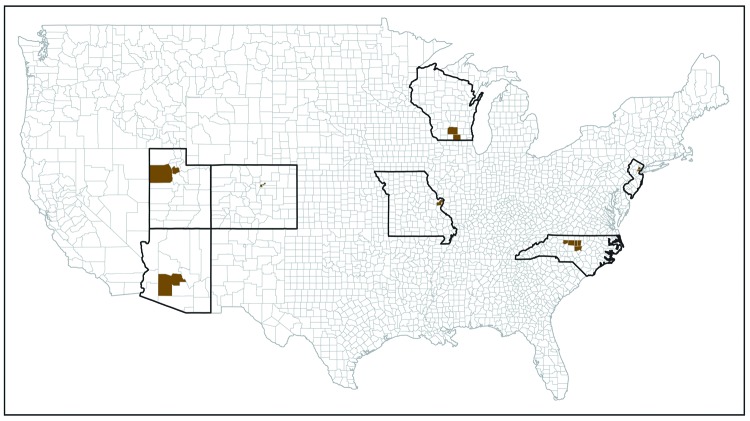
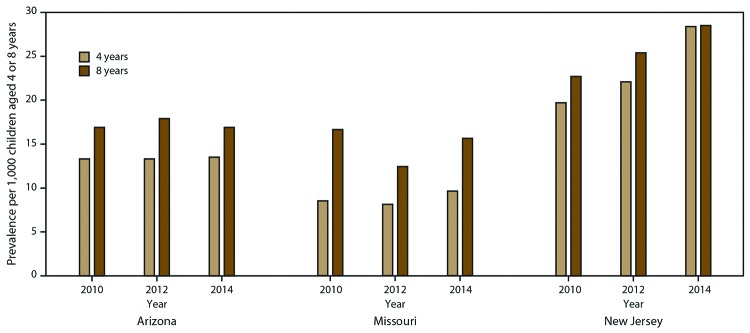
PROBLEM/CONDITION: Autism spectrum disorder (ASD) is estimated to affect up to 3% of children in the United States. Public health surveillance for ASD among children aged 4 years provides information about trends in prevalence, characteristics of children with ASD, and progress made toward decreasing the age of identification of ASD so that evidence-based interventions can begin as early as possible. PERIOD COVERED: 2010, 2012, and 2014. DESCRIPTION OF SYSTEM: The Early Autism and Developmental Disabilities Monitoring (Early ADDM) Network is an active surveillance system that provides biennial estimates of the prevalence and characteristics of ASD among children aged 4 years whose parents or guardians lived within designated sites. During surveillance years 2010, 2012, or 2014, data were collected in seven sites: Arizona, Colorado, Missouri, New Jersey, North Carolina, Utah, and Wisconsin. The Early ADDM Network is a subset of the broader ADDM Network (which included 13 total sites over the same period) that has been conducting ASD surveillance among children aged 8 years since 2000. Each Early ADDM site covers a smaller geographic area than the broader ADDM Network. Early ADDM ASD surveillance is conducted in two phases using the same methods and project staff members as the ADDM Network. The first phase consists of reviewing and abstracting data from children's records, including comprehensive evaluations performed by community professionals. Sources for these evaluations include general pediatric health clinics and specialized programs for children with developmental disabilities. In addition, special education records (for children aged ≥3 years) were reviewed for Arizona, Colorado, New Jersey, North Carolina, and Utah, and early intervention records (for children aged 0 to <3 years) were reviewed for New Jersey, North Carolina, Utah, and Wisconsin; in Wisconsin, early intervention records were reviewed for 2014 only. The second phase involves a review of the abstracted evaluations by trained clinicians using a standardized case definition and method. A child is considered to meet the surveillance case definition for ASD if one or more comprehensive evaluations of that child completed by a qualified professional describes behaviors consistent with the Diagnostic and Statistical Manual of Mental Disorders, 4th Edition, Text Revision (DSM-IV-TR) diagnostic criteria for any of the following conditions: autistic disorder, pervasive developmental disorder-not otherwise specified (PDD-NOS, including atypical autism), or Asperger disorder (2010, 2012, and 2014). For 2014 only, prevalence estimates based on surveillance case definitions according to DSM-IV-TR and the Diagnostic and Statistical Manual of Mental Disorders, Fifth Edition (DSM-5) were compared. This report provides estimates of overall ASD prevalence and prevalence by sex and race/ethnicity; characteristics of children aged 4 years with ASD, including age at first developmental evaluation, age at ASD diagnosis, and cognitive function; and trends in ASD prevalence and characteristics among Early ADDM sites with data for all 3 surveillance years (2010, 2012, and 2014), including comparisons with children aged 8 years living in the same geographic area. Analyses of time trends in ASD prevalence are restricted to the three sites that contributed data for all 3 surveillance years with consistent data sources (Arizona, Missouri, and New Jersey). RESULTS: The overall ASD prevalence was 13.4 per 1,000 children aged 4 years in 2010, 15.3 in 2012, and 17.0 in 2014 for Early ADDM sites with data for the specific years. ASD prevalence was determined using a surveillance case definition based on DSM-IV-TR. Within each surveillance year, ASD prevalence among children aged 4 years varied across surveillance sites and was lowest each year for Missouri (8.5, 8.1, and 9.6 per 1,000, for 2010, 2012, and 2014, respectively) and highest each year for New Jersey (19.7, 22.1, and 28.4 per 1,000, for the same years, respectively). Aggregated prevalence estimates were higher for sites that reviewed education and health care records than for sites that reviewed only health care records. Among all participating sites and years, ASD prevalence among children aged 4 years was consistently higher among boys than girls; prevalence ratios ranged from 2.6 (Arizona and Wisconsin in 2010) to 5.2 boys per one girl (Colorado in 2014). In 2010, ASD prevalence was higher among non-Hispanic white children than among Hispanic children in Arizona and non-Hispanic black children in Missouri; no other differences were observed by race/ethnicity. Among four sites with ≥60% data on cognitive test scores (Arizona, New Jersey, North Carolina, and Utah), the frequency of co-occurring intellectual disabilities was significantly higher among children aged 4 years than among those aged 8 years for each site in each surveillance year except Arizona in 2010. The percentage of children with ASD who had
Overview
The claims and statistics of this paper haven’t been checked yet.
Free: it reads the open-access text and checks the first 5 claims that cite a source we can check. Create a free account to check every claim.
Integrity signals
Registry
Cites
Statistics
Figures
Verification
Claims the paper makes
The claims and statistics of this paper haven’t been checked yet.
Free: it reads the open-access text and checks the first 5 claims that cite a source we can check. Create a free account to check every claim.
Claims other papers make about this one
Each is checked against this paper’s own text: does it say what the citing paper says it does?
The source backs part of the claim, not all of it — or backs it for a different population, condition or comparison.
In the citing paper
“Children with co-occurring intellectual disability are more likely to be identified earlier than children without intellectual disability, as indicated by an earlier median age at identification among this group (11) as well as the consistently higher proportion of children with intellectual disability at age 4 years (8,13) than at age 8 years (9,11,17).”
From Early Identification of Autism Spectrum Disorder Among Children Aged 4 Years — Autism and Developmental Disabilities Monitoring Network, 11 Sites, United States, 2018 (2021) · cites this paper as [13]
Experimental — accuracy not yet measuredThe source backs part of the claim, not all of it — or backs it for a different population, condition or comparison.
In the citing paper
“Racial disparities reflected in autism prevalence have been monitored in the United States over time and the pattern of change suggests a “catch up” in diagnosis in minorities who were initially underdiagnosed (Christensen et al., 2019; Maenner, 2020).”
From Global prevalence of autism: A systematic review update (2022) · cites this paper as Christensen et al., 2019
Experimental — accuracy not yet measuredThe source backs part of the claim, not all of it — or backs it for a different population, condition or comparison.
In the citing paper
“As approximately 45% of children with ASD experience co-occurring intellectual disability, it will be important that future studies adapt anxiety interventions for this population [7].”
From DINOSAUR: an integrated cognitive-behavioral treatment for anxiety in young children with ASD (2021) · cites this paper as [7]
Experimental — accuracy not yet measuredThe cited source says what the claim attributes to it.
In the citing paper
“The 2018 estimate for children aged 4 years was lower than the 23.0 per 1,000 ASD prevalence among children aged 8 years (11), a finding consistent with previous reports (8,13).”
The cited source says what the claim attributes to it.
In the citing paper
“The 2019 survey (Christensen et al., 2019) found a threefold variation of rate by site, where Missouri had the lowest rates (85, 81, and 96 per 10,000 for 2010, 2012, and 2014, respectively) and the highest were in New Jersey (197, 221, and 284 per 10,000, for the same years, respectively).”
From Global prevalence of autism: A systematic review update (2022) · cites this paper as Christensen et al., 2019
7 more claims about this paper
Create a free account to see every claim other papers make about this one.
Self-check
Percentages, sums and reported differences re-computed from the paper’s own numbers.
The self-check needs the paper’s full text.
Citations
Cites
2 retracted
Christensen, D. L., Baio, J., Braun, K. V. N., Bilder, D., Charles, J., Constantino, J. N., Daniels, J., Durkin, M. S., Fitzgerald, R. T., Kurzius-Spencer, M., et al. (2016) · MMWR. Surveillance Summaries · doi:10.15585/mmwr.ss6503a1 · Cited by 1,964
Self-citationRetractedChristensen, D. L., Braun, K. V. N., Baio, J., Bilder, D., Charles, J., Constantino, J. N., Daniels, J., Durkin, M. S., Fitzgerald, R. T., Kurzius-Spencer, M., et al. (2018) · MMWR. Surveillance Summaries · doi:10.15585/mmwr.ss6513a1 · Cited by 587
Self-citationRetractedDiagnostic and Statistical Manual of Mental Disorders
American Psychiatric Association (2013) · doi:10.1176/appi.books.9780890425596 · Cited by 116,369
Baio, J., Wiggins, L., Christensen, D. L., Maenner, M. J., Daniels, J., Warren, Z., Kurzius-Spencer, M., Zahorodny, W., Robinson, C., Rosenberg, et al. (2018) · MMWR. Surveillance Summaries · doi:10.15585/mmwr.ss6706a1 · Cited by 6,078 · cited 1×
“8 years in 2014 (13), compared with 14.”
Self-citationMaenner, M. J., Shaw, K. A., Baio, J., EdS1, Washington, A., Patrick, M., DiRienzo, M., Christensen, D. L., Wiggins, L. D., Pettygrove, S., et al. (2020) · MMWR. Surveillance Summaries · doi:10.15585/mmwr.ss6904a1 · Cited by 3,780
Self-citationDawson, G., Rogers, S., Munson, J., Smith, M., Winter, J., Greenson, J., Donaldson, A., & Varley, J. (2010) · Pediatrics · doi:10.1542/peds.2009-0958 · Cited by 2,835
Identification and Evaluation of Children With Autism Spectrum Disorders
Johnson, C. P., Myers, S. M., & and the Council on Children With Disabilities (2007) · Pediatrics · doi:10.1542/peds.2007-2361 · Cited by 2,011
Cited by
Global prevalence of autism: A systematic review update
Zeidan, J., Fombonne, E., Scorah, J., Ibrahim, A., Durkin, M. S., Saxena, S., Yusuf, A., Shih, A., & Elsabbagh, M. (2022) · Autism Research · doi:10.1002/aur.2696 · Cited by 3,117
Self-citationAge at autism spectrum disorder diagnosis: A systematic review and meta-analysis from 2012 to 2019
van ’t Hof, M., Tisseur, C., van Berckelear-Onnes, I., van Nieuwenhuyzen, A., Daniels, A. M., Deen, M., Hoek, H. W., & Ester, W. A. (2021) · Autism · doi:10.1177/1362361320971107 · Cited by 499
“…to those included in the Daniels and Mandell (2014) review all included populations with children aged ⩽10 years (Christensen, Baio, et al., 2016; Christensen et al., 2019; Garrido et al., 2018; Manohar et al., 2019; Mishaal et al., 2014) or had a majority of the children aged ⩽10 years (Jo et…”
BackgroundSalari, N., Rasoulpoor, S., Rasoulpoor, S., Shohaimi, S., Jafarpour, S., Abdoli, N., Khaledi-Paveh, B., & Mohammadi, M. (2022) · Italian Journal of Pediatrics · doi:10.1186/s13052-022-01310-w · Cited by 571
Drug Addiction: Hyperkatifeia/Negative Reinforcement as a Framework for Medications Development
Koob, G. F. (2021) · Pharmacological Reviews · doi:10.1124/pharmrev.120.000083 · Cited by 337
Bougeard, C., Picarel-Blanchot, F., Schmid, R., Campbell, R., & Buitelaar, J. (2021) · Frontiers in Psychiatry · doi:10.3389/fpsyt.2021.744709 · Cited by 330
The global prevalence of autism spectrum disorder: A three-level meta-analysis
Talantseva, O. I., Romanova, R. S., Shurdova, E. M., Dolgorukova, T. A., Sologub, P. S., Titova, O. S., Kleeva, D. F., & Grigorenko, E. L. (2023) · Frontiers in Psychiatry · doi:10.3389/fpsyt.2023.1071181 · Cited by 318
Shaw, K. A., Maenner, M. J., Baio, J., EdS1, Washington, A., Christensen, D. L., Wiggins, L. D., Pettygrove, S., Andrews, J. G., White, T., et al. (2020) · MMWR. Surveillance Summaries · doi:10.15585/mmwr.ss6903a1 · Cited by 286
Self-citationAccuracy of autism screening in a large pediatric network
Guthrie, W., Wallis, K., Bennett, A., Brooks, E., Dudley, J., Gerdes, M., Pandey, J., Levy, S. E., Schultz, R. T., & Miller, J. S. (2019) · Pediatrics · doi:10.1542/peds.2018-3963 · Cited by 252
Fuentes, J., Hervás, A., Howlin, P., & Party), (. A. W. (2021) · European Child & Adolescent Psychiatry · doi:10.1007/s00787-020-01587-4 · Cited by 183
Shaw, K. A., Bilder, D. A., McArthur, D., Williams, A. R., Amoakohene, E., Bakian, A. V., Durkin, M. S., Fitzgerald, R. T., Furnier, S. M., Hughes, M. M., et al. (2023) · MMWR. Surveillance Summaries · doi:10.15585/mmwr.ss7201a1 · Cited by 223
Self-citationBerenguer, C., Baixauli, I., Gómez, S., Andrés, M. D. E. P., & De Stasio, S. (2020) · International Journal of Environmental Research and Public Health · doi:10.3390/ijerph17176143 · Cited by 149
Shaw, K. A., Maenner, M. J., Bakian, A. V., Bilder, D. A., Durkin, M. S., Furnier, S. M., Hughes, M. M., Patrick, M., Pierce, K., Salinas, A., et al. (2021) · MMWR. Surveillance Summaries · doi:10.15585/mmwr.ss7010a1 · Cited by 165
Self-citationYoung, S., Hollingdale, J., Absoud, M., Bolton, P., Branney, P., Colley, W., Craze, E., Dave, M., Deeley, Q., Farrag, E., et al. (2020) · BMC Medicine · doi:10.1186/s12916-020-01585-y · Cited by 162
The Contribution of Gut Microbiota–Brain Axis in the Development of Brain Disorders
Maiuolo, J., Gliozzi, M., Musolino, V., Carresi, C., Scarano, F., Nucera, S., Scicchitano, M., Oppedisano, F., Bosco, F., Ruga, S., et al. (2021) · Frontiers in Neuroscience · doi:10.3389/fnins.2021.616883 · Cited by 165
Autism Spectrum Disorder as a Brain-Gut-Microbiome Axis Disorder
Saurman, V., Margolis, K. G., & Luna, R. A. (2020) · Digestive Diseases and Sciences · doi:10.1007/s10620-020-06133-5 · Cited by 137
Epidemiological surveys of ASD: advances and remaining challenges
Fombonne, E., MacFarlane, H., & Salem, A. C. (2021) · Journal of Autism and Developmental Disorders · doi:10.1007/s10803-021-05005-9 · Cited by 147
Updates on an At-Risk Population: Late-Preterm and Early-Term Infants
Stewart, D. L., Barfield, W. D., Cummings, J. J., Adams-Chapman, I. S., Aucott, S. W., Goldsmith, J. P., Hand, I. L., Juul, S. E., Poindexter, B. B., & Puopolo, K. M. (2019) · PEDIATRICS · doi:10.1542/peds.2019-2760 · Cited by 153
The global prevalence of autism spectrum disorder in children: a systematic review and meta-analysis
Issac, A., Halemani, K., Shetty, A. P., Thimmappa, L., Vijay, V. R., Koni, K., Mishra, P., & Kapoor, V. (2025) · Osong Public Health and Research Perspectives · doi:10.24171/j.phrp.2024.0286 · Cited by 168
Kütük, M. Ö., Tufan, A. E., Kılıçaslan, F., Aksu, G. G., Çelik, F., Altıntaş, E., Gökçen, C., Karadağ, M., Yektaş, Ç., Mutluer, T., et al. (2021) · Journal of Autism and Developmental Disorders · doi:10.1007/s10803-021-04874-4 · Cited by 142
Li, Y., Xie, X., Lei, X., Li, Y., & Lei, X. (2020) · Obesity Reviews · doi:10.1111/obr.13123 · Cited by 150
García-Gutiérrez, E., Narbad, A., & Rodríguez, J. M. (2020) · Frontiers in Neuroscience · doi:10.3389/fnins.2020.578666 · Cited by 136
Mischlinger, J., Rönnberg, C., Álvarez-Martínez, M. J., Bühler, S., Paul, M., Schlagenhauf, P., Petersen, E., & Ramharter, M. (2020) · Clinical Microbiology Reviews · doi:10.1128/cmr.00104-19 · Cited by 119
Kosillo, P., & Bateup, H. S. (2021) · Frontiers in Neural Circuits · doi:10.3389/fncir.2021.700968 · Cited by 128
Mallory, C. L., & Keehn, B. (2021) · Frontiers in Psychiatry · doi:10.3389/fpsyt.2021.695825 · Cited by 131
Qiu, C. X., Lin, J. C., Shi, J. M., Chow, T., Desai, V. N., Nguyen, V. T., Riewerts, R. J., Feldman, R. K., Segal, S., & Xiang, A. H. (2020) · Archives of Pediatrics and Adolescent Medicine · doi:10.1001/jamapediatrics.2020.3231 · Cited by 114
Impact of vaping on respiratory health
Jonas, A. M. (2022) · BMJ · doi:10.1136/bmj-2021-065997 · Cited by 125
Wang, J., Ma, B., Wang, J., Zhang, Z., & Chen, O. (2022) · Frontiers in Psychiatry · doi:10.3389/fpsyt.2022.963102 · Cited by 119
Autism Spectrum Disorder Studies Using fMRI Data and Machine Learning: A Review
Liu, M., Li, B., & Hu, D. (2021) · Frontiers in Neuroscience · doi:10.3389/fnins.2021.697870 · Cited by 106
“…spectrum disorder (ASD) is characterized by deficits in social communication and interaction and restricted and repetitive behaviors (Hull et al., 2017), which was known to be an urgent public health concern that could benefit from enhanced strategies to help identify ASD earlier (Jon et al., 2018).”
BackgroundFolic Acid and Autism: A Systematic Review of the Current State of Knowledge
Hoxha, B., Hoxha, M., Domi, E., Gervasoni, J., Persichilli, S., Малај, В., & Zappacosta, B. (2021) · Cells · doi:10.3390/cells10081976 · Cited by 111
Drug development for Autism Spectrum Disorder (ASD): Progress, challenges, and future directions
McCracken, J. T., Anagnostou, E. A., Arango, C., Dawson, G., Farchione, T. R., Mantua, V., McPartland, J. C., Murphy, D., Pandina, G., & Veenstra-VanderWeele, J. M. (2021) · European Neuropsychopharmacology · doi:10.1016/j.euroneuro.2021.05.010 · Cited by 98
Wang, T., Kim, C. N., Bakken, T. E., Gillentine, M. A., Henning, B., Mao, Y., Gilissen, C., Nowakowski, T. J., Eichler, E. E., Acampado, J., et al. (2022) · Proceedings of the National Academy of Sciences · doi:10.1073/pnas.2203491119 · Cited by 96
Transtorno do Espectro do Autismo
Vital, A. A. F., GARCIA, A. H. C., SANTOS, A. P. D., Saad, A. G. D. F., DIAS, C. G. D. F., Miccas, C., de Araújo, C. O., MAGALHÃES, C. M., LOURENÇO, D. P. L., Galeti, F., et al. (2021) · doi:10.29327/558796 · Cited by 86
Doreswamy, S., Bashir, A., Castillo, J. E. G., Lahori, S., Baig, A. S., Narra, L. R., Patel, P. A., & Heindl, S. E. (2020) · Cureus · doi:10.7759/cureus.12222 · Cited by 90
Autism, Problematic Internet Use and Gaming Disorder: A Systematic Review
Murray, A., Koronczai, B., Király, O., Griffiths, M. D., Mannion, A., Leader, G., & Demetrovics, Z. (2021) · Review Journal of Autism and Developmental Disorders · doi:10.1007/s40489-021-00243-0 · Cited by 95
“Some recent studies have displayed larger prevalence rates of PIU than this estimate (Chung et al., 2019; Laconi et al., 2018; Li et al., 2018).”
BackgroundSex differences in the first impressions made by girls and boys with autism
Cola, M., Plate, S. N., Yankowitz, L. D., Petrulla, V., Bateman, L., Zampella, C., de Marchena, A. B., Pandey, J., Schultz, R. T., & Parish‐Morris, J. (2020) · Molecular Autism · doi:10.1186/s13229-020-00336-3 · Cited by 88
Systematic Review of Level 1 and Level 2 Screening Tools for Autism Spectrum Disorders in Toddlers
Petrocchi, S., Levante, A., & Lecciso, F. (2020) · Brain Sciences · doi:10.3390/brainsci10030180 · Cited by 74
Fernández‐Prieto, M., Moreira, C. S., Cruz, S., Campos, V. M. E. S., Martínez-Regueiro, R., Taboada, M., Carracedo, Á., & Sampaio, A. (2020) · Journal of Autism and Developmental Disorders · doi:10.1007/s10803-020-04648-4 · Cited by 84
Prevalence and Factors Associated With Youth Vaping Cessation Intention and Quit Attempts
Dai, H. D. (2021) · PEDIATRICS · doi:10.1542/peds.2021-050164 · Cited by 78
Sabbagh, H. J., Al-Jabri, B. A., Alsulami, M. A., Hashem, L. A., Aljubour, A. A., & Alamoudi, R. A. (2021) · Saudi Medical Journal · doi:10.15537/smj.2021.42.4.20200630 · Cited by 87
Lindroth, H. L., Nalaie, K., Raghu, R., Ayala, I. N., Busch, C., Bhattacharyya, A., Franco, P. M., Diedrich, D. A., Pickering, B. W., & Herasevich, V. (2024) · Journal of Imaging · doi:10.3390/jimaging10040081 · Cited by 87
“Autism spectrum disorder, a neurodevelopmental disorder, is increasingly prevalent in pediatric populations [239,240].”
BackgroundMenthol e-cigarette sales rise following 2020 FDA guidance
Diaz, M. C., Donovan, E. M., Schillo, B., & Vallone, D. (2020) · Tobacco Control · doi:10.1136/tobaccocontrol-2020-056053 · Cited by 70
Morales‐Hidalgo, P., Voltas, N., & Canals, J. (2021) · Autism · doi:10.1177/13623613211007717 · Cited by 76
“…suggested that environmental factors related to migration, such as stressful experiences or suboptimal pregnancy and birth conditions, may be associated with an increased risk of ASD, particularly in cases of comorbid ID or severe ASD (Crafa & Warfa, 2015; Kawa et al., 2017; Linnsand et al., 2021).”
BackgroundAssociation of Epidural Labor Analgesia With Offspring Risk of Autism Spectrum Disorders
Wall‐Wieler, E., Bateman, B. T., Hanlon‐Dearman, A., Roos, L. L., & Butwick, A. J. (2021) · Archives of Pediatrics and Adolescent Medicine · doi:10.1001/jamapediatrics.2021.0376 · Cited by 73
Public health impact of a US ban on menthol in cigarettes and cigars: a simulation study
Levy, D. T., Meza, R., Yuan, Z., Li, Y., Cadham, C. J., Sánchez‐Romero, L. M., Travis, N., Knoll, M., Liber, A. C., Mistry, R., et al. (2021) · Tobacco Control · doi:10.1136/tobaccocontrol-2021-056604 · Cited by 70
Shin, H.-M., Bennett, D. H., Calafat, A. M., Tancredi, D., & Hertz-Picciotto, I. (2020) · Environmental Research · doi:10.1016/j.envres.2020.109514 · Cited by 61
Race/Ethnicity-Resolved Time Trends in United States ASD Prevalence Estimates from IDEA and ADDM
Nevison, C. D., & Zahorodny, W. M. (2019) · Journal of Autism and Developmental Disorders · doi:10.1007/s10803-019-04188-6 · Cited by 67
Self-citationHawkins, S. S., Kruzik, C., O'Brien, M., & Levine Coley, R. (2022) · Tobacco Control · doi:10.1136/tobaccocontrol-2020-056159 · Cited by 56
Hammond, D. G., & Reid, J. L. (2023) · Tobacco Control · doi:10.1136/tc-2023-058241 · Cited by 61
Öner, Ö., & Münir, K. (2019) · Journal of Autism and Developmental Disorders · doi:10.1007/s10803-019-04160-4 · Cited by 61
Early and Repeated Screening Detects Autism Spectrum Disorder
Wieckowski, A. T., Hamner, T., Nanovic, S., Porto, K. S., Coulter, K. L., Eldeeb, S. Y., Chen, C. A., FEIN, D. A., Barton, M. L., Adamson, L. B., et al. (2021) · The Journal of Pediatrics · doi:10.1016/j.jpeds.2021.03.009 · Cited by 62
IQ in Autism Spectrum Disorder: A Population-Based Birth Cohort Study
Katusic, M. Z., Myers, S. M., Weaver, A. L., & Voigt, R. G. (2021) · Pediatrics · doi:10.1542/peds.2020-049899 · Cited by 54
Emergence and rate of autism in fragile X syndrome across the first years of life
Roberts, J. E., Bradshaw, J. L., Will, E., Hogan, A. L., McQuillin, S. D., & Hills, K. J. (2020) · Development and Psychopathology · doi:10.1017/s0954579420000942 · Cited by 55
Making Research Possible: Barriers and Solutions For Those With ASD and ID
Thurm, A., Halladay, A., Mandell, D., Maye, M., Ethridge, S., & Farmer, C. (2022) · Journal of Autism and Developmental Disorders · doi:10.1007/s10803-021-05320-1 · Cited by 52
Bennett (2023) · doi:10.1097/yco.0000000000000775 · Cited by 51
Kreslake, J. M., Diaz, M. C., Shinaba, M., Vallone, D., & Hair, E. C. (2021) · Tobacco Control · doi:10.1136/tobaccocontrol-2020-056090 · Cited by 58
Racial Differences in the Prevalence of Autism Spectrum Disorder: A Systematic Review
Gallin, Z., Kolevzon, A. M., Reichenberg, A., Hankerson, S. H., & Kolevzon, A. (2024) · Journal of Autism and Developmental Disorders · doi:10.1007/s10803-024-06403-5 · Cited by 126
“Five of the twenty-two studies (Braun et al., 2015; Christensen et al., 2019; Dickerson et al., 2017; Jarquin et al., 2011; Pedersen et al., 2012) were excluded because of insufficient information to allow data synthesis.”
Novel treatments for autism spectrum disorder based on genomics and systems biology
Baribeau, D. A., & Anagnostou, E. A. (2021) · Pharmacology & Therapeutics · doi:10.1016/j.pharmthera.2021.107939 · Cited by 56
Indoor Acoustic Requirements for Autism-Friendly Spaces
Bettarello, F., Caniato, M., Scavuzzo, G., & Gasparella, A. (2021) · Applied Sciences · doi:10.3390/app11093942 · Cited by 48
Astroglia in Autism Spectrum Disorder
Gzieło, K., & Nikiforuk, A. (2021) · International Journal of Molecular Sciences · doi:10.3390/ijms222111544 · Cited by 51
Protective Factors Against Vaping and Other Tobacco Use
Szoko, N., Ragavan, M. I., Khetarpal, S. K., Chu, K., & Culyba, A. J. (2021) · PEDIATRICS · doi:10.1542/peds.2020-048066 · Cited by 47
de Lima, T. A., Zuanetti, P. A., Nunes, M. E. N., & Hamad, A. P. A. (2022) · World Journal of Pediatrics · doi:10.1007/s12519-022-00629-y · Cited by 47
The current state of tobacco cessation treatment
Choi, H., Ataucuri-Vargas, J., Lin, C., & Singrey, A. M. (2021) · Cleveland Clinic Journal of Medicine · doi:10.3949/ccjm.88a.20099 · Cited by 46
Buchan, B. W., Jobe, D. A., Mashock, M. J., Gerstbrein, D., Faron, M. L., Ledeboer, N. A., & Callister, S. M. (2019) · Journal of Clinical Microbiology · doi:10.1128/jcm.00513-19 · Cited by 47
Salvatore, G. L., Simmons, C. A., & Tremoulet, P. D. (2021) · Journal of Autism and Developmental Disorders · doi:10.1007/s10803-021-05327-8 · Cited by 44
Bakulski, K. M., Dou, J., Feinberg, J. I., Aung, M. T., Ladd‐Acosta, C., Volk, H. E., Newschaffer, C. J., Croen, L., Hertz‐Picciotto, I., Levy, S. E., et al. (2021) · Frontiers in Molecular Neuroscience · doi:10.3389/fnmol.2021.775390 · Cited by 47
“Autism spectrum disorder (ASD) is a complex neurodevelopmental disorder estimated to affect one in 54 US children by age 8 years (Maenner et al., 2020).”
BackgroundBougeard, C., Picarel-Blanchot, F., Schmid, R., Campbell, R., & Buitelaar, J. K. (2024) · FOCUS The Journal of Lifelong Learning in Psychiatry · doi:10.1176/appi.focus.24022005 · Cited by 49
Purine signaling pathway dysfunction in autism spectrum disorders: Evidence from multiple omics data
Dai, S. Y., Lin, J., Hou, Y., Luo, X., Shen, Y., & Ou, J. (2023) · Frontiers in Molecular Neuroscience · doi:10.3389/fnmol.2023.1089871 · Cited by 42
Li, H., Liu, H., Chen, X., Zhang, J., Tong, G., & Sun, Y. (2020) · European Journal of Pediatrics · doi:10.1007/s00431-020-03826-x · Cited by 42
Cytokine expression profiles in Autism spectrum disorder: A multi-center study from Turkey
Kütük, M. Ö., Tufan, A. E., Gökçen, C., Kılıçaslan, F., Karadağ, M., Mutluer, T., Yektaş, Ç., Coban, N., Kandemır, H., Büber, A., et al. (2020) · Cytokine · doi:10.1016/j.cyto.2020.155152 · Cited by 42
Barrientos‐Gutiérrez, I., Islam, F., Cho, Y. J., Salloum, R. G., Louviere, J. J., Arillo‐Santillán, E., Reynales-Shigematsu, L. M., Barnoya, J., Juárez, B. S. D. M., Hardin, J. W., et al. (2020) · Tobacco Control · doi:10.1136/tobaccocontrol-2019-055463 · Cited by 38
Abnormal Levels of Metal Micronutrients and Autism Spectrum Disorder: A Perspective Review
Behl, S., Mehta, S., & Pandey, M. K. (2020) · Frontiers in Molecular Neuroscience · doi:10.3389/fnmol.2020.586209 · Cited by 43
Rice, C. E., Carpenter, L. A., Morrier, M. J., Lord, C., DiRienzo, M., Boan, A. D., Skowyra, C., Fusco, A., Baio, J., Esler, A., et al. (2022) · Journal of Autism and Developmental Disorders · doi:10.1007/s10803-021-05377-y · Cited by 49
Self-citationAutism Spectrum Disorder Associated with Germline Heterozygous PTEN Mutations
Frazier, T. W. (2019) · Cold Spring Harbor Perspectives in Medicine · doi:10.1101/cshperspect.a037002 · Cited by 37
“Early identification is improving: the average age of diagnosis in the United States is now ∼4 years old (Baio et al. 2018; Christensen et al. 2019), a substantial reduction over a decade ago (Shattuck et al. 2009).”
BackgroundBejarano‐Martín, Á., Canal‐Bedia, R., Magán‐Maganto, M., Fernández-Álvarez, C. J., Jonsdottir, S. L., Sæmundsen, E., Vicente, A. M., Café, C., Rasga, C., Primo, P. G., et al. (2020) · Early Childhood Research Quarterly · doi:10.1016/j.ecresq.2020.01.004 · Cited by 40
Pathogen influence on epidemiology, diagnostic evaluation and management of infective endocarditis
Talha, K. M., DeSimone, D. C., Sohail, M. R., & Baddour, L. M. (2020) · Heart · doi:10.1136/heartjnl-2020-317034 · Cited by 41
Perihan, C., Biçer, A., & Bocanegra, J. O. (2021) · School Mental Health · doi:10.1007/s12310-021-09461-7 · Cited by 42
Machine Learning-Based Blood RNA Signature for Diagnosis of Autism Spectrum Disorder
Voinsky, I., Fridland, O. Y., Aran, A. A., Frye, R. E., & Gurwitz, D. (2023) · International Journal of Molecular Sciences · doi:10.3390/ijms24032082 · Cited by 41
Schwartzman, J. M., Hardan, A. Y., & Gengoux, G. W. (2021) · Autism · doi:10.1177/1362361321998560 · Cited by 35
“Autism spectrum disorder (ASD) has a prevalence rate as high as 1%–3% in the United States affecting 3–9 million families (Christensen et al., 2019).”
BackgroundCasalino‐Matsuda, S. M., Chen, F., González-González, F. J., Nair, A., Dib, S., Yemelyanov, A., Gates, K. L., Budinger, G. R. S., Beitel, G. J., & Sporn, P. H. S. (2020) · The Journal of Immunology · doi:10.4049/jimmunol.2000085 · Cited by 35
Vargas-Rivera, M., Kalan, M. E., Ward‐Peterson, M., Osibogun, O. I., Li, W., Brown, D. R., Eissenberg, T., & Maziak, W. (2020) · Tobacco Control · doi:10.1136/tobaccocontrol-2019-055551 · Cited by 33
Davidovitch, M., Slobodin, O., Weisskopf, M. G., & Rotem, R. S. (2020) · Autism Research · doi:10.1002/aur.2420 · Cited by 33
The Effect of Maternal Immune Activation on Social Play-Induced Ultrasonic Vocalization in Rats
Gzieło, K., Potasiewicz, A., Litwa, E., Piotrowska, D., Popik, P., & Nikiforuk, A. (2021) · Brain Sciences · doi:10.3390/brainsci11030344 · Cited by 32
Youth susceptibility to tobacco use: is it general or specific?
Cheng, H. G., Lizhnyak, P. N., Knight, N. A., Vansickel, A. R., & Largo, E. G. (2021) · BMC Public Health · doi:10.1186/s12889-021-11956-6 · Cited by 33
Smith, J. R., Hopkins, C. E., Xiong, J., Luccarelli, J., Shultz, E. K. B., & Vandekar, S. (2022) · Journal of Autism and Developmental Disorders · doi:10.1007/s10803-022-05868-6 · Cited by 34
“( American Psychiatric Association, 2013) The Centers for Disease Control estimates that 31–50% of individuals with ASD meet criteria for ASD+ID. (Christensen, 2019; Maenner, 2020) However, studies have found that only 6% of participants in ASD research have ASD+ID; (Russell et al., 2019) with rates of inclusion poten…”
Lee, E., Cho, J., & Kim, K. Y. (2019) · International Journal of Environmental Research and Public Health · doi:10.3390/ijerph16204042 · Cited by 37
Linker, S. B., Mendes, A. P. D., & Marchetto, M. C. (2020) · Molecular Autism · doi:10.1186/s13229-020-00359-w · Cited by 31
Recent genetic and functional insights in autism spectrum disorder
Nakanishi, M., Anderson, M. P., & Takumi, T. (2019) · Current Opinion in Neurology · doi:10.1097/wco.0000000000000718 · Cited by 35
OpenVape: An Open-Source E-Cigarette Vapor Exposure Device for Rodents
Frie, J. A., Underhill, J., Zhao, B., de Guglielmo, G., Tyndale, R. F., & Khokhar, J. Y. (2020) · eNeuro · doi:10.1523/eneuro.0279-20.2020 · Cited by 33
Li, H., Wang, C.-X., Feng, J., Wang, B., Li, C.-L., & Jia, F. (2020) · Frontiers in Psychology · doi:10.3389/fpsyg.2020.570923 · Cited by 33
“A GQ or a subscale quotient <70 points (>2SD below the mean) is considered to indicate a significant delay in development, while a quotient >70 points indicates a mild or no delay (Cirelli et al., 2015).”
BackgroundZhang, M., Zhou, Y., Jiang, Y., Lu, Z., Xiao, X., Ning, J., Sun, H., Zhang, X., Luo, H., Can, D., et al. (2021) · Frontiers in Cell and Developmental Biology · doi:10.3389/fcell.2021.669798 · Cited by 33
Ludwig, N. N., Jashar, D. T., Sheperd, K. A., Pineda, J. L., Previ, D., Reesman, J. H., Holingue, C., & Gerner, G. J. (2021) · The Clinical Neuropsychologist · doi:10.1080/13854046.2021.2002933 · Cited by 34
Influencer prevalence and role on cigar brand Instagram pages
Navarro, M. A., O’Brien, E. K., Ganz, O., & Hoffman, L. (2020) · Tobacco Control · doi:10.1136/tobaccocontrol-2020-055994 · Cited by 30
Wang, J., Wang, X., Wang, R., Duan, X., Chen, H., He, C., Zhai, J., Chen, H., & Wu, L. (2021) · Frontiers in Physiology · doi:10.3389/fphys.2021.626338 · Cited by 36
Chin, W., Chang, H., & Chao, K. (2023) · Journal of Nursing Research · doi:10.1097/jnr.0000000000000553 · Cited by 34
Trends in Special Education Eligibility Among Children With Autism Spectrum Disorder, 2002-2010
Rubenstein, E., Daniels, J. L., Schieve, L. A., Christensen, D., Braun, K. V. N., Rice, C. E., Bakian, A. V., Durkin, M. S., Rosenberg, S. A., Kirby, R. S., et al. (2017) · Public Health Reports · doi:10.1177/0033354917739582 · Cited by 30
Self-citationEvaluation of Zn, Cu, and Se Levels in the North American Autism Spectrum Disorder Population
Mehta, S., Behl, S., Day, P. L., Delgado, A. M., Larson, N. B., Stromback, L. R., Huebner, A. R., DeGrado, T. R., Davis, J. M., Jannetto, P. J., et al. (2021) · Frontiers in Molecular Neuroscience · doi:10.3389/fnmol.2021.665686 · Cited by 29
Legg, T., Clift, B. C., & Gilmore, A. (2023) · Tobacco Control · doi:10.1136/tc-2022-057667 · Cited by 28
Report of the 2020 Special Committee on Substance Use and Pharmacy Education
Tran, T. H., Ball, J., Bratberg, J. P., DeSimone, E. M., Franko, T. S., Hill, L. G., Koh-Knox, C. P., Palombi, L. C., Ventricelli, D. J., Farrell, D. F., et al. (2020) · American Journal of Pharmaceutical Education · doi:10.5688/ajpe8421 · Cited by 28
Organoid intelligence for developmental neurotoxicity testing
Din, D. A. E., Shin, J., Lysinger, A., Roos, M. J., Johnson, E. C., Shafer, T. J., Härtung, T., & Smirnova, L. (2024) · Frontiers in Cellular Neuroscience · doi:10.3389/fncel.2024.1480845 · Cited by 28
Reelin cells and sex‐dependent synaptopathology in autism following postnatal immune activation
Ardalan, M., Chumak, T., Quist, A., Hermans, E. C., Rafati, A. H., Gravina, G., Shiadeh, S. M. J., Svedin, P., Alabaf, S., Hansen, B., et al. (2022) · British Journal of Pharmacology · doi:10.1111/bph.15859 · Cited by 28
“Similarly, a recent clinical study showed that inflammation in preterm children without severe neonatal brain lesions was associated with inferior social ability (Cogley et al., 2020; Giraud et al., 2020).”
Result
Metadata
- Authors
- Christensen, D. L., Maenner, M. J., Bilder, D., Constantino, J. N., Daniels, J., Durkin, M. S., Fitzgerald, R. T., Kurzius-Spencer, M., Pettygrove, S. D., Robinson, C., Shenouda, J., White, T., Zahorodny, W., Pazol, K., & Dietz, P.
- Affiliations
- National Center on Birth Defects and Developmental Disabilities (US)
- University of Utah (US)
- Washington University in St. Louis (US)
- University of North Carolina at Chapel Hill (US)
- University of Wisconsin–Madison (US)
- University of Arizona, Tucson
- University of Arizona (US)
- University of Colorado Anschutz (US)
- Rutgers New Jersey Medical School (US)
- Colorado Department of Public Health and Environment (US)
- ORCID
- Venue
- MMWR. Surveillance Summaries
- Published
- 2019-04-12
- Volume
- 68
- Issue
- 2
- Pages
- 1-19
- ISSN
- 1545-8636 (ISSN-L)
- 1546-0738
- PMC
- PMC6476327
- OpenAlex
- W2938148958
- Cited by
- 344
- References
- 47
- Citations by year
- 2026: 19 · 2025: 25 · 2024: 42 · 2023: 41 · 2022: 55 · 2021: 81 · 2020: 64 · 2019: 15
- FWCI
- 31.25
- Type
- journal article
- Language
- en
- Open access
- diamond
- doi.org
- Licence
- public-domain
- Locations
- MMWR Surveillance Summaries (publishedVersion, public-domain)
- PubMed Central (publishedVersion, cc-by)
- PubMed (publishedVersion)
- UA Campus Repository (The University of Arizona) (acceptedVersion, public-domain)
- Funders
- National Institute of Environmental Health Sciences (P30ES010126)
- Topics
- Life Sciences › Neuroscience › Cognitive Neuroscience › Autism Spectrum Disorder Research
- Health Sciences › Medicine › Psychiatry and Mental health › Child Nutrition and Feeding Issues
- Social Sciences › Psychology › Clinical Psychology › Family and Disability Support Research
- Keywords
- autism spectrum disorder, prevalence, ASD subtypes, pervasive developmental disorders, DSM-IV-TR, developmental disabilities
- MeSH terms
- Autism Spectrum Disorder, Child, Preschool, Female, Humans, Male, United States, Prevalence, Public Health Surveillance
About these checks
Registry, retraction, Cites and statistics results are computed, not judged, with one exception: a printed reference that no index lists is read once by a model before it counts as a citation error. Claims are extracted by a model and kept only when their quote appears verbatim in the text; each cited source is then checked, with a model’s help, for whether it says what the claim relies on. Those verdicts can be wrong — read the claim’s quote and the cited source before relying on one.
Statistics and arithmetic are recomputed, not judged.
Confidence bands are shown only for fields calibrated on our annotated test set. None is calibrated yet, so no band is shown.
What counts as a claim ›How we measure confidence ›How we check this ›
Are you an author, or do you see a problem with this page? Request a review
Data sources
Bibliographic data: Semantic Scholar, OpenAlex, Crossref.
Contains information from the Semantic Scholar Academic Graph Datasets, made available under the ODC Attribution License (ODC-BY 1.0).
Semantic Scholar’s data is described in: Kinney, R., et al. (2023). The Semantic Scholar Open Data Platform. arXiv:2301.10140.
