

Tobacco product use and associated factors among middle and high school students—United States, 2019
Open accessThe DOI matches its Crossref record; 22 of the 23 references it cites were found in a registry or an index.
Abstract
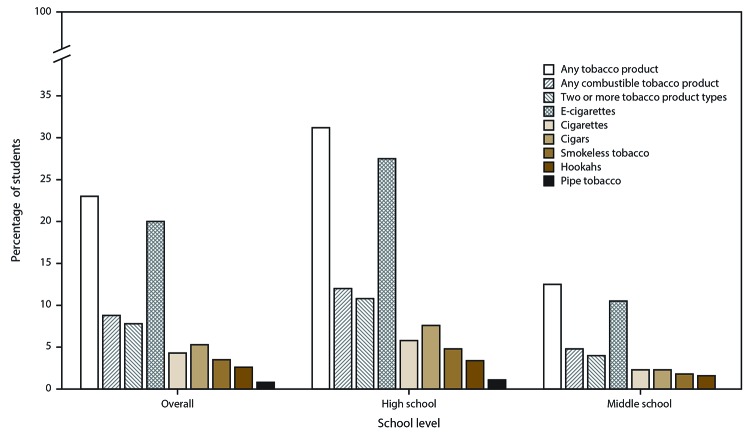
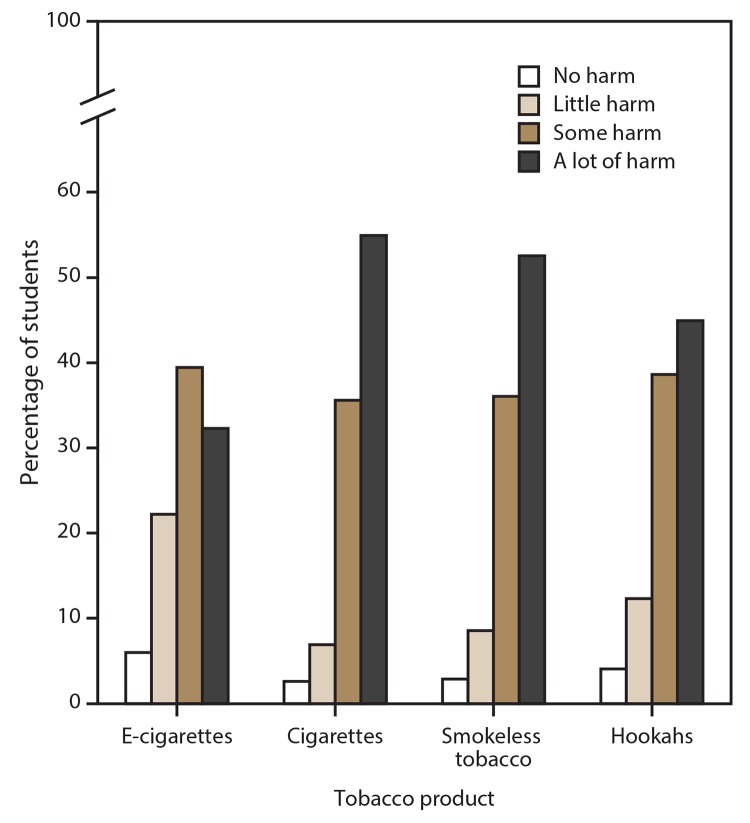
PROBLEM/CONDITION: Tobacco use is the leading cause of preventable disease, disability, and death in the United States. Most tobacco product use begins during adolescence. In recent years, tobacco products have evolved to include various smoked, smokeless, and electronic products. PERIOD COVERED: 2019. DESCRIPTION OF SYSTEM: The National Youth Tobacco Survey (NYTS) is an annual, cross-sectional, school-based, self-administered survey of U.S. middle school (grades 6-8) and high school (grades 9-12) students. A three-stage cluster sampling procedure is used to generate a nationally representative sample of U.S. students attending public and private schools. NYTS is the only nationally representative survey of U.S. middle and high school students that focuses exclusively on tobacco use patterns and associated factors. NYTS is designed to provide national data on tobacco product use and has been conducted periodically during 1999-2009 and annually since 2011. Data from NYTS are used to support the design, implementation, and evaluation of comprehensive tobacco use prevention and control programs and to inform tobacco regulatory activities. Since its inception in 1999 through 2018, NYTS had been conducted via paper and pencil questionnaires. In 2019, NYTS for the first time was administered in schools using electronic data collection methods. CDC's Office on Smoking and Health, in collaboration with the U.S. Food and Drug Administration's (FDA's) Center for Tobacco Products, analyzed data from the 2019 NYTS to assess tobacco product use patterns and associated factors among U.S. middle and high school students. Overall, 19,018 questionnaires were completed and weighted to represent approximately 27.0 million students. On the basis of self-reported grade level, this included 8,837 middle school questionnaires (11.9 million students) and 10,097 high school questionnaires (15.0 million students); 84 questionnaires with missing information on grade level were excluded from school-level analyses. RESULTS: In 2019, an estimated 53.3% of high school students (8.0 million) and 24.3% of middle school students (2.9 million) reported having ever tried a tobacco product. Current (past 30-day) use of a tobacco product (i.e., electronic cigarettes [e-cigarettes], cigarettes, cigars, smokeless tobacco, hookahs, pipe tobacco, and bidis [small brown cigarettes wrapped in a leaf]) was reported by 31.2% of high school students (4.7 million) and 12.5% of middle school students (1.5 million). E-cigarettes were the most commonly cited tobacco product currently used by 27.5% of high school students (4.1 million) and 10.5% of middle school students (1.2 million), followed in order by cigars, cigarettes, smokeless tobacco, hookahs, and pipe tobacco. Tobacco product use also varied by sex and race/ethnicity. Among current users of each tobacco product, the prevalence of frequent tobacco product use (on ≥20 days of the preceding 30 days) ranged from 16.8% of cigar smokers to 34.1% of smokeless tobacco product users. Among current users of each individual tobacco product, e-cigarettes were the most commonly used flavored tobacco product (68.8% of current e-cigarette users). Among students who reported ever having tried e-cigarettes, the three most commonly selected reasons for use were "I was curious about them" (55.3%), "friend or family member used them" (30.8%), and "they are available in flavors, such as mint, candy, fruit, or chocolate" (22.4%). Among never users of each individual tobacco product, curiosity and susceptibility (a construct that can help to identify future tobacco product experimentation or use) was highest for e-cigarettes (39.1% and 45.0%, respectively) and cigarettes (37.0% and 45.9%, respectively). Overall, 86.3% of students who reported contact with an assessed potential source of tobacco product advertisements or promotions (going to a convenience store, supermarket, or gas station; using the Internet; watching television or streaming services or going to the movies; or reading newspapers or magazines) reported exposure to marketing for any tobacco product; 69.3% reported exposure to e-cigarette marketing and 81.7% reported exposure to marketing for cigarettes or other tobacco products. Among all students, perceiving no harm or little harm from intermittent tobacco product use (use on some days but not every day) was 28.2% for e-cigarettes, 16.4% for hookahs, 11.5% for smokeless tobacco products, and 9.5% for cigarettes. Among current users of any tobacco product, 24.7% reported experiencing cravings to use tobacco products during the past 30 days and 13.7% reported wanting to use a tobacco product within 30 minutes of waking. Moreover, 57.8% of current tobacco product users reported they were seriously thinking about quitting the use of all tobacco products and 57.5% reported they had stopped using all tobacco products for ≥1 day because they were trying to quit. INTERPRETATION: In 2019, approximately one in fou
Overview
The claims and statistics of this paper haven’t been checked yet.
Free: it reads the open-access text and checks the first 5 claims that cite a source we can check. Create a free account to check every claim.
Integrity signals
Registry
Cites
Statistics
Figures
Verification
Claims the paper makes
The claims and statistics of this paper haven’t been checked yet.
Free: it reads the open-access text and checks the first 5 claims that cite a source we can check. Create a free account to check every claim.
Claims other papers make about this one
Each is checked against this paper’s own text: does it say what the citing paper says it does?
The source backs part of the claim, not all of it — or backs it for a different population, condition or comparison.
In the citing paper
“Although introduced as recently as 2007 to the US market, e-cigarettes are now the most commonly used tobacco product among teenagers (Miech et al., 2017; Wang et al., 2019).”
From Unique, long-term effects of nicotine on adolescent brain. (2020) · cites this paper as Wang et al., 2019
Experimental — accuracy not yet measuredThe cited source says what the claim attributes to it.
In the citing paper
“Although these findings may suggest that adolescent females find nicotine and tobacco more rewarding than males, recent data on middle and high school students suggest few sex differences in rates of tobacco product use, with males showing slightly elevated consumption (Wang et al., 2019).”
From Unique, long-term effects of nicotine on adolescent brain. (2020) · cites this paper as Wang et al., 2019
Self-check
Percentages, sums and reported differences re-computed from the paper’s own numbers.
The self-check needs the paper’s full text.
Citations
Cites
Youth risk behavior surveillance-United States, 2017
Kann, L., McManus, T., Harris, W. A., Shanklin, S. L., Flint, K. H., Queen, B., Lowry, R., Chyen, D., Whittle, L., Thornton, J., et al. (2018) · MMWR. Surveillance Summaries · doi:10.15585/mmwr.ss6708a1 · Cited by 2,502 · cited 1×
“Although most current youth tobacco product users are not daily users (9,12,13), estimates of frequent e-cigarette use among high school students were comparable to those observed for cigarette and smokeless tobacco product users in 2019.”
BackgroundPierce, J. P., Choi, W. S., Gilpin, E. A., Farkas, A. J., & Merritt, R. K. (1996) · Health Psychology · doi:10.1037//0278-6133.15.5.355 · Cited by 1,065
Four hundred and sixty brands of e-cigarettes and counting: implications for product regulation
Zhu, S.-H., Sun, J. Y., Bonnevie, E., Cummins, S. E., Gamst, A., Yin, L., & Lee, M. (2014) · Tobacco Control · doi:10.1136/tobaccocontrol-2014-051670 · Cited by 913 · cited 1×
“Although the 2009 Family Smoking Prevention and Tobacco Control Act† prohibits characterizing flavors other than tobacco and menthol in cigarettes, characterizing flavors in other tobacco products, such as e-cigarettes, are widely available (24,25).”
BackgroundVital Signs: Tobacco Product Use Among Middle and High School Students — United States, 2011–2018
Gentzke, A. S., Creamer, M., Cullen, K. A., Ambrose, B. K., Willis, G., Jamal, A., & King, B. A. (2019) · MMWR. Morbidity and Mortality Weekly Report · doi:10.15585/mmwr.mm6806e1 · Cited by 766
Self-citationCullen, K. A., Ambrose, B. K., Gentzke, A. S., Apelberg, B. J., Jamal, A., & King, B. A. (2018) · MMWR. Morbidity and Mortality Weekly Report · doi:10.15585/mmwr.mm6745a5 · Cited by 734
Self-citationE-Cigarette Use Among Youth and Young Adults: A Major Public Health Concern
Murthy, V. H. (2017) · JAMA Pediatrics · doi:10.1001/jamapediatrics.2016.4662 · Cited by 405
Youth tobacco surveillance--United States, 2000.
Marshall, L. L., Schooley, M., Ryan, H. A., Cox, P., Easton, A. N., Healton, C. G., Jackson, K., Davis, K., & Homsi, G. (2001) · PubMed · Cited by 245
Tobacco product use among middle and high school students--United States, 2011 and 2012.
Arrazola, R. A., Dube, S. R., & King, B. A. (2013) · PubMed Central · Cited by 215
The role of curiosity in smoking initiation
Pierce, J. P., Distefan, J. M., Kaplan, R. M., & Gilpin, E. A. (2005) · Addictive Behaviors · doi:10.1016/j.addbeh.2004.08.014 · Cited by 168
Research works printed but not linked: 1
- US Department of Health and Human Services. The health consequences of smoking—50 years of progress. Atlanta, GA: US Department of Health and Human Services, CDC; 2014. https://www.ncbi.nlm.nih.gov/books/NBK179276/pdf/Bookshelf_NBK179276.pdf
Cited by
Items 301–400 of 602
СВІТОВИЙ ДОСВІД БОРОТЬБИ З ВЕЙПІНГОМ ТА ЙОГО НАСЛІДКАМИ СЕРЕД ДІТЕЙ ТА МОЛОДІ
Dobrovolska, L. I., Boyarchuk, O. R., Hariyan, T., & Hlushko, K. T. (2020) · Bulletin Of Medical And Biological Research · doi:10.11603/bmbr.2706-6290.2020.3.11297 · Cited by 11
Kim, Y. K. (2021) · Children and Youth Services Review · doi:10.1016/j.childyouth.2021.106193 · Cited by 9
Chew, R., Wenger, M., Guillory, J. E., Nonnemaker, J. M., & Kim, A. E. (2022) · Journal of Medical Internet Research · doi:10.2196/30257 · Cited by 9
“Indeed, 22% of youth ENDS users said that they used ENDS as “they are available in flavors, such as mint, candy, fruit, or chocolate,” and 69% of current youth ENDS users report the use of flavored ENDS [15].”
BackgroundEdwards, S. H., Hassink, M. D., Taylor, K. M., & Vu, A. T. (2022) · Regulatory Toxicology and Pharmacology · doi:10.1016/j.yrtph.2022.105199 · Cited by 9
The problem of teenage tobacco smoking: yesterday, today, tomorrow
Kozhevnikova, T. N., Geppe, N. A., Osmanov, I. M., Федорович, Г. Н., Геннадьевна, М. Н., Il'enkova, N. A., Malakhov, A. B., Чепурная, М. М., Odinaeva, N. D., & Savvina, N. V. (2021) · Pediatrics Consilium Medicum · doi:10.26442/26586630.2021.2.200994 · Cited by 15
The Australian Approach to Tobacco Harm Reduction Is Even More Misguided Than the US Approach
WODAK, A. D., & Mendelsohn, C. P. (2020) · American Journal of Public Health · doi:10.2105/ajph.2020.305675 · Cited by 9
Electronic interventions in primary care to address substance use: A systematic review
Villanueva‐Blasco, V. J., Eslava, D., Olave, L., & Torrens, M. (2024) · Addictive Behaviors · doi:10.1016/j.addbeh.2024.108073 · Cited by 8
Jackson, S. E., Brown, J., Tattan‐Birch, H., & Jarvis, M. J. (2025) · Addiction · doi:10.1111/add.70120 · Cited by 9
“There was a similar decline in the proportion reporting past-30-day use of any nicotine product, from 31.2% [ 6] to 12.6% [17].”
InfluentialE-cigarette addiction and harm perception: Does initiation flavor choice matter?
Hung, M., Spencer, A., Hon, E. S., Licari, F. W., Cheever, V. J., Moffat, R., Goh, C., Raymond, B., & Lipsky, M. S. (2022) · BMC Public Health · doi:10.1186/s12889-022-14166-w · Cited by 8
Hrywna, M., Teotia, A., Lo, E. J. M., Giovenco, D. P., & Delnevo, C. D. (2024) · Nicotine & Tobacco Research · doi:10.1093/ntr/ntae151 · Cited by 8
Aqeeli, A. A., Alsabaani, A. A., Shaiban, H. M. A., Alqassim, A. Y., Alahmar, A. S., Sabai, A. I., & Alwadani, S. N. (2024) · Healthcare · doi:10.3390/healthcare12131289 · Cited by 10
“University students are at high risk for e-cigarette addiction, so our study’s findings are concerning [6,18].”
Stalgaitis, C. A., Dang, S., Warner, C., Biggers, S., Jackson, L., & Jordan, J. W. (2025) · International Journal of Environmental Research and Public Health · doi:10.3390/ijerph22020269 · Cited by 8
Objective and perceived measures of tobacco marketing are uniquely associated with cigar use
Kowitt, S. D., Finan, L. J., & Lipperman‐Kreda, S. (2021) · Tobacco Control · doi:10.1136/tobaccocontrol-2021-056601 · Cited by 8
Sutfin, E. L., Denlinger-Apte, R. L., Ross, J. C., Wagoner, K. G., Suerken, C. K., Spangler, J. G., Wolfson, M., & Reboussin, B. A. (2022) · Drug and Alcohol Dependence · doi:10.1016/j.drugalcdep.2022.109474 · Cited by 8
Croker, J. A., Werts, M., Couch, E. T., & Chaffee, B. W. (2023) · Addictive Behaviors · doi:10.1016/j.addbeh.2023.107620 · Cited by 8
Behavioral and Pharmacokinetic Assessment of Nicotine e-Cigarette Inhalation in Female Rats
Roeder, N. M., Mihalkovic, A., Richardson, B., Penman, S. L., Novalen, M., Hammond, N., Eiden, R. D., Khokhar, J. Y., Tyndale, R. F., & Thanos, P. K. (2023) · Nicotine & Tobacco Research · doi:10.1093/ntr/ntad240 · Cited by 8
Czaplicki, L., Rahman, B., Simpson, R., Rose, S. W., Liu, M., Perks, S. N., Moran, M. B., & Schillo, B. (2020) · Nicotine & Tobacco Research · doi:10.1093/ntr/ntaa255 · Cited by 8
Polytobacco use among a nationally-representative sample of black high school students
Gilreath, T. D., Dangerfield, D. T., Ishino, F. A. M., Hill, A. V., & Johnson, R. M. (2021) · BMC Public Health · doi:10.1186/s12889-021-10228-7 · Cited by 8
E-Cigarette Device Types Used by Middle School Students and High School Students—The U.S., 2019
Anic, G. M., Cullen, K. A., Gardner, L. D., & Liu, S. T. (2021) · Journal of Adolescent Health · doi:10.1016/j.jadohealth.2021.01.001 · Cited by 8
Self-citationJacobs, W., Nabors, L., Mahabee‐Gittens, M., & Merianos, A. L. (2021) · Preventive Medicine Reports · doi:10.1016/j.pmedr.2021.101445 · Cited by 9
A formative evaluation of an adolescent online E-cigarette prevention program
Merrill, R. M., & Hanson, C. L. (2022) · Health Education · doi:10.1108/he-06-2021-0092 · Cited by 8
Shamout, M., Tanz, L. J., Herzig, C. T. A., Oakley, L. P., Peak, C. M., Heinzerling, A., Hast, M. A., McGowan, E., Williams, R. J., Hess, C., et al. (2020) · MMWR Morbidity and Mortality Weekly Report · doi:10.15585/mmwr.mm6942a7 · Cited by 8
Tracking e-cigarette warning label compliance on Instagram with deep learningPreprint
Kennedy, C. J., Vassey, J., Chang, H.-C. H., Unger, J. B., & Ferrara, E. (2021) · arXiv (Cornell University) · doi:10.48550/arxiv.2102.04568 · Cited by 9
Chakraborty, S. (2025) · Asian Pacific Journal of Cancer Nursing · doi:10.31557/apjcn.2116.20251026 · Cited by 7
“Preventing the use of tobacco products among young people is essential to reducing illness and death since nearly all tobacco use begins in youth or young adulthood; about 90% of adult cigarette smokers initiate their habits before turning 18 [3].”
Chemical Composition of JUUL Pods Collected From Students in California High Schools
Shamout, M., Wang, P., Wong, F., Chen, W., Kumagai, K., Pérez, J. J., Watson, C. H., Valentín-Blasini, L., Tanz, L. J., Herzig, C. T. A., et al. (2021) · Journal of Adolescent Health · doi:10.1016/j.jadohealth.2020.11.023 · Cited by 7
Fan, J., Mao, T., Zhen, S., Xu, Y. J., & Qu, C. (2023) · Frontiers in Public Health · doi:10.3389/fpubh.2023.1221334 · Cited by 7
Exploring the Microbial Diversity and Composition of Three Cigar Product Categories
Joshi, S., Pham, K., Moe, L. A., & McNees, R. (2024) · Microbial Ecology · doi:10.1007/s00248-024-02425-9 · Cited by 7
“In recent years, cigars have become the most reported combustible tobacco product used by youth [3, 4].”
BackgroundChanges in price, income and e-cigarette affordability for young people in the USA from 2015 to 2021
Diaz, M. C., Braganza, K., Minter, T., Hair, E. C., & Tauras, J. A. (2024) · Tobacco Control · doi:10.1136/tc-2024-058619 · Cited by 7
Oral Health Implications of Risky Behaviors in Adolescence
Hill, B. J., Mugayar, L. R. F., & da Fonseca, M. A. (2021) · Dental Clinics of North America · doi:10.1016/j.cden.2021.06.008 · Cited by 7
Pokhrel, P., Kawamoto, C. T., Pagano, I., & Herzog, T. A. (2022) · Addiction · doi:10.1111/add.15815 · Cited by 8
Mamudu, H. M., Nwabueze, C., Yang, J. S., Mackey, T. K., Ahuja, M., Smith, A. K., Weierbach, F. M., McNabb, M., Minnick, C., & Jones, A. (2022) · Preventive Medicine Reports · doi:10.1016/j.pmedr.2022.101953 · Cited by 7
“(List of products adapted from the NYTS, (Wang et al., 2019, 2020; U.S. Department of Health and Human Services, 2016) the U.S. Centers for Disease Control and Prevention (CDC) and the FDA, (U. S. Food and Drug Administration, 2016; Food and Drug Administration FDA., 2020; Food and Drug Administration, 2020b) includin…”
ResultParms, T. A., Valverde, R., Park-Lee, E. Y., Graham-Glover, B., Cunningham, C. S., Sawdey, M. D., & Cullen, K. A. (2022) · Addictive Behaviors · doi:10.1016/j.addbeh.2022.107537 · Cited by 7
Self-citationBlank, M. D., Romm, K. F., Childers, M. G., Douglas, A. E., Dino, G., & Bray, B. C. (2022) · Addiction · doi:10.1111/add.16095 · Cited by 7
Hrywna, M., Kong, A. Y., Ackerman, C., Giovenco, D. P., Spillane, T. E., Lee, J. G. L., Hudson, S. V., & Delnevo, C. D. (2023) · Methods and Protocols · doi:10.3390/mps6020027 · Cited by 7
“), concerns regarding tobacco use among youth and young adults remain [1].”
BackgroundDeterminants of ever smoking and active smoking among school-aged children in Jeddah
Mazi, A. A. (2023) · Journal of Taibah University Medical Sciences · doi:10.1016/j.jtumed.2023.03.005 · Cited by 7
“0 million) in high-school students (grades 9e12).(20) According to the most recent Center for Diseases Control data, 11.”
BackgroundInfluentialCheng, H. G., Vansickel, A. R., & Largo, E. G. (2023) · BMC Public Health · doi:10.1186/s12889-023-15610-1 · Cited by 7
“, from friends or someone else) [27, 28] and socializing with peers was a common reason for e-cigarette use [5].”
BackgroundSecondhand electronic cigarette aerosol in vehicles impacts indoor air quality
Soule, E. K., Sousan, S., Pender, J., Thomas, L., Gold, E., Fresquez, S. E., Mooring, R., Coombs, V., Gogineni, A. S., & Tiet, A. M. (2023) · Drug and Alcohol Dependence · doi:10.1016/j.drugalcdep.2023.110889 · Cited by 9
Lin, S., Zhang, J., Wang, L., & Wang, S. (2024) · Journal of the Knowledge Economy · doi:10.1007/s13132-024-01805-3 · Cited by 8
RetractedCai, J., Lü, B., Chen, H., Lu, M., Zhang, Y., Luo, C., You, L., Dai, M., & Zhao, Y. (2024) · Public Health · doi:10.1016/j.puhe.2023.11.006 · Cited by 8
Mamudu, H. M., Nwabueze, C., Weierbach, F. M., Yang, J. S., Jones, A., McNabb, M., Adeniran, E. A., Liu, Y., Wang, L., Blair, C. J., et al. (2020) · International Journal of Environmental Research and Public Health · doi:10.3390/ijerph17145133 · Cited by 7
Sociodemographic differences in single, dual, and poly tobacco use among Appalachian youth
Mattingly, D. T., Hart, J. L., Wood, L. A., & Walker, K. L. (2020) · Tobacco Prevention & Cessation · doi:10.18332/tpc/124782 · Cited by 7
Doshi, R. P., Dave, M., Majmundar, M. M., Kumar, A., Adalja, D., Shariff, M., Desai, R., Ziaeian, B., & Vallabhajosyula, S. (2020) · Heart & Lung · doi:10.1016/j.hrtlng.2020.12.009 · Cited by 8
O’Brien, E. K., Baig, S. A., & Persoskie, A. (2021) · Nicotine & Tobacco Research · doi:10.1093/ntr/ntab167 · Cited by 7
An Epidemic Supplanted by a Pandemic: Vaping-Related Illness and COVID-19
Shin, Y. M., Hunt, D., & Akwe, J. A. (2022) · Southern Medical Journal · doi:10.14423/smj.0000000000001344 · Cited by 7
Sharma, R. H., Rodberg, D., & Struik, L. C. (2023) · BMJ Open · doi:10.1136/bmjopen-2022-070906 · Cited by 7
Phetphum, C., Chomson, S., Wangwonsin, A., Prajongjeep, A., & Keeratisiroj, O. (2023) · BMJ Open · doi:10.1136/bmjopen-2023-072411 · Cited by 7
Chemical Composition of Electronic Vaping Products From School Grounds in California
Wang, P., Williams, R. J., Chen, W., Wang, F., Shamout, M., Tanz, L. J., Herzig, C. T. A., Oakley, L. P., Peak, C. M., Heinzerling, A., et al. (2024) · Nicotine & Tobacco Research · doi:10.1093/ntr/ntae042 · Cited by 8
Patel, T. P., Karle, E. M., Gubeladze, T., Pentecost, G., & Krvavac, A. (2020) · PubMed · Cited by 11
Literature review: Substance use screening and co-morbidity in medically hospitalized youth
Smith, J. R., Hazen, E. P., Kaminski, T. A., & Wilens, T. E. (2020) · General Hospital Psychiatry · doi:10.1016/j.genhosppsych.2020.10.002 · Cited by 8
Pérez, A., Bluestein, M. A., Kuk, A. E., Chen, B., & Harrell, M. B. (2022) · Preventive Medicine · doi:10.1016/j.ypmed.2022.107111 · Cited by 7
COUNTERPOINT: e-Cigarette Use for Harm Reduction in Tobacco Use Disorder? No
Kathuria, H., & Leone, F. T. (2021) · CHEST Journal · doi:10.1016/j.chest.2021.04.044 · Cited by 7
Jin, L. J., Kenkel, D., Lovenheim, M., Mathios, A., & Wang, H. (2022) · National Bureau of Economic Research · doi:10.3386/w30255 · Cited by 9
Heart failure and tobacco use disorder: mortality trends and disparities in the United States
Mahmood, A., Latif, F., Latif, S., Smith, D. N., Ayalew, B. D., Raja, A., Kumar, S., Kumar, N., Rai, K. D., Sangtiani, A. K., et al. (2026) · Annals of Medicine and Surgery · doi:10.1097/ms9.0000000000004729 · Cited by 8
“Around 2015, more people started using new ways to get nicotine, like heated tobacco products and e-cigar-ettes, particularly among young adults [ 22 ] .”
Wang, X., Kim, Y., Trivers, K. F., Tynan, M. A., Shrestha, S. S., Emery, S., Borowiecki, M., & Hacker, K. A. (2022) · Preventing Chronic Disease · doi:10.5888/pcd19.220087 · Cited by 6
Acute exposure to electronic cigarette components alters mRNA expression of pre‐osteoblasts
Dabdoub, S. M., Greenlee, A. N., Abboud, G., Brengartner, L., Zuiker, E., Gorr, M. W., Wold, L. E., Kumar, P., & Cray, J. (2024) · The FASEB Journal · doi:10.1096/fj.202302014rrr · Cited by 6
“2,15,16,30,48,49,50 While research is primarily relying on the larger body of literature concerning the health effects of addiction, nicotine exposure, and additive constituent effects in isolation (PG/VG), there are currently large gaps in knowledge as to how ENDS product use affects multiple…”
Khodaee, A., Reed, A., & Khodaee, M. (2025) · Cureus · doi:10.7759/cureus.89422 · Cited by 6
Smoking Behaviour of University Students: a Descriptive Study
Suhányi, L., Gavurová, B., Ivanková, V., & Rigelský, M. (2020) · ADIKTOLOGIE Journal · doi:10.35198/01-2020-001-0009 · Cited by 6
Characteristics of Past 30–Day Cigar Smoking, U.S. Adolescents, 2020
Parms, T. A., Head, S. K., Sawdey, M. D., Rostron, B. L., & Cullen, K. A. (2021) · American Journal of Preventive Medicine · doi:10.1016/j.amepre.2021.06.011 · Cited by 6
Self-citationThe Cheyenne River Sioux Tribe resists JUUL’s targeted exploitation
O’Leary, R., Zelikoff, J. T., Meltzer, G., Hemmerich, N., & Erdei, E. (2021) · Tobacco Control · doi:10.1136/tobaccocontrol-2021-056813 · Cited by 6
Wilhelm, A. K., Hammett, P. J., Fu, S. S., Eisenberg, M. E., Pratt, R. J., & Allen, M. (2023) · Addictive Behaviors · doi:10.1016/j.addbeh.2023.107761 · Cited by 6
Do e-cigarette retail licensure laws reduce youth tobacco use?
Courtemanche, C., Liang, Y., Maclean, J. C., Muratori, C., & Sabia, J. J. (2024) · Journal of Health Economics · doi:10.1016/j.jhealeco.2024.102919 · Cited by 10
Kishinchand, R., Boyce, M., Vyas, H., Sewell, L., Mohi, A., Brengartner, L., Miller, R. A., Gorr, M. W., Wold, L. E., & Cray, J. (2023) · The Cleft Palate-Craniofacial Journal · doi:10.1177/10556656231163400 · Cited by 6
Caves, K. N., Chavan, P. P., & Harrell, P. T. (2024) · Addictive Behaviors · doi:10.1016/j.addbeh.2024.108186 · Cited by 7
ENDS Device Type and Initiation of Combustible Tobacco Products Among Adolescents
Sumbe, A., Clendennen, S. L., Opara, S. C. O., Jackson, C. D., Chen, B., Wilkinson, A. V., & Harrell, M. B. (2020) · Nicotine & Tobacco Research · doi:10.1093/ntr/ntaa115 · Cited by 6
Appalachian youth e-cigarette harm perceptions and tobacco use
Mattingly, D. T., Hart, J. L., Vu, T. T., & Walker, K. L. (2021) · Population Medicine · doi:10.18332/popmed/132120 · Cited by 6
“In 2019, more than a third of US middle and high students had ever used e-cigarettes and one fifth were current users 2 .”
Use of Electronic Nicotine Delivery Systems (ENDS) in Colombia
Scoppetta, O., Fandiño, J. C. R., Villamil, A., & Pérez, A. (2021) · Addictive Disorders & Their Treatment · doi:10.1097/adt.0000000000000274 · Cited by 6
Brown, C., Nkemjika, S., Yankey, B. A., & Okosun, I. S. (2021) · Cureus · doi:10.7759/cureus.16740 · Cited by 6
Economic costs of cigarette smoking among adolescents in Nigeria
Olumide, A. O., Shmueli, A., Adebayo, E., & Omotade, O. O. (2021) · Journal of Public Health · doi:10.1007/s10389-021-01644-5 · Cited by 7
Sutfin, E. L., Lazard, A. J., Wagoner, K. G., King, J. L., Ross, J. C., Wiseman, K. D., Orlan, E., Suerken, C. K., Reboussin, D. M., Wolfson, M., et al. (2021) · Health Communication · doi:10.1080/10410236.2021.1996910 · Cited by 6
“Data from the 2019 National Youth Tobacco Survey demonstrate that cigars (including large cigars, little cigars, and cigarillos) were the second and WT was the fourth most used tobacco product by high school students (7.6% and 3.4%, respectively, reported past month use) (Wang et al., 2019).”
InfluentialZhang, W. Z. (2020) · American Journal of Respiratory and Critical Care Medicine · doi:10.1164/rccm.202004-0959ed · Cited by 6
Jin, L. J., Kenkel, D., Lovenheim, M., Mathios, A., & Wang, H. (2024) · Economic Inquiry · doi:10.1111/ecin.13238 · Cited by 6
Albariqi, A. A., Al-Qahtani, A. S., Tikare, S., Gokhale, S. T., Nagate, R. R., Alhaid, F. S. M., Al-Qahtani, A. S., Narapureddy, B. R., Reddy, L. K. V., & Muthugounder, K. (2025) · Medical Science Monitor · doi:10.12659/msm.948542 · Cited by 5
“Our re-sults agree with studies from Western countries, where e-cigarettes are the most popular product in school-age populations, followed by pipes, cigars, and smokeless tobacco [29].”
InfluentialBauer, S. E., Macrea, M. M., Casey, A. M. H., Dağlı, E., Eakin, M. N., Farber, H. J., Gonzalez, P., Hayes, D., Hu, S.-W., Kathuria, H., et al. (2025) · American Journal of Respiratory and Critical Care Medicine · doi:10.1164/rccm.202507-1577st · Cited by 5
Self-citationFatores associados à experimentação do tabaco entre escolares adolescentes
de Jesus, M. C. P., Braga, V. A. S., Lins, E. M., de Jesus, R. R., Freitas, F. D. O., da Silva, M. H., & Merighi, M. A. B. (2020) · Revista de Enfermagem UFPE on line · doi:10.5205/1981-8963.2020.244043 · Cited by 5
“Encontrou-se que, em 2019, quase um a cada quatro alunos do Ensino Fundamental (24,3%) e mais da metade (53,3%) dos estudantes do Ensino Médio disseram que já experimentaram um produto de tabaco.(9)”
Protecting Youth From Tobacco Around the Globe: Evidence to Practice
Ahluwalia, I. B., Wilson, K. M., & Gorzkowski, J. (2020) · PEDIATRICS · doi:10.1542/peds.2020-1585 · Cited by 5
Electronic nicotine delivery systems: the need for continued regulatory innovation
Miller, B. J., Meshnick, A. B., & Lushniak, B. D. (2021) · Tobacco Control · doi:10.1136/tobaccocontrol-2021-056622 · Cited by 5
Inductive Characterization of ENDS-Associated Adverse Events Among California Young Adults
Yang, J. S., Lim, P., Ojeda, K., Cuomo, R. E., Purushothaman, V. L., & Mackey, T. K. (2022) · AJPM Focus · doi:10.1016/j.focus.2022.100040 · Cited by 6
Thepthien, B., Tinn, C. S., & Sharma, R. (2023) · International Journal of Mental Health and Addiction · doi:10.1007/s11469-023-01109-8 · Cited by 6
A commercial tobacco and alcohol use intervention for urban Native American youth
Wimbish‐Tompkins, R., Lowe, J. R., Kelley, M., Millender, E., & Liang, H. (2024) · Archives of Psychiatric Nursing · doi:10.1016/j.apnu.2024.06.014 · Cited by 5
Identifying Promising Message Themes for Youth Who Use Multiple Tobacco Products
Kowitt, S. D., Noar, S. M., Duguid, I., Johnson, M., Lazard, A. J., Thrasher, J. F., & Goldstein, A. O. (2025) · Journal of Adolescent Health · doi:10.1016/j.jadohealth.2025.02.004 · Cited by 5
Mason, W. A., Patwardhan, I., Fleming, C. B., Stevens, A. L., James, T. D., Nelson, J. M., Espy, K. A., & Nelson, T. D. (2021) · Addictive Behaviors · doi:10.1016/j.addbeh.2021.106923 · Cited by 5
Survey results of teenage-pupils about vaping
Boyarchuk, O. R., Kosovskaya, V. A., Kosovskaya, T. M., Garian, T. V., & Dobrovolska, L. I. (2021) · Russian Journal of Preventive Medicine · doi:10.17116/profmed20212404130 · Cited by 5
Mamudu, H. M., Shahani, D. P., Jones, A., Ahuja, M., Adeniran, E. A., Weierbach, F. M., Swindle, J., Liu, Y., Keener, J., Blair, C. J., et al. (2021) · Substance Use & Misuse · doi:10.1080/10826084.2021.1990333 · Cited by 9
“…U.S., including perceptions that ENDS are less harmful, parental/ peer use behavior, flavoring, advertising and marketing, and academic performance (Anand et al., 2015; Jenson, 2018; Kinnunen et al., 2018; McCabe et al., 2017; Sawdey et al., 2019; USDHHS, 2014, 2016, 2020; Wang et al., 2019).”
BackgroundLittle, M. A., Wang, X.-Q., Fahey, M. C., Wiseman, K. P., Pebley, K., Klesges, R. C., & Talcott, G. W. (2021) · Tobacco Induced Diseases · doi:10.18332/tid/143282 · Cited by 5
Developmental Effects of Electronic Cigarette Use
Collaco, J. M., & McGrath‐Morrow, S. A. (2022) · Comprehensive physiology · doi:10.1002/cphy.c210018 · Cited by 6
Puvanesarajah, S., Wang, T. W., Alexander, D. S., Gomez, Y. H., Head, S. K., Alexandridis, A. A., Jamal, A., & Trivers, K. F. (2022) · Nicotine & Tobacco Research · doi:10.1093/ntr/ntac065 · Cited by 5
Self-citationLess Harmful ¹ Safe: Effects of Cigarette Graphic Health Warnings on E-Cigarette Evaluations
Ahmmad, K., & Howlett, E. A. (2021) · Journal of Marketing Communications · doi:10.1080/13527266.2022.2093942 · Cited by 5
“Studies show that in 2020, 19.6% of U.S. high school students (3.02 million) and 4.7% of middle school students (550,000) used e-cigarettes (vape) (Wang et al. 2019).”
BackgroundInfluentialSari, M. P., Ayunin, E. N., & Setyowati, Y. D. (2022) · Disease Prevention and Public Health Journal (DPPHJ) · doi:10.12928/dpphj.v16i2.4860 · Cited by 5
“that they were seriously thinking about quitting all tobacco products [23].”
BackgroundRomm, K. F., Turiano, N. A., Milstred, A. R., Bray, B. C., Dino, G., Doogan, N., & Blank, M. D. (2022) · Journal of Adolescent Health · doi:10.1016/j.jadohealth.2022.09.026 · Cited by 5
Luderer, H. F., Enman, N. M., Gerwien, R. W., Braun, S., McStocker, S., Xiong, X. R., Koebele, C., Cannon, C. M., Glass, J. E., & Maricich, Y. A. (2023) · JMIR Research Protocols · doi:10.2196/43122 · Cited by 5
Simon, P., Buta, E., Jackson, A. B., Camenga, D. R., Kong, G., Morean, M. E., Bold, K. W., Davis, D. R., Krishnan‐Sarin, S., & Gueorguieva, R. V. (2023) · Preventive Medicine · doi:10.1016/j.ypmed.2023.107437 · Cited by 5
Summary and Concluding Remarks: Patterns of Birth Cohort‒Specific Smoking Histories
Levy, D. T., Tam, J., Jeon, J., Holford, T. R., Fleischer, N. L., & Meza, R. (2023) · American Journal of Preventive Medicine · doi:10.1016/j.amepre.2022.12.007 · Cited by 7
Assari, S., & Sheikhattari, P. (2023) · Journal of Lung Health and Diseases · doi:10.29245/2689-999x/2023/2.1183 · Cited by 5
“Other researchers have suggested that one of the reasons tobacco and conventional cigarette usage has declined is that many youths who would have used conventional cigarettes use electronic cigarettes instead 74 .”
BackgroundBirth-cohort patterns of e-cigarette and other tobacco use among adolescents in the US
Torres‐Álvarez, R., Jeon, J., Levy, D. T., & Meza, R. (2024) · Preventive Medicine · doi:10.1016/j.ypmed.2024.108049 · Cited by 5
Administration, S. A. A. M. H. S. (2020) · Florida International University Digital Commons (Florida International University) · Cited by 645
Gribben, V., & Klein, J. D. (2020) · Journal of Adolescent Health · doi:10.1016/j.jadohealth.2020.06.005 · Cited by 5
Invite Only VR: A Vaping Prevention Game
Weser, V. U., & Hieftje, K. D. (2020) · ACM SIGGRAPH Talks · doi:10.1145/3388767.3407355 · Cited by 5
Takakura, M., Miyagi, M., & Kyan, A. (2021) · Environmental Health and Preventive Medicine · doi:10.1186/s12199-021-00948-y · Cited by 5
“As smoking mostly begins during adolescence, smoking prevention among adolescents is critical to decreasing mortality and morbidity [3].”
BackgroundCuomo, R. E., Purushothaman, V. L., Li, J., Bardier, C., Nali, M. C., Shah, N. A., Obradovich, N., Yang, J. S., & Mackey, T. K. (2021) · Frontiers in Public Health · doi:10.3389/fpubh.2021.628812 · Cited by 5
Cuomo, R. E., Yang, J. S., Purushothaman, V. L., Nali, M. C., Li, J., & Mackey, T. K. (2021) · Tobacco Prevention & Cessation · doi:10.18332/tpc/133933 · Cited by 5
Metadata
- Authors
- Wang, T. W., Gentzke, A. S., Creamer, M. R., Cullen, K. A., Holder-Hayes, E., Sawdey, M. D., Anic, G. M., Portnoy, D. B., Hu, S., Homa, D. M., Jamal, A., & Neff, L. J.
- Affiliations
- Centers for Disease Control and Prevention (US)
- United States Food and Drug Administration (US)
- Corresponding author
- Wang, Teresa W.
- ORCID
- Venue
- MMWR. Surveillance Summaries
- Published
- 2019-11-06
- Volume
- 68
- Issue
- 12
- Pages
- 1-22
- ISSN
- 1545-8636 (ISSN-L)
- 1546-0738
- PMC
- PMC6903396
- OpenAlex
- W2993434903
- Cited by
- 576
- References
- 23
- Citations by year
- 2026: 22 · 2025: 38 · 2024: 60 · 2023: 78 · 2022: 109 · 2021: 149 · 2020: 119
- FWCI
- 64.66
- Type
- journal article
- Language
- en
- Open access
- diamond
- doi.org
- Licence
- public-domain
- Locations
- MMWR Surveillance Summaries (publishedVersion, public-domain)
- PubMed Central (publishedVersion, cc-by)
- PubMed (publishedVersion)
- Topics
- Health Sciences › Medicine › Public Health, Environmental and Occupational Health › Smoking Behavior and Cessation
- Health Sciences › Medicine › Epidemiology › Substance Abuse Treatment and Outcomes
- Health Sciences › Medicine › Public Health, Environmental and Occupational Health › School Health and Nursing Education
- Keywords
- tobacco use, electronic cigarettes, e-cigarette flavors, hookah, smokeless tobacco, bidis, cigars, cigarettes, tobacco use prevention, tobacco control, junior high school students, high school students, associated factors, tobacco packaging
- MeSH terms
- Adolescent, Child, Cross-Sectional Studies, Female, Health Surveys, Humans, Male, Schools, Smoking, Students, United States, Tobacco Products
About these checks
Registry, retraction, Cites and statistics results are computed, not judged, with one exception: a printed reference that no index lists is read once by a model before it counts as a citation error. Claims are extracted by a model and kept only when their quote appears verbatim in the text; each cited source is then checked, with a model’s help, for whether it says what the claim relies on. Those verdicts can be wrong — read the claim’s quote and the cited source before relying on one.
Statistics and arithmetic are recomputed, not judged.
Confidence bands are shown only for fields calibrated on our annotated test set. None is calibrated yet, so no band is shown.
What counts as a claim ›How we measure confidence ›How we check this ›
Are you an author, or do you see a problem with this page? Request a review
Data sources
Bibliographic data: Semantic Scholar, OpenAlex, Crossref.
Contains information from the Semantic Scholar Academic Graph Datasets, made available under the ODC Attribution License (ODC-BY 1.0).
Semantic Scholar’s data is described in: Kinney, R., et al. (2023). The Semantic Scholar Open Data Platform. arXiv:2301.10140.
