

Tobacco product use and associated factors among middle and high school students—United States, 2019
Open accessThe DOI matches its Crossref record; 22 of the 23 references it cites were found in a registry or an index.
Abstract
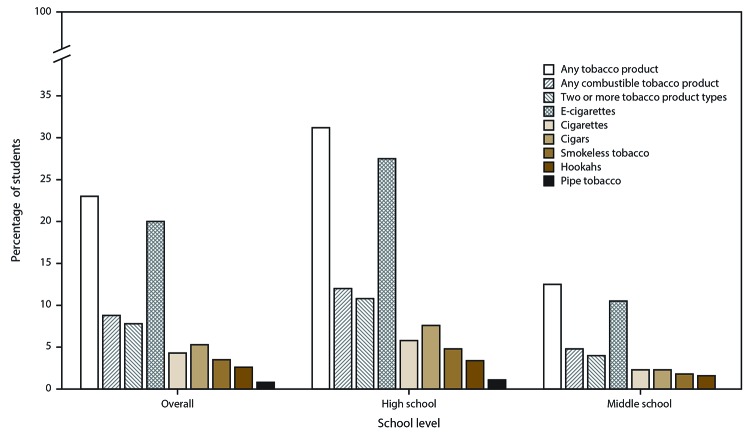
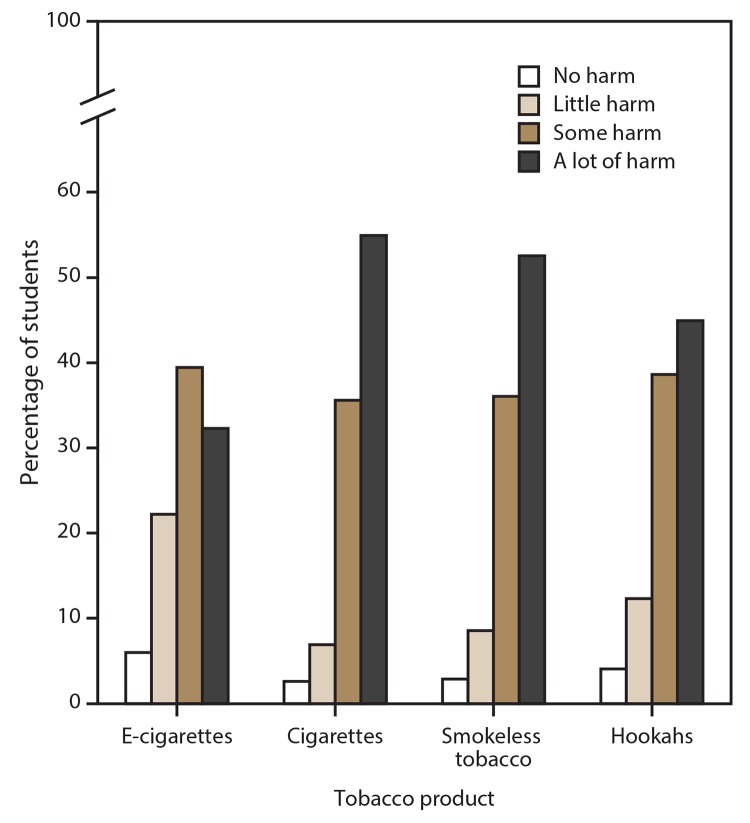
PROBLEM/CONDITION: Tobacco use is the leading cause of preventable disease, disability, and death in the United States. Most tobacco product use begins during adolescence. In recent years, tobacco products have evolved to include various smoked, smokeless, and electronic products. PERIOD COVERED: 2019. DESCRIPTION OF SYSTEM: The National Youth Tobacco Survey (NYTS) is an annual, cross-sectional, school-based, self-administered survey of U.S. middle school (grades 6-8) and high school (grades 9-12) students. A three-stage cluster sampling procedure is used to generate a nationally representative sample of U.S. students attending public and private schools. NYTS is the only nationally representative survey of U.S. middle and high school students that focuses exclusively on tobacco use patterns and associated factors. NYTS is designed to provide national data on tobacco product use and has been conducted periodically during 1999-2009 and annually since 2011. Data from NYTS are used to support the design, implementation, and evaluation of comprehensive tobacco use prevention and control programs and to inform tobacco regulatory activities. Since its inception in 1999 through 2018, NYTS had been conducted via paper and pencil questionnaires. In 2019, NYTS for the first time was administered in schools using electronic data collection methods. CDC's Office on Smoking and Health, in collaboration with the U.S. Food and Drug Administration's (FDA's) Center for Tobacco Products, analyzed data from the 2019 NYTS to assess tobacco product use patterns and associated factors among U.S. middle and high school students. Overall, 19,018 questionnaires were completed and weighted to represent approximately 27.0 million students. On the basis of self-reported grade level, this included 8,837 middle school questionnaires (11.9 million students) and 10,097 high school questionnaires (15.0 million students); 84 questionnaires with missing information on grade level were excluded from school-level analyses. RESULTS: In 2019, an estimated 53.3% of high school students (8.0 million) and 24.3% of middle school students (2.9 million) reported having ever tried a tobacco product. Current (past 30-day) use of a tobacco product (i.e., electronic cigarettes [e-cigarettes], cigarettes, cigars, smokeless tobacco, hookahs, pipe tobacco, and bidis [small brown cigarettes wrapped in a leaf]) was reported by 31.2% of high school students (4.7 million) and 12.5% of middle school students (1.5 million). E-cigarettes were the most commonly cited tobacco product currently used by 27.5% of high school students (4.1 million) and 10.5% of middle school students (1.2 million), followed in order by cigars, cigarettes, smokeless tobacco, hookahs, and pipe tobacco. Tobacco product use also varied by sex and race/ethnicity. Among current users of each tobacco product, the prevalence of frequent tobacco product use (on ≥20 days of the preceding 30 days) ranged from 16.8% of cigar smokers to 34.1% of smokeless tobacco product users. Among current users of each individual tobacco product, e-cigarettes were the most commonly used flavored tobacco product (68.8% of current e-cigarette users). Among students who reported ever having tried e-cigarettes, the three most commonly selected reasons for use were "I was curious about them" (55.3%), "friend or family member used them" (30.8%), and "they are available in flavors, such as mint, candy, fruit, or chocolate" (22.4%). Among never users of each individual tobacco product, curiosity and susceptibility (a construct that can help to identify future tobacco product experimentation or use) was highest for e-cigarettes (39.1% and 45.0%, respectively) and cigarettes (37.0% and 45.9%, respectively). Overall, 86.3% of students who reported contact with an assessed potential source of tobacco product advertisements or promotions (going to a convenience store, supermarket, or gas station; using the Internet; watching television or streaming services or going to the movies; or reading newspapers or magazines) reported exposure to marketing for any tobacco product; 69.3% reported exposure to e-cigarette marketing and 81.7% reported exposure to marketing for cigarettes or other tobacco products. Among all students, perceiving no harm or little harm from intermittent tobacco product use (use on some days but not every day) was 28.2% for e-cigarettes, 16.4% for hookahs, 11.5% for smokeless tobacco products, and 9.5% for cigarettes. Among current users of any tobacco product, 24.7% reported experiencing cravings to use tobacco products during the past 30 days and 13.7% reported wanting to use a tobacco product within 30 minutes of waking. Moreover, 57.8% of current tobacco product users reported they were seriously thinking about quitting the use of all tobacco products and 57.5% reported they had stopped using all tobacco products for ≥1 day because they were trying to quit. INTERPRETATION: In 2019, approximately one in fou
Overview
The claims and statistics of this paper haven’t been checked yet.
Free: it reads the open-access text and checks the first 5 claims that cite a source we can check. Create a free account to check every claim.
Integrity signals
Registry
Cites
Statistics
Figures
Verification
Claims the paper makes
The claims and statistics of this paper haven’t been checked yet.
Free: it reads the open-access text and checks the first 5 claims that cite a source we can check. Create a free account to check every claim.
Claims other papers make about this one
Each is checked against this paper’s own text: does it say what the citing paper says it does?
The source backs part of the claim, not all of it — or backs it for a different population, condition or comparison.
In the citing paper
“Although introduced as recently as 2007 to the US market, e-cigarettes are now the most commonly used tobacco product among teenagers (Miech et al., 2017; Wang et al., 2019).”
From Unique, long-term effects of nicotine on adolescent brain. (2020) · cites this paper as Wang et al., 2019
Experimental — accuracy not yet measuredThe cited source says what the claim attributes to it.
In the citing paper
“Although these findings may suggest that adolescent females find nicotine and tobacco more rewarding than males, recent data on middle and high school students suggest few sex differences in rates of tobacco product use, with males showing slightly elevated consumption (Wang et al., 2019).”
From Unique, long-term effects of nicotine on adolescent brain. (2020) · cites this paper as Wang et al., 2019
Self-check
Percentages, sums and reported differences re-computed from the paper’s own numbers.
The self-check needs the paper’s full text.
Citations
Cites
Youth risk behavior surveillance-United States, 2017
Kann, L., McManus, T., Harris, W. A., Shanklin, S. L., Flint, K. H., Queen, B., Lowry, R., Chyen, D., Whittle, L., Thornton, J., et al. (2018) · MMWR. Surveillance Summaries · doi:10.15585/mmwr.ss6708a1 · Cited by 2,502 · cited 1×
“Although most current youth tobacco product users are not daily users (9,12,13), estimates of frequent e-cigarette use among high school students were comparable to those observed for cigarette and smokeless tobacco product users in 2019.”
BackgroundPierce, J. P., Choi, W. S., Gilpin, E. A., Farkas, A. J., & Merritt, R. K. (1996) · Health Psychology · doi:10.1037//0278-6133.15.5.355 · Cited by 1,065
Four hundred and sixty brands of e-cigarettes and counting: implications for product regulation
Zhu, S.-H., Sun, J. Y., Bonnevie, E., Cummins, S. E., Gamst, A., Yin, L., & Lee, M. (2014) · Tobacco Control · doi:10.1136/tobaccocontrol-2014-051670 · Cited by 913 · cited 1×
“Although the 2009 Family Smoking Prevention and Tobacco Control Act† prohibits characterizing flavors other than tobacco and menthol in cigarettes, characterizing flavors in other tobacco products, such as e-cigarettes, are widely available (24,25).”
BackgroundVital Signs: Tobacco Product Use Among Middle and High School Students — United States, 2011–2018
Gentzke, A. S., Creamer, M., Cullen, K. A., Ambrose, B. K., Willis, G., Jamal, A., & King, B. A. (2019) · MMWR. Morbidity and Mortality Weekly Report · doi:10.15585/mmwr.mm6806e1 · Cited by 766
Self-citationCullen, K. A., Ambrose, B. K., Gentzke, A. S., Apelberg, B. J., Jamal, A., & King, B. A. (2018) · MMWR. Morbidity and Mortality Weekly Report · doi:10.15585/mmwr.mm6745a5 · Cited by 734
Self-citationE-Cigarette Use Among Youth and Young Adults: A Major Public Health Concern
Murthy, V. H. (2017) · JAMA Pediatrics · doi:10.1001/jamapediatrics.2016.4662 · Cited by 405
Youth tobacco surveillance--United States, 2000.
Marshall, L. L., Schooley, M., Ryan, H. A., Cox, P., Easton, A. N., Healton, C. G., Jackson, K., Davis, K., & Homsi, G. (2001) · PubMed · Cited by 245
Tobacco product use among middle and high school students--United States, 2011 and 2012.
Arrazola, R. A., Dube, S. R., & King, B. A. (2013) · PubMed Central · Cited by 215
The role of curiosity in smoking initiation
Pierce, J. P., Distefan, J. M., Kaplan, R. M., & Gilpin, E. A. (2005) · Addictive Behaviors · doi:10.1016/j.addbeh.2004.08.014 · Cited by 168
Research works printed but not linked: 1
- US Department of Health and Human Services. The health consequences of smoking—50 years of progress. Atlanta, GA: US Department of Health and Human Services, CDC; 2014. https://www.ncbi.nlm.nih.gov/books/NBK179276/pdf/Bookshelf_NBK179276.pdf
Cited by
Items 101–200 of 602
Gonzalez-Jimenez, N., Gray, N., Pappas, R. S., Halstead, M., Lewis, E., Valentín-Blasini, L., Watson, C. H., & Blount, B. C. (2021) · Toxics · doi:10.3390/toxics9100240 · Cited by 35
Gravely, S. M. L., Smith, D. M., Liber, A. C., Cummings, K. M., East, K. A., Hammond, D. G., Hyland, A. J., O’Connor, R. J., Kasza, K. A., Quah, A. C. K., et al. (2021) · Addictive Behaviors · doi:10.1016/j.addbeh.2021.107152 · Cited by 34
“NVPs have also become popular with youth (Baker, 2021; Wang et al., 2019; Wang et al., 2020; National Academies of Sciences Engineering and Medicine, 2018), leading to concerns within public health groups that the rise of NVP use will result in a new generation becoming dependent on nicotine (National Academies of Sci…”
BackgroundTrends in Cigar Sales and Prices, by Product and Flavor Type—the United States, 2016–2020
Wang, X., Kim, Y., Borowiecki, M., Tynan, M. A., Emery, S., & King, B. A. (2021) · Nicotine & Tobacco Research · doi:10.1093/ntr/ntab238 · Cited by 34
Dissemination of CATCH My Breath, a middle school E-Cigarette prevention program
Kelder, S. H., Mantey, D. S., Dusen, D. V., Vaughn, T., Bianco, M., & Springer, A. E. (2020) · Addictive Behaviors · doi:10.1016/j.addbeh.2020.106698 · Cited by 34
The impact of e-cigarette and cigarette prices on e-cigarette and cigarette sales in California
Yao, T., Sung, H., Huang, J., Chu, L., Helen, G. S., & Max, W. B. (2020) · Preventive Medicine Reports · doi:10.1016/j.pmedr.2020.101244 · Cited by 33
An Expert Elicitation on the Effects of a Ban on Menthol Cigarettes and Cigars in the United States
Levy, D. T., Cadham, C. J., Sánchez‐Romero, L. M., Knoll, M., Travis, N., Yuan, Z., Li, Y., Mistry, R., Douglas, C. E., Tam, J., et al. (2021) · Nicotine & Tobacco Research · doi:10.1093/ntr/ntab121 · Cited by 33
School-based E-cigarette cessation programs: What do youth want?
Bold, K. W., Kong, G., Cavallo, D. A., Davis, D. R., Jackson, A. B., & Krishnan‐Sarin, S. (2021) · Addictive Behaviors · doi:10.1016/j.addbeh.2021.107167 · Cited by 33
Bhargava, S., Das, S., Priya, H., Mishra, D., Shivabasappa, S., Sood, A., Hazarika, C., Gupta, P. C., Chakma, J. K., Swasticharan, L., et al. (2023) · Substance Use & Misuse · doi:10.1080/10826084.2023.2257320 · Cited by 34
“…product appeal based on novelty and flavors, perceived social acceptability, perceptions about harm relative to conventional tobacco products, and lack of regulation for e-cigarettes and waterpipe have been cited in the literature as a predisposing factor for waterpipe smoking (Wang et al., 2019).”
BackgroundVargas-Rivera, M., Kalan, M. E., Ward‐Peterson, M., Osibogun, O. I., Li, W., Brown, D. R., Eissenberg, T., & Maziak, W. (2020) · Tobacco Control · doi:10.1136/tobaccocontrol-2019-055551 · Cited by 35
Trends in various e-cigarette devices used by high school adolescents from 2017-2019
Bold, K. W., Kong, G., Morean, M. E., Gueorguieva, R. V., Camenga, D. R., Simon, P., Davis, D. R., Jackson, A. B., & Krishnan‐Sarin, S. (2020) · Drug and Alcohol Dependence · doi:10.1016/j.drugalcdep.2020.108497 · Cited by 32
“Youth were coded as frequent users of a specific device if they used the product on 20 or more of the past 30 days, consistent with previous definitions used by the CDC (Anic, Sawdey, Jamal, & Trivers, 2018; Gentzke et al., 2019; Wang et al., 2019).”
BackgroundMethodInfluentialYouth susceptibility to tobacco use: is it general or specific?
Cheng, H. G., Lizhnyak, P. N., Knight, N. A., Vansickel, A. R., & Largo, E. G. (2021) · BMC Public Health · doi:10.1186/s12889-021-11956-6 · Cited by 33
Concurrent Use of Tobacco and Cannabis and Internalizing and Externalizing Problems in US Youths
Vuong, V., Ling, P. M., Chaffee, B. W., & Nguyen, N. T. H. (2024) · JAMA Network Open · doi:10.1001/jamanetworkopen.2024.19976 · Cited by 32
Prevalence of Flavored e-Cigarette Use Among Subpopulations of Adults in the United States
Leventhal, A. M., & Dai, H. D. (2020) · JNCI Journal of the National Cancer Institute · doi:10.1093/jnci/djaa118 · Cited by 31
“Most (8,23), but not all (22), studies find that the vast majority of US youth vapers use flavored products.”
BackgroundOpenVape: An Open-Source E-Cigarette Vapor Exposure Device for Rodents
Frie, J. A., Underhill, J., Zhao, B., de Guglielmo, G., Tyndale, R. F., & Khokhar, J. Y. (2020) · eNeuro · doi:10.1523/eneuro.0279-20.2020 · Cited by 33
“In recent years, adolescent e-cigarette use has increased dramatically, with past 30-d nicotine vaping among United States high school students growing from 11.7% to 27.5% between 2017 and 2019 (Wang et al., 2019).”
BackgroundInfluentialHarms of Electronic Cigarettes: What the Healthcare Provider Needs to Know
Farber, H. J., Pacheco, M., Galiatsatos, P., Folan, P. A., Lamphere, T. R., & Pakhale, S. S. (2021) · Annals of the American Thoracic Society · doi:10.1513/annalsats.202009-1113cme · Cited by 36
Zhao, Y. T., Di, X., Li, S., Zeng, X., Wang, X., Nan, Y., Xiao, L., Koplan, J. P., Chen, Z., & Liu, S. (2022) · The Lancet Regional Health - Western Pacific · doi:10.1016/j.lanwpc.2022.100549 · Cited by 34
Flavors Are a Major Driver of the Youth E-Cigarette Epidemic
King, B. A. (2020) · American Journal of Public Health · doi:10.2105/ajph.2020.305670 · Cited by 31
Influencer prevalence and role on cigar brand Instagram pages
Navarro, M. A., O’Brien, E. K., Ganz, O., & Hoffman, L. (2020) · Tobacco Control · doi:10.1136/tobaccocontrol-2020-055994 · Cited by 30
Cellular effects of nicotine salt‐containing e‐liquids
Ghosh, A., Beyazçiçek, Ö., Davis, E. S., Onyenwoke, R. U., & Tarran, R. (2020) · Journal of Applied Toxicology · doi:10.1002/jat.4060 · Cited by 30
“The National Youth Tobacco Survey (NYTS) 2019 reported that 25% middle school and 50% high school students have tried a tobacco product, with ENDS being the most frequently used (Wang et al., 2019).”
BackgroundElectronic Cigarettes and Alternative Methods of Vaping
Choi, H., Lin, Y. T., Race, E., & MacMurdo, M. G. (2020) · Annals of the American Thoracic Society · doi:10.1513/annalsats.202005-511cme · Cited by 31
Chaffee, B. W., Halpern‐Felsher, B. L., & Cheng, J. (2021) · Community Dentistry And Oral Epidemiology · doi:10.1111/cdoe.12721 · Cited by 31
A Close Look at Vaping in Adolescents and Young Adults in the United States
Polosa, R., Casale, T. B., & Tashkin, D. P. (2022) · The Journal of Allergy and Clinical Immunology In Practice · doi:10.1016/j.jaip.2022.06.005 · Cited by 32
The Impact of The Real Cost Vaping and Smoking Ads across Tobacco Products
Kowitt, S. D., Sheldon, J. M., Vereen, R. N., Kurtzman, R. T., Gottfredson, N. C., Hall, M. G., Brewer, N. T., & Noar, S. M. (2022) · Nicotine & Tobacco Research · doi:10.1093/ntr/ntac206 · Cited by 28
Legg, T., Clift, B. C., & Gilmore, A. (2023) · Tobacco Control · doi:10.1136/tc-2022-057667 · Cited by 28
“…comment in the American Journal of Public Health , 60 FSFW staff misrepresented evidence on the role of flavours in youth e-cigarette use, using a paper which identified flavours as the third most common reason for use 61 to claim that flavours are not a main driver of youth e- cigarette use.”
BackgroundStokes, A., Wilson, A. E., Lundberg, D. J., Xie, W., Berry, K. M., Fetterman, J. L., Harlow, A. F., Cozier, Y. C., Barrington‐Trimis, J. L., Sterling, K. L., et al. (2020) · Nicotine & Tobacco Research · doi:10.1093/ntr/ntaa170 · Cited by 29
“7% of black youth.(12) Moreover, the association of e-cigarette use with subsequent cigarette initiation is stronger for white youth and young adults than for Hispanic youth and young adults.”
BackgroundChaffee, B. W., Halpern‐Felsher, B. L., Croker, J. A., Werts, M., Couch, E. T., & Cheng, J. (2022) · Drug and Alcohol Dependence Reports · doi:10.1016/j.dadr.2022.100068 · Cited by 27
“Additionally, past 30-day e-cigarette users were asked to endorse their reasons for using e-cigarettes from a list of 21 potential reasons compiled from literature (Evans-Polce et al., 2018; Wang et al., 2019).”
Symptoms of Depression and Anxiety and Subsequent Use of Nicotine and THC in Electronic Cigarettes
Clendennen, S. L., Smith, J., Sumbe, A., Chen, B., Wilkinson, A. V., & Harrell, M. B. (2023) · Substance Use & Misuse · doi:10.1080/10826084.2023.2177110 · Cited by 28
“Our sample cannot be generalized to youth in other cities or states outside of Texas, however, e-cigarette use in this sample is on par with other studies nationwide (Braymiller et al., 2020; Kowitt et al., 2019; Perry et al., 2018; Trivers et al., 2018; Wang et al., 2019).”
BackgroundResultDual Use of Nicotine and Cannabis Through Vaping Among Adolescents
Moustafa, A. F., Rodriguez, D., Pianin, S. H., Testa, S. M., & Audrain-McGovern, J. E. (2022) · American Journal of Preventive Medicine · doi:10.1016/j.amepre.2021.11.022 · Cited by 26
Kim, Y., Lee, J. S., & Cho, W. (2021) · International Journal of Environmental Research and Public Health · doi:10.3390/ijerph18041576 · Cited by 29
Area-level deprivation and adverse childhood experiences among high school students in Maryland
Kurani, S. S., Webb, L., Cadet, K., Ma, M., Gibson, M., Jallah, N., Park, J. N., & Johnson, R. M. (2022) · BMC Public Health · doi:10.1186/s12889-022-13205-w · Cited by 28
“MD-YRBS/YTS was conducted with coordination from the CDC, and the data collection instrument is based on standard national surveys [34, 35].”
MethodSouter, E. A., Chen, Y.-C., Zell, V., Lallai, V., Steinkellner, T., Conrad, W. S., Wisden, W., Harris, K. D., Fowler, C. D., & Hnasko, T. S. (2021) · eNeuro · doi:10.1523/eneuro.0481-21.2021 · Cited by 29
Stanton, C. A., Tang, Z., Sharma, E., Seaman, E. L., Gardner, L. D., Silveira, M. L., Hatsukami, D. K., Day, H., Cummings, K. M., Goniewicz, M. L., et al. (2022) · Nicotine & Tobacco Research · doi:10.1093/ntr/ntac119 · Cited by 26
Levy, D. T., GARTNER, C. E., Liber, A. C., Sánchez‐Romero, L. M., Yuan, Z., Li, Y., Cummings, K. M., & Borland, R. (2022) · Nicotine & Tobacco Research · doi:10.1093/ntr/ntac210 · Cited by 27
Tam, J. (2020) · Addictive Behaviors · doi:10.1016/j.addbeh.2020.106636 · Cited by 26
Gupta, P. S., & Kalagher, K. M. (2021) · Current Pediatrics Reports · doi:10.1007/s40124-021-00240-1 · Cited by 28
National Trends of Adolescent Exposure to Tobacco Advertisements: 2012–2020
Li, X., Kaiser, N., Borodovsky, J. T., Riordan, R., Kasson, E. M., Cao, C., & Cavazos‐Rehg, P. A. (2021) · PEDIATRICS · doi:10.1542/peds.2021-050495 · Cited by 27
Associations of Alcohol and Tobacco Retail Outlet Rates with Neighborhood Disadvantage
Wheeler, D. C., Boyle, J., Barsell, D. J., Glasgow, T. E., McClernon, F. J., Oliver, J. A., & Fuemmeler, B. F. (2022) · International Journal of Environmental Research and Public Health · doi:10.3390/ijerph19031134 · Cited by 27
Cannabis use among youth who vape nicotine E-cigarettes: A qualitative analysis
Davis, D. R., Bold, K. W., Kong, G., Cavallo, D. A., Jackson, A. B., & Krishnan‐Sarin, S. (2022) · Drug and Alcohol Dependence · doi:10.1016/j.drugalcdep.2022.109413 · Cited by 25
Margolis, K. A., Thakur, S., Nguyen, A. B., Kemp, C. B., & Glover‐Kudon, R. (2020) · Preventive Medicine · doi:10.1016/j.ypmed.2020.106347 · Cited by 25
Tam, J., & Brouwer, A. F. (2021) · Addiction · doi:10.1111/add.15439 · Cited by 24
“Cigarette smoking by youth has been declining, but some e-cigarette users may be using other types of combustible tobacco products, particularly cigars [40].”
BackgroundJohnson, R. M., Hill, A. V., Jones, V., Powell, T. W., Dean, L. T., & Gilreath, T. D. (2021) · Health Promotion Practice · doi:10.1177/15248399211008238 · Cited by 24
“Data for this cross-sectional study come from the 2018 Maryland Youth Risk Behavior Survey/Youth Tobacco Survey, a statewide survey of high school students (n = 40,188).”
MethodInfluentialSun, R., Méndez, D., & Warner, K. E. (2022) · Addiction · doi:10.1111/add.15808 · Cited by 24
Sexual Minority Youth E-Cigarette Use
Azagba, S., Ebling, T., & Shan, L. (2023) · PEDIATRICS · doi:10.1542/peds.2022-058414 · Cited by 24
Liber, A. C., Xue, Z., Cahn, Z., Drope, J. M., & Stokłosa, M. (2020) · Tobacco Control · doi:10.1136/tobaccocontrol-2020-055932 · Cited by 25
Vaping and E-Cigarettes Within the Evolving Tobacco Quitline Landscape
Vickerman, K. A., Carpenter, K., Raskob, M. K., Nash, C. M., Vargas-Belcher, R. A., & Beebe, L. A. (2021) · American Journal of Preventive Medicine · doi:10.1016/j.amepre.2020.07.013 · Cited by 24
Pérez, A., Bluestein, M. A., Chen, B., Perry, C. L., & Harrell, M. B. (2020) · PubMed · Cited by 23
Cerrai, S., Potente, R., Gorini, G., Gallus, S., & Molinaro, S. (2020) · International Journal of Drug Policy · doi:10.1016/j.drugpo.2020.102941 · Cited by 24
Dove, M. S., Stewart, S. L., & Tong, E. K. (2021) · Preventive Medicine · doi:10.1016/j.ypmed.2021.106553 · Cited by 23
E‐cigarette regulation: a delicate balance for public health
Tackett, A. P., Hébert, E. T., Stevens, E. M., & Wagener, T. L. (2020) · Addiction · doi:10.1111/add.15092 · Cited by 23
“Data from the 2019 National Youth Tobacco Survey suggest that youth use of flavored tobacco products is not limited to e-cigarettes, much less cartridge-based e-cigarettes [3].”
BackgroundMethodStalgaitis, C. A., Djakaria, M., & Jordan, J. W. (2020) · Tobacco Use Insights · doi:10.1177/1179173x20945695 · Cited by 25
Mantey, D. S., Chido‐Amajuoyi, O. G., Omega‐Njemnobi, O., & Montgomery, L. (2021) · Addictive Behaviors · doi:10.1016/j.addbeh.2021.106986 · Cited by 22
Changes in E-Cigarette Perceptions Over Time: A National Youth Tobacco Survey Analysis
Rapp, J. L., Alpert, N., Wilson, K. M., Flores, R. M., & Taioli, E. (2021) · American Journal of Preventive Medicine · doi:10.1016/j.amepre.2021.03.006 · Cited by 22
How Smokers of Menthol Cigarettes and Flavored Cigars Might Respond to FDA’s Proposed Bans
Yang, Y. J., Lindblom, E. N., Ward, K. D., & Salloum, R. G. (2022) · Nicotine & Tobacco Research · doi:10.1093/ntr/ntac078 · Cited by 23
Delnevo, C. D., & Villanti, A. C. (2023) · International Journal of Environmental Research and Public Health · doi:10.3390/ijerph20196866 · Cited by 21
“E-cigarette use among high school youth then decreased from 2015 to 2017, and then increased sharply again in 2018 to 20.8 and reached an all-time high in 2019 of 27.5% [16,17,19].”
BackgroundInfluentialFactors associated with smoking susceptibility among high school students in western Spain
Santano‐Mogena, E., Franco‐Antonio, C., Chimento‐Díaz, S., Rico‐Martín, S., & Cordovilla‐Guardia, S. (2021) · Scientific Reports · doi:10.1038/s41598-021-81723-5 · Cited by 26
Sánchez‐Romero, L. M., Cadham, C. J., Hirschtick, J. L., Mattingly, D. T., Cho, B., Fleischer, N. L., Brouwer, A. F., Mistry, R., Land, S. R., Jeon, J., et al. (2021) · BMC Public Health · doi:10.1186/s12889-021-11283-w · Cited by 21
O’Brien, E. K., Baig, S. A., & Persoskie, A. (2021) · Nicotine & Tobacco Research · doi:10.1093/ntr/ntab156 · Cited by 23
Self-reported and Documented Substance Use Among Adolescents in the Pediatric Hospital
Masonbrink, A. R., Hunt, J. A., Bhandal, A., Randell, K. A., Mermelstein, S. J., Wells, S. R., & Miller, M. K. (2021) · PEDIATRICS · doi:10.1542/peds.2020-031468 · Cited by 20
Gender differences in susceptibility to smoking among high school students
Santano‐Mogena, E., Franco‐Antonio, C., & Cordovilla‐Guardia, S. (2022) · Journal of Advanced Nursing · doi:10.1111/jan.15382 · Cited by 25
Characterizing e-Cigarette–Related Videos on TikTok: Observational Study
Xie, Z., Xue, S., Gao, Y., & Li, D. (2023) · JMIR Formative Research · doi:10.2196/42346 · Cited by 20
Speciale, Z., Rao, S., Yang, S., & NUGENT, K. M. (2023) · Journal of Primary Care & Community Health · doi:10.1177/21501319231169994 · Cited by 21
Sellers, C. M., Iriarte, A. D.-V., Oliver, M. M., Simon, K. M., & O’Brien, K. H. M. (2020) · Addictive Behaviors · doi:10.1016/j.addbeh.2020.106759 · Cited by 23
“Among adolescents, the top three substances (in rank order) are alcohol, cannabis, and tobacco use (including ecigarettes) (Chadi, Schroeder, Jensen, & Levy, 2019; Johnston et al., 2019; Levy, Campbell, Shea, & Du Pont, 2018; Wang et al., 2019).”
Chen, B., Sterling, K. L., Bluestein, M. A., Kuk, A. E., Harrell, M. B., Perry, C. L., & Pérez, A. (2020) · PLoS ONE · doi:10.1371/journal.pone.0243372 · Cited by 20
Heated Tobacco Product Use among US Adolescents in 2019: The New Tobacco Risk
Lee, J., Thompson, L. A., & Salloum, R. G. (2021) · Tobacco Prevention & Cessation · doi:10.18332/tpc/130502 · Cited by 20
Content analysis of the use of fear in The Real Cost Youth E-cigarette Prevention Campaign
Xuan, Z., & Choi, J. (2021) · Journal of Communications In Healthcare · doi:10.1080/17538068.2020.1860671 · Cited by 21
Usidame, B., Hirschtick, J. L., Mattingly, D. T., Patel, A. S., Patrick, M. E., & Fleischer, N. L. (2022) · International Journal of Environmental Research and Public Health · doi:10.3390/ijerph19052965 · Cited by 20
Effect of flavored E-cigarette bans in the United States: What does the evidence show?
Siegel, M., & Katchmar, A. (2022) · Preventive Medicine · doi:10.1016/j.ypmed.2022.107063 · Cited by 22
Feld, A. L., Rogers, T., Gaber, J., Pikowski, J., Farrelly, M. C., Henriksen, L., Johnson, T. O., Halpern‐Felsher, B. L., Andersen-Rodgers, E., & Zhang, X. (2021) · Health Education & Behavior · doi:10.1177/10901981211027520 · Cited by 21
Augenstein, J. A., Smaldone, A. M., Usseglio, J., & Bruzzese, J. (2023) · Academic Pediatrics · doi:10.1016/j.acap.2023.09.012 · Cited by 20
Burnley, A., Bold, K. W., Kong, G., Wu, R., & Krishnan‐Sarin, S. (2020) · The American Journal of Drug and Alcohol Abuse · doi:10.1080/00952990.2020.1826501 · Cited by 20
“3 million middle and high-school students in the US reported currently using e-cigarettes, the most commonly reported tobacco product used (2).”
BackgroundDependence and Use Characteristics of Adult JUUL Electronic Cigarette Users
Yingst, J. M., Foulds, J., & Hobkirk, A. L. (2020) · Substance Use & Misuse · doi:10.1080/10826084.2020.1834582 · Cited by 19
“…4- 10min (R I Herning et al., 1981; Ronald I Herning et al., 1983; Strasser et al., 2004), leading to a fairly consistent and strong increase in blood nicotine levels (boost typically 10- 30 ng/ml) (Hajek et al., 2020; M. A. Russell et al., 1976; Williams et al., 2010; Yingst et al., 2019).”
BackgroundAge at Initiation of Cigarette Use in a Nationally Representative Sample of US Youth, 2013-2017
Pérez, A., Nhpang, R., Callahan, E., Bluestein, M. A., Kuk, A. E., Chen, B., Perry, C. L., & Harrell, M. B. (2021) · JAMA Network Open · doi:10.1001/jamanetworkopen.2021.0218 · Cited by 21
Mirbolouk, M., Boakye, E., Obisesan, O. H., Osei, A. D., Dzaye, O. D. A., Osuji, N., Erhabor, J., Stokes, A., Shahawy, O. E., Rodríguez, C. J., et al. (2022) · Preventive Medicine Reports · doi:10.1016/j.pmedr.2022.101925 · Cited by 23
“Similarly, in our current study, a significant proportion of youth who use tobacco products reported making past year quit attempts, similar to that reported in another recent study (Dai, 2021; Smith et al., 2021; Wang, 2019).”
Vaping while high: Factors associated with vaping marijuana among youth in the United States
Taleb, Z. B., Kalan, M. E., Bahelah, R. A., Boateng, G. O., Rahman, M., & Alshbool, F. Z. (2020) · Drug and Alcohol Dependence · doi:10.1016/j.drugalcdep.2020.108290 · Cited by 21
Impact of Graphic Warning Messages on Intentions to Use Alternate Tobacco Products
Morgan, J. C., Sutton, J. A., Yang, S., & Cappella, J. N. (2020) · Journal of Health Communication · doi:10.1080/10810730.2020.1827097 · Cited by 19
“While the science is still divided on the long-term health effects of e-cigarette consumption, ecigarettes can harm the adolescent brain (Department of Health and Human Services et al., 2016; Fraga, 2019; Wang et al., 2019).”
BackgroundCigarillo and multiple tobacco product use and nicotine dependence in adolescents and young adults
Ishler, K. J., Flocke, S. A., Albert, E. L., Trapl, E., & Gunzler, D. D. (2020) · Addictive Behaviors · doi:10.1016/j.addbeh.2020.106537 · Cited by 18
Vogel, E. A., Henriksen, L., Schleicher, N. C., & Prochaska, J. J. (2021) · Drug and Alcohol Dependence · doi:10.1016/j.drugalcdep.2021.109122 · Cited by 18
Robin, H. P., Trudeau, C., Robbins, A. J., Chung, E. J., Rahman, E., Strickland, O. L. G., Scott, J., Licari, F. W., Winden, D. R., Reynolds, P. R., et al. (2022) · Frontiers in Oncology · doi:10.3389/fonc.2022.917862 · Cited by 18
Vargees, C., Stroup, A. M., Niznik, T., Dunn, D. S., Wyatt, R., Hoetger, C., Taleb, Z. B., Cohn, A. M., Cobb, C. O., & Fetterman, J. L. (2023) · BMC Public Health · doi:10.1186/s12889-023-17216-z · Cited by 18
Measurement-Based Care in the Treatment of Adolescents with Substance Use Disorders
Simon, K. M., Harris, S. K., Shrier, L. A., & Bukstein, O. G. (2020) · Child and Adolescent Psychiatric Clinics of North America · doi:10.1016/j.chc.2020.06.006 · Cited by 19
Tercyak, K. P., Phan, L., Gallegos-Carrillo, K., Mays, D. M., Audrain-McGovern, J. E., Rehberg, K., Li, Y., Cartujano‐Barrera, F., & Cupertino, A. P. (2020) · Addictive Behaviors · doi:10.1016/j.addbeh.2020.106738 · Cited by 19
Nicotine and cannabis vaping among adolescents in treatment for substance use disorders
Young‐Wolff, K. C., Adams, S. R., Sterling, S., Tan, A. S. L., Salloum, R. G., Torre, K., Carter‐Harris, L., & Prochaska, J. J. (2021) · Journal of Substance Abuse Treatment · doi:10.1016/j.jsat.2021.108304 · Cited by 18
Chaffee, B. W., Halpern‐Felsher, B. L., Jacob, P., & Helen, G. S. (2022) · Addictive Behaviors · doi:10.1016/j.addbeh.2022.107235 · Cited by 19
A rational approach to e-cigarettes: challenging ERS policy on tobacco harm reduction
Britton, J. R., Casella, G., Bauld, L., Agrawal, S., Moxham, J., Arnott, D., McNeill, A. D., & Hopkinson, N. S. (2020) · European Respiratory Journal · doi:10.1183/13993003.00166-2020 · Cited by 21
Youth E-Cigarette Use and the Food and Drug Administration’s Multifaceted Approach
Zeller, M. (2020) · American Journal of Public Health · doi:10.2105/ajph.2020.305680 · Cited by 18
Bernat, J. K., Jackson, K. J., Krüsemann, E. J. Z., Boesveldt, S., Rudy, S. F., & Talhout, R. (2021) · Tobacco Control · doi:10.1136/tobaccocontrol-2021-056681 · Cited by 17
Zaheri, H., Raziani, Y., Khademi, N., Moradi, Y., Shahriari, H., & Gheshlagh, R. G. (2022) · The Clinical Respiratory Journal · doi:10.1111/crj.13511 · Cited by 17
Gaddy, Y., Vasquez, D., & Brown, L. D. (2022) · Frontiers in Public Health · doi:10.3389/fpubh.2022.883362 · Cited by 17
Martin, A., Tempra, C., Yu, Y., Liekkinen, J., Thakker, R., Lee, H., Moreno, B. D. S., Vattulainen, I., Rossios, C., Javanainen, M., et al. (2024) · Environmental Science & Technology · doi:10.1021/acs.est.3c07874 · Cited by 17
Disparities in E-Cigarette and Tobacco Use Among Adolescents With Disabilities
Senders, A., & Horner‐Johnson, W. (2020) · Preventing Chronic Disease · doi:10.5888/pcd17.200161 · Cited by 18
Harrell, M. B., Chen, B., Clendennen, S. L., Sumbe, A., Case, K. R., Wilkinson, A. V., Loukas, A., & Perry, C. L. (2021) · Preventive Medicine · doi:10.1016/j.ypmed.2021.106670 · Cited by 17
Racial and Ethnic Differences in E-Cigarette and Cigarette Use Among Adolescents
Seo, Y. S., & Chang, Y. (2021) · Journal of Immigrant and Minority Health · doi:10.1007/s10903-021-01229-0 · Cited by 18
Trends and associated risks in adolescent substance use: E-cigarette use and nitrous oxide use
Huizink, A. C. (2022) · Current Opinion in Psychology · doi:10.1016/j.copsyc.2022.101312 · Cited by 18
Gravely, S. M. L., Meng, G., Hammond, D. G., Reid, J. L., Seo, Y. S., Hyland, A. J., Cummings, K. M., Rivard, C., Fong, G. T., & Kasza, K. A. (2022) · Tobacco Control · doi:10.1136/tobaccocontrol-2022-057445 · Cited by 19
Rabenstein, A., Rahofer, A., Vukas, J., Rieder, B., Störzenhofecker, K., Stoll, Y., Burgmann, N., Pieper, E., Laux, P., Luch, A., et al. (2023) · Toxics · doi:10.3390/toxics11050434 · Cited by 22
“The herein studied pod e-cig has led to a high number of adolescent and young adult consumers in 2019 in the US [15].”
BackgroundO’Leary, R., Polosa, R., & Volti, G. L. (2021) · Harm Reduction Journal · doi:10.1186/s12954-021-00476-6 · Cited by 17
Intention to lose weight and use of electronic cigarettes among adolescents
Sanchez, R., Ranjit, N., Kelder, S. H., Gill, M., & Hoelscher, D. M. (2021) · Preventive Medicine Reports · doi:10.1016/j.pmedr.2021.101406 · Cited by 20
Sargent, J. D., Unger, J. B., & Leventhal, A. M. (2020) · JAMA · doi:10.1001/jama.2019.22312 · Cited by 17
Sabado-Liwag, M., Zamora, M., & El‐Toukhy, S. (2022) · Progress in Cardiovascular Diseases · doi:10.1016/j.pcad.2022.04.009 · Cited by 17
The Tobacco Industry and Harm Reduction
Koh, H. K., & Fiore, M. C. (2022) · JAMA · doi:10.1001/jama.2022.20679 · Cited by 16
Metadata
- Authors
- Wang, T. W., Gentzke, A. S., Creamer, M. R., Cullen, K. A., Holder-Hayes, E., Sawdey, M. D., Anic, G. M., Portnoy, D. B., Hu, S., Homa, D. M., Jamal, A., & Neff, L. J.
- Affiliations
- Centers for Disease Control and Prevention (US)
- United States Food and Drug Administration (US)
- Corresponding author
- Wang, Teresa W.
- ORCID
- Venue
- MMWR. Surveillance Summaries
- Published
- 2019-11-06
- Volume
- 68
- Issue
- 12
- Pages
- 1-22
- ISSN
- 1545-8636 (ISSN-L)
- 1546-0738
- PMC
- PMC6903396
- OpenAlex
- W2993434903
- Cited by
- 576
- References
- 23
- Citations by year
- 2026: 22 · 2025: 38 · 2024: 60 · 2023: 78 · 2022: 109 · 2021: 149 · 2020: 119
- FWCI
- 64.66
- Type
- journal article
- Language
- en
- Open access
- diamond
- doi.org
- Licence
- public-domain
- Locations
- MMWR Surveillance Summaries (publishedVersion, public-domain)
- PubMed Central (publishedVersion, cc-by)
- PubMed (publishedVersion)
- Topics
- Health Sciences › Medicine › Public Health, Environmental and Occupational Health › Smoking Behavior and Cessation
- Health Sciences › Medicine › Epidemiology › Substance Abuse Treatment and Outcomes
- Health Sciences › Medicine › Public Health, Environmental and Occupational Health › School Health and Nursing Education
- Keywords
- tobacco use, electronic cigarettes, e-cigarette flavors, hookah, smokeless tobacco, bidis, cigars, cigarettes, tobacco use prevention, tobacco control, junior high school students, high school students, associated factors, tobacco packaging
- MeSH terms
- Adolescent, Child, Cross-Sectional Studies, Female, Health Surveys, Humans, Male, Schools, Smoking, Students, United States, Tobacco Products
About these checks
Registry, retraction, Cites and statistics results are computed, not judged, with one exception: a printed reference that no index lists is read once by a model before it counts as a citation error. Claims are extracted by a model and kept only when their quote appears verbatim in the text; each cited source is then checked, with a model’s help, for whether it says what the claim relies on. Those verdicts can be wrong — read the claim’s quote and the cited source before relying on one.
Statistics and arithmetic are recomputed, not judged.
Confidence bands are shown only for fields calibrated on our annotated test set. None is calibrated yet, so no band is shown.
What counts as a claim ›How we measure confidence ›How we check this ›
Are you an author, or do you see a problem with this page? Request a review
Data sources
Bibliographic data: Semantic Scholar, OpenAlex, Crossref.
Contains information from the Semantic Scholar Academic Graph Datasets, made available under the ODC Attribution License (ODC-BY 1.0).
Semantic Scholar’s data is described in: Kinney, R., et al. (2023). The Semantic Scholar Open Data Platform. arXiv:2301.10140.
