

Tobacco product use and associated factors among middle and high school students—United States, 2019
Open accessThe DOI matches its Crossref record; 22 of the 23 references it cites were found in a registry or an index.
Abstract
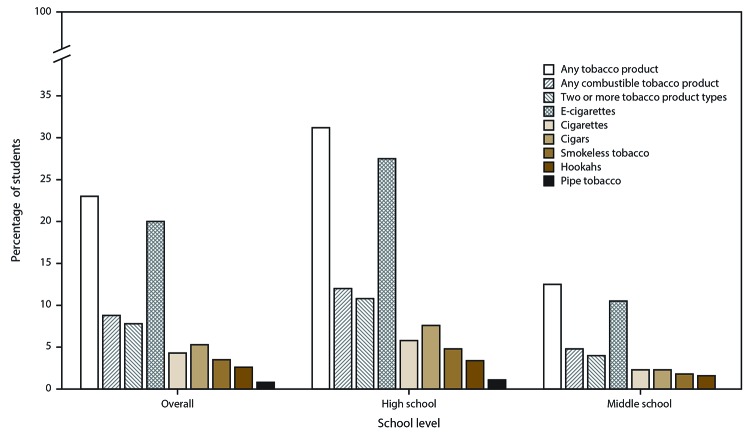
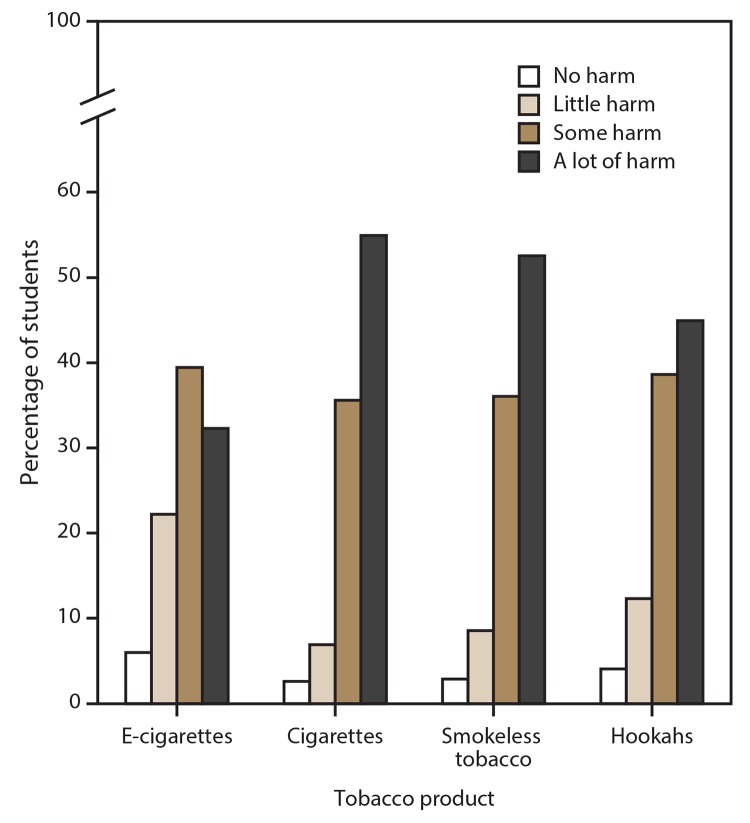
PROBLEM/CONDITION: Tobacco use is the leading cause of preventable disease, disability, and death in the United States. Most tobacco product use begins during adolescence. In recent years, tobacco products have evolved to include various smoked, smokeless, and electronic products. PERIOD COVERED: 2019. DESCRIPTION OF SYSTEM: The National Youth Tobacco Survey (NYTS) is an annual, cross-sectional, school-based, self-administered survey of U.S. middle school (grades 6-8) and high school (grades 9-12) students. A three-stage cluster sampling procedure is used to generate a nationally representative sample of U.S. students attending public and private schools. NYTS is the only nationally representative survey of U.S. middle and high school students that focuses exclusively on tobacco use patterns and associated factors. NYTS is designed to provide national data on tobacco product use and has been conducted periodically during 1999-2009 and annually since 2011. Data from NYTS are used to support the design, implementation, and evaluation of comprehensive tobacco use prevention and control programs and to inform tobacco regulatory activities. Since its inception in 1999 through 2018, NYTS had been conducted via paper and pencil questionnaires. In 2019, NYTS for the first time was administered in schools using electronic data collection methods. CDC's Office on Smoking and Health, in collaboration with the U.S. Food and Drug Administration's (FDA's) Center for Tobacco Products, analyzed data from the 2019 NYTS to assess tobacco product use patterns and associated factors among U.S. middle and high school students. Overall, 19,018 questionnaires were completed and weighted to represent approximately 27.0 million students. On the basis of self-reported grade level, this included 8,837 middle school questionnaires (11.9 million students) and 10,097 high school questionnaires (15.0 million students); 84 questionnaires with missing information on grade level were excluded from school-level analyses. RESULTS: In 2019, an estimated 53.3% of high school students (8.0 million) and 24.3% of middle school students (2.9 million) reported having ever tried a tobacco product. Current (past 30-day) use of a tobacco product (i.e., electronic cigarettes [e-cigarettes], cigarettes, cigars, smokeless tobacco, hookahs, pipe tobacco, and bidis [small brown cigarettes wrapped in a leaf]) was reported by 31.2% of high school students (4.7 million) and 12.5% of middle school students (1.5 million). E-cigarettes were the most commonly cited tobacco product currently used by 27.5% of high school students (4.1 million) and 10.5% of middle school students (1.2 million), followed in order by cigars, cigarettes, smokeless tobacco, hookahs, and pipe tobacco. Tobacco product use also varied by sex and race/ethnicity. Among current users of each tobacco product, the prevalence of frequent tobacco product use (on ≥20 days of the preceding 30 days) ranged from 16.8% of cigar smokers to 34.1% of smokeless tobacco product users. Among current users of each individual tobacco product, e-cigarettes were the most commonly used flavored tobacco product (68.8% of current e-cigarette users). Among students who reported ever having tried e-cigarettes, the three most commonly selected reasons for use were "I was curious about them" (55.3%), "friend or family member used them" (30.8%), and "they are available in flavors, such as mint, candy, fruit, or chocolate" (22.4%). Among never users of each individual tobacco product, curiosity and susceptibility (a construct that can help to identify future tobacco product experimentation or use) was highest for e-cigarettes (39.1% and 45.0%, respectively) and cigarettes (37.0% and 45.9%, respectively). Overall, 86.3% of students who reported contact with an assessed potential source of tobacco product advertisements or promotions (going to a convenience store, supermarket, or gas station; using the Internet; watching television or streaming services or going to the movies; or reading newspapers or magazines) reported exposure to marketing for any tobacco product; 69.3% reported exposure to e-cigarette marketing and 81.7% reported exposure to marketing for cigarettes or other tobacco products. Among all students, perceiving no harm or little harm from intermittent tobacco product use (use on some days but not every day) was 28.2% for e-cigarettes, 16.4% for hookahs, 11.5% for smokeless tobacco products, and 9.5% for cigarettes. Among current users of any tobacco product, 24.7% reported experiencing cravings to use tobacco products during the past 30 days and 13.7% reported wanting to use a tobacco product within 30 minutes of waking. Moreover, 57.8% of current tobacco product users reported they were seriously thinking about quitting the use of all tobacco products and 57.5% reported they had stopped using all tobacco products for ≥1 day because they were trying to quit. INTERPRETATION: In 2019, approximately one in fou
Overview
The claims and statistics of this paper haven’t been checked yet.
Free: it reads the open-access text and checks the first 5 claims that cite a source we can check. Create a free account to check every claim.
Integrity signals
Registry
Cites
Statistics
Figures
Verification
Claims the paper makes
The claims and statistics of this paper haven’t been checked yet.
Free: it reads the open-access text and checks the first 5 claims that cite a source we can check. Create a free account to check every claim.
Claims other papers make about this one
Each is checked against this paper’s own text: does it say what the citing paper says it does?
The source backs part of the claim, not all of it — or backs it for a different population, condition or comparison.
In the citing paper
“Although introduced as recently as 2007 to the US market, e-cigarettes are now the most commonly used tobacco product among teenagers (Miech et al., 2017; Wang et al., 2019).”
From Unique, long-term effects of nicotine on adolescent brain. (2020) · cites this paper as Wang et al., 2019
Experimental — accuracy not yet measuredThe cited source says what the claim attributes to it.
In the citing paper
“Although these findings may suggest that adolescent females find nicotine and tobacco more rewarding than males, recent data on middle and high school students suggest few sex differences in rates of tobacco product use, with males showing slightly elevated consumption (Wang et al., 2019).”
From Unique, long-term effects of nicotine on adolescent brain. (2020) · cites this paper as Wang et al., 2019
Self-check
Percentages, sums and reported differences re-computed from the paper’s own numbers.
The self-check needs the paper’s full text.
Citations
Cites
Youth risk behavior surveillance-United States, 2017
Kann, L., McManus, T., Harris, W. A., Shanklin, S. L., Flint, K. H., Queen, B., Lowry, R., Chyen, D., Whittle, L., Thornton, J., et al. (2018) · MMWR. Surveillance Summaries · doi:10.15585/mmwr.ss6708a1 · Cited by 2,502 · cited 1×
“Although most current youth tobacco product users are not daily users (9,12,13), estimates of frequent e-cigarette use among high school students were comparable to those observed for cigarette and smokeless tobacco product users in 2019.”
BackgroundPierce, J. P., Choi, W. S., Gilpin, E. A., Farkas, A. J., & Merritt, R. K. (1996) · Health Psychology · doi:10.1037//0278-6133.15.5.355 · Cited by 1,065
Four hundred and sixty brands of e-cigarettes and counting: implications for product regulation
Zhu, S.-H., Sun, J. Y., Bonnevie, E., Cummins, S. E., Gamst, A., Yin, L., & Lee, M. (2014) · Tobacco Control · doi:10.1136/tobaccocontrol-2014-051670 · Cited by 913 · cited 1×
“Although the 2009 Family Smoking Prevention and Tobacco Control Act† prohibits characterizing flavors other than tobacco and menthol in cigarettes, characterizing flavors in other tobacco products, such as e-cigarettes, are widely available (24,25).”
BackgroundVital Signs: Tobacco Product Use Among Middle and High School Students — United States, 2011–2018
Gentzke, A. S., Creamer, M., Cullen, K. A., Ambrose, B. K., Willis, G., Jamal, A., & King, B. A. (2019) · MMWR. Morbidity and Mortality Weekly Report · doi:10.15585/mmwr.mm6806e1 · Cited by 766
Self-citationCullen, K. A., Ambrose, B. K., Gentzke, A. S., Apelberg, B. J., Jamal, A., & King, B. A. (2018) · MMWR. Morbidity and Mortality Weekly Report · doi:10.15585/mmwr.mm6745a5 · Cited by 734
Self-citationE-Cigarette Use Among Youth and Young Adults: A Major Public Health Concern
Murthy, V. H. (2017) · JAMA Pediatrics · doi:10.1001/jamapediatrics.2016.4662 · Cited by 405
Youth tobacco surveillance--United States, 2000.
Marshall, L. L., Schooley, M., Ryan, H. A., Cox, P., Easton, A. N., Healton, C. G., Jackson, K., Davis, K., & Homsi, G. (2001) · PubMed · Cited by 245
Tobacco product use among middle and high school students--United States, 2011 and 2012.
Arrazola, R. A., Dube, S. R., & King, B. A. (2013) · PubMed Central · Cited by 215
The role of curiosity in smoking initiation
Pierce, J. P., Distefan, J. M., Kaplan, R. M., & Gilpin, E. A. (2005) · Addictive Behaviors · doi:10.1016/j.addbeh.2004.08.014 · Cited by 168
Research works printed but not linked: 1
- US Department of Health and Human Services. The health consequences of smoking—50 years of progress. Atlanta, GA: US Department of Health and Human Services, CDC; 2014. https://www.ncbi.nlm.nih.gov/books/NBK179276/pdf/Bookshelf_NBK179276.pdf
Cited by
Items 501–600 of 602
ATS Core Curriculum 2020. Pediatric Pulmonary Medicine
Gross, J. E., McCown, M., Okorie, C. U. A., Bishay, L. C., Dy, F. J., Rettig, J. S., Baker, C. D., Balmes, J. R., Barber, A. T., Bose, S. K., et al. (2020) · ATS Scholar · doi:10.34197/ats-scholar.2020-0022re · Cited by 1
“Recommendations to reduce exposure to wildfire smoke include 1) keep children indoors as much as possible with the doors and windows closed, 2) if available, use a central ventilation system to filter the air by running it with the fresh-air intake closed (recirculate mode), and 3) use high-efficiency particulate air…”
BackgroundInfluentialLuepker, R. V. (2020) · Contemporary cardiology · doi:10.1007/978-3-030-56279-3_8 · Cited by 1
Tobacco Screening and Use in Hospitalized Adolescents at a Children’s Hospital
Alexander, A. D., Honan, R., Molina, A. L., Rahman, A. K. M. F., & Walley, S. C. (2021) · Hospital Pediatrics · doi:10.1542/hpeds.2020-002311 · Cited by 1
Population pharmacokinetics and exposure–response analyses of varenicline in adolescent smokers
Fediuk, D. J., Sweeney, K., Sahasrabudhe, V., McRae, T. D., & Byon, W. (2021) · CPT Pharmacometrics & Systems Pharmacology · doi:10.1002/psp4.12645 · Cited by 4
Keller-Hamilton, B. L., Curran, H., Stevens, E. M., Slater, M. D., Lü, B., Roberts, M. E., & Ferketich, A. K. (2021) · International Journal of Environmental Research and Public Health · doi:10.3390/ijerph182111666 · Cited by 1
“Conversely, the prevalence of electronic cigarette (e-cigarette) use has generally increased over the past decade and peaked in 2019, when an estimated 20% of youth reported current use of e-cigarettes [3].”
Background(2020) · Journal of Pediatric Health Care · doi:10.1016/j.pedhc.2020.07.007 · Cited by 1
“…to the National Youth Tobacco Survey (CDC, 2019a), 4.7 million (31.2%, nearly 1 in 3) high school students and 1.5 million middle school students (12.5%, 1 in 8) currently use tobacco products, erasing decades of progress in reducing youth tobacco use (Gentzke et al., 2019; Wang et al., 2019).”
InfluentialTopadă, A., Nădășan, V., Tarcea, M., & Ábrám, Z. (2021) · Acta Marisiensis. Seria Medica · doi:10.2478/amma-2021-0039 · Cited by 1
“Previous studies have found that exposure to tobacco products and misconceptions about the harm caused by tobacco use are associated with e-cigarette use among young people [49-52].”
Background(2022) · Trends in Nursing and Health Care Journal · doi:10.21608/tnhcj.2022.248090 · Cited by 1
Obinwa, U., Clendennen, S. L., Rangwalam, S., Sumbe, A., Case, K. R., & Harrell, M. B. (2021) · PubMed · Cited by 1
Tolma, E. L., Vesely, S. K., Boeckman, L. M., Oman, R. F., & ASPY, C. B. (2022) · International Journal of Environmental Research and Public Health · doi:10.3390/ijerph191912330 · Cited by 1
“In fact, e-cigarettes have been the most commonly tobacco product used among US youth since 2014 [10,11].”
BackgroundFrizon, A. B., Trillo, M. L. N., & de Sousa, L. A. P. (2022) · Revista Eletrônica Acervo Médico · doi:10.25248/reamed.e11425.2022 · Cited by 4
Pediatric Preventive Cardiology
Ward, K. M., Greco, M. M., Peterson, A. L. H., Matossian, D., & Benuck, I. (2023) · Springer eBooks · doi:10.1007/978-3-030-42937-9_107-1 · Cited by 1
Pediatric Preventive Cardiology
Ward, K. M., Greco, M. M., Peterson, A. L. H., Matossian, D., & Benuck, I. (2024) · Springer eBooks · doi:10.1007/978-3-031-07563-6_107 · Cited by 1
Nicotine e-cigarettes for smoking cessation: a clinical pharmacology perspective
Ameral, V., Sofuoglu, M., & Kelly, M. M. (2025) · Expert Review of Clinical Pharmacology · doi:10.1080/17512433.2025.2472837 · Cited by 1
“Evidence suggests that flavors increase the appeal of e-cigar-ettes and may contribute to the initiation and maintenance of e-cigarette use, especially among youth and young adults [28].”
Adolescents Caught Between the Temptation and the Habit of Smoking
Dadulescu, A.-M., Glavce, C. S., Turcu, S., & Borosanu, A. (2025) · Cureus · doi:10.7759/cureus.83108 · Cited by 2
“The age of onset of the temptation to smoke is becoming increasingly lower, thereby raising the risk that adolescents will later become smokers [9,10].”
Kim, S., & Selya, A. (2025) · Substance Use & Misuse · doi:10.1080/10826084.2025.2525380 · Cited by 1
The World Health Organization Framework Convention on Tobacco Control at 20 years
Benzian, H., Beltrán‐Aguilar, E. D., & Mackay, J. M. (2025) · The Journal of the American Dental Association · doi:10.1016/j.adaj.2025.05.015 · Cited by 1
Velotta, J. B., Moskalenko, I., Zhu, S., Adams, S. R., Nugent, J. R., Chervo, T. C., Skarbinski, J., Prochaska, J. J., Brown, Q. L., Campbell, C. I., et al. (2025) · Journal of Thoracic Disease · doi:10.21037/jtd-2025-580 · Cited by 1
“It is becoming more common for younger adults to vape nicotine and/or cannabis, even though the original intended use for vaping was to help reduce chronic tobacco cigarette smoking in adults (3-5).”
An Innovative Method of Increasing Early Detection for Skin Cancer in Australia
Lowe, J. B., Balanda, K. P., Mar, C. D., Hegarty, K. L., Sheldrake, M., & Clare, G. (1999) · American Journal of Health Behavior · doi:10.5993/ajhb.23.4.1 · Cited by 1
A Cigarette by any other name is still a cigarette
Jenson, D. (2020) · Tobacco Control · doi:10.1136/tobaccocontrol-2019-055597 · Cited by 1
Sources of acquisition and frequency of e-cigarette use among adolescents in the United StatesPreprint
Esther, A., Awasthi, M., Adekunle, O., Billy, B., Ahuja, M., Jones, A., Weierbach, F. M., Adkins, F. R., & Mamudu, H. M. (2022) · Research Square · doi:10.21203/rs.3.rs-1322960/v1 · Cited by 1
Foxon, F., & Shiffman, S. S. (2022) · Qeios · doi:10.32388/irratg · Cited by 1
The role of e-liquid constituents in e-cigarette-induced cardiac arrhythmia and autonomic imbalance.
Kucera, C. (2023) · ThinkIR: The University of Louisville's Institutional Repository (University of Louisville) · doi:10.18297/etd/4170 · Cited by 2
Xu, L., Zhang, Z., & Shang, C. (2025) · SSRN Electronic Journal · doi:10.2139/ssrn.5135600 · Cited by 1
The Impact of State Tobacco Control Spending on High School Student VapingPreprint
Tauras, J. A., Diaz, M. C., Schillo, B., & Vallone, D. (2020) · SSRN Electronic Journal · doi:10.2139/ssrn.3658834
We Knew Tobacco Smoke Exposure Was Bad …
Farber, H. J. (2020) · CHEST Journal · doi:10.1016/j.chest.2020.04.008
Shenoy, R., Kamath, A., & Rungta, N. (2020) · Journal of international oral health · doi:10.4103/jioh.jioh_167_20
Pike, J., Marsden, D., Wilkinson, A. V., Lee, M., McCormick, J. B., & Fisher‐Hoch, S. P. (2020) · Journal of Family Strengths · doi:10.58464/2168-670x.1423
“Prevalence of smokeless forms of tobacco (specifically chewing tobacco and snuff) in Hispanic Americans is estimated to be 0.5% in adults and 2.4% among middle and high school students (Cornelius, Wang, Jamal, Loretan & Neff, 2020; Wang et al. 2019).”
BackgroundResultInfluentialSmith, J., Clendennen, S. L., Wilkinson, A. V., & Harrell, M. B. (2021) · ScholarWorks @ UTRGV (The University of Texas Rio Grande Valley)
Pebley, K., Robinson, L. A., Campbell, K. W., & Berlin, K. S. (2021) · Children s Health Care · doi:10.1080/02739615.2021.1937172
“…the United States (US Department of Health and Human Services [USDHHS], 2014), and the life expectancy of smokers is about ten years shorter than the life expectancy of nonsmokers (Jha et al., 2013), and 5.8% of high school students report using cigarettes in the past 30 days (Wang et al., 2019).”
BackgroundInfluentialAnálise multidimensional do estado nutricional em adolescentes
Oliveira, É. A. R. (2021) · Digital Library of Theses and Dissertations (Universidade de São Paulo) · doi:10.11606/t.6.2021.tde-06052021-081240
Christian, W. J., Valvi, N. R., & Walker, C. J. (2021) · Public Health Reports · doi:10.1177/00333549211029972
Perceptions of Maine Health Care Providers on Youth Tobacco Use and Prevention Efforts
Balogun, T., Soma, T., & O’Brien, L. M. (2021) · Journal of Maine Medical Center · doi:10.46804/2641-2225.1076
Augustine, H. (2020) · ResearchWorks at the University of Washington (University of Washington)
Three Essays on Tobacco Control Policy
Teotia, A. (2021) · Digital Archive @ GSU · doi:10.57709/24113010
Şenel, M. Y., Karadoğan, D., Vardaloğlu, I., Develi, E., Çelik, S., Hızal, M. G., Özsezen, B., Öncel, A., Can, I., Hürsoy, N., et al. (2022) · Turkish Thoracic Journal · doi:10.5152/turkthoracj.2022.21289
Sánchez‐Romero, L. M., Cadham, C. J., Hirschtick, J. L., Mattingly, D. T., Cho, B., Fleischer, N. L., Brouwer, A. F., Mistry, R., Land, S. R., Meza, R., et al. (2021) · Research Square · doi:10.21203/rs.3.rs-333579/v1
The Impact of Recent National Policies and Health Outbreaks on U.S. E-Cigarette SalesPreprint
Kenkel, D. (2021) · SSRN Electronic Journal · doi:10.2139/ssrn.3920023
Factors Affecting the Smoking Rate of Cigarettes Among Adolescents
Park, M. (2022) · Advances in Social Sciences Research Journal · doi:10.14738/assrj.98.12977
Yang, S., Nugent, R., & NUGENT, K. M. (2022) · Southern Medical Journal · doi:10.14423/smj.0000000000001445
“Wang et al provided a detailed analysis of tobacco product use and associated factors amongmiddle and high school students in the United States based on the 2019 NYTS.16 In this survey, 53.3% of high school students and 24.3% of middle school students reported having ever tried a tobacco product.”
BackgroundInfluentialOhio Journal of Public Health Vol. 3, Issue 1 (June 2020): Full Issue
Ohio Public Health Association OPHA (2020) · Ohio Journal of Public Health · doi:10.18061/ojph.v3i1.9006
Behavioral Approaches to Cancer Prevention
González, R. O., & Karam‐Hage, M. (2022) · Wiley eBooks · doi:10.1002/9781119000822.hfcm036.pub2
Adolescent E-cigarette use: Rates, concerns, and policy implications
Lempert, L. K., & Halpern‐Felsher, B. L. (2022) · Elsevier eBooks · doi:10.1016/b978-0-12-818872-9.00139-4
Sheikh, T. B., Reche, A. R., Madhu, P. P., Chhabra, K. G., Chitlange, P. M., & Kewelramani, M. (2023) · Journal of Family Medicine and Primary Care · doi:10.4103/jfmpc.jfmpc_930_22
John Auerbach, M., & Monica Valdes-Lupi, J. (2023) · American Public Health Association eBooks · doi:10.2105/9780875533377fm2
Farber, H. J., & Sockrider, M. M. (2023) · American Academy of PediatricsItasca, IL eBooks · doi:10.1542/9781610026536-61
Chitlange, P. M., Reche, A. R., Madhu, P. P., Chhabra, K. G., Sheikh, T. B., & Kewelramani, M. (2024) · Journal of Family Medicine and Primary Care · doi:10.4103/jfmpc.jfmpc_2352_22
“[3] Both adolescents and adults frequently use tobacco.”
BackgroundZungu, L. (2022) · ResearchSpace (University of KwaZulu-Natal) · doi:10.29086/10413/22947
Yoder, G., Wu, S., & Marsiglia, F. F. (2024) · Child and Adolescent Social Work Journal · doi:10.1007/s10560-024-00973-0
“Since 2014, e-cigarettes have been the most commonly used tobacco product among youths(Wang et al., 2019).”
Sarkar, M. A. (2024) · Qeios · doi:10.32388/pho20l.2
“According to the National Youth Survey (NYTS), the prevalence of e-cigarette use has declined since the peak of 20.0% among middle and high school students reporting past 30-day use of e-cigarettes in 2019 [2] , down to 7.7% in 2023 [3] .”
BackgroundInfluentialDerrick, W. P., Yang, S., & NUGENT, K. M. (2024) · Journal of Primary Care & Community Health · doi:10.1177/21501319241276790 · Cited by 1
Bello, M. S., Wang, C. X., Maglalang, D. D., Rosales, R., Tidey, J. W., Denlinger-Apte, R. L., Sokolovsky, A. W., Colby, S. M., & Cassidy, R. N. (2024) · Addictive Behaviors · doi:10.1016/j.addbeh.2024.108147
Predictors of Cigar, Cigarillo, and Little Cigar Initiation Among Hip Hop-Identifying Youth
Guillory, J. E., Curry, L. E., Homsi, G., Saunders, M. E., Henes, A., MacMonegle, A. J., Nonnemaker, J. M., Sanders, E. C., Mekos, D., Vigorita, M. W., et al. (2024) · Substance Use & Misuse · doi:10.1080/10826084.2024.2403127
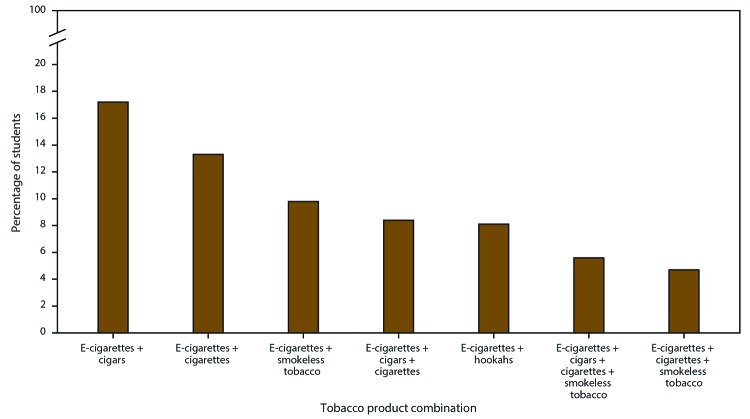
“Research also shows cigar products and e-cigarettes to be the most commonly used tobacco product combination (T. W. Wang et al., 2019).”
The Epidemiology of Vaping amongst Adolescents in a Private School in Bahrain: A Pilot Study
Khalaf, S., & Almubarak, T. (2024) · Journal of the Bahrain Medical Society · doi:10.26715/jbms.36_3_2
American Indian and Alaska Natives in the US Physician Workforce
Grellinger, E. D., Blumenshine, D., Lakatos, K., Warren, B., & Bongiovanni, T. (2024) · Springer eBooks · doi:10.1007/978-3-031-63050-7_20 · Cited by 1
The Neurological Impact of Continuous Nicotine Exposure in Adolescents
Hall, J. S., & Murphy, W. (2024) · Science Insights · doi:10.15354/si.24.re1067
“…institutions can establish rules and initiatives to foster a smoke-free and vape-free atmosphere on campus (Berg et al., 2020; Bower & Enzler, Butler et al., 2011; 2005; Diehl, 1967; Halperin & Rigotti, 2003; Lee et al., 2012; Wang et al., 2019; Wechsler et al., 2001; Seitz et al., 2018).”
BackgroundGumbs, C. M., Suther, S. G., Steffen, A. D., & Matthews, A. K. (2024) · Tobacco Prevention & Cessation · doi:10.18332/tpc/195288
Cuacés-Ipiales, S. L., Turriago-Hurtado, E. S., Castro-Páez, A. F., & Cueva, G. V. U. (2024) · Sanitas. Revista arbitrada de ciencias de la salud. · doi:10.62574/e6rga049
Problemas asociados con el consumo de tabaco en los estudiantes de medicina
Mena, M. J. L., Mejía-Chanatasi, G. A., Mendieta-Freire, A. L., & Alfonso-González, I. (2024) · Revista Arbitrada Interdisciplinaria de Ciencias de la Salud Salud y Vida · doi:10.35381/s.v.v8i1.3802
Factors associated with cigarette smoking among learners at a high school in KwaZulu-Natal
Ngwenya, G. V., Malaka, R. M., Cele, L. P., & Rammopo, M. (2025) · Health SA Gesondheid · doi:10.4102/hsag.v30i0.2832
Selya, A., Hannon, M. J., Kim, S., & Shiffman, S. S. (2026) · Contributions to Tobacco & Nicotine Research · doi:10.2478/cttr-2026-0010
“9.4% in W7/2022 (24–25).”
InfluentialAdcock, D. L., & Kashyap, S. S. (2025) · Machine Learning Health · doi:10.1088/3049-477x/add1e3
Grubor, I., Vuković, M., Rakić, J. G., Zdravkovski, M., & Kilibarda, B. (2025) · Glasnik javnog zdravlja · doi:10.5937/serbjph2503198g
Mitigating the Youth Vaping Epidemic Through Health Education
Sager, T., Meister, M. L., He, X., & Wright, C. (2025) · NASN School Nurse · doi:10.1177/1942602x251387736
“…such as benzene, toluene, xylene, formaldehyde, acetaldehyde, and acrolein have been observed and quantified within ENDS emissions at levels that often exceed permissible limits (Burstyn, 2014; Callahan-Lyon, 2014; Cheng, 2014; Pisinger & Døssing, 2014; Wang et al., 2019; Ward et al., 2020).”
InfluentialKurani, S. S., Webb, L., Cadet, K., Ma, M., Gibson, M., Jallah, N., Park, J. N., & Johnson, R. M. (2022) · Figshare · doi:10.6084/m9.figshare.19641808
Surprenant, R., & Cabot, I. (2025) · Bibliothèque et Archives nationales du Québec (Québec government) · doi:10.13140/rg.2.2.25886.65600
AWARENESS AND MISCONCEPTIONS REGARDING VAPE SMOKING AND ITS HEALTH EFFECTS
Noor, M. S., Mohmand, M. S., Syed, L. N., Khan, M., Safi, S., & Luqman, M. (2025) · The Research of Medical Science Review · doi:10.5281/zenodo.14801385 · Cited by 1
Farrelly, M. C., Taylor, N., Nonnemaker, J. M., Smith, A. A., Delahanty, J. C., & Zhao, X. (2021) · Figshare · doi:10.6084/m9.figshare.17205079
Torregrossa, H., Dautzenberg, B., Birkui, P., Rieu, N., Dautzenberg, M., Melchior, M., & Mary‐Krause, M. (2022) · Figshare · doi:10.6084/m9.figshare.20324778
Additional file 1 of Youth susceptibility to tobacco use: is it general or specific?
Cheng, H. G., Lizhnyak, P. N., Knight, N. A., Vansickel, A. R., & Largo, E. G. (2021) · Figshare · doi:10.6084/m9.figshare.16851382
Additional file 2 of Youth susceptibility to tobacco use: is it general or specific?
Cheng, H. G., Lizhnyak, P. N., Knight, N. A., Vansickel, A. R., & Largo, E. G. (2021) · Figshare · doi:10.6084/m9.figshare.16851385
Torregrossa, H., Dautzenberg, B., Birkui, P., Rieu, N., Dautzenberg, M., Melchior, M., & Mary‐Krause, M. (2022) · Figshare · doi:10.6084/m9.figshare.20324775
Sánchez‐Romero, L. M., Cadham, C. J., Hirschtick, J. L., Mattingly, D. T., Cho, B., Fleischer, N. L., Brouwer, A. F., Mistry, R., Land, S. R., Jeon, J., et al. (2021) · Figshare · doi:10.6084/m9.figshare.14833335
Cheng, H. G., Vansickel, A. R., & Largo, E. G. (2023) · Figshare · doi:10.6084/m9.figshare.22619608
Levy, D. T., Tam, J., Sánchez‐Romero, L. M., Li, Y., Yuan, Z., Jeon, J., & Meza, R. (2021) · Figshare · doi:10.6084/m9.figshare.14444835
Kurani, S. S., Webb, L., Cadet, K., Ma, M., Gibson, M., Jallah, N., Park, J. N., & Johnson, R. M. (2022) · Figshare · doi:10.6084/m9.figshare.19641811
Characterization of Respiratory Systems Among Youth Using Heated Tobacco Products in Hong Kong
Wang, L., Chen, J., Leung, L. T., Mai, Z.-M., Ho, S. Y., Lam, T. H., & Wang, M. P. (2021) · Florida International University Digital Commons (Florida International University)
From Vapor to Vice: Unraveling the Links Between Vaping and Traditional Substance Abuse Among Youth
Powell, A. (2023) · DigitalCommons@UNMC
Using Large Language Models and Prompt Strategies to Annotate Healthcare Posts on Social Media
Aust, L., & Fu, A. (2026) · Lecture notes in computer science · doi:10.1007/978-3-032-13167-6_7
Vaping Goes Viral: The Role of Commercial E-Cigarette Tweets in Youth E-Cigarette Use Susceptibility
Kostygina, G., Page, S., Kim, Y., & Emery, S. (2026) · Nicotine & Tobacco Research · doi:10.1093/ntr/ntag013
Katsuki, M., Moran, K., Tatsumoto, M., Suzuki, K., Shimazu, T., Matsumori, Y., Fuse, Y., Huerta, M. Á., Sugiyama, D., Cheung, J. T. S., et al. (2026) · Headache The Journal of Head and Face Pain · doi:10.1111/head.70068
E-sigaralar ve zarar azaltımı miti: Kanıtlara dayalı eleştirel bir inceleme
Turan, A., & Erhan, Ç. (2026) · Turkish Journal of Tobacco Control · doi:10.64511/tjtc.2026.44
Coolant flavors exacerbate nicotine effects in craniofacial cells
Sewell, L., Maykovich, T., Babcock, M., Richlak, E., Gorr, M. W., Wold, L. E., Hellani, A. E., & Cray, J. (2026) · Nicotine & Tobacco Research · doi:10.1093/ntr/ntag109
Soto‐Martínez, M. E., Wallace, R. K., Bush, A., Ferkol, T. W., Kerem, E., Grutta, S. L., Souëf, P. N. L., Stein, R. T., & Vanker, A. (2026) · Paediatric Respiratory Reviews · doi:10.1016/j.prrv.2026.05.005
Krasanakis, T., Bouloukaki, I., Christodoulakis, A., Aravantinou-Karlatou, A., Hoffman, C. M., van der Kleij, R., & Tsiligianni, I. (2026) · Substance Use & Addiction Journal · doi:10.1177/29767342261446843
Youth Tobacco Prevention: Are Doctors Talking to Youth About Tobacco?
Barnett, T. E., Choi, A. N., Serdarevic, M., Gimeno, D., Thompson, E. L., & Halpern, M. T. (2026) · Journal of Adolescent Health · doi:10.1016/j.jadohealth.2026.04.004
McDonald, E. A., Zarndt, A. N., Guo, M., & Pepper, J. K. (2026) · American Journal of Preventive Medicine · doi:10.1016/j.amepre.2026.108418
Cristello, J. V., Valle, N., Sutherland, B. D., Sutherland, M. T., & Trucco, E. M. (2026) · Translational Issues in Psychological Science · doi:10.1037/tps0000523
Xu, L., Zhang, Z., & Shang, C. (2026) · BMJ Public Health · doi:10.1136/bmjph-2025-004801
Kucera, C., Ramalingam, A. R., Raph, S. M., Paily, R., Srivastava, S., Lorkiewicz, P., Bhatnagar, A., Nystoriak, M. A., & Carll, A. P. (2026) · Circulation Arrhythmia and Electrophysiology · doi:10.1161/circep.125.014253
Dąbek, J., Żerdka, J., Brasse, P., & Smolka, G. A. (2026) · Journal of Clinical Medicine · doi:10.3390/jcm15135318
“Many young people who mainly use e-cigare tt es also use other tobacco products, including cigare tt es and heated tobacco products [27].”
Нові нікотинові вироби: еволюція, поширеність і виклики для здоров’я
Волошина, И. М., Shkvarok, A. K., & Kupyra, D. (2026) · Україна Здоров’я нації · doi:10.32782/2077-6594/2026.2/07
Maldonado, G. T., Mantey, D. S., Wall, C. S. J., & Cobb, C. O. (2026) · Substance Use & Misuse · doi:10.1080/10826084.2026.2704620
Kephart, L., Chadwick, G., Stover, M., Kruse, G. R., Jeffers, A., Cheng, D. T.-Y., & Levy, D. E. (2026) · American Journal of Preventive Medicine · doi:10.1016/j.amepre.2026.108523
Salagay, O. О., Sakharova, G. M., Antonov, N. S., & Стадник, Н. М. (2026) · ЗДОРОВЬЕ НАСЕЛЕНИЯ И СРЕДА ОБИТАНИЯ - ЗНиСО / PUBLIC HEALTH AND LIFE ENVIRONMENT · doi:10.35627/2219-5238/2026-34-6-7-17
Vur, B., Kotz, D., & Klosterhalfen, S. (2026) · Addictive Behaviors · doi:10.1016/j.addbeh.2026.108845
Jairoun, A. A., Al‐Hemyari, S. S., Shahwan, M. J., Al-Ghananeem, A. M., Zyoud, S. H., & Godman, B. (2026) · Medicine · doi:10.1097/md.0000000000050118
“[37] The study identified potential sources attracting youth to e-cigarette use, including tobacco product advertisements in convenience stores, supermarkets, and gas stations, and frequent exposure to the internet, television, streaming services, and movies.”
InfluentialFamilial Influences on Adolescent E-Cigarette and Cannabis Use: A Qualitative Analysis
Couch, E. T., Lieuw, K., Guerra, C., Halpern‐Felsher, B. L., Chaffee, B. W., & Hoeft, K. S. (2026) · Journal of Child & Adolescent Substance Use · doi:10.1080/29973368.2026.2732043
“Existing research indicates that family tobacco use and secondhand smoke exposure predict adolescent e-cigarette use (Adebisi et al., 2025; Wang et al., 2019).”
Smoking as a persistent global health challenge: perspectives on heated tobacco products
Bisht, A., Shuki, Singh, M., & Kulshreshtha, R. (2026) · Frontiers in Public Health · doi:10.3389/fpubh.2026.1737290
Lynch, V., Payton, M., & Clemans-Cope, L. (2026) · Journal of Child & Adolescent Substance Use · doi:10.1080/29973368.2026.2732041
Metadata
- Authors
- Wang, T. W., Gentzke, A. S., Creamer, M. R., Cullen, K. A., Holder-Hayes, E., Sawdey, M. D., Anic, G. M., Portnoy, D. B., Hu, S., Homa, D. M., Jamal, A., & Neff, L. J.
- Affiliations
- Centers for Disease Control and Prevention (US)
- United States Food and Drug Administration (US)
- Corresponding author
- Wang, Teresa W.
- ORCID
- Venue
- MMWR. Surveillance Summaries
- Published
- 2019-11-06
- Volume
- 68
- Issue
- 12
- Pages
- 1-22
- ISSN
- 1545-8636 (ISSN-L)
- 1546-0738
- PMC
- PMC6903396
- OpenAlex
- W2993434903
- Cited by
- 576
- References
- 23
- Citations by year
- 2026: 22 · 2025: 38 · 2024: 60 · 2023: 78 · 2022: 109 · 2021: 149 · 2020: 119
- FWCI
- 64.66
- Type
- journal article
- Language
- en
- Open access
- diamond
- doi.org
- Licence
- public-domain
- Locations
- MMWR Surveillance Summaries (publishedVersion, public-domain)
- PubMed Central (publishedVersion, cc-by)
- PubMed (publishedVersion)
- Topics
- Health Sciences › Medicine › Public Health, Environmental and Occupational Health › Smoking Behavior and Cessation
- Health Sciences › Medicine › Epidemiology › Substance Abuse Treatment and Outcomes
- Health Sciences › Medicine › Public Health, Environmental and Occupational Health › School Health and Nursing Education
- Keywords
- tobacco use, electronic cigarettes, e-cigarette flavors, hookah, smokeless tobacco, bidis, cigars, cigarettes, tobacco use prevention, tobacco control, junior high school students, high school students, associated factors, tobacco packaging
- MeSH terms
- Adolescent, Child, Cross-Sectional Studies, Female, Health Surveys, Humans, Male, Schools, Smoking, Students, United States, Tobacco Products
About these checks
Registry, retraction, Cites and statistics results are computed, not judged, with one exception: a printed reference that no index lists is read once by a model before it counts as a citation error. Claims are extracted by a model and kept only when their quote appears verbatim in the text; each cited source is then checked, with a model’s help, for whether it says what the claim relies on. Those verdicts can be wrong — read the claim’s quote and the cited source before relying on one.
Statistics and arithmetic are recomputed, not judged.
Confidence bands are shown only for fields calibrated on our annotated test set. None is calibrated yet, so no band is shown.
What counts as a claim ›How we measure confidence ›How we check this ›
Are you an author, or do you see a problem with this page? Request a review
Data sources
Bibliographic data: Semantic Scholar, OpenAlex, Crossref.
Contains information from the Semantic Scholar Academic Graph Datasets, made available under the ODC Attribution License (ODC-BY 1.0).
Semantic Scholar’s data is described in: Kinney, R., et al. (2023). The Semantic Scholar Open Data Platform. arXiv:2301.10140.
