

Tobacco product use and associated factors among middle and high school students—United States, 2019
Open accessThe DOI matches its Crossref record; 22 of the 23 references it cites were found in a registry or an index.
Abstract
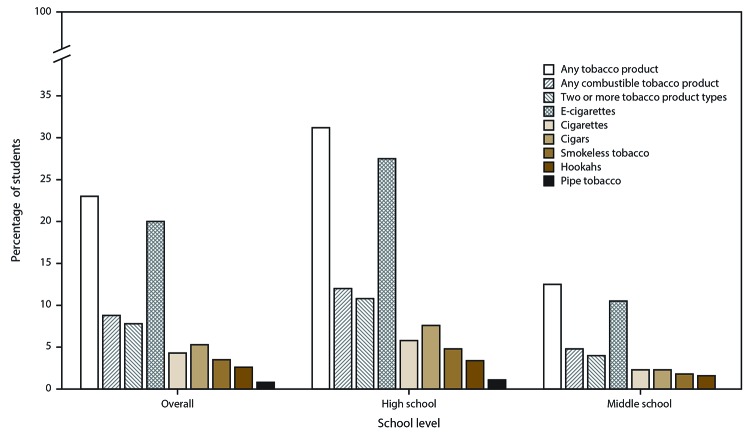
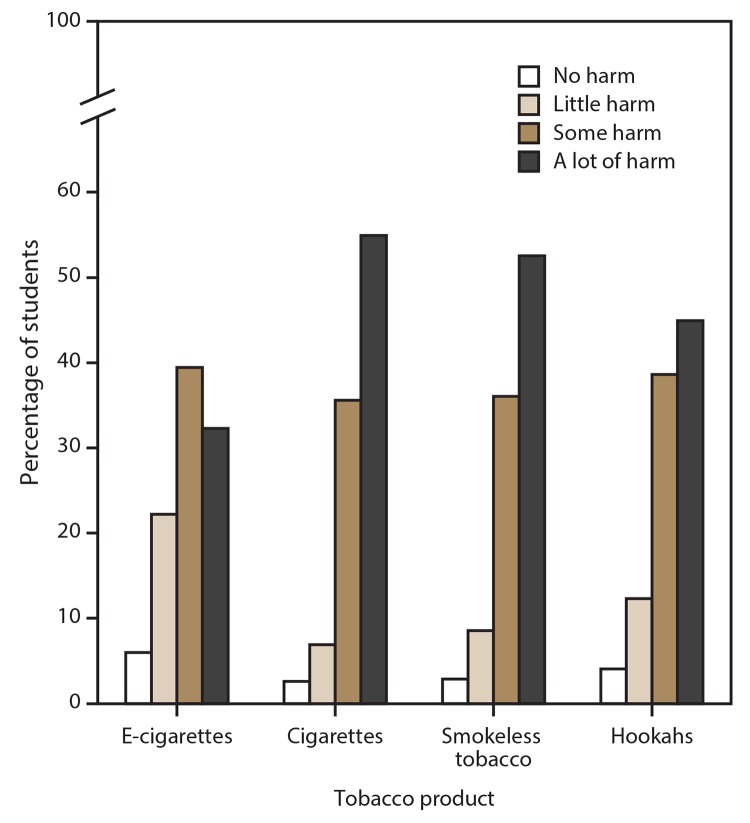
PROBLEM/CONDITION: Tobacco use is the leading cause of preventable disease, disability, and death in the United States. Most tobacco product use begins during adolescence. In recent years, tobacco products have evolved to include various smoked, smokeless, and electronic products. PERIOD COVERED: 2019. DESCRIPTION OF SYSTEM: The National Youth Tobacco Survey (NYTS) is an annual, cross-sectional, school-based, self-administered survey of U.S. middle school (grades 6-8) and high school (grades 9-12) students. A three-stage cluster sampling procedure is used to generate a nationally representative sample of U.S. students attending public and private schools. NYTS is the only nationally representative survey of U.S. middle and high school students that focuses exclusively on tobacco use patterns and associated factors. NYTS is designed to provide national data on tobacco product use and has been conducted periodically during 1999-2009 and annually since 2011. Data from NYTS are used to support the design, implementation, and evaluation of comprehensive tobacco use prevention and control programs and to inform tobacco regulatory activities. Since its inception in 1999 through 2018, NYTS had been conducted via paper and pencil questionnaires. In 2019, NYTS for the first time was administered in schools using electronic data collection methods. CDC's Office on Smoking and Health, in collaboration with the U.S. Food and Drug Administration's (FDA's) Center for Tobacco Products, analyzed data from the 2019 NYTS to assess tobacco product use patterns and associated factors among U.S. middle and high school students. Overall, 19,018 questionnaires were completed and weighted to represent approximately 27.0 million students. On the basis of self-reported grade level, this included 8,837 middle school questionnaires (11.9 million students) and 10,097 high school questionnaires (15.0 million students); 84 questionnaires with missing information on grade level were excluded from school-level analyses. RESULTS: In 2019, an estimated 53.3% of high school students (8.0 million) and 24.3% of middle school students (2.9 million) reported having ever tried a tobacco product. Current (past 30-day) use of a tobacco product (i.e., electronic cigarettes [e-cigarettes], cigarettes, cigars, smokeless tobacco, hookahs, pipe tobacco, and bidis [small brown cigarettes wrapped in a leaf]) was reported by 31.2% of high school students (4.7 million) and 12.5% of middle school students (1.5 million). E-cigarettes were the most commonly cited tobacco product currently used by 27.5% of high school students (4.1 million) and 10.5% of middle school students (1.2 million), followed in order by cigars, cigarettes, smokeless tobacco, hookahs, and pipe tobacco. Tobacco product use also varied by sex and race/ethnicity. Among current users of each tobacco product, the prevalence of frequent tobacco product use (on ≥20 days of the preceding 30 days) ranged from 16.8% of cigar smokers to 34.1% of smokeless tobacco product users. Among current users of each individual tobacco product, e-cigarettes were the most commonly used flavored tobacco product (68.8% of current e-cigarette users). Among students who reported ever having tried e-cigarettes, the three most commonly selected reasons for use were "I was curious about them" (55.3%), "friend or family member used them" (30.8%), and "they are available in flavors, such as mint, candy, fruit, or chocolate" (22.4%). Among never users of each individual tobacco product, curiosity and susceptibility (a construct that can help to identify future tobacco product experimentation or use) was highest for e-cigarettes (39.1% and 45.0%, respectively) and cigarettes (37.0% and 45.9%, respectively). Overall, 86.3% of students who reported contact with an assessed potential source of tobacco product advertisements or promotions (going to a convenience store, supermarket, or gas station; using the Internet; watching television or streaming services or going to the movies; or reading newspapers or magazines) reported exposure to marketing for any tobacco product; 69.3% reported exposure to e-cigarette marketing and 81.7% reported exposure to marketing for cigarettes or other tobacco products. Among all students, perceiving no harm or little harm from intermittent tobacco product use (use on some days but not every day) was 28.2% for e-cigarettes, 16.4% for hookahs, 11.5% for smokeless tobacco products, and 9.5% for cigarettes. Among current users of any tobacco product, 24.7% reported experiencing cravings to use tobacco products during the past 30 days and 13.7% reported wanting to use a tobacco product within 30 minutes of waking. Moreover, 57.8% of current tobacco product users reported they were seriously thinking about quitting the use of all tobacco products and 57.5% reported they had stopped using all tobacco products for ≥1 day because they were trying to quit. INTERPRETATION: In 2019, approximately one in fou
Overview
The claims and statistics of this paper haven’t been checked yet.
Free: it reads the open-access text and checks the first 5 claims that cite a source we can check. Create a free account to check every claim.
Integrity signals
Registry
Cites
Statistics
Figures
Verification
Claims the paper makes
The claims and statistics of this paper haven’t been checked yet.
Free: it reads the open-access text and checks the first 5 claims that cite a source we can check. Create a free account to check every claim.
Claims other papers make about this one
Each is checked against this paper’s own text: does it say what the citing paper says it does?
The source backs part of the claim, not all of it — or backs it for a different population, condition or comparison.
In the citing paper
“Although introduced as recently as 2007 to the US market, e-cigarettes are now the most commonly used tobacco product among teenagers (Miech et al., 2017; Wang et al., 2019).”
From Unique, long-term effects of nicotine on adolescent brain. (2020) · cites this paper as Wang et al., 2019
Experimental — accuracy not yet measuredThe cited source says what the claim attributes to it.
In the citing paper
“Although these findings may suggest that adolescent females find nicotine and tobacco more rewarding than males, recent data on middle and high school students suggest few sex differences in rates of tobacco product use, with males showing slightly elevated consumption (Wang et al., 2019).”
From Unique, long-term effects of nicotine on adolescent brain. (2020) · cites this paper as Wang et al., 2019
Self-check
Percentages, sums and reported differences re-computed from the paper’s own numbers.
The self-check needs the paper’s full text.
Citations
Cites
Youth risk behavior surveillance-United States, 2017
Kann, L., McManus, T., Harris, W. A., Shanklin, S. L., Flint, K. H., Queen, B., Lowry, R., Chyen, D., Whittle, L., Thornton, J., et al. (2018) · MMWR. Surveillance Summaries · doi:10.15585/mmwr.ss6708a1 · Cited by 2,502 · cited 1×
“Although most current youth tobacco product users are not daily users (9,12,13), estimates of frequent e-cigarette use among high school students were comparable to those observed for cigarette and smokeless tobacco product users in 2019.”
BackgroundPierce, J. P., Choi, W. S., Gilpin, E. A., Farkas, A. J., & Merritt, R. K. (1996) · Health Psychology · doi:10.1037//0278-6133.15.5.355 · Cited by 1,065
Four hundred and sixty brands of e-cigarettes and counting: implications for product regulation
Zhu, S.-H., Sun, J. Y., Bonnevie, E., Cummins, S. E., Gamst, A., Yin, L., & Lee, M. (2014) · Tobacco Control · doi:10.1136/tobaccocontrol-2014-051670 · Cited by 913 · cited 1×
“Although the 2009 Family Smoking Prevention and Tobacco Control Act† prohibits characterizing flavors other than tobacco and menthol in cigarettes, characterizing flavors in other tobacco products, such as e-cigarettes, are widely available (24,25).”
BackgroundVital Signs: Tobacco Product Use Among Middle and High School Students — United States, 2011–2018
Gentzke, A. S., Creamer, M., Cullen, K. A., Ambrose, B. K., Willis, G., Jamal, A., & King, B. A. (2019) · MMWR. Morbidity and Mortality Weekly Report · doi:10.15585/mmwr.mm6806e1 · Cited by 766
Self-citationCullen, K. A., Ambrose, B. K., Gentzke, A. S., Apelberg, B. J., Jamal, A., & King, B. A. (2018) · MMWR. Morbidity and Mortality Weekly Report · doi:10.15585/mmwr.mm6745a5 · Cited by 734
Self-citationE-Cigarette Use Among Youth and Young Adults: A Major Public Health Concern
Murthy, V. H. (2017) · JAMA Pediatrics · doi:10.1001/jamapediatrics.2016.4662 · Cited by 405
Youth tobacco surveillance--United States, 2000.
Marshall, L. L., Schooley, M., Ryan, H. A., Cox, P., Easton, A. N., Healton, C. G., Jackson, K., Davis, K., & Homsi, G. (2001) · PubMed · Cited by 245
Tobacco product use among middle and high school students--United States, 2011 and 2012.
Arrazola, R. A., Dube, S. R., & King, B. A. (2013) · PubMed Central · Cited by 215
The role of curiosity in smoking initiation
Pierce, J. P., Distefan, J. M., Kaplan, R. M., & Gilpin, E. A. (2005) · Addictive Behaviors · doi:10.1016/j.addbeh.2004.08.014 · Cited by 168
Research works printed but not linked: 1
- US Department of Health and Human Services. The health consequences of smoking—50 years of progress. Atlanta, GA: US Department of Health and Human Services, CDC; 2014. https://www.ncbi.nlm.nih.gov/books/NBK179276/pdf/Bookshelf_NBK179276.pdf
Cited by
Items 401–500 of 602
Heng, P. P., Daud, F., Lim, K. H., & Yusoff, M. F. M. (2021) · Tobacco Induced Diseases · doi:10.18332/tid/142900 · Cited by 6
Predictive validity of the original and expanded susceptibility scales for smokeless tobacco
Vigorita, M. W., Smith, A. A., Farrelly, M. C., Taylor, N., & Spinks, J. G. (2022) · Addictive Behaviors · doi:10.1016/j.addbeh.2022.107286 · Cited by 5
“(Wang et al., 2019).”
InfluentialMeasuring Nicotine Dependence Among Adolescent and Young Adult Cigarillo Users
Flocke, S. A., Ishler, K. J., Albert, E. L., Cavallo, D. N., Lim, R., & Trapl, E. (2022) · Nicotine & Tobacco Research · doi:10.1093/ntr/ntac117 · Cited by 5
Restricting Flavors in ENDS Could Have Repercussions Beyond Youths’ Use
Erkkila, B. E., Kovacevic, P. I., & Yach, D. (2020) · American Journal of Public Health · doi:10.2105/ajph.2020.305674 · Cited by 5
The Effects of Tobacco 21 Laws on Smoking and Vaping: Evidence from Panel Data and Biomarkers
Cotti, C. D., DeCicca, P., & Nesson, E. T. (2024) · National Bureau of Economic Research · doi:10.3386/w32520 · Cited by 7
Electronic Vapor Product Use and Sexual Risk Behaviors in US Adolescents
Rigsby, D. C., Keim, S. A., Milanaik, R., & Adesman, A. (2021) · Pediatrics · doi:10.1542/peds.2020-022533 · Cited by 4
Wittenberg, R. E., Yun, S., Yang, K., Swanson, O. K., Wolfman, S. L., Colón, L. M., Eisch, A. J., & Dani, J. A. (2025) · Biological Psychiatry · doi:10.1016/j.biopsych.2025.05.027 · Cited by 4
State-Level Flavored E-Cigarette Bans and Initiation Rates Among Youths and Adults
Lin, M., Abdelfattah, L., Hanchate, A. D., Sutfin, E. L., & Denlinger-Apte, R. L. (2026) · JAMA Network Open · doi:10.1001/jamanetworkopen.2025.51744 · Cited by 4
Selya, A., Kim, S., Shiffman, S. S., Gitchell, J. G., & Foxon, F. (2023) · Substance Use & Misuse · doi:10.1080/10826084.2023.2267114 · Cited by 4
“According to NYTS, vaping prevalence increased through 2019, with up to 35.0% of adolescents having ever used an e-cigarette, and 20.0% of middle and high school students combined reporting past 30-day (P30D) use (Wang et al., 2019).”
MethodInfluentialMays, D. M., Macisco, J. M., Hawkins, K. B., Sleiman, M. M., Yockel, M. R., Xie, S., Phan, L., Luta, G., Lobo, T., Abraham, A., et al. (2024) · Translational Behavioral Medicine · doi:10.1093/tbm/ibae002 · Cited by 4
Dai, H. D. (2024) · Addictive Behaviors · doi:10.1016/j.addbeh.2024.108165 · Cited by 4
Vaping behavior among adolescent and young adult cancer survivors: A scoping review
Clayton, C. K., Loecher, N., & Webster, R. T. (2024) · Pediatric Blood & Cancer · doi:10.1002/pbc.31367 · Cited by 4
Physical activity and tobacco use among high school students in the United States, 2015–2021
Barroso, C. S., Chapman, J., Garza, P., & Mantey, D. S. (2024) · Drug and Alcohol Dependence · doi:10.1016/j.drugalcdep.2024.112493 · Cited by 4
Goldstein, A. O., Jarman, K. L., Ranney, L. M., Ross, J. C., Kowitt, S. D., Enyioha, C., Clark, S. A., Sheeran, P., Thrasher, J. F., Jenson, D., et al. (2025) · JAMA Network Open · doi:10.1001/jamanetworkopen.2025.26799 · Cited by 4
Xie, J., Ma, C., Yang, H., Gong, Z., Zhao, M., Magnussen, C. G., & Xi, B. (2025) · Frontiers in Public Health · doi:10.3389/fpubh.2025.1546867 · Cited by 4
The E-Cigarette Phenomenon: What it is, Why it is Happening, and What You Should Know About it
Lempert, L. K., & Halpern‐Felsher, B. L. (2021) · Springer eBooks · doi:10.1007/978-3-030-78672-4_2 · Cited by 4
Little, M. A., Pebley, K., Reid, T. A., Morris, J. D., & Wiseman, K. P. (2022) · Contemporary Clinical Trials · doi:10.1016/j.cct.2022.106840 · Cited by 4
Feng, W., Lischko, A. M., Martin, E. G., Skeer, M. R., Kaplan, A., Wang, Y., & Stopka, T. J. (2022) · Journal of Public Health Management and Practice · doi:10.1097/phh.0000000000001649 · Cited by 4
Bluestein, M. A., Kuk, A. E., Harrell, M. B., Chen, B., Hébert, E. T., & Pérez, A. (2023) · Tobacco Use Insights · doi:10.1177/1179173x231161314 · Cited by 4
“However, our findings are similar to previous cross-sectional NYTS studies, which have consistently found that use of ecigarettes, cigarettes, and hookah is highest among high school students compared to middle school students.(1,32) Strengths of the study include the use of a nationally representative dataset to unde…”
ResultGorin, S. S., & Hirko, K. A. (2023) · The Cancer Journal · doi:10.1097/ppo.0000000000000686 · Cited by 4
Moreno, O., Tirado, C., Avila, M., Bravo, A. J., Garcia‐Rodriguez, I., Romo, S., Rodriguez, J., Matos, C., Hernandez, C. M., Ramos, M. S., et al. (2024) · Journal of Counseling & Development · doi:10.1002/jcad.12505 · Cited by 5
What Is (Un)Flavored? A Scoping Review of the Conceptualization of Flavored Cigarillos
Moore, S. P., Osborn, C., Suratkal, J. P., Vasu, P., Gonzalez, S. J. K., & Trapl, E. (2024) · Nicotine & Tobacco Research · doi:10.1093/ntr/ntae039 · Cited by 4
Protecting American Lungs and Reversing Youth Tobacco Epidemic Act
Largent, P., & Mazyck, D. (2020) · NASN School Nurse · doi:10.1177/1942602x20928352 · Cited by 4
Cigarette and electronic vapor product use among high school students in Georgia, 2015–2018
Ingels, J. B., Thapa, K., Shrestha, S. S., & Rajbhandari‐Thapa, J. (2020) · Preventive Medicine Reports · doi:10.1016/j.pmedr.2020.101140 · Cited by 4
“For example, data from the National Youth Tobacco Survey (NYTS) show that current (past-30-day) use increased from 1.5% in 2011 to 16.0% in 2015 among U.S. high school students (grades 9–12) (US Department of Health and Human Services, 2016).”
BackgroundResultInfluentialFerrell, A. V., Hadddad, L., Elder, J. H., Garvan, C. W., Cook, C. L., & Salloum, R. G. (2020) · Tobacco Use Insights · doi:10.1177/1179173x20953402 · Cited by 4
Analysis of multidimensional factors in attempts to quit using tobacco by Korean adolescents
Kang, M., Lee, H., & Jo, M. (2020) · Environmental Health and Preventive Medicine · doi:10.1186/s12199-020-00913-1 · Cited by 4
Pérez, A., Kuk, A. E., Bluestein, M. A., Sia, H. M. S., & Chen, B. (2021) · International Journal of Environmental Research and Public Health · doi:10.3390/ijerph182412985 · Cited by 4
Comiford, A. L., Chen, S., & Blair, A. (2023) · Journal of Community Health · doi:10.1007/s10900-023-01214-8 · Cited by 4
McClure, E. A., Baker, N. L., Walters, K. J., Tomko, R. L., Carpenter, M. J., Bradley, E., Squeglia, L. M., & Gray, K. M. (2023) · JMIR Formative Research · doi:10.2196/47662 · Cited by 4
Perceptions, intentions, and actual use of a consumer nicotine gum
Olson, C. K., Sherwood, N., Berkane, M., Gilligan, K., & McKinney, W. J. (2023) · Harm Reduction Journal · doi:10.1186/s12954-023-00864-0 · Cited by 4
E-cigarettes and Youth: The Known, the Unknown, and Implications for Stakeholders
Yammine, L., Tovar, M., Yammine, N. A., Becker, C. I., & Weaver, M. F. (2024) · Journal of Addiction Medicine · doi:10.1097/adm.0000000000001304 · Cited by 5
E-Cigarettes and Respiratory Disease: A Replication, Extension, and Future DirectionsPreprint
Kenkel, D., Mathios, A., & Wang, H. (2020) · SSRN Electronic Journal · doi:10.2139/ssrn.3649871 · Cited by 4
Wooten, S., Catley, D., Miller, M. K., Wilson, K. M., Richter, K. P., & Masonbrink, A. R. (2025) · BMJ Open · doi:10.1136/bmjopen-2024-094323 · Cited by 3
Lee, J., Evans‐Polce, R. J., & Parker, M. A. (2025) · Preventive Medicine Reports · doi:10.1016/j.pmedr.2025.103069 · Cited by 3
“Understanding the frequent tobacco product use (i.e., ≥ 20 days in the past 30 days) (Birdsey et al., 2023; Wang et al., 2019) is also important since frequent tobacco use could be more harmful than the simple cumulative effect of tobacco products used (e.g., one tobacco product frequently vs. two…”
An analysis of socially accepted addictive behaviors among adolescents
Ferţu, D. I., Topor, G., Ștefan, C. S., & Lisă, E. L. (2025) · Electronic Journal of General Medicine · doi:10.29333/ejgm/16584 · Cited by 6
Nicotine and tobacco product use among US middle and high school students, 2024-25
Sun, H., Jiang, Y., Tattan‐Birch, H., Fan, S., Cox, S., & Jackson, S. E. (2026) · BMC Medicine · doi:10.1186/s12916-026-05046-w · Cited by 3
“…US middle and high school students, overall past 30-day nicotine and tobacco product use was slightly lower in 2025 than 2024, continuing the downward trajectory observed since 2019, when 23.0% of US middle and high school students reported past 30-day use of any tobacco product [4, 13, 14].”
InfluentialA Mixed Methods Approach to Improving Provider Counseling of Patients Who Vape
Ranney, L. M., Kowitt, S. D., MOTTUS, K. M., McDowell, S., Beane, A. N., Denslow, S. A., Sturm, K., Rice, N., Hernandez, M. L., Jaspers, I., et al. (2022) · HCA Healthcare Journal of Medicine · doi:10.36518/2689-0216.1443 · Cited by 3
Pérez, A. (2022) · Biostatistics and Biometrics Open Access Journal · doi:10.19080/bboaj.2022.11.555801 · Cited by 3
Fox, K. R., Ferketich, A. K., Groner, J. A., Rausch, J. R., Garg, V., Grant, V. R., Neville, S. P., Cua, C. L., & Jackson, J. L. (2023) · Journal of Pediatric Psychology · doi:10.1093/jpepsy/jsad005 · Cited by 3
Tobacco Use in Adolescents With Disabilities: A Literature Review
Wells, M. B. (2023) · Substance Abuse Research and Treatment · doi:10.1177/11782218231179599 · Cited by 4
Racial/Ethnic Heterogeneity in Parental Wealth and Substance Use from Adolescence to Young Adulthood
Sun, S. (2023) · Journal of Racial and Ethnic Health Disparities · doi:10.1007/s40615-023-01893-y · Cited by 3
The role of adolescents' mental health and well-being in predicting their smoking status
Emre, O., Özyazıcı, K., KESKİNKILIÇ, A. U., & Arslan, Z. (2024) · Archives of Psychiatric Nursing · doi:10.1016/j.apnu.2024.06.005 · Cited by 3
Altered uterine artery protein signature and function following E-cigarette exposure in pregnancy
Juusela, A. L., Naik, V. D., Carabulea, A. L., Janeski, J. D., Jiang, H., Venkatachalam, S., & Ramadoss, J. (2025) · American Journal of Translational Research · doi:10.62347/kewq6629 · Cited by 3
“Driving this epidemic is the perception that e-cigs are a safer or less-harmful alternatives to traditional tobacco cigarette smoking [2-6], cheaper [5, 6], more flavorful [5, 6], and useful as effective smoking cessation aids [5, 6].”
Begum, R., Mutyala, D., Thota, S., Bidarimath, N., & Batra, S. (2025) · Archives of Toxicology · doi:10.1007/s00204-025-03999-0 · Cited by 3
“In 2019, approximately, 27.5% of the high school students reported using e-cigarettes within the past 30 days, compared to just 1.5% in 2011 (Cullen et al. 2019; Gentzke et al. 2019; Wang et al. 2019).”
InfluentialOyosa-Rojas, S., Morales-Alducin, M., & Ramírez-Girón, N. (2025) · Revista Internacional de Investigación en Adicciones · doi:10.28931/riiad.2025.360 · Cited by 4
Juarez, R., Haidar, S., Brookins-Fisher, J., Hancher-Rauch, H. L., Ohneck, M., Thompson, A. J., & Papenfuse, D. (2021) · Health Promotion Practice · doi:10.1177/1524839921989271 · Cited by 3
“Adolescent tobacco use remains a public health concern, despite considerable reduction in cigarette smoking among this age group (Kann et al., 2016; Wang et al., 2019).”
BackgroundWhat Do Adolescents and Young Adults Think a Cigarillo Is? Implications for Health Communication
Ross, J. C., Reboussin, D. M., Noar, S. M., Wiseman, K. D., & Sutfin, E. L. (2021) · International Journal of Environmental Research and Public Health · doi:10.3390/ijerph18063311 · Cited by 3
Examining intention to quit using Juul among emerging adults
Hester, J. W., Wiggins, A. T., & Ickes, M. J. (2021) · Journal of American College Health · doi:10.1080/07448481.2021.1942885 · Cited by 3
What differentiates youths who use e-cigarettes from those who smoke traditional tobacco products?
Torregrossa, H., Dautzenberg, B., Birkui, P., Rieu, N., Dautzenberg, M., Melchior, M., & Mary‐Krause, M. (2022) · BMC Public Health · doi:10.1186/s12889-022-13673-0 · Cited by 3
Gilmore, B. A., Reveles, K. R., & Frei, C. R. (2022) · Frontiers in Public Health · doi:10.3389/fpubh.2022.1088032 · Cited by 3
Ganz, O., Krueger, E. A., Tan, A. S. L., Talbot, E. M., Delnevo, C. D., & Cantrell, J. (2024) · Annals of LGBTQ Public and Population Health · doi:10.1891/lgbtq-2022-0036 · Cited by 3
Snyder, K., Liu, S. T., Donaldson, E. A., Wang, T. W., & Gentzke, A. S. (2024) · Preventing Chronic Disease · doi:10.5888/pcd21.220411 · Cited by 4
Self-citationAssari, S., & Zare, H. (2024) · Global Journal of Epidemiology and Infectious Disease · doi:10.31586/gjeid.2024.1032 · Cited by 3
“Tobacco use among youth remains a significant public health concern in the United States [1, 2], with substantial implications for long-term health outcomes [3].”
BackgroundVaping: The Key to Quitting Cigarettes or a Gateway to Addiction?
Hill, J. E., Rao, M. B., & Guan, T. (2024) · Medicina · doi:10.3390/medicina60091541 · Cited by 3
“Twenty-seven and a half percent of high school students used e-cigarettes in 2019 [10], and one-third of high school students that used e-cigarettes also used THC-containing products [9,11].”
BackgroundDerrick, W. P., Jackson, H., NUGENT, K. M., & Yang, S. (2025) · Journal of Primary Care & Community Health · doi:10.1177/21501319251364335 · Cited by 4
Inyang, N. A., Chang, J. T., & Wang, B. (2020) · Injury Epidemiology · doi:10.1186/s40621-020-00267-w · Cited by 3
“…made available in this article, unless othe * Correspondence: naa.inyang@fda.hhs.gov US Food and Drug Administration, Center for Tobacco Products, Office of Science, 10903 New Hampshire Avenue, Silver Spring, MD 20993-0002, USA (US) reported hookah smoking in the past 30 days (Wang et al. 2019).”
BackgroundBackground and Description of E-Cigarette Products and Solutions
Boykan, R., & Goniewicz, M. L. (2021) · Springer eBooks · doi:10.1007/978-3-030-78672-4_3 · Cited by 3
Vaping and Youth—First, Do No Harm
Cheng, E. R., & Carroll, A. E. (2020) · Archives of Pediatrics and Adolescent Medicine · doi:10.1001/jamapediatrics.2020.0277 · Cited by 3
The Development and Testing of a Point-of-Sale E-Cigarette Health Communication Campaign
Sutfin, E. L., Lazard, A. J., Wagoner, K. G., King, J. L., Ross, J. C., Wiseman, K. D., Orlan, E., Suerken, C. K., Reboussin, D. M., Wolfson, M., et al. (2023) · Health Communication · doi:10.1080/10410236.2023.2265648 · Cited by 2
“Data from the 2019 National Youth Tobacco Survey indicate that 81.2% of high school students report exposure to tobacco product marketing at the point-of-sale (Wang et al., 2019).”
InfluentialHartmann, S. A., Cristello, J. V., Manresa, O., & Trucco, E. M. (2024) · Journal of Research on Adolescence · doi:10.1111/jora.12957 · Cited by 2
The Importance and Advantages of Thinking-Based Learning
Rustamovna, D. L. (2024) · American Journal of Science and Learning for Development · doi:10.51699/ajsld.v3i7.64 · Cited by 3
Longitudinal correlates of quitting e-cigarettes in the United States
Sakhuja, M., Farris, S., Queen, T. L., Hall, M. G., Kalan, M. E., Sheeran, P., Ribisl, K. M., & Brewer, N. T. (2025) · Preventive Medicine Reports · doi:10.1016/j.pmedr.2025.103197 · Cited by 2
“Dual use was also common among youth, with one-third of high school and half of middle school students reported using other tobacco products with e-cigarettes (Wang, 2019).”
Liu, R., Azzam, M., Zabik, N. L., Wan, S., Blackford, J. U., & Wang, J. (2026) · Addiction Biology · doi:10.1111/adb.70188 · Cited by 2
Tobacco perceptions and practices: User groups and demographic characteristics, Mississippi, USA
Payne, T. J., Hart, J. L., Giachello, A. L. M., Walker, K. L., Wang, W., Groom, A. L., Sims, M., Sears, C. G., Lee, A., Tompkins, L. K., et al. (2020) · Population Medicine · doi:10.18332/popmed/127236 · Cited by 2
Qi, S., Fu, Z., Wu, L., Calhoun, V. D., Zhang, D., Daughters, S. B., Hsu, P.-C., Jiang, R., Vergara, V. M., Sui, J., et al. (2022) · Frontiers in Neuroscience · doi:10.3389/fnins.2022.923065 · Cited by 2
Evaluating the e-Cigarette Epidemic in US Emergency Departments
Vallabh, N., Zheng, A. F., Varma, H., Reber, R., & Motley, W. W. (2020) · Ohio Journal of Public Health · doi:10.18061/ojph.v3i1.9018 · Cited by 2
LEVENT, Y., Gokce, A., & Özer, A. (2023) · Online Türk Sağlık Bilimleri Dergisi · doi:10.26453/otjhs.1217891 · Cited by 2
Moran, M. B., Czaplicki, L., Tadesse, L., Handy, J., Welding, K., Kelley, D., & Kennedy, R. D. (2023) · BMJ Open · doi:10.1136/bmjopen-2022-070212 · Cited by 2
Aydoğan, H. (2023) · TRT Akademi · doi:10.37679/trta.1328217 · Cited by 3
Guillory, J. E., Trigger, S., Ross, A. M., Lane, S., Kim, A. E., Nonnemaker, J. M., Liu, S. T., Snyder, K., & Delahanty, J. C. (2023) · Frontiers in Communication · doi:10.3389/fcomm.2023.1274098 · Cited by 2
A multi-year characterization of confiscated vaping products from Virginia school youth
Holt, A. K., Buckmire, M. G., Moss, K. S., Meekins, J., Outhous, A. E., Reveil, L., Goden, A. B., Hoetger, C., Eversole, A., Poklis, J. L., et al. (2024) · Journal of Analytical Toxicology · doi:10.1093/jat/bkae060 · Cited by 2
Chen+, N., Dai, L., Wang, J., Zhang, L., & Zhu, J. (2024) · Tobacco Induced Diseases · doi:10.18332/tid/191763 · Cited by 2
“Additionally, there were urgent issues related to tobacco use among this age group, including the rising usage of novel tobacco products (e.g. electronic cigarettes) and alarmingly high rates of exposure to secondhand smoke (SHS) in public places 8-10 .”
BackgroundLee, S., & Seo, D. (2025) · Journal of Adolescent Health · doi:10.1016/j.jadohealth.2024.12.020 · Cited by 2
Heavy Metals in Cannabis Vapes and Their Health Implications—A Scoping Review
Gaur, S., & Agnihotri, R. (2025) · The Scientific World JOURNAL · doi:10.1155/tswj/9529544 · Cited by 3
“However, currently, vaping is the most common method of cannabis and nicotine consumption [4, 5].”
Adekeye, O. T., Marquez, F. D., Abuga, C. M., Oclaray, T.-K., Gonyoe, G., & Mumba, M. N. (2025) · Journal of Child & Adolescent Substance Use · doi:10.1080/29973368.2025.2547280 · Cited by 2
“…single-item measure to assess curiosity about e-cigarette use is common in large-scale tobacco surveillance studies, including the National Youth Tobacco Survey (NYTS), where it has demonstrated acceptable face validity for capturing early cognitive interest in tobacco products (Wang et al., 2019).”
Helen, G. S. (2020) · Addiction · doi:10.1111/add.15205 · Cited by 2
Trends in Incidence of Nicotine Use Disorder Among Adolescents in the Pediatric Hospital, 2012–2019
Masonbrink, A. R., Richardson, T., Hall, M., Catley, D., & Wilson, K. M. (2021) · Hospital Pediatrics · doi:10.1542/hpeds.2020-0183 · Cited by 2
Jutla, S., Beleck, A., Eliscu, A. H., & Boykan, R. (2021) · Addictive Behaviors · doi:10.1016/j.addbeh.2021.106961 · Cited by 2
Mshigeni, S., Rittenhouse, A., Gwanzura, T., Arroyo, R., & Vaughn, C. (2021) · American Journal of Health Education · doi:10.1080/19325037.2021.1930610 · Cited by 2
A Brief History of Tobacco and Implications for New Tobacco Products
Klein, J. D., & Resnick, E. A. (2021) · Springer eBooks · doi:10.1007/978-3-030-78672-4_1 · Cited by 3
Egan, L., Gardner, L. A., Newton, N. C., & Champion, K. E. (2022) · JMIR Research Protocols · doi:10.2196/35408 · Cited by 2
“2 million) of middle school students reported recent use [38].”
BackgroundCurrent Patterns of Tobacco Use and Health Disparities
Kher, S., & Vera, E. (2023) · Respiratory medicine · doi:10.1007/978-3-031-24914-3_1 · Cited by 2
Seaman, E. L., Kreslake, J. M., Cordova, J., Schillo, B., Barlas, F. M., & Marynak, K. (2024) · Nicotine & Tobacco Research · doi:10.1093/ntr/ntae064 · Cited by 2
Miura, S. S. T., Bernat, D. H., Reid, K. M., Macdonald, M., Porter, L., & Choi, K. (2022) · Journal of School Health · doi:10.1111/josh.13180 · Cited by 1
Scvortsova, E. S., & Лушкина, Н. П. (2022) · Annals of the Russian academy of medical sciences · doi:10.15690/vramn1710 · Cited by 1
Tobacco Control Policies to Reduce Tobacco Use
Kathuria, H., Ewart, G. W., & Eakin, M. N. (2023) · Respiratory medicine · doi:10.1007/978-3-031-24914-3_15 · Cited by 1
Fallah‐Sohy, N., Sutherland, M. T., & Trucco, E. M. (2024) · Substance Use & Misuse · doi:10.1080/10826084.2024.2392505 · Cited by 1
“Latino/a youth face greater risk of early initiation and use of e-cigarettes or electronic nicotine delivery systems (ENDS; Wang et al., 2019).”
Mantey, D. S., Janda, K. M., Alexander, A. C., Omega‐Njemnobi, O., & Kelder, S. H. (2024) · Preventive Medicine Reports · doi:10.1016/j.pmedr.2024.102901 · Cited by 3
“%) report use of those products on 20 + days per month (Wang et al., 2019).”
BackgroundIs It Still “All the Rage?” Revisiting the Link Between Vaping and Delinquency in Adolescents
Judy, S., Vito, A. G., Rocheleau, G. C., & Intravia, J. (2025) · Deviant Behavior · doi:10.1080/01639625.2025.2501617 · Cited by 2
Understanding Factors Shaping E-cigarette Use and Perceived Effects Among Youth in La Trinidad
Ablasi, C. D. (2025) · Social Science and Humanities Journal · doi:10.18535/sshj.v9i06.1764 · Cited by 1
Vaping Education: A Two-Year Study Examining Health Literacy and Behaviors in a Southeastern State
Duke, A. M., Hinnant, J. B., Norton, J. R., & Gibson‐Young, L. (2025) · International Journal of Environmental Research and Public Health · doi:10.3390/ijerph22071086 · Cited by 1
“This finding is like other studies examining vaping and age or grade [25,26].”
Diaz, M. C., Bertrand, A., D’Esterre, A. P., Schillo, B., & Hair, E. C. (2025) · American Journal of Preventive Medicine · doi:10.1016/j.amepre.2025.107996 · Cited by 1
Seshadri, A. (2025) · International journal of high school research · doi:10.36838/v7i9.21 · Cited by 1
Braciszewski, J. M., Elmali, M., Llamocca, E. N., Vanderziel, A. M., Cameron-Carter, H. A., & Loree, A. M. (2025) · Clinical Pediatrics · doi:10.1177/00099228251399041 · Cited by 1
“Given mixed results on race and e-cigarette use, 12-16 we explore possible differences to potentially inform future tailored interventions for specific subpopulations.”
Evans, D., Hickey, P., Keenan, E., & Kavanagh, P. (2026) · Tobacco Use Insights · doi:10.1177/1179173x251398352 · Cited by 1
Jamshidi, R., Hajizadeh, Y., Mirzaienia, F., Darabi, H., Kamranifar, M., & Rokni, M. (2026) · Journal of Asthma and Allergy · doi:10.2147/jaa.s566348 · Cited by 1
“9,10 Although several meta-analyses have linked e-cigarette use to asthma, most include adult populations or broadly address respiratory risks without focusing exclusively on adolescents or distinguishing between sole and dual use.”
Malik, R. (2020) · University of New Hampshire Scholars Repository (University of New Hampshire at Manchester) · Cited by 1
D’Amelio, G., & Gold, J. A. (2020) · Current Psychopharmacologye · doi:10.2174/2211556009999200616131458 · Cited by 1
Mattingly, D. T., Pfeiffer, J. A., Walker, K. L., & Hart, J. L. (2020) · Population Medicine · doi:10.18332/popmed/125911 · Cited by 1
Metadata
- Authors
- Wang, T. W., Gentzke, A. S., Creamer, M. R., Cullen, K. A., Holder-Hayes, E., Sawdey, M. D., Anic, G. M., Portnoy, D. B., Hu, S., Homa, D. M., Jamal, A., & Neff, L. J.
- Affiliations
- Centers for Disease Control and Prevention (US)
- United States Food and Drug Administration (US)
- Corresponding author
- Wang, Teresa W.
- ORCID
- Venue
- MMWR. Surveillance Summaries
- Published
- 2019-11-06
- Volume
- 68
- Issue
- 12
- Pages
- 1-22
- ISSN
- 1545-8636 (ISSN-L)
- 1546-0738
- PMC
- PMC6903396
- OpenAlex
- W2993434903
- Cited by
- 576
- References
- 23
- Citations by year
- 2026: 22 · 2025: 38 · 2024: 60 · 2023: 78 · 2022: 109 · 2021: 149 · 2020: 119
- FWCI
- 64.66
- Type
- journal article
- Language
- en
- Open access
- diamond
- doi.org
- Licence
- public-domain
- Locations
- MMWR Surveillance Summaries (publishedVersion, public-domain)
- PubMed Central (publishedVersion, cc-by)
- PubMed (publishedVersion)
- Topics
- Health Sciences › Medicine › Public Health, Environmental and Occupational Health › Smoking Behavior and Cessation
- Health Sciences › Medicine › Epidemiology › Substance Abuse Treatment and Outcomes
- Health Sciences › Medicine › Public Health, Environmental and Occupational Health › School Health and Nursing Education
- Keywords
- tobacco use, electronic cigarettes, e-cigarette flavors, hookah, smokeless tobacco, bidis, cigars, cigarettes, tobacco use prevention, tobacco control, junior high school students, high school students, associated factors, tobacco packaging
- MeSH terms
- Adolescent, Child, Cross-Sectional Studies, Female, Health Surveys, Humans, Male, Schools, Smoking, Students, United States, Tobacco Products
About these checks
Registry, retraction, Cites and statistics results are computed, not judged, with one exception: a printed reference that no index lists is read once by a model before it counts as a citation error. Claims are extracted by a model and kept only when their quote appears verbatim in the text; each cited source is then checked, with a model’s help, for whether it says what the claim relies on. Those verdicts can be wrong — read the claim’s quote and the cited source before relying on one.
Statistics and arithmetic are recomputed, not judged.
Confidence bands are shown only for fields calibrated on our annotated test set. None is calibrated yet, so no band is shown.
What counts as a claim ›How we measure confidence ›How we check this ›
Are you an author, or do you see a problem with this page? Request a review
Data sources
Bibliographic data: Semantic Scholar, OpenAlex, Crossref.
Contains information from the Semantic Scholar Academic Graph Datasets, made available under the ODC Attribution License (ODC-BY 1.0).
Semantic Scholar’s data is described in: Kinney, R., et al. (2023). The Semantic Scholar Open Data Platform. arXiv:2301.10140.
