

The DOI matches its Crossref record; 19 of the 25 references it cites were found in a registry or an index.
The use of artificial intelligence to improve the scientific writing of non-native english speakers
Open accessAbstract
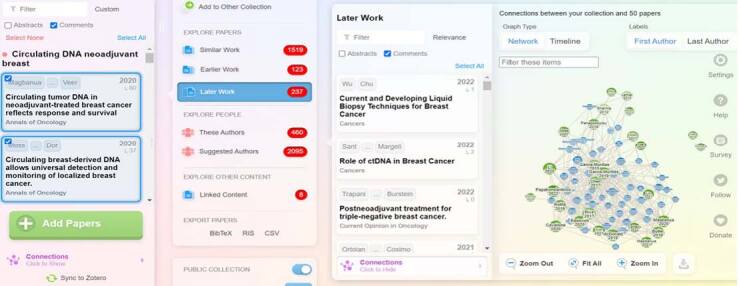
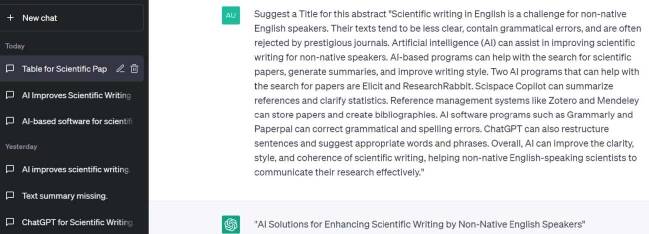
OBJECTIVE: Scientific writing in English is a daunting task for non-native English speakers. The challenges of writing in a foreign language are evident in the scientific literature where texts by non-native English-speaking scientists tend to be less clear and succinct, contain grammatical errors, and are often rejected by prestigious journals. METHODS: We conducted a non-systematic review of the most recent literature using the terms "Artificial Intelligence," "Scientific Writing," and "Non-English Speaking" to create a narrative review. RESULTS: Artificial intelligence can be a solution to improve scientific writing, especially for non-native English-speaking scientists. Artificial intelligence can assist in the search for pertinent scientific papers, generate summaries, and help with the writing of different sections of the manuscript, including the abstract, introduction, methods, results, and discussion. Artificial intelligence-based programs can correct grammatical errors and improve writing style, both of which are particularly helpful for non-native English speakers. Two artificial intelligence programs that can help with the search for pertinent scientific papers on the internet are Elicit and ResearchRabbit. Scispace Copilot can be used to summarize the retrieved reference. The artificial intelligence software programs such as Grammarly and Paperpal can correct grammatical and spelling errors, while ChatGPT can also restructure sentences and paragraphs, reword text, and suggest appropriate words and phrases. CONCLUSION: Overall, artificial intelligence can be an effective tool to improve the clarity, style, and coherence of scientific writing, helping non-native English-speaking scientists to communicate their research more effectively.
Overview
The claims and statistics of this paper haven’t been checked yet.
Run the check — free, no account needed. It reads the open-access text and checks the sources it cites.
Integrity signals
Registry
Cites
Statistics
Figures
Verification
Claims the paper makes
The claims and statistics of this paper haven’t been checked yet.
Run the check — free, no account needed. It reads the open-access text and checks the sources it cites.
Claims other papers make about this one
Each is checked against this paper’s own text: does it say what the citing paper says it does?
The cited source says what the claim attributes to it.
In the citing paper
“Our observations align with those of others who investigated AI platforms for writing and research objectives, as they found that Elicit and SciSpace are far more dedicated to searching for scientific papers and summarizing references [40].”
From Reference Hallucination Score for Medical Artificial Intelligence Chatbots: Development and Usability Study (2024) · cites this paper as [40]
Self-check
Percentages, sums and reported differences re-computed from the paper’s own numbers.
The self-check needs the paper’s full text.
Citations
Cites
Sallam, M. (2023) · Healthcare · doi:10.3390/healthcare11060887 · Cited by 3,126
Sarker, I. H. (2022) · SN Computer Science · doi:10.1007/s42979-022-01043-x · Cited by 1,208
Papers and patents are becoming less disruptive over time
Park, M., Leahey, E., & Funk, R. J. (2023) · Nature · doi:10.1038/s41586-022-05543-x · Cited by 899
Hamel, R. E. (2007) · AILA Review · doi:10.1075/aila.20.06ham · Cited by 332
The Future of AI in Medicine: A Perspective from a Chatbot
King, M. R. (2023) · Annals of Biomedical Engineering · doi:10.1007/s10439-022-03121-w · Cited by 299 · cited 2×
“2023;69(9):e20230560 ORIGINAL ARTICLE https://doi.”
BackgroundArtificial intelligence in scientific writing: a friend or a foe?
Altmäe, S., Sola-Leyva, A., & Salumets, A. (2023) · Reproductive BioMedicine Online · doi:10.1016/j.rbmo.2023.04.009 · Cited by 174
Artificial intelligence in academic writing: a paradigm-shifting technological advance
Golan, R., Reddy, R., Muthigi, A., & Ramasamy, R. (2023) · Nature Reviews Urology · doi:10.1038/s41585-023-00746-x · Cited by 136
Ten simple rules for structuring papers
Mensh, B., & Kording, K. (2017) · PLOS Computational Biology · doi:10.1371/journal.pcbi.1005619 · Cited by 98
Peer review perpetuates barriers for historically excluded groups
Smith, O. M., Davis, K. L., Pizza, R. B., Waterman, R., Dobson, K. C., Foster, B., Jarvey, J. C., Jones, L. N., Leuenberger, W., Nourn, N., et al. (2023) · Nature Ecology & Evolution · doi:10.1038/s41559-023-01999-w · Cited by 80
Journals take up arms against AI-written text
Brainard, J. (2023) · Science · doi:10.1126/science.adh2762 · Cited by 67
Gilat, R., & Cole, B. J. (2023) · Arthroscopy: The Journal of Arthroscopy And Related · doi:10.1016/j.arthro.2023.01.014 · Cited by 55
English and Science: realities and issues for translation in the age of an expanding lingua franca
Montgomery, S. (2009) · The Journal of Specialised Translation · doi:10.26034/cm.jostrans.2009.636 · Cited by 52
Buchkremer, R., Demund, A., Ebener, S., Gampfer, F., Jagering, D., Jurgens, A., Klenke, S., Krimpmann, D., Schmank, J., Spiekermann, M., et al. (2019) · IEEE Access · doi:10.1109/access.2019.2917719 · Cited by 45
An analysis of grammatical errors in non-native speech in english
Lee, J., & Seneff, S. (2008) · 2008 IEEE Spoken Language Technology Workshop · doi:10.1109/slt.2008.4777847 · Cited by 42
Successful Scientific Writing and Publishing: A Step-by-Step Approach
Iskander, J., Wolicki, S., Leeb, R., & Siegel, P. (2018) · Preventing Chronic Disease · doi:10.5888/pcd15.180085 · Cited by 39
Writing a better research article
Lang, T. (2017) · doi:10.21037/jphe.2017.11.06 · Cited by 13
Northridge, M. E. (1998) · American Journal of Public Health · doi:10.2105/ajph.88.5.733 · Cited by 11
Error Analysis of Scientific Papers Written by Non-Native Speakers of English
Marina, V., & Snuviškienė, G. (2005) · Transport · doi:10.3846/16484142.2005.9638031 · Cited by 10
Is there publication bias towards brazilian articles on cancer?
Victor, L., Loureiro, M., Callegaro, D., Rocha, A. D. A., Prado, B., Mutão, T., Donnarumma, C. D. C., & del Giglio, A. (2013) · Einstein · doi:10.1590/s1679-45082013000100005 · Cited by 4
Self-citation
Research works printed but not linked: 4
- Armani A, 2020, 10 simple steps to writing a scientific paper [Internet], The International Society for Optics and Photonics.
- Pineda A, 2021, In which section should you start writing your scientific paper? [Internet], I focus and write.
- Lowe L, 2017, Advice on publishing your first scientific journal article [Internet], Capstone Editing.
- Parker J, 2021, Top 5 AI-based paraphrasing tools to avoid plagiarism, Jack & Bean.
Cited by
Sorted by citations
Using artificial intelligence in academic writing and research: An essential productivity tool
Khalifa, M., & Albadawy, M. (2024) · Computer Methods and Programs in Biomedicine Update · doi:10.1016/j.cmpbup.2024.100145 · Cited by 580
Aljamaan, F., Temsah, M.-H., Altamimi, I., Al-Eyadhy, A., Jamal, A., Alhasan, K., Mesallam, T. A., Farahat, M., & Malki, K. H. (2024) · JMIR Medical Informatics · doi:10.2196/54345 · Cited by 211
“Our observations align with those of others who investigated AI platforms for writing and research objectives, as they found that Elicit and SciSpace are far more dedicated to searching for scientific papers and summarizing references [40].”
ResultLi, B., Tan, Y. L., Wang, C., & Lowell, V. L. (2025) · Computers and Education Artificial Intelligence · doi:10.1016/j.caeai.2025.100445 · Cited by 217
Artificial Intelligence in Peer Review: Enhancing Efficiency While Preserving Integrity
Doskaliuk, B., Zimba, O., Yessirkepov, M., Klishch, I., & Yatsyshyn, R. (2025) · Journal of Korean Medical Science · doi:10.3346/jkms.2025.40.e92 · Cited by 88
“18 By correcting language issues, the AI allows reviewers to focus on the more critical scientific content, such as methodology, data interpretation, and overall coherence of the manuscript.”
Potential applications and implications of large language models in primary care
Andrew, A. (2024) · Family Medicine and Community Health · doi:10.1136/fmch-2023-002602 · Cited by 70
“17 Moreover, as LLMs expand in size through self-consistency and reinforcement learning from human feedback, their capabilities advance and allow these models to learn and extract more knowledge from their training data, enabling them to perform tasks that they were not explicitly trained for.”
Background
Metadata
- Authors
- Giglio, A. D., & Costa, M. U. P. D.
- Affiliations
- Fundação do ABC, Brazil
- Biblioteca da Sociedade Brasileira de Oncologia Clínica, Brazil
- Venue
- Revista da Associação Médica Brasileira
- Publisher
- FapUNIFESP (SciELO)
- Published
- 2023
- Volume
- 69
- Issue
- 9
- Pages
- e20230560-e20230560
- ISSN
- 0004-5241 (ISSN-L)
- 1806-9282
- 0104-4230
- PMC
- PMC10508892
- OpenAlex
- W4386831162
- Cited by
- 158
- References
- 25
- Citations by year
- 2026: 53 · 2025: 58 · 2024: 43 · 2023: 3
- FWCI
- 141.57
- Type
- journal article
- Language
- pt
- Open access
- diamond
- doi.org
- Licence
- Locations
- Revista da Associação Médica Brasileira (publishedVersion, cc-by)
- PubMed Central (publishedVersion, cc-by)
- PubMed (publishedVersion)
- Topics
- Social Sciences › Library and Information Sciences › Academic Writing and Publishing
- Health Sciences › Medicine › Health Informatics › Artificial Intelligence in Healthcare and Education
- Social Sciences › Education › Artificial Intelligence in Education
- Keywords
- artificial intelligence, scientific writing, non-native English speakers, English as a second language, grammatical error correction, ChatGPT, Grammarly, Elicit, literature searching, text summarization
- MeSH terms
- Artificial Intelligence, Humans, Language, Physicians, Writing, Internet
About these checks
Registry, retraction, Cites and statistics results are computed, not judged, with one exception: a printed reference that no index lists is read once by a model before it counts as a citation error. Claims are extracted by a model and kept only when their quote appears verbatim in the text; each cited source is then checked, with a model’s help, for whether it says what the claim relies on. Those verdicts can be wrong — read the claim’s quote and the cited source before relying on one.
Statistics and arithmetic are recomputed, not judged.
Confidence bands are shown only for fields calibrated on our annotated test set. None is calibrated yet, so no band is shown.
What counts as a claim ›How we measure confidence ›How we check this ›
Are you an author, or do you see a problem with this page? Request a review
