

The DOI matches its Crossref record; 19 of the 25 references it cites were found in a registry or an index.
The use of artificial intelligence to improve the scientific writing of non-native english speakers
Open accessAbstract
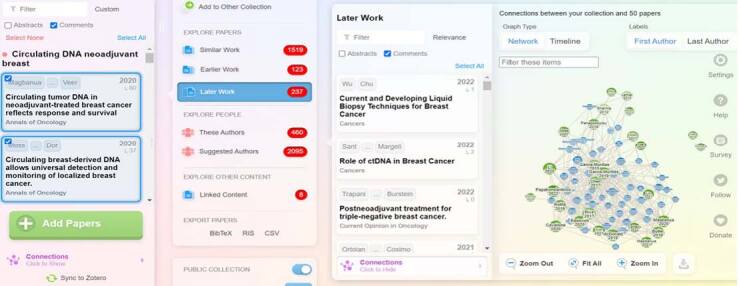
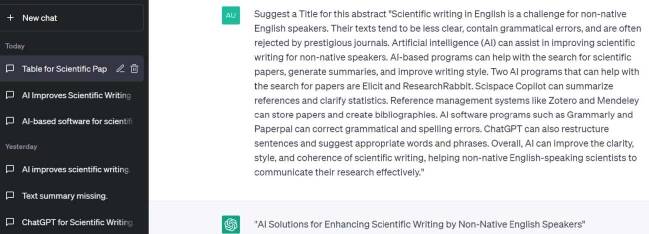
OBJECTIVE: Scientific writing in English is a daunting task for non-native English speakers. The challenges of writing in a foreign language are evident in the scientific literature where texts by non-native English-speaking scientists tend to be less clear and succinct, contain grammatical errors, and are often rejected by prestigious journals. METHODS: We conducted a non-systematic review of the most recent literature using the terms "Artificial Intelligence," "Scientific Writing," and "Non-English Speaking" to create a narrative review. RESULTS: Artificial intelligence can be a solution to improve scientific writing, especially for non-native English-speaking scientists. Artificial intelligence can assist in the search for pertinent scientific papers, generate summaries, and help with the writing of different sections of the manuscript, including the abstract, introduction, methods, results, and discussion. Artificial intelligence-based programs can correct grammatical errors and improve writing style, both of which are particularly helpful for non-native English speakers. Two artificial intelligence programs that can help with the search for pertinent scientific papers on the internet are Elicit and ResearchRabbit. Scispace Copilot can be used to summarize the retrieved reference. The artificial intelligence software programs such as Grammarly and Paperpal can correct grammatical and spelling errors, while ChatGPT can also restructure sentences and paragraphs, reword text, and suggest appropriate words and phrases. CONCLUSION: Overall, artificial intelligence can be an effective tool to improve the clarity, style, and coherence of scientific writing, helping non-native English-speaking scientists to communicate their research more effectively.
Overview
The claims and statistics of this paper haven’t been checked yet.
Run the check — free, no account needed. It reads the open-access text and checks the sources it cites.
Integrity signals
Registry
Cites
Statistics
Figures
Verification
Claims the paper makes
The claims and statistics of this paper haven’t been checked yet.
Run the check — free, no account needed. It reads the open-access text and checks the sources it cites.
Claims other papers make about this one
Each is checked against this paper’s own text: does it say what the citing paper says it does?
The cited source says what the claim attributes to it.
In the citing paper
“Our observations align with those of others who investigated AI platforms for writing and research objectives, as they found that Elicit and SciSpace are far more dedicated to searching for scientific papers and summarizing references [40].”
From Reference Hallucination Score for Medical Artificial Intelligence Chatbots: Development and Usability Study (2024) · cites this paper as [40]
Self-check
Percentages, sums and reported differences re-computed from the paper’s own numbers.
The self-check needs the paper’s full text.
Citations
Cites
Sallam, M. (2023) · Healthcare · doi:10.3390/healthcare11060887 · Cited by 3,126
Sarker, I. H. (2022) · SN Computer Science · doi:10.1007/s42979-022-01043-x · Cited by 1,208
Papers and patents are becoming less disruptive over time
Park, M., Leahey, E., & Funk, R. J. (2023) · Nature · doi:10.1038/s41586-022-05543-x · Cited by 899
Hamel, R. E. (2007) · AILA Review · doi:10.1075/aila.20.06ham · Cited by 332
The Future of AI in Medicine: A Perspective from a Chatbot
King, M. R. (2023) · Annals of Biomedical Engineering · doi:10.1007/s10439-022-03121-w · Cited by 299 · cited 2×
“2023;69(9):e20230560 ORIGINAL ARTICLE https://doi.”
BackgroundArtificial intelligence in scientific writing: a friend or a foe?
Altmäe, S., Sola-Leyva, A., & Salumets, A. (2023) · Reproductive BioMedicine Online · doi:10.1016/j.rbmo.2023.04.009 · Cited by 174
Artificial intelligence in academic writing: a paradigm-shifting technological advance
Golan, R., Reddy, R., Muthigi, A., & Ramasamy, R. (2023) · Nature Reviews Urology · doi:10.1038/s41585-023-00746-x · Cited by 136
Ten simple rules for structuring papers
Mensh, B., & Kording, K. (2017) · PLOS Computational Biology · doi:10.1371/journal.pcbi.1005619 · Cited by 98
Peer review perpetuates barriers for historically excluded groups
Smith, O. M., Davis, K. L., Pizza, R. B., Waterman, R., Dobson, K. C., Foster, B., Jarvey, J. C., Jones, L. N., Leuenberger, W., Nourn, N., et al. (2023) · Nature Ecology & Evolution · doi:10.1038/s41559-023-01999-w · Cited by 80
Journals take up arms against AI-written text
Brainard, J. (2023) · Science · doi:10.1126/science.adh2762 · Cited by 67
Research works printed but not linked: 4
- Armani A, 2020, 10 simple steps to writing a scientific paper [Internet], The International Society for Optics and Photonics.
- Pineda A, 2021, In which section should you start writing your scientific paper? [Internet], I focus and write.
- Lowe L, 2017, Advice on publishing your first scientific journal article [Internet], Capstone Editing.
- Parker J, 2021, Top 5 AI-based paraphrasing tools to avoid plagiarism, Jack & Bean.
Cited by
Sorted by citations
Using artificial intelligence in academic writing and research: An essential productivity tool
Khalifa, M., & Albadawy, M. (2024) · Computer Methods and Programs in Biomedicine Update · doi:10.1016/j.cmpbup.2024.100145 · Cited by 580
Aljamaan, F., Temsah, M.-H., Altamimi, I., Al-Eyadhy, A., Jamal, A., Alhasan, K., Mesallam, T. A., Farahat, M., & Malki, K. H. (2024) · JMIR Medical Informatics · doi:10.2196/54345 · Cited by 211
“Our observations align with those of others who investigated AI platforms for writing and research objectives, as they found that Elicit and SciSpace are far more dedicated to searching for scientific papers and summarizing references [40].”
ResultLi, B., Tan, Y. L., Wang, C., & Lowell, V. L. (2025) · Computers and Education Artificial Intelligence · doi:10.1016/j.caeai.2025.100445 · Cited by 217
Artificial Intelligence in Peer Review: Enhancing Efficiency While Preserving Integrity
Doskaliuk, B., Zimba, O., Yessirkepov, M., Klishch, I., & Yatsyshyn, R. (2025) · Journal of Korean Medical Science · doi:10.3346/jkms.2025.40.e92 · Cited by 88
“18 By correcting language issues, the AI allows reviewers to focus on the more critical scientific content, such as methodology, data interpretation, and overall coherence of the manuscript.”
Potential applications and implications of large language models in primary care
Andrew, A. (2024) · Family Medicine and Community Health · doi:10.1136/fmch-2023-002602 · Cited by 70
“17 Moreover, as LLMs expand in size through self-consistency and reinforcement learning from human feedback, their capabilities advance and allow these models to learn and extract more knowledge from their training data, enabling them to perform tasks that they were not explicitly trained for.”
BackgroundBetween human and AI: assessing the reliability of AI text detection tools
Bellini, V., Semeraro, F., Montomoli, J., Cascella, M., & Bignami, E. (2024) · Current Medical Research and Opinion · doi:10.1080/03007995.2024.2310086 · Cited by 60
“Therefore, Giglio et al. 14 suggest that these tools could lead to a reduction in inequalities between native and non-native English-speaking researchers.”
BackgroundInam, M., Sheikh, S. S., Minhas, A. M. K., Vaughan, E. M., Krittanawong, C., Samad, Z. Z., Lavie, C. J., Khoja, A. A., D'Cruze, M., Slipczuk, L. N., et al. (2024) · Current Problems in Cardiology · doi:10.1016/j.cpcardiol.2024.102387 · Cited by 52
The Future of Scientific Writing: AI Tools, Benefits, and Ethical Implications
Granjeiro, J., Cury, A. A. D. B., Cury, J. A., Bueno, M., Sousa-Neto, M., & Estrela, C. (2025) · Brazilian Dental Journal · doi:10.1590/0103-644020256471 · Cited by 40
“For many researchers who are non-native English speakers, tools such as ChatGPT and Grammarly have become invaluable allies, helping to overcome language barriers by improving the clarity, coherence, and fluency of their texts, thus enhancing the visibility of their scientific findings(3,4).”
Molena, K. F., Macedo, A. P., Ijaz, A., de Carvalho, F. K., Gallo, M., Paula‐Silva, F. W. G., ROSSI, A. D., Mezzomo, L. A., Mugayar, L. R. F., & de Queiroz, A. M. (2024) · Cureus · doi:10.7759/cureus.65658 · Cited by 26
“It could help them to learn, understand, and improve scientific writing for dental researchers [9-12].”
BackgroundChatGPT or Gemini: Who Makes the Better Scientific Writing Assistant?
AlSagri, H. S., Farhat, F., Sohail, S. S., & Saudagar, A. K. J. (2024) · Journal of Academic Ethics · doi:10.1007/s10805-024-09549-0 · Cited by 34
“Researchers, especially non-native speakers, often struggle to interpret their results effectively, making these AI tools valuable in helping them communicate their research outcomes more effectively (Giglio & Costa, 2023; Ito et al., 2023).”
Howard, F. M., Li, A., Riffon, M., Garrett-Mayer, E. S., & Pearson, A. T. (2024) · JCO Clinical Cancer Informatics · doi:10.1200/cci.24.00077 · Cited by 30
Cui, Y. (2025) · Computers and Education: Artificial Intelligence · doi:10.1016/j.caeai.2025.100391 · Cited by 26
Wang, C., Xu, W., & Tan, X. (2025) · Applied Linguistics · doi:10.1093/applin/amaf057 · Cited by 43
To use or not to use: exploring the ethical implications of using generative AI in academic writing
Rentier, E. S. (2024) · AI and Ethics · doi:10.1007/s43681-024-00649-6 · Cited by 44
“When ChatGPT was first launched, it was praised for being open to everyone and celebrated for lowering the barrier of writing in English for non-native speakers [10].”
Khalifa, A. A., & Ibrahim, M. A. (2024) · Arab Gulf Journal of Scientific Research · doi:10.1108/agjsr-09-2023-0423 · Cited by 33
Othman, A. A., Sharqawi, A. J., MohammedAziz, A. A., Ali, W. A., Alatiyyah, A. A., & Mirah, M. A. (2025) · Healthcare · doi:10.3390/healthcare13172144 · Cited by 18
“At the same time, academic dentists increasingly have explored ChatGPT’s role in providing better academic writing, translation, and theoretical development, without excluding the limitations that could be found in the context’s reliability and appropriateness [14,15].”
Kabir, A., Shah, S. S., Haddad, A. F., & Raper, D. M. S. (2024) · World Neurosurgery · doi:10.1016/j.wneu.2024.10.041 · Cited by 18
Filetti, S., Fenza, G., & Gallo, A. (2024) · Endocrine · doi:10.1007/s12020-024-03977-z · Cited by 37
Does AI Cheapen Talk? Theory and Evidence from Global Entrepreneurship and Hiring
Cowgill, B., Hernández‐Lagos, P., & Wright, N. L. (2026) · Management Science · doi:10.1287/mnsc.2024.07027 · Cited by 11
Virlan, A. Y., & Tomak, B. (2024) · Language Teaching Research · doi:10.1177/13621688241308836 · Cited by 27
“Improper utilization of AI can lead to instances of plagiarism (Giglio & Costa, 2023).”
InfluentialA Systematic Review for the Implication of Generative AI in Higher Education
Al-Shabandar, R., Jaddoad, A., Elwi, T., Mohammed, A. H., & Hussain, A. J. (2024) · Infocommunications journal · doi:10.36244/icj.2024.3.3 · Cited by 16
Artificial intelligence in writing and research: ethical implications and best practices
AlSamhori, A. F., & Alnaimat, F. (2024) · Central Asian Journal of Medical Hypotheses and Ethics · doi:10.47316/cajmhe.2024.5.4.02 · Cited by 15
“Professional and academic contexts increasingly embrace AI applications like grammar checkers such as Grammarly or Hemingway Editor [14].”
Assessing the Capability of Large Language Model Chatbots in Generating Plain Language Summaries
Mondal, H., Gupta, G., Sarangi, P. K., Sharma, S., Choudhary, P. K., Juhi, A., Kumari, A., & Mondal, S. (2025) · Cureus · doi:10.7759/cureus.80976 · Cited by 14
“By using LLM chatbots, researchers can overcome language barriers and improve the clarity and accessibility of their work [21].”
Generative AI and Perceptual Harms: Who's Suspected of using LLMs?
Kadoma, K., Metaxa, D., & Naaman, M. (2025) · Proceedings of the 2025 CHI Conference on Human Factors in Computing Systems · doi:10.1145/3706598.3713897 · Cited by 14
The Epistemic Downside of Using LLM-Based Generative AI in Academic Writing
Tang, B. L. (2025) · Publications · doi:10.3390/publications13040063 · Cited by 17
“…made by proponents of AI use in academic writing is that AI use will improve language dexterity that would facilitate academic communication for the less privileged (Giglio & da Costa, 2023; Prakash et al., 2025), and the leveling of the competitive playing field for non-native users of English.”
Patterns and Purposes: A Cross-Journal Analysis of AI Tool Usage in Academic WritingPreprint
Xu, Z. (2025) · arXiv (Cornell University) · doi:10.48550/arxiv.2502.00632 · Cited by 50
“Artificial intelligence can help non-native English-speaking scientists overcome challenges in scientific writing (Giglio & Costa, 2023).”
Al-Qudimat, A. R., Alqudimat, M. R., Singh, K., Fares, Z. E., Ismail, M., Yasin, H. E., Al‐Zoubi, R. M., & Aboumarzouk, O. M. (2025) · Health Science Reports · doi:10.1002/hsr2.70623 · Cited by 14
“Previous research has shown that AI can be an effective tool for improving the clarity, style, and coherence of scientific writing [17, 26].”
Gosak, L., Štiglic, G., Pruinelli, L., & Vrbnjak, D. (2024) · Journal of Nursing Scholarship · doi:10.1111/jnu.13036 · Cited by 12
Sousa, M. S. A., Peiris, S., Figueiró, M. F., Haby, M. M., Baraldi, A. C., Revéiz, L., & Souza, J. P. (2026) · Systematic Reviews · doi:10.1186/s13643-025-02842-y · Cited by 13
“Compared to other ES exercises to identify AI tools and platforms [17, 29–31, 38, 39, 41, 42, 46, 49, 61, 67, 130, 131, 148, 153, 156, 157], including those that are permanently being updated [44, 149], our scoping review is the first to identify and map all data science methods and include tools…”
Towards multilingualism in global health
O'Dwyer, R. H., Stout, R. C., Besson, E. S. K., Bustinduy, A., & Connolly, M. A. (2025) · Globalization and Health · doi:10.1186/s12992-025-01107-6 · Cited by 10
“AI can offer an alternative to costly language editing services for non-native English speakers seeking to publish research in English [27].”
From barrier to enabler: Transforming language for global health collaboration
Bélizaire, M., Ineza, L., Fall, I., Ondo, M., & Boum, Y. (2024) · PLOS Global Public Health · doi:10.1371/journal.pgph.0003237 · Cited by 10
Being a non-native English speaker in science and medicine
Carlsson, S. V., Esteves, S., Grobet-Jeandin, E., Masone, M., Ribal, M., & Zhu, Y. (2024) · Nature reviews. Urology · doi:10.1038/s41585-023-00839-7 · Cited by 10
“In this work, Grammarly, Paperpal and ChatGPT are highlighted as tools to correct grammar and suggest appropriate wording, in turn enhancing the clarity of scientific texts 5 .”
Arzilli, G., Maggio, E. D., Angelis, L. D., Baglivo, F., Savoia, E., Privitera, G. P., & Rizzo, C. (2025) · Frontiers in Public Health · doi:10.3389/fpubh.2025.1680630 · Cited by 13
“The applications are many: from programming codes to support for statistical analysis to editing manuscripts (5) to being a valuable tool for generating evidence synthesis and meta-analyses, which, with the integration of AI technologies, can be completed in a matter of days instead of months (6).”
Sodangi, U., & Isma’il, A. (2025) · Journal of Artificial Intelligence Machine Learning and Neural Network · doi:10.55529/jaimlnn.52.13.23 · Cited by 13
Thaichana, P., Oo, M. Z., Thorup, G. L., Chansakaow, C., Arworn, S., & Rerkasem, K. (2025) · The International Journal of Lower Extremity Wounds · doi:10.1177/15347346241312814 · Cited by 14
ChatGPT in science and research: How generative AI drives innovation and knowledge development
Madzík, P., Falát, L., Skýpalová, R., Jašušáková, L., & Zimon, D. (2025) · Journal of Innovation & Knowledge · doi:10.1016/j.jik.2025.100889 · Cited by 16
Towards a transparent and reproducible AI-assisted research paper writing
Park, J. (2025) · Genomics & Informatics · doi:10.1186/s44342-025-00057-0 · Cited by 16
“However, complete prohibition of AI assistance may fail to recognize its substantial benefits, particularly for non-native English speakers who encounter significant linguistic barriers in scientific publishing [8, 9].”
Writing about health inequality: recommendations for accurate and impactful presentation of evidence
Bergen, N., Kirkby, K., Barros, A., Braveman, P., Goldblatt, P., Koller, T., Mújica, O. J., Nambiar, D., O'Donnell, O., Schlotheuber, A., et al. (2025) · International Journal for Equity in Health · doi:10.1186/s12939-025-02548-6 · Cited by 8
“We highlight the positive possibilities of using such tools for editorial purposes to promote equity in the writing process in the field of health inequality research (i.e. making supports available to writers who may not otherwise have access, and/ or easing linguistic disparities) [64].”
Artificially generated academic text (а linguopragmatic aspect)
Cherkasova, M. N., & Taktarova, A. V. (2024) · Philology Theory & Practice · doi:10.30853/phil20240363 · Cited by 11
Saccenti, D., Buattini, M., Grazioli, S., & Torres, D. (2024) · Possibility Studies & Society · doi:10.1177/27538699241231862 · Cited by 10
“Notably, AI-based programs can not only enhance the quality of scientific writing but also help researchers to produce papers with higher chances of publication in major scientific journals and, therefore, aid them to effectively communicate their research to a wider audience (Giglio & Costa, 2023).”
Suhono (2023) · International Journal of Community Engagement Payungi · doi:10.58879/ijcep.v3i2.36 · Cited by 8
“A study by (Nazari et al., 2021) & (Giglio & da Costa, 2023) showed that students who used AI tools for writing showed significant improvements in their writing skills.”
The missing disclosure: is generative AI use in bioethics scholarship going largely unreported?
Bobier, C. A., Rodger, D., Gillham, A. R., Dutta, P., & Merlocco, A. C. (2025) · BMC Medical Ethics · doi:10.1186/s12910-025-01349-4 · Cited by 8
“Five of the articles were in the field of empirical bioethics: retrospective analysis (2), survey (2), and scoping review; the remaining four articles were ethical analysis (3) and framework development.”
When Using AI in Scientific Research: Start with Human, End with Human
Giray, L. (2025) · TechTrends · doi:10.1007/s11528-025-01132-7 · Cited by 6
“During the writing process, AI proves useful in refining language, improving structure, and helping overcome language barriers (Altmäe et al., 2023; Kacena et al., 2024), particularly for multilingual or non-native English researchers (Giglio & Costa, 2023).”
Hidayatullah, M. H., Suryati, N., Cahyono, B. Y., & Mawaddah, N. (2025) · Journal of Research on English and Language Learning (J-REaLL) · doi:10.33474/j-reall.v6i2.23821 · Cited by 9
“Furthermore, compared to studies like Giglio and Costa (2023), which focused on writing improvement for non-native speakers, this review expands the scope to include how diverse user groups also benefit from AI in their writing productivity and academic works.”
AI tools for writing: a Q-method study with Turkish instructors of English
Virlan, A. Y., & Tomak, B. (2025) · Education and Information Technologies · doi:10.1007/s10639-025-13455-2 · Cited by 8
“Giglio and Costa (2023) also point out that improper use of AI can lead to plagiarism.”
Using artificial intelligence technologies to prepare and compose scientific articles
Valkova, J. E. (2025) · Informatics and Education · doi:10.32517/0234-0453-2024-39-6-38-52 · Cited by 7
Using AI to expand the “Toolbox” for EAP writing instruction
van de Poel, K., & Gasiorek, J. (2024) · AILA Review · doi:10.1075/aila.24029.van · Cited by 7
Will ChatGPT-4 improve the quality of medical abstracts?
Gravel, J., Dion, C., Kermani, M. F., Mousseau, S., & Osmanlliu, E. (2024) · Paediatrics & Child Health · doi:10.1093/pch/pxae062 · Cited by 7
“This results align with Del Giglio et al. who suggested that artificial intelligence could improve scientific writing of non-native English-speaking scientists (28).”
Wang, J.-G., Jairath, N. K., Shue, E., Perrotta, P. L., & Hu, G. (2025) · JAAD International · doi:10.1016/j.jdin.2025.05.013 · Cited by 6
SciSpace for Finding Relevant Literature in English Language Education Contexts: A Technology Review
Kritandani, W., Putra, A., Mali, Y. C. G., & Isharyanti, N. (2024) · Indonesian Journal of English Language Studies (IJELS) · doi:10.24071/ijels.v10i2.9146 · Cited by 6
“Not only does it cleverly pull out the related literature as the keywords and commands are inputted, but it also provides a summary, explanation, and framework of the literature, which then connects it to other relevant papers (Pinzolits, 2023; Giglio & Costa, 2023; Sagre & Ahlawat, 2023).”
BackgroundLi, J., Gu, W., Ota, K., & Hasegawa, S. (2024) · SN Computer Science · doi:10.1007/s42979-024-03130-7 · Cited by 5
“With the rise of ChatGPT , which relies on vast amounts of background data, researchers are using generative AI, including scispace [8, 9], for conducting research surveys.”
Artificial intelligence: a challenge to scientific communication
Gauckler, C., & Werner, M. H. (2024) · Klinische Monatsblätter für Augenheilkunde · doi:10.1055/a-2418-5238 · Cited by 6
“AI-based translation systems offer great potential for overcoming language-related biases and barriers to access: they can make it easier for non-native speakers to read and produce [60] academic publications in English.”
The Role of AI in Clinical Trial Design and Scientific Writing.
Antonakea, N. K., Chapiro, J., & Geschwind, J. (2025) · Cardiovascular and Interventional Radiology · doi:10.1007/s00270-025-04171-y · Cited by 5
Gao, E., Liu, Y., Zhou, Y., Guo, J., & Chen, Z. (2025) · International Journal of Human-Computer Studies · doi:10.1016/j.ijhcs.2025.103551 · Cited by 5
Kasakewitch, J. P. G., Lima, D. L., da Silveira, C. A. B., Sanha, V., Rasador, A. C. D., Cavazzola, L. T., Mayol, J. M., & Malcher, F. (2025) · Journal of Laparoendoscopic & Advanced Surgical Techniques · doi:10.1089/lap.2024.0277 · Cited by 4
Hamoda, T., Wyns, C., Pinggera, G., Alipour, H., Avidor-Reiss, T., Mostafa, T., Chung, E., Ramsay, J., Çayan, S., Rambhatla, A., et al. (2025) · The World Journal of Men's Health · doi:10.5534/wjmh.250007 · Cited by 5
Oetomo, D., Widoretno, S., Ramli, M., Prayitno, B., Sugiarto, B., & Prabowo, C. (2025) · JPBI (Jurnal Pendidikan Biologi Indonesia) · doi:10.22219/jpbi.v11i1.37437 · Cited by 5
Adaptive Real-Time Translation Assistance Through Eye-Tracking
Minas, D., Theodosiou, E., Roumpas, K., & Xenos, M. (2025) · Applied Informatics · doi:10.3390/ai6010005 · Cited by 5
Addressing Inequalities in Science: The Role of Language Learning Models in Bridging the Gap
Ilhan, B., Gürses, B., & Güneri, P. (2024) · International Dental Journal · doi:10.1016/j.identj.2024.01.026 · Cited by 5
Artificial intelligence dependency among educators: a scale development and validation study
Uyar, A., Karafil, B., & KARAKUYU, A. (2026) · Education and Information Technologies · doi:10.1007/s10639-025-13862-5 · Cited by 9
“…17, 18, 19, 20, 21, 22, 23, 24, 25, 26, 27, 28, 29, 30, 31, 32 No 18 90 Table 10 Sub-dimensions, items, and characteristics of the AI dependency scale academic research (Giglio & Costa, 2023; Lee & Choi, 2023; Ghorashi et al., 2023 ; Ingley & Pack, 2023; Semrl et al., 2023; Khlaif et al., 2023).”
Does scientific writing converge to U.S. english? evidence from generative AI-assisted publications
Filimonović, D., Rutzer, C., Macher, J. T., & Weder, R. (2026) · Scientometrics · doi:10.1007/s11192-026-05774-z · Cited by 5
“…empirical robustness using stricter thresholds and alternative benchmarks (e.g., excluding GenAI-assisted U.S. publications, using a 2021 U.S. benchmark, and restricting to U.S. publications in high-impact journals), full-text stylometry and validated benchmark data-sets would further sharpen…”
Kwon, H., Min, S., & Lee, S. (2025) · CHI Conference Extended Abstracts on Human Factors in Computing Systems (CHI EA) · doi:10.1145/3706599.3719845 · Cited by 3
Using artificial intelligence in health research
Rodger, D., & O’Connor, S. (2025) · Evidence-Based Nursing · doi:10.1136/ebnurs-2025-104287 · Cited by 6
Bioethics and Controversies in the Use of Artificial Intelligence Technologies in Cosmetic Surgery
Vargas, N., & Hamrah, D. (2024) · The American Journal of Cosmetic Surgery · doi:10.1177/07488068241302876 · Cited by 4
Giusti, R., Filetti, M., Lombardi, P., Bianco, F. L., Sganga, S., Giovagnoli, T., Iannantuono, G. M., Spinazzola, A., Santini, D., Mariniello, M., et al. (2026) · Frontiers in Oncology · doi:10.3389/fonc.2026.1717048 · Cited by 2
Writing Accuracy: How AI-Assisted Writing Instruction Can Support EFL Undergraduate Students
Almutairi, H., Alfaifi, A. A., & Saleem, M. (2026) · Information · doi:10.3390/info17020157 · Cited by 5
Meishar‐Tal, H. (2025) · Ethics & Behavior · doi:10.1080/10508422.2025.2562589 · Cited by 5
“Researchers and students whose native language is not English may struggle to express deep ideas in a language they do not fully master, often encountering difficulties with grammar and vocabulary.”
InfluentialErel, S., Arabaci, O. E., & Pampal, H. K. (2025) · Medicine · doi:10.1097/md.0000000000041594 · Cited by 3
“[15,16] While our study reveals that both native and nonnative authors employed AI, we found a statistically higher usage rate among authors who were not native English speakers.”
Gruszczyński, D., Nijakowski, K., Halupczok-Żyła, J., Ruchała, M., Walkowiak, J., & Sawicka‐Gutaj, N. (2026) · Journal of Medical Science · doi:10.20883/medical.e1571 · Cited by 3
GenAI and Scholarly Knowledge: Language Relief at The Cost of Infrastructural Dependency
Cachipuendo-Contero, I. J. (2026) · Postdigital Science and Education · doi:10.1007/s42438-026-00672-2 · Cited by 2
“It may help with grammar, paragraph flow, tone, translation, and the transforma‑ tion of rough ideas into more recognizable academic prose (Zenni and Andrew 2023; Giglio and da Costa 2023; Prakash et al. 2025).”
Bocanegra‐Valle, A. (2026) · Ibérica · doi:10.17398/2340-2784.51.21 · Cited by 4
“Therefore, a direct consequence of using GenAI tools is that researchers will be able to “produce papers with higher chances of publication in major scientific journals” and “effectively communicate their research to a wider audience” (Giglio & costa, 2023, p. 4).”
A Structured Approach to Grammar and Style Checking of Scientific Texts With ChatGPT
Rashidov, A., & Rashidova, F. (2026) · International Congress on Human-Computer Interaction, Optimization and Robotic Applications (ICHORA) · doi:10.1109/ichora69329.2026.11536994 · Cited by 1
“In this respect, ChatGPT provides opportunities not only for linguistic correction, but also for context-sensitive refinement of scientific texts through interactive prompting and iterative revision [8-10].”
Aydin, M. O., Vatansever, A., & Kafa, S. E. (2026) · Uludağ Üniversitesi Tıp Fakültesi Dergisi · doi:10.32708/uutfd.1870116 · Cited by 2
The ethics of using artificial intelligence in writing medical research papers
Yu, S., & Hwang, H. (2025) · Kosin Medical Journal · doi:10.7180/kmj.25.141 · Cited by 2
“Although these tools hold significant potential for alleviating the burden of manuscript drafting and polishing [4,5], their integration inevitably raises substantial concerns regarding research integrity and ethical liability [6].”
An Analysis of Simple Past Tense Errors in Grade X Students’ Recount Texts
Fitri, A., Akkhakraisi, P., & Qaderi, N. A. (2025) · Journal of Language, Literature, and Educational Research · doi:10.37251/jolle.v2i2.2296 · Cited by 2
“While earlier studies have mentioned language transfer as a general cause of errors, they often failed to specify how such transfer manifests across different linguistic levels [39].”
Aspergillus spp. As an Expression System for Industrial Biocatalysis and Kinetic Resolution
Garcia, P. H. D., Montico, J. R., Barichello, A. P., Pilissão, C., Contesini, F. J., Mortensen, U., & Carvalho, P. D. O. (2025) · Catalysts · doi:10.3390/catal15121174 · Cited by 2
Uso de la inteligencia artificial en la corrección automatizada de producción escrita en inglés
Chango, L. E. Q., Pizarro, S. R. V., Puchaicela, M. P. S., Vinueza, M. G. C., León, K. S. P., & Anchatuña, V. P. A. (2025) · South Florida Journal of Development · doi:10.46932/sfjdv6n6-015 · Cited by 1
Moufida, B., & Amira, S. (2025) · South Florida Journal of Development · doi:10.46932/sfjdv6n5-098 · Cited by 2
Jesus, F. S. D., & Co, A. G. E. (2025) · International Journal of Innovative Research and Scientific Studies · doi:10.53894/ijirss.v8i1.4669 · Cited by 2
“The versatility of Artificial Intelligence (AI) enables it to change all aspects of the writing approach that every user has, including non-English native speakers [28].”
PELATIHAN MENDELEY DAN KECERDASAN BUATAN (AI) UNTUK PENULISAN KARYA ILMIAH BERKUALITAS
Kurnianingsih, R., Giyartiningrum, E., Prasetyo, H., & Endarwati, E. (2025) · J-ABDI Jurnal Pengabdian kepada Masyarakat · doi:10.53625/jabdi.v4i9.9681 · Cited by 2
“Salah satu contohnya adalah Grammarly, yang menggunakan algoritma AI untuk mendeteksi dan memperbaiki kesalahan, serta memberikan saran untuk meningkatkan gaya dan nada tulisan (Giglio, 2023).”
Knowledge behind the scenes of a peer-reviewed journal helps in publishing your manuscript
Cappitelli, F., & Villa, F. (2024) · Annals of Microbiology · doi:10.1186/s13213-024-01777-4 · Cited by 3
“It can also correct grammatical errors and improve writing style, which is especially beneficial for non-native English speakers (Giglio and da Costa 1992).”
BackgroundAlmineeai, A. M. S., & Hezam, T. A. H. (2024) · حوليات أداب عين شمس · doi:10.21608/aafu.2024.380951 · Cited by 2
“…Grammarly, Chat GPT, websites, etc., can provide real-time grammar and style correction (Fahmi, Cahyono, 2021), (Alotaibi, 2022), (Alotaibi, 2023), (Giglio & Costa, 2023), (Armanda, Nugraheni, Wulan Sari and Imron, 2022), there is a limited systematic research on their roles in enhancing syntactic…”
BackgroundPelletier, J., Li, Y., Cloessner, E., Sistenich, V., Maxwell, N., Thomas, M. A., Stoner, D., Mwenze, B., & Manguvo, A. (2024) · Cureus · doi:10.7759/cureus.62657 · Cited by 2
“This enhancement would make CMES more accessible to a broader range of English, including those who are not native speakers [23].”
BackgroundRodríguez, N., Benítez-Navarrete, P. M., Llerena, L., & Hidalgo, C. (2025) · International Journal of Information and Education Technology · doi:10.18178/ijiet.2025.15.10.2425
“Comparatively, Gliglio et al. [3] point out in their study that programs such as Grammarly and Paperpal are effective in correcting typing errors, while ChatGPT can do more, such as improving sentences and suggesting words.”
InfluentialLiu, J., He, Y., Zheng, Z., Bu, Y., & Ni, C. (2025) · arXiv · doi:10.48550/arxiv.2511.15872 · Cited by 1
The Ethics of Using Artificial Intelligence in Qualitative Research
Bogdanov, T. V. (2026) · Inter · doi:10.19181/inter.2026.18.2.4
Pratama, R. D., Widiati, U., Basthomi, Y., Khoiri, N. E., Muniroh, S., & Omolu, F. A. (2026) · Journal of Academic Ethics · doi:10.1007/s10805-026-09754-z · Cited by 2
Li, H., & Geng, S. (2026) · Frontiers in Psychology · doi:10.3389/fpsyg.2026.1836353 · Cited by 1
Editorial policies for ethical use of artificial intelligence in rheumatology journals
Fedorchenko, Y., Üşen, A., Seiil, B., Zimba, O., & Korkosz, M. (2026) · Seminars in Arthritis and Rheumatism · doi:10.1016/j.semarthrit.2026.152966
Culturally Responsive AI Literacy: Valuing Students’ Repertoires in AI-Mediated Writing
Kladieva, A. (2026) · Digital studies in language and literature · doi:10.1515/dsll-2026-0010
AI In Academic Publishing for Non‐Native English Speakers: The Good, the Bot, and the Ugly
Gonulal, T., Güçlü, R., & Güçlü, S. (2026) · Learned Publishing · doi:10.1002/leap.2070 · Cited by 1
Disclosure in the era of generative artificial intelligence
Aldawsari, K. A. (2026) · Frontiers in Digital Health · doi:10.3389/fdgth.2026.1826808 · Cited by 1
Digital Support for Scholarly Writing: Tools That Do Not Break the Budget
Machado, C., & Harris, C. (2026) · Early Childhood Education Journal · doi:10.1007/s10643-026-02136-5 · Cited by 2
Shahira, T. R., Rokhim, M., Nugraha, M., Fathonah, A. I., & Hasanah, F. (2025) · JMM (Jurnal Masyarakat Mandiri) · doi:10.31764/jmm.v9i5.34708 · Cited by 1
AI in Facial Cosmetic Surgery: Surgeon’s Perspective Summary
Hamrah, D., Eidson, B. K., & Vargas, N. (2025) · The American Journal of Cosmetic Surgery · doi:10.1177/07488068251343281 · Cited by 1
Zazueta-López, D., Parratt-Fernández, S., & Domínguez-Lizárraga, N.-G. (2025) · Revista Iberoamericana de Educación Superior · doi:10.22201/iisue.20072872e.2025.47.1995 · Cited by 1
Blending artificial intelligence to reference management systems – The hybrid workflow
Suresh, N. (2025) · Endodontology · doi:10.4103/endo.endo_344_25 · Cited by 1
Effect Of Artificial Intelligence Use On Creativity In Writing Scientific Works
Sinaga, A. I., Nasution, A. F., & Albina, M. (2025) · JKTP Jurnal Kajian Teknologi Pendidikan · doi:10.17977/um038v8i32025p226-234 · Cited by 2
The Artificial Intelligence Dilemma in Academic Writing: Balancing Efficiency and Integrity
Mondal, H., Mondal, S., & Jana, S. (2025) · Indian Journal of Cardiovascular Disease in Women · doi:10.25259/ijcdw_86_2024 · Cited by 3
Afifah, N. Y., & Dewi, U. (2025) · FRASA : English Education and Literature Journal · doi:10.47701/frasa.v6i2.5009 · Cited by 1
Metadata
- Authors
- Giglio, A. D., & Costa, M. U. P. D.
- Affiliations
- Fundação do ABC, Brazil
- Biblioteca da Sociedade Brasileira de Oncologia Clínica, Brazil
- Venue
- Revista da Associação Médica Brasileira
- Publisher
- FapUNIFESP (SciELO)
- Published
- 2023
- Volume
- 69
- Issue
- 9
- Pages
- e20230560-e20230560
- ISSN
- 0004-5241 (ISSN-L)
- 1806-9282
- 0104-4230
- PMC
- PMC10508892
- OpenAlex
- W4386831162
- Cited by
- 158
- References
- 25
- Citations by year
- 2026: 53 · 2025: 58 · 2024: 43 · 2023: 3
- FWCI
- 141.57
- Type
- journal article
- Language
- pt
- Open access
- diamond
- doi.org
- Licence
- Locations
- Revista da Associação Médica Brasileira (publishedVersion, cc-by)
- PubMed Central (publishedVersion, cc-by)
- PubMed (publishedVersion)
- Topics
- Social Sciences › Library and Information Sciences › Academic Writing and Publishing
- Health Sciences › Medicine › Health Informatics › Artificial Intelligence in Healthcare and Education
- Social Sciences › Education › Artificial Intelligence in Education
- Keywords
- artificial intelligence, scientific writing, non-native English speakers, English as a second language, grammatical error correction, ChatGPT, Grammarly, Elicit, literature searching, text summarization
- MeSH terms
- Artificial Intelligence, Humans, Language, Physicians, Writing, Internet
About these checks
Registry, retraction, Cites and statistics results are computed, not judged, with one exception: a printed reference that no index lists is read once by a model before it counts as a citation error. Claims are extracted by a model and kept only when their quote appears verbatim in the text; each cited source is then checked, with a model’s help, for whether it says what the claim relies on. Those verdicts can be wrong — read the claim’s quote and the cited source before relying on one.
Statistics and arithmetic are recomputed, not judged.
Confidence bands are shown only for fields calibrated on our annotated test set. None is calibrated yet, so no band is shown.
What counts as a claim ›How we measure confidence ›How we check this ›
Are you an author, or do you see a problem with this page? Request a review
