

Involvement of glutamate and reactive oxygen species in methylmercury neurotoxicity
Open accessThe DOI matches its Crossref record; 62 of the 62 references it cites were found in a registry or an index.
Abstract
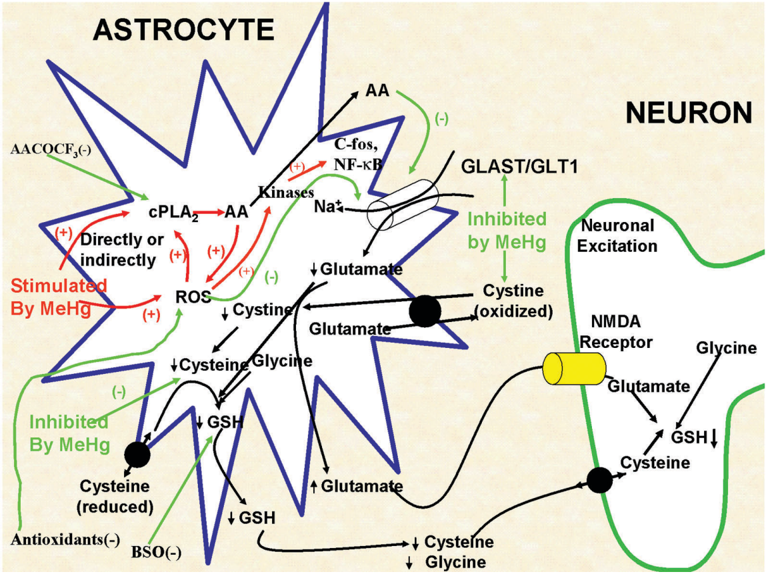
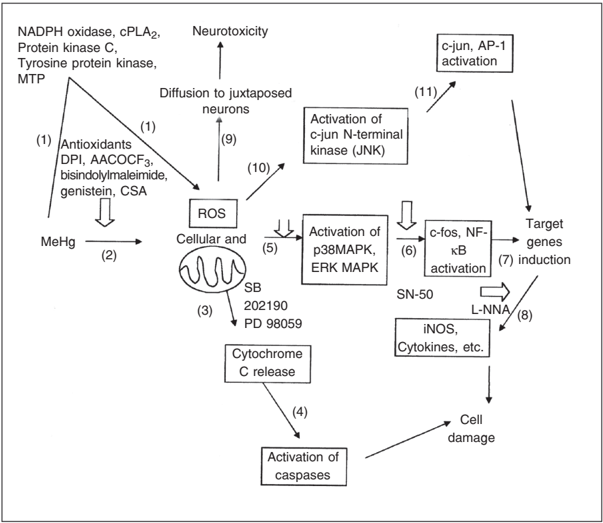
This review addresses the mechanisms of methylmercury (MeHg)-induced neurotoxicity, specifically examining the role of oxidative stress in mediating neuronal damage. A number of critical findings point to a central role for astrocytes in mediating MeHg-induced neurotoxicity as evidenced by the following observations: a) MeHg preferentially accumulates in astrocytes; b) MeHg specifically inhibits glutamate uptake in astrocytes; c) neuronal dysfunction is secondary to disturbances in astrocytes. The generation of reactive oxygen species (ROS) by MeHg has been observed in various experimental paradigms. For example, MeHg enhances ROS formation both in vivo (rodent cerebellum) and in vitro (isolated rat brain synaptosomes), as well as in neuronal and mixed reaggregating cell cultures. Antioxidants, including selenocompounds, can rescue astrocytes from MeHg-induced cytotoxicity by reducing ROS formation. We emphasize that oxidative stress plays a significant role in mediating MeHg-induced neurotoxic damage with active involvement of the mitochondria in this process. Furthermore, we provide a mechanistic overview on oxidative stress induced by MeHg that is triggered by a series of molecular events such as activation of various kinases, stress proteins and other immediate early genes culminating in cell damage.
Overview
The claims and statistics of this paper haven’t been checked yet.
Free: it reads the open-access text and checks the first 5 claims that cite a source we can check. Create a free account to check every claim.
Integrity signals
Registry
Cites
Statistics
Figures
Verification
Claims the paper makes
The claims and statistics of this paper haven’t been checked yet.
Free: it reads the open-access text and checks the first 5 claims that cite a source we can check. Create a free account to check every claim.
Claims other papers make about this one
Each is checked against this paper’s own text: does it say what the citing paper says it does?
In the citing paper
“There is certainly evidence that exposure to this agent causes oxidative stress (Ali et al. 1992; Aschner et al. 2007; Atchison and Hare 1994; Franco et al. 2009; Johansson et al. 2007; Sanfeliu et al. 2003; Sarafian et al. 1994; Yee and Choi 1994, 1996; Yin et al. 2007) and raises cellular iron levels (Ilbäck et al. 2000)”
Self-check
Percentages, sums and reported differences re-computed from the paper’s own numbers.
The self-check needs the paper’s full text.
Citations
Cites
LeBel, C. P., Ischiropoulos, H., & Bondy, S. C. (1992) · Chemical Research in Toxicology · doi:10.1021/tx00026a012 · Cited by 2,689 · cited 1×
“, ischemia and rheumatoid arthritis), cancer, diabetes mellitus, and atherosclerosis (32-34), as well as in metalinduced toxicity (35,36).”
BackgroundChoi, D. W. (1992) · Journal of Neurobiology · doi:10.1002/neu.480230915 · Cited by 2,314 · cited 1×
“In fact, MeHg-induced inhibition of astrocyte glutamate transporters leads to increased glutamate concentrations in the extracellular fluid, causing hyperactivation of N-methyl D-aspartate type glutamate receptors and leading to an increase in Na+ and Ca2+ influx (46).”
BackgroundCognitive Deficit in 7-Year-Old Children with Prenatal Exposure to Methylmercury
Grandjean, P., Weihe, P., White, R. F., Debes, F., Araki, S., Yokoyama, K., Murata, K., SØRENSEN, N., Dahl, R., & JØRGENSEN, P. J. (1997) · Neurotoxicology and Teratology · doi:10.1016/s0892-0362(97)00097-4 · Cited by 1,738 · cited 1×
“br aberrant central nervous system (CNS) functions (3-5).”
BackgroundMethylmercury Poisoning in Iraq: An interuniversity report.
Bakir, F., Damluji, S. F., Amin-Zaki, L., Murtadha, M., Khalidi, A., Al-Rawi, N. Y., Tikriti, S., Dhahir, H. I., Clarkson, T. W., Smith, J. C., et al. (1973) · Science · doi:10.1126/science.181.4096.230 · Cited by 1,606 · cited 1×
“Methylmercury (MeHg) is a major neurotoxicant that continues to pose appreciable risk to human health as evidenced by the tragic epidemics of MeHg poisoning in Japan and Iraq (1,2).”
BackgroundBetteridge, D. J. (2000) · Metabolism · doi:10.1016/s0026-0495(00)80077-3 · Cited by 1,455
NMDA-dependent superoxide production and neurotoxicity
Lafon-Cazal, M., Pietri, S., Culcasi, M., & Bockaert, J. (1993) · Nature · doi:10.1038/364535a0 · Cited by 1,183 · cited 1×
“Increased intracellular Ca2+ levels are associated with the generation of ROS (47).”
BackgroundFree Radicals and Antioxidants: A Personal View
Halliwell, B. (2009) · Nutrition Reviews · doi:10.1111/j.1753-4887.1994.tb01453.x · Cited by 1,077 · cited 1×
“, ischemia and rheumatoid arthritis), cancer, diabetes mellitus, and atherosclerosis (32-34), as well as in metalinduced toxicity (35,36).”
BackgroundDugan, L., Sensi, S., Canzoniero, L., Handran, S., Rothman, S., Lin, T., Goldberg, M., & Choi, D. (1995) · The Journal of Neuroscience · doi:10.1523/jneurosci.15-10-06377.1995 · Cited by 772 · cited 1×
“In addition, an increase in ROS has been observed in a) mitochondria isolated from MeHg-injected rat brains (36), b) mitochondria isolated in vitro from rat brain and then exposed to MeHg (43), and c) mitochondria from Hg- and glutamateexposed astrocytes and neurons (44,45).”
BackgroundHunot, S., Brugg, B., Ricard, D., Michel, P. P., Muriel, M.-P., Ruberg, M., Faucheux, B. A., Agid, Y., & Hirsch, E. C. (1997) · Proceedings of the National Academy of Sciences · doi:10.1073/pnas.94.14.7531 · Cited by 678 · cited 1×
“br physiological role in optimal cell function, excessive oxidative stress has been implicated in a variety of neurodegenerative diseases, including Alzheimer’s disease, Parkinson’s disease and amyotrophic lateral sclerosis (29-31).”
BackgroundDavidson, P. W., Myers, G. J., Cox, C., Axtell, C., Shamlaye, C., Sloane-Reeves, J., Cernichiari, E., Needham, L., Choi, A., Wang, Y., et al. (1998) · JAMA · doi:10.1001/jama.280.8.701 · Cited by 671 · cited 1×
“However, despite these observations, the issue remains controversial, as exemplified by other studies (8,9) in which no association was noted between MeHg and neurodevelopmental outcomes in children at 66 months of age.”
Research works printed but not linked: 2
- Takeuchi T. Biological reactions and pathological changes in human beings and animals caused by organic mercury contamination. In: Hartung R, Dinman BD (Editors), Environmental mercury contami- nation. Ann Arbor: Ann Arbor Science; 1972. p 247-289.
- Myhre O, Fonnum F. The effect of aliphatic, naphthenic, and aro- matic hydrocarbons on production of reactive oxygen species and reactive nitrogen species in rat brain synaptosome fraction: the involvement of calcium, nitric oxide synthase, mitochondria, and phospholipase A. Biochem Pharmacol 2001; 62: 119-128.
Cited by
ROS and diseases: role in metabolism and energy supply
Yang, S., & Lian, G. (2020) · Molecular and Cellular Biochemistry · doi:10.1007/s11010-019-03667-9 · Cited by 658
Metals, oxidative stress and neurodegeneration: A focus on iron, manganese and mercury
Farina, M., Avila, D. S., da Rocha, J. B. T., & Aschner, M. (2013) · Neurochemistry International · doi:10.1016/j.neuint.2012.12.006 · Cited by 553
“…MeHg increases extracellular glutamate levels, which result from both inhibition of glutamate uptake (Aschner et al., 2000; Brookes and Kristt, 1989) and stimulation of its release into the synaptic cleft (Reynolds and Racz, 1987), culminating in excitotoxic events (Aschner et al., 2007b).”
InfluentialSelf-citationEnvironmental toxicity, oxidative stress and apoptosis: Ménage à Trois
Franco, R., Sánchez-Olea, R., Reyes-Reyes, E. M., & Panayiotidis, M. I. (2009) · Mutation Research/Genetic Toxicology and Environmental Mutagenesis · doi:10.1016/j.mrgentox.2008.11.012 · Cited by 541
Mechanisms of methylmercury-induced neurotoxicity: Evidence from experimental studies
Farina, M., Rocha, J. B. T., & Aschner, M. (2011) · Life Sciences · doi:10.1016/j.lfs.2011.05.019 · Cited by 445
“Glutamate dyshomeostasis in the CNS represents another critical target in MeHg-induced neurotoxicity (for a review, see Aschner et al., 2007).”
Self-citationToxicity of mercury: Molecular evidence
Yang, L., Zhang, Y., Wang, F., Luo, Z., Guo, S., & Strähle, U. (2020) · Chemosphere · doi:10.1016/j.chemosphere.2019.125586 · Cited by 413
Kell, D. B. (2010) · Archives of Toxicology · doi:10.1007/s00204-010-0577-x · Cited by 361
“There is certainly evidence that exposure to this agent causes oxi- dative stress (Ali et al. 1992; Aschner et al. 2007; Atchison and Hare 1994; Franco et al. 2009; Johansson et al. 2007; Sanfeliu et al. 2003; Sarafian et al. 1994; Yee and Choi 1994, 1996; Yin et al. 2007) and raises cellular iron…”
BackgroundOxidative stress in MeHg-induced neurotoxicity
Farina, M., Aschner, M., & Rocha, J. B. T. (2011) · Toxicology and Applied Pharmacology · doi:10.1016/j.taap.2011.05.001 · Cited by 342
“Several lines of evidence point to glutamate dyshomeostasis as a central event in MeHg-induced neurotoxicity (Aschner et al., 2007, Farina et al., 2011).”
InfluentialSelf-citationMercury-induced reproductive impairment in fish
Crump, K. L., & Trudeau, V. L. (2008) · Environmental Toxicology and Chemistry · doi:10.1897/08-151.1 · Cited by 289
Franco, J. L., Posser, T., Dunkley, P. R., Dickson, P. W., Mattos, J. J., Martins, R., Bainy, A. C. D., Marques, M. R., Dafre, A. L., & Farina, M. (2009) · Free Radical Biology and Medicine · doi:10.1016/j.freeradbiomed.2009.05.013 · Cited by 257
“There is substantial evidence showing that oxidative stress acts as a major mechanism of MeHg toxicity [18,44,19,2].”
BackgroundSelf-citationKrug, A. K., Kolde, R., Gaspar, J. A., Rempel, E., Balmer, N. V., Meganathan, K., Vojnits, K., Baquié, M., Waldmann, T., Ensenat-Waser, R., et al. (2013) · Archives of Toxicology · doi:10.1007/s00204-012-0967-3 · Cited by 230
“limited and indirect, as it acts through the unspecific modification of many different proteins, in addition to triggering oxidative stress (Aschner et al. 2007).”
Stringari, J., Nunes, A. K. C., Franco, J. L., Bohrer, D., Garcia, S. C., Dafre, A. L., Milatovic, D., Souza, D. O., Rocha, J. B. T., Aschner, M., et al. (2008) · Toxicology and Applied Pharmacology · doi:10.1016/j.taap.2007.10.010 · Cited by 210
“Methylmercury (MeHg) is an environmental contaminant that has been shown to cause neurological deficits in both animals and humans (Clarkson et al. 2003; Aschner et al. 2007).”
Self-citationMetallothionein in the central nervous system: Roles in protection, regeneration and cognition
West, A. K., Hidalgo, J., Eddins, D., Levin, E. D., & Aschner, M. (2008) · NeuroToxicology · doi:10.1016/j.neuro.2007.12.006 · Cited by 190
“, 2002), reversing its functional effects on glutamate uptake inhibition (Allen et al., 2001a; Aschner et al., 2007; Yin et al., 2007).”
BackgroundSelf-citationMethylmercury and brain development: A review of recent literature
Antunes dos Santos, A., Appel Hort, M., Culbreth, M., López-Granero, C., Farina, M., Rocha, J. B. T., & Aschner, M. (2016) · Journal of Trace Elements in Medicine and Biology · doi:10.1016/j.jtemb.2016.03.001 · Cited by 189
“Importantly, MeHg at low micromolar concentrations causes prolonged increases in intracellular, cytosolic Ca2+ concentrations [79, 80, 85, 86], which may be secondary to increases in extracellular glutamate [25].”
BackgroundSelf-citationA review of metal‐catalyzed molecular damage: protection by melatonin
Romero, A., Ramos, E., de Los Ríos, C., Egea, J., del Pino, J., & Reiter, R. J. (2014) · Journal of Pineal Research · doi:10.1111/jpi.12132 · Cited by 174
Farina, M., Campos, F., Vendrell, I., Berenguer, J., Barzi, M., Pons, S., & Sunol, C. E. (2009) · Toxicological Sciences · doi:10.1093/toxsci/kfp219 · Cited by 159
“…of significant changes in other biochemical parameters that are usually affected by relatively short time and high-dose MeHg exposures, such as intracellular calcium levels (Atchison, 2005), glutamate uptake (Aschner et al., 2007; Fonfría et al., 2005), and GSH levels (Stringari et al., 2008).”
Self-citationFranco, J. L., Braga, H. C., Stringari, J., Missau, F. C., Posser, T., Mendes, B. G., Leal, R. B., Santos, A. R. S., Dafré, A. L., Pizzolatti, M. G., et al. (2007) · Chemical Research in Toxicology · doi:10.1021/tx7002323 · Cited by 156
Self-citationGlutathione antioxidant system and methylmercury-induced neurotoxicity: An intriguing interplay
Farina, M., & Aschner, M. (2019) · Biochimica et Biophysica Acta (BBA) - General Subjects · doi:10.1016/j.bbagen.2019.01.007 · Cited by 155
“The effect of MeHg on the GSH-GSSG redox cycle seems to be also important in MeHginduced glutamatergic dyshomeostasis (for a review, see [23]), which is a significant phenomenon related to its neurotoxicity.”
BackgroundSelf-citationde Freitas, A. S., Funck, V. R., Rotta, M. D. S., Bohrer, D., Mörschbächer, V., Puntel, R. L., Nogueira, C. W., Farina, M., Aschner, M., & da Rocha, J. B. T. (2008) · Brain Research Bulletin · doi:10.1016/j.brainresbull.2008.11.001 · Cited by 148
Self-citationToxicity of ethylmercury (and Thimerosal): a comparison with methylmercury
Dórea, J. G., Farina, M., & da Rocha, J. B. T. (2013) · Journal of Applied Toxicology · doi:10.1002/jat.2855 · Cited by 147
Self-citationOxidative Stress in Methylmercury-Induced Cell Toxicity
Antunes dos Santos, A., Ferrer, B., Marques Gonçalves, F., Tsatsakis, A. M., Renieri, E. A., Skalny, A. V., Farina, M., Rocha, J. B. T., & Aschner, M. (2018) · Toxics · doi:10.3390/toxics6030047 · Cited by 131
“Indeed, inhibition of vesicular glutamate uptake, increase in spontaneous release of glutamate from presynaptic terminals, and inhibition of glutamate uptake by astrocytes are crucial phenomena related to MeHg-mediated neurotoxicity [31,77,78].”
BackgroundSelf-citationMethylmercury's chemistry: From the environment to the mammalian brain
Nogara, P. A., Oliveira, C. S., Schmitz, G. L., Piquini, P. C., Farina, M., Aschner, M., & da Rocha, J. B. T. (2019) · Biochimica et Biophysica Acta (BBA) - General Subjects · doi:10.1016/j.bbagen.2019.01.006 · Cited by 142
Self-citationThe Role of Heavy Metal Pollution in Neurobehavioral Disorders: a Focus on Autism
Gorini, F., Muratori, F., & Morales, M. A. (2014) · Review Journal of Autism and Developmental Disorders · doi:10.1007/s40489-014-0028-3 · Cited by 137
“2000), which, among various cell types, occupy approximately one half of the central nervous system volume (Aschner et al. 2007).”
BackgroundMercury-induced toxicity: Mechanisms, molecular pathways, and gene regulation
Kang, B., Wang, J., Guo, S., & Yang, L. (2024) · The Science of The Total Environment · doi:10.1016/j.scitotenv.2024.173577 · Cited by 131
Castoldi, A. F., Onishchenko, N. R., Johansson, C. H., Coccini, T., Roda, E., Vahter, M., Ceccatelli, S., & Manzo, L. (2008) · Regulatory Toxicology and Pharmacology · doi:10.1016/j.yrtph.2008.03.005 · Cited by 131
Toxic metal(loid)-based pollutants and their possible role in autism spectrum disorder
Bjørklund, G., Skalny, A. V., Rahman, M. M., Dadar, M., Yassa, H. A., Aaseth, J., Chirumbolo, S., Skalnaya, M. G., & Tinkov, A. A. (2018) · Environmental Research · doi:10.1016/j.envres.2018.05.020 · Cited by 122
Chapter 3 Natriuretic Peptides in Vascular Physiology and Pathology
Woodard, G. E., & Rosado, J. A. (2008) · International review of cytology · doi:10.1016/s1937-6448(08)00803-4 · Cited by 130
Lohren, H., Blagojevic, L., Fitkau, R., Ebert, F., Schildknecht, S., Leist, M., & Schwerdtle, T. (2015) · Journal of Trace Elements in Medicine and Biology · doi:10.1016/j.jtemb.2015.06.008 · Cited by 129
“Since evidence exists that MeHg accumulates preferentially in astrocytes and neuronal dysfunction is secondary to disturbance of astrocytes, a central role for astrocytes in mediating Hg induced neurotoxicity has been proposed [12].”
BackgroundBisphenol F-Induced Neurotoxicity toward Zebrafish Embryos
Yuan, L., Qian, L., Qian, Y., Liu, J., Yang, K., Huang, Y., Wang, C., Li, Y., & Mu, X. (2019) · Environmental Science & Technology · doi:10.1021/acs.est.9b04097 · Cited by 124
Methylmercury neurotoxicity & antioxidant defenses.
do Nascimento, J. L. M., Oliveira, K. R. M., Lopez, M. E. C., Macchi, B. D. M., Maués, L. A. L., Pinheiro, M. D. C. N., Silveira, L. C. L., & Herculano, A. M. (2008) · PubMed · Cited by 118
Cellular and Molecular Mechanisms Mediating Methylmercury Neurotoxicity and Neuroinflammation
Novo, J. P., Martins, B., Raposo, R. D. S., Pereira, F. C., Oriá, R. B., Malva, J. O., & Ribeiro, C. (2021) · International Journal of Molecular Sciences · doi:10.3390/ijms22063101 · Cited by 116
Evidence of parallels between mercury intoxication and the brain pathology in autism
Kern, J. K., Geier, D. A., AUDHYA, T. K., King, P. G., Sykes, L. K., & Geier, M. R. (2012) · Acta Neurobiologiae Experimentalis · doi:10.55782/ane-2012-1887 · Cited by 110
“…oxidative stress and lipid peroxidation in the brain also find a concomitant decrease in glutathione levels, as well as alterations in GSH-related enzymes (Ou et al. 1999, Manfroi et al. 2004, Franco et al. 2006, 2007, 2009, 2010, Stringari et al. 2006, 2008, Yin et al. 2007, Aschner et al. 2007).”
BackgroundLu, T.-H., Hsieh, S.-Y., Yen, C. C., Wu, H., Chen, K.-L., Hung, D., Chen, C., Wu, C.-C., Su, Y., Chen, Y., et al. (2011) · Toxicology Letters · doi:10.1016/j.toxlet.2011.04.013 · Cited by 102
Grotto, D., de Castro, M. M., Barcelos, G. R. M., García, S. C., & Barbosa, F. (2009) · Archives of Toxicology · doi:10.1007/s00204-009-0437-8 · Cited by 99
Glaser, V., Nazari, E. M., Müller, Y. M. R., Feksa, L. R., Wannmacher, C. M. D., da Rocha, J. B. T., Bem, A. F. D., Farina, M., & Latini, A. (2010) · International Journal of Developmental Neuroscience · doi:10.1016/j.ijdevneu.2010.07.225 · Cited by 98
“…to involve the following major mechanisms: alteration of intracellular Ca2+ levels (Sirois and Atchison, 2000); impairment of glutamatergic system (Aschner et al., 2007); induction of oxidative stress (Aschner et al., 2007; Shanker et al., 2004; Shanker et al., 2005), and interactions with…”
BackgroundSelf-citationHUANG, C., Hsu, C., Liu, S., & Lin‐Shiau, S. (2007) · Toxicology Letters · doi:10.1016/j.toxlet.2007.11.004 · Cited by 97
Wagner, C., Vargas, A. P., Roos, D. H., Morel, A. F., Farina, M., Nogueira, C. W., Aschner, M., & da Rocha, J. B. T. (2009) · Archives of Toxicology · doi:10.1007/s00204-009-0482-3 · Cited by 96
“Mercury is known to induce the formation of reactive oxygen species (ROS), cell death and DNA damage (Aschner et al. 2007; Grotto et al. 2009; Reichl et al. 2006a, b; Schmid et al. 2007).”
BackgroundResultInfluentialSelf-citationThe Caenorhabiditis elegans model as a reliable tool in neurotoxicology
Ávila, D. S., Helmcke, K. J., & Aschner, M. (2010) · Human & Experimental Toxicology · doi:10.1177/0960327110392084 · Cited by 94
“Even the most stringent control of Hg pollution from anthropogenic sources will not eliminate exposure to potentially toxic quantities, given its ubiquitous environmental distribution.(23) Exposure to methylmercury (MeHg) occurs primarily via the food chain due to its accumulation in fish.”
BackgroundSelf-citationLin, X., Zhao, J., Zhang, W., He, L., Wang, L., Chang, D., Cui, L., Gao, Y., Li, B., Chen, C., et al. (2020) · Ecotoxicology and Environmental Safety · doi:10.1016/j.ecoenv.2019.110130 · Cited by 93
Mercury and its toxic effects on fish
Morcillo, P., Esteban, M. Á., & Cuesta, A. (2017) · AIMS environmental science · doi:10.3934/environsci.2017.3.386 · Cited by 88
Methylmercury-induced alterations in astrocyte functions are attenuated by ebselen
Yin, Z., Lee, E.-S., Ni, M., Jiang, H., Milatović, D., Lu, R., Farina, M., da Rocha, J. B. T., & Aschner, M. (2011) · NeuroToxicology · doi:10.1016/j.neuro.2011.01.004 · Cited by 90
“4), corroborating our previous reports (Allen et al., 2000; Allen and Tresini, 2000; Aschner et al., 1990, 1994, 2000, 2007; Mutkus et al., 2005).”
Self-citationZhang, J., Li, X., Shen, L., Khan, N. U., Zhang, X., Chen, L., Zhao, H., & Luo, P. (2021) · Journal of Trace Elements in Medicine and Biology · doi:10.1016/j.jtemb.2021.126782 · Cited by 87
In vivo and in vitro inhibition of mice thioredoxin reductase by methylmercury
Wagner, C., Sudati, J. H., Nogueira, C. W., & da Rocha, J. B. T. (2010) · BioMetals · doi:10.1007/s10534-010-9367-4 · Cited by 85
“The kidneys are the primary target organ for inorganic Hg(II); whereas organic mercuric compounds, such as methylmercury (MeHg), are strong neurotoxicants, primarily damaging the central nervous system (Clarkson et al. 2003; Fonfria et al. 2005; Roos et al. 2009; Aschner et al. 2007; Wagner et al. 2010).”
BackgroundSelf-citationFranco, J. L., Posser, T., Missau, F., Pizzolatti, M. G., Santos, A. R. S., Souza, D. O., Aschner, M., Rocha, J. B. T., Dafre, A. L., & Farina, M. (2010) · Environmental Toxicology and Pharmacology · doi:10.1016/j.etap.2010.07.003 · Cited by 71
“…neurotoxicity, including impairment of intracellular calcium homeostasis, alteration of glutamate homeostasis, oxidative stress and compromised cellular redox potential (Aschner et al 2000; Clarkson 2002; Manfroi et al 2004; Aschner et al 2007; Johansson et al 2007; Malagutti et al 2009).”
BackgroundSelf-citationMieiro, C. L., Pereira, E., Duarte, A. C., & Pacheco, M. (2011) · Aquatic Toxicology · doi:10.1016/j.aquatox.2011.03.006 · Cited by 80
Methylmercury and developmental neurotoxicity: A global concern
Aaseth, J., Wallace, D. R., Vejrup, K., & Alexander, J. (2020) · Current Opinion in Toxicology · doi:10.1016/j.cotox.2020.01.005 · Cited by 78
Maximino, C., Araújo, J., Leão, L. K. R., Grisólia, A. B. A., Oliveira, K. R. M., Lima, M. G., Batista, E. D. J. O., Lopez, M. E. C., Gouvêia, A., & Herculano, A. M. (2011) · Neurotoxicology and Teratology · doi:10.1016/j.ntt.2011.08.006 · Cited by 78
Roos, D. H., Puntel, R. L., dos Santos, M. M., Souza, D. O., Farina, M., Nogueira, C. W., Aschner, M., Bürger, M. E., Barbosa, N. V., & da Rocha, J. B. T. (2008) · Toxicology in Vitro · doi:10.1016/j.tiv.2008.12.020 · Cited by 77
Self-citationChang, J., Yang, B., Zhou, Y., Changsheng, Y., Liu, T., Qian, H., Xing, G., Wang, S., Li, F., Zhang, Y., et al. (2019) · Environmental Health Perspectives · doi:10.1289/ehp5139 · Cited by 75
“…neurotoxicant (Aschner and Syversen 2005; Clarkson and Magos 2006; Culbreth and Aschner, 2016; Farina et al. 2011a, 2011b), whose mechanism(s) of toxicity have yet to be fully understood; however, oxidative stress seems to play a role (Aschner et al. 2007; Santos et al. 2018; Ishihara et al. 2016).”
BackgroundSelf-citationChemical Speciation of Selenium and Mercury as Determinant of Their Neurotoxicity
Oliveira, C. S., Piccoli, B. C., Aschner, M., & da Rocha, J. B. T. (2017) · Advances in neurobiology · doi:10.1007/978-3-319-60189-2_4 · Cited by 75
Self-citationCambier, S., Gonzalez, P., Mesmer‐Dudons, N., Brèthes, D., Fujimura, M., & Bourdineaud, J. (2011) · BioMetals · doi:10.1007/s10534-011-9494-6 · Cited by 73
“It was also reported that MeHg was preferentially accumulated in astrocytes, triggering glutamate efflux, inhibiting glutamate reuptake and cysteine transport, leading to depletion of the cellular pools of glutamate and glutathione, and promoting the generation of ROS (Aschner et al. 2007).”
BackgroundCarvalho, M. C., Franco, J. L., Ghizoni, H., Kobus, K., Nazari, E. M., da Rocha, J. B. T., Nogueira, C. W., Dafré, A. L., Müller, Y. M. R., & Farina, M. (2007) · Toxicology · doi:10.1016/j.tox.2007.07.009 · Cited by 72
Self-citationOxidative stress-mediated inhibition of brain creatine kinase activity by methylmercury
Glaser, V., Leipnitz, G., Straliotto, M. R., de Oliveira, J., dos Santos, V. V., Wannmacher, C. M. D., Bem, A. F. D., da Rocha, J. B. T., Farina, M., & Latini, A. (2010) · NeuroToxicology · doi:10.1016/j.neuro.2010.05.012 · Cited by 73
Self-citationComplex Methylmercury–Cysteine Alters Mercury Accumulation in Different Tissues of Mice
Roos, D. H., Puntel, R. L., Lugokenski, T. H., Ineu, R. P., Bohrer, D., Bürger, M. E., Franco, J. L., Farina, M., Aschner, M., da Rocha, J. B. T., et al. (2010) · Basic & Clinical Pharmacology & Toxicology · doi:10.1111/j.1742-7843.2010.00577.x · Cited by 71
Self-citationLong-term consequences of prenatal stress and neurotoxicants exposure on neurodevelopment
Antonelli, M. C., Pallarés, M. E., Ceccatelli, S., & Spulber, S. (2017) · Progress in Neurobiology · doi:10.1016/j.pneurobio.2016.05.005 · Cited by 60
Credibility battles in the autism litigation
Kirkland, A. R. (2012) · Social Studies of Science · doi:10.1177/0306312711435832 · Cited by 70
“Methyl mercury at doses much higher than the ethyl mercury doses in vaccines had been shown to inhibit astrocytes’ uptake of glutamate (Aschner et al., 2007).”
BackgroundInsights into the Potential Role of Mercury in Alzheimer’s Disease
Bjørklund, G., Tinkov, A. A., Dadar, M., Rahman, M. M., Chirumbolo, S., Skalny, A. V., Геннадиевна, С. М., Haley, B. E., Ajsuvakova, O. P., & Aaseth, J. (2019) · Journal of Molecular Neuroscience · doi:10.1007/s12031-019-01274-3 · Cited by 69
Role of Calcium and Mitochondria in MeHg-Mediated Cytotoxicity
Roos, D. H., Seeger, R. L., Puntel, R. L., & Barbosa, N. V. (2012) · BioMed Research International · doi:10.1155/2012/248764 · Cited by 70
“Thiol depletion (especially glutathione), glutamate dyshomeostasis, calcium dysregulation, oxidative stress, cytoskeletal disruption, and mitochondrial dysfunctions are among the detrimental effects known to render neurons vulnerability to MeHg toxicity [15, 16] (Figure 3).”
BackgroundKarri, V., Ramos, D., Bauzá‐Martinez, J., Odena, M. A., de Oliveira, E., Coort, S. L., Evelo, C. T., Mariman, E. C. M., Schuhmacher, M., & Kumar, V. (2018) · Journal of Proteomics · doi:10.1016/j.jprot.2018.06.020 · Cited by 68
“In the past few years, many studies have been conducted to understand the mechanisms underlying Pb, As and MeHg toxicity on the hippocampus region of the brain [47–49] Exposure to Pb and MeHg have significant effects on the human brain [50, 51].”
BackgroundMolecular Pathways Associated With Methylmercury-Induced Nrf2 Modulation
Unoki, T., Akiyama, M., Kumagai, Y., Gonçalves, F. M., Farina, M., da Rocha, J. B. T., & Aschner, M. (2018) · Frontiers in Genetics · doi:10.3389/fgene.2018.00373 · Cited by 66
Self-citationAdedara, I. A., Rosemberg, D. B., Souza, D. O., Kamdem, J. P., Farombi, E. O., Aschner, M., & da Rocha, J. B. T. (2015) · Toxicology Research · doi:10.1039/c4tx00231h · Cited by 65
Self-citationAlthobaiti, N. A. (2025) · Behavioural Brain Research · doi:10.1016/j.bbr.2024.115212 · Cited by 64
Porru, S., Esplugues, A., Llop, S., & Delgado-Saborit, J. M. (2024) · Environmental Pollution · doi:10.1016/j.envpol.2024.123732 · Cited by 65
Methylmercury-Induced Neurotoxicity: Focus on Pro-oxidative Events and Related Consequences
Farina, M., & Aschner, M. (2017) · Advances in neurobiology · doi:10.1007/978-3-319-60189-2_13 · Cited by 64
Self-citationKarri, V., Kumar, V., Ramos, D., de Oliveira, E., & Schuhmacher, M. (2017) · Biological Trace Element Research · doi:10.1007/s12011-017-1177-x · Cited by 60
Mieiro, C. L., Ahmad, I., Pereira, E., Duarte, A. C., & Pacheco, M. (2010) · Ecotoxicology · doi:10.1007/s10646-010-0485-0 · Cited by 59
Human Toxicology of Chemical Mixtures
(2011) · Elsevier eBooks · doi:10.1016/c2010-0-67068-4 · Cited by 57
Karri, V., Kumar, V., Ramos, D., de Oliveira, E., & Schuhmacher, M. (2017) · Toxicology Letters · doi:10.1016/j.toxlet.2017.10.002 · Cited by 57
Zemolin, A. P. P., Meinerz, D. F., de Paula, M. T., Mariano, D. O. C., da Rocha, J. B. T., Pereira, A. B., Posser, T., & Franco, J. L. (2012) · Toxicology · doi:10.1016/j.tox.2012.07.013 · Cited by 56
Self-citationCharacterization of demethylation of methylmercury in cultured astrocytes
Shapiro, A. M., & Chan, H. M. (2008) · Chemosphere · doi:10.1016/j.chemosphere.2008.09.019 · Cited by 55
Mercury and Selenium – A Review on Aspects Related to the Health of Human Populations in the Amazon
Pinheiro, M. D. C. N., do Nascimento, J. L. M., Silveira, L. C. L., da Rocha, J. B. T., & Aschner, M. (2009) · Environmental Bioindicators · doi:10.1080/15555270903143440 · Cited by 54
“In addition, Hg compounds cause cellular lesions by increasing the cell load of toxic ROS ( Stacey and Kappus 1982 ) and that MeHg neurotoxicity is associated with their overproduction ( Aschner and others 2007 ; Hirayama and Yasutake 2001 ; LeBel and others 1992 ).”
BackgroundSelf-citationPereira, P., Raimundo, J., Araújo, O., Canário, J., Almeida, A., & Pacheco, M. (2014) · The Science of The Total Environment · doi:10.1016/j.scitotenv.2014.07.008 · Cited by 54
“…as a primary target for Hg compounds, namely MeHg, and neurological dysfunctions have been widely studied in humans and rodents, being reported the occurrence of intellectual impairments, irritability and fine motor alterations (Aschner et al., 2007; Stringari et al., 2008; Farina et al., 2013).”
BackgroundYang, B., Yin, C., Zhou, Y., Wang, Q., Jiang, Y., Bai, Y., Qian, H., Xing, G., Wang, S., Li, F., et al. (2019) · Toxicology · doi:10.1016/j.tox.2019.152248 · Cited by 54
Self-citationCipura paludosa Extract Prevents Methyl Mercury‐Induced Neurotoxicity in Mice
Lucena, G. M. R. S., Franco, J. L., Ribas, C. M., Azevedo, M. S. D., Meotti, F. C., Gadotti, V. M., Dafré, A. L., Santos, A. R. S., & Farina, M. (2007) · Basic & Clinical Pharmacology & Toxicology · doi:10.1111/j.1742-7843.2007.00091.x · Cited by 53
Self-citationSumathi, T., Shobana, C., Christinal, J., & Anusha, C. (2012) · Cellular and Molecular Neurobiology · doi:10.1007/s10571-012-9813-7 · Cited by 53
“Behavioral interference in the MeHg-exposed animals was evident through a marked deficit in the motor performance in the rotarod task, which was completely recovered to control the levels by BME administration.”
BackgroundBehavioral effects of developmental methylmercury drinking water exposure in rodents
Bisen-Hersh, E. B., Farina, M., Barbosa, F., da Rocha, J. B. T., & Aschner, M. (2013) · Journal of Trace Elements in Medicine and Biology · doi:10.1016/j.jtemb.2013.09.008 · Cited by 53
Self-citationRichter, C. A., García‐Reyero, N., Martyniuk, C. J., Knoebl, I., Pope, M., Wright‐Osment, M. K., Denslow, N. D., & Tillitt, D. E. (2010) · Environmental Toxicology and Chemistry · doi:10.1002/etc.409 · Cited by 51
“In particular, oxidative stress in astrocytes may play a role in the neurotoxicity of MeHg [13].”
Post-translational modifications in MeHg-induced neurotoxicity
Ke, T., Gonçalves, F. M., Gonçalves, C. L., dos Santos, A. A., da Rocha, J. B. T., Farina, M., Skalny, A. V., Tsatsakis, A. M., Bowman, A. B., & Aschner, M. (2018) · Biochimica et Biophysica Acta (BBA) - Molecular Basis of Disease · doi:10.1016/j.bbadis.2018.10.024 · Cited by 50
Self-citationPamphlett, R., & Jew, S. K. (2013) · Acta Neuropathologica Communications · doi:10.1186/2051-5960-1-13 · Cited by 49
“This may explain why rodents appear to be relatively resistant to the major neurotoxic effects of inorganic mercury [36], since there would be no mercury in astrocytes to provoke a glutamate-induced excitotoxic attack on nearby neurons [34].”
BackgroundHsu, Y.-C., Chang, C.-W., Lee, H., Chuang, C.-C., Chiu, H., Li, W.-Y., Horng, J., & Fu, E. (2016) · PLoS ONE · doi:10.1371/journal.pone.0166552 · Cited by 48
Carlson, J. R., Cristol, D. A., & Swaddle, J. P. (2014) · Ecotoxicology · doi:10.1007/s10646-014-1288-5 · Cited by 48
Berlin, M., Zalups, R. K., & Fowler, B. A. (2014) · Elsevier eBooks · doi:10.1016/b978-0-444-59453-2.00046-9 · Cited by 47
Melatonin’s role in preventing toxin-related and sepsis-mediated hepatic damage: A review
Zubero, E. E., Alatorre-Jiménez, M. A., López‐Pingarrón, L., Reyes-Gonzales, M. C., Souza, P. A., Cantín-Golet, A., Ruiz-Ruiz, F. J., Tan, D., García, J. J., & Reiter, R. J. (2016) · Pharmacological Research · doi:10.1016/j.phrs.2016.01.018 · Cited by 46
Guardiola, F. A., Chaves-Pozo, E., Espinosa‐Ruíz, C., Romero, D., Meseguer, J., Cuesta, A., & Esteban, M. Á. (2016) · Archives of Environmental Contamination and Toxicology · doi:10.1007/s00244-016-0268-6 · Cited by 45
“There is some evidence that MeHg toxicity produces oxidative stress both by increasing the production of ROS (Ou et al. 1999; Aschner et al. 2007; Yin et al. 2007) and reducing the cellular antioxidant defences”
BackgroundInfluentialMethylmercury neurotoxicity: Beyond the neurocentric view
Leal-Nazaré, C. G., Arrifano, G. D. P., Lopes-Araújo, A., Santos-Sacramento, L., Barthelemy, J. L., Soares-Silva, I., Lopez, M. E. C., & Augusto‐Oliveira, M. (2024) · The Science of The Total Environment · doi:10.1016/j.scitotenv.2024.170939 · Cited by 45
Rodrigues, N. R., Nunes, M. E. M., Silva, D. G. C., Zemolin, A. P. P., Meinerz, D. F., Cruz, L. C., Pereira, A. B., da Rocha, J. B. T., Posser, T., & Franco, J. L. (2013) · Chemosphere · doi:10.1016/j.chemosphere.2013.01.084 · Cited by 44
Self-citationLee, Y. H., Kang, H.-M., Kim, D., Wang, M., Jeong, C., & Lee, J. (2017) · Aquatic Toxicology · doi:10.1016/j.aquatox.2017.01.010 · Cited by 44
Deng, Y. L., Xu, Z., Liu, W., Xu, B., Yang, H., & Wei, Y. (2012) · Oxidative Medicine and Cellular Longevity · doi:10.1155/2012/534705 · Cited by 44
“There is growing evidence indicated that oxidative stress plays a critical role in the pathogenesis of MeHg neurotoxicity both in vivo and in vitro [3, 4].”
BackgroundPuty, B., Maximino, C., Brasil, A., Luz, W. L., Gouvêia, A., Oliveira, K. R. M., Batista, E. D. J. O., Lopez, M. E. C., Rocha, F. A. D. F., & Herculano, A. M. (2014) · Zebrafish · doi:10.1089/zeb.2013.0947 · Cited by 49
Wang, Y., Wang, D., Lin, L., & Wang, M. (2014) · Chemosphere · doi:10.1016/j.chemosphere.2014.09.053 · Cited by 42
“MeHg can pass through the blood-brain barrier and accumulate in the central nervous system (CNS) in both humans and fish (Aschner et al., 2007; Clarkson and Magos, 2006), thus leading to neurological damage to the brain (Berntssen et al., 2003; Clarkson, 1997; Zheng et al., 2003).”
BackgroundMeinerz, D. F., Branco, V., Aschner, M., Carvalho, C. M. L., & da Rocha, J. B. T. (2017) · Journal of Applied Toxicology · doi:10.1002/jat.3458 · Cited by 42
“Considering that cell death is likely triggered by the ability of MeHg to induce oxidative stress (Aschner et al., 2007; Farina et al., 2011), herein, we investigated the mechanisms that may mediate this effect, taking advantage of antioxidant organoselenium compounds.”
BackgroundSelf-citationEffects of low level of methylmercury on proliferation of cortical progenitor cells
Xu, M., Yan, C., Tian, Y., Yuan, X., & Shen, X. (2010) · Brain Research · doi:10.1016/j.brainres.2010.08.069 · Cited by 42
Liu, W., Xu, Z., Deng, Y. L., Xu, B., Wei, Y., & Yang, T. (2013) · Neurotoxicity Research · doi:10.1007/s12640-013-9386-3 · Cited by 42
“…is believed to be associated with the generation of oxidative stress in mitochondria, a condition resulting from the imbalance between the production of free radicals and the counteraction of the cellular antioxidant defenses (Aschner et al. 2007; Yin et al. 2007; Pivovarova and Andrews 2010).”
InfluentialMechanisms of oxidative stress in methylmercury-induced neurodevelopmental toxicity
Li, X., Pan, J., Wei, Y., Ni, L., Xu, B., Deng, Y. L., Yang, T., & Liu, W. (2021) · NeuroToxicology · doi:10.1016/j.neuro.2021.05.002 · Cited by 41
The Chemokine CCL2 Protects Against Methylmercury Neurotoxicity
Godefroy, D., Gosselin, R., Yasutake, A., Fujimura, M., Combadière, C., Maury‐Brachet, R., Laclau, M. N., Rakwal, R., Parsadaniantz, S. M., Bourdineaud, J., et al. (2011) · Toxicological Sciences · doi:10.1093/toxsci/kfr252 · Cited by 39
“It has been shown that neurons respond to MeHg with ROS production, representing a key mechanism by which MeHg causes cell damage (Aschner et al., 2007; Yee and Choi, 1996).”
BackgroundEffects of Diphenyl Diselenide on Methylmercury Toxicity in Rats
Corte, C. L. D., Wagner, C., Sudati, J. H., Comparsi, B., Leite, G. O., Busanello, A., Soares, F. A. A., Aschner, M., & da Rocha, J. B. T. (2013) · BioMed Research International · doi:10.1155/2013/983821 · Cited by 38
“In vivo studies in rodents point to impairment in intracellular calcium homeostasis, alteration in glutamate homeostasis, and oxidative stress as critical mediators of MeHg-induced neurotoxicity [52].”
BackgroundSelf-citationdos Santos, A. A., López-Granero, C., Farina, M., da Rocha, J. B. T., Bowman, A. B., & Aschner, M. (2018) · Food and Chemical Toxicology · doi:10.1016/j.fct.2018.01.057 · Cited by 39
Self-citationChen, N., Lin, M., Liu, N., Wang, S., & Xiao, X. (2018) · Journal of Inorganic Biochemistry · doi:10.1016/j.jinorgbio.2018.10.007 · Cited by 38
Advances on the Influence of Methylmercury Exposure during Neurodevelopment
Pan, J., Li, X., Wei, Y., Ni, L., Xu, B., Deng, Y., Yang, T., & Liu, W. (2022) · Chemical Research in Toxicology · doi:10.1021/acs.chemrestox.1c00255 · Cited by 38
Adedara, I. A., Rosemberg, D. B., Souza, D. O., Farombi, E. O., Aschner, M., & da Rocha, J. B. T. (2016) · Environmental Toxicology and Pharmacology · doi:10.1016/j.etap.2016.02.001 · Cited by 38
Self-citationAl‐Saleh, I., Elkhatib, R., Al-Rouqi, R., Abduljabbar, M., Eltabache, C., Al-Rajudi, T., & Nester, M. J. (2016) · International Journal of Hygiene and Environmental Health · doi:10.1016/j.ijheh.2016.07.002 · Cited by 38
Metadata
- Authors
- Aschner, M., Syversen, T., Souza, D. O., Rocha, J. B. T., & Farina, M.
- Affiliations
- Vanderbilt University Medical Center (US)
- Norwegian University of Science and Technology (NO)
- Universidade Federal de Santa Maria (BR)
- Universidade Federal do Rio Grande do Sul (BR)
- Universidade Federal de Santa Catarina (BR)
- Venue
- Brazilian Journal of Medical and Biological Research
- Publisher
- FapUNIFESP (SciELO)
- Published
- 2007-03
- Volume
- 40
- Issue
- 3
- Pages
- 285-291
- ISSN
- 0100-879X (ISSN-L)
- OpenAlex
- W2012550963
- Semantic Scholar
- 68f1fb876c6e751c8c266a320b8ad449dccbd377
- Cited by
- 287
- References
- 61
- Citations by year
- 2026: 7 · 2025: 8 · 2024: 9 · 2023: 5 · 2022: 19 · 2021: 11 · 2020: 13 · 2019: 15 · 2018: 17 · 2017: 17 · 2016: 21 · 2015: 13 · 2014: 22 · 2013: 14 · 2012: 27
- FWCI
- 1.88
- Type
- journal article
- Language
- en
- Open access
- gold
- doi.org
- Licence
- cc-by
- Locations
- Brazilian Journal of Medical and Biological Research (publishedVersion, cc-by)
- PubMed (publishedVersion)
- Americanae (AECID Library) (publishedVersion, other-oa)
- LA Referencia (Red Federada de Repositorios Institucionales de Publicaciones Científicas) (publishedVersion, other-oa)
- Lume (Universidade Federal do Rio Grande do Sul) (submittedVersion, other-oa)
- LA Referencia (Red Federada de Repositorios Institucionales de Publicaciones Científicas) (submittedVersion, cc-by-nc-sa)
- Americanae (AECID Library) (submittedVersion, cc-by)
- DOAJ (DOAJ: Directory of Open Access Journals) (submittedVersion, cc-by-sa)
- Funders
- National Institute of Environmental Health Sciences (ES07331)
- Topics
- Physical Sciences › Environmental Science › Health, Toxicology and Mutagenesis › Mercury impact and mitigation studies
- Physical Sciences › Environmental Science › Health, Toxicology and Mutagenesis › Heavy Metal Exposure and Toxicity
- Health Sciences › Medicine › Clinical Neurology › Parkinson's Disease Mechanisms and Treatments
- Keywords
- methylmercury, neurotoxicity, oxidative stress, reactive oxygen species, astrocytes, glutamate uptake, glutamate, mitochondria, selenocompounds, antioxidants, neuronal injury, stress proteins, kinases, immediate early genes
- MeSH terms
- Animals, Astrocytes, Disease Models, Animal, Methylmercury Compounds, Neurons, Reactive Oxygen Species, Oxidative Stress, Glutamic Acid, Mercury Poisoning, Nervous System, Rats
About these checks
Registry, retraction, Cites and statistics results are computed, not judged, with one exception: a printed reference that no index lists is read once by a model before it counts as a citation error. Claims are extracted by a model and kept only when their quote appears verbatim in the text; each cited source is then checked, with a model’s help, for whether it says what the claim relies on. Those verdicts can be wrong — read the claim’s quote and the cited source before relying on one.
Statistics and arithmetic are recomputed, not judged.
Confidence bands are shown only for fields calibrated on our annotated test set. None is calibrated yet, so no band is shown.
What counts as a claim ›How we measure confidence ›How we check this ›
Are you an author, or do you see a problem with this page? Request a review
Data sources
Bibliographic data: Semantic Scholar, OpenAlex, Crossref.
Contains information from the Semantic Scholar Academic Graph Datasets, made available under the ODC Attribution License (ODC-BY 1.0).
Semantic Scholar’s data is described in: Kinney, R., et al. (2023). The Semantic Scholar Open Data Platform. arXiv:2301.10140.
