

Involvement of glutamate and reactive oxygen species in methylmercury neurotoxicity
Open accessThe DOI matches its Crossref record; 62 of the 62 references it cites were found in a registry or an index.
Abstract
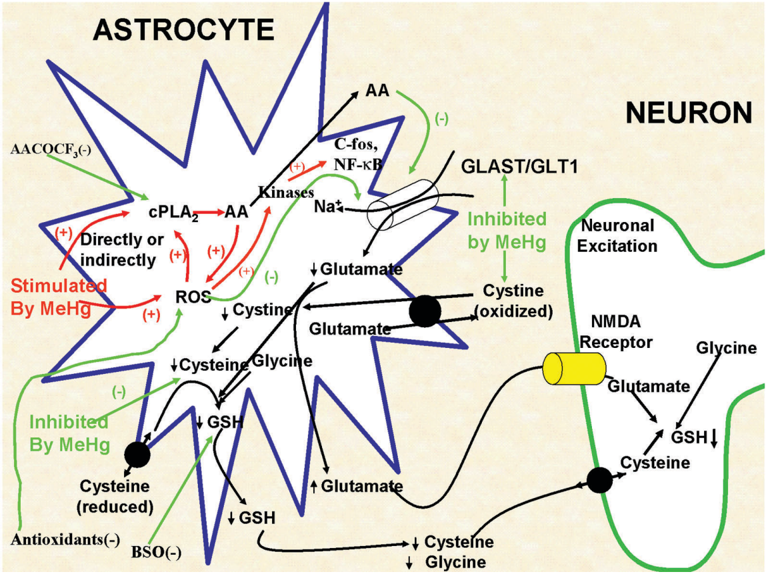
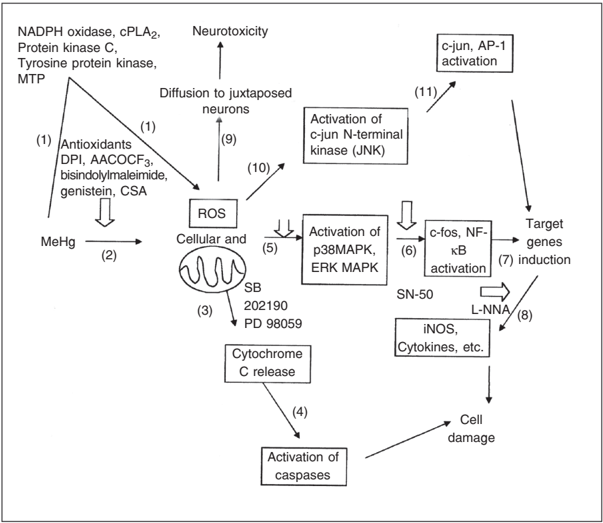
This review addresses the mechanisms of methylmercury (MeHg)-induced neurotoxicity, specifically examining the role of oxidative stress in mediating neuronal damage. A number of critical findings point to a central role for astrocytes in mediating MeHg-induced neurotoxicity as evidenced by the following observations: a) MeHg preferentially accumulates in astrocytes; b) MeHg specifically inhibits glutamate uptake in astrocytes; c) neuronal dysfunction is secondary to disturbances in astrocytes. The generation of reactive oxygen species (ROS) by MeHg has been observed in various experimental paradigms. For example, MeHg enhances ROS formation both in vivo (rodent cerebellum) and in vitro (isolated rat brain synaptosomes), as well as in neuronal and mixed reaggregating cell cultures. Antioxidants, including selenocompounds, can rescue astrocytes from MeHg-induced cytotoxicity by reducing ROS formation. We emphasize that oxidative stress plays a significant role in mediating MeHg-induced neurotoxic damage with active involvement of the mitochondria in this process. Furthermore, we provide a mechanistic overview on oxidative stress induced by MeHg that is triggered by a series of molecular events such as activation of various kinases, stress proteins and other immediate early genes culminating in cell damage.
Overview
The claims and statistics of this paper haven’t been checked yet.
Free: it reads the open-access text and checks the first 5 claims that cite a source we can check. Create a free account to check every claim.
Integrity signals
Registry
Cites
Statistics
Figures
Verification
Claims the paper makes
The claims and statistics of this paper haven’t been checked yet.
Free: it reads the open-access text and checks the first 5 claims that cite a source we can check. Create a free account to check every claim.
Claims other papers make about this one
Each is checked against this paper’s own text: does it say what the citing paper says it does?
In the citing paper
“There is certainly evidence that exposure to this agent causes oxidative stress (Ali et al. 1992; Aschner et al. 2007; Atchison and Hare 1994; Franco et al. 2009; Johansson et al. 2007; Sanfeliu et al. 2003; Sarafian et al. 1994; Yee and Choi 1994, 1996; Yin et al. 2007) and raises cellular iron levels (Ilbäck et al. 2000)”
Self-check
Percentages, sums and reported differences re-computed from the paper’s own numbers.
The self-check needs the paper’s full text.
Citations
Cites
LeBel, C. P., Ischiropoulos, H., & Bondy, S. C. (1992) · Chemical Research in Toxicology · doi:10.1021/tx00026a012 · Cited by 2,689 · cited 1×
“, ischemia and rheumatoid arthritis), cancer, diabetes mellitus, and atherosclerosis (32-34), as well as in metalinduced toxicity (35,36).”
BackgroundChoi, D. W. (1992) · Journal of Neurobiology · doi:10.1002/neu.480230915 · Cited by 2,314 · cited 1×
“In fact, MeHg-induced inhibition of astrocyte glutamate transporters leads to increased glutamate concentrations in the extracellular fluid, causing hyperactivation of N-methyl D-aspartate type glutamate receptors and leading to an increase in Na+ and Ca2+ influx (46).”
BackgroundCognitive Deficit in 7-Year-Old Children with Prenatal Exposure to Methylmercury
Grandjean, P., Weihe, P., White, R. F., Debes, F., Araki, S., Yokoyama, K., Murata, K., SØRENSEN, N., Dahl, R., & JØRGENSEN, P. J. (1997) · Neurotoxicology and Teratology · doi:10.1016/s0892-0362(97)00097-4 · Cited by 1,738 · cited 1×
“br aberrant central nervous system (CNS) functions (3-5).”
BackgroundMethylmercury Poisoning in Iraq: An interuniversity report.
Bakir, F., Damluji, S. F., Amin-Zaki, L., Murtadha, M., Khalidi, A., Al-Rawi, N. Y., Tikriti, S., Dhahir, H. I., Clarkson, T. W., Smith, J. C., et al. (1973) · Science · doi:10.1126/science.181.4096.230 · Cited by 1,606 · cited 1×
“Methylmercury (MeHg) is a major neurotoxicant that continues to pose appreciable risk to human health as evidenced by the tragic epidemics of MeHg poisoning in Japan and Iraq (1,2).”
BackgroundBetteridge, D. J. (2000) · Metabolism · doi:10.1016/s0026-0495(00)80077-3 · Cited by 1,455
NMDA-dependent superoxide production and neurotoxicity
Lafon-Cazal, M., Pietri, S., Culcasi, M., & Bockaert, J. (1993) · Nature · doi:10.1038/364535a0 · Cited by 1,183 · cited 1×
“Increased intracellular Ca2+ levels are associated with the generation of ROS (47).”
BackgroundFree Radicals and Antioxidants: A Personal View
Halliwell, B. (2009) · Nutrition Reviews · doi:10.1111/j.1753-4887.1994.tb01453.x · Cited by 1,077 · cited 1×
“, ischemia and rheumatoid arthritis), cancer, diabetes mellitus, and atherosclerosis (32-34), as well as in metalinduced toxicity (35,36).”
BackgroundDugan, L., Sensi, S., Canzoniero, L., Handran, S., Rothman, S., Lin, T., Goldberg, M., & Choi, D. (1995) · The Journal of Neuroscience · doi:10.1523/jneurosci.15-10-06377.1995 · Cited by 772 · cited 1×
“In addition, an increase in ROS has been observed in a) mitochondria isolated from MeHg-injected rat brains (36), b) mitochondria isolated in vitro from rat brain and then exposed to MeHg (43), and c) mitochondria from Hg- and glutamateexposed astrocytes and neurons (44,45).”
BackgroundHunot, S., Brugg, B., Ricard, D., Michel, P. P., Muriel, M.-P., Ruberg, M., Faucheux, B. A., Agid, Y., & Hirsch, E. C. (1997) · Proceedings of the National Academy of Sciences · doi:10.1073/pnas.94.14.7531 · Cited by 678 · cited 1×
“br physiological role in optimal cell function, excessive oxidative stress has been implicated in a variety of neurodegenerative diseases, including Alzheimer’s disease, Parkinson’s disease and amyotrophic lateral sclerosis (29-31).”
BackgroundDavidson, P. W., Myers, G. J., Cox, C., Axtell, C., Shamlaye, C., Sloane-Reeves, J., Cernichiari, E., Needham, L., Choi, A., Wang, Y., et al. (1998) · JAMA · doi:10.1001/jama.280.8.701 · Cited by 671 · cited 1×
“However, despite these observations, the issue remains controversial, as exemplified by other studies (8,9) in which no association was noted between MeHg and neurodevelopmental outcomes in children at 66 months of age.”
Research works printed but not linked: 2
- Takeuchi T. Biological reactions and pathological changes in human beings and animals caused by organic mercury contamination. In: Hartung R, Dinman BD (Editors), Environmental mercury contami- nation. Ann Arbor: Ann Arbor Science; 1972. p 247-289.
- Myhre O, Fonnum F. The effect of aliphatic, naphthenic, and aro- matic hydrocarbons on production of reactive oxygen species and reactive nitrogen species in rat brain synaptosome fraction: the involvement of calcium, nitric oxide synthase, mitochondria, and phospholipase A. Biochem Pharmacol 2001; 62: 119-128.
Cited by
Items 201–300 of 326
Thiagarajan, K., Gamit, N., Mandal, S., Ayyathan, D. M., & Chandrasekaran, R. (2018) · Pakistan Journal of Pharmaceutical Sciences · doi:10.36721/pjps/31/2/02.03.2018/3970/399-404 · Cited by 11
“The most affected system due to MeHg toxicity is central nervous system (CNS) that leads to neurodegenerative disorders (Aschner et al., 2007; Sakaue et al., 2006).”
BackgroundSurendran, G., & El‐Fawal, H. A. N. (2008) · Journal of Pharmacology and Toxicology · doi:10.3923/jpt.2008.173.189 · Cited by 10
Mohamed-Moosa, Z., Daniels, W. M. U., & Mabandla, M. V. (2013) · Metabolic Brain Disease · doi:10.1007/s11011-013-9465-4 · Cited by 10
Biomarkers of oxidative/nitrosative stress and neurotoxicity
Milatović, D., Zaja‐Milatovic, S., & Gupta, R. C. (2014) · Elsevier eBooks · doi:10.1016/b978-0-12-404630-6.00052-x · Cited by 10
Pereira, P. S., Costa, A. R., de Oliveira, T. J. S., Oliveira, C. V. B., de Lima, M. D. C. A., de Oliveira, J. F., Kim, B., Coutinho, H. D. M., Duarte, A. E., Kamdem, J. P., et al. (2022) · Antioxidants · doi:10.3390/antiox11020420 · Cited by 9
“Some substances, under the effect of oxidative stress, can determine low molecular weight thiol depletion, mitochondrial dysfunction, formation of reactive oxygen species (ROSs) and inhibition of the antioxidant enzyme; they can induce undesirable biological reactions, such as lipid peroxidation, protein denaturation…”
BackgroundZhang, X., Hao, H., Ma, K., Pang, H., Li, X., Tian, T., Hou, S., Ning, X., Wu, H., Hou, Q., et al. (2022) · Environmental Toxicology · doi:10.1002/tox.23684 · Cited by 9
Arginine decarboxylase: A novel biological target of mercury compounds identified in PC12 cells
Wang, S., Lv, Q., Yang, Y., Guo, L., Wan, B., Ren, X., & Zhang, H. (2016) · Biochemical Pharmacology · doi:10.1016/j.bcp.2016.08.019 · Cited by 8
da Rosa, H. T., Panzenhagen, A. C., Espitia-Pérez, P., Teixeira, A. A., Roitman, A., Almeida, R. F., Heimfarth, L., & Moreira, J. C. F. (2020) · Mutation Research/Genetic Toxicology and Environmental Mutagenesis · doi:10.1016/j.mrgentox.2020.503239 · Cited by 8
Chronic exposure to methylmercury disrupts ghrelin actions in C57BL/6J mice
Ferrer, B., Prince, L. M., Tinkov, A. A., Santamaría, A., Bowman, A. B., & Aschner, M. (2020) · Food and Chemical Toxicology · doi:10.1016/j.fct.2020.111918 · Cited by 8
Self-citationShayeghan, M., Ansari, A. M., Forouzesh, F., & Javidi, M. A. (2022) · Archives of Biochemistry and Biophysics · doi:10.1016/j.abb.2022.109357 · Cited by 8
Evaluación de la capacidad acumuladora de mercurio del ají (Capsicum annuum)
Pérez-Vargas, H. M., Vidal-Durango, J. V., & Marrugo‐Negrete, J. (2015) · Revista de Salud Pública · doi:10.15446/rsap.v16n6.31466 · Cited by 8
“900 REVISTA DE SALUD PÚBLICA · Volumen 16 (6), Diciembre 2014”
BackgroundInfluentialKim, H., Choi, S.-H., Lee, N.-E., Cho, H., Rhim, H., Kim, H., Hwang, S., & Nah, S.-Y. (2020) · International Journal of Environmental Research and Public Health · doi:10.3390/ijerph17030838 · Cited by 8
“On the other hand, MeHg is well-known to cause intracellular ROS generation for induction of neuronal cytotoxicity [16,18].”
BackgroundTracing the threads: How toxic metals contribute to neurodegeneration
Wiebe, E., Olayiwola, Z., & Adebiyi, O. E. (2025) · IBRO Neuroscience Reports · doi:10.1016/j.ibneur.2025.12.008 · Cited by 7
“Through these indirect mechanisms, MeHg promotes ROS-formation within cells when intracellular Na + and Ca 2 + become imbalanced (Aschner et al., 2007).”
(2022) · Biointerface Research in Applied Chemistry · doi:10.33263/briac131.075 · Cited by 7
“phenotypes may be caused by the activation of astrocytes or microglia in developing zebrafish, which causes changes in CNS volume and neuronal death [117,118].”
BackgroundKÖSE, S. B. E., Yirün, A., Balcı, A., & Erkekoğlu, P. (2021) · Journal of Applied Toxicology · doi:10.1002/jat.4269 · Cited by 7
“…systems, excessive ROS production, induction of cell death, depletion of important cellular antioxidants, inhibition of neuronal migration, and inhibition of glutamate transport (Aschner et al., 2007; Clarkson et al., 2003; Farina et al., 2011; Franco et al., 2009; Mori et al., 2007).”
BackgroundHwang, G., Lee, J., Kim, M., Sato, M., Takahashi, T., & Naganuma, A. (2013) · The Journal of Toxicological Sciences · doi:10.2131/jts.38.703 · Cited by 7
Ghizoni, H., Ventura, M., Colle, D., Gonçalves, C. L., de Souza, V., Hartwig, J. M., Santos, D. B., Naime, A. A., Souza, V. C. D. O., Lopes, M. W., et al. (2018) · Food and Chemical Toxicology · doi:10.1016/j.fct.2018.08.004 · Cited by 7
Self-citationThe Role of Methylmercury Exposure in Neurodevelopmental and Neurodegenerative Disorders
Burbacher, T. M., Ponce, R. A., & Grant, K. S. (2015) · Elsevier eBooks · doi:10.1016/b978-0-12-800228-5.00006-6 · Cited by 7
Kumar, G., Perween, Q., Ansari, R., & V., D. (2014) · Cited by 6
Puty, B., Bittencourt, L. O., Plaça, J. R., de Oliveira, E. H. C., & Lima, R. R. (2022) · Biological Trace Element Research · doi:10.1007/s12011-022-03225-3 · Cited by 6
“Among the MeHg-associated damages observed on CNS are oxidative misbalance followed by decreased ATP productions and changes on enzymatic (glutathione peroxidase (Gpx), thioredoxin (Trx), and thioredoxin reductase (TrxR)) and non-enzimatic (glutathione (GSH)) antioxidant defense [3]; changes on neurotransmitter levels…”
BackgroundGhrelin attenuates methylmercury-induced oxidative stress in neuronal cells
Ferrer, B., Suresh, H., Tinkov, A. A., Santamaría, A., da Rocha, J. B. T., Skalny, A. V., Bowman, A. B., & Aschner, M. (2022) · Molecular Neurobiology · doi:10.1007/s12035-022-02726-5 · Cited by 6
“It is known that MeHg impairs mitochondrial membrane potential, leading to an increase in calcium levels, in turn, triggering ROS formation and oxidative stress [37], with enduring changes in cellular redox status.”
BackgroundSelf-citationBlaylock, R. L. (2008) · Cited by 6
Ahmad, M. (2017) · Microbial Pathogenesis · doi:10.1016/j.micpath.2017.11.063 · Cited by 5
Mello, A., Medeiros, M. C., Lacerda, D. D. S., de Andrade, R. B., Gemelli, T., Guerra, R. B., Wannmacher, C. M. D., Gomez, R., & Funchal, C. (2012) · Food and Chemical Toxicology · doi:10.1016/j.fct.2012.04.042 · Cited by 6
Learning Deficits and Depressionlike Behaviors Associated with Developmental Methylmercury Exposures
Onishchenko, N. R., & Ceccatelli, S. (2010) · Wiley eBooks · doi:10.1002/9780470917060.ch19 · Cited by 5
Arogundade, T. T., Idowu, O., Sanyaolu, G., Uware, F. E., Akinbohun, F. O., Popoola, O., Arogundade, O., Olatomide, O. D., Yawson, E. O., Bamisi, O., et al. (2025) · NeuroToxicology · doi:10.1016/j.neuro.2025.103321 · Cited by 4
Duarte, N. D. A. A., Santos, L. C. D., Maraslis, F. T., de Araújo, M. L., Rocha, B. A., Antunes, L. M. G., & Barbosa, F. (2026) · Journal of Hazardous Materials · doi:10.1016/j.jhazmat.2026.141273 · Cited by 4
Abdelhamid, M. S., Bohi, K. M. E., Sherif, M. H., Abdelhamid, M. S., Abdel‐Daim, M. M., Elewa, Y. H. A., Metwally, M. M. M., Albadrani, G. M., Najda, A., Abdel-Hamid, S. E., et al. (2023) · Biomedicine & Pharmacotherapy · doi:10.1016/j.biopha.2023.114521 · Cited by 4
Yadang, S. A. F., Nguezeye, Y., Taïwé, G. S., Agbor, G. A., & Bum, E. N. (2025) · IBRO Neuroscience Reports · doi:10.1016/j.ibneur.2025.02.008 · Cited by 4
“…of N-methyl-D-aspartate (NMDA) receptors by L-glutamate results in increased intracellular calcium levels, which subsequently activates various pathways that generate ROS, including mitochondrial dysfunction and activation of nitric oxide synthase (NOS) (Aschner et al., 2007, Shah et al., 2016).”
Elemental Mercury Exposure and Sleep Disorder
Bogomir, A., & Kobal, D. (2012) · InTech eBooks · doi:10.5772/26621 · Cited by 4
“Various Hg species presynaptically blocks sodium and calcium channels and thus inhibits the uptake of some neurotransmitters, especially glutamate into astrocytes, which increases their extracellular concentration, thus increasing the sensitivity of neighbouring neurons for stimulating excitotoxic effects (Aschner et…”
BackgroundInfluentialSampaio, G. S. A., Oliveira, K. R. H. M., Kauffmann, N., do Nascimento, J. L. M., Souza, G. D. S., Gomes, B. D., de Lima, S. M. A., Silveira, L. C. L., Rocha, F. A. D. F., & Herculano, A. M. (2018) · Toxicology in Vitro · doi:10.1016/j.tiv.2018.07.018 · Cited by 5
Ameliorative Effects of Ascorbic Acid on Mercury-Induced Learning and Memory Impairment in Rats
Animoku, A., Buraimoh, A. A., Hamman, W. O., Ibegbu, A. O., Pala, Y., & Iliyasu, M. O. (2016) · NIgerian Journal of Neuroscience · doi:10.47081/njn2016.8.1/001 · Cited by 4
Ellis, B. C., Gattoni‐Celli, S., & Kindy, M. S. (2010) · Biological Chemistry · doi:10.1515/bc.2010.014 · Cited by 4
Godam, E. T., Kani, J. N., Didia Blessing, C., & Peter, A. S. (2018) · Journal of Cytology & Histology · doi:10.4172/2157-7099.1000508 · Cited by 4
Abellán, G., & Antonio, F. J. M. (2014) · Tesis Doctorals en Xarxa (Consorci de Serveis Universitaris de Catalunya) · Cited by 4
Cellular and molecular mechanisms behind methylmercury-induced neurotoxicity.
Kaur, P. (2008) · NVA (Nasjonalt vitenarkiv) · Cited by 4
Ahmed, A., Wong, M., Santamaría, A., da Rocha, J. B. T., Bowman, A. B., Aschner, M., & Ferrer, B. (2025) · Neurochemical Research · doi:10.1007/s11064-025-04507-7 · Cited by 3
Self-citationAschner, M., & Philbert, M. A. (2010) · Elsevier eBooks · doi:10.1016/b978-0-08-046884-6.01313-0 · Cited by 3
Self-citationKovacic, P., & Somanathan, R. (2014) · Springer eBooks · doi:10.1007/978-3-642-30018-9_90 · Cited by 3
Behavioural Effects of Exposure to Methylmercury During Early Development
Onishchenko, N. R., Spulber, S. D., & Ceccatelli, S. (2012) · Springer eBooks · doi:10.1007/978-1-4614-2383-6_9 · Cited by 3
Deshpande, T. C., & Une, H. D. (2020) · Current Enzyme Inhibition · doi:10.2174/1573408016999201228193350 · Cited by 3
Monnet‐Tschudi, F., Zurich, M., Nunes, C., Sandström, J., FitzGerald, R., Aschner, M., & da Rocha, J. B. T. (2022) · OECD series on adverse outcome pathways · doi:10.1787/4df0e9e4-en · Cited by 3
Self-citationA reference list of neurotoxicants based on CLP harmonised classifications
Craenen, K., Kosiaras, P., & Hellsten, K. (2025) · NeuroToxicology · doi:10.1016/j.neuro.2025.05.006 · Cited by 2
Bidon, M., Saito, T., Skjærven, K. H., Prabhu, P. A. J., Heraud, C., Roy, J., Marchán-Moreno, C., Pedrero, Z., & Fontagné-Dicharry, S. (2026) · Aquatic Toxicology · doi:10.1016/j.aquatox.2026.107706 · Cited by 2
El-Ansary, A. K., AL-Ayadhi, L. Y., Dewedar, A., Bhat, R. S., Saad, R., & Bjørklund, G. (2026) · BioMetals · doi:10.1007/s10534-026-00791-0 · Cited by 2
“These astrocytic disturbances, characterized by heightened extracellular glutamate concentrations, subsequently sensitize neurons to excitotoxic injury, underscoring the critical role of glial cells in MeHg-induced neuropathology (Aschner et al. 2007; Shanker et al. 2001).”
Mercury Levels in Hair of Pregnant Women in Tumbes, Peru: A Cross-Sectional Study
Lara, S. C., Arar, O., Fernandez, L., Villarreal-Palacios, D., Vilchez, P., Gamboa, R., Rothenberg, S. E., Pan, W., & O’Neal, S. E. (2024) · American Journal of Tropical Medicine and Hygiene · doi:10.4269/ajtmh.24-0142 · Cited by 2
Biomarkers of Oxidative/Nitrosative Stress and Neurotoxicity
Milatović, D., Zaja‐Milatovic, S., & Gupta, R. C. (2019) · Elsevier eBooks · doi:10.1016/b978-0-12-814655-2.00057-8 · Cited by 2
Promotion of Peroxidation and Hydroperoxidation of Lipids
Nabi, S. (2014) · Springer eBooks · doi:10.1007/978-81-322-1922-4_13 · Cited by 2
Development of Redox Metabolic Imaging Using Endogenous Molecules
Hyodo, F., Ito, S., Eto, H., Nakaji, T., Yasukawa, K., Kobayashi, R., & Utsumi, H. (2016) · YAKUGAKU ZASSHI · doi:10.1248/yakushi.15-00234-6 · Cited by 2
Regulation of intracellular pH by Ca2+- activated proton channel
Kuo, T. C. (2010) · Immunopharmacology and Immunotoxicology · doi:10.3109/08923970903349273 · Cited by 2
Pharmacological Role of Glutamate Transporters in Substance Use Disorders
Deehan, G. A., Waeiss, R. A., Liang, T., Rodd, Z. A., Sari, Y., Bell, R. L., & Hauser, S. R. (2022) · Springer eBooks · doi:10.1007/978-3-030-87480-3_14 · Cited by 2
Ameliorative Effect of Ascorbic Acid (Vitamin C) on Mercury Induced Temporal Lobe Damage in Rats
Animoku, A., Buraimoh, A. A., Hamman, W. O., Ibegbu, A. O., Mesole, S. B., Yusuf, U. A., Maliki, J. S., & Akpulu, P. (2017) · NIgerian Journal of Neuroscience · doi:10.47081/njn2018.9.1/002 · Cited by 2
Fischer, C. (2008) · Uppsala University Publications (Uppsala University) · Cited by 2
Mohammad, R. M., Ahmed, N. H., Kandil, E., & Badawi, A. M. (2019) · INTERNATIONAL JOURNAL OF ADVANCED SCIENTIFIC AND TECHNICAL RESEARCH · doi:10.26808/rs.st.i9v4.03 · Cited by 1
Manoochehri, Z., Nakhaee, S., Azadi, N. A., Davarinejad, O., Ariyaee, M., & Mansouri, B. (2025) · Biological Trace Element Research · doi:10.1007/s12011-025-04889-3 · Cited by 1
Bonfim, L. T., Amorim, C. K. N., de Oliveira, E. H. C., & Ferreira, W. A. S. (2025) · Discover Toxicology · doi:10.1007/s44339-025-00032-y · Cited by 1
“In addition, oxidative stress, a known mechanism of MeHg neurotoxicity, can disrupt cellular signaling pathways involved in steroidogenesis, such as the ERK/MAPK pathway [77, 78], which regulates the 3β-HSD expression [79].”
Loan, A., D’Mello, R., Li, Y., Nurkan, T., Minić, Z., Wang, J., & Chan, H. M. (2026) · The Journal of Toxicological Sciences · doi:10.2131/jts.51.89 · Cited by 1
de Oliveira, R. B., Leal, W. G., Picanço-Diniz, D. L. W., Bento‐Torres, J., Lins, N. A. D. A., Malm, O., & Diniz, C. W. P. (2008) · Brain Research · doi:10.1016/j.brainres.2008.09.036 · Cited by 1
“…and cell membrane permeability have been connected with MeHg neurotoxicity in various experimental approaches, and a number of significant findings indicate an essential role for astrocytes in mediating of these events e.g. Aschner et al. (2007, 2000), Shanker et al. (2001), and Yin et al. (2007).”
BackgroundToxic Effects Of Mercury: A Review Of Contemporary Understanding
Nabi, S. (2015) · Cited by 1
Farina, M., Berenguer, J., Pons, S., da Rocha, J. B. T., & Aschner, M. (2011) · Neuromethods · doi:10.1007/978-1-61779-077-5_9 · Cited by 1
“In this regard, methylmercury (MeHg) is an environmental neurotoxicant that seems to cause neurotoxicity via disruption of multiple targets, which will culminate in mitochondrial dysfunction and oxidative stress (103).”
BackgroundSelf-citationMethylmercury and Oxidative Stress
Nabi, S. (2014) · Springer eBooks · doi:10.1007/978-81-322-1922-4_8 · Cited by 1
Exposição aguda ao Metilmercúrio em ratos em desenvolvimento: mini-revisão
Bitencourt, P. E. R., Abdalla, F. H., Bona, K. S. D., & Moretto, M. B. (2013) · Semina Ciências Biológicas e da Saúde · doi:10.5433/1679-0367.2013v34n2p137 · Cited by 1
da Silva, A. P. (2007) · Cited by 1
Gupta, R. C. (2012) · Elsevier eBooks · doi:10.1016/b978-0-12-385926-6.00039-9 · Cited by 1
Maurer, L. L., Aschner, M., & Philbert, M. A. (2017) · Elsevier eBooks · doi:10.1016/b978-0-12-801238-3.65385-0 · Cited by 1
Self-citationIdzikowski, C. (2012) · InTech eBooks · doi:10.5772/1500 · Cited by 1
Sleep deprivation: A toxicogenic drive for neurodegenerative diseases and public health issue
Afonne, O. J., Ifediba, E. C., & Afonne, A. J. (2022) · Advances in Health and Behavior · doi:10.25082/ahb.2022.01.006 · Cited by 1
Vala, A. (2012) · The Knowledge Bank (The Ohio State University) · Cited by 1
Estudo eletrofisiológico e psicofísico em indivíduos intoxicados por vapor de mercúrio
Barboni, M. T. S. (2008) · Digital Library of Theses and Dissertations (Universidade de São Paulo) · doi:10.11606/d.47.2008.tde-20052008-160405 · Cited by 1
Mercury in the brain of polar bears (Ursus maritimus ) and ringed seals (Pusa hispida).
Krey, A. (2015) · doi:10.24124/2015/bpgub1039 · Cited by 1
Black, P. L. (2011) · uO Research (University of Ottawa) · doi:10.20381/ruor-4502 · Cited by 1
“Among the best characterized mechanisms of MeHg neurotoxicity are excitotoxicity and oxidative stress (Yin et al., 2007; Aschner et al., 2007).”
BackgroundExposição ocupacional a mercúrio: associação com a atividade da paraoxonase humana e vitaminas A e E
de Oliveira, A. C. (2013) · Portuguese National Funding Agency for Science, Research and Technology (RCAAP Project by FCT)
Yu, M. S. (2015) · Summit (Simon Fraser University)
Assessment of environmental contaminants' neurotoxicity : in vitro and in vivo experimental studies
Ibrahim, W. N. W., & Norhamidah, W. I. W. (2012) · Figshare
Vargas, A. P., Alves, D. A. C., Wagner, C., Posser, T., Puntel, R. L., & da Rocha, J. B. T. (2012) · Chemistry and Ecology · doi:10.1080/02757540.2012.656610
“Because our research group is interested in understanding the fate and toxicity of Hg [17,18] and there is only limited kinetic data about Hg(II) uptake by aquatic plants, we synthesised the rhodamine-based probe 2-(6-ethylamino3-ethylimino-2,7-dimethyl-3H-xanthen-9-yl) benzoic acid phenyl thiourea (1) to determine it…”
MethodSelf-citationEffects of Methylmercury on Notch Targets and Motor Nerve Development in Drosophila
Engel, G. L. (2013) · ScholarWorks -A service of University of Vermont Libraries (University of Vermont)
Maia, A., & Soares, R. (2014)
Zemolin, A. P. P. (2012) · Americanae (AECID Library)
Al-Rubai, A.-J. F. (2016) · Nottingham ePrints (University of Nottingham)
Wolf, S. E. (2016) · W&M Publish (College of William & Mary) · doi:10.21220/s2g01s
“28 production and make the auditory pathway inherently more susceptible to oxidative damage (Aschner et al., 2007; Farina et al., 2011; Huang et al., 2008).”
BackgroundAnálise proteômica de tecidos de ratos expostos às diferentes formas de mercúrio
Souza, V. C. D. O. (2016) · Digital Library of Theses and Dissertations (Universidade de São Paulo) · doi:10.11606/t.60.2016.tde-06102016-141337
Roos, D. H. (2012) · Americanae (AECID Library) · Cited by 1
Potential neurological effects in banana bats foraging at wastewater treatment works.
Hill, K. (2016) · ResearchSpace (University of KwaZulu-Natal)
Impact of glutamine on the effect of neopterin in methyl mercury-exposed neurons
Engin, A. B., & Engin, D. (2016) · Pteridines · doi:10.1515/pteridines-2018-0011
“In this respect, glutamate dyshomeostasis in the CNS represents a critical target in MeHg-induced neurotoxicity [11].”
BackgroundEspitia-Pérez, P. (2018) · LA Referencia (Red Federada de Repositorios Institucionales de Publicaciones Científicas)
Mercury Exposure Analyses Amongst Dene and Métis Communities of the Northwest Territories
Fung, L. (2019) · UWSpace (University of Waterloo)
Carlson, J. (2013) · W&M Publish (College of William & Mary) · doi:10.21220/s2-60wj-xc81
Serra, A. P. (2012) · Dipòsit Digital de la Universitat de Barcelona (Universitat de Barcelona)
Zeliger, H. I. (2008) · Elsevier eBooks · doi:10.1016/b978-081551589-0.50019-2
Zeliger, H. I. (2011) · Elsevier eBooks · doi:10.1016/b978-1-4377-3463-8.00018-7
Methylmercury: Human exposure, animal behavior, and insight on molecular mechanism
Culbreth, M. E., Gonçalves, F. M., & Aschner, M. (2020) · Elsevier eBooks · doi:10.1016/b978-0-12-805378-2.00015-2
Self-citationMercury and Methylmercury Toxicology and Risk Assessment
Chan, L. H. M. (2019) · MDPI eBooks · doi:10.3390/books978-3-03897-971-5
Characterization of methylmercury demethylation in the central nervous system.
Shapiro, A. (2008) · doi:10.24124/2008/bpgub546
“Furthermore, astrocyte dysfunction has been shown to mediate neuronal loss (Aschner et al., 2007).”
BackgroundResultInfluentialALTERAÇÕES PATOLÓGICAS E CITOLÓGICAS INDUZIDAS PELO METILMERCÚRIO (MeHg)
Silva, P. D. O., & da Cunha, L. A. (2022) · ANAIS DO III CONGRESSO NORTE-NORDESTE DE SAÚDE PÚBLICA (ONLINE) RESUMOS SIMPLES · doi:10.47094/iiicnnesp.2022/143
Mercury and cyanide in foods from the Amazônia: Is this a risky diet?
Franco, C. V. P., Franco, V. V. P., da Cruz, C. D. J. P., da Silva, L. R. W., Amaro, B. O., Tabosa, N. P., & de Oliveira, C. S. B. (2023) · International Seven Journal of Multidisciplinary · doi:10.56238/isevmjv2n4-006
Metadata
- Authors
- Aschner, M., Syversen, T., Souza, D. O., Rocha, J. B. T., & Farina, M.
- Affiliations
- Vanderbilt University Medical Center (US)
- Norwegian University of Science and Technology (NO)
- Universidade Federal de Santa Maria (BR)
- Universidade Federal do Rio Grande do Sul (BR)
- Universidade Federal de Santa Catarina (BR)
- Venue
- Brazilian Journal of Medical and Biological Research
- Publisher
- FapUNIFESP (SciELO)
- Published
- 2007-03
- Volume
- 40
- Issue
- 3
- Pages
- 285-291
- ISSN
- 0100-879X (ISSN-L)
- OpenAlex
- W2012550963
- Semantic Scholar
- 68f1fb876c6e751c8c266a320b8ad449dccbd377
- Cited by
- 287
- References
- 61
- Citations by year
- 2026: 7 · 2025: 8 · 2024: 9 · 2023: 5 · 2022: 19 · 2021: 11 · 2020: 13 · 2019: 15 · 2018: 17 · 2017: 17 · 2016: 21 · 2015: 13 · 2014: 22 · 2013: 14 · 2012: 27
- FWCI
- 1.88
- Type
- journal article
- Language
- en
- Open access
- gold
- doi.org
- Licence
- cc-by
- Locations
- Brazilian Journal of Medical and Biological Research (publishedVersion, cc-by)
- PubMed (publishedVersion)
- Americanae (AECID Library) (publishedVersion, other-oa)
- LA Referencia (Red Federada de Repositorios Institucionales de Publicaciones Científicas) (publishedVersion, other-oa)
- Lume (Universidade Federal do Rio Grande do Sul) (submittedVersion, other-oa)
- LA Referencia (Red Federada de Repositorios Institucionales de Publicaciones Científicas) (submittedVersion, cc-by-nc-sa)
- Americanae (AECID Library) (submittedVersion, cc-by)
- DOAJ (DOAJ: Directory of Open Access Journals) (submittedVersion, cc-by-sa)
- Funders
- National Institute of Environmental Health Sciences (ES07331)
- Topics
- Physical Sciences › Environmental Science › Health, Toxicology and Mutagenesis › Mercury impact and mitigation studies
- Physical Sciences › Environmental Science › Health, Toxicology and Mutagenesis › Heavy Metal Exposure and Toxicity
- Health Sciences › Medicine › Clinical Neurology › Parkinson's Disease Mechanisms and Treatments
- Keywords
- methylmercury, neurotoxicity, oxidative stress, reactive oxygen species, astrocytes, glutamate uptake, glutamate, mitochondria, selenocompounds, antioxidants, neuronal injury, stress proteins, kinases, immediate early genes
- MeSH terms
- Animals, Astrocytes, Disease Models, Animal, Methylmercury Compounds, Neurons, Reactive Oxygen Species, Oxidative Stress, Glutamic Acid, Mercury Poisoning, Nervous System, Rats
About these checks
Registry, retraction, Cites and statistics results are computed, not judged, with one exception: a printed reference that no index lists is read once by a model before it counts as a citation error. Claims are extracted by a model and kept only when their quote appears verbatim in the text; each cited source is then checked, with a model’s help, for whether it says what the claim relies on. Those verdicts can be wrong — read the claim’s quote and the cited source before relying on one.
Statistics and arithmetic are recomputed, not judged.
Confidence bands are shown only for fields calibrated on our annotated test set. None is calibrated yet, so no band is shown.
What counts as a claim ›How we measure confidence ›How we check this ›
Are you an author, or do you see a problem with this page? Request a review
Data sources
Bibliographic data: Semantic Scholar, OpenAlex, Crossref.
Contains information from the Semantic Scholar Academic Graph Datasets, made available under the ODC Attribution License (ODC-BY 1.0).
Semantic Scholar’s data is described in: Kinney, R., et al. (2023). The Semantic Scholar Open Data Platform. arXiv:2301.10140.
