

Adsorption of chromium ion (VI) by acid activated carbon
Open accessThe DOI matches its Crossref record; 32 of the 32 references it cites were found in a registry or an index.
Abstract
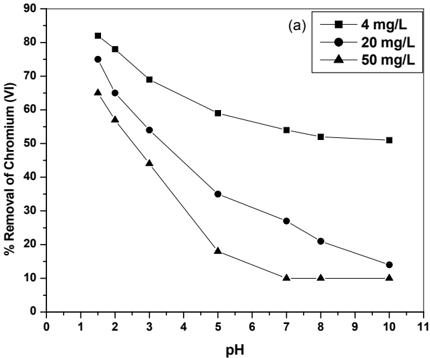
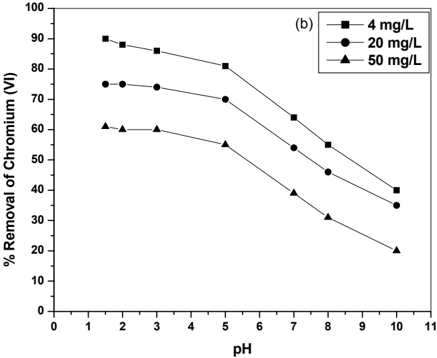
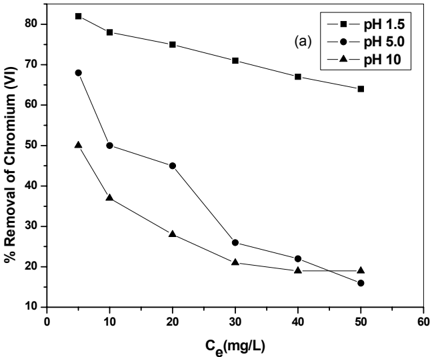
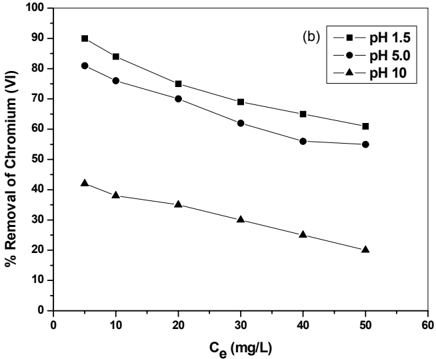
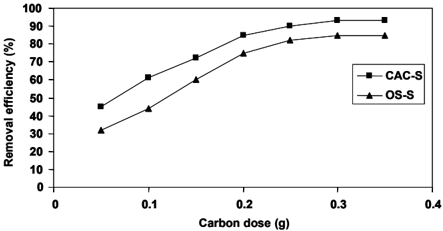
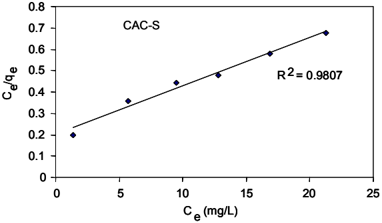
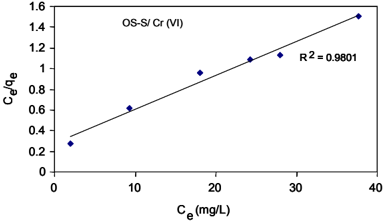
The activated carbon produced from olive stones was chemically activated using sulfuric acid, (OS-S), and utilized as an adsorbent for the removal of Cr(VI) from aqueous solution in the concentration range 4-50 mg/L. Adsorption experiments were carried out in a batch process and various experimental parameters such as effect of contact time, initial chromium ion concentration, carbon dosage, and pH on percentage removal have been studied. Adsorption results obtained for activated carbon (OS-S) were compared with the acid-treated commercial activated carbon (CAC-S). The optimum efficiency shows that the Cr(VI) uptake being attained at pH 1.5. The equilibrium adsorption data was better fitted to the Langmuir adsorption model. The results of kinetic models showed that the pseudo-first-order kinetic model was found to correlate the experimental data well. It was concluded that activated carbon produced from olive stones (OS-S) has an efficient adsorption capacity compared to (CAC-S) sample.
Overview
The claims and statistics of this paper haven’t been checked yet.
Free: it reads the open-access text and checks the first 5 claims that cite a source we can check. Create a free account to check every claim.
Integrity signals
Registry
Cites
Statistics
Figures
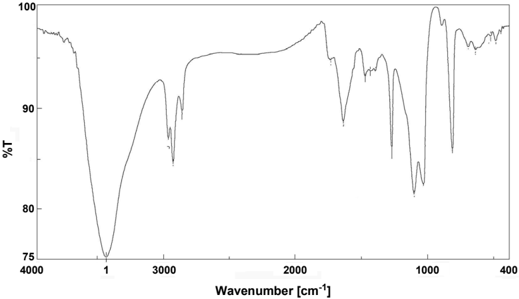
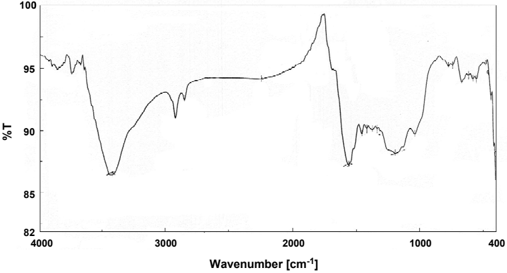
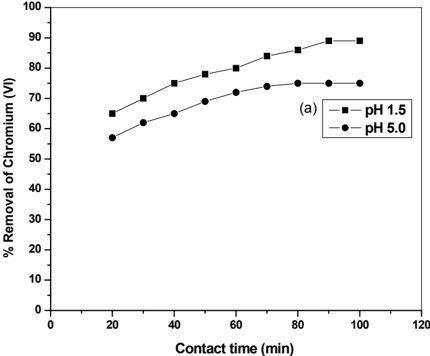
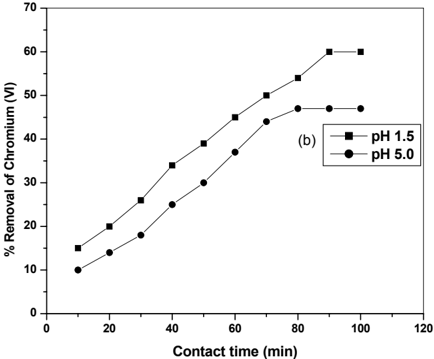
Verification
Claims the paper makes
The claims and statistics of this paper haven’t been checked yet.
Free: it reads the open-access text and checks the first 5 claims that cite a source we can check. Create a free account to check every claim.
Claims other papers make about this one
Each is checked against this paper’s own text: does it say what the citing paper says it does?
The source backs part of the claim, not all of it — or backs it for a different population, condition or comparison.
In the citing paper
“This may be due to the unavailability of adsorption sites for Cr(VI) adsorption at lower t-TW dosages, as discussed earlier39.”
From Optimized removal of hexavalent chromium from water using spent tea leaves treated with ascorbic acid (2022) · cites this paper as [39]
Experimental — accuracy not yet measuredThe cited source says what the claim attributes to it.
In the citing paper
“The decrease in Cr(VI) adsorption with an increase in pH has been reported in activated carbons39, nanocomposites40, and organic adsorbents41 such as ours.”
From Optimized removal of hexavalent chromium from water using spent tea leaves treated with ascorbic acid (2022) · cites this paper as [39]
The cited source says what the claim attributes to it.
In the citing paper
“The pH-dominated effects, such as the one-factor effect of pH (Fig. 4a), can be explained by the prevalence of fewer affinitive chromate ions (at high pH), leading to less-frequent electrostatic interactions with the adsorbent surface, resulting in reduced adsorptive removal of Cr(VI)39,40.”
From Optimized removal of hexavalent chromium from water using spent tea leaves treated with ascorbic acid (2022) · cites this paper as [39]
Self-check
Percentages, sums and reported differences re-computed from the paper’s own numbers.
The self-check needs the paper’s full text.
Citations
Cites
Babel, S., & Kurniawan, T. A. (2004) · Chemosphere · doi:10.1016/j.chemosphere.2003.10.001 · Cited by 925
Removal of heavy metals using the fungus Aspergillus niger
Kapoor, A., Viraraghavan, T., & Cullimore, D. R. (1999) · Bioresource Technology · doi:10.1016/s0960-8524(98)00192-8 · Cited by 756
Industrial Wastewater Treatment Technology
Patterson, J. W. (1985) · Cited by 711
Chromium(VI) adsorption from aqueous solution by sawdust activated carbon
KARTHIKEYAN, T., RAJGOPAL, S., & MIRANDA, L. (2005) · Journal of Hazardous Materials · doi:10.1016/j.jhazmat.2005.05.003 · Cited by 679
Removal of chromium(VI) from aqueous solution by activated carbons: Kinetic and equilibrium studies
Khezami, L., & Capart, R. (2005) · Journal of Hazardous Materials · doi:10.1016/j.jhazmat.2005.04.012 · Cited by 647
Aksu, Z. (2001) · Separation and Purification Technology · doi:10.1016/s1383-5866(00)00212-4 · Cited by 642
Hamadi, N. (2001) · Chemical Engineering Journal · doi:10.1016/s1385-8947(01)00194-2 · Cited by 620
Batch Cr(VI) removal by polyacrylamide-grafted sawdust: Kinetics and thermodynamics
Raji, C., & Anirudhan, T. S. (1998) · Water Research · doi:10.1016/s0043-1354(98)00150-x · Cited by 458
Heavy metal removal in a biosorption column by immobilized M. rouxii biomass
Yan, G., & Viraraghavan, T. (2001) · Bioresource Technology · doi:10.1016/s0960-8524(01)00020-7 · Cited by 448
Removal of Hexavalent Chromium with a Lignocellulosic Substrate Extracted from Wheat Bran
Dupont, L., & Guillon, E. (2003) · Environmental Science & Technology · doi:10.1021/es0342345 · Cited by 384
Research works printed but not linked: 4
- Cieslak, G. M., Toxis and magnetic effects of chromium (VI) Polyhedron Aug, 21, 3665 (1996).
- Devaparasath, P. M., Soloman, J. S. and Thomas, B. V., Removal of Cr(VI) from aqueous solution using natural material J. Appl. Environ. Sanit., 2 (3), 77 (2007).
- Grag, V. K., Gupta, P., Kumar, R. and Gupta, R. K., Adsorption of chromium from aqueous solution treated saw dust. Bioresor. Technol. 92, 79 (2004).
- Yang, G. Y. and Viraraghavan T., Heavy metal removal in biosorption column by immobilized Mrouxii biomass. Bioresource Tech. 78(3), 243 (2001).
Cited by
Prasad, S., Yadav, K. K., Kumar, S., Gupta, N., Cabral-Pinto, M. M. S., Rezania, S., Radwan, N., & Alam, J. (2021) · Journal of Environmental Management · doi:10.1016/j.jenvman.2021.112174 · Cited by 744
Effect of hexavalent chromium on the environment and removal techniques: A review
Ukhurebor, K. E., Aigbe, U. O., Onyancha, R. B., Nwankwo, W., Osibote, O. A., Paumo, H. K., Ama, O. M., Adetunji, C. O., & Siloko, I. U. (2021) · Journal of Environmental Management · doi:10.1016/j.jenvman.2020.111809 · Cited by 377
Aigbe, U. O., & Osibote, O. A. (2020) · Journal of Environmental Chemical Engineering · doi:10.1016/j.jece.2020.104503 · Cited by 165
ALOthman, Z. A., Naushad, M., & Ali, R. (2013) · Environmental Science and Pollution Research · doi:10.1007/s11356-012-1259-4 · Cited by 159
Recent innovative research on chromium (VI) adsorption mechanism
Islam, M. A., Angove, M. J., & Morton, D. W. (2019) · Environmental Nanotechnology, Monitoring & Management · doi:10.1016/j.enmm.2019.100267 · Cited by 158
Bassyouni, M. I., Mansi, A. E., Elgabry, A., Ibrahim, B. A., Kassem, O., & Alhebeshy, R. (2019) · Applied Physics A · doi:10.1007/s00339-019-3211-7 · Cited by 150
Kamaraj, M., Srinivasan, N. R., Assefa, G., Adugna, A. T., & Kebede, M. (2020) · Environmental Technology & Innovation · doi:10.1016/j.eti.2019.100540 · Cited by 137
Dula, T., Siraj, K., & Kitte, S. A. (2014) · ISRN Environmental Chemistry · doi:10.1155/2014/438245 · Cited by 137
Setyono, D., & Valiyaveettil, S. (2015) · Journal of Hazardous Materials · doi:10.1016/j.jhazmat.2015.09.046 · Cited by 129
Bhatnagar, A., Kaczala, F., Hogland, W., Marques, M., Paraskeva, C. Α., Papadakis, V. G., & Sillanpää, M. E. T. (2013) · Environmental Science and Pollution Research · doi:10.1007/s11356-013-2135-6 · Cited by 121
Nanomaterials-based treatment options for chromium in aqueous environments
Maitlo, H. A., Kim, K., Kumar, V., Kim, S., & Park, J. (2019) · Environment International · doi:10.1016/j.envint.2019.04.020 · Cited by 114
Badessa, T. S., Wakuma, E., & Yimer, A. M. (2020) · BMC Chemistry · doi:10.1186/s13065-020-00724-z · Cited by 114
Kinetic and thermodynamic studies of the adsorption of Cr(VI) onto some selected local adsorbents
MEKONNEN, E., Yitbarek, M., & Soreta, T. R. (2015) · South African Journal of Chemistry · doi:10.17159/0379-4350/2015/v68a7 · Cited by 113
Preparation of activated carbon from carbonized rice husk by ozone activation for Cr(VI) removal
Sugashini, S., & Begum, K. M. M. S. (2015) · New Carbon Materials · doi:10.1016/s1872-5805(15)60190-1 · Cited by 108
Sugashini, S., & Begum, K. M. M. S. (2012) · Clean Technologies and Environmental Policy · doi:10.1007/s10098-012-0512-3 · Cited by 98
Chauke, V. P., Maity, A., & Chetty, A. S. (2015) · Journal of Molecular Liquids · doi:10.1016/j.molliq.2015.06.044 · Cited by 98
Bayuo, J. (2021) · Journal of Environmental Health Science and Engineering · doi:10.1007/s40201-021-00641-w · Cited by 96
Pereira, S. K., Kini, S. M., Prabhu, B., & Jeppu, G. P. (2022) · Applied Water Science · doi:10.1007/s13201-022-01800-6 · Cited by 91
Hexavalent chromium adsorption from aqueous solution using carbon nano-onions (CNOs)
Sakulthaew, C., Chokejaroenrat, C., Poapolathep, A., Satapanajaru, T., & Poapolathep, S. (2017) · Chemosphere · doi:10.1016/j.chemosphere.2017.06.094 · Cited by 90
Nanocellulose-Based Adsorbents for Heavy Metal Ion
Si, R., Pu, J., Luo, H., Wu, C., & Duan, G. (2022) · Polymers · doi:10.3390/polym14245479 · Cited by 87
Ali, I. H., Mesfer, M. K. A., Khan, M. I., Danish, M., & Alghamdi, M. M. (2019) · Processes · doi:10.3390/pr7040217 · Cited by 83
Anastopoulos, I., Massas, I., & Ehaliotis, C. (2015) · Journal of Environmental Science and Health, Part A · doi:10.1080/10934529.2015.1011964 · Cited by 81
Miyah, Y., Messaoudi, N. E., Benjelloun, M. C., Georgin, J., Franco, D. S. P., El-Habacha, M., Ali, O. A., & Açıkbaş, Y. (2024) · Carbohydrate Polymers · doi:10.1016/j.carbpol.2024.122981 · Cited by 81
Adsorption mechanisms for heavy metal removal using low cost adsorbents: A review
Ugwu, E. I., Tursunov, O. B., Kodirov, D., Shaker, L. M., Al‐Amiery, A. A., Yangibaeva, I., & Shavkarov, F. (2020) · IOP Conference Series Earth and Environmental Science · doi:10.1088/1755-1315/614/1/012166 · Cited by 79
Kumar, S., Shahnaz, T., Selvaraju, N., & Rajaraman, P. V. (2020) · Environmental Monitoring and Assessment · doi:10.1007/s10661-020-8181-x · Cited by 78
Efficient adsorption of Cr(VI) on sunflower seed hull derived porous carbon
Zou, Z., Tang, Y., Jiang, C., & Zhang, J. (2015) · Journal of environmental chemical engineering · doi:10.1016/j.jece.2015.02.025 · Cited by 75
Biosorption Potential of Bacillus salmalaya Strain 139SI for Removal of Cr(VI) from Aqueous Solution
Dadrasnia, A., Chuan Wei, K., Shahsavari, N., Azirun, M., & Ismail, S. (2015) · International Journal of Environmental Research and Public Health · doi:10.3390/ijerph121214985 · Cited by 73
Adsorption of lead and copper ions from aqueous effluents on rice husk ash in a dynamic system
Vieira, M. G. A., Neto, A. F. D. A., da Silva, M. G. C., Carneiro, C. N., & Filho, A. A. M. (2014) · Brazilian Journal of Chemical Engineering · doi:10.1590/0104-6632.20140312s00002103 · Cited by 73
Adsorption of arsenic anions in water using modified lignocellulosic adsorbents
Zambrano Guisela, B., de Almeida, O. N., Duarte, D. S., Velasco Fermin, G., Luzardo Francisco, H. M., & González, L. N. (2022) · Results in Engineering · doi:10.1016/j.rineng.2022.100340 · Cited by 70
Sugashini, S., & Begum, K. M. M. S. (2012) · Journal of Chemistry · doi:10.1155/2013/460971 · Cited by 70
Preethi, J., Karthikeyan, P., Vigneshwaran, S., & Meenakshi, S. (2020) · Chemosphere · doi:10.1016/j.chemosphere.2020.128317 · Cited by 61
Naushad, M., Ahamad, T., ALOthman, Z. A., Shar, M. A., Al-Hokbany, N. S., & Alshehri, S. M. (2015) · Journal of Industrial and Engineering Chemistry · doi:10.1016/j.jiec.2015.03.019 · Cited by 60
Kinetic modelling of cadmium and lead removal by aquatic mosses
Martins, R. J. E., Vilar, V. J. P., & Boaventura, R. A. R. (2014) · Brazilian Journal of Chemical Engineering · doi:10.1590/s0104-66322014000100021 · Cited by 60
Goswami, M., Borah, L., Mahanta, D., & Phukan, P. (2014) · Journal of Porous Materials · doi:10.1007/s10934-014-9852-1 · Cited by 59
Removal of chromium(VI) from aqueous solutions using rubber leaf powder: batch and column studies
Nag, S., Mondal, A., Mishra, U., Bar, N., & Das, S. K. (2015) · Desalination and Water Treatment · doi:10.1080/19443994.2015.1083893 · Cited by 59
Liang, C., Wu, H., Chen, J., & Wei, Y. (2022) · Ecotoxicology and Environmental Safety · doi:10.1016/j.ecoenv.2022.114474 · Cited by 58
Abdel-Mohsen, A. M., Jancar, J., Kalina, L., & Hassan, A. F. (2020) · Carbohydrate Polymers · doi:10.1016/j.carbpol.2020.115861 · Cited by 57
Giri, R., Kumari, N., Behera, M., Sharma, A., Kumar, S., Kumar, N., & Singh, R. (2021) · Environmental Sustainability · doi:10.1007/s42398-021-00192-8 · Cited by 56
Synthesis of Fe-Ag/f-MWCNT/PES nanostructured-hybrid membranes for removal of Cr(VI) from water
Masheane, M. L., Nthunya, L. N., Malinga, S. P., Nxumalo, E. N., Mamba, B. B., & Mhlanga, S. D. (2017) · Separation and Purification Technology · doi:10.1016/j.seppur.2017.04.018 · Cited by 56
Chandana, L., Krushnamurty, K., Suryakala, D., & Subrahmanyam, C. (2019) · Materials Today Proceedings · doi:10.1016/j.matpr.2019.04.205 · Cited by 56
Rani, M., Yadav, J., & Shanker, U. (2021) · Journal of environmental chemical engineering · doi:10.1016/j.jece.2021.105073 · Cited by 54
Birhanu, Y., Leta, S., & Workneh, G. A. (2020) · Applied Water Science · doi:10.1007/s13201-020-01310-3 · Cited by 54
Shroff, K. A., & Vaidya, V. K. (2011) · Journal of Chemical Technology & Biotechnology · doi:10.1002/jctb.2715 · Cited by 54
Yusuff, A. S., Popoola, L. T., & Igbafe, A. I. (2022) · Chemical Engineering Research and Design · doi:10.1016/j.cherd.2022.04.007 · Cited by 52
Ameha, B., Nadew, T. T., Tedla, T. S., Getye, B., Mengie, D. A., & Ayalneh, S. (2024) · RSC Advances · doi:10.1039/d3ra07476e · Cited by 52
Maitlo, H. A., Kim, K., Park, J. Y., & Kim, J. H. (2018) · Separation and Purification Technology · doi:10.1016/j.seppur.2018.12.058 · Cited by 48
Gorzin, F., & Ghoreyshi, A. A. (2013) · Korean Journal of Chemical Engineering · doi:10.1007/s11814-013-0079-7 · Cited by 47
Activated Carbon from Sewage Sludge for Preconcentration of Copper
dos Reis, G. S., Adebayo, M. A., Lima, E. C., Sampaio, C. H., & Prola, L. D. T. (2015) · Analytical Letters · doi:10.1080/00032719.2015.1076833 · Cited by 47
Karatapanis, A. E., Petrakis, D., & Stalikas, C. D. (2012) · Analytica Chimica Acta · doi:10.1016/j.aca.2012.03.018 · Cited by 46
Chahkandi, M., & Zargazi, M. (2019) · Journal of Hazardous Materials · doi:10.1016/j.jhazmat.2019.120879 · Cited by 43
The effective adsorption of arsenic from polluted water using modified Halloysite nanoclay
Aljohani, N. S., Kavil, Y. N., Al-Farawati, R., Alelyani, S. S., Orif, M. I., Shaban, Y. A., AL-Mhyawi, S. R., Aljuhani, E. H., & Salam, M. A. (2023) · Arabian Journal of Chemistry · doi:10.1016/j.arabjc.2023.104652 · Cited by 43
Ahamad, T., Naushad, M., Al-Maswari, B. M., Ahmed, J., ALOthman, Z. A., Alshehri, S. M., & Alqadami, A. A. (2017) · Journal of Industrial and Engineering Chemistry · doi:10.1016/j.jiec.2017.04.035 · Cited by 40
Ahmad, W., Qaiser, S., Ullah, R., Jan, B. M., Karakassides, M. A., Salmas, C. E., Kenanakis, G., & Ikram, R. (2020) · Materials · doi:10.3390/ma14010034 · Cited by 40
Tran, H. V., Tran, T. L., Le, T. D., Thu, L. D., Nguyen, H. M. T., & Dang, L. T. (2018) · Materials Research Express · doi:10.1088/2053-1591/aae55c · Cited by 38
Nasiri, S., & Alizadeh, N. (2021) · Carbohydrate Polymers · doi:10.1016/j.carbpol.2021.117731 · Cited by 35
Palani, Y., Jonnalagadda, R. R., & Fathima, N. N. (2017) · Environmental Progress & Sustainable Energy · doi:10.1002/ep.12637 · Cited by 32
Fatimah, I., Aulia, G. R., Puspitasari, W., Nurillahi, R., Sopia, L., & Herianto, R. (2018) · Sustainable Environment Research · doi:10.1016/j.serj.2018.10.003 · Cited by 32
Ram, B., Chauhan, G. S., Mehta, A., Gupta, R., & Chauhan, K. (2018) · Chemical Engineering Journal · doi:10.1016/j.cej.2018.05.085 · Cited by 31
Elkarrach, K., Omor, A., Atia, F., Laidi, O., Benlemlih, M., & Merzouki, M. (2023) · Heliyon · doi:10.1016/j.heliyon.2022.e12687 · Cited by 30
Heterocyclic modification of chitosan for the adsorption of Cu (II) and Cr (VI) ions
Anush, S. M., Vishalakshi, B., Chandan, H. R., & Balakrishna, R. G. (2018) · Separation Science and Technology · doi:10.1080/01496395.2018.1442859 · Cited by 30
Pakade, V. E., Maremeni, L. C., Ntuli, T. D., & Tavengwa, N. T. (2016) · South African Journal of Chemistry · doi:10.17159/0379-4350/2016/v69a22 · Cited by 30
Ravi, T., & Jabasingh, S. A. (2017) · Journal of Applied Polymer Science · doi:10.1002/app.45878 · Cited by 29
Zaib, Q., & Kyung, D. (2022) · Scientific Reports · doi:10.1038/s41598-022-12787-0 · Cited by 28
Remediation techniques applied for aqueous system contaminated by toxic Chromium and Nickel ion
Kumar, A., Balouch, A., Pathan, A. A., Mahar, A. M., Abdullah, Jagirani, M. S., Mustafai, F. A., Zubair, M., Laghari, B., & Panah, P. (2017) · Geology Ecology and Landscapes · doi:10.1080/24749508.2017.1332860 · Cited by 28
Su, H., Chong, Y., Wang, J., Long, D., Qiao, W., & Ling, L. (2017) · Journal of Colloid and Interface Science · doi:10.1016/j.jcis.2017.08.019 · Cited by 28
Kassimi, A. E., Naboulsi, A., Yazid, H., Achour, Y., Regti, A., Himri, M. E., Lazar, S., Laamari, M. R., & Haddad, M. E. (2023) · International Journal of Environmental & Analytical Chemistry · doi:10.1080/03067319.2023.2200141 · Cited by 27
Madrid, J. F., Lopez, G. E. P., & Abad, L. V. (2017) · Radiation Physics and Chemistry · doi:10.1016/j.radphyschem.2017.01.047 · Cited by 27
Valorization of natural adsorbents for removing chromium (VI) from industrial wastewater: a review
Haroon, H., Butt, T. A., Shah, J. A., Ciobica, A. S., Romila, L. E., Burlui, V., Bibi, H., & Bilal, M. M. (2025) · Frontiers in Chemistry · doi:10.3389/fchem.2025.1608863 · Cited by 26
Chithra, K., Akshayaraj, R. T., & Pandian, K. (2018) · Arabian Journal for Science and Engineering · doi:10.1007/s13369-018-3421-x · Cited by 26
Daoud, W., Ebadi, T., & Fahimifar, A. (2015) · Korean Journal of Chemical Engineering · doi:10.1007/s11814-014-0337-3 · Cited by 25
Removal of Chromium (VI) from Wastewater by Palm Kernel Shell-based on a Green Method
Mehr, M. R., Fekri, M. H., Omidali, F., Eftekhari, N., & Akbari‐adergani, B. (2023) · Journal of chemical health risks · doi:10.22034/jchr.2019.664165 · Cited by 25
Lupa, L., Maranescu, B., & Visa, A. (2017) · Separation Science and Technology · doi:10.1080/01496395.2017.1340953 · Cited by 24
Maturation affects fluoride uptake by glass-ionomer dental cements
Nicholson, J. W., & Czarnecka, B. (2011) · Dental Materials · doi:10.1016/j.dental.2011.10.011 · Cited by 24
Heavy metal removal from waste waters by phosphonate metal organic frameworks
Maranescu, B., Lupa, L., & Visa, A. (2017) · Pure and Applied Chemistry · doi:10.1515/pac-2017-0307 · Cited by 23
Aigbe, U. O., Ho, W. H., Maity, A., Khenfouch, M., & Srinivasu, V. V. (2018) · Journal of Physics Conference Series · doi:10.1088/1742-6596/984/1/012008 · Cited by 23
Farhana, A., Jenifer Selvarani, A., Samrot, A. V., Alsrhani, A., Raji, P., Sahithya, C. S., Cypriyana, P. J. J., Senthilkumar, P., Ling, M. P., & Yishak, S. (2022) · Journal of Nanomaterials · doi:10.1155/2022/4326939 · Cited by 23
Sustainable commercial nanocrystalline cellulose manufacturing process with acid recycling
Sarma, S. J., Ayadi, M., Brar, S. K., & Berry, R. (2016) · Carbohydrate Polymers · doi:10.1016/j.carbpol.2016.09.009 · Cited by 23
Sujatha, S., & Sivarethinamohan, R. (2020) · Materials Today Proceedings · doi:10.1016/j.matpr.2020.06.351 · Cited by 22
Vipin, Rani, M., Shanker, U., & Sillanpää, M. E. T. (2023) · Inorganic Chemistry Communications · doi:10.1016/j.inoche.2023.111401 · Cited by 21
Adsorption of Chromium (VI) Using Nano-ZnO Doped Scrap Tire-Derived Activated Carbon
Chigova, J. T., & Mudono, S. (2022) · Journal of Geoscience and Environment Protection · doi:10.4236/gep.2022.109008 · Cited by 20
Tian, C., Yu, H., Zhai, R., Zhang, J., Gao, C., Qi, K., Zhang, Y., Ma, Q., & Guo, M. (2024) · Molecules · doi:10.3390/molecules29030637 · Cited by 19
Strong Adsorption of Arsenite and Phosphate from Aqueous Solution Using La2O3–CeO2 Composite
Nhiệm, Đ. N., Duc, D. H., Lim, D. T., Bac, N. Q., Chức, P. N., Dung, D. T., Ha, N. T. H., Pham, N. N., Trung, D. Q., Ngoc, N. V., et al. (2020) · Journal of Polymers and the Environment · doi:10.1007/s10924-020-01967-6 · Cited by 19
Konradt, N., Dillmann, S., Becker, J., Schroden, D., Rohns, H., Wagner, C., Müller, U., Konradt, D., Janknecht, P., Hobby, R., et al. (2023) · Water · doi:10.3390/w15030516 · Cited by 18
Mojiri, A., Tajuddin, R. M., Ahmad, Z., Ziyang, L., Aziz, H. B. A., & Amin, N. M. (2017) · International Journal of Environmental Science and Technology · doi:10.1007/s13762-017-1561-2 · Cited by 18
Erol, K., Uzunoğlu, A., Köse, K., Sarıca, B., Avcı, E., & Köse, D. A. (2018) · Journal of Chromatography B · doi:10.1016/j.jchromb.2018.02.017 · Cited by 17
Theydan, S. K. (2018) · Iraqi Journal of Chemical and Petroleum Engineering · doi:10.31699/ijcpe.2018.1.1 · Cited by 17
Ewais, H. A., & Obaid, A. Y. (2018) · Separation Science and Technology · doi:10.1080/01496395.2018.1508229 · Cited by 16
Allwar, A., Febriyantr, H. Z., & Yuliantari, R. (2017) · Asian Journal of Applied Sciences · doi:10.3923/ajaps.2018.20.28 · Cited by 16
Application of ZnO Nano Rods for the Batch Adsorption of Cr(VI): A Study of Kinetics and Isotherms
Kamath, S., Ramanjaneyalu, V. G. V., & Kamila, S. (2019) · American Journal of Applied Sciences · doi:10.3844/ajassp.2019.101.112 · Cited by 16
Removal of Cr (VI) from aqueous solution using VO2(B) nanoparticles
Kumar, P., Saini, M., Kumar, V., Singh, M. P., Dehiya, B. S., Umar, A., Khan, M. A., & Alhuwaymel, T. F. (2019) · Chemical Physics Letters · doi:10.1016/j.cplett.2019.136934 · Cited by 15
Sutherland, C., Chittoo, B. S., & Venkobachar, C. (2019) · The Open Civil Engineering Journal · doi:10.2174/1874149501913010069 · Cited by 15
Rai, R., Karki, D. R., Bhattarai, K. P., Pahari, B., Shrestha, N., Adhikari, S., Gautam, S. K., & Poudel, B. R. (2021) · Amrit Research Journal · doi:10.3126/arj.v2i01.40736 · Cited by 15
Sun, Z., Yao, G., Xue, Y., Sun, W. Y., & Zheng, S. (2016) · Particulate Science And Technology · doi:10.1080/02726351.2016.1163300 · Cited by 15
Adisu, N., Balakrishnan, S., & Tibebe, H. (2022) · International Journal of Chemical Engineering · doi:10.1155/2022/4441718 · Cited by 14
New crosslinked hydrazide–based polymers as Cr(VI) ions adsorbents
Dautoo, U. K., Shandil, Y., & Chauhan, G. S. (2017) · Journal of environmental chemical engineering · doi:10.1016/j.jece.2017.10.041 · Cited by 14
Khan, M. I., Mesfer, M. K. A., Elkhaleefa, A. M., Aamary, A., Ali, I. H., Shamim, M. Z. M., Shoukry, H., & Rehan, M. (2022) · Environmental Science and Pollution Research · doi:10.1007/s11356-022-21778-7 · Cited by 14
Smith, V. A., Rivera, J. F. A., Bello, R., Rodríguez‐Aguado, E., Elshaer, M. R., Wodzinski, R. L., & Bashkova, S. (2021) · C – Journal of Carbon Research · doi:10.3390/c7010027 · Cited by 14
Neto, A. F. D. A., Vieira, M. G. A., & da Silva, M. G. C. (2014) · Brazilian Journal of Chemical Engineering · doi:10.1590/0104-6632.20140314s00001976 · Cited by 14
Pawar, S., & Théodore, T. (2024) · Heliyon · doi:10.1016/j.heliyon.2024.e37540 · Cited by 13
Liang, C., Wu, H., & Guan, Y. (2023) · Environmental Pollution · doi:10.1016/j.envpol.2023.121775 · Cited by 13
Metadata
- Authors
- Attia, A. A., Khedr, S. A., & Elkholy, S. A.
- Affiliations
- National Research Center
- Corresponding author
- Attia, A. A.
- ORCID
- Attia, A. A.
- Venue
- Brazilian Journal of Chemical Engineering
- Publisher
- FapUNIFESP (SciELO)
- Published
- 2010-03
- Volume
- 27
- Issue
- 1
- Pages
- 183-193
- ISSN
- 0104-6632 (ISSN-L)
- OpenAlex
- W2043783689
- Cited by
- 172
- References
- 32
- Citations by year
- 2026: 2 · 2025: 2 · 2024: 14 · 2023: 11 · 2022: 15 · 2021: 12 · 2020: 22 · 2019: 20 · 2018: 13 · 2017: 19 · 2016: 7 · 2015: 13 · 2014: 8 · 2013: 5 · 2012: 5
- FWCI
- 4.22
- Type
- journal article
- Language
- en
- Open access
- hybrid
- doi.org
- Licence
- cc-by-nc
- Locations
- Brazilian Journal of Chemical Engineering (publishedVersion, cc-by-nc)
- LA Referencia (Red Federada de Repositorios Institucionales de Publicaciones Científicas) (publishedVersion, other-oa)
- Americanae (AECID Library) (submittedVersion, other-oa)
- Topics
- Physical Sciences › Environmental Science › Water Science and Technology › Adsorption and biosorption for pollutant removal
- Physical Sciences › Environmental Science › Health, Toxicology and Mutagenesis › Chromium effects and bioremediation
- Physical Sciences › Environmental Science › Environmental Engineering › Environmental remediation with nanomaterials
- Keywords
- hexavalent chromium, Cr(VI) adsorption, activated carbon, olive stones, sulfuric acid activation, low-cost adsorbent, heavy metal removal from water, Langmuir isotherm, pseudo-first-order kinetics, pH effect on adsorption, commercial activated carbon comparison
About these checks
Registry, retraction, Cites and statistics results are computed, not judged, with one exception: a printed reference that no index lists is read once by a model before it counts as a citation error. Claims are extracted by a model and kept only when their quote appears verbatim in the text; each cited source is then checked, with a model’s help, for whether it says what the claim relies on. Those verdicts can be wrong — read the claim’s quote and the cited source before relying on one.
Statistics and arithmetic are recomputed, not judged.
Confidence bands are shown only for fields calibrated on our annotated test set. None is calibrated yet, so no band is shown.
What counts as a claim ›How we measure confidence ›How we check this ›
Are you an author, or do you see a problem with this page? Request a review
Data sources
Bibliographic data: Semantic Scholar, OpenAlex, Crossref.
Contains information from the Semantic Scholar Academic Graph Datasets, made available under the ODC Attribution License (ODC-BY 1.0).
Semantic Scholar’s data is described in: Kinney, R., et al. (2023). The Semantic Scholar Open Data Platform. arXiv:2301.10140.
