

The DOI matches its Crossref record; 63 of the 66 references it cites were found in a registry or an index.
Frequency of K-ras Mutations in Pancreatic Intraductal Neoplasias Associated with Pancreatic Ductal Adenocarcinoma and Chronic Pancreatitis: A Meta-Analysis
Open accessAbstract
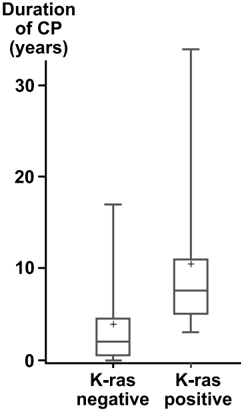
Molecular analyses have demonstrated mutations in the K-ras gene at codon 12 in the majority of pancreatic ductal adenocarcinomas (PDACs). In order to determine whether the K-ras mutation rate increases parallel to the grade of dysplasia in duct lesions, we performed a meta-analysis of the studies published between 1988 and 2003 that provide information on K-ras mutations in hyperplastic and dysplastic duct lesions in the pancreas. The described duct lesions were reclassified according to the nomenclature for pancreatic intraepithelial neoplasia (PanIN), and the molecular methods for detecting K-ras were reviewed. In PanIN lesions from pancreata of patients with PDAC, there was a stepwise increase in K-ras mutations that correlated with the grade of dysplasia of the PanIN lesion. K-ras mutations were found in 36%, 44%, and 87% of PanIN-1a, 1b, and 2-3 lesions, respectively (trend statistic P <.001). Mutation-enriched polymerase chain reaction (PCR) resulted in higher rates of K-ras mutations in PanIN than plain PCR did. The incidence of K-ras mutations in PanIN lesions associated with chronic pancreatitis (CP) or normal pancreas was low (around 10%). In CP, K-ras mutations were only found after a disease duration of 3 years. The correlation of the incidence of K-ras mutations with the grade of dysplasia in PanIN and the occurrence of these mutations in CP with a duration of more than 3 years underlines the importance of this genetic change for the development of PDAC.
Overview
The claims and statistics of this paper haven’t been checked yet.
Run the check — free, no account needed. It reads the open-access text and checks the sources it cites.
Integrity signals
Registry
Cites
Statistics
Figures
Verification
Claims the paper makes
The claims and statistics of this paper haven’t been checked yet.
Run the check — free, no account needed. It reads the open-access text and checks the sources it cites.
Claims other papers make about this one
Each is checked against this paper’s own text: does it say what the citing paper says it does?
The source backs part of the claim, not all of it — or backs it for a different population, condition or comparison.
In the citing paper
“KRAS mutations were found in 10% of CP lesions and 44% of PDAC lesions, with an increase in frequency with the progression of PanIN grade [102].”
From Significance of TP53, CDKN2A, SMAD4 and KRAS in Pancreatic Cancer (2024) · cites this paper as [102]
Experimental — accuracy not yet measuredIn the citing paper
“KRAS mutations are often early events in tumourigenesis in lung and pancreatic cancers [41, 42].”
From Drugging KRAS: Current perspectives and state-of-art review (2022) · cites this paper as [42]
In the citing paper
“KRAS mutation is readily detectable in 25% and 38% of PanIN-1A and PanIN-1B, respectively (55).”
From KRAS mutation in pancreatic cancer (2021) · cites this paper as [55]
Self-check
Percentages, sums and reported differences re-computed from the paper’s own numbers.
The self-check needs the paper’s full text.
Citations
Cites
Probable Inference, the Law of Succession, and Statistical Inference
Wilson, E. B. (1927) · Journal of the American Statistical Association · doi:10.1080/01621459.1927.10502953 · Cited by 4,476 · cited 1×
“The confidence interval estimates for the proportion of K-ras–positive samples for each individual study and for the overall estimates were calculated using Wilson’s method [22].”
MethodPreinvasive and invasive ductal pancreatic cancer and its early detection in the mouse
Hingorani, S. R., Petricoin, E. F., Maitra, A., Rajapakse, V., King, C., Jacobetz, M. A., Ross, S., Conrads, T. P., Veenstra, T. D., Hitt, B. A., et al. (2003) · Cancer Cell · doi:10.1016/s1535-6108(03)00309-x · Cited by 2,471
Creation of human tumour cells with defined genetic elements
Hahn, W. C., Counter, C. M., Lundberg, A. S., Beijersbergen, R. L., Brooks, M. W., & Weinberg, R. A. (1999) · Nature · doi:10.1038/22780 · Cited by 2,345
Hruban, R. H., Adsay, N. V., Albores–Saavedra, J., Compton, C., Garrett, E. S., Goodman, S. N., Kern, S. E., Klimstra, D. S., Klöppel, G., Longnecker, D. S., et al. (2001) · The American Journal of Surgical Pathology · doi:10.1097/00000478-200105000-00003 · Cited by 1,126 · cited 2×
“When K-ras mutations were also found in in situ components of PDAC and PDAC-associated duct lesions [7–9], they were thought to be potential tumor precursors [10], and it was hoped that mutated K-ras might serve as a marker of the developing PDAC [11].”
BackgroundSelf-citationHruban, R. H., van Mansfeld, A. D. M., Offerhaus, G. J. A., van Weering, D. H. J., Allison, D. C., Goodman, S. N., Kensler, T. W., Bose, K., Cameron, J. L., & Bos, J. L. (1993) · PubMed Central · Cited by 650
Wilentz, R. E., Iacobuzio–Donahue, C. A., Argani, P., McCarthy, D. M., Parsons, J. L., Yeo, C. J., Kern, S. E., & Hruban, R. H. (2000) · PubMed · Cited by 591
Systematic Reviews: Checklists for review articles
Oxman, A. D. (1994) · BMJ · doi:10.1136/bmj.309.6955.648 · Cited by 480
p16 and K-ras gene mutations in the intraductal precursors of human pancreatic adenocarcinoma.
Moskaluk, C. A., Hruban, R. H., & Kern, S. E. (1997) · PubMed · Cited by 429
Genetic progression in the pancreatic ducts
Hruban, R. H., Wilentz, R. E., & Kern, S. E. (2000) · The American Journal of Pathology · doi:10.1016/s0002-9440(10)65054-7 · Cited by 373 · cited 1×
“evolution of PanINs [38].”
Telomere Shortening Is Nearly Universal in Pancreatic Intraepithelial Neoplasia
van Heek, N. T., Meeker, A. K., Kern, S. E., Yeo, C. J., Lillemoe, K. D., Cameron, J. L., Offerhaus, G. J. A., Hicks, J. L., Wilentz, R. E., Goggins, M. G., et al. (2002) · The American Journal of Pathology · doi:10.1016/s0002-9440(10)64432-x · Cited by 363 · cited 1×
“lesions of all grades [30] and were thought to predispose”
BackgroundYanagisawa, A., Ohtake, K., Ohashi, K., Hori, M., Kitagawa, T., Sugano, H., & Kato, Y. (1993) · PubMed · Cited by 354
Genetic profile of 22 pancreatic carcinoma cell lines: Analysis of K-ras, p53, p16 and DPC4/Smad4
Moore, P. S., Sipos, B., Orlandini, S., Sorio, C., Real, F. X., Lemoine, N. R., Gress, T., Bassi, C., Klöppel, G., Kalthoff, H., et al. (2001) · Virchows Archiv · doi:10.1007/s004280100474 · Cited by 329 · cited 1×
“Based on these findings [24,33–37], a progression model”
ResultSelf-citationAndea, A. A., Sarkar, F. H., & Adsay, V. N. (2003) · Modern Pathology · doi:10.1097/01.mp.0000087422.24733.62 · Cited by 290 · cited 1×
“Whether the same factors may also play a role in the induction of PanINs is not known, but because PanIN-1 lesions may occur early in life [13,45], it is possible that such K-ras–positive PanIN-1 lesions may exist for a long time.”
BackgroundTada, M., Ohashi, M., Shiratori, Y., Okudaira, T., Komatsu, Y., Kawabe, T., Yoshida, H., Machinami, R., Kishi, K., & Omata, M. (1996) · Gastroenterology · doi:10.1053/gast.1996.v110.pm8536861 · Cited by 287 · cited 2×
“Do K-ras mutations have a role as a diagnostic marker of PDAC? Considering the methodological ambiguities and the demonstration of K-ras positivity not only in CP but also in the disease-free pancreas [12,13,26,27], the detection of a K-ras mutation in a patient does not establish the diagnosis of PDAC.”
BackgroundIacobuzio–Donahue, C. A., Klimstra, D. S., Adsay, V. N., Wilentz, R. E., Argani, P., Sohn, T. A., Yeo, C. J., Cameron, J. L., Kern, S. E., & Hruban, R. H. (2000) · American Journal Of Pathology · doi:10.1016/s0002-9440(10)64589-0 · Cited by 256 · cited 1×
“Based on these findings [24,33–37], a progression model”
ResultKi-ras oncogene activation in preinvasive pancreatic cancer
Lemoine, N. R., Jain, S., Hughes, C. M., Staddon, S. L., Maillet, B., Hall, P. A., & Klöppel, G. (1992) · Gastroenterology · doi:10.1016/0016-5085(92)91805-e · Cited by 247 · cited 3×
“(1992) [7] PDAC PanIN-1b PCR 0/9 0 PDAC PanIN-3 PCR 5/6 83 Motojima et al.”
BackgroundInfluentialSelf-citationKobayashi, M., Ikeda, K., Saitoh, S., Suzuki, F., Tsubota, A., Suzuki, Y., Arase, Y., Murashima, N., Chayama, K., & Kumada, H. (2000) · Cancer · doi:10.1002/1097-0142(20000601)88:11 · Cited by 245
Self-citationLuettges, J., Galehdari, H., Bröcker, V., Schwarte‐Waldhoff, I., Henne‐Bruns, D., Klöppel, G., Schmiegel, W., & Hahn, S. A. (2001) · American Journal Of Pathology · doi:10.1016/s0002-9440(10)64123-5 · Cited by 241 · cited 2×
“SMAD4 with increasing PanIN grades [17,29].”
ResultSelf-citationBRCA2 Is Inactivated Late in the Development of Pancreatic Intraepithelial Neoplasia
Goggins, M., Hruban, R. H., & Kern, S. E. (2000) · American Journal Of Pathology · doi:10.1016/s0002-9440(10)65047-x · Cited by 213 · cited 1×
“were found to be inactivated in PanIN-3 lesions [31,32].”
BackgroundAggressive cutaneous malignancies following cardiothoracic transplantation
Veness, M., Quinn, D. I., Ong, C. S., KEOGH, A. M., Macdonald, P. S., Cooper, S. G., & Morgan, G. W. (1999) · Cancer · doi:10.1002/(sici)1097-0142(19990415)85:8 · Cited by 213
Self-citationSynergistic effect of alcohol drinking and smoking on in vivo acetaldehyde concentration in saliva
Salaspuro, V., & Salaspuro, M. P. (2004) · International Journal of Cancer · doi:10.1002/ijc.20293 · Cited by 206 · cited 1×
“Recent findings may provide a clue, at least in alcoholic CP: ethanol has a dramatic synergistic effect with smoking on the formation of acetaldehyde [46].”
BackgroundZ’graggen, K., Rivera, J. A., Compton, C. C., Pins, M., Werner, J., Castillo, C. F. F.-D., Rattner, D. W., Lewandrowski, K. B., Rustgi, A. K., & Warshaw, A. L. (1997) · Annals of Surgery · doi:10.1097/00000658-199710000-00010 · Cited by 200 · cited 1×
“(1997) [57] PDAC PanIN-1a PCR 3/11 27 Matsubayashi et al.”
BackgroundExpression of the tumor suppressor gene Maspin in human pancreatic cancers.
Maass, N., Hojo, T., Ueding, M., Lüttges, J., Klöppel, G., Jonat, W., & Nagasaki, K. (2001) · PubMed · Cited by 167
Self-citationGenetic Progression and Divergence in Pancreatic Carcinoma
Yamano, M., Fujii, H., Takagaki, T., Kadowaki, N., Watanabe, H., & Shirai, T. (2000) · American Journal Of Pathology · doi:10.1016/s0002-9440(10)65083-3 · Cited by 160 · cited 1×
“SMAD4 with increasing PanIN grades [17,29].”
Ellis, I. O., Lerch, M. M., & Whitcomb, D. C. (2001) · Pancreatology · doi:10.1159/000055840 · Cited by 154 · cited 1×
“Under these conditions as well as in surveillance programs for patients with hereditary pancreatitis and familial pancreatic carcinoma [28], K-ras analysis should be recommended.”
BackgroundMaire, F., Micard, S., Hammel, P. R., Voitot, H., Lévy, P., Cugnenc, P., Ruszniewski, P. B., & Laurent‐Puig, P. (2002) · British Journal of Cancer · doi:10.1038/sj.bjc.6600475 · Cited by 142 · cited 1×
“When K-ras mutations were also found in in situ components of PDAC and PDAC-associated duct lesions [7–9], they were thought to be potential tumor precursors [10], and it was hoped that mutated K-ras might serve as a marker of the developing PDAC [11].”
BackgroundKlein, W. M., Hruban, R. H., Klein–Szanto, A. J., & Wilentz, R. E. (2002) · Modern Pathology · doi:10.1038/modpathol.3880544 · Cited by 131 · cited 1×
“How, precisely, the activated K-ras alters the cell machinery toward malignancy is not yet clear, but recent studies suggest that K-ras stimulates cell proliferation rather than inhibits apoptosis [36,42].”
BackgroundLüttges, J., Reinecke-Lüthge, A., Möllmann, B., Menke, M. A. O. H., Clemens, A., Klimpfinger, M., Sipos, B., & Klöppel, G. (1999) · Virchows Archiv · doi:10.1007/s004280050428 · Cited by 127 · cited 4×
“Discussion Mutations in the K-ras oncogene are rare in the normal disease-free pancreas [13].”
BackgroundInfluentialSelf-citationHeinmöller, E., Dietmaier, W., Zirngibl, H., Heinmöller, P., Scaringe, W., Jauch, K.-W., Hofstädter, F., & Rüschoff, J. (2000) · The American Journal of Pathology · doi:10.1016/s0002-9440(10)64520-8 · Cited by 121 · cited 1×
“Based on these findings [24,33–37], a progression model”
ResultVanderVeen, L. A., Hashim, M. F., Shyr, Y., & Marnett, L. J. (2003) · Proceedings of the National Academy of Sciences · doi:10.1073/pnas.2332176100 · Cited by 120 · cited 1×
“Acetaldehyde in turn generates reactive oxygen and nitrogen species [47], resulting in reactive aldehydes, which are known to induce DNA adducts and mutations [48].”
BackgroundActions of heparin that may affect the malignant process
Engelberg, H. (1999) · Cancer · doi:10.1002/(sici)1097-0142(19990115)85:2 · Cited by 119
DNA repair in resistance to alkylating anticancer drugs
Kaina, B., & Christmann, M. (2002) · International Journal of Clinical Pharmacology and Therapeutics · doi:10.5414/cpp40354 · Cited by 117 · cited 1×
“scribed in PDAC [52].”
Rosty, C., Geradts, J., Sato, N., Wilentz, R. E., Roberts, H., Riall, T. S., Cameron, J. L., Yeo, C. J., Hruban, R. H., & Goggins, M. (2003) · The American Journal of Surgical Pathology · doi:10.1097/00000478-200312000-00001 · Cited by 116 · cited 1×
“dysplasia of the PanINs [17–19].”
K-ras mutation in focal proliferative lesions of human pancreas.
Terhune, P. G., Phifer, D. M., Tosteson, T. D., & Longnecker, D. S. (1998) · PubMed · Cited by 114
Motojima, K., Urano, T., Nagata, Y., Shiku, H., Tsurifune, T., & Kanematsu, T. (1993) · Annals of Surgery · doi:10.1097/00000658-199302000-00007 · Cited by 112
Gene expression profiles of microdissected pancreatic ductal adenocarcinoma
Gr�tzmann, R., Foerder, M., Alldinger, I., Staub, E., Br�mmendorf, T., R�pcke, S., Li, X., Kristiansen, G., Jesnowski, R., Sipos, B., et al. (2003) · Archiv für Pathologische Anatomie und Physiologie und für Klinische Medicin · doi:10.1007/s00428-003-0884-1 · Cited by 108 · cited 1×
“cation of a number of PDAC-associated genes [4,5].”
BackgroundSelf-citationComparison of DNA adduct levels associated with oxidative stress in human pancreas
Kadlubar, F. F., Anderson, K. E., Häußermann, S., Lang, N. P., Barone, G. W., Thompson, P. A., MacLeod, S. L., Chou, M. W., Mikhailova, M. V., Plastaras, J. P., et al. (1998) · Mutation research. Fundamental and molecular mechanisms of mutagenesis · doi:10.1016/s0027-5107(98)00129-8 · Cited by 101 · cited 1×
“Acetaldehyde in turn generates reactive oxygen and nitrogen species [47], resulting in reactive aldehydes, which are known to induce DNA adducts and mutations [48].”
BackgroundReal, F. X. (2003) · Gastroenterology · doi:10.1016/s0016-5085(03)00389-5 · Cited by 96
Expression of human telomerase subunits in ovarian malignant, borderline and benign tumors
Kyo, S., Kanaya, T., Takakura, M., Tanaka, M., Yamashita, A., Inoue, H., & Inoue, M. (1999) · International Journal of Cancer · doi:10.1002/(sici)1097-0215(19990315)80:6 · Cited by 90
The role ofras mutation in pancreatic cancer, precancerous lesions, and chronic pancreatitis
Tabata, T., Fujimori, T., Maeda, S., Yamamoto, M., & Saitoh, Y. (1993) · International Journal of Pancreatology · doi:10.1007/bf02784932 · Cited by 84
Analysis of K-ras oncogene mutations in chronic pancreatitis with ductal hyperplasia
Rivera, J. A., Rall, C., Graeme‐Cook, F., Castillo, C. F. F.-D., Shu, P., Lakey, N. D., Tepper, R., Rattner, D. W., Warshaw, A. L., & Rustgi, A. K. (1997) · Surgery · doi:10.1016/s0039-6060(97)90181-1 · Cited by 82 · cited 1×
“(1997) [62] CP PanIN-1a PCR 2/11 18 Mulligan et al.”
Genetic abnormalities in pancreatic cancer.
Moore, P. S., Beghelli, S., Zamboni, G., & Scarpa, A. (2003) · Molecular Cancer · doi:10.1186/1476-4598-2-7 · Cited by 80 · cited 1×
“Their frequency does not seem to exceed 13% [15], whereas it reaches 80% in PDAC [24].”
BackgroundEpidemiologic and etiologic factors of pancreatic cancer
Lowenfels, A. B., & Maisonneuve, P. (2002) · Hematology/Oncology Clinics of North America · doi:10.1016/s0889-8588(01)00003-x · Cited by 79 · cited 1×
“recognition of PDAC [2,3].”
Self-citationPorta, M. S., Malats, N., Guarner, L., Carrato, A., Rifà, J., Salas, A., Corominas, J. M., Andreu, M. G., & Real, F. X. (1999) · Journal of Epidemiology & Community Health · doi:10.1136/jech.53.11.702 · Cited by 77
Agoff, S. N., Crispin, D. A., Bronner, M. P., Dail, D. H., Hawes, S. E., & Haggitt, R. C. (2001) · Modern Pathology · doi:10.1038/modpathol.3880270 · Cited by 73
K-Ras Mutations and Benign Pancreatic Disease
Löhr, M. J., Maisonneuve, P., & Lowenfels, A. B. (2000) · International Journal of Gastrointestinal Cancer · doi:10.1385/ijgc:27:2:093 · Cited by 63 · cited 4×
“Their frequency does not seem to exceed 13% [15], whereas it reaches 80% in PDAC [24].”
BackgroundMethodInfluentialSelf-citationAlguacil, J., Porta, M. S., Kauppinen, T. P., Malats, N., Kogevinas, M., Carrato, A., & for the PANKRAS II Study Group (2003) · International Journal of Cancer · doi:10.1002/ijc.11431 · Cited by 61 · cited 1×
“Analyzing patients with PDAC and occupational risks, these G–A transitions could be associated with polycyclic aromatic hydrocarbons and gasoline engine exhausts [50].”
Backgroundp53 and K-ras mutations in pancreatic juice samples from patients with chronic pancreatitis
Löhr, M. J., Müller, P., Móra, J., Brinkmann, B., Ostwald, C., Farré, A., Lluı́s, F., Adam, U., Stubbe, J., Plath, F., et al. (2001) · Gastrointestinal Endoscopy · doi:10.1067/mge.2001.112711 · Cited by 49
Self-citationK-ras mutations and allelic loss at 5q and 18q in the development of human pancreatic cancers
Sugio, K., Molberg, K. H., Albores‐Saavedra, J., Virmani, A. K., Kishimoto, Y., & Gazdar, A. F. (1997) · International Journal of Gastrointestinal Cancer · doi:10.1007/bf02821606 · Cited by 41 · cited 1×
“(1997) [56] PDAC PanIN-3 PCR 17/18 94 PDAC PanIN-2 PCR 19/23 83 PDAC PanIN-1a PCR 5/21 24 Z’graggen et al.”
Klöppel, G., & Lüttges, J. (2004) · Current Gastroenterology Reports · doi:10.1007/s11894-004-0037-y · Cited by 34 · cited 1×
“fatal for a few [53].”
Self-citationWhat Is the True Rate of K-ras Mutation in Carcinoma of the Pancreas?
Longnecker, D. S., & Terhune, P. G. (1998) · Pancreas · doi:10.1097/00006676-199811000-00001 · Cited by 34 · cited 1×
“Whether the results obtained with ME-PCR reflects the K-ras mutation status better than plain PCR has been widely debated during recent years [25].”
ResultImmortalized bovine pancreatic duct cells become tumorigenic after transfection with mutant k-ras
Löhr, M. J., Müller, P., Zauner, I., Schmidt, C., Trautmann, B., Thévenod, F., Capellá, G., Farré, A., Liebe, S., & Jesnowski, R. (2001) · Archiv für Pathologische Anatomie und Physiologie und für Klinische Medicin · doi:10.1007/s004280100397 · Cited by 29 · cited 1×
“nude mice, PDACs were formed [39].”
Self-citationLüttges, J., & Klöppel, G. (2001) · Digestive Diseases · doi:10.1159/000050649 · Cited by 28 · cited 1×
“were classified [10,21] by two independent pathologists”
Self-citationMultiple K‐ras Mutations in Hyperplasia and Carcinoma in Cases of Human Pancreatic Carcinoma
Matsubayashi, H., Watanabe, H., Yamaguchi, T., Ajioka, Y., Nishikura, K., Iwafuchi, M., Yamano, M., Kijima, H., & Saito, T. (1999) · Japanese Journal of Cancer Research · doi:10.1111/j.1349-7006.1999.tb00825.x · Cited by 27 · cited 2×
“(1999) [58] Normal PanIN-1a Me-PCR 9/51 18 Terhune et al.”
Genetic markers: The key to early diagnosis and improved survival in pancreatic cancer?
Urrutia, R. A., & Ep, D. (1996) · Gastroenterology · doi:10.1053/gast.1996.v110.agast960306 · Cited by 26
Lees, N. P. (2004) · Carcinogenesis · doi:10.1093/carcin/bgh111 · Cited by 24 · cited 1×
“rectal adenomas [51].”
Use of DNA arrays/microarrays in pancreatic research
Buchholz, M., Boeck, W., Fensterer, H., Müller, F., Wenger, C., Michl, P., Adler, G., & Gress, T. M. (2001) · Pancreatology · doi:10.1159/000055867 · Cited by 18
The role of p21 in pancreatic neoplasia and chronic pancreatitis
Mulligan, N. J., Yang, S., Andry, C., Klein, M., & O’Brien, M. J. (1999) · Human Pathology · doi:10.1016/s0046-8177(99)90082-5 · Cited by 16 · cited 2×
“(1999) [60] PDAC PanIN-3 Me-PCR 3/4 75 Lemoine et al.”
Song, M., Nio, Y., Sato, Y., Tamura, K., & Furuse, K. (1996) · International Journal of Pancreatology · doi:10.1007/bf02825506 · Cited by 15 · cited 2×
“(1996) [61] Normal PanIN-1a PCR 1/3 33 Tada et al.”
BackgroundLüttges, J., Neumann, S., Jesnowski, R., Borries, V., Löhr, M. J., & Klöppel, G. (2003) · Pancreas · doi:10.1097/00006676-200310000-00021 · Cited by 14
Self-citationDistribution of genetic variants in preneoplastic areas of colorectal tumours
Lindforss, U., Papadogiannakis, N., Zetterquist, H., Lindberg, G., & Olivecrona, H. (2003) · European Journal of Surgical Oncology · doi:10.1016/s0748-7983(03)00075-1 · Cited by 10 · cited 1×
“Similar results were obtained in extrapancreatic adenocarcinomas, which were also found to have an elevated K-ras mutation rate [14].”
ResultSystematic review and meta‐analysis in anatomic pathology
Heatley, M. K. (2000) · Histopathology · doi:10.1046/j.1365-2559.2000.00943.x · Cited by 4
Cited by
Sorted by citations
Pancreatic cancer: A review of clinical diagnosis, epidemiology, treatment and outcomes
McGuigan, A. J., Kelly, P. J., Turkington, R. C., Jones, C. A., Coleman, H. G., & McCain, R. S. (2018) · World Journal of Gastroenterology · doi:10.3748/wjg.v24.i43.4846 · Cited by 1,934
Basturk, O., Hong, S.-M., Wood, L. D., Adsay, N. V., Albores-Saavedra, J., Biankin, A. V., Brosens, L. A. A., Fukushima, N., Goggins, M., Hruban, R. H., et al. (2015) · American Journal of Surgical Pathology · doi:10.1097/pas.0000000000000533 · Cited by 864
Self-citationRole of oncogenic KRAS in the diagnosis, prognosis and treatment of pancreatic cancer
Buscail, L., Bournet, B., & Cordelier, P. (2020) · Nature Reviews Gastroenterology & Hepatology · doi:10.1038/s41575-019-0245-4 · Cited by 721
Presence of Somatic Mutations in Most Early-Stage Pancreatic Intraepithelial Neoplasia
Kanda, M., Matthaei, H., Wu, J., Hong, S., Yu, J., Borges, M., Hruban, R. H., Maitra, A., Kinzler, K., Vogelstein, B., et al. (2012) · Gastroenterology · doi:10.1053/j.gastro.2011.12.042 · Cited by 741
Pancreatic Ductal Adenocarcinoma: Current and Evolving Therapies
Adamska, A., Domenichini, A., & Falasca, M. (2017) · International Journal of Molecular Sciences · doi:10.3390/ijms18071338 · Cited by 632
“The most frequent among them are KRAS alterations (85%), which mainly consist of substitution of G12, resulting in a constitutively active protein [141].”
Background
Metadata
- Authors
- Löhr, M., Klöppel, G., Maisonneuve, P., Lowenfels, A. B., & Lüttges, J.
- Affiliations
- Heidelberg University (DE)
- European Institute of Oncology (IT)
- New York Medical College (US)
- Corresponding author
- Löhr, Matthias
- Venue
- Neoplasia
- Publisher
- Elsevier BV
- Published
- 2005-01
- Volume
- 7
- Issue
- 1
- Pages
- 17-23
- ISSN
- 1476-5586 (ISSN-L)
- PMC
- PMC1490318
- OpenAlex
- W2108100098
- Cited by
- 343
- References
- 66
- Citations by year
- 2026: 6 · 2025: 7 · 2024: 15 · 2023: 15 · 2022: 16 · 2021: 16 · 2020: 17 · 2019: 13 · 2018: 24 · 2017: 22 · 2016: 15 · 2015: 18 · 2014: 26 · 2013: 21 · 2012: 16
- FWCI
- 1.51
- Type
- journal article
- Language
- en
- Open access
- gold
- doi.org
- Licence
- Locations
- Neoplasia (publishedVersion, cc-by-nc-nd)
- PubMed Central (publishedVersion)
- PubMed (publishedVersion)
- DOAJ (DOAJ: Directory of Open Access Journals) (submittedVersion, cc-by-sa)
- Funders
- Deutsche Forschungsgemeinschaft
- Deutsche Krebshilfe
- Topics
- Health Sciences › Medicine › Oncology › Pancreatic and Hepatic Oncology Research
- Health Sciences › Medicine › Surgery › Pancreatitis Pathology and Treatment
- Life Sciences › Biochemistry, Genetics and Molecular Biology › Cancer Research › Cancer Genomics and Diagnostics
- Keywords
- KRAS mutation, pancreatic ductal adenocarcinoma, pancreatic intraepithelial neoplasia, chronic pancreatitis, pancreatic dysplasia, disease duration
- MeSH terms
- Adenocarcinoma, Humans, Mutation, Pancreatic Ducts, Pancreatic Neoplasms, Pancreatitis, Genes, ras, Carcinoma, Pancreatic Ductal
About these checks
Registry, retraction, Cites and statistics results are computed, not judged, with one exception: a printed reference that no index lists is read once by a model before it counts as a citation error. Claims are extracted by a model and kept only when their quote appears verbatim in the text; each cited source is then checked, with a model’s help, for whether it says what the claim relies on. Those verdicts can be wrong — read the claim’s quote and the cited source before relying on one.
Statistics and arithmetic are recomputed, not judged.
Confidence bands are shown only for fields calibrated on our annotated test set. None is calibrated yet, so no band is shown.
What counts as a claim ›How we measure confidence ›How we check this ›
Are you an author, or do you see a problem with this page? Request a review
