

Public Narrative, Collective Action, and Power
Open accessThe DOI matches its Crossref record; 11 of the 12 references it cites were found in a registry or an index.
Abstract
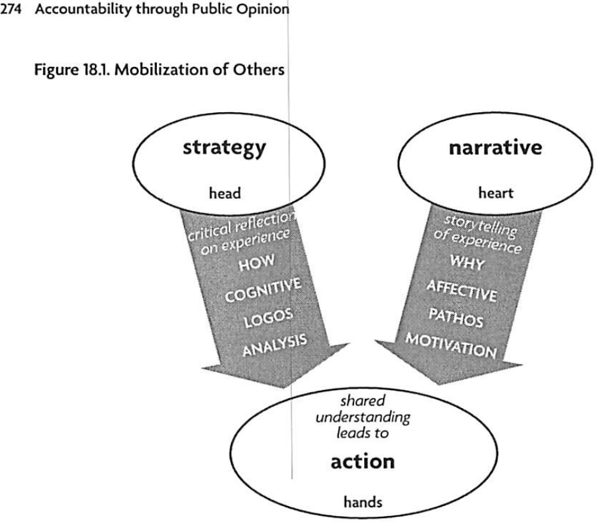
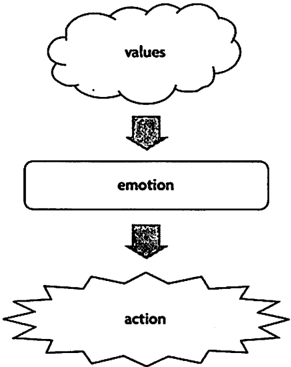
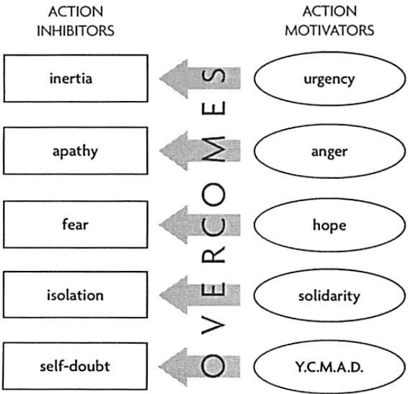
Focuses on public narrative, defined as a leadership practice of translating values into action, based on the fact that values are experienced emotionally. Narrative is the discursive means people use to access values that equip them with the courage to make choices under conditions of uncertainty. Leadership requires understanding that while some emotions can inhibit mindful action, others can facilitate it. Leaders engage others in purposeful action by mobilizing those feelings that facilitate action to trump feelings that inhibit action. Organizations that lack a story lack an identity, a culture, core values thatcan be articulated and drawn on to motivate. Leaders learn to tell the story of their organization by identifying the choice points of the organization's journey, recounting experiences that communicate the values embedded in the work of the organization. Public narrative, understood as a leadership art, is an invaluable resource to stem the tides of apathy, alienation, cynicism, and defeatism.
Overview
The claims and statistics of this paper haven’t been checked yet.
Free: it reads the open-access text and checks the first 5 claims that cite a source we can check. Create a free account to check every claim.
Integrity signals
Registry
Cites
Statistics
Figures
Verification
Claims the paper makes
The claims and statistics of this paper haven’t been checked yet.
Free: it reads the open-access text and checks the first 5 claims that cite a source we can check. Create a free account to check every claim.
Claims other papers make about this one
Each is checked against this paper’s own text: does it say what the citing paper says it does?
The source backs part of the claim, not all of it — or backs it for a different population, condition or comparison.
In the citing paper
“In the case of the outside, more confrontational track, there is a need to build popular interest and support. In this case, stories are an important campaigning tool since they are key in mobilizing large numbers of people behind an issue (Da Costa, 2014) and encouraging them to take action that places pressure on the decisionmakers.”
From Storytelling and evidence-based policy: lessons from the grey literature (2017) · cites this paper as Ganz, 2011
Experimental — accuracy not yet measuredThe cited source says what the claim attributes to it.
In the citing paper
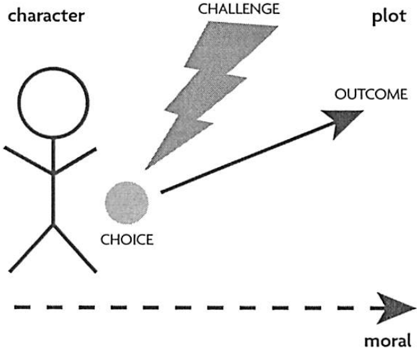
“According to Ganz (2011), the plot of an effective story is structured around the elements of challenge, choice, and outcome: a character is moving towards some sort of goal, but is faced with a challenge. To move forward the character must make a choice, which leads to an outcome.”
From Storytelling and evidence-based policy: lessons from the grey literature (2017) · cites this paper as Ganz, 2011
Self-check
Percentages, sums and reported differences re-computed from the paper’s own numbers.
The self-check needs the paper’s full text.
Citations
Cites
Positive psychology: An introduction.
Seligman, M. E. P., & Csikszentmihalyi, M. (2000) · American Psychologist · doi:10.1037/0003-066x.55.1.5 · Cited by 11,351
Sources of the self: the making of the modern identity
(1990) · Choice Reviews Online · doi:10.5860/choice.27-3278 · Cited by 7,136
Episodic memory: from mind to brain
Tulving, E. (2002) · Annual Review of Psychology · doi:10.1146/annurev.psych.53.100901.135114 · Cited by 4,950
Sources of the Self: The Making of the Modern Identity
Hamlyn, D. W., & Taylor, C. (1991) · British Journal of Educational Studies · doi:10.2307/3120882 · Cited by 3,723
Upheavals of thought: the intelligence of emotions
(2002) · Choice Reviews Online · doi:10.5860/choice.39-4883 · Cited by 3,163
Narrative and the Cultural Psychology of Identity
Hammack, P. L. (2008) · Personality and Social Psychology Review · doi:10.1177/1088868308316892 · Cited by 923
The sentimental citizen: emotion in democratic politics
(2003) · Choice Reviews Online · doi:10.5860/choice.40-3068 · Cited by 503 · cited 1×
“Explainingthis relationship, political scientistGeorgeMarcus points to two neurophysiologic systems—surveillance and disposition (Marcus 2002).”
BackgroundNarrativity, Narrative Identity, and Social Action: Rethinking English Working-Class Formation
Somers, M. R. (1992) · Social Science History · doi:10.1017/s0145553200016679 · Cited by 398 · cited 1×
“Socialscientistsoften describe a "story of us"as a collective identity (Somers 1992,1994).”
BackgroundNarrativity, Narrative Identity, and Social Action: Rethinking English Working-Class Formation
Somers, M. R. (1992) · Social Science History · doi:10.2307/1171314 · Cited by 231
The cure at Troy : a version of Sophocles' Philoctetes
Heaney, S., & Sophocles (1991) · Farrar, Straus and Giroux eBooks · Cited by 81
Cited by
Historical Trauma as Public Narrative: A Conceptual Review of How History Impacts Present-Day Health
Mohatt, N. V., Thompson, A. B., Thai, N. D., & Tebes, J. K. (2014) · Social Science & Medicine · doi:10.1016/j.socscimed.2014.01.043 · Cited by 447
“Public narratives differ from personal narratives in as much as they are expressed within public discourse (Ganz, 2011), are indicative of intersubjective understanding (O’Donnell & Tharp, 2012), and are common among a group of people (Rappaport, 2000).”
BackgroundStorytelling and evidence-based policy: lessons from the grey literature
Davidson, B. (2017) · Palgrave Communications · doi:10.1057/palcomms.2017.93 · Cited by 186
Community Power and Empowerment
Christens, B. D. (2019) · doi:10.1093/oso/9780190605582.001.0001 · Cited by 174
Honoring Trans and Gender-Expansive Students in Music Education
Garrett, M. L., & Palkki, J. (2021) · doi:10.1093/oso/9780197506592.001.0001 · Cited by 90
Ganz, M., & McKenna, E. (2018) · Wiley eBooks · doi:10.1002/9781119168577.ch10 · Cited by 75
Self-citationHoward, C., MacNeill, A. J., Hughes, F., Alqodmani, L., Charlesworth, K., Almeida, R. D. A., Harris, R. D., Jochum, B., Maibach, E. W., Maki, L., et al. (2023) · The Lancet Planetary Health · doi:10.1016/s2542-5196(23)00022-0 · Cited by 235
Imagining transformation: Change agent narratives of sustainable futures
Riedy, C., & Waddock, S. A. (2022) · Futures · doi:10.1016/j.futures.2022.103010 · Cited by 62
Doerfel, M. L., & Taylor, M. (2017) · Journal of Communication · doi:10.1111/jcom.12340 · Cited by 49
Framing Strategies to Avoid Mother-Blame in Communicating the Origins of Chronic Disease
Winett, L. B., Wulf, A. B., & Wallack, L. (2016) · American Journal of Public Health · doi:10.2105/ajph.2016.303239 · Cited by 46
Transdisciplinary weed research: new leverage on challenging weed problems?
Jordan, N., Schut, M., Graham, S., Barney, J. N., Childs, D. Z., Christensen, S., Cousens, R. D., Davis, A. S., Eizenberg, H., Ervin, D. E., et al. (2016) · Weed Research · doi:10.1111/wre.12219 · Cited by 42
“…of purposive disciplines, such as philosophical dialogue (Eigenbrode et al., 2007), foresight exercises (Quay, 2010), ‘public narrative’ techniques (Ganz, 2011; Paschen & Ison, 2014) and use of various artistic disciplines to develop provocative scenarios of ecosystem development (Selin, 2014).”
BackgroundGillig, T. K., Miller, L. C., & Cox, C. M. (2017) · Journal of Homosexuality · doi:10.1080/00918369.2017.1411693 · Cited by 39
“Finally, the social entrepreneurship course represents an exercise in public narrative, that is, articulating a “story of self” to promote social change or advocacy goals (Ganz, 2011).”
BackgroundBrown, J., Luderowski, A., Namusisi-Riley, J., Moore-Shelley, I., Bolton, M., & Bolton, D. (2020) · International Journal of Environmental Research and Public Health · doi:10.3390/ijerph17082795 · Cited by 39
The Copenhagen Experiment: testing the effectiveness of creative vs. conventional forms of activism
Duncombe, S., & Harrebye, S. (2021) · Social movement studies · doi:10.1080/14742837.2021.1967125 · Cited by 46
“…clear that the simple presentation of facts falls upon deaf ears, and if facts are to be heard and heeded, they must be made into engaging stories and compelling images that capture attention and resonate with the ways people make sense of their world (Ganz, 2011; Lakoff, 1996; Westen, 2007).”
BackgroundHabits of courage: Reconceptualizing risk in social movement organizing
Oyakawa, M., McKenna, E., & Han, H. C. (2020) · Journal of Community Psychology · doi:10.1002/jcop.22355 · Cited by 26
Solidarity in Climate/Immigrant Justice Direct Action: Lessons from Movements in the US South
Black, S. T., Milligan, R., & Heynen, N. (2016) · International Journal of Urban and Regional Research · doi:10.1111/1468-2427.12341 · Cited by 33
“In an organizing context, strategic narratives are the stories activ ists tell about their work in public in order to legitimize claims and actions, motivate an audience and build the necessary political power to be effective in specific contexts (Ganz, 2011).”
BackgroundTrapped in Resistance: Collective Struggle through Welfare Fraud in Israel
Regev‐Messalem, S. (2014) · Law & Society Review · doi:10.1111/lasr.12110 · Cited by 27
Performing and unperforming entrepreneurial success: Confessions of a female role model
Marks, S. (2021) · Journal of Small Business Management · doi:10.1080/00472778.2020.1865539 · Cited by 28
“Ganz’s notion of public narrative (Ganz, 2008, 2009, 2011),2 based on three entwined stories of “self, us and now,” is particularly useful for understanding how role model narratives can “inspire action” (Ganz, 2008, p. 1) in others.”
BackgroundMahoney, A. D. (2017) · Journal of Leadership Studies · doi:10.1002/jls.21546 · Cited by 25
The Glasgow miracle? Storytelling, violence reduction and public policy
Fraser, A., & Gillon, F. (2023) · Theoretical Criminology · doi:10.1177/13624806231208432 · Cited by 50
“The public narrative that inspired action (Ganz, 2011) prompted changes in policing, education and early years, with a range of participants describing their storytelling as ‘ powerful ’ , ‘ imposing ’ , ‘ intimidating ’ , ‘ forceful ’ and ‘ credible ’ , in fl uenced by the position of authority…”
Narratives and water: A bibliometric review
Leong, C. (2021) · Global Environmental Change · doi:10.1016/j.gloenvcha.2021.102267 · Cited by 39
Teutsch, D., Frick, E., & Kubitza, J. (2025) · Intensive and Critical Care Nursing · doi:10.1016/j.iccn.2024.103929 · Cited by 29
When “Tried and True” Advocacy Strategies Backfire
Winett, L. B., Niederdeppe, J., Xu, Y., Gollust, S. E., & Fowler, E. F. (2021) · The Journal of Public Interest Communications · doi:10.32473/jpic.v5.i1.p45 · Cited by 22
Bolton, M., Moore, I., Ferreira, A., Day, C., & Bolton, D. (2015) · Journal of Public Health · doi:10.1093/pubmed/fdv017 · Cited by 19
Emery, E. H., Shaffer, J. D., McCormick, D., Zeidman, J., Geffen, S. R., Stojicic, P., Ganz, M., & Basu, G. (2022) · MedEdPORTAL · doi:10.15766/mep_2374-8265.11208 · Cited by 18
Self-citationHaapanen, K. A., Christens, B. D., Freeman, H. E., Speer, P. W., & Crowell‐Williamson, G. A. (2023) · Frontiers in Public Health · doi:10.3389/fpubh.2023.1144123 · Cited by 19
“It just doesn’t add up”: Disrupting official arguments for urban school closures with counterframes
Syeed, E. (2019) · Education Policy Analysis Archives · doi:10.14507/epaa.27.4240 · Cited by 17
“These examples exhibit how the use of stories or narratives not only disrupts dominant or normative accounts, but they can also be effective in helping audiences connect with the struggles that find expression in them (Enriquez, 2014; Ganz, 2011).”
BackgroundBuilding a Climate Movement Through Relational Organizing
Divakaran, B., & Nerbonne, J. F. (2017) · Interdisciplinary Journal of Partnership Studies · doi:10.24926/ijps.v4i2.165 · Cited by 19
“Conversely, relational organizing is consensus-based rather than conflict-based, emphasizing the layperson’s growth, with the organizer’s role being to translate the values of participants into action through storytelling, relationship building, and strategy (Ganz, 2012; Minkler & Wallerstein, 1997; Miller 2010).”
BackgroundWilliamson, L. E., Bayly, M., Poncelet, E. M., & Lawson, K. L. (2020) · The Canadian Journal of Human Sexuality · doi:10.3138/cjhs.2019-0036 · Cited by 19
Ruggeri, D., & Young, D. (2016) · Frontiers of Architectural Research · doi:10.1016/j.foar.2015.12.001 · Cited by 22
“They can heal historic conflicts, reveal privileges and injustices, highlight successes, strengthen citizen identity, and compel citizens to question their values (Ganz, 2011).”
BackgroundLeadership and community participation: a literature review
Redondo-Sama, G. (2016) · International and Multidisciplinary Journal of Social Sciences · doi:10.17583/rimcis.2016.1998 · Cited by 18
A New Narrative for the Future: Learning, Social Cohesion and Redefining “Us”
Kyllönen, M. (2018) · Springer eBooks · doi:10.1007/978-3-319-78580-6_10 · Cited by 24
“This is the kind of leadership needed today, both national prominence of King, and also within the classroom (Ganz 2011; Kegan and Lahey 2001; King 1963) The way we talk, the narrative we tell affects the way we act and work.”
BackgroundInfluentialWhat Technology Can and Can't Do for Education: A Comparison of 5 Stories of Success
Díaz, M. M. M.-B., Lee, C., Zucchetti, A., Olszewski, B., Cobo, C., Viik, L., Kyllönen, M., South, J., Montaldo, M., & Ramos, Y. (2020) · doi:10.18235/0002401 · Cited by 16
Dialogic Leadership and New Alternative Masculinities: Emerging Synergies for Social Transformation
Redondo-Sama, G. (2016) · Masculinities & Social Change · doi:10.17583/mcs.2016.1929 · Cited by 18
“Ganz (2011) addressed ways in which the public can mobilise to demand political change by enhancing “public narratives”.”
BackgroundA narrative model for exploring climate change engagement among young community leaders
Malena-Chan, R. (2019) · Health Promotion and Chronic Disease Prevention in Canada · doi:10.24095/hpcdp.39.4.07 · Cited by 14
Skill, K., Passero, S., & Francisco, M. (2021) · Computer Supported Cooperative Work (CSCW) · doi:10.1007/s10606-021-09403-6 · Cited by 15
Swords, A. C. S. (2019) · Agriculture and Human Values · doi:10.1007/s10460-019-09949-8 · Cited by 11
Targeted change making for a healthy recovery
Howard, C. (2020) · The Lancet Planetary Health · doi:10.1016/s2542-5196(20)30200-x · Cited by 11
Klevens, J., & Alexander, S. P. (2019) · International Journal on Child Maltreatment Research Policy and Practice · doi:10.1007/s42448-018-0009-8 · Cited by 13
Harper, C. R., Treves-Kagan, S., & Kennedy, K. S. (2023) · Issues in clinical child psychology · doi:10.1007/978-3-031-32597-7_14 · Cited by 10
Ground Truths: Community-Engaged Research for Environmental Justice
Raphael, C., & Matsuoka, M. (2024) · University of California Press eBooks · doi:10.1525/9780520384347 · Cited by 14
Trevisan, F. (2017) · Australian Journal of Political Science · doi:10.1080/10361146.2017.1416585 · Cited by 10
Building Collective Leadership Capacity: Lessons Learned from a University-Community Partnership
Kliewer, B. W., & Priest, K. L. (2019) · Collaborations A Journal of Community-Based Research and Practice · doi:10.33596/coll.42 · Cited by 10
Nonprofit Collections of Digital Personal Experience Narratives: An Exploratory Study
Dush, L. (2016) · Journal of Business and Technical Communication · doi:10.1177/1050651916682287 · Cited by 15
“This potential for increased circulation suggests that DPENs might help organizations build publics oriented toward social change (Davis, 2002; Ganz, 2011; Polletta, 2006; Vivienne, 2016; Warner, 2002).”
BackgroundAaslund, H., & Chear, C. (2020) · European Journal of Social Work · doi:10.1080/13691457.2020.1818059 · Cited by 9
“The level of participation in collective action is contingent upon the extent to which these are fulfilled (Ganz, 2011; Simon & Klandermans, 2001).”
BackgroundTurning value into action: Healthcare workers using digital media advocacy to drive change
Boeck, M. A., Juillard, C. J., Dicker, R. A., Joseph, B. A., & Sakran, J. V. (2021) · PLoS ONE · doi:10.1371/journal.pone.0250875 · Cited by 14
Combining emotions: hope, anger, joy, and love in Israeli peace movements
Halperin, L. (2022) · Social movement studies · doi:10.1080/14742837.2022.2155628 · Cited by 11
“They examined the mobilizing potential of the emotion of anger (Flam, 2007; Taylor & Whittier, 1995), and the role of pride and shame (Gould, 2009), humor (Flesher Fominaya, 2007; Kutz-Flamenbaum, 2014), joy (Pearlman, 2013), fun (Wettergren, 2009) and hope (Ganz, 2011; Ojala, 2012).”
Halperin, L. (2023) · Emotions and Society · doi:10.1332/263169021x16750359307077 · Cited by 11
Kershaw, P., Swanson, E., & Stucchi, A. (2017) · Canadian Journal of Public Health · doi:10.17269/cjph.108.5881 · Cited by 9
Feng, R., Ching, T. H. W., Bartlett, A., Torre, J. T. L., & Williams, M. T. (2023) · Journal of Psychoactive Drugs · doi:10.1080/02791072.2023.2253535 · Cited by 8
“…optimism for a better future and articulating a vision for what is possible, recipients of the message may experience feelings of hopefulness, perceive the communicator as authentic and credible, and thereby be more likely to engage with and be persuaded by the message (Ganz 2011; Petraglia 2009).”
Moving teachers to the center of school improvement
Khachatryan, E., & Parkerson, E. (2020) · Phi Delta Kappan · doi:10.1177/0031721720909588 · Cited by 8
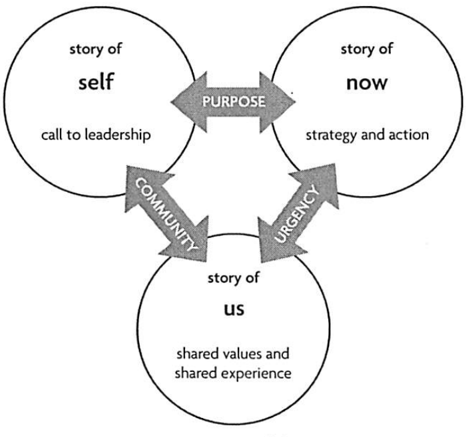
“Marshal Ganz (2011) refers to these narratives as the story of self, the story of us, and the story of now.”
BackgroundSocial Brokerage: Accountability and the Social Life of Information
Kruks-Wisner, G. (2022) · Comparative Political Studies · doi:10.1177/00104140221089644 · Cited by 13
Scaffolding collective agency curriculum within food-systems education programs
Jordan, N. R., Valley, W., Donovan, D. M., Clegg, D. J., Grossman, J., Hunt, N. D., Michaels, T., Peterson, H. H., Rogers, M., Sames, A., et al. (2023) · Frontiers in Sustainable Food Systems · doi:10.3389/fsufs.2023.1119459 · Cited by 12
“…self (centered on personal life experience and critical choices); (2) a story of us (centered on awareness of being part of a community and group, and collective choice points) and, (3) a story of now (centered on current challenges and coming choices facing community and individuals) (Ganz, 2011).”
BackgroundInfluentialAiello, E., & Sordé, T. (2021) · International Journal of Qualitative Methods · doi:10.1177/16094069211050160 · Cited by 10
“As defined by Ganz (2010, 2011), public narrative is a leadership craft through which individuals can enable collective action by accessing, articulating and communicating the emotional content of shared values, which are the processes by which leaders enact their moral resources.”
BackgroundLEADERSHIP IN SOCIAL MOVEMENTS: THE CASE OF OJO CON TU OJO
Valls, R., Aubert, A., Puigvert, L., & Flecha, A. (2017) · International Journal of Educational Leadership and Management · doi:10.17583/ijelm.2017.2751 · Cited by 7
“The connection between leadership and narratives has been deeply explored by several authors (Couto, 1993; Davis, 2002; Ganz, 2011; Soler, 2015).”
The state-as-parent: reframing parent–child relations in Rwanda
Benda, R., & Pells, K. (2019) · Families Relationships and Societies · doi:10.1332/204674319x15740695651861 · Cited by 9
“…expressed through narrative symbols such as forging a generational pact of peace without machetes, the construction of a generational ‘story of us’ (Ganz, 2011) and a unity of agency as ‘builders of the nation’ harking back to earlier, precolonial modes of intragenerational relations through the…”
BackgroundChristens, B. D. (2019) · Oxford University Press eBooks · doi:10.1093/oso/9780190605582.003.0005 · Cited by 7
Kansas Leadership Studies Summit: Cultivating Collaborative Capacity for the Common Good
Priest, K. L., Kliewer, B. W., & Stephens, C. M. (2018) · Journal of Leadership Education · doi:10.12806/v17/i3/a1 · Cited by 6
“Identifying shared challenges of our community, as well as the choices we must make and the outcomes we aspire make up our “stories of now” (Ganz, 2011).”
BackgroundInfluentialReynolds, G., Samuels, K. L., Din, C., & Turner, N. (2023) · Journal of Management Development · doi:10.1108/jmd-04-2022-0082 · Cited by 9
Identity-Based Roles in Rhizomatic Social Justice Movements on Twitter
Choi, J. O., Herbsleb, J. D., Hammer, J., & Forlizzi, J. (2020) · Proceedings of the International AAAI Conference on Web and Social Media · doi:10.1609/icwsm.v14i1.7317 · Cited by 12
“Individuals play a role in co-creating collective action frames (e.g. Occupy Wall Street’s ”We are the 99%!”) through sharing their experiences and perspectives (Ganz 2011).”
BackgroundSocial media: The new opiate of the masses?
Khazraee, E., & Unsworth, K. (2012) · The International Review of Information Ethics · doi:10.29173/irie303 · Cited by 6
McGinley, W., Kamberelis, G., Welker, A., Kelly, M. R., & Swafford, J. (2017) · Journal of Curriculum Theorizing · doi:10.63997/jct.v32i1.638 · Cited by 6
Anatomy of an educational change: The safe learning model, Sierra Leone
Sugrue, C., Samonova, E., Capistrano, D., Devine, D., Sloan, S., Symonds, J. E., & Smith, A. W. (2022) · Journal of Educational Change · doi:10.1007/s10833-022-09461-7 · Cited by 6
“…a social movement for effective action depends largely on the depth, breadth, and quality of leadership able to turn opportunity to purpose’ while recognising that such efforts are fraught with risk and uncertainty, hardly the most promising of contexts for educational change (Ganz, 2011, p. 274).”
Can Deep Canvassing Promote Anti‐Carceral Attitudes? A Field Experiment
Brock‐Petroshius, K., & Gilens, M. (2025) · Journal of Social Issues · doi:10.1111/josi.70012 · Cited by 6
Dawes, N. P. (2018) · Journal of Community Practice · doi:10.1080/10705422.2017.1413026 · Cited by 6
“These narratives were akin to what Marshall Ganz (2011) referred to as the public narrative.”
Result“Voices against Silence”: a case study of the social impact of journalism
Pulido, C., Villarejo-Carballido, B., Vidu, A., Ramis‐Salas, M., & Flecha, R. (2021) · Feminist Media Studies · doi:10.1080/14680777.2021.1992643 · Cited by 14
Bevilacqua, C., & Ou, Y. (2018) · International Journal of Sustainable Development and Planning · doi:10.2495/sdp-v13-n8-1072-1089 · Cited by 5
Christens, B. D. (2019) · Oxford University Press eBooks · doi:10.1093/oso/9780190605582.003.0001 · Cited by 4
Leadership for Disaster Resilience: Lessons from India
Joseph, J., Awasthi, S., & Mulla, Z. R. (2022) · Routledge eBooks · doi:10.4324/9781003171362 · Cited by 12
Radical Community-Based Learning: Tapping into Students’ Sense of Justice
Russell, V., & Jovanovic, S. (2022) · International Journal of Research on Service-Learning and Community Engagement · doi:10.37333/001c.66269 · Cited by 5
Liderazgo y creación social: una aproximación a las principales aportaciones
Redondo-Sama, G., & Saso, C. E. (2018) · Revista Internacional de Organizaciones · doi:10.17345/rio21.109-125 · Cited by 9
Investigating youth policies through the Lens of public narratives – Comparing China and Europe
Li, X. (2020) · Journal of Youth Studies · doi:10.1080/13676261.2020.1751809 · Cited by 4
“For instance, understood as a leadership art, the exercise of political leadership often requires engaging people in an emotional dialogue, drawing on one set of values that are grounded in one set of experiences, counter to another set of experiences (Ganz 2011).”
Background‘The Long and Winding Road’ — Collective action among people experiencing homelessness
Aaslund, H., & Seim, S. (2020) · IJAR – International Journal of Action Research · doi:10.3224/ijar.v16i2.02 · Cited by 4
“The empirical material also included storytelling and emotions, leading to us also including the concept of narrative as an aspect of collective identity (Ganz, 2011).”
BackgroundEco-Social Narratives for Awakening an Era of Transformative Change
Waddock, S. A. (2024) · Humanistic Management Journal · doi:10.1007/s41463-024-00201-y · Cited by 5
“That is possible despite the difficulties that people—even change agents—seem to have envisioning positive futures and inspire the collective action needed for systemic change (Ganz 2011 ; Riedy and Waddock 2022 ).”
Voices of change: public narrative storytelling communicates climate resilience actions in Kenya
Ngendo, M., & Kariuki, E. (2025) · Development in Practice · doi:10.1080/09614524.2025.2581867 · Cited by 4
“The longer duration can also be explained by the aim of the public narrative story-telling approach, which is to build grassroots power by activating people not only through personal storytelling, but also connecting these stories to clear policy and lobbying goals (Ganz 2011).”
InfluentialSirowy, B., & Ruggeri, D. (2024) · The Geojournal library · doi:10.1007/978-3-031-41550-0 · Cited by 3
Narrative Efficacy: The Empowering Feedback Effects of Policy Storytelling
Boscarino, J. E. (2025) · Review of Policy Research · doi:10.1111/ropr.70043 · Cited by 4
Abuya, K. (2020) · Interdisciplinary Journal of Partnership Studies · doi:10.24926/ijps.v7i1.3031 · Cited by 3
“The BLHP’s foundational practices and interventions include dialogue, organizing, and Public Narrative (Ganz, 2011), which are great vehicles for enabling transformative learning and subsequent transformative change. https://doi.org/10.24926/ijps.v7i1.3031 28 Through the transformative learning, transformative change,…”
BackgroundInfluentialMubarak, A. S., & Rhaif, K. K. (2021) · Linguistics and Culture Review · doi:10.21744/lingcure.v5ns1.1399 · Cited by 6
Reflections on an experiment in pragmatic social research and knowledge production
Harney, L., & Wills, J. (2020) · Manchester University Press eBooks · doi:10.7765/9781526134950.00017 · Cited by 3
ACTIVIST MUSICIANS: A FRAMEWORK FOR LEADERS OF SOCIAL CHANGE
Hill, J. C. (2022) · Journal of Leadership Education · doi:10.12806/v21/i2/t1 · Cited by 3
Engaging with the claim of Roma people through twitter: who is behind the hashtags?
Aiello, E., Troya, M., Flecha, A., & Khalfaoui, A. (2023) · Frontiers in Sociology · doi:10.3389/fsoc.2023.1230954 · Cited by 3
“But, as Harvard professor of leadership and organizing Ganz (2011) explains and reminds, it is not the power of social media platforms and tools per se , but how they are used as a key resource by people to also organize within the online domain.”
BackgroundPeñuela, C., Duran-Cardenas, Y. C., Rincón, E. H. H., & Correal, C. (2021) · Community Health Equity Research & Policy · doi:10.1177/0272684x211004740 · Cited by 3
Roberts, A. (2024) · OMEGA - Journal of Death and Dying · doi:10.1177/00302228231223270 · Cited by 4
“This approach is exempli fi ed by Ganz ’ s (2011) public narrative model where an exploration of values and a view of what might be leads to system level change.”
Chosen Trauma, Emotions and Memory in Movements: The Ogoni and Ijaw in the Niger Delta
Mai-Bornu, Z. L., & Allen, F. (2022) · Cosmopolitan Civil Societies An Interdisciplinary Journal · doi:10.5130/ccs.v14.i1.7912 · Cited by 3
“The employment of narrative indicates the motivational values that characterise group and individual identities and the urgent need to act can be experientially articulated as a story of self, a story of us, and a story of now, or public narrative (Ganz 2009, 2011).”
BackgroundSubtractive Awareness: Educator-Change Leaders Helping Transformations Happen Together
Bradbury, H. M. (2023) · Journal of Awareness-Based Systems Change · doi:10.47061/jasc.v3i1.5737 · Cited by 3
Scaling personal initiatives into collective action
Natorp, P. (2023) · Routledge eBooks · doi:10.4324/9781003215929-34 · Cited by 2
Mourning the Dead, Following the Living
Lambelet, K. B. T. (2019) · Journal of Religious Ethics · doi:10.1111/jore.12279 · Cited by 2
Migración y seguridad hemisférica en las Américas
Sierra-Gutiérrez, W. A., & Rivera, V. T. (2022) · doi:10.25062/9786287602328 · Cited by 2
The Technocratic National Narrative in Indonesia
Hatherell, M., & Welsh, A. (2021) · Springer eBooks · doi:10.1007/978-981-16-3811-4_2 · Cited by 1
Building Community Power: An Introduction
Christens, B. D. (2024) · Cambridge University Press eBooks · doi:10.1017/9781009153720.001 · Cited by 2
Stein, M. (2024) · Elsevier eBooks · doi:10.1016/b978-0-443-16076-9.00010-x · Cited by 1
Tomić, S. (2025) · Public Integrity · doi:10.1080/10999922.2025.2474832 · Cited by 1
“…into social mobilization and social and policy entrepreneurship, which could be derived from the social movement literature (see, e.g., Ganz, 2010, 2011), social and policy entrepreneurship literature (Navot & Cohen, 2015; Tomic & Manojlovic, 2023), coalitions advocacy literature (Weible &…”
Shams, K., Benavides, M. T., & Priest, K. L. (2025) · New Directions for Student Leadership · doi:10.1002/yd.70026 · Cited by 1
Voicing the Voiceless: Including the Stories of Marginalized Students in Classroom Literature
Mohamed, A. L. (2016) · Language arts journal of Michigan · doi:10.9707/2168-149x.2151 · Cited by 1
“In his discussion of storytelling, Ganz (2011) mentions “if we don’t author our story, others will” (p. 284).”
BackgroundInfluentialOmer, A. (2019) · Journal of Religious Ethics · doi:10.1111/jore.12258 · Cited by 1
Addressing Avoidable Inequalities: The Role of One University in Place-Based Transformational Change
Taylor, C., Ruddle, N., Perry, K., & Budden, C. (2020) · Emerald Group Publishing Limited eBooks · doi:10.1108/s2055-364120200000023004 · Cited by 1
Hatherell, M., & Welsh, A. (2021) · Springer eBooks · doi:10.1007/978-981-16-3811-4_1 · Cited by 1
Lauer, S., & Sanderson, M. R. (2022) · Community Development · doi:10.1080/15575330.2021.2003415 · Cited by 2
“between the “Story of Self” and the “Story of Now” (Ganz, 2011).”
BackgroundMethodInfluentialChristens, B. D. (2019) · Oxford University Press eBooks · doi:10.1093/oso/9780190605582.003.0007 · Cited by 1
Impacto de la protesta social violenta en la seguridad nacional de Colombia
Guerra-Cardona, C. A., & Parra-Hernández, N. G. (2022) · doi:10.25062/9786287602328.03 · Cited by 1
Metadata
- Authors
- Ganz, M.
- Corresponding author
- Ganz, Marshall
- Venue
- Accountability through Public Opinion
- Publisher
- The World Bank
- Published
- 2011-05-16
- Pages
- 273-289
- OpenAlex
- W2478882249
- Cited by
- 185
- References
- 12
- Citations by year
- 2026: 15 · 2025: 13 · 2024: 16 · 2023: 16 · 2022: 16 · 2021: 28 · 2020: 18 · 2019: 26 · 2018: 9 · 2017: 11 · 2016: 12 · 2015: 1 · 2014: 2 · 2013: 1 · 2012: 1
- FWCI
- 8.11
- Type
- book chapter
- Language
- en
- Open access
- green
- nrs.harvard.edu
- Licence
- cc-by
- Locations
- World Bank, Washington, DC eBooks (publishedVersion)
- Digital Access to Scholarship at Harvard (DASH) (Harvard University) (submittedVersion, cc-by)
- Topics
- Social Sciences › Business, Management and Accounting › Strategy and Management › Leadership and Management in Organizations
- Social Sciences › Business, Management and Accounting › Organizational Behavior and Human Resource Management › Organizational Strategy and Culture
- Social Sciences › Business, Management and Accounting › Organizational Behavior and Human Resource Management › Appreciative Inquiry and Organizational Change
- Keywords
- public narratives, leadership, organizational storytelling, values, emotions, collective action, organizational identity, organizational culture, power, decision making under uncertainty, apathy, cynicism, defeatism
About these checks
Registry, retraction, Cites and statistics results are computed, not judged, with one exception: a printed reference that no index lists is read once by a model before it counts as a citation error. Claims are extracted by a model and kept only when their quote appears verbatim in the text; each cited source is then checked, with a model’s help, for whether it says what the claim relies on. Those verdicts can be wrong — read the claim’s quote and the cited source before relying on one.
Statistics and arithmetic are recomputed, not judged.
Confidence bands are shown only for fields calibrated on our annotated test set. None is calibrated yet, so no band is shown.
What counts as a claim ›How we measure confidence ›How we check this ›
Are you an author, or do you see a problem with this page? Request a review
Data sources
Bibliographic data: Semantic Scholar, OpenAlex, Crossref.
Contains information from the Semantic Scholar Academic Graph Datasets, made available under the ODC Attribution License (ODC-BY 1.0).
Semantic Scholar’s data is described in: Kinney, R., et al. (2023). The Semantic Scholar Open Data Platform. arXiv:2301.10140.
