

Exploiting Argument Information to Improve Event Detection via Supervised Attention Mechanisms
Open accessThe DOI matches its Crossref record; 28 of the 29 references it cites were found in a registry or an index.
Abstract
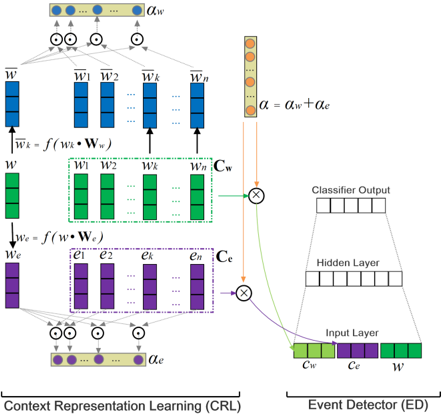
This paper tackles the task of event detection (ED), which involves identifying and categorizing events.We argue that arguments provide significant clues to this task, but they are either completely ignored or exploited in an indirect manner in existing detection approaches.In this work, we propose to exploit argument information explicitly for ED via supervised attention mechanisms.In specific, we systematically investigate the proposed model under the supervision of different attention strategies.Experimental results show that our approach advances state-ofthe-arts and achieves the best F 1 score on ACE 2005 dataset.
Overview
The claims and statistics of this paper haven’t been checked yet.
Free: it reads the open-access text and checks the first 5 claims that cite a source we can check. Create a free account to check every claim.
Integrity signals
Registry
Cites
Statistics
Figures
Verification
Claims the paper makes
The claims and statistics of this paper haven’t been checked yet.
Free: it reads the open-access text and checks the first 5 claims that cite a source we can check. Create a free account to check every claim.
Claims other papers make about this one
Each is checked against this paper’s own text: does it say what the citing paper says it does?
The cited source says what the claim attributes to it.
In the citing paper
“Supervised attention [76] aims to provide explicit supervision over the attention of models based on the fact that completely data-driven attention can overfit to some artifacts [73].”
From Pre-train, Prompt, and Predict: A Systematic Survey of Prompting Methods in Natural Language Processing (2023) · cites this paper as [76]
Self-check
Percentages, sums and reported differences re-computed from the paper’s own numbers.
The self-check needs the paper’s full text.
Citations
Cites
Efficient Estimation of Word Representations in Vector Space
Mikolov, T., Chen, K., Corrado, G., & Dean, J. (2013) · arXiv · doi:10.48550/arxiv.1301.3781 · Cited by 26,568 · cited 2×
“Speci(cid:12)cally, we use the Skip-gram model (Mikolov et al., 2013) to learn word embed-dings on the NYT corpus 3 .”
MethodConvolutional Neural Networks for Sentence Classification
Kim, Y. (2014) · Proceedings of the 2014 Conference on Empirical Methods in Natural Language Processing (EMNLP) · doi:10.3115/v1/d14-1181 · Cited by 14,831 · cited 1×
“Regularization is implemented by a dropout (Kim, 2014; Hinton et al., 2012) and L2 norm.”
BackgroundImproving neural networks by preventing co-adaptation of feature detectors
Hinton, G. E., Srivastava, N., Krizhevsky, A., Sutskever, I., & Salakhutdinov, R. R. (2012) · arXiv · doi:10.48550/arxiv.1207.0580 · Cited by 6,382 · cited 2×
“Regularization is implemented by a dropout (Kim, 2014; Hinton et al., 2012) and L2 norm.”
BackgroundADADELTA: An Adaptive Learning Rate Method
Zeiler, M. D. (2012) · arXiv · doi:10.48550/arxiv.1212.5701 · Cited by 5,322 · cited 1×
“We train the model by using a simple optimization technique called stochastic gradient descent (SGD) over shuffled mini-batches with the Adadelta rule (Zeiler, 2012).”
MethodHagan, M., Demuth, H. B., Beale, M. H., & Jes?s, O. D. (2016) · Institutional Repository of the National University Open and Distance UNAD (Universidad Nacional Abierta y a Distancia) · Cited by 5,133
A neural probabilistic language model
BengioYoshua, DucharmeRéjean, VincentPascal, & JanvinChristian (2003) · Journal of Machine Learning Research · doi:10.5555/944919.944966 · Cited by 2,644
Why Does Unsupervised Pre-training Help Deep Learning?
Erhan, D., Bengio, Y., Courville, A. C., Manzagol, P.-A., Vincent, P., & Bengio, S. (2010) · Journal of Machine Learning Research · Cited by 2,643
Baker, C. F., Fillmore, C. J., & Lowe, J. B. (1998) · Proceedings of the 36th annual meeting on Association for Computational Linguistics - · doi:10.3115/980845.980860 · Cited by 2,518 · cited 1×
“In order to further demonstrate the e(cid:11)ectiveness of our approach, we also use events from FrameNet (FN) (F. Baker et al., 1998) as extra training data, as the same as Liu et al. (2016a) to alleviate the data-sparseness problem for ED to augment the performance of the proposed approach.”
MethodEvent Extraction via Dynamic Multi-Pooling Convolutional Neural Networks
Chen, Y., Xu, L., Liu, K., Zeng, D., & Zhao, J. (2015) · Proceedings of the 53rd Annual Meeting of the Association for Computational Linguistics and the 7th International Joint Conference on Natural Language Processing (Volume 1: Long Papers) · doi:10.3115/v1/p15-1017 · Cited by 906 · cited 7×
“Representation-based methods typically represent candidate event mentions by embeddings and feed them into neural networks (Chen et al., 2015; Nguyen and Grishman, 2015; Liu et al., 2016a; Nguyen and Grishman, 2016).”
MethodInfluentialSelf-citationJoint Event Extraction via Recurrent Neural Networks
Nguyen, T. H., Cho, K., & Grishman, R. (2016) · Proceedings of the 2016 Conference of the North American Chapter of the Association for Computational Linguistics: Human Language Technologies · doi:10.18653/v1/n16-1034 · Cited by 647 · cited 6×
“…learning based methods have been proposed, which tackled event detection and argu-ment extraction simultaneously (Riedel et al., 2009; Li et al., 2013; Venugopal et al., 2014; Nguyen et al., 2016), these approaches usually only make remarkable improvements to AE, but insigni(cid:12)cant to ED.”
BackgroundMethodInfluential
Research works printed but not linked: 1
- [25]25. Sebastian Riedel, Hong-Woo Chun, Toshihisa Tak- agi, and Jun'ichi Tsujii. 2009. Proceed- ings of the bionlp 2009 workshop compan- ion volume for shared task. Association for Computational Linguistics, pages 41-49. http://aclweb.org/anthology/W09-1406.
Cited by
Items 201–251 of 251
Latent Graph Induction Networks and Dependency Graph Networks for Events Detection
Yang, J., Gao, H., & Dang, D. (2024) · IEEE Access · doi:10.1109/access.2024.3523895 · Cited by 1
“Liu et al. [22] focused on explicitly leveraging argument information for ED via a supervised attention mechanism.”
A Type Fusion and Span Relation Enhanced Event Extraction Framework for Confused Event
Meng, F., & Lin, R. (2025) · Lecture notes in computer science · doi:10.1007/978-981-97-5779-4_24 · Cited by 1
Tibetan Judicial Event Extraction Based on Deep Word Representation and Hybrid Neural Networks
Gao, L., & Zhao, X. (2025) · Applied Sciences · doi:10.3390/app15031332 · Cited by 1
Joint Extraction Model of Entities and Events
Tian, C., Zhao, Y., & Ren, L. (2019) · International Conference on Mechatronics Engineering and Information Technology (ICMEIT) · doi:10.2991/icmeit-19.2019.117 · Cited by 1
“And there are some related works about event detection [9] which only need to identify if an event in a sentence.”
BackgroundSemi-supervised Auto-encoder Based Event Detection in Constructing Knowledge Graph for Social Good
Zhao, Y., Jin, X., Wang, Y., & Cheng, X. (2019) · IEEE/WIC/ACM International Conference on Web Intelligence · doi:10.1145/3350546.3360736 · Cited by 3
“The latter employ word embeddings as the input and decode them into low-dimensional distributed representations by neural networks (e.g., convolution neural network [12], recurrent neural network [19]) to capture meaningful semantic information [2, 3, 17, 18, 20–22].”
Pei, X., Wang, H., Luo, X., & Gao, J. (2020) · Communications in computer and information science · doi:10.1007/978-3-030-63820-7_80 · Cited by 1
Study of State of Arts Methods for Event Extraction
Chaturvedi, N., & Dubey, J. (2021) · Learning and analytics in intelligent systems · doi:10.1007/978-981-15-9293-5_10 · Cited by 1
Event Classification Based on Fusion Training of Character Phrase Features and Prototype Network
赵, 芝. (2021) · Computer Science and Application · doi:10.12677/csa.2021.114095 · Cited by 1
Experimenting with Unsupervised Multilingual Event Detection in Historical Newspapers
Boroş, E., Cabrera-Diego, L. A., & Doucet, A. (2022) · Lecture notes in computer science · doi:10.1007/978-3-031-21756-2_15 · Cited by 1
Deep Semantic-Enhanced Event Detection via Symmetric Graph Convolutional Network
Sun, C., Zhuo, X., Lu, Z., Bu, C., & Wu, G. (2022) · IEEE International Conference on Knowledge Graph (ICKG) · doi:10.1109/ickg55886.2022.00038 · Cited by 1
“• POS-tagging embedding posi: Each word in the sentence matches a POS-tagging label, and we encode these labels into vectors by looking up the POS-tagging label embedding table [23] [24] [25].”
MethodEvent extraction based on open information extraction and ontologyPreprint
Sahnoun, S. (2019) · arXiv (Cornell University) · doi:10.48550/arxiv.1907.00692 · Cited by 1
“To overcome the difficulties of complicated feature engineering and domain dependency, researchers used neural network approach for event extraction [51, 52, 53].”
MethodDo Context-Aware Translation Models Pay the Right Attention?Preprint
Yin, K., Fernandes, P., Pruthi, D., Chaudhary, A., Martins, A. F. T., & Neubig, G. (2021) · arXiv (Cornell University) · doi:10.48550/arxiv.2105.06977 · Cited by 1
“, 2016), event arguments and trigger words (Liu et al., 2017; Zhao et al., 2018), syntactic dependencies (Strubell”
BackgroundA Comprehensive Survey on Schema-based Event Extraction with Deep LearningPreprint
Li, Q., Peng, H. M., Li, J., Hei, Y., Sun, R. Q., Sheng, J., Guo, S., Wang, L., Wu, J. X., Beheshti, A., et al. (2021) · arXiv (Cornell University) · Cited by 1
Incorporating Image Matching Into Knowledge Acquisition for Event-Oriented Relation Recognition
Hong, Y., Xu, Y., Ruan, H., Zou, B., Yao, J., & Zhou, G. (2018) · International Conference on Computational Linguistics
Who is Killed by Police: Introducing Supervised Attention for Hierarchical LSTMs.Preprint
Nguyen, M., & Nguyen, T. H. (2018) · arXiv (Cornell University)
Detecting and Reducing Bias in a High Stakes DomainPreprint
Zhong, R., Chen, Y., Patton, D. U., Selous, C., & McKeown, K. (2019) · arXiv (Cornell University) · doi:10.48550/arxiv.1908.11474 · Cited by 2
“Trained attention was explored in event detection (Liu et al., 2017), machine translation (Mi et al., 2016) and sentiment analysis (Zhong et al., 2019).”
MethodSelf-citationA BOW-Based Sentence Embedding Method for Chinese Event Identification
Gao, L., Zhou, G., & Luo, J. (2020) · Journal of Physics Conference Series · doi:10.1088/1742-6596/1486/4/042012
“In recent years, with the widely application of word embedding in NLP tasks, researchers (e.g., [6], [7], [8], [9], [10], [11]) started to represent event features with word embeddings and build models with sophisticated neural networks.”
BackgroundContext-aware Event Type Identification Based on Context Fusion and Joint Learning
Zhang, Z., & Tang, Y. (2020) · IEEE International Conference on Data Science in Cyberspace · doi:10.1109/dsc50466.2020.00024
“Current works mainly identify event using the sentencelevel context [3], [6], [8], [9], some propose a documentlevel model to analyze the context [10], [11], [12].”
BackgroundEvent Trigger Recognition Based on Positive and Negative Weight Computing and its Application
Liao, T., Fu, W., Zhang, S., & Liu, Z. (2020) · Computer Systems Science and Engineering · doi:10.32604/csse.2020.35.311
“Liu et al. (2017) propose a non-entity parameter extraction method based on structure representation.”
MethodExploring Distantly-Labeled Rationales in Neural Network ModelsPreprint
Huang, Q., Zhu, S., Feng, Y., & Zhao, D. (2021) · arXiv (Cornell University) · doi:10.48550/arxiv.2106.01809
“As a widely-used explanation method, the attention mechanism is often applied with constraints to guide model focus towards the significant part of inputs (Liu et al., 2017; Nguyen and Nguyen, 2018; Bao et al., 2018).”
BackgroundMethodInfluentialEmploying Sentence Compression to Improve Event Coreference Resolution
Chen, X., Xu, S., Li, P., & Zhu, Q. (2021) · Lecture notes in computer science · doi:10.1007/978-3-030-88480-2_19
Monitoring geometrical properties of word embeddings for detecting the emergence of new topicsPreprint
Christophe, C., Velcin, J., Cugliari, J., Boumghar, M., & Suignard, P. (2021) · arXiv (Cornell University) · doi:10.48550/arxiv.2111.03496
“C L ] 5 N ov 2021 been studied to solve this task (Allan et al., 2000a; Sayyadi et al., 2009; Kumaran and Allan, 2004; Petrovi´c et al., 2010; Lau et al., 2012; Cordeiro, 2012; Nguyen et al., 2016; Liu et al., 2017; Ghosal et al., 2018).”
Entity-Aware Graph Convolution Networks for Event Detection
Zhang, C., Xie, G., Liu, N., Hu, X., Shen, Y., & Shen, X. (2021) · International Conference on Systems and Informatics (ICSAI) · doi:10.1109/icsai53574.2021.9664062
“Reference [3] explore the use of supervised attention mechanisms to utilize entity information of the sentence without structural information.”
BackgroundGlobal Semantics with Boundary Constraint Knowledge Graph for Chinese Financial Event Detection
Wang, Y., Xia, N., Luo, X., & Li, J. (2021) · IEEE International Conference on Big Knowledge (ICBK) · doi:10.1109/ickg52313.2021.00045
A Dual-Classifier Model for General Fine-Grained Event Detection Task
Hei, Y., Li, Q., Zhou, C., Sun, R. Q., Yang, J., Sheng, J., Guo, S., & Wang, L. (2022) · Communications in computer and information science · doi:10.1007/978-981-19-0713-5_3
Shen, Y., Tang, B., Li, Y., & Du, N. (2019) · doi:10.2196/preprints.15556
Cyber Security Event Sentence Detection From News Articles Based on Trigger and Argument
Chaturvedi, N., & Dubey, J. (2022) · Advances in digital crime, forensics, and cyber terrorism book series · doi:10.4018/978-1-6684-6444-1.ch012
Event Detection Based on Multilingual Information Enhanced Syntactic Dependency GCN
Wang, Z., Li, B., & Wang, Y. (2022) · Lecture notes in computer science · doi:10.1007/978-3-031-10989-8_30
Combing Type-Aware Attention and Graph Convolutional Networks for燛vent燚etection
Ding, K., Xu, L. X., Liu, M., Zhang, X., Liu, L., Zeng, D., Liu, Y., & Chen, J. (2022) · Computers, materials & continua/Computers, materials & continua (Print) · doi:10.32604/cmc.2023.031052 · Cited by 1
“Liu et al. [15] proposed encoding argument information in event detection through supervised attention approaches.”
Event Annotation Enhanced Pre-trained Language Model in Event Extraction
Xi, Q., Ren, Y., Wu, G., Wang, Q., Yuan, L., & Zhang, Z. (2022) · Lecture notes of the Institute for Computer Sciences, Social Informatics and Telecommunications Engineering · doi:10.1007/978-3-031-23902-1_22
Label Enhanced Event Detection with Collective Knowledge and Heterogeneous Graph
Wu, G., Lu, Z., Miao, Z., Zhuo, X., & Zhang, Z. (2022) · IEEE International Conference on Knowledge Graph (ICKG) · doi:10.1109/ickg55886.2022.00046
“Many ED methods [23], [24] have demonstrated the effectiveness of attention mechanisms.”
Multi-lingual Event Identification in Disaster Domain
Ahmad, Z., Varshney, D., Ekbal, A., & Bhattacharyya, P. (2023) · Lecture notes in computer science · doi:10.1007/978-3-031-24337-0_10
“[20] further extended the work by building an extraction model using the information from arguments and FrameNet using supervised attention mechanism.”
MethodExploiting Semantic Space to Enhance Event Detection Combined with Event Knowledge
Luo, J., & Hou, M. (2022) · International Conference on Algorithms, Computing and Artificial Intelligence (ACAI) · doi:10.1145/3579654.3579733
“The other category is to promote ED via introducing extra resources, such as argument information [5], syntactic information [6], and document information [7] etc.”
BackgroundEDSC: Event Detection with Superior Conceptual Information
Sun, X., Zhao, S., Hou, C., & Chang, J. (2022) · IEEE International Conference on Tools with Artificial Intelligence (ICTAI) · doi:10.1109/ictai56018.2022.00070
“SA-ANN-Arg: Proposed by [28], which injects event arguments information via supervised attention mechanism.”
BackgroundEntity-enhanced Multi-granularity Pooling BERT for Event Extraction
Yao, S., Hu, J., Sun, C., Gao, Z., & Liu, N. (2022) · International Conference on Machine Learning, Big Data and Business Intelligence (MLBDBI) · doi:10.1109/mlbdbi58171.2022.00065
“Liu et al. [11] used argument information combined with supervised attention mechanism to detect events.”
BackgroundLi, M., Xing, H., Wang, T., Dai, J., & Xiao, K. (2023) · International Journal on Natural Language Computing · doi:10.5121/ijnlc.2023.12209
“[22] exploited argument information explicitly for event detection via supervised attention mechanisms, and investigated the impact of different attention strategies.”
BackgroundSwayamdipta, N. G., & Ruman, C. (2023) · Research Square · doi:10.21203/rs.3.rs-3593935/v1
Chen, Z., Sun, P., Chang, Q., & Zhao, L. (2023) · International Conference on Computer Science and Application Engineering (CSAE) · doi:10.1145/3627915.3628028
“Liu et al. [21] argue that trigger words and event element candidates should receive more attention in event extraction tasks, and adopt the Attention mechanism to characterize entities and their contexts to generate event candidates, which are then fed into a forward neural network classifier for…”
BackgroundExploring Neural and Prompt-Based Approaches for Event Detection in Short Stories
Kirti, C., Anand, A., & Guha, P. (2024) · International Journal of Asian Language Processing · doi:10.1142/s2717554524500085
Improved Supervised Classification Model for Automatically Categorizes of News Articles
Chaturvedi, N., & Dubey, J. (2024) · doi:10.1002/9781394231126.ch26
Military News Event Extraction Based on MRC
Sun, Z., Li, N., Wang, J., & Miao, L. (2024) · IEEE International Conference on Frontiers Technology of Information and Computer (ICFTIC) · doi:10.1109/icftic64248.2024.10912982
Document-level event extraction framework based on prompt learning
Wang, R., Liu, J., Yu, Y., Zang, L., Wang, H., & Liu, J. (2025) · International Conference on Computer Application and Information Security (ICCAIS) · doi:10.1117/12.3061438 · Cited by 1
“Liu et al. 6 designed an end-to-end event extraction model that uses an attention mechanism to capture the semantic relationship between event elements and candidate triggers.”
Hyperbolic Prompt Learning for Incremental Event Detection with LLMs
Zhang, X., Jin, W., Hong, H., Zhang, P., Li, J., Gu, K., Peng, H., & Sun, L. (2025) · ACM International Conference on Information and Knowledge Management (CIKM) · doi:10.1145/3746252.3761303
“For example, Convolutional Neural Network (CNN) [7, 33, 36], Recurrent Neural Network (RNN) [12, 23, 35], and Attention Mechanisms [8, 30, 62, 74] all showed strong improvements.”
Liu, L., Chen, X., Li, P., & Zhu, Q. (2025) · Lecture notes in computer science · doi:10.1007/978-981-95-3352-7_9
Central-Guided Convolutional Dual Attention for Document-Level Event Argument Extraction
Lin, C., Lin, J., Zhou, D., Zhou, Y., & Yang, A. (2025) · IEEE International Conference on Big Data (BigData) · doi:10.1109/bigdata66926.2025.11401668
“Other span-based methods [13], [30]–[32] identify candidate spans and predict argument roles.”
Prise en compte du contexte inter-phrastique pour l'extraction d'événements supervisée
Kodelja, D. (2020) · theses.fr (ABES) · doi:10.70675/1cdf7c4cz5d18z4b68zbcf9z8fb475bf31a5 · Cited by 1
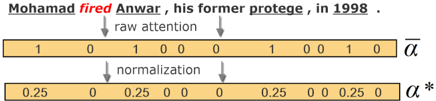
“Liu et al. (2017) proposent ainsi de définir manuellement un vecteur d’attention de référence avec rw∗ valant 1 si le mot est un argument du déclencheur et 0 dans le cas contraire.”
BackgroundEvent extraction from facsimiles of ancient documents for history studies
Baptiste, B. (2022) · theses.fr (ABES) · doi:10.70675/76b9d155z354dz46d2z94eazc1a6832a5895 · Cited by 1
Harnessing Fourier Transform Filter and Prompt Learning for Few‐Shot Event Detection
Xu, M., Zhang, W., & Huang, S. (2026) · Concurrency and Computation Practice and Experience · doi:10.1002/cpe.70743
Metadata
- Authors
- Liu, S., Chen, Y., Liu, K., & Zhao, J.
- Affiliations
- Chinese Academy of Sciences (CN)
- Venue
- Proceedings of the 55th Annual Meeting of the Association for Computational Linguistics (Volume 1: Long Papers)
- Published
- 2017
- Pages
- 1789-1798
- ISSN
- 0736-587X (ISSN-L)
- OpenAlex
- W2739918945
- Cited by
- 250
- References
- 29
- Citations by year
- 2026: 2 · 2025: 10 · 2024: 15 · 2023: 33 · 2022: 37 · 2021: 55 · 2020: 36 · 2019: 34 · 2018: 25 · 2017: 3
- FWCI
- 12.22
- Type
- conference paper
- Language
- en
- Open access
- hybrid
- doi.org
- Licence
- cc-by
- Locations
- Proceedings of the conference - Association for Computational Linguistics. Meeting (publishedVersion, cc-by)
- Funders
- National Natural Science Foundation of China (61533018)
- National Key Research and Development Program of China (2014CB340503)
- Topics
- Physical Sciences › Computer Science › Artificial Intelligence › Topic Modeling
- Physical Sciences › Computer Science › Artificial Intelligence › Natural Language Processing Techniques
- Physical Sciences › Computer Science › Artificial Intelligence › Sentiment Analysis and Opinion Mining
- Keywords
- event detection, argument mining, event argument extraction, attentional strategies
About these checks
Registry, retraction, Cites and statistics results are computed, not judged, with one exception: a printed reference that no index lists is read once by a model before it counts as a citation error. Claims are extracted by a model and kept only when their quote appears verbatim in the text; each cited source is then checked, with a model’s help, for whether it says what the claim relies on. Those verdicts can be wrong — read the claim’s quote and the cited source before relying on one.
Statistics and arithmetic are recomputed, not judged.
Confidence bands are shown only for fields calibrated on our annotated test set. None is calibrated yet, so no band is shown.
What counts as a claim ›How we measure confidence ›How we check this ›
Are you an author, or do you see a problem with this page? Request a review
Data sources
Bibliographic data: Semantic Scholar, OpenAlex, Crossref.
Contains information from the Semantic Scholar Academic Graph Datasets, made available under the ODC Attribution License (ODC-BY 1.0).
Semantic Scholar’s data is described in: Kinney, R., et al. (2023). The Semantic Scholar Open Data Platform. arXiv:2301.10140.
