

An Empirical Comparison of Domain Adaptation Methods for Neural Machine Translation
Open accessThe DOI matches its Crossref record; 25 of the 28 references it cites were found in a registry or an index.
Abstract
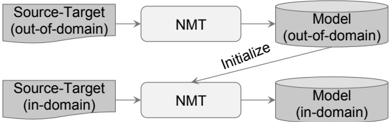
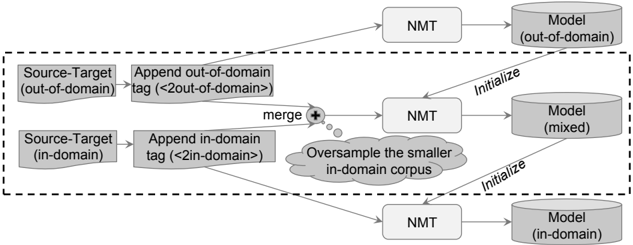
In this paper, we propose a novel domain adaptation method named "mixed fine tuning" for neural machine translation (NMT).We combine two existing approaches namely fine tuning and multi domain NMT.We first train an NMT model on an out-of-domain parallel corpus, and then fine tune it on a parallel corpus which is a mix of the in-domain and out-ofdomain corpora.All corpora are augmented with artificial tags to indicate specific domains.We empirically compare our proposed method against fine tuning and multi domain methods and discuss its benefits and shortcomings.
Overview
The claims and statistics of this paper haven’t been checked yet.
Free: it reads the open-access text and checks the first 5 claims that cite a source we can check. Create a free account to check every claim.
Integrity signals
Registry
Cites
Statistics
Figures
Verification
Claims the paper makes
The claims and statistics of this paper haven’t been checked yet.
Free: it reads the open-access text and checks the first 5 claims that cite a source we can check. Create a free account to check every claim.
Claims other papers make about this one
Each is checked against this paper’s own text: does it say what the citing paper says it does?
The cited source says what the claim attributes to it.
In the citing paper
“Specifically, the guidance signals could be style tokens [27,123], length specifications [56], domain tags [14], or any variety of other pieces of information used to control of the generated text.”
From Pre-train, Prompt, and Predict: A Systematic Survey of Prompting Methods in Natural Language Processing (2023) · cites this paper as [14]
Self-check
Percentages, sums and reported differences re-computed from the paper’s own numbers.
The self-check needs the paper’s full text.
Citations
Cites
Learning Phrase Representations using RNN Encoder–Decoder for Statistical Machine Translation
Cho, K., van Merrienboer, B., Gulcehre, C., Bahdanau, D., Bougares, F., Schwenk, H., & Bengio, Y. (2014) · Proceedings of the 2014 Conference on Empirical Methods in Natural Language Processing (EMNLP) · doi:10.3115/v1/d14-1179 · Cited by 25,545 · cited 2×
“One of the most attractive features of neural machine translation (NMT) (Bahdanau et al., 2015; Cho et al., 2014; Sutskever et al., 2014) is that it is possible to train an end to end system without the need to deal with word alignments, translation rules and complicated decoding algorithms, which are a characteristic…”
BackgroundSequence to Sequence Learning with Neural Networks
Sutskever, I., Vinyals, O., & Le, Q. V. (2014) · arXiv · doi:10.48550/arxiv.1409.3215 · Cited by 17,766 · cited 1×
“One of the most attractive features of neural machine translation (NMT) (Bahdanau et al., 2015; Cho et al., 2014; Sutskever et al., 2014) is that it is possible to train an end to end system without the need to deal with word alignments, translation rules and complicated decoding algorithms, which…”
BackgroundNeural Machine Translation by Jointly Learning to Align and Translate
Bahdanau, D., Cho, K., & Bengio, Y. (2014) · arXiv · doi:10.48550/arxiv.1409.0473 · Cited by 16,213 · cited 2×
“One of the most attractive features of neural machine translation (NMT) (Bahdanau et al., 2015; Cho et al., 2014; Sutskever et al., 2014) is that it is possible to train an end to end system without the need to deal with word alignments, translation rules and complicated decoding algorithms, which are a characteristic…”
BackgroundMoses: open source toolkit for statistical machine translation
Koehn, P., Zens, R., Dyer, C., Bojar, O., Constantin, A., Herbst, E., Hoang, H., Birch, A., Callison-Burch, C., Federico, M., et al. (2007) · Proceedings of the 45th Annual Meeting of the ACL on Interactive Poster and Demonstration Sessions - ACL '07 · doi:10.3115/1557769.1557821 · Cited by 4,735 · cited 1×
“We used the Moses PBSMT system (Koehn et al., 2007) for all of our MT experiments.”
MethodMinimum error rate training in statistical machine translation
Och, F. J. (2003) · Proceedings of the 41st Annual Meeting on Association for Computational Linguistics - ACL '03 · doi:10.3115/1075096.1075117 · Cited by 2,725 · cited 1×
“In all of our experiments, we used the GIZA++ toolkit 7 for word alignment; tuning was performed by minimum error rate training (Och, 2003), and it was re-run for every experiment.”
MethodStatistical Significance Tests for Machine Translation Evaluation.
Koehn, P. (2004) · Conference on Empirical Methods in Natural Language Processing (EMNLP) · Cited by 2,205
Google’s Multilingual Neural Machine Translation System: Enabling Zero-Shot Translation
Johnson, M., Schuster, M., Le, Q. V., Krikun, M., Wu, Y., Chen, Z., Thorat, N., Viégas, F., Wattenberg, M., Corrado, G., et al. (2017) · Transactions of the Association for Computational Linguistics · doi:10.1162/tacl_a_00065 · Cited by 1,747 · cited 1×
“Tag based NMT has also been shown to be effective for control the politeness of translations (Sennrich et al., 2016a) and multilingual NMT (Johnson et al., 2016).”
BackgroundMoses : open source toolkit for statistical machine translation
Koehn, P., Hoang, H., Birch, A., Callison-Burch, C., Federico, M., Bertoldi, N., Cowan, B., Shen, W., Moran, C., Zens, R., et al. (2007) · Edinburgh Research Explorer (University of Edinburgh) · Cited by 1,547
Transfer Learning for Low-Resource Neural Machine Translation
Zoph, B., Yuret, D., May, J., & Knight, K. (2016) · Proceedings of the 2016 Conference on Empirical Methods in Natural Language Processing · doi:10.18653/v1/d16-1163 · Cited by 788 · cited 8×
“However, it is reported that NMT works better than SMT only when there is an abundance of parallel corpora.”
BackgroundInfluentialStanford neural machine translation systems for spoken language domains.
Luong, M.-T., & Manning, C. D. (2015) · Cited by 499
Research works printed but not linked: 4
- [6]6. Fabien Cromieres, Chenhui Chu, Toshiaki Nakazawa, and Sadao Kurohashi. 2016. Kyoto univer- sity participation to wat 2016. In Proceed- ings of the 3rd Workshop on Asian Transla- tion (WAT2016). The COLING 2016 Organiz- ing Committee, Osaka, Japan, pages 166-174. http://aclweb.org/anthology/W16-4616.
- [14]14. Sadao Kurohashi, Toshihisa Nakamura, Yuji Mat- sumoto, and Makoto Nagao. 1994. Improvements of Japanese morphological analyzer JUMAN. In Pro- ceedings of the International Workshop on Sharable Natural Language. pages 22-28.
- [21]21. Rico Sennrich, Barry Haddow, and Alexandra Birch. 2016b. Improving neural machine translation models with monolingual data. In Proceed- ings of the 54th Annual Meeting of the As- sociation for Computational Linguistics (Volume 1: Long Papers). Association for Computa- tional Linguistics, Berlin, Germany, pages 86-96. http://www.aclweb.org/anthology/P16-1009.
- [22]22. Rico Sennrich, Barry Haddow, and Alexandra Birch. 2016c. Neural machine translation of rare words with subword units. In Proceed- ings of the 54th Annual Meeting of the As- sociation for Computational Linguistics (Volume 1: Long Papers). Association for Computational Linguistics, Berlin, Germany, pages 1715-1725. http://www.aclweb.org/anthology/P16-1162.
Cited by
Liu, P., Yuan, W., Fu, J., Jiang, Z., Hayashi, H., & Neubig, G. (2023) · ACM Computing Surveys · doi:10.1145/3560815 · Cited by 4,361
Liu, P., Yuan, W., Fu, J., Jiang, Z., Hayashi, H., & Neubig, G. (2021) · arXiv · doi:10.48550/arxiv.2107.13586 · Cited by 4,352
Koehn, P. (2020) · Cambridge University Press eBooks · doi:10.1017/9781108608480 · Cited by 236
A Survey of Multilingual Neural Machine Translation
Dabre, R., Chu, C., & Kunchukuttan, A. (2021) · ACM Computing Surveys · doi:10.1145/3406095 · Cited by 294
“Therefore, similar to MNMT, when using out-ofdomain parallel corpora for domain adaptation, multi-domain NMT and transfer-learning-based approaches [29] have been proposed for domain adaptation.”
MethodSelf-citationA Survey of Domain Adaptation for Machine Translation
Chu, C., & Wang, R. (2020) · Journal of Information Processing · doi:10.2197/ipsjjip.28.413 · Cited by 282
“MT typically performs poorly in a resource poor or domain mismatching scenario and thus it is important to leverage the spoken language domain data with the patent domain data [20].”
BackgroundMethodInfluentialSelf-citationContinual Lifelong Learning in Natural Language Processing: A Survey
Biesialska, M., Biesialska, K., & Costa-jussà, M. R. (2020) · Proceedings of the 28th International Conference on Computational Linguistics · doi:10.18653/v1/2020.coling-main.574 · Cited by 131
SePiCo: Semantic-Guided Pixel Contrast for Domain Adaptive Semantic Segmentation
Xie, B., Li, S., Li, M., Liu, C. H., Huang, G., & Wang, G. (2023) · IEEE Transactions on Pattern Analysis and Machine Intelligence · doi:10.1109/tpami.2023.3237740 · Cited by 211
“Domain Adaptation (DA) has been investigated for decades in theory [52], [53] and in various tasks [?], [16], [54], [55], [56].”
BackgroundA Survey of Domain Adaptation for Neural Machine Translation
Chu, C., & Wang, R. (2018) · arXiv (Cornell University) · doi:10.48550/arxiv.1806.00258 · Cited by 182
“(2018) conduct a study that applys mixed fine tuning (Chu et al., 2017) on synthetic parallel data (Sennrich et al.”
BackgroundMethodInfluentialSelf-citationSemi-Supervised QA with Generative Domain-Adaptive Nets
Yang, Z., Hu, J., Salakhutdinov, R., & Cohen, W. (2017) · Proceedings of the 55th Annual Meeting of the Association for Computational Linguistics (Volume 1: Long Papers) · doi:10.18653/v1/p17-1096 · Cited by 140
“Our work gets inspiration from a practice in Johnson et al. (2016) and Chu et al. (2017) based on appending domain tags.”
MethodA taxonomy and review of generalization research in NLP
Hupkes, D., Giulianelli, M., Dankers, V., Artetxe, M., Elazar, Y., Pimentel, T., Christodoulopoulos, C., Lasri, K., Saphra, N., Sinclair, A., et al. (2023) · Nature Machine Intelligence · doi:10.1038/s42256-023-00729-y · Cited by 247
MTNT: A Testbed for Machine Translation of Noisy Text
Michel, P., & Neubig, G. (2018) · Proceedings of the 2018 Conference on Empirical Methods in Natural Language Processing · doi:10.18653/v1/d18-1050 · Cited by 122
“Handling noisy text has received growing attention among various language processing tasks due to the abundance of user generated content on popular social media platforms (Crystal, 2001; Herring, 2003; Danet and Herring, 2007).”
BackgroundInstance Weighting for Neural Machine Translation Domain Adaptation
Wang, R., Utiyama, M., Liu, L., Chen, K., & Sumita, E. (2017) · Conference on Empirical Methods in Natural Language Processing (EMNLP) · doi:10.18653/v1/d17-1155 · Cited by 158
“Recently, Chu et al. (2017) make an empirical comparison of NMT further training (Luong and Manning, 2015) and domain control (Kobus et al., 2016), which applied word-level domain features to word embedding layer.”
BackgroundOvercoming Catastrophic Forgetting During Domain Adaptation of Neural Machine Translation
Thompson, B., Gwinnup, J., Khayrallah, H., Duh, K., & Koehn, P. (2019) · Proceedings of the 2019 Conference of the North · doi:10.18653/v1/n19-1209 · Cited by 113
“Chu et al. (2017) found that mixing general-domain data with the in-domain data used for continued training improved generaldomain performance of the resulting models, at the expense of training time.”
BackgroundMethodGeneralized Data Augmentation for Low-Resource Translation
Xia, M., Kong, X., Anastasopoulos, A., & Neubig, G. (2019) · Proceedings of the conference - Association for Computational Linguistics. Meeting · doi:10.18653/v1/p19-1579 · Cited by 158
“After data augmentation, we follow the pre-train and fine tune paradigm for learning (Zoph et al., 2016; Nguyen and Chiang, 2017 mixed fine-tuning strategy of Chu et al. (2017), fine-tuning the base model on the concatenation of the base and augmented datasets.”
MethodCurriculum Learning for Domain Adaptation in Neural Machine Translation
Zhang, X., Shapiro, P., Kumar, G., McNamee, P., Carpuat, M., & Duh, K. (2019) · Proceedings of the 2019 Conference of the North · doi:10.18653/v1/n19-1189 · Cited by 109
“Continued training or fine-tuning (Luong et al., 2015; Freitag and Al-Onaizan, 2016; Chu et al., 2017) is an adaptation technique where a model is first trained on the large general domain data, then used as initialization of a new model which is further trained on in-domain bitext.”
MethodAlam, F., Sajjad, H., Imran, M., & Ofli, F. (2021) · Proceedings of the International AAAI Conference on Web and Social Media · doi:10.1609/icwsm.v15i1.18115 · Cited by 172
“The method has later been adopted to do domain adaptation and multilingual machine translation (Chu, Dabre, and Kurohashi 2017; Saj-jad et al. 2017).”
MethodRegularization techniques for fine-tuning in neural machine translation
Miceli Barone, A. V., Haddow, B., Germann, U., & Sennrich, R. (2017) · Proceedings of the 2017 Conference on Empirical Methods in Natural Language Processing · doi:10.18653/v1/d17-1156 · Cited by 94
Extreme Adaptation for Personalized Neural Machine Translation
Michel, P., & Neubig, G. (2018) · Proceedings of the 56th Annual Meeting of the Association for Computational Linguistics (Volume 2: Short Papers) · doi:10.18653/v1/p18-2050 · Cited by 100
“Domain adaptation techniques for MT often rely on data selection (Moore and Lewis, 2010; Li et al., 2010; Chen et al., 2017; Wang et al., 2017), tuning (Luong and Manning, 2015; Miceli Barone et al., 2017), or adding domain tags to NMT input (Chu et al., 2017).”
MethodDomain Adaptation and Multi-Domain Adaptation for Neural Machine Translation: A Survey
Saunders, D. (2022) · Journal of Artificial Intelligence Research · doi:10.1613/jair.1.13566 · Cited by 164
Effective Domain Mixing for Neural Machine Translation
Britz, D., Le, Q. V., & Pryzant, R. (2017) · Conference on Machine Translation (WMT) · doi:10.18653/v1/w17-4712 · Cited by 144
“This idea was further refined by Chu et al. (2017), who integrated source-tokenization into the domain finetuning paradigm.”
BackgroundMethodStructure-invariant testing for machine translation
He, P., Meister, C., & Su, Z. (2020) · Proceedings of the ACM/IEEE 42nd International Conference on Software Engineering · doi:10.1145/3377811.3380339 · Cited by 82
“Fine-tuning is a common practice in NMT, where training data and target data can often occupy different domains [15, 74].”
BackgroundNeural machine translation: Challenges, progress and future
Zhang, J., & Zong, C. (2020) · Science China Technological Sciences · doi:10.1007/s11431-020-1632-x · Cited by 119
Small Sample Learning in Big Data Era
Shu, J., Xu, Z., & Meng, D. (2018) · arXiv (Cornell University) · doi:10.48550/arxiv.1808.04572 · Cited by 50
“, 2016), neural machine translation (Chu et al., 2017), remote sensing scene classification (Fang et al.”
BackgroundCost Weighting for Neural Machine Translation Domain Adaptation
Chen, B., Cherry, C., Foster, G. F., & Larkin, S. (2017) · doi:10.18653/v1/w17-3205 · Cited by 84
“Chu et al. (2017) propose a method called mixed fine tuning, which combines fine tuning and multi domain NMT.”
MethodBi-Directional Neural Machine Translation with Synthetic Parallel Data
Niu, X., Denkowski, M., & Carpuat, M. J. (2018) · doi:10.18653/v1/w18-2710 · Cited by 85
“Following the practice of mixed fine-tuning proposed by Chu et al. (2017), we continue training baseline models on augmented data as shown in B-5* of Table 2.”
MethodKhayrallah, H., Thompson, B. J., Duh, K., & Koehn, P. (2018) · doi:10.18653/v1/w18-2705 · Cited by 90
“Chu et al. (2017) present mixed fine-tuning.”
Freezing Subnetworks to Analyze Domain Adaptation in Neural Machine Translation
Thompson, B. J., Khayrallah, H., Anastasopoulos, A., McCarthy, A. D., Duh, K., Marvin, R., McNamee, P., Gwinnup, J., Anderson, T., & Koehn, P. (2018) · Conference on Machine Translation (WMT) · doi:10.18653/v1/w18-6313 · Cited by 73
“Chu et al. (2017) mix in-domain and out-of-domain data during continued training in order to adapt to multiple domains.”
BackgroundMulti-Task Neural Models for Translating Between Styles Within and Across LanguagesPreprint
Niu, X., Rao, S., & Carpuat, M. J. (2018) · arXiv (Cornell University) · doi:10.48550/arxiv.1806.04357 · Cited by 70
“Johnson et al. (2017) and Niu et al. (2018) concatenate parallel data of various language directions and mark the source with the desired output language to perform multilingual or bi-directional NMT. Kobus et al. (2017) and Chu et al. (2017) add domain tags for domain adaptation in NMT.”
BackgroundMulti-Domain Neural Machine Translation with Word-Level Domain Context Discrimination
Zeng, J., Su, J., Wen, H., Liu, Y., Xie, J., Yin, Y., & Zhao, J. (2018) · Conference on Empirical Methods in Natural Language Processing (EMNLP) · doi:10.18653/v1/d18-1041 · Cited by 68
“Contrastingly, Farajian et al. (2017) utilized the similarity between each test sentence and the training instances to dynamically set the hyper-parameters of the learning algorithm and update the generic model on the fly.”
BackgroundMethodThe Dawn of the Human-Machine Era: A forecast of new and emerging language technologies
Sayers, D., Sousa‐Silva, R., Höhn, S., Ahmedi, L., Allkivi-Metsoja, K., Anastasiou, D., Beňuš, Š., Bowker, L., Bytyçi, E., Catalá, A., et al. (2021) · doi:10.17011/jyx/reports/20210518/1 · Cited by 88
Multilingual Extractive Reading Comprehension by Runtime Machine TranslationPreprint
Asai, A., Eriguchi, A., Hashimoto, K., & Tsuruoka, Y. (2018) · arXiv (Cornell University) · doi:10.48550/arxiv.1809.03275 · Cited by 68
Domain Adaptive Text Style Transfer
Li, D., Zhang, Y., Gan, Z., Cheng, Y., Brockett, C., Dolan, B., & Sun, M. (2019) · Conference on Empirical Methods in Natural Language Processing (EMNLP) · doi:10.18653/v1/d19-1325 · Cited by 71
“To differentiate different domains, Sennrich et al. (2016a); Chu et al. (2017) appended domain tokens to the input sentences.”
BackgroundDabre, R., Fujita, A., & Chu, C. (2019) · Conference on Empirical Methods in Natural Language Processing (EMNLP) · doi:10.18653/v1/d19-1146 · Cited by 56
“On the other hand, Chu et al. (2017) proposed a more robust training approach for domain adaptation, called mixed fine-tuning, which uses a mixture of data from different domains.”
BackgroundMethodInfluentialSelf-citationTesting Machine Translation via Referential Transparency
He, P., Meister, C., & Su, Z. (2021) · ACM/IEEE International Conference on Software Engineering: Companion Proceedings (ICSE-Companion) · doi:10.1109/icse43902.2021.00047 · Cited by 67
“data used at runtime) is often different than that of the training data [21, 71].”
ResultDynamic Data Selection for Neural Machine Translation
van der Wees, M., Bisazza, A., & Monz, C. (2017) · Conference on Empirical Methods in Natural Language Processing (EMNLP) · doi:10.18653/v1/d17-1147 · Cited by 76
“Other work combines fine-tuning with model ensembles (Freitag and AlOnaizan, 2016) or with domain-specific tags in the training corpus (Chu et al., 2017). Finally, Sennrich et al. (2016a) adapt their systems by backtranslating in-domain data, which is then added to the training data and used for fine-tuning.”
MethodMaimaiti, M., Liu, Y., Luan, H., & Sun, M. (2021) · Tsinghua Science & Technology · doi:10.26599/tst.2020.9010029 · Cited by 64
Sequence to Sequence Mixture Model for Diverse Machine Translation
He, X., Haffari, G., & Norouzi, M. (2018) · Conference on Computational Natural Language Learning · doi:10.18653/v1/k18-1056 · Cited by 50
“Based on this factor, out-domain adaptation has been widely studied for MT, ranging from data selection (Li et al., 2010; Wang et al., 2017), tuning (Luong and Man-ning, 2015; Farajian et al., 2017) to domain tags (Chu et al., 2017).”
BackgroundSentence Selection and Weighting for Neural Machine Translation Domain Adaptation
Wang, R., Utiyama, M., Finch, A., Liu, L., Chen, K., & Sumita, E. (2018) · IEEE/ACM Transactions on Audio Speech and Language Processing · doi:10.1109/taslp.2018.2837223 · Cited by 51
“[49] can improve NMT performance slightly.”
BackgroundMethodResultInfluentialDocument-Level Adaptation for Neural Machine Translation
Kothur, S. S. R., Knowles, R., & Koehn, P. (2018) · doi:10.18653/v1/w18-2708 · Cited by 50
Neural Machine Translation Training in a Multi-Domain ScenarioPreprint
Sajjad, H., Durrani, N., Dalvi, F., Belinkov, Y., & Vogel, S. (2017) · arXiv (Cornell University) · doi:10.48550/arxiv.1708.08712 · Cited by 46
LLMs-based machine translation for E-commerce
Gao, D., Chen, K., Chen, B., Dai, H.-F., Jin, L., Jiang, W., Ning, W., Yu, S., Xuan, Q., Cai, X., et al. (2024) · Expert Systems with Applications · doi:10.1016/j.eswa.2024.125087 · Cited by 53
One-Shot Neural Cross-Lingual Transfer for Paradigm Completion
Kann, K., Cotterell, R., & Schütze, H. (2017) · Proceedings of the conference - Association for Computational Linguistics. Meeting · doi:10.18653/v1/p17-1182 · Cited by 44
“…a number of papers have used encoder-decoder RNNs in multitask and transfer learning settings; this is mainly work in machine translation (MT): (Dong et al., 2015; Zoph and Knight, 2016; Chu et al., 2017; Johnson et al., 2016; Luong et al., 2016; Firat et al., 2016; Ha et al., 2016), inter alia.”
BackgroundMetaMT, a Meta Learning Method Leveraging Multiple Domain Data for Low Resource Machine Translation
Li, R., Wang, X., & Yu, H. Q. (2020) · Proceedings of the AAAI Conference on Artificial Intelligence · doi:10.1609/aaai.v34i05.6339 · Cited by 46
Learning Hidden Unit Contribution for Adapting Neural Machine Translation Models
Vilar, D. (2018) · Conference of the North American Chapter of the Association for Computational Linguistics: Human Language Technologies (NAACL-HLT) · doi:10.18653/v1/n18-2080 · Cited by 37
“Chu et al. (2017) propose a refinement of this method where the in-domain data is mixed with the out-of-domain data.”
MethodImproving Domain Adaptation Translation with Domain Invariant and Specific Information
Gu, S., Feng, Y., & Liu, Q. (2019) · Conference of the North American Chapter of the Association for Computational Linguistics: Human Language Technologies (NAACL-HLT) · doi:10.18653/v1/n19-1312 · Cited by 47
“Chu et al. (2017) construct the training data set for the NMT model by combining out-of-domain data with the over-sampled in-domain data.”
MethodToken-level Adaptive Training for Neural Machine Translation
Gu, S., Zhang, J., Meng, F., Feng, Y., Xie, W., Zhou, J., & Yu, D. (2020) · Conference on Empirical Methods in Natural Language Processing (EMNLP) · doi:10.18653/v1/2020.emnlp-main.76 · Cited by 42
TranSmart: A Practical Interactive Machine Translation SystemPreprint
Huang, G., Liu, L.-M., Wang, X., Wang, L.-Y., Li, H., Tu, Z., Huang, C.-Y., & Shi, S.-M. (2021) · arXiv.org · doi:10.48550/arxiv.2105.13072 · Cited by 38
“The basic idea of translation memory based MT is to translate an input source sentence by using the translations of the source sentences which are similar to the input one, which is related to domain adaptation [38, 39, 40].”
MethodExploring Discriminative Word-Level Domain Contexts for Multi-Domain Neural Machine Translation
Su, J., Zeng, J., Xie, J., Wen, H., Yin, Y., & Liu, Y. (2019) · IEEE Transactions on Pattern Analysis and Machine Intelligence · doi:10.1109/tpami.2019.2954406 · Cited by 34
“Chu et al., [22] fine-tuned the NMT model on a mix of in-domain and out-of-domain corpora to alleviate over-fitting issue.”
MethodExploiting Neural Query Translation into Cross Lingual Information RetrievalPreprint
Yao, L., Yang, B., Zhang, H., Luo, W., & Chen, B. (2020) · arXiv (Cornell University) · doi:10.48550/arxiv.2010.13659 · Cited by 34
Iterative Dual Domain Adaptation for Neural Machine Translation
Zeng, J., Liu, Y., Su, J., Ge, Y., Lu, Y., Yin, Y., & Luo, J. (2019) · Conference on Empirical Methods in Natural Language Processing (EMNLP) · doi:10.18653/v1/d19-1078 · Cited by 33
“To avoid overfitting, Chu et al. (2017) blended in-domain with out-of-domain corpora to fine-tune the pre-trained model, and Freitag and Al-Onaizan (2016) combined the fine-tuned model with the baseline via ensemble method.”
MethodInfluentialTransfer Learning in Multilingual Neural Machine Translation with Dynamic VocabularyPreprint
Lakew, S. M., Erofeeva, A., Negri, M., Federico, M., & Turchi, M. (2018) · arXiv (Cornell University) · doi:10.48550/arxiv.1811.01137 · Cited by 57
“Inspired by [24], who automatically annotated the source side with artificial flags to manage the politeness level of the output, other works focused on controlling the grammatical voice [25], the text domain [26, 27], and enforcing gender agreement [28].”
MethodLäubli, S., Amrhein, C., Düggelin, P., Gonzalez, B., Zwahlen, A., & Volk, M. (2019) · arXiv (Cornell University) · doi:10.48550/arxiv.1906.01685 · Cited by 32
“While this has proven effective in other contexts (e. g., Sennrich et al., 2016a), we note that translation quality could likely be improved by means of more advanced techniques such as fine-tuning (Luong and Manning, 2015) or multi-domain modelling (Chu et al., 2017).”
Domain Terminology Integration into Machine Translation: Leveraging Large Language Models
Moslem, Y., Romani, G., Molaei, M., Kelleher, J. D., Haque, R., & Way, A. (2023) · Conference on Machine Translation (WMT) · doi:10.18653/v1/2023.wmt-1.82 · Cited by 79
“6 We applied mixed fine-tuning (Chu et al., 2017); in other words, we fine-tuned the baseline model with a mix of the terminology-based synthetic data generated from the previous step (cf. Section 2.1) and a randomly sampled portion of the original generic data used to train the OPUS baseline model.”
BackgroundMethodInfluentialA survey of context in neural machine translation and its evaluation
Castilho, S., & Knowles, R. (2024) · Natural language processing. · doi:10.1017/nlp.2024.7 · Cited by 60
An Attribute Enhanced Domain Adaptive Model for Cold-Start Spam Review Detection.
You, Z., Qian, T., & Liu, B. (2018) · International Conference on Computational Linguistics · Cited by 30
Unsupervised Domain Adaptation for Neural Machine Translation with Domain-Aware Feature Embeddings
Dou, Z.-Y., Hu, J., Anastasopoulos, A., & Neubig, G. (2019) · Conference on Empirical Methods in Natural Language Processing (EMNLP) · doi:10.18653/v1/d19-1147 · Cited by 38
“…adaptation for neural machine translation has attracted much attention in the research community, with the majority of work focusing on the supervised setting where a small amount of in-domain data is available (Luong and Man-ning, 2015; Freitag and Al-Onaizan, 2016; Chu et al., 2017; Vilar, 2018).”
BackgroundFinding Sparse Structures for Domain Specific Neural Machine Translation
Liang, J., Zhao, C., Wang, M., Qiu, X., & Li, L. (2021) · Proceedings of the AAAI Conference on Artificial Intelligence · doi:10.1609/aaai.v35i15.17574 · Cited by 43
“These work can be grouped into two categories: data-centric and model fine-tuning (Chu and Wang 2018).”
BackgroundProceedings of the First Workshop on Neural Machine Translation
(2017) · doi:10.18653/v1/w17-32 · Cited by 30
Gradual Fine-Tuning for Low-Resource Domain AdaptationPreprint
Xu, H., Ebner, S., Yarmohammadi, M., White, A. S., Durme, B. V., & Murray, K. (2021) · arXiv (Cornell University) · doi:10.48550/arxiv.2103.02205 · Cited by 48
Vocabulary Adaptation for Domain Adaptation in Neural Machine Translation
Sato, S., Sakuma, J., Yoshinaga, N., Toyoda, M., & Kitsuregawa, M. (2020) · Findings of the Association for Computational Linguistics: EMNLP (Findings of EMNLP) · doi:10.18653/v1/2020.findings-emnlp.381 · Cited by 46
“…parallel data, it continues the training of this pre-trained model with a small amount of target-domain parallel data (Luong and Manning, 2015; Chu et al., 2017; Thompson et al., 2018; Bapna and Firat, 2019; Gu et al., 2019 Unsupervised domain adaptation exploits target-domain monolingual…”
BackgroundMethodInfluentialImproved generalization of a plant-detection model for precision weed control
Ruigrok, T., Henten, E. J. V., & Kootstra, G. (2022) · Computers and Electronics in Agriculture · doi:10.1016/j.compag.2022.107554 · Cited by 33
Multi-Round Transfer Learning for Low-Resource NMT Using Multiple High-Resource Languages
Maimaiti, M., Liu, Y., Luan, H., & Sun, M. (2019) · ACM Transactions on Asian and Low-Resource Language Information Processing · doi:10.1145/3314945 · Cited by 39
Using Whole Document Context in Neural Machine TranslationPreprint
Macé, V., & Servan, C. (2019) · arXiv (Cornell University) · doi:10.48550/arxiv.1910.07481 · Cited by 31
“Using domain adaptation ideas [15, 16, 17], we associate a tag to each sentence of the source corpus, which represents the document information.”
Go From the General to the Particular: Multi-Domain Translation with Domain Transformation Networks
Wang, Y., Wang, L., Shi, S., Li, V. O. K., & Tu, Z. (2020) · Proceedings of the AAAI Conference on Artificial Intelligence · doi:10.1609/aaai.v34i05.6461 · Cited by 42
Imankulova, A., Dabre, R., Fujita, A., & Imamura, K. (2019) · arXiv (Cornell University) · doi:10.48550/arxiv.1907.03060 · Cited by 39
“…adaptation through either (a) conventional fine-tuning, where an NMT system trained on out-of-domain data is fine-tuned only on in-domain data, or (b) mixed fine-tuning (Chu et al., 2017), where pre-trained out-of-domain NMT system is fine-tuned using a mixture of in-domain and out-of-domain data.”
BackgroundMethodInfluentialSelf-citationProceedings of the 6th Workshop on Asian Translation
(2019) · doi:10.18653/v1/d19-52 · Cited by 25
The LMU System for the CoNLL-SIGMORPHON 2017 Shared Task on Universal Morphological Reinflection
Kann, K., & Schütze, H. (2017) · doi:10.18653/v1/k17-2003 · Cited by 24
Neural Lattice Search for Domain Adaptation in Machine Translation
Khayrallah, H., Kumar, G., Duh, K., Post, M., & Koehn, P. (2017) · Edinburgh Research Explorer (University of Edinburgh) · Cited by 24
Marie, B., Sun, H., Wang, R., Chen, K., Fujita, A., Utiyama, M., & Sumita, E. (2019) · Conference on Machine Translation (WMT) · doi:10.18653/v1/w19-5330 · Cited by 28
“Fine-tuning (Luong and Manning, 2015; Sennrich et al., 2016a) is a conventional method for NMT on low-resource language pairs and domain-specific tasks (Chu et al., 2017; Chu and Wang, 2018; Wang et al., 2017a,b).”
MethodPruning-then-Expanding Model for Domain Adaptation of Neural Machine Translation
Gu, S., Feng, Y., & Xie, W. (2021) · Conference of the North American Chapter of the Association for Computational Linguistics: Human Language Technologies (NAACL-HLT) · doi:10.18653/v1/2021.naacl-main.308 · Cited by 35
Unsupervised Neural Machine Translation for Low-Resource Domains via Meta-Learning
Park, C., Tae, Y., Kim, T., Yang, S., Khan, M. A., Park, L., & Choo, J. (2021) · doi:10.18653/v1/2021.acl-long.225 · Cited by 27
“• Mixed finetuned model (Chu et al., 2017) is similar to the transfer learning model, but”
MethodExploring Benefits of Transfer Learning in Neural Machine TranslationPreprint
Kocmi, T. (2020) · arXiv (Cornell University) · doi:10.48550/arxiv.2001.01622 · Cited by 27
“This domain is closely related to the topic or genre of the documents (Hildebrand et al., 2005; Chu et al., 2017; Servan et al., 2016).”
BackgroundMulti-domain Neural Machine Translation
Pham, M.-Q. (2021) · theses.fr (ABES) · doi:10.70675/17e2ca68z8662z4bb9zb875zac511563f5c6 · Cited by 23
A Simple Baseline to Semi-Supervised Domain Adaptation for Machine TranslationPreprint
Jin, D., Jin, Z., Zhou, J. T., & Szolovits, P. (2020) · arXiv (Cornell University) · doi:10.48550/arxiv.2001.08140 · Cited by 23
GFST: Gender-Filtered Self-Training for More Accurate Gender in Translation
Choubey, P. K., Currey, A., Mathur, P., & Dinu, G. (2021) · Conference on Empirical Methods in Natural Language Processing (EMNLP) · doi:10.18653/v1/2021.emnlp-main.123 · Cited by 35
“We fine-tune these models using the feminine and masculine samples, and additionally mix in an equal number of sentences from the original training corpus to avoid catastrophic forgetting (following the mixed fine-tuning approach of Chu et al., 2017; Freitag and Al-Onaizan, 2016).”
MethodDistilling Multiple Domains for Neural Machine Translation
Currey, A., Mathur, P., & Dinu, G. (2020) · Conference on Empirical Methods in Natural Language Processing (EMNLP) · doi:10.18653/v1/2020.emnlp-main.364 · Cited by 36
“This is a multi-domain extension of mixed fine-tuning (Chu et al., 2017) that combines the advantages of the multi-un and multi-up baselines.”
BackgroundRobust Neural Machine Translation for Clean and Noisy Speech TranscriptsPreprint
Gangi, M. A. D., Enyedi, R., Brusadin, A., & Federico, M. (2019) · arXiv (Cornell University) · doi:10.48550/arxiv.1910.10238 · Cited by 21
“We define our problem in terms of domain adaptation, and use the method known as fine-tuning or continued training [14, 15, 16].”
MethodData augmentation for low‐resource languages NMT guided by constrained sampling
Maimaiti, M., Liu, Y., Luan, H., & Sun, M. (2021) · International Journal of Intelligent Systems · doi:10.1002/int.22616 · Cited by 23
Improving the Sample Efficiency of Prompt Tuning with Domain Adaptation
Guo, X., Li, B., & Yu, H. (2022) · Findings of the Association for Computational Linguistics: EMNLP (Findings of EMNLP) · doi:10.18653/v1/2022.findings-emnlp.258 · Cited by 29
Building lexicon-based sentiment analysis model for low-resource languages
Mohammed, I., & Prasad, R. (2023) · MethodsX · doi:10.1016/j.mex.2023.102460 · Cited by 19
“Chu et al. [8] proposed a method that employed statistical machine translation (SMT) models to generate translations for low-frequency words.”
MethodDomain Adaptation for Arabic Machine Translation: Financial Texts as a Case Study
Alghamdi, E. A., Zakraoui, J., & Abanmy, F. A. (2024) · Applied Sciences · doi:10.3390/app14167088 · Cited by 23
Controlling Target Features in Neural Machine Translation via Prefix Constraints
Takeno, S., Nagata, M., & Yamamoto, K. (2017) · Cited by 26
Translating Terminological Expressions in Knowledge Bases with Neural Machine TranslationPreprint
Arčan, M., Torregrosa, D., & Buitelaar, P. (2017) · arXiv (Cornell University) · doi:10.48550/arxiv.1709.02184 · Cited by 18
CreoleVal: Multilingual Multitask Benchmarks for Creoles
Lent, H., Tatariya, K., Dabre, R., Chen, Y., Fekete, M. R., Ploeger, E., Zhou, L., Armstrong, R.-A., Eijansantos, A. M., Malau, C. H., et al. (2024) · Transactions of the Association for Computational Linguistics · doi:10.1162/tacl_a_00682 · Cited by 37
Self-citationInvestigating Catastrophic Forgetting During Continual Training for Neural Machine Translation
Gu, S., & Feng, Y. (2020) · International Conference on Computational Linguistics · doi:10.18653/v1/2020.coling-main.381 · Cited by 18
Domain Differential Adaptation for Neural Machine Translation
Dou, Z.-Y., Wang, X., Hu, J., & Neubig, G. (2019) · Workshop on Neural Generation and Translation (WNGT) · doi:10.18653/v1/d19-5606 · Cited by 17
“There is a rich literature in domain adaptation for neural networks (Luong and Manning, 2015; Tan et al., 2017; Chu et al., 2017; Ying et al., 2018).”
BackgroundUCAM Biomedical Translation at WMT19: Transfer Learning Multi-domain Ensembles
Saunders, D., Stahlberg, F., & Byrne, B. (2019) · Conference on Machine Translation (WMT) · doi:10.18653/v1/w19-5421 · Cited by 16
“At inference time, Freitag and Al-Onaizan (2016) use uniform ensembles of general and finetuned models.”
BackgroundFindings of the WMT 2020 Shared Task on Machine Translation Robustness
Specia, L., Li, Z., Pino, J., Chaudhary, V., Guzmán, F. (., Neubig, G., Durrani, N., Belinkov, Y., Koehn, P., Sajjad, H., et al. (2020) · Conference on Machine Translation · doi:10.18653/v1/2020.wmt-1.4 · Cited by 29
“…source domain and then to fine-tune it on a (specific) target domain (Luong and Manning, 2015; Freitag and Al-Onaizan, 2016; Servan et al., 2016; Chu et al., 2017), to continuously fine-tune on datasets increasingly similar to the target domain (Sajjad et al., 2017), or to dynamically change…”
BackgroundPersonalizing Grammatical Error Correction: Adaptation to Proficiency Level and L1
Nădejde, M., & Tetreault, J. (2019) · Workshop on Noisy User-generated Text (W-NUT) · doi:10.18653/v1/d19-5504 · Cited by 16
“Adapted models could also be improved by using the mixed fine tuning approach which uses a mix of in-domain and out-of-domain data (Chu et al., 2017).”
MethodDon’t Go Far Off: An Empirical Study on Neural Poetry Translation
Chakrabarty, T., Saakyan, A., & Muresan, S. (2021) · Conference on Empirical Methods in Natural Language Processing (EMNLP) · doi:10.18653/v1/2021.emnlp-main.577 · Cited by 32
An Iterative Multi-Source Mutual Knowledge Transfer Framework for Machine Reading Comprehension
Liu, X., Liu, K., Li, X., Su, J., Ge, Y., Wang, B., & Luo, J. (2020) · International Joint Conference on Artificial Intelligence · doi:10.24963/ijcai.2020/525 · Cited by 15
Improving Data Augmentation for Low-Resource NMT Guided by POS-Tagging and Paraphrase Embedding
Maimaiti, M., Liu, Y., Luan, H., Pan, Z., & Sun, M. (2021) · ACM Transactions on Asian and Low-Resource Language Information Processing · doi:10.1145/3464427 · Cited by 18
Multilingual Multi-Domain Adaptation Approaches for Neural Machine TranslationPreprint
Chu, C., & Dabre, R. (2019) · arXiv (Cornell University) · doi:10.48550/arxiv.1906.07978 · Cited by 15
“We followed the vocabulary acquisition methods of [6] for all the domain adaptation methods, but used a vocabulary random mapping from Chinese to Japanese following [4] when fine tuning on the ALT-JE data using the IWSLT-CE data.”
BackgroundMethodInfluentialSelf-citationQuestion Generation With Doubly Adversarial Nets
Bao, J., Gong, Y., Duan, N., Zhou, M., & Zhao, T. (2018) · IEEE/ACM Transactions on Audio, Speech, and Language Processing · doi:10.1109/taslp.2018.2859777 · Cited by 14
A Comprehensive Empirical Comparison of Domain Adaptation Methods for Neural Machine Translation
Chu, C., Dabre, R., & Kurohashi, S. (2018) · Journal of Information Processing · doi:10.2197/ipsjjip.26.529 · Cited by 14
“In this study, we further compare these two methods upon our previous work [9], making the comparison comprehensive.”
MethodResultInfluentialSelf-citationExploring Transfer Learning and Domain Data Selection for the Biomedical Translation
Hira, N.-E., Rauf, S. A., Kiani, K., Zafar, A., & Nawaz, R. (2019) · Conference on Machine Translation (WMT) · doi:10.18653/v1/w19-5419 · Cited by 14
Puspitaningrum, D. (2021) · International Conference on Sustainable Information Engineering and Technology (SIET) · doi:10.1145/3479645.3479703 · Cited by 14
“[6] shows that by training an NMT model on an out-of-domain parallel corpus, fine-tune the model on a parallel corpus with a mix of the in-domain and out-of-domain corpora (mixed fine-tuning) gives the best results.”
BackgroundIndicBART: A Pre-trained Model for Natural Language Generation of Indic Languages.Preprint
Dabre, R., Shrotriya, H., Kunchukuttan, A., Puduppully, R., Khapra, M. M., & Kumar, P. (2021) · arXiv (Cornell University) · Cited by 21
Self-citation
Metadata
- Authors
- Chu, C., Dabre, R., & Kurohashi, S.
- Affiliations
- The University of Osaka (JP)
- Kyoto University (JP)
- Corresponding author
- Chu, Chenhui
- Venue
- Proceedings of the 55th Annual Meeting of the Association for Computational Linguistics (Volume 2: Short Papers)
- Published
- 2017
- Pages
- 385-391
- ISSN
- 0736-587X (ISSN-L)
- OpenAlex
- W2744813330
- Cited by
- 215
- References
- 28
- Citations by year
- 2025: 15 · 2024: 15 · 2023: 21 · 2022: 21 · 2021: 27 · 2020: 41 · 2019: 39 · 2018: 27 · 2017: 9
- FWCI
- 14.47
- Type
- conference paper
- Language
- en
- Open access
- hybrid
- doi.org
- Licence
- cc-by
- Locations
- Proceedings of the conference - Association for Computational Linguistics. Meeting (publishedVersion, cc-by)
- Funders
- Department of Science and Technology, Ministry of Science and Technology, India
- Japan Society for the Promotion of Science
- Topics
- Physical Sciences › Computer Science › Artificial Intelligence › Natural Language Processing Techniques
- Physical Sciences › Computer Science › Artificial Intelligence › Domain Adaptation and Few-Shot Learning
- Physical Sciences › Computer Science › Artificial Intelligence › Topic Modeling
- Keywords
- domain adaptation, neural machine translation, fine-tuning
About these checks
Registry, retraction, Cites and statistics results are computed, not judged, with one exception: a printed reference that no index lists is read once by a model before it counts as a citation error. Claims are extracted by a model and kept only when their quote appears verbatim in the text; each cited source is then checked, with a model’s help, for whether it says what the claim relies on. Those verdicts can be wrong — read the claim’s quote and the cited source before relying on one.
Statistics and arithmetic are recomputed, not judged.
Confidence bands are shown only for fields calibrated on our annotated test set. None is calibrated yet, so no band is shown.
What counts as a claim ›How we measure confidence ›How we check this ›
Are you an author, or do you see a problem with this page? Request a review
Data sources
Bibliographic data: Semantic Scholar, OpenAlex, Crossref.
Contains information from the Semantic Scholar Academic Graph Datasets, made available under the ODC Attribution License (ODC-BY 1.0).
Semantic Scholar’s data is described in: Kinney, R., et al. (2023). The Semantic Scholar Open Data Platform. arXiv:2301.10140.
