

Improving AlphaFold predicted contacts inalpha-helical transmembrane proteins structuresusing structural features
Open accessPreprint — published as 10.3390/ijms25105247 · Paper page
The DOI matches its Crossref record; 1 of the 1 references it cites were found in a registry or an index.
Abstract
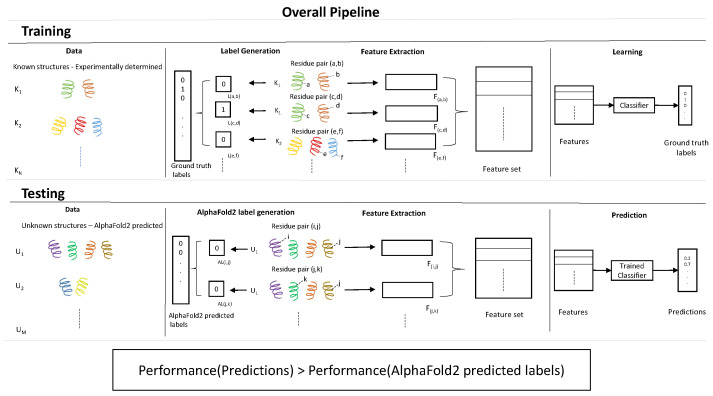
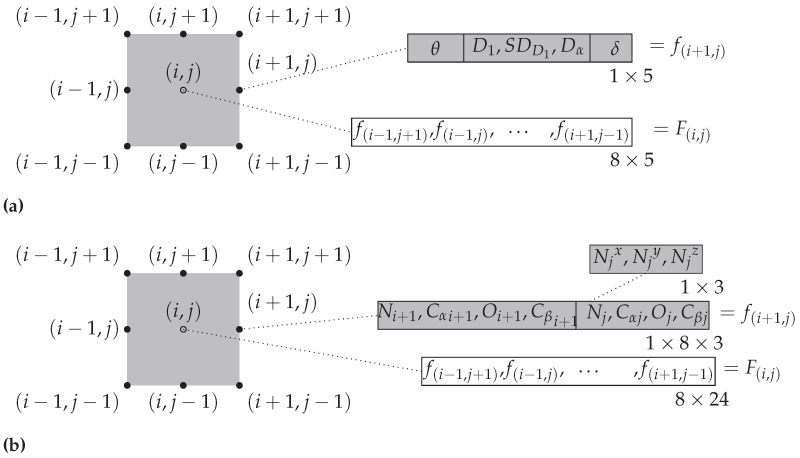
Background: Residue contacts maps offer a 2-d reduced representation of 3-dprotein structures and constitute a structural constraint and scaffold in structuralmodeling. In addition, contact maps are also an effective tool in identifying interhelicalbinding sites and drawing insights about protein function. While mostworks predict contact maps using features derived from sequences, we believeinformation from known structures can be leveraged for a prediction improvementin unknown structures where decent approximate structures such as onespredicted by AlphaFold2 are available. Results: Alphafold2’s predicted structures are found to be quite accurate atinter-helical residue contact prediction task, achieving 83% average precision. Weadopt an unconventional approach, using features extracted from atomic structuresin the neighborhood of a residue pair and use them to predicting residuecontact. We trained on features derived from experimentally determined structuresand predicted on features derived from AlphaFold2’s predicted structures.Our results demonstrate a remarkable improvement over AlphaFold2 achievingover 91.9% average precision for held-out and over 89.5% average precision incross validation experiments. Conclusion: Training on features generated from experimentally determinedstructures, we were able to leverage knowledge from known structures to significantlyimprove the contacts predicted using AlphaFold2 structures. Wedemonstrated that using coordinates directly (instead of the proposed features)does not lead to an improvement in contact prediction performance.
Overview
The claims and statistics of this paper haven’t been checked yet.
Free: it reads the open-access text and checks the first 5 claims that cite a source we can check. Create a free account to check every claim.
Integrity signals
Registry
Cites
Statistics
Figures
Verification
Claims the paper makes
The claims and statistics of this paper haven’t been checked yet.
Free: it reads the open-access text and checks the first 5 claims that cite a source we can check. Create a free account to check every claim.
Self-check
Percentages, sums and reported differences re-computed from the paper’s own numbers.
The self-check needs the paper’s full text.
Citations
Cites
Highly accurate protein structure prediction with AlphaFold
Jumper, J., Evans, R., Pritzel, A., Green, T., Figurnov, M., Ronneberger, O., Tunyasuvunakool, K., Bates, R., Žídek, A., Potapenko, A., et al. (2021) · Nature · doi:10.1038/s41586-021-03819-2 · Cited by 43,764
Research works printed but not linked: 57
- [1]Krogh A. Larsson B. Von Heijne G. Sonnhammer E.L. Predicting transmembrane protein topology with a hidden Markov model: Application to complete genomes J. Mol. Biol. 2001 305 567 580 10.1006/jmbi.2000.4315 11152613 · DOI · Paper page
- [2]Almén M.S. Nordström K.J. Fredriksson R. Schiöth H.B. Mapping the human membrane proteome: A majority of the human membrane proteins can be classified according to function and evolutionary origin BMC Biol. 2009 7 50 10.1186/1741-7007-7-50 19678920 PMC2739160 · DOI · Paper page
- [3]Lagerström M.C. Schiöth H.B. Structural diversity of G protein-coupled receptors and significance for drug discovery Nat. Rev. Drug Discov. 2008 7 339 357 10.1038/nrd2518 18382464 · DOI · Paper page
- [4]Yin H. Flynn A.D. Drugging membrane protein interactions Annu. Rev. Biomed. Eng. 2016 18 51 76 10.1146/annurev-bioeng-092115-025322 26863923 PMC4968933 · DOI · Paper page
- [5]Kermani A.A. A guide to membrane protein X-ray crystallography FEBS J. 2021 288 5788 5804 10.1111/febs.15676 33340246 · DOI · Paper page
- [6]Albers R.W.W. Cell membrane structures and functions Basic Neurochemistry Elsevier Amsterdam, The Netherlands 2012 26 39
- [7]Sun J. Frishman D. DeepHelicon: Accurate prediction of inter-helical residue contacts in transmembrane proteins by residual neural networks J. Struct. Biol. 2020 212 107574 10.1016/j.jsb.2020.107574 32663598 · DOI
- [8]Martin J. Sawyer A. Elucidating the Structure of Membrane Proteins|BioTechniques 2019 Available online: https://www.future-science.com/doi/10.2144/btn-2019-0030#:~:text=Membrane%20proteins%20are%20coded%20for,due%20to%20their%20hydrophobic%20nature (accessed on 15 June 2023) · DOI
- [9]Josts I. Nitsche J. Maric S. Mertens H.D. Moulin M. Haertlein M. Prevost S. Svergun D.I. Busch S. Forsyth V.T. Conformational states of ABC transporter MsbA in a lipid environment investigated by small-angle scattering using stealth carrier nanodiscs Structure 2018 26 1072 1079 10.1016/j.str.2018.05.007 29937358 · DOI
- [10]Zhang S. Tao F. Qing R. Tang H. Skuhersky M. Corin K. Tegler L. Wassie A. Wassie B. Kwon Y. QTY code enables design of detergent-free chemokine receptors that retain ligand-binding activities Proc. Natl. Acad. Sci. USA 2018 115 E8652 E8659 10.1073/pnas.1811031115 30154163 PMC6140526 · DOI
- [11]Rohl C.A. Strauss C.E. Misura K.M. Baker D. Protein structure prediction using Rosetta Methods in Enzymology Elsevier Amsterdam, The Netherlands 2004 Volume 383 66 93 15063647
- [12]AlQuraishi M. Machine learning in protein structure prediction Curr. Opin. Chem. Biol. 2021 65 1 8 10.1016/j.cbpa.2021.04.005 34015749 · DOI · Paper page
- [13]Raval A. Piana S. Eastwood M.P. Shaw D.E. Assessment of the utility of contact-based restraints in accelerating the prediction of protein structure using molecular dynamics simulations Protein Sci. 2016 25 19 29 10.1002/pro.2770 26266489 PMC4815320 · DOI
- [14]Dago A.E. Schug A. Procaccini A. Hoch J.A. Weigt M. Szurmant H. Structural basis of histidine kinase autophosphorylation deduced by integrating genomics, molecular dynamics, and mutagenesis Proc. Natl. Acad. Sci. USA 2012 109 E1733 E1742 10.1073/pnas.1201301109 22670053 PMC3387055 · DOI · Paper page
- [15]Vangone A. Bonvin A.M. Contacts-based prediction of binding affinity in protein–protein complexes Elife 2015 4 e07454 10.7554/eLife.07454 26193119 PMC4523921 · DOI · Paper page
- [16]Zhang H. Bei Z. Xi W. Hao M. Ju Z. Saravanan K.M. Zhang H. Guo N. Wei Y. Evaluation of residue-residue contact prediction methods: From retrospective to prospective PLoS Comput. Biol. 2021 17 e1009027 10.1371/journal.pcbi.1009027 34029314 PMC8177648 · DOI
- [17]Ren Z. Ren P.X. Balusu R. Yang X. Transmembrane helices tilt, bend, slide, torque, and unwind between functional states of rhodopsin Sci. Rep. 2016 6 34129 10.1038/srep34129 27658480 PMC5034245 · DOI
- [18]Sheridan R. Fieldhouse R.J. Hayat S. Sun Y. Antipin Y. Yang L. Hopf T. Marks D.S. Sander C. Evfold. org: Evolutionary couplings and protein 3d structure prediction bioRxiv 2015 021022 10.1101/021022 · DOI
- [19]Baldassi C. Zamparo M. Feinauer C. Procaccini A. Zecchina R. Weigt M. Pagnani A. Fast and accurate multivariate Gaussian modeling of protein families: Predicting residue contacts and protein-interaction partners PLoS ONE 2014 9 e92721 10.1371/journal.pone.0092721 24663061 PMC3963956 · DOI · Paper page
- [20]Wang S. Sun S. Li Z. Zhang R. Xu J. Accurate de novo prediction of protein contact map by ultra-deep learning model PLoS Comput. Biol. 2017 13 e1005324 10.1371/journal.pcbi.1005324 28056090 PMC5249242 · DOI · Paper page
- [21]Kandathil S.M. Greener J.G. Jones D.T. Prediction of interresidue contacts with DeepMetaPSICOV in CASP13 Proteins Struct. Funct. Bioinform. 2019 87 1092 1099 10.1002/prot.25779 PMC6899903 31298436 · DOI · Paper page
- [22]Li J. Sawhney A. Lee J.Y. Liao L. Improving Inter-Helix Contact Prediction with Local 2D Topological Information IEEE/ACM Trans. Comput. Biol. Bioinform. 2023 20 3001 3012 10.1109/TCBB.2023.3274361 37155404 · DOI
- [23]He K. Zhang X. Ren S. Sun J. Deep residual learning for image recognition Proceedings of the IEEE conference on computer vision and pattern recognition Las Vegas, NV, USA 26 June–1 July 2016 770 778
- [24]Senior A.W. Evans R. Jumper J. Kirkpatrick J. Sifre L. Green T. Qin C. Žídek A. Nelson A.W. Bridgland A. Improved protein structure prediction using potentials from deep learning Nature 2020 577 706 710 10.1038/s41586-019-1923-7 31942072 · DOI · Paper page
- [25]Du Z. Su H. Wang W. Ye L. Wei H. Peng Z. Anishchenko I. Baker D. Yang J. The trRosetta server for fast and accurate protein structure prediction Nat. Protoc. 2021 16 5634 5651 10.1038/s41596-021-00628-9 34759384 · DOI · Paper page
- [26]Xu J. Distance-based protein folding powered by deep learning Proc. Natl. Acad. Sci. USA 2019 116 16856 16865 10.1073/pnas.1821309116 31399549 PMC6708335 · DOI · Paper page
- [28]Vaswani A. Shazeer N. Parmar N. Uszkoreit J. Jones L. Gomez A.N. Kaiser Ł. Polosukhin I. Attention is all you need Adv. Neural Inf. Process. Syst. 2017 30 5998 6008
- [29]Saldaño T. Escobedo N. Marchetti J. Zea D.J. Mac Donagh J. Velez Rueda A.J. Gonik E. García Melani A. Novomisky Nechcoff J. Salas M.N. Impact of protein conformational diversity on AlphaFold predictions Bioinformatics 2022 38 2742 2748 10.1093/bioinformatics/btac202 35561203 · DOI · Paper page
- [30]Outeiral C. Nissley D.A. Deane C.M. Current structure predictors are not learning the physics of protein folding Bioinformatics 2022 38 1881 1887 10.1093/bioinformatics/btab881 35099504 PMC8963306 · DOI · Paper page
- [31]Dobson L. Szekeres L.I. Gerdán C. Langó T. Zeke A. Tusnády G.E. TmAlphaFold database: Membrane localization and evaluation of AlphaFold2 predicted alpha-helical transmembrane protein structures Nucleic Acids Res. 2023 51 D517 D522 10.1093/nar/gkac928 36318239 PMC9825488 · DOI · Paper page
- [32]Liu J. Guo Z. Wu T. Roy R.S. Chen C. Cheng J. Improving AlphaFold2-based Protein Tertiary Structure Prediction with MULTICOM in CASP15 Commun. Chem. 2023 6 188 10.1038/s42004-023-00991-6 37679431 PMC10484931 · DOI · Paper page
- [33]Evans R. O’Neill M. Pritzel A. Antropova N. Senior A. Green T. Žídek A. Bates R. Blackwell S. Yim J. Protein complex prediction with AlphaFold-Multimer bioRxiv 2021 10.1101/2021.10.04.463034 · DOI · Paper page
- [34]McCafferty C.L. Pennington E.L. Papoulas O. Taylor D.W. Marcotte E.M. Does AlphaFold2 model proteins’ intracellular conformations? An experimental test using cross-linking mass spectrometry of endogenous ciliary proteins Commun. Biol. 2023 6 421 10.1038/s42003-023-04773-7 37061613 PMC10105775 · DOI · Paper page
- [35]Sawhney A. Li J. Liao L. Inter-helical residue contact prediction in α-helical Transmembrane proteins using structural features International Work-Conference on Bioinformatics and Biomedical Engineering (IWBBIO) Springer Cham, Switzerland 2023
- [36]Varadi M. Anyango S. Deshpande M. Nair S. Natassia C. Yordanova G. Yuan D. Stroe O. Wood G. Laydon A. AlphaFold Protein Structure Database: Massively expanding the structural coverage of protein-sequence space with high-accuracy models Nucleic Acids Res. 2022 50 D439 D444 10.1093/nar/gkab1061 34791371 PMC8728224 · DOI · Paper page
- [38]Fawcett T. An introduction to ROC analysis Pattern Recognit. Lett. 2006 27 861 874 10.1016/j.patrec.2005.10.010 · DOI · Paper page
- [42]Defazio A. Bach F. Lacoste-Julien S. SAGA: A fast incremental gradient method with support for non-strongly convex composite objectives Adv. Neural Inf. Process. Syst. 2014 27 1646 1654
- [43]James G. Witten D. Hastie T. Tibshirani R. An Introduction to Statistical Learning Springer New York, NY, USA 2013 Volume 112
- [44]Kohavi R. A study of cross-validation and bootstrap for accuracy estimation and model selection Proceedings of the Ijcai Montreal, QC, Canada 20–25 August 1995 Volume 14 1137 1145
- [50]Kozma D. Simon I. Tusnady G.E. PDBTM: Protein Data Bank of transmembrane proteins after 8 years Nucleic Acids Res. 2012 41 D524 D529 10.1093/nar/gks1169 23203988 PMC3531219 · DOI · Paper page
- [51]Xu J. Zhang Y. How significant is a protein structure similarity with TM-score= 0.5? Bioinformatics 2010 26 889 895 10.1093/bioinformatics/btq066 20164152 PMC2913670 · DOI · Paper page
- [52]Wang X.F. Chen Z. Wang C. Yan R.X. Zhang Z. Song J. Predicting residue-residue contacts and helix-helix interactions in transmembrane proteins using an integrative feature-based random forest approach PLoS ONE 2011 6 e26767 10.1371/journal.pone.0026767 22046350 PMC3203928 · DOI
- [53]Hönigschmid P. Frishman D. Accurate prediction of helix interactions and residue contacts in membrane proteins J. Struct. Biol. 2016 194 112 123 10.1016/j.jsb.2016.02.005 26851352 · DOI
- [54]The UniProt Consortium UniProt: The Universal Protein knowledgebase in 2023 Nucleic Acids Res. 2023 51 D523 D531 10.1093/nar/gkac1052 36408920 PMC9825514 · DOI · Paper page
- [56]Berman H.M. Battistuz T. Bhat T.N. Bluhm W.F. Bourne P.E. Burkhardt K. Feng Z. Gilliland G.L. Iype L. Jain S. The protein data bank Acta Crystallogr. Sect. Biol. Crystallogr. 2002 58 899 907 10.1107/S0907444902003451 12037327 · DOI · Paper page
- [57]Burley S.K. Bhikadiya C. Bi C. Bittrich S. Chao H. Chen L. Craig P.A. Crichlow G.V. Dalenberg K. Duarte J.M. RCSB Protein Data Bank (RCSB. org): Delivery of experimentally-determined PDB structures alongside one million computed structure models of proteins from artificial intelligence/machine learning Nucleic Acids Res. 2023 51 D488 D508 10.1093/nar/gkac1077 36420884 PMC9825554 · DOI · Paper page
- [58]Faezov B. Dunbrack Jr R.L. PDBrenum: A webserver and program providing Protein Data Bank files renumbered according to their UniProt sequences PLoS ONE 2021 16 e0253411 10.1371/journal.pone.0253411 34228733 PMC8259974 · DOI
- [59]Lee H.S. Choi J. Yoon S. QHELIX: A computational tool for the improved measurement of inter-helical angles in proteins Protein J. 2007 26 556 561 10.1007/s10930-007-9097-9 17805951 · DOI
- [64]Karlin S. Zuker M. Brocchieri L. Measuring residue association in protein structures possible implications for protein folding J. Mol. Biol. 1994 239 227 248 10.1006/jmbi.1994.1365 8196056 · DOI
- [65]Mahbub S. Bayzid M.S. EGRET: Edge Aggregated Graph Attention Networks and Transfer Learning Improve Protein-Protein Interaction Site Prediction Briefings Bioinform. 2021 23 bbab578 10.1093/bib/bbab578 35106547 · DOI · Paper page
- [66]Maas A.L. Hannun A.Y. Ng A.Y. Rectifier nonlinearities improve neural network acoustic models Proceedings of the ICML Atlanta, GA, USA 16–21 June 2013 Volume 30 3
- [67]Kingma D.P. Ba J. Adam: A method for stochastic optimization arXiv 2014 1412.6980
- [68]Glorot X. Bengio Y. Understanding the difficulty of training deep feedforward neural networks Proceedings of the Thirteenth International Conference on Artificial Intelligence and Statistics, JMLR Workshop and Conference Proceedings Sardinia, Italy 13–15 May 2010 249 256
- [69]Pascanu R. Mikolov T. Bengio Y. On the difficulty of training recurrent neural networks Proceedings of the International Conference on Machine Learning PMLR, Atlanta, GA, USA 17–19 June 2013 1310 1318
- [70]Paszke A. Gross S. Massa F. Lerer A. Bradbury J. Chanan G. Killeen T. Lin Z. Gimelshein N. Antiga L. PyTorch: An Imperative Style, High-Performance Deep Learning Library Advances in Neural Information Processing Systems 32 Curran Associates, Inc. Glasgow, UK 2019 8024 8035
- [71]Hastie T. Tibshirani R. Friedman J. The Elements of Statistical Learning: Data Mining, Inference, And Prediction Springer New York, NY, USA 2009 Volume 2
- [73]Davis J. Goadrich M. The relationship between Precision-Recall and ROC curves Proceedings of the 23rd International Conference on Machine Learning Pittsburgh, Pennsylvania 25–29 June 2006 233 240
Metadata
- Authors
- Sawhney, A., Li, J., & Liao, L.
- Affiliations
- University of Delaware (US)
- University of Shanghai for Science and Technology (CN)
- Corresponding author
- Liao, Li
- Venue
- International Journal of Molecular Sciences
- Publisher
- Research Square Platform LLC
- Published
- 2023-10-26
- Volume
- 25
- Issue
- 10
- Pages
- 5247-5247
- ISSN
- 1422-0067 (ISSN-L)
- PMC
- PMC11121315
- OpenAlex
- W4396892857
- Semantic Scholar
- 677f4ea7b31016d6db1a8aa706657f9b98ccb401
- Cited by
- 6
- References
- 1
- Citations by year
- 2026: 1 · 2025: 4 · 2024: 1
- FWCI
- 0.81
- Type
- journal article
- Language
- en
- Open access
- gold
- doi.org
- Locations
- International Journal of Molecular Sciences (publishedVersion, cc-by)
- Research Square (acceptedVersion, cc-by)
- PubMed Central (publishedVersion, cc-by)
- PubMed (publishedVersion)
- PubMed Central (submittedVersion, cc-by)
- Funders
- National Science Foundation (P20 GM103446, 1820103)
- Delaware IDeA Network of Biomedical Research Excellence (P20‐GM103446)
- National Institutes of Health (GM103446)
- National Institute of General Medical Sciences (GM103446, P20GM103446)
- Topics
- Life Sciences › Biochemistry, Genetics and Molecular Biology › Molecular Biology › Protein Structure and Dynamics
- Life Sciences › Biochemistry, Genetics and Molecular Biology › Molecular Biology › Machine Learning in Bioinformatics
- Life Sciences › Biochemistry, Genetics and Molecular Biology › Structural Biology › Enzyme Structure and Function
- Keywords
- AlphaFold2, alpha-helical transmembrane proteins, contact maps, structural features, protein structure prediction
About these checks
Registry, retraction, Cites and statistics results are computed, not judged, with one exception: a printed reference that no index lists is read once by a model before it counts as a citation error. Claims are extracted by a model and kept only when their quote appears verbatim in the text; each cited source is then checked, with a model’s help, for whether it says what the claim relies on. Those verdicts can be wrong — read the claim’s quote and the cited source before relying on one.
Statistics and arithmetic are recomputed, not judged.
Confidence bands are shown only for fields calibrated on our annotated test set. None is calibrated yet, so no band is shown.
What counts as a claim ›How we measure confidence ›How we check this ›
Are you an author, or do you see a problem with this page? Request a review
How to cite
Cite CoChat for the checks on this page, and the paper for its own findings.
- This page
- CoChat. (2026). Citation check: Improving AlphaFold predicted contacts inalpha-helical transmembrane proteins structuresusing structural features. https://app.cochat.ai/papers/10.21203/rs.3.rs-3475769/v1
- The paper
- Sawhney, A., Li, J., & Liao, L. (2023). Improving AlphaFold predicted contacts inalpha-helical transmembrane proteins structuresusing structural features. International Journal of Molecular Sciences. https://doi.org/10.21203/rs.3.rs-3475769/v1
Data sources
Bibliographic data: Semantic Scholar, OpenAlex, Crossref.
Contains information from the Semantic Scholar Academic Graph Datasets, made available under the ODC Attribution License (ODC-BY 1.0).
Semantic Scholar’s data is described in: Kinney, R., et al. (2023). The Semantic Scholar Open Data Platform. arXiv:2301.10140.
