

The DOI matches its Crossref record; 93 of the 93 references it cites were found in a registry or an index.
Clinical Text Summarization: Adapting Large Language Models Can Outperform Human Experts
Open accessPreprint — published as 10.1038/s41591-024-02855-5 · Paper page
Abstract
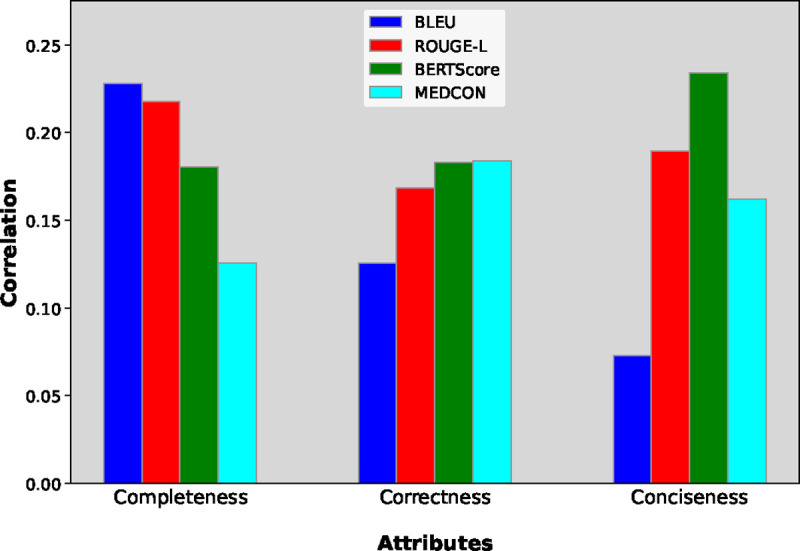
Sifting through vast textual data and summarizing key information from electronic health records (EHR) imposes a substantial burden on how clinicians allocate their time. Although large language models (LLMs) have shown immense promise in natural language processing (NLP) tasks, their efficacy on a diverse range of clinical summarization tasks has not yet been rigorously demonstrated. In this work, we apply domain adaptation methods to eight LLMs, spanning six datasets and four distinct clinical summarization tasks: radiology reports, patient questions, progress notes, and doctor-patient dialogue. Our thorough quantitative assessment reveals trade-offs between models and adaptation methods in addition to instances where recent advances in LLMs may not improve results. Further, in a clinical reader study with ten physicians, we show that summaries from our best-adapted LLMs are preferable to human summaries in terms of completeness and correctness. Our ensuing qualitative analysis highlights challenges faced by both LLMs and human experts. Lastly, we correlate traditional quantitative NLP metrics with reader study scores to enhance our understanding of how these metrics align with physician preferences. Our research marks the first evidence of LLMs outperforming human experts in clinical text summarization across multiple tasks. This implies that integrating LLMs into clinical workflows could alleviate documentation burden, empowering clinicians to focus more on personalized patient care and the inherently human aspects of medicine.
Overview
The claims and statistics of this paper haven’t been checked yet.
Run the check — free, no account needed. It reads the open-access text and checks the sources it cites.
Integrity signals
Registry
Cites
Statistics
Figures
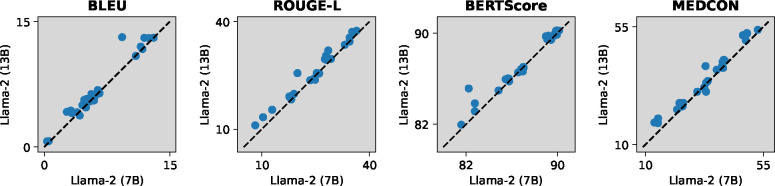
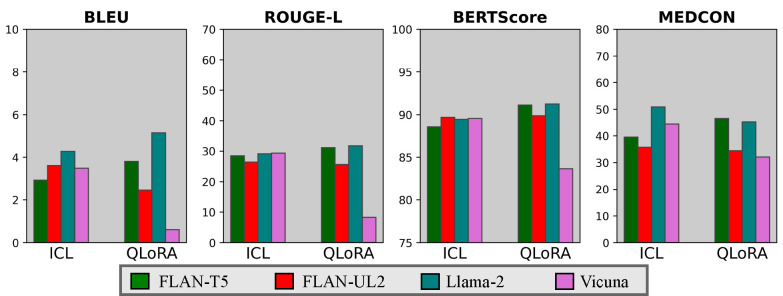
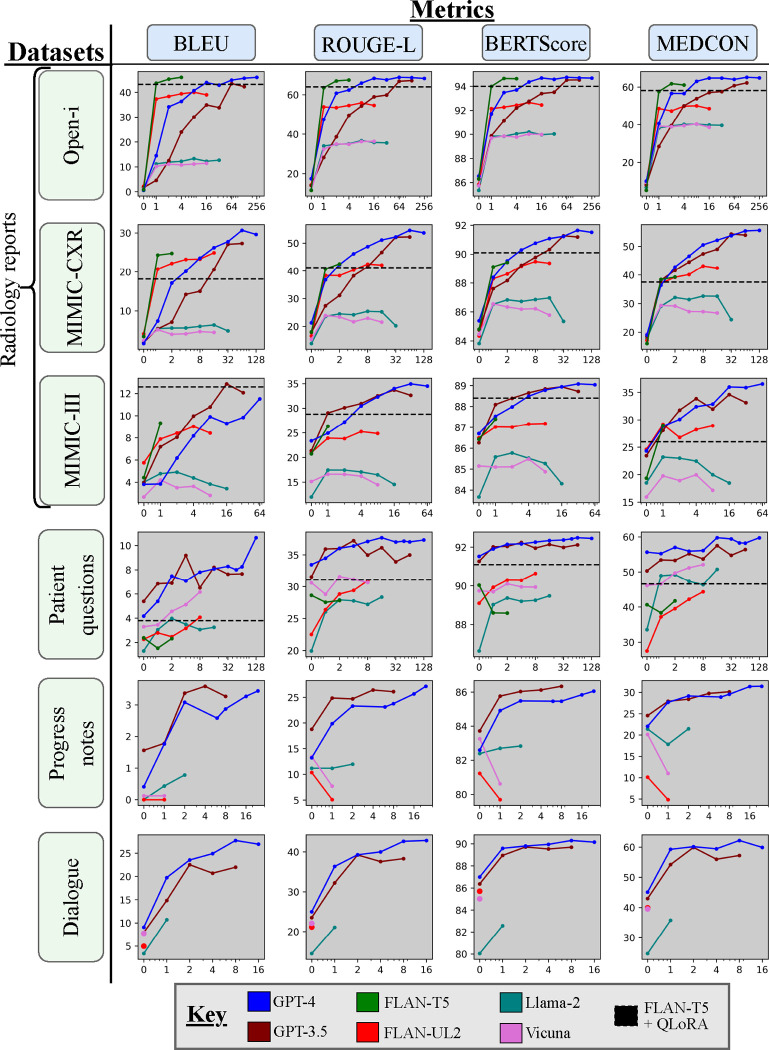
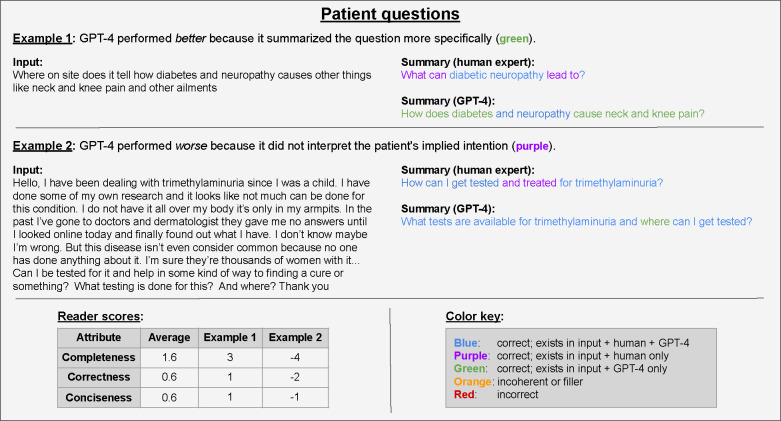
Verification
Claims the paper makes
The claims and statistics of this paper haven’t been checked yet.
Run the check — free, no account needed. It reads the open-access text and checks the sources it cites.
Claims other papers make about this one
Each is checked against this paper’s own text: does it say what the citing paper says it does?
The source backs part of the claim, not all of it — or backs it for a different population, condition or comparison.
In the citing paper
“Most prior research in this field speculates on high-level concerns such as inaccuracy and real-world impacts [43, 44, 54, 86, 93]. However, these studies rarely articulate concrete criteria for when and why LLMs should or should not provide professional advice to users.”
From (A)I Am Not a Lawyer, But...: Engaging Legal Experts towards Responsible LLM Policies for Legal Advice (2024) · cites this paper as [86]
Experimental — accuracy not yet measuredThe cited source says what the claim attributes to it.
In the citing paper
“Domain-specific LLMs, fine-tuned on medical corpora or using knowledge graph embeddings, perform well in clinical text summarization [10, 11], note generation [12, 13], and medical question answering [14].”
From Enhancing hepatopathy clinical trial efficiency: a secure, large language model-powered pre-screening pipeline (2025) · cites this paper as [12]
Self-check
Percentages, sums and reported differences re-computed from the paper’s own numbers.
The self-check needs the paper’s full text.
Citations
Cites
Vaswani, A., Shazeer, N., Parmar, N., Uszkoreit, J., Jones, L., Gomez, A. N., Kaiser, L., & Polosukhin, I. (2017) · arXiv · doi:10.48550/arxiv.1706.03762 · Cited by 120,404 · cited 1×
“Large language models (LLMs) have demonstrated astounding performance, propelled by both the transformer architecture [73] and increasing scales of data and compute, resulting in widespread adoption of models such as ChatGPT [6].”
MethodA guideline of selecting and reporting intraclass correlation coefficients for reliability research
Koo, T. K., & Li, M. Y. (2016) · Journal of Chiropractic Medicine · doi:10.1016/j.jcm.2016.02.012 · Cited by 31,709 · cited 1×
“We estimate intra-reader correlation based on a mean-rating, fixed agreement, two-may mixed effects model [42] using the Pingouin package [80].”
MethodLanguage Models are Few-Shot Learners
Brown, T. B., Mann, B., Ryder, N., Subbiah, M., Kaplan, J., Dhariwal, P., Neelakantan, A., Shyam, P., Sastry, G., Askell, A., et al. (2020) · arXiv · doi:10.48550/arxiv.2005.14165 · Cited by 23,372 · cited 8×
“Large language models (LLMs) have demonstrated astounding performance, propelled by both the transformer architecture [73] and increasing scales of data and compute, resulting in widespread adoption of models such as ChatGPT [6].”
BackgroundMethodInfluentialBLEU: a method for automatic evaluation of machine translation
Papineni, K., Roukos, S., Ward, T., & Zhu, W.-J. (2001) · Proceedings of the 40th Annual Meeting on Association for Computational Linguistics - ACL '02 · doi:10.3115/1073083.1073135 · Cited by 21,344 · cited 8×
“BLEU [52], the simplest metric, calculates the degree of overlap between the reference and generated texts by considering 1- to 4-gram sequences.”
BackgroundInfluentialLoRA: Low-Rank Adaptation of Large Language Models
Hu, E. J., Shen, Y., Wallis, P., Allen-Zhu, Z., Li, Y., Wang, S., Wang, L., & Chen, W. (2021) · arXiv · doi:10.48550/arxiv.2106.09685 · Cited by 13,453 · cited 2×
“Low-rank adaptation (LoRA) [31] has emerged as an effective, lightweight approach for fine-tuning LLMs by altering a small subset of model weights—often < 0.”
BackgroundMethodDecoupled Weight Decay Regularization
Loshchilov, I., & Hutter, F. (2017) · arXiv · doi:10.48550/arxiv.1711.05101 · Cited by 12,522
Exploring the Limits of Transfer Learning with a Unified Text-to-Text Transformer
Raffel, C., Shazeer, N., Roberts, A., Lee, K., Narang, S., Matena, M., Zhou, Y., Li, W., & Liu, P. J. (2019) · arXiv · doi:10.48550/arxiv.1910.10683 · Cited by 10,929 · cited 1×
“The original T5 “text-to-text transfer transformer” model [55] demonstrated excellent performance in transfer learning using the seq2seq architecture.”
MethodTransformers: State-of-the-Art Natural Language Processing
Wolf, T., Debut, L., Sanh, V., Chaumond, J., Delangue, C., Moi, A., Cistac, P., Rault, T., Louf, R., Funtowicz, M., et al. (2020) · Proceedings of the 2020 Conference on Empirical Methods in Natural Language Processing: System Demonstrations · doi:10.18653/v1/2020.emnlp-demos.6 · Cited by 8,741
International Journal of Environmental Research and Public Health
Casariego Vales, E., A.M., C.-C., J.L., L., R.M., M.-P., D., O.-B., M., O.-C., P., R.-S., & F.J., S. (2013) · International Journal of Environmental Research and Public Health · doi:10.3390/ijerph · Cited by 7,742
A Survey on Evaluation of Large Language Models
Chang, Y., Wang, X., Wang, J., Wu, Y., Yang, L., Zhu, K., Chen, H., Yi, X., Wang, C., Wang, Y., et al. (2024) · ACM Transactions on Intelligent Systems and Technology · doi:10.1145/3641289 · Cited by 4,254 · cited 1×
“Beyond the scope of our work, there’s further potential to reduce hallucinations through incorporating checks by a human, checks by another LLM, or using a model ensemble to create a “committee of experts” [11, 39].”
Method
Research works printed but not linked: 5
- [15]Chung H. W., Hou L., Longpre S., Zoph B., Tay Y., Fedus W., Li E., Wang X., Dehghani M., Brahma S., Scaling instruction-finetuned language models. arXiv preprint arXiv:2210.11416 (2022). · arXiv
- [18]Demner-Fushman D., Ananiadou S. & Cohen K. B. The 22nd Workshop on Biomedical Natural Language Processing and BioNLP Shared Tasks in The 22nd Workshop on Biomedical Natural Language Processing and BioNLP Shared Tasks (2023).
- [27]Gao Y., Miller T., Afshar M. & Dligach D. BioNLP Workshop 2023 Shared Task 1A: Problem List Summarization in Proceedings of the 22nd Workshop on Biomedical Language Processing (2023).
- [61]Soldaini L. & Goharian N. Quickumls: a fast, unsupervised approach for medical concept extraction in MedIR workshop, sigir (2016), 1– 4.
- [65]Tay Y., Dehghani M., Tran V. Q., Garcia X., Wei J., Wang X., Chung H. W., Bahri D., Schuster T., Zheng S., Ul2: Unifying language learning paradigms in The Eleventh International Conference on Learning Representations (2022).
Cited by
Sorted by citations
Items 101–176 of 176
Pasichnyk, V., & Horlatch, V. (2025) · Eastern-European Journal of Enterprise Technologies · doi:10.15587/1729-4061.2025.337915 · Cited by 3
“Despite the general nature of training, LLMs were able to answer clinical questions, solve diagnostic problems, and analyze medical texts, even if the model was not specifically trained on them [14, 15].”
Llama3SP: A resource-Efficient large language model for agile story point estimation
Montoya, J. C. S., Ríos, N. T., & Villegas, J. A. J. (2025) · Natural Language Processing Journal · doi:10.1016/j.nlp.2025.100189 · Cited by 1
Jo, E., Noh, T. I., & Joo, H. J. (2025) · Diagnostics · doi:10.3390/diagnostics15192474 · Cited by 4
“Large language models (LLMs) have demonstrated significant advances in medical applications [11,12], including information extraction from electronic health records [13], clinical text summarization [14], and document classification [15].”
TreatRAG: A Framework for Personalized Treatment Recommendation
Liu, C.-C., Yao, H.-R., Chang, D., & Frieder, O. (2025) · ACM Conference on Recommender Systems (RecSys) · doi:10.1145/3705328.3748022 · Cited by 2
“In the medical field, LLMs were applied to tasks such as clinical note summarization[6, 23] and question-answering [2, 4].”
QM-ToT: A Medical Tree of Thoughts Reasoning Framework for Quantized Model
Yang, Z., Qian, J., Tan, K. C., et al. (2025) · Poster Volume 0007 The 2026 Twenty-Second International Conference on Intelligent Computing July 23-26, 2026 Toronto, Canada · doi:10.48550/arxiv.2504.12334 · Cited by 3
“The tasks include medical text summarization [19], [20], medical text generation [21], and text simplification [22].”
Farmer, M., Popescu, M., & Powell, K. (2025) · Journal of the American Medical Informatics Association · doi:10.1093/jamia/ocaf006 · Cited by 7
“14,15,22,54,55 This study uses a language model fine-tuned on consensus data, annotated by clinical experts, to accelerate ontology engineering.”
An Effective Retrieval Method to Improve RAG Performance
Mengmeng, S., Zhibin, L., Qingwei, W., Man, H., & Feiyang, X. (2024) · International Conference on Data Science and Information Technology (DSIT) · doi:10.1109/dsit61374.2024.10881380 · Cited by 7
S3LLM: Large-Scale Scientific Software Understanding with LLMs using Source, Metadata, and Document
Shaik, K., Wang, D., Zheng, W., Cao, Q.-L., Fan, H., Schwartz, P., & Feng, Y.-H. (2024) · International Conference on Conceptual Structures · doi:10.48550/arxiv.2403.10588 · Cited by 3
“LLMs have shown remarkable capabilities across various tasks, including chatbot interactions [15, 3, 5], text summarization [13, 4, 14], and content creation [2, 7, 8], demonstrating their potential to vastly improve programming and documentation practices.”
Towards Adapting Open-Source Large Language Models for Expert-Level Clinical Note GenerationPreprint
Wang, H., Gao, C., Liu, B., Xu, Q., Hussein, G., Labban, M. E., Iheasirim, K., Korsapati, H. R., Outcalt, C., & Sun, J. (2024) · arXiv (Cornell University) · doi:10.48550/arxiv.2405.00715 · Cited by 9
“We used Gemini 1.0 Pro as the teacher model in this study. achieved using GPT-4 along with few-shot in-context learning (Giorgi et al., 2023; Van Veen et al., 2023).”
InfluentialSo, J.-H., Chang, J., Kim, E., et al. (2024) · arXiv.org · doi:10.48550/arxiv.2403.17428 · Cited by 3
“Along with these findings, a large number of evidence is accumulating that LLMs can perform significantly well on clinical tasks other than solving structured clinical questions, such as clinical text summarization, when appropriate techniques are used for aligning the LLMs [24].”
Learning Clinical Representations Under Systematic Distribution Shift
Zhang, Y., & Li, S. (2026) · arXiv.org · doi:10.48550/arxiv.2603.07348 · Cited by 2
“Continued domain-specific pretraining [105, 106, 107, 108, 109] has demonstrated improvements in clinical reasoning and documentation tasks.”
Dual-stage and Lightweight Patient Chart Summarization for Emergency Physicians
Wu, J., Zaidi, S., Teitge, B. D., Leung, H., Zhou, J., Holodinsky, J. K., & Drew, S. (2025) · IEEE Annual Congress on Artificial Intelligence of Things (AIoT) · doi:10.1109/aiot66900.2025.00018 · Cited by 3
“With the rise of LLMs, Van Veen et al. [21], [22] demonstrated that adapted LLMs can even outperform medical experts on summarizing clinical notes while achieving higher relevance and accuracy scores than human-written summaries.”
Automatic text summarization techniques: A categorization, evolution and future scope
Belwal, R. C., & Gupta, A. K. (2025) · Engineering Applications of Artificial Intelligence · doi:10.1016/j.engappai.2025.111216 · Cited by 4
OrthoInsight: Rib Fracture Diagnosis and Report Generation Based on Multi-Modal Large Models
Wu, N.-Y., Zhang, J.-B., Zhao, W., et al. (2025) · arXiv.org · doi:10.48550/arxiv.2507.13993 · Cited by 2
“Research has shown that LLMs fine-tuned in the medical domain can generate summaries that are as accurate as, or even more accurate than, those written by human doctors (87% of clinicians rated LLM-generated summaries as equivalent or superior to human-written ones) [16] [15].”
Towards Scalable SOAP Note Generation: A Weakly Supervised Multimodal Framework
Kamal, S., Oates, T., & Wan, J. (2025) · arXiv.org · doi:10.48550/arxiv.2506.10328 · Cited by 2
“Artificial intelligence has been widely applied in the medical domain for tasks such as medical image captioning [6], clinical text summarization [26], discharge note generation [10], and medical question answering [28].”
Alorbany, A., Sheta, M., Hagag, A., et al. (2025) · arXiv.org · doi:10.48550/arxiv.2502.05603 · Cited by 2
Shankar, B. S., & Mohan, S. (2025) · Cureus · doi:10.7759/cureus.79556 · Cited by 3
“Overall, LLMs show promising potential to revolutionize research synthesis in healthcare, demanding further research to optimize their impact on systematic review quality [14].”
Understanding Developer-Analyzer Interactions in Code Reviews
Schäf, M., Çirişci, B., Luo, L., Mansur, M. N., Tripp, O., Sanchez, D., Zhou, Q., & Zafar, M. B. (2024) · IEEE/ACM International Conference on Automated Software Engineering (ASE) · doi:10.1145/3691620.3695257
“Veen et al. [11] further showcased the capability of large language models in summarizing complex texts and conversations, aligning with our approach of mapping developer-tool interactions to specific labels.”
A Comprehensive Study of Automatic Text Summarization Techniques
Vaishali, Sehgal, G., & Dixit, P. (2024) · International Conference on Emerging Innovations and Advanced Computing (INNOCOMP) · doi:10.1109/innocomp63224.2024.00119 · Cited by 2
“Large GPU becomes a challenge for non-commercial purposes due to the lack of high resources in order to process big datasets [33-34].”
BackgroundWendelken, S., Antony, A., Korutla, R., et al. (2024) · Workshop on Biomedical Natural Language Processing · doi:10.18653/v1/2024.bionlp-1.63 · Cited by 2
“Supervised ML approaches face difficulties in domain adaptation, and fine-tuning does not fully address these issues [1][3][5].”
BackgroundSingh, H., Kaur, R., Saluja, S., Cho, S. J., Sun, Y., & McAdams, R. M. (2026) · Healthcare · doi:10.3390/healthcare14111457 · Cited by 2
“Each section was generated independently by LLM [30,31] using structured, section-specific prompts.”
Comparative Analysis of Large Language Models in HealthcarePreprint
Santhosh, S., Abbas, F., Ahmad, H., & Szabo, C. (2026) · arXiv (Cornell University) · doi:10.48550/arxiv.2604.10316
Uncertainty-Aware Foundation Models for Clinical Data
Zhou, Q., Zhang, Y., & Li, S. (2026) · arXiv.org · doi:10.48550/arxiv.2604.04175 · Cited by 1
“Continued domain-specific pretraining and multimodal extensions further integrate structured data and temporal signals into these generative frameworks [50, 51, 52, 53].”
Zero-shot interpretable biomedical literature appraisal with generative large language models
Zhou, F., Afzal, M., Saha, A., Parrish, R., Haynes, R. B., Iorio, A., & Lokker, C. (2026) · JAMIA Open · doi:10.1093/jamiaopen/ooag043 · Cited by 1
“26 31 Moreover, advanced prompting techniques, such as chain-of-thought reasoning and stepwise decomposition, allow LLMs to articulate their decision-making process transparently, improving the interpretability and confidence.”
Benchmarking LLM Summaries of Multimodal Clinical Time Series for Remote Monitoring
Shukla, A., Yuan, Y., Tamo, B., et al. (2026) · arXiv.org · doi:10.48550/arxiv.2603.01557 · Cited by 1
“Large language models have recently been applied to clinical summarization tasks, including discharge summaries, radiology reports, and longitudinal EHR compression (Van Veen et al., 2023; 2024).”
Muasher-Kerwin, C., Hughes, M. C., Sanatizadeh, A., Mayer, J. F., & Alhoori, H. (2026) · Discover Artificial Intelligence · doi:10.1007/s44163-026-00879-z · Cited by 2
“drafting notes, extracting variables, and assisting with triage [1–3].”
Umar, M., Ali, V., Shamim, L., Musharaf, I., Hafsa, R., Ahsan, M. U., Ahmad, O., Sabhan, L. B., Saeed, M., Ahmed, S., et al. (2025) · Journal of intelligent medicine. · doi:10.1002/jim4.70015 · Cited by 1
“19 Another study evaluated LLMs in clinical note generation across 12,999 clinician annotated sentences and demonstrated 1.47% hallucination rate and 3.45% omission rate and with further refining prompts and workflows they achieve errors below previously human generated notes and it highlights the…”
InfluentialEminovic, S., Lindholz, M., Dell’Orco, A., Meddeb, A., Baumgaertner, G. L., Schulze‐Weddige, S., Siebert, E., Wattjes, M. P., Penzkofer, T., & Nawabi, J. (2025) · European Radiology · doi:10.1007/s00330-025-12122-x · Cited by 4
Assessing large language models in pediatric nephrology: toward more rigorous evaluation
Cheng, Y. (2025) · Pediatric Nephrology · doi:10.1007/s00467-025-07007-6 · Cited by 1
“Moreover, the study relies on independent scoring of the model’s responses by two experts, which introduces subjectivity, and the lack of inter-rater reliability reporting further undermines the objectivity of the evaluation results [2].”
Mugu, V. K., Sorin, V., Chan, A., et al. (2025) · Journal of Thoracic Disease · doi:10.21037/jtd-2025-1318 · Cited by 1
“Due to the complexity, length, and time-intensive nature (17,18).”
Ahmad, H. F., Sajid, J., Rasool, R. U., & Malik, A. W. (2025) · Cluster Computing · doi:10.1007/s10586-025-05793-0
“Adapted LLMs can outperform human experts in summarizing clinical texts [163], improving documentation efficiency.”
Abstractive Summarization with LLMs for Texts in Brazilian Portuguese
Camargo, H. A. P. G. D., Paiola, P. H., Garcia, G. L., & Papa, J. P. (2025) · Journal of the Brazilian Computer Society · doi:10.5753/jbcs.2025.5811 · Cited by 2
“For example, [Van Veen et al ., 2023] demonstrated that adapted LLMs can outperform medical experts in clinical text summarization tasks, suggesting their potential in alleviating documentation burdens in healthcare settings.”
Applying Large Language Models for Summarizing Electronic Health Records of Oncology Patients
de Brito, B. A. O., Filho, I. D. M. B., Malaquias, R. S., Lima, J. M. M. D., & Gurgel, A. M. (2025) · IEEE Symposium on Computers and Communications (ISCC) · doi:10.1109/iscc65549.2025.11326412
“This finding is in line with the studies of Van Veen et al. [9] [10], who evaluated the adaptation of LLMs for clinical text summarization and showed that models such as GPT-4 and Llama-2 outperformed human experts in completeness and correctness.”
Decoding large language models for radiology: strategies for fine-tuning and prompt engineering
Vahdati, S., Mahmoudi, E., Ganjizadeh, A., Chao, C., & Erickson, B. J. (2025) · Radiology Advances · doi:10.1093/radadv/umaf024 · Cited by 4
“41 Veen et al. 42 applied QLoRA for summarizing radiology reports and progress notes, noting its potential to reduce documentation burden.”
A cost-effective approach to counterbalance the scarcity of medical datasets
Magnini, B., Farzi, S., Ferrazzi, P., Ghosh, S. K., Lavelli, A., Mezzanotte, G., & Speranza, M. (2025) · Frontiers in Disaster and Emergency Medicine · doi:10.3389/femer.2025.1558200
Kiru, K. U., Pal, S. K., Aminu, K. H., et al. (2024) · 2024 3rd Edition of IEEE Delhi Section Flagship Conference (DELCON) · doi:10.1109/delcon64804.2024.10867199 · Cited by 1
Automating Transparency Mechanisms in the Judicial System Using LLMs: Opportunities and Challenges
Shastri, I., Jain, S., Engelhardt, B. E., et al. (2024) · AAAI/ACM Conference on AI, Ethics, and Society · doi:10.48550/arxiv.2408.08477 · Cited by 1
“LLMs have been shown to extract information from many kinds of documents, such as full-length novels (Chang et al. 2023), elec-a tronic health records (Van Veen et al. 2023), and financial documents (Kim, Muhn, and Nikolaev 2024).”
BackgroundPre-Gamus: Reducing Complexity of Scientific Literature as a Support against Misinformation
Colic, N., Kim, J.-D., & Rinaldi, F. (2024) · DETERMIT · doi:10.63317/26vw9t3puyzu · Cited by 1
“In particular, they have also proven to outperform previous approaches in the above tasks by far (Van Veen et al., 2023; Al-Thanyyan and Azmi, 2021; Kocmi and Federmann, 2023).”
Cho, S., Kim, C., Lee, J.-H., Chilkunda, C., Choi, S., & Yoon, J. H. (2024) · arXiv (Cornell University) · doi:10.48550/arxiv.2405.01591 · Cited by 1
“While fine-tuned models generally outperform their counterparts in few-shot setting(Van Veen et al., 2023b,a; Lewis et al., 2020), there is a growing interest in exploring domain adaptation techniques, mainly in-context learning, which do not require additional training (Agrawal et al., 2022;…”
BackgroundA Comparison of Large Language Models for Oncology Clinical Text Summarization
Izuchukwu, C., Wimmer, H., & Rebman, C. M. (2025) · Journal of Information Systems Applied Research and Analytics · doi:10.62273/igmu6476
“According to Van Veen et al. (2023), sifting through vast textual data and summarizing key information from electronic health records (EHR) imposes a substantial burden on clinicians' time.”
Beyond Literal Summarization: Redefining Hallucination for Medical SOAP Note Evaluation
Vachhani, B., Shrisvastava, K., Nema, P., & Chiranthan, S. (2026) · arXiv · doi:10.48550/arxiv.2604.14829 · Cited by 1
“Authors in [7] evaluated LLMs on clinical note generation tasks and found hallucination rates ranging from 15–35% depending on model and task complexity.”
Large language models in medical time series analysisPreprint
Han, Y., Beyan, C., Zhang, X., Liu, X., Liu, N., Sun, J., Hong, S., Ding, C., & Murino, V. (2026) · arXiv (Cornell University) · doi:10.48550/arxiv.2609.22262
“Their functional role depends on their position within the pipeline and the degree of responsibility assigned for signal interpretation, content planning, and clinical reasoning 202 .”
Parampottupadam, S., Martinez, A., Bounias, D., et al. (2026) · arXiv.org · doi:10.48550/arxiv.2607.14205
Zhao, Y., Zhang, T., Xing, H., Wong, D. F., Li, J., & Fang, T. (2026) · Information Processing & Management · doi:10.1016/j.ipm.2026.105001 · Cited by 1
Sung, Y., Jeong, H., Xu, X., & Yoon, S. H. (2026) · Proceedings of the ACM on Interactive Mobile Wearable and Ubiquitous Technologies · doi:10.1145/3810235 · Cited by 1
“LLMs have demonstrated strong performance across clinical tasks including clinical summarization [33, 77], diagnostic reasoning [30, 43], and question answering [31, 49, 67, 68].”
Hsu, F.-Y., Liu, S.-C., Mei, K.-Q., & Chang, Y.-J. (2026) · Designing Interactive Systems Conference · doi:10.1145/3800645.3813044
“Web-scraping tools can now continuously gather relevant news articles as they emerge, for instance, while large language models (LLMs) are increasingly capable of generating summaries and synthesizing content [20, 46].”
EXAIM: Explainable AI Middleware for Real-Time Multi-Agent Clinical Decision Support
Woldesenbet, A. K., & Behrens, A. (2026) · 2026 IEEE 14th International Conference on Healthcare Informatics (ICHI) · doi:10.1109/ichi69079.2026.00109
“…is expressed via abbreviations, paraphrases, or normalization (e.g., “acute renal failure” → “AKI”), a limitation typical of extraction/matching-based concept metrics [18]; however, they remain appropriate for relative comparison across ablation variants under identical extraction assumptions.”
Evolution of LLMs for Clinical Information Extraction: A Comparative Study of GPT and Llama Models
Keloth, V. K., Ren, Y., Bhattarai, K., & Xu, H. (2026) · IEEE International Conference on Healthcare Informatics (ICHI) · doi:10.1109/ichi69079.2026.00032
Hu, J., Fan, N., Zhang, X., Li, Q., Wang, Z., Shang, Y., & Shi, Y. (2026) · IEEE International Conference on Acoustics Speech and Signal Processing · doi:10.1109/icassp55912.2026.11464571
Junadhi, J., Agustin, A., Dewi, D. A., & Saxena, A. (2026) · BAREKENG JURNAL ILMU MATEMATIKA DAN TERAPAN · doi:10.30598/barekengvol20iss3pp2461-2474
“Meanwhile, large language models have demonstrated impressive summarization capabilities but also raise concerns related to hallucination and omission, which are unacceptable in safety-critical clinical contexts [11], [12], [13], [14].”
MACA-PA: A Modular Agent-based Clinical Assistant for Perioperative Anesthesia
Jiang, Y., Ma, C., Xu, Z.-Z., et al. (2026) · Proceedings of the 2026 2nd International Conference on Health Informatization and Data Analysis · doi:10.1145/3819113.3819136
“LargeLanguage Models (LLMs) have demonstrated potential in medical Question Answering (QA) [6, 17], clinical summarization [2, 29], extracting medical information [7, 8, 33].”
Dialogue to Question Generation for Evidence-based Medical Guideline Agent Development
Ji, Z., Zhang, Z., Tan, X., et al. (2026) · arXiv.org · doi:10.48550/arxiv.2603.23937
“They have also been applied to clinical summarization, some-times outperforming clinicians (Fraile Navarro et al., 2025; Van Veen et al., 2024).”
Shernazarov, U., Svitsov, R., & Shi, B. (2026) · NLP & Text Mining · doi:10.5121/csit.2026.160601
“Van Veen et al. [9] conducted an extensive evaluation showing that large language models adapted to clinical text can match or exceed the performance of human medical experts on summarization tasks.”
Generative AI-assisted Participatory Modeling in Socio-Environmental Planning under Deep Uncertainty
Pei, Z.-H., Lipovetzky, N., Rojas-Arevalo, A. M., et al. (2026) · arXiv.org · doi:10.48550/arxiv.2603.17021
Can human-aware agentic artificial intelligence transform emergency care workflows?
Teitge, B. D., Holodinsky, J. K., Wu, J., Lang, E., & Drew, S. (2026) · Canadian Journal of Emergency Medicine · doi:10.1007/s43678-026-01105-6
“In an era where ED overcrowding and staff burnout are pervasive, these efficiency improvements are essential for the sustainability of emergency care delivery [7].”
Dense Feature Learning via Linear Structure Preservation in Medical Data
Zhang, Y., Zhang, M., Li, S.-Y., et al. (2026) · arXiv.org · doi:10.48550/arxiv.2602.07706
“Large language models have recently been applied to a wide range of healthcare tasks, including clinical text understanding, medical question answering, and patient-level prediction from unstructured notes [53, 54, 55, 56, 57, 58, 59, 60, 61, 62, 63].”
Hartnett, P., Huang, C.-C., Hartnett, S., et al. (2026) · arXiv.org · doi:10.48550/arxiv.2603.22625
“Veen et al. evaluated several open-source models (FLAN-T5, LLaMA-2, Vicuna, and Med-Alpaca) for clinical text summarization and found that adapted models using in-context learning (ICL) or QLoRA find-tuning outperformed both humans and zero-shot LLMs [18].”
Yuan, Q., Chen, J., & Shi, Z. (2026) · Displays · doi:10.1016/j.displa.2026.103359 · Cited by 1
Dynamic Retrieval Strategy for Summarizing Doctor–Patient Dialogues with RAG
Shi, Y., & Hu, X. T. (2025) · IEEE International Conference on Big Data (BigData) · doi:10.1109/bigdata66926.2025.11402171
“We randomly select 100 out of 126 samples containing an explicit “assessment and plan” section in the test dataset for our analysis [6].”
InfluentialRewriting the Note with Technology
Chadha, R., Salmon, T. R., Goodman, L. A., & Srour, H. (2025) · Medical Clinics of North America · doi:10.1016/j.mcna.2025.07.002 · Cited by 1
Leveraging Large Language Models for Abstractive Text Summarization
Zergoug, L., & Hantach, R. (2025) · International Conference on Foundation and Large Language Models (FLLM) · doi:10.1109/fllm67465.2025.11390908
“Van Veen et al. (2023) [22] adapted LLMs for clinical text summarization using in-context learning (ICL) [23] and QLoRA [24] fine-tuning, achieving state-of-the-art results in four clinical tasks.”
Parampottupadam, S., Mora, A. M., Bounias, D., et al. (2025) · JMIR Medical Informatics · doi:10.2196/88390
“LLMs such as the GPT family [3] are now being explored for their potential in radiology to assist in generating summaries [4], extracting relevant clinical insights, and identifying patterns across large datasets [5-7].”
Pongsabutr, T., Gerdsri, N., & Wannamakok, W. (2025) · 2025 IEEE Technology & Engineering Management Conference - Asia Pacific (TEMSCON-ASPAC) · doi:10.1109/temscon-aspac65329.2025.11512180
“Continued research and development in this field will be essential to fully realize the potential of LLMs in transforming healthcare data management [17][20].”
InfluentialSkin-SOAP: A Weakly Supervised Framework for Generating Structured SOAP Notes
Kamal, S., Oates, T., & Wan, J. (2025) · arXiv.org · doi:10.48550/arxiv.2508.05019
“Artificial intelligence has been widely applied in the medical domain for tasks such as medical image captioning [ Cheng et al. , 2025 ] , clinical text summarization [ Van Veen et al. , 2023 ] , discharge note generation [ Jung et al. , 2024 ] , and medical question answering [ Yan et al. , 2024 ] .”
Evaluating Text Summarization from Multiple Dimensions Using In-Context Learning
Sharma, K. K., Kumar, A., & Srivastava, A. K. (2025) · International Conference on Engineering Innovations and Technologies (ICoEIT) · doi:10.1109/icoeit63558.2025.11210872
“This straightforward method improves LLM performance for a specific job or topic by giving the model context [13, 14].”
Performance Gains of LLMs With Humans in a World of LLMs Versus HumansPreprint
McCullum, L. B., Agassi, P. A., Celi, L. A., Ebner, D. K., Fernandes, C. O., Hicklen, R. S., Koumbia, M., Lehmann, L. S., & Restrepo, D. S. (2025) · arXiv (Cornell University) · doi:10.48550/arxiv.2505.08902 · Cited by 1
“7.”
Woldaregay, A., Lund, J. A., Ngo, P., et al. (2025) · arXiv.org · doi:10.48550/arxiv.2503.18539
“…from clinical tasks, such as diagnostic assistance, patient triage, and automatic treatment plan generation, to documentation tasks, such as summarization, de-identification, coding, and automatic structuring of clinical narratives, and finally in medical research and education (8, 10, 159, 160).”
InfluentialFereidouni, M., Ahmed, M. S., Mosharrof, A., et al. (2025) · International Computer Science Conference · doi:10.1109/icsc67292.2026.00017
“Recent advances in large language models (LLMs) [3], [4] have significantly improved performance across a wide range of single-turn natural language processing (NLP) tasks, such as text classification [5], [6] and summarization [7], [8].”
Fine-Tuning Generative Pre-Trained Transformers for Clinical Dialogue Summarization
Ronan, I., & Tabirca, S. (2024) · International Conference on Frontiers of Information Technology (FIT) · doi:10.1109/fit63703.2024.10838420 · Cited by 1
Improving Summarization Quality with Citation Networks in Scientific Documents
Nguyen, Q.-A., Doan, T.-T., Ha, Q.-T., & Tran, M.-V. (2024) · International Conference on Knowledge and Systems Engineering/Proceedings · doi:10.1109/kse63888.2024.11063598
Multi-Document Summarization Using LLAMA 2 Model with Transfer Learning
Sunilkumar, K., & Sheela, J. (2024) · International Conference on Advanced Computing and Communication Systems (ICACCS) · doi:10.1109/icaccs60874.2024.10717223
“These datasets are not suitable for training and assessing large-scale deep neural-based MDS models due to their relatively limited scale [18].”
BackgroundMethodInfluentialAlhashmi, A. A., Alharbi, K. N., Alshammari, A., et al. (2026) · IEEE Access · doi:10.1109/access.2026.3692741
“In their study, Zhang et al. [7] revealed that domain-specific LLMs, including Clinical-T5, LLaMA2, and GPT-4, have the capability to produce summaries that have been rated favorably by clinicians in terms of completeness, correctness, and conciseness compared to reference summaries.”
InfluentialOne Health: AI in Healthcare Summarization
Izuchukwu, C., Wimmer, H., & Powell, L. M. (2026) · Journal of Information Systems Applied Research and Analytics · doi:10.62273/tdbt3523
Ahmed, H., & Sadka, A. H. (2026) · IEEE Access · doi:10.1109/access.2026.3656396 · Cited by 1
“By integrating vast biomedical knowledge with context-sensitive reasoning, these models have begun to complement clinical expertise, offering timely insights that enhance decision-making in uncertain or data-intensive scenarios [7], [8].”
Aftiss, A., Lamsiyah, S., Schommer, C., & Alaoui, S. O. E. (2026) · IEEE Access · doi:10.1109/access.2026.3729844
“In the clinical setting, Van Veen et al. [62] evaluated LLMs for radiology reports, clinical notes, and doctor–patient dialogues, applying prompt engineering, in-context learning (ICL), and QLoRA fine-tuning to improve domain alignment.”
Balasubramanian, M. P., & Selvan, P. S. (2024) · Matéria (Rio de Janeiro) · doi:10.1590/1517-7076-rmat-2024-0396
Metadata
- Authors
- Veen, D. V., Uden, C. V., Blankemeier, L., Delbrouck, J.-B., Aali, A., Bluethgen, C., Pareek, A., Polacin, M., Reis, E. P., Seehofnerova, A., Rohatgi, N., Hosamani, P., Collins, W., Ahuja, N., Langlotz, C., Hom, J., Gatidis, S., Pauly, J., & Chaudhari, A.
- Affiliations
- Stanford University (US)
- The University of Texas at Austin (US)
- University Hospital Zurich
- Copenhagen University Hospital (DK)
- University of Zurich (CH)
- Hospital Israelita Albert Einstein (BR)
- Stanford University
- Stanford Medicine (US)
- Corresponding author
- Veen, Dave Van
- ORCID
- Venue
- Nature Medicine
- Published
- 2023-10-30
- Volume
- 30
- Issue
- 4
- Pages
- 1134-1142
- ISSN
- 1078-8956 (ISSN-L)
- PMC
- PMC10635391
- OpenAlex
- W4392193048
- Cited by
- 892
- References
- 71
- Citations by year
- 2026: 342 · 2025: 404 · 2024: 144 · 2023: 2
- FWCI
- 81.57
- Type
- journal article
- Language
- en
- Open access
- green
- doi.org
- Locations
- Nature Medicine (publishedVersion)
- Research Square (acceptedVersion, cc-by)
- PubMed (publishedVersion)
- PubMed Central (acceptedVersion)
- Zurich Open Repository and Archive (University of Zurich) (acceptedVersion)
- arXiv (Cornell University) (submittedVersion, cc-by)
- PubMed Central (submittedVersion, cc-by)
- Zurich Open Repository and Archive (University of Zurich) (submittedVersion)
- arXiv (Cornell University) (cc-by)
- Zurich Open Repository and Archive (University of Zurich)
- Funders
- Foundation for the National Institutes of Health (R01 AR077604, R01EB002524, P41 EB027060, R01 AR079431)
- Gordon and Betty Moore Foundation
- National Institutes of Health (75N92020C00021, 75N92020C00008)
- Agency for Healthcare Research and Quality (R18 HS026886)
- National Heart, Lung, and Blood Institute (75N92020C00008, 75N92020C00021, R01HL155410, R01HL169345, R01HL167974, R01HL157235)
- National Institute of Arthritis and Musculoskeletal and Skin Diseases (R01AR077604, R01AR079431)
- National Institute of Biomedical Imaging and Bioengineering (75N92020C00021, EB 002524, 75N92020C00008, P41EB027060, R01EB002524)
- Topics
- Health Sciences › Medicine › Health Informatics › Artificial Intelligence in Healthcare and Education
- Physical Sciences › Computer Science › Artificial Intelligence › Machine Learning in Healthcare
- Physical Sciences › Computer Science › Artificial Intelligence › Topic Modeling
- Keywords
- large language models, clinical text summarization, LLM adaptation, electronic health records, radiology reports, progress notes, doctor-patient dialogue, patient questions, summary quality, safety analysis, clinical documentation burden
About these checks
Registry, retraction, Cites and statistics results are computed, not judged, with one exception: a printed reference that no index lists is read once by a model before it counts as a citation error. Claims are extracted by a model and kept only when their quote appears verbatim in the text; each cited source is then checked, with a model’s help, for whether it says what the claim relies on. Those verdicts can be wrong — read the claim’s quote and the cited source before relying on one.
Statistics and arithmetic are recomputed, not judged.
Confidence bands are shown only for fields calibrated on our annotated test set. None is calibrated yet, so no band is shown.
What counts as a claim ›How we measure confidence ›How we check this ›
Are you an author, or do you see a problem with this page? Request a review
