

The DOI matches its Crossref record; 93 of the 93 references it cites were found in a registry or an index.
Clinical Text Summarization: Adapting Large Language Models Can Outperform Human Experts
Open accessPreprint — published as 10.1038/s41591-024-02855-5 · Paper page
Abstract
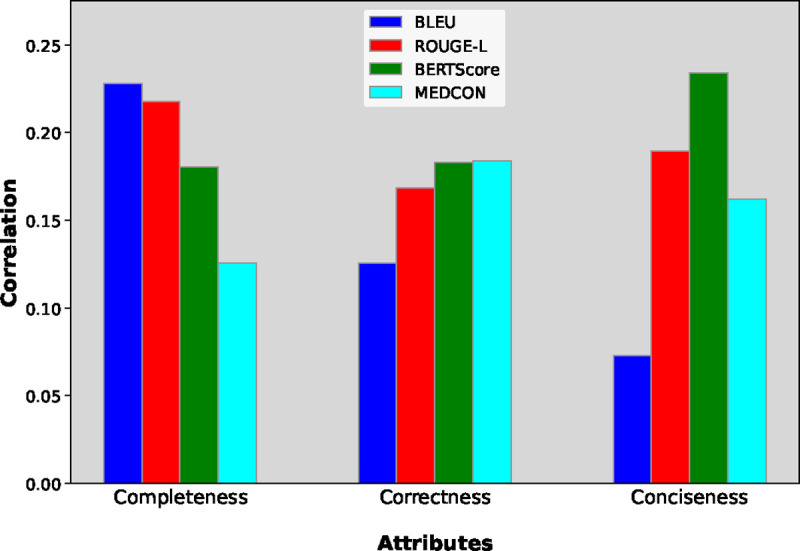
Sifting through vast textual data and summarizing key information from electronic health records (EHR) imposes a substantial burden on how clinicians allocate their time. Although large language models (LLMs) have shown immense promise in natural language processing (NLP) tasks, their efficacy on a diverse range of clinical summarization tasks has not yet been rigorously demonstrated. In this work, we apply domain adaptation methods to eight LLMs, spanning six datasets and four distinct clinical summarization tasks: radiology reports, patient questions, progress notes, and doctor-patient dialogue. Our thorough quantitative assessment reveals trade-offs between models and adaptation methods in addition to instances where recent advances in LLMs may not improve results. Further, in a clinical reader study with ten physicians, we show that summaries from our best-adapted LLMs are preferable to human summaries in terms of completeness and correctness. Our ensuing qualitative analysis highlights challenges faced by both LLMs and human experts. Lastly, we correlate traditional quantitative NLP metrics with reader study scores to enhance our understanding of how these metrics align with physician preferences. Our research marks the first evidence of LLMs outperforming human experts in clinical text summarization across multiple tasks. This implies that integrating LLMs into clinical workflows could alleviate documentation burden, empowering clinicians to focus more on personalized patient care and the inherently human aspects of medicine.
Overview
The claims and statistics of this paper haven’t been checked yet.
Run the check — free, no account needed. It reads the open-access text and checks the sources it cites.
Integrity signals
Registry
Cites
Statistics
Figures
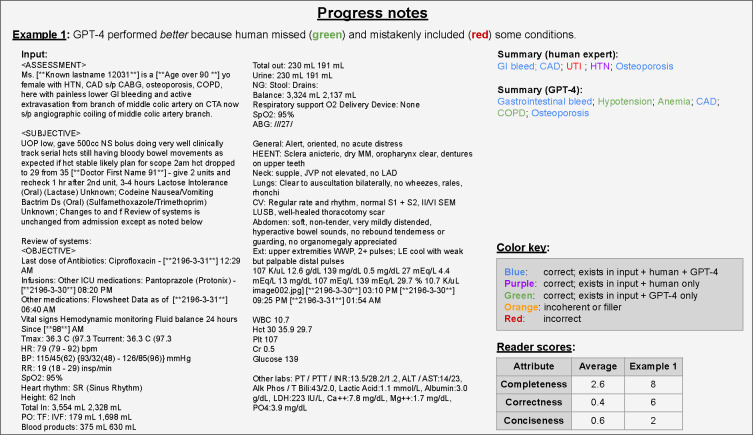
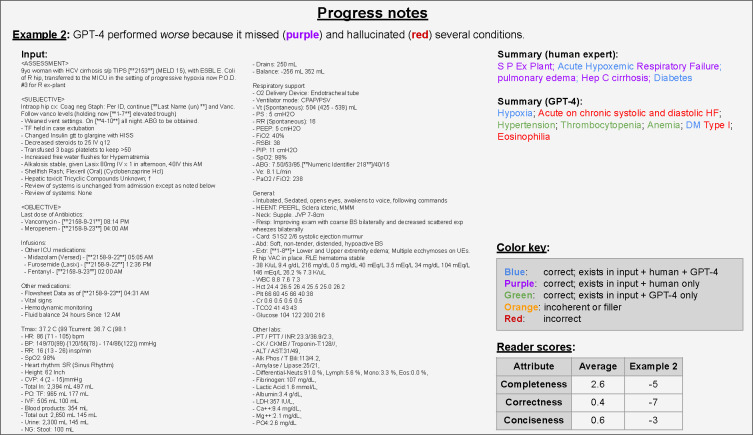
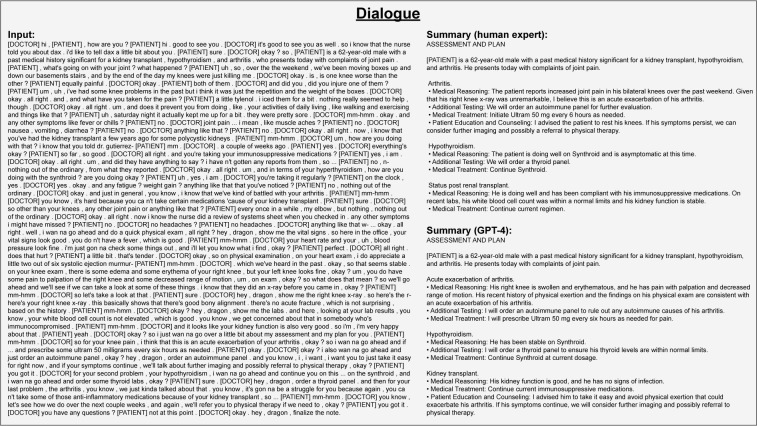
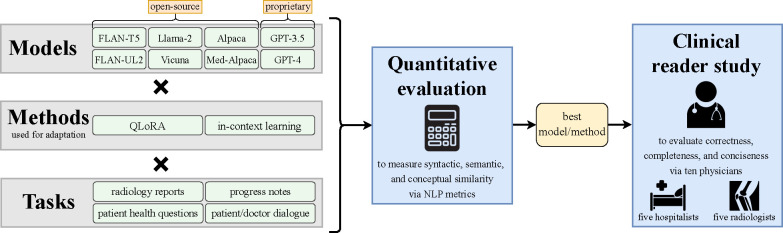
Verification
Claims the paper makes
The claims and statistics of this paper haven’t been checked yet.
Run the check — free, no account needed. It reads the open-access text and checks the sources it cites.
Claims other papers make about this one
Each is checked against this paper’s own text: does it say what the citing paper says it does?
The source backs part of the claim, not all of it — or backs it for a different population, condition or comparison.
In the citing paper
“Most prior research in this field speculates on high-level concerns such as inaccuracy and real-world impacts [43, 44, 54, 86, 93]. However, these studies rarely articulate concrete criteria for when and why LLMs should or should not provide professional advice to users.”
From (A)I Am Not a Lawyer, But...: Engaging Legal Experts towards Responsible LLM Policies for Legal Advice (2024) · cites this paper as [86]
Experimental — accuracy not yet measuredThe cited source says what the claim attributes to it.
In the citing paper
“Domain-specific LLMs, fine-tuned on medical corpora or using knowledge graph embeddings, perform well in clinical text summarization [10, 11], note generation [12, 13], and medical question answering [14].”
From Enhancing hepatopathy clinical trial efficiency: a secure, large language model-powered pre-screening pipeline (2025) · cites this paper as [12]
Self-check
Percentages, sums and reported differences re-computed from the paper’s own numbers.
The self-check needs the paper’s full text.
Citations
Cites
Vaswani, A., Shazeer, N., Parmar, N., Uszkoreit, J., Jones, L., Gomez, A. N., Kaiser, L., & Polosukhin, I. (2017) · arXiv · doi:10.48550/arxiv.1706.03762 · Cited by 120,404 · cited 1×
“Large language models (LLMs) have demonstrated astounding performance, propelled by both the transformer architecture [73] and increasing scales of data and compute, resulting in widespread adoption of models such as ChatGPT [6].”
MethodA guideline of selecting and reporting intraclass correlation coefficients for reliability research
Koo, T. K., & Li, M. Y. (2016) · Journal of Chiropractic Medicine · doi:10.1016/j.jcm.2016.02.012 · Cited by 31,709 · cited 1×
“We estimate intra-reader correlation based on a mean-rating, fixed agreement, two-may mixed effects model [42] using the Pingouin package [80].”
MethodLanguage Models are Few-Shot Learners
Brown, T. B., Mann, B., Ryder, N., Subbiah, M., Kaplan, J., Dhariwal, P., Neelakantan, A., Shyam, P., Sastry, G., Askell, A., et al. (2020) · arXiv · doi:10.48550/arxiv.2005.14165 · Cited by 23,372 · cited 8×
“Large language models (LLMs) have demonstrated astounding performance, propelled by both the transformer architecture [73] and increasing scales of data and compute, resulting in widespread adoption of models such as ChatGPT [6].”
BackgroundMethodInfluentialBLEU: a method for automatic evaluation of machine translation
Papineni, K., Roukos, S., Ward, T., & Zhu, W.-J. (2001) · Proceedings of the 40th Annual Meeting on Association for Computational Linguistics - ACL '02 · doi:10.3115/1073083.1073135 · Cited by 21,344 · cited 8×
“BLEU [52], the simplest metric, calculates the degree of overlap between the reference and generated texts by considering 1- to 4-gram sequences.”
BackgroundInfluentialLoRA: Low-Rank Adaptation of Large Language Models
Hu, E. J., Shen, Y., Wallis, P., Allen-Zhu, Z., Li, Y., Wang, S., Wang, L., & Chen, W. (2021) · arXiv · doi:10.48550/arxiv.2106.09685 · Cited by 13,453 · cited 2×
“Low-rank adaptation (LoRA) [31] has emerged as an effective, lightweight approach for fine-tuning LLMs by altering a small subset of model weights—often < 0.”
BackgroundMethodDecoupled Weight Decay Regularization
Loshchilov, I., & Hutter, F. (2017) · arXiv · doi:10.48550/arxiv.1711.05101 · Cited by 12,522
Exploring the Limits of Transfer Learning with a Unified Text-to-Text Transformer
Raffel, C., Shazeer, N., Roberts, A., Lee, K., Narang, S., Matena, M., Zhou, Y., Li, W., & Liu, P. J. (2019) · arXiv · doi:10.48550/arxiv.1910.10683 · Cited by 10,929 · cited 1×
“The original T5 “text-to-text transfer transformer” model [55] demonstrated excellent performance in transfer learning using the seq2seq architecture.”
MethodTransformers: State-of-the-Art Natural Language Processing
Wolf, T., Debut, L., Sanh, V., Chaumond, J., Delangue, C., Moi, A., Cistac, P., Rault, T., Louf, R., Funtowicz, M., et al. (2020) · Proceedings of the 2020 Conference on Empirical Methods in Natural Language Processing: System Demonstrations · doi:10.18653/v1/2020.emnlp-demos.6 · Cited by 8,741
International Journal of Environmental Research and Public Health
Casariego Vales, E., A.M., C.-C., J.L., L., R.M., M.-P., D., O.-B., M., O.-C., P., R.-S., & F.J., S. (2013) · International Journal of Environmental Research and Public Health · doi:10.3390/ijerph · Cited by 7,742
A Survey on Evaluation of Large Language Models
Chang, Y., Wang, X., Wang, J., Wu, Y., Yang, L., Zhu, K., Chen, H., Yi, X., Wang, C., Wang, Y., et al. (2024) · ACM Transactions on Intelligent Systems and Technology · doi:10.1145/3641289 · Cited by 4,254 · cited 1×
“Beyond the scope of our work, there’s further potential to reduce hallucinations through incorporating checks by a human, checks by another LLM, or using a model ensemble to create a “committee of experts” [11, 39].”
MethodLarge language models encode clinical knowledge
Singhal, K., Azizi, S., Tu, T., Mahdavi, S. S., Wei, J., Chung, H. W., Scales, N., Tanwani, A., Cole-Lewis, H., Pfohl, S., et al. (2023) · Nature · doi:10.1038/s41586-023-06291-2 · Cited by 4,083 · cited 2×
“Recent work in clinical natural language processing (NLP) has demonstrated potential on medical text [75, 86], adapting to the medical domain by either training a new model [68, 79], fine-tuning an existing model [76, 81], or supplying task-specific examples in the model prompt [53, 81].”
BackgroundMethodLarge Language Models Encode Clinical Knowledge
Singhal, K., Azizi, S., Tu, T., Mahdavi, S. S., Wei, J., Chung, H. W., Scales, N., Tanwani, A., Cole-Lewis, H., Pfohl, S., et al. (2022) · arXiv · doi:10.48550/arxiv.2212.13138 · Cited by 4,083
Large language models in medicine
Thirunavukarasu, A. J., Ting, D. S. J., Elangovan, K., Gutierrez, L., Tan, T. F., & Ting, D. S. W. (2023) · Nature Medicine · doi:10.1038/s41591-023-02448-8 · Cited by 3,944 · cited 2×
“Recent work in clinical natural language processing (NLP) has demonstrated potential on medical text [75, 86], adapting to the medical domain by either training a new model [68, 79], fine-tuning an existing model [76, 81], or supplying task-specific examples in the model prompt [53, 81].”
BackgroundQLoRA: Efficient Finetuning of Quantized LLMs
Dettmers, T., Pagnoni, A., Holtzman, A., & Zettlemoyer, L. (2023) · arXiv · doi:10.48550/arxiv.2305.14314 · Cited by 3,832 · cited 3×
“Recently, QLoRA [22] has been introduced as a more memory-efficient variant of LoRA, employing 4-bit quantization to enable the fine-tuning of larger LLMs given the same hardware constraints.”
BackgroundMethodInfluentialHuggingFace's Transformers: State-of-the-art Natural Language Processing
Wolf, T., Debut, L., Sanh, V., Chaumond, J., Delangue, C., Moi, A., Cistac, P., Rault, T., Louf, R., Funtowicz, M., et al. (2019) · arXiv · doi:10.48550/arxiv.1910.03771 · Cited by 3,347 · cited 2×
“All open-source models are available on HuggingFace [85].”
A Survey on Evaluation of Large Language Models
Chang, Y., Wang, X., Wang, J., Wu, Y., Yang, L., Zhu, K., Chen, H., Yi, X., Wang, C., Wang, Y., et al. (2023) · arXiv · doi:10.48550/arxiv.2307.03109 · Cited by 3,159 · cited 1×
“Beyond the scope of our work, there’s further potential to reduce hallucinations through incorporating checks by a human, checks by another LLM, or using a model ensemble to create a “committee of experts” [11, 39].”
MethodBERTScore: Evaluating Text Generation with BERT
Zhang, T., Kishore, V., Wu, F., Weinberger, K. Q., & Artzi, Y. (2019) · arXiv · doi:10.48550/arxiv.1904.09675 · Cited by 2,865 · cited 1×
“In addition to these syntactic metrics, we employ BERTScore, which leverages contextual BERT embeddings to evaluate the semantic similarity of the generated and reference texts [82].”
MethodLlama 2: Open Foundation and Fine-Tuned Chat Models
Touvron, H., Martin, L., Stone, K., Albert, P., Almahairi, A., Babaei, Y., Bashlykov, N., Batra, S., Bhargava, P., Bhosale, S., et al. (2023) · arXiv · doi:10.48550/arxiv.2307.09288 · Cited by 2,604 · cited 3×
“Descendants of this original model have taken additional fine-tuning approaches, such as fine-tuning via instruction following (Alpaca [66]), medical Q&A data (Med-Alpaca [30]), user-shared conversations (Vicuna [10]), and reinforcement learning from human feedback (Llama-2 [70]).”
BackgroundMethodPaLM: Scaling Language Modeling with Pathways
Chowdhery, A., Narang, S., Devlin, J., Bosma, M., Mishra, G., Roberts, A., Barham, P., Chung, H. W., Sutton, C., Gehrmann, S., et al. (2022) · arXiv · doi:10.48550/arxiv.2204.02311 · Cited by 2,590 · cited 1×
“Although several of the more expansive models, such as GPT-4 [51] and PaLM [11], remain proprietary and provide access via “black-box” interfaces, there has been a pronounced shift towards open-sourced alternatives such as Llama-2 [70].”
MethodPrefix-Tuning: Optimizing Continuous Prompts for Generation
Li, X. L., & Liang, P. (2021) · Proceedings of the 59th Annual Meeting of the Association for Computational Linguistics and the 11th International Joint Conference on Natural Language Processing (Volume 1: Long Papers) · doi:10.18653/v1/2021.acl-long.353 · Cited by 2,473 · cited 1×
“To enable domain adaptation with limited computational resources, prefix tuning [45] and low-rank adaptation (LoRA) [35] have emerged as effective methods that require tuning less than 1% of total parameters over a small training set.”
MethodA Survey of Large Language Models
Zhao, W. X., Zhou, K., Li, J., Tang, T., Dong, Z., Hou, Y., Zhang, B., Min, Y., Zhang, J., Liu, P., et al. (2026) · Frontiers of Computer Science · doi:10.1007/s11704-026-60308-3 · Cited by 2,093
A Survey of Large Language Models
Zhao, W. X., Zhou, K., Li, J., Tang, T., Wang, X., Hou, Y., Min, Y., Zhang, B., Zhang, J., Dong, Z., et al. (2023) · arXiv · doi:10.48550/arxiv.2303.18223 · Cited by 2,090
Foundation models for generalist medical artificial intelligence
Moor, M., Banerjee, O., Abad, Z. S. H., Krumholz, H. M., Leskovec, J., Topol, E. J., & Rajpurkar, P. (2023) · Nature · doi:10.1038/s41586-023-05881-4 · Cited by 2,028 · cited 1×
“Still other works have proposed generalist models to perform many tasks across the medical domain [54, 79].”
BackgroundJudging LLM-as-a-Judge with MT-Bench and Chatbot Arena
Zheng, L., Chiang, W.-L., Sheng, Y., Zhuang, S., Wu, Z., Zhuang, Y., Lin, Z., Li, Z., Li, D., Xing, E. P., et al. (2023) · arXiv · doi:10.48550/arxiv.2306.05685 · Cited by 1,888
MIMIC-CXR, a de-identified publicly available database of chest radiographs with free-text reports
Johnson, A. E. W., Pollard, T. J., Berkowitz, S. J., Greenbaum, N. R., Lungren, M. P., Deng, C.-Y., Mark, R. G., & Horng, S. (2019) · Scientific Data · doi:10.1038/s41597-019-0322-0 · Cited by 1,816
Pingouin: statistics in Python
Vallat, R. (2018) · Journal of Open Source Software · doi:10.21105/joss.01026 · Cited by 1,780 · cited 1×
“We estimate intra-reader correlation based on a mean-rating, fixed agreement, two-may mixed effects model [42] using the Pingouin package [80].”
MethodSparks of Artificial General Intelligence: Early experiments with GPT-4
Bubeck, S., Chandrasekaran, V., Eldan, R., Gehrke, J., Horvitz, E., Kamar, E., Lee, P., Lee, Y. T., Li, Y., Lundberg, S., et al. (2023) · arXiv · doi:10.48550/arxiv.2303.12712 · Cited by 1,526 · cited 1×
“In recent years, large language models (LLMs) have gained remarkable traction, leading to widespread adoption of models such as ChatGPT [8], which excel at information retrieval, nuanced understanding, and text generation [9, 93].”
BackgroundAllocation of Physician Time in Ambulatory Practice: A Time and Motion Study in 4 Specialties
Sinsky, C., Colligan, L., Li, L., Prgomet, M., Reynolds, S., Goeders, L., Westbrook, J., Tutty, M., & Blike, G. (2016) · Annals of Internal Medicine · doi:10.7326/m16-0961 · Cited by 1,494 · cited 1×
“Recent data indicates that physicians can expend two hours on documentation for each hour of patient interaction [69].”
BackgroundScaling Instruction-Finetuned Language Models
Chung, H. W., Hou, L., Longpre, S., Zoph, B., Tay, Y., Fedus, W., Li, Y., Wang, X., Dehghani, M., Brahma, S., et al. (2022) · arXiv · doi:10.48550/arxiv.2210.11416 · Cited by 1,441 · cited 1×
“A derivative model, FLAN-T5 [16, 50], improved performance via instruction prompt tuning.”
MethodExploring the Limits of Language ModelingPreprint
Józefowicz, R., Vinyals, O., Schuster, M., Shazeer, N., & Wu, Y. (2016) · arXiv (Cornell University) · doi:10.48550/arxiv.1602.02410 · Cited by 1,238
Finetuned Language Models Are Zero-Shot Learners
Wei, J., Bosma, M., Zhao, V. Y., Guu, K., Yu, A. W., Lester, B., Du, N., Dai, A. M., & Le, Q. V. (2021) · arXiv · doi:10.48550/arxiv.2109.01652 · Cited by 1,101 · cited 1×
“One approach is customizing model weights via instruction tuning, a process where language models are trained to generate human-aligned responses given specific instructions [75].”
BackgroundShanafelt, T. D., Dyrbye, L. N., Sinsky, C., Hasan, O., Satele, D., Sloan, J., & West, C. P. (2016) · Mayo Clinic Proceedings · doi:10.1016/j.mayocp.2016.05.007 · Cited by 1,086 · cited 1×
“These tasks divert attention from patient care, leading to worse outcomes for patients as well as disillusionment and decreased job satisfaction for clinicians [2, 57, 59].”
BackgroundArndt, B. G., Beasley, J. W., Watkinson, M. D., Temte, J. L., Tuan, W.-J., Sinsky, C. A., & Gilchrist, V. J. (2017) · The Annals of Family Medicine · doi:10.1370/afm.2121 · Cited by 972 · cited 2×
“Currently, clinicians spend significant time summarizing vast amounts of textual information—whether it be compiling diagnostic reports, writing progress notes, or synthesizing a patient’s treatment history across different specialists [4, 27, 33].”
BackgroundIEEE Transactions on Visualization and Computer Graphics
(2023) · IEEE Transactions on Visualization and Computer Graphics · doi:10.1109/tvcg.2945 · Cited by 719
The Flan Collection: Designing Data and Methods for Effective Instruction TuningPreprint
Longpre, S., Hou, L., Vu, T., Webson, A., Chung, H. W., Tay, Y., Zhou, D., Le, Q. V., Zoph, B., Wei, J., et al. (2023) · arXiv (Cornell University) · doi:10.48550/arxiv.2301.13688 · Cited by 553 · cited 1×
“A derivative model, FLAN-T5 [16, 50], improved performance via instruction prompt tuning.”
MethodMedAlpaca -- An Open-Source Collection of Medical Conversational AI Models and Training DataPreprint
Han, T., Adams, L. C., Papaioannou, J.-M., Grundmann, P., Oberhauser, T., Figueroa, A., Löser, A., Truhn, D., & Bressem, K. K. (2023) · arXiv (Cornell University) · doi:10.48550/arxiv.2304.08247 · Cited by 505 · cited 2×
“For example, Han et al. [34] released Med-Alpaca, a version of Alpaca [73] which was further instruction-tuned with medical Q&A text, consequently improving performance for the task of medical question-answering.”
BackgroundThe Best of Both Worlds: Combining Recent Advances in Neural Machine Translation
Chen, M. X., Fırat, O., Bapna, A., Johnson, M., Macherey, W., Foster, G. F., Jones, L., Schuster, M., Shazeer, N., Parmar, N., et al. (2018) · Proceedings of the conference - Association for Computational Linguistics. Meeting · doi:10.18653/v1/p18-1008 · Cited by 484 · cited 1×
“These models have shown strong performance in machine translation [12] and summarization [67].”
BackgroundTowards Generalist Biomedical AI
Tu, T., Azizi, S., Driess, D., Schaekermann, M., Amin, M., Chang, P.-C., Carroll, A., Lau, C., Tanno, R., Ktena, I., et al. (2024) · NEJM AI · doi:10.1056/aioa2300138 · Cited by 483
Towards Generalist Biomedical AI
Tu, T., Azizi, S., Driess, D., Schaekermann, M., Amin, M., Chang, P.-C., Carroll, A., Lau, C., Tanno, R., Ktena, I., et al. (2023) · arXiv · doi:10.48550/arxiv.2307.14334 · Cited by 483 · cited 3×
“Recent work in clinical natural language processing (NLP) has demonstrated potential on medical text [75, 86], adapting to the medical domain by either training a new model [68, 79], fine-tuning an existing model [76, 81], or supplying task-specific examples in the model prompt [53, 81].”
BackgroundHolistic Evaluation of Language Models
Bommasani, R., Liang, P., & Lee, T. (2023) · Annals of the New York Academy of Sciences · doi:10.1111/nyas.15007 · Cited by 480 · cited 1×
“While excellent LLM benchmarks for general NLP tasks exist [40, 84], they do not evaluate clinical performance.”
BackgroundEvaluating Large Language Models on Medical Evidence Summarization
Tang, L., Sun, Z., Idnay, B., Nestor, J. G., Soroush, A., Elias, P. A., Xu, Z., Ding, Y., Durrett, G., Rousseau, J., et al. (2023) · doi:10.1101/2023.04.22.23288967 · Cited by 423
Evaluating large language models on medical evidence summarization
Tang, L., Sun, Z., Idnay, B., Nestor, J. G., Soroush, A., Elias, P. A., Xu, Z., Ding, Y., Durrett, G., Rousseau, J. F., et al. (2023) · npj Digital Medicine · doi:10.1038/s41746-023-00896-7 · Cited by 423
(2013) · Europe PMC (PubMed Central) · Cited by 396
Journal Of Trauma And Acute Care Surgery
Krakker, J. (2013) · Wilderness and Environmental Medicine · doi:10.1016/j.wem.2013.03.009 · Cited by 387
Khamisa, N., Peltzer, K., & Oldenburg, B. (2013) · International Journal of Environmental Research and Public Health · doi:10.3390/ijerph10062214 · Cited by 338 · cited 1×
“Meanwhile, documentation responsibilities for nurses consume up to 60% of their time and account for significant work stress [8, 21, 36].”
BackgroundThe shaky foundations of large language models and foundation models for electronic health records
Wornow, M., Xu, Y., Thapa, R., Patel, B., Steinberg, E., Fleming, S., Pfeffer, M. A., Fries, J., & Shah, N. H. (2023) · npj Digital Medicine · doi:10.1038/s41746-023-00879-8 · Cited by 324 · cited 2×
“Recent work has adapted LLMs for various medical tasks, demonstrating great potential for medical language understanding and generation [42, 68, 71, 77].”
BackgroundNeural Abstractive Text Summarization with Sequence-to-Sequence Models
Shi, T., Keneshloo, Y., Ramakrishnan, N., & Reddy, C. K. A. (2021) · ACM/IMS Transactions on Data Science · doi:10.1145/3419106 · Cited by 278
Holistic Evaluation of Language Models
Liang, P., Bommasani, R., Lee, T., Tsipras, D., Soylu, D., Yasunaga, M., Zhang, Y., Narayanan, D., Wu, Y., Kumar, A., et al. (2022) · arXiv · doi:10.48550/arxiv.2211.09110 · Cited by 255
Toward Best Practices in Radiology Reporting
Kahn, C. E., Langlotz, C. P., Burnside, E. S., Carrino, J. A., Channin, D. S., Hovsepian, D. M., & Rubin, D. L. (2009) · Radiology · doi:10.1148/radiol.2523081992 · Cited by 245 · cited 1×
“One such task is the summarization of radiology reports, which aims to consolidate detailed findings from radiological studies into significant observations and conclusions drawn by the radiologist [35].”
BackgroundSelf-citationInteractive and Visual Prompt Engineering for Ad-hoc Task Adaptation With Large Language Models
Strobelt, H., Webson, A., Sanh, V., Hoover, B., Beyer, J., Pfister, H., & Rush, A. M. (2022) · IEEE Transactions on Visualization and Computer Graphics · doi:10.1109/tvcg.2022.3209479 · Cited by 204 · cited 1×
“Prompt phrasing and model hyperparameters can be very important for a LLM, as demonstrated in the literature [71, 83] and in Table 3.”
BackgroundGPTQ: Accurate Post-Training Quantization for Generative Pre-trained Transformers
Frantar, E., Ashkboos, S., Hoefler, T., & Alistarh, D. (2022) · arXiv · doi:10.48550/arxiv.2210.17323 · Cited by 197 · cited 1×
“After selecting these s samples, we choose another s as a We leverage PyTorch, using the parameter-efficient fine-tuning [52] and the generative pre-trained transformers quantization [28] libraries to implement QLoRA.”
MethodA usability and safety analysis of electronic health records: a multi-center study
Ratwani, R. M., Savage, E., Will, A., Arnold, R., Khairat, S., Miller, K., Fairbanks, R. J., Hodgkins, M., & Hettinger, A. Z. (2018) · Journal of the American Medical Informatics Association · doi:10.1093/jamia/ocy088 · Cited by 180 · cited 1×
“The widespread adoption of electronic health records (EHR) has expanded clinical documentation workload, directly contributing to increasing stress and clinician burnout [26, 32, 63].”
BackgroundCan language models learn from explanations in context?
Lampinen, A. K., Dasgupta, I., Chan, S. C. Y., Matthewson, K., Tessler, M. H., Creswell, A., McClelland, J. L., Wang, J. X., & Hill, F. (2022) · arXiv · doi:10.48550/arxiv.2204.02329 · Cited by 163 · cited 3×
“Because in-context learning does not alter model weights, it can be performed with black-box model access using only a few training examples [43].”
BackgroundMethodInfluentialDesign and Development of a Multimodal Biomedical Information Retrieval System
Demner-Fushman, D., Antani, S., Simpson, M., & Thoma, G. R. (2012) · Journal of Computing Science and Engineering · doi:10.5626/jcse.2012.6.2.168 · Cited by 161 · cited 3×
“From the initial set of 4K studies, Demner-Fushman et al. [21] selected a final set of 3.4K reports based on the quality of imaging views and diagnostic content.”
BackgroundCombining Human Expertise with Artificial Intelligence: Experimental Evidence from Radiology
Agarwal, N., Moehring, A., Rajpurkar, P., & Salz, T. (2023) · doi:10.2139/ssrn.4505053 · Cited by 161 · cited 1×
“Ultimately, such new tools may improve the clinical workflow [3], resulting in decreased clinician strain and improved patient care.”
BackgroundPrompt Engineering for Healthcare: Methodologies and Applications
Wang, J., Shi, E., Yu, S., Wu, Z., Ma, C., Dai, H., Yang, Q., Kang, Y., Wu, J., Hu, H., et al. (2023) · arXiv · doi:10.48550/arxiv.2304.14670 · Cited by 150 · cited 1×
“Prompt phrasing and model hyperparameters can be very important for a LLM, as demonstrated in the literature [71, 83] and in Table 3.”
BackgroundCan language models learn from explanations in context?
Lampinen, A., Dasgupta, I., Chan, S., Mathewson, K., Tessler, M., Creswell, A., McClelland, J., Wang, J., & Hill, F. (2022) · Findings of the Association for Computational Linguistics: EMNLP 2022 · doi:10.18653/v1/2022.findings-emnlp.38 · Cited by 142
Hyena Hierarchy: Towards Larger Convolutional Language Models
Poli, M., Massaroli, S., Nguyen, E., Fu, D. Y., Dao, T., Baccus, S., Bengio, Y., Ermon, S., & Ré, C. (2023) · arXiv · doi:10.48550/arxiv.2302.10866 · Cited by 96 · cited 1×
“Addressing these cases demands two key advancements: (1) transcending GPT-4’s current context length of 32,768 tokens, potentially through multi-query aggregation or methods which increase context length [20, 53], and (2) introducing open-source datasets that encompass broader tasks and lengthier documents.”
BackgroundRobinson, K. E., & Kersey, J. A. (2018) · Medicine · doi:10.1097/md.0000000000012319 · Cited by 90 · cited 1×
“These tasks divert attention from direct patient care, leading to worse outcomes for patients as well as disillusionment and decreased job satisfaction for clinicians [4, 64, 66, 77].”
BackgroundRadiology-Llama2: Best-in-Class Large Language Model for RadiologyPreprint
Liu, Z., Li, Y., Shu, P., Zhong, A., Yang, L., Ju, C., Wu, Z., Ma, C., Jie, L., Chen, C., et al. (2023) · arXiv (Cornell University) · doi:10.48550/arxiv.2309.06419 · Cited by 82 · cited 1×
“Examples of clinical instruction-tuned models include Med-PALM [68] for medical question-answering or Radiology-GPT [49] and Radiology-Llama2 [49] for radiology tasks.”
MethodOn the Summarization of Consumer Health Questions
Abacha, A. B., & Demner‐Fushman, D. (2019) · Proceedings of the conference - Association for Computational Linguistics. Meeting · doi:10.18653/v1/p19-1215 · Cited by 74
The Burden and Burnout in Documenting Patient Care: An Integrative Literature Review
Gesner, E., GAZARIAN, P. K., & Dykes, P. C. (2019) · Studies in health technology and informatics · doi:10.3233/shti190415 · Cited by 69 · cited 1×
“The proliferation of electronic health records (EHR) has drastically increased clinical documentation workload, directly contributing to increasing stress and clinician burnout [22, 28, 56].”
BackgroundMedAlign: A Clinician-Generated Dataset for Instruction Following with Electronic Medical Records
Fleming, S. L., Lozano, A., Haberkorn, W. J., Jindal, J. A., Reis, E., Thapa, R., Blankemeier, L., Genkins, J. Z., Steinberg, E., Nayak, A., et al. (2024) · Proceedings of the AAAI Conference on Artificial Intelligence · doi:10.1609/aaai.v38i20.30205 · Cited by 66
Self-citationMedAlign: A Clinician-Generated Dataset for Instruction Following with Electronic Medical Records
Fleming, S. L., Lozano, A., Haberkorn, W. J., Jindal, J. A., Reis, E. P., Thapa, R., Blankemeier, L., Genkins, J. Z., Steinberg, E., Nayak, A., et al. (2023) · arXiv · doi:10.48550/arxiv.2308.14089 · Cited by 65 · cited 2×
“To address this, there have been recent releases of expert evaluations for instruction following [27] and radiology report generation [90].”
BackgroundInfluentialSelf-citationYim, W.-W., Fu, Y., Ben Abacha, A., Snider, N., Lin, T., & Yetisgen, M. (2023) · Scientific Data · doi:10.1038/s41597-023-02487-3 · Cited by 64 · cited 4×
“Lastly, there has been significant work on summarizing extended conversations between a doctor and patient into patient visit summaries [1, 53, 89].”
BackgroundMethodInfluentialSimple and Efficient Algorithm for Approximate Dictionary Matching
Okazaki, N., & Tsujii, J. (2010) · Cited by 62
Do We Still Need Clinical Language Models?
Lehman, E., Hernandez, E., Mahajan, D., Wulff, J., Smith, M. J., Ziegler, Z., Nadler, D., Szolovits, P., Johnson, A., & Alsentzer, E. (2023) · arXiv · doi:10.48550/arxiv.2302.08091 · Cited by 62 · cited 1×
“This T5 model family has proven effective for various clinical NLP tasks [44, 81].”
BackgroundRadiology-GPT: A Large Language Model for Radiology
Liu, Z., Zhong, A., Li, Y., Yang, L., Ju, C., Wu, Z., Ma, C., Shu, P., Chen, C., Kim, S., et al. (2023) · arXiv · doi:10.48550/arxiv.2306.08666 · Cited by 59 · cited 2×
“Examples of clinical instruction-tuned models include Med-PALM [68] for medical question-answering or Radiology-GPT [49] and Radiology-Llama2 [49] for radiology tasks.”
MethodWhat’s in a Summary? Laying the Groundwork for Advances in Hospital-Course Summarization
Adams, G., Alsentzer, E., Ketenci, M., Zucker, J. E., & Elhadad, N. (2021) · Conference of the North American Chapter of the Association for Computational Linguistics: Human Language Technologies (NAACL-HLT) · doi:10.18653/v1/2021.naacl-main.382 · Cited by 57 · cited 1×
“LLMs have shown promise on this task [81] and other tasks such as summarizing daily progress notes into a concise “problem list” of medical diagnoses [29] or summarization of clinical narratives [2].”
Technology as friend or foe? Do electronic health records increase burnout?
Ehrenfeld, J. M., & Wanderer, J. P. (2018) · Current Opinion in Anaesthesiology · doi:10.1097/aco.0000000000000588 · Cited by 51
Unintended errors with EHR-based result management: a case series
Yackel, T. R., & Embi, P. J. (2010) · Journal of the American Medical Informatics Association · doi:10.1197/jamia.m3294 · Cited by 48 · cited 1×
“Even for experienced physicians with a high level of expertise, this intricate task naturally introduces the possibility for errors, which can be detrimental in a field where precision is paramount [7, 31, 87].”
Background(2011) · PubMed Central · Cited by 46
Leveraging Large Language Models for Generating Responses to Patient Messages
Liu, S., McCoy, A. B., Wright, A. P., Carew, B., Genkins, J. Z., Huang, S. S., Peterson, J. F., Steitz, B., & Wright, A. (2023) · doi:10.1101/2023.07.14.23292669 · Cited by 43 · cited 1×
“Recent work has adapted LLMs for various medical tasks, demonstrating great potential for medical language understanding and generation [42, 68, 71, 77].”
BackgroundClinical Camel: An Open Expert-Level Medical Language Model with Dialogue-Based Knowledge Encoding
Toma, A., Lawler, P. R., Ba, J., Krishnan, R. G., Rubin, B. B., & Wang, B. (2023) · arXiv · doi:10.48550/arxiv.2305.12031 · Cited by 36 · cited 2×
“LoRA has been shown to work well for medical question-answering [69] and summarizing radiology reports [72].”
BackgroundPoint of Care Documentation Impact on the Nurse-Patient Interaction
Duffy, W. J., Kharasch, M. S., & Du, H. (2010) · Nursing Administration Quarterly · doi:10.1097/naq.0b013e3181c95ec4 · Cited by 34 · cited 1×
“Meanwhile, documentation responsibilities for nurses consume up to 60% of their time and account for significant work stress [10, 25, 41].”
BackgroundLongNet: Scaling Transformers to 1, 000, 000, 000 Tokens
Ding, J., Ma, S., Dong, L., Zhang, X., Huang, S., Wang, W., Zheng, N., & Wei, F. (2023) · arXiv · doi:10.48550/arxiv.2307.02486 · Cited by 34 · cited 1×
“…these cases demands two key advancements: (1) transcending GPT-4’s current context length of 32,768 tokens, potentially through multi-query aggregation or methods which increase context length [24, 60], and (2) introducing open-source datasets that encompass broader tasks and lengthier documents.”
BackgroundNurses’ Experiences of an Initial and Reimplemented Electronic Health Record Use
Chang, C.-P., Lee, T.-T., Liu, C.-H., & Mills, M. E. (2016) · CIN: Computers, Informatics, Nursing · doi:10.1097/cin.0000000000000222 · Cited by 32 · cited 1×
“Meanwhile, documentation responsibilities for nurses consume up to 60% of their time and account for significant work stress [8, 21, 36].”
BackgroundThe painful truth: The documentation burden of a trauma surgeon
Golob, J. F., Como, J. J., & Claridge, J. A. (2016) · Journal of Trauma and Acute Care Surgery · doi:10.1097/ta.0000000000000986 · Cited by 32 · cited 1×
“Currently, clinicians spend significant time summarizing vast amounts of textual information—whether it be compiling diagnostic reports, writing progress notes, or synthesizing a patient’s treatment history across different specialists [2, 23, 29].”
BackgroundGao, Y.-J., Dligach, D., Miller, T., et al. (2023) · Workshop on Biomedical Natural Language Processing · doi:10.48550/arxiv.2306.05270 · Cited by 29 · cited 3×
“For this we employ the ProbSum dataset [29], extracted from the MIMIC-III database of de-identified hospital intensive care unit (ICU) admissions.”
MethodEvidence Extraction to Validate Medical Claims in Fake News Detection
Deka, P., Jurek, A., & Deepak, P. (2022) · Lecture notes in computer science · doi:10.1007/978-3-031-20627-6_1 · Cited by 26
RadAdapt: Radiology Report Summarization via Lightweight Domain Adaptation of Large Language Models
Van Veen, D., Van Uden, C., Attias, M., Pareek, A., Bluethgen, C., Polacin, M., Chiu, W., Delbrouck, J.-B., Zambrano Chaves, J., Langlotz, C., et al. (2023) · The 22nd Workshop on Biomedical Natural Language Processing and BioNLP Shared Tasks · doi:10.18653/v1/2023.bionlp-1.42 · Cited by 25
Self-citationBen Abacha, A., Yim, W.-W., Adams, G., Snider, N., & Yetisgen, M. (2023) · Proceedings of the 5th Clinical Natural Language Processing Workshop · doi:10.18653/v1/2023.clinicalnlp-1.52 · Cited by 20
Gao, Y., Dligach, D., Miller, T. A., & Afshar, M. (2023) · Workshop on Biomedical Language Processing (BioNLP) · doi:10.18653/v1/2023.bionlp-1.43 · Cited by 19
SummQA at MEDIQA-Chat 2023:In-Context Learning with GPT-4 for Medical Summarization
Mathur, Y., Rangreji, S., Kapoor, R., Palavalli, M., Bertsch, A., & Gormley, M. R. (2023) · arXiv · doi:10.48550/arxiv.2306.17384 · Cited by 18 · cited 3×
“This simple approach provides the model with context, enhancing LLM performance for a particular task or domain [47, 72].”
BackgroundMethodToward Expanding the Scope of Radiology Report Summarization to Multiple Anatomies and Modalities
Chen, Z., Varma, M., Wan, X., Langlotz, C. P., & Delbrouck, J.-B. (2023) · Proceedings of the conference - Association for Computational Linguistics. Meeting · doi:10.18653/v1/2023.acl-short.41 · Cited by 17 · cited 2×
“One such task is the summarization of radiology reports [13], which aims to consolidate detailed findings from radiological studies into significant observations and conclusions drawn by the radiologist [40].”
BackgroundMethodSelf-citationDelbrouck, J.-B., Varma, M., Chambon, P., & Langlotz, C. P. (2023) · Workshop on Biomedical Language Processing (BioNLP) · doi:10.18653/v1/2023.bionlp-1.45 · Cited by 16 · cited 4×
“We utilize a preprocessed version via RadSum23 [15, 16].”
MethodInfluentialSelf-citationJi, Y., & Gao, S. (2023) · DROPS (Schloss Dagstuhl – Leibniz Center for Informatics) · doi:10.4230/lipics.giscience.2023.43 · Cited by 10
Improving Few-Shot Performance of Language Models via Nearest Neighbor Calibration
Nie, F., Chen, M., Zhang, Z., & Cheng, X. (2022) · arXiv · doi:10.48550/arxiv.2212.02216 · Cited by 9 · cited 1×
“Note that choosing “relevant” in-context examples typically outperforms choosing examples at random [55].”
BackgroundRadAdapt: Radiology Report Summarization via Lightweight Domain Adaptation of Large Language ModelsPreprint
Veen, D. V., Uden, C. E. V., Attias, M., et al. (2023) · arXiv (Cornell University) · doi:10.48550/arxiv.2305.01146 · Cited by 6 · cited 5×
“LoRA has been shown to work well for medical question-answering [69] and summarizing radiology reports [72].”
BackgroundMethodInfluentialSelf-citationYim, W., Fu, Y., Abacha, A. B., et al. (2023) · arXiv (Cornell University) · doi:10.48550/arxiv.2306.02022 · Cited by 3 · cited 4×
“Lastly, there has been significant work on summarizing extended conversations between a doctor and patient into patient visit summaries [1, 53, 89].”
BackgroundMethodInfluentialDesign Considerations for High Impact, Automated Echocardiogram Analysis
Toussaint, W., Van Veen, D., Irwin, C., Nachmany, Y., Barreiro-Perez, M., Díaz-Peláez, E., de Sousa, S. G., Millán, L., Sánchez, P. L., Sánchez-Puente, A., et al. (2020) · arXiv · doi:10.48550/arxiv.2006.06292 · Cited by 1 · cited 1×
“These tasks divert attention from direct patient care, leading to worse outcomes for patients as well as disillusionment and decreased job satisfaction for clinicians [4, 64, 66, 77].”
BackgroundSelf-citationRaLEs: a Benchmark for Radiology Language Evaluations
Chaves, J. Z., Bhaskhar, N., Attias, M., Delbrouck, J.-B., Rubin, D., Loening, A., Langlotz, C., & Chaudhari, A. (2023) · Advances in Neural Information Processing Systems 36 · doi:10.52202/075280-3254 · cited 1×
“Recent work has adapted LLMs for various medical tasks, demonstrating great potential for medical language understanding and generation [48, 75, 79, 86, 91].”
BackgroundSelf-citationOpenAI, Achiam, J., Adler, S., Agarwal, S., Ahmad, L., Akkaya, I., Aleman, F. L., Almeida, D., Altenschmidt, J., Altman, S., et al. (2023) · arXiv · doi:10.48550/arxiv.2303.08774
Research works printed but not linked: 5
- [15]Chung H. W., Hou L., Longpre S., Zoph B., Tay Y., Fedus W., Li E., Wang X., Dehghani M., Brahma S., Scaling instruction-finetuned language models. arXiv preprint arXiv:2210.11416 (2022). · arXiv
- [18]Demner-Fushman D., Ananiadou S. & Cohen K. B. The 22nd Workshop on Biomedical Natural Language Processing and BioNLP Shared Tasks in The 22nd Workshop on Biomedical Natural Language Processing and BioNLP Shared Tasks (2023).
- [27]Gao Y., Miller T., Afshar M. & Dligach D. BioNLP Workshop 2023 Shared Task 1A: Problem List Summarization in Proceedings of the 22nd Workshop on Biomedical Language Processing (2023).
- [61]Soldaini L. & Goharian N. Quickumls: a fast, unsupervised approach for medical concept extraction in MedIR workshop, sigir (2016), 1– 4.
- [65]Tay Y., Dehghani M., Tran V. Q., Garcia X., Wei J., Wang X., Chung H. W., Bahri D., Schuster T., Zheng S., Ul2: Unifying language learning paradigms in The Eleventh International Conference on Learning Representations (2022).
Cited by
Sorted by citations
The Good and The Bad: Exploring Privacy Issues in Retrieval-Augmented Generation (RAG)Preprint
Zeng, S., Zhang, J., He, P., Xing, Y., Liu, Y., Han, X., Ren, J., Wang, S., Yin, D., Chang, Y., et al. (2024) · arXiv (Cornell University) · doi:10.48550/arxiv.2402.16893 · Cited by 104
“2.1 Retrieval-Augmented Generation (RAG) Retrieval-augmented generation (RAG), first introduced by Lewis et al. (2020), has emerged as one of the most popular approaches to enhance the generation ability of LLMs (Liu, 2022; Chase, 2022; Van Veen et al., 2023; Ram et al., 2023; Shi et al., 2023).”
BackgroundInfluentialA Survey of Large Language Models in Medicine: Progress, Application, and Challenge
Zhou, H., Liu, F., Gu, B., Zou, X., Huang, J., Wu, J., Li, Y., Chen, S. S., Zhou, P., Liu, J., et al. (2023) · arXiv · doi:10.48550/arxiv.2311.05112 · Cited by 240
“…though using LLMs for clinical report generation or summarization has been proven to be more complete and more accurate than the human counterpart [139], there are still concerns with hallucination, as well as a tendency to approach inputs with a literal view instead of an assumption based…”
BackgroundA Vision-Language Foundation Model to Enhance Efficiency of Chest X-ray InterpretationPreprint
Chen, Z., Varma, M., Xu, J., Paschali, M., Veen, D. V., Johnston, A., Youssef, A., Blankemeier, L., Blüthgen, C., Altmayer, S., et al. (2024) · arXiv (Cornell University) · doi:10.48550/arxiv.2401.12208 · Cited by 238
“…CheXagent generates high-quality reports when compared to other medical FMs. • For findings summarization, as shown in Table 4, CheXagent outperforms LLMs of comparable size on the Rouge-L metric and achieves comparable performance to LLMs with more than twice the number of parameters [80, 81].”
Self-citationA Systematic Survey of Text Summarization: From Statistical Methods to Large Language Models
Zhang, H., Yu, P. S., & Zhang, J. (2025) · ACM Computing Surveys · doi:10.1145/3731445 · Cited by 194
“…[121] Graph LexRank [55], TextRank [148], PACSUM [278], [49] Deep Learning (§3.2) CNN [254], [180], NN-SE [30], T-CONVS2S [157], AttSum [20] RNN/LSTM [40], SummaRuNNer [154], ABS [155], [271], [197], ExtSum-LG [235] RL [165], [245], REFRESH [158], [50] GNN [253], DiscoBert [240], [124], HSG…”
InfluentialA comprehensive survey of large language models and multimodal large language models in medicine
Xiao, H., Zhou, F., Liu, X., Liu, T., Ли, Ж., Liu, X., & Huang, X. (2024) · Information Fusion · doi:10.1016/j.inffus.2024.102888 · Cited by 154
“These models offer promising solutions for medical report generation [19, 20], clinical diagnosis [17, 21], mental health services [22, 23], and various other clinical applications.”
Metadata
- Authors
- Veen, D. V., Uden, C. V., Blankemeier, L., Delbrouck, J.-B., Aali, A., Bluethgen, C., Pareek, A., Polacin, M., Reis, E. P., Seehofnerova, A., Rohatgi, N., Hosamani, P., Collins, W., Ahuja, N., Langlotz, C., Hom, J., Gatidis, S., Pauly, J., & Chaudhari, A.
- Affiliations
- Stanford University (US)
- The University of Texas at Austin (US)
- University Hospital Zurich
- Copenhagen University Hospital (DK)
- University of Zurich (CH)
- Hospital Israelita Albert Einstein (BR)
- Stanford University
- Stanford Medicine (US)
- Corresponding author
- Veen, Dave Van
- ORCID
- Venue
- Nature Medicine
- Published
- 2023-10-30
- Volume
- 30
- Issue
- 4
- Pages
- 1134-1142
- ISSN
- 1078-8956 (ISSN-L)
- PMC
- PMC10635391
- OpenAlex
- W4392193048
- Cited by
- 892
- References
- 71
- Citations by year
- 2026: 342 · 2025: 404 · 2024: 144 · 2023: 2
- FWCI
- 81.57
- Type
- journal article
- Language
- en
- Open access
- green
- doi.org
- Locations
- Nature Medicine (publishedVersion)
- Research Square (acceptedVersion, cc-by)
- PubMed (publishedVersion)
- PubMed Central (acceptedVersion)
- Zurich Open Repository and Archive (University of Zurich) (acceptedVersion)
- arXiv (Cornell University) (submittedVersion, cc-by)
- PubMed Central (submittedVersion, cc-by)
- Zurich Open Repository and Archive (University of Zurich) (submittedVersion)
- arXiv (Cornell University) (cc-by)
- Zurich Open Repository and Archive (University of Zurich)
- Funders
- Foundation for the National Institutes of Health (R01 AR077604, R01EB002524, P41 EB027060, R01 AR079431)
- Gordon and Betty Moore Foundation
- National Institutes of Health (75N92020C00021, 75N92020C00008)
- Agency for Healthcare Research and Quality (R18 HS026886)
- National Heart, Lung, and Blood Institute (75N92020C00008, 75N92020C00021, R01HL155410, R01HL169345, R01HL167974, R01HL157235)
- National Institute of Arthritis and Musculoskeletal and Skin Diseases (R01AR077604, R01AR079431)
- National Institute of Biomedical Imaging and Bioengineering (75N92020C00021, EB 002524, 75N92020C00008, P41EB027060, R01EB002524)
- Topics
- Health Sciences › Medicine › Health Informatics › Artificial Intelligence in Healthcare and Education
- Physical Sciences › Computer Science › Artificial Intelligence › Machine Learning in Healthcare
- Physical Sciences › Computer Science › Artificial Intelligence › Topic Modeling
- Keywords
- large language models, clinical text summarization, LLM adaptation, electronic health records, radiology reports, progress notes, doctor-patient dialogue, patient questions, summary quality, safety analysis, clinical documentation burden
About these checks
Registry, retraction, Cites and statistics results are computed, not judged, with one exception: a printed reference that no index lists is read once by a model before it counts as a citation error. Claims are extracted by a model and kept only when their quote appears verbatim in the text; each cited source is then checked, with a model’s help, for whether it says what the claim relies on. Those verdicts can be wrong — read the claim’s quote and the cited source before relying on one.
Statistics and arithmetic are recomputed, not judged.
Confidence bands are shown only for fields calibrated on our annotated test set. None is calibrated yet, so no band is shown.
What counts as a claim ›How we measure confidence ›How we check this ›
Are you an author, or do you see a problem with this page? Request a review
