

The DOI matches its Crossref record; 93 of the 93 references it cites were found in a registry or an index.
Clinical Text Summarization: Adapting Large Language Models Can Outperform Human Experts
Open accessPreprint — published as 10.1038/s41591-024-02855-5 · Paper page
Abstract
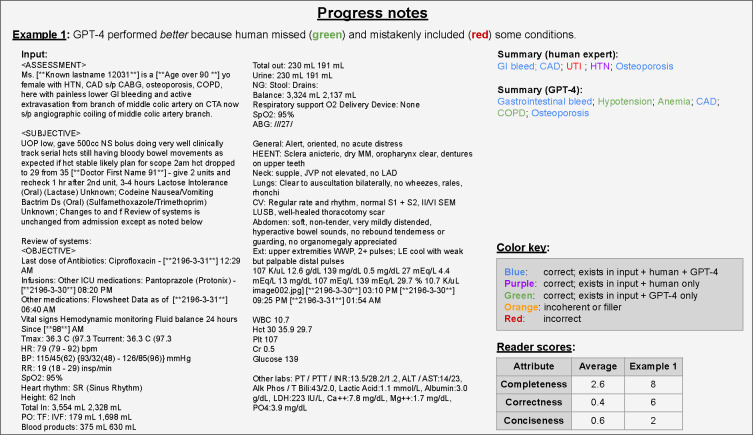
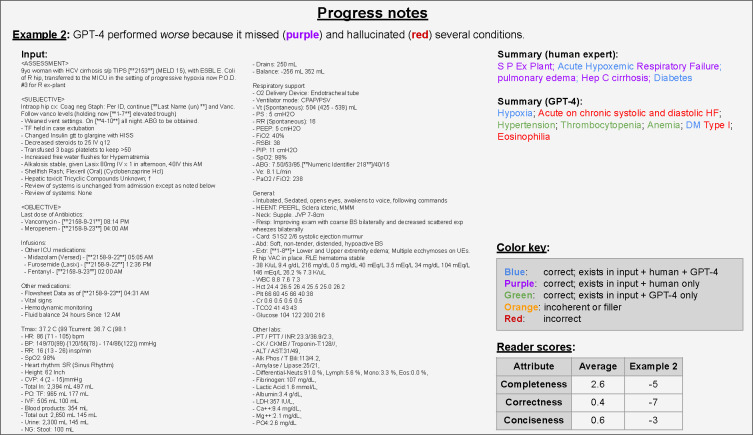
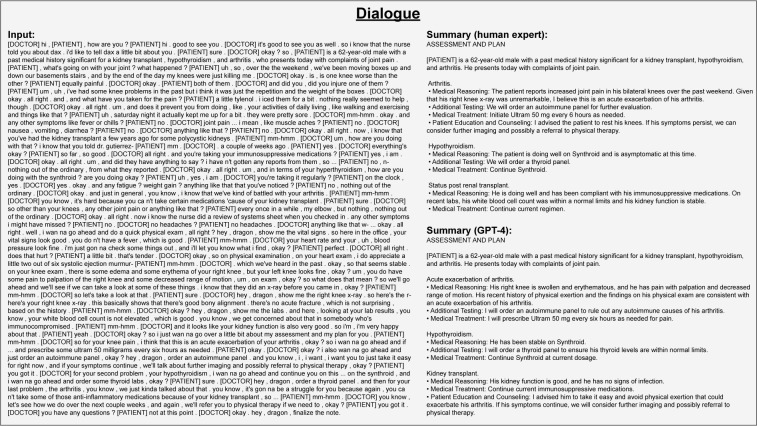
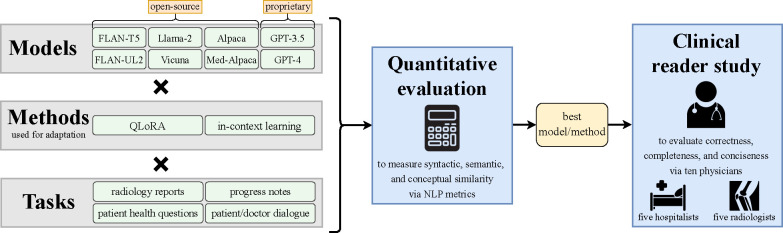
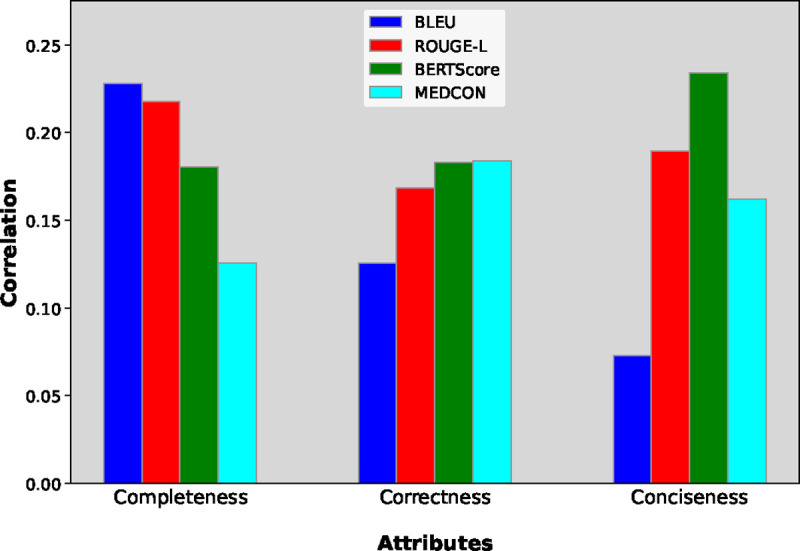
Sifting through vast textual data and summarizing key information from electronic health records (EHR) imposes a substantial burden on how clinicians allocate their time. Although large language models (LLMs) have shown immense promise in natural language processing (NLP) tasks, their efficacy on a diverse range of clinical summarization tasks has not yet been rigorously demonstrated. In this work, we apply domain adaptation methods to eight LLMs, spanning six datasets and four distinct clinical summarization tasks: radiology reports, patient questions, progress notes, and doctor-patient dialogue. Our thorough quantitative assessment reveals trade-offs between models and adaptation methods in addition to instances where recent advances in LLMs may not improve results. Further, in a clinical reader study with ten physicians, we show that summaries from our best-adapted LLMs are preferable to human summaries in terms of completeness and correctness. Our ensuing qualitative analysis highlights challenges faced by both LLMs and human experts. Lastly, we correlate traditional quantitative NLP metrics with reader study scores to enhance our understanding of how these metrics align with physician preferences. Our research marks the first evidence of LLMs outperforming human experts in clinical text summarization across multiple tasks. This implies that integrating LLMs into clinical workflows could alleviate documentation burden, empowering clinicians to focus more on personalized patient care and the inherently human aspects of medicine.
Overview
The claims and statistics of this paper haven’t been checked yet.
Run the check — free, no account needed. It reads the open-access text and checks the sources it cites.
Integrity signals
Registry
Cites
Statistics
Figures
Verification
Claims the paper makes
The claims and statistics of this paper haven’t been checked yet.
Run the check — free, no account needed. It reads the open-access text and checks the sources it cites.
Claims other papers make about this one
Each is checked against this paper’s own text: does it say what the citing paper says it does?
The source backs part of the claim, not all of it — or backs it for a different population, condition or comparison.
In the citing paper
“Most prior research in this field speculates on high-level concerns such as inaccuracy and real-world impacts [43, 44, 54, 86, 93]. However, these studies rarely articulate concrete criteria for when and why LLMs should or should not provide professional advice to users.”
From (A)I Am Not a Lawyer, But...: Engaging Legal Experts towards Responsible LLM Policies for Legal Advice (2024) · cites this paper as [86]
Experimental — accuracy not yet measuredThe cited source says what the claim attributes to it.
In the citing paper
“Domain-specific LLMs, fine-tuned on medical corpora or using knowledge graph embeddings, perform well in clinical text summarization [10, 11], note generation [12, 13], and medical question answering [14].”
From Enhancing hepatopathy clinical trial efficiency: a secure, large language model-powered pre-screening pipeline (2025) · cites this paper as [12]
Self-check
Percentages, sums and reported differences re-computed from the paper’s own numbers.
The self-check needs the paper’s full text.
Citations
Cites
Vaswani, A., Shazeer, N., Parmar, N., Uszkoreit, J., Jones, L., Gomez, A. N., Kaiser, L., & Polosukhin, I. (2017) · arXiv · doi:10.48550/arxiv.1706.03762 · Cited by 120,404 · cited 1×
“Large language models (LLMs) have demonstrated astounding performance, propelled by both the transformer architecture [73] and increasing scales of data and compute, resulting in widespread adoption of models such as ChatGPT [6].”
MethodA guideline of selecting and reporting intraclass correlation coefficients for reliability research
Koo, T. K., & Li, M. Y. (2016) · Journal of Chiropractic Medicine · doi:10.1016/j.jcm.2016.02.012 · Cited by 31,709 · cited 1×
“We estimate intra-reader correlation based on a mean-rating, fixed agreement, two-may mixed effects model [42] using the Pingouin package [80].”
MethodLanguage Models are Few-Shot Learners
Brown, T. B., Mann, B., Ryder, N., Subbiah, M., Kaplan, J., Dhariwal, P., Neelakantan, A., Shyam, P., Sastry, G., Askell, A., et al. (2020) · arXiv · doi:10.48550/arxiv.2005.14165 · Cited by 23,372 · cited 8×
“Large language models (LLMs) have demonstrated astounding performance, propelled by both the transformer architecture [73] and increasing scales of data and compute, resulting in widespread adoption of models such as ChatGPT [6].”
BackgroundMethodInfluentialBLEU: a method for automatic evaluation of machine translation
Papineni, K., Roukos, S., Ward, T., & Zhu, W.-J. (2001) · Proceedings of the 40th Annual Meeting on Association for Computational Linguistics - ACL '02 · doi:10.3115/1073083.1073135 · Cited by 21,344 · cited 8×
“BLEU [52], the simplest metric, calculates the degree of overlap between the reference and generated texts by considering 1- to 4-gram sequences.”
BackgroundInfluentialLoRA: Low-Rank Adaptation of Large Language Models
Hu, E. J., Shen, Y., Wallis, P., Allen-Zhu, Z., Li, Y., Wang, S., Wang, L., & Chen, W. (2021) · arXiv · doi:10.48550/arxiv.2106.09685 · Cited by 13,453 · cited 2×
“Low-rank adaptation (LoRA) [31] has emerged as an effective, lightweight approach for fine-tuning LLMs by altering a small subset of model weights—often < 0.”
BackgroundMethodDecoupled Weight Decay Regularization
Loshchilov, I., & Hutter, F. (2017) · arXiv · doi:10.48550/arxiv.1711.05101 · Cited by 12,522
Exploring the Limits of Transfer Learning with a Unified Text-to-Text Transformer
Raffel, C., Shazeer, N., Roberts, A., Lee, K., Narang, S., Matena, M., Zhou, Y., Li, W., & Liu, P. J. (2019) · arXiv · doi:10.48550/arxiv.1910.10683 · Cited by 10,929 · cited 1×
“The original T5 “text-to-text transfer transformer” model [55] demonstrated excellent performance in transfer learning using the seq2seq architecture.”
MethodTransformers: State-of-the-Art Natural Language Processing
Wolf, T., Debut, L., Sanh, V., Chaumond, J., Delangue, C., Moi, A., Cistac, P., Rault, T., Louf, R., Funtowicz, M., et al. (2020) · Proceedings of the 2020 Conference on Empirical Methods in Natural Language Processing: System Demonstrations · doi:10.18653/v1/2020.emnlp-demos.6 · Cited by 8,741
International Journal of Environmental Research and Public Health
Casariego Vales, E., A.M., C.-C., J.L., L., R.M., M.-P., D., O.-B., M., O.-C., P., R.-S., & F.J., S. (2013) · International Journal of Environmental Research and Public Health · doi:10.3390/ijerph · Cited by 7,742
A Survey on Evaluation of Large Language Models
Chang, Y., Wang, X., Wang, J., Wu, Y., Yang, L., Zhu, K., Chen, H., Yi, X., Wang, C., Wang, Y., et al. (2024) · ACM Transactions on Intelligent Systems and Technology · doi:10.1145/3641289 · Cited by 4,254 · cited 1×
“Beyond the scope of our work, there’s further potential to reduce hallucinations through incorporating checks by a human, checks by another LLM, or using a model ensemble to create a “committee of experts” [11, 39].”
Method
Research works printed but not linked: 5
- [15]Chung H. W., Hou L., Longpre S., Zoph B., Tay Y., Fedus W., Li E., Wang X., Dehghani M., Brahma S., Scaling instruction-finetuned language models. arXiv preprint arXiv:2210.11416 (2022). · arXiv
- [18]Demner-Fushman D., Ananiadou S. & Cohen K. B. The 22nd Workshop on Biomedical Natural Language Processing and BioNLP Shared Tasks in The 22nd Workshop on Biomedical Natural Language Processing and BioNLP Shared Tasks (2023).
- [27]Gao Y., Miller T., Afshar M. & Dligach D. BioNLP Workshop 2023 Shared Task 1A: Problem List Summarization in Proceedings of the 22nd Workshop on Biomedical Language Processing (2023).
- [61]Soldaini L. & Goharian N. Quickumls: a fast, unsupervised approach for medical concept extraction in MedIR workshop, sigir (2016), 1– 4.
- [65]Tay Y., Dehghani M., Tran V. Q., Garcia X., Wei J., Wang X., Chung H. W., Bahri D., Schuster T., Zheng S., Ul2: Unifying language learning paradigms in The Eleventh International Conference on Learning Representations (2022).
Cited by
Sorted by citations
The Good and The Bad: Exploring Privacy Issues in Retrieval-Augmented Generation (RAG)Preprint
Zeng, S., Zhang, J., He, P., Xing, Y., Liu, Y., Han, X., Ren, J., Wang, S., Yin, D., Chang, Y., et al. (2024) · arXiv (Cornell University) · doi:10.48550/arxiv.2402.16893 · Cited by 104
“2.1 Retrieval-Augmented Generation (RAG) Retrieval-augmented generation (RAG), first introduced by Lewis et al. (2020), has emerged as one of the most popular approaches to enhance the generation ability of LLMs (Liu, 2022; Chase, 2022; Van Veen et al., 2023; Ram et al., 2023; Shi et al., 2023).”
BackgroundInfluentialA Survey of Large Language Models in Medicine: Progress, Application, and Challenge
Zhou, H., Liu, F., Gu, B., Zou, X., Huang, J., Wu, J., Li, Y., Chen, S. S., Zhou, P., Liu, J., et al. (2023) · arXiv · doi:10.48550/arxiv.2311.05112 · Cited by 240
“…though using LLMs for clinical report generation or summarization has been proven to be more complete and more accurate than the human counterpart [139], there are still concerns with hallucination, as well as a tendency to approach inputs with a literal view instead of an assumption based…”
BackgroundA Vision-Language Foundation Model to Enhance Efficiency of Chest X-ray InterpretationPreprint
Chen, Z., Varma, M., Xu, J., Paschali, M., Veen, D. V., Johnston, A., Youssef, A., Blankemeier, L., Blüthgen, C., Altmayer, S., et al. (2024) · arXiv (Cornell University) · doi:10.48550/arxiv.2401.12208 · Cited by 238
“…CheXagent generates high-quality reports when compared to other medical FMs. • For findings summarization, as shown in Table 4, CheXagent outperforms LLMs of comparable size on the Rouge-L metric and achieves comparable performance to LLMs with more than twice the number of parameters [80, 81].”
Self-citationA Systematic Survey of Text Summarization: From Statistical Methods to Large Language Models
Zhang, H., Yu, P. S., & Zhang, J. (2025) · ACM Computing Surveys · doi:10.1145/3731445 · Cited by 194
“…[121] Graph LexRank [55], TextRank [148], PACSUM [278], [49] Deep Learning (§3.2) CNN [254], [180], NN-SE [30], T-CONVS2S [157], AttSum [20] RNN/LSTM [40], SummaRuNNer [154], ABS [155], [271], [197], ExtSum-LG [235] RL [165], [245], REFRESH [158], [50] GNN [253], DiscoBert [240], [124], HSG…”
InfluentialA comprehensive survey of large language models and multimodal large language models in medicine
Xiao, H., Zhou, F., Liu, X., Liu, T., Ли, Ж., Liu, X., & Huang, X. (2024) · Information Fusion · doi:10.1016/j.inffus.2024.102888 · Cited by 154
“These models offer promising solutions for medical report generation [19, 20], clinical diagnosis [17, 21], mental health services [22, 23], and various other clinical applications.”
Large language models for structured reporting in radiology: past, present, and future
Busch, F., Hoffmann, L., dos Santos, D. P., Makowski, M. R., Saba, L., Prucker, P., Hadamitzky, M., Navab, N., Kather, J. N., Truhn, D., et al. (2024) · European Radiology · doi:10.1007/s00330-024-11107-6 · Cited by 134
“In addition to language translation, LLMs could support language correction/editing, medical text summarization, or text simpli fi cation, e.g., when reporting examination results to patients, but also for streamlining imaging protocols [78, 79].”
Enhancing medical AI with retrieval-augmented generation: A mini narrative review
Gargari, O. K., & Habibi, G. (2025) · Digital Health · doi:10.1177/20552076251337177 · Cited by 141
Abstractive text summarization: State of the art, challenges, and improvements
Shakil, H., Farooq, A., & Kalita, J. K. (2024) · Neurocomputing · doi:10.1016/j.neucom.2024.128255 · Cited by 100
“They can adapt effectively to user preferences by analyzing interactions and feedback, enabling them to generate summaries that are increasingly tailored to individual user profiles over time [195].”
Li, L., Zhou, J., Gao, Z., Hua, W., Fan, L., Yu, H., Hagen, L., Zhang, Y., Assimes, T. L., Hemphill, L., et al. (2024) · arXiv (Cornell University) · doi:10.48550/arxiv.2405.03066 · Cited by 97
“BART and T5 have also been employed for summarizing data 149,152,154 .”
MethodCheong, I., Xia, K., Feng, K. J. K., Chen, Q. Z., & Zhang, A. X. (2024) · The 2024 ACM Conference on Fairness Accountability and Transparency · doi:10.1145/3630106.3659048 · Cited by 91
“Researchers have facilitated expert discussions to evaluate the sociotechnical implications of LLMs [6, 61, 73, 76].”
BackgroundMitigating the Privacy Issues in Retrieval-Augmented Generation (RAG) via Pure Synthetic Data
Zeng, S.-L., Zhang, J., He, P.-F., et al. (2024) · Conference on Empirical Methods in Natural Language Processing · doi:10.48550/arxiv.2406.14773 · Cited by 78
“Our experimental re-sults show that using our synthetic data as retrieval data can achieve comparable performance with us-ing original data while substantially reducing the associated privacy risks.”
LLMIF: Augmented Large Language Model for Fuzzing IoT Devices
Wang, J., Yu, L., & Luo, X. (2024) · IEEE Symposium on Security and Privacy (S&P) · doi:10.1109/sp54263.2024.00211 · Cited by 75
“[18] shows that LLMs can perform well in comprehending the given document, e.g., radiology reports and doctor-patient dialogue, and reason it with domain knowledge.”
BackgroundA Continued Pretrained LLM Approach for Automatic Medical Note Generation
Yuan, D., Rastogi, E., Naik, G., et al. (2024) · North American Chapter of the Association for Computational Linguistics · doi:10.48550/arxiv.2403.09057 · Cited by 65
“They were trained by explanation tuning a LLaMA2 13B model (Touvron et al., 2023) using bigger models like GPT4 as a teacher.”
BackgroundMethodInfluentialLarge language models in biomedicine and healthcare
Zhou, J., Li, H., Chen, S., Chen, Z., Han, Z., & Gao, X. (2025) · Yearbook of pediatric endocrinology · doi:10.1038/s44387-025-00047-1 · Cited by 74
“A study 136 evaluating LLMs for clinical text summarization shows that models adapted to speci fi c tasks and domains produce higher-quality summaries.”
Introduction to large language models (LLMs) for dementia care and research
Treder, M. S., Lee, S., & Tsvetanov, K. A. (2024) · Frontiers in Dementia · doi:10.3389/frdem.2024.1385303 · Cited by 63
Yang, Y., Mishra, S., Chiang, J., et al. (2024) · Neural Information Processing Systems · doi:10.48550/arxiv.2403.07384 · Cited by 63
Li, J.-W., Yang, Y.-Z., Bai, Y., Zhou, X., Li, Y.-H., Sun, H., Liu, Y., Si, X., Ye, Y., Wu, Y., et al. (2024) · Annual Meeting of the Association for Computational Linguistics · doi:10.18653/v1/2024.acl-long.599 · Cited by 63
Data-Centric Foundation Models in Computational Healthcare: A Survey
Zhang, Y., Gao, J. G., Tan, Z., Zhou, L., Ding, K., Zhou, M., Zhang, S., & Wang, D. (2026) · ACM Computing Surveys · doi:10.1145/3800677 · Cited by 65
“Complementary to masked modeling, autoregressive pre-training supports generative biomedical LMs. BioGPT [151] is pre-trained on PubMed 1 abstracts following GPT-2 [184] for generative language tasks.”
Fundamental Capabilities and Applications of Large Language Models: A Survey
Li, J., Gao, Y., Yang, Y., Bai, Y., Zhou, X., Li, Y., Sun, H., Liu, Y., Si, X., Ye, Y., et al. (2025) · ACM Computing Surveys · doi:10.1145/3735632 · Cited by 45
“And more importantly, LLMs have the capabilities to diagnose.”
Bias Patterns in the Application of LLMs for Clinical Decision Support
Poulain, R., Adiba, F. I., Fayyaz, H., & Beheshti, R. (2026) · Delaware Journal of Public Health · doi:10.32481/djph.2026.03.10 · Cited by 32
“The rapid adoption of LLMs in healthcare has had some forefront applications in areas where LLMs (with their NLP roots) shine, including summarizing medical (free-text) notes, answering patients’ questions, and generating patient discharge letters [54].”
BackgroundMarkowitz, D. M. (2024) · PNAS Nexus · doi:10.1093/pnasnexus/pgae387 · Cited by 68
“The second aim is to evaluate if such lay summaries can be made even simpler with generative AI, which has demonstrated immense potential to summarize and simplify science writing in prior work (33, 34).”
BackgroundBest Practices for Large Language Models in Radiology
Blüthgen, C., Veen, D. V., Zakka, C., Link, K. E., Fanous, A. H., Daneshjou, R., Frauenfelder, T., Langlotz, C. P., Gatidis, S., & Chaudhari, A. S. (2025) · Radiology · doi:10.1148/radiol.240528 · Cited by 48
“52 Frequency and presence penalty are parameters preventing the LLM from repeating itself too often.”
Self-citationEconomics and Equity of Large Language Models: Health Care Perspective
Nagarajan, R., Kondo, M., Salas, F., Sezgın, E., Yao, Y., Klotzman, V., Godambe, S. A., Khan, N., Limon, A., Stephenson, G. S., et al. (2024) · Journal of Medical Internet Research · doi:10.2196/64226 · Cited by 39
“3c , tasks critical for managing extensive medical documentation and improving clinical workflows [145] .”
AI solutions to the radiology workforce shortage
Jing, A. B., Garg, N., Zhang, J., & Brown, J. J. (2025) · npj Health Systems · doi:10.1038/s44401-025-00023-6 · Cited by 40
“These summaries can highlight critical fi ndings or longitudinal trends that help inform interpretation 50 .”
Durak, H. Y., Eğin, F., & Onan, A. (2025) · European Journal of Education · doi:10.1111/ejed.70014 · Cited by 47
Enhancing Medical Text Evaluation with GPT-4Preprint
Xie, Y., Zhang, S., Cheng, H., et al. (2023) · arXiv.org · doi:10.48550/arxiv.2311.09581 · Cited by 4
Qin, R., Yang, K., Abbasi, A., Dobolyi, D. G., Seyedi, S. S., Griner, E. L., Kwon, H., Cotes, R. O., Jiang, Z., Clifford, G. D., et al. (2024) · ACM Transactions on Management Information Systems · doi:10.1145/3673906 · Cited by 18
“Although it can be used for sequence classification, Clinical Camel is primarily used for text summarization [107] and information extraction tasks involving clinical text data [28, 98].”
Multimodal Large Language Models for Medicine: A Comprehensive SurveyPreprint
Ye, J., & Tang, H. (2025) · arXiv (Cornell University) · doi:10.48550/arxiv.2504.21051 · Cited by 40
“Through fine-tuning on medical healthcare data, LLMs have been proven to have great ability and potential in processing medical text [27], [28], [29].”
Towards Knowledge Checking in Retrieval-augmented Generation: A Representation Perspective
Zeng, S.-L., Zhang, J., Li, B., et al. (2024) · Volume 1 · doi:10.48550/arxiv.2411.14572 · Cited by 26
“This approach has been applied to various domains and scenarios (Liu, 2022; Chase, 2022; Van Veen et al., 2023; Ram et al., 2023; Shi et al., 2023; Siriwardhana et al., 2023; Parvez et al., 2021; Panagoulias et al., 2024; Pipitone and Alami, 2024; Mozharovskii, 2024).”
Can Large Language Models abstract Medical Coded Language?
Lee, S. A., & Lindsey, T. (2024) · doi:10.48550/arxiv.2403.10822 · Cited by 25
“One of the key utilities of LLMs lies in their capability to efficiently summarize clinical texts, a feature that has been highlighted in studies by (Van Veen et al., 2023, 2024).”
BackgroundA Brief Review on Benchmarking for Large Language Models Evaluation in Healthcare
Cilar, L., Chen, H., Chen, A., Topaz, M., Tam, W., Bian, J., & Štiglic, G. (2025) · Wiley Interdisciplinary Reviews Data Mining and Knowledge Discovery · doi:10.1002/widm.70010 · Cited by 27
“For instance, Veen et al. (Van Veen et al. 2023) demonstrated that domain-adapted LLMs could effectively summarize radiology reports, reducing clinician workload while enhancing the quality and accuracy of the summaries.”
InfluentialAlsanosi, S., & Padmanabhan, S. (2024) · Healthcare · doi:10.3390/healthcare12070788 · Cited by 38
“LLMs can summarise research findings, suggest medication alternatives based on the latest studies and even predict drug interactions by analysing extensive medical texts [19,22].”
BackgroundSavage, T., Ma, S. P., Boukil, A., Rangan, E. S., Patel, V., López, I., & Chen, J. H. (2025) · Journal of Medical Internet Research · doi:10.2196/76048 · Cited by 20
“Summarization helps clinicians condense lengthy documentation into concise, high-yield summaries to support faster chart review [17].”
AdaptEval: Evaluating Large Language Models on Domain Adaptation for Text SummarizationPreprint
Afzal, A., Chalumattu, R., Matthes, F., & Mascarell, L. (2024) · arXiv (Cornell University) · doi:10.48550/arxiv.2407.11591 · Cited by 5
“Van Veen et al. (2023) focus on clinical data and tackle the summarization of electronic health records.”
BackgroundTowards a Robust Retrieval-Based Summarization SystemPreprint
Liu, S., Wu, J., Bao, J., Wang, W., Hovakimyan, N., & Healey, C. G. (2024) · arXiv (Cornell University) · doi:10.48550/arxiv.2403.19889 · Cited by 19
A survey on biomedical automatic text summarization with large language models
Huang, Z., Chen, X., Wang, Y., Huang, J., & Zhao, X. (2025) · Information Processing & Management · doi:10.1016/j.ipm.2025.104216 · Cited by 24
SportsMetrics: Blending Text and Numerical Data to Understand Information Fusion in LLMs
Hu, Y., Song, K.-Q., Cho, S., Wang, X.-Y., Foroosh, H., Yu, D., & Liu, F. (2024) · Annual Meeting of the Association for Computational Linguistics · doi:10.48550/arxiv.2402.10979 · Cited by 18
“…for both teams are indicated in dotted circles and are withheld from LLMs. text and structured data (Adams et al., 2021; Bard-han et al., 2022; Veen et al., 2023; Ben Abacha et al., 2023); LLM Assistants for online shopping need to process product catalogs, sales transactions, and customer…”
BackgroundLi, J., & Maiti, A. (2025) · Future Internet · doi:10.3390/fi17030100 · Cited by 17
“LLMs are excellent at summarizing text [47–50].”
The use of large language models to enhance cancer clinical trial educational materials
Gao, M., Varshney, A., Chen, S., Goddla, V., Gallifant, J., Doyle, P., Novack, C., Dillon-Martin, M., Perkins, T. A., Correia, X., et al. (2025) · JNCI Cancer Spectrum · doi:10.1093/jncics/pkaf021 · Cited by 18
Text summarization with ChatGPT for drug labeling documents
Ying, L., Liu, Z., Fang, H., Kusko, R. L., Wu, L., Harris, S., & Tong, W. (2024) · Drug Discovery Today · doi:10.1016/j.drudis.2024.104018 · Cited by 19
Towards Adapting Open-Source Large Language Models for Expert-Level Clinical Note Generation
Wang, H., Gao, C., Liu, B., Xu, Q., Hussein, G., Labban, M. E., Iheasirim, K., Korsapati, H. R., Outcalt, C., & Sun, J. (2025) · Findings of the Association for Computational Linguistics: ACL (Findings of ACL) · doi:10.18653/v1/2025.findings-acl.626 · Cited by 4
“We used Gemini 1.0 Pro as the teacher model in this study. achieved using GPT-4 along with few-shot in-context learning (Giorgi et al., 2023; Van Veen et al., 2023).”
InfluentialWu, H., Boulenger, P., Faure, A., Céspedes, B., Boukil, F., Morel, N., Chen, Z., & Bosselut, A. (2024) · Workshop on Biomedical Language Processing (BioNLP) · doi:10.18653/v1/2024.bionlp-1.61 · Cited by 10
“The appearance of large language models (LLMs) has brought unprecedented changes (Achiam et al., 2023; Ouyang et al., 2022), and demonstrated potential strong capabilities in clinical text summarization (Van Veen et al., 2023).”
BackgroundPeng, C., Zhang, K., Lyu, M., Liu, H., Sun, L., & Wu, Y. (2025) · Journal of Biomedical Informatics · doi:10.48550/arxiv.2505.17436 · Cited by 15
“Large language models (LLMs) such as GPT-4[7], LlaMA[8], and Mistral[9] have been widely used to speed up new treatment development[10] and reduce the burden of healthcare providers through generative tasks such as clinical note summarization[11] and question answering[12].”
Susceptibility of Large Language Models to User-Driven Factors in Medical Queries
Lim, K. H., Kang, U., Li, X., Kim, J. S., Jung, Y., Park, S. J., & Kim, B.-H. (2025) · Journal of Healthcare Informatics Research · doi:10.1007/s41666-025-00218-4 · Cited by 8
Chen, Y., Li, J., Song, C., Zhao, Q., Tong, Y., & Fu, G. (2024) · arXiv (Cornell University) · doi:10.48550/arxiv.2409.06164 · Cited by 10
“For example, Van Veen et al. 37 explored the application of LLMs in clinical text summarization, covering various tasks such as summarizing radiology reports and doctor-patient dialogues.”
BackgroundExploring the challenges faced by Dutch truck drivers in the era of technological advancement
de Winter, J., Driessen, T., Dodou, D., & Cannoo, A. (2024) · Frontiers in Public Health · doi:10.3389/fpubh.2024.1352979 · Cited by 15
“In summarization applications, ChatGPT’s capabilities have been shown in various fields (51), including clinical texts (52) and news items (53).”
BackgroundAligning (Medical) LLMs for (Counterfactual) Fairness
Poulain, R., Fayyaz, H., & Beheshti, R. (2024) · arXiv.org · doi:10.48550/arxiv.2408.12055 · Cited by 13
“With their capacity for natural language understanding, they have shown promise in applications like summarizing medical notes, answering patient questions, and generating discharge letters [2].”
BackgroundLyu, M., Peng, C., Paredes, D., et al. (2024) · Workshop on Biomedical Natural Language Processing · doi:10.48550/arxiv.2407.15359 · Cited by 13
“Additionally, excessive tokens can overwhelm LLM’s capacity to focus on important patient information, affecting both the quality and coherence of the generated summaries (Van Veen et al., 2023).”
BackgroundChen, Y., Li, K., Bao, W., Patel, D., Kong, Y., Min, M. R., & Metaxas, D. (2024) · Lecture notes in computer science · doi:10.1007/978-3-031-73007-8_12 · Cited by 7
“Extracting Procedure Steps Using LLM. Recent studies demonstrate that LLMs possess a strong capability for text summarization [33, 43] and understanding task procedures [1,12,49].”
BackgroundMethodGrazhdanski, G., Vasilev, V., Vassileva, S., Taskov, D., Antova, I., Koychev, I. K., & Boytcheva, S. (2025) · Journal of Biomedical Informatics · doi:10.1016/j.jbi.2025.104906 · Cited by 12
Campos, V. M. S., Prudente, T. P., Leão, L. L., Costa, M., Oliva, H. N. P., & Monteiro-Júnior, R. S. (2025) · Health Information Science and Systems · doi:10.1007/s13755-025-00368-0 · Cited by 13
“These labor savings can translate into real economic gains [56, 57].”
Learning to summarize user information for personalized reinforcement learning from human feedbackPreprint
Nam, H., Wan, Y., Liu, M., Ahnn, P., Lian, J., & Jaques, N. (2025) · arXiv (Cornell University) · doi:10.48550/arxiv.2507.13579 · Cited by 10
“Finetuning LLMs for improved and domain-specific summarization has long been of interest [27, 35, 31, 28, 24, 29].”
Aly, W., Soliman, T., & AbdelAziz, A. (2025) · arXiv.org · doi:10.48550/arxiv.2507.05123 · Cited by 10
“The authors in [48] applied an adaptation of eight open-source and proprietary LLMs for four distinct summarization tasks comprising six datasets in the clinical domain.”
Revisiting the MIMIC-IV Benchmark: Experiments Using Language Models for Electronic Health RecordsPreprint
Lovón-Melgarejo, J., Ben-Haddi, T., Scala, J. D., Moreno, J. G., & Tamine, L. (2025) · arXiv (Cornell University) · doi:10.48550/arxiv.2504.20547
“For example, electronic health records (EHR), composed of non-linguistic information such as laboratory measurements, procedures, and medication codes, are translated into linguistic reports using these models (Van Veen et al., 2023).”
Hegselmann, S., Shen, S. Z., Gierse, F., Agrawal, M., Sontag, D., & Jiang, X. (2024) · arXiv · doi:10.48550/arxiv.2402.15422 · Cited by 6
“Given the large burden of and repetition within clinical documentation, automated clinical summarization is of great interest across healthcare; generation targets include discharge summaries, radiology impression sections, patient-facing instructions, and problem lists (Van Veen et al., 2023b; Adams et al., 2022).”
BackgroundResultInfluentialSubramanian, A., Schlegel, V., Kashyap, A. R., et al. (2024) · Annual Meeting of the Association for Computational Linguistics · doi:10.48550/arxiv.2406.03699 · Cited by 9
“Examples of tasks include summarization of clinical text (Veen et al., 2023), automatic note generation for physicians (Ben Abacha et al., 2023b), and condensation of doctor-patient dialogues (Ben Abacha et al., 2023a; Toma et al., 2023).”
BackgroundFIN2SUM: Advancing AI-Driven Financial Text Summarization with LLMs
Wilson, E., Saxena, A., Mahajan, J., et al. (2024) · International Conference on Trends in Quantum Computing and Emerging Business Technologies (TQCEBT) · doi:10.1109/tqcebt59414.2024.10545078 · Cited by 6
Error Detection in Medical Note through Multi Agent Debate
Maiga, A., Shah, A. D., & Yılmaz, E. (2025) · Workshop on Biomedical Language Processing (BioNLP) · doi:10.18653/v1/2025.bionlp-1.12 · Cited by 1
“In some task like medical summarization (Van Veen et al., 2023), adapted model can even surpass medical experts (Van Veen et al., 2024).”
Sousa, M. S. A., Peiris, S., Figueiró, M. F., Haby, M. M., Baraldi, A. C., Revéiz, L., & Souza, J. P. (2026) · Systematic Reviews · doi:10.1186/s13643-025-02842-y · Cited by 13
AI-driven report-generation tools in mental healthcare: A review of commercial tools
Bouguettaya, A., Victoria Team, Stuart, E. M., & Aboujaoude, E. N. (2025) · General Hospital Psychiatry · doi:10.1016/j.genhosppsych.2025.02.018 · Cited by 11
Cl2sum: abstractive summarization via contrastive prompt constructed by LLMs hallucination
Huang, X., Nong, Q., Wang, X., Zhang, H., Du, K., Yin, C., Li, Y., Yan, B., & Zhang, X. (2025) · Complex & Intelligent Systems · doi:10.1007/s40747-025-01795-y · Cited by 7
“In the medical domain, the work of Van et al. also demonstrated that cross-multitasking clinical text summarization based on LLMs outperforms human experts [6].”
Liu, D., Hu, X., Xiao, C., Bai, J., Barandouzi, Z. A., Lee, S., Webster, C., Brock, L.-U. B., Lee, L., Bold, D., et al. (2025) · JMIR Cancer · doi:10.2196/67914 · Cited by 8
“Study by Veen et al [53] assessed approaches for LLMs to summarize clinical texts.”
An Efficient Text Cleaning Pipeline for Clinical Text for Transformer Encoder Models
Ridoy, S. Z., Sultana, J., Ria, Z. F., et al. (2024) · IEEE International Conference on Intelligent Systems · doi:10.1109/is61756.2024.10705199 · Cited by 8
“The study by Veen et al. [13] highlights the methods and substantial efforts that are used in the field of clinical text summarization.”
BackgroundA Comprehensive Review of Large Language Models in Abstractive Summarization of News Articles
G, B., M, A., Yashaswini, G., et al. (2024) · 2024 Asia Pacific Conference on Innovation in Technology (APCIT) · doi:10.1109/apcit62007.2024.10673650 · Cited by 8
“Incorrelation to our study, [16] demonstrates the effectiveness of LLM’s in clinical text summarization tasks, surpassing human experts in completeness and correctness of summaries across various clinical domains.”
MethodSATS: simplification aware text summarization of scientific documents
Zaman, F., Kamiran, F., Shardlow, M., Hassan, S., Karim, A., & Aljohani, N. R. (2024) · Frontiers in Artificial Intelligence · doi:10.3389/frai.2024.1375419 · Cited by 7
Gui, X., Lv, H., Wang, X., Lv, L., Xiao, Y., & Wang, L. (2025) · BioData Mining · doi:10.1186/s13040-025-00458-5 · Cited by 10
“Domain-specific LLMs, fine-tuned on medical corpora or using knowledge graph embeddings, perform well in clinical text summarization [10, 11], note generation [12, 13], and medical question answering [14].”
Large language model performance versus human expert ratings in automated suicide risk assessment
Thomas, J., Elyoseph, Z., Kuchinke, L., & Meinlschmidt, G. (2025) · Scientific Reports · doi:10.1038/s41598-025-22402-7 · Cited by 9
Chu, B., Li, M., Frihat, S., Gu, C., Lodde, G. C., Livingstone, E., & Fuhr, N. (2025) · Conference on Empirical Methods in Natural Language Processing (EMNLP) · doi:10.18653/v1/2025.emnlp-main.43 · Cited by 5
“Unlike previous work (Van Veen et al., 2023), which assigns an overall score, our approach emphasizes identifying which specific salient information is retained or omitted.”
Balch, J. A., Desaraju, S., Nolan, V. J., Vellanki, D., Buchanan, T. R., Brinkley, L. M., Penev, Y. P., Bilgili, A., Patel, A., Chatham, C. E., et al. (2025) · JMIR Medical Informatics · doi:10.2196/71176 · Cited by 6
“They have been used in the well-studied NLP tasks of medical questioning and answering [25,39-41], summarization [16,23,42], named-entity recognition [30,43-46], and document classification [23,47-49].”
Cheese, E., Bichoo, R. A., Grover, K., Dumitru, D., Zenonos, A., Groark, J., Gibson, D. F. C., & Pope, R. A. (2025) · Journal of Medical Internet Research · doi:10.2196/70971 · Cited by 8
“…used the text-to-text transfer transformer (T5) model to generate layperson-friendly summaries of clinical radiology notes, while Van Veen et al [45] evaluated various LLMs across a range of clinical text summarization tasks and found that fine-tuned language net–T5 (FLAN-T5) and GPT-4…”
Hier, D. B., Carrithers, M. D., Platt, S. K., Nguyen, A. Q., Giannopoulos, I., & Obafemi-Ajayi, T. (2025) · Information · doi:10.3390/info16060446 · Cited by 12
PRESS: Defending Privacy in Retrieval-Augmented Generation via Embedding Space Shifting
He, J., Liu, C., Hou, G., Jiang, W., & Li, J. (2025) · IEEE International Conference on Acoustics Speech and Signal Processing · doi:10.1109/icassp49660.2025.10887843 · Cited by 4
“Retrieval-augmented generation (RAG) [1]–[3] is an advanced technique that enhances large language models (LLMs) by dynamically retrieving information from external data relevant to input queries.”
Word Matters: What Influences Domain Adaptation in Summarization?
Li, Y.-H., Miao, S., Huang, H.-Y., & Gao, Y. (2024) · Annual Meeting of the Association for Computational Linguistics · doi:10.48550/arxiv.2406.14828 · Cited by 7
SPEER: Sentence-Level Planning of Long Clinical Summaries via Embedded Entity RetrievalPreprint
Adams, G., Zucker, J. E., & Elhadad, N. (2024) · arXiv (Cornell University) · doi:10.48550/arxiv.2401.02369 · Cited by 12
Large Language Models in Spine Surgery: A Promising Technology
Shah, R., & Schwab, J. H. (2025) · HSS Journal®: The Musculoskeletal Journal of Hospital for Special Surgery · doi:10.1177/15563316251340696 · Cited by 5
He, Y., Yamagiwa, H., & Shimodaira, H. (2024) · Workshop on Biomedical Natural Language Processing · doi:10.48550/arxiv.2406.18094 · Cited by 6
“With this in mind, there has been active research in recent years into applying natural language processing (NLP) to EHR to reduce the burden on end-users (Dong et al., 2022; Houssein et al., 2023; Veen et al., 2023).”
BackgroundRepresentational Alignment Supports Effective Machine Teaching
Sucholutsky, I., Collins, K. M., Malaviya, M., et al. (2024) · arXiv.org · doi:10.48550/arxiv.2406.04302 · Cited by 6
Extractive Text Summarization of Clinical Text Using Deep Learning Models
Chandra Shekar, G., Sai Teja, K., Nithin Datta, D., Geetha Sri Abhinay, P., & Mudigonda, K. S. P. (2024) · International Conference on Emerging Trends in Information Technology and Engineering (ICETITE) · doi:10.1109/ic-etite58242.2024.10493738 · Cited by 5
AUTOGEN and the Ethics of Co-Creation with Personalized LLMs—Reply to the Commentaries
Mann, S. P., Earp, B. D., Møller, N., Suren, V., & Savulescu, J. (2024) · The American Journal of Bioethics · doi:10.1080/15265161.2024.2308175 · Cited by 8
“Research on summarization tasks has found similar or greater performance for LLMs as compared to humans in both specialist and general domains (Van Veen et al. 2023; Zhang et al. 2023).”
BackgroundLi, S., Zhang, Y., Deng, C., Niu, Y., & Zhao, H. (2024) · Findings of the Association for Computational Linguistics: ACL (Findings of ACL) · doi:10.18653/v1/2024.findings-acl.59 · Cited by 6
“6 Van Veen et al. (2023b) select 126 samples containing an “assessment and plan” section from the dataset.”
BackgroundInfluentialAutomating evaluation of LLM-generated responses to patient questions about rare diseases
Zhao, M., Oh, I. Y., Gupta, A., Cohen‐Cutler, S., Harmoney, K. M., Lai, A. M., & Sisk, B. A. (2026) · JAMIA Open · doi:10.1093/jamiaopen/ooag054 · Cited by 4
“To address this gap, we systematically assessed both traditional NLP metrics and LLM-based methods for evaluating LLM responses to patient questions about CLAs.”
ArgCMV: An Argument Summarization Benchmark for the LLM-era
Gurjar, O., Goyal, A., & Chandrasekharan, E. (2025) · Conference on Empirical Methods in Natural Language Processing · doi:10.48550/arxiv.2508.19580 · Cited by 5
“Beyond argument summarization, LLMs have been extensively used for summarizing news articles (Zhang (Tang et al., 2023; Van Veen et al., 2023), books (Chang et al., 2023), and dialogues (Tian et al., 2024; Yin et al., 2024; Zhu et al., 2024).”
SpecialtyScribe: Enhancing SOAP note Scribing for Medical Specialties using LLMs
Rastogi, E., Goyal, S., Zhao, F., & Yuan, D. (2025) · ACM International Conference on Web Search and Data Mining (WSDM) · doi:10.1145/3701551.3706131 · Cited by 1
“With the emergence of LLMs, recent works (Van Veen et al., 2023; Biswas and Talukdar, 2024; Goyal et al., 2024) have focused on leveraging or prompting powerful private LLMs, such as GPT-4 and MedPaLM, to enhance medical note generation.”
Voigt, K. R., Sun, Y., Patandin, A., Hendriks, J., Goossens, R., Verhoef, C. K., Husson, O., Grünhagen, D. J., & Jung, J. (2025) · JMIR Cancer · doi:10.2196/58834 · Cited by 4
“As an example, a large language model, a pretrained model, can be used to interpret and summarize large quantity textual data [30].”
On the Role of LLM to Forecast the Next Pandemic
Ruga, T., Vocaturo, E., & Zumpano, E. (2024) · IEEE International Conference on Bioinformatics and Biomedicine (BIBM) · doi:10.1109/bibm62325.2024.10822835 · Cited by 3
Evaluation of Medical Large Language Models: Taxonomy, Review, and Directions
Lacerda, A. M., Pappa, G. L., Pereira, A. C. M., Meira, W., & Barros, A. G. D. A. (2024) · International Joint Conference on Artificial Intelligence · doi:10.24963/ijcai.2024/1169
“Additionally, the authors in [Van Veen and others, 2023] show that LLM-generated reports tend to be less concise compared to human-written ones.”
Chrysafi, P., Lam, B. D., Carton, S., & Patell, R. D. (2024) · Hämostaseologie · doi:10.1055/a-2415-8408 · Cited by 9
“5 compared favorably to human experts at summarizing clinical text, 89,90 while Ge et al showed that GPT-4 was able to automatically extract key information from radiology reports.”
Kumar, B., Amar, J., Yang, E., et al. (2024) · Machine Learning in Health Care · doi:10.48550/arxiv.2405.06093 · Cited by 5
Çelikten, T., & Onan, A. (2025) · IEEE Access · doi:10.1109/access.2025.3604351 · Cited by 6
“…summaries produced by LLMs should not be of inferior quality to summaries produced by experienced clinicians; this is particularly important when making sensitive clinical decisions where accuracy, clarity, and reliability are crucial for ensuring patient safety and effective medical practice [8].”
Benchmarking Knowledge-Extraction Attack and Defense on Retrieval-Augmented Generation (RAG)
Qi, Z., Sahu, U., Ma, L., Han, H., Rossi, R. A., Dernoncourt, F., Halappanavar, M. M., Ahmed, N., Dong, Y., Zhao, Y., et al. (2026) · ACM SIGKDD Conference on Knowledge Discovery and Data Mining (KDD) · doi:10.1145/3770855.3817524 · Cited by 6
OralGPT: A Two-Stage Vision-Language Model for Oral Mucosal Disease Diagnosis and Description
Zhang, J., Du, B.-D., Miao, Y., et al. (2025) · doi:10.48550/arxiv.2510.13911 · Cited by 4
“Similar designs have shown cross-task advantages in medical visual question answering (Med-VQA [49]) and clinical text summarization (ClinicalDocSum [50]).”
Investigating Symbolic Triggers of Hallucination in Gemma Models Across HaluEval and TruthfulQA
Lamba, N., Tiwari, S., & Gaur, M. (2025) · International Conference on Semantic Systems · doi:10.48550/arxiv.2509.09715 · Cited by 4
Organ-Agents: Virtual Human Physiology Simulator via LLMs
Chang, R., Jiao, H., Nie, W., et al. (2025) · arXiv.org · doi:10.48550/arxiv.2508.14357 · Cited by 4
“Summarization-focused studies, such as those by Hom et al., demonstrate LLMs outperforming clinicians in note condensation [21], and models like ChatGPT have been preferred over physicians in patient-facing QA due to perceived empathy [22].”
Goldberg, E. M., Macis, M., Bounds, M., Picazo, J. G., & Nicholas, L. H. (2025) · JMIR Aging · doi:10.2196/76335 · Cited by 5
“In particular, our methods were shaped by studies by Nashwan and Abukhadijah [13] and Van Veen et al [14], who provided prompt examples.”
Clinical Text Summarization using NLP Pretrained Language Models: A Case Study of MIMIC-IV-Notes
Arokodare, O., Wimmer, H., & Du, J. (2025) · Journal of Information Systems Applied Research and Analytics · doi:10.62273/naka3054 · Cited by 4
Weerasinghe, J., Seepersaud, O., Smothers, G., et al. (2025) · Applied Sciences · doi:10.3390/app15052467 · Cited by 3
Evaluating LLMs for Diagnosis Summarization
Santos, J., dos Santos, H. D. P., Ulbrich, A. H. D. P. S., Faccio, D., Tabalipa, F. D. O., Nogueira, R. F., & Costa, M. M. (2024) · Annual International Conference of the IEEE Engineering in Medicine and Biology Society (EMBC) · doi:10.1109/embc53108.2024.10782231 · Cited by 5
“In the summarization of clinical notes, LLMs have demonstrated the capability to outperform human experts [19], showcasing their potential to reduce documentation burdens and enable clinicians to prioritize personalized patient care.”
DistillNote: Toward a Functional Evaluation Framework of LLM-Generated Clinical Note SummariesPreprint
Boll, H. O., Boll, A. O., Boll, L. P., Abu–Hanna, A., & Calixto, I. (2025) · arXiv (Cornell University) · doi:10.48550/arxiv.2506.16777 · Cited by 3
“Large language models (LLMs) have shown increasing promise for automating clinical note summarization, with recent studies indicating they perform at least as well as, and often better than, human experts (Veen et al., 2023; Schoonbeek et al., 2024).”
Natural Language Processing in Healthcare: From Unstructured Data to Clinical Intelligence
Kumar, D., Choudhary, N., Gupta, V., Tanwar, R., Bahmani, K., Antal, S., Jarora, S., Gupta, S., Shaikh, M. S., Webster, T. J., et al. (2026) · Intelligent Systems with Applications · doi:10.1016/j.iswa.2026.200698 · Cited by 2
Discriminative Representation Learning for Clinical Prediction
Zhang, Y., Fan, L., Lawrence, S., et al. (2026) · arXiv.org · doi:10.48550/arxiv.2603.20921 · Cited by 3
“Continued pretraining on domain-specific corpora [109, 110, 111, 112, 113, 114] enables improved semantic reasoning over clinical narratives.”
Metadata
- Authors
- Veen, D. V., Uden, C. V., Blankemeier, L., Delbrouck, J.-B., Aali, A., Bluethgen, C., Pareek, A., Polacin, M., Reis, E. P., Seehofnerova, A., Rohatgi, N., Hosamani, P., Collins, W., Ahuja, N., Langlotz, C., Hom, J., Gatidis, S., Pauly, J., & Chaudhari, A.
- Affiliations
- Stanford University (US)
- The University of Texas at Austin (US)
- University Hospital Zurich
- Copenhagen University Hospital (DK)
- University of Zurich (CH)
- Hospital Israelita Albert Einstein (BR)
- Stanford University
- Stanford Medicine (US)
- Corresponding author
- Veen, Dave Van
- ORCID
- Venue
- Nature Medicine
- Published
- 2023-10-30
- Volume
- 30
- Issue
- 4
- Pages
- 1134-1142
- ISSN
- 1078-8956 (ISSN-L)
- PMC
- PMC10635391
- OpenAlex
- W4392193048
- Cited by
- 892
- References
- 71
- Citations by year
- 2026: 342 · 2025: 404 · 2024: 144 · 2023: 2
- FWCI
- 81.57
- Type
- journal article
- Language
- en
- Open access
- green
- doi.org
- Locations
- Nature Medicine (publishedVersion)
- Research Square (acceptedVersion, cc-by)
- PubMed (publishedVersion)
- PubMed Central (acceptedVersion)
- Zurich Open Repository and Archive (University of Zurich) (acceptedVersion)
- arXiv (Cornell University) (submittedVersion, cc-by)
- PubMed Central (submittedVersion, cc-by)
- Zurich Open Repository and Archive (University of Zurich) (submittedVersion)
- arXiv (Cornell University) (cc-by)
- Zurich Open Repository and Archive (University of Zurich)
- Funders
- Foundation for the National Institutes of Health (R01 AR077604, R01EB002524, P41 EB027060, R01 AR079431)
- Gordon and Betty Moore Foundation
- National Institutes of Health (75N92020C00021, 75N92020C00008)
- Agency for Healthcare Research and Quality (R18 HS026886)
- National Heart, Lung, and Blood Institute (75N92020C00008, 75N92020C00021, R01HL155410, R01HL169345, R01HL167974, R01HL157235)
- National Institute of Arthritis and Musculoskeletal and Skin Diseases (R01AR077604, R01AR079431)
- National Institute of Biomedical Imaging and Bioengineering (75N92020C00021, EB 002524, 75N92020C00008, P41EB027060, R01EB002524)
- Topics
- Health Sciences › Medicine › Health Informatics › Artificial Intelligence in Healthcare and Education
- Physical Sciences › Computer Science › Artificial Intelligence › Machine Learning in Healthcare
- Physical Sciences › Computer Science › Artificial Intelligence › Topic Modeling
- Keywords
- large language models, clinical text summarization, LLM adaptation, electronic health records, radiology reports, progress notes, doctor-patient dialogue, patient questions, summary quality, safety analysis, clinical documentation burden
About these checks
Registry, retraction, Cites and statistics results are computed, not judged, with one exception: a printed reference that no index lists is read once by a model before it counts as a citation error. Claims are extracted by a model and kept only when their quote appears verbatim in the text; each cited source is then checked, with a model’s help, for whether it says what the claim relies on. Those verdicts can be wrong — read the claim’s quote and the cited source before relying on one.
Statistics and arithmetic are recomputed, not judged.
Confidence bands are shown only for fields calibrated on our annotated test set. None is calibrated yet, so no band is shown.
What counts as a claim ›How we measure confidence ›How we check this ›
Are you an author, or do you see a problem with this page? Request a review
