

Long-term icariin treatment ameliorates cognitive deficits via CD4+ T cell-mediated immuno-inflammatory responses in APP/PS1 mice
Open accessThe DOI matches its Crossref record; 44 of the 44 references it cites were found in a registry or an index.
Abstract
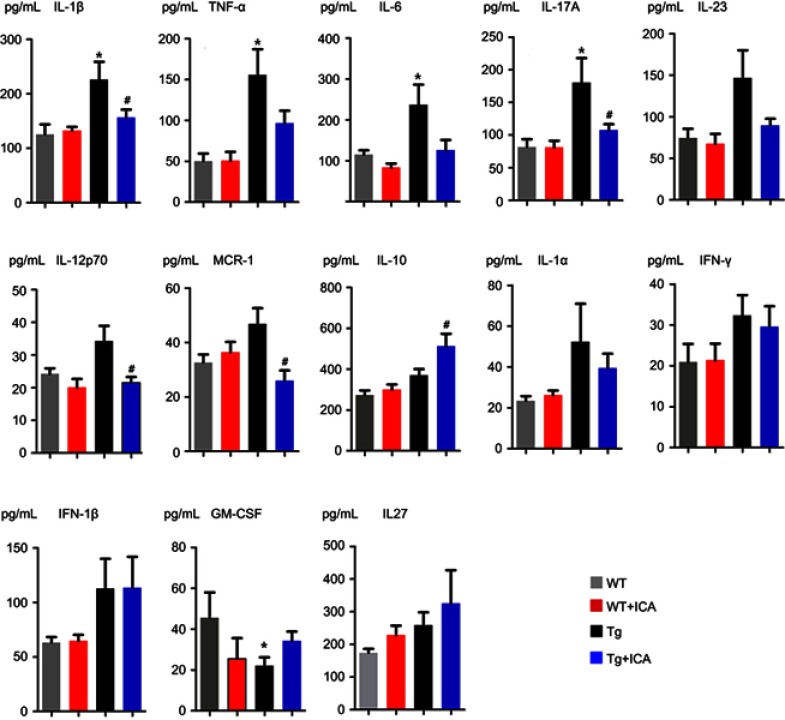
Background: Alzheimer’s disease (AD) is the most common neurodegenerative disorder that also involves neuroinflammation in addition to many other features. Icariin (ICA) as one of the active ingredients of Chinese herbal medicine has the immunomodulating function. This study aimed to investigate the immunotherapeutic potential of ICA on AD. Methods: APP/PS1 mice and wild type C57BL/6 mice were subjected to orally ICA administration (60 mg/kg/d) for 8 months. Then, the ethological and biochemical experiments, such as Morris water maze assay, Aβ ELISA, blood T cell flow cytometry, and plasma and brain cytokines array, were conducted to evaluate the effects of ICA administration. Results: ICA significantly improved spatial learning and memory retention in APP/PS1 mice. Long-term application of ICA could also reduce hippocampus Aβ deposition, modulate the differentiation of CD4+ T cells, and modulate the release of inflammatory cytokines in plasma and brain tissue. Conclusion: ICA shows the neuroprotective effects via modulating the CD4 + T lymphocyte-related immuno-inflammatory responses in APP/PS1 mice and may be a promising drug against AD progression. Keywords: Alzheimer’s disease, icariin, T lymphocyte, neuroinflammation, cytokines
Overview
The claims and statistics of this paper haven’t been checked yet.
Free: it reads the open-access text and checks the first 5 claims that cite a source we can check. Create a free account to check every claim.
Integrity signals
Registry
Cites
Statistics
Figures
Verification
Claims the paper makes
The claims and statistics of this paper haven’t been checked yet.
Free: it reads the open-access text and checks the first 5 claims that cite a source we can check. Create a free account to check every claim.
Claims other papers make about this one
Each is checked against this paper’s own text: does it say what the citing paper says it does?
In the citing paper
“TCM treatment such as morroniside, rutin, resveratrol, triptolide and berberine have already shown their beneficial effects for AD509–527 (Table 3).”
From Amyloid β-based therapy for Alzheimer’s disease: Challenges, successes and future (2023) · cites this paper as [514]
Self-check
Percentages, sums and reported differences re-computed from the paper’s own numbers.
The self-check needs the paper’s full text.
Citations
Cites
Yaşlı Kadınlarda Üreme Sağlığı
Kokanalı, D., & Engin Üstün, Y. (n.d.) · DergiPark (Istanbul University) · Cited by 170,090
The amyloid hypothesis of Alzheimer's disease at 25 years
Selkoe, D. J., & Hardy, J. (2016) · EMBO Molecular Medicine · doi:10.15252/emmm.201606210 · Cited by 6,164 · cited 1×
“The neuropathological hallmarks of AD include the extracellular aggregation of amyloid-β (Aβ) peptide in plaques and the formation of intraneuronal neurofibrillary tangles (NFTs) by hyperphosphorylated tau protein.(3,4) Although the mechanisms causing the neuropathological lesions are largely unknown, increasing docum…”
BackgroundNeuropathological alterations in Alzheimer disease
Serrano-Pozo, A., Frosch, M. P., Masliah, E., & Hyman, B. T. (2011) · Cold Spring Harbor Perspectives in Medicine · doi:10.1101/cshperspect.a006189 · Cited by 3,345
Scheltens, P., Blennow, K., Breteler, M. M. B., de Strooper, B., Frisoni, G. B., Salloway, S., & Van der Flier, W. M. (2016) · The Lancet · doi:10.1016/s0140-6736(15)01124-1 · Cited by 3,125
NLRP3 is activated in Alzheimer’s disease and contributes to pathology in APP/PS1 mice
Heneka, M. T., Kummer, M. P., Stutz, A., Delekate, A., Schwartz, S., Vieira-Saecker, A., Griep, A., Axt, D., Remus, A., Tzeng, T.-C., et al. (2013) · Nature · doi:10.1038/nature11729 · Cited by 2,898 · cited 1×
“Growing evidence indicates that deposition of Aβ induces an inflammatory response by activating microglia in the brain.(7,8) Tcells have been identified in neuritic plaques and microglia in the post-mortem AD brain.”
BackgroundInflammation as a central mechanism in Alzheimer's disease
Kinney, J. W., Bemiller, S. M., Murtishaw, A. S., Leisgang, A. M., Salazar, A. M., & Lamb, B. T. (2018) · Alzheimer's & Dementia: Translational Research & Clinical Interventions · doi:10.1016/j.trci.2018.06.014 · Cited by 2,253 · cited 10×
“Immune-related abnormalities in the peripheral system of patients are associated with the risk of AD.”
BackgroundInfluentialMasters, C. L., Bateman, R., Blennow, K., Rowe, C. C., Sperling, R. A., & Cummings, J. L. (2015) · Nature Reviews Disease Primers · doi:10.1038/nrdp.2015.56 · Cited by 1,853
Oxidative Stress, Synaptic Dysfunction, and Alzheimer’s Disease
Tönnies, E., & Trushina, E. (2017) · Journal of Alzheimer s Disease · doi:10.3233/jad-161088 · Cited by 1,750 · cited 1×
“…have addition mechanism of action to affect autophagy, 34 affecting adult neurogenesis or neurogenic stem cell niche, 35 – 37 pg/mL pg/mL pg/mL pg/mL pg/mL IL-1β pg/mL pg/mL pg/mL pg/mL pg/mL pg/mL pg/mL pg/mL IL-10 reducing oxidative stress, 38 synaptic injury, 38 – 40 or epigenetic modulation.”
Neuroinflammation in Alzheimer's disease: current evidence and future directions
Calsolaro, V., & Edison, P. (2016) · Alzheimer's & Dementia · doi:10.1016/j.jalz.2016.02.010 · Cited by 1,726 · cited 10×
“Immune-related abnormalities in the peripheral system of patients are associated with the risk of AD.”
BackgroundInfluentialHolcomb, L., Gordon, M. N., McGowan, E., Yu, X., Benkovic, S., Jantzen, P., Wright, K., Saad, I., Mueller, R., Morgan, D., et al. (1998) · Nature Medicine · doi:10.1038/nm0198-097 · Cited by 1,386
Cited by
Amyloid β-based therapy for Alzheimer’s disease: Challenges, successes and future
Zhang, Y., Chen, H., Li, R., Sterling, K., & Song, W. (2023) · Signal Transduction and Targeted Therapy · doi:10.1038/s41392-023-01484-7 · Cited by 988
Anti-inflammatory and immunoregulatory effects of icariin and icaritin
Bi, Z., Zhang, W., & Yan, X. (2022) · Biomedicine & Pharmacotherapy · doi:10.1016/j.biopha.2022.113180 · Cited by 220
Beneficial effects of natural flavonoids on neuroinflammation
Chen, Y., Peng, F., Xing, Z., Chen, J., Peng, C. Y., & Li, D. (2022) · Frontiers in Immunology · doi:10.3389/fimmu.2022.1006434 · Cited by 139
Targeting immunosenescence and inflammaging: advancing longevity research
Nguyen, T. Q. T., & Cho, K. A. (2025) · Experimental & Molecular Medicine · doi:10.1038/s12276-025-01527-9 · Cited by 115
“Icariin improves immune function by modulating T helper cell differentiation and reducing in fl ammatory cytokines, while resveratrol boosts thymic function and T cell numbers 102,103 .”
Hole, K. L., & Williams, R. J. (2020) · Brain Plasticity · doi:10.3233/bpl-200098 · Cited by 83
Zhang, Q., & Yan, Y. (2023) · Neural Regeneration Research · doi:10.4103/1673-5374.373680 · Cited by 78
“Long-term treatment with icariin (60 mg/kg per day, p.o., for 8 months) modulated the differentiation of CD4+ T cells and the release of inflammatory cytokines in the plasma and brain tissue of APP/PS1 mice, thus indicating regulatory activity over systemic immune function (Zhu et al., 2019).”
BackgroundImpact of Icariin and its derivatives on inflammatory diseases and relevant signaling pathways
Luo, Z., Dong, J., & Wu, J. (2022) · International Immunopharmacology · doi:10.1016/j.intimp.2022.108861 · Cited by 69
Han, M., Hu, L., & Chen, Y. (2019) · Drug Design Development and Therapy · doi:10.2147/dddt.s216156 · Cited by 55
Chen, Z., Wang, X., Du, S., Liu, Q., Xu, Z., Guo, Y., & Lin, X. (2024) · Chinese Medicine · doi:10.1186/s13020-024-00900-6 · Cited by 66
Molecular mechanisms and therapeutic potential of icariin in the treatment of Alzheimer's disease
Zheng, L., Wu, S., Jin, H., Wu, J., Wang, X., Cao, Y., Zhou, Z., Jiang, Y., Li, L., Yang, X., et al. (2023) · Phytomedicine · doi:10.1016/j.phymed.2023.154890 · Cited by 49
Liu, Y., Tan, Y., Zhang, Z., Li, H., Yi, M., Zhang, Z., Hui, S., & Peng, W. (2022) · Ageing Research Reviews · doi:10.1016/j.arr.2022.101831 · Cited by 37
Self-citationBrain Hepcidin Suppresses Major Pathologies in Experimental Parkinsonism
Liang, T., Qian, Z., Mu, M., Yung, W., & Ke, Y. (2020) · iScience · doi:10.1016/j.isci.2020.101284 · Cited by 30
“…et al., 2018), with notable differences in roles of immunocytes between ischemic stroke and neurodegenerative diseases (Rosset et al., 2015; Zhu et al., 2019; Solleiro-Villavicencio and Rivasarancibia, 2018; Gon-zalez and Pacheco, 2014; Brochard et al., 2008; Kustrimovic et al., 2019;…”
BackgroundIcariin Ameliorates Alzheimer’s Disease Pathology by Alleviating Myelin Injury in 3 × Tg-AD Mice
Yu, H., Shi, J., Lin, Y., Zhang, Y., Luo, Q., Huang, S., Wang, S., Wei, J., Huang, J., Li, C., et al. (2022) · Neurochemical Research · doi:10.1007/s11064-021-03507-7 · Cited by 28
Todorova, M. N., Savova, M. S., Mihaylova, L. V., & Georgiev, M. I. (2023) · International Journal of Molecular Sciences · doi:10.3390/ijms25010352 · Cited by 26
“Some limited research suggests that icariin might play a role in regulating pro-longevity pathways [18–20].”
BackgroundNeurovascular glial unit: A target of phytotherapy for cognitive impairments
Chen, L., Zhen, Y., Wang, X., Wang, J., & Zhu, G. (2023) · Phytomedicine · doi:10.1016/j.phymed.2023.155009 · Cited by 20
Licochalcone A improves the cognitive ability of mice by regulating T- and B-cell proliferation
Wu, Y., Zhu, J., Liu, H., & Liu, H. (2021) · Aging · doi:10.18632/aging.202704 · Cited by 19
“For example, icariin exerts neuroprotective effects via modulating the CD4 T lymphocyte-related immunoinflammatory responses in APP/PS1 mice and may be a promising drug against Alzheimer’s disease progression [83].”
BackgroundXia, T., Zhou, Y., An, J., Cui, Z. G., Zhong, X., Cui, T., Lv, B., Zhao, X., & Gao, X. (2024) · Aging Cell · doi:10.1111/acel.14317 · Cited by 17
“Long-term administration of icariin in AD mice could significantly attenuate the differentiation propensity towards Th1 and Th17, mitigated immune-inflammatory responses mediated by CD4 + T cells (Zhu et al., 2019 ).”
BackgroundSu, B., Cheng, D.-J., Chen, G., Zhang, S., Wang, L., Wu, X., & Tang, S. (2022) · Journal of Biomedical Nanotechnology · doi:10.1166/jbn.2022.3242 · Cited by 14
Anti‐aging effects of icariin and the underlying mechanisms: A mini‐review
Li, Y., Wei, Z., & Su, L. (2024) · Aging Medicine · doi:10.1002/agm2.12284 · Cited by 11
“31 Thus, inhibition of neuroinflammation is an important route for ICA to exert its neuroprotective effects.”
BackgroundZheng, R., Huang, Y., & Zhou, Q. (2021) · Frontiers in Pharmacology · doi:10.3389/fphar.2021.605814 · Cited by 12
“…XST, ceftriaxone, APP/PS1 mice INTRODUCTION New drugs are urgently needed for Alzheimer’s disease (AD), especially those that do not target amyloid-β (Aβ) and tau since a variety of those drugs have shown minimal effectiveness in the clinical trials (Polanco et al., 2018; Zhu et al., 2019).”
BackgroundInfluentialYou, M., Yuan, P., Li, L., & Xu, H. (2022) · Frontiers in Pharmacology · doi:10.3389/fphar.2022.1066819 · Cited by 13
“…et al. (2020) 88 −2.24 [−3.41, −1.07] Sheng et al. (2017) 88 −2.62 [−3.76, −1.48] Wang et al. (2020a) 87 −0.2 [−1.33, 0.94] Jiang et al. (2019) 88 −1.91 [−3.01, −0.81] Zhu et al. (2019) 87 −3.15 [−4.23, −2.08] Li et al. (2014) 88 −1.13 [−2.09, −0.17] Li et al. (2019a) 86 0 [−0.88,…”
InfluentialTian, H., Pan, Q., Wu, J., Liao, J., Wan, Y., Pei, K., Liu, Q., Zeng, L., Cao, Y., Shi, Q., et al. (2024) · Phytomedicine · doi:10.1016/j.phymed.2024.156214 · Cited by 10
Wu, S., Zheng, L., Huang, J., Wang, S., Huang, Q., Guo, S., Qiu, T., Shen, Q., Li, C., Huh, S., et al. (2024) · Journal of Functional Foods · doi:10.1016/j.jff.2024.106263 · Cited by 7
Li, X., He, Z., Wang, C., Liu, Y., Shan, Z., Zhang, L., Shi, Q., Yue, C., Lin, Y., Liu, Y., et al. (2020) · Natural Product Communications · doi:10.1177/1934578x20948986 · Cited by 4
Self-citationCui, J., Huang, R., & Dong, X. (2026) · European Journal of Pharmacology · doi:10.1016/j.ejphar.2026.178706 · Cited by 3
Icariin as a new potential drug in Alzheimer disease treatment – a review
Jasielski, P. P., Piędel, F., Petit, V., & Rejdak, K. (2019) · Journal of Pre-Clinical and Clinical Research · doi:10.26444/jpccr/114763 · Cited by 2
“ICA can modulate the immune-inflammatory response associated with CD4 + T cells, and this could inhibit AD progression [25].”
BackgroundAntineoplastic effects of icaritin: molecular mechanisms and applications
Luo, P., Zhang, H., Cheng, G., Wang, P., Wong, Y., Chen, J., Fang, J., Li, W., Cao, T., Liu, B., et al. (2025) · Acta Materia Medica · doi:10.15212/amm-2024-0035 · Cited by 3
“ICA exhibits a diverse array of pharmacological effects in conditions amelioration of sexual dysfunction [6], anti-osteoporosis [7], anti-cardiovascular disease [8], and regulation of immune disorders [9].”
Mechanistic Perspectives of Icariin against Neuroinflammation: Taming Glial Activation
Singh, N. K., & Singh, A. (2026) · Mini-Reviews in Medicinal Chemistry · doi:10.2174/0113895575448388260306051328
Chen, M., Hao, L.-Y., Zhang, Z.-H., Xu, H., Li, H.-F., Wen, L., & Zheng, G. (2026) · Ageing Research Reviews · doi:10.1016/j.arr.2026.103228
Self-citationIcariin: from preclinical promise to clinical reality—a critical evidence-based assessment
Gu, C., Lin, Y., Wang, Z., Li, M., Du, L., Lai, X., Qiao, L., Wang, H., Wang, J., & Tong, X. (2026) · Frontiers in Pharmacology · doi:10.3389/fphar.2026.1832264 · Cited by 1
“In AD models, ICA ameliorated cognitive deficits by reducing β - amyloid deposition (Zhang et al., 2014), tau phosphorylation (Song et al., 2016) and neuroinflammation (Zhu et al., 2019).”
Tian, Y., Guo, J., Lin, X., Zhang, F., Xie, J., Hou, X., Deng, J., Hao, E., & Du, Z. (2026) · Journal of Ethnopharmacology · doi:10.1016/j.jep.2026.122574
Self-citationZhang, K., Li, J., Ban, W., Chen, P., Ding, X., Lv, L., Guo, B., & Yang, Z. (2026) · International Journal of Molecular Sciences · doi:10.3390/ijms27219562
wu, C., Guo, L., Sun, X., 朱金璞, Zhao, Z., Qi, S., Li, Y., Li, H., Zhao, R., Xiu, Z., et al. (2026) · Chinese Journal of Natural Medicines · doi:10.1016/s1875-5364(26)61221-6
Self-citation
Metadata
- Authors
- Zhu, T., Zhang, F., Li, H., He, Y., Zhang, G., Huang, N., Guo, M., & Li, X.
- Affiliations
- Jinan Central Hospital (CN)
- Xi'an Medical University (CN)
- Second Hospital of Shandong University (CN)
- Venue
- Clinical Interventions in Aging
- Publisher
- Informa UK Limited
- Published
- 2019-05
- Volume
- Volume 14
- Pages
- 817-826
- ISSN
- 1176-9092 (ISSN-L)
- 1178-1998
- PMC
- PMC6511656
- OpenAlex
- W2942843982
- Cited by
- 33
- References
- 43
- Citations by year
- 2026: 7 · 2025: 2 · 2024: 5 · 2023: 5 · 2022: 7 · 2021: 2 · 2020: 3 · 2019: 2
- FWCI
- 3.52
- Type
- journal article
- Language
- en
- Open access
- gold
- doi.org
- Licence
- Locations
- Clinical Interventions in Aging (publishedVersion, cc-by-nc)
- PubMed Central (publishedVersion, cc-by-nc)
- PubMed (publishedVersion)
- Dove Medical Press (Taylor and Francis Group) (submittedVersion, cc-by-nc)
- Funders
- Shandong University
- National Natural Science Foundation of China (81373635, 201212012)
- Topics
- Life Sciences › Pharmacology, Toxicology and Pharmaceutics › Pharmacology › Medicinal Plant Pharmacodynamics Research
- Life Sciences › Neuroscience › Cellular and Molecular Neuroscience › Alzheimer's disease research and treatments
- Life Sciences › Neuroscience › Neurology › Neuroinflammation and Neurodegeneration Mechanisms
- Keywords
- icariin, Alzheimer's disease, CD4+ T cells, neuroinflammation, immunotherapy, APP/PS1 mice, amyloid-beta deposition, spatial learning and memory, inflammatory cytokines, hippocampus, Chinese herbal medicine, neuroprotection
- MeSH terms
- Alzheimer Disease, Animals, Cognition, Disease Models, Animal, Flavonoids, Hippocampus, Male, Memory, Mice, Inbred C57BL, Mice, Transgenic, CD4-Positive T-Lymphocytes, Cytokines, Amyloid beta-Peptides, Amyloid beta-Protein Precursor, Maze Learning, Mice, Presenilin-1, Spatial Learning
About these checks
Registry, retraction, Cites and statistics results are computed, not judged, with one exception: a printed reference that no index lists is read once by a model before it counts as a citation error. Claims are extracted by a model and kept only when their quote appears verbatim in the text; each cited source is then checked, with a model’s help, for whether it says what the claim relies on. Those verdicts can be wrong — read the claim’s quote and the cited source before relying on one.
Statistics and arithmetic are recomputed, not judged.
Confidence bands are shown only for fields calibrated on our annotated test set. None is calibrated yet, so no band is shown.
What counts as a claim ›How we measure confidence ›How we check this ›
Are you an author, or do you see a problem with this page? Request a review
Data sources
Bibliographic data: Semantic Scholar, OpenAlex, Crossref.
Contains information from the Semantic Scholar Academic Graph Datasets, made available under the ODC Attribution License (ODC-BY 1.0).
Semantic Scholar’s data is described in: Kinney, R., et al. (2023). The Semantic Scholar Open Data Platform. arXiv:2301.10140.
