

Long-term icariin treatment ameliorates cognitive deficits via CD4+ T cell-mediated immuno-inflammatory responses in APP/PS1 mice
Open accessThe DOI matches its Crossref record; 44 of the 44 references it cites were found in a registry or an index.
Abstract
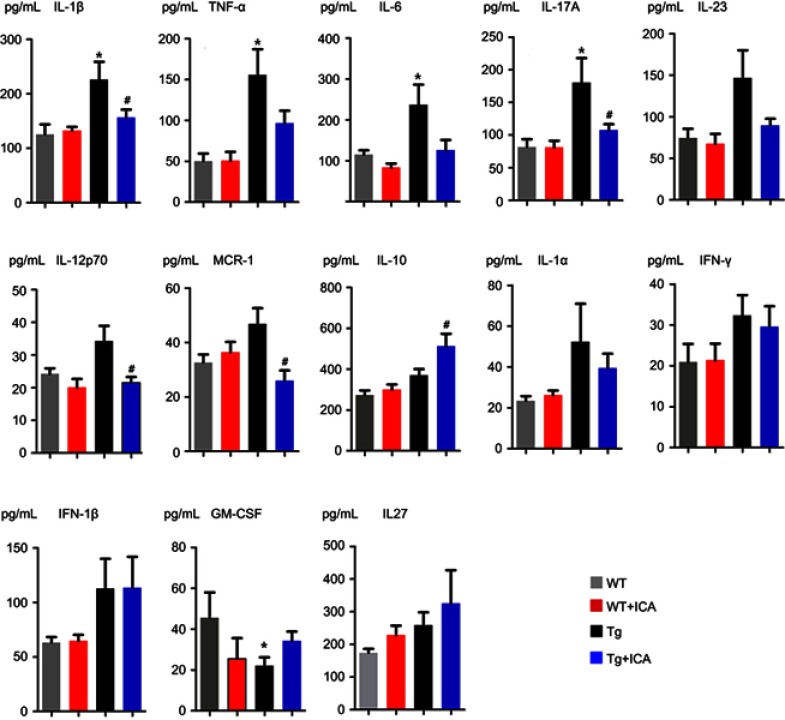
Background: Alzheimer’s disease (AD) is the most common neurodegenerative disorder that also involves neuroinflammation in addition to many other features. Icariin (ICA) as one of the active ingredients of Chinese herbal medicine has the immunomodulating function. This study aimed to investigate the immunotherapeutic potential of ICA on AD. Methods: APP/PS1 mice and wild type C57BL/6 mice were subjected to orally ICA administration (60 mg/kg/d) for 8 months. Then, the ethological and biochemical experiments, such as Morris water maze assay, Aβ ELISA, blood T cell flow cytometry, and plasma and brain cytokines array, were conducted to evaluate the effects of ICA administration. Results: ICA significantly improved spatial learning and memory retention in APP/PS1 mice. Long-term application of ICA could also reduce hippocampus Aβ deposition, modulate the differentiation of CD4+ T cells, and modulate the release of inflammatory cytokines in plasma and brain tissue. Conclusion: ICA shows the neuroprotective effects via modulating the CD4 + T lymphocyte-related immuno-inflammatory responses in APP/PS1 mice and may be a promising drug against AD progression. Keywords: Alzheimer’s disease, icariin, T lymphocyte, neuroinflammation, cytokines
Overview
The claims and statistics of this paper haven’t been checked yet.
Free: it reads the open-access text and checks the first 5 claims that cite a source we can check. Create a free account to check every claim.
Integrity signals
Registry
Cites
Statistics
Figures
Verification
Claims the paper makes
The claims and statistics of this paper haven’t been checked yet.
Free: it reads the open-access text and checks the first 5 claims that cite a source we can check. Create a free account to check every claim.
Claims other papers make about this one
Each is checked against this paper’s own text: does it say what the citing paper says it does?
In the citing paper
“TCM treatment such as morroniside, rutin, resveratrol, triptolide and berberine have already shown their beneficial effects for AD509–527 (Table 3).”
From Amyloid β-based therapy for Alzheimer’s disease: Challenges, successes and future (2023) · cites this paper as [514]
Self-check
Percentages, sums and reported differences re-computed from the paper’s own numbers.
The self-check needs the paper’s full text.
Citations
Cites
Yaşlı Kadınlarda Üreme Sağlığı
Kokanalı, D., & Engin Üstün, Y. (n.d.) · DergiPark (Istanbul University) · Cited by 170,090
The amyloid hypothesis of Alzheimer's disease at 25 years
Selkoe, D. J., & Hardy, J. (2016) · EMBO Molecular Medicine · doi:10.15252/emmm.201606210 · Cited by 6,164 · cited 1×
“The neuropathological hallmarks of AD include the extracellular aggregation of amyloid-β (Aβ) peptide in plaques and the formation of intraneuronal neurofibrillary tangles (NFTs) by hyperphosphorylated tau protein.(3,4) Although the mechanisms causing the neuropathological lesions are largely unknown, increasing docum…”
BackgroundNeuropathological alterations in Alzheimer disease
Serrano-Pozo, A., Frosch, M. P., Masliah, E., & Hyman, B. T. (2011) · Cold Spring Harbor Perspectives in Medicine · doi:10.1101/cshperspect.a006189 · Cited by 3,345
Scheltens, P., Blennow, K., Breteler, M. M. B., de Strooper, B., Frisoni, G. B., Salloway, S., & Van der Flier, W. M. (2016) · The Lancet · doi:10.1016/s0140-6736(15)01124-1 · Cited by 3,125
NLRP3 is activated in Alzheimer’s disease and contributes to pathology in APP/PS1 mice
Heneka, M. T., Kummer, M. P., Stutz, A., Delekate, A., Schwartz, S., Vieira-Saecker, A., Griep, A., Axt, D., Remus, A., Tzeng, T.-C., et al. (2013) · Nature · doi:10.1038/nature11729 · Cited by 2,898 · cited 1×
“Growing evidence indicates that deposition of Aβ induces an inflammatory response by activating microglia in the brain.(7,8) Tcells have been identified in neuritic plaques and microglia in the post-mortem AD brain.”
BackgroundInflammation as a central mechanism in Alzheimer's disease
Kinney, J. W., Bemiller, S. M., Murtishaw, A. S., Leisgang, A. M., Salazar, A. M., & Lamb, B. T. (2018) · Alzheimer's & Dementia: Translational Research & Clinical Interventions · doi:10.1016/j.trci.2018.06.014 · Cited by 2,253 · cited 10×
“Immune-related abnormalities in the peripheral system of patients are associated with the risk of AD.”
BackgroundInfluentialMasters, C. L., Bateman, R., Blennow, K., Rowe, C. C., Sperling, R. A., & Cummings, J. L. (2015) · Nature Reviews Disease Primers · doi:10.1038/nrdp.2015.56 · Cited by 1,853
Oxidative Stress, Synaptic Dysfunction, and Alzheimer’s Disease
Tönnies, E., & Trushina, E. (2017) · Journal of Alzheimer s Disease · doi:10.3233/jad-161088 · Cited by 1,750 · cited 1×
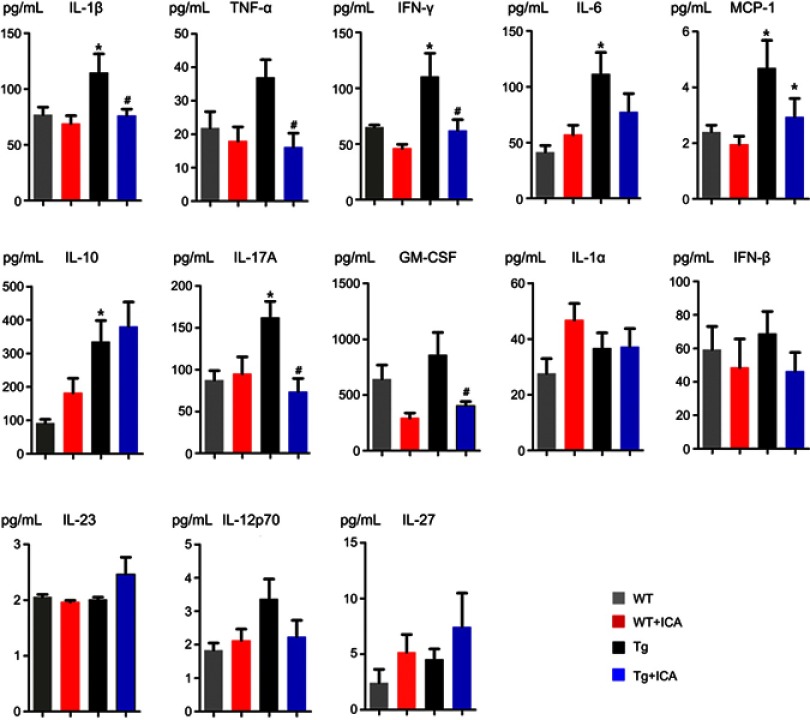
“…have addition mechanism of action to affect autophagy, 34 affecting adult neurogenesis or neurogenic stem cell niche, 35 – 37 pg/mL pg/mL pg/mL pg/mL pg/mL IL-1β pg/mL pg/mL pg/mL pg/mL pg/mL pg/mL pg/mL pg/mL IL-10 reducing oxidative stress, 38 synaptic injury, 38 – 40 or epigenetic modulation.”
Neuroinflammation in Alzheimer's disease: current evidence and future directions
Calsolaro, V., & Edison, P. (2016) · Alzheimer's & Dementia · doi:10.1016/j.jalz.2016.02.010 · Cited by 1,726 · cited 10×
“Immune-related abnormalities in the peripheral system of patients are associated with the risk of AD.”
BackgroundInfluentialHolcomb, L., Gordon, M. N., McGowan, E., Yu, X., Benkovic, S., Jantzen, P., Wright, K., Saad, I., Mueller, R., Morgan, D., et al. (1998) · Nature Medicine · doi:10.1038/nm0198-097 · Cited by 1,386
Mass Cytometry: Single Cells, Many Features
Spitzer, M. H., & Nolan, G. P. (2016) · Cell · doi:10.1016/j.cell.2016.04.019 · Cited by 1,199 · cited 1×
“40,42 It is known that synaptic injury is cardinal and earliest features of neurogen-erative diseases, including AD and Parkinson ’ s disease.”
BackgroundALZHEIMER'S DISEASE INTERNATIONAL
Graham, N., & Brodaty, H. (1997) · International Journal of Geriatric Psychiatry · doi:10.1002/(sici)1099-1166(199707)12:7<737::aid-gps625>3.0.co;2-b · Cited by 851
Choi, S. H., Bylykbashi, E., Chatila, Z. K., Lee, S. W., Pulli, B., Clemenson, G. D., Kim, E., Rompala, A., Oram, M. K., Asselin, C., et al. (2018) · Science · doi:10.1126/science.aan8821 · Cited by 802 · cited 1×
“…possible that Icariin may have addition mechanism of action to affect autophagy, 34 affecting adult neurogenesis or neurogenic stem cell niche, 35 – 37 pg/mL pg/mL pg/mL pg/mL pg/mL IL-1β pg/mL pg/mL pg/mL pg/mL pg/mL pg/mL pg/mL pg/mL IL-10 reducing oxidative stress, 38 synaptic injury, 38 –…”
BackgroundRogers, J., Luber-Narod, J., Styren, S. D., & Civin, W. H. (1988) · Neurobiology of Aging · doi:10.1016/s0197-4580(88)80079-4 · Cited by 743 · cited 1×
“Tcells have been identified in neuritic plaques and microglia in the post-mortem AD brain.(9) T cells from peripheral immune system may play a critical role in driving the neuroinflammatory changes and the associated neuronal degeneration.”
BackgroundResveratrol regulates neuro-inflammation and induces adaptive immunity in Alzheimer’s disease
Moussa, C., Hebron, M., Huang, X., Ahn, J., Rissman, R. A., Aisen, P. S., & Turner, R. S. (2017) · Journal of Neuroinflammation · doi:10.1186/s12974-016-0779-0 · Cited by 705 · cited 1×
“32 In this work, we focused on the anti-in fl ammatory of ICA in APP/PS1 mice.”
BackgroundKivisäkk, P., Mahad, D. J., Callahan, M. K., Trebst, C., Tucky, B., Wei, T., Wu, L., Baekkevold, E. S., Lassmann, H., Staugaitis, S. M., et al. (2003) · Proceedings of the National Academy of Sciences · doi:10.1073/pnas.1433000100 · Cited by 549 · cited 1×
“Approximately, over 80% of the T lymphocytes in the cerebrospinal fluid are CD4 cells.(11) Accumulating evidence suggests increased intracerebral infiltration and Correspondence: Xiaohong Li Department of Neurology, Jinan Central Hospital Affiliated to Shandong University, No.”
BackgroundInhibition of IL-12/IL-23 signaling reduces Alzheimer's disease–like pathology and cognitive decline
vom Berg, J., Prokop, S., Miller, K. R., Obst, J., Kälin, R. E., Lopategui-Cabezas, I., Wegner, A., Mair, F., Schipke, C. G., Peters, O., et al. (2012) · Nature Medicine · doi:10.1038/nm.2965 · Cited by 416 · cited 1×
“Growing evidence indicates that deposition of Aβ induces an inflammatory response by activating microglia in the brain.(7,8) Tcells have been identified in neuritic plaques and microglia in the post-mortem AD brain.”
BackgroundAutophagy and Alzheimer’s Disease: From Molecular Mechanisms to Therapeutic Implications
Uddin, M. S., Stachowiak, A., Mamun, A. A., Tzvetkov, N. T., Takeda, S., Atanasov, A. G., Bergantin, L. B., Abdel-Daim, M. M., & Stankiewicz, A. M. (2018) · Frontiers in Aging Neuroscience · doi:10.3389/fnagi.2018.00004 · Cited by 395
Regulatory T cells delay disease progression in Alzheimer-like pathology
Dansokho, C., Ait Ahmed, D., Aid, S., Toly-Ndour, C., Chaigneau, T., Calle, V., Cagnard, N., Holzenberger, M., Piaggio, E., Aucouturier, P., et al. (2016) · Brain · doi:10.1093/brain/awv408 · Cited by 359
Wolf, S. A., Steiner, B., Akpinarli, A., Kammertoens, T., Nassenstein, C., Braun, A., Blankenstein, T., & Kempermann, G. (2009) · The Journal of Immunology · doi:10.4049/jimmunol.0801218 · Cited by 329 · cited 1×
“10,12,13 Regulatory Tcells (Tregs)have been proven to play a bene fi cial role in the pathophysiology of AD, by modulating microglial response to A β .”
BackgroundLaurent, C., Dorothée, G., Hunot, S., Martin, E., Monnet, Y., Duchamp, M., Dong, Y., Légeron, F.-P., Leboucher, A., Burnouf, S., et al. (2017) · Brain · doi:10.1093/brain/aww270 · Cited by 303 · cited 1×
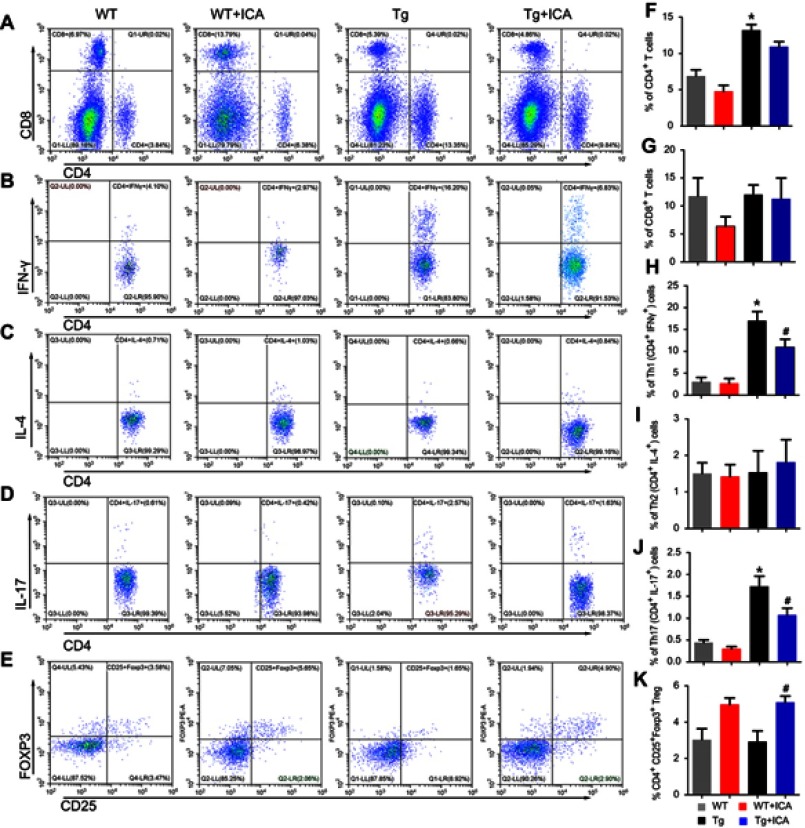
“Previous evidence has demonstrated that the proportion of activated CD4 and CD8 T cells is elevated in the cerebrospinal fluid of AD patients and the brain of AD mice, compared with that in the controls.(29) Our results also suggested an increased proportion of CD4 cells in the peripheral blood of Tg mice relative to…”
ResultXu, C.-Q., Liu, B.-J., Wu, J.-F., Xu, Y.-C., Duan, X.-H., Cao, Y.-X., & Dong, J.-C. (2010) · European Journal of Pharmacology · doi:10.1016/j.ejphar.2010.05.012 · Cited by 240
ALZHEIMER'S DISEASE INTERNATIONAL
Graham, N., & Brodaty, H. (1997) · International Journal of Geriatric Psychiatry · doi:10.1002/(sici)1099-1166(199707)12:7<691::aid-gps648>3.3.co;2-6 · Cited by 213
LRP2 in ependymal cells regulates BMP signaling in the adult neurogenic niche
Gajera, C. R., Emich, H., Lioubinski, O., Christ, A., Beckervordersandforth-Bonk, R., Yoshikawa, K., Bachmann, S., Christensen, E. I., Götz, M., Kempermann, G., et al. (2010) · Journal of Cell Science · doi:10.1242/jcs.065912 · Cited by 152
Jin, F., Gong, Q.-H., Xu, Y.-S., Wang, L.-N., Jin, H., Li, F., Li, L.-S., Ma, Y.-M., & Shi, J.-S. (2014) · The International Journal of Neuropsychopharmacology · doi:10.1017/s1461145713001533 · Cited by 127 · cited 1×
“19,20 Moreover, ICA negatively regulates the activation of T lymphocytes and pro-in fl ammatory cytokine pro fi les in CD4 + T cells.”
BackgroundTao, F., Cheng, Q., Guo, W., Luo, Q., Xu, Q., & Sun, Y. (2012) · Biochemical Pharmacology · doi:10.1016/j.bcp.2012.12.002 · Cited by 100 · cited 1×
“Moreover, ICA negatively regulates the activation of T lymphocytes and pro-inflammatory cytokine profiles in CD4 T cells.(21,22) Meanwhile, ICA plays a regulatory effect on T-helper (Th) 17 and Tregs function.”
BackgroundUnderstanding Epigenetics in the Neurodegeneration of Alzheimer’s Disease: SAMP8 Mouse Model
Griñán-Ferré, C., Corpas, R., Puigoriol-Illamola, D., Palomera-Ávalos, V., Sanfeliu, C., & Pallàs, M. (2018) · Journal of Alzheimer’s Disease · doi:10.3233/jad-170664 · Cited by 83 · cited 1×
“41 Our study can be further explored by studying the CD4 + cells with the brain.”
BackgroundLI, X., BAO, X., & WANG, R. (2016) · International Journal of Molecular Medicine · doi:10.3892/ijmm.2015.2428 · Cited by 76 · cited 1×
“24 The APP/PS1 mouse model, fi rst developed from a cross between the mutant amyloid precursor protein (APP) transgenic line Tg2576 and mutant presenilin 1 (PS1) transgenic mice, 25 presents substantial, age-related neuron loss in the pyramidal layer of the hippocampus, which has been widely used to…”
BackgroundSelf-citationImbimbo, B. P., Giardino, L., Sivilia, S., Giuliani, A., Gusciglio, M., Pietrini, V., Del Giudice, E., D'Arrigo, A., Leon, A., Villetti, G., et al. (2010) · Journal of Alzheimer's Disease · doi:10.3233/jad-2010-1366 · Cited by 75 · cited 1×
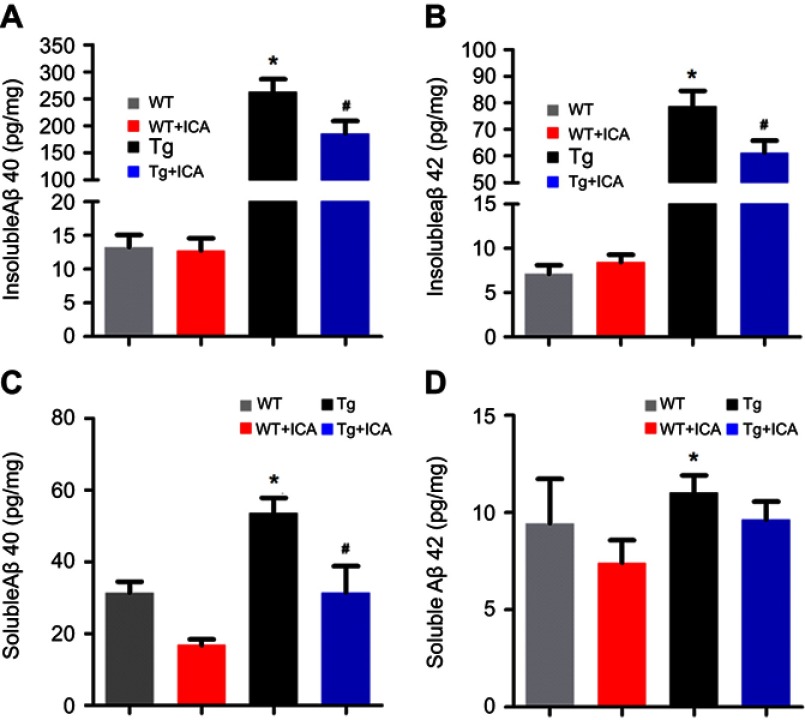
“The levels of soluble and insoluble A β 40 and A β 42 in hippocampus were quanti fi ed according to previous procedure 26 and were determined by ELISA kit (BioLegend) in accordance with the manufacturer ’ s instructions.”
MethodWei, Y., Liu, B., Sun, J., Lv, Y., Luo, Q., Liu, F., & Dong, J. (2015) · Immunobiology · doi:10.1016/j.imbio.2014.12.015 · Cited by 71 · cited 3×
“Then, cells were incubated with antibodies against CD4 + T, CD8 + T, Th1, Th2, Th17, and Tregs.”
BackgroundInfluentialCD 4 T cells in immunity and immunotherapy of Alzheimer's disease
Monsonego, A., Nemirovsky, A., & Harpaz, I. (2013) · Immunology · doi:10.1111/imm.12103 · Cited by 70 · cited 1×
“10,12,13 Regulatory Tcells (Tregs)have been proven to play a bene fi cial role in the pathophysiology of AD, by modulating microglial response to A β .”
BackgroundTavares, W. D. S., Akhtar, Y., Gonçalves, G. L. P., Zanuncio, J. C., & Isman, M. B. (2016) · Scientific Reports · doi:10.1038/srep34093 · Cited by 63
Liu, L., Zhao, Z., Lu, L., Liu, J., Sun, J., Wu, X. F., & Dong, J. (2019) · International Immunopharmacology · doi:10.1016/j.intimp.2018.12.055 · Cited by 61
Icariin decreases both APP and Aβ levels and increases neurogenesis in the brain of Tg2576 mice
Li, F., Dong, H., Gong, Q., Wu, Q., Jin, F., & Shi, J. (2015) · Neuroscience · doi:10.1016/j.neuroscience.2015.06.010 · Cited by 59 · cited 1×
“19,20 Moreover, ICA negatively regulates the activation of T lymphocytes and pro-in fl ammatory cytokine pro fi les in CD4 + T cells.”
BackgroundT Cells—Protective or Pathogenic in Alzheimer’s Disease?
McManus, R. M., Mills, K. H. G., & Lynch, M. A. (2015) · Journal of Neuroimmune Pharmacology · doi:10.1007/s11481-015-9612-2 · Cited by 55 · cited 2×
“10 In our study, we observed increased proportion of Th1 and Th17 cells in Tg mice indicating that the imbalance of Th cells might result in more Th1 and Th17 cells in fi ltrating into brain tissues.”
BackgroundRecent perspectives on the medicinal potential of ginger
Rupasinghe, V., & Gunathilake, K. D. P. P. (2015) · Botanics Targets and Therapy · doi:10.2147/btat.s68099 · Cited by 54 · cited 1×
“Several herbal drugs have been reported to have anti-in fl ammatory action, such as turmeric, 30 ginger, 31 and resveratrol.”
BackgroundHe, X.-L., Zhou, W.-Q., Ming-gang, B., & Du, G. (2010) · Brain Research · doi:10.1016/j.brainres.2010.03.084 · Cited by 54 · cited 1×
“Icariin (ICA), a natural flavonoid glucoside from Epimedium, has been proved to have various pharmacological activities, such as anti-inflammatory,(16,17) and neuroprotective effects.(18) It presents an activity to prevent neuronal degeneration in AD animal models, by inhibiting neuronal apoptosis and Aβ deposition.”
BackgroundShen, R., Deng, W., Li, C., & Zeng, G. (2014) · International Immunopharmacology · doi:10.1016/j.intimp.2014.12.015 · Cited by 53
Zhang, Y.-F., Liu, M., Sun, H., & Yin, K. (2016) · Central European Journal of Immunology · doi:10.5114/ceji.2015.56961 · Cited by 51 · cited 1×
“27,28 In the present study, we administered ICA for Tg mice to ameliorate AD pathology.”
MethodSchluesener, J. K., & Schluesener, H. J. (2013) · Molecular Nutrition & Food Research · doi:10.1002/mnfr.201300409 · Cited by 43 · cited 1×
“27,28 In the present study, we administered ICA for Tg mice to ameliorate AD pathology.”
MethodLoss of Lrp2 in zebrafish disrupts pronephric tubular clearance but not forebrain development
Kur, E., Christa, A., Veth, K. N., Gajera, C. R., Andrade-Navarro, M. A., Zhang, J., Willer, J. R., Gregg, R. G., Abdelilah‐Seyfried, S., Bachmann, S., et al. (2011) · Developmental Dynamics · doi:10.1002/dvdy.22624 · Cited by 42
Icaritin inhibits T cell activation and prolongs skin allograft survival in mice
Li, X., Hu, Y., He, L., Wang, S., Zhou, H., & Liu, S. (2012) · International Immunopharmacology · doi:10.1016/j.intimp.2012.02.011 · Cited by 38 · cited 1×
“21,22 Meanwhile, ICA plays a regulatory effect on T-helper (Th) 17 and Tregs function.”
BackgroundSelf-citationMass synaptometry: High-dimensional multi parametric assay for single synapses
Gajera, C. R., Fernandez, R., Postupna, N. O., Montine, K. S., Fox, E. J., Tebaykin, D., Angelo, M., Bendall, S. C., Keene, C. D., & Montine, T. J. (2018) · Journal of Neuroscience Methods · doi:10.1016/j.jneumeth.2018.11.008 · Cited by 34 · cited 2×
“…have addition mechanism of action to affect autophagy, 34 affecting adult neurogenesis or neurogenic stem cell niche, 35 – 37 pg/mL pg/mL pg/mL pg/mL pg/mL IL-1β pg/mL pg/mL pg/mL pg/mL pg/mL pg/mL pg/mL pg/mL IL-10 reducing oxidative stress, 38 synaptic injury, 38 – 40 or epigenetic modulation.”
BackgroundHe, Y., Li, H., Zhang, F., Zhang, G., Tang, X., Zhu, T., Huang, N., & Li, X. (2016) · Behavioural Brain Research · doi:10.1016/j.bbr.2016.08.025 · Cited by 8 · cited 1×
“15 Despite current advances in the underlying mechanisms of AD, there remains no effective treatment to cure the intractable disease in clinical practice.”
BackgroundSelf-citation
Cited by
Amyloid β-based therapy for Alzheimer’s disease: Challenges, successes and future
Zhang, Y., Chen, H., Li, R., Sterling, K., & Song, W. (2023) · Signal Transduction and Targeted Therapy · doi:10.1038/s41392-023-01484-7 · Cited by 988
Anti-inflammatory and immunoregulatory effects of icariin and icaritin
Bi, Z., Zhang, W., & Yan, X. (2022) · Biomedicine & Pharmacotherapy · doi:10.1016/j.biopha.2022.113180 · Cited by 220
Beneficial effects of natural flavonoids on neuroinflammation
Chen, Y., Peng, F., Xing, Z., Chen, J., Peng, C. Y., & Li, D. (2022) · Frontiers in Immunology · doi:10.3389/fimmu.2022.1006434 · Cited by 139
Targeting immunosenescence and inflammaging: advancing longevity research
Nguyen, T. Q. T., & Cho, K. A. (2025) · Experimental & Molecular Medicine · doi:10.1038/s12276-025-01527-9 · Cited by 115
“Icariin improves immune function by modulating T helper cell differentiation and reducing in fl ammatory cytokines, while resveratrol boosts thymic function and T cell numbers 102,103 .”
Hole, K. L., & Williams, R. J. (2020) · Brain Plasticity · doi:10.3233/bpl-200098 · Cited by 83
Metadata
- Authors
- Zhu, T., Zhang, F., Li, H., He, Y., Zhang, G., Huang, N., Guo, M., & Li, X.
- Affiliations
- Jinan Central Hospital (CN)
- Xi'an Medical University (CN)
- Second Hospital of Shandong University (CN)
- Venue
- Clinical Interventions in Aging
- Publisher
- Informa UK Limited
- Published
- 2019-05
- Volume
- Volume 14
- Pages
- 817-826
- ISSN
- 1176-9092 (ISSN-L)
- 1178-1998
- PMC
- PMC6511656
- OpenAlex
- W2942843982
- Cited by
- 33
- References
- 43
- Citations by year
- 2026: 7 · 2025: 2 · 2024: 5 · 2023: 5 · 2022: 7 · 2021: 2 · 2020: 3 · 2019: 2
- FWCI
- 3.52
- Type
- journal article
- Language
- en
- Open access
- gold
- doi.org
- Licence
- Locations
- Clinical Interventions in Aging (publishedVersion, cc-by-nc)
- PubMed Central (publishedVersion, cc-by-nc)
- PubMed (publishedVersion)
- Dove Medical Press (Taylor and Francis Group) (submittedVersion, cc-by-nc)
- Funders
- Shandong University
- National Natural Science Foundation of China (81373635, 201212012)
- Topics
- Life Sciences › Pharmacology, Toxicology and Pharmaceutics › Pharmacology › Medicinal Plant Pharmacodynamics Research
- Life Sciences › Neuroscience › Cellular and Molecular Neuroscience › Alzheimer's disease research and treatments
- Life Sciences › Neuroscience › Neurology › Neuroinflammation and Neurodegeneration Mechanisms
- Keywords
- icariin, Alzheimer's disease, CD4+ T cells, neuroinflammation, immunotherapy, APP/PS1 mice, amyloid-beta deposition, spatial learning and memory, inflammatory cytokines, hippocampus, Chinese herbal medicine, neuroprotection
- MeSH terms
- Alzheimer Disease, Animals, Cognition, Disease Models, Animal, Flavonoids, Hippocampus, Male, Memory, Mice, Inbred C57BL, Mice, Transgenic, CD4-Positive T-Lymphocytes, Cytokines, Amyloid beta-Peptides, Amyloid beta-Protein Precursor, Maze Learning, Mice, Presenilin-1, Spatial Learning
About these checks
Registry, retraction, Cites and statistics results are computed, not judged, with one exception: a printed reference that no index lists is read once by a model before it counts as a citation error. Claims are extracted by a model and kept only when their quote appears verbatim in the text; each cited source is then checked, with a model’s help, for whether it says what the claim relies on. Those verdicts can be wrong — read the claim’s quote and the cited source before relying on one.
Statistics and arithmetic are recomputed, not judged.
Confidence bands are shown only for fields calibrated on our annotated test set. None is calibrated yet, so no band is shown.
What counts as a claim ›How we measure confidence ›How we check this ›
Are you an author, or do you see a problem with this page? Request a review
Data sources
Bibliographic data: Semantic Scholar, OpenAlex, Crossref.
Contains information from the Semantic Scholar Academic Graph Datasets, made available under the ODC Attribution License (ODC-BY 1.0).
Semantic Scholar’s data is described in: Kinney, R., et al. (2023). The Semantic Scholar Open Data Platform. arXiv:2301.10140.
