

The DOI matches its Crossref record; 16 of the 16 references it cites were found in a registry or an index.
Attachment Anxiety and Problematic Use of Conversational Artificial Intelligence: Mediation of Emotional Attachment and Moderation of Anthropomorphic Tendencies
Overview
The claims and statistics of this paper haven’t been checked yet.
Run the check — free, no account needed. It reads the open-access text and checks the sources it cites.
Integrity signals
Registry
Cites
Statistics
Figures
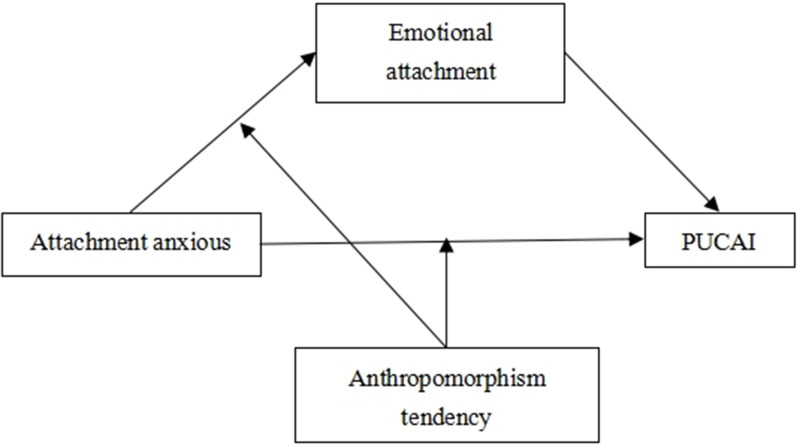
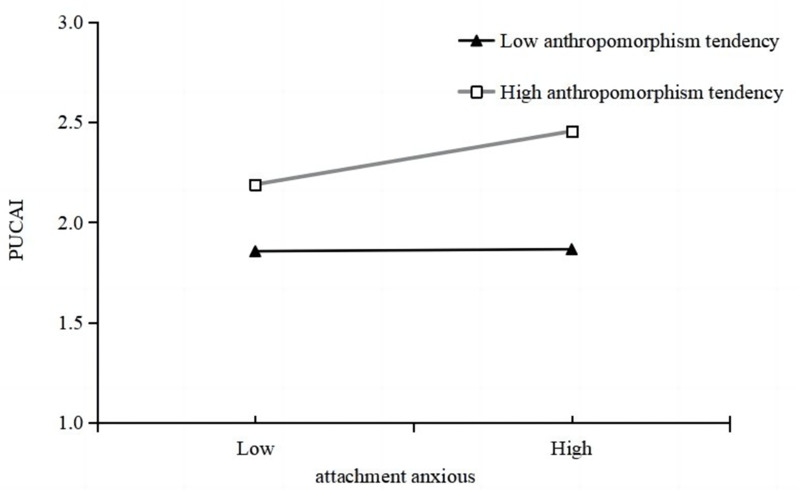
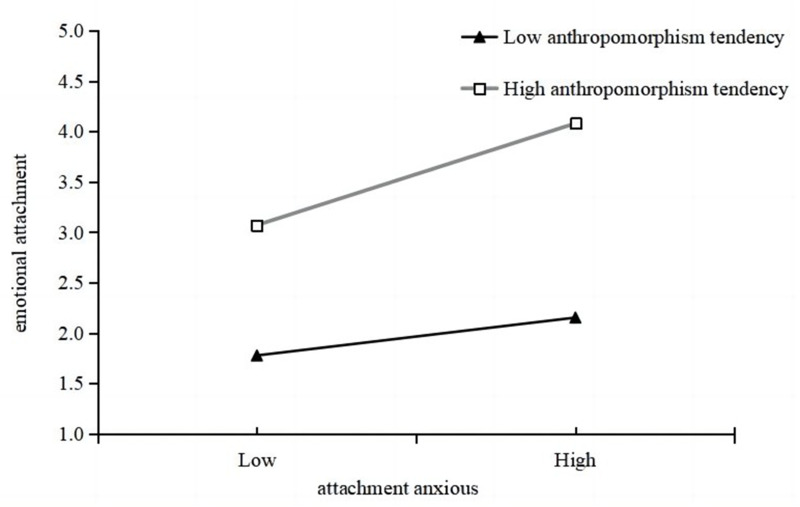
Verification
Claims the paper makes
The claims and statistics of this paper haven’t been checked yet.
Run the check — free, no account needed. It reads the open-access text and checks the sources it cites.
Claims other papers make about this one
Each is checked against this paper’s own text: does it say what the citing paper says it does?
The source backs part of the claim, not all of it — or backs it for a different population, condition or comparison.
In the citing paper
“Substantively, this expectation is consistent with evidence that anthropomorphic AI can increase dependency-related outcomes through user satisfaction or emotional attachment, and that loneliness shapes how users respond to conversational AI and AI companions (Heng and Zhang, 2025; Nakagomi et al., 2026; Peng et al., 2025; Yu and Lan, 2025).”
From When loneliness amplifies the risk of problematic emotional dependence: perceived anthropomorphism and basic psychological need satisfaction in AI companion use (2026) · cites this paper as Heng and Zhang, 2025
Experimental — accuracy not yet measuredThe cited source says what the claim attributes to it.
In the citing paper
“Instead, anthropomorphic perception becomes consequential when it makes the AI interaction feel need-satisfying, personally responsive, and relationally meaningful (Guingrich and Graziano, 2025; Heng and Zhang, 2025; Yu and Lan, 2025).”
From When loneliness amplifies the risk of problematic emotional dependence: perceived anthropomorphism and basic psychological need satisfaction in AI companion use (2026) · cites this paper as Heng and Zhang, 2025
Self-check
Percentages, sums and reported differences re-computed from the paper’s own numbers.
The self-check needs the paper’s full text.
Citations
Cites
Intrinsic and Extrinsic Motivations: Classic Definitions and New Directions
Ryan, R. M., & Deci, E. L. (2000) · Contemporary Educational Psychology · doi:10.1006/ceps.1999.1020 · Cited by 18,666 · cited 2×
“31 This need can be met through interpersonal relationships or inanimate objects such as robots.”
On seeing human: A three-factor theory of anthropomorphism
Epley, N., Waytz, A., & Cacioppo, J. T. (2007) · Psychological Review · doi:10.1037/0033-295x.114.4.864 · Cited by 4,069 · cited 2×
“39 The anthropomorphic tendency, consequently, refers to the proclivity toward this cognitive deviation, where individuals habitually ascribe human characteristics to nonhuman objects.”
The Ties That Bind: Measuring the Strength of Consumers’ Emotional Attachments to Brands
Thomson, M., MacInnis, D. J., & Whan Park, C. (2005) · Journal of Consumer Psychology · doi:10.1207/s15327663jcp1501_10 · Cited by 2,713 · cited 1×
“27 30 Specifically, individuals with anxious attachment crave a sense of belonging and establish connections and emotional bonds with others.”
My Chatbot Companion - a Study of Human-Chatbot Relationships
Skjuve, M., Følstad, A., Fostervold, K. I., & Brandtzaeg, P. B. (2021) · International Journal of Human-Computer Studies · doi:10.1016/j.ijhcs.2021.102601 · Cited by 797
The Development of Social Attachments in Infancy
Schaffer, H. R., & Emerson, P. E. (1964) · Monographs of the Society for Research in Child Development · doi:10.2307/1165727 · Cited by 644 · cited 1×
“52 When psychological needs become intense and frequent, individuals may develop compulsive behaviors and addiction tendencies.”
Loneliness before and during the COVID-19 pandemic: A systematic review with meta-analysis.
Ernst, M., Niederer, D., Werner, A. M., Czaja, S. J., Mikton, C., Ong, A. D., Rosen, T., Brähler, E., & Beutel, M. E. (2022) · American Psychologist · doi:10.1037/amp0001005 · Cited by 584 · cited 1×
“7,8 During this period, millions turned to CAI for companionship.”
Chaves, A. P., & Gerosa, M. A. (2021) · International Journal of Human–Computer Interaction · doi:10.1080/10447318.2020.1841438 · Cited by 572
User Experiences of Social Support From Companion Chatbots in Everyday Contexts: Thematic Analysis
Ta, V., Griffith, C., Boatfield, C., Wang, X., Civitello, M., Bader, H., DeCero, E., & Loggarakis, A. (2020) · Journal of Medical Internet Research · doi:10.2196/16235 · Cited by 561 · cited 1×
“33,34 CAI features, such as storing chat history, understanding user habits, engaging in social interactions, and disclosing intimate information without prompts, 35,36 consumingly attracts individuals with anxious attachment and encourages them to establish emotional attachments.”
Exploring relationship development with social chatbots: A mixed-method study of replika
Pentina, I., Hancock, T., & Xie, T. (2023) · Computers in Human Behavior · doi:10.1016/j.chb.2022.107600 · Cited by 522
Laestadius, L., Bishop, A., Gonzalez, M., Illenčík, D., & Campos-Castillo, C. (2024) · New Media & Society · doi:10.1177/14614448221142007 · Cited by 420
Research works printed but not linked: 41
- Henkel, 2020, J Service Manage, 31, 247, 10.1108/JOSM-05-2019-0160 · DOI
- Guzman, 2020, New Media Soc, 22, 70, 10.1177/1461444819858691 · DOI
- Lazaroiu, 2024, Oeconomia Copernicana, 15, 825, 10.24136/oc.3190 · DOI
- 2020, ICIS
- Lăzăroiu, 2024, Oeconomia Copernicana, 15, 27, 10.24136/oc.2984 · DOI
- 2022, AI Is Not Sentient. Why Do People Say It Is?
- 2021, AI Love You: Meet Xiaoice, China’s Virtual Boyfriend
- Ramadan, 2021, Psychol Mark, 38, 596, 10.1002/mar.21441 · DOI
- Sun, 2023, Curr Psychol, 42, 14919, 10.1007/s12144-022-02775-y · DOI
- 2022, A Friend Within Your Phone: The Benefits and Harms of Social Chatbot Replika
- Bowlby, 1982, Am J Orthopsych, 52, 664, 10.1111/j.1939-0025.1982.tb01456.x · DOI · Paper page
- 2012, Understanding Adult Attachment in Family Relationships: Research, Assessment and Intervention, 10.4324/9780203094556 · DOI
- 2015, Patterns of Attachment: A Psychological Study of the Strange Situation, 10.4324/9780203758045 · DOI
- Grajewski, 2020, Addict Behav Rep, 11, 100269, 10.1016/j.abrep.2020.100269 · DOI
- Liu, 2021, Curr Psychol, 40, 5134, 10.1007/s12144-019-00464-x · DOI
- Liu, 2019, Front Psychol, 10, 10, 10.3389/fpsyg.2019.02352 · DOI · Paper page
- Karahanna, 2018, MIS Quarterly, 42, 737, 10.25300/MISQ/2018/11492 · DOI
- Chen, 2019, Comput Human Behav, 98, 80, 10.1016/j.chb.2019.03.034 · DOI · Paper page
- Mekni, 2021, J Software Eng Appl, 14, 455, 10.4236/jsea.2021.149027 · DOI
- Pelau, 2021, Comput Human Behav, 122, 106855, 10.1016/j.chb.2021.106855 · DOI · Paper page
- Camarillo, 2020, Actas Esp Psiquiatr, 48, 145
- 2019, Annual Review of Psychology, 10.1146/annurev-psych-010418-102813 · DOI
- González-Jiménez, 2014, Procedia Soc Behav Sci, 132, 527, 10.1016/j.sbspro.2014.04.348 · DOI
- Birnbaum, 2016, Comput Human Behav, 63, 416, 10.1016/j.chb.2016.05.064 · DOI · Paper page
- Wang W, Siau K. Trusting artificial intelligence in healthcare. In: AMCIS 2018 Proceedings. Association for Information Systems; 2018. http://amcis2018.aisconferences.org/wp-content/uploads/2018/08/AMCIS-2018-Program.pdf.
- 2006, Proceedings of the 8th International Conference on Multimodal Interfaces, 10.1145/1180995.1181044 · DOI
- Waytz, 2010, Perspectives Psychol Sci, 5, 219, 10.1177/1745691610369336 · DOI · Paper page
- Burgess, 2018, Scand J Psychol, 59, 340, 10.1111/sjop.12441 · DOI
- Wan, 2021, Curr Opin Psychol, 39, 88, 10.1016/j.copsyc.2020.08.009 · DOI
- Jiménez, 2014, Psychol Mark, 31, 360, 10.1002/mar.20700 · DOI
- Kim, 2023, Comput Human Behav, 139, 107512, 10.1016/j.chb.2022.107512 · DOI
- 2012, PROCESS: A Versatile Computational Tool for Observed Variable Mediation, Moderation, and Conditional Process Modeling [White paper]
- Frazier, 2004, J Couns Psychol, 51, 115, 10.1037/0022-0167.51.1.115 · DOI · Paper page
- Igartua, 2021, Spanish j Psychol, 24, 1, 10.1017/SJP.2021.46 · DOI
- Stănculescu, 2023, Int J Ment Health Addict, 21, 333, 10.1007/s11469-021-00598-9 · DOI
- Weinraub, 1977, Hum Dev, 20, 31, 10.1159/000271546 · DOI · Paper page
- Robinson, 2025, Annu Rev Psychol, 76, 1, 10.1146/annurev-psych-011624-024031 · DOI
- Norberg, 2018, J Behav Addict, 7, 171, 10.1556/2006.7.2018.08 · DOI · Paper page
- Keefer, 2012, J Exp Soc Psychol, 48, 912, 10.1016/j.jesp.2012.02.007 · DOI
- Norris, 2012, Pers Individ Dif, 53, 666, 10.1016/j.paid.2012.05.009 · DOI
- Lee, 2020, Int J Hum Comput Interact, 36, 930, 10.1080/10447318.2019.1699748 · DOI · Paper page
Cited by
Sorted by citations
Yang, X. (2026) · International Journal of Human–Computer Interaction · doi:10.1080/10447318.2026.2618548 · Cited by 3
Liu, T., Shih, R.-M., Luo, T., & Jin, S. (2026) · Frontiers in Psychology · doi:10.3389/fpsyg.2026.1900817
Metadata
- Authors
- Heng, S., & Zhang, Z.
- ORCID
- Heng, Shupeng
- Venue
- Psychology Research and Behavior Management
- Publisher
- Informa UK Limited
- Published
- 2025-08
- Volume
- Volume 18
- Pages
- 1775-1785
- ISSN
- 1179-1578
- PMC
- PMC12379994
- Cited by
- 31
- References
- 16
- Language
- en
About these checks
Registry, retraction, Cites and statistics results are computed, not judged, with one exception: a printed reference that no index lists is read once by a model before it counts as a citation error. Claims are extracted by a model and kept only when their quote appears verbatim in the text; each cited source is then checked, with a model’s help, for whether it says what the claim relies on. Those verdicts can be wrong — read the claim’s quote and the cited source before relying on one.
Statistics and arithmetic are recomputed, not judged.
Confidence bands are shown only for fields calibrated on our annotated test set. None is calibrated yet, so no band is shown.
What counts as a claim ›How we measure confidence ›How we check this ›
Are you an author, or do you see a problem with this page? Request a review
