

Recent Development of Multifunctional Agents as Potential Drug Candidates for the Treatment of Alzheimer’s Disease
Open accessThe DOI matches its Crossref record; 240 of the 240 references it cites were found in a registry or an index.
Abstract
Alzheimer's disease (AD) is a complex and progressive neurodegenerative disorder. The available therapy is limited to the symptomatic treatment and its efficacy remains unsatisfactory. In view of the prevalence and expected increase in the incidence of AD, the development of an effective therapy is crucial for public health. Due to the multifactorial aetiology of this disease, the multi-target-directed ligand (MTDL) approach is a promising method in search for new drugs for AD. This review updates information on the development of multifunctional potential anti-AD agents published within the last three years. The majority of the recently reported structures are acetylcholinesterase inhibitors, often endowed with some additional properties. These properties enrich the pharmacological profile of the compounds giving hope for not only symptomatic but also causal treatment of the disease. Among these advantageous properties, the most often reported are an amyloid-β antiaggregation activity, inhibition of β-secretase and monoamine oxidase, an antioxidant and metal chelating activity, NOreleasing ability and interaction with cannabinoid, NMDA or histamine H3 receptors. The majority of novel molecules possess heterodimeric structures, able to interact with multiple targets by combining different pharmacophores, original or derived from natural products or existing therapeutics (tacrine, donepezil, galantamine, memantine). Among the described compounds, several seem to be promising drug candidates, while others may serve as a valuable inspiration in the search for new effective therapies for AD.
Overview
The claims and statistics of this paper haven’t been checked yet.
Free: it reads the open-access text and checks the first 5 claims that cite a source we can check. Create a free account to check every claim.
Integrity signals
Registry
Cites
Statistics
Figures
Verification
Claims the paper makes
The claims and statistics of this paper haven’t been checked yet.
Free: it reads the open-access text and checks the first 5 claims that cite a source we can check. Create a free account to check every claim.
Self-check
Percentages, sums and reported differences re-computed from the paper’s own numbers.
The self-check needs the paper’s full text.
Citations
Cites
1 retracted
Items 201–240 of 240
Multi-Target-Directed Ligands To Combat Neurodegenerative Diseases
Cavalli, A., Bolognesi, M. L., Minarini, A., Rosini, M., Tumiatti, V., Recanatini, M., & Melchiorre, C. (2008) · Journal of Medicinal Chemistry · doi:10.1021/jm800210c · Cited by 42
Klaver, D. W., Wilce, M. C. J., Cui, H., Hung, A. C., Gasperini, R., Foa, L., & Small, D. H. (2010) · Biological Chemistry · doi:10.1515/bc.2010.089 · Cited by 41 · cited 1×
“The identification and cloning of this enzyme led to better understanding of its physiological function and to the development of -secretase inhibitors [104].”
BackgroundCatto, M., Berezin, A. A., Re, D. L., Loizou, G., Demetriades, M., Stradis, A. D., Campagna, F., Koutentis, P. A., & Carotti, A. (2012) · European Journal of Medicinal Chemistry · doi:10.1016/j.ejmech.2012.10.003 · Cited by 41 · cited 1×
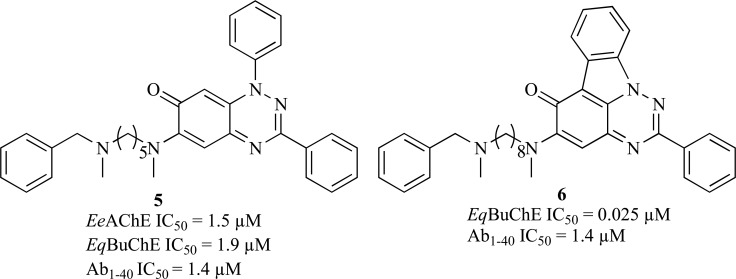
“A new series of inhibitors of A aggregation and AChE/BuChE was identified in two groups of derivatives: benzo[e][1,2,4]triazin-7(1H)-ones and [1,2,4]-triazino[5,6,1j,k]carbazol-6-ones [90].”
BackgroundBiotin–avidin interaction-based screening assay for Alzheimer’s β-peptide oligomer inhibitors
LeVine, H. (2006) · Analytical Biochemistry · doi:10.1016/j.ab.2006.04.036 · Cited by 41 · cited 1×
“For oligomer formation and disassembly the biotinylA 1-42 single-site streptavidin assay was used [101].”
MethodSpeck‐Planche, A., Luan, F., & Cordeiro, M. N. D. S. (2012) · Current Medicinal Chemistry · doi:10.2174/092986712799945058 · Cited by 38
Maalej, E., Chabchoub, F., Samadi, A., Rı́os, C. D. L., Perona, A., Morreale, A., & Marco, J. L. (2011) · Bioorganic & Medicinal Chemistry Letters · doi:10.1016/j.bmcl.2011.02.094 · Cited by 36 · cited 1×
“Based on their previous studies [144], Maalej et al.”
ResultHieke, M., Ness, J., Steri, R., Dittrich, M., Greiner, C., Werz, O., Baumann, K., Schubert-Zsilavecz, M., Weggen, S., & Zettl, H. (2010) · Journal of Medicinal Chemistry · doi:10.1021/jm1003073 · Cited by 36
Chen, Y.-P., Zhang, Z., Li, Y., Li, D., Huang, S., Gu, L., Xu, J., & Huang, Z. (2013) · European Journal of Medicinal Chemistry · doi:10.1016/j.ejmech.2013.05.015 · Cited by 36 · cited 1×
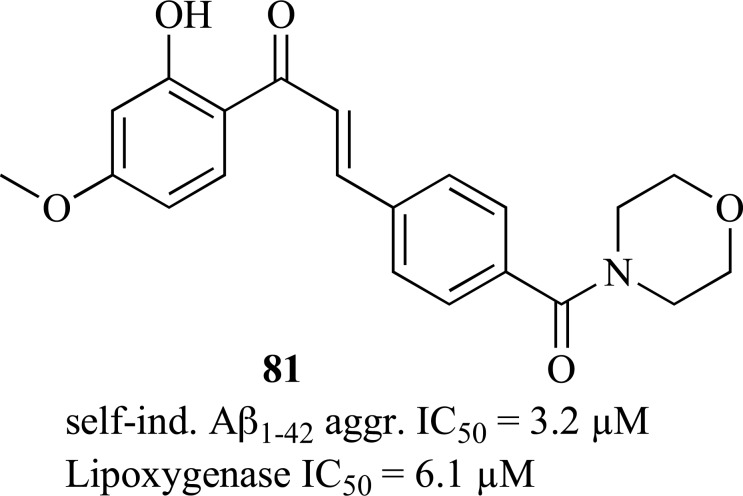
“[231] reported a series of an isoliquiritigenin (4,2’,4’-trihydroxychalcone, ISL) derivatives as new 5-LO and A aggregation inhibitors.”
BackgroundGinsburg, I., Sadovnic, M., Oron, M., & Kohen, R. (2004) · Inflammopharmacology · doi:10.1163/1568560043696263 · Cited by 34 · cited 1×
“The antioxidant scavenging ability of the new compounds was tested using two luminol-dependent chemiluminescence-inducing systems [159].”
MethodKarlsson, D., Fallarero, A., Brunhofer, G., Guzik, P., Prinz, M., Holzgrabe, U., Erker, T., & Vuorela, P. M. (2011) · European Journal of Pharmaceutical Sciences · doi:10.1016/j.ejps.2011.11.004 · Cited by 31 · cited 1×
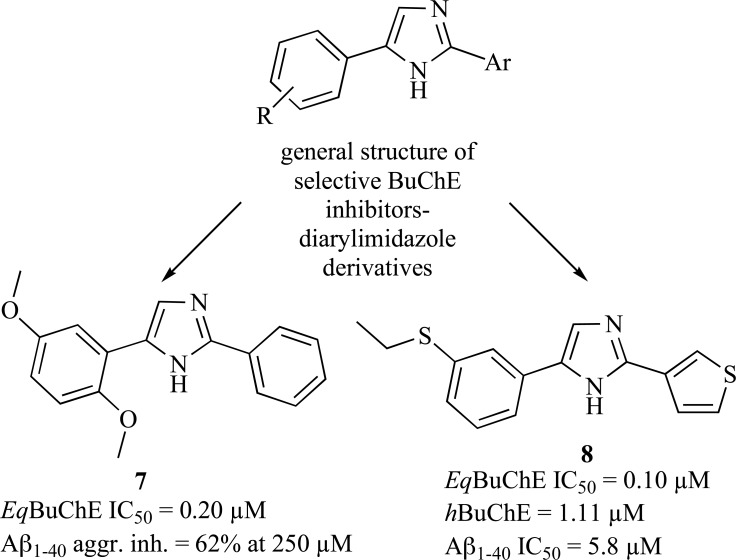
“Promising dual-acting diarylimidazole hybrids have recently been reported [92].”
BackgroundRosini, M., Simoni, E., Bartolini, M., Soriano, E., Marco‐Contelles, J., Andrisano, V., Monti, B., Windisch, M., Hutter‐Paier, B., McClymont, D. W., et al. (2013) · ChemMedChem · doi:10.1002/cmdc.201300263 · Cited by 31
Bajda, M., Kuder, K., Łażewska, D., Kieć‐Kononowicz, K., Więckowska, A., Ignasik, M., Szałaj, N., Jończyk, J., & Malawska, B. (2012) · Archiv der Pharmazie · doi:10.1002/ardp.201200018 · Cited by 29 · cited 1×
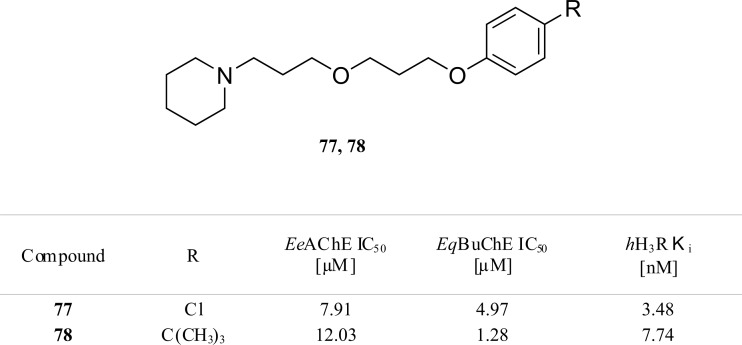
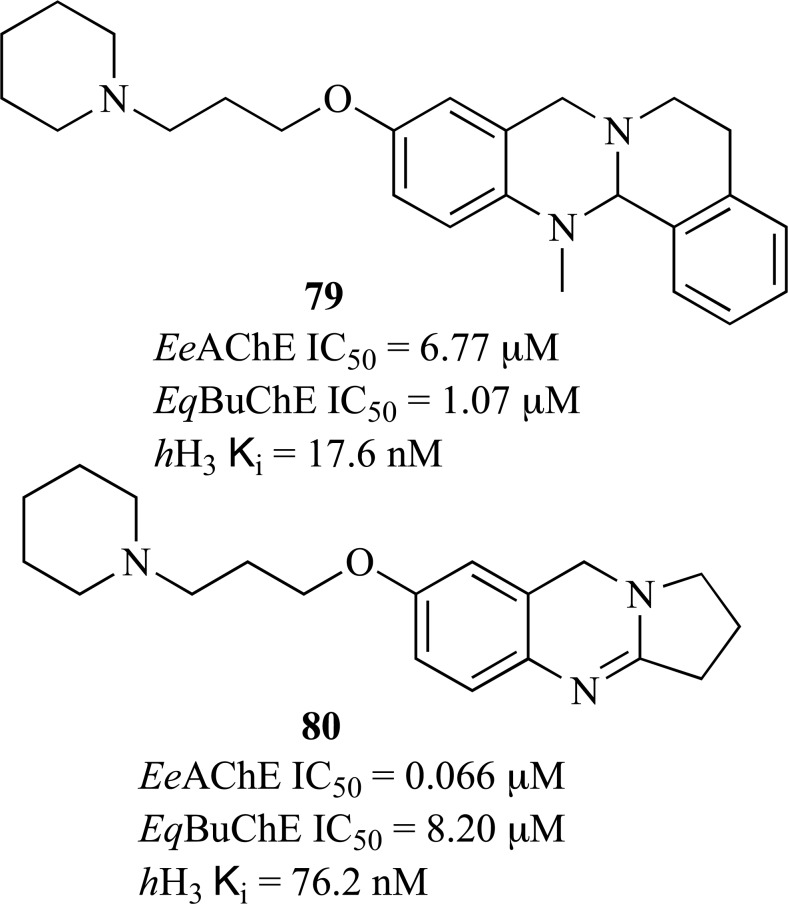
“A series of hH3 receptor antagonists with AChE/BuChE inhibitory activity has been recently reported [225].”
BackgroundSelf-citationCholinesterase inhibitors: new roles and therapeutic alternatives
Giacobini, E. (2004) · Pharmacological Research · doi:10.1016/s1043-6618(04)00085-4 · Cited by 28
Inhibition of Beta‐Amyloid Peptide Aggregation by Multifunctional Carbazole‐Based Fluorophores
Yang, W., Wong, Y., Ng, O. T.-W., Bai, L., Kwong, D. W. J., Ke, Y., Jiang, Z., Li, H., Yung, K. K. L., & Wong, M. S. (2011) · Angewandte Chemie · doi:10.1002/ange.201104150 · Cited by 28
Design and Synthesis of Potent and Selective BACE-1 Inhibitors
Björklund, C., Oscarson, S., Benkestock, K., Borkakoti, N., Jansson, K., Lindberg, J., Vrang, L., Hallberg, A., Rosenquist, Å., & Samuelsson, B. (2010) · Journal of Medicinal Chemistry · doi:10.1021/jm901168f · Cited by 27 · cited 1×
“Recently, numerous BACE1 inhibitors have been discovered, moreover a few of them have been tested in the early stage of clinical trials [105-107].”
BackgroundWang, Y., Wang, F., Yu, J., Jiang, F., Guan, X., Wang, C.-M., Li, L., Cao, H., Li, M., & Chen, J. (2012) · Bioorganic & Medicinal Chemistry · doi:10.1016/j.bmc.2012.08.040 · Cited by 27
Chen, Y., Sun, J., Peng, S., Liao, H., Zhang, Y., & Lehmann, J. (2013) · Archiv der Pharmazie · doi:10.1002/ardp.201300074 · Cited by 26 · cited 1×
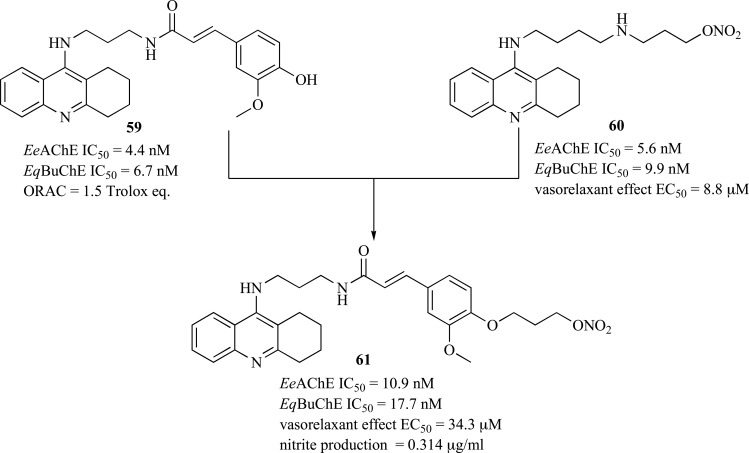
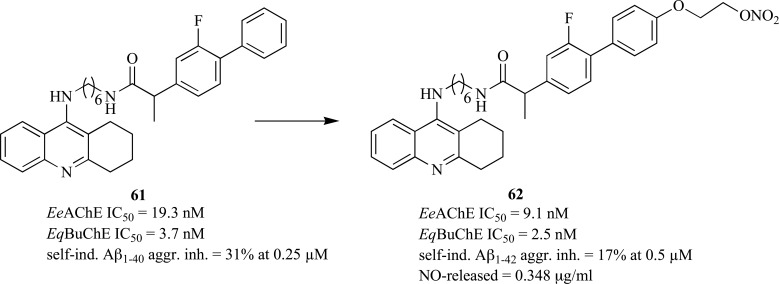
“[200, 201] conjugated a nitrate group with the previously obtained tacrineflurbiprofen hybrid compounds [202].”
BackgroundMohamed, T., Yeung, J. C. K., & Rao, P. P. N. (2011) · Bioorganic & Medicinal Chemistry Letters · doi:10.1016/j.bmcl.2011.07.091 · Cited by 26
Incerti, M., Flammini, L., Saccani, F., Morini, G., Comini, M., Coruzzi, M., Barocelli, E., Ballabeni, V., & Bertoni, S. (2010) · ChemMedChem · doi:10.1002/cmdc.201000008 · Cited by 25 · cited 1×
“[42, 43], cannabinoid CB1 receptor antagonism [44], BACE1 inhibition [45, 46], histamine H3 receptor antagonism [47, 48], NMDA receptor channel blocking [49, 50], serotonin 5-”
BackgroundChen, Y., Sun, J., Huang, Z., Liao, H., Peng, S., Lehmann, J., & Zhang, Y. (2013) · Bioorganic & Medicinal Chemistry · doi:10.1016/j.bmc.2013.03.005 · Cited by 25 · cited 1×
“[200, 201] conjugated a nitrate group with the previously obtained tacrineflurbiprofen hybrid compounds [202].”
BackgroundTriazolyl tryptoline derivatives as β-secretase inhibitors
Jiaranaikulwanitch, J., Boonyarat, C., Fokin, V. V., & Vajragupta, O. (2010) · Bioorganic & Medicinal Chemistry Letters · doi:10.1016/j.bmcl.2010.09.043 · Cited by 25 · cited 1×
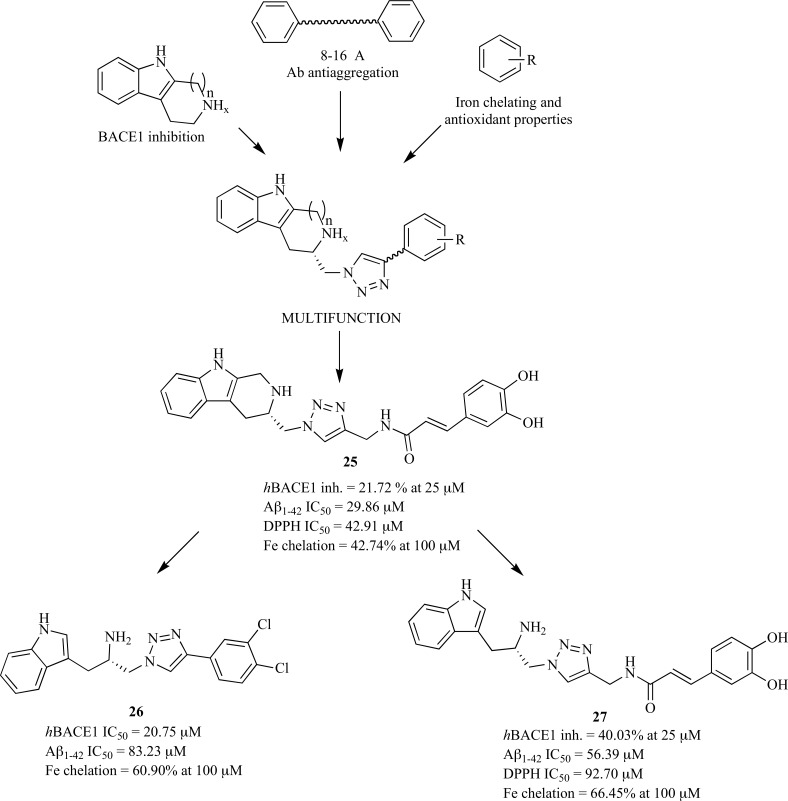
“In a previous report [120], the authors discovered the structure of tryptoline as responsible for BACE1 inhibition.”
BackgroundMultiple enzyme inhibitions by histamine H3 receptor antagonists as potential procognitive agents.
Petroianu, G. A., Arafat, K., Sasse, B. C., & Stark, H. (2006) · PubMed · Cited by 25
One target – multiple indications: a call for an integrated common mechanisms strategy
Nielsch, U., Schäfer, S., Wild, H., & Busch, A. E. (2007) · Drug Discovery Today · doi:10.1016/j.drudis.2007.10.004 · Cited by 22
Additional acetyl cholinesterase inhibitory property of diaryl pyrazoline derivatives
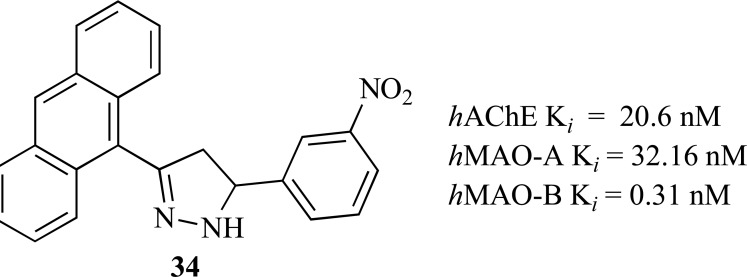
Mishra, N., & Sasmal, D. (2012) · Bioorganic & Medicinal Chemistry Letters · doi:10.1016/j.bmcl.2012.11.100 · Cited by 21 · cited 1×
“In further studies, 3,5diaryl pyrazolines were examined against hAChE [137].”
BackgroundTreatment Strategies in Alzheimer???s Disease with a Focus on Early Pharmacological Interventions
Marksteiner, J., & Schmidt, R. (2004) · Drugs & Aging · doi:10.2165/00002512-200421070-00001 · Cited by 21 · cited 2×
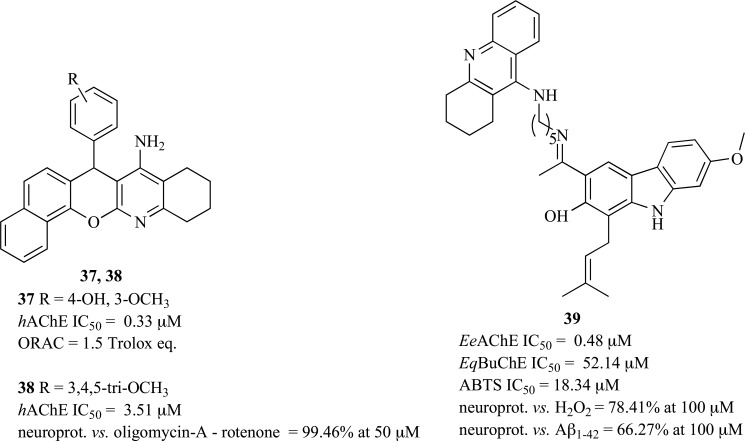
“[145] developed tacrine analogues bearing a racemic 9,10,11,12tetrahydro-7H-benzo[7,8]chromeno[2,3-b]quinolin-8-amine heterocyclic structure with a differently substituted benzene ring at position 7 (Fig.”
BackgroundPuccio, S., Chu, J., & Praticò, D. (2011) · PLoS ONE · doi:10.1371/journal.pone.0015163 · Cited by 19 · cited 1×
“It has been proven that 5-lipoxygenase (5-LO) is connected with A aggregation [228, 229] and its inhibition can reduce the formation of amyloid plaques in the brain [230].”
BackgroundYao, R., Lu, X., Guan, Q.-X., Zheng, L., Lü, X., & Ruan, B. (2012) · European Journal of Medicinal Chemistry · doi:10.1016/j.ejmech.2012.11.021 · Cited by 19 · cited 1×
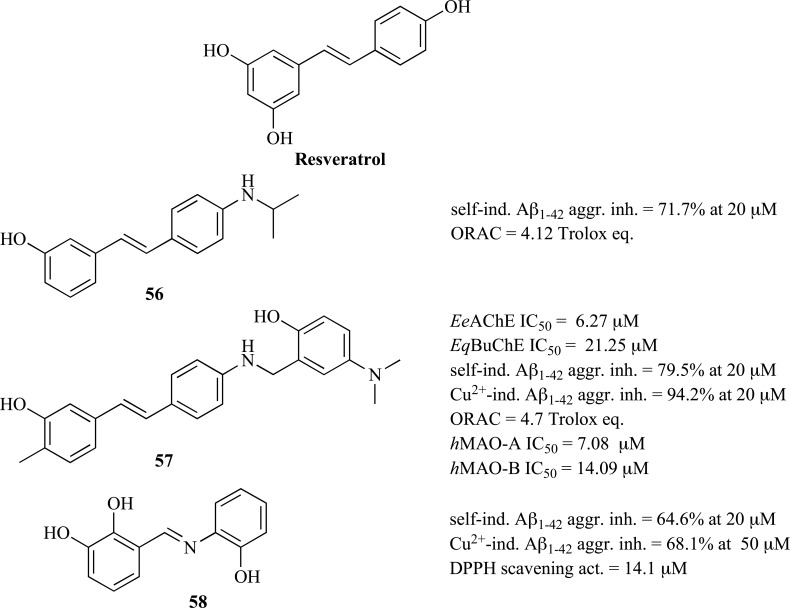
“In recent years, resveratrol (3,5,4’-trihydroxystilbene) has been extensively investigated as a cardioprotective, anticancer and anti-aging compound [185-187].”
BackgroundEmerging Targets in Neurodegeneration: New Opportunities for Alzheimer's Disease Treatment?
Rampa, A., Gobbi, S., Belluti, F., & Bisi, A. (2013) · Current Topics in Medicinal Chemistry · doi:10.2174/15680266113139990143 · Cited by 18 · cited 1×
“Over the years, extensive scientific research has focused on potential disease-modifying therapies for AD [17-19].”
BackgroundCalzà, L., Baldassarro, V. A., Giuliani, A., Lorenzini, L., Fernández, M., Mangano, C., Sivilia, S., Alessandri, M., Gusciglio, M., Torricella, R., et al. (2013) · Current Topics in Medicinal Chemistry · doi:10.2174/15680266113139990140 · Cited by 16
Bertoni, S., Ballabeni, V., Flammini, L., Saccani, F., Domenichini, G., Morini, G., Comini, M., Rivara, M., & Barocelli, E. (2008) · Naunyn-Schmiedeberg s Archives of Pharmacology · doi:10.1007/s00210-008-0299-2 · Cited by 13 · cited 1×
“[42, 43], cannabinoid CB1 receptor antagonism [44], BACE1 inhibition [45, 46], histamine H3 receptor antagonism [47, 48], NMDA receptor channel blocking [49, 50], serotonin 5-”
BackgroundClinical Pharmacology of Novel Anti-Alzheimer Disease Modifying Medications
Caraci, F., Bosco, P., Leggio, G. M., Malaguarnera, M., Drago, F., Bucolo, C., & Salomone, S. (2013) · Current Topics in Medicinal Chemistry · doi:10.2174/15680266113139990141 · Cited by 12 · cited 1×
“Over the years, extensive scientific research has focused on potential disease-modifying therapies for AD [17-19].”
BackgroundWater Soluble Furoxan Derivatives as NO Prodrugs
Sorba, G., Medana, C., Fruttero, R., Cena, C., Stilo, A. D., Galli, U., & Gasco, A. (1997) · Journal of Medicinal Chemistry · doi:10.1021/jm970281u · Cited by 12
Emerging Drugs and Targets for Alzheimer's Disease: Neuronal Plasticity
(2010) · RSC drug discovery/RSC drug discovery series · doi:10.1039/9781849731072 · Cited by 11
Chen, Y., Sun, J., Huang, Z., Liao, H., Peng, S., Lehmann, J., & Zhang, Y. (2013) · Bioorganic & Medicinal Chemistry Letters · doi:10.1016/j.bmcl.2013.04.008 · Cited by 10 · cited 1×
“[200, 201] conjugated a nitrate group with the previously obtained tacrineflurbiprofen hybrid compounds [202].”
BackgroundDarreh‐Shori, T. (2009) · Current Alzheimer Research · doi:10.2174/1567209198607252050 · Cited by 10
Multitargeted Drugs for Treatment of Alzheimer's Disease
Cavalli, A., & Bolognesi, M. L. (2012) · Wiley eBooks · doi:10.1002/9781118098141.ch22 · Cited by 9
Holloway, H. W., Brossi, A., Giordano, T., et al. (2020) · Carolina Digital Repository (University of North Carolina at Chapel Hill) · doi:10.17615/78sp-w526 · Cited by 6
The Benefits of the Multi‐Target Approach in Drug Design and Discovery
Espinoza-Fonseca, M. (2006) · ChemInform · doi:10.1002/chin.200620260 · Cited by 3
Chen, Y., Zhang, Z., Li, Y., Li, D., Huang, S., Gu, L., Xu, J., & Huang, Z. (2013) · ChemInform · doi:10.1002/chin.201352067 · Cited by 1
(2010) · Europe PMC (PubMed Central)
Cited by
Copper homeostasis and cuproptosis in health and disease
Chen, L., Min, J., & Wang, F. (2022) · Signal Transduction and Targeted Therapy · doi:10.1038/s41392-022-01229-y · Cited by 1,493
“The pathological hallmark of AD is the deposition of amyloid plaques and neurofibrillary tangles in the gray matter due to aberrant processing of amyloid precursor protein (APP) leading to the aggregation of amyloid-β (Aβ) peptides and tau protein, respectively.(91) Mounting evidence has implicated that altered Cu hom…”
BackgroundSavelieff, M. G., Nam, G., Kang, J., Lee, H. J., Lee, M., & Lim, M. H. (2019) · Chemical Reviews · doi:10.1021/acs.chemrev.8b00138 · Cited by 581
Therapeutic strategies for Alzheimer's disease in clinical trials
Godyń, J., Jończyk, J., Panek, D., & Malawska, B. (2016) · Pharmacological Reports · doi:10.1016/j.pharep.2015.07.006 · Cited by 452
“New alternative approaches involve multi-target-directed ligands where a specially designed compound is able to interact with more than one biological target involved in the pathogenesis of AD [103].”
BackgroundSelf-citationSharma, P., Srivastava, P., Seth, A., Tripathi, P. N., Banerjee, A. G., & Shrivastava, S. K. (2019) · Progress in Neurobiology · doi:10.1016/j.pneurobio.2018.12.006 · Cited by 331
VDAC1, mitochondrial dysfunction, and Alzheimer’s disease
Shoshan-Barmatz, V., Nahon-Crystal, E., Shteinfer-Kuzmine, A., & Gupta, R. (2018) · Pharmacological Research · doi:10.1016/j.phrs.2018.03.010 · Cited by 286
Metadata
- Authors
- Guzior, N., Wi.eckowska, A., Panek, D., & Malawska, B.
- Affiliations
- Jagiellonian University (PL)
- Corresponding author
- Malawska, Barbara
- Venue
- Current Medicinal Chemistry
- Publisher
- Bentham Science Publishers Ltd.
- Published
- 2014-12-19
- Volume
- 22
- Issue
- 3
- Pages
- 373-404
- ISSN
- 0929-8673 (ISSN-L)
- PMC
- PMC4435057
- OpenAlex
- W2160250661
- Semantic Scholar
- 87a6c33067fc70ae159bdff4778e5de3fc139c1a
- Cited by
- 323
- References
- 239
- Citations by year
- 2026: 10 · 2025: 10 · 2024: 20 · 2023: 24 · 2022: 28 · 2021: 29 · 2020: 26 · 2019: 40 · 2018: 46 · 2017: 41 · 2016: 36 · 2015: 12
- FWCI
- 4.00
- Type
- journal article
- Language
- en
- Open access
- bronze
- doi.org
- Locations
- Current Medicinal Chemistry (publishedVersion)
- PubMed Central (publishedVersion, cc-by-nc)
- PubMed (publishedVersion)
- Homo Politicus (Academy of Humanities and Economics in Lodz) (submittedVersion)
- Jagiellonian University Repository (Jagiellonian University) (submittedVersion, other-oa)
- Jagiellonian University Repository (Jagiellonian University) (submittedVersion, cc-by-nc-nd)
- Homo Politicus (Academy of Humanities and Economics in Lodz) (submittedVersion, cc-by-nc-nd)
- Funders
- Narodowym Centrum Nauki
- Topics
- Health Sciences › Medicine › Pharmacology (medical) › Cholinesterase and Neurodegenerative Diseases
- Life Sciences › Neuroscience › Cellular and Molecular Neuroscience › Alzheimer's disease research and treatments
- Health Sciences › Medicine › Psychiatry and Mental health › Dementia and Cognitive Impairment Research
- Keywords
- Alzheimer's disease, multi-target-directed ligands, acetylcholinesterase inhibitors, beta-secretase inhibition, monoamine oxidase inhibition, antioxidant activity, metal chelation, nitric oxide release, cannabinoid receptors, NMDA receptor, histamine H3 receptor, tacrine, donepezil, galantamine, memantine, drug candidates
- MeSH terms
- Alzheimer Disease, Animals, Enzyme Inhibitors, Humans, Amyloid beta-Peptides, Neuroprotective Agents, Drug Discovery, Protein Aggregates
About these checks
Registry, retraction, Cites and statistics results are computed, not judged, with one exception: a printed reference that no index lists is read once by a model before it counts as a citation error. Claims are extracted by a model and kept only when their quote appears verbatim in the text; each cited source is then checked, with a model’s help, for whether it says what the claim relies on. Those verdicts can be wrong — read the claim’s quote and the cited source before relying on one.
Statistics and arithmetic are recomputed, not judged.
Confidence bands are shown only for fields calibrated on our annotated test set. None is calibrated yet, so no band is shown.
What counts as a claim ›How we measure confidence ›How we check this ›
Are you an author, or do you see a problem with this page? Request a review
Data sources
Bibliographic data: Semantic Scholar, OpenAlex, Crossref.
Contains information from the Semantic Scholar Academic Graph Datasets, made available under the ODC Attribution License (ODC-BY 1.0).
Semantic Scholar’s data is described in: Kinney, R., et al. (2023). The Semantic Scholar Open Data Platform. arXiv:2301.10140.
