

Recent Development of Multifunctional Agents as Potential Drug Candidates for the Treatment of Alzheimer’s Disease
Open accessThe DOI matches its Crossref record; 240 of the 240 references it cites were found in a registry or an index.
Abstract
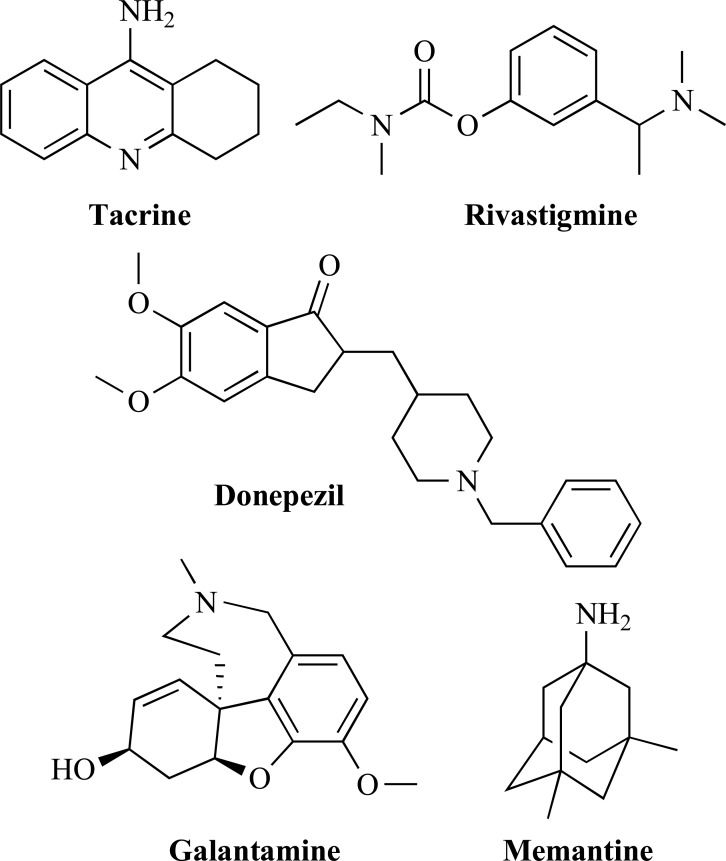
Alzheimer's disease (AD) is a complex and progressive neurodegenerative disorder. The available therapy is limited to the symptomatic treatment and its efficacy remains unsatisfactory. In view of the prevalence and expected increase in the incidence of AD, the development of an effective therapy is crucial for public health. Due to the multifactorial aetiology of this disease, the multi-target-directed ligand (MTDL) approach is a promising method in search for new drugs for AD. This review updates information on the development of multifunctional potential anti-AD agents published within the last three years. The majority of the recently reported structures are acetylcholinesterase inhibitors, often endowed with some additional properties. These properties enrich the pharmacological profile of the compounds giving hope for not only symptomatic but also causal treatment of the disease. Among these advantageous properties, the most often reported are an amyloid-β antiaggregation activity, inhibition of β-secretase and monoamine oxidase, an antioxidant and metal chelating activity, NOreleasing ability and interaction with cannabinoid, NMDA or histamine H3 receptors. The majority of novel molecules possess heterodimeric structures, able to interact with multiple targets by combining different pharmacophores, original or derived from natural products or existing therapeutics (tacrine, donepezil, galantamine, memantine). Among the described compounds, several seem to be promising drug candidates, while others may serve as a valuable inspiration in the search for new effective therapies for AD.
Overview
The claims and statistics of this paper haven’t been checked yet.
Free: it reads the open-access text and checks the first 5 claims that cite a source we can check. Create a free account to check every claim.
Integrity signals
Registry
Cites
Statistics
Figures
Verification
Claims the paper makes
The claims and statistics of this paper haven’t been checked yet.
Free: it reads the open-access text and checks the first 5 claims that cite a source we can check. Create a free account to check every claim.
Self-check
Percentages, sums and reported differences re-computed from the paper’s own numbers.
The self-check needs the paper’s full text.
Citations
Cites
1 retracted
Chu, J., & Praticò, D. (2011) · American Journal Of Pathology · doi:10.1016/j.ajpath.2010.12.032 · Cited by 84 · cited 1×
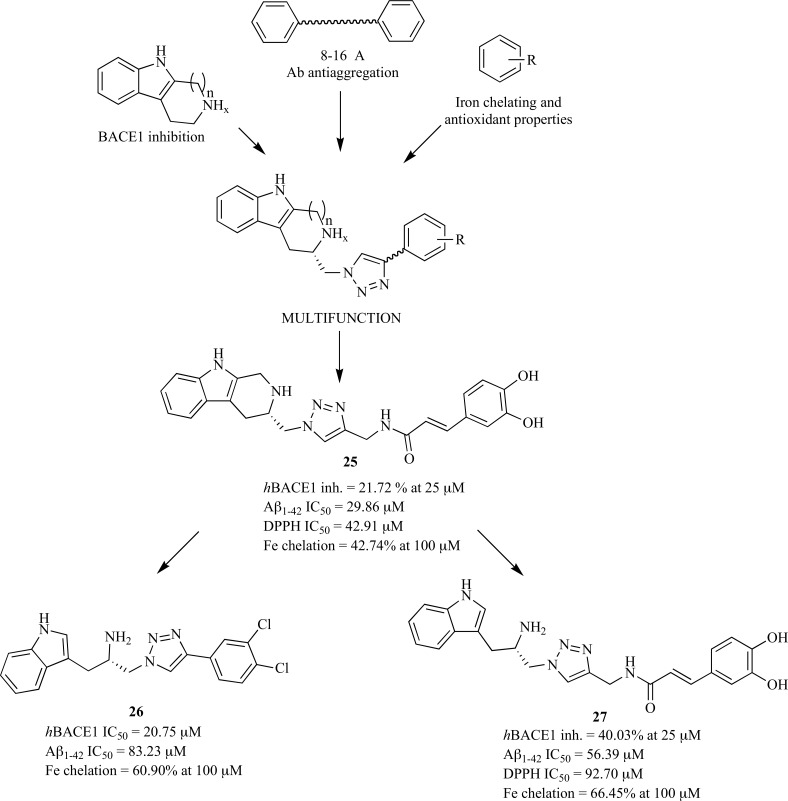
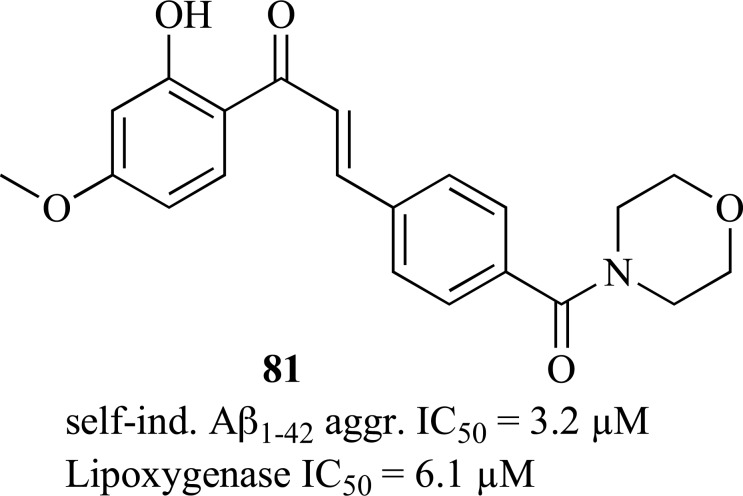
“It has been proven that 5-lipoxygenase (5-LO) is connected with A aggregation [228, 229] and its inhibition can reduce the formation of amyloid plaques in the brain [230].”
BackgroundRetractedA new and rapid colorimetric determination of acetylcholinesterase activity
Ellman, G. L., Courtney, K. D., Andres, V., & Featherstone, R. M. (1961) · Biochemical Pharmacology · doi:10.1016/0006-2952(61)90145-9 · Cited by 27,126 · cited 1×
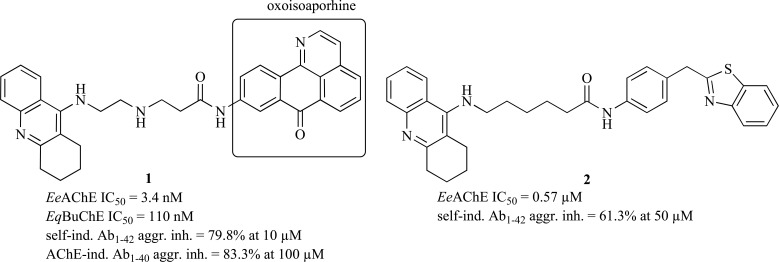
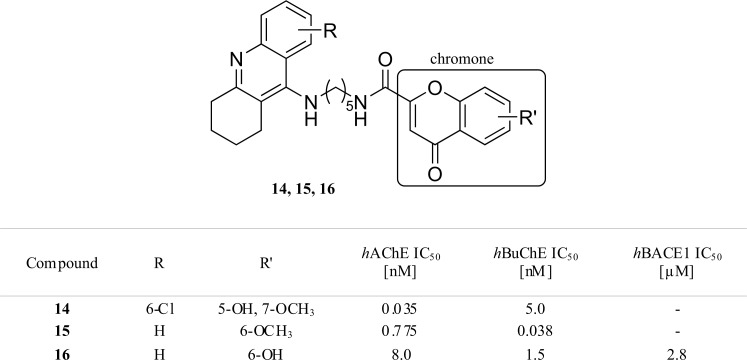
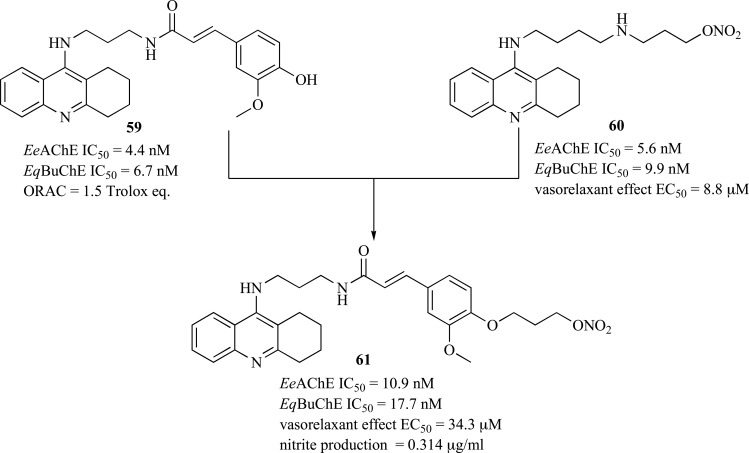
“The results of Ellman’s test [80] showed that the newly synthesized hybrids were EeAChE inhibitors with IC50 values in the nanomolar range, from 3.”
BackgroundThe cholinergic hypothesis of geriatric memory dysfunction
Bartus, R. T., Dean, R. L., Beer, B., & Lippa, A. S. (1982) · Science · doi:10.1126/science.7046051 · Cited by 5,545 · cited 1×
“This hypothesis assumes that in AD the level of acetylcholine (ACh) is reduced due to the loss of the cholinergic neurons and decreased synthesis of ACh [5, 6].”
BackgroundQuerfurth, H. W., & LaFerla, F. M. (2010) · New England Journal of Medicine · doi:10.1056/nejmra0909142 · Cited by 4,569
Hearing loss and cognitive decline in older adults
Lin, F. R., Yaffe, K., Xia, J., Xue, Q.-L., Harris, T. B., Purchase-Helzner, E., Satterfield, S., Ayonayon, H. N., Ferrucci, L., Simonsick, E. M., et al. (2013) · JAMA Internal Medicine · doi:10.1001/jamainternmed.2013.1868 · Cited by 4,017
Therapeutic potential of resveratrol: the in vivo evidence
Baur, J. A., & Sinclair, D. A. (2006) · Nature Reviews Drug Discovery · doi:10.1038/nrd2060 · Cited by 3,958 · cited 1×
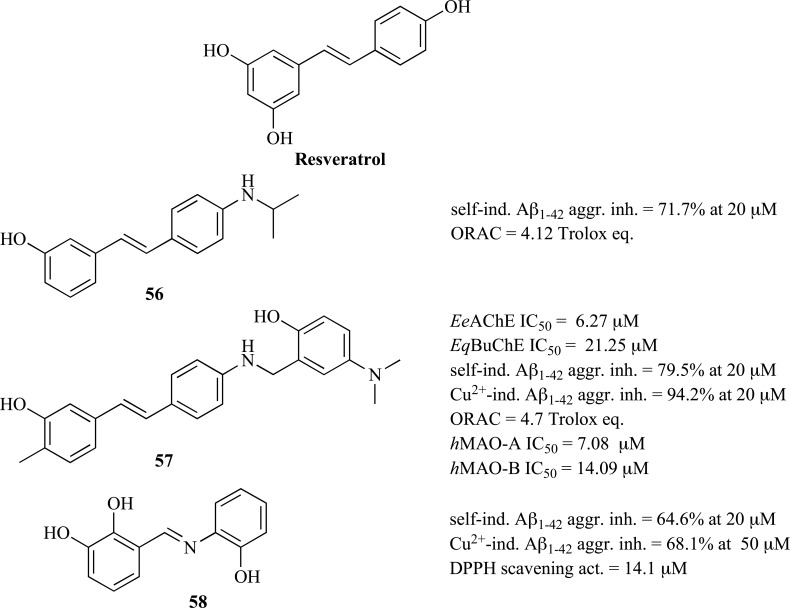
“In recent years, resveratrol (3,5,4’-trihydroxystilbene) has been extensively investigated as a cardioprotective, anticancer and anti-aging compound [185-187].”
BackgroundAmyloid deposition as the central event in the aetiology of Alzheimer’s disease
Hardy, J., & Allsop, D. (1991) · Trends in Pharmacological Sciences · doi:10.1016/0165-6147(91)90609-v · Cited by 2,538 · cited 1×
“The symptomatic therapeutic targets include mostly receptors whereas the disease-modifying targets are closely connected to A , tau production and neuroprotection [15, 16].”
BackgroundOxidative stress hypothesis in Alzheimer’s disease
Markesbery, W. R. (1997) · Free Radical Biology and Medicine · doi:10.1016/s0891-5849(96)00629-6 · Cited by 2,383
Levine, H. (1993) · Protein Science · doi:10.1002/pro.5560020312 · Cited by 2,264
DPPH antioxidant assay revisited
Sharma, O. P., & Bhat, T. K. (2009) · Food Chemistry · doi:10.1016/j.foodchem.2008.08.008 · Cited by 1,969 · cited 1×
“Interestingly, these two compounds showed an antioxidant activity in the (di(phenyl)-(2,4,6trinitrophenyl)iminoazanium) (DPPH) free radical scavenging assay [121] with IC50 values of 42.”
BackgroundAlzheimer Mechanisms and Therapeutic Strategies
Huang, Y., & Mucke, L. (2012) · Cell · doi:10.1016/j.cell.2012.02.040 · Cited by 1,758 · cited 1×
“Keywords: Alzheimer’s disease, antioxidants, -amyloid anti-aggregation properties, cholinesterase inhibitors, inhibitors of - secretase, inhibitors of monoamine oxidase A/B, multi-target-directed ligands, neuroprotective properties.”
Alzheimer’s disease drug-development pipeline: Few candidates, frequent failures
Cummings, J. L., Morstorf, T., & Zhong, K. (2014) · Alzheimer's Research & Therapy · doi:10.1186/alzrt269 · Cited by 1,744 · cited 1×
“[232] showed that during the period between 2002 and 2012 there were 413 AD clinical trials performed and only”
BackgroundEpidemiology of Alzheimer disease
Reitz, C., Brayne, C., & Mayeux, R. (2011) · Nature Reviews Neurology · doi:10.1038/nrneurol.2011.2 · Cited by 1,675
Designed Multiple Ligands. An Emerging Drug Discovery Paradigm
Morphy, R., & Rankovic, Z. (2005) · Journal of Medicinal Chemistry · doi:10.1021/jm058225d · Cited by 1,209 · cited 1×
“developed as innovative approach dedicated for complex diseases [20-24].”
BackgroundExtending Applicability of the Oxygen Radical Absorbance Capacity (ORAC−Fluorescein) Assay
Dávalos, A., Gómez-Cordovés, C., & Bartolomé, B. (2004) · Journal of Agricultural and Food Chemistry · doi:10.1021/jf0305231 · Cited by 1,207 · cited 1×
“3-fold more potent than Trolox (a vitamin E analogue used as the reference compound) in the oxygen radical absorbance capacity test (ORAC assay) [111].”
BackgroundHigh throughput artificial membrane permeability assay for blood–brain barrier
Di, L., Kerns, E. H., Fan, K., McConnell, O. J., & Carter, G. T. (2003) · European Journal of Medicinal Chemistry · doi:10.1016/s0223-5234(03)00012-6 · Cited by 1,195 · cited 7×
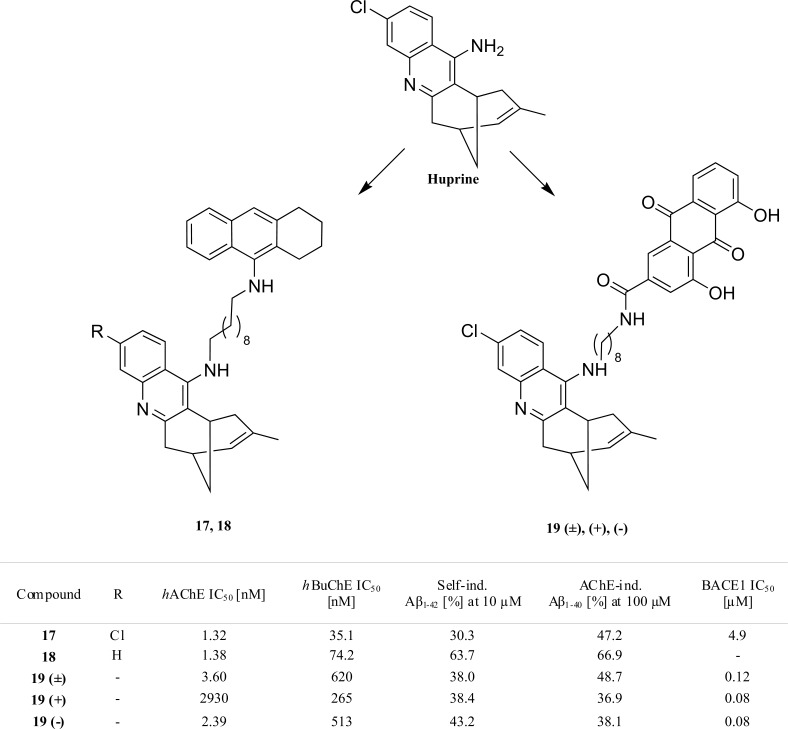
“Huprine-rhein hybrids were also evaluated in the PAMPA-BBB assay to assess their brain permeability.”
BackgroundInfluentialAlzheimer disease: Epidemiology, diagnostic criteria, risk factors and biomarkers
Reitz, C., & Mayeux, R. (2014) · Biochemical Pharmacology · doi:10.1016/j.bcp.2013.12.024 · Cited by 1,181
Terry, A. V., & Buccafusco, J. J. (2003) · The Journal of Pharmacology and Experimental Therapeutics · doi:10.1124/jpet.102.041616 · Cited by 1,159 · cited 1×
“This hypothesis assumes that in AD the level of acetylcholine (ACh) is reduced due to the loss of the cholinergic neurons and decreased synthesis of ACh [5, 6].”
BackgroundMulti-target-Directed Ligands To Combat Neurodegenerative Diseases
Cavalli, A., Bolognesi, M. L., Minarini, A., Rosini, M., Tumiatti, V., Recanatini, M., & Melchiorre, C. (2008) · Journal of Medicinal Chemistry · doi:10.1021/jm7009364 · Cited by 1,152 · cited 1×
“such as A anti-aggregating activity [34-39], neuroprotective”
Neurobiology of butyrylcholinesterase
Darvesh, S., Hopkins, D. A., & Geula, C. (2003) · Nature Reviews Neuroscience · doi:10.1038/nrn1035 · Cited by 891 · cited 1×
“In healthy brain tissue, AChE is the main enzyme responsible for acetylcholine hydrolysis, while BuChE plays a supportive role [65].”
BackgroundOxidative Stress and the Pathogenesis of Alzheimer's Disease
Zhao, Y., & Zhao, B. (2013) · Oxidative Medicine and Cellular Longevity · doi:10.1155/2013/316523 · Cited by 855 · cited 1×
“Thus, the modulation of the level of these biometals in the brain is also a potential therapeutic strategy for treating AD [167-171].”
BackgroundKryger, G., Silman, I., & Sussman, J. L. (1999) · Structure · doi:10.1016/s0969-2126(99)80040-9 · Cited by 757 · cited 1×
“The indanone moiety is one of the fragments of donepezil that influences high affinity and selectivity for AChE [179].”
BackgroundGreig, N. H., Utsuki, T., Ingram, D. K., Wang, Y., Pepeu, G., Scali, C., Yu, Q.-S., Mamczarz, J., Holloway, H. W., Giordano, T., et al. (2005) · Proceedings of the National Academy of Sciences · doi:10.1073/pnas.0508575102 · Cited by 734
Factors Influencing the Antioxidant Activity Determined by the ABTS•+Radical Cation Assay
Miller, N. J., & Rice-Evans, C. A. (1997) · Free Radical Research · doi:10.3109/10715769709097799 · Cited by 723 · cited 1×
“Synthesized compounds were found to be moderate EeAChE inhibitors in the low micromolar and submicromolar range, and they displayed very potent antioxidant activity in the ABTS (2,2’-azino-bis(3ethylbenzthiazoline-6-sulfonic acid) radical scavenging assay [148].”
BackgroundStructure of the Protease Domain of Memapsin 2 (β-Secretase) Complexed with Inhibitor
Hong, L., Koelsch, G., Lin, X., Wu, S., Terzyan, S., Ghosh, A. K., Zhang, X. C., & Tang, J. (2000) · Science · doi:10.1126/science.290.5489.150 · Cited by 711 · cited 1×
“The -secretase (memapsin-2, BACE1) catalyzes the first and key step in the production of -amyloid peptide [102].”
BackgroundNITRIC OXIDE SYNTHASE: Role in the Genesis of Vascular Disease
Cooke, M., & Dzau, M. (1997) · Annual Review of Medicine · doi:10.1146/annurev.med.48.1.489 · Cited by 710 · cited 1×
“NO-releasing drugs may be especially beneficial for the treatment of AD due to its role in the regulation of the cerebral circulation and inflammatory reactions [193, 194].”
BackgroundTargeting acetylcholinesterase and butyrylcholinesterase in dementia
Lane, R. M., Potkin, S. G., & Enz, A. (2005) · The International Journal of Neuropsychopharmacology · doi:10.1017/s1461145705005833 · Cited by 654 · cited 1×
“AChE and BuChE are enzymes involved in cholinergic neurotransmission through the hydrolysis of acetylcholine (ACh) [64].”
BackgroundMesulam, M.-M., Guillozet, A., Shaw, P., Levey, A., Duysen, E. G., & Lockridge, O. (2002) · Neuroscience · doi:10.1016/s0306-4522(01)00613-3 · Cited by 650 · cited 1×
“to compensate for the lack of AChE, thus enabling continued regulation of cholinergic neurotransmission [66, 67].”
Backgroundβ-Amyloid aggregation induced by human acetylcholinesterase: inhibition studies
Bartolini, M., Bertucci, C., Cavrini, V., & Andrisano, V. (2003) · Biochemical Pharmacology · doi:10.1016/s0006-2952(02)01514-9 · Cited by 568 · cited 1×
“one which induces a conformational transition in A leading to aggregation and fibril formation [71, 72].”
BackgroundTherapeutics for Alzheimer's Disease Based on the Metal Hypothesis
Bush, A. I., & Tanzi, R. E. (2008) · Neurotherapeutics · doi:10.1016/j.nurt.2008.05.001 · Cited by 564 · cited 1×
“Thus, the modulation of the level of these biometals in the brain is also a potential therapeutic strategy for treating AD [167-171].”
BackgroundCholinesterase inhibitors: new roles and therapeutic alternatives
GIACOBINI, E. (2004) · Pharmacological Research · doi:10.1016/j.phrs.2003.11.017 · Cited by 555
A review on coumarins as acetylcholinesterase inhibitors for Alzheimer’s disease
Anand, P., Singh, B., & Singh, N. (2012) · Bioorganic & Medicinal Chemistry · doi:10.1016/j.bmc.2011.12.042 · Cited by 527 · cited 1×
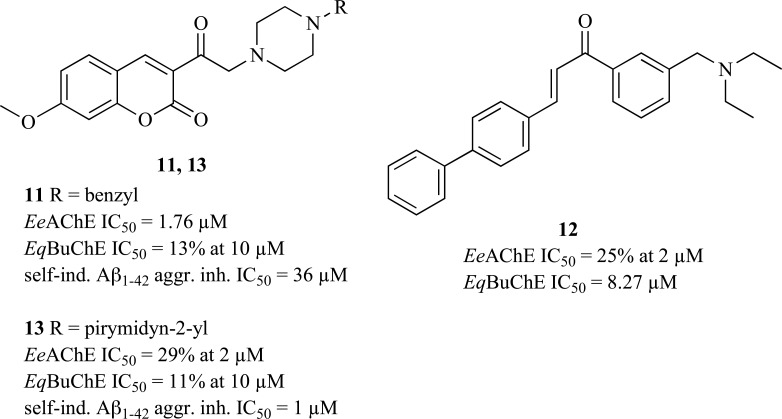
“In a previously reported research, chalcone and coumarin fragments were essential for an anticholinesterase activity, and in some cases for A anti-aggregating properties [98, 99].”
BackgroundLeón, R., Garcia, A. G., & Marco‐Contelles, J. (2013) · Medicinal Research Reviews · doi:10.1002/med.20248 · Cited by 440 · cited 1×
“such as A anti-aggregating activity [34-39], neuroprotective”
Development of synthetic compounds with glutathione peroxidase activity
Wilson, S. R., Zucker, P. A., Huang, R. R. C., & Spector, A. (1989) · Journal of the American Chemical Society · doi:10.1021/ja00197a065 · Cited by 413 · cited 1×
“GPx-like catalytic activity was tested by measuring the rates of the reduction of H2O2 by glutathione [155].”
MethodChyan, Y.-J., Poeggeler, B., Omar, R. A., Chain, D. G., Frangione, B., Ghiso, J., & Pappolla, M. A. (1999) · Journal of Biological Chemistry · doi:10.1074/jbc.274.31.21937 · Cited by 405 · cited 1×
“Indole-3-propionic acid (IPA), the natural compound, was found to be a potent antioxidant against oxidative damage induced by -amyloid [158].”
BackgroundProtective effect of resveratrol on β-amyloid-induced oxidative PC12 cell death
Jang, J. (2003) · Free Radical Biology and Medicine · doi:10.1016/s0891-5849(03)00062-5 · Cited by 390 · cited 1×
“Recently, resveratrol-based compounds were found to have a strong antiaggregation and antioxidant activity [188, 189].”
BackgroundAntioxidant Therapies for Alzheimer's Disease
Feng, Y., & Wang, X. (2012) · Oxidative Medicine and Cellular Longevity · doi:10.1155/2012/472932 · Cited by 379 · cited 1×
“Thus, antioxidant therapy in dementia may bring benefits, particularly in the early stage of AD [138, 139].”
BackgroundSchroeter, H., Spencer, J. P. E., Rice-Evans, C. A., & WILLIAMS, R. J. (2001) · Biochemical Journal · doi:10.1042/0264-6021:3580547 · Cited by 373 · cited 1×
“Flavonoids show the antioxidant activity which depends on the ability to inhibit the activity of cyclooxygenase and lipoxygenase and the ability to chelate the transition metals [173-175].”
BackgroundAssessment of spatial memory in mice
Sharma, S., Rakoczy, S., & Brown-Borg, H. (2010) · Life Sciences · doi:10.1016/j.lfs.2010.09.004 · Cited by 368 · cited 1×
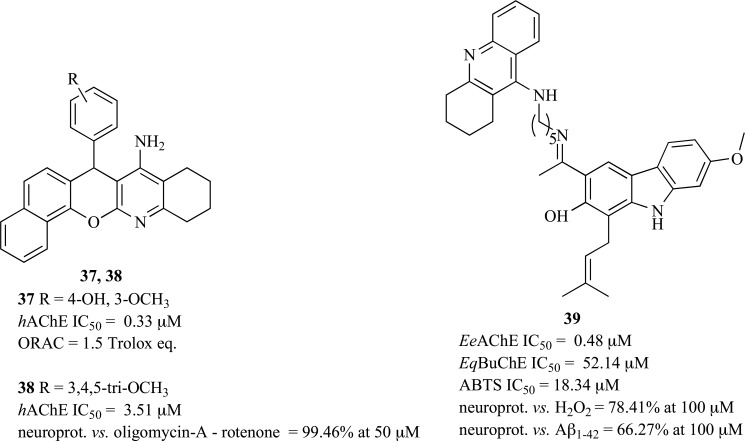
“The effect of 39 on learning and memory impairment was evaluated using the Morris water maze and Y-maze test [149].”
MethodWilkinson, D. G., Francis, P. T., Schwam, E., & Payne-Parrish, J. (2004) · Drugs & Aging · doi:10.2165/00002512-200421070-00004 · Cited by 365 · cited 1×
“Keywords: Alzheimer’s disease, antioxidants, -amyloid anti-aggregation properties, cholinesterase inhibitors, inhibitors of - secretase, inhibitors of monoamine oxidase A/B, multi-target-directed ligands, neuroprotective properties.”
Sharma, M., & Gupta, Y. K. (2002) · Life Sciences · doi:10.1016/s0024-3205(02)02083-0 · Cited by 326 · cited 1×
“Recently, resveratrol-based compounds were found to have a strong antiaggregation and antioxidant activity [188, 189].”
BackgroundStructure of acetylcholinesterase complexed with (−)‐galanthamine at 2.3 Å resolution
Greenblatt, H. M., Kryger, G., Lewis, T., Silman, I., & Sussman, J. L. (1999) · FEBS Letters · doi:10.1016/s0014-5793(99)01637-3 · Cited by 310 · cited 1×
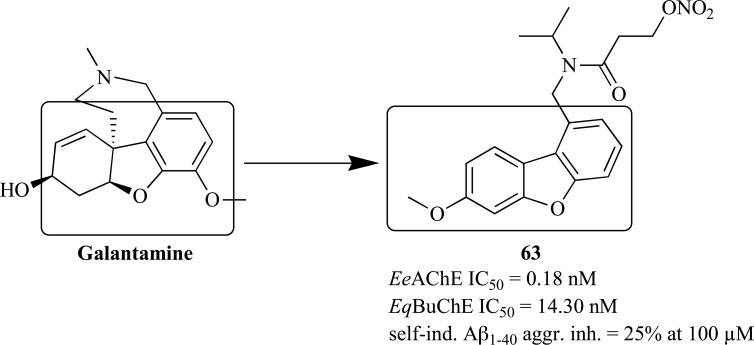
“Considering previous studies and the X-ray structure of galantamine co-crystalized with AChE [204], the authors concluded that the aromatic moiety (i.”
Effects of Naturally Occurring Compounds on Fibril Formation and Oxidative Stress of β-Amyloid
Kim, H., Park, B.-S., Lee, K.-G., Choi, C. Y., Jang, S. S., Kim, Y.-H., & Lee, S.-E. (2005) · Journal of Agricultural and Food Chemistry · doi:10.1021/jf051985c · Cited by 297 · cited 1×
“Flavonoids show the antioxidant activity which depends on the ability to inhibit the activity of cyclooxygenase and lipoxygenase and the ability to chelate the transition metals [173-175].”
BackgroundMeunier, J., Ieni, J., & Maurice, T. (2006) · British Journal of Pharmacology · doi:10.1038/sj.bjp.0706927 · Cited by 288 · cited 2×
“[145] developed tacrine analogues bearing a racemic 9,10,11,12tetrahydro-7H-benzo[7,8]chromeno[2,3-b]quinolin-8-amine heterocyclic structure with a differently substituted benzene ring at position 7 (Fig.”
BackgroundSugihara, N., Arakawa, T., Ohnishi, M., & Furuno, K. (1999) · Free Radical Biology and Medicine · doi:10.1016/s0891-5849(99)00167-7 · Cited by 284 · cited 1×
“Flavonoids show the antioxidant activity which depends on the ability to inhibit the activity of cyclooxygenase and lipoxygenase and the ability to chelate the transition metals [173-175].”
BackgroundStructure-Based Search for New Inhibitors of Cholinesterases
Bajda, M., Więckowska, A., Hebda, M., Guzior, N., Sotriffer, C., & Malawska, B. (2013) · International Journal of Molecular Sciences · doi:10.3390/ijms14035608 · Cited by 274 · cited 1×
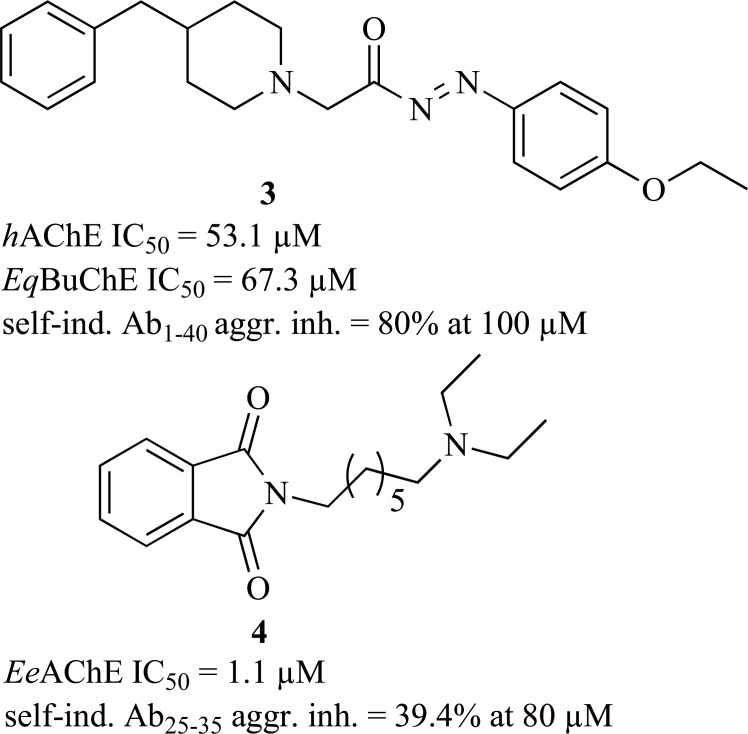
“Dual-acting compounds with cholinesterase and A aggregation inhibitory activities were identified in a series of 2(aminoalkyl)-isoindoline-1,3-dione derivatives [87, 88].”
BackgroundSelf-citationDeveloping β‐secretase inhibitors for treatment of Alzheimer’s disease
Ghosh, A. K., Brindisi, M., & Tang, J. (2012) · Journal of Neurochemistry · doi:10.1111/j.1471-4159.2011.07476.x · Cited by 272 · cited 1×
“Recently, numerous BACE1 inhibitors have been discovered, moreover a few of them have been tested in the early stage of clinical trials [105-107].”
BackgroundFernández-Bachiller, M. I., Pérez, C., González-Muñoz, G. C., Conde, S., López, M. G., Villarroya, M., García, A. G., & Rodríguez-Franco, M. I. (2010) · Journal of Medicinal Chemistry · doi:10.1021/jm100329q · Cited by 268 · cited 1×
“inhibitors with iron-chelating agents [53], metal chelators”
Fernández-Bachiller, M. I., Pérez, C., Monjas, L., Rademann, J., & Rodríguez-Franco, M. I. (2012) · Journal of Medicinal Chemistry · doi:10.1021/jm201460y · Cited by 268
Designing Multiple Ligands – Medicinal Chemistry Strategies and Challenges
Morphy, R., & Rankovic, Z. (2009) · Current Pharmaceutical Design · doi:10.2174/138161209787315594 · Cited by 262 · cited 1×
“developed as innovative approach dedicated for complex diseases [20-24].”
BackgroundAlzheimer's disease, a multifactorial disorder seeking multitherapies
Iqbal, K., & Grundke‐Iqbal, I. (2010) · Alzheimer's & Dementia · doi:10.1016/j.jalz.2010.04.006 · Cited by 255
The transition metals copper and iron in neurodegenerative diseases
Rivera-Mancía, S., Pérez-Neri, I., Ríos, C., Tristán-López, L., Rivera-Espinosa, L., & Montes, S. (2010) · Chemico-Biological Interactions · doi:10.1016/j.cbi.2010.04.010 · Cited by 244 · cited 1×
“Thus, the modulation of the level of these biometals in the brain is also a potential therapeutic strategy for treating AD [167-171].”
BackgroundThe Multifactorial Nature of Alzheimer's Disease for Developing Potential Therapeutics
Carreiras, M., Mendes, E., Perry, M., Francisco, A., & Marco-Contelles, J. (2013) · Current Topics in Medicinal Chemistry · doi:10.2174/15680266113139990135 · Cited by 240 · cited 1×
“Moreover, several review papers have been presented during the last few years [61, 62] including our one published in November 2011 [63].”
BackgroundMulti-Target-Directed Ligands in Alzheimer's Disease Treatment
Bajda, M., Guzior, N., Ignasik, M., & Malawska, B. (2011) · Current Medicinal Chemistry · doi:10.2174/092986711797535245 · Cited by 240
Self-citationGökhan-Kelekçi, N., Yabanoğlu, S., Küpeli, E., Salgın, U., Özgen, Ö., Uçar, G., Yeşilada, E., Kendi, E., Yeşilada, A., & Bilgin, A. A. (2007) · Bioorganic & Medicinal Chemistry · doi:10.1016/j.bmc.2007.06.004 · Cited by 229 · cited 1×
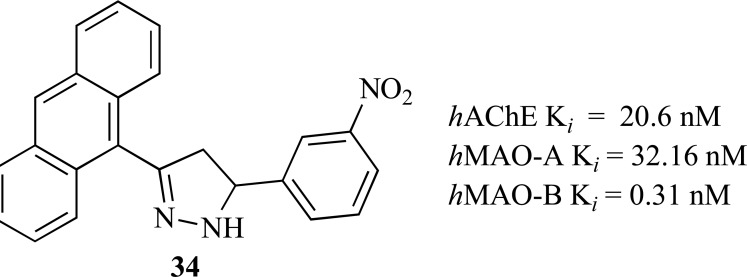
“2-Pyrazoline can be considered as a cyclic hydrazine moiety and this scaffold, besides a propargyl moiety, is the most common scaffold in MAO inhibitors [135].”
BackgroundLu, C., Guo, Y., Yan, J., Luo, Z., Luo, H.-B., Yan, M., Huang, L., & Li, X. (2013) · Journal of Medicinal Chemistry · doi:10.1021/jm400567s · Cited by 226 · cited 1×
“[191] developed a series of compounds with a stilbene fragment combined with differently substituted benzylamine moieties.”
BackgroundRational Approach To Discover Multipotent Anti-Alzheimer Drugs
Rosini, M., Andrisano, V., Bartolini, M., Bolognesi, M. L., Hrelia, P., Minarini, A., Tarozzi, A., & Melchiorre, C. (2005) · Journal of Medicinal Chemistry · doi:10.1021/jm049112h · Cited by 226
Tacrine Derivatives and Alzheimers Disease
Tumiatti, V., Minarini, A., Bolognesi, M. L., Milelli, A., Rosini, M., & Melchiorre, C. (2010) · Current Medicinal Chemistry · doi:10.2174/092986710791111206 · Cited by 225 · cited 1×
“such as A anti-aggregating activity [34-39], neuroprotective”
Bolea, I., Juárez-Jiménez, J., de los Rı́os, C., Chioua, M., Pouplana, R., Luque, F. J., Unzeta, M., Marco-Contelles, J., & Samadi, A. (2011) · Journal of Medicinal Chemistry · doi:10.1021/jm200853t · Cited by 219
Antihistamine Agent Dimebon As a Novel Neuroprotector and a Cognition Enhancer
BACHURIN, S., BUKATINA, E., LERMONTOVA, N., TKACHENKO, S., AFANASIEV, A., GRIGORIEV, V., GRIGORIEVA, I., IVANOV, Y., SABLIN, S., & ZEFIROV, N. (2001) · Annals of the New York Academy of Sciences · doi:10.1111/j.1749-6632.2001.tb03654.x · Cited by 219 · cited 7×
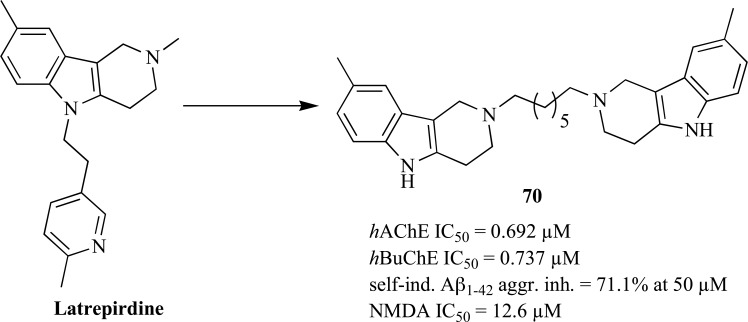
“Compound 70 acted as NMDAR antagonist (IC50 = 12.6 M at -100 mV) at recombinant NMDARs but it was less potent than memantine (IC50 = 0.71 M at -100 mV).”
BackgroundInfluentialPiazzi, L., Cavalli, A., Colizzi, F., Belluti, F., Bartolini, M., Mancini, F., Recanatini, M., Andrisano, V., & Rampa, A. (2008) · Bioorganic & Medicinal Chemistry Letters · doi:10.1016/j.bmcl.2007.09.100 · Cited by 214 · cited 1×
“[42, 43], cannabinoid CB1 receptor antagonism [44], BACE1 inhibition [45, 46], histamine H3 receptor antagonism [47, 48], NMDA receptor channel blocking [49, 50], serotonin 5-”
BackgroundNeuroprotective properties of resveratrol and derivatives
Richard, T., Pawlus, A. D., Iglésias, M., Pedrot, E., Waffo‐Teguo, P., Mérillon, J., & Monti, J. (2011) · Annals of the New York Academy of Sciences · doi:10.1111/j.1749-6632.2010.05865.x · Cited by 210 · cited 1×
“In recent years, resveratrol (3,5,4’-trihydroxystilbene) has been extensively investigated as a cardioprotective, anticancer and anti-aging compound [185-187].”
BackgroundPark, S.-Y., Kim, H.-S., Cho, E.-K., Kwon, B.-Y., Phark, S., Hwang, K.-W., & Sul, D. (2008) · Food and Chemical Toxicology · doi:10.1016/j.fct.2008.05.030 · Cited by 209 · cited 1×
“anti-inflammatory properties which could be very useful in the treatment of AD [162-164].”
BackgroundCholinesterase Inhibitors and Beyond
Pepeu, G., & Giovannini, M. (2009) · Current Alzheimer Research · doi:10.2174/156720509787602861 · Cited by 209
Metal ions, Alzheimer's disease and chelation therapy
Budimir, A. (2011) · Acta Pharmaceutica · doi:10.2478/v10007-011-0006-6 · Cited by 202 · cited 1×
“Thus, the modulation of the level of these biometals in the brain is also a potential therapeutic strategy for treating AD [167-171].”
BackgroundAgis-Torres, A., Sollhuber, M., Fernandez, M., & Sanchez-Montero, J. M. (2014) · Current Neuropharmacology · doi:10.2174/1570159x113116660047 · Cited by 202 · cited 1×
“Moreover, several review papers have been presented during the last few years [61, 62] including our one published in November 2011 [63].”
BackgroundThe oxidative stress hypothesis in Alzheimer's disease.
Pădurariu, M., Ciobica, A. S., Lefter, R. M., Șerban, I. L., Ștefănescu, C., & Chiriță, R. (2013) · PubMed · Cited by 202
Recent Developments in Cholinesterases Inhibitors for Alzheimers Disease Treatment
Musial, A., Bajda, M., & Malawska, B. (2007) · Current Medicinal Chemistry · doi:10.2174/092986707782023217 · Cited by 195 · cited 1×
“such as A anti-aggregating activity [34-39], neuroprotective”
Self-citationHistamine H3 Receptor Antagonists: Preclinical Promise for Treating Obesity and Cognitive Disorders
Esbenshade, T. A. (2006) · Molecular Interventions · doi:10.1124/mi.6.2.5 · Cited by 194 · cited 1×
“H3 antagonists/inverse agonists have been reported to improve cognitive function, spatial orientation, attention, memory and learning in a variety of in vivo models [222-224].”
BackgroundFaraci, F. M. (1991) · American Journal of Physiology-Heart and Circulatory Physiology · doi:10.1152/ajpheart.1991.261.4.h1038 · Cited by 193 · cited 1×
“NO-releasing drugs may be especially beneficial for the treatment of AD due to its role in the regulation of the cerebral circulation and inflammatory reactions [193, 194].”
BackgroundDesign and synthesis of tacrine–ferulic acid hybrids as multi-potent anti-Alzheimer drug candidates
Fang, L., Kraus, B., Lehmann, J., Heilmann, J., Zhang, Y., & Decker, M. (2008) · Bioorganic & Medicinal Chemistry Letters · doi:10.1016/j.bmcl.2008.03.073 · Cited by 190
Zhao, R., & Holmgren, A. (2002) · Journal of Biological Chemistry · doi:10.1074/jbc.m206452200 · Cited by 185 · cited 1×
“Ebselen, which is a glutathione peroxidase (GPx) mimic, has the antioxidant activity which results from catalyzing the reduction of peroxides by glutathione [153].”
BackgroundRosini, M., Simoni, E., Bartolini, M., Cavalli, A., Ceccarini, L., Pascu, N., McClymont, D. W., Tarozzi, A., Bolognesi, M. L., Minarini, A., et al. (2008) · Journal of Medicinal Chemistry · doi:10.1021/jm800577j · Cited by 185 · cited 1×
“[42, 43], cannabinoid CB1 receptor antagonism [44], BACE1 inhibition [45, 46], histamine H3 receptor antagonism [47, 48], NMDA receptor channel blocking [49, 50], serotonin 5-”
BackgroundThe histamine H3 receptor as a therapeutic drug target for CNS disorders
Gemkow, M. J., Davenport, A. J., Harich, S., Ellenbroek, B. A., Cesura, A., & Hallett, D. (2009) · Drug Discovery Today · doi:10.1016/j.drudis.2009.02.011 · Cited by 181 · cited 1×
“In the CNS, the histamine H3 receptors are localized mainly in the regions involved in important physiological processes including cognition, agitation, anxiety, pain, food intake and body temperature regulation [219-221].”
BackgroundLuo, Z., Sheng, J., Sun, Y., Lu, C., Yan, J., Liu, A., Luo, H.-B., Huang, L., & Li, X. (2013) · Journal of Medicinal Chemistry · doi:10.1021/jm401047q · Cited by 177 · cited 1×
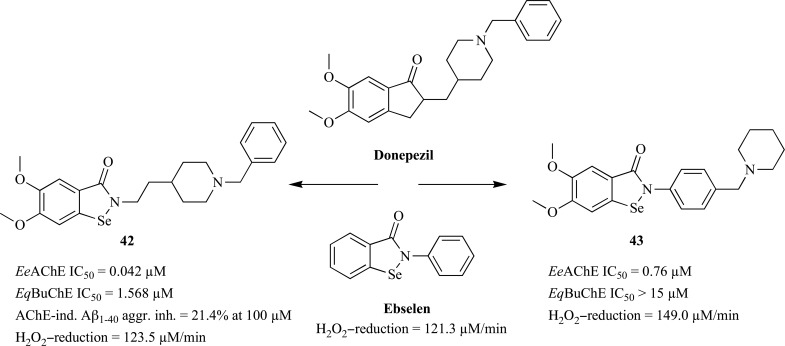
“This and several other pharmacological effects of ebselen, namely an antiinflammatory activity and inhibition of iron-induced tau phosphorylation, were considered in the design of new MTDLs against AD combining the important pharmacophores of this compound and donepezil [154].”
BackgroundButyrylcholinesterase attenuates amyloid fibril formation in vitro
Diamant, S., Podoly, E., Friedler, A., Ligumsky, H., Livnah, O., & Soreq, H. (2006) · Proceedings of the National Academy of Sciences · doi:10.1073/pnas.0602922103 · Cited by 174
5‐Lipoxygenase gene disruption reduces amyloid‐β pathology in a mouse model of Alzheimer's disease
Firuzi, O., Zhuo, J., Chinnici, C. M., Wisniewski, T., & Praricò, D. (2008) · The FASEB Journal · doi:10.1096/fj.07-9131.com · Cited by 171
Sul, D., Kim, H.-S., Lee, D., Joo, S. S., Hwang, K. W., & Park, S. (2008) · Life Sciences · doi:10.1016/j.lfs.2008.12.001 · Cited by 165 · cited 1×
“Caffeic acid displays the antioxidative activity and chemopreventive effect against A 1-42 [151].”
BackgroundSimoni, E., Daniele, S., Bottegoni, G., Pizzirani, D., Trincavelli, M. L., Goldoni, L., Tarozzo, G., Reggiani, A., Martini, C., Piomelli, D., et al. (2012) · Journal of Medicinal Chemistry · doi:10.1021/jm3009458 · Cited by 163 · cited 1×
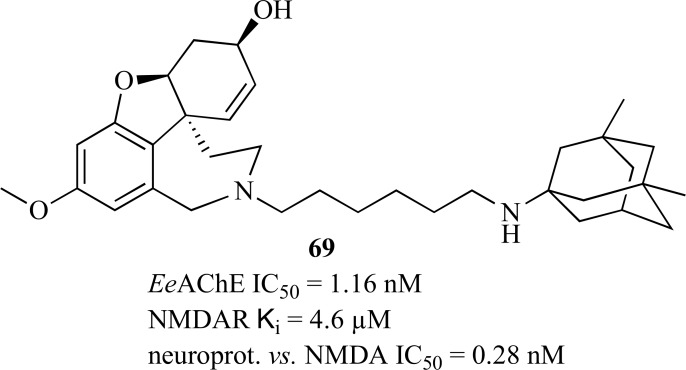
“[211] reported a series of compounds - chimeras of galantamine and memantine connected via different linkers.”
BackgroundThiratmatrakul, S., Yenjai, C., Waiwut, P., Vajragupta, O., Reubroycharoen, P., Tohda, M., & Boonyarat, C. (2014) · European Journal of Medicinal Chemistry · doi:10.1016/j.ejmech.2014.01.020 · Cited by 160
Fernández‐Bachiller, M. I., Pérez, C., Campillo, N. E., Páez, J. A., González‐Muñoz, G. C., Usán, P., García‐Palomero, E., López, M. G., Villarroya, M., García, A. G., et al. (2009) · ChemMedChem · doi:10.1002/cmdc.200800414 · Cited by 159 · cited 1×
“and antioxidant activity [40, 41], calcium channel blocking”
Xie, S.-S., Wang, X.-B., Li, J.-Y., Yang, L., & Kong, L.-Y. (2013) · European Journal of Medicinal Chemistry · doi:10.1016/j.ejmech.2013.03.051 · Cited by 159 · cited 1×
“[177] developed a new tacrine-coumarin hybrid series.”
Novel tacrine-related drugs as potential candidates for the treatment of Alzheimer’s disease
Romero, A., Cacabelos, R., Oset-Gasque, M. J., Samadi, A., & Marco-Contelles, J. (2013) · Bioorganic & Medicinal Chemistry Letters · doi:10.1016/j.bmcl.2013.02.017 · Cited by 158 · cited 1×
“1) is widely used as a pharmacophoric moiety in the development of MTDLs endowed with an inhibitory activity against cholinesterases and A fibril formation [76].”
BackgroundBolea, I., Gella, A., & Unzeta, M. (2013) · Journal of Neural Transmission · doi:10.1007/s00702-012-0948-y · Cited by 158 · cited 9×
“Neurotoxic substances, such as an hydrogen peroxide and aldehydes promote the generation of reactive oxygen species (ROS) [122-125].”
BackgroundInfluentialHistamine H3Receptor as a Drug Discovery Target
Berlin, M. Y., Boyce, C. W., & Ruiz, M. D. L. (2010) · Journal of Medicinal Chemistry · doi:10.1021/jm100064d · Cited by 158 · cited 1×
“In the CNS, the histamine H3 receptors are localized mainly in the regions involved in important physiological processes including cognition, agitation, anxiety, pain, food intake and body temperature regulation [219-221].”
BackgroundViayna, E., Sola, I., Bartolini, M., De Simone, A., Tapia-Rojas, C., Serrano, F. G., Sabaté, R., Juárez-Jiménez, J., Pérez, B., Luque, F. J., et al. (2014) · Journal of Medicinal Chemistry · doi:10.1021/jm401824w · Cited by 154 · cited 10×
“Coumarin was selected due to its A anti-aggregation activity and its ability to interact with PAS of AChE.”
BackgroundInfluentialWeinreb, O., Amit, T., Bar-Am, O., & B.H. Youdim, M. (2012) · Current Drug Targets · doi:10.2174/138945012799499794 · Cited by 153 · cited 1×
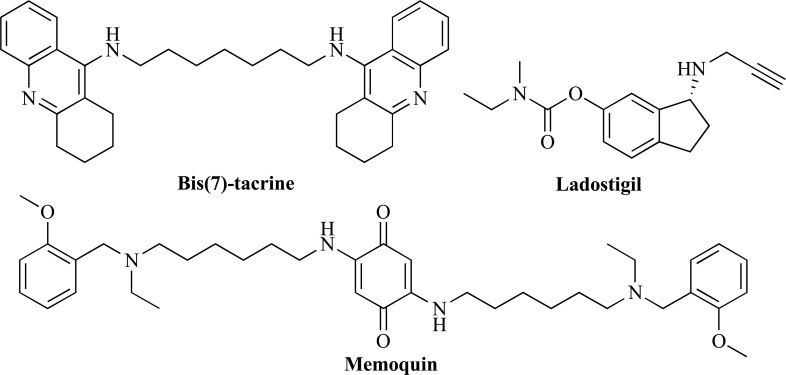
“like bis(7)-tacrine [58], ladostigil [59] and memoquin [60] (Fig.”
BackgroundHuang, L., Lu, C., Sun, Y., Mao, F., Luo, Z., Su, T., Jiang, H., Shan, W., & Li, X. (2012) · Journal of Medicinal Chemistry · doi:10.1021/jm300978h · Cited by 151 · cited 1×
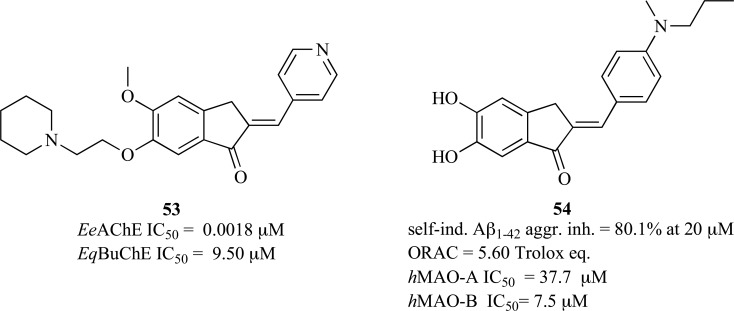
“[181] also evaluated a novel series of indanone derivatives with inhibitory potency against MAO and with other multidirectional biological activities, including the inhibition of self-induced A aggregation, antioxidant properties and metal chelating properties.”
BackgroundBautista‐Aguilera, Ó. M., Esteban, G., Bolea, I., Nikolic, K. M., Agbaba, D., Moraleda, I., Iriepa, I., Samadi, A., Soriano, E., Unzeta, M., et al. (2014) · European Journal of Medicinal Chemistry · doi:10.1016/j.ejmech.2013.12.028 · Cited by 150 · cited 1×
“This compound has become a scaffold for the novel compounds with modifications at position 2 in the indole moiety [129].”
BackgroundAlzheimer's disease: new approaches to drug discovery
Bolognesi, M. L., Matera, R., Minarini, A., Rosini, M., & Melchiorre, C. (2009) · Current Opinion in Chemical Biology · doi:10.1016/j.cbpa.2009.04.619 · Cited by 147
Neuroprotective Properties of Curcumin in Alzheimer’s Disease – Merits and Limitations
Chin, D., Huebbe, P., Pallauf, K., & Rimbach, G. (2013) · Current Medicinal Chemistry · doi:10.2174/09298673113209990210 · Cited by 147 · cited 1×
“anti-inflammatory properties which could be very useful in the treatment of AD [162-164].”
BackgroundThe benefits of the multi-target approach in drug design and discovery
Espinoza-Fonseca, M. (2005) · Bioorganic & Medicinal Chemistry · doi:10.1016/j.bmc.2005.09.011 · Cited by 145 · cited 1×
“developed as innovative approach dedicated for complex diseases [20-24].”
BackgroundCurrent and future therapy in Alzheimer’s disease
Van Marum, R. J. (2008) · Fundamental & Clinical Pharmacology · doi:10.1111/j.1472-8206.2008.00578.x · Cited by 145
Zheng, H., Youdim, M. B. H., & Fridkin, M. (2009) · Journal of Medicinal Chemistry · doi:10.1021/jm900504c · Cited by 140 · cited 1×
“dants [55, 56] and modulators of -secretase with PPAR”
BackgroundBivalent β-Carbolines as Potential Multitarget Anti-Alzheimer Agents
Rook, Y., Schmidtke, K.-U., Gaube, F., Schepmann, D., Wünsch, B., Heilmann, J., Lehmann, J., & Winckler, T. (2010) · Journal of Medicinal Chemistry · doi:10.1021/jm1000024 · Cited by 135 · cited 1×
“[42, 43], cannabinoid CB1 receptor antagonism [44], BACE1 inhibition [45, 46], histamine H3 receptor antagonism [47, 48], NMDA receptor channel blocking [49, 50], serotonin 5-”
BackgroundChen, Y., Sun, J., Fang, L., Liu, M., Peng, S., Liao, H., Lehmann, J., & Zhang, Y. (2012) · Journal of Medicinal Chemistry · doi:10.1021/jm300106z · Cited by 134
Avramovich‐Tirosh, Y., Amit, T., Bar‐Am, O., Zheng, H., Fridkin, M., & Youdim, M. B. H. (2007) · Journal of Neurochemistry · doi:10.1111/j.1471-4159.2006.04258.x · Cited by 130 · cited 1×
“dants [55, 56] and modulators of -secretase with PPAR”
BackgroundInhibition of Beta‐Amyloid Peptide Aggregation by Multifunctional Carbazole‐Based Fluorophores
Yang, W., Wong, Y., Ng, O. T. W., Bai, L., Kwong, D. W. J., Ke, Y., Jiang, Z., Li, H., Yung, K. K. L., & Wong, M. S. (2012) · Angewandte Chemie International Edition · doi:10.1002/anie.201104150 · Cited by 130 · cited 1×
“Furthermore, carbazole derivatives were reported as A aggregation inhibitors with the free-radical scavenging effect [184].”
BackgroundKeri, R. S., Quintanova, C., Marques, S. M., Esteves, A. R., Cardoso, S. M., & Santos, M. A. (2013) · Bioorganic & Medicinal Chemistry · doi:10.1016/j.bmc.2013.05.028 · Cited by 123 · cited 1×
“tacrine are tacrine-benzothiazole hybrids [82].”
Li, S., Wang, X., & Kong, L. (2013) · European Journal of Medicinal Chemistry · doi:10.1016/j.ejmech.2013.10.068 · Cited by 122 · cited 1×
“reported small molecules bearing the main features of resveratrol and clioquinol [192].”
BackgroundCurrent therapeutic targets for the treatment of Alzheimer’s disease
Grill, J. D., & Cummings, J. L. (2010) · Expert Review of Neurotherapeutics · doi:10.1586/ern.10.29 · Cited by 121 · cited 1×
“According to Gril and Cummings [14], current therapeutic targets for the treatment of AD have been classified into two groups: symptomatic and disease-modifying.”
BackgroundDinamarca, M. C., Sagal, J. P., Quintanilla, R. A., Godoy, J. A., Arrázola, M. S., & Inestrosa, N. C. (2010) · Molecular Neurodegeneration · doi:10.1186/1750-1326-5-4 · Cited by 121
From Single Target to Multitarget/Network Therapeutics in Alzheimer’s Therapy
Zheng, H., Fridkin, M., & Youdim, M. (2014) · Pharmaceuticals · doi:10.3390/ph7020113 · Cited by 120 · cited 9×
“Neurotoxic substances, such as an hydrogen peroxide and aldehydes promote the generation of reactive oxygen species (ROS) [122-125].”
BackgroundInfluentialBeta-Secretase: Structure, Function, and Evolution
Venugopal, C., Demos, C., Jagannatha Rao, K., Pappolla, M., & Sambamurti, K. (2008) · CNS & Neurological Disorders - Drug Targets · doi:10.2174/187152708784936626 · Cited by 120 · cited 1×
“Thus, inhibition of BACE1 is seen as an attractive therapeutic target for the treatment and prevention of AD [103].”
BackgroundDarreh‐Shori, T., & Soininen, H. S. (2010) · Current Alzheimer Research · doi:10.2174/156720510790274455 · Cited by 119
Fang, L., Appenroth, D., Decker, M. W., Kiehntopf, M., Roegler, C., Deufel, T., Fleck, C., Peng, S., Zhang, Y., & Lehmann, J. (2008) · Journal of Medicinal Chemistry · doi:10.1021/jm701491k · Cited by 116
Soto-Ortega, D. D., Murphy, B. P., Gonzalez‐Velasquez, F. J., Wilson, K. A., Xie, F., Wang, Q., & Moss, M. A. (2011) · Bioorganic & Medicinal Chemistry · doi:10.1016/j.bmc.2011.03.010 · Cited by 114 · cited 1×
“agents [83], while others possess anti-aggregating and neuroprotective properties [84, 85].”
BackgroundClaurailas A−D, Cytotoxic Carbazole Alkaloids from the Roots of Clausena harmandiana
Songsiang, U., Thongthoom, T., Boonyarat, C., & Yenjai, C. (2011) · Journal of Natural Products · doi:10.1021/np100654m · Cited by 111 · cited 1×
“Recent studies have shown that carbazol derivatives extracted from root bark of Clausena harmandiana have strong antioxidant properties [146].”
BackgroundZhu, Y., Xiao, K., Ma, L., Xiong, B., Fu, Y., Yu, H., Wang, W., Wang, X., Hu, D., Peng, H., et al. (2009) · Bioorganic & Medicinal Chemistry · doi:10.1016/j.bmc.2008.12.067 · Cited by 110
Towards Disease-Modifying Treatment of Alzheimers Disease: Drugs Targeting β -Amyloid
Frisardi, V., Solfrizzi, V., Imbimbo, B., Capurso, C., D'Introno, A., Colacicco, A., Vendemiale, G., Seripa, D., Pilotto, A., Capurso, A., et al. (2010) · Current Alzheimer Research · doi:10.2174/156720510790274400 · Cited by 108
New alkaloids from Isatis indigotica
Xiao-yun, W., Qin, G., Cheung, K. K., & Cheng, K. F. (1997) · Tetrahedron · doi:10.1016/s0040-4020(97)00846-6 · Cited by 108
Lu, C., Zhou, Q., Yan, J., Du, Z., Huang, L., & Li, X. (2013) · European Journal of Medicinal Chemistry · doi:10.1016/j.ejmech.2013.01.039 · Cited by 107 · cited 1×
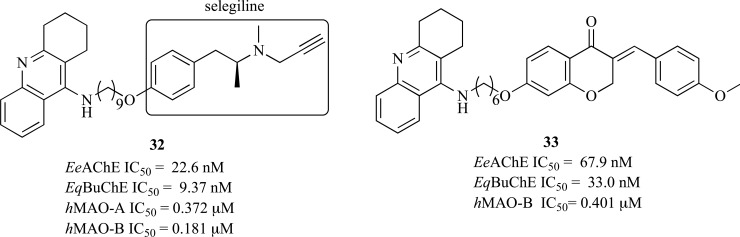
“[131] designed hybrids of tacrine connected by carbon spacers of different lengths with selegiline, a well-known inhibitor of MAO.”
BackgroundMancini, F., Simone, A. D., & Andrisano, V. (2011) · Analytical and Bioanalytical Chemistry · doi:10.1007/s00216-011-4963-x · Cited by 107 · cited 1×
“Eight compounds were evaluated as inhibitors of hBACE1 using a fluorescence resonance energy transfer (FRET) assay [109, 110].”
MethodConvertino, M., Pellarin, R., Catto, M., Carotti, A., & Caflisch, A. (2009) · Protein Science · doi:10.1002/pro.87 · Cited by 106 · cited 1×
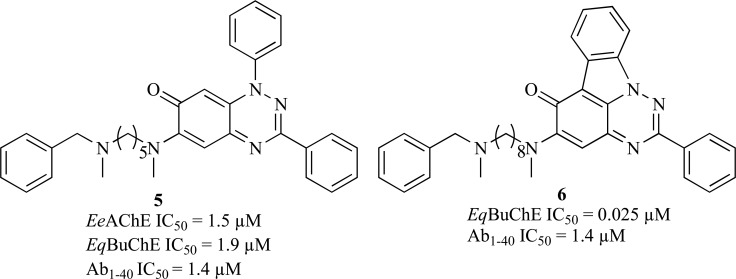
“A quinonimine moiety presented in both planar triazaheterocyclic systems is a structural element important for blocking the A aggregation process by hydrophobic and electrostatic/polar interactions [91].”
BackgroundCholinesterase inhibitors and memantine for symptomatic treatment of dementia
Rodda, J., & Carter, J. (2012) · BMJ · doi:10.1136/bmj.e2986 · Cited by 105 · cited 1×
“The current standard of AD treatment recommends combination of AChE inhibitors with memantine [9, 10].”
BackgroundButyrylcholinesterase and the cholinergic system
Reid, G. A., Chilukuri, N., & Darvesh, S. (2013) · Neuroscience · doi:10.1016/j.neuroscience.2012.12.054 · Cited by 105 · cited 1×
“to compensate for the lack of AChE, thus enabling continued regulation of cholinergic neurotransmission [66, 67].”
BackgroundThe Multiplicity of Action of Cannabinoids: Implications for Treating Neurodegeneration
Gowran, A., Noonan, J., & Campbell, V. A. (2011) · CNS Neuroscience & Therapeutics · doi:10.1111/j.1755-5949.2010.00195.x · Cited by 103 · cited 1×
“The cannabinoid system has recently been gaining more attention due to its involvement in anti-inflammatory, neuroprotective and anti-amnesic actions [215, 216].”
BackgroundLi, S., Wang, X., Xie, S., Jiang, N., Wang, K. D. G., Yao, H., Sun, H., & Kong, L. (2013) · European Journal of Medicinal Chemistry · doi:10.1016/j.ejmech.2013.09.024 · Cited by 102 · cited 1×
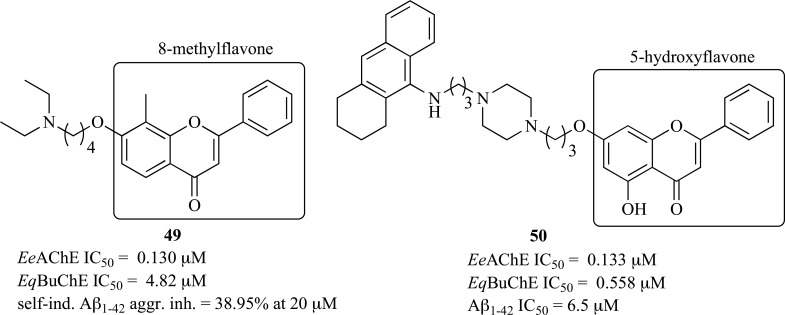
“558 M) activity goes in association with its metal chelating effect [176].”
BackgroundChao, X., He, X., Yang, Y., Zhou, X., Jin, M., Liu, S., Cheng, Z., Liu, P., Wang, Y., Yu, J., et al. (2012) · Bioorganic & Medicinal Chemistry Letters · doi:10.1016/j.bmcl.2012.08.036 · Cited by 102 · cited 1×
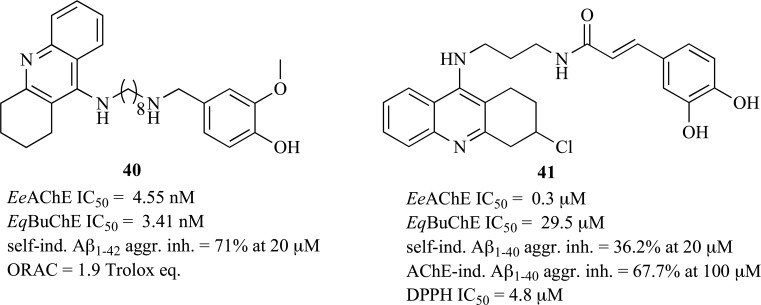
“[152] connected caffeic acid with tacrine by alkyl linkers with the hope of finding cholinesterase inhibitors endowed with the antioxidant properties.”
BackgroundHuang, L., Shi, A., He, F., & Li, X. (2009) · Bioorganic & Medicinal Chemistry · doi:10.1016/j.bmc.2009.12.035 · Cited by 100 · cited 1×
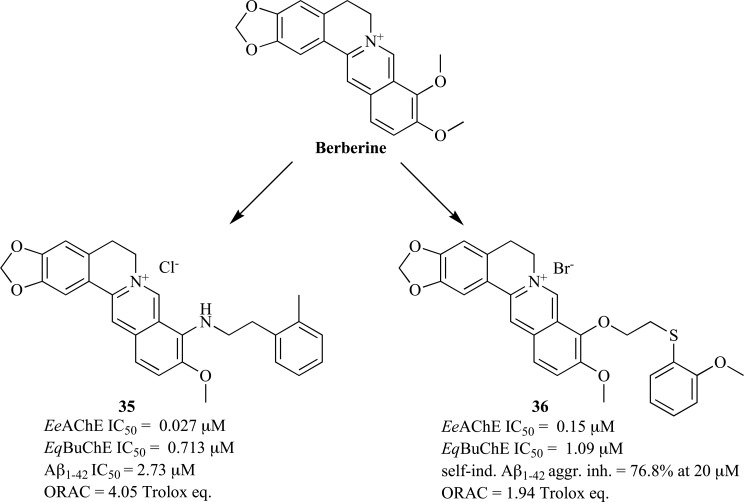
“In their previous works, they developed a novel class of 9-Osubstituted berberine derivatives, which are cholinesterase inhibitors [141, 142].”
BackgroundDarras, F. H., Kling, B., Heilmann, J., & Decker, M. (2012) · ACS Medicinal Chemistry Letters · doi:10.1021/ml3001825 · Cited by 97 · cited 1×
“The target compounds were designed by connecting a triand tetracyclic fragment endowed with an inhibitory activity against cholinesterases with an amine moiety [227].”
BackgroundWater Soluble Furoxan Derivatives as NO Prodrugs
Sorba, G., Medana, C., Fruttero, R., Cena, C., Di Stilo, A., Galli, U., & Gasco, A. (1997) · Journal of Medicinal Chemistry · doi:10.1021/jm960379t · Cited by 97 · cited 1×
“nitric oxide was tested in the Griess reaction [199].”
MethodLi, R., Wang, X., Hu, X.-J., & Kong, L. (2013) · Bioorganic & Medicinal Chemistry Letters · doi:10.1016/j.bmcl.2013.02.095 · Cited by 96 · cited 1×
“developed a novel series of compounds with metal chelating properties [172].”
BackgroundRosini, M., Simoni, E., Bartolini, M., Tarozzi, A., Matera, R., Milelli, A., Hrelia, P., Andrisano, V., Bolognesi, M. L., & Melchiorre, C. (2011) · European Journal of Medicinal Chemistry · doi:10.1016/j.ejmech.2011.09.001 · Cited by 95 · cited 1×
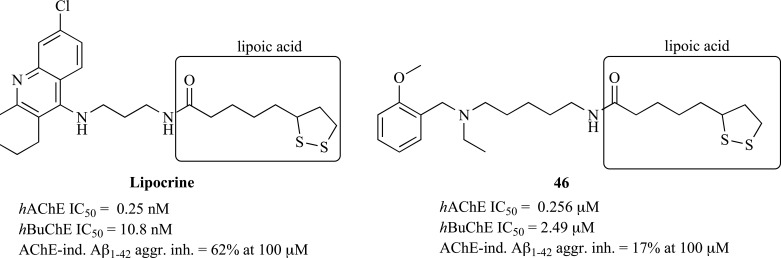
“[160] presented their studies on lipocrine”
An update on amine oxidase inhibitors: Multifaceted drugs
Song, M.-S., Matveychuk, D., MacKenzie, E. M., Duchcherer, M., Mousseau, D. D., & Baker, G. B. (2013) · Progress in Neuro-Psychopharmacology and Biological Psychiatry · doi:10.1016/j.pnpbp.2013.02.001 · Cited by 95 · cited 9×
“Neurotoxic substances, such as an hydrogen peroxide and aldehydes promote the generation of reactive oxygen species (ROS) [122-125].”
BackgroundInfluentialGaldeano, C., Viayna, E., Sola, I., Formosa, X., Camps, P., Badia, A., Clos, M. V., Relat, J., Ratia, M., Bartolini, M., et al. (2012) · Journal of Medicinal Chemistry · doi:10.1021/jm200840c · Cited by 95 · cited 1×
“Muñoz-Torrero group [113] developed hybrid compounds consisting of tacrine and huprine fragments connected by an alkyl or alkylamine linker, as potential inhibitors of AChE, BuChE and BACE1.”
BackgroundMinarini, A., Milelli, A., Tumiatti, V., Rosini, M., Simoni, E., Bolognesi, M. L., Andrisano, V., Bartolini, M., Motori, E., Angeloni, C., et al. (2011) · Neuropharmacology · doi:10.1016/j.neuropharm.2011.10.007 · Cited by 93 · cited 1×
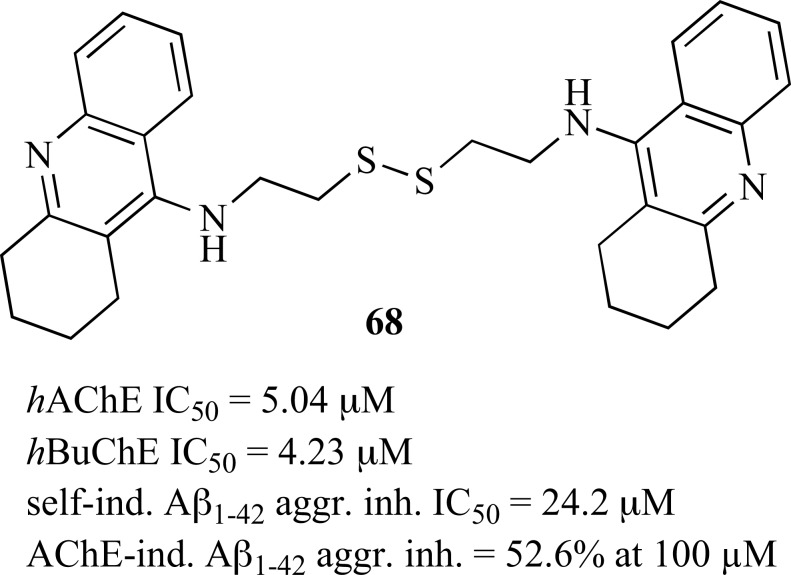
“A novel multipotent anti-AD agent was designed by linking two tacrine moieties via cystamine (2,2'disulfanediyldiethanamine) [209].”
BackgroundDesideri, N., Bolasco, A., Fioravanti, R., Monaco, L. P., Orallo, F., Yáñez, M., Ortuso, F., & Alcaro, S. (2011) · Journal of Medicinal Chemistry · doi:10.1021/jm1013709 · Cited by 93 · cited 1×
“Derivatives of homoisoflavonoids were chosen because of their known MAO-B inhibitory activity [133].”
BackgroundLi, S.-Y., Jiang, N., Xie, S.-S., Wang, K. D. G., Wang, X.-B., & Kong, L.-Y. (2014) · Org. Biomol. Chem. · doi:10.1039/c3ob42010h · Cited by 93 · cited 1×
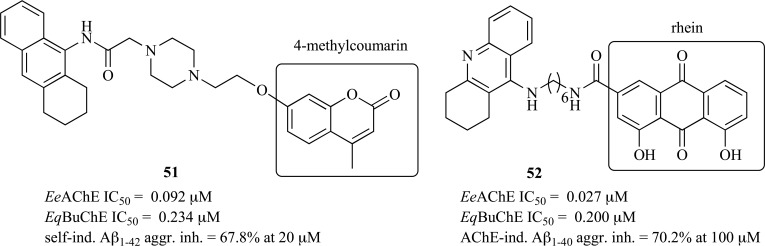
“Tacrine was also hybridized with rhein, which was mentioned above [178].”
BackgroundShan, W., Huang, L., Zhou, Q., Meng, F.-C., & Li, X. (2011) · European Journal of Medicinal Chemistry · doi:10.1016/j.ejmech.2011.09.051 · Cited by 89 · cited 1×
“[140] outline a series of novel cholinesterase inhibitors with antioxidant activity.”
BackgroundThe Butyrylcholinesterase K Variant Confers Structurally Derived Risks for Alzheimer Pathology♦
Podoly, E., Shalev, D. E., Shenhar-Tsarfaty, S., Bennett, E. R., Ben Assayag, E., Wilgus, H., Livnah, O., & Soreq, H. (2009) · Journal of Biological Chemistry · doi:10.1074/jbc.m109.004952 · Cited by 89
Meng, F.-C., Mao, F., Shan, W., Qin, F., Huang, L., & Li, X. (2012) · Bioorganic & Medicinal Chemistry Letters · doi:10.1016/j.bmcl.2012.04.029 · Cited by 88 · cited 1×
“[180] decided to combine the indanone moiety with an aromatic ring via a linker with a double bond to enhance the affinity for PAS.”
BackgroundMultifunctional Tacrine Derivatives in Alzheimer’s Disease
Minarini, A., Milelli, A., Simoni, E., Rosini, M., Bolognesi, M., Marchetti, C., & Tumiatti, V. (2013) · Current Topics in Medicinal Chemistry · doi:10.2174/15680266113139990136 · Cited by 85 · cited 1×
“such as A anti-aggregating activity [34-39], neuroprotective”
Viayna, E., Sabaté, R., & Muñoz‐Torrero, D. (2013) · Current Topics in Medicinal Chemistry · doi:10.2174/15680266113139990139 · Cited by 85
An okadaic acid-induced model of tauopathy and cognitive deficiency
Zhang, Z., & Simpkins, J. W. (2010) · Brain Research · doi:10.1016/j.brainres.2010.08.077 · Cited by 81 · cited 1×
“3 M) - a toxin which induces tau phosphorylation and aggregation into neurofibrillary tangles [208].”
BackgroundNatural Products as Sources of New Lead Compounds for the Treatment of Alzheimer’s Disease
Huang, L., Su, T., & Li, X. (2013) · Current Topics in Medicinal Chemistry · doi:10.2174/15680266113139990142 · Cited by 81 · cited 1×
“Naturally occurring substances like coumarins, flavonoids and stilbene derivatives are an important source of AChE inhibitors [96].”
BackgroundThe Role of the Endocannabinoid System in Alzheimers Disease: Facts and Hypotheses
Bisogno, T., & Di Marzo, V. (2008) · Current Pharmaceutical Design · doi:10.2174/138161208785740027 · Cited by 80 · cited 1×
“The cannabinoid system has recently been gaining more attention due to its involvement in anti-inflammatory, neuroprotective and anti-amnesic actions [215, 216].”
BackgroundCapurro, V., Busquet, P., Lopes, J. P., Bertorelli, R., Tarozzo, G., Bolognesi, M. L., Piomelli, D., Reggiani, A., & Cavalli, A. (2013) · PLoS ONE · doi:10.1371/journal.pone.0056870 · Cited by 80 · cited 1×
“like bis(7)-tacrine [58], ladostigil [59] and memoquin [60] (Fig.”
BackgroundFang, X., Fang, L., Gou, S., & Cheng, L. (2013) · Bioorganic & Medicinal Chemistry Letters · doi:10.1016/j.bmcl.2012.12.098 · Cited by 79 · cited 1×
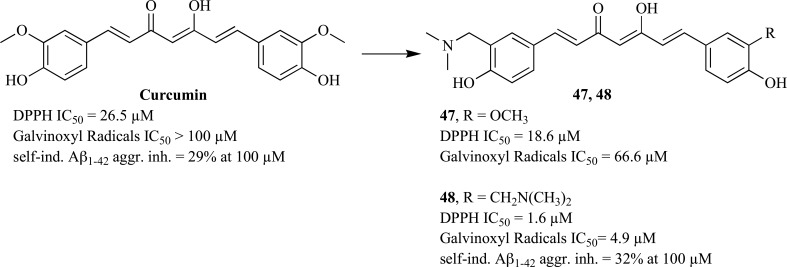
“[166] modified the structure of curcumin to improve its physicochemical and pharmacokinetic properties while preserving a neuroprotective effect.”
BackgroundDarras, F. H., Pockes, S., Huang, G., Wehle, S., Strasser, A., Wittmann, H.-J., Nimczick, M., Sotriffer, C. A., & Decker, M. (2014) · ACS Chemical Neuroscience · doi:10.1021/cn4002126 · Cited by 79 · cited 1×
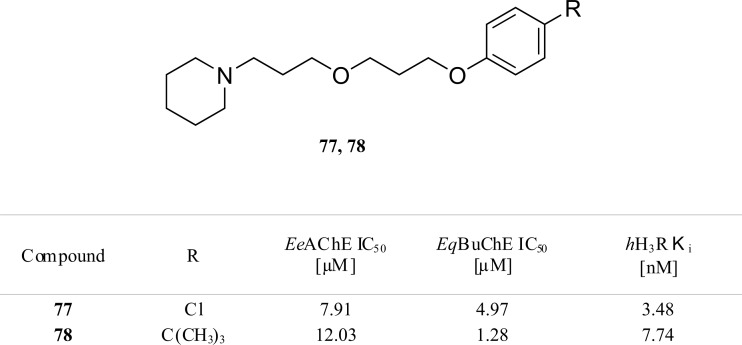
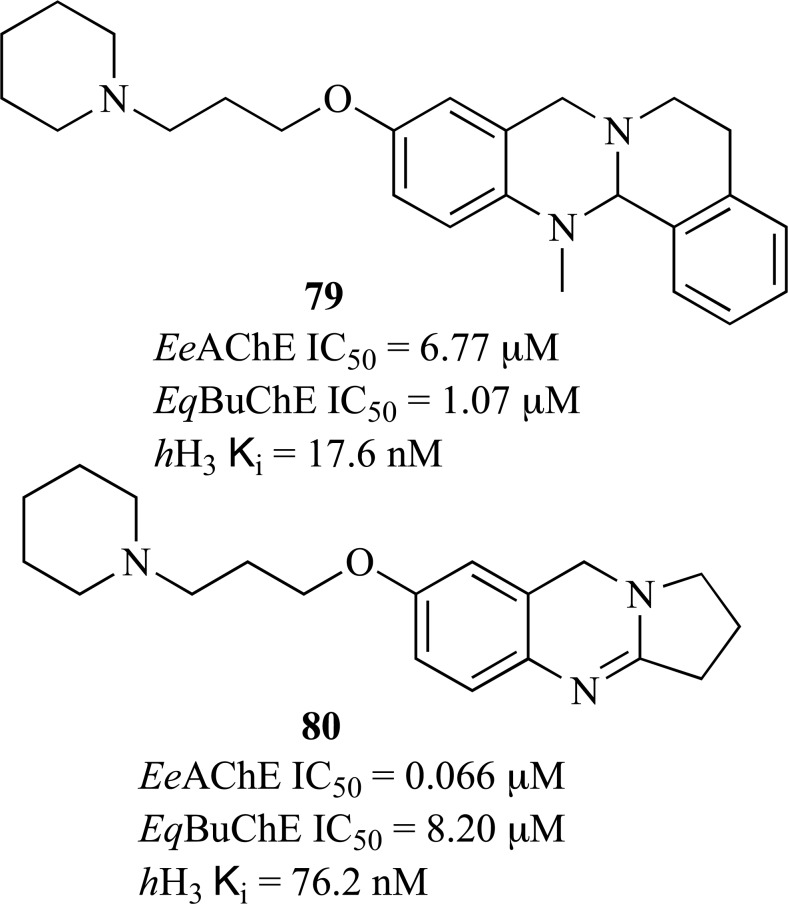
“[226] presented two novel series of tri- and tetracyclic nitrogen-bridgehead compounds acting as dual AChE inhibitors and hH3 receptor antagonists.”
BackgroundIron chelation and neuroprotection in neurodegenerative diseases
Li, X., Jankovic, J. J., & Le, W. (2010) · Journal of Neural Transmission · doi:10.1007/s00702-010-0518-0 · Cited by 78 · cited 1×
“Thus, the modulation of the level of these biometals in the brain is also a potential therapeutic strategy for treating AD [167-171].”
BackgroundTang, H., Zhao, L.-Z., Zhao, H., Huang, S., Zhong, S., Qin, J., Chen, Z., Huang, Z., & Liang, H. (2011) · European Journal of Medicinal Chemistry · doi:10.1016/j.ejmech.2011.08.002 · Cited by 76 · cited 1×
“[77] continued their development of oxoisoaporphine-tacrine heterodimers based on the dual-site theory.”
BackgroundBrunhofer, G., Fallarero, A., Karlsson, D., Batista‐González, A., Shinde, P., Mohan, C. G., & Vuorela, P. M. (2012) · Bioorganic & Medicinal Chemistry · doi:10.1016/j.bmc.2012.09.040 · Cited by 76 · cited 1×
“[97] presented the results of their screening tests for activity against cholinesterases in a library containing 502 natural”
BackgroundTang, H., Wei, Y., Zhang, C., Ning, F.-X., Qiao, W., Huang, S., Ma, L., Huang, Z., & Gu, L. (2009) · European Journal of Medicinal Chemistry · doi:10.1016/j.ejmech.2009.01.021 · Cited by 75 · cited 10×
“Coumarin was selected due to its A anti-aggregation activity and its ability to interact with PAS of AChE.”
BackgroundInfluentialYanovsky, I., Finkin-Groner, E., Zaikin, A., Lerman, L., Shalom, H., Zeeli, S., Weill, T., Ginsburg, I., Nudelman, A., & Weinstock, M. (2012) · Journal of Medicinal Chemistry · doi:10.1021/jm301411g · Cited by 75 · cited 1×
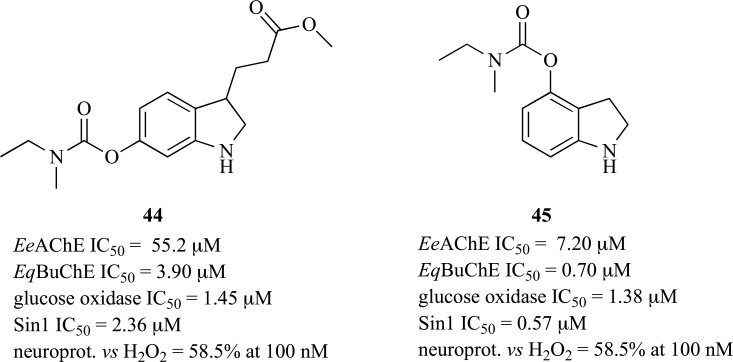
“[157] present derivatives of indoline-3-propionic acid.”
Relevance of benzyloxy group in 2‐indolyl methylamines in the selective MAO‐B inhibition
Pérez, V., Marco, J. L., FERNANDEZ‐ALVAREZ, E., & Unzeta, M. (1999) · British Journal of Pharmacology · doi:10.1038/sj.bjp.0702600 · Cited by 75 · cited 1×
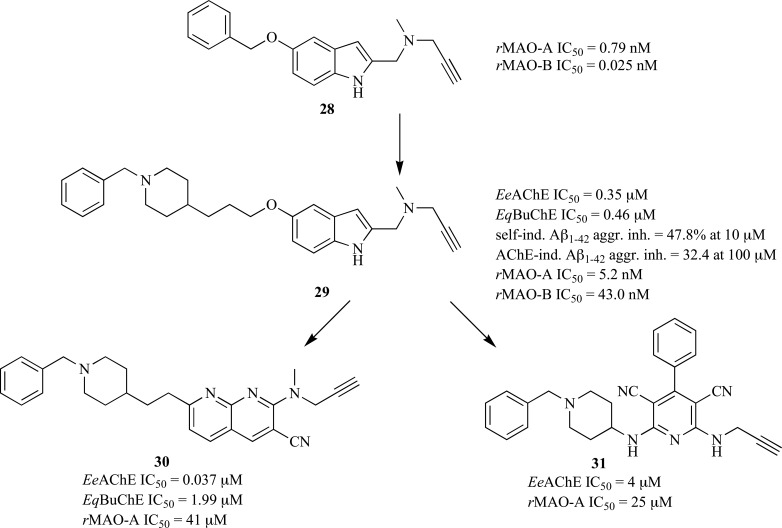
“Based on their previous study [127], the novel hybrids were designed by combining a benzylpiperidine fragment of donepezil with compound 28 (Fig.”
BackgroundLeon, R. M., Ríos, C. D. L., Marco, J. L., Huertas, Ó., Barril, X., Luque, F. J., López, M. G., García, A. G., & Villarroya, M. (2008) · Bioorganic & Medicinal Chemistry · doi:10.1016/j.bmc.2008.07.005 · Cited by 74 · cited 1×
“[42, 43], cannabinoid CB1 receptor antagonism [44], BACE1 inhibition [45, 46], histamine H3 receptor antagonism [47, 48], NMDA receptor channel blocking [49, 50], serotonin 5-”
Background2-Arylbenzofuran-based molecules as multipotent Alzheimer's disease modifying agents
Rizzo, S., Tarozzi, A., Bartolini, M., Costa, G. D., Bisi, A., Gobbi, S., Belluti, F., Ligresti, A., Allarà, M., Monti, J., et al. (2012) · European Journal of Medicinal Chemistry · doi:10.1016/j.ejmech.2012.10.045 · Cited by 73 · cited 1×
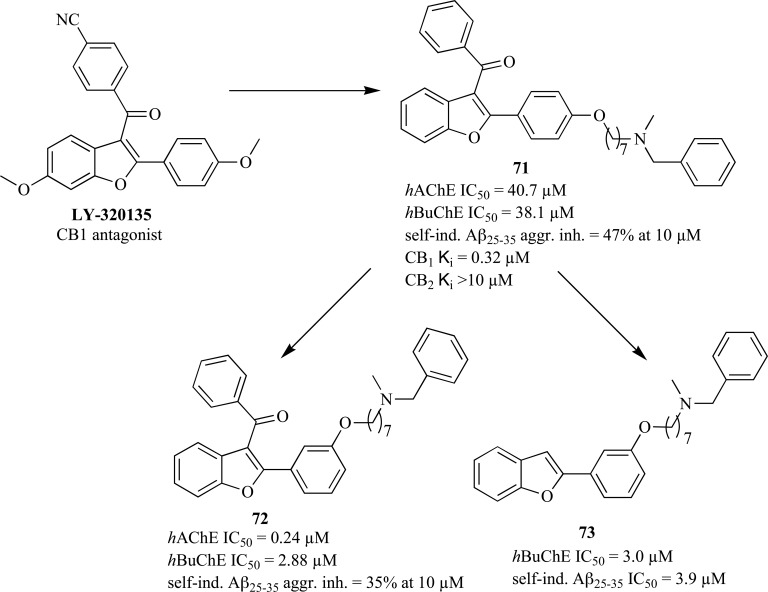
“[217] reported a series of novel compounds endowed with activity towards cannabinoid receptors.”
BackgroundLeuma Yona, R., Mazères, S., Faller, P., & Gras, E. (2008) · ChemMedChem · doi:10.1002/cmdc.200700188 · Cited by 72 · cited 1×
“agents [83], while others possess anti-aggregating and neuroprotective properties [84, 85].”
BackgroundMaalej, E., Chabchoub, F., Oset‐Gasque, M. J., Esquivias-Pérez, M., González, M. P., Monjas, L., Pérez, C., Ríos, C. D. L., Rodríguez-Franco, M. I., Iriepa, I., et al. (2012) · European Journal of Medicinal Chemistry · doi:10.1016/j.ejmech.2012.06.038 · Cited by 71 · cited 1×
“[145] developed tacrine analogues bearing a racemic 9,10,11,12tetrahydro-7H-benzo[7,8]chromeno[2,3-b]quinolin-8-amine heterocyclic structure with a differently substituted benzene ring at position 7 (Fig.”
BackgroundSamadi, A., Rı́os, C. D. L., Bolea, I., Chioua, M., Iriepa, I., Moraleda, I., Bartolini, M., Andrisano, V., Galvez‐Ruano, E., Valderas, C., et al. (2012) · European Journal of Medicinal Chemistry · doi:10.1016/j.ejmech.2012.03.022 · Cited by 71 · cited 1×
“or a 1,8-naphthyridine ring resulted in the next series of multifunctional MAO inhibitors [130].”
BackgroundDesigned Multiple Ligands: Basic Research vs Clinical Outcomes
Costantino, L., & Barlocco, D. (2012) · Current Medicinal Chemistry · doi:10.2174/092986712801215883 · Cited by 70
Fang, L., Fang, X., Gou, S., Lupp, A., Lenhardt, I., Sun, H., Huang, Z., Chen, Y., Zhang, Y., & Fleck, C. (2014) · European Journal of Medicinal Chemistry · doi:10.1016/j.ejmech.2014.02.035 · Cited by 69
He, Y., Yao, P.-F., Chen, S.-B., Huang, Z., Huang, S., Tan, J., Li, D., Gu, L., & Huang, Z. (2013) · European Journal of Medicinal Chemistry · doi:10.1016/j.ejmech.2013.02.014 · Cited by 68
Luo, W., Li, Y., He, Y., Huang, S., Li, D., Gu, L., & Huang, Z. (2011) · European Journal of Medicinal Chemistry · doi:10.1016/j.ejmech.2011.03.058 · Cited by 67 · cited 1×
“[150] present hybrids of tacrine connected by an alkyl linker to benzylamine.”
BackgroundFang, L., Gou, S., Liu, X., Cao, F., & Cheng, L. (2013) · Bioorganic & Medicinal Chemistry Letters · doi:10.1016/j.bmcl.2013.12.011 · Cited by 66
Ignasik, M., Bajda, M., Szałaj, N., Prinz, M., Holzgrabe, U., & Malawska, B. (2012) · Archiv der Pharmazie · doi:10.1002/ardp.201100423 · Cited by 66 · cited 1×
“Dual-acting compounds with cholinesterase and A aggregation inhibitory activities were identified in a series of 2(aminoalkyl)-isoindoline-1,3-dione derivatives [87, 88].”
BackgroundSelf-citationLuo, Z., Liang, L., Sheng, J., Pang, Y., Li, J., Huang, L., & Li, X. (2014) · Bioorganic & Medicinal Chemistry · doi:10.1016/j.bmc.2013.12.066 · Cited by 65
Mohamed, T., Yeung, J. C. K., Vasefi, M., Beazely, M. A., & Rao, P. P. N. (2012) · Bioorganic & Medicinal Chemistry Letters · doi:10.1016/j.bmcl.2012.05.077 · Cited by 64
Li, W., Mak, S., Jiang, H., Wang, Q., Pang, Y., Chen, K., & Han, Y. (2008) · Neurotherapeutics · doi:10.1016/j.nurt.2008.10.040 · Cited by 64 · cited 1×
“like bis(7)-tacrine [58], ladostigil [59] and memoquin [60] (Fig.”
BackgroundWang, B., Mai, Y.-C., Li, Y., Hou, J., Huang, S., Ou, T., Tan, J., An, L., Li, D., & Gu, L. (2010) · European Journal of Medicinal Chemistry · doi:10.1016/j.ejmech.2009.12.044 · Cited by 63 · cited 1×
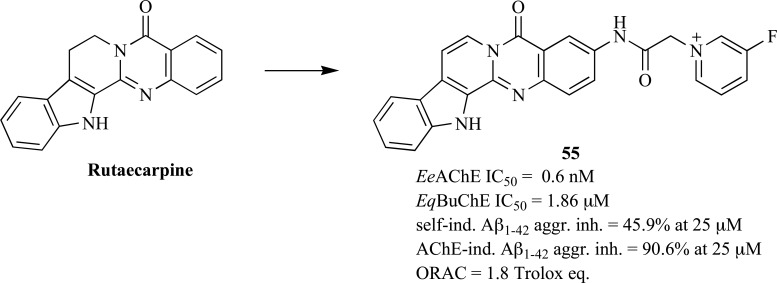
“Previously, they reported that compounds with 7,8-dehydrorutaecarpine moiety (a carbazole-based structure) were potent AChE inhibitors [183].”
BackgroundCappelli, A., Gallelli, A., Manini, M., Anzini, M., Mennuni, L., Makovec, F., Menziani, M. C., Alcaro, S., Ortuso, F., & Vomero, S. (2005) · Journal of Medicinal Chemistry · doi:10.1021/jm0493461 · Cited by 61 · cited 1×
“HT3 receptor antagonism [51], serotonin transporter inhibition [52].”
BackgroundTomassoli, I., Ismaïli, L., Pudlo, M., Ríos, C. D. L., Soriano, E., Colmena, I., Gandía, L., Rivas, L., Samadi, A., Marco, J. L., et al. (2010) · European Journal of Medicinal Chemistry · doi:10.1016/j.ejmech.2010.08.054 · Cited by 61 · cited 1×
“[42, 43], cannabinoid CB1 receptor antagonism [44], BACE1 inhibition [45, 46], histamine H3 receptor antagonism [47, 48], NMDA receptor channel blocking [49, 50], serotonin 5-”
BackgroundChoi, M., Kim, E.-A., Hahn, H., Nam, K. D., Yang, S.-J., Choi, S. Y., Kim, T. U., Cho, S. W., & Huh, J. (2007) · Toxicology · doi:10.1016/j.tox.2007.07.010 · Cited by 61
Lange, J. H. M., Coolen, H. K. A. C., van der Neut, M. A. W., Borst, A. J. M., Stork, B., Verveer, P. C., & Kruse, C. G. (2010) · Journal of Medicinal Chemistry · doi:10.1021/jm901614b · Cited by 61 · cited 1×
“[42, 43], cannabinoid CB1 receptor antagonism [44], BACE1 inhibition [45, 46], histamine H3 receptor antagonism [47, 48], NMDA receptor channel blocking [49, 50], serotonin 5-”
BackgroundHuang, W., Lv, D., Yu, H., Sheng, R., Kim, S. C., Wu, P., Luo, K., Li, J. X., & Hu, Y. (2010) · Bioorganic & Medicinal Chemistry · doi:10.1016/j.bmc.2010.06.042 · Cited by 61 · cited 1×
“with BACE-1 inhibitors [54], metal chelators with antioxi-”
BackgroundGonzález-Muñoz, G. C., Arce, M. P., López, B., Pérez, C., Romero, A., del Barrio, L., Martin‐de‐Saavedra, M. D., Egea, J., Leon, R. M., Villarroya, M., et al. (2011) · European Journal of Medicinal Chemistry · doi:10.1016/j.ejmech.2011.03.003 · Cited by 60
Membrane-Mediated Neuroprotection by Curcumin from Amyloid-β-Peptide-Induced Toxicity
Thapa, A., Vernon, B. C., De la Peña, K., Soliz, G., Moreno, H. A., López, G. P., & Chi, E. Y. (2013) · Langmuir · doi:10.1021/la4020459 · Cited by 60 · cited 1×
“anti-inflammatory properties which could be very useful in the treatment of AD [162-164].”
BackgroundKaruppasamy, M., Mahapatra, M. K., Yabanoğlu, S., Uçar, G., Sinha, B. N., Basu, A., Mishra, N., Sharon, A., Kulandaivelu, U., & Jayaprakash, V. (2010) · Bioorganic & Medicinal Chemistry · doi:10.1016/j.bmc.2010.01.043 · Cited by 58 · cited 1×
“The first generation of MAOIs was represented by hydrazine derivatives [134].”
BackgroundBag, S., Ghosh, S., Tulsan, R., Sood, A., Zhou, W., Schifone, C., Foster, M. C., LeVine, H., Török, B., & Török, M. (2013) · Bioorganic & Medicinal Chemistry Letters · doi:10.1016/j.bmcl.2013.02.103 · Cited by 58
Hybrid Compounds: From Simple Combinations to Nanomachines
Müller‐Schiffmann, A., Sticht, H., & Korth, C. (2011) · BioDrugs · doi:10.2165/11597630-000000000-00000 · Cited by 58
Bennett, D. A., Yu, L., & De Jager, P. L. (2014) · Biochemical Pharmacology · doi:10.1016/j.bcp.2014.01.037 · Cited by 57 · cited 1×
“Over the years, extensive scientific research has focused on potential disease-modifying therapies for AD [17-19].”
BackgroundHuang, L., Luo, Z., He, F., Lu, J., & Li, X. (2010) · Bioorganic & Medicinal Chemistry · doi:10.1016/j.bmc.2010.04.063 · Cited by 56 · cited 1×
“In their previous works, they developed a novel class of 9-Osubstituted berberine derivatives, which are cholinesterase inhibitors [141, 142].”
BackgroundMeasuring human β-secretase (BACE1) activity using homogeneous time-resolved fluorescence
Kennedy, M. E., Wang, W., Song, L., Lee, J., Zhang, L., Wong, G., Wang, L., & Parker, E. M. (2003) · Analytical Biochemistry · doi:10.1016/s0003-2697(03)00253-7 · Cited by 55
González-Naranjo, P., Pérez-Macías, N., Campillo, N. E., Pérez, C., Arán, V. J., Girón, R., Sánchez-Robles, E., Martín, M. I., Gómez‐Cañas, M., García-Arencibia, M., et al. (2013) · European Journal of Medicinal Chemistry · doi:10.1016/j.ejmech.2013.11.026 · Cited by 55 · cited 1×
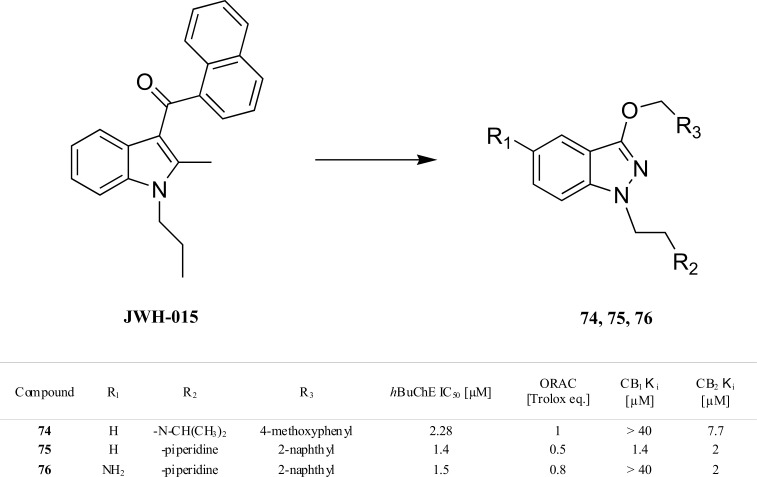
“[218] found that some of the indole-based cannabinoid agonists such as JWH-015 (Fig.”
BackgroundRecent advances in histamine H3receptor antagonists/inverse agonists
Łażewska, D., & Kieć-Kononowicz, K. (2010) · Expert Opinion on Therapeutic Patents · doi:10.1517/13543776.2010.509346 · Cited by 54 · cited 1×
“H3 antagonists/inverse agonists have been reported to improve cognitive function, spatial orientation, attention, memory and learning in a variety of in vivo models [222-224].”
BackgroundInhibition of cholinesterase and monoamine oxidase-B activity by Tacrine–Homoisoflavonoid hybrids
Sun, Y., Chen, J., Chen, X., Huang, L., & Li, X. (2013) · Bioorganic & Medicinal Chemistry · doi:10.1016/j.bmc.2013.09.050 · Cited by 54 · cited 1×
“[132] also used tacrine as a pharmacophore for the novel homoisoflavonoid hybrids.”
MethodAlptüzün, V., Prinz, M., Hörr, V., Scheiber, J., Radacki, K., Fallarero, A., Vuorela, P. M., Engels, B., Braunschweig, H., Erciyas, E., et al. (2010) · Bioorganic & Medicinal Chemistry · doi:10.1016/j.bmc.2010.01.002 · Cited by 54 · cited 1×
“They were also tested in the modified thioflavin T assay using a smaller peptide containing 11 amino acids instead of the whole A [89].”
MethodSu, T., Xie, S., Wei, H., Yan, J., Huang, L., & Li, X. (2013) · Bioorganic & Medicinal Chemistry · doi:10.1016/j.bmc.2013.07.011 · Cited by 54
Weinreb, O., Mandel, S. A., Bar‐Am, O., & Amit, T. (2011) · Journal of Neural Transmission · doi:10.1007/s00702-011-0597-6 · Cited by 54 · cited 9×
“Neurotoxic substances, such as an hydrogen peroxide and aldehydes promote the generation of reactive oxygen species (ROS) [122-125].”
BackgroundInfluentialMohamed, T., Zhao, X., Habib, L. K., Yang, J., & Rao, P. P. N. (2011) · Bioorganic & Medicinal Chemistry · doi:10.1016/j.bmc.2011.02.030 · Cited by 52 · cited 1×
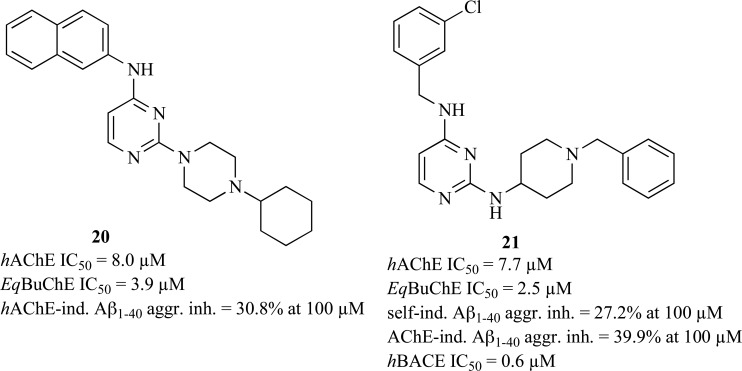
“[115, 116] designed and synthesized a series of 2,4-disubstituted pyrimidine derivatives.”
BackgroundYan, J., Li, Y., Ye, W.-J., Chen, S.-B., Hou, J., Tan, J., Ou, T., Li, D., Gu, L., & Huang, Z. (2012) · Bioorganic & Medicinal Chemistry · doi:10.1016/j.bmc.2012.02.061 · Cited by 52 · cited 1×
“[95] designed and synthesized a series of novel deoxyvasicinone derivatives with additional A anti-aggregation properties.”
BackgroundLu, C., Guo, Y., Li, J., Yao, M., Liao, Q., Xie, Z., & Li, X. (2012) · Bioorganic & Medicinal Chemistry Letters · doi:10.1016/j.bmcl.2012.09.105 · Cited by 51
Histamine H3 Receptor Function and Ligands: Recent Developments
Singh, M., & Jadhav, H. R. (2012) · Mini-Reviews in Medicinal Chemistry · doi:10.2174/1389557511307010047 · Cited by 51 · cited 1×
“In the CNS, the histamine H3 receptors are localized mainly in the regions involved in important physiological processes including cognition, agitation, anxiety, pain, food intake and body temperature regulation [219-221].”
BackgroundFang, L., Appenroth, D., Decker, M. W., Kiehntopf, M., Lupp, A., Peng, S., Fleck, C., Zhang, Y., & Lehmann, J. (2008) · Journal of Medicinal Chemistry · doi:10.1021/jm801131a · Cited by 51 · cited 1×
“In contrary to tacrine, the new derivatives did not cause a serious hepatotoxicity [197].”
BackgroundHasan, A., Khan, K. M., Sher, M., Maharvi, G. M., Nawaz, S. A., Choudhary, M. I., Rahman, A., & Supuran, C. T. (2005) · Journal of Enzyme Inhibition and Medicinal Chemistry · doi:10.1080/14756360400015231 · Cited by 51 · cited 1×
“In a previously reported research, chalcone and coumarin fragments were essential for an anticholinesterase activity, and in some cases for A anti-aggregating properties [98, 99].”
BackgroundDecker, M. (2007) · Mini-Reviews in Medicinal Chemistry · doi:10.2174/138955707780059817 · Cited by 50
Jiaranaikulwanitch, J., Govitrapong, P., Fokin, V. V., & Vajragupta, O. (2012) · Molecules · doi:10.3390/molecules17078312 · Cited by 50
Derivatives of oxoisoaporphine alkaloids: A novel class of selective acetylcholinesterase inhibitors
Tang, H., Ning, F.-X., Wei, Y., Huang, S., Huang, Z., Chan, A. S. C., & Gu, L. (2007) · Bioorganic & Medicinal Chemistry Letters · doi:10.1016/j.bmcl.2007.04.015 · Cited by 49 · cited 10×
“Coumarin was selected due to its A anti-aggregation activity and its ability to interact with PAS of AChE.”
BackgroundInfluentialZhang, W., Ruan, J., Wu, P., Jiang, F., Zhang, L., Fang, W. H., Chen, X., Wang, Y., Cao, B.-S., Chen, G.-Y., et al. (2009) · Journal of Medicinal Chemistry · doi:10.1021/jm800902t · Cited by 48 · cited 1×
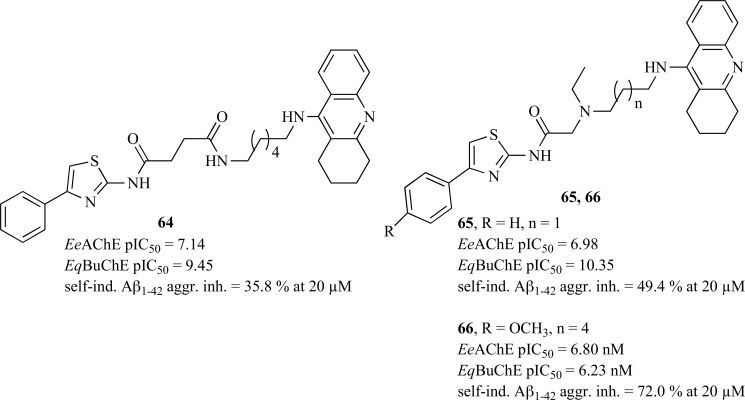
“The neuroprotective and anti-inflammatory properties of aminothiazoles [205] were the basis for Wang et al.”
BackgroundÖzer, E. Ö., Tan, O. Ü., Ozadali, K., Küçükkılınç, T. T., Balkan, A., & Uçar, G. (2012) · Bioorganic & Medicinal Chemistry Letters · doi:10.1016/j.bmcl.2012.11.064 · Cited by 48 · cited 1×
“[86] designed a new series of compounds”
Samadi, A., Valderas, C., Ríos, C. D. L., Bastida, Á., Chioua, M., González‐Lafuente, L., Colmena, I., Gandía, L., Romero, A., del Barrio, L., et al. (2010) · Bioorganic & Medicinal Chemistry · doi:10.1016/j.bmc.2010.11.040 · Cited by 48 · cited 1×
“and antioxidant activity [40, 41], calcium channel blocking”
Wood, P. L., Khan, M. A., & Moskal, J. R. (2007) · Brain Research · doi:10.1016/j.brainres.2007.05.007 · Cited by 48 · cited 1×
“Cystamine is known for its antioxidant, cytoprotective and neuroprotective properties [210].”
BackgroundEffects of Cerebrolysin on the outgrowth and protection of processes of cultured brain neurons
Hartbauer, M., Hutter‐Paier, B., & Windisch, M. (2001) · Journal of Neural Transmission · doi:10.1007/s007020170058 · Cited by 48 · cited 1×
“Moreover, compound 70 showed neuroprotective effect in a low-serum cell stress model [214] by enhancement of the survival of cortical neurons at 100 nM.”
BackgroundMishra, N., & Sasmal, D. (2011) · Bioorganic & Medicinal Chemistry Letters · doi:10.1016/j.bmcl.2011.02.030 · Cited by 46 · cited 1×
“[136] synthesized selective, reversible and very potent (100 times more potent than selegiline) inhibitors of MAO-B.”
BackgroundPeng, D., Sun, Q., Zhu, X., Lin, H., Chen, Q., Yu, N., Yang, W., & Yang, G. (2012) · Bioorganic & Medicinal Chemistry · doi:10.1016/j.bmc.2012.09.016 · Cited by 46 · cited 1×
“A new series of benzamide derivatives was designed using a structure based approach [118].”
MethodHistamine H3 Receptor Function and Ligands: Recent Developments
Singh, M., & Jadhav, H. R. (2012) · Mini-Reviews in Medicinal Chemistry · doi:10.2174/138955713804484695 · Cited by 46
Bolea, I., Gella, A., Monjas, L., Pérez, C., Rodríguez-Franco, M., Marco-Contelles, J., Samadi, A., & Unzeta, M. (2013) · Current Alzheimer Research · doi:10.2174/15672050113109990151 · Cited by 45 · cited 1×
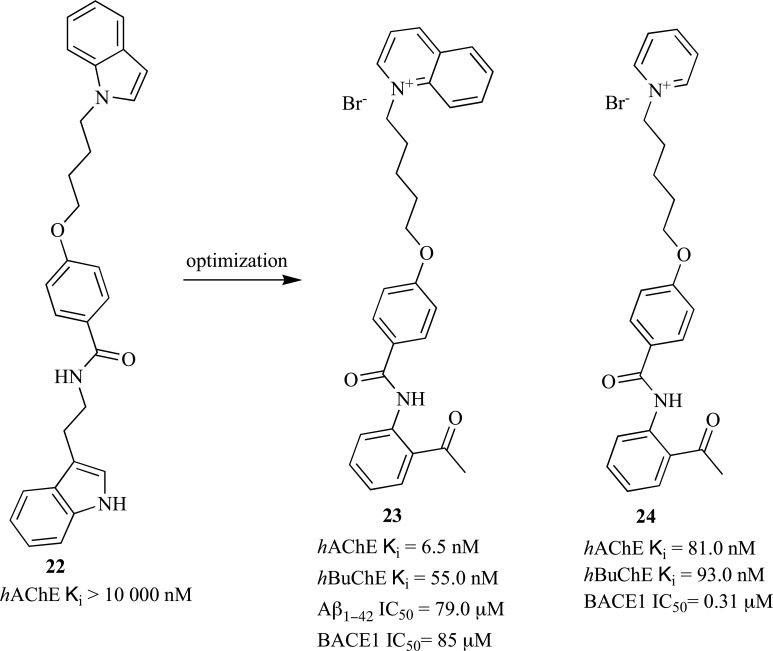
“Recent studies have demonstrated that 29 shows anti-apoptotic and antioxidant properties and also possesses a favourable blood-brain barrier permeability [128].”
BackgroundToda, N., Kaneko, T., & Kogen, H. (2010) · Chemical and Pharmaceutical Bulletin · doi:10.1248/cpb.58.273 · Cited by 43 · cited 1×
“HT3 receptor antagonism [51], serotonin transporter inhibition [52].”
BackgroundPan, L., Tan, J., Hou, J., Huang, S., Gu, L., & Huang, Z. (2008) · Bioorganic & Medicinal Chemistry Letters · doi:10.1016/j.bmcl.2008.05.039 · Cited by 42 · cited 1×
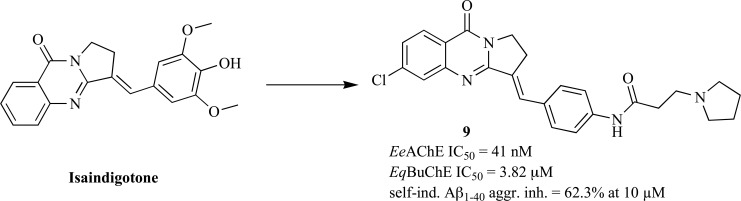
“The similarity of tacrine structure to deoxyvasicinone led to the discovery of a novel series of cholinesterase inhibitors among isaindigotone derivatives [94].”
Background
Cited by
Copper homeostasis and cuproptosis in health and disease
Chen, L., Min, J., & Wang, F. (2022) · Signal Transduction and Targeted Therapy · doi:10.1038/s41392-022-01229-y · Cited by 1,493
“The pathological hallmark of AD is the deposition of amyloid plaques and neurofibrillary tangles in the gray matter due to aberrant processing of amyloid precursor protein (APP) leading to the aggregation of amyloid-β (Aβ) peptides and tau protein, respectively.(91) Mounting evidence has implicated that altered Cu hom…”
BackgroundSavelieff, M. G., Nam, G., Kang, J., Lee, H. J., Lee, M., & Lim, M. H. (2019) · Chemical Reviews · doi:10.1021/acs.chemrev.8b00138 · Cited by 581
Therapeutic strategies for Alzheimer's disease in clinical trials
Godyń, J., Jończyk, J., Panek, D., & Malawska, B. (2016) · Pharmacological Reports · doi:10.1016/j.pharep.2015.07.006 · Cited by 452
“New alternative approaches involve multi-target-directed ligands where a specially designed compound is able to interact with more than one biological target involved in the pathogenesis of AD [103].”
BackgroundSelf-citationSharma, P., Srivastava, P., Seth, A., Tripathi, P. N., Banerjee, A. G., & Shrivastava, S. K. (2019) · Progress in Neurobiology · doi:10.1016/j.pneurobio.2018.12.006 · Cited by 331
VDAC1, mitochondrial dysfunction, and Alzheimer’s disease
Shoshan-Barmatz, V., Nahon-Crystal, E., Shteinfer-Kuzmine, A., & Gupta, R. (2018) · Pharmacological Research · doi:10.1016/j.phrs.2018.03.010 · Cited by 286
Metadata
- Authors
- Guzior, N., Wi.eckowska, A., Panek, D., & Malawska, B.
- Affiliations
- Jagiellonian University (PL)
- Corresponding author
- Malawska, Barbara
- Venue
- Current Medicinal Chemistry
- Publisher
- Bentham Science Publishers Ltd.
- Published
- 2014-12-19
- Volume
- 22
- Issue
- 3
- Pages
- 373-404
- ISSN
- 0929-8673 (ISSN-L)
- PMC
- PMC4435057
- OpenAlex
- W2160250661
- Cited by
- 323
- References
- 239
- Citations by year
- 2026: 10 · 2025: 10 · 2024: 20 · 2023: 24 · 2022: 28 · 2021: 29 · 2020: 26 · 2019: 40 · 2018: 46 · 2017: 41 · 2016: 36 · 2015: 12
- FWCI
- 4.00
- Type
- journal article
- Language
- en
- Open access
- bronze
- doi.org
- Locations
- Current Medicinal Chemistry (publishedVersion)
- PubMed Central (publishedVersion, cc-by-nc)
- PubMed (publishedVersion)
- Homo Politicus (Academy of Humanities and Economics in Lodz) (submittedVersion)
- Jagiellonian University Repository (Jagiellonian University) (submittedVersion, other-oa)
- Jagiellonian University Repository (Jagiellonian University) (submittedVersion, cc-by-nc-nd)
- Homo Politicus (Academy of Humanities and Economics in Lodz) (submittedVersion, cc-by-nc-nd)
- Funders
- Narodowym Centrum Nauki
- Topics
- Health Sciences › Medicine › Pharmacology (medical) › Cholinesterase and Neurodegenerative Diseases
- Life Sciences › Neuroscience › Cellular and Molecular Neuroscience › Alzheimer's disease research and treatments
- Health Sciences › Medicine › Psychiatry and Mental health › Dementia and Cognitive Impairment Research
- Keywords
- Alzheimer's disease, multi-target-directed ligands, acetylcholinesterase inhibitors, beta-secretase inhibition, monoamine oxidase inhibition, antioxidant activity, metal chelation, nitric oxide release, cannabinoid receptors, NMDA receptor, histamine H3 receptor, tacrine, donepezil, galantamine, memantine, drug candidates
- MeSH terms
- Alzheimer Disease, Animals, Enzyme Inhibitors, Humans, Amyloid beta-Peptides, Neuroprotective Agents, Drug Discovery, Protein Aggregates
About these checks
Registry, retraction, Cites and statistics results are computed, not judged, with one exception: a printed reference that no index lists is read once by a model before it counts as a citation error. Claims are extracted by a model and kept only when their quote appears verbatim in the text; each cited source is then checked, with a model’s help, for whether it says what the claim relies on. Those verdicts can be wrong — read the claim’s quote and the cited source before relying on one.
Statistics and arithmetic are recomputed, not judged.
Confidence bands are shown only for fields calibrated on our annotated test set. None is calibrated yet, so no band is shown.
What counts as a claim ›How we measure confidence ›How we check this ›
Are you an author, or do you see a problem with this page? Request a review
Data sources
Bibliographic data: Semantic Scholar, OpenAlex, Crossref.
Contains information from the Semantic Scholar Academic Graph Datasets, made available under the ODC Attribution License (ODC-BY 1.0).
Semantic Scholar’s data is described in: Kinney, R., et al. (2023). The Semantic Scholar Open Data Platform. arXiv:2301.10140.
