

The HLA Region and Autoimmune Disease: Associations and Mechanisms of Action
Open accessThe DOI matches its Crossref record; 166 of the 167 references it cites were found in a registry or an index, and 1 are not checked yet.
Abstract
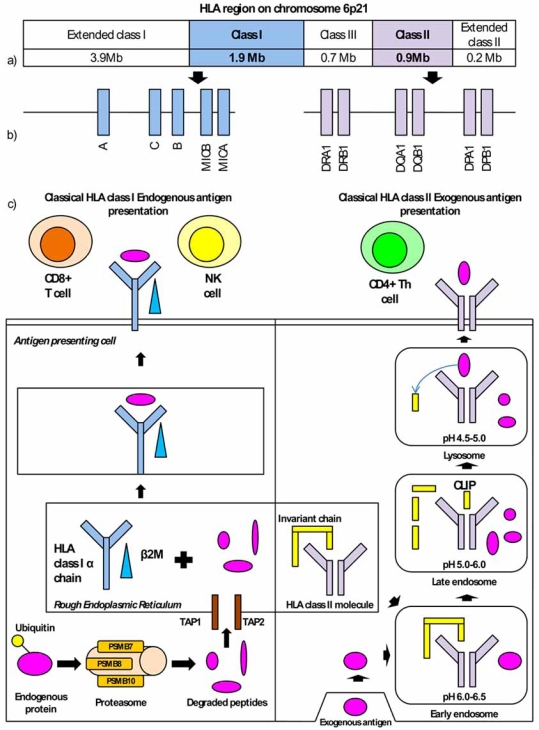
The HLA region encodes several molecules that play key roles in the immune system. Strong association between the HLA region and autoimmune disease (AID) has been established for over fifty years. Association of components of the HLA class II encoded HLA-DRB1-DQA1-DQB1 haplotype has been detected with several AIDs, including rheumatoid arthritis, type 1 diabetes and Graves' disease. Molecules encoded by this region play a key role in exogenous antigen presentation to CD4+ Th cells, indicating the importance of this pathway in AID initiation and progression. Although other components of the HLA class I and III regions have also been investigated for association with AID, apart from the association of HLA-B*27 with ankylosing spondylitis, it has been difficult to determine additional susceptibility loci independent of the strong linkage disequilibrium (LD) with the HLA class II genes. Recent advances in the statistical analysis of LD and the recruitment of large AID datasets have allowed investigation of the HLA class I and III regions to be re-visited. Association of the HLA class I region, independent of known HLA class II effects, has now been detected for several AIDs, including strong association of HLA-B with type 1 diabetes and HLA-C with multiple sclerosis and Graves' disease. These results provide further evidence of a possible role for bacterial or viral infection and CD8+ T cells in AID onset. The advances being made in determining the primary associations within the HLA region and AIDs will not only increase our understanding of the mechanisms behind disease pathogenesis but may also aid in the development of novel therapeutic targets in the future.
Overview
The claims and statistics of this paper haven’t been checked yet.
Free: it reads the open-access text and checks the first 5 claims that cite a source we can check. Create a free account to check every claim.
Integrity signals
Registry
Cites
Statistics
Figures
Verification
Claims the paper makes
The claims and statistics of this paper haven’t been checked yet.
Free: it reads the open-access text and checks the first 5 claims that cite a source we can check. Create a free account to check every claim.
Claims other papers make about this one
Each is checked against this paper’s own text: does it say what the citing paper says it does?
The source backs part of the claim, not all of it — or backs it for a different population, condition or comparison.
In the citing paper
“paternal immune disorders and a general familial history of immune disorders in the absence of maternal immune conditions also appear to contribute, suggesting a heritable component for this autoimmune association48,64.”
From Immune mediators in the brain and peripheral tissues in autism spectrum disorder (2015) · cites this paper as [48]
Experimental — accuracy not yet measuredThe check wasn’t confident either way, so it gives no verdict — never disputed.
In the citing paper
“Estimates indicate that there is up to a 50% increase in the odds of an ASD diagnosis among children who have a parent who has had an autoimmune disorder48,63.”
From Immune mediators in the brain and peripheral tissues in autism spectrum disorder (2015) · cites this paper as [48]
Experimental — accuracy not yet measuredIn the citing paper
“maternal immune disorders such as rheumatoid arthritis, SLE and type-1 diabetes account for the largest portion of this increased risk for ASD in offspring”
From Immune mediators in the brain and peripheral tissues in autism spectrum disorder (2015) · cites this paper as [48]
In the citing paper
“the HLA associations are not specific to ASD; they are also associated with other neurodevelopmental disorders and autoimmune disorders, including rheumatoid arthritis and SLE, which occur at higher rates in the relatives of individuals with ASD48.”
From Immune mediators in the brain and peripheral tissues in autism spectrum disorder (2015) · cites this paper as [48]
In the citing paper
“autoimmune disorders, allergies and asthma strongly associate with the families of children with ASD48.”
From Immune mediators in the brain and peripheral tissues in autism spectrum disorder (2015) · cites this paper as [48]
Self-check
Percentages, sums and reported differences re-computed from the paper’s own numbers.
The self-check needs the paper’s full text.
Citations
Cites
Genome-wide association study of 14,000 cases of seven common diseases and 3,000 shared controls
The Wellcome Trust Case Control Consortium, Management Committee, Burton, P. R., Clayton, D. G., Cardon, L. R., Craddock, N., Deloukas, P., Duncanson, A., Kwiatkowski, D. P., McCarthy, M. I., et al. (2007) · Nature · doi:10.1038/nature05911 · Cited by 9,442
The Structure of Haplotype Blocks in the Human Genome
Gabriel, S. B., Schaffner, S. F., Nguyen, H., Moore, J. M., Roy, J., Blumenstiel, B., Higgins, J., DeFelice, M., Lochner, A., Faggart, M., et al. (2002) · Science · doi:10.1126/science.1069424 · Cited by 5,863 · cited 1×
“It also exhibits the most dense linkage disequilibrium (LD) [5], extending up to 540kb, which compares with distances of between 1-173kb seen in the rest of the genome [6, 7].”
BackgroundGregersen, P. K., Silver, J., & Winchester, R. J. (1987) · Arthritis & Rheumatism · doi:10.1002/art.1780301102 · Cited by 2,599 · cited 2×
“Work by Gregerson, et al, showed that association of DRB1 alleles (DRB1*0101, DRB1*0102, DRB1*0401, DRB1*0404, DRB1*0405, DRB1*0408, DRB1*1001 and DRB1*1402) [18, 19] was due to similarities within the DRB1 peptide domain at positions 70 through to 74, with these alleles containing similar se- quences (QKRAA/QRRAA/RRR…”
BackgroundHLA-DQβ gene contributes to susceptibility and resistance to insulin-dependent diabetes mellitus
Todd, J. A., Bell, J. I., & McDevitt, H. O. (1987) · Nature · doi:10.1038/329599a0 · Cited by 2,036
High-resolution haplotype structure in the human genome
Daly, M. J., Rioux, J. D., Schaffner, S. F., Hudson, T. J., & Lander, E. S. (2001) · Nature Genetics · doi:10.1038/ng1001-229 · Cited by 1,717 · cited 1×
“It also exhibits the most dense linkage disequilibrium (LD) [5], extending up to 540kb, which compares with distances of between 1-173kb seen in the rest of the genome [6, 7].”
BackgroundAssociation scan of 14,500 nonsynonymous SNPs in four diseases identifies autoimmunity variants
Wellcome Trust Case Control Consortium, & The Australo-Anglo-American Spondylitis Consortium (TASC) (2007) · Nature Genetics · doi:10.1038/ng.2007.17 · Cited by 1,374
Compromised Function of Regulatory T Cells in Rheumatoid Arthritis and Reversal by Anti-TNFα Therapy
Ehrenstein, M. R., Evans, J. G., Singh, A., Moore, S., Warnes, G., Isenberg, D. A., & Mauri, C. (2004) · The Journal of Experimental Medicine · doi:10.1084/jem.20040165 · Cited by 1,252 · cited 1×
“Studies in RA have shown Treg populations to be compromised [40] , suggesting that RA could be associated with a failure to protect rather than a predisposition to disease.”
BackgroundGene map of the extended human MHC
Horton, R., Wilming, L., Rand, V., Lovering, R. C., Bruford, E. A., Khodiyar, V. K., Lush, M. J., Povey, S., Talbot, C. C., Wright, M. W., et al. (2004) · Nature Reviews Genetics · doi:10.1038/nrg1489 · Cited by 1,198 · cited 1×
“6Mb on chromosome 6p21 and is the most gene dense region within the human genome encoding 252 expressed loci [3] including several key immune response genes.”
BackgroundHL-A ANTIGENS AND DIABETES MELLITUS
Nerup, J., Platz, P., Andersen, O. O., Christy, M., Lyngsøe, J., Poulsen, J. E., Ryder, L. P., Thomsen, M., Nielsen, L. S., & Svejgaard, A. (1974) · The Lancet · doi:10.1016/s0140-6736(74)91201-x · Cited by 818 · cited 1×
“Early experiments investigating association of HLA-DR and -DQ with AID in T1D indicated a strong association of the DRB1*03 and DRB1*04 alleles [8-10].”
Backgroundde Bakker, P. I. W., McVean, G., Sabeti, P. C., Miretti, M. M., Green, T., Marchini, J., Ke, X., Monsuur, A. J., Whittaker, P., Delgado, M., et al. (2006) · Nature Genetics · doi:10.1038/ng1885 · Cited by 766
Cited by
Items 101–200 of 496
Ponvilawan, B., Khan, A. W., Subramanian, J., & Bansal, D. (2024) · Cancers · doi:10.3390/cancers16061225 · Cited by 34
“Human Leukocyte Antigen (HLA) HLA variations and specific haplotypes are known to be associated with certain autoimmune diseases through deviations in antigen presentation and molecular mimicry [87].”
BackgroundWhy Are CD8 T Cell Epitopes of Human Influenza A Virus Conserved?
Li, Z.-R. T., Zarnitsyna, V. I., Lowen, A. C., Weissman, D. B., Koelle, K., Kohlmeier, J. E., & Antia, R. (2019) · Journal of Virology · doi:10.1128/jvi.01534-18 · Cited by 34
“We first set R = 0 on the biological ground that 122 MHC-associated resistance to infections (and susceptibility to autoimmunity) is dominant 123 (16, 17).”
BackgroundGenetics and Omics Analysis of Autoimmune Skin Blistering Diseases
Olbrich, M. R., Künstner, A., Witte, M., Busch, H. S., & Fähnrich, A. (2019) · Frontiers in Immunology · doi:10.3389/fimmu.2019.02327 · Cited by 35
“They are involved in antigen processing and presentation, and usually show highly significant associations with autoimmune diseases, representing the strongest predisposing genetic factors (3, 4).”
BackgroundThe cargo protein MAP17 (PDZK1IP1) regulates the immune microenvironment
García-Heredia, J. M., & Carnero, A. (2017) · Oncotarget · doi:10.18632/oncotarget.21651 · Cited by 37
Learning from the nexus of autoimmunity and cancer
Mangani, D., Yang, D., & Anderson, A. C. (2023) · Immunity · doi:10.1016/j.immuni.2023.01.022 · Cited by 33
Improved HLA typing of Class I and Class II alleles from next‐generation sequencing data
Sverchkova, A., Anzar, I., Stratford, R., & Clancy, T. (2019) · HLA · doi:10.1111/tan.13685 · Cited by 34
“been shown to play a key role in autoimmune and infectious diseases.(3,5,6) In addition, HLA mutations have been impli-”
BackgroundMiller, P. D. E., Snowden, J. A., de Latour, R. P., Iacobelli, S., Eikema, D.-J., Knol, C., Marsh, J. C. W., Rice, C., Koh, M., Fagioli, F., et al. (2019) · Bone Marrow Transplantation · doi:10.1038/s41409-019-0680-4 · Cited by 33
“Reported transmission of autoantibodies and AIDs from donor to recipient, and a case of immune thrombocytopenia (ITP) in the context of syngeneic HSCT suggest that this is a pathological entity distinct from GvHD [1, 2].”
BackgroundInfluentialIdentification of loci where DNA methylation potentially mediates genetic risk of type 1 diabetes
Ye, Y., Richardson, T. G., McArdle, W. L., Relton, C. L., Gillespie, K. M., Suderman, M. J., & Hemani, G. (2018) · Journal of Autoimmunity · doi:10.1016/j.jaut.2018.06.005 · Cited by 34
Selvaraja, M., Too, C. L., Tan, L. K., Koay, B. T., Abdullah, M., Shah, A. M., Arip, M., & Nordin, S. A. (2022) · Lupus Science & Medicine · doi:10.1136/lupus-2021-000554 · Cited by 32
Unravelling the Roles of Susceptibility Loci for Autoimmune Diseases in the Post-GWAS Era
Ye, Y., Gillespie, K. M., & Rodríguez, S. (2018) · Genes · doi:10.3390/genes9080377 · Cited by 34
“A summary of HLA class II haplotypes in autoimmune diseases is reviewed here [75].”
BackgroundAlnaqbi, H., Mawart, A., Alshamsi, J., AlSafar, H. S., & Tay, G. K. (2021) · Immunogenetics · doi:10.1007/s00251-021-01204-x · Cited by 34
Oryoji, D., Ueda, S., Yamamoto, K., Noh, J. Y., Okamura, K., Noda, M., Watanabe, N., Yoshihara, A., Ito, K., & Sasazuki, T. (2014) · The Journal of Clinical Endocrinology & Metabolism · doi:10.1210/jc.2014-3431 · Cited by 31
Moravvej, H., Panah, A. S. T., Abgoon, R., Khaksar, L., Sokhandan, M., Tarshaei, S., Ghaderian, S. M. H., Ludwig, R. J., & Akbarzadeh, R. (2018) · PubMed · doi:10.1080/08820139.2018.1480032 · Cited by 31
The Role of Genetic Risk Factors in Pathogenesis of Childhood-Onset Systemic Lupus Erythematosus
Šestan, M., Kifer, N., Arsov, T., Cook, M., Ellyard, J. I., Vinuesa, C. G., & Jelušić, M. (2023) · Current Issues in Molecular Biology · doi:10.3390/cimb45070378 · Cited by 30
Persistent Antigens Hypothesis: The Human Leukocyte Antigen (HLA) Connection
James, L. M., & Georgopoulos, A. P. (2018) · Journal of Neurology and Neuromedicine · doi:10.29245/2572.942x/2018/6.1235 · Cited by 30
“J Neurol Neuromed (2018) 3(6): 27-31 Journal of Neurology & Neuromedicine”
BackgroundThe search for the genetic contribution to autoimmune thyroid disease: the never ending story?
Simmonds, M. J., & Gough, S. C. L. (2011) · Briefings in Functional Genomics · doi:10.1093/bfgp/elq036 · Cited by 33
“50] (Table 1 GD associations detected by candidate gene studies) [7, 8].”
BackgroundResultSelf-citationDiamantopoulos, P. T., Gaggadi, M., Kassi, E. N., Benopoulou, Ο., Anastasopoulou, A. N., & Gogas, H. J. (2017) · Melanoma Research · doi:10.1097/cmr.0000000000000355 · Cited by 32
Full-resolution HLA and KIR gene annotations for human genome assemblies
Zhou, Y., Song, L., & Li, H. (2024) · Genome Research · doi:10.1101/gr.278985.124 · Cited by 33
Peyronie's Disease and Autoimmunity—A Real-Life Clinical Study and Comprehensive Review
Ventimiglia, E., Capogrosso, P., Colicchia, M., Boeri, L., Serino, A., La Croce, G., Russo, A., Capitanio, U., Briganti, A., Cantiello, F., et al. (2015) · The Journal of Sexual Medicine · doi:10.1111/jsm.12825 · Cited by 29
Verma, A., Verma, S. S., Pendergrass, S. A., Crawford, D. C., Crosslin, D. R., Kuivaniemi, H., Bush, W. S., Bradford, Y., Kullo, I. J., Bielinski, S. J., et al. (2016) · BMC Medical Genomics · doi:10.1186/s12920-016-0191-8 · Cited by 31
“An example includes variation in the human leukocyte antigen (HLA) region known to be associated with variety of autoimmune diseases [13].”
BackgroundPanhuber, A., Lamorte, G., Bruno, V., Çetin, H., Bauer, W. M., Höftberger, R., Erber, A. C., Frommlet, F., & Koneczny, I. (2022) · Scientific Reports · doi:10.1038/s41598-022-13042-2 · Cited by 29
Robinson, J. R., Kennedy, V. E., Doss, Y., Bastarache, L. A., Denny, J. C., & Warner, J. L. (2017) · PLoS ONE · doi:10.1371/journal.pone.0174941 · Cited by 28
Review article: the genetics of the human leucocyte antigen region in inflammatory bowel disease
Ashton, J. J., Latham, K., Beattie, R. M., & Ennis, S. (2019) · Alimentary Pharmacology & Therapeutics · doi:10.1111/apt.15485 · Cited by 30
Johansson, T., Yohannes, D. A., Koskela, S., Partanen, J., & Saavalainen, P. (2021) · Frontiers in Immunology · doi:10.3389/fimmu.2021.629059 · Cited by 32
“DRB1*03:01-DQA1*05:01-DQB1*02:01 has been associated with celiac disease and DRB1*04:01-DQA1*03:01DQB1*03:02 with celiac disease (CD) and type 1 diabetes (60).”
BackgroundLagha, A., Messadi, A. A., Boussaid, S., Kochbati, S., Tazeghdenti, A., Ghazouani, E., Almawi, W. Y., & Yacoubi‐Loueslati, B. (2016) · HLA · doi:10.1111/tan.12855 · Cited by 28
Numata, S., Iwata, Y., Okumura, R., Arima, M., Kobayashi, T., Watanabe, S., Suzuki, K., Horiguchi, M., & Sugiura, K. (2017) · The Journal of Dermatology · doi:10.1111/1346-8138.13779 · Cited by 27
Grønbæk, L., Vilstrup, H., Pedersen, L. H., & Jepsen, P. (2018) · Liver International · doi:10.1111/liv.13963 · Cited by 28
Narcolepsy and H1N1 influenza immunology a decade later: What have we learned?
Buonocore, S. M., & der Most, R. G. V. (2022) · Frontiers in Immunology · doi:10.3389/fimmu.2022.902840 · Cited by 27
Roca, A. M., Chobrutskiy, B. I., Callahan, B. M., & Blanck, G. (2019) · Human Immunology · doi:10.1016/j.humimm.2019.01.005 · Cited by 27
Chihab, L. Y., Kuan, R., Phillips, E. J., Mallal, S. A., Rozot, V., Davis, M. M., Scriba, T. J., Sette, A., Peters, B., Arlehamn, C. S. L., et al. (2022) · HLA · doi:10.1111/tan.14880 · Cited by 25
Bacterial infections and the pathogenesis of autoimmune conditions.
Sherbet, G. V. (2009) · British journal of medical practitioners · Cited by 25
Hanson, A., Morton, C. J., Parker, M. W., Bessette, D. C., & Kenna, T. (2018) · Human Immunology · doi:10.1016/j.humimm.2018.11.002 · Cited by 25
“The strongest genetic associations seen are those with specific class 1 and class 2 human leukocyte antigen (HLA) alleles [28], often with concurrent disease risk polymorphisms in the endoplasmic reticulum aminopeptidase genes ERAP1 and ERAP2.”
BackgroundShared etiology of type 1 diabetes and Hashimoto’s thyroiditis: a population-based twin study
Skov, J., Kuja‐Halkola, R., Magnusson, P. K. E., Guðbjörnsdóttir, S., Kämpe, O., & Bensing, S. (2022) · European Journal of Endocrinology · doi:10.1530/eje-22-0025 · Cited by 24
“These include HLA-DR3 and DR4 in association with DQ2 and DQ8 (25) and alleles of PTPN22 (24, 26, 27) and CTLA-4 (28, 29).”
Kanjana, K., Strle, K., Lochhead, R. B., Pianta, A., Mateyka, L. M., Wang, Q., Arvikar, S. L., Kling, D. E., Deangelo, C. A., Curham, L. M., et al. (2023) · Journal of Clinical Investigation · doi:10.1172/jci161170 · Cited by 24
“Autoimmune diseases often have strong genetic associations with specific HLA-DR alleles (9, 10).”
BackgroundSingh, K., Gupta, J. K., Chanchal, D. K., Khan, S., Varma, A., Shanno, K., Kumar, S., & Shamim (2024) · Current pharmacogenomics and personalized medicine (Online)/Current pharmacogenomics and personalized medicine · doi:10.2174/0118756921310081240821065036 · Cited by 25
Dutta, S., Chakraborty, C., Mandal, R., Basu, P. S., Biswas, J., Roychoudhury, S., & Panda, C. K. (2015) · Cancer Immunology Immunotherapy · doi:10.1007/s00262-015-1693-5 · Cited by 24
“The peptide-binding groove of HLA class II proteins, which is only expressed on antigen-presenting cells, carries a self- or non-self-peptide derived from proteins sourced from outside the cell by endocytosis [5].”
BackgroundExploring vitiligo susceptibility and management: a brief review
Rahman, R., & Hasija, Y. (2018) · Biomedical Dermatology · doi:10.1186/s41702-018-0030-y · Cited by 24
“Failure of the immune system to recognize self-antigens leads to the development of autoreactive T cells that eventually restrict the formation of an efficient regulatory T cell (Treg) population (Simmonds and Gough 2007).”
BackgroundJames, L. M., & Georgopoulos, A. P. (2021) · Journal of Immunological Sciences · doi:10.29245/2578-3009/2021/2.1209 · Cited by 23
“With respect to autoimmunity, both HLA Class I and Class II molecules are intimately involved in autoimmune disorders 16 .”
Haplotype analysis reveals pleiotropic disease associations in the HLA region
Smith, C. J., Strausz, S. J., FinnGen, Spence, J. P., Ollila, H. M., & Pritchard, J. K. (2025) · The American Journal of Human Genetics · doi:10.1016/j.ajhg.2025.06.011 · Cited by 25
Confirmation of Association of Chromosome 5q31–33 with United Kingdom Caucasian Graves' Disease
Simmonds, M. J., Yesmin, K., Newby, P., Brand, O. J., Franklyn, J. A., & Gough, S. C. L. (2010) · Thyroid · doi:10.1089/thy.2009.0375 · Cited by 23
“As bacteria are proposed to be one environmental trigger for GD (7,28), any disruption or variations within this interaction could alter how bacteria and other pathogens are recognized by the immune system and the response triggered, which could possibly cross react to cause thyroid autoimmunity.”
Self-citationOwens, G. C., Garcia, A. J., Mochizuki, A. Y., Chang, J. W., Reyes, S. D., Salamon, N., Prins, R. M., Mathern, G. W., & Fallah, A. (2019) · Frontiers in Immunology · doi:10.3389/fimmu.2019.00121 · Cited by 25
Rekdal, S. L., Anmarkrud, J. A., Lifjeld, J. T., & Johnsen, A. (2019) · Molecular Ecology · doi:10.1111/mec.15273 · Cited by 25
Virakul, S., Somparn, P., Pisitkun, T., van der Spek, P. J., Dalm, V. A. S. H., Paridaens, D. A., van Hagen, P. M., Hirankarn, N., Palaga, T., & Dik, W. A. (2021) · Frontiers in Endocrinology · doi:10.3389/fendo.2020.619989 · Cited by 24
Genetic aspects of adult and pediatric autoimmune hepatitis: A concise review
Engel, B., Laschtowitz, A., Janik, M. K., Junge, N., Baumann, U., Milkiewicz, P., Taubert, R., & Sebode, M. (2021) · European Journal of Medical Genetics · doi:10.1016/j.ejmg.2021.104214 · Cited by 23
Prinz, N., Tittel, S. R., Bachran, R., Birnbacher, R., Brückel, J., Dunstheimer, D., Haberland, H., Hess, M., Karges, W., Oeverink, R., et al. (2021) · The Journal of Clinical Endocrinology & Metabolism · doi:10.1210/clinem/dgab376 · Cited by 24
Hoek, M., Demmers, L. C., Wu, W., & Heck, A. J. R. (2021) · Journal of Proteome Research · doi:10.1021/acs.jproteome.1c00466 · Cited by 23
Review article: Diagnosis of coeliac disease: a perspective on current and future approaches
Anderson, R. P. (2022) · Alimentary Pharmacology & Therapeutics · doi:10.1111/apt.16840 · Cited by 24
Shrestha, S., Wiener, H. W., Aïssani, B., Shendre, A., Tang, J., & Portman, M. A. (2015) · International Journal of Immunogenetics · doi:10.1111/iji.12190 · Cited by 22
“HLA-B*44 has also been shown to be associated with other autoimmune diseases such as Grave’s disease (Gough & Simmonds, 2007) and with Crohn’s disease associated ankylosing spondylitis in combination with HLA-B*27 (Purrmann et al., 1988).”
BackgroundTrans-Allelic Model for Prediction of Peptide:MHC-II Interactions
Degoot, A., Chirove, F., & Ndifon, W. O. (2018) · Frontiers in Immunology · doi:10.3389/fimmu.2018.01410 · Cited by 23
“These include the contribution of HLA-DQ genes to insulin-dependent diabetes (6); HLA-DR genes to multiple sclerosis; and narcolepsy (7) along with other autoimmune diseases resulting from degeneracy and misregulation in the process of peptide presentation (8).”
BackgroundChen, X., Hu, Z., Liu, M., Li, H., Liang, C., Li, W., Bao, L., Chen, M., & Wu, G. (2018) · BMC Medical Genetics · doi:10.1186/s12881-018-0665-y · Cited by 23
Clay, S. M., Schoettler, N., Goldstein, A. M., Carbonetto, P. S., Dapas, M., Altman, M. C., Rosasco, M. G., Gern, J. E., Jackson, D. J., Im, H. K., et al. (2022) · Genome Medicine · doi:10.1186/s13073-022-01058-2 · Cited by 24
Diversity of Extended HLA-DRB1 Haplotypes in the Finnish Population
Wennerström, A., Vlachopoulou, E., Lahtela, L. E., Paakkanen, R., Eronen, K. T., Seppänen, M. R. J., & Lokki, M. (2013) · PLoS ONE · doi:10.1371/journal.pone.0079690 · Cited by 21
“Other genetic and environmental triggers are required for disease susceptibility [15,21].”
BackgroundRESTREPO, N. A., Butkiewicz, M., McGrath, J. A., & Crawford, D. C. (2016) · Frontiers in Genetics · doi:10.3389/fgene.2016.00185 · Cited by 24
“Previous studies have suggested that some autoimmune diseases share a common genetic architecture or associated SNPs have evidence of pleiotropy (Ueda et al., 2003; Criswell et al., 2005; Gough and Simmonds, 2007; Zhernakova et al., 2009; Sivakumaran et al., 2011).”
Kutteh, W. H., Stovall, D. W., & Schust, D. J. (2013) · Elsevier eBooks · doi:10.1016/b978-1-4557-2758-2.00014-7 · Cited by 21
Human leukocyte antigen‐DQB1 polymorphisms and haplotype patterns in Guillain‐Barré syndrome
Hayat, S., Jahan, I., Das, A., Hassan, Z., Howlader, M. Z. H., Mahmud, I., Mohammad, Q. D., & Islam, Z. (2019) · Annals of Clinical and Translational Neurology · doi:10.1002/acn3.50884 · Cited by 20
Hypotheses and facts for genetic factors related to severe COVID-19
Kotsev, S. V., Miteva, D., Krayselska, S., Shopova, M., Pishmisheva, M., Stanilova, S. A., & Velikova, T. V. (2021) · World Journal of Virology · doi:10.5501/wjv.v10.i4.137 · Cited by 20
Association of Interleukin 10 Gene Polymorphisms with Autoimmune Thyroid Disease: Meta‐Analysis
Jung, J. H., Song, G. G., Kim, J., & Choi, S. (2016) · Scandinavian Journal of Immunology · doi:10.1111/sji.12470 · Cited by 20
Chikata, T., Paes, W., Akahoshi, T., Partridge, T., Murakoshi, H., Gatanaga, H., Ternette, N., Oka, S., Borrow, P., & Takiguchi, M. (2019) · Journal of Virology · doi:10.1128/jvi.00634-19 · Cited by 22
Teng, J., Chen, X., Chen, J., Zeng, T., He, L., Li, M., Luo, C., Liu, S., Ding, T., Yimaiti, K., et al. (2020) · Journal of Autoimmunity · doi:10.1016/j.jaut.2020.102562 · Cited by 21
The orthologs of HLA-DQ and -DP genes display abundant levels of variability in macaque species
Otting, Ń., van der Wiel, M. K. H., de Groot, N., de Vos‐Rouweler, A. J. M., de Groot, N. G., Doxiadis, G. G. M., Wiseman, R. W., O’Connor, D. H., & Bontrop, R. E. (2016) · Immunogenetics · doi:10.1007/s00251-016-0954-6 · Cited by 20
Autoimmune susceptibility imposed by public TCRβ chains
Zhao, Y., Nguyen, P., Vogel, P., Li, B., Jones, L. L., & Geiger, T. L. (2016) · Scientific Reports · doi:10.1038/srep37543 · Cited by 24
The avian major histocompatibility complex
Kaufman, J. (2022) · Elsevier eBooks · doi:10.1016/b978-0-12-818708-1.00033-6 · Cited by 23
Similarities and differences between multiple sclerosis and type 1 diabetes
Pozzilli, V., Grasso, E. A., & Tomassini, V. (2021) · Diabetes/Metabolism Research and Reviews · doi:10.1002/dmrr.3505 · Cited by 20
“Despite being both T‐cell mediated disorders with a strong involvement of the humoral arm, immunomodulation is a mainstay of MS management, whereas hormone replace- ment therapy remains the principal approach for T1D.”
BackgroundInfluentialLi, H., Mazumder, R., & Lin, X. (2023) · Nature Communications · doi:10.1038/s41467-023-43565-9 · Cited by 23
Autoimmune diseases and the risk and prognosis of latent autoimmune diabetes in adults
Santoso, C. M. A., Wei, Y., Ahlqvist, E., Tuomi, T., & Carlsson, S. (2024) · Diabetologia · doi:10.1007/s00125-024-06303-4 · Cited by 21
“…explain why there was no difference in the prevalence of high-risk variants of HLA-DRB1 and HLA-DQB1 genotypes between LADA individuals with and without AD, even though these variants have also been linked to increased risk of coeliac disease, thyroid dysfunction and rheumatoid arthritis [43, 44].”
Association of established hypothyroidism-associated genetic variants with Hashimoto’s thyroiditis
Barić, A., Brčić, L., Gračan, S., Lovrić, V. T., Gunjača, I., Šimunac, M., Brekalo, M., Boban, M., Polašek, O., Barbalić, M., et al. (2017) · Journal of Endocrinological Investigation · doi:10.1007/s40618-017-0660-8 · Cited by 19
Targeting of Non-Classical Human Leukocyte Antigens as Novel Therapeutic Strategies in Cancer
Fuentes, J. D. B., Bartolomé, J., Mohamed, K. M., de, A. L., Aguilar, A. D. L., Guevara‐Hoyer, K., Martinez, P. B., Sanchez, A. D. L., Carosella, E. D., Ocaña, A., et al. (2024) · Cancers · doi:10.3390/cancers16244266 · Cited by 18
Shen, J., Guo, T., Wang, T., Zhen, Y., Ma, X., Wang, Y., Zhang, Z.-X., Cai, J., Mao, W., Zhu, F. ‐., et al. (2018) · Diabetes · doi:10.2337/db17-0852 · Cited by 19
“HLA alleles affect the response to many infectious and autoimmune diseases due to their essential role in activation of both natural killer cells and T cells (17,18).”
BackgroundUnraveling susceptibility genes: A contemporary overview of autoimmune thyroid diseases
Zhang, W., Ding, R., Hu, Y., Wei, W., Tian, D., Qin, N., Yu, H., & Wang, X. (2024) · International Immunopharmacology · doi:10.1016/j.intimp.2024.112313 · Cited by 18
Regueiro, C., Rodríguez‐Rodríguez, L., Triguero‐Martínez, A., Nuño, L., Núñez, Á. L. C., Villalva, A., Pérez-Pampín, E. M., Lopez-Golan, Y., Abásolo, L., Ortiz, A. M., et al. (2018) · Arthritis & Rheumatology · doi:10.1002/art.40738 · Cited by 18
Evaluation of an outbred mouse model for Francisella tularensis vaccine development and testing
Sunagar, R., Kumar, S., Namjoshi, P., Rosa, S. J., Hazlett, K. R. O., & Gosselin, E. J. (2018) · PLoS ONE · doi:10.1371/journal.pone.0207587 · Cited by 18
Immunogenetic Epidemiology of Multiple Sclerosis in 14 Continental Western European Countries
James, L. M., & Georgopoulos, A. P. (2021) · Journal of Immunological Sciences · doi:10.29245/2578-3009/2021/2.1216 · Cited by 18
“However, a breakdown in this process – for instance, an inability of the immune system to distinguish self from non-self antigens – can result in autoimmunity 15 .”
InfluentialMancini, I., Ricaño-Ponce, I., Pappalardo, E. M., Cairo, A., Gorski, M. M., Casoli, G., Ferrari, B., Alberti, M., Miković, D., Noris, M., et al. (2016) · Journal of Thrombosis and Haemostasis · doi:10.1111/jth.13548 · Cited by 18
Ding, X., & Guo, X. (2018) · Big Data Mining and Analytics · doi:10.26599/bdma.2018.9020015 · Cited by 20
Aggregated network centrality shows non-random structure of genomic and proteomic networks
Halder, A. K., Denkiewicz, M., Sengupta, K., Basu, S., & Plewczyński, D. (2019) · Methods · doi:10.1016/j.ymeth.2019.11.006 · Cited by 19
Ángel-Pablo, A. D. D., Buendía-Roldán, I., Mejía, M. E., Pérez-Rubio, G., Nava-Quiroz, K. J., Rojas‐Serrano, J., & Falfán‐Valencia, R. (2020) · Cells · doi:10.3390/cells9030691 · Cited by 17
Autoimmune thyroid disease and myasthenia gravis: a study bidirectional Mendelian randomization
Wang, S., Wang, K., Chen, X., Chen, D., & Lin, S. (2024) · Frontiers in Endocrinology · doi:10.3389/fendo.2024.1310083 · Cited by 18
“Molecules encoded by this region play a key role in exogenous antigen presentation to CD4+ Th cells, indicating the importance of this pathway in AID initiation and progression (54).”
Effects of genetically predicted posttraumatic stress disorder on autoimmune phenotypes
Maihofer, A. X., Ratanatharathorn, A. D., Hemmings, S. M. J., Costenbader, K. H., Michopoulos, V., Polimanti, R. A., Rothbaum, A. O., Seedat, S., Mikita, E. A., CHARGE Inflammation Working Group, et al. (2024) · Translational Psychiatry · doi:10.1038/s41398-024-02869-0 · Cited by 16
Arumugam, T., Adimulam, T., Gokul, A., & Ramsuran, V. (2024) · Frontiers in Immunology · doi:10.3389/fimmu.2024.1422834 · Cited by 17
Barton, J. C., & Barton, J. C. (2015) · Journal of Immunology Research · doi:10.1155/2015/453046 · Cited by 279
“The present observations cannot exclude the possibility that MHC-linked genes, including some loci linked to HLA-A and -B [46, 98], contributed to the pathogenesis of ACs in the present probands.”
BackgroundPicascia, S., Sidney, J., Camarca, A., Mazzarella, G., Giardullo, N., Greco, L., Auricchio, R., Auricchio, S., Troncone, R., Sette, A., et al. (2017) · The Journal of Immunology · doi:10.4049/jimmunol.1601208 · Cited by 19
“5–A1–B8 extended haplotype (24, 25), we also oligotyped a subgroup of CD patients (61 of 103) for the DRB1 locus.”
BackgroundImmunodietica: interrogating the role of diet in autoimmune disease
Gershteyn, I. M., Burov, A. A., Miao, B. Y., Morais, V. H., & Ferreira, L. M. R. (2020) · International Immunology · doi:10.1093/intimm/dxaa054 · Cited by 17
Kurakin, A. V., & Bredesen, D. E. (2020) · Aging · doi:10.18632/aging.103883 · Cited by 18
“professional antigen-presenting cells (APCs), such as dendritic cells and macrophages, for presentation of exogenous antigens to CD4 T helper cells [187].”
BackgroundHuman leukocyte antigen class-I variation is associated with atopic dermatitis: A case-control study
Margolis, D. J., Mitra, N., Duke, J. L., Berna, R., Margolis, J. D., Hoffstad, O., Kim, B., Yan, A. C., Zaenglein, A. L., Fuxench, Z. C. C., et al. (2021) · Human Immunology · doi:10.1016/j.humimm.2021.04.001 · Cited by 17
Akıncı, E., Bodur, H., Muşabak, U., & Sağkan, R. I. (2013) · International Journal of Infectious Diseases · doi:10.1016/j.ijid.2013.06.005 · Cited by 16
HLA-DPB1*04:01 allele is associated with non-obstructive azoospermia in Japanese patients
Jinam, T. A., Nakaoka, H., Hosomichi, K., Mitsunaga, S., Okada, H., Tanaka, A., Tanaka, K., & Inoue, I. (2013) · Human Genetics · doi:10.1007/s00439-013-1347-7 · Cited by 16
“Specific HLA alleles have been associated with a host of diseases, mostly autoimmune-related diseases such as systemic lupus erythematosus, rheumatoid arthritis, ankylosing spondylitis, and multiple sclerosis (Gough and Simmonds 2007).”
Szucs, A., Horvath, A., & Anikó, P. (2016) · Nature and Science of Sleep · doi:10.2147/nss.s71513 · Cited by 16
Greer, J. M., Broadley, S., & Pender, M. P. (2017) · Frontiers in Immunology · doi:10.3389/fimmu.2017.00514 · Cited by 16
Low-frequency and rare genetic variants associated with rheumatoid arthritis risk
Kronzer, V. L., Sparks, J. A., Raychaudhuri, S., & Cerhan, J. R. (2024) · Nature Reviews Rheumatology · doi:10.1038/s41584-024-01096-7 · Cited by 15
Chen, D., Lin, W.-T., & Yu, K. (2022) · Frontiers in Immunology · doi:10.3389/fimmu.2022.946456 · Cited by 15
Association of HLA-DRB1 and -DQ Alleles and Haplotypes with Type 1 Diabetes in Jordanians
Khdair, S. I., Jarrar, W., Jarrar, Y. B., Bataineh, S., & Al-Khaldi, O. (2019) · Endocrine Metabolic & Immune Disorders - Drug Targets · doi:10.2174/1871530319666191119114031 · Cited by 15
Lack of HLA predominance and HLA shared epitopes in biliary Atresia
Mack, C. L., Anderson, K. M., Aubrey, M. T., Rosenthal, P. J., Sokol, R. J., & Freed, B. M. (2013) · SpringerPlus · doi:10.1186/2193-1801-2-42 · Cited by 15
Comparative analysis of de novo assemblers for variation discovery in personal genomes
Tian, S., Yan, H., Klee, E. W., Kalmbach, M. T., & Slager, S. L. (2017) · Briefings in Bioinformatics · doi:10.1093/bib/bbx037 · Cited by 17
Manomaivat, T., Pongsiriwet, S., Kuansuwan, C., Thosaporn, W., Tachasuttirut, K., & Iamaroon, A. (2018) · Journal of Investigative and Clinical Dentistry · doi:10.1111/jicd.12316 · Cited by 15
DASHTI, M. H., Nizam, R., Jacob, S. P., Alkandari, H., Al‐Ozairi, E., Thanaraj, T. A., & Al‐Mulla, F. (2023) · Frontiers in Immunology · doi:10.3389/fimmu.2023.1238269 · Cited by 15
Daga, N., Servaas, N. H., Kisand, K. E., Moonen, D. P. I., Arnold, C., Reyes‐Palomares, A., Kaleviste, E., Kingo, K., Kuuse, R., Ulst, K., et al. (2024) · Cell Reports · doi:10.1016/j.celrep.2024.114810 · Cited by 15
Genetic determinants of cocaine-associated agranulocytosis
Buxton, J. A., Omura, J. D., Kuo, M. E., Ross, C. J., Tzemis, D., Purssell, R. A., Gardy, J. L., & Carleton, B. (2015) · BMC Research Notes · doi:10.1186/s13104-015-1219-4 · Cited by 14
Serçinoğlu, O., & Özbek, P. (2017) · Journal of Biomolecular Structure and Dynamics · doi:10.1080/07391102.2017.1295884 · Cited by 14
“…many HLA alleles are found to be associated with a number of autoimmune diseases including type-1 diabetes, systemic lupus erythematosus, ulcerative colitis and rheumatoid arthritis (Fernando et al., 2008; Ghodke, Joshi, Chopra, & Patwardhan, 2005; Gough & Simmonds, 2007; Simmonds & Gough, 2004).”
BackgroundKay, C. S. K., Scola, R. H., Arndt, R. C., Lorenzoni, P. J., & Werneck, L. C. (2019) · Arquivos de Neuro-Psiquiatria · doi:10.1590/0004-282x20190031 · Cited by 14
Stasiak, M., Stasiak, B., Zawadzka-Starczewska, K., & Lewiñski, A. (2023) · Frontiers in Immunology · doi:10.3389/fimmu.2023.1256922 · Cited by 14
Metadata
- Authors
- Simmonds, M., & Gough, S.
- Affiliations
- University of Birmingham (GB)
- Corresponding author
- Simmonds, M.
- ORCID
- Simmonds, M.
- Venue
- Current Genomics
- Publisher
- Bentham Science Publishers Ltd.
- Published
- 2007-11-01
- Volume
- 8
- Issue
- 7
- Pages
- 453-465
- ISSN
- 1389-2029 (ISSN-L)
- PMC
- PMC2647156
- OpenAlex
- W2052655883
- Cited by
- 472
- References
- 163
- Citations by year
- 2026: 21 · 2025: 32 · 2024: 53 · 2023: 40 · 2022: 42 · 2021: 42 · 2020: 29 · 2019: 45 · 2018: 37 · 2017: 40 · 2016: 23 · 2015: 25 · 2014: 11 · 2013: 11 · 2012: 5
- FWCI
- 1.79
- Type
- journal article
- Language
- en
- Open access
- bronze
- doi.org
- Locations
- Current Genomics (publishedVersion)
- PubMed Central (publishedVersion, cc-by)
- PubMed (publishedVersion)
- Lincoln Repository (University of Lincoln) (acceptedVersion)
- Figshare (submittedVersion, cc-by)
- University of Birmingham Research Portal (University of Birmingham) (submittedVersion)
- Funders
- Wellcome Trust
- Topics
- Life Sciences › Biochemistry, Genetics and Molecular Biology › Genetics › Genetic Associations and Epidemiology
- Life Sciences › Biochemistry, Genetics and Molecular Biology › Genetics › Diabetes and associated disorders
- Life Sciences › Biochemistry, Genetics and Molecular Biology › Molecular Biology › vaccines and immunoinformatics approaches
- Keywords
- HLA region, autoimmune disease, HLA class II, HLA class I, HLA class III, HLA-B27, ankylosing spondylitis, rheumatoid arthritis, type 1 diabetes, Graves' disease, multiple sclerosis, HLA-C, HLA-B, linkage disequilibrium, antigen presentation, CD4+ T cells, CD8+ T cells, disease susceptibility loci, pathogenesis
About these checks
Registry, retraction, Cites and statistics results are computed, not judged, with one exception: a printed reference that no index lists is read once by a model before it counts as a citation error. Claims are extracted by a model and kept only when their quote appears verbatim in the text; each cited source is then checked, with a model’s help, for whether it says what the claim relies on. Those verdicts can be wrong — read the claim’s quote and the cited source before relying on one.
Statistics and arithmetic are recomputed, not judged.
Confidence bands are shown only for fields calibrated on our annotated test set. None is calibrated yet, so no band is shown.
What counts as a claim ›How we measure confidence ›How we check this ›
Are you an author, or do you see a problem with this page? Request a review
Data sources
Bibliographic data: Semantic Scholar, OpenAlex, Crossref.
Contains information from the Semantic Scholar Academic Graph Datasets, made available under the ODC Attribution License (ODC-BY 1.0).
Semantic Scholar’s data is described in: Kinney, R., et al. (2023). The Semantic Scholar Open Data Platform. arXiv:2301.10140.
