

The HLA Region and Autoimmune Disease: Associations and Mechanisms of Action
Open accessThe DOI matches its Crossref record; 166 of the 167 references it cites were found in a registry or an index, and 1 are not checked yet.
Abstract
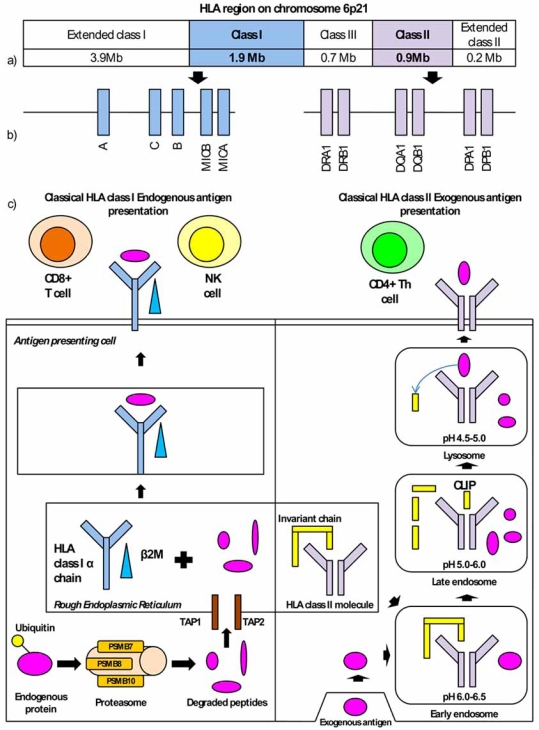
The HLA region encodes several molecules that play key roles in the immune system. Strong association between the HLA region and autoimmune disease (AID) has been established for over fifty years. Association of components of the HLA class II encoded HLA-DRB1-DQA1-DQB1 haplotype has been detected with several AIDs, including rheumatoid arthritis, type 1 diabetes and Graves' disease. Molecules encoded by this region play a key role in exogenous antigen presentation to CD4+ Th cells, indicating the importance of this pathway in AID initiation and progression. Although other components of the HLA class I and III regions have also been investigated for association with AID, apart from the association of HLA-B*27 with ankylosing spondylitis, it has been difficult to determine additional susceptibility loci independent of the strong linkage disequilibrium (LD) with the HLA class II genes. Recent advances in the statistical analysis of LD and the recruitment of large AID datasets have allowed investigation of the HLA class I and III regions to be re-visited. Association of the HLA class I region, independent of known HLA class II effects, has now been detected for several AIDs, including strong association of HLA-B with type 1 diabetes and HLA-C with multiple sclerosis and Graves' disease. These results provide further evidence of a possible role for bacterial or viral infection and CD8+ T cells in AID onset. The advances being made in determining the primary associations within the HLA region and AIDs will not only increase our understanding of the mechanisms behind disease pathogenesis but may also aid in the development of novel therapeutic targets in the future.
Overview
The claims and statistics of this paper haven’t been checked yet.
Free: it reads the open-access text and checks the first 5 claims that cite a source we can check. Create a free account to check every claim.
Integrity signals
Registry
Cites
Statistics
Figures
Verification
Claims the paper makes
The claims and statistics of this paper haven’t been checked yet.
Free: it reads the open-access text and checks the first 5 claims that cite a source we can check. Create a free account to check every claim.
Claims other papers make about this one
Each is checked against this paper’s own text: does it say what the citing paper says it does?
The source backs part of the claim, not all of it — or backs it for a different population, condition or comparison.
In the citing paper
“paternal immune disorders and a general familial history of immune disorders in the absence of maternal immune conditions also appear to contribute, suggesting a heritable component for this autoimmune association48,64.”
From Immune mediators in the brain and peripheral tissues in autism spectrum disorder (2015) · cites this paper as [48]
Experimental — accuracy not yet measuredThe check wasn’t confident either way, so it gives no verdict — never disputed.
In the citing paper
“Estimates indicate that there is up to a 50% increase in the odds of an ASD diagnosis among children who have a parent who has had an autoimmune disorder48,63.”
From Immune mediators in the brain and peripheral tissues in autism spectrum disorder (2015) · cites this paper as [48]
Experimental — accuracy not yet measuredIn the citing paper
“maternal immune disorders such as rheumatoid arthritis, SLE and type-1 diabetes account for the largest portion of this increased risk for ASD in offspring”
From Immune mediators in the brain and peripheral tissues in autism spectrum disorder (2015) · cites this paper as [48]
In the citing paper
“the HLA associations are not specific to ASD; they are also associated with other neurodevelopmental disorders and autoimmune disorders, including rheumatoid arthritis and SLE, which occur at higher rates in the relatives of individuals with ASD48.”
From Immune mediators in the brain and peripheral tissues in autism spectrum disorder (2015) · cites this paper as [48]
In the citing paper
“autoimmune disorders, allergies and asthma strongly associate with the families of children with ASD48.”
From Immune mediators in the brain and peripheral tissues in autism spectrum disorder (2015) · cites this paper as [48]
Self-check
Percentages, sums and reported differences re-computed from the paper’s own numbers.
The self-check needs the paper’s full text.
Citations
Cites
Genome-wide association study of 14,000 cases of seven common diseases and 3,000 shared controls
The Wellcome Trust Case Control Consortium, Management Committee, Burton, P. R., Clayton, D. G., Cardon, L. R., Craddock, N., Deloukas, P., Duncanson, A., Kwiatkowski, D. P., McCarthy, M. I., et al. (2007) · Nature · doi:10.1038/nature05911 · Cited by 9,442
The Structure of Haplotype Blocks in the Human Genome
Gabriel, S. B., Schaffner, S. F., Nguyen, H., Moore, J. M., Roy, J., Blumenstiel, B., Higgins, J., DeFelice, M., Lochner, A., Faggart, M., et al. (2002) · Science · doi:10.1126/science.1069424 · Cited by 5,863 · cited 1×
“It also exhibits the most dense linkage disequilibrium (LD) [5], extending up to 540kb, which compares with distances of between 1-173kb seen in the rest of the genome [6, 7].”
BackgroundGregersen, P. K., Silver, J., & Winchester, R. J. (1987) · Arthritis & Rheumatism · doi:10.1002/art.1780301102 · Cited by 2,599 · cited 2×
“Work by Gregerson, et al, showed that association of DRB1 alleles (DRB1*0101, DRB1*0102, DRB1*0401, DRB1*0404, DRB1*0405, DRB1*0408, DRB1*1001 and DRB1*1402) [18, 19] was due to similarities within the DRB1 peptide domain at positions 70 through to 74, with these alleles containing similar se- quences (QKRAA/QRRAA/RRR…”
BackgroundHLA-DQβ gene contributes to susceptibility and resistance to insulin-dependent diabetes mellitus
Todd, J. A., Bell, J. I., & McDevitt, H. O. (1987) · Nature · doi:10.1038/329599a0 · Cited by 2,036
High-resolution haplotype structure in the human genome
Daly, M. J., Rioux, J. D., Schaffner, S. F., Hudson, T. J., & Lander, E. S. (2001) · Nature Genetics · doi:10.1038/ng1001-229 · Cited by 1,717 · cited 1×
“It also exhibits the most dense linkage disequilibrium (LD) [5], extending up to 540kb, which compares with distances of between 1-173kb seen in the rest of the genome [6, 7].”
BackgroundAssociation scan of 14,500 nonsynonymous SNPs in four diseases identifies autoimmunity variants
Wellcome Trust Case Control Consortium, & The Australo-Anglo-American Spondylitis Consortium (TASC) (2007) · Nature Genetics · doi:10.1038/ng.2007.17 · Cited by 1,374
Compromised Function of Regulatory T Cells in Rheumatoid Arthritis and Reversal by Anti-TNFα Therapy
Ehrenstein, M. R., Evans, J. G., Singh, A., Moore, S., Warnes, G., Isenberg, D. A., & Mauri, C. (2004) · The Journal of Experimental Medicine · doi:10.1084/jem.20040165 · Cited by 1,252 · cited 1×
“Studies in RA have shown Treg populations to be compromised [40] , suggesting that RA could be associated with a failure to protect rather than a predisposition to disease.”
BackgroundGene map of the extended human MHC
Horton, R., Wilming, L., Rand, V., Lovering, R. C., Bruford, E. A., Khodiyar, V. K., Lush, M. J., Povey, S., Talbot, C. C., Wright, M. W., et al. (2004) · Nature Reviews Genetics · doi:10.1038/nrg1489 · Cited by 1,198 · cited 1×
“6Mb on chromosome 6p21 and is the most gene dense region within the human genome encoding 252 expressed loci [3] including several key immune response genes.”
BackgroundHL-A ANTIGENS AND DIABETES MELLITUS
Nerup, J., Platz, P., Andersen, O. O., Christy, M., Lyngsøe, J., Poulsen, J. E., Ryder, L. P., Thomsen, M., Nielsen, L. S., & Svejgaard, A. (1974) · The Lancet · doi:10.1016/s0140-6736(74)91201-x · Cited by 818 · cited 1×
“Early experiments investigating association of HLA-DR and -DQ with AID in T1D indicated a strong association of the DRB1*03 and DRB1*04 alleles [8-10].”
Backgroundde Bakker, P. I. W., McVean, G., Sabeti, P. C., Miretti, M. M., Green, T., Marchini, J., Ke, X., Monsuur, A. J., Whittaker, P., Delgado, M., et al. (2006) · Nature Genetics · doi:10.1038/ng1885 · Cited by 766
Cited by
Items 301–400 of 496
Kurian, M. A., & Khera, N. (2024) · Cureus · doi:10.7759/cureus.69791 · Cited by 4
Mizutani, A., Suzuki, S., Shigenari, A., Sato, T., Tanaka, M., Kulski, J. K., & Shiina, T. (2024) · Frontiers in Immunology · doi:10.3389/fimmu.2023.1332636 · Cited by 4
“In particular, these studies have focused on how these polymorphisms alter peptide binding speci fi city and the potential impact of such changes on immune recognition and disease susceptibility (6 – 8).”
BackgroundCroitoru, C. G., Constantinescu, D., Tanasa, M. P., Cuciureanu, D. I., Cianga, C. M., Hodorog, D. N., & Cianga, P. (2024) · Neurology International · doi:10.3390/neurolint16060130 · Cited by 4
HLA typing in anti-GAD antibody associated epilepsy
Gillinder, L., Powell, T. Y., Craig, D., Walsh, S., Gillis, D., & McCombe, P. (2024) · Epilepsy & Behavior · doi:10.1016/j.yebeh.2024.110179 · Cited by 4
Allele HLA‐DQB1*06 reduces fibrosis score in patients with non‐alcoholic fatty liver disease
Tan, H., Zain, S. M., Eng, H. M., Mohamed, Z., Mahadeva, S., Chan, W., Lau, P. C., Basu, R. C., & Mohamed, R. B. (2020) · Hepatology Research · doi:10.1111/hepr.13525 · Cited by 6
Rekdal, S. L., Anmarkrud, J. A., Lifjeld, J. T., & Johnsen, A. (2021) · Journal of Avian Biology · doi:10.1111/jav.02734 · Cited by 4
“…between combating a multitude of pathogens (Doherty and Zinkernagel 1975, Hughes and Nei 1988) on one hand, and the risk for autoimmune diseases (Gough and Simmonds 2007, Trowsdale and Knight 2013, Lenz et al. 2015) and Elevated phytohaemagglutinin-induced skin-swelling response at an…”
BackgroundAnbarasan, A., Kumar, D., Deepak, R. K., Bhatt, D. D., Kumari, L., Arumugam, P., kaur, K., & s, L. K. (2023) · Indian Heart Journal · doi:10.1016/j.ihj.2023.06.008 · Cited by 4
Biomarkers in Skin Autoimmunity—An Update on Localised Scleroderma
Bustos, A. H., Bolós, B., & Astakhova, K. (2024) · Skin Health and Disease · doi:10.1002/ski2.335 · Cited by 4
Vinay, K., Kamat, D., Vignesh Narayan, R., Minz, R. W., Singh, J., Bishnoi, A., Chatterjee, D., Parsad, D., & Kumaran, M. S. (2024) · International Journal of Dermatology · doi:10.1111/ijd.17017 · Cited by 4
Exploring Sjögren’s syndrome through interdisciplinary perspectives: a concise review
Rathore, T., & Dattatri, M. (2024) · Journal of Immunoassay and Immunochemistry · doi:10.1080/15321819.2024.2353766 · Cited by 4
“…those responsible for encoding HLA-DQ and HLA-DR antigens, have been proposed as the most pivotal genes linked to susceptibility to SS. [29,31] In a meta-analysis involving 23 patients from diverse ethnic backgrounds, a more pronounced association was observed between HLA class II…”
BackgroundASIA syndrome (autoimmune/inflammatory syndrome induced by adjuvants): Narrative literature review
Torres-Saavedra, F. A., León-Sierra, L. P., & Rondón-Carvajal, J. (2024) · Revista Colombiana de Reumatología (English Edition) · doi:10.1016/j.rcreue.2024.07.002 · Cited by 6
Exploring antigenic variation in autoimmune endocrinopathy
Mavridou, M., & Pearce, S. H. S. (2025) · Frontiers in Immunology · doi:10.3389/fimmu.2025.1561455 · Cited by 4
Ras-Carmona, A., Lehmann, A. A., & Reche, P. A. (2025) · International Journal of Molecular Sciences · doi:10.3390/ijms26136041 · Cited by 4
“Autoimmune diseases are often associated with particular HLA molecules, representing major susceptibility factors [12,13].”
Gorenjak, V., Arguinano, A.-A. A., Dadé, S., Stathopoulou, M. G., Vance, D. R., Masson, C., & Visvikis‐Siest, S. (2018) · Scientific Reports · doi:10.1038/s41598-018-25553-y · Cited by 6
Simanovsky, A. L., Madbouly, A. S., Halagan, M. S., Maiers, M. J., & Louzoun, Y. (2019) · Immunogenetics · doi:10.1007/s00251-019-01144-7 · Cited by 5
Jia, M. R., Sangwan, N., Tzeng, A., & Eng, C. (2021) · JCO Precision Oncology · doi:10.1200/po.20.00374 · Cited by 4
Song, S., Shan, N., Wang, G., Yan, X., Liu, J. S., & Hou, L. (2021) · Bioinformatics · doi:10.1093/bioinformatics/btab514 · Cited by 4
“In fact, strong associations between HLA regions and autoimmune diseases have been well documented in the literature (Simmonds and Gough, 2007), thus we focus here on non-HLA genes in the discussion.”
BackgroundKurteva, E. K., Boyadzhieva, V. V., & Stoilov, N. R. (2020) · Rheumatology International · doi:10.1007/s00296-020-04516-5 · Cited by 4
Gehlot, P., & Holoshitz, J. (2016) · Elsevier eBooks · doi:10.1016/b978-0-12-374279-7.06013-6 · Cited by 5
Full resolution HLA and KIR genes annotation for human genome assembliesPreprint
Zhou, Y., Song, L., & Li, H. (2024) · bioRxiv (Cold Spring Harbor Laboratory) · doi:10.1101/2024.01.20.576452 · Cited by 4
“113 At step 2, the best-matching allele with the smallest number of mismatches and the longest alignment length is chosen as the template allele (in different colors) for each mapping cluster.”
BackgroundGarrido, F. (2024) · Springer eBooks · doi:10.1007/978-3-031-59866-1_6 · Cited by 4
Neuroimaging and epigenetic analysis reveal novel epigenetic loci in major depressive disorder
Yang, H.-H., Han, K., Kim, A., Kang, Y., Tae, W., Han, M.-R., & Ham, B. (2024) · Psychological Medicine · doi:10.1017/s0033291724000709 · Cited by 3
Konno, H., Miyamae, J., Kataoka, H., Akai, M., Miida, H., & Tsuchiya, Y. (2024) · Immunogenetics · doi:10.1007/s00251-024-01344-w · Cited by 4
“Furthermore, the combination of class I and class II alleles has been associated with the risk of autoimmune diseases (Simmonds and Gough 2007).”
HLA Class I and II genes: A key factor for type one diabetes susceptibility
Telang, G., Mishra, S., Sureshbabu, A., Chiloo, S., Joshi, S., & Thyagarajan, S. (2025) · Gene Reports · doi:10.1016/j.genrep.2025.102183 · Cited by 4
Pathogenic drivers of lupus myocarditis and potential therapeutic targets
Liu, Y., Murphy, K. M., Hung, Y. F., & Won, T. (2025) · Experimental & Molecular Medicine · doi:10.1038/s12276-025-01580-4 · Cited by 4
“A strong association between HLA class II alleles and autoimmune disease has been extensively studied, suggesting activated autoreactive T cells and compromised T reg cells as potential mechanisms 90 (Fig.”
DiLeo, M., Oglesby, S., Leung, C. H., Pauken, K. E., Farooq, S., Haydu, L. E., Kubicki, S. L., Martinez, R., Welborn, M. E., Zahiruddin, S., et al. (2026) · Cancer · doi:10.1002/cncr.70262 · Cited by 4
“11 16 Moreover, a limited number of small studies have associated HLA alleles with irAEs and patient outcomes on ICI therapy.”
Andersen, P. L., Jemec, G. B. E., Erikstrup, C., Didriksen, M., Dinh, K. M., Mikkelsen, S., Bruun, M. T., Hjalgrim, H., Hansen, T. F., Sækmose, S. G., et al. (2023) · Skin Appendage Disorders · doi:10.1159/000529092 · Cited by 3
Immunogenetic profiles of 9 human herpes virus envelope glycoproteins
Georgopoulos, A. P., & James, L. M. (2024) · Scientific Reports · doi:10.1038/s41598-024-71558-1 · Cited by 3
Spínola, H., Lemos, A., Couto, A. R., Parreira, B., Soares, M., Dutra, I., Bruges‐Armas, J., & Brehm, A. (2016) · International Journal of Immunogenetics · doi:10.1111/iji.12300 · Cited by 3
Associations between autistic-like traits and polymorphisms in NFKBIL1
Strenn, N., Hovey, D., Jönsson, L., Anckarsäter, H. S., Lundström, S., Lichtenstein, P., & Ekman, A. (2019) · Acta Neuropsychiatrica · doi:10.1017/neu.2019.18 · Cited by 3
Osman, R. M., Noma, M., Ahmed, A. E., Abdelbagi, H., Omer, R. A., Ali, M. M., Alameen, A. A. M., Edris, A. M. M., Muneer, M. S., Siddig, O., et al. (2021) · SAGE Open Medicine · doi:10.1177/20503121211020207 · Cited by 4
Sangphukieo, A., Thongkumkoon, P., Noisagul, P., Piccolo, L. L., O’Brien, T. E., Chaowattanapanit, S., Choonhakarn, C., Amornpinyo, W., Chaiwarith, R., Kiratikanon, S., et al. (2024) · Genes · doi:10.3390/genes15030278 · Cited by 3
“This high variation in the binding groove of HLA class II may play an important role in the disease pathogenesis by altering regulation or lowering the selection threshold for autoreactive T cells during T-cell development in the thymus [34,35].”
BackgroundCould the paediatric acute hepatitis of unknown origin be related to a new autoimmune disease?
Martínez-Laso, J., Cervera, I., Muñoz, M. M., Casas, I., & Avellón, A. (2024) · Journal of Hepatology · doi:10.1016/j.jhep.2024.10.006 · Cited by 3
HLA-B*58 and HLA-C*2 Alleles Are Associated with the Occurrence of Rheumatoid Arthritis Among Omanis
Al-Balushi, M. S., Antony, I., Al-Shirawi, A., Al‐Riyami, H., Al-Busaidi, J. Z., Koh, C. Y., Al-Naamani, K. M., Hasson, S. S., Al-Jabri, A. A., & Said, E. A. (2025) · Journal of Clinical Medicine · doi:10.3390/jcm14041219 · Cited by 3
“HLA-C*02 can lead to the activation of NK cells through its interaction with KIR2DL1 [16] and it has the capacity to inhibit these cells as well by interacting with KIR2DS1 [17].”
Iebba, F., Sora, F. D., Tarasi, A., Leti, W., & Montella, F. (2011) · Recenti Progressi in Medicina · doi:10.1701/624.7291 · Cited by 3
Tissue typing and its role in transplantation
Nazahah, M., & Koh, M. (2015) · ISBT Science Series · doi:10.1111/voxs.12168 · Cited by 3
Lababidi, S., Sutherland, A., Krasnicka, B., Forshee, R. A., & Anderson, S. A. (2015) · Biomarkers in Medicine · doi:10.2217/bmm.15.67 · Cited by 3
Regulatory T Cells in Autoimmune Diabetes
Ovcinnikovs, V., & Walker, L. S. K. (2015) · Progress in molecular biology and translational science · doi:10.1016/bs.pmbts.2015.08.004 · Cited by 3
Pharmacogenetics of adverse cutaneous reactions to lamotrigine
Peña-Balderas, A. M., & López‐Revilla, R. (2019) · Revista de Fomento Social · doi:10.24875/rmn.19000051 · Cited by 3
The Calpain Gene is Correlated With Metal-on-Metal Hip Replacement Failures
Kavolus, J. J., Lazarides, A. L., Moore, C., Seyler, T. M., Wellman, S. S., Attarian, D. E., Bolognesi, M. P., & Alman, B. A. (2020) · The Journal of Arthroplasty · doi:10.1016/j.arth.2020.07.054 · Cited by 3
Johansson, Å., Rask‐Andersen, M., Karlsson, T., & Ek, W. E. (2017) · bioRxiv (Cold Spring Harbor Laboratory) · doi:10.1101/195933 · Cited by 3
Deván, J., Mengis, T., Bitterli, P., Zhou, J., Leary, P., Wu, P., Link, T. M., Distler, O., Fields, A. J., Dudli, S., et al. (2025) · medRxiv · doi:10.1101/2025.09.29.25336889 · Cited by 3
“Specific HLA alleles are strongly associated with susceptibility to many immune-mediated diseases 16,17 .”
Anti-LGI1 encephalitis: A family affair
Stefano, G. D., Pulitano, P., Bonaventura, C. D., Zuliani, L., & Morano, A. (2023) · Journal of Neuroimmunology · doi:10.1016/j.jneuroim.2023.578084 · Cited by 2
Association Between HLA-B5801 Positivity and Patient Characteristics and Clinical Outcomes in Gout
Ahn, S. S., KIM, J. A., & Bae, K. (2025) · In Vivo · doi:10.21873/invivo.13915 · Cited by 2
“Notably, the genetic predisposition conferred by speci f ic HLA alleles has been well described in various in f lammatory and autoimmune diseases (6).”
Immune-Related Adverse Events of Checkpoint Inhibitors and Human Leukocyte Antigen System: A Review
Kośmider, K., Kozakiewicz, A., Krawczyk, P. A., Kieszko, R., Szklener, K., Skórzewska, M., Wojas‐Krawczyk, K., Kalinka‐Warzocha, E., & Milanowski, J. (2025) · ImmunoTargets and Therapy · doi:10.2147/itt.s548443 · Cited by 2
Choi, J. E., Oh, J., Song, D. K., Lee, J. H., Kim, K. H., Kim, S., Kim, H. S., & Ha, E. (2026) · Ecotoxicology and Environmental Safety · doi:10.1016/j.ecoenv.2025.119617 · Cited by 2
Molecular Mimicry by the Tick-Borne Encephalitis Virus E Protein: A Hidden Link to Autoimmunity
Timofeeva, A. M., Aulova, K. S., Савельевна, У. Я., Melamud, M. M., Arkhipov, S. G., Krasnova, E. I., & Nevinsky, G. A. (2026) · International Journal of Molecular Sciences · doi:10.3390/ijms27114745 · Cited by 2
“In contrast, associations of HLA class I with the risk of autoimmune disorders are much rarer; the most characteristic is HLA-B*27 in ankylosing spondylitis, as well as in acute anterior uveitis [104–106].”
Burkitbayev, Z., Turganbekova, A., Zhanzakova, Z., Baimukasheva, D. K., Saduakas, Z., Khamitova, D., Abdrakhmanova, S. A., Masalimov, Z., & Almawi, W. Y. (2026) · HLA · doi:10.1111/tan.70791 · Cited by 2
“Insofar as variation in the MHC region affects leukemogenesis [16, 17], several studies investigated the association between HLA variation and ALL susceptibility, reporting both risk and protective effects for specific alleles and haplotypes across different populations [18, 19].”
InfluentialHuman leukocyte antigen-typing: a significant immunogenetic application in clinical medicine
Nabi, N., Khan, M. S., Shah, A., Wani, J. A., & Majid, S. (2022) · Elsevier eBooks · doi:10.1016/b978-0-323-90250-2.00005-4 · Cited by 3
Utility of HLA‐DR in screening panel for inborn errors of immunity
Yadav, R. M., Jodhawat, N., Gupta, M., Dalvi, A. D., Bargir, U. A., Hule, G., Setia, P., Shinde, S., Saxena, S., Parab, A., et al. (2022) · Scandinavian Journal of Immunology · doi:10.1111/sji.13238 · Cited by 2
Acosta-Colman, I., Cabrera-Villalba, S., Ayala‐Lugo, A., Jolly, V., Vázquez, M. A., Morel, Z., Langjahr, P., Duarte, M., Zárate, R., Acosta, M. E., et al. (2022) · International Journal of Immunogenetics · doi:10.1111/iji.12609 · Cited by 2
“Protective HLA class II alleles are related to the negative selection of autoreactive lymphocytes and the generation of regulatory T lymphocytes (Deane et al., 2017; GhodkePuranik & Niewold, 2015; Gough & Simmonds, 2007; Trowsdale & Knight, 2013).”
BackgroundRisk assessment of substance use disorders based on the human leukocyte antigen (HLA)
James, L. M., & Georgopoulos, A. P. (2023) · Scientific Reports · doi:10.1038/s41598-023-35305-2 · Cited by 2
James, L. M., & Georgopoulos, A. P. (2023) · Neuroscience Insights · doi:10.1177/26331055231214543 · Cited by 2
Gaibi, S., Amini, H. M., & zadeh, S. F. (2023) · Studies in Medical Sciences · doi:10.61186/umj.34.6.330 · Cited by 5
Buianova, A. A., Yukina, M. Y., Cheranev, V. V., Suchalko, O. N., Shmitko, A. O., Фаритовна, С. А., Nuralieva, N. F., Kulagina, E. V., Savvateeva, E. N., Troshina, E. A., et al. (2024) · PLoS ONE · doi:10.1371/journal.pone.0312335 · Cited by 3
“Specifically, components of the human leukocyte antigens (HLA) class II encoded HLA-DRB1 * 03-DQA1 * 0501-DQB1 * 0201 and DRB1 * 04-DQA1 * 0301-DQB1 * 0302 haplotypes have been associated with various autoimmune diseases, including AAI [10,11].”
BackgroundMustonen, L., Nieminen, J. K., Koskela, S., Kaunisto, M. A., Kalso, E. A., Tienari, P. J., & Harno, H. (2025) · European Journal of Pain · doi:10.1002/ejp.70009 · Cited by 2
Tran, L., Nickens, R., Luu, V., Petersdorf, E. W., & Mack, S. J. (2025) · International Journal of Immunogenetics · doi:10.1111/iji.70013 · Cited by 2
Knight, T. E., Kotz, K., & Savaşan, S. (2018) · Pediatric Transplantation · doi:10.1111/petr.13222 · Cited by 2
B Cells Producing Pathogenic Autoantibodies
Zou, Y.-R., & Diamond, B. (2014) · Elsevier eBooks · doi:10.1016/b978-0-12-397933-9.00023-0 · Cited by 5
Gupta, A., Das, S. N., Das, B. K., & Bhuyan, L. (2021) · Journal of Oral and Maxillofacial Pathology · doi:10.4103/jomfp.jomfp_376_20 · Cited by 2
“[16] The HLA‐DR antigens have been linked to susceptibility of autoimmune diseases owing to the location of immune response genes at or near the D locus of chromosome 6.[17] Different autoantigens need specific major histocompatibility complex (MHC) class II antigen on the antigen‐presenting cell surface to induce aut…”
BackgroundLÜLEYAP, H. Ü., KARACAOĞLAN, G., TAHİROĞLU, A., YAMAN, A., Pazarcı, P., ÇETİNER, S., ALPTEKİN, D., SERTDEMİR, Y., EVYAPAN, G., & LÜLEYAP, D. (2021) · TURKISH JOURNAL OF MEDICAL SCIENCES · doi:10.3906/sag-2103-224 · Cited by 2
High-Throughput and Automated Detection of HLA-B*27 Using the LabTurboTM AIO System
Chou, Y., & Er, T. (2023) · Biomedicines · doi:10.3390/biomedicines11030986 · Cited by 2
“Studies demonstrated that HLA genetic variants are associated with systemic lupus erythematosus, rheumatoid arthritis, multiple sclerosis, type 1 diabetes mellitus, celiac disease, narcolepsy, and Sjögren’s syndrome [7,8].”
BackgroundHamilton, A., Gough, S. C. L., & Simmonds, M. J. (2013) · Wiley eBooks · doi:10.1002/9780470015902.a0024977 · Cited by 2
Self-citationIntegrated genome sizing (IGS) approach for the parallelization of whole genome analysis
Sona, P., Hong, J. H., Lee, S., Kim, B. J., Hong, W.-Y., Jung, J., Kim, H., Kim, H., Christopher, D., Herviou, L., et al. (2018) · BMC Bioinformatics · doi:10.1186/s12859-018-2499-1 · Cited by 1
Saify, K. (2023) · PubMed Central · doi:10.22099/mbrc.2023.46890.1813 · Cited by 1
“It should be that HLA-DRB1 is the member of MHC class II [1, 2].”
BackgroundResultInfluentialHLA and Antigen Receptor Biology
Bery, A. I., Kreisel, D., & Kulkarni, H. S. (2023) · Wiley eBooks · doi:10.1002/9781119633884.ch8 · Cited by 1
James, L. M., & Georgopoulos, A. P. (2023) · Scientific Reports · doi:10.1038/s41598-023-45931-5 · Cited by 1
Karataş, L., Tatar, Z., James, E. A., & Çolakoğulları, M. (2024) · Genes · doi:10.3390/genes15030339 · Cited by 1
“Specific HLA-DR genotypes are also known to be strongly associated with several autoimmune conditions [42] and with susceptibility and resistance to infectious diseases [43].”
BackgroundHLA and Nasal Polyposis Susceptibility: A Meta-analysis of Worldwide Studies
Witcher, R., Anur, S. M., Thibaut, D., Venturino, L., & Grube, J. G. (2024) · Annals of Otology Rhinology & Laryngology · doi:10.1177/00034894241275476 · Cited by 1
Chiu, R., & Ma, L. (2024) · Current Issues in Molecular Biology · doi:10.3390/cimb46110731 · Cited by 1
Understanding the link between regulatory RNA regions and genomic variation in coeliac disease
Pascual-González, I., Santín, I., & Castellanos–Rubio, A. (2025) · Advances in genetics · doi:10.1016/bs.adgen.2025.02.005 · Cited by 1
Leukemias in the Context of Rheumatoid Arthritis: Shared Pathways and Clinical Perspectives
Osman, A., Addla, N., Das, A., Alansari, B. A., Iyer, D., Acosta, M. J., Aldhuaina, K., Datta, A., Nair, A. A., & Rai, M. (2025) · Cureus · doi:10.7759/cureus.93082 · Cited by 1
“Specific allelic variations potentially contribute to both autoimmune susceptibility and leukemic transformation [53-54].”
Introduction to Autoimmune Diseases: A Global Health Challenge
Ansari, M. M., Suminda, G. G. D., Ghosh, M., & Son, Y. (2025) · Springer eBooks · doi:10.1007/978-981-95-0520-3_1 · Cited by 5
Ji, Q., Xu, H., Chen, H., Chen, X., Wang, S., & Zou, J. (2025) · Scientific Reports · doi:10.1038/s41598-025-21754-4 · Cited by 1
Akyüz, A., Şanlı, M. E., Aktaşoğlu, E. Ö., Gökalp, S., Biberoğlu, G., İnci, A., Okur, İ., Ezgü, F. S., & Tümer, L. (2025) · Clinical Pediatrics · doi:10.1177/00099228251392699 · Cited by 1
Can the simple chicken MHC provide insight into the balance of autoimmunity and infectious disease?
Mararo, E., Goryanin, A., & Kaufman, J. (2025) · Immunogenetics · doi:10.1007/s00251-025-01394-8 · Cited by 1
Yen, H.-C., Lin, C.-H., & Lin, M.-C. (2026) · Pediatric Diabetes · doi:10.1155/pedi/3418021 · Cited by 1
“The shared genetic predisposition for these diseases is particularly evident in the human leukocyte antigen (HLA) system, with haplotypes like DR3-DQ2 and DR4-DQ8 linked to susceptibility in both conditions [26].”
Mohsen, E., Haffez, H., Ahmed, S., El-Mahdy, T. S., & Hamed, S. (2026) · Scientific Reports · doi:10.1038/s41598-026-38500-z · Cited by 1
Association between autoimmune diseases and the gut microbiome
Hirano, Y., Tomofuji, Y., Edahiro, R., Kishikawa, T., Miyawaki, S., & Okada, Y. (2026) · International Immunology · doi:10.1093/intimm/dxag013 · Cited by 1
Immunological aspects and quality of life among patients with lichen sclerosus
Chmielnicki, W., Sidor, A., Grykin, M., Kasprowicz‐Furmańczyk, M., & Owczarczyk-Saczonek, A. B. (2026) · Skin Health and Disease · doi:10.1093/skinhd/vzag081 · Cited by 1
Single-Cell RNA Sequencing Reveals Immune Dysregulation and Candidate Drug Targets in Endometriosis
Rezk, M., Kazemi, M., Gyunesh, A. A., Bryant, S. D., Oppelt, P., Hamzic-Jahic, E., Reisinger, D., Kapper, C., Demmel, D., Lackner, A., et al. (2026) · Cells · doi:10.3390/cells15181702 · Cited by 1
“…downregulated and enriched in antigen presentation and autoimmune-related pathways, supporting prior findings linking HLA dysregulation to impaired immune surveillance and increased autoimmune disease risk [49], as seen in the higher prevalence of autoimmune comorbidities in endometriosis [50,51].”
High Molecular Weight DNA Enrichment with Peptide Nucleic Acid Probes
Murphy, N. M., Pouton, C. W., & Irving, H. R. (2017) · Methods in molecular biology · doi:10.1007/978-1-4939-6750-6_4 · Cited by 1
Association of HLA alleles with autism
Sayad, A., Akbari, M. T., Noroozi, R., Omrani, M. D., Inoko, H., Taheri, M. N., & Ghafouri‐Fard, S. (2018) · Neuropsychiatric Disease and Treatment · doi:10.2147/ndt.s186673 · Cited by 2
“HLA-A*24 and -B*18 have been previously shown to be susceptibility alleles for type 1 diabetes, which is considered as an autoimmune disease.(22) There is no common allele between our study”
BackgroundDriianska, V., Petrina, O., Velychko, М., Haisenyuk, F., & Drannik, G. (2018) · Ukrainian Journal of Nephrology and Dialysis · doi:10.31450/ukrjnd.4(60).2018.02 · Cited by 1
Qatarneh, T. F. A., Momany, S. M., Abuharfeil, N. M., Mahasneh, A. A., Khader, Y. S., & Daoud, A. K. (2019) · Bangladesh Journal of Medical Science · doi:10.3329/bjms.v18i3.41613 · Cited by 1
Samy, A. M., Ngah, N. F., Khialdin, S. M., Azli, N. B. A., Hussin, N. H., & Anee, A. (2019) · Malaysian Journal of Ophthalmology · doi:10.35119/myjo.v1i2.11 · Cited by 1
Graves' Disease After Chronic Hypothyroidism in Type 1 Diabetes
Cardinez, N., Opsteen, C., & Perkins, B. A. (2019) · Canadian Journal of Diabetes · doi:10.1016/j.jcjd.2019.05.012 · Cited by 1
Arthritis Associated with Alphavirus Infections: Chikungunya
Lastra, O. L. V., Sepúlveda-Delgado, J., Granados, J., Cruz-Domínguez, M. P., Medina, G., & Jara, L. J. (2019) · Springer eBooks · doi:10.1007/978-3-030-23311-2_11 · Cited by 2
Immunoepidemiology of Immune Dysfunction
Meffre, E., Krause, P. J., & Ruddle, N. H. (2019) · Springer eBooks · doi:10.1007/978-3-030-25553-4_8 · Cited by 1
Role of Regulatory T Lymphocytes in Health and Disease
Shokeen, N., Saini, C., Sapra, L., Azam, Z., Bhardwaj, A., Ahmad, A., & Srivastava, R. K. (2020) · Springer eBooks · doi:10.1007/978-981-15-3350-1_8 · Cited by 3
Mirfakhraie, R., Hajifathali, A., Nazari, H. G., Sankanian, G., Bonakchi, H., Salimi, M., & Roshandel, E. (2021) · Gene Reports · doi:10.1016/j.genrep.2021.101112 · Cited by 1
Kocaağa, A. (2023) · IntechOpen eBooks · doi:10.5772/intechopen.101342 · Cited by 1
The Role of HLA-DRB1 Alleles in Pulmonary Cystic Fibrosis
Asef, A., Ghaffaripour, H., Jamaati, H., Varahram, M., Adcock, I. M., & Mortaz, E. (2022) · Iranian Journal of Allergy Asthma and Immunology · doi:10.18502/ijaai.v21i2.9226 · Cited by 1
Kherrour, W., Benbia, S., Hambaba, L., & Kaličanin, D. (2022) · African Health Sciences · doi:10.4314/ahs.v22i4.30 · Cited by 1
Autoimmune HLA Alleles and Neoepitope Presentation Predict Post-Allogenic Transplant Relapse
Castro, A., Goodman, A. M., Rane, Z., Talwar, J. V., Frampton, G. M., Morris, G. P., Lippman, S. M., Zhang, X., Kurzrock, R., & Carter, H. K. (2023) · Journal of Immunotherapy and Precision Oncology · doi:10.36401/jipo-22-19 · Cited by 1
Endocrinological, immunological and metabolic features of patients with Fabry disease under therapy
Şanlı, M. E., Kılıç, A., İnci, A., Okur, İ., Ezgü, F. S., & Tümer, L. (2023) · Journal of Pediatric Endocrinology and Metabolism · doi:10.1515/jpem-2023-0105 · Cited by 1
Klimova, E. M., Drozdova, L. A., Lavinska, O. V., Sushkov, S., & Boyko, V. (2023) · IntechOpen eBooks · doi:10.5772/intechopen.1002972 · Cited by 1
Methylome-wide association study of multidimensional resilience
Vazquez, A. Y., Burt, S. A., Mitchell, C. M., Klump, K. L., Hyde, L. W., & Clark, S. L. (2024) · Development and Psychopathology · doi:10.1017/s0954579424001330 · Cited by 1
“HLA-DRB1 and HLA-DQB2 are located in the HLA region on chromosome 6, a large region of linkage disequilibrium indicating that these may not be independent signals (Simmonds & Gough, 2007).”
Ng, E. S., Milotay, G., Tong, O., Taylor, C. A., Sun, S., Niu, G., Watson, R. A., Sun, B., MacKay, S., Gilchrist, J. J., et al. (2025) · Science Advances · doi:10.1126/sciadv.adu3461 · Cited by 1
Poma, A. M., Carlucci, G., & Fontecchio, G. (2012) · International Journal of Immunopathology and Pharmacology · doi:10.1177/039463201202500424 · Cited by 1
“RA and PsA are both ARDs linked to the highest polymorphic human HLA genetic system codified by different HLA loci (3), while RA is a common ARD restricted to some alleles of the HLA-DRB1*04 gene family, e.”
Background
Metadata
- Authors
- Simmonds, M., & Gough, S.
- Affiliations
- University of Birmingham (GB)
- Corresponding author
- Simmonds, M.
- ORCID
- Simmonds, M.
- Venue
- Current Genomics
- Publisher
- Bentham Science Publishers Ltd.
- Published
- 2007-11-01
- Volume
- 8
- Issue
- 7
- Pages
- 453-465
- ISSN
- 1389-2029 (ISSN-L)
- PMC
- PMC2647156
- OpenAlex
- W2052655883
- Cited by
- 472
- References
- 163
- Citations by year
- 2026: 21 · 2025: 32 · 2024: 53 · 2023: 40 · 2022: 42 · 2021: 42 · 2020: 29 · 2019: 45 · 2018: 37 · 2017: 40 · 2016: 23 · 2015: 25 · 2014: 11 · 2013: 11 · 2012: 5
- FWCI
- 1.79
- Type
- journal article
- Language
- en
- Open access
- bronze
- doi.org
- Locations
- Current Genomics (publishedVersion)
- PubMed Central (publishedVersion, cc-by)
- PubMed (publishedVersion)
- Lincoln Repository (University of Lincoln) (acceptedVersion)
- Figshare (submittedVersion, cc-by)
- University of Birmingham Research Portal (University of Birmingham) (submittedVersion)
- Funders
- Wellcome Trust
- Topics
- Life Sciences › Biochemistry, Genetics and Molecular Biology › Genetics › Genetic Associations and Epidemiology
- Life Sciences › Biochemistry, Genetics and Molecular Biology › Genetics › Diabetes and associated disorders
- Life Sciences › Biochemistry, Genetics and Molecular Biology › Molecular Biology › vaccines and immunoinformatics approaches
- Keywords
- HLA region, autoimmune disease, HLA class II, HLA class I, HLA class III, HLA-B27, ankylosing spondylitis, rheumatoid arthritis, type 1 diabetes, Graves' disease, multiple sclerosis, HLA-C, HLA-B, linkage disequilibrium, antigen presentation, CD4+ T cells, CD8+ T cells, disease susceptibility loci, pathogenesis
About these checks
Registry, retraction, Cites and statistics results are computed, not judged, with one exception: a printed reference that no index lists is read once by a model before it counts as a citation error. Claims are extracted by a model and kept only when their quote appears verbatim in the text; each cited source is then checked, with a model’s help, for whether it says what the claim relies on. Those verdicts can be wrong — read the claim’s quote and the cited source before relying on one.
Statistics and arithmetic are recomputed, not judged.
Confidence bands are shown only for fields calibrated on our annotated test set. None is calibrated yet, so no band is shown.
What counts as a claim ›How we measure confidence ›How we check this ›
Are you an author, or do you see a problem with this page? Request a review
Data sources
Bibliographic data: Semantic Scholar, OpenAlex, Crossref.
Contains information from the Semantic Scholar Academic Graph Datasets, made available under the ODC Attribution License (ODC-BY 1.0).
Semantic Scholar’s data is described in: Kinney, R., et al. (2023). The Semantic Scholar Open Data Platform. arXiv:2301.10140.
