

The HLA Region and Autoimmune Disease: Associations and Mechanisms of Action
Open accessThe DOI matches its Crossref record; 166 of the 167 references it cites were found in a registry or an index, and 1 are not checked yet.
Abstract
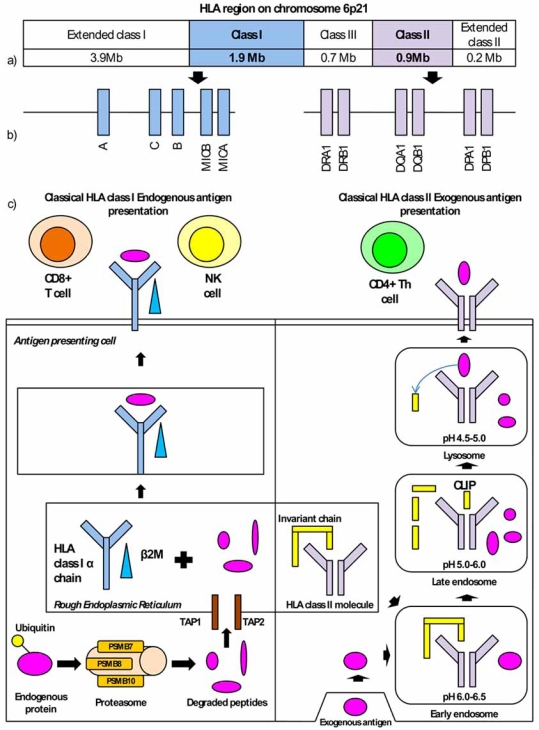
The HLA region encodes several molecules that play key roles in the immune system. Strong association between the HLA region and autoimmune disease (AID) has been established for over fifty years. Association of components of the HLA class II encoded HLA-DRB1-DQA1-DQB1 haplotype has been detected with several AIDs, including rheumatoid arthritis, type 1 diabetes and Graves' disease. Molecules encoded by this region play a key role in exogenous antigen presentation to CD4+ Th cells, indicating the importance of this pathway in AID initiation and progression. Although other components of the HLA class I and III regions have also been investigated for association with AID, apart from the association of HLA-B*27 with ankylosing spondylitis, it has been difficult to determine additional susceptibility loci independent of the strong linkage disequilibrium (LD) with the HLA class II genes. Recent advances in the statistical analysis of LD and the recruitment of large AID datasets have allowed investigation of the HLA class I and III regions to be re-visited. Association of the HLA class I region, independent of known HLA class II effects, has now been detected for several AIDs, including strong association of HLA-B with type 1 diabetes and HLA-C with multiple sclerosis and Graves' disease. These results provide further evidence of a possible role for bacterial or viral infection and CD8+ T cells in AID onset. The advances being made in determining the primary associations within the HLA region and AIDs will not only increase our understanding of the mechanisms behind disease pathogenesis but may also aid in the development of novel therapeutic targets in the future.
Overview
The claims and statistics of this paper haven’t been checked yet.
Free: it reads the open-access text and checks the first 5 claims that cite a source we can check. Create a free account to check every claim.
Integrity signals
Registry
Cites
Statistics
Figures
Verification
Claims the paper makes
The claims and statistics of this paper haven’t been checked yet.
Free: it reads the open-access text and checks the first 5 claims that cite a source we can check. Create a free account to check every claim.
Claims other papers make about this one
Each is checked against this paper’s own text: does it say what the citing paper says it does?
The source backs part of the claim, not all of it — or backs it for a different population, condition or comparison.
In the citing paper
“paternal immune disorders and a general familial history of immune disorders in the absence of maternal immune conditions also appear to contribute, suggesting a heritable component for this autoimmune association48,64.”
From Immune mediators in the brain and peripheral tissues in autism spectrum disorder (2015) · cites this paper as [48]
Experimental — accuracy not yet measuredThe check wasn’t confident either way, so it gives no verdict — never disputed.
In the citing paper
“Estimates indicate that there is up to a 50% increase in the odds of an ASD diagnosis among children who have a parent who has had an autoimmune disorder48,63.”
From Immune mediators in the brain and peripheral tissues in autism spectrum disorder (2015) · cites this paper as [48]
Experimental — accuracy not yet measuredIn the citing paper
“maternal immune disorders such as rheumatoid arthritis, SLE and type-1 diabetes account for the largest portion of this increased risk for ASD in offspring”
From Immune mediators in the brain and peripheral tissues in autism spectrum disorder (2015) · cites this paper as [48]
In the citing paper
“the HLA associations are not specific to ASD; they are also associated with other neurodevelopmental disorders and autoimmune disorders, including rheumatoid arthritis and SLE, which occur at higher rates in the relatives of individuals with ASD48.”
From Immune mediators in the brain and peripheral tissues in autism spectrum disorder (2015) · cites this paper as [48]
In the citing paper
“autoimmune disorders, allergies and asthma strongly associate with the families of children with ASD48.”
From Immune mediators in the brain and peripheral tissues in autism spectrum disorder (2015) · cites this paper as [48]
Self-check
Percentages, sums and reported differences re-computed from the paper’s own numbers.
The self-check needs the paper’s full text.
Citations
Cites
Genome-wide association study of 14,000 cases of seven common diseases and 3,000 shared controls
The Wellcome Trust Case Control Consortium, Management Committee, Burton, P. R., Clayton, D. G., Cardon, L. R., Craddock, N., Deloukas, P., Duncanson, A., Kwiatkowski, D. P., McCarthy, M. I., et al. (2007) · Nature · doi:10.1038/nature05911 · Cited by 9,442
The Structure of Haplotype Blocks in the Human Genome
Gabriel, S. B., Schaffner, S. F., Nguyen, H., Moore, J. M., Roy, J., Blumenstiel, B., Higgins, J., DeFelice, M., Lochner, A., Faggart, M., et al. (2002) · Science · doi:10.1126/science.1069424 · Cited by 5,863 · cited 1×
“It also exhibits the most dense linkage disequilibrium (LD) [5], extending up to 540kb, which compares with distances of between 1-173kb seen in the rest of the genome [6, 7].”
BackgroundGregersen, P. K., Silver, J., & Winchester, R. J. (1987) · Arthritis & Rheumatism · doi:10.1002/art.1780301102 · Cited by 2,599 · cited 2×
“Work by Gregerson, et al, showed that association of DRB1 alleles (DRB1*0101, DRB1*0102, DRB1*0401, DRB1*0404, DRB1*0405, DRB1*0408, DRB1*1001 and DRB1*1402) [18, 19] was due to similarities within the DRB1 peptide domain at positions 70 through to 74, with these alleles containing similar se- quences (QKRAA/QRRAA/RRR…”
BackgroundHLA-DQβ gene contributes to susceptibility and resistance to insulin-dependent diabetes mellitus
Todd, J. A., Bell, J. I., & McDevitt, H. O. (1987) · Nature · doi:10.1038/329599a0 · Cited by 2,036
High-resolution haplotype structure in the human genome
Daly, M. J., Rioux, J. D., Schaffner, S. F., Hudson, T. J., & Lander, E. S. (2001) · Nature Genetics · doi:10.1038/ng1001-229 · Cited by 1,717 · cited 1×
“It also exhibits the most dense linkage disequilibrium (LD) [5], extending up to 540kb, which compares with distances of between 1-173kb seen in the rest of the genome [6, 7].”
BackgroundAssociation scan of 14,500 nonsynonymous SNPs in four diseases identifies autoimmunity variants
Wellcome Trust Case Control Consortium, & The Australo-Anglo-American Spondylitis Consortium (TASC) (2007) · Nature Genetics · doi:10.1038/ng.2007.17 · Cited by 1,374
Compromised Function of Regulatory T Cells in Rheumatoid Arthritis and Reversal by Anti-TNFα Therapy
Ehrenstein, M. R., Evans, J. G., Singh, A., Moore, S., Warnes, G., Isenberg, D. A., & Mauri, C. (2004) · The Journal of Experimental Medicine · doi:10.1084/jem.20040165 · Cited by 1,252 · cited 1×
“Studies in RA have shown Treg populations to be compromised [40] , suggesting that RA could be associated with a failure to protect rather than a predisposition to disease.”
BackgroundGene map of the extended human MHC
Horton, R., Wilming, L., Rand, V., Lovering, R. C., Bruford, E. A., Khodiyar, V. K., Lush, M. J., Povey, S., Talbot, C. C., Wright, M. W., et al. (2004) · Nature Reviews Genetics · doi:10.1038/nrg1489 · Cited by 1,198 · cited 1×
“6Mb on chromosome 6p21 and is the most gene dense region within the human genome encoding 252 expressed loci [3] including several key immune response genes.”
BackgroundHL-A ANTIGENS AND DIABETES MELLITUS
Nerup, J., Platz, P., Andersen, O. O., Christy, M., Lyngsøe, J., Poulsen, J. E., Ryder, L. P., Thomsen, M., Nielsen, L. S., & Svejgaard, A. (1974) · The Lancet · doi:10.1016/s0140-6736(74)91201-x · Cited by 818 · cited 1×
“Early experiments investigating association of HLA-DR and -DQ with AID in T1D indicated a strong association of the DRB1*03 and DRB1*04 alleles [8-10].”
Backgroundde Bakker, P. I. W., McVean, G., Sabeti, P. C., Miretti, M. M., Green, T., Marchini, J., Ke, X., Monsuur, A. J., Whittaker, P., Delgado, M., et al. (2006) · Nature Genetics · doi:10.1038/ng1885 · Cited by 766
Cited by
Items 201–300 of 496
Mo, M., Huang, W. Y., Sun, C., Zhang, L., Cen, L., Xiao, Y., Li, G.-F., Yang, X., Qu, S., & Xu, P. (2016) · Chinese Medical Journal · doi:10.4103/0366-6999.180513 · Cited by 16
“[10] The PSMB and TAP genes are adjacent to HLA-DR within the HLA Class II region [Figure 1a].[11] The PSMB9 and PSMB8 encode β1i (low molecular weight protein 2) and β2i (low Association Analysis of Proteasome Subunits and Transporter”
BackgroundEpigenetic Changes During Food-Specific Immunotherapy
Bunning, B., DeKruyff, R. H., & Nadeau, K. C. (2016) · Current Allergy and Asthma Reports · doi:10.1007/s11882-016-0665-y · Cited by 14
Association between giant cell arteritis and thyroid dysfunction in a “real life” population
Yavne, Y., Tiosano, S., Watad, ., Comaneshter, D. S., Shoenfeld, Y., Cohen, A. D., & Amital, H. (2017) · Endocrine · doi:10.1007/s12020-017-1347-9 · Cited by 14
Sex Alters the MHC Class I HLA-A Association With Polyglandular Autoimmunity
Flesch, B. K., König, J., Frommer, L., Hansen, M. P., & Kahaly, G. J. (2018) · The Journal of Clinical Endocrinology & Metabolism · doi:10.1210/jc.2018-01974 · Cited by 14
“Men 16 (16) 42 (43) 15 (15) 8 (8) 4 (4) 13 (13) 98 (100) Women 49 (22) 56 (26) 25 (11) 4 (2) 24 (11) 60 (28) 218 (100)”
Association of HLA–DRB1, DQA1 and DQB1 alleles and haplotype in Parkinson’s disease from South India
Pandi, S., Chinniah, R., Sevak, V., Ravi, P. M., Raju, M., Vellaiappan, N. A., & Balakrishnan, K. (2021) · Neuroscience Letters · doi:10.1016/j.neulet.2021.136296 · Cited by 15
Pudjihartono, N., Ho, D., Golovina, E., Fadason, T., Kempa-Liehr, A. W., & O'Sullivan, J. M. (2023) · Journal of Autoimmunity · doi:10.1016/j.jaut.2023.103046 · Cited by 13
Chen, D., Wen, Y.-H., Lin, W.-T., Hsu, F.-P., & Yu, K. (2023) · Frontiers in Immunology · doi:10.3389/fimmu.2023.1123832 · Cited by 13
Using Genetic Variation to Predict and Extend Long-term Kidney Transplant Function
Simmonds, M. J. (2015) · Transplantation · doi:10.1097/tp.0000000000000836 · Cited by 15
“The HLA region encodes numerous molecules involved in presentation of exogenous and endogenous antigens for recognition by the immune system.(8) The immune system determines if antigens presented are self, triggering no response, or nonself, causing an immune response to be triggered.”
BackgroundSelf-citationFoxp3 Molecular Dynamics in Treg in Juvenile Idiopathic Arthritis
Copland, A., & Bending, D. (2018) · Frontiers in Immunology · doi:10.3389/fimmu.2018.02273 · Cited by 14
Christophersen, A. O., Dahal‐Koirala, S., Chlubnová, M., Jahnsen, J., Lundin, K. E. A., & Sollid, L. M. (2022) · Advanced Science · doi:10.1002/advs.202104766 · Cited by 15
Wenzlau, J. M., Fain, P. R., Gardner, T. J., Frisch, L. M., Annibale, B., & Hutton, J. C. (2015) · Diabetes Care · doi:10.2337/dcs15-2006 · Cited by 13
Sasaki, E., Natori, Y., Tokuda, E., Kimura‐Tsuchiya, R., Suga, J., Kanazawa, K., Koguchi, T., Kikuchi, N., Okabe, N., Murono, S., et al. (2024) · Immunotherapy · doi:10.1080/1750743x.2024.2353539 · Cited by 12
Human leukocyte antigens class II in CIDP spectrum neuropathies
Piccinelli, S. C., Carella, G., Frassi, M., Caria, F., Cassarino, S. G., Baldelli, E., Marini, M., Tincani, A., Padovani, A., & Filosto, M. (2019) · Journal of the Neurological Sciences · doi:10.1016/j.jns.2019.116533 · Cited by 12
X-linked genes exhibit miR6891-5p-regulated skewing in Sjögren’s syndrome
Shaw, T. M., Zhang, W. Y., McCoy, S. S., Pagenkopf, A. C., Carp, D. M., Garg, S., Parker, M. H., Qiu, X., Scofield, R. H., Galipeau, J., et al. (2022) · Journal of Molecular Medicine · doi:10.1007/s00109-022-02205-3 · Cited by 12
“Indeed, frequencies of X chromosomal abnormalities, including trisomy X (47,XXX) and rare triple mosaic (45,X/46,XX/47,XXX), are significantly increased in women with pSS and SLE than the general population [5, 6].”
BackgroundInfluentialNudel, R., Allesøe, R. L., Werge, T. M., Thompson, W. K., Rasmussen, S., & Benros, M. E. (2022) · Immunology · doi:10.1111/imm.13597 · Cited by 12
“Numerous robust associations between alleles of HLA classes I and II genes and autoimmune diseases have been reported [4], although the underlying mechanisms of these associations are not well understood, especially in the case of protective alleles, with some hypotheses implicating HLA alleles directly and others imp…”
BackgroundPharmacogenetics of hypersensitivity drug reactions
Negrini, S., & Becquemont, L. (2017) · Therapies · doi:10.1016/j.therap.2016.12.009 · Cited by 13
Margolis, D. J., Mitra, N., Kim, B., Duke, J. L., Berna, R., Hoffstad, O., Wasserman, J. R., Ferriola, D., Mosbruger, T., Wubbenhorst, B. S., et al. (2021) · The Journal of Immunology · doi:10.4049/jimmunol.2001252 · Cited by 12
Chronic obstructive pulmonary disease: towards pharmacogenetics
Wood, A. M., Tan, S. L., & Stockley, R. A. (2009) · Genome Medicine · doi:10.1186/gm112 · Cited by 13
“Variation in both CTLA4 [70] and the HLA region [71] is associated with other autoimmune diseases that typically respond to immunosuppression, suggesting that this might be a management strategy worth pursuing, in the stable state, for some individuals with COPD.”
BackgroundGandarillas, S., Newland, E. S., Toppmeyer, D., Stephenson, R. D., Denzin, L. K., & Dasgeb, B. (2024) · Frontiers in Medicine · doi:10.3389/fmed.2023.1288844 · Cited by 11
Shu, Y., Huang, R., Li, Q., Lu, Y., Yin, J., Li, H., Lan, Z., Zheng, X., Ye, J., Long, Y., et al. (2024) · Annals of Neurology · doi:10.1002/ana.26899 · Cited by 11
Immunogenetic Epidemiology of Type 1 Diabetes in 14 Continental Western European Countries
James, L. M., & Georgopoulos, A. P. (2021) · Journal of Immunological Sciences · doi:10.29245/2578-3009/2021/3.1219 · Cited by 14
“Thus, the evolutionary role of HLA is host protection against foreign antigens; however, HLA is also implicated in a number of autoimmune disorders including T1D 9 .”
New insights on the role of human leukocyte antigen complex in primary biliary cholangitis
Mulinacci, G., Palermo, A., Gerussi, A., Asselta, R., Gershwin, M. E., & Invernizzi, P. (2022) · Frontiers in Immunology · doi:10.3389/fimmu.2022.975115 · Cited by 11
Family history of autoimmune diseases and risk of gastric cancer: a national cohort study
Ji, J., Sundquist, J., & Sundquist, K. (2018) · European Journal of Cancer Prevention · doi:10.1097/cej.0000000000000420 · Cited by 11
Hajdarevic, R., Lande, A., Rekeland, I. G., Rydland, A., Strand, E. B., Sosa, D. D., Creary, L. E., Mella, O., EGELAND, T., Saugstad, O. D., et al. (2021) · Brain Behavior and Immunity · doi:10.1016/j.bbi.2021.08.219 · Cited by 11
“The HLA-DQB1 residue 57 has been implicated in immune-mediated disease previously, i.e. in type 1 diabetes where 57A confers susceptibility while 57D provides protection (Gough and Simmonds, 2007; Holoshitz, 2010).”
BackgroundHLA-check: evaluating HLA data from SNP information
Jeanmougin, M., Noirel, J., Coulonges, C., & Zagury, J. (2017) · BMC Bioinformatics · doi:10.1186/s12859-017-1746-1 · Cited by 11
“They play a ubiquitous role in medicine, most notably in autoimmune diseases [2, 3], infectious diseases [4, 5], and transplant medicine [6].”
BackgroundImmunogenetics of Systemic Sclerosis
Gumkowska-Sroka, O., Kotyla, K., & Kotyla, P. J. (2024) · Genes · doi:10.3390/genes15050586 · Cited by 13
“Therefore, it is not surprising that a strong association between the HLA region and autoimmune disease (AID) has been proven for over fifty years [33].”
BackgroundChen, Y., Wang, X., & Duan, S. (2026) · Frontiers in Endocrinology · doi:10.3389/fendo.2025.1679751 · Cited by 11
HLA-Modeler: Automated Homology Modeling of Human Leukocyte Antigens
Amari, S., Kataoka, R., Ikegami, T., & Hirayama, N. (2013) · International Journal of Medicinal Chemistry · doi:10.1155/2013/690513 · Cited by 12
“Typical diseases associated with HLA molecules are autoimmune diseases [1] and infectious diseases [2].”
BackgroundHigh‐resolution characterization of 12 classical and non‐classical HLA loci in Southern Brazilians
Castro, M. D. S., Issler, H. C., Gelmini, G. F., de Miranda, B. L. M., Calonga‐Solís, V., Schmidt, A. H., Stein, A., Bicalho, M. D. G., Petzl‐Erler, M. L., & Augusto, D. G. (2019) · HLA · doi:10.1111/tan.13488 · Cited by 10
Nudel, R., Allesøe, R. L., Thompson, W. K., Werge, T. M., Rasmussen, S., & Benros, M. E. (2021) · Journal of Translational Medicine · doi:10.1186/s12967-021-02888-1 · Cited by 10
“In parallel with investigations of HLA genes in the context of infections, HLA genes have also been studied in the contexts of autoimmune diseases [10] and psychiatric disorders such as schizophrenia [11].”
ResultGraves’ Disease: Pathophysiology, Genetics and Management
Khan, M. S., Lone, S. S., Faiz, S., Farooq, I., & Majid, S. (2021) · IntechOpen eBooks · doi:10.5772/intechopen.98238 · Cited by 13
Lee, K. H., Kang, D. Y., Kim, H. H., Kim, Y., Kim, H. J., Kim, J. H., Song, E. Y., Yun, J. J., & Kang, H. (2022) · Clinical and Translational Allergy · doi:10.1002/clt2.12098 · Cited by 10
“In addition to the data on the HLA PGx alleles, other readily available HLA allele data can be used to diagnose and identify individuals at a risk of various autoimmune diseases.(16,17) Associations between certain HLA alleles and autoimmune diseases, such as HLA‐ DRB1 for rheumatoid arthritis, HLA‐B51 for Behcet's di…”
BackgroundHuman Leukocyte Antigen Genotyping of Idiopathic Subglottic Stenosis
Rohlfing, M. L., Hillel, A. T., Wohler, E., Sobreira, N. L. D. M., Phillips, E. J., Mallal, S. A., & Gelbard, A. H. (2023) · The Laryngoscope · doi:10.1002/lary.30580 · Cited by 10
The role of epigenetic mediation and the future of food allergy research
Quake, C., & Nadeau, K. C. (2015) · Seminars in Cell and Developmental Biology · doi:10.1016/j.semcdb.2015.07.002 · Cited by 11
HLA antigens and anti-sperm antibody production in Iranian vasectomized men
Azizi, G., Namaki, S., Mirshafiey, A., & Hamid, K. M. (2015) · Journal of Biomedical Research · doi:10.7555/jbr.29.20140113 · Cited by 10
“The HLA region encodes several molecules composed of the two polymorphic classes HLA-I (A, B, and C) and HLA-II (DR, DQ, and DP) that play key roles in the immune system by presenting antigens to T cells [5,6] .”
BackgroundYap, B. J. M., Lai‐Foenander, A. S., Goh, B. H., Ong, Y. S., Duangjai, A., Saokaew, S., Chua, C. L. L., Phisalprapa, P., & Yap, W. H. (2021) · Frontiers in Cardiovascular Medicine · doi:10.3389/fcvm.2021.732369 · Cited by 11
Lim, D., Choi, M.-S., & Kim, S. (2023) · International Journal of Molecular Sciences · doi:10.3390/ijms24021157 · Cited by 10
“MHC, which is also known as human leukocyte antigen (HLA) in humans, plays a key role in AID by helping the immune system distinguish self from foreign, owing to its unlimited allelic diversity [13].”
BackgroundYesmin, K., Hargreaves, C. E., Newby, P., Brand, O. J., Heward, J. M., Franklyn, J. A., Gough, S. C. L., & Simmonds, M. J. (2010) · Clinical Endocrinology · doi:10.1111/j.1365-2265.2010.03780.x · Cited by 10
Self-citationLin, X., Liu, P., Jin, M. Y., & Qi, G. (2025) · Frontiers in Oncology · doi:10.3389/fonc.2025.1646231 · Cited by 9
The Association Between Knee Osteoarthritis and HLA-DRB1*0101 in the East of Iran
Kooshkaki, O., Atabati, E., Shayesteh, M., Salmani, F., & Sarab, G. A. (2019) · Current Rheumatology Reviews · doi:10.2174/1573397115666190716114738 · Cited by 9
Margolis, D. J., Duke, J. L., Mitra, N., Berna, R., Hoffstad, O., Wasserman, J. R., Dinou, A., Damianos, G., Kotsopoulou, I., Tairis, N. G., et al. (2023) · Frontiers in Genetics · doi:10.3389/fgene.2023.1004138 · Cited by 9
“It is often hypothesized to be a disorder involving both skin barrier and immune system dysfunction, the latter of which is thought to be mediated by antigen and centered on the activation of the TH2 pathway (Gough and Simmonds, 2007).”
BackgroundShiel, R. E., Kennedy, L. J., Nolan, C. M., Mooney, C. T., & Callanan, J. J. (2014) · Tissue Antigens · doi:10.1111/tan.12365 · Cited by 9
Brčić, L., Gračan, S., Barić, A., Gunjača, I., Lovrić, V. T., Kolčić, I., Zemunik, T., Polašek, O., Barbalić, M., Punda, A., et al. (2017) · Immunological Investigations · doi:10.1080/08820139.2017.1337785 · Cited by 9
Katkam, S. K., Rajasekhar, L., & Kutala, V. K. (2018) · Lupus · doi:10.1177/0961203318759200 · Cited by 10
Centrality of Myeloid-Lineage Phagocytes in Particle-Triggered Inflammation and Autoimmunity
Favor, O. K., Pestka, J. J., Bates, M. A., & Lee, K. S. S. (2021) · Frontiers in Toxicology · doi:10.3389/ftox.2021.777768 · Cited by 14
Chang, K.-J., Wu, H.-Y., Yarmishyn, A. A., Li, C.-Y., Hsiao, Y., Chi, Y., Lo, T.-C., Dai, H.-J., Yang, Y., Liu, D.-H., et al. (2022) · International Journal of Molecular Sciences · doi:10.3390/ijms23179707 · Cited by 10
Associations of classical HLA alleles with depression and anxiety
Cheng, B., Yang, J., Cheng, S., Pan, C., Liu, L., Meng, P., Yang, X., Wei, W., Liu, H., Jia, Y., et al. (2023) · HLA · doi:10.1111/tan.15173 · Cited by 12
“22 Over the past few decades, several HLA alleles have been found to confer susceptibility to various diseases, including mental disease, 23 autoimmune diseases, 24 and infectious diseases.”
BackgroundZhang, H., Yang, L., Li, R., Bahn, R. S., Guan, H., & Zhou, H. (2026) · The EPMA Journal · doi:10.1007/s13167-026-00435-w · Cited by 8
A bioinformatic approach to identify pathogenic variants for Stevens-Johnson syndrome
Ma’ruf, M., Fadli, J. C., Mahendra, M. R., Irham, L. M., Sulistyani, N., Adikusuma, W., Chong, R., & Septama, A. W. (2023) · Genomics & Informatics · doi:10.5808/gi.23010 · Cited by 8
Taming the TCR: Antigen-Specific Immunotherapeutic Agents for Autoimmune Diseases
Sauer, E. L., Cloake, N. C., & Greer, J. M. (2015) · International Reviews of Immunology · doi:10.3109/08830185.2015.1027822 · Cited by 10
Banelli, B., Morabito, A., Laurent, S., Piccioli, P., Dozin, B., Ghio, M., Ascierto, P. A., Monteghirfo, S., Marasco, A., Ottaviano, V., et al. (2014) · Human Immunology · doi:10.1016/j.humimm.2014.04.019 · Cited by 8
“Thus, this panel provides B-LCLs representative of some major HLA alleles, B⁄38, C⁄3, C⁄15 and DRB1⁄15, indicated in Table 3 according to the nomenclature assigned by the WHO Nomenclature Committee for Factors of the HLA System [39], that are associated to autoimmune diseases [40].”
BackgroundA20 controls expression of beta-cell regulatory genes and transcription factors
Ratajczak, W., Atkinson, S. D., & Kelly, C. (2021) · Journal of Molecular Endocrinology · doi:10.1530/jme-21-0076 · Cited by 8
Calamita, Z., Calamita, A. B. P., Gamberini, M., Baleotti, W., Filho, O. M. D. A., Ruiz, M. O., Arevalo, D. G., & Júnior, A. F. (2012) · Anais Brasileiros de Dermatologia · doi:10.1590/s0365-05962012000400010 · Cited by 8
Kovačić, D., Jotanović, J., & Laković, J. (2021) · Journal of Medical Science · doi:10.20883/medical.e560 · Cited by 8
Late-Onset Toxicities of Monoclonal Antibodies in Cancer Patients
Alalawi, M., Bakr, A. S., Reda, R., Sadak, K. T., & Nagy, M. (2022) · Immunotherapy · doi:10.2217/imt-2022-0042 · Cited by 8
Predictive Models for Recurrent Membranous Nephropathy After Kidney Transplantation
Chung, E. Y. M., Blazek, K. D., Teixeira-Pinto, A. M., Sharma, A., Kim, S., Lin, Y., Keung, K. L., Bose, B., Kairaitis, L., McCarthy, H. J., et al. (2022) · Transplantation Direct · doi:10.1097/txd.0000000000001357 · Cited by 8
Chen, D., Wen, Y.-H., Wang, W., & Lin, W.-T. (2023) · Journal of Clinical Medicine · doi:10.3390/jcm12062157 · Cited by 8
“Although the current study found that the HLA gene usually had the strongest correlation with AD [23], other genes located out of the HLA region may also be risk factors for AD.”
ResultCoronavirus disease 2019 (COVID-19) in pediatric patients with autoimmune disorders
Sadeghi, P., Pezeshki, P. S., & Rezaei, N. (2023) · European Journal of Pediatrics · doi:10.1007/s00431-023-04958-6 · Cited by 8
Al-Nashmi, M. E., Taha, S., Salem, A. H., Alsharoqi, I. A., & Bakhiet, M. (2018) · Biomedical Reports · doi:10.3892/br.2018.1164 · Cited by 10
“Previous studies have suggested that the HLA-A2 allele has a protective effect in MS (27,28).”
Enriched class II HLA inherence in patients with checkpoint inhibitor‐associated bullous pemphigoid
Gandarillas, S., Berger, A. C., Stephenson, R. D., Mehregan, D. R., & Dasgeb, B. (2024) · International Journal of Dermatology · doi:10.1111/ijd.17563 · Cited by 7
Prevalence of autoimmune diseases in patients with type 1 diabetes: a scoping review
Negrato, C. A., Pereira, R. Z., Porto, L. D. D. M. P., Santana, Y. W. S., Sato, A. K. I., de Melo, V. C., Vieira, M. L. V. E., & Gomes, M. B. (2025) · Einstein (São Paulo) · doi:10.31744/einstein_journal/2025rw1222 · Cited by 8
“(39-41) HLA-DR7 has been identified as a protective genetic factor for Graves’ disease and Hashimoto’s thyroiditis, (40,42) while the HLA-DR15 and HLA-D14 loci are associated with T1DM.”
Pedersen, F. B., Hauge, A. W., Hansen, J., Andersen, L. S., Blomsterberg, S., & Brüünsgaard, H. (2025) · HLA · doi:10.1111/tan.70164 · Cited by 7
Kim, D., Song, J., Mancuso, N., Mangul, S., Ahn, C. W., Jung, J., & Jang, W. (2024) · Arthritis Research & Therapy · doi:10.1186/s13075-024-03280-2 · Cited by 8
“The previous studies showed that the majority of AIDs have genetic relationships with the HLA area, and numerous distinct HLA alleles can predispose people to AIDs [91, 92].”
ResultBang, S., & Shim, S. C. (2024) · Journal of Rheumatic Diseases · doi:10.4078/jrd.2024.0051 · Cited by 7
HLA is a potent immunoinflammatory target in asymptomatic Alzheimer’s disease
Zheng, Y., Yu, X., Li, W., Wu, F., Gu, Y., Liu, K., Tao, S., Liu, Y., & Wang, Q. (2024) · Neuroscience · doi:10.1016/j.neuroscience.2024.11.049 · Cited by 8
“HLA has different loci that separately encode MHC class I and II proteins and play an important role in the occurrence of infection and autoimmunity (Gough et al., 2007; Martin et al., 2005).”
Nakabayashi, K., & Shirasawa, S. (2010) · Japanese Journal of Clinical Immunology · doi:10.2177/jsci.33.66 · Cited by 7
Mishra, V. C., Deshpande, T., Gupta, N., Dorwal, P., Chandra, D., Raina, V., & Sharma, G. D. (2020) · Meta Gene · doi:10.1016/j.mgene.2020.100842 · Cited by 7
Li, C. W., Osman, R., Menconi, F., Faustino, L. C., Kim, K., Clarke, O. B., Hou, H., & Tomer, Y. (2021) · Frontiers in Immunology · doi:10.3389/fimmu.2021.796552 · Cited by 7
HLA-DRB1∗1502 Is Associated With Anti-N-Methyl-D-aspartate Receptor Encephalitis in Thai Children
Anurat, K., Watcharakuldilok, P., Sakpichaisakul, K., Khongkhatithum, C., Mahasirimongkol, S., Kunhapan, P., Inunchot, W., Wattanapokayakit, S., Munggaranonchai, O., & Thampratankul, L. (2022) · Pediatric Neurology · doi:10.1016/j.pediatrneurol.2022.06.014 · Cited by 7
Pudjihartono, N., Ho, D., & O'Sullivan, J. M. (2024) · Frontiers in Genetics · doi:10.3389/fgene.2024.1448363 · Cited by 7
“Studies consistently rank genetic variations within the HLA genes as major contributors to the susceptibility of various autoimmune diseases (Simmonds and Gough, 2009), including JIA (Hersh and Prahalad, 2015; Hou et al., 2020).”
BackgroundiWAS – A novel approach to analyzing Next Generation Sequence data for immunology
Vincent, B. G., Buntzman, A., Hopson, B., McEwen, C., Cowell, L. G., Akoglu, A., Zhang, H. H., & Frelinger, J. A. (2015) · Cellular Immunology · doi:10.1016/j.cellimm.2015.10.012 · Cited by 9
Peng, Q., Lin, J., Zhang, Y., Zhang, X., Wang, P., Wu, T., Yu, J. M., Dong, X., Gu, M., & Wang, G. (2018) · International Journal of Rheumatic Diseases · doi:10.1111/1756-185x.13350 · Cited by 7
Miclescu, A. A., Rönngren, C., Bengtsson, M., Gordh, T., & Hedin, A. (2023) · Pain · doi:10.1097/j.pain.0000000000003143 · Cited by 6
“17 An inadequate immune system response to the initial viral infection was the proposed mechanism for the HLA effect in the development of postherpetic neuropathic pain 49 while CRPS pathophysiology would more likely involve another immunological mechanism.”
Hyun, J., Kim, S., Moon, J., Park, N. Y., Kang, Y., Kim, K. H., Kim, S., & Kim, H. J. (2025) · Neurology Neuroimmunology & Neuroinflammation · doi:10.1212/nxi.0000000000200366 · Cited by 6
Pathogen Adaptation of HLA Alleles and Its Correlation with Autoimmune Diseases in the Han Chinese
Liu, S., Li, Y., Song, T., Zhang, J., Zhang, P., Luo, H., Zhang, S., Niu, Y., Xu, T., & He, S. (2025) · Genomics Proteomics & Bioinformatics · doi:10.1093/gpbjnl/qzaf038 · Cited by 7
Genomics-based immuno-oncology: bridging the gap between immunology and tumor biology
DiNatale, R. G., Hakimi, A. A., & Chan, T. A.-T. (2020) · Human Molecular Genetics · doi:10.1093/hmg/ddaa203 · Cited by 7
“HLA-A, HLA-B, HLA-C) have been implicated in differences in effectiveness of antiviral immune responses (74,75) as well as in a wide array of immunologic-related diseases (76).”
BackgroundAutoimmunity and HIV infection
Ruperto, L. R., Busca, C., Marhuenda, Á. R., & Bernardino, J. I. (2022) · Elsevier eBooks · doi:10.1016/b978-0-323-85415-3.00015-5 · Cited by 6
A Gull Species Recognizes MHC-II Diversity and Dissimilarity Using Odor Cues
Pineaux, M., Blanchard, P., Ribeiro, L., Hatch, S. A., & Leclaire, S. (2023) · Springer eBooks · doi:10.1007/978-3-031-35159-4_7 · Cited by 6
Current concepts in the genetic diagnostics of rheumatoid arthritis
Nagy, Z. B., Csanád, M., Tóth, K., Börzsönyi, B., Demendi, C., Rigó, J. J., & Joó, J. G. (2010) · Expert Review of Molecular Diagnostics · doi:10.1586/erm.10.36 · Cited by 6
Genetic predictors of long-term graft function in kidney and pancreas transplant patients
Duff, C. E., & Simmonds, M. J. (2016) · Briefings in Functional Genomics · doi:10.1093/bfgp/elw039 · Cited by 6
Self-citationTherapeutic Effect of Exogenous Truncated IK Protein in Inflammatory Arthritis
Choi, S., Park, H.-L., Jung, S.-Y., Kim, E., Cho, M., Min, J., Moon, S., Lee, S., Cho, J., Lee, D.-H., et al. (2017) · International Journal of Molecular Sciences · doi:10.3390/ijms18091976 · Cited by 6
The Role of Sex Differences in Inflammation and Autoimmune Diseases
Cornelius, D. C. (2019) · Elsevier eBooks · doi:10.1016/b978-0-12-813197-8.00013-0 · Cited by 6
James, L. M., Charonis, S. A., & Georgopoulos, A. P. (2021) · Journal of Immunological Sciences · doi:10.29245/2578-3009/2021/3.1218 · Cited by 7
“Indeed, HLA has been implicated in more diseases than any other region of the human genome 13 and is particularly implicated in autoimmune conditions 14 , and increasingly, in dementia 2–10 .”
Fornaciari, G., Fontecchio, G., Ventura, L., Papola, F., Trombetta, I., & Giuffra, V. (2012) · PubMed · Cited by 6
Wang, F., Liu, A., Yang, Z., Vartiainen, P., Jukarainen, S., Koskela, S., Oram, R. A., Allen, L. A., Ritari, J., Partanen, J., et al. (2025) · Cell Genomics · doi:10.1016/j.xgen.2025.100854 · Cited by 5
HLAfreq: Download and combine HLA allele frequency data
Wells, D. A., & McAuley, M. (2026) · The Journal of Open Source Software · doi:10.21105/joss.10122 · Cited by 5
Thyroid eye disease and ocular myasthenia gravis
Shabto, J. M., Stevens, S., & Kazim, M. (2024) · Current Opinion in Neurology · doi:10.1097/wco.0000000000001339 · Cited by 5
Frecuencias de HLA-A, B y DRB1 en una población de Huila-Colombia
Bermeo, S., Guerra, M. T., & Alfonso, H. O. (2010) · RFS Revista Facultad de Salud · doi:10.25054/rfs.v2i1.25 · Cited by 5
Polyspecificity of Anti-lipid A Antibodies and Its Relevance to the Development of Autoimmunity
Haji‐Ghassemi, O., Gagnon, S. M. L., Müller‐Loennies, S., & Evans, S. V. (2017) · Advances in experimental medicine and biology · doi:10.1007/5584_2017_94 · Cited by 5
“Mutations that either pro- mote or cause disease phenotypes involve all facets of the immune system, prominent examples being human leukocyte antigen (HLA) (Gough and Simmonds 2007), T cell receptor (TCR) genes (Dornmair et al. 2003), and B cell receptor (BCR) genes (Prak et al. 2011; Diamond and Scharff 1984).”
BackgroundInfluentialZhukova, N. V., Орлова, Р. В., Malkova, A. M., Каледина, Е. А., Demchenkova, A., Наймушина, П. А., Назаров, В. Д., Маzing, A. V., Lapin, S. V., Belyak, N. P., et al. (2022) · Critical Reviews in Immunology · doi:10.1615/critrevimmunol.2022045956 · Cited by 5
Rare copy number variation in autoimmune Addison’s disease
Artaza, H., Eriksson, D., Lavrichenko, K., Aranda‐Guillén, M., Bratland, E., Vaudel, M., Knappskog, P. M., Husebye, E. S., Bensing, S., Wolff, A. S. B., et al. (2024) · Frontiers in Immunology · doi:10.3389/fimmu.2024.1374499 · Cited by 5
PSORS1C1/CDSN is associated with ankylosing spondylitis
Sun, H., Xu, B., Meng, Q., Yang, Q., & Chang, X. (2013) · Joint Bone Spine · doi:10.1016/j.jbspin.2013.10.003 · Cited by 5
“The strong linkage disequilibrium in the HLA region has made it difficult to distinguish individual genetic effects in the region [5].”
BackgroundNo excess of autoimmune diseases in multiple sclerosis families from the Netherlands
Mescheriakova, J. Y., & Hintzen, R. Q. (2018) · Acta Neurologica Scandinavica · doi:10.1111/ane.12896 · Cited by 5
Zhao, J., Wang, L., Lin, H., Wen, Y., Xu, X., Hu, H., Zhu, L., Han, L., & Li, F. (2018) · PubMed Central · Cited by 5
Aplastic Anemia in a Patient with Cronkhite-Canada Syndrome
Kidoguchi, K., Kubota, Y., Fujimoto, S., Sakata, Y., Kizuka-Sano, H., Yamaguchi, K., Ureshino, H., Katsuya, H., Ando, T., Esaki, M., et al. (2021) · Internal Medicine · doi:10.2169/internalmedicine.6468-20 · Cited by 5
“Specific HLA profiles are linked to autoimmune disorders (22-24).”
BackgroundGlycoprotein Pathways Altered in Frontotemporal Dementia With Autoimmune Disease
Bright, F., Katzeff, J. S., Hodges, J. R., Piguet, O., Kril, J. J., Halliday, G. M., & Kim, W. S. (2021) · Frontiers in Immunology · doi:10.3389/fimmu.2021.736260 · Cited by 6
Mora, M. J., Bayas-Rea, R. D. L. Á., Mejía, L., Cruz, C., Guerra, S., Calle, P., Sandoval, D. M., Galarza, J. M., & Zapata, S. (2022) · Infection Genetics and Evolution · doi:10.1016/j.meegid.2022.105365 · Cited by 5
Mallis, P., Siorenta, A., Stamathioudaki, E., Vrani, V., & Paterakis, G. (2024) · International Journal of Immunogenetics · doi:10.1111/iji.12663 · Cited by 5
Simmonds, M. J., & Gough, S. C. L. (2011) · doi:10.1093/med/9780199235292.003.1031 · Cited by 5
Self-citationSullivan, H. C., Gandhi, M. J., Gaitonde, S. S., Narasimhan, R., Gendzekhadze, K., Pandey, S., Roby, R. K., Maha, G. C., Kaur, H., Schiller, J. J., et al. (2023) · Frontiers in Genetics · doi:10.3389/fgene.2023.1331169 · Cited by 4
Metadata
- Authors
- Simmonds, M., & Gough, S.
- Affiliations
- University of Birmingham (GB)
- Corresponding author
- Simmonds, M.
- ORCID
- Simmonds, M.
- Venue
- Current Genomics
- Publisher
- Bentham Science Publishers Ltd.
- Published
- 2007-11-01
- Volume
- 8
- Issue
- 7
- Pages
- 453-465
- ISSN
- 1389-2029 (ISSN-L)
- PMC
- PMC2647156
- OpenAlex
- W2052655883
- Cited by
- 472
- References
- 163
- Citations by year
- 2026: 21 · 2025: 32 · 2024: 53 · 2023: 40 · 2022: 42 · 2021: 42 · 2020: 29 · 2019: 45 · 2018: 37 · 2017: 40 · 2016: 23 · 2015: 25 · 2014: 11 · 2013: 11 · 2012: 5
- FWCI
- 1.79
- Type
- journal article
- Language
- en
- Open access
- bronze
- doi.org
- Locations
- Current Genomics (publishedVersion)
- PubMed Central (publishedVersion, cc-by)
- PubMed (publishedVersion)
- Lincoln Repository (University of Lincoln) (acceptedVersion)
- Figshare (submittedVersion, cc-by)
- University of Birmingham Research Portal (University of Birmingham) (submittedVersion)
- Funders
- Wellcome Trust
- Topics
- Life Sciences › Biochemistry, Genetics and Molecular Biology › Genetics › Genetic Associations and Epidemiology
- Life Sciences › Biochemistry, Genetics and Molecular Biology › Genetics › Diabetes and associated disorders
- Life Sciences › Biochemistry, Genetics and Molecular Biology › Molecular Biology › vaccines and immunoinformatics approaches
- Keywords
- HLA region, autoimmune disease, HLA class II, HLA class I, HLA class III, HLA-B27, ankylosing spondylitis, rheumatoid arthritis, type 1 diabetes, Graves' disease, multiple sclerosis, HLA-C, HLA-B, linkage disequilibrium, antigen presentation, CD4+ T cells, CD8+ T cells, disease susceptibility loci, pathogenesis
About these checks
Registry, retraction, Cites and statistics results are computed, not judged, with one exception: a printed reference that no index lists is read once by a model before it counts as a citation error. Claims are extracted by a model and kept only when their quote appears verbatim in the text; each cited source is then checked, with a model’s help, for whether it says what the claim relies on. Those verdicts can be wrong — read the claim’s quote and the cited source before relying on one.
Statistics and arithmetic are recomputed, not judged.
Confidence bands are shown only for fields calibrated on our annotated test set. None is calibrated yet, so no band is shown.
What counts as a claim ›How we measure confidence ›How we check this ›
Are you an author, or do you see a problem with this page? Request a review
Data sources
Bibliographic data: Semantic Scholar, OpenAlex, Crossref.
Contains information from the Semantic Scholar Academic Graph Datasets, made available under the ODC Attribution License (ODC-BY 1.0).
Semantic Scholar’s data is described in: Kinney, R., et al. (2023). The Semantic Scholar Open Data Platform. arXiv:2301.10140.
