

The HLA Region and Autoimmune Disease: Associations and Mechanisms of Action
Open accessThe DOI matches its Crossref record; 166 of the 167 references it cites were found in a registry or an index, and 1 are not checked yet.
Abstract
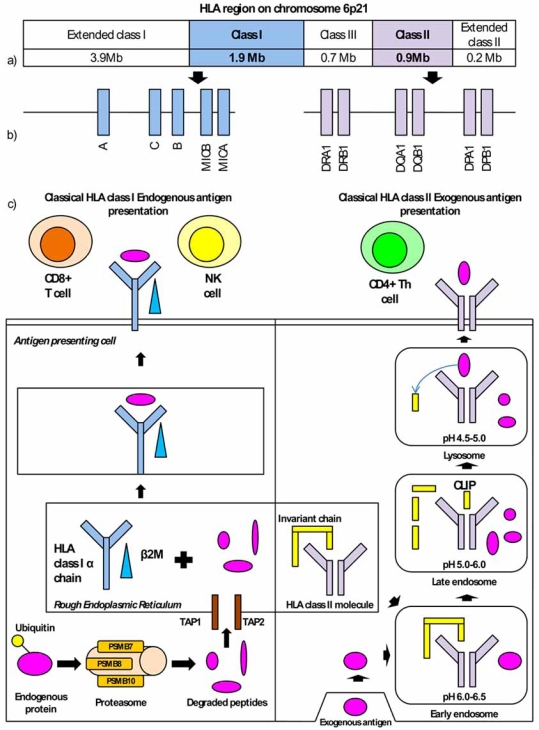
The HLA region encodes several molecules that play key roles in the immune system. Strong association between the HLA region and autoimmune disease (AID) has been established for over fifty years. Association of components of the HLA class II encoded HLA-DRB1-DQA1-DQB1 haplotype has been detected with several AIDs, including rheumatoid arthritis, type 1 diabetes and Graves' disease. Molecules encoded by this region play a key role in exogenous antigen presentation to CD4+ Th cells, indicating the importance of this pathway in AID initiation and progression. Although other components of the HLA class I and III regions have also been investigated for association with AID, apart from the association of HLA-B*27 with ankylosing spondylitis, it has been difficult to determine additional susceptibility loci independent of the strong linkage disequilibrium (LD) with the HLA class II genes. Recent advances in the statistical analysis of LD and the recruitment of large AID datasets have allowed investigation of the HLA class I and III regions to be re-visited. Association of the HLA class I region, independent of known HLA class II effects, has now been detected for several AIDs, including strong association of HLA-B with type 1 diabetes and HLA-C with multiple sclerosis and Graves' disease. These results provide further evidence of a possible role for bacterial or viral infection and CD8+ T cells in AID onset. The advances being made in determining the primary associations within the HLA region and AIDs will not only increase our understanding of the mechanisms behind disease pathogenesis but may also aid in the development of novel therapeutic targets in the future.
Overview
The claims and statistics of this paper haven’t been checked yet.
Free: it reads the open-access text and checks the first 5 claims that cite a source we can check. Create a free account to check every claim.
Integrity signals
Registry
Cites
Statistics
Figures
Verification
Claims the paper makes
The claims and statistics of this paper haven’t been checked yet.
Free: it reads the open-access text and checks the first 5 claims that cite a source we can check. Create a free account to check every claim.
Claims other papers make about this one
Each is checked against this paper’s own text: does it say what the citing paper says it does?
The source backs part of the claim, not all of it — or backs it for a different population, condition or comparison.
In the citing paper
“paternal immune disorders and a general familial history of immune disorders in the absence of maternal immune conditions also appear to contribute, suggesting a heritable component for this autoimmune association48,64.”
From Immune mediators in the brain and peripheral tissues in autism spectrum disorder (2015) · cites this paper as [48]
Experimental — accuracy not yet measuredThe check wasn’t confident either way, so it gives no verdict — never disputed.
In the citing paper
“Estimates indicate that there is up to a 50% increase in the odds of an ASD diagnosis among children who have a parent who has had an autoimmune disorder48,63.”
From Immune mediators in the brain and peripheral tissues in autism spectrum disorder (2015) · cites this paper as [48]
Experimental — accuracy not yet measuredIn the citing paper
“maternal immune disorders such as rheumatoid arthritis, SLE and type-1 diabetes account for the largest portion of this increased risk for ASD in offspring”
From Immune mediators in the brain and peripheral tissues in autism spectrum disorder (2015) · cites this paper as [48]
In the citing paper
“the HLA associations are not specific to ASD; they are also associated with other neurodevelopmental disorders and autoimmune disorders, including rheumatoid arthritis and SLE, which occur at higher rates in the relatives of individuals with ASD48.”
From Immune mediators in the brain and peripheral tissues in autism spectrum disorder (2015) · cites this paper as [48]
In the citing paper
“autoimmune disorders, allergies and asthma strongly associate with the families of children with ASD48.”
From Immune mediators in the brain and peripheral tissues in autism spectrum disorder (2015) · cites this paper as [48]
Self-check
Percentages, sums and reported differences re-computed from the paper’s own numbers.
The self-check needs the paper’s full text.
Citations
Cites
Genome-wide association study of 14,000 cases of seven common diseases and 3,000 shared controls
The Wellcome Trust Case Control Consortium, Management Committee, Burton, P. R., Clayton, D. G., Cardon, L. R., Craddock, N., Deloukas, P., Duncanson, A., Kwiatkowski, D. P., McCarthy, M. I., et al. (2007) · Nature · doi:10.1038/nature05911 · Cited by 9,442
The Structure of Haplotype Blocks in the Human Genome
Gabriel, S. B., Schaffner, S. F., Nguyen, H., Moore, J. M., Roy, J., Blumenstiel, B., Higgins, J., DeFelice, M., Lochner, A., Faggart, M., et al. (2002) · Science · doi:10.1126/science.1069424 · Cited by 5,863 · cited 1×
“It also exhibits the most dense linkage disequilibrium (LD) [5], extending up to 540kb, which compares with distances of between 1-173kb seen in the rest of the genome [6, 7].”
BackgroundGregersen, P. K., Silver, J., & Winchester, R. J. (1987) · Arthritis & Rheumatism · doi:10.1002/art.1780301102 · Cited by 2,599 · cited 2×
“Work by Gregerson, et al, showed that association of DRB1 alleles (DRB1*0101, DRB1*0102, DRB1*0401, DRB1*0404, DRB1*0405, DRB1*0408, DRB1*1001 and DRB1*1402) [18, 19] was due to similarities within the DRB1 peptide domain at positions 70 through to 74, with these alleles containing similar se- quences (QKRAA/QRRAA/RRR…”
BackgroundHLA-DQβ gene contributes to susceptibility and resistance to insulin-dependent diabetes mellitus
Todd, J. A., Bell, J. I., & McDevitt, H. O. (1987) · Nature · doi:10.1038/329599a0 · Cited by 2,036
High-resolution haplotype structure in the human genome
Daly, M. J., Rioux, J. D., Schaffner, S. F., Hudson, T. J., & Lander, E. S. (2001) · Nature Genetics · doi:10.1038/ng1001-229 · Cited by 1,717 · cited 1×
“It also exhibits the most dense linkage disequilibrium (LD) [5], extending up to 540kb, which compares with distances of between 1-173kb seen in the rest of the genome [6, 7].”
BackgroundAssociation scan of 14,500 nonsynonymous SNPs in four diseases identifies autoimmunity variants
Wellcome Trust Case Control Consortium, & The Australo-Anglo-American Spondylitis Consortium (TASC) (2007) · Nature Genetics · doi:10.1038/ng.2007.17 · Cited by 1,374
Compromised Function of Regulatory T Cells in Rheumatoid Arthritis and Reversal by Anti-TNFα Therapy
Ehrenstein, M. R., Evans, J. G., Singh, A., Moore, S., Warnes, G., Isenberg, D. A., & Mauri, C. (2004) · The Journal of Experimental Medicine · doi:10.1084/jem.20040165 · Cited by 1,252 · cited 1×
“Studies in RA have shown Treg populations to be compromised [40] , suggesting that RA could be associated with a failure to protect rather than a predisposition to disease.”
BackgroundGene map of the extended human MHC
Horton, R., Wilming, L., Rand, V., Lovering, R. C., Bruford, E. A., Khodiyar, V. K., Lush, M. J., Povey, S., Talbot, C. C., Wright, M. W., et al. (2004) · Nature Reviews Genetics · doi:10.1038/nrg1489 · Cited by 1,198 · cited 1×
“6Mb on chromosome 6p21 and is the most gene dense region within the human genome encoding 252 expressed loci [3] including several key immune response genes.”
BackgroundHL-A ANTIGENS AND DIABETES MELLITUS
Nerup, J., Platz, P., Andersen, O. O., Christy, M., Lyngsøe, J., Poulsen, J. E., Ryder, L. P., Thomsen, M., Nielsen, L. S., & Svejgaard, A. (1974) · The Lancet · doi:10.1016/s0140-6736(74)91201-x · Cited by 818 · cited 1×
“Early experiments investigating association of HLA-DR and -DQ with AID in T1D indicated a strong association of the DRB1*03 and DRB1*04 alleles [8-10].”
Backgroundde Bakker, P. I. W., McVean, G., Sabeti, P. C., Miretti, M. M., Green, T., Marchini, J., Ke, X., Monsuur, A. J., Whittaker, P., Delgado, M., et al. (2006) · Nature Genetics · doi:10.1038/ng1885 · Cited by 766
Cited by
Gender differences in autoimmune disease
Ngo, S. T., Steyn, F. J., & McCombe, P. A. (2014) · Frontiers in Neuroendocrinology · doi:10.1016/j.yfrne.2014.04.004 · Cited by 1,074
“genetic variability in the ability to present antigens (Gough and Simmonds, 2007).”
Antonelli, A., Ferrari, S. M., Corrado, A., Di Domenicantonio, A., & Fallahi, P. (2015) · Autoimmunity Reviews · doi:10.1016/j.autrev.2014.10.016 · Cited by 925
“Histocompatibility antigen (HLA) class II molecules play a key part in presenting exogenous antigens for recognition by CD4+ T-helper cells [19]; 4 IL2RA encodes CD25 which is expressed on T-regulatory cells and is believed to be important in downregulating T-cell activity [20].”
BackgroundPratt, C. H., King, L. E., Messenger, A. G., Christiano, A. M., & Sundberg, J. P. (2017) · Nature Reviews Disease Primers · doi:10.1038/nrdp.2017.11 · Cited by 787
Immune mediators in the brain and peripheral tissues in autism spectrum disorder
Estes, M. L., & McAllister, A. K. (2015) · Nature Reviews Neuroscience · doi:10.1038/nrn3978 · Cited by 514
Zhu, Z., Guo, Y., Shi, H., Liu, C.-L., Panganiban, R. A., Chung, W., O'Connor, L. J., Himes, B. E., Gazal, S., Hasegawa, K., et al. (2020) · Journal of Allergy and Clinical Immunology · doi:10.1016/j.jaci.2019.09.035 · Cited by 362
New insights in the pathogenesis of immunoglobulin A vasculitis (Henoch-Schönlein purpura)
Heineke, M. H., Ballering, A. V., Jamin, A., Ben Mkaddem, S., Monteiro, R. C., & Van Egmond, M. (2017) · Autoimmunity Reviews · doi:10.1016/j.autrev.2017.10.009 · Cited by 329
“The involvement of HLA genes could indicate that antigen presentation and T cell activation are important in controlling autoimmune diseases [77].”
BackgroundAlopecia areata: A multifactorial autoimmune condition
Simakou, T., Butcher, J. P., Reid, S., & Henriquez, F. L. (2019) · Journal of Autoimmunity · doi:10.1016/j.jaut.2018.12.001 · Cited by 309
Unravelling the human genome–phenome relationship using phenome-wide association studies
Bush, W. S., Oetjens, M. T., & Crawford, D. C. (2016) · Nature Reviews Genetics · doi:10.1038/nrg.2015.36 · Cited by 274
HLA-B27 and Human β2-Microglobulin Affect the Gut Microbiota of Transgenic Rats
Lin, P., Bach, M., Asquith, M., Lee, A. Y., Akileswaran, L., Stauffer, P., Davin, S., Pan, Y., Cambronne, E. D., Dorris, M., et al. (2014) · PLoS ONE · doi:10.1371/journal.pone.0105684 · Cited by 255
“In many conditions, the HLA alleles confer greater disease risk than other genetic factors identified by genome wide association studies [8].”
BackgroundVitiligo: An Update on Pathophysiology and Treatment Options
Speeckaert, R., & van Geel, N. (2017) · American Journal of Clinical Dermatology · doi:10.1007/s40257-017-0298-5 · Cited by 212
“Protein misfolding may occur, causing an unfolded protein stress response or the generation of autoantigens [18].”
AllerCatPro 2.0: a web server for predicting protein allergenicity potential
Nguyen, M. N., Krutz, N. L., Limviphuvadh, V., Lopata, A. L., Gerberick, G. F., & Maurer-Stroh, S. (2022) · Nucleic Acids Research · doi:10.1093/nar/gkac446 · Cited by 209
“Many human proteins such as HLA (human leukocyte antigen)-DR and type I interferons importantly contribute to the pathogenesis of autoimmune diseases for type-1 diabetes, rheumatoid arthritis, and systemic lupus erythematosus (19,20).”
Clinical Role of Human Leukocyte Antigen in Health and Disease
Mosaad, Y. M. (2015) · Scandinavian Journal of Immunology · doi:10.1111/sji.12329 · Cited by 208
Richardson, T. G., Harrison, S., Hemani, G., & Davey Smith, G. (2019) · eLife · doi:10.7554/elife.43657 · Cited by 198
Thyroid autoimmune disorders and cancer
Ferrari, S. M., Fallahi, P., Elia, G., Ragusa, F., Ruffilli, I., Paparo, S. R., & Antonelli, A. (2020) · Seminars in Cancer Biology · doi:10.1016/j.semcancer.2019.05.019 · Cited by 177
Neurological Syndromes Associated with Anti-GAD Antibodies
Dade, M., Berzero, G., Izquierdo, C., Giry, M., Benazra, M., Delattre, J., Psimaras, D., & Alentorn, A. (2020) · International Journal of Molecular Sciences · doi:10.3390/ijms21103701 · Cited by 179
Johansson, Å., Rask-Andersen, M., Karlsson, T., & Ek, W. E. (2019) · Human Molecular Genetics · doi:10.1093/hmg/ddz175 · Cited by 155
“380 An additional example is the HLA region whose association with immune diseases is 381 particularly complex and which has previously been suggested to include several 382 independent regulatory factors (31).”
Human Leukocyte Antigen–Disease Associations in Rheumatoid Arthritis
van Drongelen, V., & Holoshitz, J. (2017) · Rheumatic Disease Clinics of North America · doi:10.1016/j.rdc.2017.04.003 · Cited by 177
Fast and accurate HLA typing from short-read next-generation sequence data with xHLA
Xie, C., Yeo, Z. X., Wong, M., Piper, J., Long, T., Kirkness, E. F., Biggs, W., Bloom, K., Spellman, S. R., Vierra‐Green, C., et al. (2017) · Proceedings of the National Academy of Sciences · doi:10.1073/pnas.1707945114 · Cited by 158
“Forexample,autoimmune disorder patients often have chronic problems with no exact diagnosis for many years after repeated doctor visits (5, 6).”
BackgroundCellular and Molecular Mechanisms of Autoimmune Hepatitis
Webb, G. J., Hirschfield, G. M., Krawitt, E. L., & Gershwin, M. E. (2018) · Annual Review of Pathology: Mechanisms of Disease · doi:10.1146/annurev-pathol-020117-043534 · Cited by 142
The microbiota and autoimmunity: Their role in thyroid autoimmune diseases
Köhling, H.-L., Plummer, S. F., Marchesi, J. R., Davidge, K. S., & Ludgate, M. (2017) · Clinical Immunology · doi:10.1016/j.clim.2017.07.001 · Cited by 155
“The pathogenesis of AITDs is multifactorial including genetic predisposition for GD (Human Leukocyte Antigen (HLA) Class I molecules C*07 and B*08 as well as HLA Class II molecules DR3 and DRB1*08 [13], CD40, CTLA-4, PTPN22, FCRL3, thyroglobulin and TSHR, reviewed in [14]), pregnancy [4] and a variety of environmental…”
Relative Expression Levels of the HLA Class-I Proteins in Normal and HIV-Infected Cells
Apps, R., Meng, Z., Prete, G. Q. D., Lifson, J. D., Zhou, M., & Carrington, M. N. (2015) · The Journal of Immunology · doi:10.4049/jimmunol.1403234 · Cited by 156
Kerner, G., Neehus, A., Philippot, Q., Bohlen, J., Rinchai, D., Kerrouche, N., Puel, A., Zhang, S., Boisson‐Dupuis, S., Abel, L., et al. (2023) · Cell Genomics · doi:10.1016/j.xgen.2022.100248 · Cited by 150
GWAS in autoimmune thyroid disease: redefining our understanding of pathogenesis
Simmonds, M. J. (2013) · Nature Reviews Endocrinology · doi:10.1038/nrendo.2013.56 · Cited by 131
Self-citationSex differences and genomics in autoimmune diseases
Amur, S., Parekh, A., & Mummaneni, P. (2011) · Journal of Autoimmunity · doi:10.1016/j.jaut.2011.12.001 · Cited by 140
Pathogenesis of Autoimmune Hepatitis—Cellular and Molecular Mechanisms
Sîrbe, C., Simu, G. R., Szabo, I., Grama, A., & Pop, T. L. (2021) · International Journal of Molecular Sciences · doi:10.3390/ijms222413578 · Cited by 136
“The genetic architecture of autoimmune disorders encompasses complex traits, and the mechanism by which HLA regions confer susceptibility to developing autoimmunity is still undetermined [73].”
BackgroundRuiz-Ballesteros, A. I., Meza-Meza, M. R., Vizmanos-Lamotte, B., Parra‐Rojas, I., & la Cruz-Mosso, U. D. (2020) · International Journal of Molecular Sciences · doi:10.3390/ijms21249626 · Cited by 136
“HLA-DR and HLA-DQ were widely studied to establish the susceptibility or protective contribution to AIDs [22].”
BackgroundInfluentialAssociations between HLA and autoimmune neurological diseases with autoantibodies
Muñiz‐Castrillo, S., Vogrig, A., & Honnorat, J. (2020) · Autoimmunity Highlights · doi:10.1186/s13317-019-0124-6 · Cited by 126
MHC-I genotype and tumor mutational burden predict response to immunotherapy
Goodman, A. M., Castro, A., Pyke, R. M., Okamura, R., Kato, S., Riviere, P., Frampton, G., Sokol, E., Zhang, X., Ball, E. D., et al. (2020) · Genome Medicine · doi:10.1186/s13073-020-00743-4 · Cited by 109
“HLA-I genotype has been linked to a variety of different immune responses including infection [22], autoimmune diseases [23], and the graft versus host/tumor effect seen after allogeneic stem cell transplantation [24].”
BackgroundSarcoidosis as an Autoimmune Disease
Starshinova, A. A., Malkova, A. M., Basantsova, N. Y., Zinchenko, Y. S., Kudryavtsev, I. V., Ershov, G. A., Сопрун, Л. А., Mayevskaya, V. A., Churilov, L. P., & Yаblonskiy, P. K. (2020) · Frontiers in Immunology · doi:10.3389/fimmu.2019.02933 · Cited by 121
“The HLA genotypes are associated with many autoimmune diseases, which enabled us to use genotyping of their loci to determine susceptibility to certain diseases, the nature of the disease course, and the effectiveness of treatment (45).”
BackgroundHLA autoimmune risk alleles restrict the hypervariable region of T cell receptors
Ishigaki, K., Lagattuta, K. A., Luo, Y., James, E. A., Buckner, J. H., & Raychaudhuri, S. (2022) · Nature Genetics · doi:10.1038/s41588-022-01032-z · Cited by 105
Pemphigus trigger factors: special focus on pemphigus vulgaris and pemphigus foliaceus
Tavakolpour, S. (2017) · Archives of Dermatological Research · doi:10.1007/s00403-017-1790-8 · Cited by 108
“Major histocompatibility complex (MHC) genes, also known as HLA in humans, are the most discussed ones in autoimmune diseases, including pemphigus [51, 65, 150].”
Tenti, S., Correale, P., Cheleschi, S., Fioravanti, A., & Pirtoli, L. (2020) · International Journal of Molecular Sciences · doi:10.3390/ijms21165625 · Cited by 113
“In fact, the strong association between the MHC genomic region and autoimmune diseases has been established for over 50 years, as well as the role of human leucocyte antigen (HLA) (located within the MCH) in the development and progression of cancer [184,185].”
BackgroundHLA class I binding prediction via convolutional neural networks
Vang, Y. S., & Xie, X. (2017) · Bioinformatics · doi:10.1093/bioinformatics/btx264 · Cited by 99
Kourami: graph-guided assembly for novel human leukocyte antigen allele discovery
Lee, H., & Kingsford, C. (2018) · Genome Biology · doi:10.1186/s13059-018-1388-2 · Cited by 93
Novelli, L., Motta, F., Santis, M. D., Ansari, A. A., Gershwin, M. E., & Selmi, C. F. (2020) · Journal of Autoimmunity · doi:10.1016/j.jaut.2020.102592 · Cited by 106
“Moreover, HLA (both class I and class II) and non-HLA polymorphisms are associated with autoimmune diseases and the control of viral infections is largely mediated by the recognition of viral peptides in association with HLA-class I molecules by effector CD8 T cells [84].”
BackgroundPharmacogenetics: An Important Part of Drug Development with A Focus on Its Application
Lopez, D. (2018) · International Journal of Biomedical Investigation · doi:10.31531/2581-4745.1000111 · Cited by 98
Koloski, N., Jones, M., Walker, M. M., Veysey, M., Zala, A., Keely, S., Holtmann, G., & Talley, N. J. (2019) · Alimentary Pharmacology & Therapeutics · doi:10.1111/apt.15120 · Cited by 89
“In a similar fashion HLA‐DRB1 and DQA1‐DQB1 haplotypes have been associated with autoimmune diseases, including rheumatoid arthritis and type 1 diabetes.(36) Here, we confirm previous findings that IBS is a common condition reported by patients with rheumatoid arthritis.”
Genetic determination of the hypothalamic–pituitary–thyroid axis: where do we stand?
Medici, M., Visser, W. E., Visser, T. J., & Peeters, R. P. (2015) · Endocrine Reviews · doi:10.1210/er.2014-1081 · Cited by 92
“MAGI3 is a protein that modulates the activity of the AKT/PKB pathway (235), which plays a role in regulating apoptosis in the thyroid, a key step in the development of AITD (236, 237).”
BackgroundInfluentialInnate inflammation in type 1 diabetes
Cabrera, S. M., Henschel, A. M., & Hessner, M. J. (2015) · Translational research · doi:10.1016/j.trsl.2015.04.011 · Cited by 94
“These high risk alleles appear to be evolutionarily selected for their ability to present a broad range of microbial peptides to T-cells, but are associated with many autoimmune diseases (7), likely because of their propensity to also present self-peptides to T-cells (8).”
BackgroundCalis, J. J. A., de Boer, R. J., & Keşmir, C. (2012) · PLoS Computational Biology · doi:10.1371/journal.pcbi.1002412 · Cited by 87
“Still, a fraction of the immunogenic pMHCs were predicted to be overlapping with self, possibly because not all self-proteins induce tolerance or because regulatory processes are overridden during some viral infections causing autoimmunity [43].”
BackgroundGenetics and epigenetics of autoimmune thyroid diseases: Translational implications
Lee, H. J., Stefan–Lifshitz, M., Li, C. W., & Tomer, Y. (2022) · Best Practice & Research Clinical Endocrinology & Metabolism · doi:10.1016/j.beem.2022.101661 · Cited by 80
Sterenborg, R. B. T. M., Steinbrenner, I., Li, Y., Bujnis, M. N., Naito, T., Marouli, E., Galesloot, T. E., Babajide, O., Andreasen, L., Astrup, A., et al. (2024) · Nature Communications · doi:10.1038/s41467-024-44701-9 · Cited by 79
Psychological Stress-Induced Pathogenesis of Alopecia Areata: Autoimmune and Apoptotic Pathways
Ahn, D., Kim, H., Lee, B., & Hahm, D. (2023) · International Journal of Molecular Sciences · doi:10.3390/ijms241411711 · Cited by 89
“This sequence is closely related to various autoimmune diseases (including rheumatoid arthritis and type 1 diabetes), as it encodes the protein required for CD4+ T cell antigen presentation following the uptake of the corresponding antigens [42].”
BackgroundAlijotas‐Reig, J., Esteve‐Valverde, E., Gil-Aliberas, N., & Garcia-Gimenez, V. (2017) · Immunologic Research · doi:10.1007/s12026-017-8980-5 · Cited by 77
“The risk of suffering autoimmune or granulomatous disorders has been related to different HLA haplotypes, mainly classes I and II but rarely class III [131].”
BackgroundHLA association in MOG-IgG– and AQP4-IgG–related disorders of the CNS in the Dutch population
Bruijstens, A. L., Wong, Y. Y. M., van Pelt, D., van der Linden, P. J. E., Haasnoot, G. W., Hintzen, R. Q., Claas, F. H. J., Neuteboom, R. F., & Wokke, B. H. A. (2020) · Neurology Neuroimmunology & Neuroinflammation · doi:10.1212/nxi.0000000000000702 · Cited by 75
“Of interest, this ancestral European haplotype including HLADRB1*03 has also been linked to several other autoimmune diseases, such as SLE, Sjögren syndrome, myasthenia gravis, Graves disease, and celiac disease.(32,33) This is in accordance with the clinical observation in AQP4-IgG–seropositive patients that around 2…”
BackgroundResultGenetic and environmental determinants of human TCR repertoire diversity
Krishna, C., Chowell, D., Gönen, M., Elhanati, Y., & Chan, T. A.-T. (2020) · Immunity & Ageing · doi:10.1186/s12979-020-00195-9 · Cited by 79
Mäkimattila, S., Harjutsalo, V., Forsblom, C. M., & Groop, P. (2020) · Diabetes Care · doi:10.2337/dc19-2429 · Cited by 77
“Therefore, it is not unexpected that there is a strong association between the HLA region and the ADs because this locus encodes several molecules that play key roles in the immune system (5).”
BackgroundGender Differences at the Onset of Autoimmune Thyroid Diseases in Children and Adolescents
Calcaterra, V., Nappi, R. E., Regalbuto, C., SILVESTRI, A. D., Incardona, A., Amariti, R., Bassanese, F., Clemente, A. M., Vinci, F., Albertini, R., et al. (2020) · Frontiers in Endocrinology · doi:10.3389/fendo.2020.00229 · Cited by 80
Molecular Signatures Differentiate Immune States in Type 1 Diabetic Families
Chen, Y., Cabrera, S. M., Jia, S., Kaldunski, M. L., Kramer, J., Cheong, S., Geoffrey, R., Roethle, M. F., Woodliff, J. E., Greenbaum, C. J., et al. (2014) · Diabetes · doi:10.2337/db14-0214 · Cited by 72
“The DR3 and DR4 HLA haplotypes are associated with many autoimmune diseases (42).”
BackgroundDebnath, M., Cannon, D. M., & Venkatasubramanian, G. (2012) · Progress in Neuro-Psychopharmacology and Biological Psychiatry · doi:10.1016/j.pnpbp.2012.07.009 · Cited by 76
Sex bias in MHC I-associated shaping of the adaptive immune system
Schneider‐Hohendorf, T., Görlich, D., Savola, P., Kelkka, T., Mustjoki, S. M., Groß, C. C., Owens, G. C., Klotz, L., Dornmair, K., Wiendl, H., et al. (2018) · Proceedings of the National Academy of Sciences · doi:10.1073/pnas.1716146115 · Cited by 73
“Many studies have been conducted concerning either sex (25), HLA (29, 30), or TCR (31) associations with diseases.”
BackgroundT-Cell Receptor Repertoire Sequencing and Its Applications: Focus on Infectious Diseases and Cancer
Mazzotti, L., Gaimari, A., Bravaccini, S., Maltoni, R., Cerchione, C., Juan, M., González‐Navarro, E. A., Pasetto, A., Silva, D. N., Ancarani, V., et al. (2022) · International Journal of Molecular Sciences · doi:10.3390/ijms23158590 · Cited by 70
“- HLA-B with type 1 diabetes (T1D) [37]; - HLA-C with multiple sclerosis (MS) and Graves’ disease (GD) [37]; - HLA B-27 with ankylosing spondylitis (AS) [38]; - HLA-DRB1, in particular HLA-DRB1*04 and *10 alleles [39] in rheumatoid arthritis (RA); - HLA-G with Crohn’s disease (CD) [40].”
BackgroundSystemic maternal inflammation promotes ASD via IL-6 and IFN-γ
Majerczyk, D., Ayad, E., Brewton, K. L., Saing, P., & Hart, P. C. (2022) · Bioscience Reports · doi:10.1042/bsr20220713 · Cited by 72
Impact of host genetic polymorphisms on vaccine induced antibody response
Linnik, J., & Egli, A. (2016) · Human Vaccines & Immunotherapeutics · doi:10.1080/21645515.2015.1119345 · Cited by 70
Blood-based signatures in type 1 diabetes
Cabrera, S. M., Chen, Y.-G., Hagopian, W., & Hessner, M. J. (2015) · Diabetologia · doi:10.1007/s00125-015-3843-x · Cited by 65
“These HLA haplotypes are observed in >90% of type 1 diabetic patients [11] and are associated with other autoimmune diseases [12], yet are carried by ~40% of the Europid population.”
The Italian genome reflects the history of Europe and the Mediterranean basin
Fiorito, G., GAETANO, C. D., Guarrera, S., Rosa, F., Feldman, M. W., Piazza, A., & Matullo, G. (2015) · European Journal of Human Genetics · doi:10.1038/ejhg.2015.233 · Cited by 71
“…between the islanders and the mainland Italians for the SNPs located on chromosome 6, in the HLA-A complex locus involved in the immune response, 38 which may at least partly explain the increased prevalence in the island of immune and autoimmune diseases, such as type 1 diabetes and multiple…”
Buchkovich, M. L., Brown, C., Robasky, K., Chai, S., Westfall, S., Vincent, B. G., Weimer, E. T., & Powers, J. (2017) · Genome Medicine · doi:10.1186/s13073-017-0473-6 · Cited by 62
Tubulointerstitial nephritis and uveitis
Pakzad-Vaezi, K. L., & Pepple, K. L. (2017) · Current Opinion in Ophthalmology · doi:10.1097/icu.0000000000000421 · Cited by 67
Turner, T. R., Hayhurst, J. D., Hayward, D. R., Bultitude, W. P., Barker, D. J., Robinson, J., Madrigal, J. A., Mayor, N. P., & Marsh, S. G. E. (2017) · HLA · doi:10.1111/tan.13184 · Cited by 62
Yang, H., Liu, D., Zhao, C., Feng, B., Lu, W., Yang, X., Xu, M., Zhou, W., Jing, H., & Yang, J. (2021) · Translational Psychiatry · doi:10.1038/s41398-021-01348-0 · Cited by 64
Regulatory T cell-based therapies for autoimmunity.
Arellano, B., Graber, D. J., & Sentman, C. L. (2016) · PubMed · Cited by 57
Webber, D., Cao, J., Domínguez, D., Gladman, D. D., Levy, D. M., Ng, L., Paterson, A. D., Touma, Z., Urowitz, M. B., Wither, J., et al. (2019) · Rheumatology · doi:10.1093/rheumatology/kez220 · Cited by 57
Genomic approaches in the search for molecular biomarkers in chronic kidney disease
Cañadas‐Garre, M., Anderson, K., McGoldrick, J., Maxwell, A. P., & McKnight, A. J. (2018) · Journal of Translational Medicine · doi:10.1186/s12967-018-1664-7 · Cited by 59
Autoantibodies in Morphea: An Update
Khatri, S., Torok, K. S., Mirizio, E., Liu, C., & Astakhova, K. (2019) · Frontiers in Immunology · doi:10.3389/fimmu.2019.01487 · Cited by 56
Zakharova, M. Y., Belyanina, T. A., Av, S., Сергеевич, К. И., & Mamedov, A. E. (2019) · Acta Naturae · doi:10.32607/20758251-2019-11-4-4-12 · Cited by 59
Singh, N., Hocking, A. M., & Buckner, J. H. (2023) · Immunological Reviews · doi:10.1111/imr.13247 · Cited by 55
Nexø, B. A., Villesen, P., Nissen, K. K., Lindegaard, H., Rossing, P. R., Petersen, T., Tarnow, L., Hansen, B. D., Lorenzen, T., Hørslev‐Petersen, K., et al. (2015) · Immunologic Research · doi:10.1007/s12026-015-8671-z · Cited by 57
“Strong associations between the HLA region and autoimmune disease have been established over the past half century [27].”
BackgroundThe Genetic Basis of Graves Disease
Płoski, R., Szymanski, K., & Bednarczuk, T. (2011) · Current Genomics · doi:10.2174/138920211798120772 · Cited by 59
“The majority of autoimmune diseases including GD display strong associations with HLA variants [21].”
BackgroundKong, B. S., Kim, Y., Kim, G. Y., Hyun, J., Kim, S., Jeong, A., & Kim, H. J. (2017) · Journal of Neuroinflammation · doi:10.1186/s12974-017-0961-z · Cited by 57
“and propagation of autoimmune diseases [46, 47].”
D’Antonio, M., Reyna, J., D’Antonio‐Chronowska, A., Bonder, M. J., Jakubosky, D. A., Matsui, H., Smith, E. N., Stegle, O., Nariai, N., & Frazer, K. A. (2019) · eLife · doi:10.7554/elife.48476 · Cited by 55
Nudel, R., Benros, M. E., Krebs, M. D., Allesøe, R. L., Lemvigh, C. K., Bybjerg‐Grauholm, J., Børglum, A. D., Daly, M. J., Nordentoft, M., Mors, O. N., et al. (2019) · European Journal of Human Genetics · doi:10.1038/s41431-019-0402-9 · Cited by 52
“While many robust associations of HLA genes with autoimmune diseases have been reported [4], several class I and class II HLA genes have also been implicated in psychiatric and neurodevelopmental disorders, albeit with uneven reproducibility.”
BackgroundHistory of narcolepsy at Stanford University
Mignot, E. J.-M. (2014) · Immunologic Research · doi:10.1007/s12026-014-8513-4 · Cited by 53
Epigenomic elements enriched in the promoters of autoimmunity susceptibility genes
Dozmorov, M. G., Wren, J. D., & Alarcón-Riquelme, M. E. (2013) · Epigenetics · doi:10.4161/epi.27021 · Cited by 49
“166), better known as the HLA region, which is critically important in autoimmunity.(25) Out of those, 47 histone cluster 1 genes were enriched in KEGG’s “systemic lupus erythematosus” pathway (P < 10−5, FDR < 0.”
BackgroundPisapia, L., Camarca, A., Picascia, S., Bassi, V., Barba, P., Pozzo, G. D., & Gianfrani, C. (2016) · Journal of Autoimmunity · doi:10.1016/j.jaut.2016.03.016 · Cited by 50
Shin, D., Baek, I., Kim, H. J., Choi, E., Ahn, M. B., Jung, M. H., Suh, B., Cho, W. K., & Kim, T. (2019) · PLoS ONE · doi:10.1371/journal.pone.0216941 · Cited by 48
Lande, A., Fluge, Ø., Strand, E. B., Flåm, S. T., Sosa, D. D., Mella, O., EGELAND, T., Saugstad, O. D., Lie, B. A., & Viken, M. K. (2020) · Scientific Reports · doi:10.1038/s41598-020-62157-x · Cited by 49
Beyond the HLA Genes in Gluten-Related Disorders
Sallese, M., Lopetuso, L. R., Efthymakis, K., & Neri, M. (2020) · Frontiers in Nutrition · doi:10.3389/fnut.2020.575844 · Cited by 48
“HLADR4 is also associated to rheumatoid arthritis (22).”
BackgroundThe New Kid on the Block: HLA-C, a Key Regulator of Natural Killer Cells in Viral Immunity
Vollmers, S., Lobermeyer, A., & Körner, C. (2021) · Cells · doi:10.3390/cells10113108 · Cited by 34
Vaughn, A. H., & Nielsen, R. (2024) · Molecular Biology and Evolution · doi:10.1093/molbev/msae156 · Cited by 49
“We speculate that this relatively recent selection on a gene in the HLA region, which is known to be associated with immune function (Gough and Simmonds 2007), could be the result of increasing population density and exposure to domesticated animals that occurred around this time (Page et al. 2016;…”
Kutteh, W. H., Stanic, A. K., & Schust, D. J. (2019) · Elsevier eBooks · doi:10.1016/b978-0-323-47912-7.00013-5 · Cited by 47
James, L. M., Christova, P. S., Engdahl, B. E., Lewis, S. M., Carpenter, A. F., & Georgopoulos, A. P. (2017) · EBioMedicine · doi:10.1016/j.ebiom.2017.11.005 · Cited by 43
“HLA class II alleles have been strongly associated with various immune-related conditions including multiple sclerosis, rheumatoid arthritis, systemic lupus erythematosus, celiac disease, Crohn's disease, and Graves' disease, among others (Shiina et al., 2009; Gough and Simmonds, 2007).”
BackgroundPłoski, R., Brand, O. J., Jurecka‐Lubieniecka, B., Franaszczyk, M., Kula, D., Krajewski, P., Karamat, M. A., Simmonds, M. J., Franklyn, J. A., Gough, S. C. L., et al. (2010) · PLoS ONE · doi:10.1371/journal.pone.0015512 · Cited by 43
“50) to those observed in the original report [13], confirming that the TSHR represents a major susceptibility locus for GD in-line with other previously identified non-HLA susceptibility loci [22] including CTLA4 [23] and PTPN22 [24].”
ResultSelf-citationAbed, A., Law, N., Calapre, L., Lo, J., Bhat, V., Bowyer, S. E., Millward, M., & Gray, E. S. (2022) · European Journal of Cancer · doi:10.1016/j.ejca.2022.05.021 · Cited by 45
Brčić, L., Barić, A., Gračan, S., Brdar, D., Lovrić, V. T., Vidan, N., Zemunik, T., Polašek, O., Barbalić, M., Punda, A., et al. (2016) · Autoimmunity · doi:10.1080/08916934.2016.1191475 · Cited by 42
The Immune System and Its Contribution to Variability in Regenerative Medicine
Moore, E., Maestas, D. R., Comeau, H. Y., & Elisseeff, J. H. (2020) · Tissue Engineering Part B Reviews · doi:10.1089/ten.teb.2019.0335 · Cited by 46
“Vaccination and cancer recurrence also critically connect HLA alleles with cancer recurrence risk.(95) It is unknown how HLA may impact the response to tissue trauma and tissue-engineered systems.”
BackgroundHLA-associated Drug Hypersensitivity and the Prediction of Adverse Drug Reactions
Negrini, S., & Becquemont, L. (2017) · Pharmacogenomics · doi:10.2217/pgs-2017-0090 · Cited by 43
Glanville, K. P., Coleman, J. R. I., Hanscombe, K. B., Euesden, J., Choi, S. W., Purves, K. L., Breen, G. D., Air, T., Andlauer, T. F. M., Baune, B. T., et al. (2019) · Biological Psychiatry · doi:10.1016/j.biopsych.2019.06.031 · Cited by 41
Periodontal disease and women’s health
Martelli, M. L., Brandi, M. L., Martelli, M., Nobili, P., Médico, E., & Martelli, F. (2017) · Current Medical Research and Opinion · doi:10.1080/03007995.2017.1297928 · Cited by 48
Genetic and immunologic susceptibility to statin-related myopathy
Patel, J., Superko, H. R., Martin, S. S., Blumenthal, R. S., & Christopher‐Stine, L. (2015) · Atherosclerosis · doi:10.1016/j.atherosclerosis.2015.03.025 · Cited by 42
“White anti-HMGCR patients had a higher frequency of the combination HLA-DR11/DQA5/DQB7 than controls or statin-intolerant subjects.”
BackgroundInfluentialAtopy as Immune Dysregulation: Offender Genes and Targets
Vaseghi‐Shanjani, M., Snow, A. L., Margolis, D. J., Latrous, M., Milner, J. D., Turvey, S. E., & Biggs, C. M. (2022) · The Journal of Allergy and Clinical Immunology In Practice · doi:10.1016/j.jaip.2022.04.001 · Cited by 40
Uçar, F., Karkucak, M., Alemdaroğlu, E., Çapkın, E., Yücel, B., Sönmez, M., Tosun, M., & Karaca, A. (2011) · Rheumatology International · doi:10.1007/s00296-010-1792-8 · Cited by 40
“Other allele associations with RA are DRB1*01 in French [22], Latin Americans [26, 27], Asians [29–31], and Caucasians [32, 33], DRB1*09 in Asians [31], Chilean [26], Koreans [34, 35], and UK Caucasians [10, 13, 16].”
BackgroundEvidence for sexual conflict over major histocompatibility complex diversity in a wild songbird
Roved, J., Hansson, B., Tarka, M., Hasselquist, D., & Westerdahl, H. (2018) · Proceedings of the Royal Society B Biological Sciences · doi:10.1098/rspb.2018.0841 · Cited by 42
Alvarenga, M. P., do Carmo, L. F., Vasconcelos, C. C. F., Alvarenga, M. P., Alvarenga-Filho, H., Bento, C. A. M., Paiva, C. L. A., Leyva-Fernández, L., Fernández, Ó., & Alvarenga, R. M. P. (2021) · Scientific Reports · doi:10.1038/s41598-020-80535-3 · Cited by 41
Genetic basis of defects in immune tolerance underlying the development of autoimmunity
Hocking, A. M., & Buckner, J. H. (2022) · Frontiers in Immunology · doi:10.3389/fimmu.2022.972121 · Cited by 43
“The HLA Class II region has the strongest genetic association with human autoimmune diseases (15), underscoring the importance of antigen presentation for immune tolerance.”
BackgroundGermline genetic variation and predicting immune checkpoint inhibitor induced toxicity
Chin, I. S., Khan, A., Olsson-Brown, A. C., Papa, S., Middleton, G., & Palles, C. (2022) · npj Genomic Medicine · doi:10.1038/s41525-022-00345-6 · Cited by 43
Pemphigus: trigger and predisposing factors
Moro, F., Sinagra, J. L., Salemme, A., Fania, L., Mariotti, F., Pira, A., Didona, B., & Zenzo, G. D. (2023) · Frontiers in Medicine · doi:10.3389/fmed.2023.1326359 · Cited by 38
“MHC genes, called human leucocyte antigens (HLA) in humans, are the most involved genetic factors in pemphigus (147, 148).”
BackgroundHLA ‐C: An Accomplice in Rheumatic Diseases
Siegel, R. J., Bridges, S. L., & Ahmed, S. (2019) · ACR Open Rheumatology · doi:10.1002/acr2.11065 · Cited by 39
PSORS1C1 may be involved in rheumatoid arthritis
Sun, H., Xia, Y., Wang, L., Wang, Y., & Chang, X. (2013) · Immunology Letters · doi:10.1016/j.imlet.2013.06.001 · Cited by 35
Expression of classical HLA class I molecules: regulation and clinical impacts
René, C., Lozano, C., & Eliaou, J. (2016) · HLA · doi:10.1111/tan.12787 · Cited by 44
“Various genetic studies have shown that polymorphisms within HLA gene loci are strongly associated with susceptibility to autoimmune disorders (81).”
BackgroundInteraction of HLA-DRB1* alleles and CTLA4 (+ 49 AG) gene polymorphism in Autoimmune Thyroid Disease
Sivanadham, R., Chinniah, R., Padma, M. R., Murali, V., Arun, K., Kamaludeen, M. N., & Balakrishnan, K. (2017) · Gene · doi:10.1016/j.gene.2017.11.057 · Cited by 39
Metadata
- Authors
- Simmonds, M., & Gough, S.
- Affiliations
- University of Birmingham (GB)
- Corresponding author
- Simmonds, M.
- ORCID
- Simmonds, M.
- Venue
- Current Genomics
- Publisher
- Bentham Science Publishers Ltd.
- Published
- 2007-11-01
- Volume
- 8
- Issue
- 7
- Pages
- 453-465
- ISSN
- 1389-2029 (ISSN-L)
- PMC
- PMC2647156
- OpenAlex
- W2052655883
- Cited by
- 472
- References
- 163
- Citations by year
- 2026: 21 · 2025: 32 · 2024: 53 · 2023: 40 · 2022: 42 · 2021: 42 · 2020: 29 · 2019: 45 · 2018: 37 · 2017: 40 · 2016: 23 · 2015: 25 · 2014: 11 · 2013: 11 · 2012: 5
- FWCI
- 1.79
- Type
- journal article
- Language
- en
- Open access
- bronze
- doi.org
- Locations
- Current Genomics (publishedVersion)
- PubMed Central (publishedVersion, cc-by)
- PubMed (publishedVersion)
- Lincoln Repository (University of Lincoln) (acceptedVersion)
- Figshare (submittedVersion, cc-by)
- University of Birmingham Research Portal (University of Birmingham) (submittedVersion)
- Funders
- Wellcome Trust
- Topics
- Life Sciences › Biochemistry, Genetics and Molecular Biology › Genetics › Genetic Associations and Epidemiology
- Life Sciences › Biochemistry, Genetics and Molecular Biology › Genetics › Diabetes and associated disorders
- Life Sciences › Biochemistry, Genetics and Molecular Biology › Molecular Biology › vaccines and immunoinformatics approaches
- Keywords
- HLA region, autoimmune disease, HLA class II, HLA class I, HLA class III, HLA-B27, ankylosing spondylitis, rheumatoid arthritis, type 1 diabetes, Graves' disease, multiple sclerosis, HLA-C, HLA-B, linkage disequilibrium, antigen presentation, CD4+ T cells, CD8+ T cells, disease susceptibility loci, pathogenesis
About these checks
Registry, retraction, Cites and statistics results are computed, not judged, with one exception: a printed reference that no index lists is read once by a model before it counts as a citation error. Claims are extracted by a model and kept only when their quote appears verbatim in the text; each cited source is then checked, with a model’s help, for whether it says what the claim relies on. Those verdicts can be wrong — read the claim’s quote and the cited source before relying on one.
Statistics and arithmetic are recomputed, not judged.
Confidence bands are shown only for fields calibrated on our annotated test set. None is calibrated yet, so no band is shown.
What counts as a claim ›How we measure confidence ›How we check this ›
Are you an author, or do you see a problem with this page? Request a review
Data sources
Bibliographic data: Semantic Scholar, OpenAlex, Crossref.
Contains information from the Semantic Scholar Academic Graph Datasets, made available under the ODC Attribution License (ODC-BY 1.0).
Semantic Scholar’s data is described in: Kinney, R., et al. (2023). The Semantic Scholar Open Data Platform. arXiv:2301.10140.
