

The DOI matches its Crossref record; 85 of the 85 references it cites were found in a registry or an index.
The role of androgen receptor mutations in prostate cancer progression.
Open accessAbstract
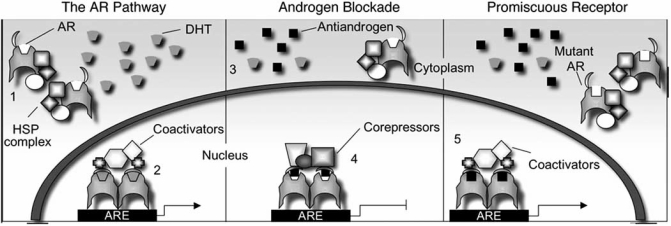
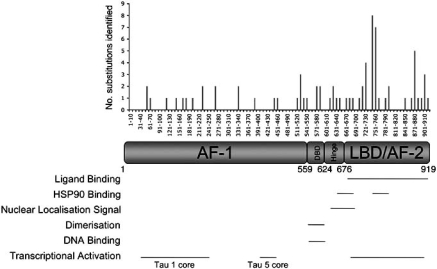
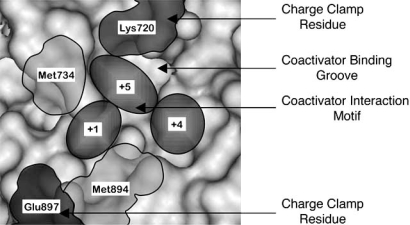
Prostate tumour growth is almost always dependent upon the androgen receptor pathway and hence therapies aimed at blocking this signalling axis are useful tools in the management of this disease. Unfortunately such therapies invariably fail; and the tumour progresses to an "androgen-independent" stage. In such cases androgen receptor expression is almost always maintained and much evidence exists to suggest that it may still be driving growth. One mechanism by which the receptor is thought to remain active is mutation. This review summarises the present data on androgen receptor mutations in prostate cancer, and how such substitutions offer a growth advantage by affecting cofactor interactions or by reducing ligand specificity. Such alterations appear to have a subsequent effect upon gene expression suggesting that tumours may "behave" differently dependent upon the ligand promoting growth and if a mutation is present.
Overview
The claims and statistics of this paper haven’t been checked yet.
Run the check — free, no account needed. It reads the open-access text and checks the sources it cites.
Integrity signals
Registry
Cites
Statistics
Figures
Verification
Claims the paper makes
The claims and statistics of this paper haven’t been checked yet.
Run the check — free, no account needed. It reads the open-access text and checks the sources it cites.
Claims other papers make about this one
Each is checked against this paper’s own text: does it say what the citing paper says it does?
In the citing paper
“Activating mutations of the AR have the capacity to create a promiscuous receptor, alter interactions with coregulatory proteins, and impair intramolecular N-C interactions (71).”
From Minireview: Alternative Activation Pathways for the Androgen Receptor in Prostate Cancer (2011) · cites this paper as [71]
In the citing paper
“Approximately 70 different missense mutations have been described in patient samples, with varying consequences upon AR activity.”
From Minireview: Alternative Activation Pathways for the Androgen Receptor in Prostate Cancer (2011) · cites this paper as [71]
Self-check
Percentages, sums and reported differences re-computed from the paper’s own numbers.
The self-check needs the paper’s full text.
Citations
Cites
The nuclear receptor superfamily: the second decade
Mangelsdorf, D. J., Thummel, C., Beato, M., Herrlich, P., Schütz, G., Umesono, K., Blumberg, B., Kastner, P., Mark, M., Chambon, P., et al. (1995) · Cell · doi:10.1016/0092-8674(95)90199-x · Cited by 6,964
Gene regulation by steroid hormones
Beato, M. (1989) · Cell · doi:10.1016/0092-8674(89)90237-7 · Cited by 3,383
Molecular basis of agonism and antagonism in the oestrogen receptor
Brzozowski, A. M., Pike, A. C. W., Dauter, Z., Hubbard, R. E., Bonn, T., Engström, O., Öhman, L., Greene, G. L., Gustafsson, J.-Å., & Carlquist, M. (1997) · Nature · doi:10.1038/39645 · Cited by 3,355
MOLECULAR MECHANISMS OF ACTION OF STEROID/THYROID RECEPTOR SUPERFAMILY MEMBERS
Tsai, M., & O’Malley, B. W. (1994) · Annual Review of Biochemistry · doi:10.1146/annurev.bi.63.070194.002315 · Cited by 2,887
Androgen receptor gene mutations in X-linked spinal and bulbar muscular atrophy
Spada, A. L., Wilson, E. M., Lubahn, D. B., Harding, A., & Fischbeck, K. (1991) · Nature · doi:10.1038/352077a0 · Cited by 2,801
The development of androgen-independent prostate cancer.
Feldman, B. J., & Feldman, D. (2001) · Nature reviews. Cancer · doi:10.1038/35094009 · Cited by 2,326
A signature motif in transcriptional co-activators mediates binding to nuclear receptors
Heery, D. M., Kalkhoven, E., Hoare, S., & Parker, M. G. (1997) · Nature · doi:10.1038/42750 · Cited by 2,128
Steroid Receptor Interactions with Heat Shock Protein and Immunophilin Chaperones*
Pratt, W. B., & Toft, D. O. (1997) · Endocrine Reviews · doi:10.1210/edrv.18.3.0303 · Cited by 1,791
Mutation of the Androgen-Receptor Gene in Metastatic Androgen-Independent Prostate Cancer
Taplin, M., Bubley, G. J., Shuster, T. D., Frantz, M. E., Spooner, A. E., Ogata, G. K., Keer, H. N., & Balk, S. P. (1995) · New England Journal of Medicine · doi:10.1056/nejm199505253322101 · Cited by 1,243
Crystal structure of the RAR-γ ligand-binding domain bound to all-trans retinoic acid
Renaud, J., Rochel, N., Ruff, M., Vivat, V., Chambon, P., Gronemeyer, H., & Moras, D. (1995) · Nature · doi:10.1038/378681a0 · Cited by 1,118
Research works printed but not linked: 3
- [59]Brooks J Walsh P A.R Darracott Vaughan E Wein A Anatomy of the lower urinary tract and male genitalia Campbell's Urology 2002 London Saunders 41 80
- [64]Shepherd DL Harris M Thompson I Syrigos K Radical Prostatectomy in the management of localised prostate cancer Prostate Cancer: Biology, Diagnosis and Management 2001 Oxford Oxford University Press 229 242
- [72]Taplin M-E Bubley GJ Shuster TD Frantz ME Spooner AE Ogata GK Keer HN Balk SP Mutation of the androgen-receptor gene in metastatic androgen-independent prostate cancer N. Engl. J. Med 1995 332 1393 1398 7723794
Cited by
Sorted by citations
Items 101–185 of 185
PET Imaging of Steroid Hormone Receptor Expression
Allott, L., Smith, G. S. T., Aboagye, E. O., & Carroll, L. S. (2015) · Molecular Imaging · doi:10.2310/7290.2015.00026 · Cited by 15
Biomarker-Based Targeting of the Androgen-Androgen Receptor Axis in Advanced Prostate Cancer
Kohli, M., Qin, R., Jiménez, R. E., & Dehm, S. M. (2012) · Advances in Urology · doi:10.1155/2012/781459 · Cited by 14
TIP30: A Novel Tumor-Suppressor Gene
Yu, X., Li, Z., & Wu, W. K. K. (2015) · Oncology Research Featuring Preclinical and Clinical Cancer Therapeutics · doi:10.3727/096504015x14424348426116 · Cited by 14
Cha, S., Shin, D. H., Seok, J. R., & Myung, J. (2017) · Experimental Cell Research · doi:10.1016/j.yexcr.2017.07.026 · Cited by 15
Therapeutic prospects of sex hormone receptor signaling in hormone-responsive cancers
Boye, A., Osei, S. A., & Brah, A. S. (2024) · Biomedicine & Pharmacotherapy · doi:10.1016/j.biopha.2024.117473 · Cited by 14
Huang, K.-C., Alshalalfa, M., Hegazy, S. A., Dolph, M., Donnelly, B. J., & Bismar, T. A. (2014) · Cancer Biology & Therapy · doi:10.4161/cbt.29689 · Cited by 13
Targeting extra-gonadal androgens in castration-resistant prostate cancer
Grist, E., Bono, J. S. D., & Attard, G. (2014) · The Journal of Steroid Biochemistry and Molecular Biology · doi:10.1016/j.jsbmb.2014.09.006 · Cited by 13
Hsp-27 and NF-κB pathway is associated with AR/AR-V7 expression in prostate cancer cells
Kılıçcıoğlu, İ., Konaç, E., Dikmen, A. U., Sözen, S., & Bilen, C. Y. (2019) · Gene · doi:10.1016/j.gene.2019.02.055 · Cited by 13
Chemical modulation of transcription factors
Wiedemann, B. M., Weisner, J., & Rauh, D. (2018) · MedChemComm · doi:10.1039/c8md00273h · Cited by 12
Whole-exome sequencing of Indian prostate cancer reveals a novel therapeutic target: POLQ
Ravindran, F., Jain, A., Desai, S. S., Menon, N., Srivastava, K., Bawa, P., Sateesh, K., Srivatsa, N., Raghunath, S. K., Srinivasan, S., et al. (2022) · Journal of Cancer Research and Clinical Oncology · doi:10.1007/s00432-022-04111-0 · Cited by 12
Distinct transcriptional repertoire of the androgen receptor in ETS fusion-negative prostate cancer
Berglund, A., Rounbehler, R. J., Gerke, T. A., Awasthi, S., Cheng, C., Takhar, M. M., Davicioni, E., Alshalalfa, M., Erho, N., Klein, E. A., et al. (2018) · Prostate Cancer and Prostatic Diseases · doi:10.1038/s41391-018-0103-4 · Cited by 12
Differential regulation of the androgen receptor by protein phosphatase regulatory subunits
Grey, J., Jones, D. L., Wilson, L., Nakjang, S., Clayton, J., Temperley, R., Clark, E., Gaughan, L., & Robson, C. N. (2017) · Oncotarget · doi:10.18632/oncotarget.22883 · Cited by 13
The Hippo pathway: an emerging role in urologic cancers.
Cinar, B., Alp, E., Al‐Mathkour, M. M., Boston, A. M., Dwead, A. M., Khazaw, K., & Gregory, A. (2021) · Europe PMC (PubMed Central) · Cited by 13
Freeman, M. N., Jang, A., Zhu, J., Sanati, F., Nandagopal, L., Ravindranathan, D., Desai, A., Phone, A., Nussenzveig, R. H., Jaeger, E., et al. (2022) · The Oncologist · doi:10.1093/oncolo/oyab057 · Cited by 11
Engineered repressors are potent inhibitors of androgen receptor activity
Brooke, G. N., Powell, S. M., Lavery, D. N., Waxman, J., Buluwela, L., Ali, S., & Bevan, C. L. (2014) · Oncotarget · doi:10.18632/oncotarget.1360 · Cited by 11
Dart, D. A., Kandil, S., Tommasini-Ghelfi, S., de Almeida, G. S., Bevan, C. L., Jiang, W. G., & Westwell, A. D. (2018) · Molecular Cancer Therapeutics · doi:10.1158/1535-7163.mct-18-0037 · Cited by 11
Inhibition of the Androgen Receptor Activity by Coprinus comatus Substances
Dotan, N., Wasser, S. P., & Mahajna, J. A. (2011) · Nutrition and Cancer · doi:10.1080/01635581.2011.607542 · Cited by 10
Dellafiora, L., Galaverna, G., Cruciani, G., & Dall’Asta, C. (2019) · Food and Chemical Toxicology · doi:10.1016/j.fct.2019.05.033 · Cited by 9
Use of Antiandrogens as Therapeutic Agents in COVID-19 Patients
Giotis, E. S., Cil, E., & Brooke, G. N. (2022) · Viruses · doi:10.3390/v14122728 · Cited by 8
Drug Repositioning Strategies to Explore New Candidates Treating Prostate Cancer
Turanlı, B., & Arğa, K. Y. (2019) · Elsevier eBooks · doi:10.1016/b978-0-12-816125-8.00027-4 · Cited by 9
Hits Discovery on the Androgen Receptor: In Silico Approaches to Identify Agonist Compounds
Réau, M. F., Lagarde, N., Zagury, J., & Montès, M. (2019) · Cells · doi:10.3390/cells8111431 · Cited by 8
Ciaccia, P. N., Liang, Z., Schweitzer, A. Y., Metzner, E., & Isaacs, F. J. (2024) · Nature Communications · doi:10.1038/s41467-024-49365-z · Cited by 8
BAY 1024767 blocks androgen receptor mutants found in castration-resistant prostate cancer patients
Sugawara, T., Lejeune, P., Koehr, S., Neuhaus, R., Faus, H., Gelato, K. A., Busemann, M., Cleve, A., Lücking, U., von Nussbaum, F., et al. (2016) · Oncotarget · doi:10.18632/oncotarget.6864 · Cited by 8
Prostate cancer biology & genomics
Whitaker, H. C., Tam, J., Connor, M. J., & Grey, A. (2020) · Translational Andrology and Urology · doi:10.21037/tau.2019.07.17 · Cited by 8
AR mRNA stability is increased with AR-antagonist resistance via 3′UTR variants
Dart, D. A., Ashelford, K. E., & Jiang, W. G. (2020) · Endocrine Connections · doi:10.1530/ec-19-0340 · Cited by 8
Yoshizawa, A., Takahara, K., Saruta, M., Zennami, K., Nukaya, T., Fukaya, K., Ichino, M., Fukami, N., Niimi, A., Sasaki, H., et al. (2020) · Prostate International · doi:10.1016/j.prnil.2020.07.001 · Cited by 7
Sae‐Foo, W., Yusakul, G., & Putalun, W. (2024) · Plant Cell Tissue and Organ Culture (PCTOC) · doi:10.1007/s11240-024-02725-5 · Cited by 7
Gene Expression Signature Predicting High-Grade Prostate Cancer Responses to Oxaliplatin
Puyo, S., Houédé, N., Kauffmann, A., Richaud, P. M., Robert, J., & Pourquier, P. (2012) · Molecular Pharmacology · doi:10.1124/mol.112.080333 · Cited by 7
Androgens’ Role in Severity and Mortality Rates of COVID-19
Ataei, A., Derakhshan, M. M., Razmjooie, M., Zare, F., Amiresmaeili, H., Salehi, N., Namakkoobi, N., Mirhosseini, H., Karim, B., & Iravani, S. (2022) · Hormone and Metabolic Research · doi:10.1055/a-1954-5605 · Cited by 6
Molecular biomarkers in prostate cancer tumorigenesis and clinical relevance
Alqualo, N. O., Campos‐Fernández, E., Picolo, B. U., Ferreira, E. L., Henriques, L. M., Lorenti, S., Moreira, D. C., Simião, M. P. S., Oliveira, L. B. T., & Alonso‐Goulart, V. (2023) · Critical Reviews in Oncology/Hematology · doi:10.1016/j.critrevonc.2023.104232 · Cited by 6
Hamed, N. W., Elbeljihy, H. S., Hussin, S. A., Fouda, R. M., El-Khawaga, O. Y., & Magar, R. W. (2026) · Translational Oncology · doi:10.1016/j.tranon.2026.102719 · Cited by 5
Ubhenin, A. E., Ikebuiro, J. O., Idris, R. I., Anura, F., & Erharuyi, O. (2023) · Tropical Journal of Natural Product Research · doi:10.26538/tjnpr/v7i11.2 · Cited by 5
Current Role and Future Frontiers of Spatial Transcriptomics in Genitourinary Cancers
Hatoum, F., Fazili, A. N., Miller, J. W., Wang, X., Yu, X., Lü, X., Johnson, J. S., Spiess, P. E., & Chahoud, J. (2025) · Cancers · doi:10.3390/cancers17172774 · Cited by 4
Cunningham, M. L., & Schiewer, M. J. (2024) · Cancer Research · doi:10.1158/0008-5472.can-23-3458 · Cited by 3
Cristofani, R., Tedesco, B., Ferrari, V., Chierichetti, M., Cozzi, M., Pramaggiore, P., Cornaggia, L., Mohamed, A. A., Casarotto, E., Brodňanová, M., et al. (2025) · Cell Communication and Signaling · doi:10.1186/s12964-025-02351-4 · Cited by 3
Truncated Androgen Receptor Splice Variants in Prostate Cancer
Lonergan, P. E., & Tindall, D. J. (2013) · Springer eBooks · doi:10.1007/978-1-4614-6828-8_13 · Cited by 3
Advances in genetics: widening our understanding of prostate cancer
Pine, A. C., Fioretti, F. M., Brooke, G. N., & Bevan, C. L. (2016) · F1000Research · doi:10.12688/f1000research.8019.1 · Cited by 3
Genomic Strategies for Personalized Cancer Therapy
Dudek, A. Z., Baxstrom, K., Bharadwaj, S., Blaes, A. H., Kulkarni, A. A., Lou, E., Nehru, V. M., Rabinovich, E., Shergill, A. P., & Viner, M. (2020) · Wiley eBooks · doi:10.1002/9781119432487.ch1 · Cited by 3
Oxidative Stress and Castration-Resistant Prostate Cancer
Shiota, M. (2018) · Springer eBooks · doi:10.1007/978-981-10-7013-6_21 · Cited by 2
Leach, D. A., Mohr, A., Giotis, E. S., Isac, A. M., Yates, L. L., Barclay, W., Zwacka, R. M., Bevan, C. L., & Brooke, G. N. (2021) · doi:10.21203/rs.3.rs-137931/v1 · Cited by 2
Guo, J., Wu, K., Ma, Z., Guo, S., Wang, F., & Lu, L. (2026) · Frontiers in Oncology · doi:10.3389/fonc.2026.1837998 · Cited by 1
Androgen Receptor Regulation of Prostate Cancer Progression and Metastasis
Schrecengost, R. S., Augello, M. A., & Knudsen, K. E. (2011) · Springer eBooks · doi:10.1007/978-94-007-2558-4_12 · Cited by 1
Yaragani, M., Yadlapalli, P., Raghavan, S. S., Giridhar, T., Mandava, V. B. R., Singh, R. V., Kottapalli, R. P., & Saravanan, C. (2021) · ChemistrySelect · doi:10.1002/slct.202101546 · Cited by 1
Testosterone Therapy in Men with Advanced Prostate Cancer: Too Many Unknowns for Safe Use
Ory, J., & Ramasamy, R. (2021) · Androgens Clinical Research and Therapeutics · doi:10.1089/andro.2021.0015 · Cited by 1
Terranova, C. J., Maitituoheti, M., Raman, A. T., Tang, M., Anvar, N. E., Ghosh, A. K., Amin, S. B., Schulz, J. E., Orouji, E., Giancotti, F. G., et al. (2021) · bioRxiv (Cold Spring Harbor Laboratory) · doi:10.1101/2021.09.02.458625 · Cited by 1
Genetické riziko karcinomu prostaty
Král, M., Vyhnánková, V., Študent, V., & Bouchal, J. (2010) · Česká urologie
APPLICATION OF TARGETING NUCLEASES TO MODELING PROSTATE CANCER GENE REARRANGEMENTS.
Nyquist, M. D. (2014) · University of Minnesota Digital Conservancy (University of Minnesota)
Rational approach to Xtandi resistance
Lou, K.-J. (2013) · Science-Business eXchange · doi:10.1038/scibx.2013.429
Abiraterone Acetate for the Treatment of Castrate-Refractory Prostate Cancer
Caley, A., & Staffurth, J. N. (2013) · Aging Health · doi:10.2217/ahe.12.76
Mechanisms behind growth of castration-resistant prostate cancer bone metastases
Jernberg, E. (2013) · KTH Publication Database DiVA (KTH Royal Institute of Technology)
Thorpe, L. (2013) · Digital Commons-TMC (Texas Medical Center)
The Effects of Testosterone Indicators on Consumer Risk-Taking
Stenstrom, E. P. (2014) · Spectrum Research Repository (Concordia University)
Král, M., Vyhnánková, V., & Bouchal, J. (2010)
Morken, J. D., Packer, A., & Everett, R. A. (2014)
Skaar, D. A., Jirtle, R. L., & Hoyo, C. (2016) · Energy balance and cancer · doi:10.1007/978-3-319-41610-6_5
Genetic Determinants of Familial and Hereditary Prostate Cancer
Magi‐Galluzzi, C., Przybycin, C. G., & McKenney, J. K. (2015) · Springer eBooks · doi:10.1007/978-1-4939-2044-0_8
LncRNA PVT1 Associates with c-Myc and Stabilizes Oncogenic Signaling in Prostate Cancer
Jones, R. L. (2017) · UA Campus Repository (The University of Arizona)
The Role of Androgen Receptor Signalling in Endocrine Resistant Breast Cancer
Bryan, R. A. (2018) · Open Access at Essex (University of Essex)
Saha, B. B., Thu, K., & Wijayanta, A. T. (2018) · Evergreen · doi:10.5109/1957499
Investigating the role of amino acid transporter LAT3/SLC43A1 in prostate cancer
Zhang, K. (2019) · The Sydney eScholarship Repository (The University of Sydney)
Eryılmaz, I. E., Vuruşkan, B. A., Kaygısız, O., Çeçener, G., Egelí, Ü., & Vuruşkan, H. (2023) · Journal of Environmental Pathology Toxicology and Oncology · doi:10.1615/jenvironpatholtoxicoloncol.2023048095
Investigating the role of mitochondrial energy rewiring throughout prostate cancer progression
Bidgood, C. L. (2023) · Queensland University of Technology · doi:10.5204/thesis.eprints.248849
Genetic risk of prostate cancer
Král, M., Vyhnánková, V., Študent, V., & Bouchal, J. (2010) · Česká urologie · doi:10.48095/cccu2010026
Androgen receptor antagonists: From steroidal to first-generation nonsteroidal agents
Chen, Q. (2025) · Elsevier eBooks · doi:10.1016/b978-0-443-23585-6.00008-x
Thieno[2,3- b ]pyridine compounds potently inhibit prostate cancer growth and motility
Alkheilewi, M., Leach, D. A., Mohr, A., Zwacka, R. M., Laissue, P., Metodiev, M. V., Bevan, C. L., Rensburg, M. V., Pilkington, L. I., Barker, D. L. A., et al. (2025) · Endocrine Oncology · doi:10.1530/eo-24-0082
Khurana, N., Kim, H., Khan, T., Kahhal, S., Bukvic, A., Abdel‐Mageed, A. B., Mondal, D., & Sikka, S. C. (2025) · Therapeutics · doi:10.3390/therapeutics2030015
Farjami, Z., Mohammadzadeh, Z., Saifi, B., Nezhad, M. T., & Akbarin, M. M. (2025) · Discover Oncology · doi:10.1007/s12672-025-03605-w
Agarwal, A., Patnaik, A., Gupta, E., Jaiswal, B., & Gupta, A. K. (2025) · Biochemical Pharmacology · doi:10.1016/j.bcp.2025.117616
Brooke, G. N., Leach, D. A., Culley, R. L., Azadova, A., Latonen, L., Rees, E., Alkheilewi, M., Pine, A. C., Fioretti, F. M., Reader, C. S., et al. (2026) · Oncogene · doi:10.1038/s41388-026-03682-3
Characterization of Pten and Trp53 deficient prostatic tumors in mice
Bizri, R. E. (2018) · theses.fr (ABES) · doi:10.70675/887a45dbz93f0z4790z9840z71a317de4d2f
Implication de la Phospholipase D dans la progression tumorale du cancer de prostate
Borel, M. (2020) · theses.fr (ABES) · doi:10.70675/79c8a7d0z60caz4df4z9d54zeabcc1391595
Circulating tumour DNA in mCRPC: bridging tumour biology and real-time treatment monitoring
Kaoma, C. A., Sathekge, M., Chalwe, J. M., Mokoala, K. M. G., & Kgatle, M. (2026) · Frontiers in Molecular Medicine · doi:10.3389/fmmed.2026.1852641
Chemopreventive Effects of Dietary Selenium and Soy Isoflavones in a Mouse Model of Prostate Cancer
Quiner, T. E. (2010) · ScholarsArchive (Brigham Young University)
Lindsay, H. S. (2012) · ScholarsArchive (Brigham Young University)
Die Wirkung von Valproat auf die Konochenmetastasenzellen (VCaP) des Prostatakarzinoms
Früchtenicht, T. (2011) · eDiss (Georg-August-Universität Göttingen) · doi:10.53846/goediss-1070
Androgen Receptor Biology in Castration Resistant Prostate Cancer
Cheng, H. H., & Montgomery, B. (2014) · Current clinical urology · doi:10.1007/978-1-4939-1176-9_5
Metadata
- Authors
- Brooke, G., & Bevan, C.
- Affiliations
- Imperial College London (GB)
- Corresponding author
- Bevan, C.
- ORCID
- Venue
- Current Genomics
- Publisher
- Bentham Science Publishers Ltd.
- Published
- 2009-03-01
- Volume
- 10
- Issue
- 1
- Pages
- 18-25
- ISSN
- 1389-2029 (ISSN-L)
- PMC
- PMC2699836
- OpenAlex
- W2082107721
- Cited by
- 181
- References
- 83
- Citations by year
- 2026: 4 · 2025: 8 · 2024: 5 · 2023: 8 · 2022: 7 · 2021: 12 · 2020: 11 · 2019: 8 · 2018: 14 · 2017: 7 · 2016: 11 · 2015: 17 · 2014: 13 · 2013: 12 · 2012: 12
- FWCI
- 12.39
- Type
- journal article
- Language
- en
- Open access
- green
- www.ncbi.nlm.nih.gov
- Licence
- cc-by
- Locations
- Current Genomics (publishedVersion)
- Europe PMC (PubMed Central) (publishedVersion, cc-by)
- PubMed Central (publishedVersion, cc-by)
- PubMed (publishedVersion)
- Open Access at Essex (University of Essex) (submittedVersion)
- Topics
- Life Sciences › Biochemistry, Genetics and Molecular Biology › Cancer Research › Prostate Cancer Treatment and Research
- Health Sciences › Medicine › Urology › Prostate Cancer Diagnosis and Treatment
- Life Sciences › Biochemistry, Genetics and Molecular Biology › Molecular Biology › Chromatin Remodeling and Cancer
- Keywords
- androgen receptor, androgen receptor mutations, prostate cancer progression, castration-resistant prostate cancer, androgen receptor signaling, cofactor interactions, ligand specificity, gene expression, androgen receptor antagonists
About these checks
Registry, retraction, Cites and statistics results are computed, not judged, with one exception: a printed reference that no index lists is read once by a model before it counts as a citation error. Claims are extracted by a model and kept only when their quote appears verbatim in the text; each cited source is then checked, with a model’s help, for whether it says what the claim relies on. Those verdicts can be wrong — read the claim’s quote and the cited source before relying on one.
Statistics and arithmetic are recomputed, not judged.
Confidence bands are shown only for fields calibrated on our annotated test set. None is calibrated yet, so no band is shown.
What counts as a claim ›How we measure confidence ›How we check this ›
Are you an author, or do you see a problem with this page? Request a review
