

A Review of Biomarkers in Mood and Psychotic Disorders: A Dissection of Clinical vs. Preclinical Correlates
Open accessThe DOI matches its Crossref record; 542 of the 546 references it cites were found in a registry or an index, and 1 are not checked yet.
Abstract
Despite significant research efforts aimed at understanding the neurobiological underpinnings of mood (depression, bipolar disorder) and psychotic disorders, the diagnosis and evaluation of treatment of these disorders are still based solely on relatively subjective assessment of symptoms as well as psychometric evaluations. Therefore, biological markers aimed at improving the current classification of psychotic and mood-related disorders, and that will enable patients to be stratified on a biological basis into more homogeneous clinically distinct subgroups, are urgently needed. The attainment of this goal can be facilitated by identifying biomarkers that accurately reflect pathophysiologic processes in these disorders. This review postulates that the field of psychotic and mood disorder research has advanced sufficiently to develop biochemical hypotheses of the etiopathology of the particular illness and to target the same for more effective disease modifying therapy. This implies that a "one-size fits all" paradigm in the treatment of psychotic and mood disorders is not a viable approach, but that a customized regime based on individual biological abnormalities would pave the way forward to more effective treatment. In reviewing the clinical and preclinical literature, this paper discusses the most highly regarded pathophysiologic processes in mood and psychotic disorders, thereby providing a scaffold for the selection of suitable biomarkers for future studies in this field, to develope biomarker panels, as well as to improve diagnosis and to customize treatment regimens for better therapeutic outcomes.
Overview
The claims and statistics of this paper haven’t been checked yet.
Free: it reads the open-access text and checks the first 5 claims that cite a source we can check. Create a free account to check every claim.
Integrity signals
Registry
Cites
Statistics
Figures
Verification
Claims the paper makes
The claims and statistics of this paper haven’t been checked yet.
Free: it reads the open-access text and checks the first 5 claims that cite a source we can check. Create a free account to check every claim.
Self-check
Percentages, sums and reported differences re-computed from the paper’s own numbers.
The self-check needs the paper’s full text.
Citations
Cites
Molecular Mechanisms of Depression: Perspectives on New Treatment Strategies
Lang, U. E., & Borgwardt, S. (2013) · Cellular Physiology and Biochemistry · doi:10.1159/000350094 · Cited by 8,475
From inflammation to sickness and depression: when the immune system subjugates the brain
Dantzer, R., O'Connor, J. C., Freund, G. G., Johnson, R. W., & Kelley, K. W. (2008) · Nature Reviews Neuroscience · doi:10.1038/nrn2297 · Cited by 7,395 · cited 2×
“Sickness behaviour describes a state in which many of the symptoms coincide with that of MD [420].”
BackgroundBiomarkers and surrogate endpoints: Preferred definitions and conceptual framework
(2001) · Clinical Pharmacology & Therapeutics · doi:10.1067/mcp.2001.113989 · Cited by 6,762 · cited 1×
“The Biomarkers Definitions Working Group of the National Institutes of Health Group [15] (2001) defined a biomarker as “a characteristic that is objectively measured and evaluated as an indicator of normal biological processes, pathogenic processes, or pharmacologic responses to a therapeutic intervention” [15].”
BackgroundVascular Endothelial Growth Factor Is a Secreted Angiogenic Mitogen
Leung, D. W., Cachianes, G., Kuang, W.-J., Goeddel, D. V., & Ferrara, N. (1989) · Science · doi:10.1126/science.2479986 · Cited by 4,986 · cited 1×
“Vascular endothelial growth factor (VEGF) acts as a neurotrophic factor, is a cytokine implicated in angiogenesis [321] and has been related to the vascular niche hypothesis of adult neurogenesis [322].”
BackgroundA Meta-Analysis of Cytokines in Major Depression
Dowlati, Y., Herrmann, N., Swardfager, W., Liu, H., Sham, L., Reim, E. K., & Lanctôt, K. L. (2010) · Biological Psychiatry · doi:10.1016/j.biopsych.2009.09.033 · Cited by 4,729
Inflammation and Its Discontents: The Role of Cytokines in the Pathophysiology of Major Depression
Miller, A. H., Maletic, V., & Raison, C. L. (2009) · Biological Psychiatry · doi:10.1016/j.biopsych.2008.11.029 · Cited by 3,848 · cited 2×
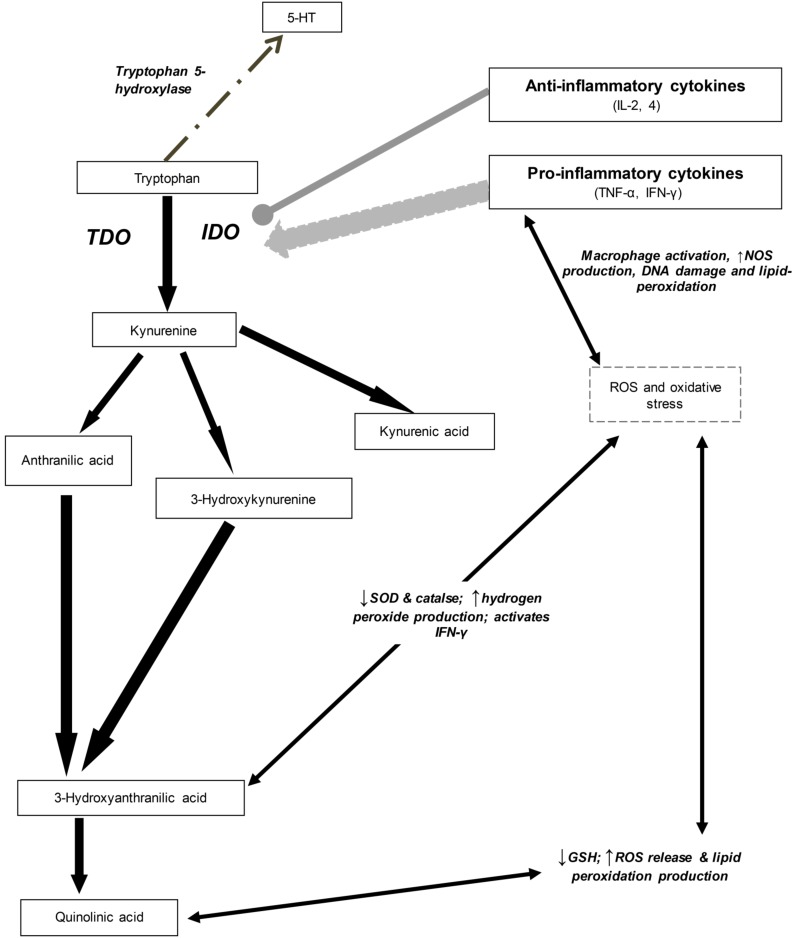
“Cytokine activity may elicit several effects on the brain, affecting the synthesis, release and reuptake of several neurotransmitters, including monamines, which have the ability to influence mood [417].”
BackgroundOxidative Stress, Glutamate, and Neurodegenerative Disorders
Coyle, J. T., & Puttfarcken, P. (1993) · Science · doi:10.1126/science.7901908 · Cited by 3,762 · cited 1×
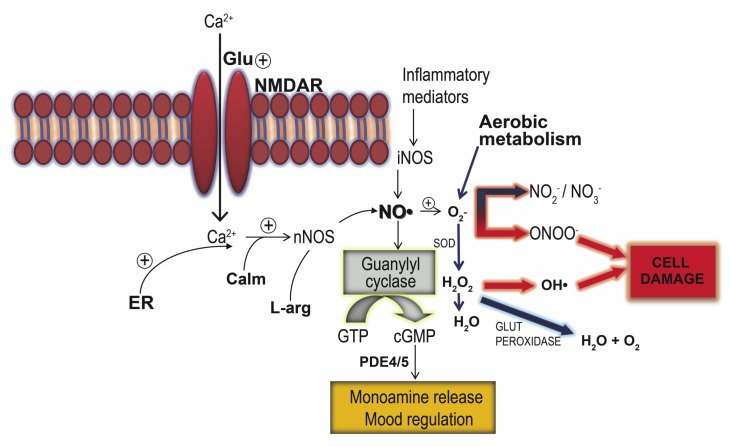
“Elevated levels of glutamate act on extrasynaptic NMDA receptors leading to an influx of Ca into the neurons, which results in the toxic accumulation of reactive oxygen species (ROS) [198], with increased nitric oxide (NO) production playing a key role in MD pathology and treatment response [199, 200].”
BackgroundThe Neuroendocrinology of Stress: A Never Ending Story
Lightman, S. L. (2008) · Journal of Neuroendocrinology · doi:10.1111/j.1365-2826.2008.01711.x · Cited by 3,566
The peroxisome proliferator-activated receptor-γ is a negative regulator of macrophage activation
Ricote, M., Li, A. C., Willson, T. M., Kelly, C. J., & Glass, C. K. (1998) · Nature · doi:10.1038/34178 · Cited by 3,525 · cited 1×
“Considering the connection between inflammation, NO and insulin/PPAR signalling in MD, it is not surprising that PPARγ has been associated with suppression in immune response through its ability to inhibit the expression of inflammatory cytokines [401] and to have actions on pathways involved in apoptosis, cellular pr…”
BackgroundA Neurotrophic Model for Stress-Related Mood Disorders
Duman, R. S., & Monteggia, L. M. (2006) · Biological Psychiatry · doi:10.1016/j.biopsych.2006.02.013 · Cited by 3,375 · cited 1×
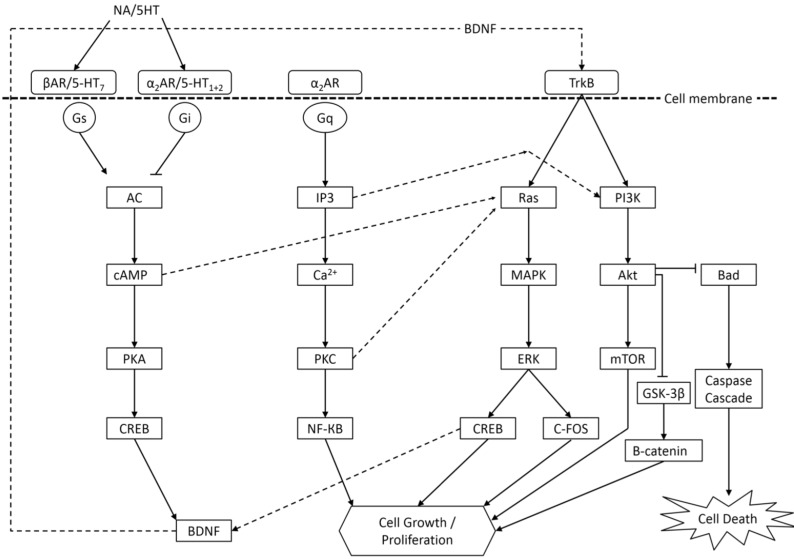
“As noted earlier, BDNF expression is decreased during MD, BPD and schizophrenia, a response that is reversed by effective pharmacological treatment [295, 335-337].”
Background
Research works printed but not linked: 7
- [11]Connor T.J. Leonard B.E. Handbook of Experimental Pharmacology. Antidepressants. Past, Present and Future; 2004 New York Springer
- [236]Wegener G. Harvey B.H. Bonefeld B. Müller H.K. Volke V. Overstreet D.H. Elfving B. Increased stress-evoked nitric oxide signalling in the Flinders sensitive line (FSL) rat: a genetic animal model of depression. Int. J. Neuropsychopharmacol. 2010 13 4 461 473 10.1017/S1461145709990241 19627650 · DOI · Paper page
- [310]Jornada L.K. Moretti M. Valvassori S.S. Ferreira C.L. Padilha P.T. Arent C.O. Fries G. R. Kapczinski F. Quevedo J. 2006 19954800
- [333]Nestler E.J. Barrot M. DiLeone R.J. Eisch A.J. Gold S.J. Monteggia L.M. Neurobiology of depression. Neuron 2002 34 1 13 25 10.1016/S0896-6273(02)00653-0 11931738 · DOI · Paper page
- [374]Dhir A. Kulkarni S.K. Nitric oxide and major depression. Nitric Oxide 2011 24 3 125 131 10.1016/j.niox.2011.02.002 21335097 · DOI · Paper page
- [428]Capuron L. Su S. Miller A.H. Bremner J.D. Goldberg J. Vogt G.J. Maisano C. Jones L. Murrah N.V. Vaccarino V. Depressive symptoms and metabolic syndrome: is inflammation the underlying link? Biol. Psychiatry 2008 64 10 896 900 10.1016/j.biopsych.2008.05.019 18597739 PMC2621309 · DOI · Paper page
- [544]García-Bueno B. Pérez-Nievas B.G. Leza J.C. Is there a role for the nuclear receptor PPARγ in neuropsychiatric diseases? Int. J. Neuropsychopharmacol. 2010 13 10 1411 1429 10.1017/S1461145710000970 20800014 · DOI · Paper page
Cited by
Biomarkers for depression: recent insights, current challenges and future prospects
Strawbridge, R., Young, A. H., & Cleare, A. J. (2017) · Neuropsychiatric Disease and Treatment · doi:10.2147/ndt.s114542 · Cited by 415
Yamanashi, T., Iwata, M., Kamiya, N., Tsunetomi, K., Kajitani, N., Wada, N., Iitsuka, T., Yamauchi, T., Miura, A., Pu, S., et al. (2017) · Scientific Reports · doi:10.1038/s41598-017-08055-1 · Cited by 214
Peripheral Markers of Depression
Nobis, A., Zalewski, D., & Waszkiewicz, N. (2020) · Journal of Clinical Medicine · doi:10.3390/jcm9123793 · Cited by 197
“Decreased dopamine levels in the striatum and cortex have been reported in depression [180].”
BackgroundInfluentialPerlman, K., Benrimoh, D., Israel, S., Rollins, C., Brown, E., Tunteng, J.-F., You, R., You, E., Tanguay-Sela, M., Snook, E., et al. (2019) · Journal of Affective Disorders · doi:10.1016/j.jad.2018.09.067 · Cited by 182
Resveratrol and Depression in Animal Models: A Systematic Review of the Biological Mechanisms
Moore, A. C., Beidler, J., & Hong, M. Y. (2018) · Molecules · doi:10.3390/molecules23092197 · Cited by 152
“In addition, GSK-3β, a kinase involved in Wnt signaling, is used as a marker in neuropsychiatric disorders and is targeted by mood-stabilizing drugs such as lithium for bipolar disorder [65,67].”
Background
Metadata
- Authors
- Brand, S., Moller, M., & Harvey, B.
- Affiliations
- North-West University (ZA)
- Corresponding author
- Harvey, Brian
- Venue
- Current Neuropharmacology
- Publisher
- Bentham Science Publishers Ltd.
- Published
- 2015-07-14
- Volume
- 13
- Issue
- 3
- Pages
- 324-368
- ISSN
- 1570-159X (ISSN-L)
- PMC
- PMC4812797
- OpenAlex
- W2327026140
- Semantic Scholar
- 954e54f896f467777a773b22f795ceb738a4d318
- Cited by
- 95
- References
- 535
- Citations by year
- 2026: 3 · 2025: 8 · 2024: 7 · 2023: 7 · 2022: 10 · 2021: 16 · 2020: 8 · 2019: 7 · 2018: 13 · 2017: 10 · 2016: 6
- FWCI
- 6.97
- Type
- journal article
- Language
- en
- Open access
- green
- www.ncbi.nlm.nih.gov
- Licence
- cc-by-nc
- Locations
- Current Neuropharmacology (publishedVersion)
- Europe PMC (PubMed Central) (publishedVersion, cc-by-nc)
- PubMed Central (publishedVersion, cc-by-nc)
- PubMed (publishedVersion)
- Boloka Institutional Repository (North-west University) (submittedVersion)
- Topics
- Health Sciences › Medicine › Pharmacology (medical) › Treatment of Major Depression
- Health Sciences › Medicine › Psychiatry and Mental health › Bipolar Disorder and Treatment
- Health Sciences › Medicine › Psychiatry and Mental health › Schizophrenia research and treatment
- Keywords
- biomarkers, mood disorders, psychosis, depression, bipolar disorder, pathophysiology, biomarker panel, personalized treatment, diagnosis, etiopathogenesis
- MeSH terms
- Affect, Animals, Bipolar Disorder, Depressive Disorder, Humans, Psychotic Disorders, Antipsychotic Agents, Biomarkers
About these checks
Registry, retraction, Cites and statistics results are computed, not judged, with one exception: a printed reference that no index lists is read once by a model before it counts as a citation error. Claims are extracted by a model and kept only when their quote appears verbatim in the text; each cited source is then checked, with a model’s help, for whether it says what the claim relies on. Those verdicts can be wrong — read the claim’s quote and the cited source before relying on one.
Statistics and arithmetic are recomputed, not judged.
Confidence bands are shown only for fields calibrated on our annotated test set. None is calibrated yet, so no band is shown.
What counts as a claim ›How we measure confidence ›How we check this ›
Are you an author, or do you see a problem with this page? Request a review
Data sources
Bibliographic data: Semantic Scholar, OpenAlex, Crossref.
Contains information from the Semantic Scholar Academic Graph Datasets, made available under the ODC Attribution License (ODC-BY 1.0).
Semantic Scholar’s data is described in: Kinney, R., et al. (2023). The Semantic Scholar Open Data Platform. arXiv:2301.10140.
