

Neuroinflammation in Huntington’s Disease: A Starring Role for Astrocyte and Microglia
Open accessThe DOI matches its Crossref record; 293 of the 295 references it cites were found in a registry or an index, and 2 are not checked yet.
Abstract
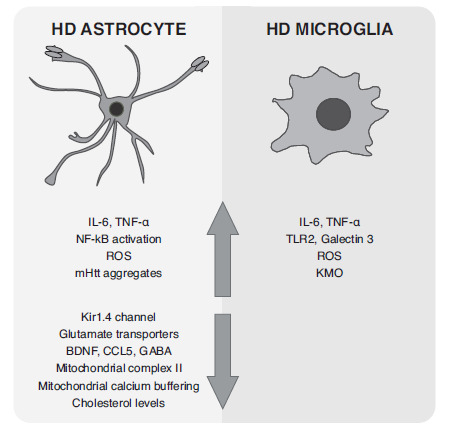
: Huntington’s disease (HD) is a neurodegenerative genetic disorder caused by a CAG repeat expansion in the huntingtin gene. HD causes motor, cognitive, and behavioral dysfunction. Since no existing treatment affects the course of this disease, new treatments are needed. Inflammation is frequently observed in HD patients before symptom onset. Neuroinflammation, characterized by the presence of reactive microglia, astrocytes and inflammatory factors within the brain, is also detected early. However, in comparison to other neurodegenerative diseases, the role of neuroinflammation in HD is much less known. Work has been dedicated to altered microglial and astrocytic functions in the context of HD, but less attention has been given to glial participation in neuroinflammation. This review describes evidence of inflammation in HD patients and animal models. It also discusses recent knowledge on neuroinflammation in HD, highlighting astrocyte and microglia involvement in the disease and considering anti-inflammatory therapeutic approaches.
Overview
The claims and statistics of this paper haven’t been checked yet.
Free: it reads the open-access text and checks the first 5 claims that cite a source we can check. Create a free account to check every claim.
Integrity signals
Registry
Cites
Statistics
Figures
Verification
Claims the paper makes
The claims and statistics of this paper haven’t been checked yet.
Free: it reads the open-access text and checks the first 5 claims that cite a source we can check. Create a free account to check every claim.
Claims other papers make about this one
Each is checked against this paper’s own text: does it say what the citing paper says it does?
The cited source says what the claim attributes to it.
In the citing paper
“In addition to direct neuronal toxicity, HD pathogenesis is accompanied by significant neuroinflammation [192]. Brains impacted with HD exhibit increased microglial activation and elevated pro-inflammatory cytokine levels, including IL-6 and TNF-α [193,194].”
From The Impact of Neurotoxin Proteins Trafficked by Primary Cilia and Extracellular Vesicles in Neurodegenerative Diseases (2025) · cites this paper as [192]
Self-check
Percentages, sums and reported differences re-computed from the paper’s own numbers.
The self-check needs the paper’s full text.
Citations
Cites
1 retracted
Kaur, G., Behl, T., Sehgal, A., Singh, S., Sharma, N., Kumar, A., Arora, S., & BUNGAU, S. G. (2021) · Journal of Molecular Neuroscience · doi:10.1007/s12031-021-01811-z · Cited by 3 · cited 1×
“TLR2 and 4 are expressed primarily by microglia and, to a lesser extent, by astrocytes, oligodendrocytes, and neurons [61].”
RetractedMACDONALD, M. (1993) · Cell · doi:10.1016/0092-8674(93)90585-e · Cited by 8,366
Yang, Y., Li, S., Yang, Q., Shi, Y., Zheng, M., Liu, Y., Chen, F., Song, G., Xu, H., Wan, T., et al. (2014) · Cellular Physiology and Biochemistry · doi:10.1159/000358696 · Cited by 3,253
Adams, J. L., Dinesh, K., Xiong, M., Tarolli, C. G., Sharma, S., Sheth, N., Aranyosi, A. J., Zhu, W., Goldenthal, S., Biglan, K. M., et al. (2017) · Digital Biomarkers · doi:10.1159/000479018 · Cited by 3,171
Mangiarini, L., Sathasivam, K., Seller, M., Cozens, B., Harper, A., Hetherington, C., Lawton, M., Trottier, Y., Lehrach, H., Davies, S. W., et al. (1996) · Cell · doi:10.1016/s0092-8674(00)81369-0 · Cited by 3,073 · cited 2×
“R6/1 and R6/2 were the first transgenic N-terminal models described [84], and R6/2 is the most widely used HD model.”
Reactive astrocyte nomenclature, definitions, and future directions
Escartin, C., Galea, E., Lakatos, A., O’Callaghan, J. P., Petzold, G. C., Serrano-Pozo, A., Steinhäuser, C., Volterra, A., Carmignoto, G., Agarwal, A., et al. (2021) · Nature Neuroscience · doi:10.1038/s41593-020-00783-4 · Cited by 2,513 · cited 1×
“Astrocyte reactivity occurs in response to a variety of pathological conditions and involves morphological changes since they become hypertrophic, as well as transcriptional changes, such as upregulation of GFAP expression [104].”
Aggregation of Huntingtin in Neuronal Intranuclear Inclusions and Dystrophic Neurites in Brain
DiFiglia, M., Sapp, E., Chase, K. O., Davies, S. W., Bates, G. P., Vonsattel, J. P., & Aronin, N. (1997) · Science · doi:10.1126/science.277.5334.1990 · Cited by 2,439 · cited 1×
“The mHtt inclusions are a key neuropathological hallmark of HD since these structures are detected in HD brains [18].”
Davies, S. W., Turmaine, M., Cozens, B. A., DiFiglia, M., Sharp, A. H., Ross, C. A., Scherzinger, E., Wanker, E. E., Mangiarini, L., & Bates, G. P. (1997) · Cell · doi:10.1016/s0092-8674(00)80513-9 · Cited by 2,181 · cited 1×
“R6/2 mice die after 10 to 13 weeks and show nuclear inclusions of Htt [86].”
Huntington's disease: from molecular pathogenesis to clinical treatment
Ross, C. A., & Tabrizi, S. J. (2011) · The Lancet Neurology · doi:10.1016/s1474-4422(10)70245-3 · Cited by 1,743 · cited 2×
“There is also a remarkable white matter loss in HD patients even before symptoms develop [4].”
Verkhratsky, A., & Nedergaard, M. (2018) · Physiological Reviews · doi:10.1152/physrev.00042.2016 · Cited by 1,678
Research works printed but not linked: 1
- [218]Al-Dalahmah O. Sosunov A.A. Shaik A. Ofori K. Liu Y. Vonsattel J.P. Adorjan I. Menon V. Goldman J.E. Single-nucleus RNA-seq identifies Huntington disease astrocyte states. Acta Neuropathol. Commun. 2020 8 1 19 10.1186/s40478-020-0880-6 32070434 PMC7029580 · DOI · Paper page
Cited by
TGF-β as a Key Modulator of Astrocyte Reactivity: Disease Relevance and Therapeutic Implications
Luo, J. (2022) · Biomedicines · doi:10.3390/biomedicines10051206 · Cited by 147
The impact of interleukin-6 (IL-6) and mesenchymal stem cell-derived IL-6 on neurological conditions
Kerkis, I., da Silva, Á. R. D. B. P., & Araldi, R. P. (2024) · Frontiers in Immunology · doi:10.3389/fimmu.2024.1400533 · Cited by 114
Blood–Brain Barrier Breakdown in Neuroinflammation: Current In Vitro Models
Brandl, S., & Reindl, M. (2023) · International Journal of Molecular Sciences · doi:10.3390/ijms241612699 · Cited by 104
Mohan, S., Alhazmi, H. A., Hassani, R., Khuwaja, G., Maheshkumar, V. P., Aldahish, A. A., & Chidambaram, K. (2024) · Heliyon · doi:10.1016/j.heliyon.2024.e24786 · Cited by 73
“Neuroinflammation is a hallmark of HD, which is characterized by the presence of reactive microglia, inflammatory factors, and astrocytes [143,144].”
Microglial response to aging and neuroinflammation in the development of neurodegenerative diseases
Han, T., Xu, Y., Sun, L., Hashimoto, M., & Wei, J. (2023) · Neural Regeneration Research · doi:10.4103/1673-5374.385845 · Cited by 72
“…a crucial feature of HD pathology and that neuroinflammation characterized by the presence of reactive microglia, astrocytes, and inflammatory factors in the brain is observed in HD patients before the appearance of motor and cognitive impairment symptoms (Donley et al., 2021; Saba et al., 2022).”
The RAGE Axis: A Relevant Inflammatory Hub in Human Diseases
Rojas, A., Lindner, C., Schneider, I., González, I., & Uribarri, J. (2024) · Biomolecules · doi:10.3390/biom14040412 · Cited by 69
The Role of IL-6 in Neurodegenerative Disorders
Shan, C., Zhang, C., & Zhang, C. (2024) · Neurochemical Research · doi:10.1007/s11064-023-04085-6 · Cited by 60
“Similar to other neurodegenerative diseases, patients with HD and animal models of the disorder exhibit increased plasma levels of IL-6 [136–139].”
Mechanistic insights on TLR-4 mediated inflammatory pathway in neurodegenerative diseases
Sharma, V., Sharma, P., & Singh, T. G. (2024) · Pharmacological Reports · doi:10.1007/s43440-024-00613-5 · Cited by 51
“In Huntington’s disease, a huntingtin gene mutation causes the expression of an abnormal protein that builds up in the brain and harms neurons [53–55].”
Goel, F., Singh, P., Nand, S., & Yadav, D. K. (2025) · Molecular Neurobiology · doi:10.1007/s12035-025-05517-w · Cited by 53
“Gene therapy techniques have included the use of viral vectors to deliver cDNA for either Nrf2 or selective silencing targeting Keap1, which have been deployed to replicate conditions of neurodegeneration in experimental models [151].”
Neurodegenerative Diseases: Unraveling the Heterogeneity of Astrocytes
Santiago-Balmaseda, A., Aguirre-Orozco, A., Valenzuela-Arzeta, I. E., Villegas-Rojas, M. M., Pérez‐Segura, I., Jiménez-Barrios, N., Hurtado-Robles, E., Rodríguez-Hernández, L. D., Rivera-German, E. R., Guerra‐Crespo, M., et al. (2024) · Cells · doi:10.3390/cells13110921 · Cited by 49
“Furthermore, the increased reactivity of A1 astrocytes is linked to a neurotoxic phenotype in the brains of HD patients because elevated counts of C3 immunoreactive astrocytes have been found in the caudate nucleus [8,160].”
Therapeutic Strategies in Huntington’s Disease: From Genetic Defect to Gene Therapy
Jurcău, A., & Jurcău, M. C. (2022) · Biomedicines · doi:10.3390/biomedicines10081895 · Cited by 43
Therapeutic approaches targeting aging and cellular senescence in Huntington's disease
Bhat, A. A., Moglad, E. H. O., Afzal, M., Thapa, R., Almalki, W. H., Kazmi, I. A., Alzarea, S. I., Ali, H., Pant, K., Singh, T. G., et al. (2024) · CNS Neuroscience & Therapeutics · doi:10.1111/cns.70053 · Cited by 33
Yang, R., Wang, R., Xu, A., Zhang, J., & Ma, J. (2024) · Frontiers in Pharmacology · doi:10.3389/fphar.2024.1425731 · Cited by 41
“…Subhramanyam et al., 2019; Saba et al., 2022), which promote neuronal cell death by inducing apoptosis and reactive oxygen species (ROS)/reactive nitrogen species (RNS) production and complement activation, enhancing excitotoxicity and mitochondrial damage (Smith et al., 2012; Saba et al., 2022).”
Neurodegenerative diseases and neuroinflammation-induced apoptosis
Huang, S., Lu, Y., Fang, W., Huang, Y., Li, Q., & Xu, Z. (2025) · Open Life Sciences · doi:10.1515/biol-2022-1051 · Cited by 38
“In HD, it has been demonstrated that the expression of in fl ammatory factors such as TNF-α , IL-1 β , IL-6, and HTT exhibited a notable increase [36 – 39].”
Role of P2Y receptors in astrocyte physiology and pathophysiology
Lohr, C. (2022) · Neuropharmacology · doi:10.1016/j.neuropharm.2022.109311 · Cited by 31
Li, X., Tong, H., Xu, S., Zhou, G., Yang, T., Yin, S., Yang, S., Li, X., & Li, S. (2024) · International Journal of Molecular Sciences · doi:10.3390/ijms252111787 · Cited by 36
“Both postmortem brain tissues from patients with HD and HD animal models have shown widespread activation of pro-inflammatory astrocytes and microglia [14–16].”
Mani, S., Wasnik, S., Shandilya, C., Srivastava, V., Khan, S., & Singh, K. K. (2025) · Frontiers in Aging · doi:10.3389/fragi.2025.1615764 · Cited by 37
Singh, K., Gupta, J. K., Kumar, S., & Soni, U. (2024) · Current Protein and Peptide Science · doi:10.2174/0113892037275221240327042353 · Cited by 36
Cheng, S., Xiao, B., & Luo, Z. (2025) · Translational Neurodegeneration · doi:10.1186/s40035-025-00506-4 · Cited by 34
Phytomedicine for neurodegenerative diseases: The road ahead
Madhubala, D., Patra, A., Khan, M. R., & Mukherjee, A. K. (2024) · Phytotherapy Research · doi:10.1002/ptr.8192 · Cited by 33
“Reactive astro-gliosis has been reported in an individual with HD, chiefly associated with the accumulation of mutant htt protein (Saba et al., 2022).”
Yang, Y.-N., Zhang, M.-Q., Yu, F.-L., Han, B., Bao, M.-Y., Yan-He, Yan-he, & Zhang, Y. (2023) · Biochemical Pharmacology · doi:10.1016/j.bcp.2023.115717 · Cited by 26
Kuwar, O. K., & Singh, S. (2025) · Neurogenetics · doi:10.1007/s10048-025-00801-2 · Cited by 29
“This mutant protein disrupts multiple cellular pathways, contributing to neuronal dysfunction and death, particularly in the striatum and cortex [1].”
InfluentialBarbalace, M. C., Freschi, M., Rinaldi, I., Mazzara, E., Maraldi, T., Malaguti, M., Prata, C., Maggi, F., Petrelli, R., Hrelia, S., et al. (2023) · International Journal of Molecular Sciences · doi:10.3390/ijms242316601 · Cited by 25
Inflammation in Metal-Induced Neurological Disorders and Neurodegenerative Diseases
Wei, R., Wei, P., Yuan, H., Yi, X., Aschner, M., Jiang, Y., & Li, S. (2024) · Biological Trace Element Research · doi:10.1007/s12011-023-04041-z · Cited by 27
“Similarly, astrogliosis has been observed in several rodent HD models, including R6/1, R6/2, YAC128, and HD89 mouse models [63].”
Circadian Influences on Brain Lipid Metabolism and Neurodegenerative Diseases
Hussain, Y., Dar, M. I., & Pan, X. (2024) · Metabolites · doi:10.3390/metabo14120723 · Cited by 24
“Notably, one study reported elevated cholesterol content in the caudate nucleus in patients with HD, despite overall diminished sterol biosynthesis in the brain [204].”
Jadhav, V. S., & Khatri, D. K. (2025) · Ageing Research Reviews · doi:10.1016/j.arr.2025.102872 · Cited by 24
Luo, S., Pan, M., Fu, G., Meng, X., Zhao, Z., Yu, H., Yue, G.-X., & Lei, T. (2025) · Pharmacological Research · doi:10.1016/j.phrs.2025.107974 · Cited by 20
Cellular mechanisms of fibrin (ogen): insight from neurodegenerative diseases
Wen, T., & Zhang, Z. (2023) · Frontiers in Neuroscience · doi:10.3389/fnins.2023.1197094 · Cited by 21
Khaboushan, A. S., Moeinafshar, A., Ersi, M. H., Teixeira, A. L., Zolbin, M. M., & Kajbafzadeh, A. M. (2023) · Journal of Neuroimmunology · doi:10.1016/j.jneuroim.2023.578243 · Cited by 21
Repurposing artemisinins as neuroprotective agents: a focus on the PI3k/Akt signalling pathway
Arthur, R., Navik, U., & Kumar, P. (2022) · Naunyn-Schmiedeberg s Archives of Pharmacology · doi:10.1007/s00210-022-02350-z · Cited by 25
Heavy Metal Interactions with Neuroglia and Gut Microbiota: Implications for Huntington’s Disease
Tizabi, Y., Bennani, S., Kouhen, N. E., Getachew, B., & Aschner, M. (2024) · Cells · doi:10.3390/cells13131144 · Cited by 19
Effects of exercise on neuroinflammation in age-related neurodegenerative disorders
Su, Y., & Su, Z. (2025) · European journal of medical research · doi:10.1186/s40001-025-03165-3 · Cited by 26
“This dysfunction further compromises neuronal survival by disrupting synaptic function and promoting excitotox-icity [129, 130].”
Guo, X., Liu, H. N., Song, Y., Wang, J., Liu, D., Zheng, Z., Li, J., Li, B., Song, A., He, W., et al. (2026) · MedComm · doi:10.1002/mco2.70497 · Cited by 32
Sex and Region-Specific Differences in Microglial Morphology and Function Across Development
Bishnoi, I. R., & Bordt, E. A. (2025) · Neuroglia · doi:10.3390/neuroglia6010002 · Cited by 18
“…disease [104,105], as well as Alzheimer’s disease and substance use disorders [106,107]. within the basal ganglia have been implicated in neurodegenerative diseases such as Parkinson’s and Huntington’s disease [104,105], as well as Alzheimer’s disease and substance use disorders [106,107].”
Chen, X., Wang, B., Mao, Y., Mamun, A. A., Wu, M., Qu, S., Zhang, X., Zhang, J., Pan, J., Zhu, Y., et al. (2022) · Chemical Engineering Journal · doi:10.1016/j.cej.2022.137882 · Cited by 19
Evangelista, B., Cahalan, S. R., Ragusa, J. V., Mordant, A. L., Necarsulmer, J., Perna, R. J., Ajit, T., White, K., Barker, N. K., Tian, X., et al. (2022) · iScience · doi:10.1016/j.isci.2023.106645 · Cited by 13
Sex differences in Huntington's disease from a neuroinflammation perspective
Risby-Jones, G., Lee, J. D., Woodruff, T. M., & Fung, J. N. (2024) · Frontiers in Neurology · doi:10.3389/fneur.2024.1384480 · Cited by 19
Deng, Z., Chen, H., Chen, J., Du, Z., Zhou, W., & Yuan, Z. (2025) · Biochimica et Biophysica Acta (BBA) - Molecular Basis of Disease · doi:10.1016/j.bbadis.2025.167960 · Cited by 17
Die hard: necroptosis and its impact on age-dependent neuroinflammatory diseases
Smith, K., Colie, M., Moore, T., & Schisler, J. C. (2024) · Frontiers in Cell Death · doi:10.3389/fceld.2024.1348153 · Cited by 14
Zhang, W., Zhao, X., Bhuiyan, P., Liu, H., & Wei, H. (2024) · Journal of Anesthesia and Translational Medicine · doi:10.1016/j.jatmed.2024.04.002 · Cited by 12
“30 The main inflammatory processes are carried out by activated microglia and astrocytes.”
Epigenetics in rare neurological diseases
Roberts, C.-T., Arezoumand, K. S., Shahib, A. K., Davie, J., & Rastegar, M. (2024) · Frontiers in Cell and Developmental Biology · doi:10.3389/fcell.2024.1413248 · Cited by 20
Unraveling the transcriptomic landscape of brain vascular cells in dementia: A systematic review
Sewell, M. D. E., Fialova, N., & Montagne, A. (2025) · Alzheimer s & Dementia · doi:10.1002/alz.14512 · Cited by 14
Microglia–Neuron Crosstalk: An Intimate Molecular Conversation in Neurodegeneration
Wang, S., Wang, S., Hongzhuan, C. H. E. N., & Xu, J. (2026) · International Journal of Molecular Sciences · doi:10.3390/ijms27042011 · Cited by 13
Arthur, R., Navik, U., & Kumar, P. (2024) · Molecular Neurobiology · doi:10.1007/s12035-024-04487-9 · Cited by 16
“Notably, inflammation can be detected in patients with HD before clinical symptoms appear [52].”
Neuroinflammation in Huntington's disease: Causes, consequences, and treatment strategies
Blusch, A., & Björkqvist, M. (2025) · Journal of Huntington s Disease · doi:10.1177/18796397251338207 · Cited by 17
“8,20,52 Even in premanifest HD gene carriers, PET imaging has shown microglial activation in the cortex, basal ganglia, and thalamus.”
InfluentialXia, J., Cheng, Y., Zhang, S., Ma, Y., Fu, J.-J., Yang, T., Zhang, L., Burgunder, J., & Shang, H. (2024) · Frontiers in Neurology · doi:10.3389/fneur.2024.1374365 · Cited by 11
“…study reported that patients with HD exhibit dysfunction in their immune systems both centrally, through the activation of microglial cells (6, 43, 44), and peripherally, where detectable elevations of proinflammatory mediators occur before the onset of the disease (45), suggesting that the…”
Effect of Capsaicin on 3-NP-Induced Neurotoxicity: A Pre-Clinical Study
Tyagi, S., & Thakur, A. K. (2024) · Neurochemical Research · doi:10.1007/s11064-024-04158-0 · Cited by 10
“Chronic inflammation in neurons is the key factor of most neurological disorders including AD [19], PD [ 20 ], and HD [21].”
Upadhayay, S., Soni, D., Dhureja, M., Temgire, P., Kumar, V., Arthur, R., & Kumar, P. (2025) · Molecular Neurobiology · doi:10.1007/s12035-025-04962-x · Cited by 14
Saadat, M., Dahmardeh, N., Sheikhbahaei, F., & Mokhtari, T. (2023) · Naunyn-Schmiedeberg s Archives of Pharmacology · doi:10.1007/s00210-023-02832-8 · Cited by 9
“This inflammatory response is believed to play a significant role in exacerbating the damage and progression of the disease (Saba et al. 2022).”
Li, H., Zhu, Y., Liu, P., Song, S., Zhang, X., Liu, C., Hu, M., Zhang, Y., Wang, C., & Hu, Y. (2026) · Neurobiology of Disease · doi:10.1016/j.nbd.2026.107278 · Cited by 13
Fihurka, O., Aradi, S. D., Sava, V., & Sanchez‐Ramos, J. (2023) · Journal of Nanotechnology and Nanomaterials · doi:10.33696/nanotechnol.4.043 · Cited by 9
Cognitive disorders: Potential astrocyte-based mechanism
Li, S., Chen, Y., & Chen, G. (2024) · Brain Research Bulletin · doi:10.1016/j.brainresbull.2024.111181 · Cited by 12
Sharma, S., Kaur, I., Dubey, N., Goswami, N., & Tanwar, S. S. (2025) · Molecular Neurobiology · doi:10.1007/s12035-025-05054-6 · Cited by 15
“The roles of microglia and astrocytes in neuroinflammation during Huntington's disease have received less attention compared to their general involvement in the disease [24].”
Bridging the Gap: The Neuro-immune Axis as a Key Player in Neurodegenerative Disorders
Liu, T., Wu, H., & Wei, J. (2025) · Neuroscience Bulletin · doi:10.1007/s12264-025-01439-8 · Cited by 10
Gu, Y., Wang, M., & Mao, Y. (2026) · Frontiers in Neuroendocrinology · doi:10.1016/j.yfrne.2026.101247 · Cited by 9
Temgire, P., Arthur, R., & Kumar, P. (2024) · Inflammopharmacology · doi:10.1007/s10787-024-01477-0 · Cited by 12
“Chronic inflammation leads to increased oxidative stress, excitotoxicity, and mitochondrial dysfunction, all contributing to neuronal damage (Saba et al. 2022).”
Targeting Myeloperoxidase to Reduce Neuroinflammation in X‐Linked Dystonia Parkinsonism
Petrozziello, T., Motlagh, N. J., Monsanto, R. Z. B., Lei, D., Murcar, M. G., Penney, E. B., Bragg, D. C., Fernandez‐Cerado, C., Legarda, G. P., Sy, M. A. C., et al. (2024) · CNS Neuroscience & Therapeutics · doi:10.1111/cns.70109 · Cited by 8
Voysey, Z. J., Goodman, A. O. G., Rogers, L., Holbrook, J. A., Lázár, A. S., & Barker, R. A. (2025) · Brain Communications · doi:10.1093/braincomms/fcaf126 · Cited by 7
Gaudet, I. D., Xu, H., Gordon, E., Cannestro, G. A., Lu, M. L., & Wei, J. (2024) · Journal of Neuroinflammation · doi:10.1186/s12974-024-03038-2 · Cited by 10
“Neuroinflammation is frequently observed in HD patients at the early stage [48].”
The role of interferon beta in neurological diseases and its potential therapeutic relevance
Farhangian, M., Azarafrouz, F., Valian, N., & Dargahi, L. (2024) · European Journal of Pharmacology · doi:10.1016/j.ejphar.2024.176882 · Cited by 9
Recent Insight into the Role of Sphingosine-1-Phosphate Lyase in Neurodegeneration
Wieczorek, I., & Strosznajder, R. P. (2023) · International Journal of Molecular Sciences · doi:10.3390/ijms24076180 · Cited by 8
Rao, D. P., Hammad, A. K., Al‐Hetty, H. R. A. K., Kareem, A. K., Hjazi, A., Ahmad, I., Abbas, Z., albaz, R. Y., Mustafa, Y. F., & Abdulmoaty, M. A. Z. (2026) · Molecular Neurobiology · doi:10.1007/s12035-026-05670-w · Cited by 10
“Reactive astrocytes react to pathogen-associated molecular patterns (PAMPs) or damage-associated molecular patterns (DAMPs) under neurological stressors by activating pattern recognition receptors (PRRs) [13–15].”
Lu, P.-C., Huang, Y.-A., Wali, N., Tseng, M., He, R., Chern, Y., Wei, T.-T., Shie, J., & Huang, J. J. (2026) · Journal of the American Chemical Society · doi:10.1021/jacs.5c14078 · Cited by 9
USP22 inhibits microglial M1 polarization by regulating the PU.1/NLRP3 inflammasome pathway
Yu, M., Li, X., Ning, M.-L., Yan, Z.-Z., & Yu, W.-T. (2024) · Brain Research Bulletin · doi:10.1016/j.brainresbull.2024.111157 · Cited by 7
Nebulization of low-dose aspirin ameliorates Huntington’s pathology in N171-82Q transgenic mice
Mondal, S., Prieto, S., Rangasamy, S. B., Dutta, D., & Pahan, K. (2024) · NeuroImmune Pharmacology and Therapeutics · doi:10.1515/nipt-2023-0026 · Cited by 8
CircRNA-Based Therapeutics: a New Frontier in Neuroinflammation Treatment
Muhammed, T. M., Jasim, S. A., Uthirapathy, S., Mandaliya, V. B., Ballal, S., Kalia, R., Arya, R., Nakash, P., Mustafa, Y. F., & Ahmed, J. K. (2025) · Molecular Neurobiology · doi:10.1007/s12035-025-05258-w · Cited by 5
Chaudhary, S., Rawat, S., Mathur, S., Perveen, A., Hafeez, A., Bilgrami, A. L., & Ashraf, G. M. (2025) · Neurodegenerative Disease Management · doi:10.1080/17582024.2025.2520707 · Cited by 8
“The cerebral spinal fluids of HD patients were reported to have elevated levels of inflammatory mediators such as Interleukin (IL) −6, IL-8, and tumor necrosis factor (TNF)-α [62].”
Cheng, Y., Nocula-Lugowska, G., Ramirez, J. A., Fan, X., Jin, F., Jiang, Z., Bennett, E. M., Li, J., Hokanson, D. E., Grandhi, S., et al. (2023) · bioRxiv (Cold Spring Harbor Laboratory) · doi:10.1101/2023.11.24.568451 · Cited by 7
Research progress on platelet factor 4 in improving cognition
Zhuo, H., Chen, N., Hu, X., & Liu, Z. (2025) · Experimental Neurology · doi:10.1016/j.expneurol.2025.115403 · Cited by 4
Hamdalla, R. H., Bhaskar, V. B., & Tian, C. (2026) · Frontiers in Cell and Developmental Biology · doi:10.3389/fcell.2025.1710150 · Cited by 8
Zhao, P., Li, S., Liu, Q., Peng, X.-C., Liu, L., Yang, F.-Y., Wang, C., Qian, F., & Tang, F.-R. (2026) · Frontiers in Cellular Neuroscience · doi:10.3389/fncel.2026.1726194 · Cited by 7
Emerging anti-inflammatory nanosystems targeted to the brain
Mahanta, A. K., Gothwal, A., Chaulagain, B., Muolokwu, C. E., Tagoe, B., Lamsal, B., Belin, M. A. F., & Singh, J. (2025) · Nanomedicine · doi:10.1080/17435889.2025.2552103 · Cited by 4
Chowdhury, R., Hendlinger, A., Rieß, O., & Schulze-Hentrich, J. M. (2025) · Epigenomics · doi:10.1080/17501911.2025.2518909 · Cited by 3
Li, J., Lin, Y., Gao, J., Yang, F., Li, C., Chen, Y., Huang, C., Song, X., Song, Z., Wu, J., et al. (2026) · Nature Biomedical Engineering · doi:10.1038/s41551-026-01621-x · Cited by 4
Treatment with Tau fibrils impact Huntington's disease-related phenotypes in cell and mouse models
Salem, S., Alpaugh, M., Saint‐Pierre, M., Borba, F. N., Cerquera‐Cleves, C., Lemieux, M., Ngonza-Nito, S.-B., Koninck, P. D., Melki, R., & Cicchetti, F. (2024) · Neurobiology of Disease · doi:10.1016/j.nbd.2024.106696 · Cited by 3
Danna, R., Kondle, S., Amar, O., Mabourakh, M., Chen, G., Fadol, W. B., & Mohieldin, A. M. (2025) · Biology · doi:10.3390/biology14121787 · Cited by 2
“In addition to direct neuronal toxicity, HD pathogenesis is accompanied by significant neuroinflammation [192].”
Couselo, F. L., Saba, J., Frederiksen, M. F., Palmieri, M., Romero, A. C., Bigi, M. M., Carniglia, L., Durand, D., Lasaga, M., & Caruso, C. M. (2025) · Journal of Neurochemistry · doi:10.1111/jnc.70276 · Cited by 3
Self-citationFowler, D. K., Savage, T. M., & Mackie, D. I. (2026) · Journal of Cannabis Research · doi:10.1186/s42238-026-00445-5 · Cited by 3
Du, W., Wu, T., Fan, Y., & Zhao, M. (2025) · Neural Regeneration Research · doi:10.4103/nrr.nrr-d-25-00808 · Cited by 4
Synergizing drug repurposing and target identification for neurodegenerative diseases
Sahu, M., Vashishth, S., Kukreti, N., Gulia, A., Russell, A., Ambasta, R. K., & Kumar, P. (2024) · Progress in molecular biology and translational science · doi:10.1016/bs.pmbts.2024.03.023 · Cited by 3
Back, A. M., Connor, B. J., & McCaughey‐Chapman, A. (2024) · Journal of Neuroscience Research · doi:10.1002/jnr.70010 · Cited by 3
“…(Kumar, Vaish, and Ratan 2014), proteostasis (Harding and Tong 2018), mitochondrial dysfunction (Carmo et al. 2018), neuroinflammation (Saba et al. 2022), excitotoxicity (Estrada Sánchez, Mejía-Toiber, and Massieu 2008), BDNF abnormalities (Zuccato and Cattaneo 2007) and synaptic…”
Ameliorative potential of metformin in LPS and glutamate-induced neurotoxicity in N2a cell-line
Deepshikha, Shekhar, N., Tyagi, S., & Thakur, A. K. (2025) · Cytotechnology · doi:10.1007/s10616-025-00777-9 · Cited by 2
“Chronic neuronal inflammation is the main feature of most neurological disorders (Venigalla et al. 2016; Wang et al. 2015; Saba et al. 2022).”
Immunotherapy for Neurodegenerative Movement Disorders
Mosley, R. L., Saleh, M., & Olson, K. E. (2024) · Springer eBooks · doi:10.1007/978-3-031-68237-7_52 · Cited by 3
Natural anti-neuroinflammatory inhibitors from Aglaia odorata
Liu, X., Zhang, J., Yin, Q., Zhang, Y., Chen, Z., Fang, M., Meng, Q.-Q., Hou, Y., Zhou, D., & Li, N. (2025) · Journal of Asian Natural Products Research · doi:10.1080/10286020.2025.2492355 · Cited by 2
The Potential Therapeutic Role of Bruton Tyrosine Kinase Inhibition in Neurodegenerative Diseases
D’Egidio, F., Kacem, H., Lombardozzi, G., d’Angelo, M., Cimini, A., & Castelli, V. (2025) · Applied Sciences · doi:10.3390/app15158239 · Cited by 3
Oligodendroglial Mutant Huntingtin Contributes to Neuroinflammation in Huntington’s Disease Mice
Li, X. J., Zhou, G., Xu, S., Yang, T., Yin, S., Yang, S., Wu, Y., Zhou, X., Yang, S., Tong, H., et al. (2026) · Neuroscience Bulletin · doi:10.1007/s12264-025-01565-3 · Cited by 1
Anjum, R., Khalid, N., Musaddaq, R., Tariq, A., Jamil, M., Afzal, S., & Anjum, S. (2024) · Neurophysiology · doi:10.1007/s11062-025-09987-5 · Cited by 2
“Activated microglia and astrocytes release pro-inflam-matory cytokines, creating a toxic microenvironment that exacerbates neuronal injury and hinders repair mechanisms [37].”
Microglial Senescence in Neurodegenerative Diseases: Mechanisms and Therapeutic Perspectives
Liu, Y., Hu, Z., Xiao, Y., Han, X., Cheng, X., & Ye, T. (2026) · ACS Chemical Neuroscience · doi:10.1021/acschemneuro.6c00016 · Cited by 1
Stem cells enhance mitochondrial function in experimental Huntington’s disease
D’Egidio, F., Putthanbut, N., Starahs, M., Lee, J.-Y., & Borlongan, C. V. (2026) · Stem Cells · doi:10.1093/stmcls/sxag019 · Cited by 2
Stage-dependent tau-PET signatures in Huntington’s disease revealed by [¹⁸F]PI-2620
Martínez‐Horta, S., Pérez‐Pérez, J., Puig‐Davi, A., Camacho, V., Pérez‐Carasol, L., Franch-Martí, C., Olmedo‐Saura, G., Fernández‐León, Á., Flotats, A., Kolinger, G. D., et al. (2026) · European Journal of Nuclear Medicine and Molecular Imaging · doi:10.1007/s00259-026-08003-0 · Cited by 1
Interleukin-6 trans-signalling as a selectively targetable driver of neurodegeneration
Risby-Jones, G., Lee, J. D., & Fung, J. N. (2026) · Trends in Neurosciences · doi:10.1016/j.tins.2026.07.002 · Cited by 1
Brain Aging and Cellular Senescence Trigger Neuroimmunological Dysregulation and Neurodegeneration
Vega-García, A., Apolinar, L. M., Feria-Romero, I. A., Campos‐Bedolla, P., Alberto, G.-G. C., Luna‐Munguía, H., Sofía, R.-H., & Orozco-Suárez, S. A. (2026) · Brain Sciences · doi:10.3390/brainsci16101019 · Cited by 1
“IL-6 overexpression is linked to astrocyte dysfunction via the JAK/STAT3 pathway [326] and to increased glutamate-mediated excitotoxicity [327,328].”
Proteostasis function and dysfunction in Huntington's disease
Abramovich, J., Kleczko, K. M., Masto, V. B., & Frydman, J. (2024) · Elsevier eBooks · doi:10.1016/b978-0-323-95672-7.00025-x · Cited by 4
Gall-Duncan, T., Ko, S. Y., Quick, I. K., Khan, M., Feng, K., Kelley, C. P., Coleman, A., Touzé, A., Tang, S., Mehkary, M., et al. (2025) · bioRxiv (Cold Spring Harbor Laboratory) · doi:10.1101/2025.04.25.650652 · Cited by 1
LncZFAS1 Inhibit MPP+-Induced Neuroinflammation Through TXNIP/MIB1 E3 Ubiquitin Ligase/NLRP3 Axis
Huang, P., & Gong, W. (2022) · Journal of Cellular Immunology · doi:10.33696/immunology.4.134
KUŞAT, T., & Emrah, S. U. R. (2023) · doi:10.59287/sbyc.582
Novel drug delivery systems in the management of Huntington's disease
Vishwas, S., Gulati, M., Dua, K., Babu, M. R., Chaitanya, M., Chellappan, D. K., Gupta, G., Singh, S. K., & Mazumdar, R. (2024) · Elsevier eBooks · doi:10.1016/b978-0-443-13474-6.00021-4
Epidemiological studies on heavy metal exposure and neurodegeneration
Choudhury, D. R., & Kumar, P. (2025) · Elsevier eBooks · doi:10.1016/b978-0-443-36575-1.00001-7 · Cited by 21
BA9 Transcriptomics in Huntington’s Disease 80-Gene Signature and MIR219A2-Linked Targets
Öztan, G., İşsever, H., & ŞAHİN, L. (2025) · International Journal of Molecular Sciences · doi:10.3390/ijms26188934
“NFK-BIA encodes I κ B α , a negative regulator of NF-κ B; its increase may reflect compensatory feedback to chronic inflammatory activation, a putative driver of HD pathogenesis [61,62].”
Huang, L., Tang, Y., Wang, Y., Tan, Y., Lei, W., Deng, X., & Luo, Y. (2025) · Clinical Genetics · doi:10.1111/cge.70076
Metadata
- Authors
- Saba, J., Couselo, F. L., Bruno, J., Carniglia, L., Durand, D., Lasaga, M., & Caruso, C.
- Affiliations
- Consejo Nacional de Investigaciones Científicas y Técnicas (AR)
- Corresponding author
- Caruso, Carla
- ORCID
- Venue
- Current Neuropharmacology
- Publisher
- Bentham Science Publishers Ltd.
- Published
- 2022-06
- Volume
- 20
- Issue
- 6
- Pages
- 1116-1143
- ISSN
- 1570-159X (ISSN-L)
- PMC
- PMC9886821
- OpenAlex
- W3215248712
- Semantic Scholar
- 583e16380c1d86d5a0140e90789d9400a00c156b
- Cited by
- 117
- References
- 292
- Citations by year
- 2026: 30 · 2025: 33 · 2024: 36 · 2023: 12 · 2022: 6
- FWCI
- 5.41
- Type
- journal article
- Language
- en
- Open access
- green
- www.ncbi.nlm.nih.gov
- Licence
- cc-by-nc
- Locations
- Current Neuropharmacology (publishedVersion)
- PubMed Central (publishedVersion, cc-by-nc)
- PubMed (publishedVersion)
- Topics
- Life Sciences › Neuroscience › Neurology › Neuroinflammation and Neurodegeneration Mechanisms
- Life Sciences › Neuroscience › Cellular and Molecular Neuroscience › Genetic Neurodegenerative Diseases
- Life Sciences › Neuroscience › Neurology › Neurological Disease Mechanisms and Treatments
- Keywords
- Huntington's disease, neuroinflammation, astrocytes, microglia, reactive microglia, CAG repeat expansion, huntingtin gene, anti-inflammatory therapy, neurodegeneration, animal models
- MeSH terms
- Neuroinflammatory Diseases, Animals, Astrocytes, Disease Models, Animal, Humans, Huntington Disease, Inflammation, Microglia
About these checks
Registry, retraction, Cites and statistics results are computed, not judged, with one exception: a printed reference that no index lists is read once by a model before it counts as a citation error. Claims are extracted by a model and kept only when their quote appears verbatim in the text; each cited source is then checked, with a model’s help, for whether it says what the claim relies on. Those verdicts can be wrong — read the claim’s quote and the cited source before relying on one.
Statistics and arithmetic are recomputed, not judged.
Confidence bands are shown only for fields calibrated on our annotated test set. None is calibrated yet, so no band is shown.
What counts as a claim ›How we measure confidence ›How we check this ›
Are you an author, or do you see a problem with this page? Request a review
Data sources
Bibliographic data: Semantic Scholar, OpenAlex, Crossref.
Contains information from the Semantic Scholar Academic Graph Datasets, made available under the ODC Attribution License (ODC-BY 1.0).
Semantic Scholar’s data is described in: Kinney, R., et al. (2023). The Semantic Scholar Open Data Platform. arXiv:2301.10140.
