

Inter-Subject Synchronization of Prefrontal Cortex Hemodynamic Activity During Natural Viewing
Open accessThe DOI matches its Crossref record; 15 of the 16 references it cites were found in a registry or an index.
Abstract
Hemodynamic activity in occipital, temporal, and parietal cortical areas were recently shown to correlate across subjects during viewing of a 30-minute movie clip. However, most of the frontal cortex lacked between-subject correlations. Here we presented 12 healthy naïve volunteers with the first 72 minutes of a movie (“Crash”, 2005, Lions Gate Films) outside of the fMRI scanner to involve the subjects in the plot of the movie, followed by presentation of the last 36 minutes during fMRI scanning. We observed significant between-subjects correlation of fMRI activity in especially right hemisphere frontal cortical areas, in addition to the correlation of activity in temporal, occipital, and parietal areas. It is possible that this resulted from the subjects following the plot of the movie and being emotionally engaged in the movie during fMRI scanning. We further show that probabilistic independent component analysis (ICA) reveals meaningful activations in individual subjects during natural viewing.
Overview
The claims and statistics of this paper haven’t been checked yet.
Free: it reads the open-access text and checks the first 5 claims that cite a source we can check. Create a free account to check every claim.
Integrity signals
Registry
Cites
Statistics
Figures
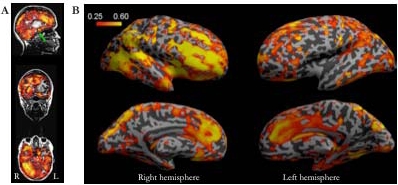
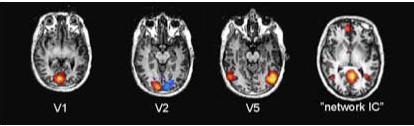
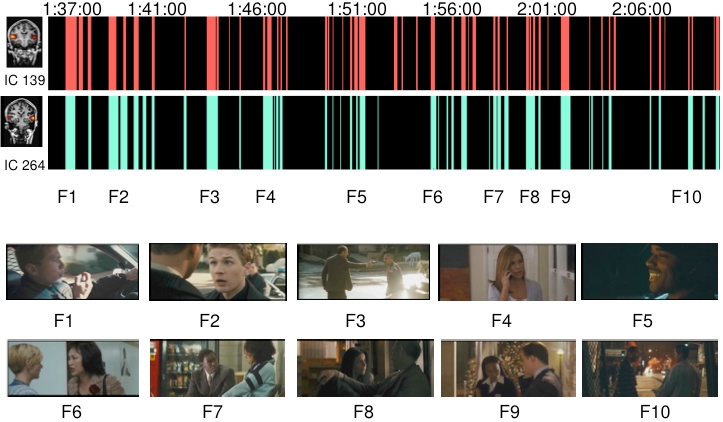
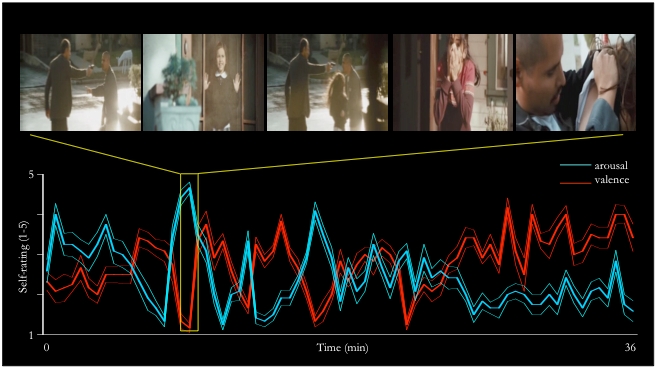
Verification
Claims the paper makes
The claims and statistics of this paper haven’t been checked yet.
Free: it reads the open-access text and checks the first 5 claims that cite a source we can check. Create a free account to check every claim.
Claims other papers make about this one
Each is checked against this paper’s own text: does it say what the citing paper says it does?
The source backs part of the claim, not all of it — or backs it for a different population, condition or comparison.
In the citing paper
“When viewing complex dynamic scenes, brain activity in sensory and attention-controlling systems becomes synchronized across individuals (12-16)”
From Emotions promote social interaction by synchronizing brain activity across individuals (2012) · cites this paper as [15]
Experimental — accuracy not yet measuredIn the citing paper
“Prior studies have provided contradicting evidence on whether the activity in the frontal regions synchronizes across individuals during prolonged natural stimulation (14,15).”
From Emotions promote social interaction by synchronizing brain activity across individuals (2012) · cites this paper as [15]
In the citing paper
“Previous work has shown that narratives elicit correlated neural responses across subjects in regions of the Default Mode Network (DMN), including temporal parietal junction (TPJ), angular gyrus, temporal poles, posterior medial cortex (PMC), and medial prefrontal cortex (mPFC) (Hasson et al., 2008, 2010; Jaaskelainen et al., 2008; Wilson et al., 2008; Lerner et al., 2011; Ben-Yakov et al., 2012;”
From Shared understanding of narratives is correlated with shared neural responses (2019) · cites this paper as Jaaskelainen et al., 2008
Self-check
Percentages, sums and reported differences re-computed from the paper’s own numbers.
The self-check needs the paper’s full text.
Citations
Cites
Independent component analysis: algorithms and applications
Hyvärinen, A., & Oja, E. (2000) · Neural Networks · doi:10.1016/s0893-6080(00)00026-5 · Cited by 8,705 · cited 1×
“The probabilistic ICA offers easier interpretation of the results obtained, since the analysis determines which independent components (ICs) are statistically significant [6], unlike the more traditional ICA approach where the researcher needs to select the most feasible ICs from amongst all the possible ICs [7].”
Russell, J. A., & Barrett, L. F. (1999) · Journal of Personality and Social Psychology · doi:10.1037//0022-3514.76.5.805 · Cited by 3,102 · cited 1×
“It is a widely held position that positive and negativity affect can be represented on a single bipolar valence scale [13], and the present findings tentatively support a competing view according to which negative and positive affect are generated independently [14, 15].”
BackgroundProbabilistic Independent Component Analysis for Functional Magnetic Resonance Imaging
Beckmann, C. F., & Smith, S. M. (2004) · IEEE Transactions on Medical Imaging · doi:10.1109/tmi.2003.822821 · Cited by 2,715 · cited 3×
“The pICA [6] were conducted on the preprocessed data sets of individual subjects using the Multivariate Exploratory Linear Optimized Decomposition into Independent Components (MELODIC) package of the FSL.”
BackgroundMethodIntersubject synchronization of cortical activity during natural vision
Hasson, U., Nir, Y., Levy, I., Fuhrmann, G., & Malach, R. (2004) · Science · doi:10.1126/science.1089506 · Cited by 1,839 · cited 10×
“In contrast to the other areas, there was an apparent lack of inter-subject synchronization of hemodynamic activity in frontal cortical areas [3].”
BackgroundMethodResultInfluentialThe affect system has parallel and integrative processing components: Form follows function.
Cacioppo, J. T., Gardner, W. L., & Berntson, G. G. (1999) · Journal of Personality and Social Psychology · doi:10.1037/0022-3514.76.5.839 · Cited by 1,217 · cited 1×
“It is a widely held position that positive and negativity affect can be represented on a single bipolar valence scale [13], and the present findings tentatively support a competing view according to which negative and positive affect are generated independently [14, 15].”
BackgroundToward a consensual structure of mood
Watson, D., & Tellegen, A. (1985) · Psychological Bulletin · doi:10.1037//0033-2909.98.2.219 · Cited by 1,170 · cited 1×
“It is a widely held position that positive and negativity affect can be represented on a single bipolar valence scale [13], and the present findings tentatively support a competing view according to which negative and positive affect are generated independently [14, 15].”
BackgroundRight Hemisphere Lateralization for Emotion in the Human Brain: Interactions with Cognition
Schwartz, G. E., Davidson, R. J., & Maer, F. (1975) · Science · doi:10.1126/science.1179210 · Cited by 447 · cited 1×
“It is also possible that the right-hemisphere dominance is explained by the right-hemisphere dominance in emotional processing of visual stimuli [10, 11], since the subjects selfreported being emotionally engaged while watching the last 36 minutes of the movie during fMRI scanning (see Fig.”
BackgroundProcessing emotional pictures and words: Effects of valence and arousal
KENSINGER, E. A., & SCHACTER, D. L. (2006) · Cognitive, Affective, & Behavioral Neuroscience · doi:10.3758/cabn.6.2.110 · Cited by 442 · cited 1×
“We could not, however, verify this since the arousal ratings correlated most consistently with cerebellar activity (for corroborating findings, see [12]), and with prefrontal activations only in some subjects, and we failed to see any consistent correlations between the valence ratings and fMRI activity.”
ResultBartels, A., Zeki, S., & Logothetis, N. K. (2008) · Cerebral Cortex · doi:10.1093/cercor/bhm107 · Cited by 150 · cited 3×
“While these studies have significantly advanced our understanding of the neural basis of cognition, rapid developments in non-invasive neuroimaging methodology have made it increasingly possible to record and study brain activity also during more natural viewing conditions [1-5].”
BackgroundMethodResultShort-term plasticity in auditory cognition
Jääskeläinen, I. P., Ahveninen, J., Belliveau, J. W., Raij, T., & Sams, M. E. (2007) · Trends in Neurosciences · doi:10.1016/j.tins.2007.09.003 · Cited by 138 · cited 1×
“Using the probabilistic ICA, it was possible to reveal activated areas and networks of areas (which may be even more intriguing [8]) in the individual subjects during the natural viewing conditions (see Figs.”
BackgroundSelf-citation
Cited by
Items 101–166 of 166
Bridwell, D. A., Roth, C., Gupta, C. N., & Calhoun, V. D. (2015) · PLoS ONE · doi:10.1371/journal.pone.0128833 · Cited by 17
“The relationship between ISC’s and valence and arousal appears mixed, however, with relationships demonstrated in some cases [6], but not others [13].”
BackgroundInfluentialGriffeth, V. E. M., Simon, A. B., & Buxton, R. B. (2014) · NeuroImage · doi:10.1016/j.neuroimage.2014.10.003 · Cited by 13
“Other studies have found a significant level of voxel-by-voxel synchronization between individuals while watching a movie suggesting that these patterns of regional brain activation are preserved between subjects (Hasson et al., 2004; Jaaskelainen et al., 2008).”
BackgroundOu, W., Zeng, W., Gao, W., He, J., Meng, Y., Fang, X., & Nie, J. (2022) · Frontiers in Computational Neuroscience · doi:10.3389/fncom.2022.877204 · Cited by 12
Türker, B., Belloli, L. M. L., Owen, A. M., Naçi, L., & Sitt, J. D. (2023) · Scientific Reports · doi:10.1038/s41598-023-48656-7 · Cited by 14
“Dorsolateral prefrontal cortex [left] [right] [-38, 52, 10] [30, 48, 22] Ventrolateral prefrontal cortex [42, 46, 0] Parietal operculum [left] [right] [-60, -40, 40] [58, -40, 30] Supplementary motor area [left] [right] [-5, 14, 48] [5, 14, 48] Dorsal anterior cingulate [-6, 18, 30] Paracingulate cortex [0, 44, 28] Te…”
ALHO, J. S., Lahnakoski, J. M., Panula, J. M., Rikandi, E., Mäntylä, T. J. S., Lindgren, M., Kieseppä, T., Suvisaari, J., Sams, M. E., & Raij, T. T. (2023) · Biological Psychiatry Cognitive Neuroscience and Neuroimaging · doi:10.1016/j.bpsc.2023.06.002 · Cited by 11
Self-citationModel of Narrative Nowness for Neurocinematic Experiments
Kauttonen, J., Kaipainen, M., & Tikka, P. (2014) · DROPS (Schloss Dagstuhl – Leibniz Center for Informatics) · doi:10.4230/oasics.cmn.2014.77 · Cited by 16
Early signatures of and developmental change in brain regions for theory of mind
Richardson, H., & Saxe, R. R. (2020) · Elsevier eBooks · doi:10.1016/b978-0-12-814411-4.00021-4 · Cited by 17
Context matters: Anterior and posterior cortical midline responses to sad movie scenes
Schlochtermeier, L. H., Pehrs, C., Bakels, J.-H., Jacobs, A. M., Kappelhoff, H., & Kuchinke, L. (2016) · Brain Research · doi:10.1016/j.brainres.2016.12.013 · Cited by 9
Neural Correlates of Group Bias During Natural Viewing
Andrews, T. J., Smith, R., Hoggart, R. L., Ulrich, P., & Gouws, A. D. (2018) · Cerebral Cortex · doi:10.1093/cercor/bhy206 · Cited by 12
Functional connectivity dynamics as a function of the fluctuation of tension during film watching
Sun, Y., Ma, J., Huang, M., Yi, Y., Wang, Y., Gu, Y., Lin, Y., Li, L. M. W., & Dai, Z. (2022) · Brain Imaging and Behavior · doi:10.1007/s11682-021-00593-7 · Cited by 14
“During film watching, participants may not engage in the scenes of the film as deeply as how they react in the real life (Jääskeläinen et al., 2008).”
BackgroundKeshmiri, S., Shiomi, M., & Ishiguro, H. (2019) · Entropy · doi:10.3390/e21121228 · Cited by 8
“Further details on SEED experiment, EEG channels’ arrangement, movie clips’ selection criteria, data acquisition and preprocessing, labeling the emotional states associated with each movie clip and so forth, can be found in References [58,60] and http://bcmi.sjtu.edu.cn/~seed/seed.html.”
BackgroundInfluentialStimulus Selection Influences Prediction of Individual Phenotypes in Naturalistic Conditions
Li, X., Eickhoff, S. B., & Weis, S. (2025) · Human Brain Mapping · doi:10.1002/hbm.70164 · Cited by 6
“Such features allow Hollywood movie clips to better captivate subjects (Chen et al. 2017; Jääskeläinen et al. 2008) and thus reduce noises for phenotype prediction.”
InfluentialZweerings, J., Sarasjärvi, K. K., Mathiak, K. A., Iglesias-Fuster, J., Cong, F., Zvyagintsev, M., & Mathiak, K. (2021) · International Journal of Neural Systems · doi:10.1142/s012906572150043x · Cited by 7
Mizrahi, T., & Axelrod, V. (2023) · Neuropsychologia · doi:10.1016/j.neuropsychologia.2023.108604 · Cited by 9
Clustering inter-subject correlation matrices in functional magnetic resonance imaging
Kauppi, J., Jääskeläinen, I. P., Sams, M. E., & Tohka, J. (2010) · IEEE International Conference on Information Technology and Applications in Biomedicine · doi:10.1109/itab.2010.5687650 · Cited by 8
Self-citationContextual knowledge provided by a movie biases implicit perception of the protagonist
Afdile, M., Jääskeläinen, I. P., Glerean, E., Smirnov, D., ALHO, J. S., Äimälä, A., & Sams, M. E. (2019) · Social Cognitive and Affective Neuroscience · doi:10.1093/scan/nsz028 · Cited by 11
“ception and underlying neural activity across viewers (Hasson, 2004; Hasson et al., 2008; Jääskeläinen et al., 2008; Bacha-Trams et al., 2017) and makes them similar in interpretation of the”
BackgroundSelf-citationMaior, H. A., Ramchurn, R., Martindale, S., Cai, M. B., Wilson, M. L., & Benford, S. (2019) · CHI Conference Extended Abstracts on Human Factors in Computing Systems (CHI EA) · doi:10.1145/3290607.3312814 · Cited by 8
“In this paper, however, we use functional Near Infrared Spectroscopy (fNIRS) to examine ISCs in participants brain responses during movie watching, to find further evidence in support of prior work [3, 7].”
MethodSisterhood predicts similar neural processing of a film
Bacha‐Trams, M., Yorulmaz, G. E., Glerean, E., Ryyppö, E., Tapani, K., Virmavirta, E., Saaristo, J., Jääskeläinen, I. P., & Sams, M. E. (2024) · NeuroImage · doi:10.1016/j.neuroimage.2024.120712 · Cited by 8
“…(McNabb et al., 2020) did not observe significant relationships between social distance, community homogeneity and similarity of global-level resting-state connectivity in data from 68 school-aged girls with social network information from all pupils in their year groups (total 5066 social dyads).”
BackgroundSelf-citationSomech, N., Mizrahi, T., Caspi, Y., & Axelrod, V. (2022) · Frontiers in Neuroscience · doi:10.3389/fnins.2022.913540 · Cited by 11
“, 2017), but also in the high-level prefrontal cortex (Jääskeläinen et al., 2008; Wilson et al., 2008; Kauppi et al., 2010; Lerner et al., 2011; Honey et al., 2012a; Simony et al., 2016).”
BackgroundNiu, L., Song, X., Li, Q., Peng, L., Dai, H., Zhang, J., Chen, K., Lee, T. M. C., & Zhang, R. (2024) · Human Brain Mapping · doi:10.1002/hbm.26621 · Cited by 10
“Research has shown that natural stimuli, such as well-directed films, elicit and manipulate our feelings and emotions more effectively (Guo et al., 2015; Jääskeläinen et al., 2008).”
BackgroundPET and the multitracer concept in the study of neurodegenerative diseases
Engler, H., Damián, A., & Bentancourt, C. (2015) · Dementia & Neuropsychologia · doi:10.1590/1980-57642015dn94000343 · Cited by 6
The Neurophysiology of Corporate Apologies: Why Do People Believe Insincere Apologies?
Kraig, A., Barraza, J. A., Montgomery, W. D., & Zak, P. J. (2019) · International Journal of Business Communication · doi:10.1177/2329488419858391 · Cited by 10
“ISC was originally applied to functional magnetic resonance imaging (fMRI) data to show cross-participant correlations were associated with similar emotional responses to a stimulus (Hasson, Nir, Levy, Fuhrmann, & Malach, 2004; Jääskeläinen et al., 2008).”
MethodInter‐ and intra‐subject similarity in network functional connectivity across a full narrative movie
Mochalski, L. N., Friedrich, P., Li, X., Kröll, J., Eickhoff, S. B., & Weis, S. (2024) · Human Brain Mapping · doi:10.1002/hbm.26802 · Cited by 8
“…and socio-affective research, studies started employing longer stimuli or multiple sessions (Alexander et al., 2017; Di Oleggio et al., 2017; Jääskeläinen et al., 2008; Kröll et al., 2023; Nguyen et al., 2017; Vanderwal et al., 2015; Vanderwal et al., 2017), but so far only very few…”
BackgroundBordier, C., & Macaluso, E. (2015) · Human Brain Mapping · doi:10.1002/hbm.22852 · Cited by 6
Face Prediction from fMRI Data during Movie Stimulus: Strategies for Feature Selection
Kauppi, J., Huttunen, H. J., Korkala, H., Jääskeläinen, I. P., Sams, M. E., & Tohka, J. (2011) · Lecture notes in computer science · doi:10.1007/978-3-642-21738-8_25 · Cited by 5
Self-citationInside the Radicalized Mind: The Neuropolitics of Terrorism and Violent Extremism
Howard, T. O. (2025) · Cambridge University Press eBooks · doi:10.1017/9781009586207 · Cited by 4
Liu, T., Saito, H., & Oi, M. (2015) · Japanese Psychological Research · doi:10.1111/jpr.12080 · Cited by 5
“Recent neuroscience research has examined the neural relationships between two people during social activities and found that interbrain synchronization in the PFC may reflect participants’ shared attention and/or shared empathic responses (Jääskeläinen et al., 2008).”
BackgroundLillywhite, A., Nijhof, D., Glowinski, D., Giordano, B. L., Camurri, A., Cross, I. R. M., & Pollick, F. E. (2022) · Frontiers in Neuroscience · doi:10.3389/fnins.2022.921489 · Cited by 4
“One advantage of ISC is that it is independent of the level of activity within the brain, which circumvents the issue that the hemodynamic response function varies not only between brain areas, but also between subjects (Jääskeläinen et al., 2008).”
BackgroundShared understanding is correlated with shared neural responses in the default mode networkPreprint
Nguyen, M., Vanderwal, T., & Hasson, U. (2017) · bioRxiv (Cold Spring Harbor Laboratory) · doi:10.1101/231019 · Cited by 4
“J Exp Soc Psychol 15(6):513–532.”
Comparing fMRI inter-subject correlations between groups using permutation testsPreprint
Tohka, J., Pollick, F. E., Pajula, J., & Kauppi, J.-P. (2018) · bioRxiv (Cold Spring Harbor Laboratory) · doi:10.1101/370023 · Cited by 6
“…stimuli when the stimuli can be modeled by a reference time-course (Pajula et al., 2012), and it has been applied in a number of studies (Hasson et al., 2008; Abrams et al., 2013; Jääskeläinen et al., 2008; Englander et al., 2012; Kauppi et al., 2010; Nummenmaa et al., 2012; Wilson et al., 2007).”
MethodPerceived community alignment increases information sharingPreprint
Baek, E. C., Hyon, R., López, K., Porter, M. A., & Parkinson, C. M. (2023) · PsyArXiv (OSF Preprints) · doi:10.31234/osf.io/vea3k · Cited by 7
Li, L. Y., Grzelak, L. N., Auerbach, R. P., & Shankman, S. A. (2024) · Journal of Psychiatric Research · doi:10.1016/j.jpsychires.2024.11.069 · Cited by 4
Sanada, M., & Naruse, Y. (2025) · Scientific Reports · doi:10.1038/s41598-025-08191-z · Cited by 3
A topography-based predictive framework for naturalistic viewing fMRI
Li, X., Friedrich, P., Patil, K. R., Eickhoff, S. B., & Weis, S. (2023) · NeuroImage · doi:10.1016/j.neuroimage.2023.120245 · Cited by 5
Ballistocardiogram suppression in concurrent EEG‐MRI by dynamic modeling of heartbeats
Lee, H., Graham, S. J., Kuo, W., & Lin, F. (2022) · Human Brain Mapping · doi:10.1002/hbm.25965 · Cited by 3
“…been suggested to be more appropriate to probe the neuronal responses related to complex cognitive processes common in our daily life, such as narrative comprehension (Regev et al., 2013; Wilson et al., 2008) and movie watching (Hasson et al., 2004; Hasson et al., 2008; Jaaskelainen et al., 2008).”
BackgroundBrandman, T., Malach, R., & Simony, E. (2022) · Frontiers in Human Neuroscience · doi:10.3389/fnhum.2022.956708 · Cited by 3
“, 2012, 2016), or real-time interruption of the movie at fixed intervals to collect emotional ratings (Jaaskelainen et al., 2008).”
BackgroundWang, Z., Yang, J., Zheng, Z., Cao, W., Dong, L., Li, H., Wen, X., Luo, C., Cai, Q., Jian, W., et al. (2023) · Journal of Magnetic Resonance Imaging · doi:10.1002/jmri.28599 · Cited by 3
“Compared with resting-state FCs, Koskentalo et al reported that FCs in the movie-watching state had higher within- and between-subject correlations, and that interindividual variability in the frontoparietal network FC was highest.(35) They found that resting-state FCs exhibited high intrinsic stability in high-order…”
Consistent movement of viewers’ facial keypoints while watching emotionally evocative videos
Tripathi, S. C., & Garg, R. (2024) · PLoS ONE · doi:10.1371/journal.pone.0302705 · Cited by 5
Correlations between Individual Features of Electrodermal Response during Viewing of the Same Videos
Mirgorodsky, V. I., Dementienko, V. V., Герасимов, В. В., Peshin, S. V., Дорохов, В. Б., & Shakhnarovich, V. M. (2013) · International Journal of Neuroscience and Behavioral Science · doi:10.13189/ijnbs.2013.010102 · Cited by 3
“The complexity of simultaneous recording of brain structure activity using an functional magnetic resonance imaging scanner necessitated the development of "robust inter-subject correlation of hemodynamic brain activity when subjects freely viewed a video clip" [2,8,11-16].”
BackgroundHyperscanning of social attunement: an frn study
Tugin, S., Gorin, A., Kanunikov, I. E., & Шестакова, А. Н. (2015) · CyberLeninK (CyberLeninka) · Cited by 3
Kim, I., Kim, H., & Kim, J. (2023) · International Journal of Psychophysiology · doi:10.1016/j.ijpsycho.2023.112242 · Cited by 3
Capturing shared fNIRS responses to visual affective stimuli in young healthy women
Molina‐Rodríguez, S., Tabernero, C., & Ibáñez-Ballesteros, J. (2025) · Biological Psychology · doi:10.1016/j.biopsycho.2025.109024 · Cited by 3
“…been suggested in which higher order areas, such as the PFC, would require coherent stimulus unfolding over longer time scales (Hasson et al., 2008; J ¨ a ¨ askel ¨ ainen et al., 2008; Lerner et al., 2011), which implies identifying relevant frequencies to capture consistent ISC, typically bellow…”
InfluentialPerceived community alignment increases information sharing
Baek, E. C., Hyon, R., López, K., Porter, M. A., & Parkinson, C. M. (2025) · Nature Communications · doi:10.1038/s41467-025-59915-8 · Cited by 8
“…is evidence that neural responses in the dorsal attention network and low-level sensory cortices not only align when people are exposed to the samenaturalisticstimuli 37,38 , but alsocoordinate across individuals to the extent that they exhibit similar higher-level processing of the stimuli 39,40 .”
Bolton, T. A. W., Jochaut, D., Giraud, A., & Ville, D. V. D. (2019) · Journal of Visualized Experiments · doi:10.3791/59083-v · Cited by 2
Emergence of the Affect from the Variation in the Whole-Brain Flow of Information
Keshmiri, S., Shiomi, M., & Ishiguro, H. (2019) · Brain Sciences · doi:10.3390/brainsci10010008 · Cited by 3
“Furthermore, most of the individuals that are included in these studies share the same geographical and/or cultural background (but also see [95] for a small deviation).”
BackgroundResultNeural alignment during outgroup intervention predicts future change of affect towards outgroup
Kluge, A., Somila, N., Lankinen, K., & Lévy, J. (2024) · Cerebral Cortex · doi:10.1093/cercor/bhae125 · Cited by 3
Keshmiri, S. (2020) · Brain Sciences · doi:10.3390/brainsci10080527 · Cited by 2
New approaches to statistical analysis of fMRI data
Pamilo, S. (2015) · Cited by 1
Physiological synchrony in brain and body as a measure of attentional engagement
Stuldreher, I. V. (2023) · doi:10.3990/1.9789036559379 · Cited by 1
Damatac, C. G., Homberg, J. R., Galesloot, T. E., Geerligs, L., & Greven, C. U. (2024) · bioRxiv (Cold Spring Harbor Laboratory) · doi:10.1101/2024.03.27.586963 · Cited by 5
Нейрофизиологические механизмы социальной сонастройки: НРД исследование
Tugin, S., Gorin, A., Kanunikov, I. E., & Шестакова, А. Н. (2015) · Психология Журнал Высшей школы экономики · doi:10.17323/1813-8918-2015-4-48-63 · Cited by 3
Romantic Transfer: From Science to Social Ideologies
Chen, C. (2017) · Digital Access to Scholarship at Harvard (DASH) (Harvard University)
Post-Movie Subliminal Measurement (PMSM), for Investigating Implicit Social Bias
Afdile, M., & Jääskeläinen, I. P. (2020) · Journal of Visualized Experiments · doi:10.3791/60817 · Cited by 5
Self-citationTunteiden luokittelu aivojen aktivaatiosta ja konnektiviteetista
Saarimäki, H. (2025) · Psykologia · doi:10.62443/psykologia.v54i5.89323 · Cited by 2
Inter-Subject Correlation Using Movie-Driven fMRI in Drug-Resistant Epilepsy
Abbas, H. H. (2021) · Scholarship@Western (Western University)
Brain mechanisms of parenting in co-parenting spouses and parent-child dyads
Azhari, N. A. (2021) · DR-NTU (Nanyang Technological University) · doi:10.32657/10356/152297
Li, J., Dieffenbach, M. C., Eisenberger, N. I., & Lieberman, M. D. (2021) · PsyArXiv (OSF Preprints) · doi:10.31234/osf.io/4h9eu
Screendance as enactment in Maya Deren’s At Land
Tikka, P. (2018) · DAT Journal · doi:10.29147/dat.v3i1.66
Kauttonen, J., Paekivi, S., Kauramäki, J., & Tikka, P. (2023) · Frontiers in Psychology · doi:10.3389/fpsyg.2023.1153968
Self-citationThe neural correlates of shared and individual experience
Coppola, P., Owen, A. M., Menon, D. K., Naçi, L., & Stamatakis, E. A. (2026) · Communications Biology · doi:10.1038/s42003-025-09355-3 · Cited by 1
Patterns of intersubject correlations parallel organizational gradients during naturalistic viewingPreprint
Smith, M., Samara, A., Cabalo, D. G., Ngo, A., Shearer, H., Vanderwal, T., & Bernhardt, B. C. (2025) · bioRxiv (Cold Spring Harbor Laboratory) · doi:10.1101/2025.10.19.683222 · Cited by 1
In-group neural alignment serves as a biomarker of social identity
Zvi, Y., Kerem, N., Aviv, E., & Yeshurun, Y. (2026) · Proceedings of the National Academy of Sciences · doi:10.64898/2025.12.03.692126 · Cited by 1
Méthodes pour l'électroencéphalographie multi-sujet et application aux interfaces cerveau-ordinateur
Korczowski, L. (2018) · theses.fr (ABES) · doi:10.70675/38d2a12fz024fz4d84z8a8az0dc16b2cff6a · Cited by 2
Reliability and signal comparison of OPM-MEG, fMRI & iEEG in a repeated movie viewing paradigm
Christiano, O. R., & Michelmann, S. (2026) · Imaging Neuroscience · doi:10.1162/imag.a.1218
Action features dominate cortical representation during natural vision
Jung, H., Jain, H., Han, X., Feilong, M., Han, J., Shokeen, D., Uden, C. V., Hanson, I., Connolly, A. C., Wager, T. D., et al. (2026) · Proceedings of the National Academy of Sciences · doi:10.1073/pnas.2625018123 · Cited by 4
Ghalavand, M., Hatami, J., Setarehdan, S.-K., Nosrati, F., Ghalavand, H., & Nikhalat-Jahromi, A. (2026) · Social Neuroscience · doi:10.1080/17470919.2026.2751698
Metadata
- Authors
- Jääskeläinen, I. P., Koskentalo, K., Balk, M. H., Autti, T., Kauramäki, J., Pomren, C., & Sams, M.
- Affiliations
- Helsinki University Hospital (FI)
- Corresponding author
- Jääskeläinen, Iiro P
- Venue
- The Open Neuroimaging Journal
- Publisher
- Bentham Science Publishers Ltd.
- Published
- 2008-04-01
- Volume
- 02
- Issue
- 1
- Pages
- 14-19
- ISSN
- 1874-4400 (ISSN-L)
- PMC
- PMC2577941
- OpenAlex
- W2102717406
- Cited by
- 166
- References
- 16
- Citations by year
- 2026: 4 · 2025: 8 · 2024: 8 · 2023: 12 · 2022: 9 · 2021: 10 · 2020: 12 · 2019: 11 · 2018: 19 · 2017: 8 · 2016: 13 · 2015: 16 · 2014: 11 · 2013: 6 · 2012: 8
- FWCI
- 1.90
- Type
- journal article
- Language
- en
- Open access
- hybrid
- doi.org
- Locations
- The Open Neuroimaging Journal (publishedVersion, cc-by)
- PubMed Central (publishedVersion, cc-by)
- PubMed (publishedVersion)
- Funders
- Academy of Finland
- Topics
- Life Sciences › Neuroscience › Cognitive Neuroscience › Functional Brain Connectivity Studies
- Social Sciences › Psychology › Social Psychology › Action Observation and Synchronization
- Life Sciences › Neuroscience › Cognitive Neuroscience › Neural dynamics and brain function
- Keywords
- prefrontal cortex, hemodynamic activity, naturalistic movie viewing, emotional engagement
About these checks
Registry, retraction, Cites and statistics results are computed, not judged, with one exception: a printed reference that no index lists is read once by a model before it counts as a citation error. Claims are extracted by a model and kept only when their quote appears verbatim in the text; each cited source is then checked, with a model’s help, for whether it says what the claim relies on. Those verdicts can be wrong — read the claim’s quote and the cited source before relying on one.
Statistics and arithmetic are recomputed, not judged.
Confidence bands are shown only for fields calibrated on our annotated test set. None is calibrated yet, so no band is shown.
What counts as a claim ›How we measure confidence ›How we check this ›
Are you an author, or do you see a problem with this page? Request a review
Data sources
Bibliographic data: Semantic Scholar, OpenAlex, Crossref.
Contains information from the Semantic Scholar Academic Graph Datasets, made available under the ODC Attribution License (ODC-BY 1.0).
Semantic Scholar’s data is described in: Kinney, R., et al. (2023). The Semantic Scholar Open Data Platform. arXiv:2301.10140.
