

Efficacy of a Self-Help Web-Based Recovery Training in Improving Sleep in Workers: Randomized Controlled Trial in the General Working Population
Open accessPublished version of a preprint
The DOI matches its Crossref record; 77 of the 77 references it cites were found in a registry or an index.
Abstract
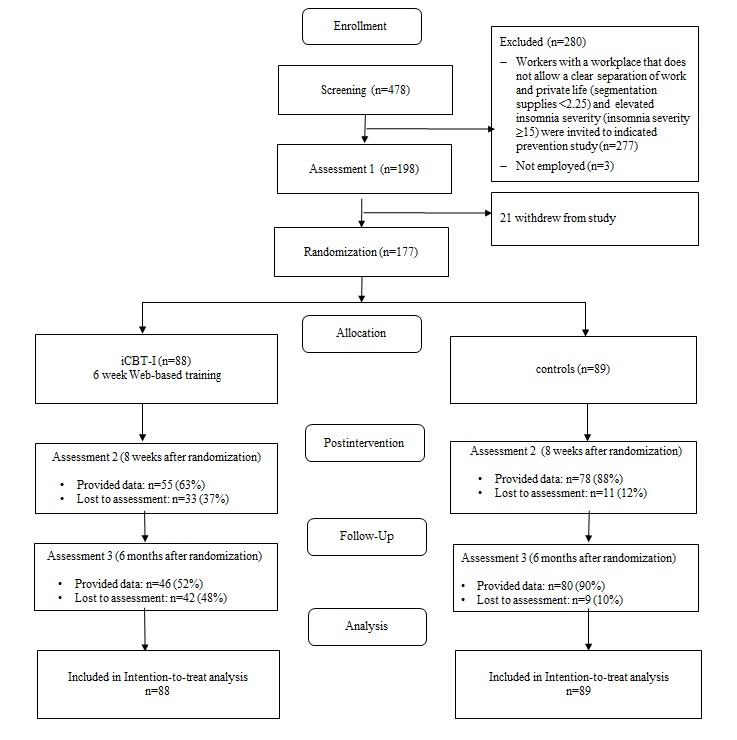
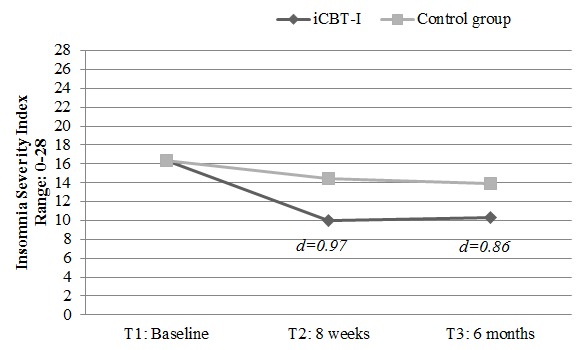
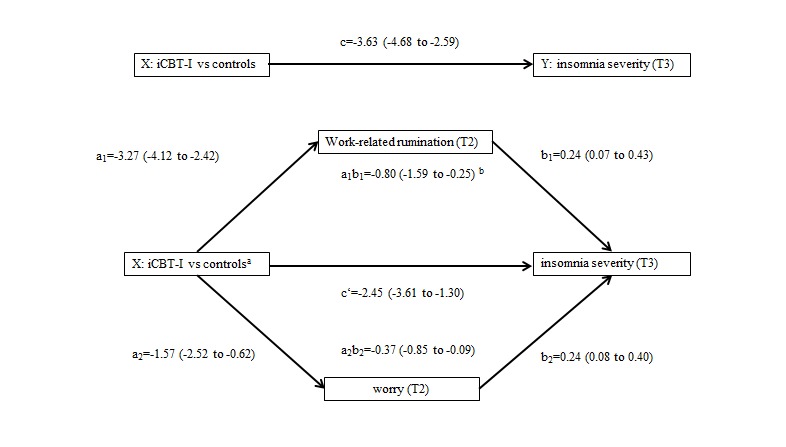
BACKGROUND Sleep complaints are among the most prevalent health concerns, especially among workers, which may lead to adverse effects on health and work. Internet-delivered cognitive behavioral therapy for insomnia (iCBT-I) offers the opportunity to deliver effective solutions on a large scale. The efficacy of iCBT-I for clinical samples has been demonstrated in recent meta-analyses, and there is evidence that iCBT-I is effective in the working population with severe sleep complaints. However, to date, there is limited evidence from randomized controlled trials that iCBT-I could also be an effective tool for universal prevention among the general working population regardless of symptom severity. Although increasing evidence suggests that negatively toned cognitive activity may be a key factor for the development and maintenance of insomnia, little is known about how iCBT-I improves sleep by reducing presleep cognitive activity. OBJECTIVE This study aimed to examine the efficacy of a self-help internet-delivered recovery training, based on principles of iCBT-I tailored to the work-life domain, among the general working population. General and work-related cognitive activities were investigated as potential mediators of the intervention’s effect. METHODS A sample of 177 workers were randomized to receive either the iCBT-I (n=88) or controls (n=89). The intervention is a Web-based training consisting of six 1-week modules. As the training was self-help, participants received nothing but technical support via email. Web-based self-report assessments were scheduled at baseline, at 8 weeks, and at 6 months following randomization. The primary outcome was insomnia severity. Secondary outcomes included measures of mental health and work-related health and cognitive activity. In an exploratory analysis, general and work-related cognitive activities, measured as worry and work-related rumination, were investigated as mediators. RESULTS Analysis of the linear mixed effects model showed that, relative to controls, participants who received iCBT-I reported significantly lower insomnia severity scores at postintervention (between-group mean difference −4.36; 95% CI −5.59 to − 3.03; Cohen d=0.97) and at 6-month follow-up (between-group difference: −3.64; 95% CI −4.89 to −2.39; Cohen d=0.86). The overall test of group-by-time interaction was significant (P<.001). Significant differences, with small-to-large effect sizes, were also detected for cognitive activity and for mental and work-related health, but not for absenteeism. Mediation analysis demonstrated that work-related rumination (indirect effect: a1b1=−0.80; SE=0.34; 95% boot CI −1.59 to −0.25) and worry (indirect effect: a2b2=−0.37; SE=0.19; 95% boot CI −0.85 to −0.09) mediate the intervention’s effect on sleep. CONCLUSIONS A self-help Web-based recovery training, grounded in the principles of iCBT-I, can be effective in the general working population, both short and long term. Work-related rumination may be a particularly crucial mediator of the intervention’s effect, suggesting that tailoring interventions to the workplace, including components to reduce the work-related cognitive activity, might be important when designing recovery interventions for workers. CLINICALTRIAL German Clinical Trials Register DRKS00007142; https://www.drks.de/DRKS00007142
Overview
The claims and statistics of this paper haven’t been checked yet.
Free: it reads the open-access text and checks the first 5 claims that cite a source we can check. Create a free account to check every claim.
Integrity signals
Registry
Cites
Statistics
Figures
Verification
Claims the paper makes
The claims and statistics of this paper haven’t been checked yet.
Free: it reads the open-access text and checks the first 5 claims that cite a source we can check. Create a free account to check every claim.
Claims other papers make about this one
Each is checked against this paper’s own text: does it say what the citing paper says it does?
The source backs part of the claim, not all of it — or backs it for a different population, condition or comparison.
In the citing paper
“Notwithstanding the promising results, few controlled studies have examined the efficacy of internet-based interventions focusing on promoting recovery and restorative behavior among distresses employees (e.g., Behrendt et al., 2020; Ebert et al., 2015; Thiart et al., 2015).”
From Learning how to recover from stress: Results from an internet-based randomized controlled pilot trial (2023) · cites this paper as Behrendt et al., 2020
Experimental — accuracy not yet measured
Self-check
Percentages, sums and reported differences re-computed from the paper’s own numbers.
The self-check needs the paper’s full text.
Citations
Cites
(2013) · Cited by 44,563
Cochrane Handbook for Systematic Reviews of Interventions: Cochrane Book Series
(2008) · doi:10.1002/9780470712184 · Cited by 25,048
Validation of the Insomnia Severity Index as an outcome measure for insomnia research
Bastien, C. (2001) · Sleep Medicine · doi:10.1016/s1389-9457(00)00065-4 · Cited by 8,067 · cited 2×
“For the other trial, workers with a workplace that is characterized by blurred boundaries between work and nonwork life (segmentation supplies 2.25) [48] and that showed a score of ≥ 15 of insomnia severity [49] were recruited (DRKS: DRKS00006223).”
InfluentialSterne, J. A. C., White, I. R., Carlin, J. B., Spratt, M., Royston, P., Kenward, M. G., Wood, A. M., & Carpenter, J. R. (2009) · BMJ · doi:10.1136/bmj.b2393 · Cited by 7,299 · cited 2×
“All existing data of the primary and secondary outcomes, the number of completed modules, the grouping variable, and the interaction term as a product of group allocation with baseline scores of insomnia were used in the imputation model [65].”
Nolen-Hoeksema, S., Wisco, B. E., & Lyubomirsky, S. (2008) · Perspectives on Psychological Science · doi:10.1111/j.1745-6924.2008.00088.x · Cited by 5,172 · cited 1×
“These effects are important because work-related rumination has been shown to be a mediator between work-stress and impaired sleep [33], and both rumination [75] and insomnia [7] are predictors of future depression.”
Morin, C. M., Belleville, G., Bélanger, L., & Ivers, H. (2011) · Sleep · doi:10.1093/sleep/34.5.601 · Cited by 4,620 · cited 6×
“To assess symptom-free status, an ISI score below 8 was considered symptom free [52].”
InfluentialSick individuals and sick populations
Rose, G. (2001) · International Journal of Epidemiology · doi:10.1093/ije/30.3.427 · Cited by 3,736 · cited 1×
“However, studies following a universal health prevention approach without symptom severity as the inclusion criterion are usually associated with smaller effect sizes [45,46].”
BackgroundBaglioni, C., Battagliese, G., Feige, B., Spiegelhalder, K., Nissen, C., Voderholzer, U., Lombardo, C., & Riemann, D. (2011) · Journal of Affective Disorders · doi:10.1016/j.jad.2011.01.011 · Cited by 2,779 · cited 3×
“It is notable that the intervention also was effective at reducing depressive symptoms, underlining the close relationship between sleep and depression [8].”
Self-citationSick individuals and sick populations
ROSE, G. (1985) · International Journal of Epidemiology · doi:10.1093/ije/14.1.32 · Cited by 2,701
Eysenbach, G. (2005) · Journal of Medical Internet Research · doi:10.2196/jmir.7.1.e11 · Cited by 2,524 · cited 1×
“This could lead to an overestimation of the intervention effect because it is assumed that participants who were not satisfied with the intervention nor appeared to have experienced any benefit may not have answer any further questionnaires postintervention and at 6-month follow-up [79].”
Background
Research works printed but not linked: 4
- Storm A DAK- Health Report 2017: Analysis of data on work disability. Update: Sleep disorders. Contributions to health economics and health services research 2017 Heidelberg medhochzwei
- Beck AT Steer RA Brown GK BDI-II, Beck depression inventory: manual 1996 San Antonio, TX Harcourt Brace
- Görtelmeyer R SF-A/R and SF-B/R: Sleep Questionnaires A and B - Revised version 2011 Goettingen Hogrefe
- Mohr G Rigotti T Müller A Irritation Scale for the Assessment of Psychological Strain in Work Contexts 2007 Goettingen Hogrefe
Cited by
Scott, A. J., Webb, T. L., Martyn-St James, M., Rowse, G., & Weich, S. (2021) · Sleep Medicine Reviews · doi:10.1016/j.smrv.2021.101556 · Cited by 1,094
The European Insomnia Guideline: An update on the diagnosis and treatment of insomnia 2023
Riemann, D., Espie, C. A., Altena, E., Arnardottir, E. S., Baglioni, C., Bassetti, C. L. A., Bastien, C., Berzina, N., Bjorvatn, B., Dikeos, D., et al. (2023) · Journal of Sleep Research · doi:10.1111/jsr.14035 · Cited by 834
Self-citationHasan, F., Tu, Y.-K., Yang, C.-M., James Gordon, C., Wu, D., Lee, H.-C., Yuliana, L. T., Herawati, L., Chen, T.-J., & Chiu, H.-Y. (2022) · Sleep Medicine Reviews · doi:10.1016/j.smrv.2021.101567 · Cited by 137
Nixon, P., Ebert, D. D., Boß, L., Angerer, P., Dragano, N., & Lehr, D. (2022) · Journal of Medical Internet Research · doi:10.2196/40488 · Cited by 50
“Furthermore, they might have the potential to alleviate the burden of workplace stressors by promoting self-efficacy and improving various health outcomes such as insomnia or depression [21-24] in both short and long term [25,26].”
Self-citationSpanhel, K., Hovestadt, E., Lehr, D., Spiegelhalder, K., Baumeister, H., Bengel, J., & Sander, L. B. (2022) · Frontiers in Psychiatry · doi:10.3389/fpsyt.2022.832196 · Cited by 37
“Nevertheless, effects are smaller than the revealed large effects of the culturally non-adapted versions (77, 81).”
BackgroundSelf-citationTakano, Y., Ibata, R., Machida, N., Ubara, A., & Okajima, I. (2023) · Sleep Medicine Reviews · doi:10.1016/j.smrv.2023.101839 · Cited by 41
A systematic review of the effect of sleep interventions on presenteeism
Takano, Y., Iwano, S., Aoki, S., Nakano, N., & Sakano, Y. (2021) · BioPsychoSocial Medicine · doi:10.1186/s13030-021-00224-z · Cited by 26
“CBT-I is mediated by work-related rumination and worry in the process of insomnia symptom improvement [29].”
BackgroundMethodDigital health applications in the area of mental health
Schreiter, S., Mascarell-Maricic, L., Rakitzis, O., Volkmann, C., Kaminski, J. A., & Daniels, M. A. (2023) · Deutsches Ärzteblatt international · doi:10.3238/arztebl.m2023.0208 · Cited by 37
Farajkhoda, T., Ashrafi, F., Bokaie, M., & Mahmoodabadi, H. Z. (2021) · Journal of Sex & Marital Therapy · doi:10.1080/0092623x.2021.1895388 · Cited by 25
Zhang, W., Tocher, P., L’Heureux, J., Sou, J., & Sun, H. (2022) · Value in Health · doi:10.1016/j.jval.2022.06.015 · Cited by 20
Spiegelhalder, K., Baumeister, H., Al-Kamaly, A., Bader, M., Bauereiß, N., Benz, F., Braun, L., Buntrock, C., Burkhardt, M., Cuijpers, P. J., et al. (2022) · BMJ Open · doi:10.1136/bmjopen-2021-058212 · Cited by 17
Self-citationBehrendt, D., Boß, L., Hannibal, S., Kunzler, A. M., Wessa, M., & Lehr, D. (2023) · Internet Interventions · doi:10.1016/j.invent.2023.100649 · Cited by 19
Self-citationEffectiveness of an App-Based Short Intervention to Improve Sleep: Randomized Controlled Trial
Vollert, B., Müller, L. K., Jacobi, C., Trockel, M., & Beintner, I. (2023) · JMIR Mental Health · doi:10.2196/39052 · Cited by 15
“Besides, quality of life, executive functions, and work-related health and productivity have shown to be improved through internet-based CBT-I [54-57].”
Smyth, A., de Bloom, J., Syrek, C. J., Domin, M., Janneck, M., Reins, J. A., & Lehr, D. (2020) · BMC Public Health · doi:10.1186/s12889-020-09354-5 · Cited by 16
“Results indicate that the intervention’s effect on the primary outcome, insomnia severity, was found to be mediated by both work-related rumination [59] and increased recreational activities [60].”
BackgroundSelf-citationBrückner, H., Ell, J., Kalon, L., Strahler, J., Ducki, A., Riemann, D. W., Buntrock, C., Spiegelhalder, K., & Lehr, D. (2025) · International Journal of Nursing Studies · doi:10.1016/j.ijnurstu.2025.105112 · Cited by 14
Self-citationFarahimanesh, S., Serino, S., Tuena, C., Lernia, D. D., Wiederhold, B. K., Bernardelli, L., Riva, G., & Moradi, A. (2023) · Journal of Clinical Medicine · doi:10.3390/jcm12052006 · Cited by 13
Boß, L., Ross, J., Reis, D., Pischel, S., Mallwitz, T., Brückner, H., Tanner, G., Nissen, H., Kalon, L., Schümann, M., et al. (2025) · International Journal of Nursing Studies · doi:10.1016/j.ijnurstu.2025.105076 · Cited by 13
Self-citationThe Monday Effect Revisited: A Diary and Sleep Actigraphy Study
Elfering, A., Gerhardt, C., Pereira, D., Schenker, A., & Kottwitz, M. U. (2020) · Sleep and Vigilance · doi:10.1007/s41782-020-00105-5 · Cited by 14
Evaluating Response Shift in Statistical Mediation Analysis
Georgeson, A. R., Valente, M. J., & González, O. (2021) · Advances in Methods and Practices in Psychological Science · doi:10.1177/25152459211012271 · Cited by 19
Schmidt, S., Andersch-Rupprecht, C., Dengler, T., & Nagel, E. (2023) · Das Gesundheitswesen · doi:10.1055/a-2143-7457 · Cited by 9
Brückner, H., Wallot, S., Horvath, H., Ebert, D. D., & Lehr, D. (2024) · BMJ Mental Health · doi:10.1136/bmjment-2024-301016 · Cited by 10
“The teacher-specific version was adapted to the general working population by changing the virtual personas of the intervention 21 and this version was used in the present study.”
Self-citationBenz, F., Grolig, L., Hannibal, S., Buntrock, C., Cuijpers, P. J., Domschke, K., Ebert, D. D., Ell, J., Janneck, M., Jenkner, C., et al. (2024) · Trials · doi:10.1186/s13063-024-08214-6 · Cited by 13
Self-citationAsplund, R. P., Carvallo, F., Christensson, H., Videsäter, E., Häggman, A., Ljótsson, B., Carlbring, P., & Andersson, G. (2023) · Internet Interventions · doi:10.1016/j.invent.2023.100681 · Cited by 6
“Notwithstanding the promising results, few controlled studies have examined the efficacy of internet-based interventions focusing on promoting recovery and restorative behavior among distresses employees (e.g., Behrendt et al., 2020; Ebert et al., 2015; Thiart et al., 2015).”
BackgroundZarski, A., Bernstein, K., Baumeister, H., Lehr, D., Wernicke, S., Küchler, A., Kählke, F., Spiegelhalder, K., & Ebert, D. D. (2025) · Journal of Medical Internet Research · doi:10.2196/58024 · Cited by 10
“ON Recovery intervention [46,47,83], which, however, has been evaluated in comparison to waitlist-control groups.”
Self-citationLehr, D., Freund, H., Sieland, B., Kalon, L., Berking, M., Riper, H. M., & Ebert, D. D. (2024) · Internet Interventions · doi:10.1016/j.invent.2024.100787 · Cited by 6
“Similar results were reported by Behrendt et al. (2020), suggesting that the traditional distinction be-tween non-clinical and clinical samples might not capture the characteristics of individuals for whom multicomponent internet interventions work well and can be recommended.”
Self-citationAYYILDIZ, N. İ., & Bingöl, N. (2024) · Epilepsy & Behavior · doi:10.1016/j.yebeh.2024.109734 · Cited by 6
Schlarb, A. A., Fründ, J. P., Kovačević, T., & Faber, J. (2021) · Somnologie - Schlafforschung und Schlafmedizin · doi:10.1007/s11818-021-00301-z · Cited by 7
Thielecke, J., Kuper, P., Lehr, D., Schuurmans, L., Harrer, M., Ebert, D. D., Cuijpers, P. J., Behrendt, D., Brückner, H., Horvath, H., et al. (2024) · Psychological Medicine · doi:10.1017/s0033291724000527 · Cited by 7
“…and sleep restriction, interact with each other and the treatment outcomes over time or if individual modules targeting potential transdiagnostic factors like rumination (Behrendt et al., 2020; Cheng, Kalmbach, Castelan, Murugan, & Drake, 2020) are especially crucial for combined treatment.”
Self-citationZettor, D., Endomba, F. T., Pierandrei, A., Pinoit, J., Chauvet‐Gélinier, J., Forestier, N., & Hussami, A. (2024) · Sleep Medicine Reviews · doi:10.1016/j.smrv.2024.102024 · Cited by 5
Munt, O., Schredl, M., Gottlieb, E., Fischer, S., Gautschi, D., Gahan, L., & Schoebel, C. (2025) · Journal of Sleep Research · doi:10.1111/jsr.14445 · Cited by 6
“The effect sizes were smaller compared with studies including moderate to severe insomnia participants (Behrendt et al., 2020; Christensen et al., 2016; Ebert et al., 2015; Hinterberger et al., 2024; Horsch et al., 2017; Lorenz et al., 2019; Ritterband et al., 2009; Thiart et al., 2015), but…”
InfluentialMoon, D. U., Kim, J., Sun, J. H., & Lee, Y. (2025) · Internet Interventions · doi:10.1016/j.invent.2025.100848 · Cited by 3
“As a result, regulatory bodies in several countries, including Germany, the United Kingdom, and the USA, have approved dCBT-I programs for clinical use (Lorenz et al., 2019; Behrendt et al., 2020; Morin, 2020; Digital Therapeutics Alliance, n.d.).”
InfluentialBetriebliche Gesundheitsförderung
Lehr, D., & Boß, L. (2023) · Springer eBooks · doi:10.1007/978-3-662-65816-1_23 · Cited by 3
Self-citationJeon, H., Kang, E., & Yoo, S. (2023) · Korean Journal of Clinical Pharmacy · doi:10.24304/kjcp.2023.33.4.221 · Cited by 3
Kalon, L., Freund, H., Rinn, A., Watkins, P. C., Zarski, A., & Lehr, D. (2025) · Journal of Affective Disorders · doi:10.1016/j.jad.2025.119664 · Cited by 2
Self-citationThomson, N., Gilarova, M., Lawrence, J., Cullen, B., & Gardani, M. (2026) · Sleep Medicine Reviews · doi:10.1016/j.smrv.2026.102279 · Cited by 2
Tsuchiya, M., Fujita, R., Adachi, K., Kumagai, K., Kimata, A., & Kondo, N. (2022) · Journal of Health Psychology Research · doi:10.11560/jhpr.220714179 · Cited by 2
Digitale Interventionen in der betrieblichen Gesundheitsförderung
Hoppe, A., Roswag, M., & Lehr, D. (2022) · Springer eBooks · doi:10.1007/978-3-658-28651-4_23 · Cited by 1
Self-citationGrolig, L., Brückner, H., Heimes, H., Buntrock, C., Hempeler, C., Spiegelhalder, K., & Lehr, D. (2025) · Sleep Medicine Reviews · doi:10.1016/j.smrv.2025.102224 · Cited by 4
Self-citationThe Effect of Noninvariance on the Estimation of the Mediated Effect in the Two-Wave Mediation Model
Georgeson, A. R., Valente, M. J., & González, O. (2022) · Structural Equation Modeling A Multidisciplinary Journal · doi:10.1080/10705511.2022.2067164 · Cited by 2
“…to control for the initial levels of the mediator and the outcome (Cole & Maxwell, 2003; MacKinnon, 2008; Valente, & MacKinnon, 2017), and has been widely applied in psychology and mental health research (e.g., Behrendt et al., 2020; Fonseca et al., 2019; Morin et al., 2021; Quigley et al., 2019).”
BackgroundDigitale Interventionen zur individuellen Prävention und Gesundheitsförderung
Lehr, D., & Boß, L. (2022) · Springer eBooks · doi:10.1007/978-3-658-34647-8_17 · Cited by 1
Self-citationHenst, R. H. P. (2020) · Open University of Cape Town (University of Cape Town)
Digitale Interventionen in der betrieblichen Gesundheitsförderung
Hoppe, A., Roswag, M., & Lehr, D. (2021) · Springer eBooks · doi:10.1007/978-3-658-28654-5_23-1
Self-citationNixon, P., Ebert, D. D., Boß, L., Angerer, P., Dragano, N., & Lehr, D. (2022) · doi:10.2196/preprints.40488
Self-citationSpiegelhalder, K., Ebert, D. D., & Lehr, D. (2023) · Springer eBooks · doi:10.1007/978-3-662-65816-1_8 · Cited by 1
Self-citationDiGA, weitere psychotherapeutische Anwendungen und primärpräventive Anwendungen
Meisenzahl, E. M., & Sprick, U. (2023) · Springer eBooks · doi:10.1007/978-3-662-64457-7_5
Kalimi, O. N., Sorkhani, T. M., Dehghani, A. R., & Bokaie, M. (2024) · Revista Brasileira Ginecologia e Obstetrícia · doi:10.61622/rbgo/2024rbgo102 · Cited by 2
Grundlagen der Diagnostik und Therapie
(2024) · Elsevier eBooks · doi:10.1016/b978-3-437-22487-4.16001-0
Aydin, A., van Ballegooijen, W., Cornelisz, I., & Etzelmueller, A. (2025) · Frontiers in Digital Health · doi:10.3389/fdgth.2025.1509415 · Cited by 1
Benz, F., Grolig, L., Hannibal, S., Buntrock, C., Cuijpers, P., Domschke, K., Ebert, D. D., Ell, J., Janneck, M., Jenkner, C., et al. (2024) · Figshare · doi:10.6084/m9.figshare.26731849
Self-citationThomsen, A., Syrek, C. J., Brückner, H., de Bloom, J., Janneck, M., Domin, M., Reins, J. A., & Lehr, D. (2026) · Frontiers in Digital Health · doi:10.3389/fdgth.2026.1698339 · Cited by 1
“In a similar trial with 177 workers without symptomatic inclusion criteria, Behrendt et al. (38) observed a similarly large effect for an unguided recovery training relative to waitlist ( d = 0.87).”
InfluentialSelf-citationGao, K., Zhao, Y., Zhang, X., Su, K., Jia, J., & Xu, Y. (2026) · Sleep And Breathing · doi:10.1007/s11325-026-03723-x · Cited by 1
Tong, Z., Ye, G., Fan, S., Li, Y., Zhang, J., Zhang, H., Chen, Q., Wang, H., Li, H., & Wang, J. (2026) · BMC Medicine · doi:10.1186/s12916-026-05129-8 · Cited by 1
Metadata
- Authors
- Behrendt, D., Ebert, D. D., Spiegelhalder, K., & Lehr, D.
- Affiliations
- Vrije Universiteit Amsterdam (NL)
- University of Freiburg (DE)
- Leuphana University of Lüneburg (DE)
- Venue
- Journal of Medical Internet Research
- Publisher
- JMIR Publications Inc.
- Published
- 2020-01-07
- Volume
- 22
- Issue
- 1
- Pages
- e13346
- ISSN
- 1438-8871 (ISSN-L)
- PMC
- PMC6996739
- OpenAlex
- W2975929734
- Cited by
- 52
- References
- 77
- Citations by year
- 2026: 4 · 2025: 8 · 2024: 9 · 2023: 11 · 2022: 10 · 2021: 7 · 2020: 3
- FWCI
- 5.90
- Type
- journal article
- Language
- en
- Open access
- gold
- doi.org
- Licence
- cc-by
- Locations
- Journal of Medical Internet Research (publishedVersion, cc-by)
- PubMed Central (publishedVersion, cc-by)
- PubMed (publishedVersion)
- VU Research Portal (publishedVersion, other-oa)
- Multilingual Matters (Channel View Publications) (submittedVersion, cc-by)
- Data Archiving and Networked Services (DANS) (submittedVersion, other-oa)
- Funders
- European Commission (2007DE161PR001, CCI 2007DE161PR001)
- National Institutes of Health (7k23ag045338-05)
- European Regional Development Fund (CCI 2007DE161PR001, 2007DE161PR001)
- National Institute on Aging (K23 (AG045338), P30AG021342)
- Topics
- Social Sciences › Psychology › Experimental and Cognitive Psychology › Sleep and related disorders
- Social Sciences › Psychology › Applied Psychology › Digital Mental Health Interventions
- Social Sciences › Psychology › Experimental and Cognitive Psychology › Sleep and Work-Related Fatigue
- Keywords
- insomnia severity, sleep complaints, workers, self-help intervention, worry, work-related rumination, mediation, mental health, work-related health, absenteeism, universal prevention, recovery training, occupational health, sleep duration, sleep efficiency
- MeSH terms
- Adult, Female, Humans, Male, Middle Aged, Occupational Diseases, Self-Help Groups, Sleep Wake Disorders, Health Behavior, Treatment Outcome, Internet
About these checks
Registry, retraction, Cites and statistics results are computed, not judged, with one exception: a printed reference that no index lists is read once by a model before it counts as a citation error. Claims are extracted by a model and kept only when their quote appears verbatim in the text; each cited source is then checked, with a model’s help, for whether it says what the claim relies on. Those verdicts can be wrong — read the claim’s quote and the cited source before relying on one.
Statistics and arithmetic are recomputed, not judged.
Confidence bands are shown only for fields calibrated on our annotated test set. None is calibrated yet, so no band is shown.
What counts as a claim ›How we measure confidence ›How we check this ›
Are you an author, or do you see a problem with this page? Request a review
Data sources
Bibliographic data: Semantic Scholar, OpenAlex, Crossref.
Contains information from the Semantic Scholar Academic Graph Datasets, made available under the ODC Attribution License (ODC-BY 1.0).
Semantic Scholar’s data is described in: Kinney, R., et al. (2023). The Semantic Scholar Open Data Platform. arXiv:2301.10140.
