

A Virtual Counseling Application Using Artificial Intelligence for Communication Skills Training in Nursing Education: Development Study
Open accessPublished version of a preprint
The DOI matches its Crossref record; 36 of the 36 references it cites were found in a registry or an index.
Abstract
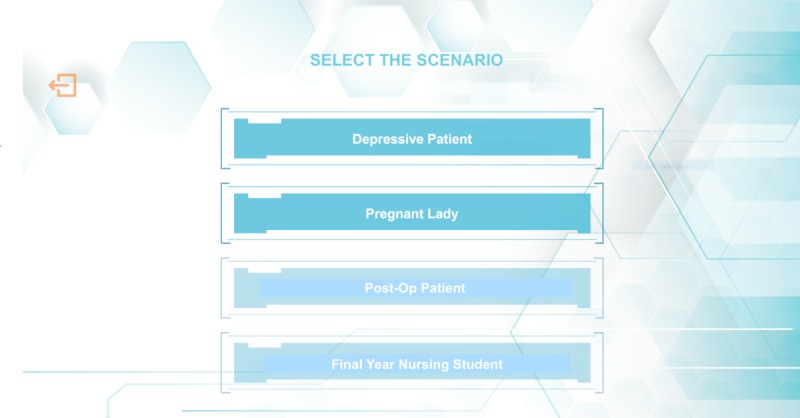
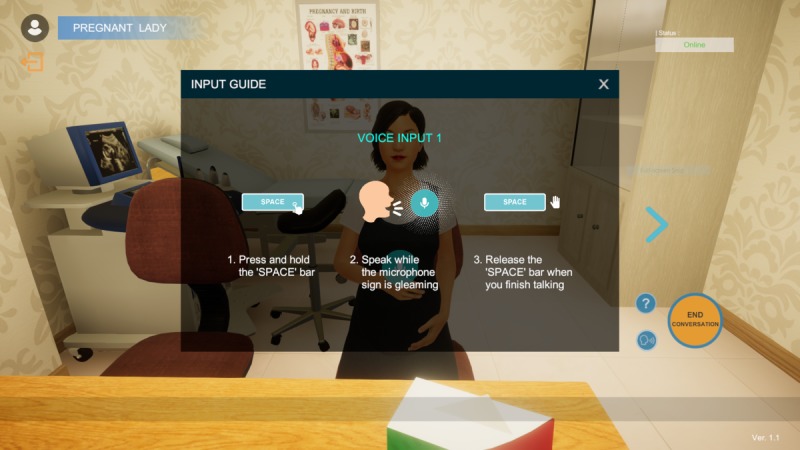
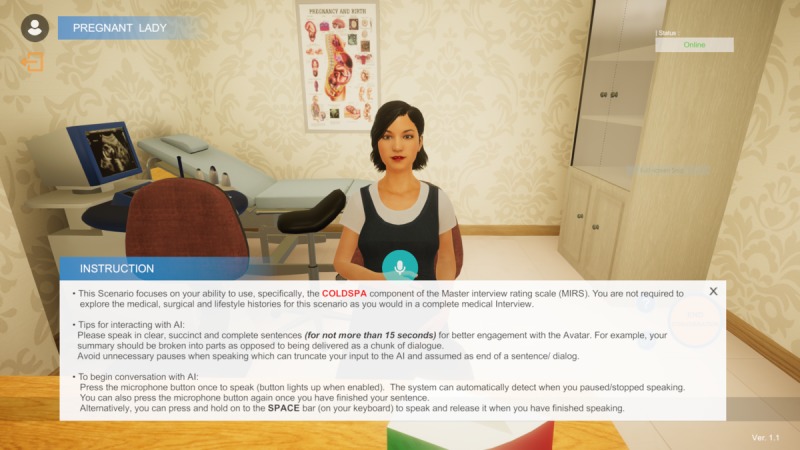
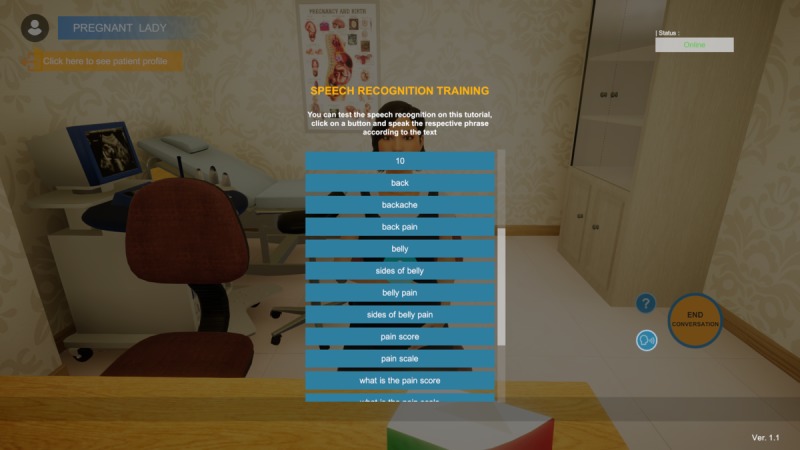
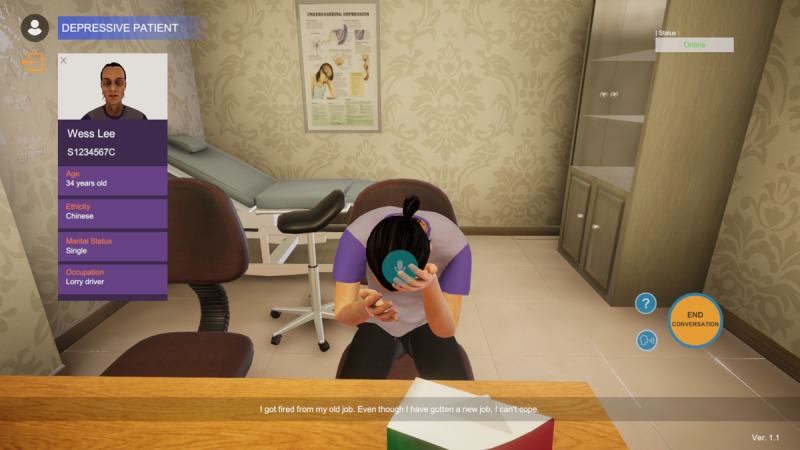
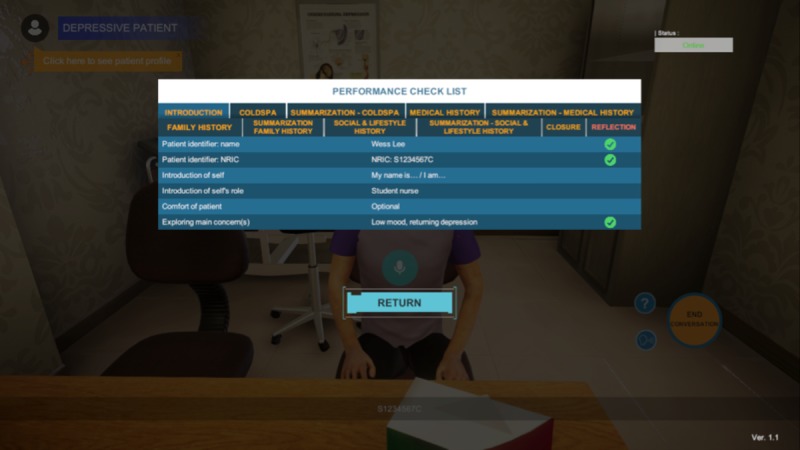
Background: The ability of nursing undergraduates to communicate effectively with health care providers, patients, and their family members is crucial to their nursing professions as these can affect patient outcomes. However, the traditional use of didactic lectures for communication skills training is ineffective, and the use of standardized patients is not time- or cost-effective. Given the abilities of virtual patients (VPs) to simulate interactive and authentic clinical scenarios in secured environments with unlimited training attempts, a virtual counseling application is an ideal platform for nursing students to hone their communication skills before their clinical postings. Objective: The aim of this study was to develop and test the use of VPs to better prepare nursing undergraduates for communicating with real-life patients, their family members, and other health care professionals during their clinical postings. Methods: The stages of the creation of VPs included preparation, design, and development, followed by a testing phase before the official implementation. An initial voice chatbot was trained using a natural language processing engine, Google Cloud’s Dialogflow, and was later visualized into a three-dimensional (3D) avatar form using Unity 3D. Results: The VPs included four case scenarios that were congruent with the nursing undergraduates’ semesters’ learning objectives: (1) assessing the pain experienced by a pregnant woman, (2) taking the history of a depressed patient, (3) escalating a bleeding episode of a postoperative patient to a physician, and (4) showing empathy to a stressed-out fellow final-year nursing student. Challenges arose in terms of content development, technological limitations, and expectations management, which can be resolved by contingency planning, open communication, constant program updates, refinement, and training. Conclusions: The creation of VPs to assist in nursing students’ communication skills training may provide authentic learning environments that enhance students’ perceived self-efficacy and confidence in effective communication skills. However, given the infancy stage of this project, further refinement and constant enhancements are needed to train the VPs to simulate real-life conversations before the official implementation.
Overview
The claims and statistics of this paper haven’t been checked yet.
Free: it reads the open-access text and checks the first 5 claims that cite a source we can check. Create a free account to check every claim.
Integrity signals
Registry
Cites
Statistics
Figures
Verification
Claims the paper makes
The claims and statistics of this paper haven’t been checked yet.
Free: it reads the open-access text and checks the first 5 claims that cite a source we can check. Create a free account to check every claim.
Claims other papers make about this one
Each is checked against this paper’s own text: does it say what the citing paper says it does?
The source backs part of the claim, not all of it — or backs it for a different population, condition or comparison.
In the citing paper
“Additionally, educational chatbots offer the potential to enhance self-confidence and communication skills, particularly for students facing challenges in social communication, highlighting its value as a conversational interface that simulates human interactions and fosters a sense of companionship among students [93,94].”
From Assessing Health Students' Attitudes and Usage of ChatGPT in Jordan: Validation Study (2023) · cites this paper as [94]
Experimental — accuracy not yet measuredThe source backs part of the claim, not all of it — or backs it for a different population, condition or comparison.
In the citing paper
“Additionally, with the rapid advancements in nursing research and the advent of new diseases and medications, nursing professionals are challenged to quickly adapt to evolving medical knowledge, make accurate decisions in real-case scenarios, and master complex nursing skills (1, 17, 26–28).”
From Digital affordances of AI chatbots in nursing education: a systematic review of learning gains and gaps in the evidence (2026) · cites this paper as [17]
Experimental — accuracy not yet measuredThe source backs part of the claim, not all of it — or backs it for a different population, condition or comparison.
In the citing paper
“Shorey et al. (17) found that simulating patient interaction scenarios with AI chatbots helped nursing students strengthen their communication skills.”
From Digital affordances of AI chatbots in nursing education: a systematic review of learning gains and gaps in the evidence (2026) · cites this paper as [17]
Experimental — accuracy not yet measuredThe cited source says what the claim attributes to it.
In the citing paper
“Conversational agents have been demonstrated to supplement and advance education in various forms, such as providing assessment of learners work (Maryadi et al., 2017), increasing peer dialogue (Wang et al., 2020), providing a context for education, for example in coordinating role-play in healthcare education (Shorey et al., 2019), and answering student queries (Gonda & Chu, 2019).”
From Pedagogical AI conversational agents in higher education: a conceptual framework and survey of the state of the art (2025) · cites this paper as Shorey et al., 2019
The cited source says what the claim attributes to it.
In the citing paper
“Early educational research suggests that AI-generated virtual patients may improve learners’ engagement [8, 9], provide unlimited practice opportunities [10–12], and support consistent exposure to rare or sensitive clinical presentations.”
From Utilizing generative artificial intelligence to create simulated patient for history taking in gynecology (2026) · cites this paper as [8]
Self-check
Percentages, sums and reported differences re-computed from the paper’s own numbers.
The self-check needs the paper’s full text.
Citations
Cites
Self-efficacy: the exercise of control
(1997) · Choice Reviews Online · doi:10.5860/choice.35-1826 · Cited by 24,281
Explanation in artificial intelligence: Insights from the social sciences
Miller, T. (2019) · Artificial Intelligence · doi:10.1016/j.artint.2018.07.007 · Cited by 5,302
Self-Regulated Learning and Academic Achievement: An Overview
Zimmerman, B. J. (1990) · Educational Psychologist · doi:10.1207/s15326985ep2501_2 · Cited by 3,687 · cited 1×
“Apart from the acquisition of clinical knowledge and skills, VPs also provide students with opportunities for self-directed learning [24], which leads to reflection [25] and self-driven change [26,27].”
Impact of conceptions of ability on self-regulatory mechanisms and complex decision making.
Wood, R. E., & Bandura, A. (1989) · Journal of Personality and Social Psychology · doi:10.1037//0022-3514.56.3.407 · Cited by 1,555 · cited 1×
“an individual’s confidence about one’s ability to carry out a behavior effectively, and this influences one’s motivation and efforts in performing a specific task, individual goal setting, and perspective [31].”
BackgroundReflective Learning: Key to Learning from Experience
Boyd, E. M., & Fales, A. W. (1983) · Journal of Humanistic Psychology · doi:10.1177/0022167883232011 · Cited by 904 · cited 1×
“Apart from the acquisition of clinical knowledge and skills, VPs also provide students with opportunities for self-directed learning [24], which leads to reflection [25] and self-driven change [26,27].”
Assessing Competence in Communication and Interpersonal Skills: The Kalamazoo II Report
Duffy, F. D., Gordon, G. H., Whelan, G., Cole-Kelly, K., & Frankel, R. (2004) · Academic Medicine · doi:10.1097/00001888-200406000-00002 · Cited by 665 · cited 1×
“Effective communication between nurses and patients involving nurses’ abilities to explain, listen, and empathize is necessary for successful outcomes in individualized patient care [5,6].”
BackgroundVirtual patients: a critical literature review and proposed next steps
Cook, D. A., & Triola, M. M. (2009) · Medical Education · doi:10.1111/j.1365-2923.2008.03286.x · Cited by 624 · cited 1×
“Reviews evaluating the effectiveness of VPs in medical education [17,20] have reported VPs as a cost-effective tool and as successful in facilitating clinical reasonings, communication skills, and ethical reasonings among students when used as an alternative or supplementary tool to existing…”
A Guide to Authentic e-Learning
Herrington, J., Reeves, T. C., & Oliver, R. (2009) · Routledge eBooks · doi:10.4324/9780203864265 · Cited by 595 · cited 2×
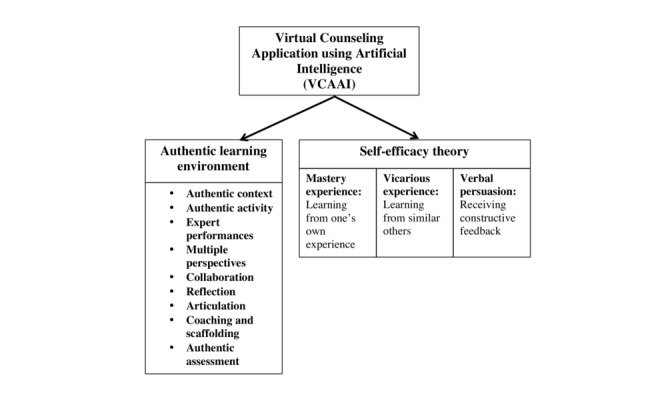
“The theoretical frameworks that guided this study are Bandura’s self-efficacy theory [29] and Herrington et al’s [30] authentic learning concept.”
BackgroundMethodInterprofessional communication in healthcare: An integrative review
Foronda, C., MacWilliams, B., & McArthur, E. (2016) · Nurse Education in Practice · doi:10.1016/j.nepr.2016.04.005 · Cited by 588 · cited 1×
“Poor communication skills have been directly related to high turnover rates; low morale among nurses [2,3]; and poor patient outcomes such as medical errors, poor adherence to the treatment plans, and lower patient care satisfaction [4].”
Communication in Nursing Practice
Kourkouta, L., & Papathanasiou, I. (2014) · Materia Socio Medica · doi:10.5455/msm.2014.26.65-67 · Cited by 409 · cited 1×
“Effective communication between nurses and patients involving nurses’ abilities to explain, listen, and empathize is necessary for successful outcomes in individualized patient care [5,6].”
The use of virtual patients to teach medical students history taking and communication skills
Stevens, A., Hernandez, J., Johnsen, K., Dickerson, R., Raij, A., Harrison, C., DiPietro, M., Allen, B., Ferdig, R., Foti, S., et al. (2006) · The American Journal of Surgery · doi:10.1016/j.amjsurg.2006.03.002 · Cited by 221 · cited 1×
“Despite a few flaws in comparison with standardized patients, the use of VPs in medical education provided secured learning environments and opportunities for extensive repetitive practice with feedback and without negative consequences to real or standardized patients [21,23].”
Self-Regulated Learning: The Interactive Influence of Metacognitive Awareness and Goal-Setting
Ridley, D. S., Schutz, P. A., Glanz, R. S., & Weinstein, C. E. (1992) · The Journal of Experimental Education · doi:10.1080/00220973.1992.9943867 · Cited by 217 · cited 1×
“Apart from the acquisition of clinical knowledge and skills, VPs also provide students with opportunities for self-directed learning [24], which leads to reflection [25] and self-driven change [26,27].”
Bullying, Harassment, and Horizontal Violence in the Nursing Workforce The State of the Science
Vessey, J. A., Demarco, R., & Difazio, R. (2010) · Annual Review of Nursing Research · doi:10.1891/0739-6686.28.133 · Cited by 206 · cited 1×
“Poor communication skills have been directly related to high turnover rates; low morale among nurses [2,3]; and poor patient outcomes such as medical errors, poor adherence to the treatment plans, and lower patient care satisfaction [4].”
Efficacy of virtual patients in medical education: A meta-analysis of randomized studies
Consorti, F., Mancuso, R., Nocioni, M., & Piccolo, A. (2012) · Computers & Education · doi:10.1016/j.compedu.2012.04.017 · Cited by 203 · cited 2×
“Reviews evaluating the effectiveness of VPs in medical education [17,20] have reported VPs as a cost-effective tool and as successful in facilitating clinical reasonings, communication skills, and ethical reasonings among students when used as an alternative or supplementary tool to existing…”
Building a virtual patient commons
Ellaway, R., Poulton, T., Fors, U., McGee, J. B., & Albright, S. (2008) · Medical Teacher · doi:10.1080/01421590701874074 · Cited by 200 · cited 1×
“VPs are computer-based simulations of authentic clinical cases that allow users to interact with the system for the purpose of health care or medical trainings, education, or assessments [17,18].”
Do medical students respond empathetically to a virtual patient?
Deladisma, A. M., Cohen, M., Stevens, A., Wagner, P., Lok, B., Bernard, T., Oxendine, C., Schumacher, L., Johnsen, K., Dickerson, R., et al. (2007) · The American Journal of Surgery · doi:10.1016/j.amjsurg.2007.01.021 · Cited by 160
A literature review of conflict communication causes, costs, benefits and interventions in nursing
BRINKERT, R. (2010) · Journal of Nursing Management · doi:10.1111/j.1365-2834.2010.01061.x · Cited by 145 · cited 1×
“Poor communication skills have been directly related to high turnover rates; low morale among nurses [2,3]; and poor patient outcomes such as medical errors, poor adherence to the treatment plans, and lower patient care satisfaction [4].”
Bosse, H. M., Nickel, M., Huwendiek, S., Schultz, J. H., & Nikendei, C. (2015) · BMC Medical Education · doi:10.1186/s12909-015-0468-1 · Cited by 122 · cited 1×
“However, the development and maintenance of a quality standardized patient program is costly and time-consuming [14].”
Shorey, S., Kowitlawakul, Y., Devi, M. K., Chen, H.-C., Soong, S. K. A., & Ang, E. (2018) · Nurse Education Today · doi:10.1016/j.nedt.2017.11.011 · Cited by 112 · cited 2×
“This project is an extension of a preliminary study conducted in 2016 in which a blended learning approach was adapted to teach communication skills to year 1 nursing undergraduates [32,33].”
Self-citationCommunication skills training in healthcare: a review of the literature
Chant, S., Tim, Randle, J., Russell, G. C., & Webb, C. (2002) · Nurse Education Today · doi:10.1054/nedt.2001.0690 · Cited by 109 · cited 1×
“This indicates a deficit in the availability of specialized communication training for nurses [7-9] and the ineffectiveness of the current communication skills training for nursing undergraduates through didactic lectures [10,11].”
The use of virtual patients in medical school curricula
Cendan, J., & Lok, B. (2012) · Advances in Physiology Education · doi:10.1152/advan.00054.2011 · Cited by 109 · cited 1×
“Apart from the acquisition of clinical knowledge and skills, VPs also provide students with opportunities for self-directed learning [24], which leads to reflection [25] and self-driven change [26,27].”
Krimshtein, N. S., Luhrs, C. A., Puntillo, K. A., Cortez, T. B., Livote, E. E., Penrod, J. D., & Nelson, J. E. (2011) · Journal of Palliative Medicine · doi:10.1089/jpm.2011.0225 · Cited by 100 · cited 2×
“This indicates a deficit in the availability of specialized communication training for nurses [7-9] and the ineffectiveness of the current communication skills training for nursing undergraduates through didactic lectures [10,11].”
Comparing Interpersonal Interactions with a Virtual Human to Those with a Real Human
Raij, A. B., Johnsen, K., Dickerson, R. F., Lok, B. C., Cohen, M. S., Duerson, M., Pauly, R. R., Stevens, A. O., Wagner, P., & Lind, D. S. (2007) · IEEE Transactions on Visualization and Computer Graphics · doi:10.1109/tvcg.2007.1030 · Cited by 99 · cited 1×
“However, in studies in which VPs have been used to teach and assess interview skills, students recognized the artificiality of such situations and did not demonstrate empathy or other important aspects of this skill [21,22].”
BackgroundCreating COMFORT: A Communication-based model for Breaking Bad News
Villagran, M. M., Goldsmith, J. V., Wittenberg-Lyles, E. M., & Baldwin, P. K. (2010) · Communication Education · doi:10.1080/03634521003624031 · Cited by 86 · cited 1×
“However, nursing students are often stressed over their lack of adequate skills to communicate effectively with patients and their family members [7,8].”
Communication Skills for Nursing Practice
McCabe, C., & Timmins, F. (2013) · doi:10.1007/978-1-137-34449-6 · Cited by 84 · cited 1×
“Effective communication skills are an integral part of the nursing profession and the foundation for high-quality nursing care [1].”
BackgroundParry, R. H. (2008) · Patient Education and Counseling · doi:10.1016/j.pec.2008.05.029 · Cited by 84 · cited 2×
“This indicates a deficit in the availability of specialized communication training for nurses [7-9] and the ineffectiveness of the current communication skills training for nursing undergraduates through didactic lectures [10,11].”
The inter-rater reliability and internal consistency of a clinical evaluation exercise
Kroboth, F. J., Hanusa, B. H., Parker, S., Coulehan, J. L., Kapoor, W. N., Brown, F. H., Karpf, M., & Levey, G. S. (1992) · Journal of General Internal Medicine · doi:10.1007/bf02598008 · Cited by 81 · cited 1×
“Moreover, standardized patients are often subjected to feelings of anxiety, fatigue, physical discomfort, and biasness, which carry some reliability concerns [15,16].”
The Benefits and Risks of Being a Standardized Patient: A Narrative Review of the Literature
Plaksin, J., Nicholson, J., Kundrod, S., Zabar, S. R., Kalet, A. L., & Altshuler, L. A. (2015) · Patient · doi:10.1007/s40271-015-0127-y · Cited by 80 · cited 1×
“Moreover, standardized patients are often subjected to feelings of anxiety, fatigue, physical discomfort, and biasness, which carry some reliability concerns [15,16].”
Wittenberg-Lyles, E. M., Goldsmith, J. V., Sanchez-Reilly, S. E., & Ragan, S. L. (2008) · Social Science & Medicine · doi:10.1016/j.socscimed.2008.01.042 · Cited by 65 · cited 1×
“This indicates a deficit in the availability of specialized communication training for nurses [7-9] and the ineffectiveness of the current communication skills training for nursing undergraduates through didactic lectures [10,11].”
Shorey, S., Siew, A. L., & Ang, E. N. K. (2017) · Nurse Education Today · doi:10.1016/j.nedt.2017.11.012 · Cited by 60 · cited 2×
“Apart from enhanced learning, students also reported confidence boosts in handling similar situations in their year-end assessments, but they were less confident in retaining these learned skills and transferring it to real-life clinical settings during their end-of-semester clinical postings [33].”
Self-citationDesign for learning: deconstructing virtual patient activities
Ellaway, R., & Davies, D. (2011) · Medical Teacher · doi:10.3109/0142159x.2011.550969 · Cited by 56 · cited 1×
“Given their advantages and effectiveness for student learning outcomes, VPs are therefore more extensively used in medical education, although their use in nursing education is still limited [28].”
Standardized Patients Versus Simulated Patients: Is There a Difference?
Churchouse, C., & McCafferty, C. (2011) · Clinical Simulation in Nursing · doi:10.1016/j.ecns.2011.04.008 · Cited by 55 · cited 2×
“…skills training to be both participatory and experiential [11] led traditional nursing curricula to use simulated or standardized patients as tools to help students to develop clinical reasoning, patient communication, history taking, physical examination, and patient diagnosis skills [12,13].”
Brender, E., Burke, A., & Glass, R. M. (2005) · JAMA · doi:10.1001/jama.294.9.1172 · Cited by 28 · cited 1×
“…skills training to be both participatory and experiential [11] led traditional nursing curricula to use simulated or standardized patients as tools to help students to develop clinical reasoning, patient communication, history taking, physical examination, and patient diagnosis skills [12,13].”
Comparing Interpersonal Interactions with a Virtual Human to Those with a Real Human
Raij, A. B., Johnsen, K., Dickerson, R. F., et al. (2007) · IEEE Transactions on Visualization and Computer Graphics · doi:10.1109/tvcg.2007.1036 · Cited by 24
The structure of evolved representations across different substrates for artificial intelligence
Hintze, A., Kirkpatrick, D., & Adami, C. (2018) · Conference on Artificial Life (ALIFE) · doi:10.1162/isal_a_00076 · Cited by 16
The use of virtual patients in medical education
Mıdık, Ö., & Kartal, M. (2015) · Marmara medical journal · doi:10.5472/mmjoa.2802.02 · Cited by 13 · cited 1×
“Current uses of VPs in medical education are primarily to develop students’ clinical reasonings, problem-solving skills, core or conceptual knowledge acquisitions, skills acquisitions, and affective characteristic developments (eg, professional competence) [19].”
Cited by
A review of opportunities and challenges of chatbots in education
Hwang, G.-J., & Chang, C.-Y. (2023) · Interactive Learning Environments · doi:10.1080/10494820.2021.1952615 · Cited by 530
The impact of ChatGPT on higher education
Dempere, J., Modugu, K., Hesham, A., & Ramasamy, L. K. (2023) · Frontiers in Education · doi:10.3389/feduc.2023.1206936 · Cited by 519
Rediscovering the use of chatbots in education: A systematic literature review
Pérez, J. Q., Daradoumis, T., & Puig, J. M. M. (2020) · Computer Applications in Engineering Education · doi:10.1002/cae.22326 · Cited by 483
“The role of educational chatbots is not limited to class assistants, they have also been tested as Virtual Patients [60], whose mission is to help train nurses to improve their effective communication skills.”
BackgroundInfluentialArtificial intelligence in nursing and midwifery: A systematic review
O'Connor, S., Yan, Y., Thilo, F. J. S., Felzmann, H., Dowding, D., & Lee, J. J. (2023) · Journal of Clinical Nursing · doi:10.1111/jocn.16478 · Cited by 351
Predicted Influences of Artificial Intelligence on Nursing Education: Scoping Review
Buchanan, C., Howitt, M. L., Wilson, R., Booth, R. G., Risling, T., & Bamford, M. (2021) · JMIR Nursing · doi:10.2196/23933 · Cited by 326
“In the last 5 years, multiple expository papers and research studies have explored the current and predicted influences of AIHTs on nurse educators, nursing students, and practicing nurses [5-8].”
BackgroundInfluential
Metadata
- Authors
- Shorey, S., Ang, E., Yap, J., Ng, E. D., Lau, S. T., & Chui, C. K.
- Affiliations
- National University of Singapore (SG)
- Corresponding author
- Shorey, Shefaly
- Venue
- Journal of Medical Internet Research
- Publisher
- JMIR Publications Inc.
- Published
- 2019-10-29
- Volume
- 21
- Issue
- 10
- Pages
- e14658
- ISSN
- 1438-8871 (ISSN-L)
- PMC
- PMC6913997
- OpenAlex
- W2971301364
- Cited by
- 238
- References
- 35
- Citations by year
- 2026: 48 · 2025: 52 · 2024: 43 · 2023: 43 · 2022: 28 · 2021: 14 · 2020: 9 · 2019: 1
- FWCI
- 8.91
- Type
- journal article
- Language
- en
- Open access
- gold
- doi.org
- Licence
- cc-by
- Locations
- Journal of Medical Internet Research (publishedVersion, cc-by)
- Europe PMC (PubMed Central) (publishedVersion, cc-by)
- PubMed Central (publishedVersion, cc-by)
- PubMed (publishedVersion)
- National University of Singapore (submittedVersion, cc-by)
- Funders
- Ministry of Education, India
- Topics
- Social Sciences › Education › Simulation-Based Education in Healthcare
- Health Sciences › Medicine › Health Informatics › Artificial Intelligence in Healthcare and Education
- Social Sciences › Education › Innovations in Medical Education
- Keywords
- virtual patients, online counseling, nursing communication skills, nursing education, chatbots, natural language processing, Dialogflow, 3D avatars, Unity game engine, clinical simulation, empathy, pain assessment, patient history taking, self-efficacy
- MeSH terms
- Virtual Reality, Artificial Intelligence, Clinical Competence, Communication, Counseling, Education, Nursing, Female, Humans
About these checks
Registry, retraction, Cites and statistics results are computed, not judged, with one exception: a printed reference that no index lists is read once by a model before it counts as a citation error. Claims are extracted by a model and kept only when their quote appears verbatim in the text; each cited source is then checked, with a model’s help, for whether it says what the claim relies on. Those verdicts can be wrong — read the claim’s quote and the cited source before relying on one.
Statistics and arithmetic are recomputed, not judged.
Confidence bands are shown only for fields calibrated on our annotated test set. None is calibrated yet, so no band is shown.
What counts as a claim ›How we measure confidence ›How we check this ›
Are you an author, or do you see a problem with this page? Request a review
Data sources
Bibliographic data: Semantic Scholar, OpenAlex, Crossref.
Contains information from the Semantic Scholar Academic Graph Datasets, made available under the ODC Attribution License (ODC-BY 1.0).
Semantic Scholar’s data is described in: Kinney, R., et al. (2023). The Semantic Scholar Open Data Platform. arXiv:2301.10140.
