

Internet and computer-based cognitive behavioral therapy for anxiety and depression in adolescents and young adults: systematic review and meta-analysis.
Open accessPublished version of a preprint
The DOI matches its Crossref record; 88 of the 88 references it cites were found in a registry or an index.
Abstract
Background: Anxiety and depressive disorders are prevalent in adolescents and young adults. However, most young people with mental health problems do not receive treatment. Computerized cognitive behavior therapy (cCBT) may provide an accessible alternative to face-to-face treatment, but the evidence base in young people is limited. Objective: The objective was to perform an up-to-date comprehensive systematic review and meta-analysis of the effectiveness of cCBT in treating anxiety and depression in adolescents and young adults compared with active treatment and passive controls. We aimed to examine posttreatment and follow-up effects and explore the moderators of treatment effects. Methods: We conducted systematic searches in the following six electronic databases: PubMed, EMBASE, PsycINFO, CINAHL, Web of Science, and Cochrane Central Register of Controlled Trials. We included randomized controlled trials comparing cCBT with any control group in adolescents or young adults (age 12-25 years) with anxiety or depressive symptoms. The quality of included studies was assessed using the Cochrane risk-of-bias tool for randomized trials, version 2.0. Overall quality of evidence for each outcome was assessed using the Grading of Recommendations Assessment, Development and Evaluation (GRADE) approach. Posttreatment means and SDs were compared between intervention and control groups, and pooled effect sizes (Hedges g) were calculated. Random-effects meta-analyses were conducted using Comprehensive Meta-Analysis software. Subgroup analyses and meta-regression analyses were conducted to explore whether age, guidance level, and adherence rate were associated with treatment outcome. Results: The search identified 7670 papers, of which 24 studies met the inclusion criteria. Most included studies (22/24) had a high risk of bias owing to self-report measures and/or inappropriate handling of missing data. Compared with passive controls, cCBT yielded small to medium posttreatment pooled effect sizes regarding depressive symptoms (g=0.51, 95% CI 0.30-0.72, number needed to treat [NNT]=3.55) and anxiety symptoms (g=0.44, 95% CI 0.23-0.65, NNT=4.10). cCBT yielded effects similar to those of active treatment controls regarding anxiety symptoms (g=0.04, 95% CI −0.23 to 0.31). For depressive symptoms, the nonsignificant pooled effect size favored active treatment controls (g=−0.70, 95% CI −1.51 to 0.11, P=.09), but heterogeneity was very high (I2=90.63%). No moderators of treatment effects were identified. At long-term follow-up, cCBT yielded a small pooled effect size regarding depressive symptoms compared with passive controls (g=0.27, 95% CI 0.09-0.45, NNT=6.58). No other follow-up effects were found; however, power was limited owing to the small number of studies. Conclusions: cCBT is beneficial for reducing posttreatment anxiety and depressive symptoms in adolescents and young adults compared with passive controls. Compared with active treatment controls, cCBT yielded similar effects regarding anxiety symptoms. Regarding depressive symptoms, however, the results remain unclear. More high-quality research involving active controls and long-term follow-up assessments is needed in this population. Trial Registration: PROSPERO CRD42019119725; https://tinyurl.com/y5acfgd9.
Overview
The claims and statistics of this paper haven’t been checked yet.
Free: it reads the open-access text and checks the first 5 claims that cite a source we can check. Create a free account to check every claim.
Integrity signals
Registry
Cites
Statistics
Figures

Verification
Claims the paper makes
The claims and statistics of this paper haven’t been checked yet.
Free: it reads the open-access text and checks the first 5 claims that cite a source we can check. Create a free account to check every claim.
Claims other papers make about this one
Each is checked against this paper’s own text: does it say what the citing paper says it does?
The source backs part of the claim, not all of it — or backs it for a different population, condition or comparison.
In the citing paper
“Web-based cognitive behavioural therapy for anxiety and depression reported an average completion rate of 57% for all treatment modules [14].”
From Young People’s Barriers and Facilitators of Engagement with Web-Based Mental Health Interventions for Anxiety and Depression: A Qualitative Study (2024) · cites this paper as [14]
Experimental — accuracy not yet measuredThe source backs part of the claim, not all of it — or backs it for a different population, condition or comparison.
In the citing paper
“A meta-analysis of 24 studies on i-CBT for adolescents and young adults found a mean adherence rate of 76.9% [18].”
From Cost-effectiveness of internet-supported cognitive behavioral therapy for university students with anxiety symptoms: A Markov-model analysis (2022) · cites this paper as [18]
Experimental — accuracy not yet measuredThe source backs part of the claim, not all of it — or backs it for a different population, condition or comparison.
In the citing paper
“The relative difference in adherence to CBT delivered via internet versus in-person (76.9% versus 77.5%) were estimated to be 0.99 [16–18].”
From Cost-effectiveness of internet-supported cognitive behavioral therapy for university students with anxiety symptoms: A Markov-model analysis (2022) · cites this paper as [18]
Experimental — accuracy not yet measuredThe source backs part of the claim, not all of it — or backs it for a different population, condition or comparison.
In the citing paper
“It is well reported that i-CBT received higher acceptance by individuals, yet the adherence to CBT is weakened on the internet platform [15, 18].”
From Cost-effectiveness of internet-supported cognitive behavioral therapy for university students with anxiety symptoms: A Markov-model analysis (2022) · cites this paper as [18]
Experimental — accuracy not yet measuredThe source backs part of the claim, not all of it — or backs it for a different population, condition or comparison.
In the citing paper
“Although cognitive behavioural therapy (CBT) is the most well-documented and researched type of treatment for child and adolescent populations (Christ et al., 2020; James et al., 2013; Oud et al., 2019)”
From Investigating the potential of a novel internet-based cognitive behavioural intervention for Dari and Farsi speaking refugee youth: A feasibility study (2022) · cites this paper as Christ et al., 2020
Experimental — accuracy not yet measured
5 more claims about this paper
Create a free account to see every claim other papers make about this one.
Self-check
Percentages, sums and reported differences re-computed from the paper’s own numbers.
The self-check needs the paper’s full text.
Citations
Cites
Bias in meta-analysis detected by a simple, graphical test
Egger, M., Smith, G. D., Schneider, M., & Minder, C. (1997) · BMJ · doi:10.1136/bmj.315.7109.629 · Cited by 56,722 · cited 1×
“Third, the Egger test was used to quantify the bias captured by the funnel plot [57].”
MethodRoB 2: a revised tool for assessing risk of bias in randomised trials
Sterne, J. A. C., Savović, J., Page, M. J., Elbers, R. G., Blencowe, N. S., Boutron, I., Cates, C. J., Cheng, H.-Y., Corbett, M. S., Eldridge, S. M., et al. (2019) · BMJ · doi:10.1136/bmj.l4898 · Cited by 34,787 · cited 1×
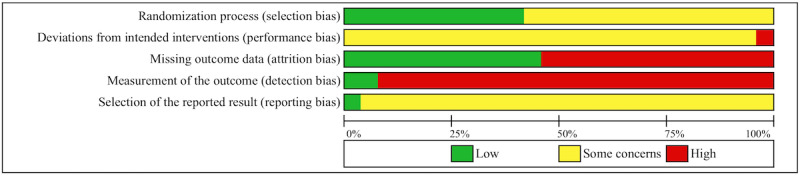
“Based on the Cochrane RoB 2 tool [49], 22 out of 24 studies had an overall high risk of bias, and the remaining two studies were rated as “some concerns.”
MethodLiberati, A., Altman, D. G., Tetzlaff, J., Mulrow, C., Gøtzsche, P. C., Ioannidis, J. P. A., Clarke, M., Devereaux, P. J., Kleijnen, J., & Moher, D. (2009) · PLoS Medicine · doi:10.1371/journal.pmed.1000100 · Cited by 28,164 · cited 1×
“This study was conducted and reported in accordance with the Preferred Reporting Items for Systematic Reviews and Meta-Analyses (PRISMA) statement for reporting systematic reviews and meta-analyses [47].”
MethodStatistical Power Analysis for the Behavioral Sciences
Cohen, J. (2013) · doi:10.4324/9780203771587 · Cited by 25,373
Kessler, R. C., Berglund, P., Demler, O., Jin, R., Merikangas, K. R., & Walters, E. E. (2005) · Archives of General Psychiatry · doi:10.1001/archpsyc.62.6.593 · Cited by 20,391 · cited 1×
“The incidence of most anxiety disorders peaks during adolescence, whereas the incidence of depressive disorders starts to rise during adolescence [14] and peaks in young adulthood (ie, age 19-25 years) [15-17].”
BackgroundCochrane Handbook for Systematic Reviews of Interventions
(2019) · doi:10.1002/9781119536604 · Cited by 14,828
Duval, S., & Tweedie, R. (2000) · Biometrics · doi:10.1111/j.0006-341x.2000.00455.x · Cited by 14,099 · cited 1×
“Second, the Duval and Tweedie trim and fill procedure was used to calculate an adjusted pooled effect size that accounts for missing studies due to publication bias [56].”
MethodCONSORT 2010 Statement: updated guidelines for reporting parallel group randomised trials
the CONSORT Group, Schulz, K. F., Altman, D. G., & Moher, D. (2010) · BMC Medicine · doi:10.1186/1741-7015-8-18 · Cited by 13,371
Cumpston, M., Li, T., Page, M. J., Chandler, J., Welch, V. A., Higgins, J. P., & Thomas, J. (2019) · Cochrane Database of Systematic Reviews · doi:10.1002/14651858.ed000142 · Cited by 7,218
Polanczyk, G. V., Salum, G. A., Sugaya, L. S., Caye, A., & Rohde, L. A. (2015) · Journal of Child Psychology and Psychiatry · doi:10.1111/jcpp.12381 · Cited by 3,990
Research works printed but not linked: 3
- McKenzie, M, 2011, Med J Aust, 195, S27
- Ellis, L, 2011, Journal of CyberTherapy and Rehabilitation, 4, 461
- 2008, mhGAP: Mental Health Gap Action Programme: scaling up care for mental, neurological and substance use disorders
Cited by
Items 101–149 of 149
Mason, M. J., Coatsworth, J. D., Zaharakis, N. M., Brown, A., Russell, M. A., & Mennis, J. L. (2026) · Psychiatry Research · doi:10.1016/j.psychres.2026.117043 · Cited by 1
Kerbage, H., Bui, É., Revet, A., Denis, H., Purper‐Ouakil, D., & Rolling, J. (2026) · Discover Mental Health · doi:10.1007/s44192-026-00488-3 · Cited by 1
“These programs are generally well accepted by young people and have shown benefits for depression and anxiety [100, 101], though evidence for posttraumatic stress symptoms (PTSS) remains limited.”
Cognitive Behaviour Therapy for Adolescents
Borah, N. S. (2022) · Springer eBooks · doi:10.1007/978-981-16-9881-1_17 · Cited by 1
Delivering computerized Cognitive Behavioral Therapy for child and adolescent depression and anxiety
Stallard, P. N. (2022) · Elsevier eBooks · doi:10.1016/b978-0-323-91709-4.00002-0 · Cited by 1
Online emotion regulation training for emerging adults: effects on psychological well-being
Chen, W. (2024) · Current Psychology · doi:10.1007/s12144-024-05649-7 · Cited by 7
“Meta-analyses have consistently shown that online psychological intervention for depression or anxiety offers a viable and effective alternative to in-person treatment in young adults (Christ et al., 2020; Lehtimaki et al., 2021).”
Khoshakhlagh, H., Moradi, S., Dehnavi, S. R., & Jamaloei, H. R. (2024) · Journal of Health and Care · doi:10.61186/jhc.26.2.155 · Cited by 1
Digital Technology Interventions for Preventing and Treating Youth Depression
Lira, D., & Martínez, V. (2022) · Depression and personality · doi:10.1007/978-3-031-13029-8_4 · Cited by 2
Chan, K. T., Law, C. W., & Chen, E. Y. H. (2024) · East Asian Archives of Psychiatry · doi:10.12809/eaap2412 · Cited by 1
“51 Treatment resistance in youth, apart from psychopathological factors, might be related to more profound issues (for example, underlying features of personality disorder, substance abuse, neurodevelopmental issues, or undisclosed traumatic events) and warrant continuous review in the course of…”
O’Dea, B. (2021) · Translational Psychiatry · doi:10.1038/s41398-021-01597-z · Cited by 1
“The rates of uptake, completion and retention were higher than many other self-directed online therapy programs for youth [7], where adherence remains a key challenge.”
BackgroundAemissegger, V., López‐Alcalde, J., Witt, C. M., & Barth, J. (2022) · doi:10.2196/preprints.36978
Li, S. H., Achilles, M. R., Werner‐Seidler, A., Beames, J. R., Subotic-Kerry, M., & O’Dea, B. (2022) · doi:10.2196/preprints.37640
Zhang, M. W., Stoll, J., & Trachsel, M. (2023) · Springer eBooks · doi:10.1007/978-3-030-42825-9_150-1
Yang, X., Wei, F., Li, Q., Chen, M., Zhang, S., & Lin, Q. (2023) · doi:10.2196/preprints.49971
Psychological Interventions for Refugee Minors
Emmelkamp, P. M. G. (2023) · Springer eBooks · doi:10.1007/978-3-031-34078-9_8
AL-Takhayneh, S. K., Al-Tarawneh, R. K., Al-Mahameed, A. S. A., Al-Shawawreh, S. Y., & Algaralleh, A. (2023) · NURTURE · doi:10.55951/nurture.v17i4.397
“Depression is a widespread mental condition that can affect anyone (Christ et al., 2020).”
BackgroundInfluentialA Terapia Cognitivo-Comportamental com influência religiosa: uma revisão sistemática
Silva, T. S. (2023) · Digital Library of Theses and Dissertations (Universidade de São Paulo) · doi:10.11606/d.47.2023.tde-11122023-164200
Lincke, L., Martin-Döring, T., Daunke, A., Sadkowiak, A., Nolkemper, D., Spröber-Kolb, N., Bienioschek, S., Reis, O., & Kölch, M. G. (2024) · doi:10.2196/preprints.58427
Zhang, M. W., Stoll, J., & Trachsel, M. (2024) · Springer eBooks · doi:10.1007/978-3-030-51366-5_150
Online-Behandlung der Depression
Eichenberg, C. (2024) · PDP – Psychodynamische Psychotherapie · doi:10.21706/pdp-23-3-243
Zhang, Q., Sui, Y., Lin, F.-H., Guan, H., Li, L., Wang, K., Huang, Z., & Neitzel, A. J. (2024) · doi:10.2196/preprints.67953
Subotic-Kerry, M., Mackinnon, A. J., Gallen, D., Baker, S. T. E., Parker, B., Achilles, M. R., Chakouch, C., Cockayne, N. L., Christensen, H. M., & O’Dea, B. (2025) · medRxiv · doi:10.1101/2025.02.14.25322324
Sørensen, N. M., Skaarnes, H., Mathiasen, K., McLellan, L. F., Thastum, M., & Lomholt, J. J. (2025) · Cognitive Behaviour Therapy · doi:10.1080/16506073.2025.2522995 · Cited by 3
“…recent meta-analyses have investigated the efficacy of Internet-based cognitive behavioral therapy (ICBT) for adolescents and shown positive results in favor of these programs when compared to waitlists and active controls (Cervin & Lundgren, 2022; Christ et al., 2020; Wickersham et al., 2022).”
Dülsen, P., Barck, K., Wiegand‐Grefe, S., Leidger, A., Paumen, T., & Baumeister, H. (2025) · Frontiers in Digital Health · doi:10.3389/fdgth.2025.1526995 · Cited by 1
Mousavi, N., Momeni, F., Pourshahbaz, A., Poursharifi, H., Daneshian, Z., & Andersson, G. (2025) · Frontiers in Psychiatry · doi:10.3389/fpsyt.2025.1500214
Li, A., & Meng, Y.-N. (2025) · Behavioral Science · doi:10.3390/bs15121738
“…learning adaptive coping skills for various situations, re‑ laxation training) provided students with practical tools for managing their emotions and thoughts, directly targeting the core symptoms of anxiety and depression (Bentley et al., 2021; Christ et al., 2020; Worsley et al., 2022).”
van Cappellen, S. M., Creemers, H. E., Hoogsteder, L. M., van Horn, J. E., Deković, M., & Asscher, J. J. (2024) · Figshare · doi:10.6084/m9.figshare.26587038
Emmelkamp, J., Wisman, M. A., Beuk, N., Stikkelbroek, Y. A. J., Nauta, M. H., Dekker, J., & Christ, C. (2022) · Figshare · doi:10.6084/m9.figshare.21340304
Self-citationEmmelkamp, J., Wisman, M. A., Beuk, N., Stikkelbroek, Y. A. J., Nauta, M. H., Dekker, J., & Christ, C. (2022) · Figshare · doi:10.6084/m9.figshare.21340307
Self-citationSchultz, J., Baumeister, A., Schmotz, S., Moritz, S., & Jelinek, L. (2024) · Figshare · doi:10.6084/m9.figshare.26610066
Babaeifard, M., Akbari, M., Mohammadkhani, S., Hasani, J., Shahbazian, R., & Roediger, E. (2025) · International Journal of Cognitive Behavioral Therapy · doi:10.1007/s41811-025-00269-w
“…of research that shows that internet-based treatments can be effective for a wide range of mental disorders, including depression (Cuijpers et al., 2015; Johansson & Andersson, 2012) anxiety (Christ et al., 2020; Etzelmueller et al., 2020); and borderline personality disorder (Ilagan et al., 2020).”
Recent Progress in Internet-Based Cognitive Behavioral Therapy for Depression
孙, 玉. (2025) · Advances in Psychology · doi:10.12677/ap.2025.1512662
Subotic-Kerry, M., Mackinnon, A. J., Gallen, D., Baker, S. T. E., Parker, B., Achilles, M. R., Chakouch, C., Cockayne, N. L., Christensen, H. M., & O’Dea, B. (2025) · Child and Adolescent Psychiatry and Mental Health · doi:10.1186/s13034-025-00975-5
“…using validated self-reported scales and then offers self-directed psychoeducation and internet-delivered Cognitive Behavioural Therapy (iCBT) modules for students with nil-to-moderate symptoms [28, 29], and in-person support from school counsellors for those with severe symptoms [12, 27].”
Sanal Yıldızların Gölgesinde: Yapay Zeka Kaygısı
Polat, S. T., & Tarhan, M. (2025) · Güncel Pazarlama Yaklaşımları ve Araştırmaları Dergisi · doi:10.54439/gupayad.1794874
Structural models for spreading and scaling digital health initiatives: A scoping review protocol
Laur, C. V., Lee, K., Milat, A., Petrie, S., Ladak, Z., Lui, V., Hall, A. E., Nathan, N., Medeiros, P., Ivers, N. M., et al. (2026) · PLoS ONE · doi:10.1371/journal.pone.0336730
Ingram, K. M., Westcott, G., Augustinovic, A., Glock, R., Coffey, A. D., Victorson, D. E., Yang, D., Reddy, M., Birken, S. A., & Salsman, J. M. (2026) · JMIR Formative Research · doi:10.2196/77994 · Cited by 1
Huang, Y., Chong, Z. Y., Dou, Z., Lo, H., Wang, S., & Xu, W. (2026) · Behaviour Research and Therapy · doi:10.1016/j.brat.2026.105020
Yourell, J., Hedges, E. P., Misch, R., Huberty, J., Schueller, S. M., Waasdorp, T. E., & Salhi, L. (2026) · doi:10.2196/preprints.91312 · Cited by 1
Shukri, M. M., Conner, M. T., Borhan, L., & Tarmizi, N. N. (2026) · Journal of Health Psychology · doi:10.1177/13591053261436759
Ojo-Rowland, O. T., Sawyerr, D. O., Kazeem, S. A., Akinleye, E. D., Akporugo, P. O., Morenikeji, D. O., & Adeyemi, E. O. (2026) · British journal of healthcare and medical research · doi:10.14738/bjhr.1303.10807 · Cited by 1
Yeung, Y.-Y., Ramanpong, J., & Yu, C.-P. (2026) · Journal of Environmental Psychology · doi:10.1016/j.jenvp.2026.103123
Sørensen, N. M., Skaarnes, H., Mathiasen, K., McLellan, L. F., Thastum, M., & Lomholt, J. J. (2026) · Child and Adolescent Mental Health · doi:10.1111/camh.70106
Diaconescu, L. V., Mihăilescu, A. I., Drăgușoiu, M. I., & Popa-Velea, O. (2026) · Healthcare · doi:10.3390/healthcare14152348
“Additional research has identified beneficial effects on mood and emotional regulation [6], increased levels of physical activity [7], and greater self-efficacy and social competence.”
Spezielle Aspekte psychologischer Interventionen bei der Zwangsstörung
(2024) · Elsevier eBooks · doi:10.1016/b978-3-437-22541-3.00011-7
Effects of Mindfulness Intervention on Anxiety among Female Nursing Students
Ali, Y., Babar, A., William, R., Imran, F., & Yousuf, A. (2026) · NURSEARCHER (Journal of Nursing & Midwifery Sciences) · doi:10.54393/nrs.v6i2.242
Internet-based CBT for young adults with low self-esteem: a randomized, controlled study
Berg, M., Lindegaard, T., Kåll, J., Granath, V., Fält, K., Karlsson, M., & Andersson, G. (2026) · Journal of Behavior Therapy and Experimental Psychiatry · doi:10.1016/j.jbtep.2026.102140
Explaining value creation in mental health IT configurations: An integrated framework
Olivera, W., Mathiassen, L., Baird, A. M., & Xia, Y. (2026) · Information & Management · doi:10.1016/j.im.2026.104451
Yang, Q., Sun, Q., Hu, J., Yan, P., Chen, S., & Ren, Z. (2026) · Research Square · doi:10.21203/rs.3.rs-11129034/v1
Metadata
- Authors
- Christ, C., Schouten, M. J., Blankers, M., van Schaik, D. J., Beekman, A. T., Wisman, M. A., Stikkelbroek, Y. A., & Dekker, J. J.
- Affiliations
- Amsterdam Public Health (NL)
- Arkin (NL)
- Trimbos Institute (NL)
- Utrecht University (NL)
- Corresponding author
- Christ, Carolien
- ORCID
- Venue
- Journal of Medical Internet Research
- Publisher
- JMIR Publications Inc.
- Published
- 2020-09-25
- Volume
- 22
- Issue
- 9
- Pages
- e17831
- ISSN
- 1438-8871 (ISSN-L)
- PMC
- PMC7547394
- OpenAlex
- W3043731461
- Cited by
- 148
- References
- 88
- Citations by year
- 2026: 16 · 2025: 34 · 2024: 32 · 2023: 24 · 2022: 31 · 2021: 10 · 2020: 1
- FWCI
- 2.59
- Type
- journal article
- Language
- en
- Open access
- gold
- doi.org
- Licence
- cc-by
- Locations
- Journal of Medical Internet Research (publishedVersion, cc-by)
- PubMed Central (publishedVersion, cc-by)
- PubMed (publishedVersion)
- Pure Amsterdam UMC (publishedVersion, other-oa)
- Amsterdam UMC (VU Amsterdam) - Institutional Repository (publishedVersion, other-oa)
- DOAJ (DOAJ: Directory of Open Access Journals) (submittedVersion, cc-by-sa)
- Utrecht University Repository (Utrecht University) (submittedVersion, other-oa)
- Utrecht University Repository (Utrecht University) (submittedVersion)
- Data Archiving and Networked Services (DANS) (submittedVersion, other-oa)
- Topics
- Social Sciences › Psychology › Applied Psychology › Digital Mental Health Interventions
- Social Sciences › Psychology › Experimental and Cognitive Psychology › Anxiety, Depression, Psychometrics, Treatment, Cognitive Processes
- Social Sciences › Psychology › Clinical Psychology › Psychological Treatments and Assessments
- Keywords
- computerized cognitive behavioral therapy, online therapy, adolescents, young adults, anxiety disorders, depression, depressive symptoms, anxiety symptoms, medication adherence, treatment guidelines, treatment effects, moderators of treatment outcome, digital mental health interventions, help-seeking barriers, access to mental health care, risk of bias
- MeSH terms
- Adolescent, Adult, Anxiety Disorders, Child, Computers, Depression, Humans, Cognitive Behavioral Therapy, Treatment Outcome, Internet, Young Adult
About these checks
Registry, retraction, Cites and statistics results are computed, not judged, with one exception: a printed reference that no index lists is read once by a model before it counts as a citation error. Claims are extracted by a model and kept only when their quote appears verbatim in the text; each cited source is then checked, with a model’s help, for whether it says what the claim relies on. Those verdicts can be wrong — read the claim’s quote and the cited source before relying on one.
Statistics and arithmetic are recomputed, not judged.
Confidence bands are shown only for fields calibrated on our annotated test set. None is calibrated yet, so no band is shown.
What counts as a claim ›How we measure confidence ›How we check this ›
Are you an author, or do you see a problem with this page? Request a review
Data sources
Bibliographic data: Semantic Scholar, OpenAlex, Crossref.
Contains information from the Semantic Scholar Academic Graph Datasets, made available under the ODC Attribution License (ODC-BY 1.0).
Semantic Scholar’s data is described in: Kinney, R., et al. (2023). The Semantic Scholar Open Data Platform. arXiv:2301.10140.
