

Internet and computer-based cognitive behavioral therapy for anxiety and depression in adolescents and young adults: systematic review and meta-analysis.
Open accessPublished version of a preprint
The DOI matches its Crossref record; 88 of the 88 references it cites were found in a registry or an index.
Abstract
Background: Anxiety and depressive disorders are prevalent in adolescents and young adults. However, most young people with mental health problems do not receive treatment. Computerized cognitive behavior therapy (cCBT) may provide an accessible alternative to face-to-face treatment, but the evidence base in young people is limited. Objective: The objective was to perform an up-to-date comprehensive systematic review and meta-analysis of the effectiveness of cCBT in treating anxiety and depression in adolescents and young adults compared with active treatment and passive controls. We aimed to examine posttreatment and follow-up effects and explore the moderators of treatment effects. Methods: We conducted systematic searches in the following six electronic databases: PubMed, EMBASE, PsycINFO, CINAHL, Web of Science, and Cochrane Central Register of Controlled Trials. We included randomized controlled trials comparing cCBT with any control group in adolescents or young adults (age 12-25 years) with anxiety or depressive symptoms. The quality of included studies was assessed using the Cochrane risk-of-bias tool for randomized trials, version 2.0. Overall quality of evidence for each outcome was assessed using the Grading of Recommendations Assessment, Development and Evaluation (GRADE) approach. Posttreatment means and SDs were compared between intervention and control groups, and pooled effect sizes (Hedges g) were calculated. Random-effects meta-analyses were conducted using Comprehensive Meta-Analysis software. Subgroup analyses and meta-regression analyses were conducted to explore whether age, guidance level, and adherence rate were associated with treatment outcome. Results: The search identified 7670 papers, of which 24 studies met the inclusion criteria. Most included studies (22/24) had a high risk of bias owing to self-report measures and/or inappropriate handling of missing data. Compared with passive controls, cCBT yielded small to medium posttreatment pooled effect sizes regarding depressive symptoms (g=0.51, 95% CI 0.30-0.72, number needed to treat [NNT]=3.55) and anxiety symptoms (g=0.44, 95% CI 0.23-0.65, NNT=4.10). cCBT yielded effects similar to those of active treatment controls regarding anxiety symptoms (g=0.04, 95% CI −0.23 to 0.31). For depressive symptoms, the nonsignificant pooled effect size favored active treatment controls (g=−0.70, 95% CI −1.51 to 0.11, P=.09), but heterogeneity was very high (I2=90.63%). No moderators of treatment effects were identified. At long-term follow-up, cCBT yielded a small pooled effect size regarding depressive symptoms compared with passive controls (g=0.27, 95% CI 0.09-0.45, NNT=6.58). No other follow-up effects were found; however, power was limited owing to the small number of studies. Conclusions: cCBT is beneficial for reducing posttreatment anxiety and depressive symptoms in adolescents and young adults compared with passive controls. Compared with active treatment controls, cCBT yielded similar effects regarding anxiety symptoms. Regarding depressive symptoms, however, the results remain unclear. More high-quality research involving active controls and long-term follow-up assessments is needed in this population. Trial Registration: PROSPERO CRD42019119725; https://tinyurl.com/y5acfgd9.
Overview
The claims and statistics of this paper haven’t been checked yet.
Free: it reads the open-access text and checks the first 5 claims that cite a source we can check. Create a free account to check every claim.
Integrity signals
Registry
Cites
Statistics
Figures

Verification
Claims the paper makes
The claims and statistics of this paper haven’t been checked yet.
Free: it reads the open-access text and checks the first 5 claims that cite a source we can check. Create a free account to check every claim.
Claims other papers make about this one
Each is checked against this paper’s own text: does it say what the citing paper says it does?
The source backs part of the claim, not all of it — or backs it for a different population, condition or comparison.
In the citing paper
“Web-based cognitive behavioural therapy for anxiety and depression reported an average completion rate of 57% for all treatment modules [14].”
From Young People’s Barriers and Facilitators of Engagement with Web-Based Mental Health Interventions for Anxiety and Depression: A Qualitative Study (2024) · cites this paper as [14]
Experimental — accuracy not yet measuredThe source backs part of the claim, not all of it — or backs it for a different population, condition or comparison.
In the citing paper
“A meta-analysis of 24 studies on i-CBT for adolescents and young adults found a mean adherence rate of 76.9% [18].”
From Cost-effectiveness of internet-supported cognitive behavioral therapy for university students with anxiety symptoms: A Markov-model analysis (2022) · cites this paper as [18]
Experimental — accuracy not yet measuredThe source backs part of the claim, not all of it — or backs it for a different population, condition or comparison.
In the citing paper
“The relative difference in adherence to CBT delivered via internet versus in-person (76.9% versus 77.5%) were estimated to be 0.99 [16–18].”
From Cost-effectiveness of internet-supported cognitive behavioral therapy for university students with anxiety symptoms: A Markov-model analysis (2022) · cites this paper as [18]
Experimental — accuracy not yet measuredThe source backs part of the claim, not all of it — or backs it for a different population, condition or comparison.
In the citing paper
“It is well reported that i-CBT received higher acceptance by individuals, yet the adherence to CBT is weakened on the internet platform [15, 18].”
From Cost-effectiveness of internet-supported cognitive behavioral therapy for university students with anxiety symptoms: A Markov-model analysis (2022) · cites this paper as [18]
Experimental — accuracy not yet measuredThe source backs part of the claim, not all of it — or backs it for a different population, condition or comparison.
In the citing paper
“Although cognitive behavioural therapy (CBT) is the most well-documented and researched type of treatment for child and adolescent populations (Christ et al., 2020; James et al., 2013; Oud et al., 2019)”
From Investigating the potential of a novel internet-based cognitive behavioural intervention for Dari and Farsi speaking refugee youth: A feasibility study (2022) · cites this paper as Christ et al., 2020
Experimental — accuracy not yet measured
5 more claims about this paper
Create a free account to see every claim other papers make about this one.
Self-check
Percentages, sums and reported differences re-computed from the paper’s own numbers.
The self-check needs the paper’s full text.
Citations
Cites
Bias in meta-analysis detected by a simple, graphical test
Egger, M., Smith, G. D., Schneider, M., & Minder, C. (1997) · BMJ · doi:10.1136/bmj.315.7109.629 · Cited by 56,722 · cited 1×
“Third, the Egger test was used to quantify the bias captured by the funnel plot [57].”
MethodRoB 2: a revised tool for assessing risk of bias in randomised trials
Sterne, J. A. C., Savović, J., Page, M. J., Elbers, R. G., Blencowe, N. S., Boutron, I., Cates, C. J., Cheng, H.-Y., Corbett, M. S., Eldridge, S. M., et al. (2019) · BMJ · doi:10.1136/bmj.l4898 · Cited by 34,787 · cited 1×
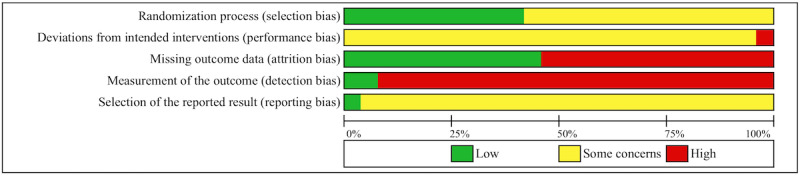
“Based on the Cochrane RoB 2 tool [49], 22 out of 24 studies had an overall high risk of bias, and the remaining two studies were rated as “some concerns.”
MethodLiberati, A., Altman, D. G., Tetzlaff, J., Mulrow, C., Gøtzsche, P. C., Ioannidis, J. P. A., Clarke, M., Devereaux, P. J., Kleijnen, J., & Moher, D. (2009) · PLoS Medicine · doi:10.1371/journal.pmed.1000100 · Cited by 28,164 · cited 1×
“This study was conducted and reported in accordance with the Preferred Reporting Items for Systematic Reviews and Meta-Analyses (PRISMA) statement for reporting systematic reviews and meta-analyses [47].”
MethodStatistical Power Analysis for the Behavioral Sciences
Cohen, J. (2013) · doi:10.4324/9780203771587 · Cited by 25,373
Kessler, R. C., Berglund, P., Demler, O., Jin, R., Merikangas, K. R., & Walters, E. E. (2005) · Archives of General Psychiatry · doi:10.1001/archpsyc.62.6.593 · Cited by 20,391 · cited 1×
“The incidence of most anxiety disorders peaks during adolescence, whereas the incidence of depressive disorders starts to rise during adolescence [14] and peaks in young adulthood (ie, age 19-25 years) [15-17].”
BackgroundCochrane Handbook for Systematic Reviews of Interventions
(2019) · doi:10.1002/9781119536604 · Cited by 14,828
Duval, S., & Tweedie, R. (2000) · Biometrics · doi:10.1111/j.0006-341x.2000.00455.x · Cited by 14,099 · cited 1×
“Second, the Duval and Tweedie trim and fill procedure was used to calculate an adjusted pooled effect size that accounts for missing studies due to publication bias [56].”
MethodCONSORT 2010 Statement: updated guidelines for reporting parallel group randomised trials
the CONSORT Group, Schulz, K. F., Altman, D. G., & Moher, D. (2010) · BMC Medicine · doi:10.1186/1741-7015-8-18 · Cited by 13,371
Cumpston, M., Li, T., Page, M. J., Chandler, J., Welch, V. A., Higgins, J. P., & Thomas, J. (2019) · Cochrane Database of Systematic Reviews · doi:10.1002/14651858.ed000142 · Cited by 7,218
Polanczyk, G. V., Salum, G. A., Sugaya, L. S., Caye, A., & Rohde, L. A. (2015) · Journal of Child Psychology and Psychiatry · doi:10.1111/jcpp.12381 · Cited by 3,990
Gulliver, A., Griffiths, K. M., & Christensen, H. (2010) · BMC Psychiatry · doi:10.1186/1471-244x-10-113 · Cited by 3,292 · cited 1×
“Among their reasons for low treatment utilization are limited availability of youth mental health services, perceived stigma associated with mental illness, perceived lack of time or resources, and preference for self-help [24,26,27].”
BackgroundMental health of young people: A global public-health challenge
Patel, V., Flisher, A. J., Hetrick, S., & McGorry, P. (2007) · The Lancet · doi:10.1016/s0140-6736(07)60368-7 · Cited by 3,126 · cited 1×
“Anxiety and depressive disorders are common in children and adolescents [1,2].”
BackgroundKessler, R. C., Petukhova, M., Sampson, N. A., Zaslavsky, A. M., & Wittchen, H. (2012) · International Journal of Methods in Psychiatric Research · doi:10.1002/mpr.1359 · Cited by 2,947 · cited 1×
“The incidence of most anxiety disorders peaks during adolescence, whereas the incidence of depressive disorders starts to rise during adolescence [14] and peaks in young adulthood (ie, age 19-25 years) [15-17].”
BackgroundFitzpatrick, K. K., Darcy, A., & Vierhile, M. (2017) · JMIR Mental Health · doi:10.2196/mental.7785 · Cited by 2,730 · cited 3×
“One study examined the Woebot intervention [68], which does not consist of different modules, but delivers cCBT by 1 to 20 (median 12) automated conversations and mood tracking in an instant messenger app.”
BackgroundSelf-harm and suicide in adolescents
Hawton, K., Saunders, K. E., & O'Connor, R. C. (2012) · The Lancet · doi:10.1016/s0140-6736(12)60322-5 · Cited by 2,306 · cited 1×
“Moreover, anxiety and depressive disorders in young people are associated with an increased risk of self-harm and suicide [5,9], the second most common cause of death among youth aged between 10 and 24 years [10].”
BackgroundEysenbach, G., & CONSORT-EHEALTH Group (2011) · Journal of Medical Internet Research · doi:10.2196/jmir.1923 · Cited by 1,863 · cited 8×
“Numerous randomized controlled trials (RCTs) and meta-analyses in adult populations with anxiety and depressive disorders have shown that CBT may be effectively delivered via the internet or digital devices [33,34].”
MethodInfluentialAn Assessment of Clinically Useful Measures of the Consequences of Treatment
Laupacis, A., Sackett, D. L., & Roberts, R. S. (1988) · New England Journal of Medicine · doi:10.1056/nejm198806303182605 · Cited by 1,681 · cited 1×
“The NNT indicates the total number of patients who need to be treated in order to achieve one additional positive outcome [53].”
BackgroundMental disorders among college students in the World Health Organization World Mental Health Surveys
Auerbach, R. P., Alonso, J., Axinn, W. G., Cuijpers, P., Ebert, D. D., Green, J. G., Hwang, I., Kessler, R. C., Liu, H., Mortier, P., et al. (2016) · Psychological Medicine · doi:10.1017/s0033291716001665 · Cited by 1,587 · cited 2×
“cCBT appears to be a promising treatment option for young people, of whom most do not receive face-to-face treatment [23-25].”
BackgroundMerikangas, K. R., He, J.-P., Burstein, M., Swendsen, J., Avenevoli, S., Case, B., Georgiades, K., Heaton, L., Swanson, S., & Olfson, M. (2011) · Journal of the American Academy of Child & Adolescent Psychiatry · doi:10.1016/j.jaac.2010.10.006 · Cited by 1,579 · cited 2×
“cCBT appears to be a promising treatment option for young people, of whom most do not receive face-to-face treatment [23-25].”
BackgroundNational trends in the prevalence and treatment of depression in adolescents and young adults.
Mojtabai, R., Olfson, M., & Han, B. (2016) · Pediatrics · doi:10.1542/peds.2016-1878 · Cited by 1,424
Uncertainty in heterogeneity estimates in meta-analyses
Ioannidis, J. P. A., Patsopoulos, N. A., & Evangelou, E. (2007) · BMJ · doi:10.1136/bmj.39343.408449.80 · Cited by 1,254 · cited 2×
“In addition, we calculated the 95% CIs around I(2) by using the noncentral chi-square approach in the “heterogi” module of STATA [54,55].”
MethodEpidemiology of mental disorders in children and adolescents
Merikangas, K. R., Nakamura, E. F., & Kessler, R. C. (2009) · Dialogues in Clinical Neuroscience · doi:10.31887/dcns.2009.11.1/krmerikangas · Cited by 1,246
Global patterns of mortality in young people: a systematic analysis of population health data
Patton, G. C., Coffey, C., Sawyer, S. M., Viner, R. M., Haller, D. M., Bose, K., Vos, T., Ferguson, J., & Mathers, C. D. (2009) · The Lancet · doi:10.1016/s0140-6736(09)60741-8 · Cited by 1,233 · cited 1×
“Moreover, anxiety and depressive disorders in young people are associated with an increased risk of self-harm and suicide [5,9], the second most common cause of death among youth aged between 10 and 24 years [10].”
BackgroundCarlbring, P., Andersson, G., Cuijpers, P., Riper, H., & Hedman-Lagerlöf, E. (2018) · Cognitive Behaviour Therapy · doi:10.1080/16506073.2017.1401115 · Cited by 1,232 · cited 2×
“The effects of these so-called computerized CBT (cCBT) interventions have been demonstrated to be comparable to the effects of face-to-face CBT in adults [35].”
BackgroundThe heterogeneity statistic I2 can be biased in small meta-analyses
von Hippel, P. T. (2015) · BMC Medical Research Methodology · doi:10.1186/s12874-015-0024-z · Cited by 1,229 · cited 2×
“In addition, we calculated the 95% CIs around I(2) by using the noncentral chi-square approach in the “heterogi” module of STATA [54,55].”
Avenevoli, S., Swendsen, J., He, J.-P., Burstein, M., & Merikangas, K. R. (2015) · Journal of the American Academy of Child & Adolescent Psychiatry · doi:10.1016/j.jaac.2014.10.010 · Cited by 1,202 · cited 1×
“The prevalence of mental disorders increases during the transition from childhood to adolescence [12,13], with prevalence rates in adolescents (ie, age 12-19 years) estimated at 10.”
BackgroundAdvantages and limitations of Internet-based interventions for common mental disorders
Andersson, G., & Titov, N. (2014) · World Psychiatry · doi:10.1002/wps.20083 · Cited by 1,160 · cited 1×
“Compared with face-to-face treatment, computerized interventions may provide more flexible access in terms of time, location, and availability; greater privacy and anonymity; and more independence [28,29].”
BackgroundMental Health, Educational, and Social Role Outcomes of Adolescents With Depression
Fergusson, D. M., & Woodward, L. J. (2002) · Archives of General Psychiatry · doi:10.1001/archpsyc.59.3.225 · Cited by 1,112 · cited 1×
“Symptoms of anxiety and depression in childhood and adolescence predict a range of mental health problems later in life, including adult anxiety and depressive disorders and substance use disorders [3-8].”
BackgroundEvidence‐Based Psychotherapies for Children and Adolescents
Woolgar, M. (2011) · Child and Adolescent Mental Health · doi:10.1111/j.1475-3588.2011.00617_11.x · Cited by 1,095
The impact of guidance on Internet-based mental health interventions — A systematic review
Baumeister, H., Reichler, L., Munzinger, M., & Lin, J. (2014) · Internet Interventions · doi:10.1016/j.invent.2014.08.003 · Cited by 1,037 · cited 1×
“In addition, level of guidance (ie, the level of therapist support provided during cCBT) appears to be associated with larger treatment effects in adults, as studies on guided internet-based interventions have generally demonstrated larger effect sizes than studies on unguided interventions [33,45,46].”
ResultAndrews, G., Basu, A., Cuijpers, P., Craske, M. G., McEvoy, P., English, C. L., & Newby, J. M. (2018) · Journal of Anxiety Disorders · doi:10.1016/j.janxdis.2018.01.001 · Cited by 922 · cited 3×
“Research in adults has shown largely equivalent effects of cCBT on both anxiety and depressive symptoms compared with face-to-face CBT [34,35].”
BackgroundA Systematic Review of the Impact of Adherence on the Effectiveness of e-Therapies
Donkin, L., Christensen, H., Naismith, S. L., Neal, B., Hickie, I. B., & Glozier, N. (2011) · Journal of Medical Internet Research · doi:10.2196/jmir.1772 · Cited by 876 · cited 1×
“The lack of an association between adherence rates and effect sizes in our study contrasts findings in adults with depression and anxiety [33,83].”
Cognitive behavioural therapy for anxiety disorders in children and adolescents
James, A. C., James, G., Cowdrey, F. A., Soler, A., & Choke, A. (2015) · Cochrane Database of Systematic Reviews · doi:10.1002/14651858.cd004690.pub4 · Cited by 876
Costello, E. J., Copeland, W., & Angold, A. (2011) · Journal of Child Psychology and Psychiatry · doi:10.1111/j.1469-7610.2011.02446.x · Cited by 864 · cited 1×
“The prevalence of mental disorders increases during the transition from childhood to adolescence [12,13], with prevalence rates in adolescents (ie, age 12-19 years) estimated at 10.”
BackgroundSize of Treatment Effects and Their Importance to Clinical Research and Practice
Kraemer, H. C., & Kupfer, D. J. (2006) · Biological Psychiatry · doi:10.1016/j.biopsych.2005.09.014 · Cited by 850 · cited 1×
“In addition, we calculated the number needed to treat (NNT), using the Kraemer & Kupfer [52] formula.”
MethodHollis, C., Falconer, C. J., Martin, J. L., Whittington, C., Stockton, S., Glazebrook, C., & Davies, E. B. (2017) · Journal of Child Psychology and Psychiatry · doi:10.1111/jcpp.12663 · Cited by 846 · cited 2×
“The number of studies is still small, and the quality of RCTs is often low [39].”
BackgroundSubthreshold Depression in Adolescence and Mental Health Outcomes in Adulthood
Fergusson, D. M., Horwood, L. J., Ridder, E. M., & Beautrais, A. L. (2005) · Archives of General Psychiatry · doi:10.1001/archpsyc.62.1.66 · Cited by 792 · cited 2×
“Symptoms of anxiety and depression in childhood and adolescence predict a range of mental health problems later in life, including adult anxiety and depressive disorders and substance use disorders [3-8].”
BackgroundMerry, S. N., Stasiak, K., Shepherd, M., Frampton, C., Fleming, T., & Lucassen, M. F. G. (2012) · BMJ · doi:10.1136/bmj.e2598 · Cited by 716 · cited 2×
“The other 10 interventions were self-guided (ie, unguided) [58,59,65-72].”
BackgroundKaryotaki, E., Riper, H., Twisk, J., Hoogendoorn, A., Kleiboer, A., Mira, A., Mackinnon, A., Meyer, B., Botella, C., Littlewood, E., et al. (2017) · JAMA Psychiatry · doi:10.1001/jamapsychiatry.2017.0044 · Cited by 691
Adult mental health outcomes of adolescent depression: A systematic review
Johnson, D., Dupuis, G., Piche, J., Clayborne, Z., & Colman, I. (2018) · Depression and Anxiety · doi:10.1002/da.22777 · Cited by 563 · cited 1×
“Symptoms of anxiety and depression in childhood and adolescence predict a range of mental health problems later in life, including adult anxiety and depressive disorders and substance use disorders [3-8].”
BackgroundEbert, D. D., Zarski, A.-C., Christensen, H., Stikkelbroek, Y., Cuijpers, P., Berking, M., & Riper, H. (2015) · PLOS ONE · doi:10.1371/journal.pone.0119895 · Cited by 533
Self-citationHarrer, M., Adam, S. H., Baumeister, H., Cuijpers, P., Karyotaki, E., Auerbach, R. P., Kessler, R. C., Bruffaerts, R., Berking, M., & Ebert, D. D. (2019) · International Journal of Methods in Psychiatric Research · doi:10.1002/mpr.1759 · Cited by 445 · cited 1×
“In children and young people, cCBT has been found to be effective in treating mental health problems as well [36-42].”
BackgroundA randomized controlled trial of online versus clinic-based CBT for adolescent anxiety.
Spence, S. H., Donovan, C. L., March, S., Gamble, A., Anderson, R. E., Prosser, S., & Kenardy, J. (2011) · Journal of Consulting and Clinical Psychology · doi:10.1037/a0024512 · Cited by 381 · cited 3×
“In nine studies, guidance additionally included providing personalized feedback on completed exercises [63,64,74-80].”
BackgroundEvidence-Based Psychotherapies for Children and Adolescents
Cho, S.-M. (2018) · Korean Journal of Clinical Psychology · doi:10.15842/kjcp.2018.37.4.010 · Cited by 352
Cognitive behavioural therapy for anxiety disorders in children and adolescents
James, A. C., James, G., Cowdrey, F. A., Soler, A., & Choke, A. (2013) · Cochrane Database of Systematic Reviews · doi:10.1002/14651858.cd004690.pub3 · Cited by 337
Santana, C. L. A. D. (2018) · Jornal Brasileiro de Psiquiatria · doi:10.1590/0047-2085000000206 · Cited by 329
Zhou, X., Hetrick, S. E., Cuijpers, P., Qin, B., Barth, J., Whittington, C. J., Cohen, D., Del Giovane, C., Liu, Y., Michael, K. D., et al. (2015) · World Psychiatry · doi:10.1002/wps.20217 · Cited by 322
Karyotaki, E., Ebert, D. D., Donkin, L., Riper, H., Twisk, J., Burger, S., Rozental, A., Lange, A., Williams, A. D., Zarski, A. C., et al. (2018) · Clinical Psychology Review · doi:10.1016/j.cpr.2018.06.007 · Cited by 303 · cited 2×
“In adults, individual participant data meta-analyses on internet-based interventions have demonstrated several predictors of better treatment outcomes, among which are older age [45] and higher treatment adherence [33].”
BackgroundResultVigerland, S., Lenhard, F., Bonnert, M., Lalouni, M., Hedman, E., Ahlen, J., Olén, O., Serlachius, E., & Ljótsson, B. (2016) · Clinical Psychology Review · doi:10.1016/j.cpr.2016.09.005 · Cited by 292 · cited 5×
“In children and young people, cCBT has been found to be effective in treating mental health problems as well [36-42].”
BackgroundInfluentialGrist, R., Croker, A., Denne, M., & Stallard, P. (2019) · Clinical Child and Family Psychology Review · doi:10.1007/s10567-018-0271-8 · Cited by 287 · cited 8×
“Our results are largely in line with those of previous studies on cCBT in children and young people aged up to 25 years [36], adolescents and young adults aged 12 to 25 years [37] and 10 to 25 years [43], and children and adolescents aged up to 18 years [44].”
BackgroundResultInfluentialOrmel, J., Raven, D., van Oort, F., Hartman, C. A., Reijneveld, S. A., Veenstra, R., Vollebergh, W. A. M., Buitelaar, J., Verhulst, F. C., & Oldehinkel, A. J. (2015) · Psychological Medicine · doi:10.1017/s0033291714001469 · Cited by 276 · cited 1×
“The incidence of most anxiety disorders peaks during adolescence, whereas the incidence of depressive disorders starts to rise during adolescence [14] and peaks in young adulthood (ie, age 19-25 years) [15-17].”
BackgroundPennant, M. E., Loucas, C. E., Whittington, C., Creswell, C., Fonagy, P., Fuggle, P., Kelvin, R., Naqvi, S., Stockton, S., & Kendall, T. (2015) · Behaviour Research and Therapy · doi:10.1016/j.brat.2015.01.009 · Cited by 269 · cited 10×
“Our results are largely in line with those of previous studies on cCBT in children and young people aged up to 25 years [36], adolescents and young adults aged 12 to 25 years [37] and 10 to 25 years [43], and children and adolescents aged up to 18 years [44].”
BackgroundResultInfluentialHuang, J., Nigatu, Y. T., Smail-Crevier, R., Zhang, X., & Wang, J. (2018) · Journal of Psychiatric Research · doi:10.1016/j.jpsychires.2018.09.018 · Cited by 256 · cited 2×
“Adolescents and young adults with anxiety or depressive disorders are commonly treated with cognitive behavioral therapy (CBT), which is a widely-used treatment that has been proven to be effective in this population [18-21].”
BackgroundFleming, T., Dixon, R., Frampton, C., & Merry, S. (2012) · Behavioural and Cognitive Psychotherapy · doi:10.1017/s1352465811000695 · Cited by 255 · cited 2×
“The other 10 interventions were self-guided (ie, unguided) [58,59,65-72].”
BackgroundAdolescent depression, adult mental health and psychosocial outcomes at 30 and 35 years
McLeod, G. F. H., Horwood, L. J., & Fergusson, D. M. (2016) · Psychological Medicine · doi:10.1017/s0033291715002950 · Cited by 240 · cited 1×
“Symptoms of anxiety and depression in childhood and adolescence predict a range of mental health problems later in life, including adult anxiety and depressive disorders and substance use disorders [3-8].”
BackgroundAn internet-based self-help treatment for fear of public speaking: a controlled trial.
Botella, C., Gallego, M. J., Garcia-Palacios, A., Guillen, V., Baños, R. M., Quero, S., & Alcañiz, M. (2010) · Cyberpsychology, Behavior, and Social Networking · doi:10.1089/cyber.2009.0224 · Cited by 169 · cited 2×
“The other 10 interventions were self-guided (ie, unguided) [58,59,65-72].”
BackgroundBowler, J. O., Mackintosh, B., Dunn, B. D., Mathews, A., Dalgleish, T., & Hoppitt, L. (2012) · Journal of Consulting and Clinical Psychology · doi:10.1037/a0029932 · Cited by 164 · cited 1×
“The other 10 interventions were self-guided (ie, unguided) [58,59,65-72].”
BackgroundCadigan, J. M., Lee, C. M., & Larimer, M. E. (2018) · Prevention Science · doi:10.1007/s11121-018-0875-8 · Cited by 157 · cited 3×
“cCBT appears to be a promising treatment option for young people, of whom most do not receive face-to-face treatment [23-25].”
BackgroundClarke, G., Kelleher, C., Hornbrook, M., DeBar, L., Dickerson, J., & Gullion, C. (2009) · Cognitive Behaviour Therapy · doi:10.1080/16506070802675353 · Cited by 154 · cited 2×
“The other 10 interventions were self-guided (ie, unguided) [58,59,65-72].”
Backgroundvan der Zanden, R., Kramer, J., Gerrits, R., & Cuijpers, P. (2012) · Journal of Medical Internet Research · doi:10.2196/jmir.2033 · Cited by 152
Predictors of first lifetime onset of major depressive disorder in young adulthood.
Klein, D. N., Glenn, C. R., Kosty, D. B., Seeley, J. R., Rohde, P., & Lewinsohn, P. M. (2012) · Journal of Abnormal Psychology · doi:10.1037/a0029567 · Cited by 146 · cited 1×
“The incidence of most anxiety disorders peaks during adolescence, whereas the incidence of depressive disorders starts to rise during adolescence [14] and peaks in young adulthood (ie, age 19-25 years) [15-17].”
BackgroundLenhard, F., Andersson, E., Mataix-Cols, D., Rück, C., Vigerland, S., Högström, J., Hillborg, M., Brander, G., Ljungström, M., Ljótsson, B., et al. (2017) · Journal of the American Academy of Child & Adolescent Psychiatry · doi:10.1016/j.jaac.2016.09.515 · Cited by 146
Day, V., McGrath, P. J., & Wojtowicz, M. (2013) · Behaviour Research and Therapy · doi:10.1016/j.brat.2013.03.003 · Cited by 145 · cited 1×
“Guidance was provided through telephone and/or email contact [63,64,73-78], chat sessions [79], or face-to-face guidance during the participant’s completion of the modules [60-62,80,81].”
BackgroundLogging into therapy: Adolescent perceptions of online therapies for mental health problems
Sweeney, G. M., Donovan, C. L., March, S., & Forbes, Y. (2016) · Internet Interventions · doi:10.1016/j.invent.2016.12.001 · Cited by 141
Poppelaars, M., Tak, Y. R., Lichtwarck‐Aschoff, A., Engels, R. C. M. E., Lobel, A., Merry, S., Lucassen, M. F. G., & Granic, I. (2016) · Behaviour Research and Therapy · doi:10.1016/j.brat.2016.03.005 · Cited by 139
Ye, X., Bapuji, S. B., Winters, S. E., Struthers, A., Raynard, M., Metge, C., Kreindler, S. A., Charette, C. J., Lemaire, J. A., Synyshyn, M., et al. (2014) · BMC Health Services Research · doi:10.1186/1472-6963-14-313 · Cited by 133 · cited 3×
“These findings are in line with those of previous meta-analyses in youth across three early studies that were also included in the current meta-analysis [37,41].”
BackgroundResultThe Use of Computerized Self-Help Packages to Treat Adolescent Depression and Anxiety
Sethi, S., Campbell, A. J., & Ellis, L. A. (2010) · Journal of Technology in Human Services · doi:10.1080/15228835.2010.508317 · Cited by 129 · cited 3×
“Seventeen studies investigated cCBT programs delivered via the internet (also known as iCBT), such as MoodGym [60-62] and BRAVE [63,64].”
BackgroundMethodA randomized controlled trial of the cool teens CD-ROM computerized program for adolescent anxiety
Wuthrich, V. M., Rapee, R. M., Cunningham, M. J., Lyneham, H. J., Hudson, J. L., & Schniering, C. A. (2012) · Journal of the American Academy of Child & Adolescent Psychiatry · doi:10.1016/j.jaac.2011.12.002 · Cited by 124 · cited 2×
“In nine studies, guidance additionally included providing personalized feedback on completed exercises [63,64,74-80].”
BackgroundStallard, P., Richardson, T., Velleman, S., & Attwood, M. (2011) · Behavioural and Cognitive Psychotherapy · doi:10.1017/s135246581000086x · Cited by 118 · cited 2×
“In nine studies, guidance additionally included providing personalized feedback on completed exercises [63,64,74-80].”
BackgroundLong-term effects of internet-supported cognitive behaviour therapy
Andersson, G., Rozental, A., Shafran, R., & Carlbring, P. (2018) · Expert Review of Neurotherapeutics · doi:10.1080/14737175.2018.1400381 · Cited by 117 · cited 3×
“In contrast with the small effect sizes identified in our study, Andersson et al [82] found very large effect sizes for cCBT regarding depressive or anxiety symptoms in adults (g=1.”
BackgroundResultInfluentialA Review of Technology-Based Youth and Family-Focused Interventions
MacDonell, K. W., & Prinz, R. J. (2017) · Clinical Child and Family Psychology Review · doi:10.1007/s10567-016-0218-x · Cited by 113 · cited 1×
“Compared with face-to-face treatment, computerized interventions may provide more flexible access in terms of time, location, and availability; greater privacy and anonymity; and more independence [28,29].”
BackgroundVälimäki, M., Anttila, K., Anttila, M., & Lahti, M. (2017) · JMIR mHealth and uHealth · doi:10.2196/mhealth.8624 · Cited by 110 · cited 12×
“Our results are largely in line with those of previous studies on cCBT in children and young people aged up to 25 years [36], adolescents and young adults aged 12 to 25 years [37] and 10 to 25 years [43], and children and adolescents aged up to 18 years [44].”
BackgroundResultInfluentialTillfors, M., Andersson, G., Ekselius, L., Furmark, T., Lewenhaupt, S., Karlsson, A., & Carlbring, P. (2011) · Cognitive Behaviour Therapy · doi:10.1080/16506073.2011.555486 · Cited by 101 · cited 3×
“In nine studies, guidance additionally included providing personalized feedback on completed exercises [63,64,74-80].”
BackgroundArjadi, R., Nauta, M. H., Chowdhary, N., & Bockting, C. L. H. (2015) · Global Mental Health · doi:10.1017/gmh.2015.10 · Cited by 98
Treating child and adolescent anxiety effectively: Overview of systematic reviews
BENNETT, K. J., Manassis, K., Duda, S. J., Bagnell, A. L., Bernstein, G. A., Garland, E., Miller, L. D., Newton, A. S., Thabane, L., & Wilansky, P. (2016) · Clinical Psychology Review · doi:10.1016/j.cpr.2016.09.006 · Cited by 97 · cited 1×
“Adolescents and young adults with anxiety or depressive disorders are commonly treated with cognitive behavioral therapy (CBT), which is a widely-used treatment that has been proven to be effective in this population [18-21].”
BackgroundComputerised CBT for depressed adolescents: randomised controlled trial
Smith, P., Scott, R., Eshkevari, E., Jatta, F., Leigh, E., Harris, V., Robinson, A., Abeles, P., Proudfoot, J., Verduyn, C., et al. (2015) · Behaviour Research and Therapy · doi:10.1016/j.brat.2015.07.009 · Cited by 93 · cited 2×
“The other 10 interventions were self-guided (ie, unguided) [58,59,65-72].”
BackgroundTopooco, N., Berg, M., Johansson, S., Liljethörn, L., Radvogin, E., Vlaescu, G., Nordgren, L. B., Zetterqvist, M., & Andersson, G. (2018) · BJPsych Open · doi:10.1192/bjo.2018.18 · Cited by 90
A Meta-Analysis on the Efficacy of Technology Mediated CBT for Anxious Children and Adolescents
Podina, I. R., Mogoase, C., David, D., Szentagotai, A., & Dobrean, A. (2016) · Journal of Rational-Emotive & Cognitive-Behavior Therapy · doi:10.1007/s10942-015-0228-5 · Cited by 83 · cited 6×
“Studies in children and adolescents found mixed results, with Podina et al [42] reporting higher effect sizes for lower levels of guidance and Grist et al [44] reporting higher effect sizes for higher levels of guidance.”
BackgroundResultInfluentialIp, P., Chim, D., Chan, K. L., Li, T. M. H., Ho, F. K. W., Van Voorhees, B. W., Tiwari, A., Tsang, A., Chan, C. W. L., Ho, M., et al. (2016) · Depression and Anxiety · doi:10.1002/da.22554 · Cited by 82 · cited 1×
“The other 10 interventions were self-guided (ie, unguided) [58,59,65-72].”
BackgroundMcCall, H. C., Richardson, C. G., Helgadottir, F. D., & Chen, F. S. (2018) · Journal of Medical Internet Research · doi:10.2196/jmir.8630 · Cited by 71
Babajide, A., Ortin, A., Wei, C., Mufson, L., & Duarte, C. S. (2020) · The Journal of Behavioral Health Services & Research · doi:10.1007/s11414-019-09670-8 · Cited by 71 · cited 1×
“Among their reasons for low treatment utilization are limited availability of youth mental health services, perceived stigma associated with mental illness, perceived lack of time or resources, and preference for self-help [24,26,27].”
BackgroundStjerneklar, S., Hougaard, E., McLellan, L. F., & Thastum, M. (2019) · PLOS ONE · doi:10.1371/journal.pone.0222485 · Cited by 71
Wolitzky-Taylor, K., Dour, H., Zinbarg, R., Mineka, S., Vrshek-Schallhorn, S., Epstein, A., Bobova, L., Griffith, J., Waters, A., Nazarian, M., et al. (2014) · Depression and Anxiety · doi:10.1002/da.22250 · Cited by 61 · cited 1×
“Symptoms of anxiety and depression in childhood and adolescence predict a range of mental health problems later in life, including adult anxiety and depressive disorders and substance use disorders [3-8].”
BackgroundSethi, S. (2013) · Australian Psychologist · doi:10.1111/ap.12006 · Cited by 59 · cited 13×
“93 [60] resulted in a somewhat smaller mean effect size of g=0.”
BackgroundMethodInfluentialMcKenzie, M., Jorm, A. F., Romaniuk, H., Olsson, C. A., & Patton, G. C. (2011) · The Medical Journal of Australia · doi:10.5694/j.1326-5377.2011.tb03262.x · Cited by 52 · cited 1×
“Symptoms of anxiety and depression in childhood and adolescence predict a range of mental health problems later in life, including adult anxiety and depressive disorders and substance use disorders [3-8].”
BackgroundRichards, D., Timulák, L., Rashleigh, C., McLoughlin, O., Colla, A., Joyce, C., Doherty, G. J., Sharry, J., Duffy, D. J., & Anderson-Gibbons, M. (2016) · Internet Interventions · doi:10.1016/j.invent.2016.10.003 · Cited by 50
APA Clinical Practice Guideline for the Treatment of Depression Across Three Age Cohorts
Disorders, G. D. P. F. T. T. O. D. (2019) · PsycEXTRA Dataset · doi:10.1037/e505892019-001 · Cited by 47
Waite, P., Marshall, T., & Creswell, C. (2019) · Child and Adolescent Mental Health · doi:10.1111/camh.12311 · Cited by 36 · cited 3×
“In nine studies, guidance additionally included providing personalized feedback on completed exercises [63,64,74-80].”
Background
Research works printed but not linked: 3
- McKenzie, M, 2011, Med J Aust, 195, S27
- Ellis, L, 2011, Journal of CyberTherapy and Rehabilitation, 4, 461
- 2008, mhGAP: Mental Health Gap Action Programme: scaling up care for mental, neurological and substance use disorders
Cited by
Linardon, J., Torous, J., Firth, J., Cuijpers, P., Messer, M., & Fuller‐Tyszkiewicz, M. (2024) · World Psychiatry · doi:10.1002/wps.21183 · Cited by 207
Is subthreshold depression in adolescence clinically relevant?
Noyes, B. K., Munoz, D. P., Khalid‐Khan, S., Brietzke, E. M., & Booij, L. (2022) · Journal of Affective Disorders · doi:10.1016/j.jad.2022.04.067 · Cited by 117
Piers, R., Williams, J. M., & Sharpe, H. (2022) · Child and Adolescent Mental Health · doi:10.1111/camh.12620 · Cited by 105
Schlesinger, A. B., Sengupta, S., Marx, L., Hilt, R. J., Martini, D. R., DeMaso, D. R., Beheshti, N., Borcherding, B. G., Butler, A., Fallucco, E. M., et al. (2022) · Journal of the American Academy of Child & Adolescent Psychiatry · doi:10.1016/j.jaac.2022.06.007 · Cited by 92
Artificial Intelligence-Powered Cognitive Behavioral Therapy Chatbots, a Systematic Review
Farzan, M., Ebrahimi, H., Pourali, M., & Sabeti, F. (2024) · Iranian Journal of Psychiatry · doi:10.18502/ijps.v20i1.17395 · Cited by 148
“Numerous studies have established CBT's effectiveness across a range of mental health disorders, especially as first-line treatment for anxiety and depression (6-9).”
Metadata
- Authors
- Christ, C., Schouten, M. J., Blankers, M., van Schaik, D. J., Beekman, A. T., Wisman, M. A., Stikkelbroek, Y. A., & Dekker, J. J.
- Affiliations
- Amsterdam Public Health (NL)
- Arkin (NL)
- Trimbos Institute (NL)
- Utrecht University (NL)
- Corresponding author
- Christ, Carolien
- ORCID
- Venue
- Journal of Medical Internet Research
- Publisher
- JMIR Publications Inc.
- Published
- 2020-09-25
- Volume
- 22
- Issue
- 9
- Pages
- e17831
- ISSN
- 1438-8871 (ISSN-L)
- PMC
- PMC7547394
- OpenAlex
- W3043731461
- Cited by
- 148
- References
- 88
- Citations by year
- 2026: 16 · 2025: 34 · 2024: 32 · 2023: 24 · 2022: 31 · 2021: 10 · 2020: 1
- FWCI
- 2.59
- Type
- journal article
- Language
- en
- Open access
- gold
- doi.org
- Licence
- cc-by
- Locations
- Journal of Medical Internet Research (publishedVersion, cc-by)
- PubMed Central (publishedVersion, cc-by)
- PubMed (publishedVersion)
- Pure Amsterdam UMC (publishedVersion, other-oa)
- Amsterdam UMC (VU Amsterdam) - Institutional Repository (publishedVersion, other-oa)
- DOAJ (DOAJ: Directory of Open Access Journals) (submittedVersion, cc-by-sa)
- Utrecht University Repository (Utrecht University) (submittedVersion, other-oa)
- Utrecht University Repository (Utrecht University) (submittedVersion)
- Data Archiving and Networked Services (DANS) (submittedVersion, other-oa)
- Topics
- Social Sciences › Psychology › Applied Psychology › Digital Mental Health Interventions
- Social Sciences › Psychology › Experimental and Cognitive Psychology › Anxiety, Depression, Psychometrics, Treatment, Cognitive Processes
- Social Sciences › Psychology › Clinical Psychology › Psychological Treatments and Assessments
- Keywords
- computerized cognitive behavioral therapy, online therapy, adolescents, young adults, anxiety disorders, depression, depressive symptoms, anxiety symptoms, medication adherence, treatment guidelines, treatment effects, moderators of treatment outcome, digital mental health interventions, help-seeking barriers, access to mental health care, risk of bias
- MeSH terms
- Adolescent, Adult, Anxiety Disorders, Child, Computers, Depression, Humans, Cognitive Behavioral Therapy, Treatment Outcome, Internet, Young Adult
About these checks
Registry, retraction, Cites and statistics results are computed, not judged, with one exception: a printed reference that no index lists is read once by a model before it counts as a citation error. Claims are extracted by a model and kept only when their quote appears verbatim in the text; each cited source is then checked, with a model’s help, for whether it says what the claim relies on. Those verdicts can be wrong — read the claim’s quote and the cited source before relying on one.
Statistics and arithmetic are recomputed, not judged.
Confidence bands are shown only for fields calibrated on our annotated test set. None is calibrated yet, so no band is shown.
What counts as a claim ›How we measure confidence ›How we check this ›
Are you an author, or do you see a problem with this page? Request a review
Data sources
Bibliographic data: Semantic Scholar, OpenAlex, Crossref.
Contains information from the Semantic Scholar Academic Graph Datasets, made available under the ODC Attribution License (ODC-BY 1.0).
Semantic Scholar’s data is described in: Kinney, R., et al. (2023). The Semantic Scholar Open Data Platform. arXiv:2301.10140.
