

Artificial Intelligence for Caregivers of Persons With Alzheimer’s Disease and Related Dementias: Systematic Literature Review
Open accessPublished version of a preprint
The DOI matches its Crossref record; 54 of the 54 references it cites were found in a registry or an index.
Abstract
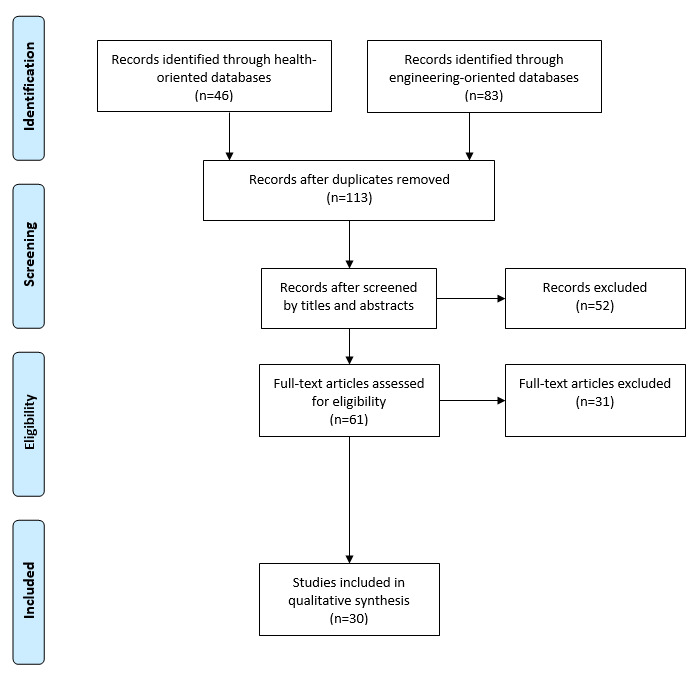
Background: Artificial intelligence (AI) has great potential for improving the care of persons with Alzheimer’s disease and related dementias (ADRD) and the quality of life of their family caregivers. To date, however, systematic review of the literature on the impact of AI on ADRD management has been lacking. Objective: This paper aims to (1) identify and examine literature on AI that provides information to facilitate ADRD management by caregivers of individuals diagnosed with ADRD and (2) identify gaps in the literature that suggest future directions for research. Methods: Following the Preferred Reporting Items for Systematic Reviews and Meta-Analyses guidelines for conducting systematic literature reviews, during August and September 2019, we performed 3 rounds of selection. First, we searched predetermined keywords in PubMed, Cumulative Index to Nursing and Allied Health Literature Plus with Full Text, PsycINFO, IEEE Xplore Digital Library, and the ACM Digital Library. This step generated 113 nonduplicate results. Next, we screened the titles and abstracts of the 113 papers according to inclusion and exclusion criteria, after which 52 papers were excluded and 61 remained. Finally, we screened the full text of the remaining papers to ensure that they met the inclusion or exclusion criteria; 31 papers were excluded, leaving a final sample of 30 papers for analysis. Results: Of the 30 papers, 20 reported studies that focused on using AI to assist in activities of daily living. A limited number of specific daily activities were targeted. The studies’ aims suggested three major purposes: (1) to test the feasibility, usability, or perceptions of prototype AI technology; (2) to generate preliminary data on the technology’s performance (primarily accuracy in detecting target events, such as falls); and (3) to understand user needs and preferences for the design and functionality of to-be-developed technology. The majority of the studies were qualitative, with interviews, focus groups, and observation being their most common methods. Cross-sectional surveys were also common, but with small convenience samples. Sample sizes ranged from 6 to 106, with the vast majority on the low end. The majority of the studies were descriptive, exploratory, and lacking theoretical guidance. Many studies reported positive outcomes in favor of their AI technology’s feasibility and satisfaction; some studies reported mixed results on these measures. Performance of the technology varied widely across tasks. Conclusions: These findings call for more systematic designs and evaluations of the feasibility and efficacy of AI-based interventions for caregivers of people with ADRD. These gaps in the research would be best addressed through interdisciplinary collaboration, incorporating complementary expertise from the health sciences and computer science/engineering–related fields.
Overview
The claims and statistics of this paper haven’t been checked yet.
Free: it reads the open-access text and checks the first 5 claims that cite a source we can check. Create a free account to check every claim.
Integrity signals
Registry
Cites
Statistics
Figures
Verification
Claims the paper makes
The claims and statistics of this paper haven’t been checked yet.
Free: it reads the open-access text and checks the first 5 claims that cite a source we can check. Create a free account to check every claim.
Claims other papers make about this one
Each is checked against this paper’s own text: does it say what the citing paper says it does?
The cited source says what the claim attributes to it.
In the citing paper
“Xie et al [12] conducted a review on AI specifically for caregivers of persons with dementia, but did not report on any virtual agents for which an actual experiment had been conducted.”
From Voice-Enabled Intelligent Virtual Agents for People With Amnesia: Systematic Review (2022) · cites this paper as [12]
Self-check
Percentages, sums and reported differences re-computed from the paper’s own numbers.
The self-check needs the paper’s full text.
Citations
Cites
Preferred Reporting Items for Systematic Reviews and Meta-Analyses: the PRISMA statement
Moher, D., Liberati, A., Tetzlaff, J., Altman, D. G., & for the PRISMA Group (2009) · BMJ · doi:10.1136/bmj.b2535 · Cited by 83,823
Preferred Reporting Items for Systematic Reviews and Meta-Analyses: The PRISMA Statement
Moher, D., Liberati, A., Tetzlaff, J., Altman, D. G., & The PRISMA Group (2009) · PLoS Medicine · doi:10.1371/journal.pmed.1000097 · Cited by 64,042 · cited 1×
“The selection process is summarized in Figure 1 according to the PRISMA guidelines [50].”
Wang, G., Ma, R., Qiao, G., Wada, K., Aizawa, Y., & Satoh, T. (2015) · Integrative Medicine International · doi:10.1159/000368408 · Cited by 18,657
2019 Alzheimer’s disease facts and figures.
Alzheimer's Association (2019) · Alzheimer's & Dementia · doi:10.1016/j.jalz.2019.01.010 · Cited by 2,461
The Levels of Evidence and Their Role in Evidence-Based Medicine
Burns, P. B., Rohrich, R. J., & Chung, K. C. (2011) · Plastic and Reconstructive Surgery · doi:10.1097/prs.0b013e318219c171 · Cited by 2,155 · cited 3×
“In addition, we assessed levels of evidence reported in the 30 papers [51].”
BackgroundInfluentialArtificial Intelligence in Health Care: A Report From the National Academy of Medicine
Matheny, M. E., Whicher, D., & Thadaney Israni, S. (2020) · JAMA · doi:10.1001/jama.2019.21579 · Cited by 628
Advance Directives as Acts of Communication: A Randomized Controlled Trial
Ditto, P. H., Danks, J. H., Smucker, W. D., Bookwala, J., Coppola, K. M., Dresser, R., Fagerlin, A., Gready, R. M., Houts, R. M., Lockhart, L. K., et al. (2001) · Archives of Internal Medicine · doi:10.1001/archinte.161.3.421 · Cited by 407
The Oxford Handbook of Retirement
(2012) · Oxford University Press eBooks · doi:10.1093/oxfordhb/9780199746521.001.0001 · Cited by 374
Bharucha, A. J., Anand, V., Forlizzi, J., Dew, M. A., Reynolds, C. F., Stevens, S., & Wactlar, H. (2009) · The American Journal of Geriatric Psychiatry · doi:10.1097/jgp.0b013e318187dde5 · Cited by 350 · cited 1×
“Some attempts have been made to apply AI for persons with ADRD and their caregivers in order to improve patients’ daily functioning, quality of life, and well-being, as well as reduce caregiver burden (eg, social robots to facilitate social interaction and engagement, assistive robots to facilitate daily activities su…”
BackgroundMihailidis, A., Boger, J. N., Craig, T., & Hoey, J. (2008) · BMC Geriatrics · doi:10.1186/1471-2318-8-28 · Cited by 345 · cited 2×
“In assisting with daily activities, assistive AI devices helped reduce patients’dependence on caregivers [42,43].”
Background
Cited by
Hajjo, R., Sabbah, D. A., Abusara, O. H., & Bawab, A. Q. A. (2022) · Diagnostics · doi:10.3390/diagnostics12122975 · Cited by 63
Robots in Assisted Living Facilities: Scoping Review
Trainum, K., Tunis, R., Xie, B., & Hauser, E. (2023) · JMIR Aging · doi:10.2196/42652 · Cited by 46
Self-citationLukkien, D., Stolwijk, N. E., Askari, S. I., Hofstede, B. M., Nap, H. H., Boon, W., Peine, A., Moors, E. H. M., & Minkman, M. M. N. (2024) · JMIR Nursing · doi:10.2196/55962 · Cited by 69
Trainum, K., Liu, J., Hauser, E., & Xie, B. (2024) · JMIR Aging · doi:10.2196/58629 · Cited by 41
“This lack of empirical reporting is a common limitation in health informatics research and has been noted in previous literature reviews on care robots [13] and artificial intelligence for caregivers of persons with Alzheimer disease [65].”
BackgroundSelf-citationRenn, B. N., Schurr, M. S., Zaslavsky, O., & Pratap, A. (2021) · Frontiers in Psychiatry · doi:10.3389/fpsyt.2021.734909 · Cited by 42
Shaik, M. A., Anik, F. I., Hasan, M. M., Chakravarty, S., Ramos, M. D., Rahman, M. A., Ahamed, S. I., & Sakib, N. (2025) · JMIR Aging · doi:10.2196/69175 · Cited by 42
“This approach empowers caregivers, enhances efficiency, and improves patient safety by facilitating timely interventions [73,74].”
Assessing the Quality of ChatGPT Responses to Dementia Caregivers’ Questions: Qualitative Analysis
Aguirre, A., Hilsabeck, R. C., Smith, T. L., Xie, B., He, D., Wang, Z., & Zou, N. (2024) · JMIR Aging · doi:10.2196/53019 · Cited by 40
“Indeed the internet has become the most common source of information among dementia caregivers [2], and with recent advances in artificial intelligence (AI), caregivers will increasingly use AI to obtain information about health [3,4].”
BackgroundSelf-citationTagami, T., Morimura, C., & Ozeki, T. (2021) · International Journal of Pharmaceutics · doi:10.1016/j.ijpharm.2021.120721 · Cited by 29
Hasan, W. U., Zaman, K. T., Wang, X., Li, J., Xie, B., & Tao, C. (2024) · npj Biomedical Innovations. · doi:10.1038/s44385-024-00004-8 · Cited by 48
Self-citationA theoretical framework for human-centered intelligent information services: A systematic review
Li, Q., Li, Y., Zhang, S., Zhou, X., & Pan, Z. (2024) · Information Processing & Management · doi:10.1016/j.ipm.2024.103891 · Cited by 36
Lukkien, D., Askari, S. I., Stolwijk, N. E., Hofstede, B. M., Nap, H. H., Boon, W., Peine, A., Moors, E. H. M., & Minkman, M. M. N. (2024) · JMIR Human Factors · doi:10.2196/55961 · Cited by 28
Voice-Enabled Intelligent Virtual Agents for People With Amnesia: Systematic Review
Boumans, R., van de Sande, Y., Thill, S., & Bosse, T. (2022) · JMIR Aging · doi:10.2196/32473 · Cited by 23
“Third, the limited number of relevant papers originating before 2010 and found in other systematic reviews [12-16, 18,”
Angelucci, F., Ai, A. R., Piendel, L. A., Cerman, J., & Hort, J. (2024) · Current Opinion in Structural Biology · doi:10.1016/j.sbi.2024.102857 · Cited by 32
Hwang, G., Chang, P.-Y., Tseng, W.-Y., Chou, C.-A., Wu, C.-H., & Tu, Y. (2022) · CIN Computers Informatics Nursing · doi:10.1097/cin.0000000000000897 · Cited by 33
“With the assistance of AI technologies, the performance of nursing management can be enhanced.(6,10) In recent years, the application of AI in the nursing field has been recognized by several researchers.”
BackgroundVoice-Enabled Intelligent Virtual Agents for People With Amnesia: Systematic Review (Preprint)
(2021) · doi:10.2196/preprints.32473 · Cited by 22
Artificial intelligence (AI) for home support interventions in dementia: a scoping review protocol
Qi, J., Wu, C., Yang, L., Ni, C., & Liu, Y. (2022) · BMJ Open · doi:10.1136/bmjopen-2022-062604 · Cited by 24
“21 At present, efforts are being made to confirm the relevant information of AI technology applied to home support intervention for elderly patients with dementia.”
BackgroundChoudhury, A., & Elkefi, S. (2022) · Frontiers in Digital Health · doi:10.3389/fdgth.2022.966174 · Cited by 23
Hird, N., Osaki, T., Ghosh, S., Palaniappan, S. K., & Maeda, K. (2023) · JMIR Formative Research · doi:10.2196/51732 · Cited by 25
“Data generated by digital technologies can be used to develop artificial intelligence (AI) systems to support caregiving for dementia [35], which can aid the personalization process.”
BackgroundMethodMilella, F., Russo, D. D., & Bandini, S. (2023) · OBM Geriatrics · doi:10.21926/obm.geriatr.2304262 · Cited by 22
Schoenborn, N. L., Chae, K., Massare, J., Ashida, S., Abadir, P. M., Arbaje, A. I., Unberath, M., Phan, P., & Cudjoe, T. (2025) · JAMA Network Open · doi:10.1001/jamanetworkopen.2025.3316 · Cited by 25
Arjun, K. P., Kumar, K. S., Dhanaraj, R. K., Ravi, V., & Kumar, T. (2024) · Microscopy Research and Technique · doi:10.1002/jemt.24559 · Cited by 18
Love, C. S. (2023) · The Linacre Quarterly · doi:10.1177/00243639231162431 · Cited by 16
Parada, M. D. L. P. S., González-Palau, F., Palau, F. G., Rodríguez, S. V., Rincon, M., Barroeta, M. J. R., Rodriguez, M. G., Aguado., Y. B., Blanco, A. H., Díaz-López, E., et al. (2025) · JMIR Medical Informatics · doi:10.2196/62914 · Cited by 18
“The steps followed for article selection are based on the PRISMA (Preferred Reporting Items for Systematic Reviews and Meta-Analyses) methodology [42], as evidenced in recently published literature reviews on similar topics [43,44].”
González, L. P. F., Rodrigues, F. D. S., Jantsch, J., Fraga, G. D. F., Squizani, S., Castro, L. F. D. S., Correia, L. L., Neto, J. P., Giovenardi, M., Porawski, M., et al. (2023) · Nutritional Neuroscience · doi:10.1080/1028415x.2023.2168229 · Cited by 14
Gu, Z., Ge, B., Wang, Y., Gong, Y., & Qi, M. (2025) · Frontiers in Aging Neuroscience · doi:10.3389/fnagi.2025.1609063 · Cited by 12
Breaking barriers: addressing inequities in Alzheimer’s disease diagnosis and treatment in Africa
Uwishema, O., Bekele, B. K., Nazir, A., Luta, E. F., Al‐Saab, E. A., Desire, I. J., ozioma, C. F., & Wojtara, M. S. (2024) · Annals of Medicine and Surgery · doi:10.1097/ms9.0000000000002344 · Cited by 14
Together they shall not fade away: Opportunities and challenges of self-tracking for dementia care
Zou, N., Chi, Y., He, D., Xie, B., & Wang, Z. (2022) · Information Processing & Management · doi:10.1016/j.ipm.2022.103024 · Cited by 10
Self-citationDevelopment of a behavioural framework for dementia care partners’ fall risk management
Zhou, Y., Berridge, C. W., Hooyman, N. R., Sadak, T. I., Mroz, T. M., & Phelan, E. A. (2022) · BMC Geriatrics · doi:10.1186/s12877-022-03620-4 · Cited by 11
“These findings also have the potential to guide the development of technology-based interventions, such as mobile health apps [74], telemedicine [59], virtual fall management programs [75], and artificial intelligence [76], for improving care partners’ learning and ability to manage OLWD’s fall risk across different s…”
BackgroundRong, J., Ji, X., Xin, F., & Jee, M.-H. (2022) · Applied Bionics and Biomechanics · doi:10.1155/2022/7058477 · Cited by 9
“Intelligent agents are another title for these technologies [6].”
RetractedProkopowicz, P., Mikołajewski, D., & Mikołajewska, E. (2022) · Sensors · doi:10.3390/s22239214 · Cited by 12
“, falls), and improving understanding of user needs regarding the functionality of future AI technologies [3].”
BackgroundSertkaya, M. E., Ergen, B., Türkoğlu, M., & Tonkal, Ö. (2024) · International Journal of Imaging Systems and Technology · doi:10.1002/ima.23079 · Cited by 10
Large Language Models: A Paradigm Shift for Dementia Diagnosis and Care
Harrison, J. R., Tang, S. L., Burston, B., Robertson, A., Liang, H., & Taylor, J. (2025) · British Journal of Hospital Medicine · doi:10.12968/hmed.2024.0666 · Cited by 9
Informal caregivers and assistive technology in Norwegian nursing homes
Anker‐Hansen, C., Grøndahl, V. A., Helgesen, A. K., Fagerli, L. B., Rummelhoff, G. R., Bååth, C., & Halvorsrud, L. (2022) · PLoS ONE · doi:10.1371/journal.pone.0275474 · Cited by 7
“view and the possibilities of artificial technology [33] in mind, the use of AT in dementia care might change the everyday life of people with dementia, as well as of the informal caregivers in nursing homes.”
BackgroundZhao, Y., & Tsubota, T. (2023) · JMIR Medical Informatics · doi:10.2196/39876 · Cited by 8
Visualization of Spatial–Temporal Epidemiological Data: A Scoping Review
Kim, D., Cánovas-Segura, B., Campos, M., & Juárez, J. M. (2024) · Technologies · doi:10.3390/technologies12030031 · Cited by 8
Assistive Intelligence: A Framework for AI-Powered Technologies Across the Dementia Continuum
Mohapatra, B., & Anaraky, R. G. (2026) · Journal of Ageing and Longevity · doi:10.3390/jal6010008 · Cited by 7
“AI-powered assistive technologies not only help individuals with dementia, but also directly support caregivers, both family members and professional carers, by reducing bur-https dens and providing guidance [48–50].”
Interactive AI Technology for Dementia Caregivers: Needs and Implementation Evidence
Sun, F., Jiang, L. H., Chen, X. S., & Feng, Y. (2025) · Journal of Technology in Human Services · doi:10.1080/15228835.2025.2460156 · Cited by 6
“Most AI interventions for ADRD caregiving have been launched in urban settings, predominantly with non-Hispanic White populations (Kindratt et al., 2021; Xie et al., 2020).”
InfluentialJiang, Y.-P., & Wang, L. (2025) · Journal of Multidisciplinary Healthcare · doi:10.2147/jmdh.s552868 · Cited by 3
Yee, A. V., Yaffe, M. J., Schuster, T., Lambert, S., & Rahimi, S. A. (2025) · BMC Geriatrics · doi:10.1186/s12877-025-06249-1 · Cited by 4
“Before answering the closed-items questions, participants were asked to read a short definition of AI along with general examples of AI-enabled technologies, such as AI-enabled chatbots [31–36].”
Zhang, K., Hao, Y., & Fang, Y. (2022) · International Conference on Universal Village (UV) · doi:10.1109/uv56588.2022.10185497 · Cited by 5
“Knowing when agitation may strike provides CGs with peace of mind and allows PWD to feel in control of their condition [2].”
BackgroundMethodInfluentialden Akker, K. K. V., Christie, H. L., Boots, L. M. M., de Vugt, M. E., & Duits, A. (2025) · Aging & Mental Health · doi:10.1080/13607863.2025.2579159 · Cited by 4
“Although AI is promising in diagnostics and neuropsychological research (Borchert et al., 2023; Veneziani et al., 2024), there is limited research into the application of AI to improve care, such as supporting informal caregivers (Xie et al., 2020).”
Buddrus, U., Kutza, J.-O., Thye, J., Esdar, M., Hübner, U. H., & Liebe, J.-D. (2026) · Frontiers in Digital Health · doi:10.3389/fdgth.2026.1755598 · Cited by 7
Use of AI in Pediatric Occupational Therapy: A Review
Sharma, N. (2024) · International Journal of Current Research and Review · doi:10.31782/ijcrr.2024.161201 · Cited by 8
“1,18,19,20 Artificial intelligence (AI) offers novel opportunities to optimize and personalize intervention strategies in pediatric OT, leveraging data-driven insights and adaptive technologies to enhance engagement, motivation, and skill acquisition.”
BackgroundDeena, G., Karunakaran, N. B., Sharma, S., Pandey, V., & Nishant, N. (2024) · Advances in medical technologies and clinical practice book series · doi:10.4018/979-8-3693-3605-2.ch025 · Cited by 3
Devi, S., Kushawaha, A., Shah, D., Gangarde, R., Suryavanshi, M. R., & Joshi, C. (2025) · Birth · doi:10.1111/birt.70037 · Cited by 2
Meyer, K., Dorai, C., Perales‐Puchalt, J., Puga, F., Zauszniewski, J., Rodriguez, R. A., Rodriguez, M. G., Cola, P., & Benton, D. (2025) · The Gerontologist · doi:10.1093/geront/gnaf305 · Cited by 3
Wu, J., Sakib, N., Anik, F. I., Islam, K. M. S., Chovanec, K., Madiraju, P., & Ahamed, S. I. (2026) · Smart Health · doi:10.1016/j.smhl.2026.100636 · Cited by 2
Social Robots to Support Assisted Living for Persons with Alzheimer’s and Related Dementias
Morris, T., Dodge, H. H., Cerel‐Suhl, S., & Zhao, X. (2022) · Lecture notes in computer science · doi:10.1007/978-3-031-24670-8_21 · Cited by 4
The Emerging Cybersecurity Challenges With Artificial Intelligence
Mingo, H. C. (2024) · Advances in medical technologies and clinical practice book series · doi:10.4018/979-8-3693-3226-9.ch010 · Cited by 5
Alzheimer’s Disease Prediction Using Deep Learning Techniques
LAVANYA, V. A., Deepalakshmi, R., S, A. K., & Nithika Sri, M. (2024) · International Conference for Innovation in Technology (INOCON) · doi:10.1109/inocon60754.2024.10511818 · Cited by 2
Ruh Sağlığı Alanında Yapay Zeka Araştırmaları: Bibliyometrik Bir Değerlendirme
Uslu, E., & Atılgan, E. (2024) · OSMANGAZİ JOURNAL OF MEDICINE · doi:10.20515/otd.1435157 · Cited by 3
Use of AI in Pediatric Occupational Therapy: A Review
Sharma, N. (2024) · Rehabilitation Science · doi:10.11648/j.rs.20240902.12 · Cited by 5
Future of Health Professions Education Curricula
Gantwerker, E. A., Allen, L., & Hay, M. (2022) · Springer eBooks · doi:10.1007/978-981-13-6106-7_134-1 · Cited by 3
Boumans, R., Thill, S., Gerritsen, D. L., & Bosse, T. (2025) · Lecture notes in computer science · doi:10.1007/978-3-031-88045-2_8 · Cited by 1
Inteligencia artificial en deterioro cognitivo y demencias
Matías‐Guiu, J. A. (2026) · Kranion · doi:10.24875/kranion.m23000054
Future of Health Professions Education Curricula
Gantwerker, E. A., Allen, L., & Hay, M. (2023) · Springer eBooks · doi:10.1007/978-981-15-3344-0_134
Assessing the quality of ChatGPT responses to dementia caregivers’ questions (Preprint)Preprint
Aguirre, A., Hilsabeck, R. C., Smith, T. L., Xie, B., He, D., Wang, Z., & Zou, N. (2023) · doi:10.2196/preprints.53019
Self-citationLukkien, D., Stolwijk, N. E., Askari, S. I., Hofstede, B. M., Nap, H. H., Boon, W., Peine, A., Moors, E. H. M., & Minkman, M. M. N. (2024) · doi:10.2196/preprints.55962
Ethical Considerations and Challenges in Neurodegenerative Diseases Using Machine Learning
Das, M., Hitakshi, H., Mohindru, V., Garg, K. D., & Narang, S. K. (2024) · Advances in medical diagnosis, treatment, and care (AMDTC) book series · doi:10.4018/979-8-3693-1281-0.ch011 · Cited by 1
The use of digital setting in clinical ad learning applications
Genzano, N., Difino, M. R., Limone, P., & Iuso, S. (2024) · Rivista di Psicologia Clinica · doi:10.3280/rpc2-2023oa16888
Adaptive Neuro-Fuzzy Inference System (ANFIS) for Enhanced 3D Brain Reconstruction from MRI Scans
Kumar, K., Santhosh, V. C. S., Kulkarni, A. V., & Kulkarni, O. V. (2024) · Lecture notes in networks and systems · doi:10.1007/978-981-97-3305-7_27
Harnessing Big Data for Early Detection and Progression Tracking of Alzheimer's Disease
Silviya, S. H. A., Gowri, C. G., Yogashree, G. S., Devi, V. S., & Kalaivani, E. R. (2024) · Advances in bioinformatics and biomedical engineering book series · doi:10.4018/979-8-3693-6442-0.ch011
Artificial Intelligence and Occupational Therapy
Sharma, N. (2025) · SBV Journal of Basic Clinical and Applied Health Science · doi:10.4103/sbvj.sbvj_21_25 · Cited by 1
Ko, E., Rose, K. M., Gordon, K. C., Kim, S., Gao, Y., Wang, P., Wijayasingha, L. N., Wang, H., Stankovic, J. A., & Wright, K. (2025) · Journal of Advanced Nursing · doi:10.1111/jan.70007
“Moreover, AI-based interventions have largely targeted dementia care management, highlighting the need for innovative interventions specifically to support the caregivers themselves (Xie et al. 2020).”
Zhou, Y., Berridge, C. W., Hooyman, N. R., Sadak, T. I., Mroz, T. M., & Phelan, E. A. (2024) · Figshare · doi:10.6084/m9.figshare.26555507
Zhou, Y., Berridge, C. W., Hooyman, N. R., Sadak, T. I., Mroz, T. M., & Phelan, E. A. (2024) · Figshare · doi:10.6084/m9.figshare.26555504
Hoang, M.-N., Kim, L., Fisher, L., DuBose, L., Ory, M. G., Lee, S., Falohun, T., & Fan, Q. (2026) · doi:10.2196/preprints.92967
Alqadri, A., Beaton, F., & Moshfeghi, Y. (2026) · JMIR Aging · doi:10.2196/preprints.94726
Hoang, M.-N., Kim, L., Fisher, L., DuBose, L., Ory, M. G., Lee, S., Falohun, T., & Fan, Q. (2026) · JMIR Formative Research · doi:10.2196/92967
“Artificial intelligence (AI)–driven technology solutions for informal caregivers can readily provide tailored, precise information and services that enhance the support system for these individuals [20-22 , 24].”
Khalid, R., Ramadoss, S., Isabella, L. A., Magesh, T., Devikala, S., & Shyam, D. (2026) · International Conference on Intelligent Communication Technologies and Virtual Mobile Networks (ICICV) · doi:10.1109/icicv68925.2026.11554613
“Ethical issues also play a major role, are highlighting the necessity of being cautious with anything predictive and informed consent [10] and reiterating on the significance of data quality to prevent bias [11].”
Yuan-hui, H., & Piper, A. M. (2026) · Designing Interactive Systems Conference · doi:10.1145/3800645.3812935
“Over the past two decades, researchers and designers have developed technologies to help ease these burdens, ranging from tools that support caregivers’ mental well-being [54, 70, 77, 91] to systems that assist with daily care tasks [8, 69, 107].”
Davis, A. H., & Ramos, M. D. (2026) · Journal of Gerontological Nursing · doi:10.3928/00989134-20260709-02
Omar, S. H., Ghani, A., Sanober, A., & Umar, A. (2026) · International Journal of Medical Informatics · doi:10.1016/j.ijmedinf.2026.106627
Ethical considerations of artificial intelligence in dementia research: a review of reviews
Ko, E., & Cho, H. (2026) · The Gerontologist · doi:10.1093/geront/gnag158
“For instance, a past systematic review of the role of AI applications in dementia research highlighted gaps in how AI is studied and suggested future research directions should focus on consistent outcomes across technologies and use cases (Xie et al., 2020).”
A strategic pathway for the ethical development of AI tools in dementia care
Deaner, N., Daven, M., Naik, A. D., Sabbagh, M., Breithaupt, A., Possin, K. L., Alford, S., Alexander, A., Daniels, A., Dezzutti, L., et al. (2026) · Alzheimer s & Dementia · doi:10.1002/alz.71805
“26,27 30 Other tools provide caregiver guidance and emotional support 31 and coordinate community care networks across health and social services.”
Xie, B., & Zhang, R. (2026) · Discover Artificial Intelligence · doi:10.1007/s44163-026-02220-0
“Generative (and particularly agentic) artificial intelligence (AI) has made it increasingly feasible for frontline health professionals like clinical instructors and health researchers to imagine customized tools for challenges encountered in their clinical teaching, practice, and research [1–3].”
Self-citationEdge-Ready Explainable AI for Early Detection of Neurocognitive Decline
Karthika, P., Premkumar, M. J., & Senthil Kumar, M. (2026) · Advances in computational intelligence and robotics book series · doi:10.4018/979-8-2600-0462-3.ch010
Evaluating a Mobile App for Emotional Well-Being: Perspectives of Informal Caregivers
Peres, B. J., Noronha, H., Campos, P., & Gouveia, É. R. (2026) · International Conference on Human-Computer Interaction with Mobile Devices and Services (MobileHCI) · doi:10.1145/3821581.3833112
“Second, AI solutions tailored to the dynamic, emotionally demanding contexts of informal caregiving are only beginning to emerge [3, 28, 45, 46].”
Turnbull, N., Sukho, S., Rungrotransiku, W., Thianchai, L., & Kongmant, R. (2026) · Journal of Healthcare Quality Research · doi:10.1016/j.jhqr.2026.101249
Metadata
- Authors
- Xie, B., Tao, C., Li, J., Hilsabeck, R. C., & Aguirre, A.
- Affiliations
- The University of Texas at Austin (US)
- The University of Texas Health Science Center at Houston (US)
- North Dakota State University (US)
- Corresponding author
- Xie, Bo
- Venue
- JMIR Medical Informatics
- Publisher
- JMIR Publications Inc.
- Published
- 2020-08-20
- Volume
- 8
- Issue
- 8
- Pages
- e18189
- ISSN
- 2291-9694 (ISSN-L)
- PMC
- PMC7471889
- OpenAlex
- W3036801208
- Semantic Scholar
- d1ee218b439251eb4a48270ea289e1f6820bdf9a
- Cited by
- 80
- References
- 54
- Citations by year
- 2026: 18 · 2025: 13 · 2024: 25 · 2023: 9 · 2022: 13 · 2021: 2
- FWCI
- 0.99
- Type
- journal article
- Language
- en
- Open access
- gold
- doi.org
- Licence
- cc-by
- Locations
- JMIR Medical Informatics (publishedVersion, cc-by)
- PubMed Central (publishedVersion, cc-by)
- PubMed (publishedVersion)
- DOAJ (DOAJ: Directory of Open Access Journals) (submittedVersion, cc-by-sa)
- Topics
- Health Sciences › Medicine › Psychiatry and Mental health › Dementia and Cognitive Impairment Research
- Health Sciences › Medicine › Geriatrics and Gerontology › Technology Use by Older Adults
- Physical Sciences › Computer Science › Computer Vision and Pattern Recognition › Context-Aware Activity Recognition Systems
- Keywords
- artificial intelligence, Alzheimer's disease and related dementias, family caregivers, caregiver burden, activities of daily living, assistive technology, feasibility and usability, fall detection, user needs and preferences, technology acceptance, dementia care, research gaps, AI-based interventions, caregiver quality of life, user satisfaction, technology performance evaluation, user-centered design, user-centered evaluation
About these checks
Registry, retraction, Cites and statistics results are computed, not judged, with one exception: a printed reference that no index lists is read once by a model before it counts as a citation error. Claims are extracted by a model and kept only when their quote appears verbatim in the text; each cited source is then checked, with a model’s help, for whether it says what the claim relies on. Those verdicts can be wrong — read the claim’s quote and the cited source before relying on one.
Statistics and arithmetic are recomputed, not judged.
Confidence bands are shown only for fields calibrated on our annotated test set. None is calibrated yet, so no band is shown.
What counts as a claim ›How we measure confidence ›How we check this ›
Are you an author, or do you see a problem with this page? Request a review
Data sources
Bibliographic data: Semantic Scholar, OpenAlex, Crossref.
Contains information from the Semantic Scholar Academic Graph Datasets, made available under the ODC Attribution License (ODC-BY 1.0).
Semantic Scholar’s data is described in: Kinney, R., et al. (2023). The Semantic Scholar Open Data Platform. arXiv:2301.10140.
