

The DOI matches its Crossref record; 8 of the 8 references it cites were found in a registry or an index.
Impacts of Low-cost Robotic Pets for Older Adults and People With Dementia: Scoping Review
Published version of a preprint
Abstract
Background: Older adults and people with dementia are particularly vulnerable to social isolation. Social robots, including robotic pets, are promising technological interventions that can benefit the psychosocial health of older adults and people with dementia. However, issues such as high costs can lead to a lack of equal access and concerns about infection control. Although there are previous reviews on the use of robotic pets for older adults and people with dementia, none have included or had a focus on low-cost and familiarly and realistically designed pet robots. Objective: The aim of this review is to synthesize evidence on the delivery and impact of low-cost, familiarly and realistically designed interactive robotic pets for older adults and people with dementia. Methods: The Arksey and O’Malley framework was used to guide this review. First, the research question was identified. Second, searches were conducted on five electronic databases and Google Scholar. Studies were selected using a two-phase screening process, where two reviewers independently screened and extracted data using a standardized data extraction form. Finally, the results were discussed, categorized, and presented narratively. Results: A total of 9 studies were included in the review. Positive impacts related to several psychosocial domains, including mood and affect, communication and social interaction, companionship, and other well-being outcomes. Issues and concerns associated with its use included misperceptions of the robotic pets as a live animal, ethical issues of attachment, negative reactions by users, and other pragmatic concerns such as hygiene and cost. Conclusions: Overall, the findings resonate with previous studies that investigated the effectiveness of other social robots, demonstrating the promise of these low-cost robotic pets in addressing the psychosocial needs of older adults and people with dementia. The affordability of these robotic pets appeared to influence the practicalities of real-world use, such as intervention delivery and infection control, which are especially relevant in light of COVID-19. Moving forward, studies should also consider comparing the effects of these low-cost robots with other robotic pets.
Overview
The claims and statistics of this paper haven’t been checked yet.
Run the check — free, no account needed. It reads the open-access text and checks the sources it cites.
Integrity signals
Registry
Cites
Statistics
Figures
Verification
Claims the paper makes
The claims and statistics of this paper haven’t been checked yet.
Run the check — free, no account needed. It reads the open-access text and checks the sources it cites.
Claims other papers make about this one
Each is checked against this paper’s own text: does it say what the citing paper says it does?
The source backs part of the claim, not all of it — or backs it for a different population, condition or comparison.
In the citing paper
“broader outcomes, such as reduced loneliness and higher caregiver satisfaction, support their nonpharmacological value [14,25,28,35,36,47].”
From The Effectiveness of Artificial Intelligence-Based Pet Therapy in Improving the Care of Patients: A Systematic Review (2026) · cites this paper as [47]
Experimental — accuracy not yet measuredIn the citing paper
“In dementia care, robotic pets were associated with reduced agitation, increased comfort, improved interaction, and greater engagement, although effects on depression, anxiety, quality of life, and long-term well-being were inconsistent [14,25,26,28,29,35,38,47].”
From The Effectiveness of Artificial Intelligence-Based Pet Therapy in Improving the Care of Patients: A Systematic Review (2026) · cites this paper as [47]
Self-check
Percentages, sums and reported differences re-computed from the paper’s own numbers.
The self-check needs the paper’s full text.
Citations
Cites
PRISMA Extension for Scoping Reviews (PRISMA-ScR): Checklist and Explanation
Tricco, A. C., Lillie, E., Zarin, W., O'Brien, K. K., Colquhoun, H., Levac, D., Moher, D., Peters, M. D. J., Horsley, T., Weeks, L., et al. (2018) · Annals of Internal Medicine · doi:10.7326/m18-0850 · Cited by 43,565
Updated methodological guidance for the conduct of scoping reviews
Peters, M. D. J., Marnie, C., Tricco, A. C., Pollock, D., Munn, Z., Alexander, L., McInerney, P., Godfrey, C. M., & Khalil, H. (2020) · JBI Evidence Synthesis · doi:10.11124/jbies-20-00167 · Cited by 9,046
A survey of socially interactive robots
Fong, T., Nourbakhsh, I., & Dautenhahn, K. (2003) · Robotics and Autonomous Systems · doi:10.1016/s0921-8890(02)00372-x · Cited by 3,162 · cited 1×
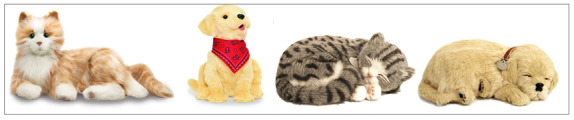
“The Perfect Petzzz cats and dogs costs between US $15-$35; however, they are noninteractive in nature, and they may be considered as toys rather than social robots [30].”
BackgroundA scoping review of scoping reviews: advancing the approach and enhancing the consistency
Pham, M. T., Rajić, A., Greig, J. D., Sargeant, J. M., Papadopoulos, A., & McEwen, S. A. (2014) · Research Synthesis Methods · doi:10.1002/jrsm.1123 · Cited by 3,078
Social disconnectedness, perceived isolation, and health among older adults
Cornwell, E. Y., & Waite, L. J. (2009) · Journal of Health and Social Behavior · doi:10.1177/002214650905000103 · Cited by 2,027 · cited 1×
“Older adults and people with dementia are especially susceptible to social isolation and loneliness [3-5], which can further dispose them to other morbidities such as decreased resistance to infection [6], depression, and further decline in cognitive functions [7].”
BackgroundScoping review on the use of socially assistive robot technology in elderly care
Abdi, J., Al-Hindawi, A., Ng, T., & Vizcaychipi, M. P. (2018) · BMJ Open · doi:10.1136/bmjopen-2017-018815 · Cited by 583
Wu, Y.-H., Wrobel, J., Cornuet, M., Kerhervé, H., Damnée, S., & Rigaud, A.-S. (2014) · Clinical Interventions in Aging · doi:10.2147/cia.s56435 · Cited by 261
Updating search strategies for systematic reviews using EndNote
Bramer, W., & Bain, P. (2017) · Journal of the Medical Library Association · doi:10.5195/jmla.2017.183 · Cited by 250 · cited 1×
“To maximize the currency of this review [36], an update of the search was conducted in September 2020.”
Background
Research works printed but not linked: 43
- 10.1159/000495813 · DOI
- DavidsonSRossallPEvidence review: loneliness in later lifeAge UK20152020-05-21https://www.ageuk.org.uk/globalassets/age-uk/documents/reports-and-publications/reports-and-briefings/health--wellbeing/rb_june15_lonelines_in_later_life_evidence_review.pdf
- 10.1371/journal.pone.0220195 · DOI
- 10.1159/000441651 · DOI · Paper page
- 10.1136/bmj.m1557 · DOI · Paper page
- 10.4017/gt.2016.15.4.003.00 · DOI
- 10.1007/s10676-010-9234-6 · DOI · Paper page
- 10.1109/roman.2004.1374827 · DOI
- 10.1080/14635240.2001.10806140 · DOI
- 10.1111/opn.12239 · DOI · Paper page
- 10.1093/geront/gny046 · DOI · Paper page
- 10.1136/bmjopen-2019-032468 · DOI
- 10.1186/s12877-019-1244-6 · DOI · Paper page
- 10.1109/jproc.2012.2200559 · DOI
- 10.1093/geront/gnx180 · DOI
- 10.1515/pjbr-2019-0020 · DOI
- Heerink, M, 2013, Social Robotics, 104, 10.1007/978-3-319-02675-6_11 · DOI
- 10.1080/13607863.2016.1262820 · DOI
- 10.3928/00989134-20130313-03 · DOI · Paper page
- 10.1111/appy.12131 · DOI · Paper page
- 10.1007/s12369-016-0366-7 · DOI
- 10.1016/j.jamda.2015.05.007 · DOI
- 10.1186/s12879-017-2895-6 · DOI
- 10.13140/RG.2.2.30353.45922 · DOI
- 10.1016/j.jamda.2017.10.008 · DOI
- 10.1080/1364557032000119616 · DOI · Paper page
- 10.1089/jpm.2019.0157 · DOI
- 10.1145/3371382.3378256 · DOI
- 10.1177/1471301220932780 · DOI · Paper page
- 10.1093/geronb/gbaa119 · DOI
- Marsilio, JN, 2018, JMU Scholarly Commons Physician Assistant Capstone
- McBride, V, 2017, California Assoc Long Term Care Med
- 10.1109/itecha.2017.8101940 · DOI
- 10.1136/eb-2014-101946 · DOI
- 10.1080/13607863.2020.1758906 · DOI
- Chang, WL, 2013, Social Robotics, 371, 10.1007/978-3-319-02675-6_37 · DOI
- 10.1111/ajag.12099 · DOI
- 10.3389/fict.2017.00016 · DOI
- 10.1002/hast.918 · DOI
- Wang, VHS, 2017, Using Technology to Improve Care of Older Adults, 239
- 10.1371/journal.pone.0237069 · DOI
- Bemelmans, R, 2011, Human-Robot Personal Relationships, 83, 10.1007/978-3-642-19385-9_11 · DOI
- Nussbaum, MC, 2006, Frontiers of Justice: Disability, Nationality, Species Membership, 70
Cited by
Sorted by citations
Bradwell, H. L., Edwards, K., Shenton, D., Winnington, R., Thill, S., & Jones, R. B. (2021) · JMIR Rehabilitation and Assistive Technologies · doi:10.2196/30337 · Cited by 54
Mahmoudi Asl, A., Molinari Ulate, M., Franco Martin, M., & van der Roest, H. (2022) · Journal of Medical Internet Research · doi:10.2196/37434 · Cited by 50
Sheehy, L., Bouchard, S., Kakkar, A., El Hakim, R., Lhoest, J., & Frank, A. (2024) · Journal of Clinical Medicine · doi:10.3390/jcm13185574 · Cited by 16
Trajbarič, T., Muršec, D., Svenšek, A., Štiglic, G., & Gosak, L. (2026) · Applied Sciences · doi:10.3390/app16104683
Metadata
- Authors
- Koh, W. Q., Ang, F. X. H., & Casey, D.
- Venue
- JMIR Rehabilitation and Assistive Technologies
- Publisher
- JMIR Publications Inc.
- Published
- 2021-02-12
- Volume
- 8
- Issue
- 1
- Pages
- e25340
- ISSN
- 2369-2529
- PMC
- PMC8082946
- Cited by
- 87
- References
- 8
- Language
- en
About these checks
Registry, retraction, Cites and statistics results are computed, not judged, with one exception: a printed reference that no index lists is read once by a model before it counts as a citation error. Claims are extracted by a model and kept only when their quote appears verbatim in the text; each cited source is then checked, with a model’s help, for whether it says what the claim relies on. Those verdicts can be wrong — read the claim’s quote and the cited source before relying on one.
Statistics and arithmetic are recomputed, not judged.
Confidence bands are shown only for fields calibrated on our annotated test set. None is calibrated yet, so no band is shown.
What counts as a claim ›How we measure confidence ›How we check this ›
Are you an author, or do you see a problem with this page? Request a review
